Role of the Sponsored Programs Office Michelle D. Christy March 23, 2010 Government University Partnership Goal: to generate knowledge as well as educate the next generation of scientists and engineers 1777 direct administration of
"Role of the Sponsored Programs Office Michelle D." is the property of its rightful owner. Permission is granted to
download and print the materials on this website for personal, non-commercial use only, and to display it
on your personal computer provided you do not modify the materials and that you retain all copyright
notices contained in the materials. By downloading content from our website, you accept the terms of this
agreement.
Presentation Transcript
01
Role of the Sponsored Programs Office Michelle D. Christy
March 23, 2010<br>
02
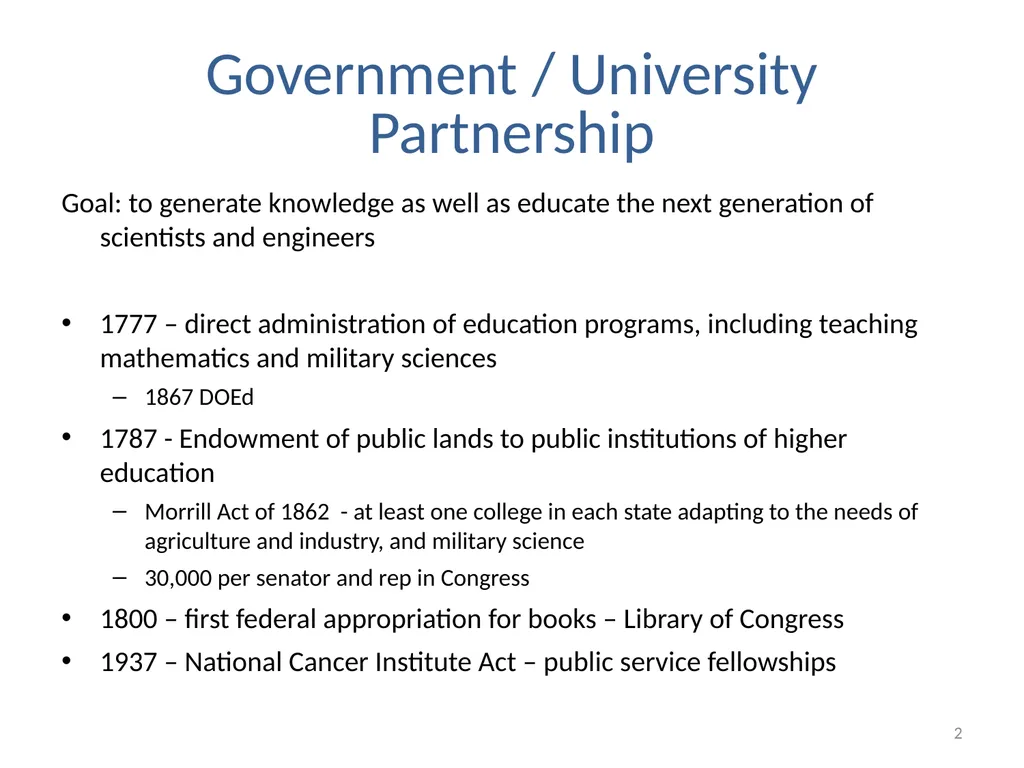
Government / University Partnership Goal: to generate knowledge as well as educate the next generation of scientists and engineers
1777 – direct administration of education programs, including teaching mathematics and military sciences
1867 DOEd
1787 - Endowment of public lands to public institutions of higher education
Morrill Act of 1862 - at least one college in each state adapting to the needs of agriculture and industry, and military science
30,000 per senator and rep in Congress
1800 – first federal appropriation for books – Library of Congress
1937 – National Cancer Institute Act – public service fellowships 2<br>
03
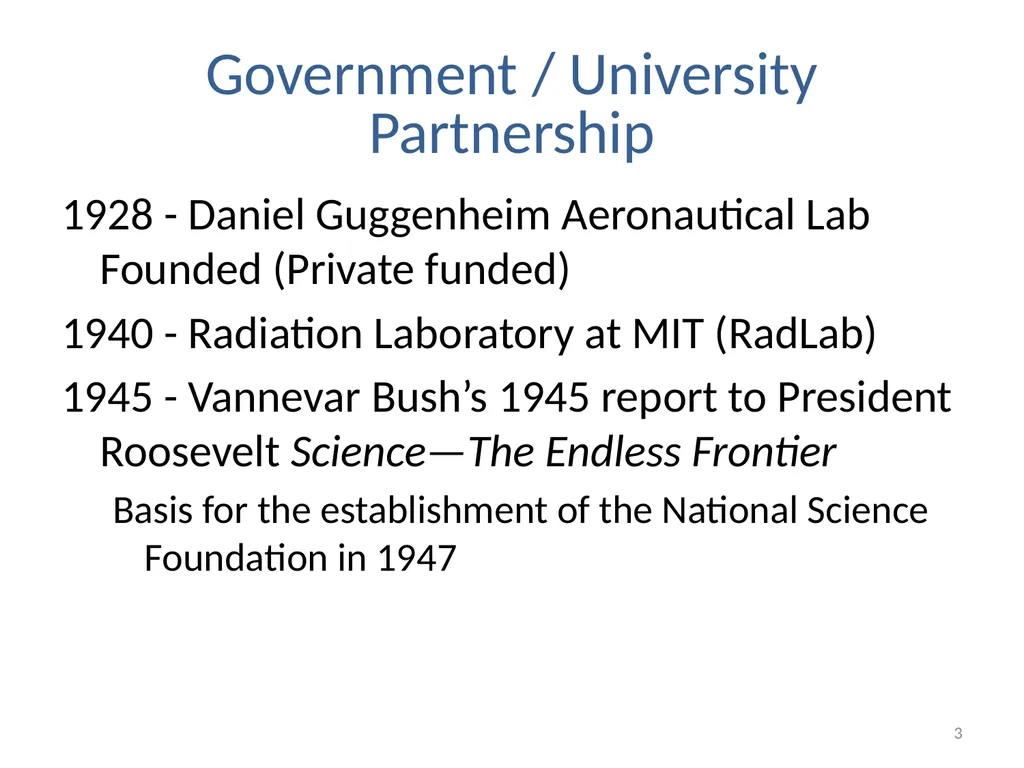
Government / University Partnership 1928 - Daniel Guggenheim Aeronautical Lab Founded (Private funded)
1940 - Radiation Laboratory at MIT (RadLab)
1945 - Vannevar Bush’s 1945 report to President Roosevelt Science—The Endless Frontier
Basis for the establishment of the National Science Foundation in 1947 3<br>
04
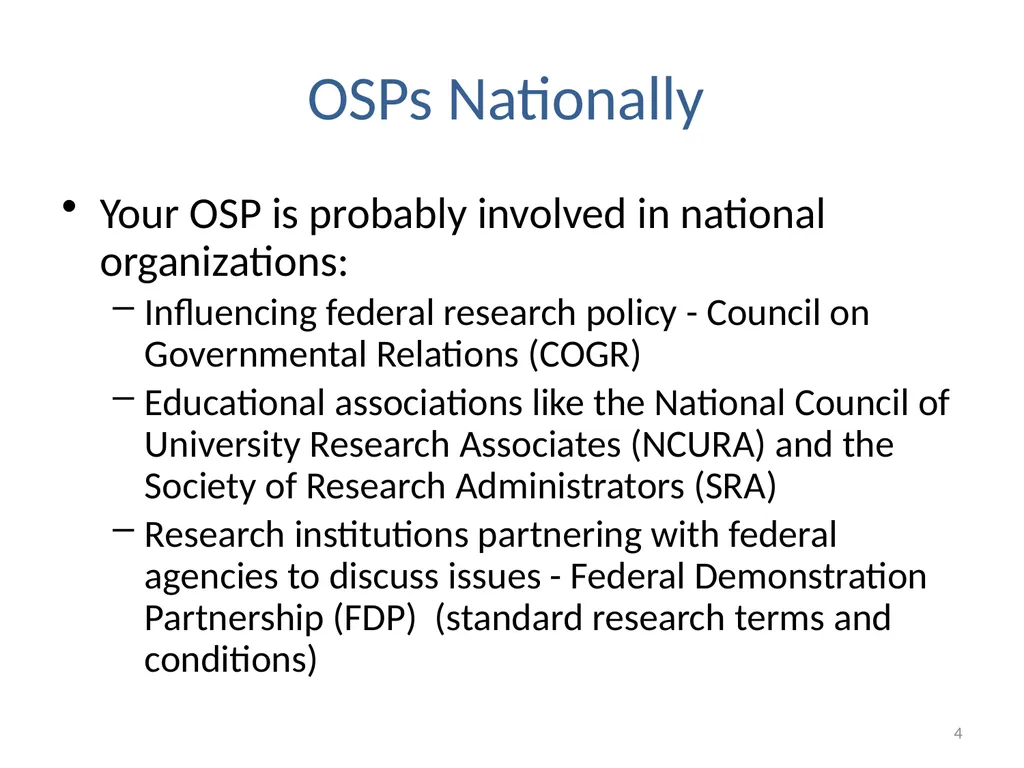
OSPs Nationally Your OSP is probably involved in national organizations:
Influencing federal research policy - Council on Governmental Relations (COGR)
Educational associations like the National Council of University Research Associates (NCURA) and the Society of Research Administrators (SRA)
Research institutions partnering with federal agencies to discuss issues - Federal Demonstration Partnership (FDP) (standard research terms and conditions) 4<br>
05
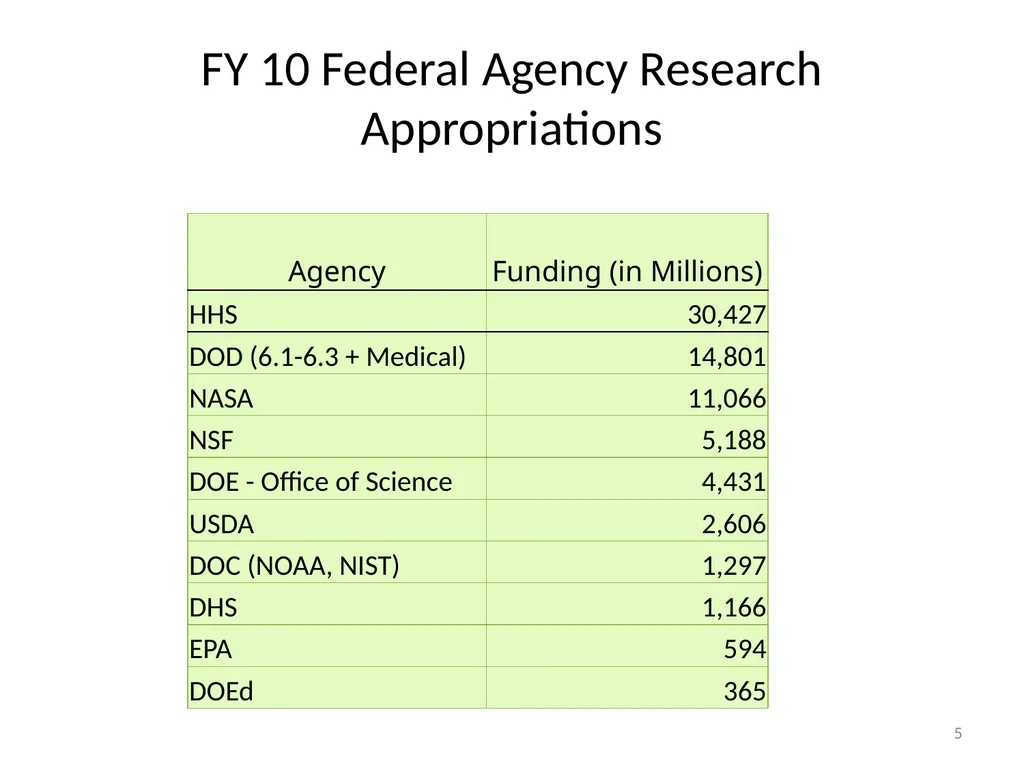
FY 10 Federal Agency Research Appropriations 5<br>
06
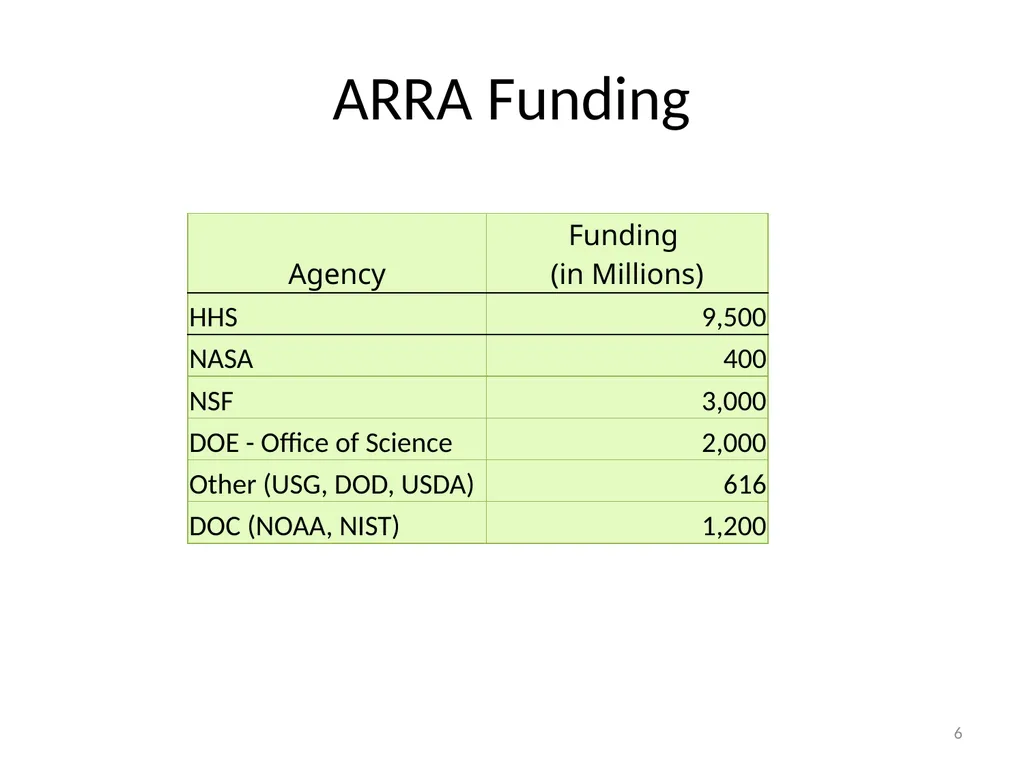
ARRA Funding 6<br>
07
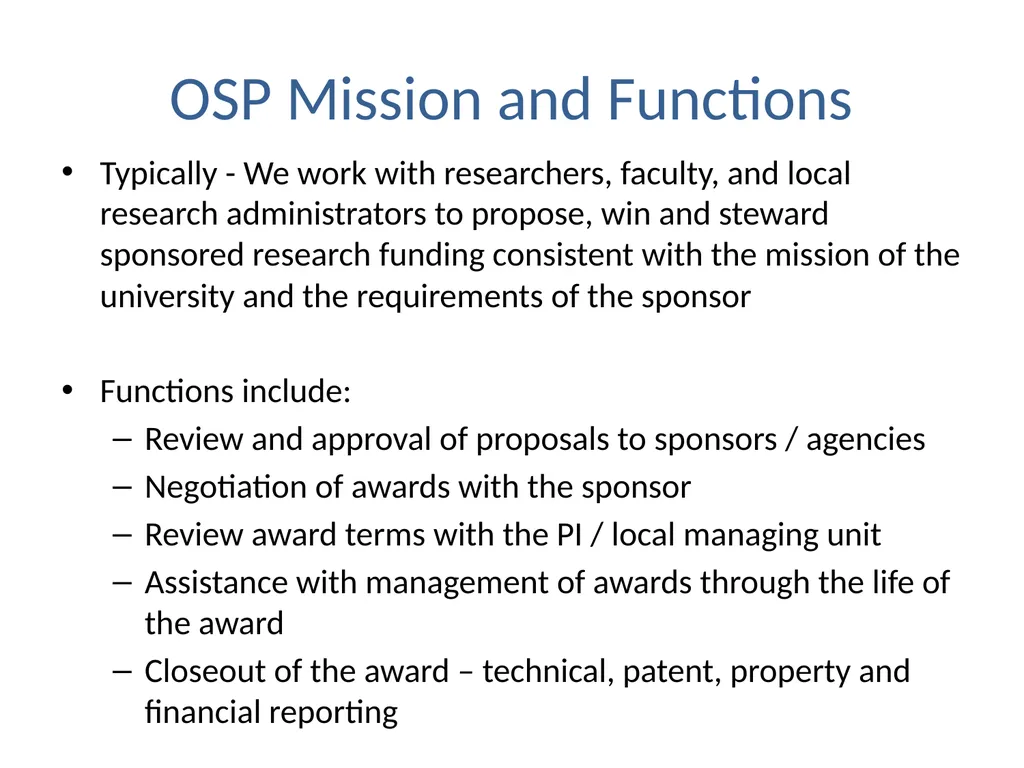
OSP Mission and Functions Typically - We work with researchers, faculty, and local research administrators to propose, win and steward sponsored research funding consistent with the mission of the university and the requirements of the sponsor
Functions include:
Review and approval of proposals to sponsors / agencies
Negotiation of awards with the sponsor
Review award terms with the PI / local managing unit
Assistance with management of awards through the life of the award
Closeout of the award – technical, patent, property and financial reporting<br>
08
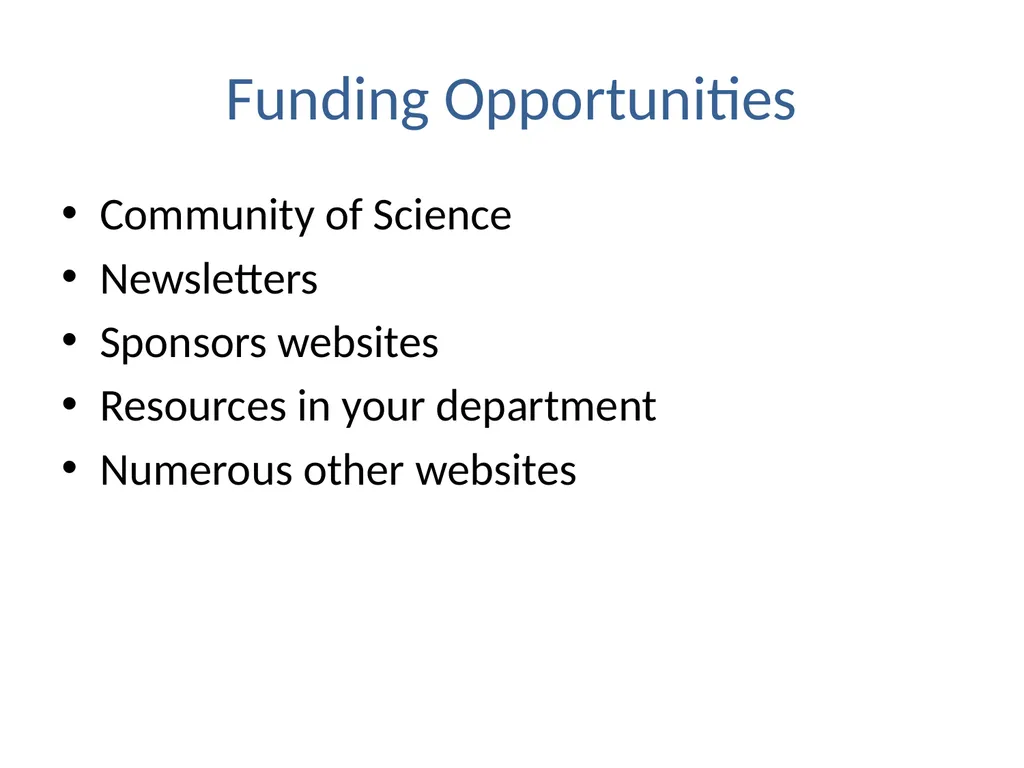
Funding Opportunities Community of Science
Newsletters
Sponsors websites
Resources in your department
Numerous other websites<br>
09
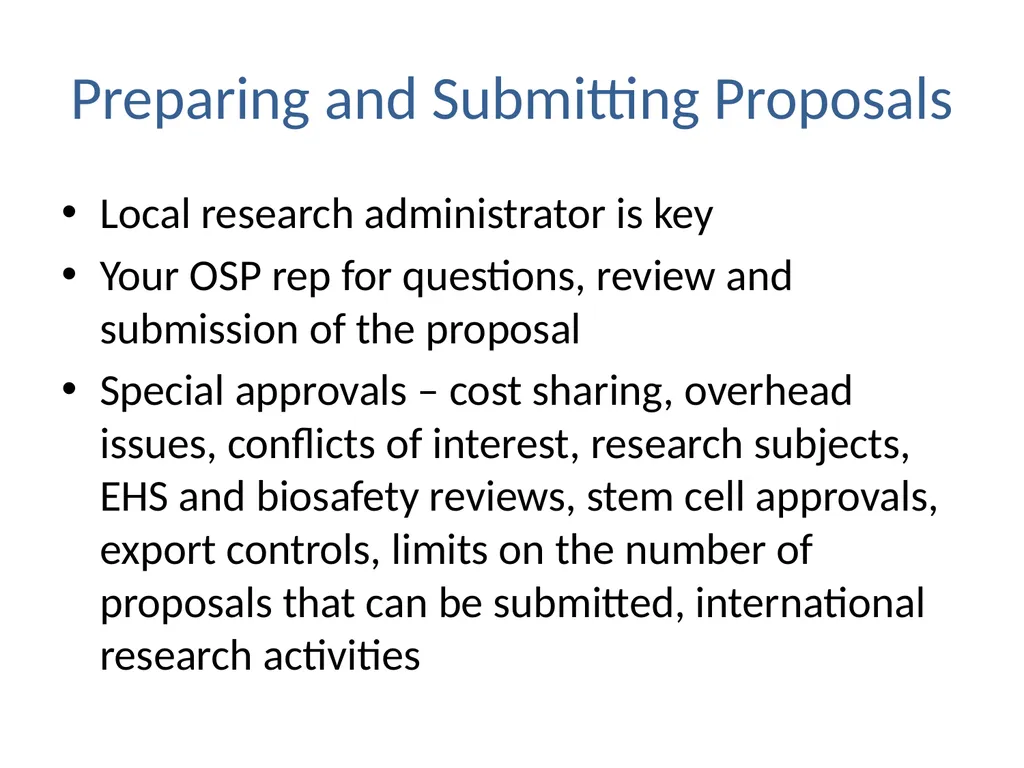
Preparing and Submitting Proposals Local research administrator is key
Your OSP rep for questions, review and submission of the proposal
Special approvals – cost sharing, overhead issues, conflicts of interest, research subjects, EHS and biosafety reviews, stem cell approvals, export controls, limits on the number of proposals that can be submitted, international research activities<br>
10
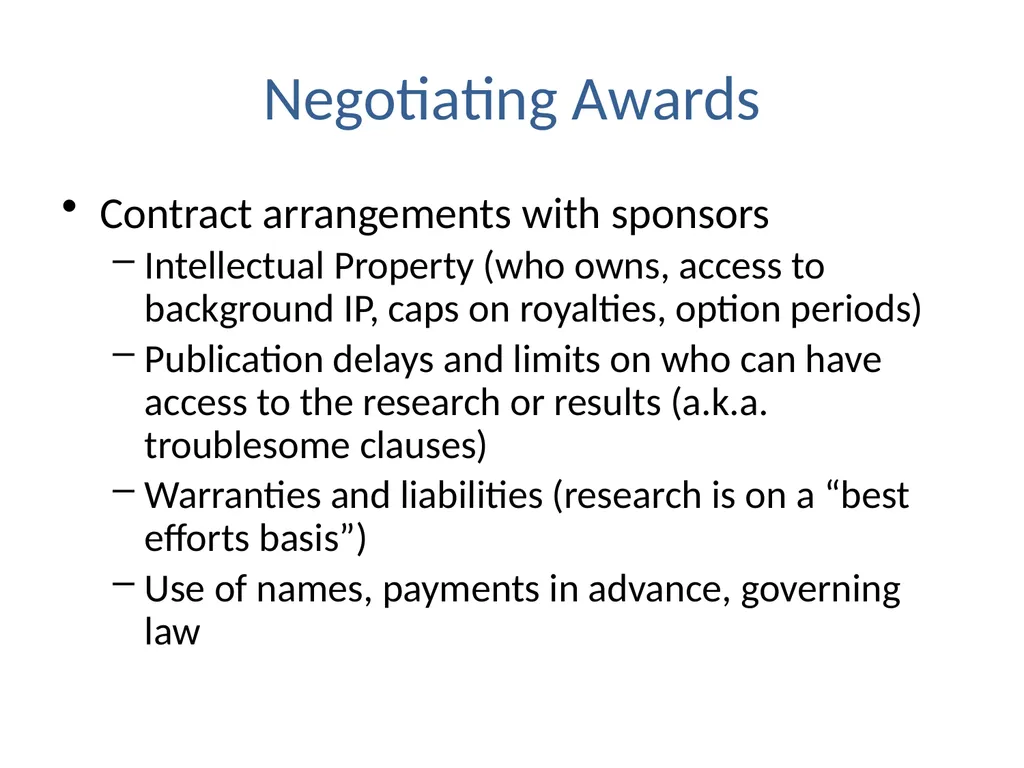
Negotiating Awards Contract arrangements with sponsors
Intellectual Property (who owns, access to background IP, caps on royalties, option periods)
Publication delays and limits on who can have access to the research or results (a.k.a. troublesome clauses)
Warranties and liabilities (research is on a “best efforts basis”)
Use of names, payments in advance, governing law<br>
11
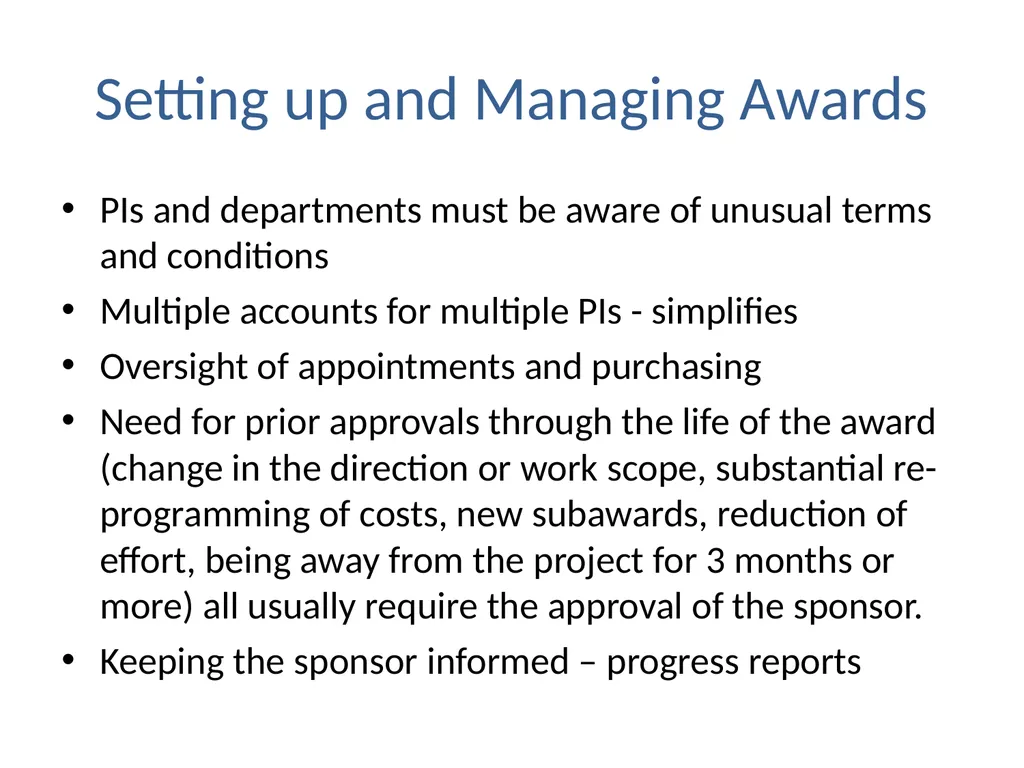
Setting up and Managing Awards PIs and departments must be aware of unusual terms and conditions
Multiple accounts for multiple PIs - simplifies
Oversight of appointments and purchasing
Need for prior approvals through the life of the award (change in the direction or work scope, substantial re-programming of costs, new subawards, reduction of effort, being away from the project for 3 months or more) all usually require the approval of the sponsor.
Keeping the sponsor informed – progress reports<br>
12
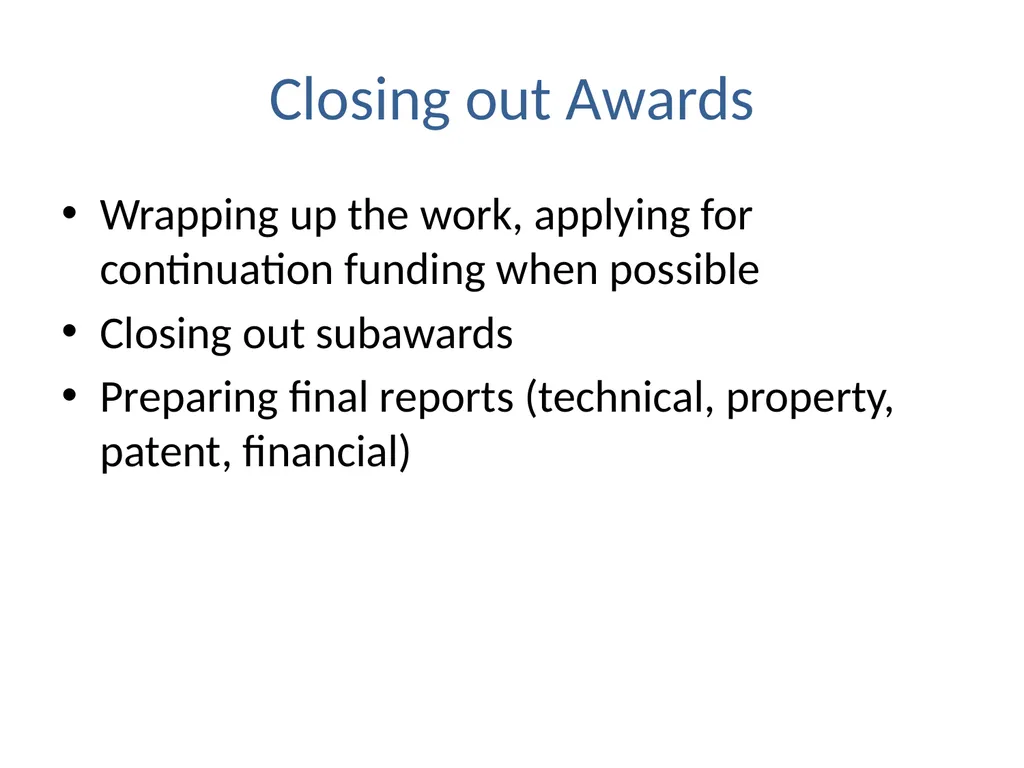
Closing out Awards Wrapping up the work, applying for continuation funding when possible
Closing out subawards
Preparing final reports (technical, property, patent, financial)<br>