
SC.912.L.16.10 Evaluate the impact of
DJ
Published · 21 slides · 0 views

1 / 1


Description
SC.912.L.16.10 Evaluate the impact of biotechnology on the individual, society the environment, including medical and ethical issues. BIOTECHNOLOGY (Genetic Engineering, Cloning, Artificial Selection) Biotechnology Biotechnology is the
Related Topics
Share
Embed code
Download this presentation From Below
"SC.912.L.16.10 Evaluate the impact of" is the property of its rightful owner. Permission is granted to download and print the materials on this website for personal, non-commercial use only, and to display it on your personal computer provided you do not modify the materials and that you retain all copyright notices contained in the materials. By downloading content from our website, you accept the terms of this agreement.
Presentation Transcript
01
SC.912.L.16.10 Evaluate the impact of biotechnology on
the individual,
society
the environment,
including medical and ethical issues. BIOTECHNOLOGY (Genetic Engineering, Cloning, Artificial Selection)<br>
the individual,
society
the environment,
including medical and ethical issues. BIOTECHNOLOGY (Genetic Engineering, Cloning, Artificial Selection)<br>
02
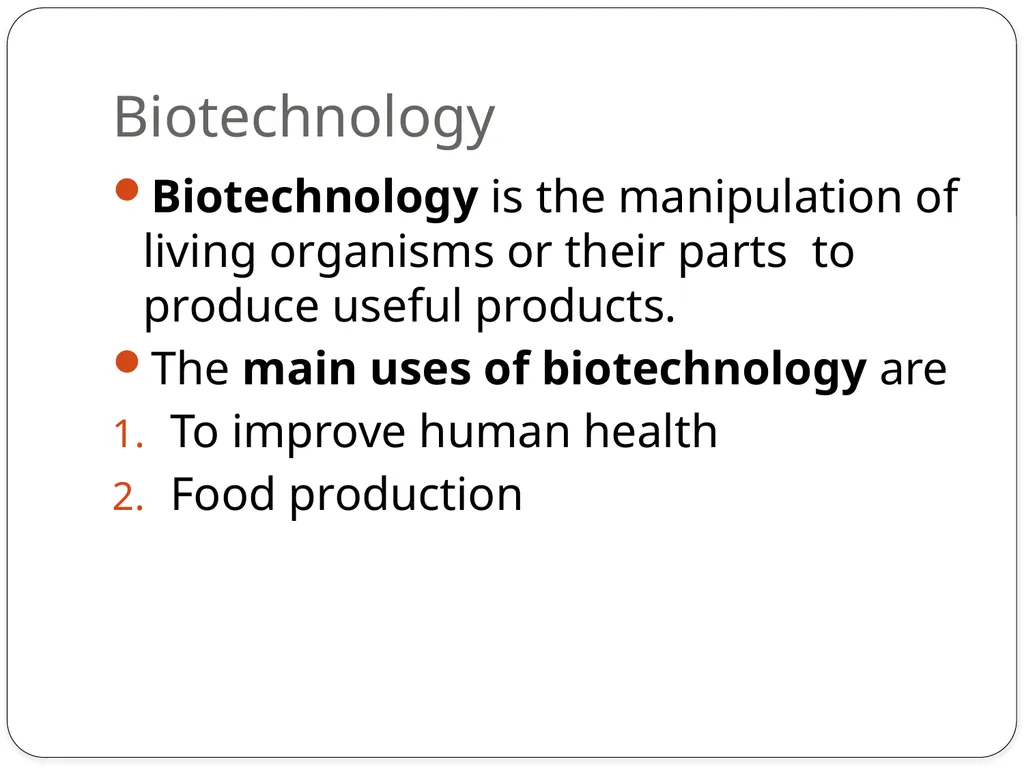
Biotechnology Biotechnology is the manipulation of living organisms or their parts to produce useful products.
The main uses of biotechnology are
To improve human health
Food production<br>
The main uses of biotechnology are
To improve human health
Food production<br>
03
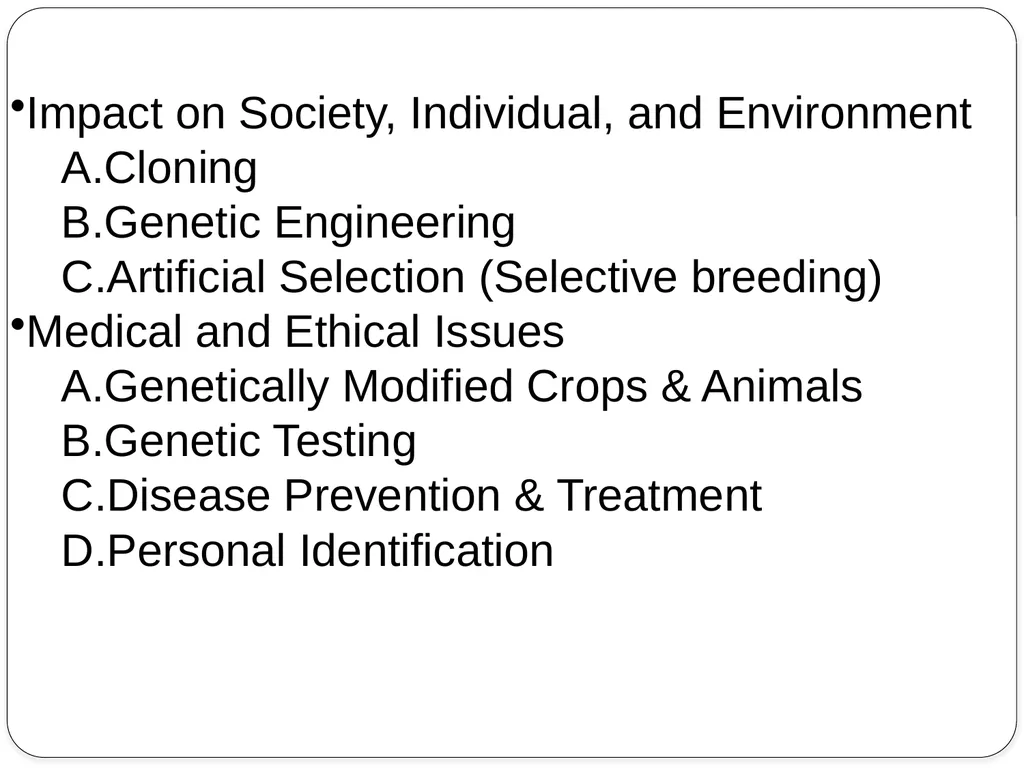
Impact on Society, Individual, and Environment
Cloning
Genetic Engineering
Artificial Selection (Selective breeding)
Medical and Ethical Issues
Genetically Modified Crops & Animals
Genetic Testing
Disease Prevention & Treatment
Personal Identification<br>
Cloning
Genetic Engineering
Artificial Selection (Selective breeding)
Medical and Ethical Issues
Genetically Modified Crops & Animals
Genetic Testing
Disease Prevention & Treatment
Personal Identification<br>
04
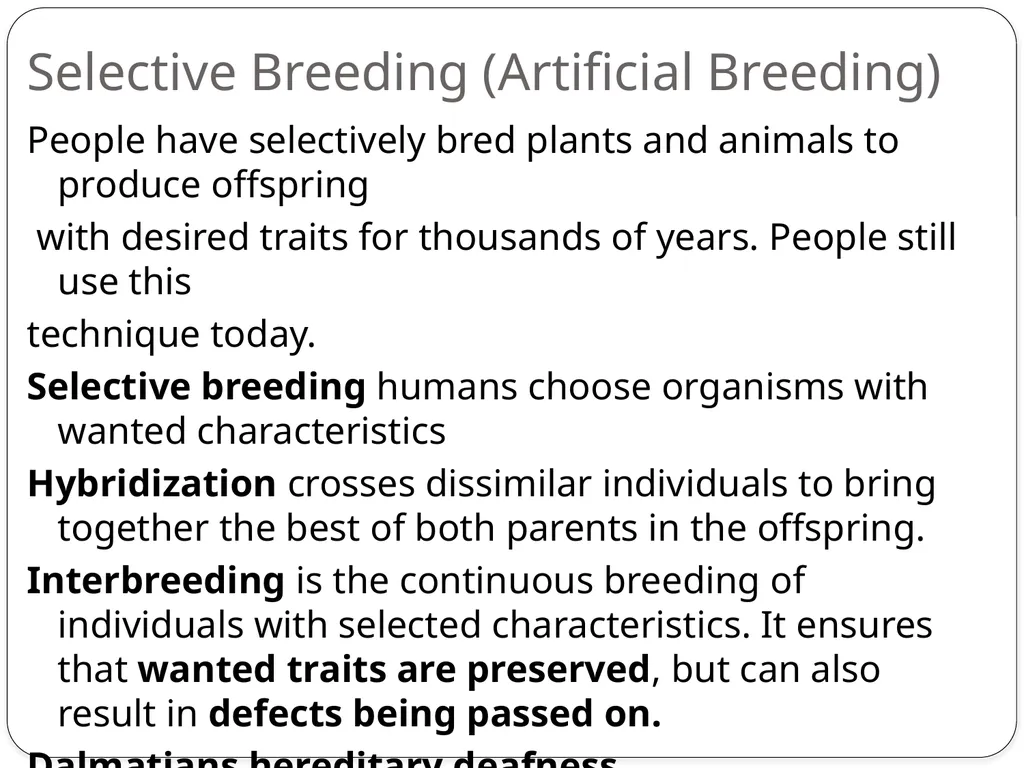
Selective Breeding (Artificial Breeding) People have selectively bred plants and animals to produce offspring
with desired traits for thousands of years. People still use this
technique today.
Selective breeding humans choose organisms with wanted characteristics
Hybridization crosses dissimilar individuals to bring together the best of both parents in the offspring.
Interbreeding is the continuous breeding of individuals with selected characteristics. It ensures that wanted traits are preserved, but can also result in defects being passed on.
Dalmatians hereditary deafness<br>
with desired traits for thousands of years. People still use this
technique today.
Selective breeding humans choose organisms with wanted characteristics
Hybridization crosses dissimilar individuals to bring together the best of both parents in the offspring.
Interbreeding is the continuous breeding of individuals with selected characteristics. It ensures that wanted traits are preserved, but can also result in defects being passed on.
Dalmatians hereditary deafness<br>
05
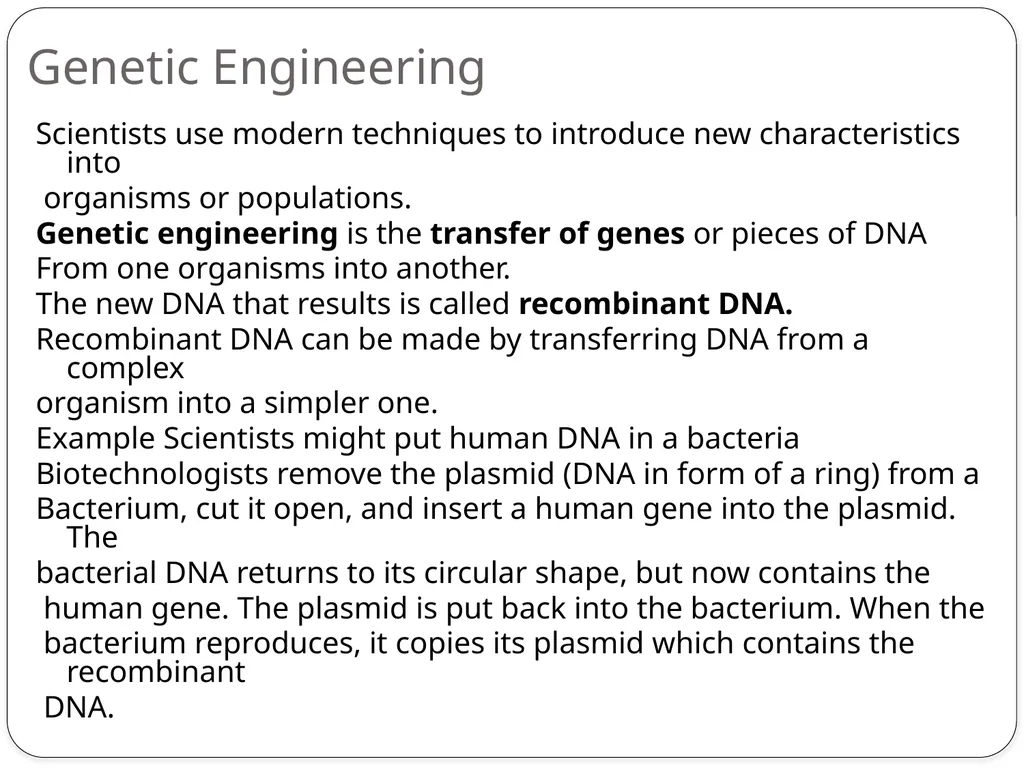
Genetic Engineering Scientists use modern techniques to introduce new characteristics into
organisms or populations.
Genetic engineering is the transfer of genes or pieces of DNA
From one organisms into another.
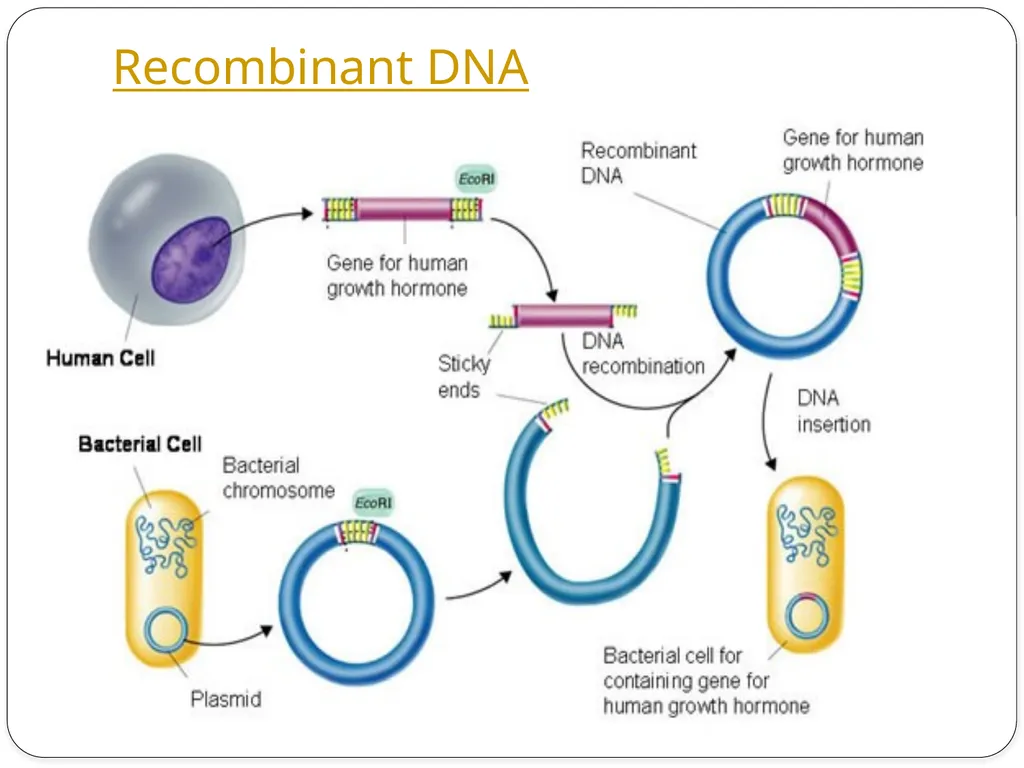
The new DNA that results is called recombinant DNA.
Recombinant DNA can be made by transferring DNA from a complex
organism into a simpler one.
Example Scientists might put human DNA in a bacteria
Biotechnologists remove the plasmid (DNA in form of a ring) from a
Bacterium, cut it open, and insert a human gene into the plasmid. The
bacterial DNA returns to its circular shape, but now contains the
human gene. The plasmid is put back into the bacterium. When the
bacterium reproduces, it copies its plasmid which contains the recombinant
DNA.<br>
organisms or populations.
Genetic engineering is the transfer of genes or pieces of DNA
From one organisms into another.
The new DNA that results is called recombinant DNA.
Recombinant DNA can be made by transferring DNA from a complex
organism into a simpler one.
Example Scientists might put human DNA in a bacteria
Biotechnologists remove the plasmid (DNA in form of a ring) from a
Bacterium, cut it open, and insert a human gene into the plasmid. The
bacterial DNA returns to its circular shape, but now contains the
human gene. The plasmid is put back into the bacterium. When the
bacterium reproduces, it copies its plasmid which contains the recombinant
DNA.<br>
06
Recombinant DNA<br>
07
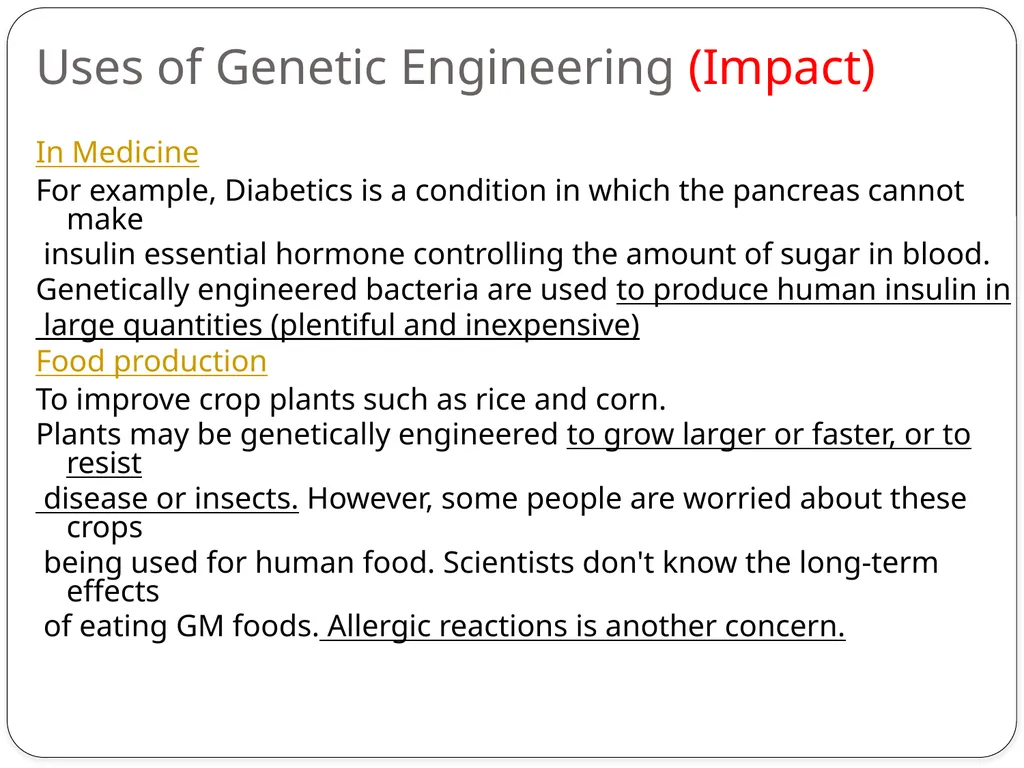
Uses of Genetic Engineering (Impact) In Medicine
For example, Diabetics is a condition in which the pancreas cannot make
insulin essential hormone controlling the amount of sugar in blood.
Genetically engineered bacteria are used to produce human insulin in
large quantities (plentiful and inexpensive)
Food production
To improve crop plants such as rice and corn.
Plants may be genetically engineered to grow larger or faster, or to resist
disease or insects. However, some people are worried about these crops
being used for human food. Scientists don't know the long-term effects
of eating GM foods. Allergic reactions is another concern.<br>
For example, Diabetics is a condition in which the pancreas cannot make
insulin essential hormone controlling the amount of sugar in blood.
Genetically engineered bacteria are used to produce human insulin in
large quantities (plentiful and inexpensive)
Food production
To improve crop plants such as rice and corn.
Plants may be genetically engineered to grow larger or faster, or to resist
disease or insects. However, some people are worried about these crops
being used for human food. Scientists don't know the long-term effects
of eating GM foods. Allergic reactions is another concern.<br>
08
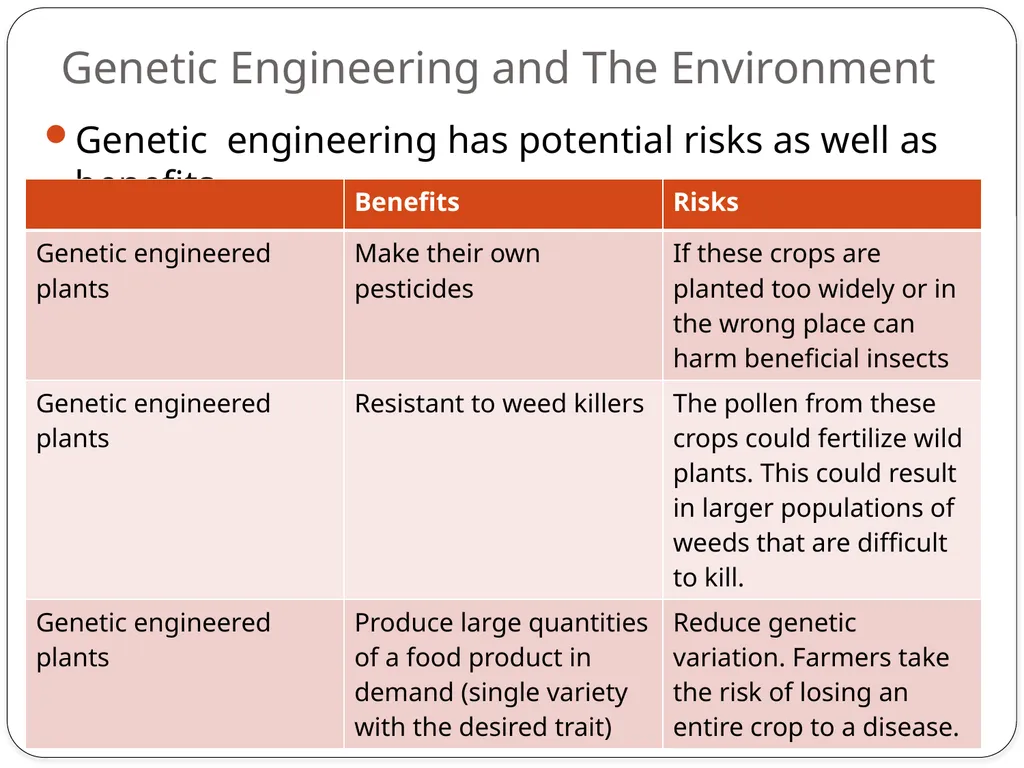
Genetic Engineering and The Environment Genetic engineering has potential risks as well as benefits<br>
09
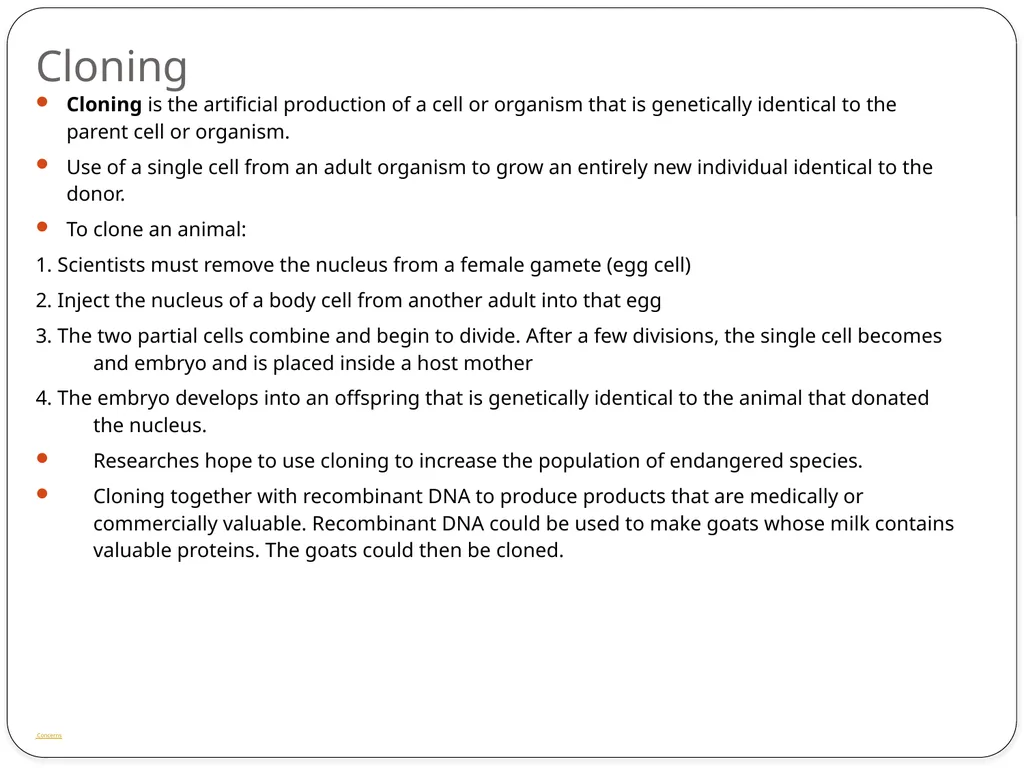
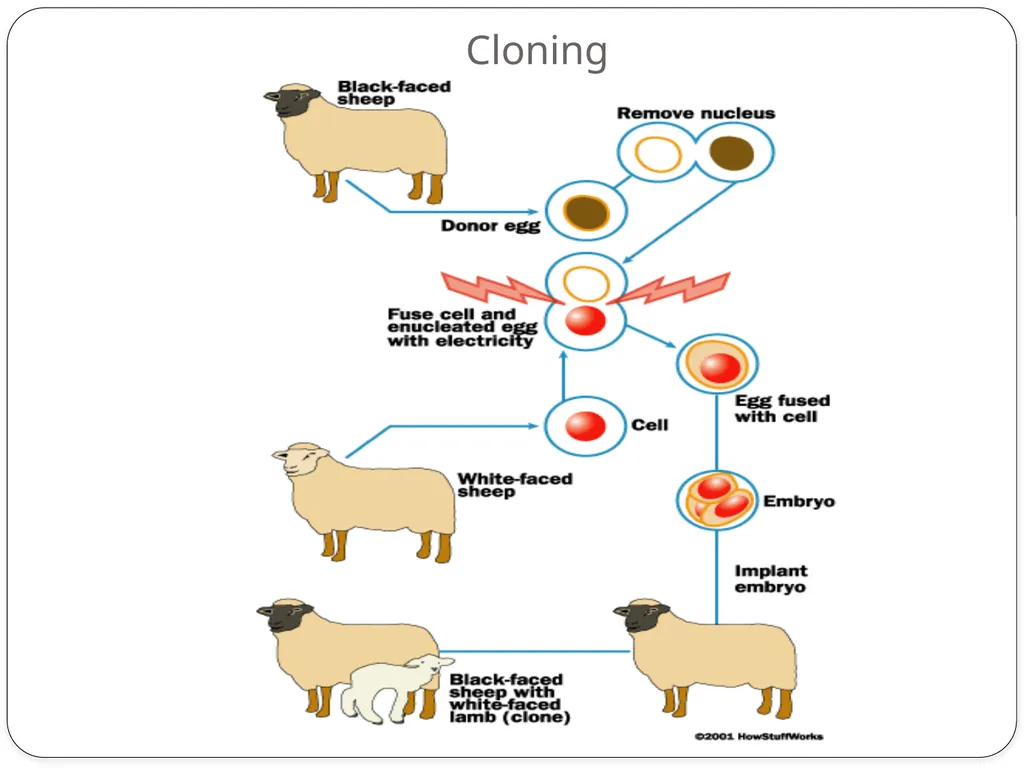
Cloning Cloning is the artificial production of a cell or organism that is genetically identical to the parent cell or organism.
Use of a single cell from an adult organism to grow an entirely new individual identical to the donor.
To clone an animal:
1. Scientists must remove the nucleus from a female gamete (egg cell)
2. Inject the nucleus of a body cell from another adult into that egg
3. The two partial cells combine and begin to divide. After a few divisions, the single cell becomes and embryo and is placed inside a host mother
4. The embryo develops into an offspring that is genetically identical to the animal that donated the nucleus.
Researches hope to use cloning to increase the population of endangered species.
Cloning together with recombinant DNA to produce products that are medically or commercially valuable. Recombinant DNA could be used to make goats whose milk contains valuable proteins. The goats could then be cloned.
Concerns<br>
Use of a single cell from an adult organism to grow an entirely new individual identical to the donor.
To clone an animal:
1. Scientists must remove the nucleus from a female gamete (egg cell)
2. Inject the nucleus of a body cell from another adult into that egg
3. The two partial cells combine and begin to divide. After a few divisions, the single cell becomes and embryo and is placed inside a host mother
4. The embryo develops into an offspring that is genetically identical to the animal that donated the nucleus.
Researches hope to use cloning to increase the population of endangered species.
Cloning together with recombinant DNA to produce products that are medically or commercially valuable. Recombinant DNA could be used to make goats whose milk contains valuable proteins. The goats could then be cloned.
Concerns<br>
10
Cloning<br>
11
Concerns of Cloning A major concern is that someone will try to clone a human
The rate of animal cloning is fairly low
Concerns of Biotechnology
Legal Applications
Even a tiny section of a person’s DNA, left behind at a crime scene
can be multiplied many times to make identification possible<br>
The rate of animal cloning is fairly low
Concerns of Biotechnology
Legal Applications
Even a tiny section of a person’s DNA, left behind at a crime scene
can be multiplied many times to make identification possible<br>
12
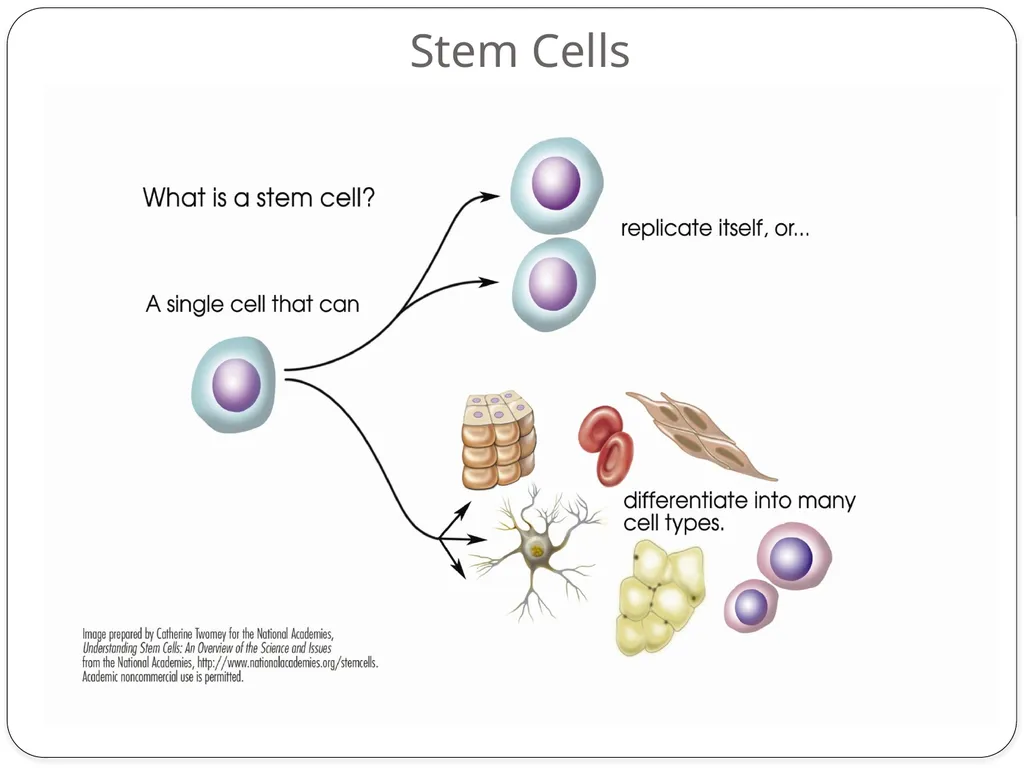
Stem Cells Stem Cells are not specialized. These cells have the ability to develop into a wide variety of cells
Researches have been investigating ways to use stem cells to replace cells that have been damaged by injury or disease and can no longer regenerate.
Possible applications: spinal cord injuries, heart disease, etc
Sources of stem cells
1. Embryonic tissue: Embryos contain cells that are non-
differentiated and can turn into any type of cell in the body. These cells
could be used to create new tissues for people with diseases or malformations.
2. Adult tissue<br>
Researches have been investigating ways to use stem cells to replace cells that have been damaged by injury or disease and can no longer regenerate.
Possible applications: spinal cord injuries, heart disease, etc
Sources of stem cells
1. Embryonic tissue: Embryos contain cells that are non-
differentiated and can turn into any type of cell in the body. These cells
could be used to create new tissues for people with diseases or malformations.
2. Adult tissue<br>
13
Stem Cells<br>
14
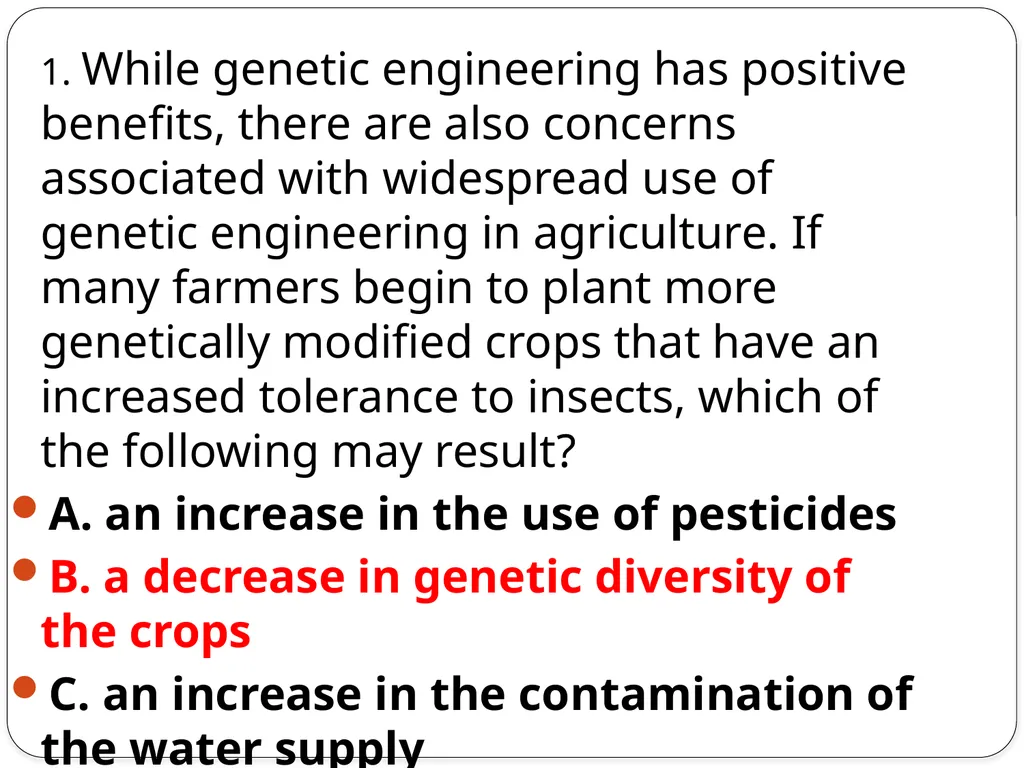
1. While genetic engineering has positive benefits, there are also concerns associated with widespread use of genetic engineering in agriculture. If many farmers begin to plant more genetically modified crops that have an increased tolerance to insects, which of the following may result?
A. an increase in the use of pesticides
B. a decrease in genetic diversity of the crops
C. an increase in the contamination of the water supply
D. a decrease in crop productivity<br>
A. an increase in the use of pesticides
B. a decrease in genetic diversity of the crops
C. an increase in the contamination of the water supply
D. a decrease in crop productivity<br>
15
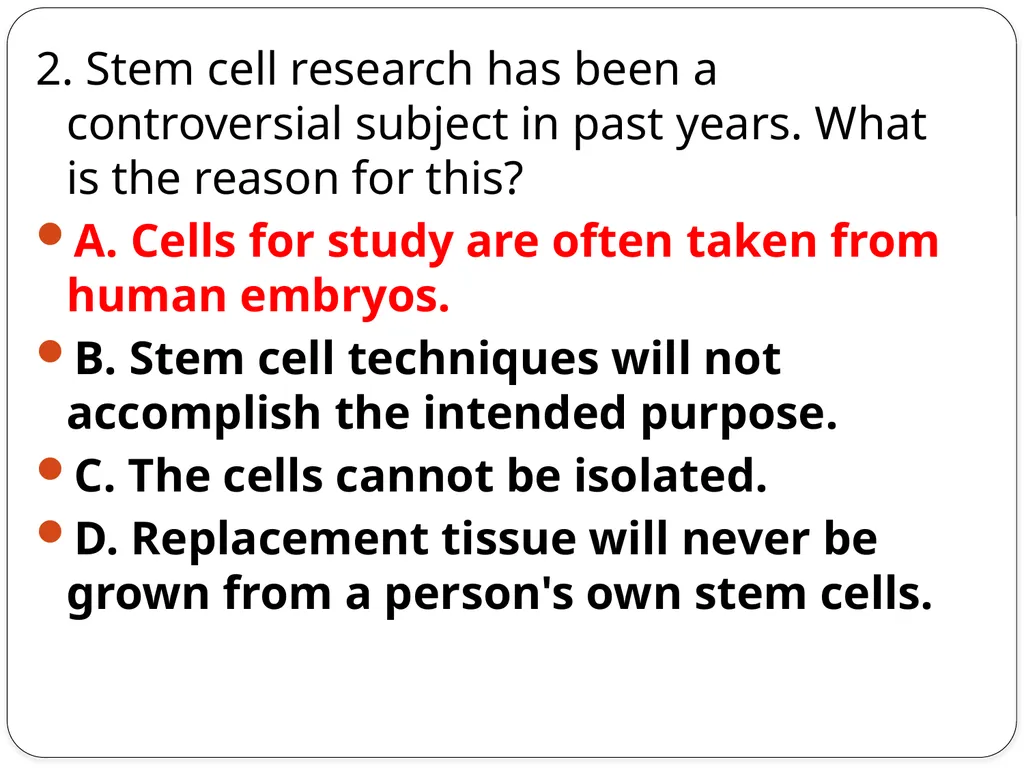
2. Stem cell research has been a controversial subject in past years. What is the reason for this?
A. Cells for study are often taken from human embryos.
B. Stem cell techniques will not accomplish the intended purpose.
C. The cells cannot be isolated.
D. Replacement tissue will never be grown from a person's own stem cells.<br>
A. Cells for study are often taken from human embryos.
B. Stem cell techniques will not accomplish the intended purpose.
C. The cells cannot be isolated.
D. Replacement tissue will never be grown from a person's own stem cells.<br>
16
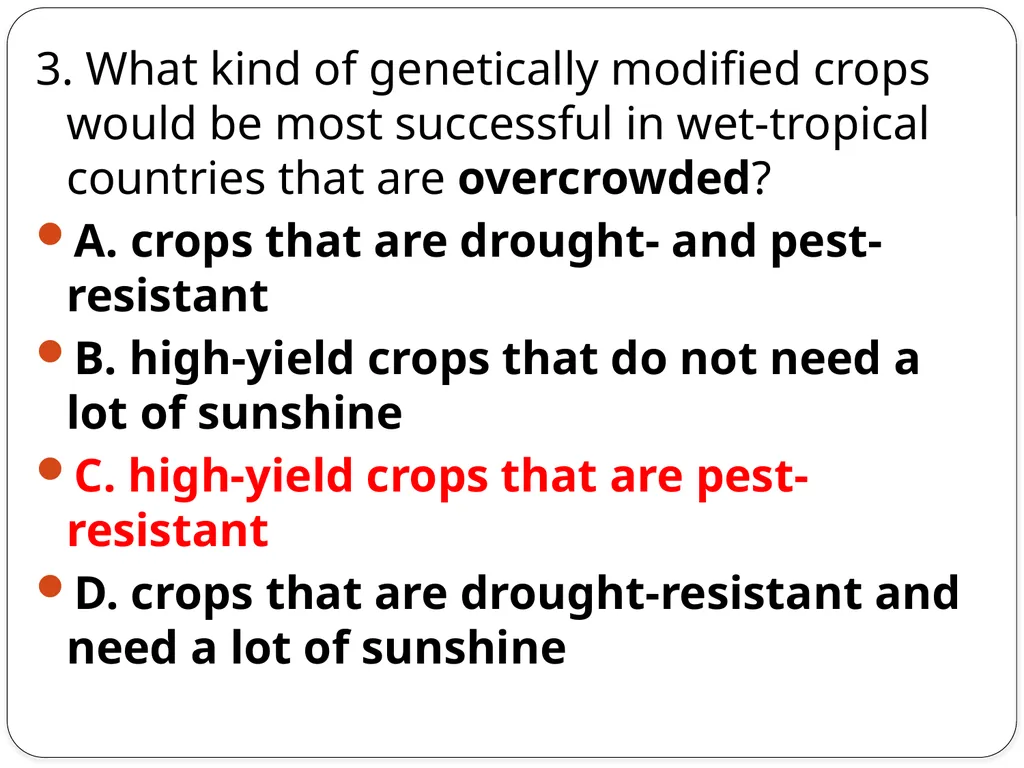
3. What kind of genetically modified crops would be most successful in wet-tropical countries that are overcrowded?
A. crops that are drought- and pest-resistant
B. high-yield crops that do not need a lot of sunshine
C. high-yield crops that are pest-resistant
D. crops that are drought-resistant and need a lot of sunshine<br>
A. crops that are drought- and pest-resistant
B. high-yield crops that do not need a lot of sunshine
C. high-yield crops that are pest-resistant
D. crops that are drought-resistant and need a lot of sunshine<br>
17
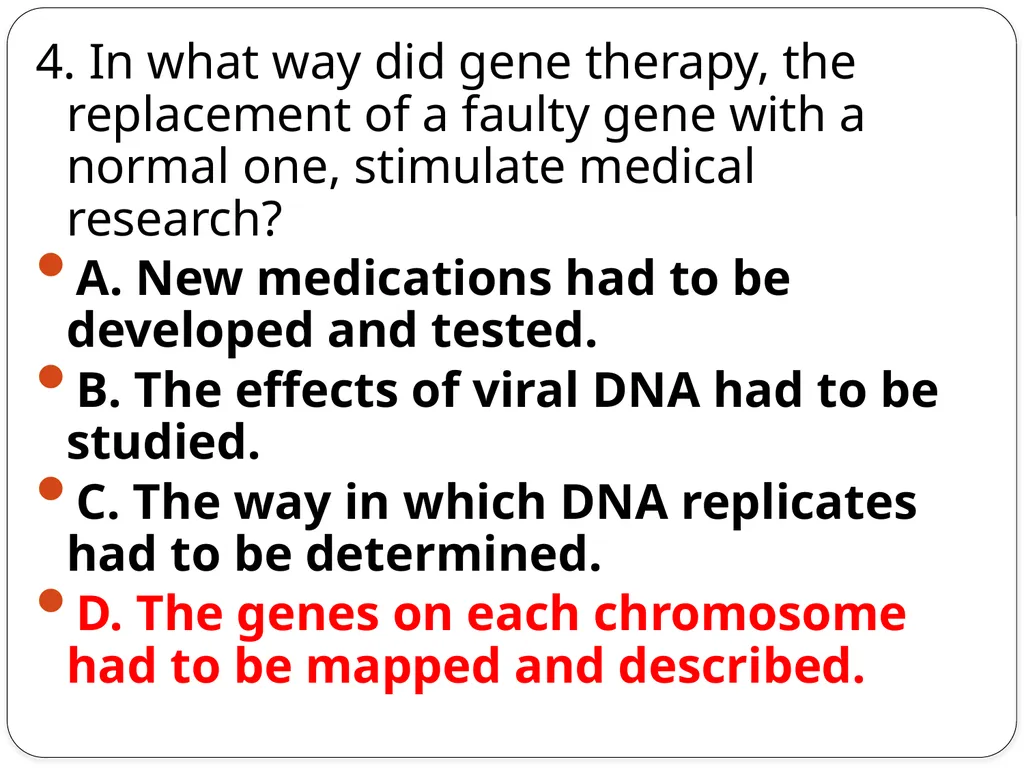
4. In what way did gene therapy, the replacement of a faulty gene with a normal one, stimulate medical research?
A. New medications had to be developed and tested.
B. The effects of viral DNA had to be studied.
C. The way in which DNA replicates had to be determined.
D. The genes on each chromosome had to be mapped and described.<br>
A. New medications had to be developed and tested.
B. The effects of viral DNA had to be studied.
C. The way in which DNA replicates had to be determined.
D. The genes on each chromosome had to be mapped and described.<br>
18
5. The way that crimes are solved today was affected by which of the following technologies?
A. gene therapy
B. DNA fingerprinting
C. genetic testing
D. Genetic modification<br>
A. gene therapy
B. DNA fingerprinting
C. genetic testing
D. Genetic modification<br>
19
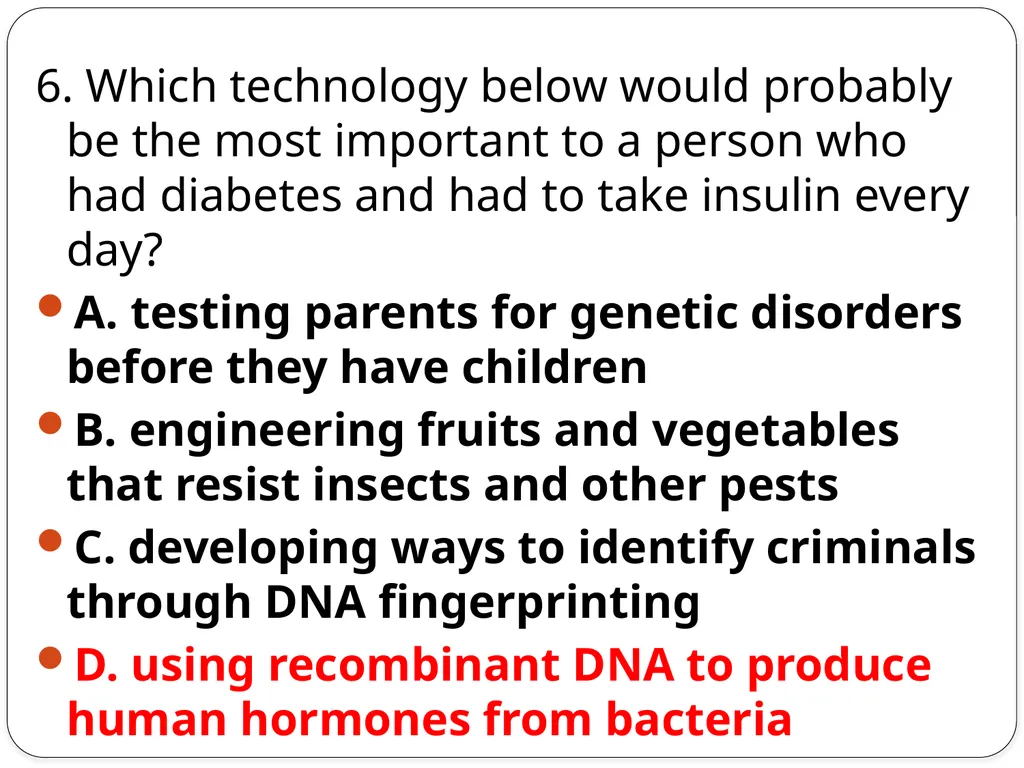
6. Which technology below would probably be the most important to a person who had diabetes and had to take insulin every day?
A. testing parents for genetic disorders before they have children
B. engineering fruits and vegetables that resist insects and other pests
C. developing ways to identify criminals through DNA fingerprinting
D. using recombinant DNA to produce human hormones from bacteria<br>
A. testing parents for genetic disorders before they have children
B. engineering fruits and vegetables that resist insects and other pests
C. developing ways to identify criminals through DNA fingerprinting
D. using recombinant DNA to produce human hormones from bacteria<br>
20
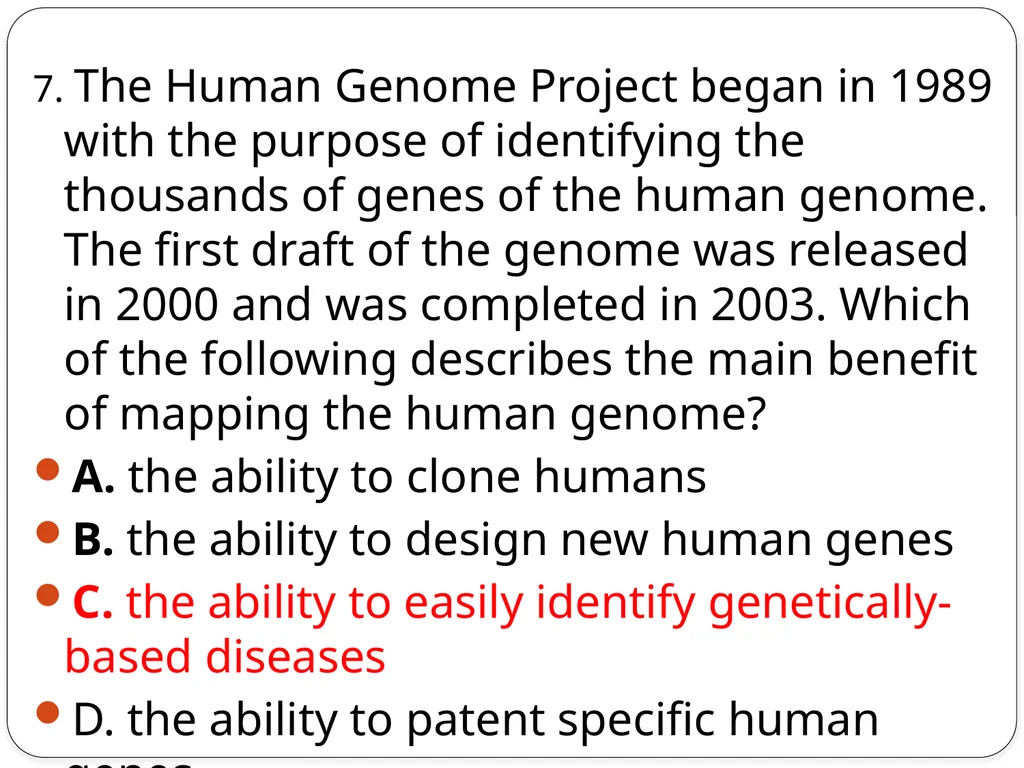
7. The Human Genome Project began in 1989 with the purpose of identifying the thousands of genes of the human genome. The first draft of the genome was released in 2000 and was completed in 2003. Which of the following describes the main benefit of mapping the human genome?
A. the ability to clone humans
B. the ability to design new human genes
C. the ability to easily identify genetically-based diseases
D. the ability to patent specific human genes<br>
A. the ability to clone humans
B. the ability to design new human genes
C. the ability to easily identify genetically-based diseases
D. the ability to patent specific human genes<br>
21
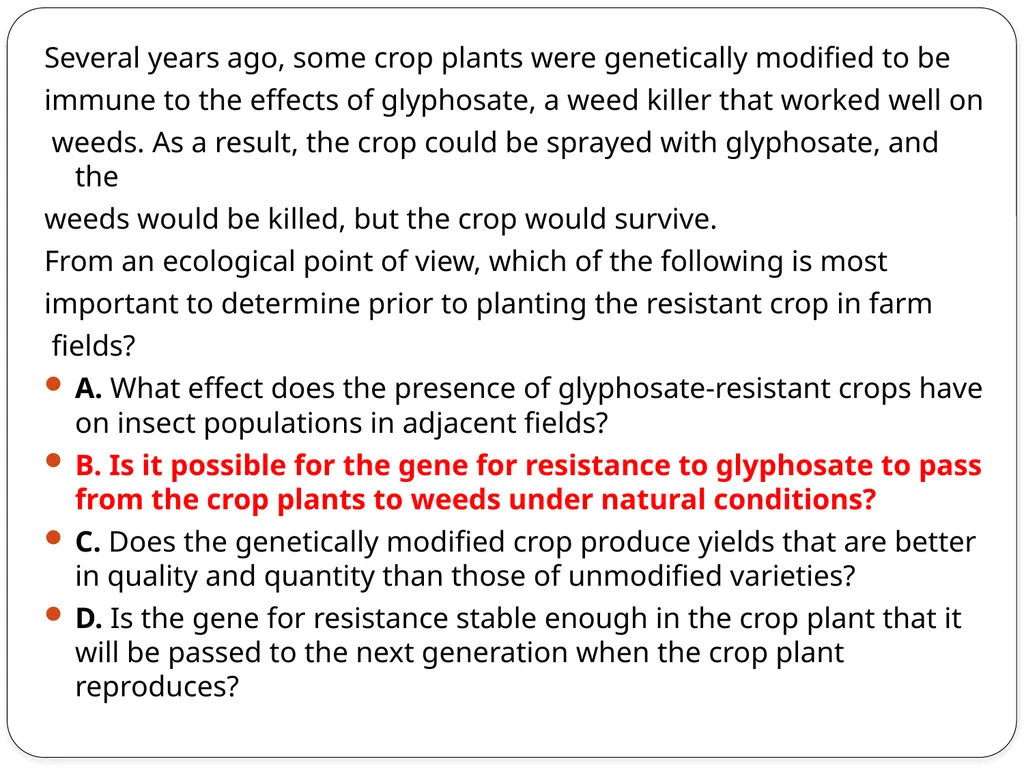
Several years ago, some crop plants were genetically modified to be
immune to the effects of glyphosate, a weed killer that worked well on
weeds. As a result, the crop could be sprayed with glyphosate, and the
weeds would be killed, but the crop would survive.
From an ecological point of view, which of the following is most
important to determine prior to planting the resistant crop in farm
fields?
A. What effect does the presence of glyphosate-resistant crops have on insect populations in adjacent fields?
B. Is it possible for the gene for resistance to glyphosate to pass from the crop plants to weeds under natural conditions?
C. Does the genetically modified crop produce yields that are better in quality and quantity than those of unmodified varieties?
D. Is the gene for resistance stable enough in the crop plant that it will be passed to the next generation when the crop plant reproduces?<br>
immune to the effects of glyphosate, a weed killer that worked well on
weeds. As a result, the crop could be sprayed with glyphosate, and the
weeds would be killed, but the crop would survive.
From an ecological point of view, which of the following is most
important to determine prior to planting the resistant crop in farm
fields?
A. What effect does the presence of glyphosate-resistant crops have on insect populations in adjacent fields?
B. Is it possible for the gene for resistance to glyphosate to pass from the crop plants to weeds under natural conditions?
C. Does the genetically modified crop produce yields that are better in quality and quantity than those of unmodified varieties?
D. Is the gene for resistance stable enough in the crop plant that it will be passed to the next generation when the crop plant reproduces?<br>