Sentence Production Program for Aphasia (SPPA) Maria Moritz Natalie Brickner Overview of Treatment Designed to enhance functional communication. Sentence Production Program for Aphasia (SPAA) is the revised version of Helm Elicited Language
"Sentence Production Program for Aphasia (SPPA)" is the property of its rightful owner. Permission is granted to
download and print the materials on this website for personal, non-commercial use only, and to display it
on your personal computer provided you do not modify the materials and that you retain all copyright
notices contained in the materials. By downloading content from our website, you accept the terms of this
agreement.
Presentation Transcript
01
Sentence Production Program for Aphasia (SPPA) Maria Moritz
Natalie Brickner<br>
02
Overview of Treatment Designed to enhance functional communication.
Sentence Production Program for Aphasia (SPAA) is the revised version of Helm Elicited Language Program for Syntax Stimulation (HELPSS).<br>
03
Philosophy of Treatment Aphasics do not have a lack of grammatical knowledge, but simply have difficulty accessing it (Gleason et al.,1975).
Grammatical knowledge can be accessed with proper cues (Weigel & Bierwisch, 1970).
The hierarchy was created to facilitate successful responses and the difficulty level increases gradually (Gleason et al., 1975).
Multiple exemplars are included for each sentence type to increase generalizability .<br>
04
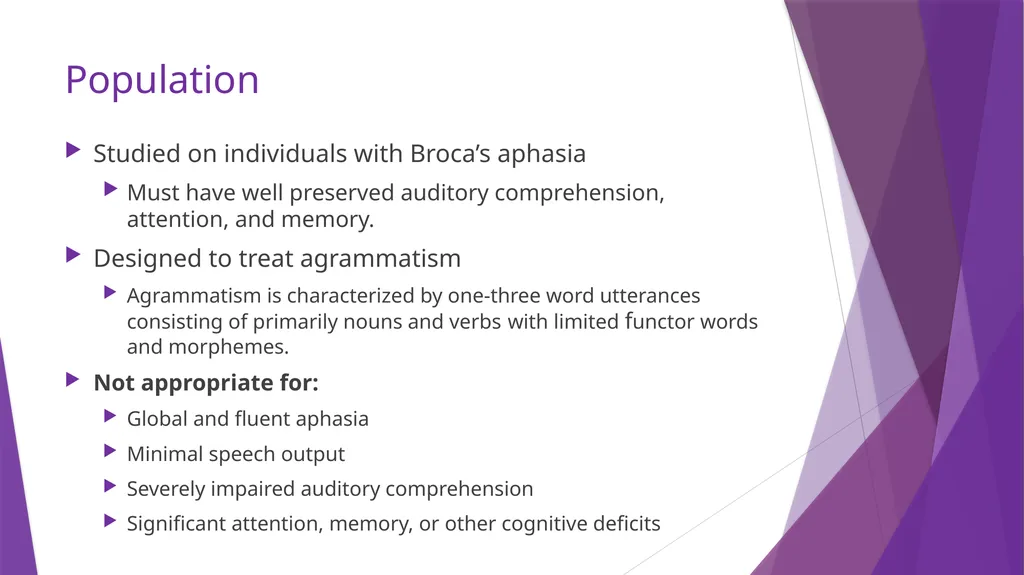
Population Studied on individuals with Broca’s aphasia
Must have well preserved auditory comprehension, attention, and memory.
Designed to treat agrammatism
Agrammatism is characterized by one-three word utterances consisting of primarily nouns and verbs with limited functor words and morphemes.
Not appropriate for:
Global and fluent aphasia
Minimal speech output
Severely impaired auditory comprehension
Significant attention, memory, or other cognitive deficits<br>
05
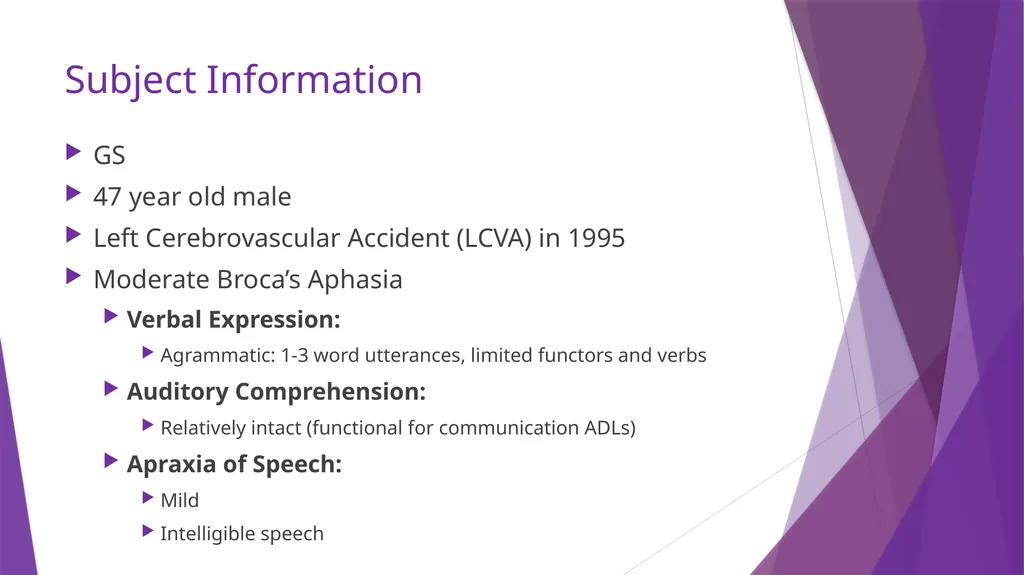
Subject Information GS
47 year old male
Left Cerebrovascular Accident (LCVA) in 1995
Moderate Broca’s Aphasia
Verbal Expression:
Agrammatic: 1-3 word utterances, limited functors and verbs
Auditory Comprehension:
Relatively intact (functional for communication ADLs)
Apraxia of Speech:
Mild
Intelligible speech<br>
06
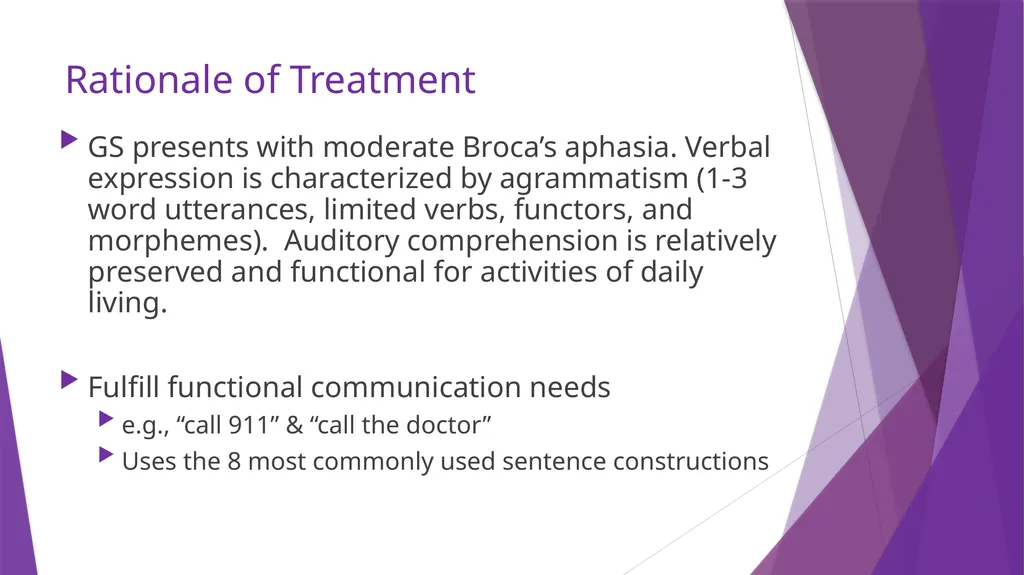
Rationale of Treatment GS presents with moderate Broca’s aphasia. Verbal expression is characterized by agrammatism (1-3 word utterances, limited verbs, functors, and morphemes). Auditory comprehension is relatively preserved and functional for activities of daily living.
Fulfill functional communication needs
e.g., “call 911” & “call the doctor”
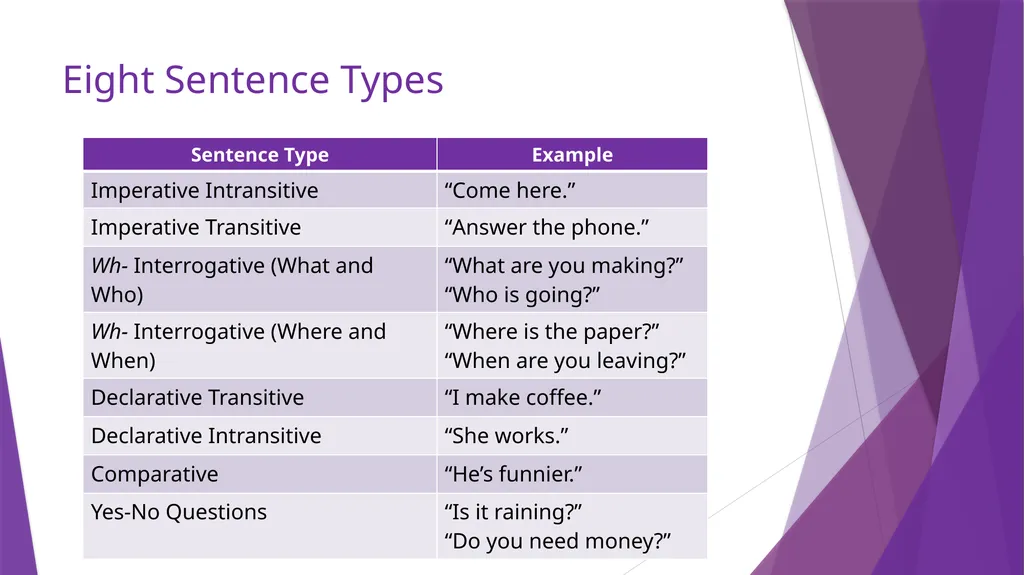
Uses the 8 most commonly used sentence constructions<br>
07
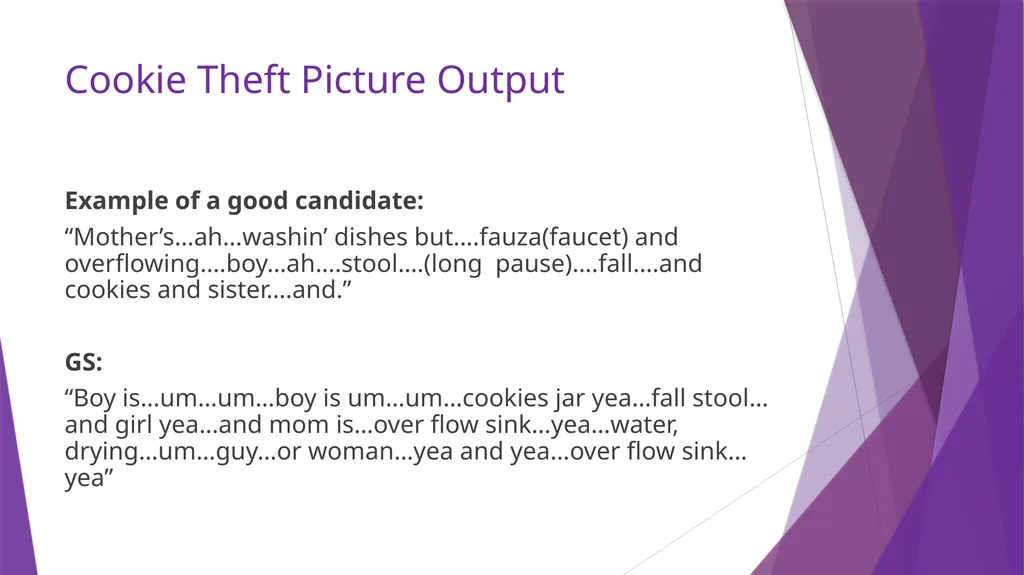
Cookie Theft Picture Output Example of a good candidate:
“Mother’s…ah…washin’ dishes but….fauza(faucet) and overflowing….boy…ah….stool….(long pause)….fall….and cookies and sister….and.”
GS:
“Boy is…um…um…boy is um…um…cookies jar yea…fall stool…and girl yea…and mom is…over flow sink…yea…water, drying…um…guy…or woman…yea and yea…over flow sink…yea”<br>
08
Components of the SPAA Administration Manual
Stimulus Book
Score Sheets
Progress Sheets<br>
09
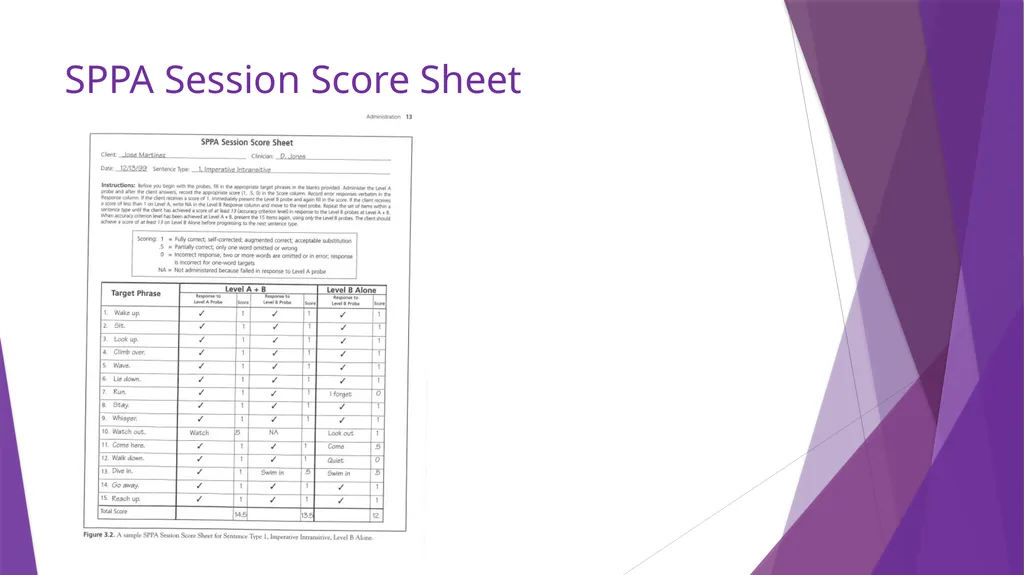
SPPA Session Score Sheet<br>
10
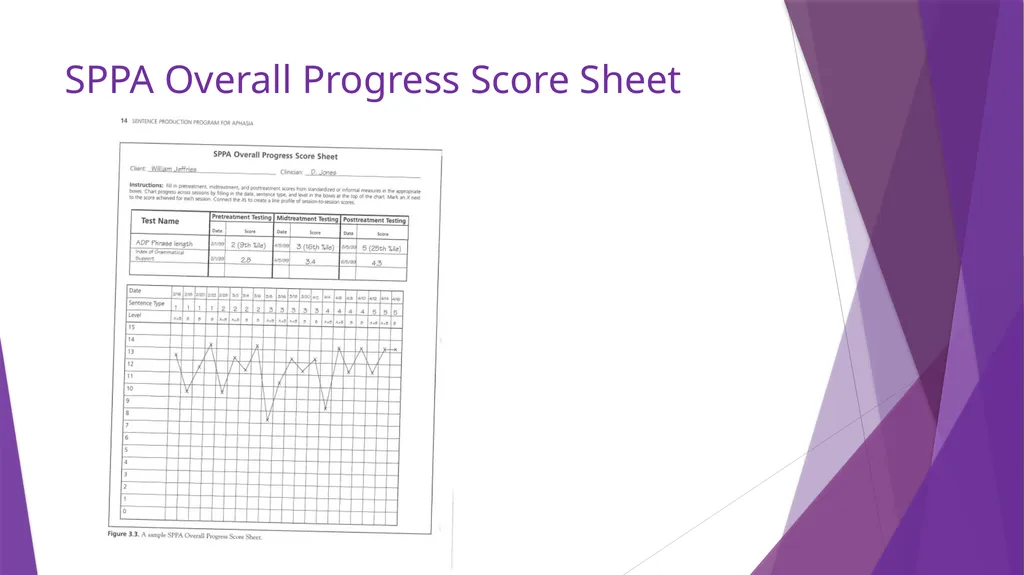
SPPA Overall Progress Score Sheet<br>
11
Methods Feedback
Use clinical judgement
Though it is a highly structured program, it is important to individualize the task in order to increase success.
Practice
No practice stimuli is provided.<br>
12
Eight Sentence Types<br>
13
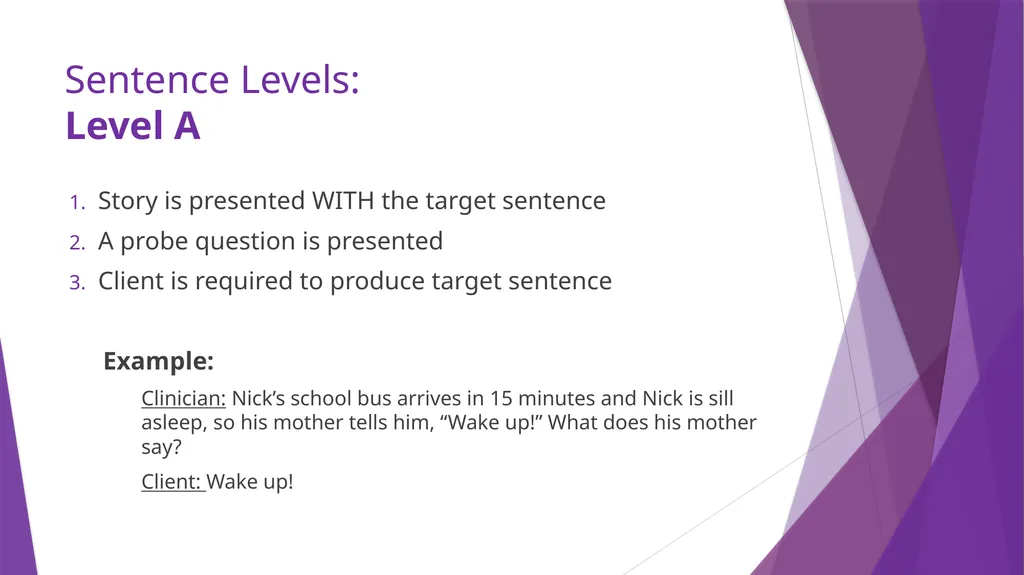
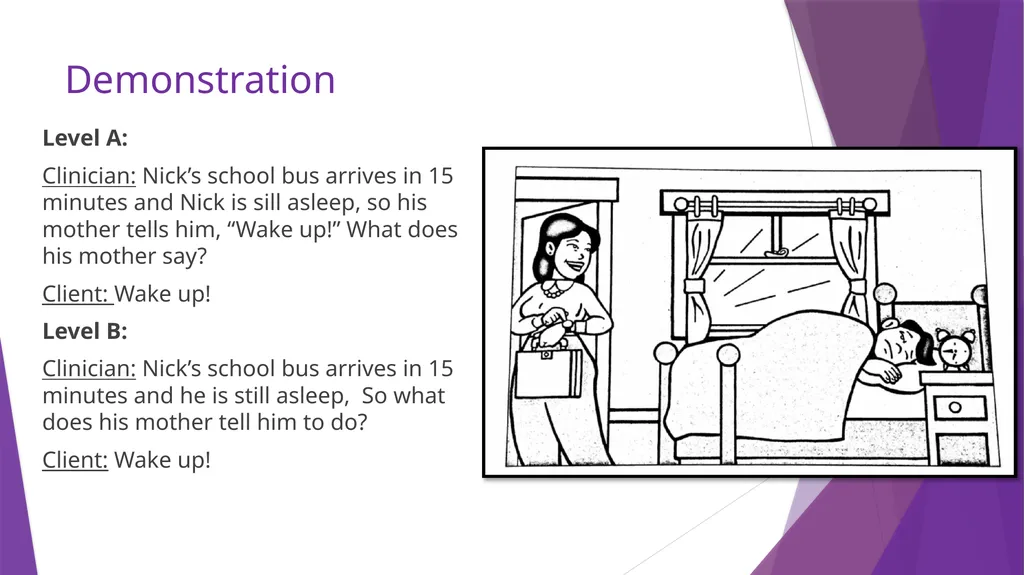
Sentence Levels: Level A Story is presented WITH the target sentence
A probe question is presented
Client is required to produce target sentence
Example:
Clinician: Nick’s school bus arrives in 15 minutes and Nick is sill asleep, so his mother tells him, “Wake up!” What does his mother say?
Client: Wake up!<br>
14
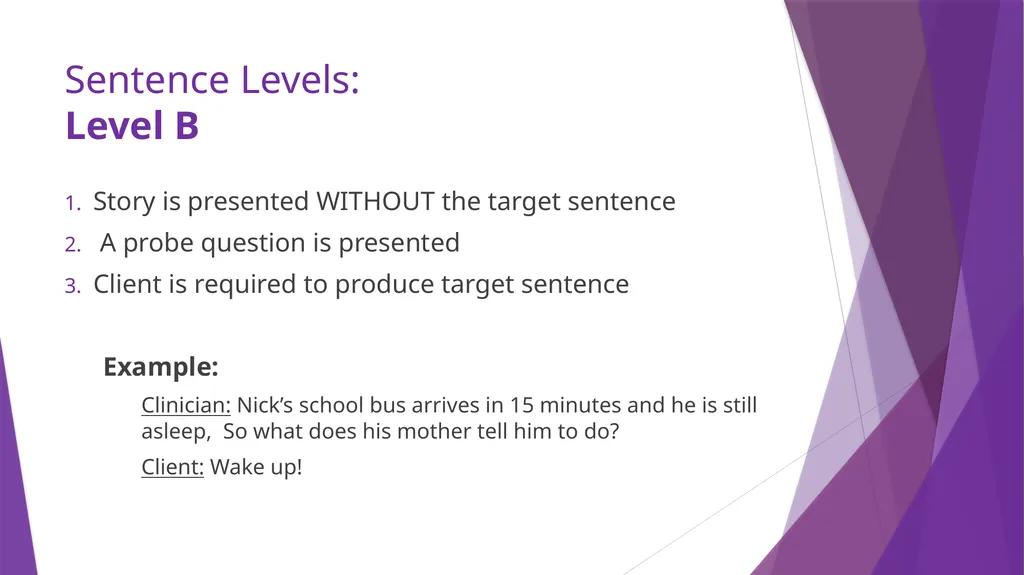
Sentence Levels: Level B Story is presented WITHOUT the target sentence
A probe question is presented
Client is required to produce target sentence
Example:
Clinician: Nick’s school bus arrives in 15 minutes and he is still asleep, So what does his mother tell him to do?
Client: Wake up!<br>
15
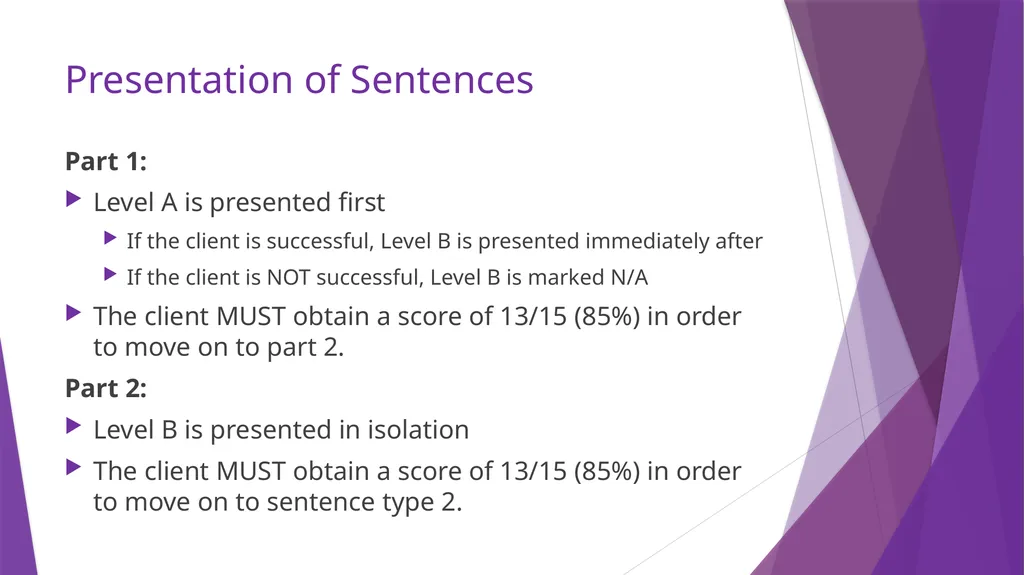
Presentation of Sentences Part 1:
Level A is presented first
If the client is successful, Level B is presented immediately after
If the client is NOT successful, Level B is marked N/A
The client MUST obtain a score of 13/15 (85%) in order to move on to part 2.
Part 2:
Level B is presented in isolation
The client MUST obtain a score of 13/15 (85%) in order to move on to sentence type 2.<br>
16
Demonstration Level A:
Clinician: Nick’s school bus arrives in 15 minutes and Nick is sill asleep, so his mother tells him, “Wake up!” What does his mother say?
Client: Wake up!
Level B:
Clinician: Nick’s school bus arrives in 15 minutes and he is still asleep, So what does his mother tell him to do?
Client: Wake up!<br>
17
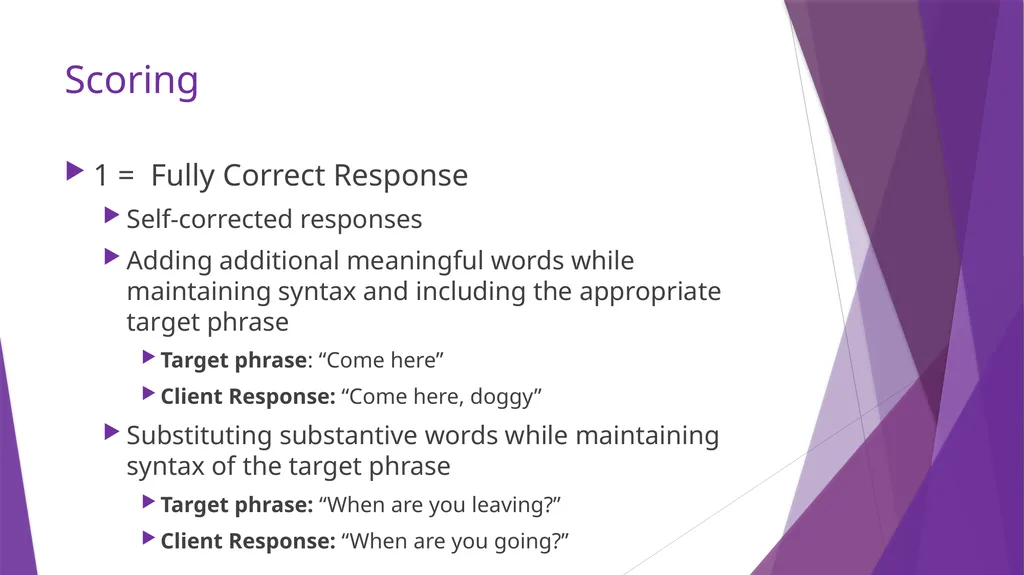
Scoring 1 = Fully Correct Response
Self-corrected responses
Adding additional meaningful words while maintaining syntax and including the appropriate target phrase
Target phrase: “Come here”
Client Response: “Come here, doggy”
Substituting substantive words while maintaining syntax of the target phrase
Target phrase: “When are you leaving?”
Client Response: “When are you going?”<br>
18
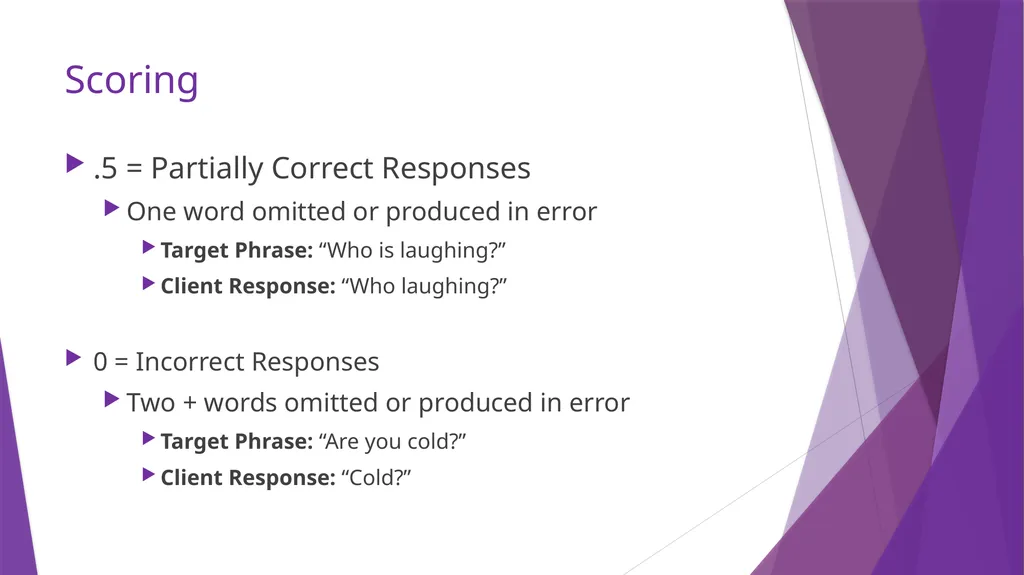
Scoring .5 = Partially Correct Responses
One word omitted or produced in error
Target Phrase: “Who is laughing?”
Client Response: “Who laughing?”
0 = Incorrect Responses
Two + words omitted or produced in error
Target Phrase: “Are you cold?”
Client Response: “Cold?”<br>
19
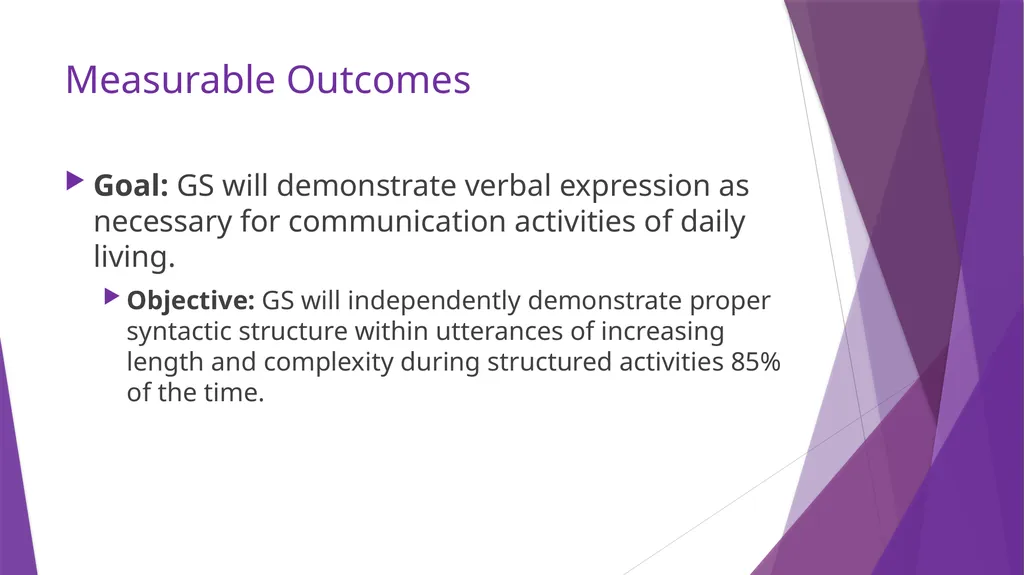
Measurable Outcomes Goal: GS will demonstrate verbal expression as necessary for communication activities of daily living.
Objective: GS will independently demonstrate proper syntactic structure within utterances of increasing length and complexity during structured activities 85% of the time.<br>
20
Video Demonstrations<br>
21
Results GS independently demonstrated proper syntactic structure within utterances of increasing length and complexity during structured activities 86% (13/15) of the time.
Task: Sentence Production Program for Aphasia: Sentence type 1 - Level A & B.
Results: Objective met.
GS independently demonstrated proper syntactic structure within utterances of increasing length and complexity during structured activities 73% (11/15) of the time.
Task: Sentence Production Program for Aphasia: Sentence type 1 - Level B.
Results: Objective not met.<br>