Serum phosphorus measurement (inorganic phosphate). Practical Biochemistry(3st.) M.sc. Duaa falah pharmacology and toxicology Phosphorus It is a mineral found in many foods like beer, cheese, beans, and fish. It is also one of the most
"Serum phosphorus measurement (inorganic" is the property of its rightful owner. Permission is granted to
download and print the materials on this website for personal, non-commercial use only, and to display it
on your personal computer provided you do not modify the materials and that you retain all copyright
notices contained in the materials. By downloading content from our website, you accept the terms of this
agreement.
Phosphorus
It is a mineral found in many foods like beer, cheese, beans, and fish.
It is also one of the most common substances in your everyday environment and in your body.
It plays an important role in the health of your kidneys, bones, muscles, and blood vessels, as well as each cell in your body.<br>
03
Finding foods with high phosphorus levels :
Pork, cod, salmon, and tuna are all high in phosphorus.
Good dairy sources include: ( milk, chocolate, yogurt, eggnog, ricotta and American cheese and instant pudding).
Bran cereal, blueberry muffins, and nachos are also high in phosphorus.<br>
04
Function of phosphorus in body:
You need phosphorus to:
keep your bones strong and healthy
help make energy
move your muscles<br>
05
2. In addition, phosphorus helps to:
build strong teeth.
manage how your body stores and uses energy.
reduce muscle pain after exercise.
filter out waste in your kidneys.
grow, maintain, and repair tissue and cells.
produce DNA and RNA — the body’s genetic building blocks.
balance and use vitamins such as vitamins B and D, as well as other minerals like iodine, magnesium, and zinc.
maintain a regular heart beat.
facilitate nerve conduction.<br>
06
Serum phosphorus
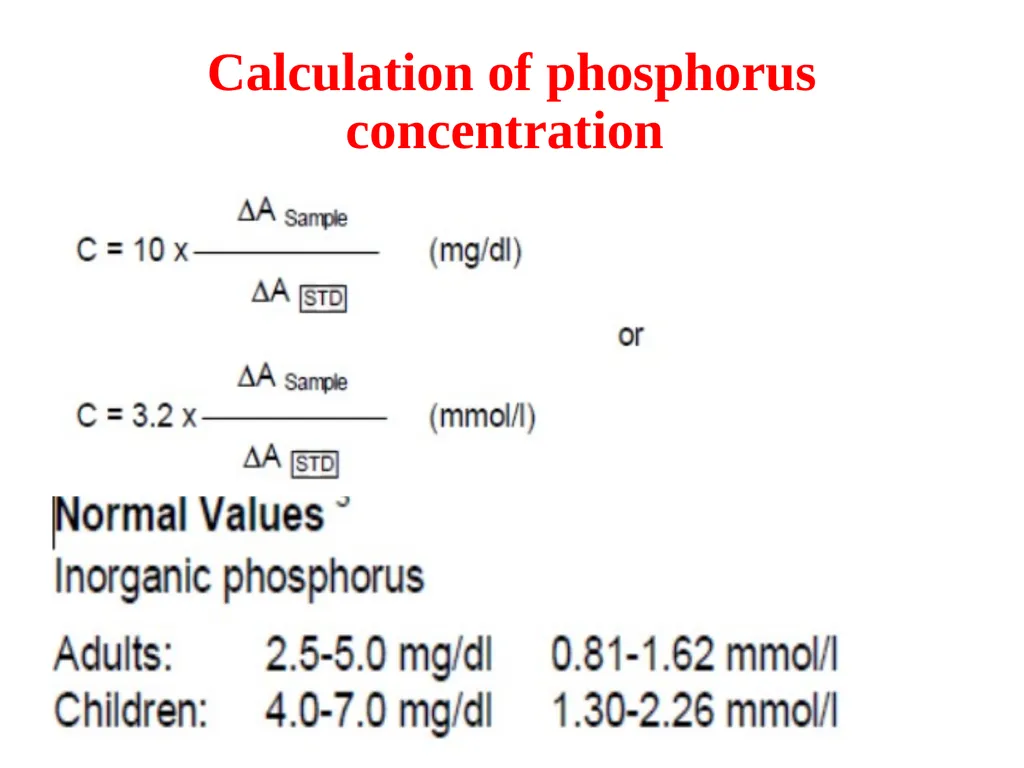
It is measured in milligrams of phosphorus per deciliter of blood (mg/dL). According to Mayo Medical Laboratories, a normal range for adults is generally 2.5 to 4.5 mg/dL. The normal range varies slightly depending on your age.
Other names: phosphorus test, P, PO4, phosphorus-serum.<br>
07
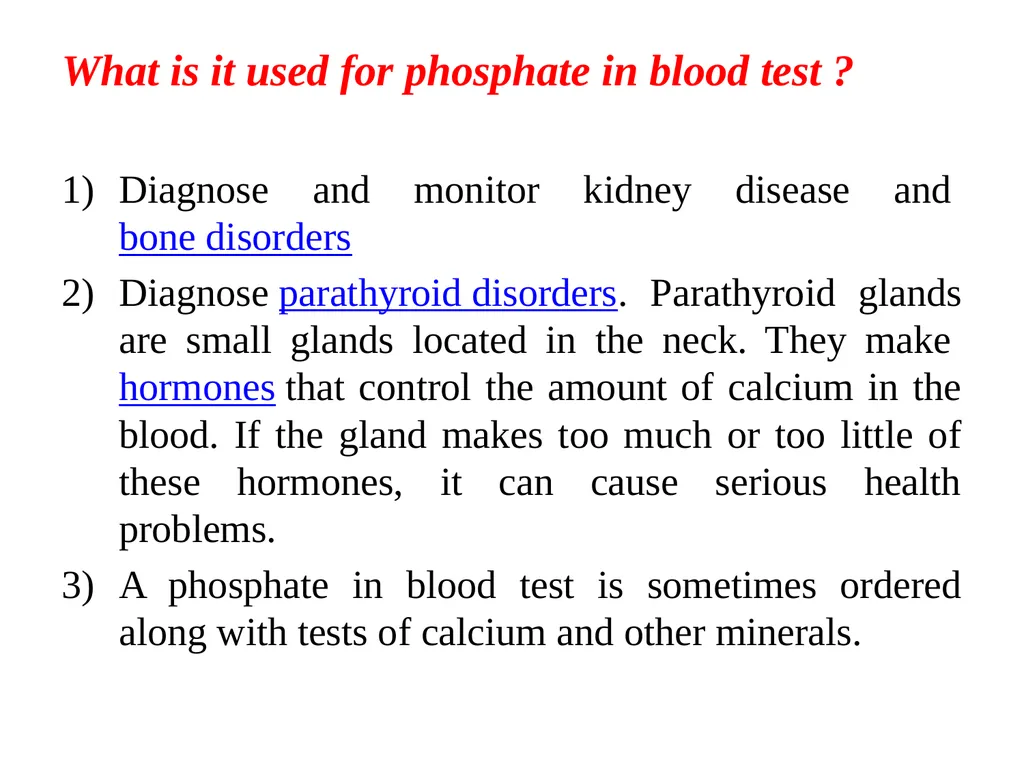
What is it used for phosphate in blood test ?
Diagnose and monitor kidney disease and bone disorders
Diagnose parathyroid disorders. Parathyroid glands are small glands located in the neck. They make hormones that control the amount of calcium in the blood. If the gland makes too much or too little of these hormones, it can cause serious health problems.
A phosphate in blood test is sometimes ordered along with tests of calcium and other minerals.<br>
08
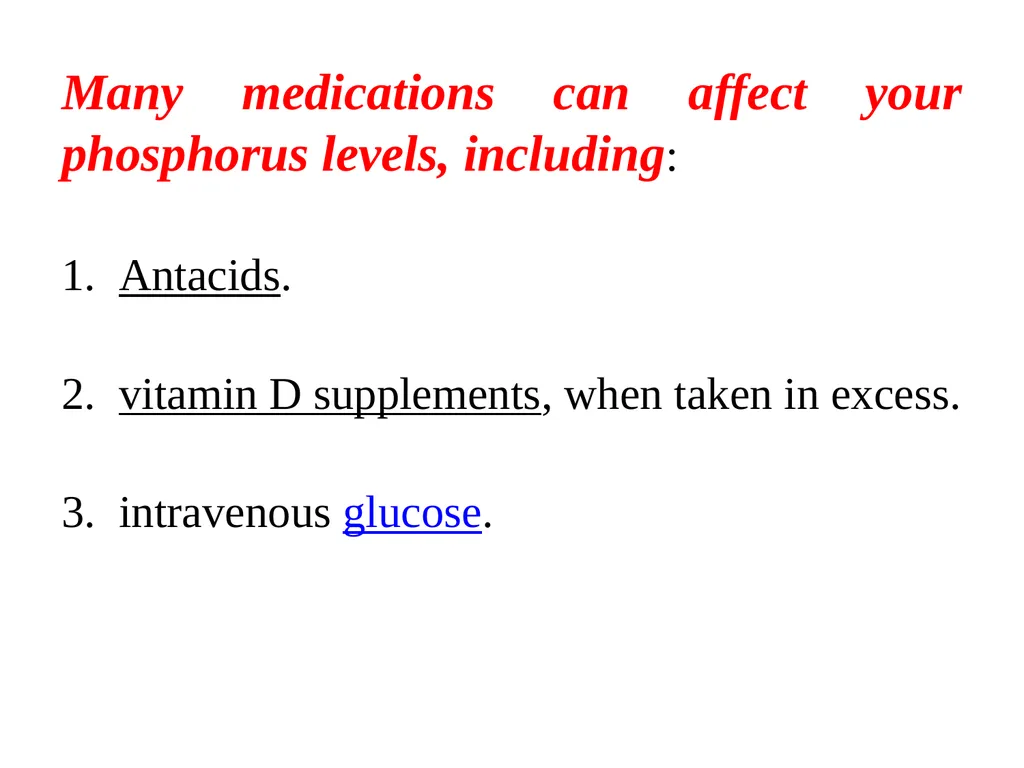
Many medications can affect your phosphorus levels, including:
Antacids.
vitamin D supplements, when taken in excess.
intravenous glucose.<br>
09
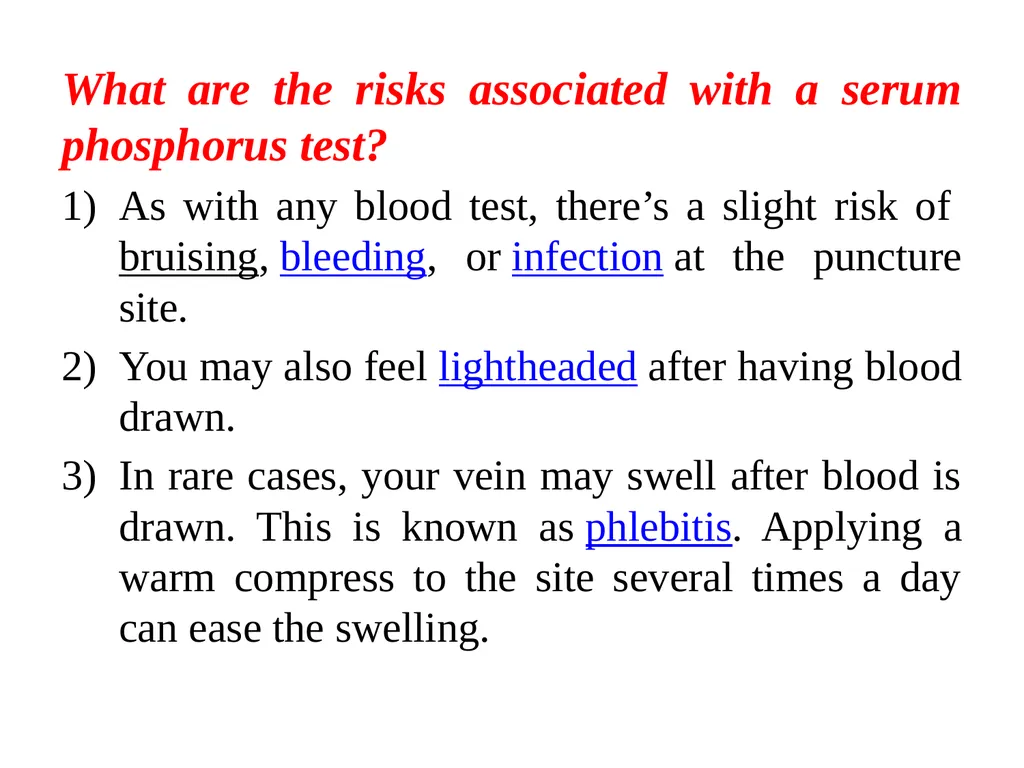
What are the risks associated with a serum phosphorus test?
As with any blood test, there’s a slight risk of bruising, bleeding, or infection at the puncture site.
You may also feel lightheaded after having blood drawn.
In rare cases, your vein may swell after blood is drawn. This is known as phlebitis. Applying a warm compress to the site several times a day can ease the swelling.<br>
10
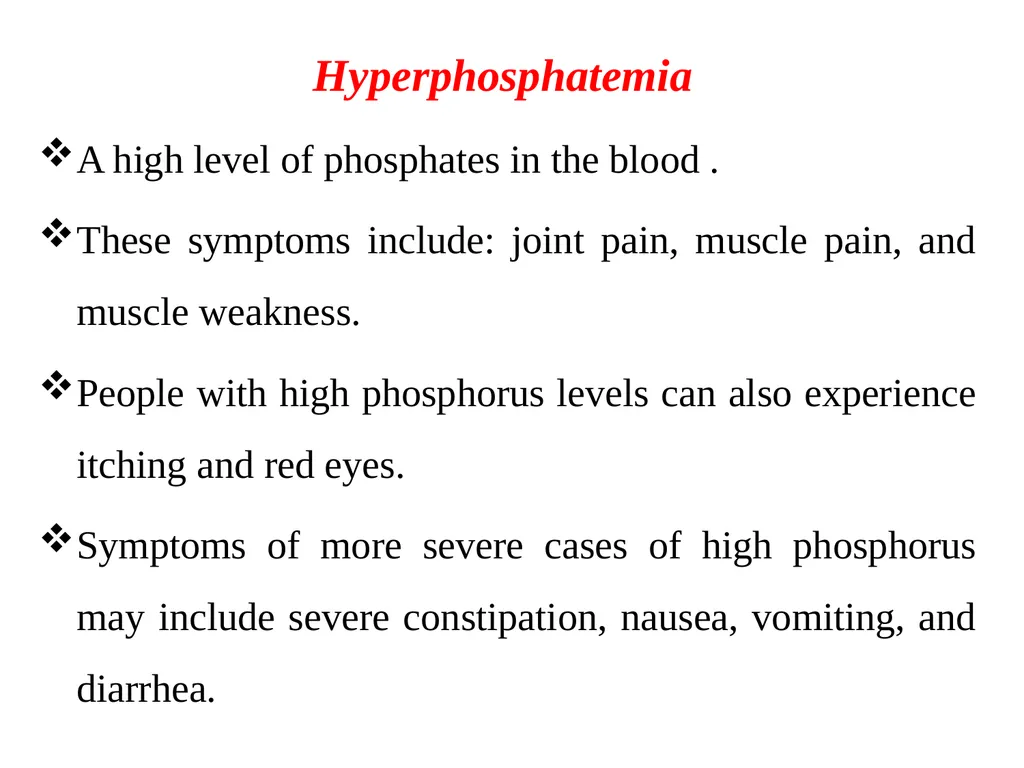
Hyperphosphatemia
A high level of phosphates in the blood .
These symptoms include: joint pain, muscle pain, and muscle weakness.
People with high phosphorus levels can also experience itching and red eyes.
Symptoms of more severe cases of high phosphorus may include severe constipation, nausea, vomiting, and diarrhea.<br>
11
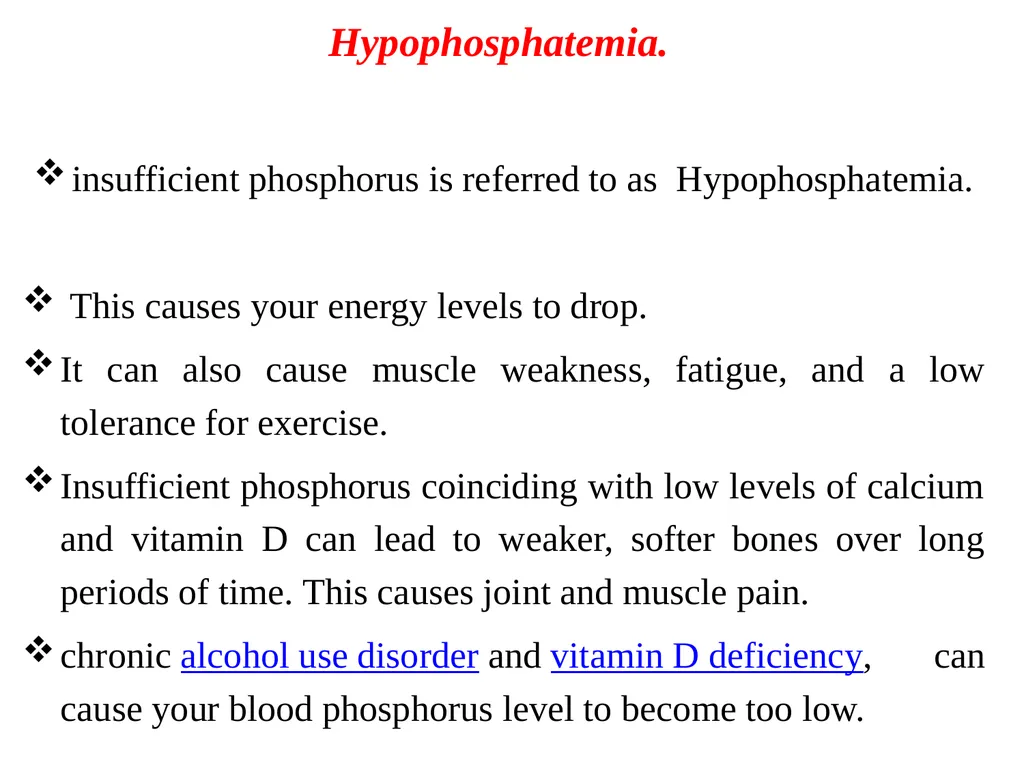
Hypophosphatemia.
insufficient phosphorus is referred to as Hypophosphatemia.
This causes your energy levels to drop.
It can also cause muscle weakness, fatigue, and a low tolerance for exercise.
Insufficient phosphorus coinciding with low levels of calcium and vitamin D can lead to weaker, softer bones over long periods of time. This causes joint and muscle pain.
chronic alcohol use disorder and vitamin D deficiency, can cause your blood phosphorus level to become too low.<br>
12
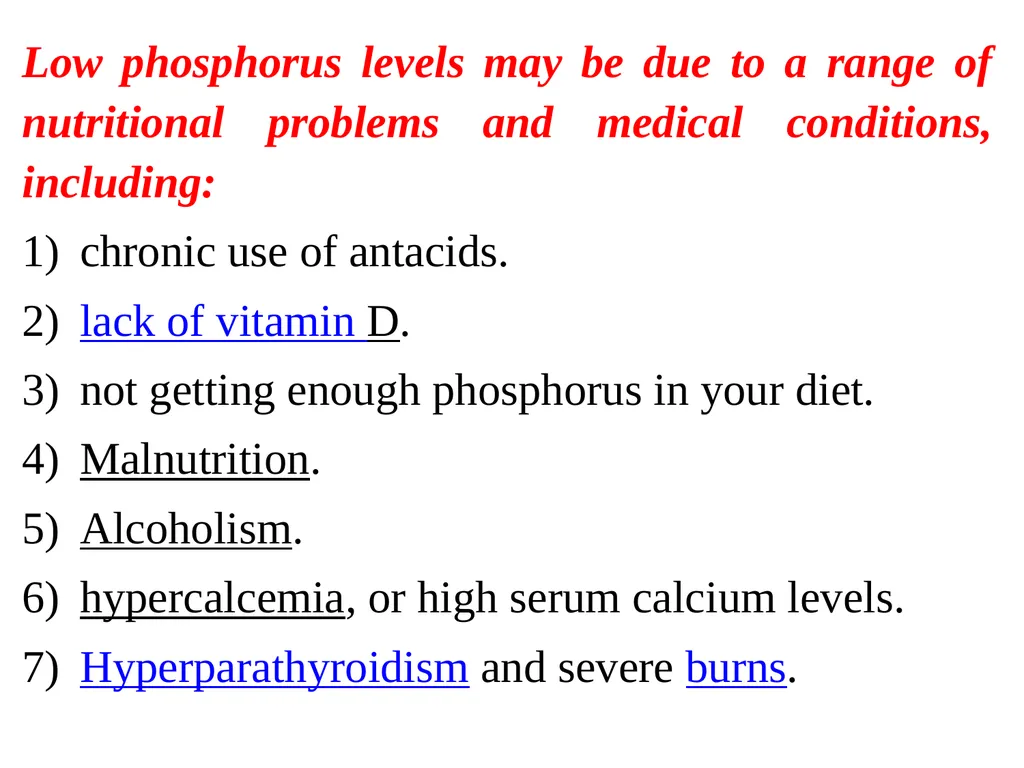
Low phosphorus levels may be due to a range of nutritional problems and medical conditions, including:
chronic use of antacids.
lack of vitamin D.
not getting enough phosphorus in your diet.
Malnutrition.
Alcoholism.
hypercalcemia, or high serum calcium levels.
Hyperparathyroidism and severe burns.<br>