SOCIAL MEDIA IN TEACHING AND LEARNING WELCOME
Description: SOCIAL MEDIA IN TEACHING AND LEARNING WELCOME Facilitator name Position at university Contact info LEARNING OUTCOMES By the end of this module, you should be able to: identify the current uses of social media in teaching and learning;
Related Topics
Download Presentation
"SOCIAL MEDIA IN TEACHING AND LEARNING WELCOME" is the property of its rightful owner. Permission is granted to download and print the materials on this website for personal, non-commercial use only, and to display it on your personal computer provided you do not modify the materials and that you retain all copyright notices contained in the materials. By downloading content from our website, you accept the terms of this agreement.
Presentation Transcript
slide1. SOCIAL MEDIA IN TEACHING AND LEARNING<br>
slide2. WELCOME Facilitator name
Position at university
Contact info<br>
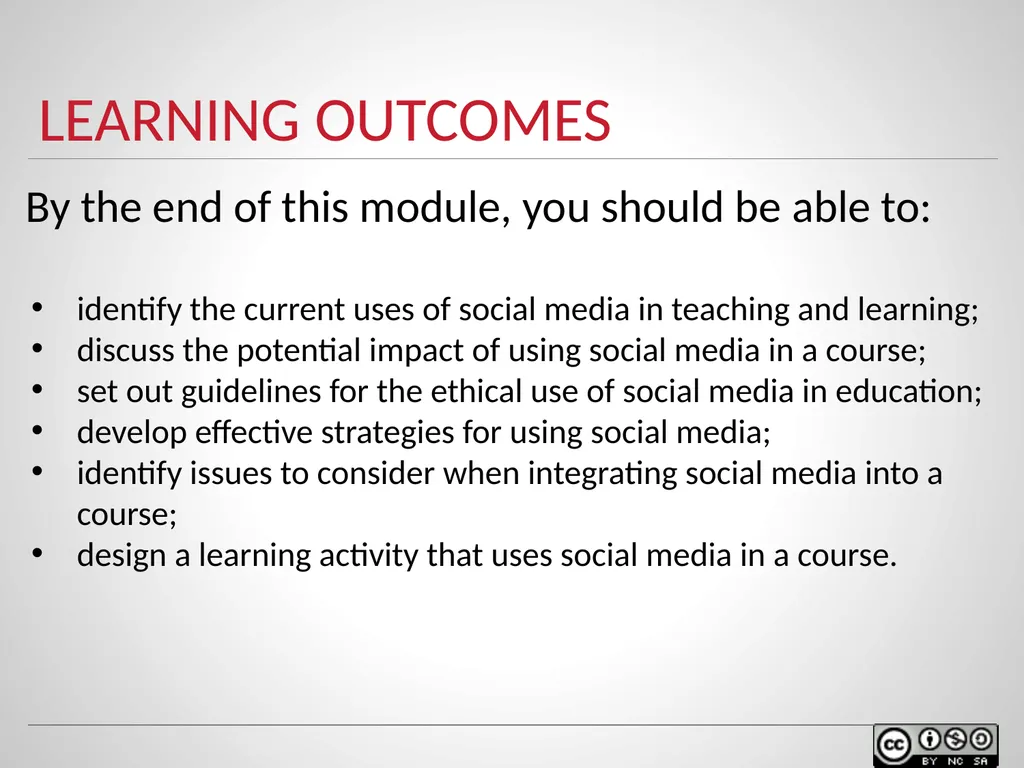
slide3. LEARNING OUTCOMES By the end of this module, you should be able to:
identify the current uses of social media in teaching and learning;
discuss the potential impact of using social media in a course;
set out guidelines for the ethical use of social media in education;
develop effective strategies for using social media;
identify issues to consider when integrating social media into a course;
design a learning activity that uses social media in a course.<br>
slide4. AGENDA What is Social Media?
Use of Social Media<br>
slide5. WHAT IS SOCIAL MEDIA?<br>
slide6. WHAT IS SOCIAL MEDIA? How would you define social media?<br>
slide7. WHAT IS SOCIAL MEDIA? “Social media are technologies that facilitate social interaction, make possible collaboration, and enable deliberation across stakeholders. These technologies include blogs, wikis, media (audio, photo, video, text) sharing tools, networking platforms (including Facebook), and virtual worlds.”
Bryer and Zavatarro (2011)<br>
slide8. WHAT DOES SOCIAL MEDIA DO? Social media…
allows students to self-select study groups and organize based on interests;
provides easy access to resources from around the world, and
provides access to learning beyond the classroom.
Tony Bates - https://opentextbc.ca/teachinginadigitalage/chapter/9-5-5-social-media/<br>
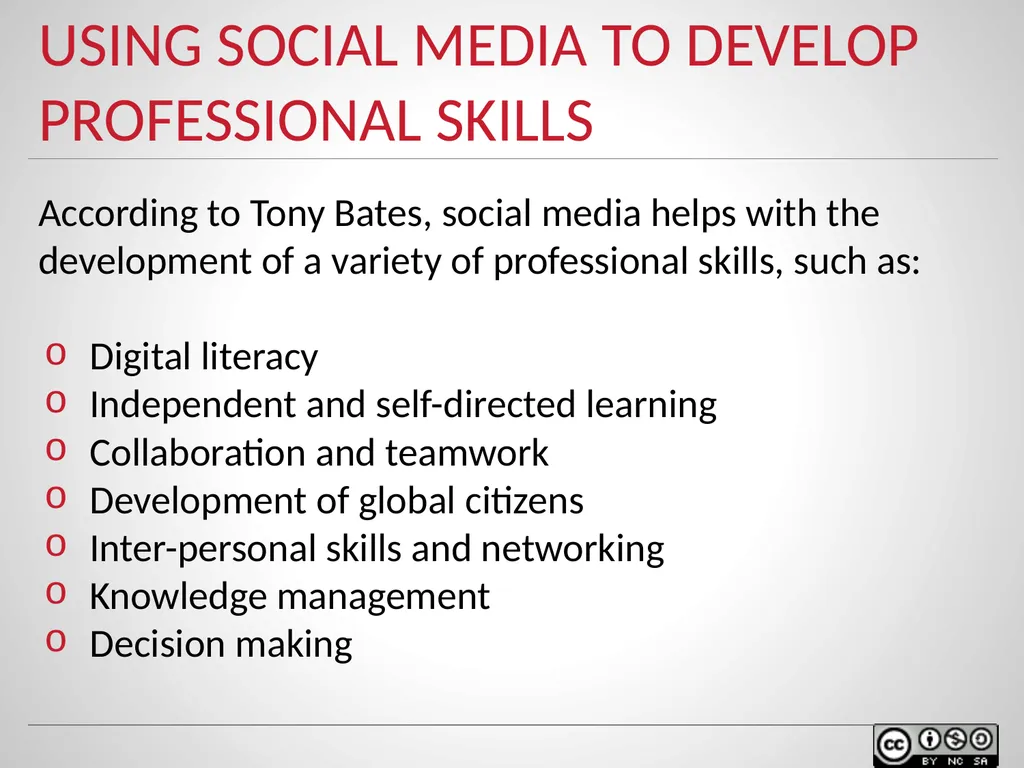
slide9. USING SOCIAL MEDIA TO DEVELOP PROFESSIONAL SKILLS According to Tony Bates, social media helps with the development of a variety of professional skills, such as:
Digital literacy
Independent and self-directed learning
Collaboration and teamwork
Development of global citizens
Inter-personal skills and networking
Knowledge management
Decision making<br>
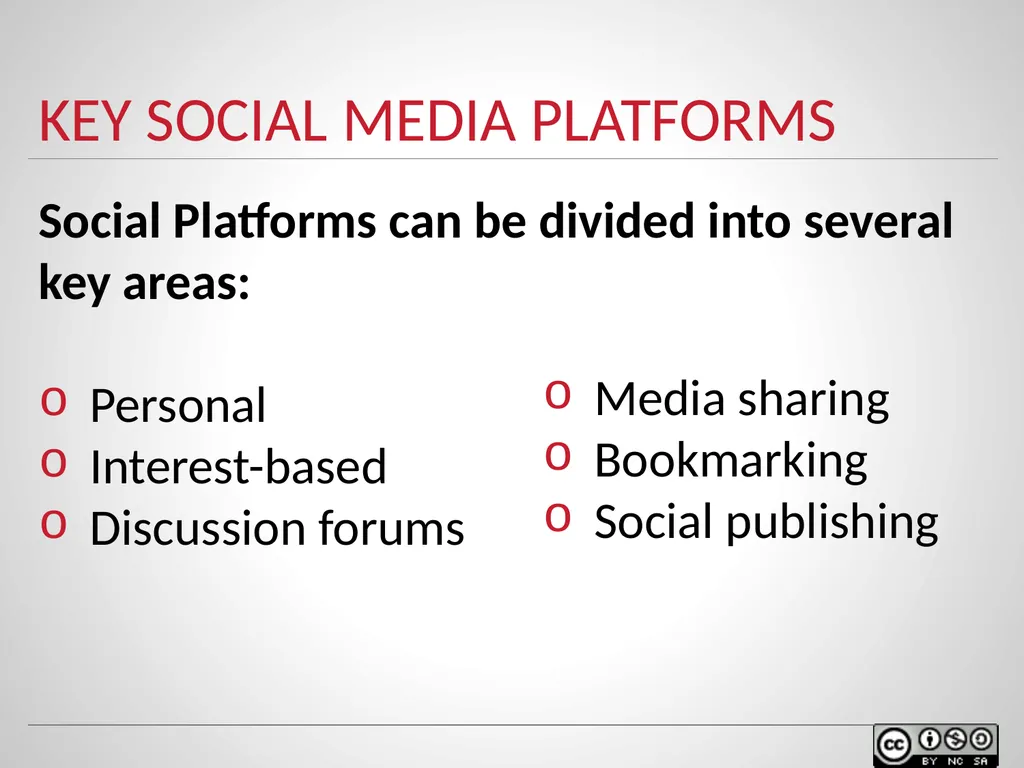
slide10. KEY SOCIAL MEDIA PLATFORMS Social Platforms can be divided into several key areas:
Personal
Interest-based
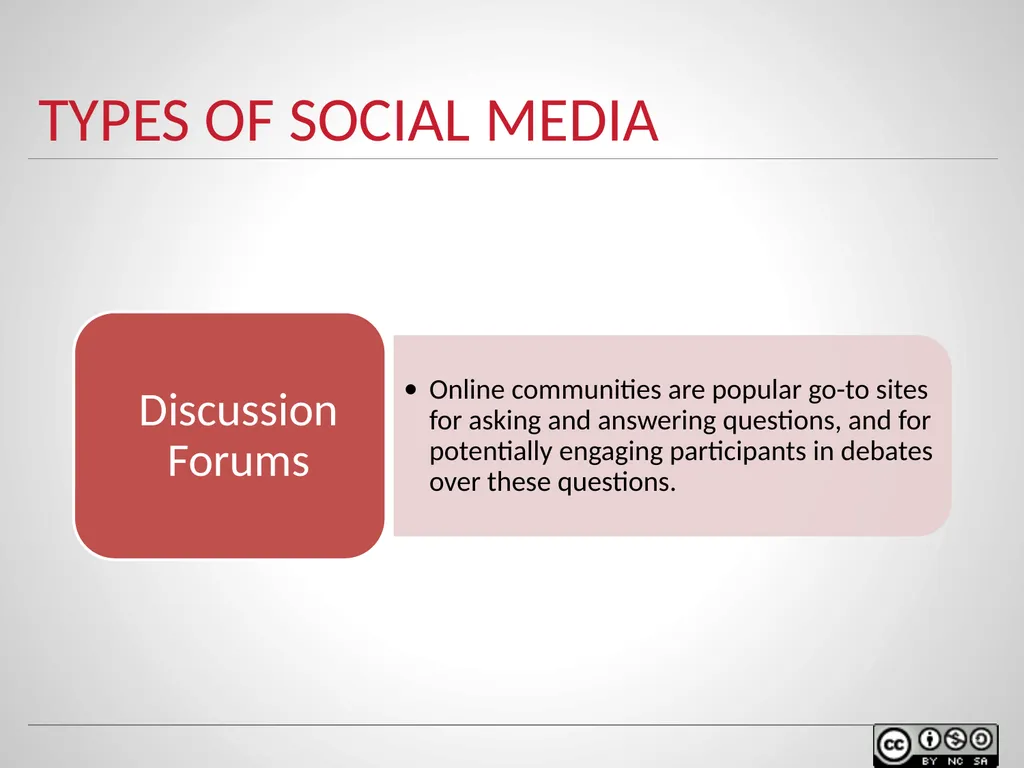
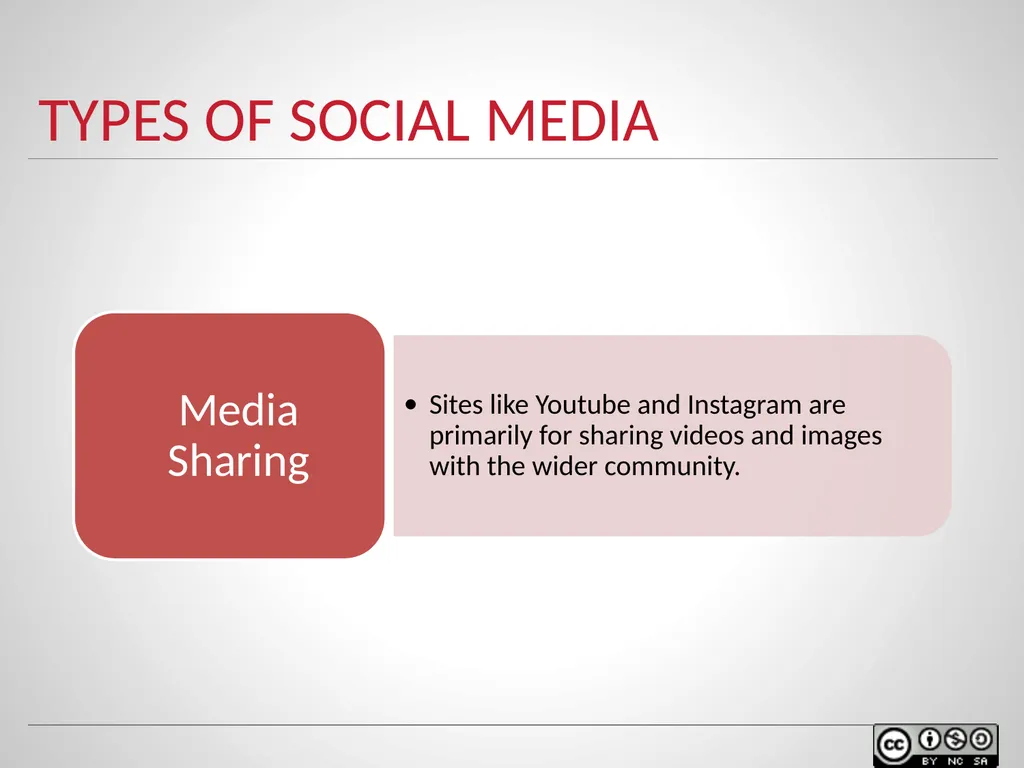
Discussion forums Media sharing
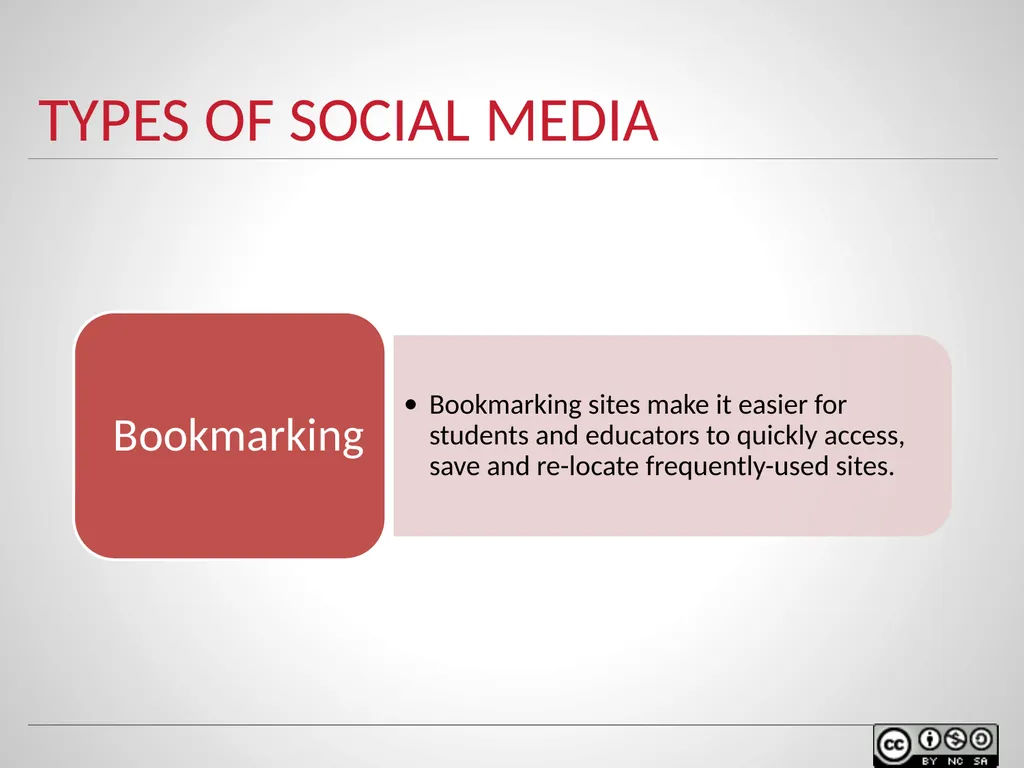
Bookmarking
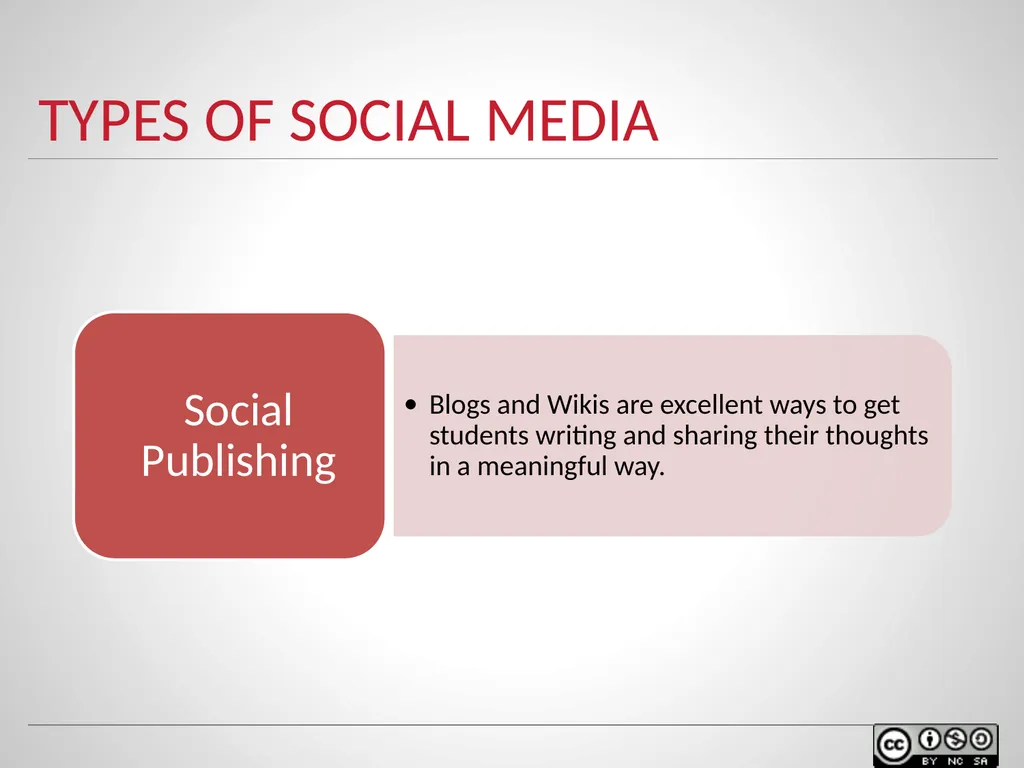
Social publishing<br>
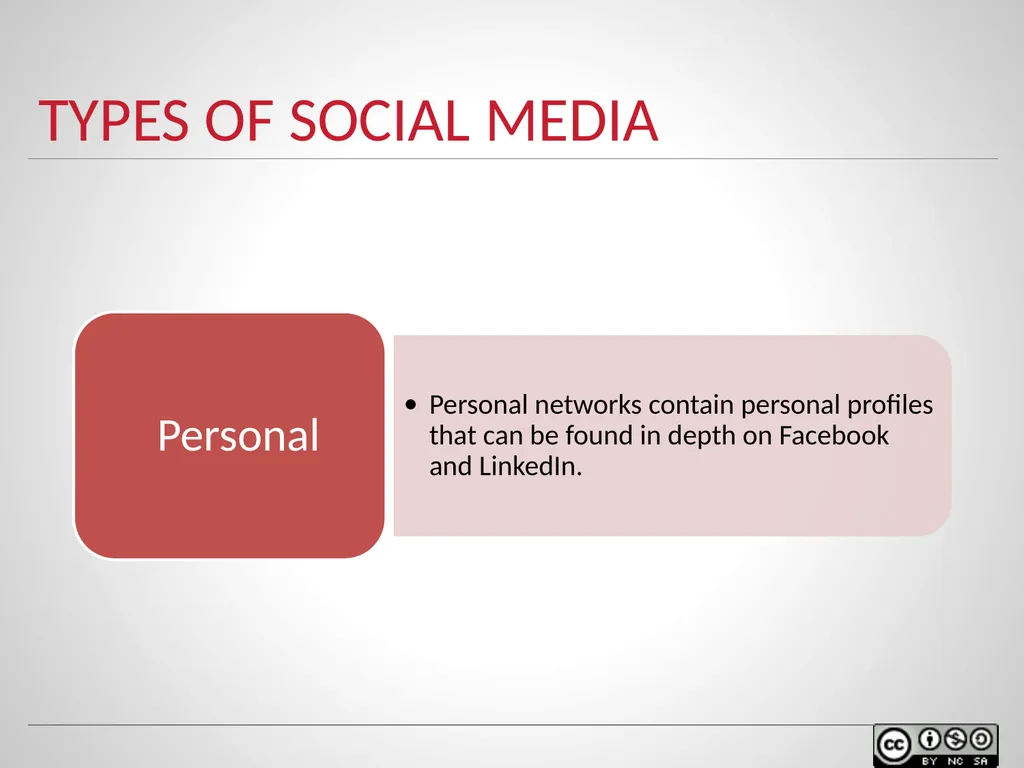
slide11. TYPES OF SOCIAL MEDIA<br>
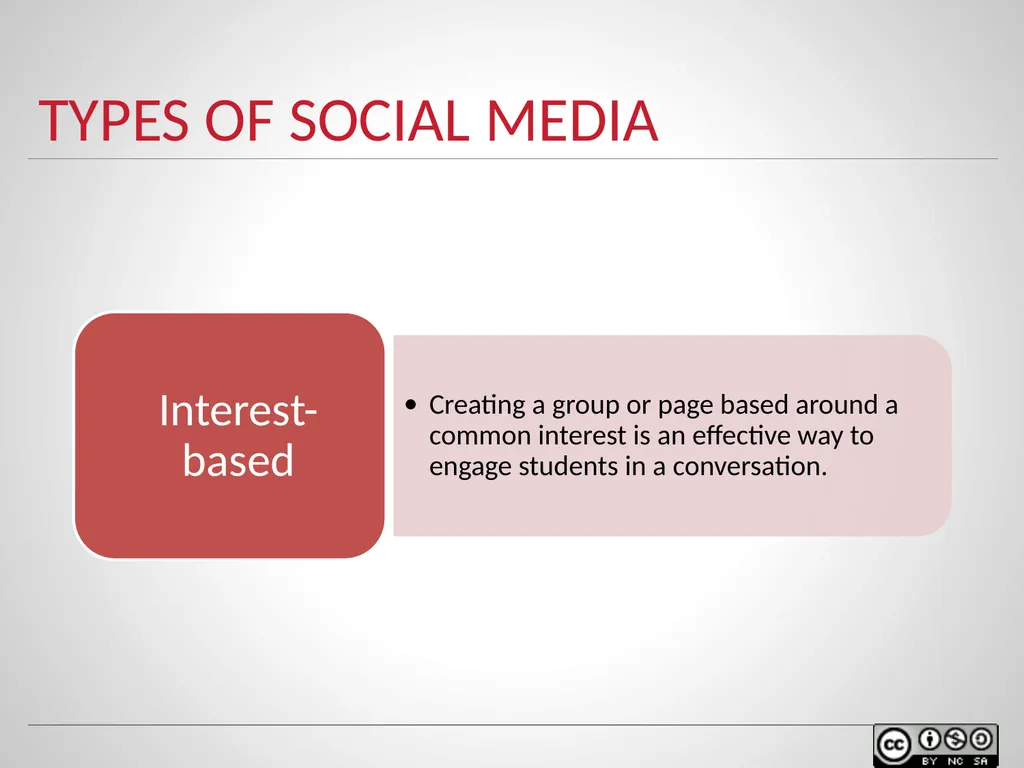
slide12. TYPES OF SOCIAL MEDIA<br>
slide13. TYPES OF SOCIAL MEDIA<br>
slide14. TYPES OF SOCIAL MEDIA<br>
slide15. TYPES OF SOCIAL MEDIA<br>
slide16. TYPES OF SOCIAL MEDIA<br>
slide17. THINK. PAIR. SHARE How might you use some of the platforms discussed in your course?
How do you make use of them for your own purposes?<br>
slide18. BENEFITS OF USING SOCIAL MEDIA Increased level of communication (collaboration and participation),
Privacy: private space for free and open discussion,
Facilitates team projects implementation and review.<br>
slide19. VIDEO In this video, you’ll watch interviews with instructors sharing the benefits of using social in their courses.
Think about your own pros and cons. Have the instructors alleviated any of your reservations?<br>
slide20. CONSIDERATIONS FOR ADOPTION Undetermined possibilities
Controversial opinions
Technical issues
Institutional factors
For more information, please read Chapter 6 in the SMILE report: http://www.eun.org/c/document_library/get_file?uuid=232671ea-32ca-4272-8b24-20328aafe8bb&groupId=43887<br>
slide21. VIDEO In this video, Instructors share the challenges they faced when attempting to integrate social media activities into their curriculum. As you view the video, consider any challenges you are facing.<br>
slide22. USE OF SOCIAL MEDIA<br>
slide23. USE OF SOCIAL MEDIA How do you use social media?
Discuss with a group of 3 or 4 some of the common ways you use social media.
Do you use it mostly for personal, professional or teaching use?<br>
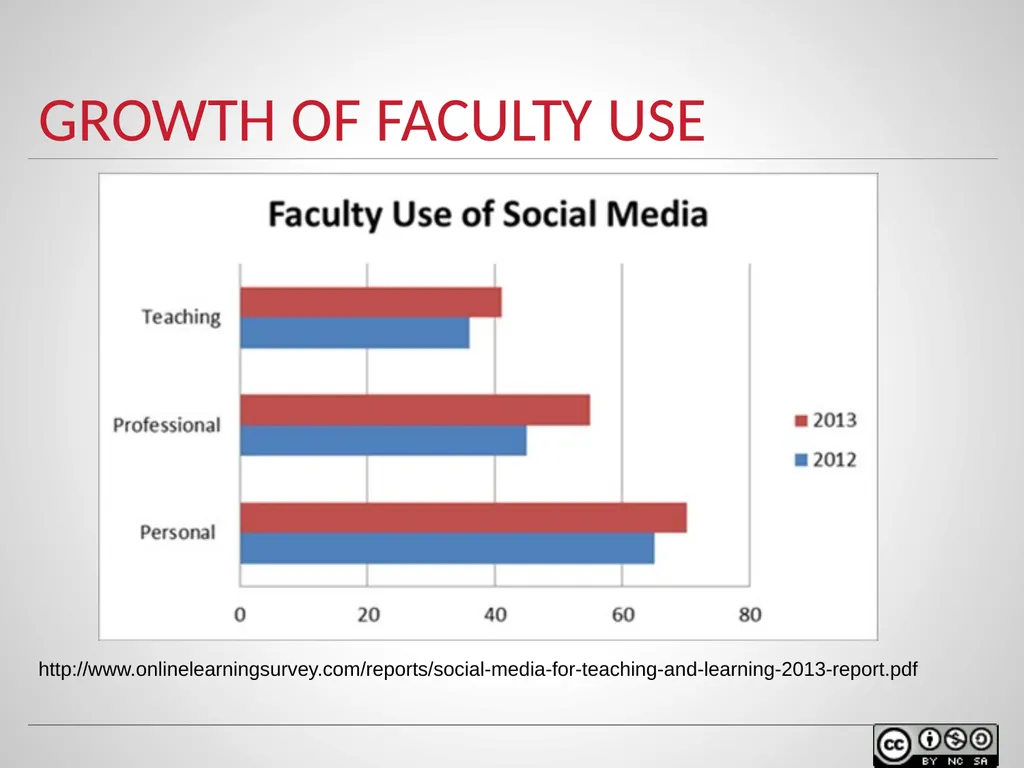
slide24. FACULTY USE OF SOCIAL MEDIA The three main uses of social media for faculty are:
Personal
Professional (research related)
Teaching<br>
slide25. GROWTH OF FACULTY USE http://www.onlinelearningsurvey.com/reports/social-media-for-teaching-and-learning-2013-report.pdf<br>
slide26. VIDEO We are going to hear how and why faculty and instructors use social media. Before watching the video, take a moment to think about your own use of social media for personal, professional or teaching purposes. What have your experiences been like?<br>
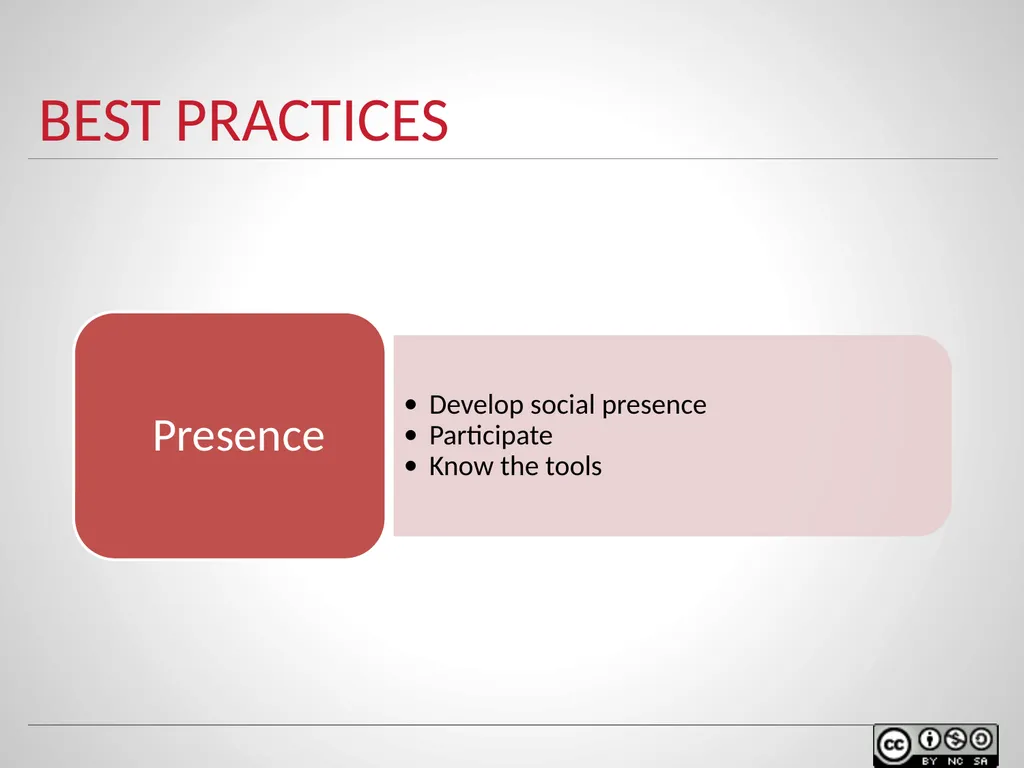
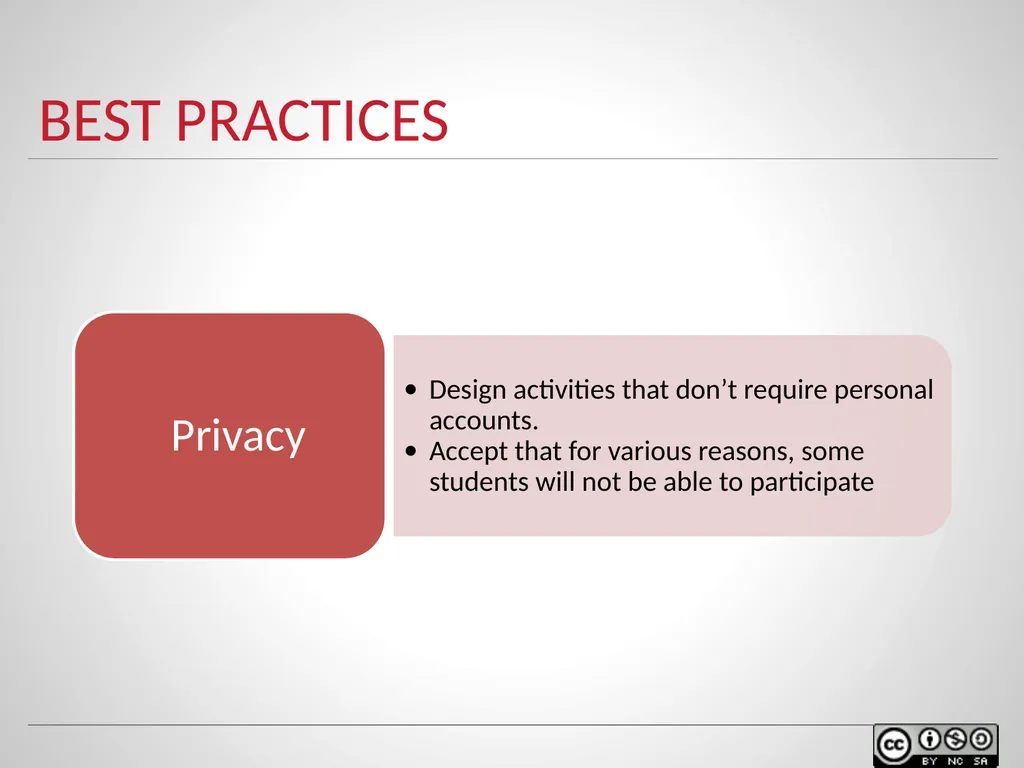
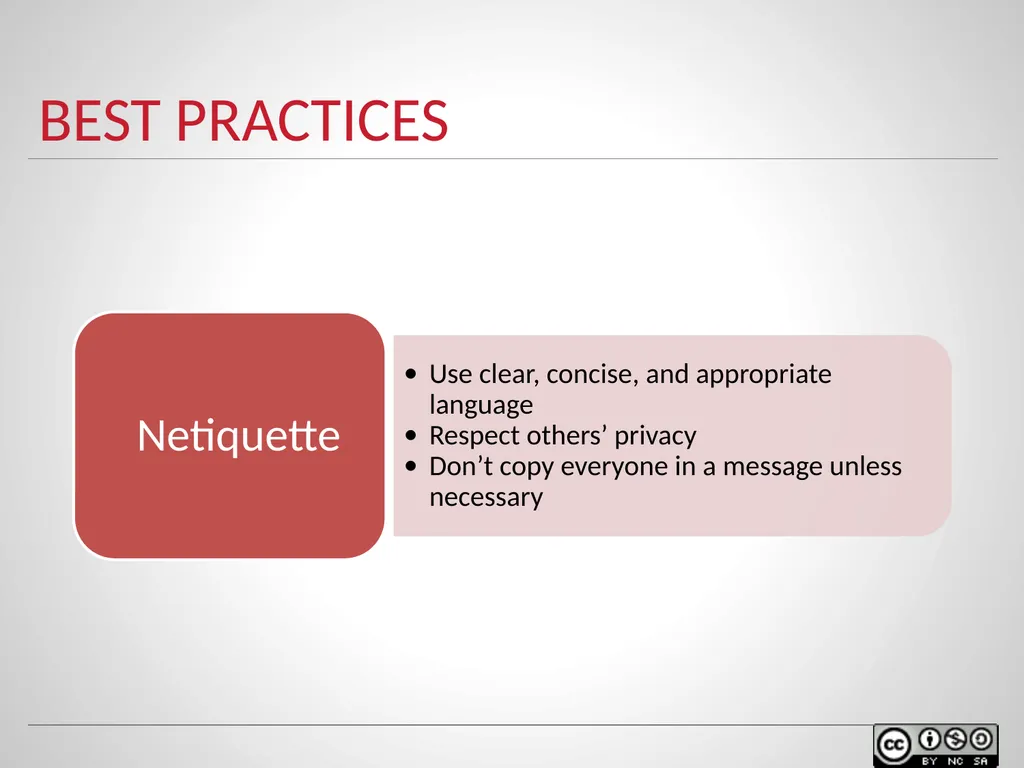
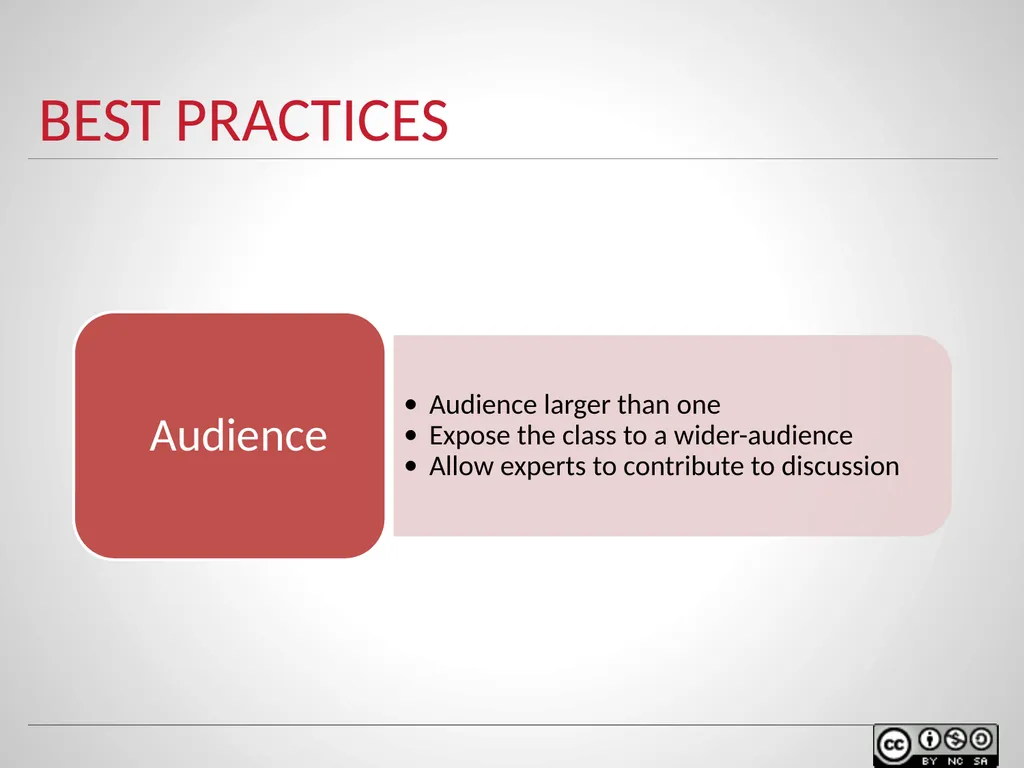
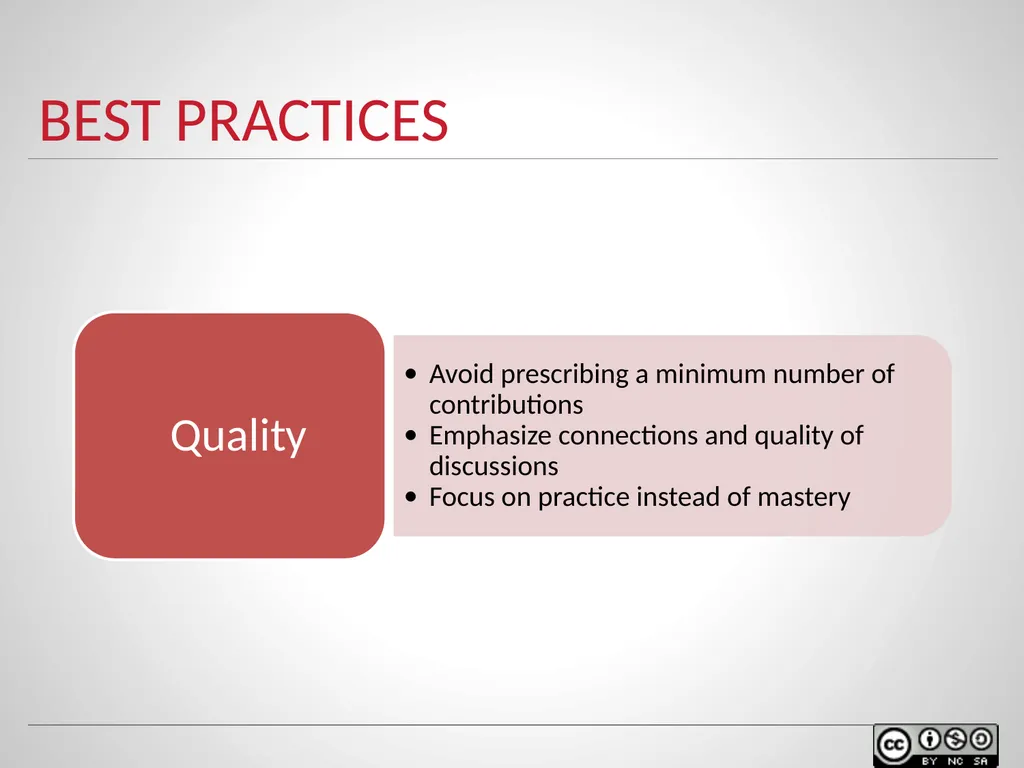
slide27. BEST PRACTICES Using social media in the classroom is a relatively new phenomenon. The next few slides will discuss the following best practices for implementing social media into your courses. Expectations
Presence
Audience Quality
Privacy
Netiquette<br>
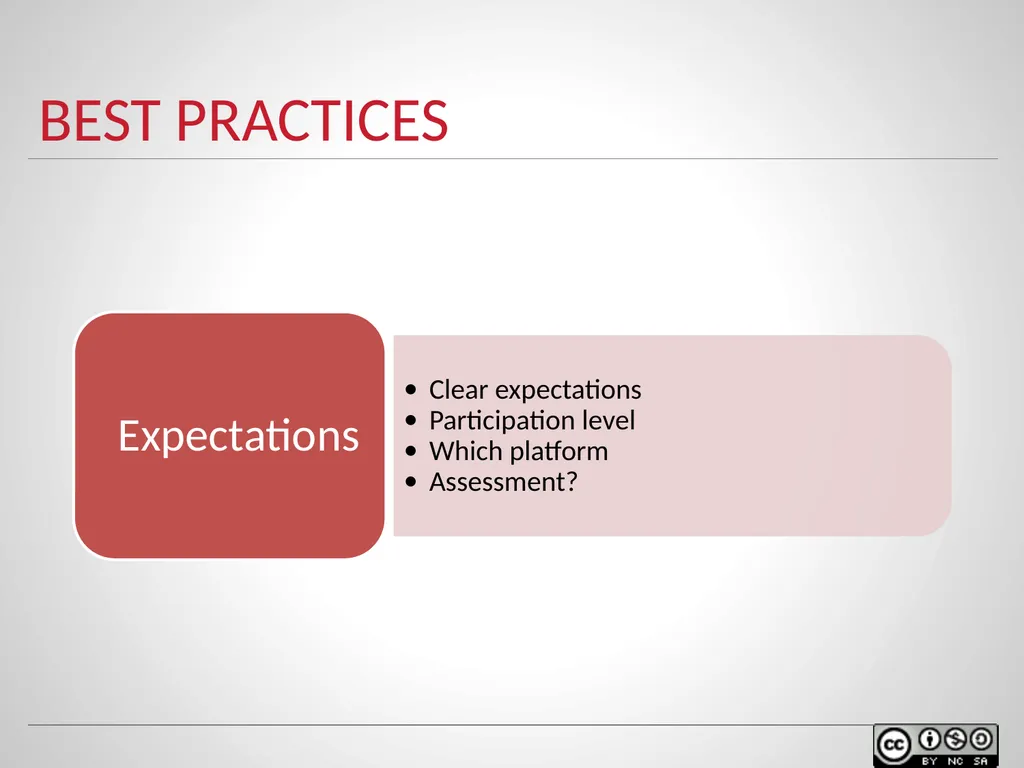
slide28. BEST PRACTICES<br>
slide29. BEST PRACTICES<br>
slide30. BEST PRACTICES<br>
slide31. BEST PRACTICES<br>
slide32. BEST PRACTICES<br>
slide33. BEST PRACTICES<br>
slide34. VIDEO In this video, instructors share some of the best practices they’ve learned through their own use of social media. While watching the video, think about the best practices we’ve discussed and how the instructors are using these in their classes or research.<br>
slide35. SUMMARY Social media:
is a form of user-generated electronic communication,
has a wide-variety of uses and forms in the digital realm,
has a number of benefits and challenges.<br>
slide36. SUMMARY Faculty usage is personal, professional and educational.
Instructors should:
thoughtfully integrate social media into their course,
follow effective practices,
model appropriate use.<br>
slide37. HOMEWORK Choose a social media platform that you have not used before.
Create an account and add followers or contacts.
Explore the possibilities for interaction.
Design an activity for students in your courses<br>
slide38. THANK YOU Questions?
Comments?
Help?
Contact information – facilitator’s and departmental<br>
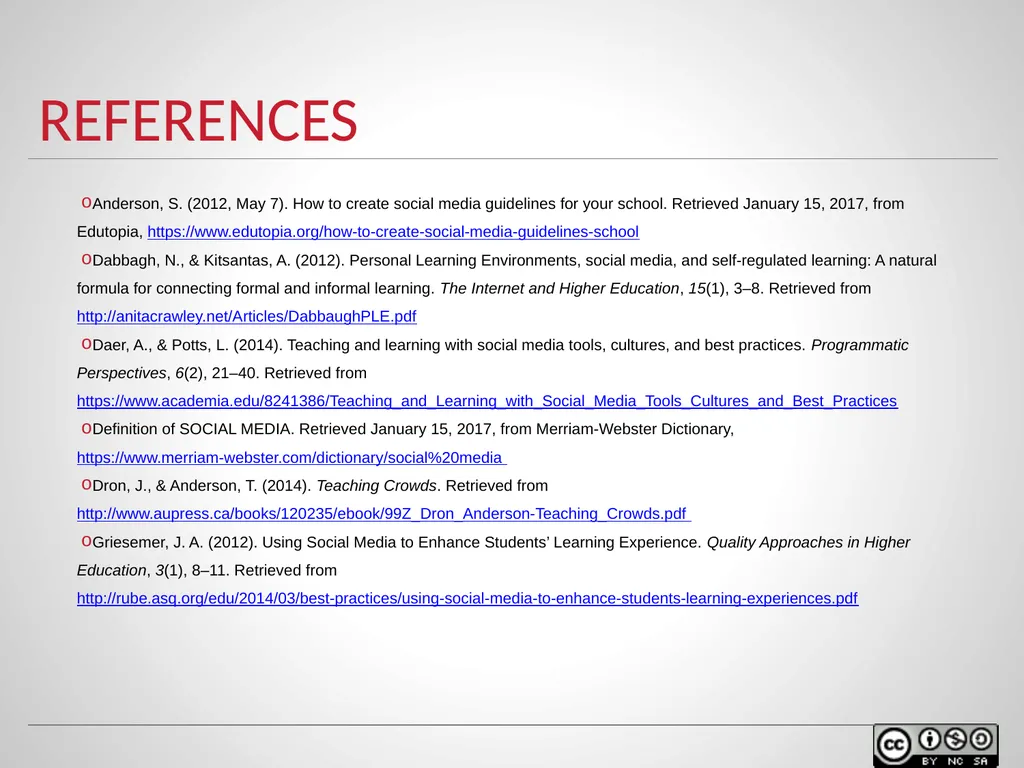
slide39. REFERENCES Anderson, S. (2012, May 7). How to create social media guidelines for your school. Retrieved January 15, 2017, from Edutopia, https://www.edutopia.org/how-to-create-social-media-guidelines-school
Dabbagh, N., & Kitsantas, A. (2012). Personal Learning Environments, social media, and self-regulated learning: A natural formula for connecting formal and informal learning. The Internet and Higher Education, 15(1), 3–8. Retrieved from http://anitacrawley.net/Articles/DabbaughPLE.pdf
Daer, A., & Potts, L. (2014). Teaching and learning with social media tools, cultures, and best practices. Programmatic Perspectives, 6(2), 21–40. Retrieved from https://www.academia.edu/8241386/Teaching_and_Learning_with_Social_Media_Tools_Cultures_and_Best_Practices
Definition of SOCIAL MEDIA. Retrieved January 15, 2017, from Merriam-Webster Dictionary, https://www.merriam-webster.com/dictionary/social%20media
Dron, J., & Anderson, T. (2014). Teaching Crowds. Retrieved from http://www.aupress.ca/books/120235/ebook/99Z_Dron_Anderson-Teaching_Crowds.pdf
Griesemer, J. A. (2012). Using Social Media to Enhance Students’ Learning Experience. Quality Approaches in Higher Education, 3(1), 8–11. Retrieved from http://rube.asq.org/edu/2014/03/best-practices/using-social-media-to-enhance-students-learning-experiences.pdf<br>
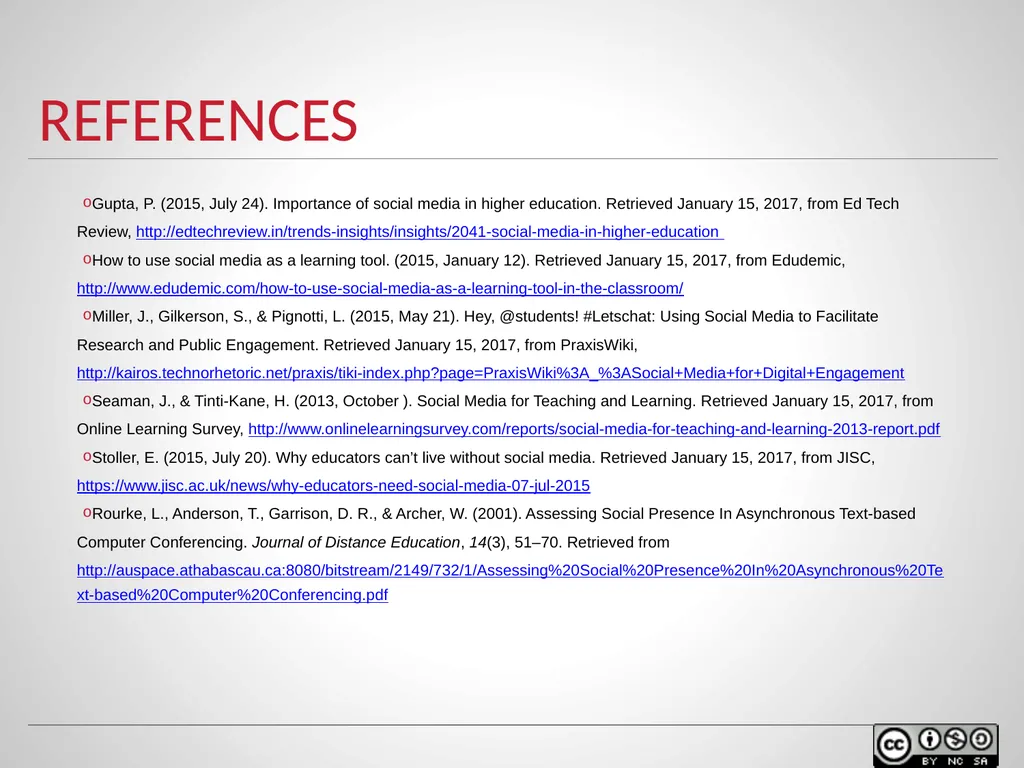
slide40. REFERENCES Gupta, P. (2015, July 24). Importance of social media in higher education. Retrieved January 15, 2017, from Ed Tech Review, http://edtechreview.in/trends-insights/insights/2041-social-media-in-higher-education
How to use social media as a learning tool. (2015, January 12). Retrieved January 15, 2017, from Edudemic, http://www.edudemic.com/how-to-use-social-media-as-a-learning-tool-in-the-classroom/
Miller, J., Gilkerson, S., & Pignotti, L. (2015, May 21). Hey, @students! #Letschat: Using Social Media to Facilitate Research and Public Engagement. Retrieved January 15, 2017, from PraxisWiki, http://kairos.technorhetoric.net/praxis/tiki-index.php?page=PraxisWiki%3A_%3ASocial+Media+for+Digital+Engagement
Seaman, J., & Tinti-Kane, H. (2013, October ). Social Media for Teaching and Learning. Retrieved January 15, 2017, from Online Learning Survey, http://www.onlinelearningsurvey.com/reports/social-media-for-teaching-and-learning-2013-report.pdf
Stoller, E. (2015, July 20). Why educators can’t live without social media. Retrieved January 15, 2017, from JISC, https://www.jisc.ac.uk/news/why-educators-need-social-media-07-jul-2015
Rourke, L., Anderson, T., Garrison, D. R., & Archer, W. (2001). Assessing Social Presence In Asynchronous Text-based Computer Conferencing. Journal of Distance Education, 14(3), 51–70. Retrieved from http://auspace.athabascau.ca:8080/bitstream/2149/732/1/Assessing%20Social%20Presence%20In%20Asynchronous%20Text-based%20Computer%20Conferencing.pdf<br>

slide2. WELCOME Facilitator name
Position at university
Contact info<br>
slide3. LEARNING OUTCOMES By the end of this module, you should be able to:
identify the current uses of social media in teaching and learning;
discuss the potential impact of using social media in a course;
set out guidelines for the ethical use of social media in education;
develop effective strategies for using social media;
identify issues to consider when integrating social media into a course;
design a learning activity that uses social media in a course.<br>
slide4. AGENDA What is Social Media?
Use of Social Media<br>
slide5. WHAT IS SOCIAL MEDIA?<br>
slide6. WHAT IS SOCIAL MEDIA? How would you define social media?<br>
slide7. WHAT IS SOCIAL MEDIA? “Social media are technologies that facilitate social interaction, make possible collaboration, and enable deliberation across stakeholders. These technologies include blogs, wikis, media (audio, photo, video, text) sharing tools, networking platforms (including Facebook), and virtual worlds.”
Bryer and Zavatarro (2011)<br>
slide8. WHAT DOES SOCIAL MEDIA DO? Social media…
allows students to self-select study groups and organize based on interests;
provides easy access to resources from around the world, and
provides access to learning beyond the classroom.
Tony Bates - https://opentextbc.ca/teachinginadigitalage/chapter/9-5-5-social-media/<br>
slide9. USING SOCIAL MEDIA TO DEVELOP PROFESSIONAL SKILLS According to Tony Bates, social media helps with the development of a variety of professional skills, such as:
Digital literacy
Independent and self-directed learning
Collaboration and teamwork
Development of global citizens
Inter-personal skills and networking
Knowledge management
Decision making<br>
slide10. KEY SOCIAL MEDIA PLATFORMS Social Platforms can be divided into several key areas:
Personal
Interest-based
Discussion forums Media sharing
Bookmarking
Social publishing<br>
slide11. TYPES OF SOCIAL MEDIA<br>
slide12. TYPES OF SOCIAL MEDIA<br>
slide13. TYPES OF SOCIAL MEDIA<br>
slide14. TYPES OF SOCIAL MEDIA<br>
slide15. TYPES OF SOCIAL MEDIA<br>
slide16. TYPES OF SOCIAL MEDIA<br>
slide17. THINK. PAIR. SHARE How might you use some of the platforms discussed in your course?
How do you make use of them for your own purposes?<br>
slide18. BENEFITS OF USING SOCIAL MEDIA Increased level of communication (collaboration and participation),
Privacy: private space for free and open discussion,
Facilitates team projects implementation and review.<br>
slide19. VIDEO In this video, you’ll watch interviews with instructors sharing the benefits of using social in their courses.
Think about your own pros and cons. Have the instructors alleviated any of your reservations?<br>
slide20. CONSIDERATIONS FOR ADOPTION Undetermined possibilities
Controversial opinions
Technical issues
Institutional factors
For more information, please read Chapter 6 in the SMILE report: http://www.eun.org/c/document_library/get_file?uuid=232671ea-32ca-4272-8b24-20328aafe8bb&groupId=43887<br>
slide21. VIDEO In this video, Instructors share the challenges they faced when attempting to integrate social media activities into their curriculum. As you view the video, consider any challenges you are facing.<br>
slide22. USE OF SOCIAL MEDIA<br>
slide23. USE OF SOCIAL MEDIA How do you use social media?
Discuss with a group of 3 or 4 some of the common ways you use social media.
Do you use it mostly for personal, professional or teaching use?<br>
slide24. FACULTY USE OF SOCIAL MEDIA The three main uses of social media for faculty are:
Personal
Professional (research related)
Teaching<br>
slide25. GROWTH OF FACULTY USE http://www.onlinelearningsurvey.com/reports/social-media-for-teaching-and-learning-2013-report.pdf<br>
slide26. VIDEO We are going to hear how and why faculty and instructors use social media. Before watching the video, take a moment to think about your own use of social media for personal, professional or teaching purposes. What have your experiences been like?<br>
slide27. BEST PRACTICES Using social media in the classroom is a relatively new phenomenon. The next few slides will discuss the following best practices for implementing social media into your courses. Expectations
Presence
Audience Quality
Privacy
Netiquette<br>
slide28. BEST PRACTICES<br>
slide29. BEST PRACTICES<br>
slide30. BEST PRACTICES<br>
slide31. BEST PRACTICES<br>
slide32. BEST PRACTICES<br>
slide33. BEST PRACTICES<br>
slide34. VIDEO In this video, instructors share some of the best practices they’ve learned through their own use of social media. While watching the video, think about the best practices we’ve discussed and how the instructors are using these in their classes or research.<br>
slide35. SUMMARY Social media:
is a form of user-generated electronic communication,
has a wide-variety of uses and forms in the digital realm,
has a number of benefits and challenges.<br>
slide36. SUMMARY Faculty usage is personal, professional and educational.
Instructors should:
thoughtfully integrate social media into their course,
follow effective practices,
model appropriate use.<br>
slide37. HOMEWORK Choose a social media platform that you have not used before.
Create an account and add followers or contacts.
Explore the possibilities for interaction.
Design an activity for students in your courses<br>
slide38. THANK YOU Questions?
Comments?
Help?
Contact information – facilitator’s and departmental<br>
slide39. REFERENCES Anderson, S. (2012, May 7). How to create social media guidelines for your school. Retrieved January 15, 2017, from Edutopia, https://www.edutopia.org/how-to-create-social-media-guidelines-school
Dabbagh, N., & Kitsantas, A. (2012). Personal Learning Environments, social media, and self-regulated learning: A natural formula for connecting formal and informal learning. The Internet and Higher Education, 15(1), 3–8. Retrieved from http://anitacrawley.net/Articles/DabbaughPLE.pdf
Daer, A., & Potts, L. (2014). Teaching and learning with social media tools, cultures, and best practices. Programmatic Perspectives, 6(2), 21–40. Retrieved from https://www.academia.edu/8241386/Teaching_and_Learning_with_Social_Media_Tools_Cultures_and_Best_Practices
Definition of SOCIAL MEDIA. Retrieved January 15, 2017, from Merriam-Webster Dictionary, https://www.merriam-webster.com/dictionary/social%20media
Dron, J., & Anderson, T. (2014). Teaching Crowds. Retrieved from http://www.aupress.ca/books/120235/ebook/99Z_Dron_Anderson-Teaching_Crowds.pdf
Griesemer, J. A. (2012). Using Social Media to Enhance Students’ Learning Experience. Quality Approaches in Higher Education, 3(1), 8–11. Retrieved from http://rube.asq.org/edu/2014/03/best-practices/using-social-media-to-enhance-students-learning-experiences.pdf<br>
slide40. REFERENCES Gupta, P. (2015, July 24). Importance of social media in higher education. Retrieved January 15, 2017, from Ed Tech Review, http://edtechreview.in/trends-insights/insights/2041-social-media-in-higher-education
How to use social media as a learning tool. (2015, January 12). Retrieved January 15, 2017, from Edudemic, http://www.edudemic.com/how-to-use-social-media-as-a-learning-tool-in-the-classroom/
Miller, J., Gilkerson, S., & Pignotti, L. (2015, May 21). Hey, @students! #Letschat: Using Social Media to Facilitate Research and Public Engagement. Retrieved January 15, 2017, from PraxisWiki, http://kairos.technorhetoric.net/praxis/tiki-index.php?page=PraxisWiki%3A_%3ASocial+Media+for+Digital+Engagement
Seaman, J., & Tinti-Kane, H. (2013, October ). Social Media for Teaching and Learning. Retrieved January 15, 2017, from Online Learning Survey, http://www.onlinelearningsurvey.com/reports/social-media-for-teaching-and-learning-2013-report.pdf
Stoller, E. (2015, July 20). Why educators can’t live without social media. Retrieved January 15, 2017, from JISC, https://www.jisc.ac.uk/news/why-educators-need-social-media-07-jul-2015
Rourke, L., Anderson, T., Garrison, D. R., & Archer, W. (2001). Assessing Social Presence In Asynchronous Text-based Computer Conferencing. Journal of Distance Education, 14(3), 51–70. Retrieved from http://auspace.athabascau.ca:8080/bitstream/2149/732/1/Assessing%20Social%20Presence%20In%20Asynchronous%20Text-based%20Computer%20Conferencing.pdf<br>