
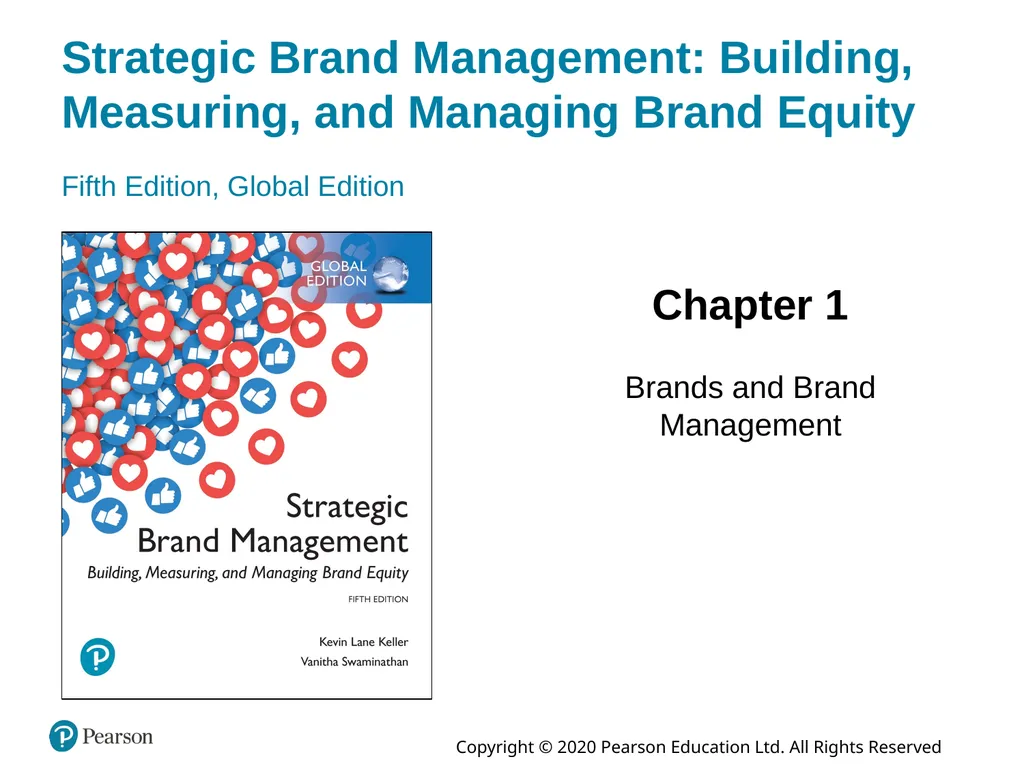
Strategic Brand Management: Building, Measuring,
NS
Published · 46 slides · 0 views
1 / 1

Description
Strategic Brand Management: Building, Measuring, and Managing Brand Equity Fifth Edition, Global Edition Chapter 1 Brands and Brand Management Copyright 2020 Pearson Education Ltd. All Rights Reserved Learning Objectives 1.1 Define
Related Topics
Share
Embed code
Download this presentation From Below
"Strategic Brand Management: Building, Measuring," is the property of its rightful owner. Permission is granted to download and print the materials on this website for personal, non-commercial use only, and to display it on your personal computer provided you do not modify the materials and that you retain all copyright notices contained in the materials. By downloading content from our website, you accept the terms of this agreement.
Presentation Transcript
01
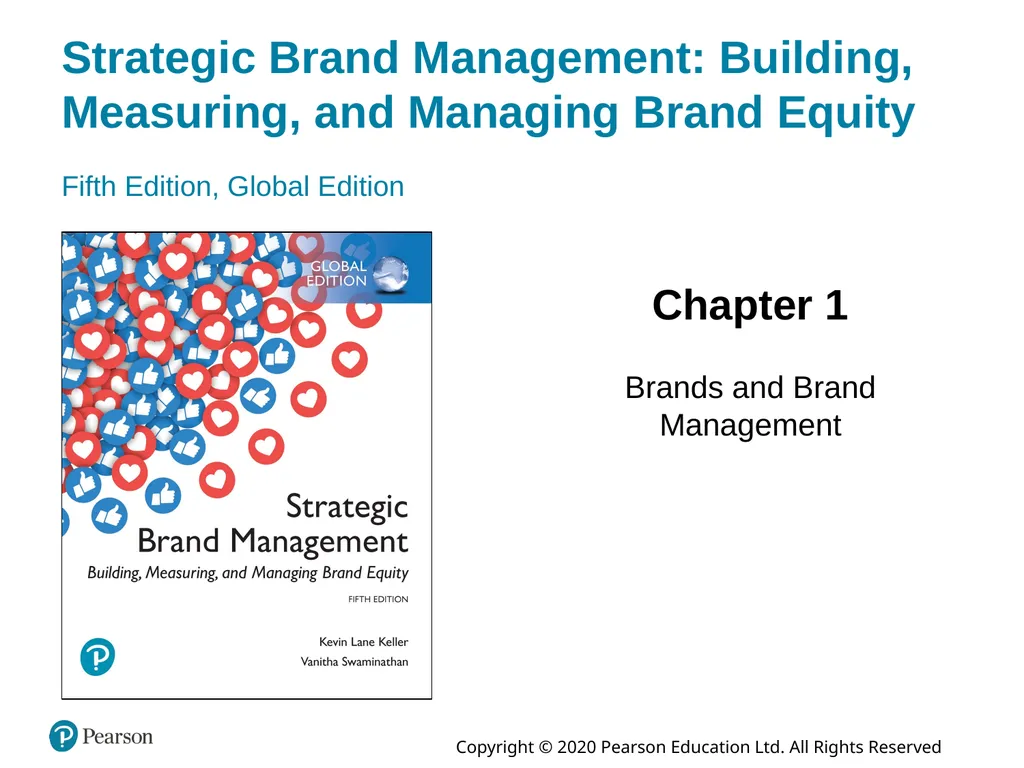
Strategic Brand Management: Building, Measuring, and Managing Brand Equity Fifth Edition, Global Edition Chapter 1 Brands and Brand Management Copyright © 2020 Pearson Education Ltd. All Rights Reserved<br>
02
Learning Objectives 1.1 Define “brand,” state how brand differs from a product, and explain what brand equity is
1.2 Summarize why brands are important
1.3 Explain how branding applies to virtually everything
1.4 Describe the main branding challenges and opportunities
1.5 Identify the steps in the strategic brand management process<br>
1.2 Summarize why brands are important
1.3 Explain how branding applies to virtually everything
1.4 Describe the main branding challenges and opportunities
1.5 Identify the steps in the strategic brand management process<br>
03
What is a Brand? Brand Elements
Brands versus Products<br>
Brands versus Products<br>
04
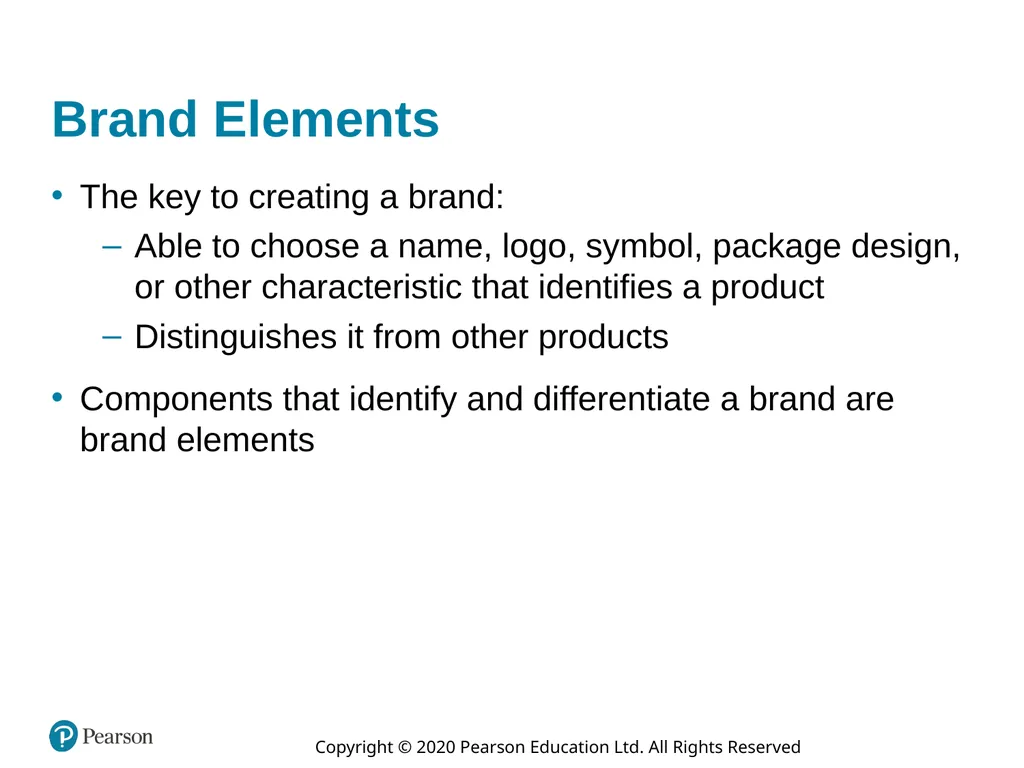
Brand Elements The key to creating a brand:
Able to choose a name, logo, symbol, package design, or other characteristic that identifies a product
Distinguishes it from other products
Components that identify and differentiate a brand are brand elements<br>
Able to choose a name, logo, symbol, package design, or other characteristic that identifies a product
Distinguishes it from other products
Components that identify and differentiate a brand are brand elements<br>
05
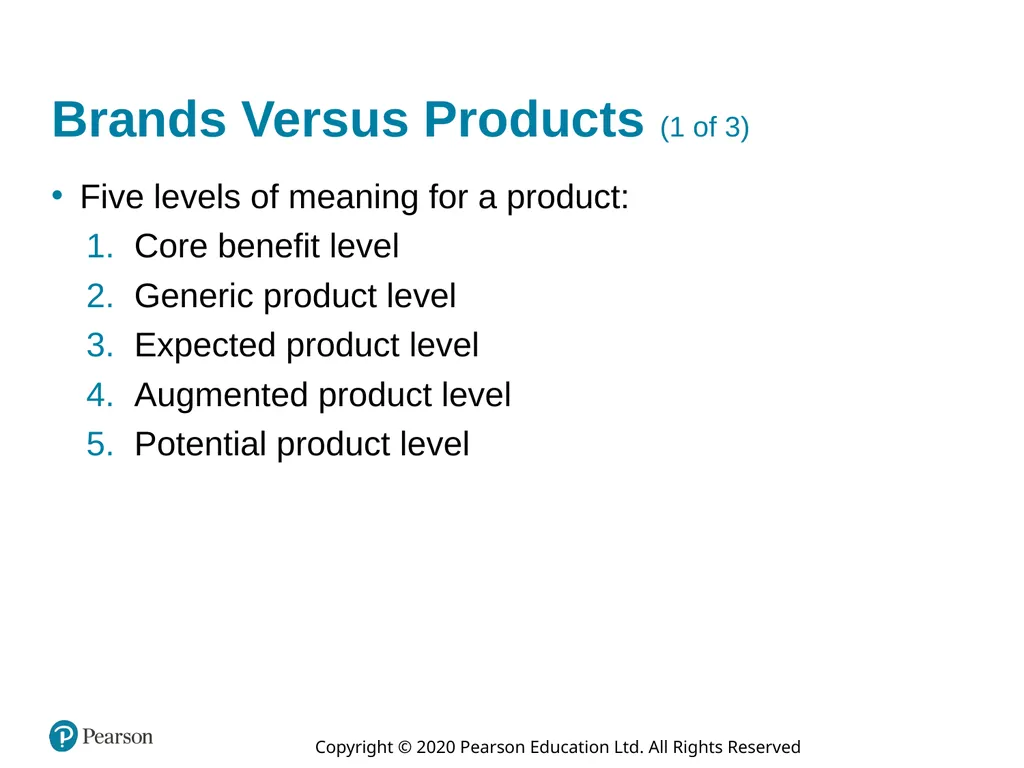
Brands Versus Products (1 of 3) Five levels of meaning for a product:
Core benefit level
Generic product level
Expected product level
Augmented product level
Potential product level<br>
Core benefit level
Generic product level
Expected product level
Augmented product level
Potential product level<br>
06
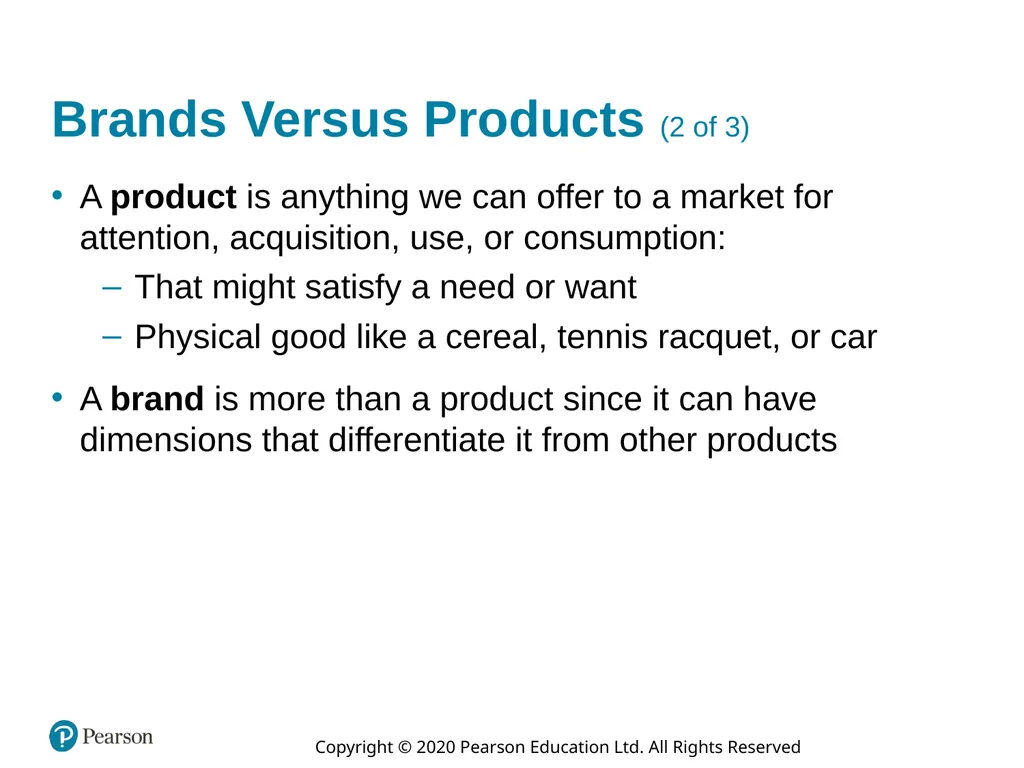
Brands Versus Products (2 of 3) A product is anything we can offer to a market for attention, acquisition, use, or consumption:
That might satisfy a need or want
Physical good like a cereal, tennis racquet, or car
A brand is more than a product since it can have dimensions that differentiate it from other products<br>
That might satisfy a need or want
Physical good like a cereal, tennis racquet, or car
A brand is more than a product since it can have dimensions that differentiate it from other products<br>
07
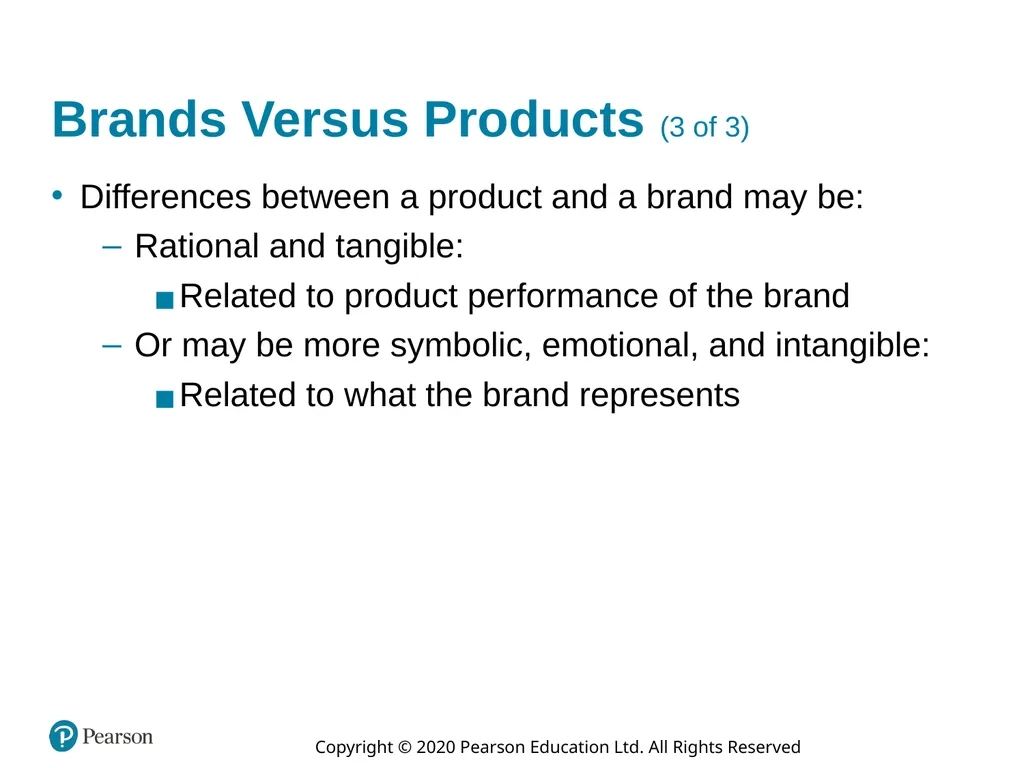
Brands Versus Products (3 of 3) Differences between a product and a brand may be:
Rational and tangible:
Related to product performance of the brand
Or may be more symbolic, emotional, and intangible:
Related to what the brand represents<br>
Rational and tangible:
Related to product performance of the brand
Or may be more symbolic, emotional, and intangible:
Related to what the brand represents<br>
08
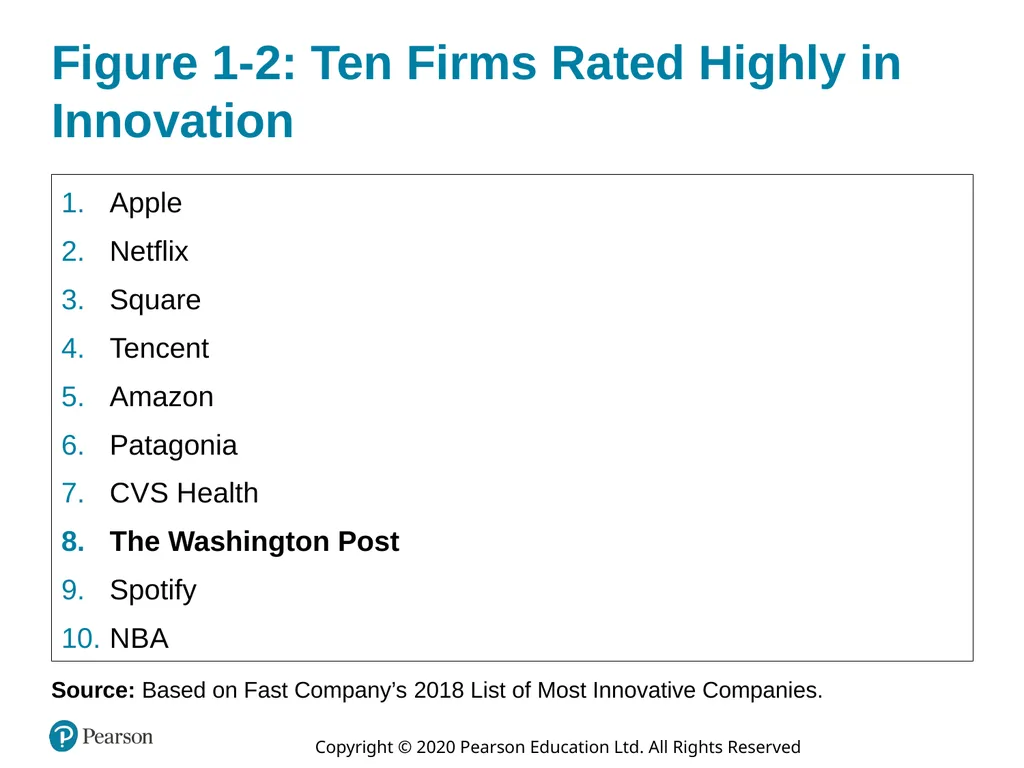
Figure 1-2: Ten Firms Rated Highly in Innovation Apple
Netflix
Square
Tencent
Amazon
Patagonia
C V S Health
The Washington Post
Spotify
N B A Source: Based on Fast Company’s 2018 List of Most Innovative Companies.<br>
Netflix
Square
Tencent
Amazon
Patagonia
C V S Health
The Washington Post
Spotify
N B A Source: Based on Fast Company’s 2018 List of Most Innovative Companies.<br>
09
Why Do Brands Matter? Consumers
Firms<br>
Firms<br>
10
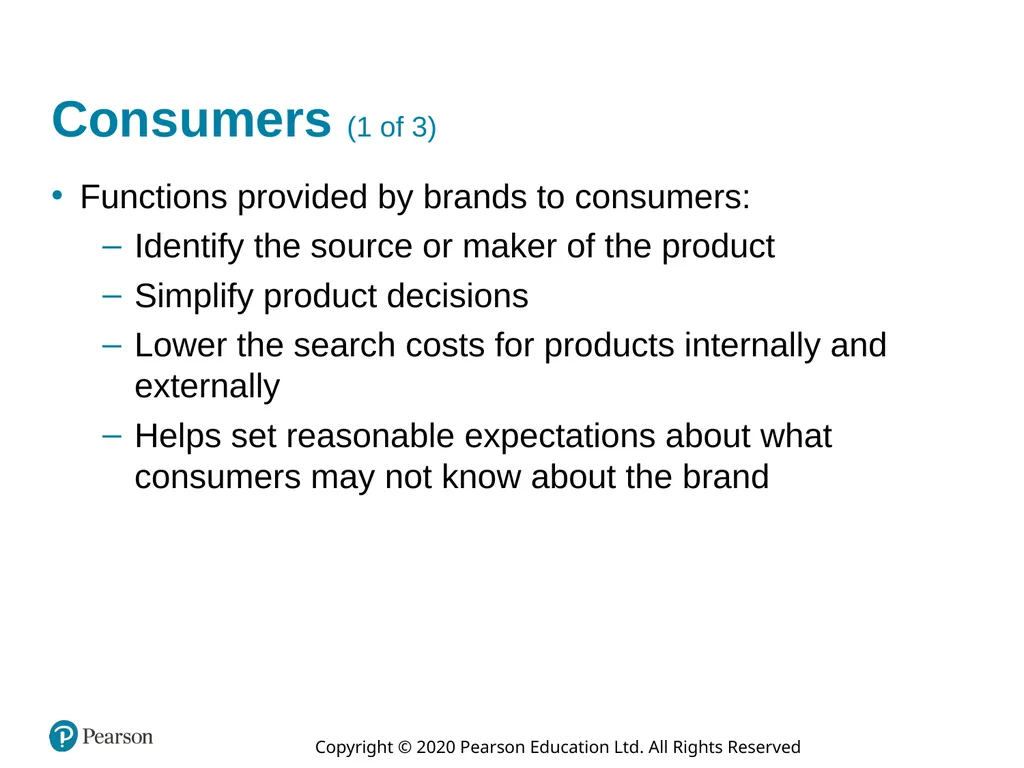
Consumers (1 of 3) Functions provided by brands to consumers:
Identify the source or maker of the product
Simplify product decisions
Lower the search costs for products internally and externally
Helps set reasonable expectations about what consumers may not know about the brand<br>
Identify the source or maker of the product
Simplify product decisions
Lower the search costs for products internally and externally
Helps set reasonable expectations about what consumers may not know about the brand<br>
11
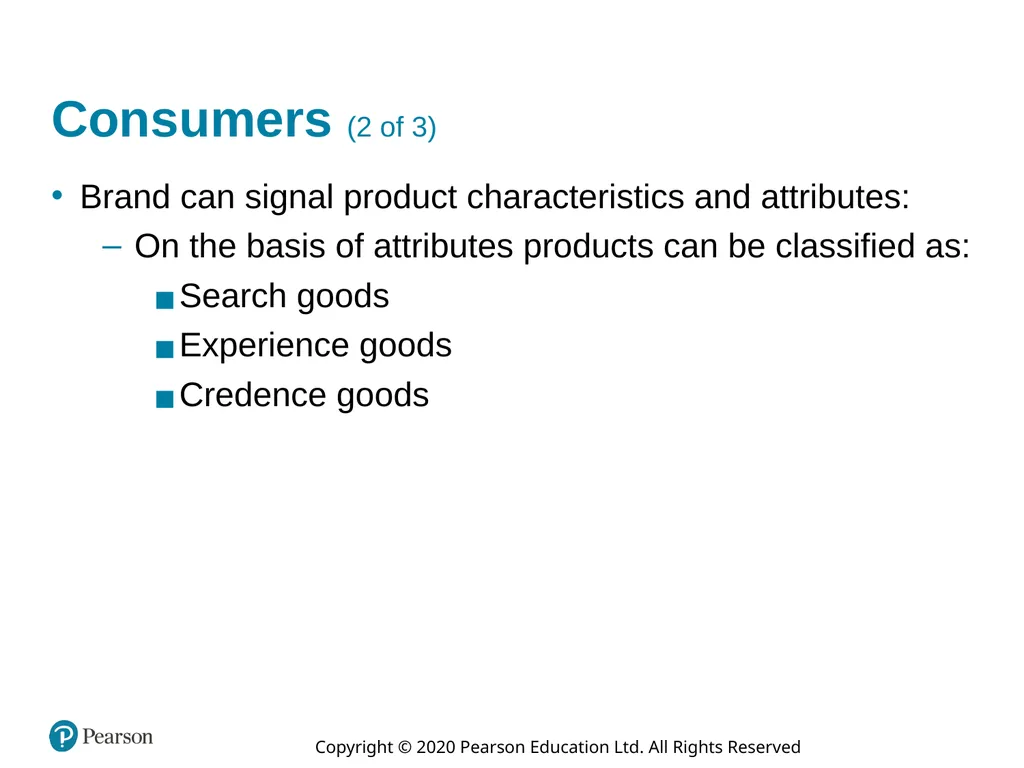
Consumers (2 of 3) Brand can signal product characteristics and attributes:
On the basis of attributes products can be classified as:
Search goods
Experience goods
Credence goods<br>
On the basis of attributes products can be classified as:
Search goods
Experience goods
Credence goods<br>
12
Consumers (3 of 3) Brands can reduce risks in product decision:
These risk can be categorised as:
Functional, physical, financial, social psychological, and time<br>
These risk can be categorised as:
Functional, physical, financial, social psychological, and time<br>
13
Firms Brands provide valuable functions to a firm:
Simplify product handling and tracing
Help organizing inventory and accounting records
Offer the firm legal protection for unique features or aspects of the product
Provide predictability and security of demand for the firm and creates barriers of entry for competitors
Provide a powerful means to secure competitive advantage<br>
14
Figure 1-3: Roles That Brands Play Consumers
Identification of source of product
Assignment of responsibility to product maker
Risk reducer
Search cost reducer
Promise, bond, or pact with maker of product
Symbolic device
Signal of quality
Manufacturers
Means of identification to simplify handling or tracing
Means of legally protecting unique features
Signal of quality level to satisfied customers
Means of endowing products with unique associations
Source of competitive advantage
Source of financial returns<br>
15
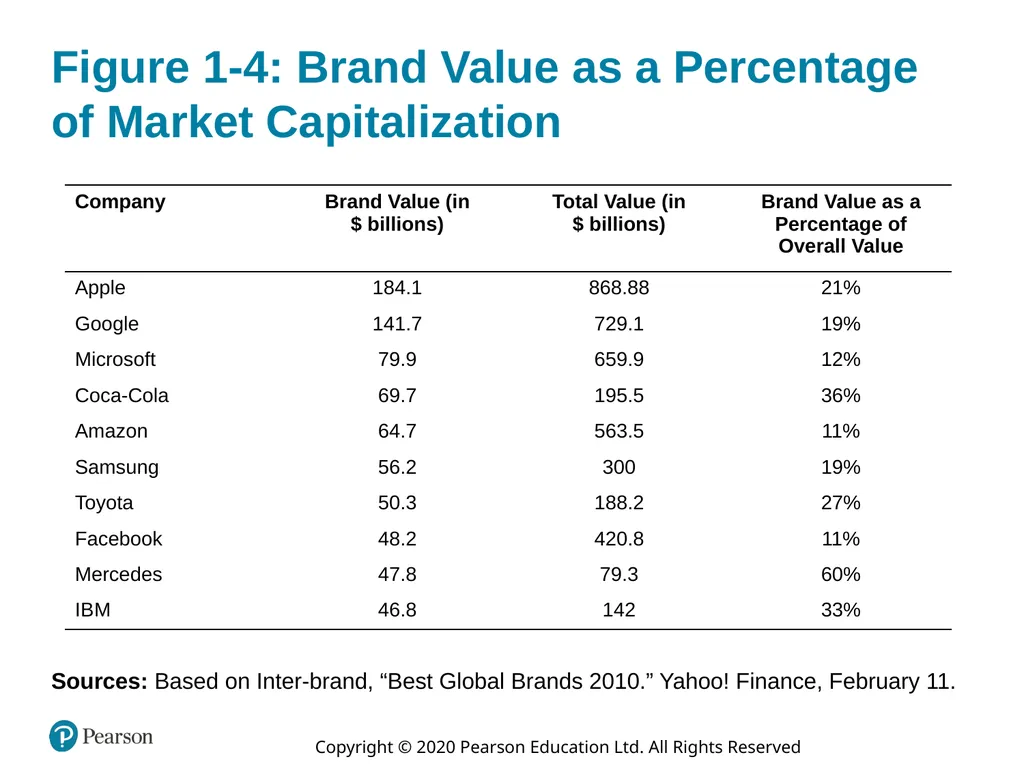
Figure 1-4: Brand Value as a Percentage of Market Capitalization Sources: Based on Inter-brand, “Best Global Brands 2010.” Yahoo! Finance, February 11.<br>
16
Can Anything Be Branded? (1 of 2) Physical Goods
Services<br>
Services<br>
17
Can Anything Be Branded? (2 of 2) To brand a product, it is necessary to teach consumers “who” the product is:
Giving it a name and using other brand elements to help identify it
What the product does and why consumers should care
Marketers must give consumers a label for the product and provide meaning for the brand
Marketers can benefit from branding whenever consumers are in a choice situation<br>
Giving it a name and using other brand elements to help identify it
What the product does and why consumers should care
Marketers must give consumers a label for the product and provide meaning for the brand
Marketers can benefit from branding whenever consumers are in a choice situation<br>
18
Physical Goods Physical goods are what are traditionally associated with brands:
Mercedes-Benz
Nescafé
Sony
Branding has been adopted in a variety of industries:
Industrial business-to-business (B2B) products
Technologically intensive “high-tech” products<br>
Mercedes-Benz
Nescafé
Sony
Branding has been adopted in a variety of industries:
Industrial business-to-business (B2B) products
Technologically intensive “high-tech” products<br>
19
Services Branding a service can be an effective way to signal to consumers that a firm has designed a particular service offering that is special and deserving of its name:
American Express
British Airways
Ritz-Carlton
Merrill Lynch
Federal Express<br>
American Express
British Airways
Ritz-Carlton
Merrill Lynch
Federal Express<br>
20
Retailers and Distributors (1 of 2) For retailers and other channel members, brands provide important functions:
Can generate consumer interest, patronage, and loyalty
Create an image and establish positioning within an industry
Yield higher price margins, increased sales volumes, and greater profits<br>
Can generate consumer interest, patronage, and loyalty
Create an image and establish positioning within an industry
Yield higher price margins, increased sales volumes, and greater profits<br>
21
Retailers and Distributors (2 of 2) Retailers can introduce their own brands by:
Using their store name
Creating new names
Some combination of the two
Many distributors, especially in Europe, have introduced their own brands
Products bearing these store brands or private label brands offer another way for retailers to increase customer loyalty and generate higher margins and profits<br>
22
Digital Brands Some of the strongest brands in recent years have been born online:
Amazon
Google
Facebook
Twitter
Brand building has become more important in recent years to online marketers:
It is critical to create unique aspects of the brand
Brand needs to perform satisfactorily as well<br>
Amazon
Brand building has become more important in recent years to online marketers:
It is critical to create unique aspects of the brand
Brand needs to perform satisfactorily as well<br>
23
People and Organizations A product category can be a person or an organization:
Naming of this branding is usually straightforward
Usually is accompanied by well-defined images that are easily understood by consumers
The key to a person or organization as a brand is that people outside your industry know who you are and recognize your skills, talents, and attitude:
Lady Gaga
The American Red Cross
Amnesty International
Sierra Club<br>
24
Sports, Arts, and Entertainment A special case of marketing people and organizations as brands exists in the sports, arts, and entertainment industries:
Sports marketing has become highly sophisticated
Branding plays, for example, has become an especially valuable function in the arts
Movies have become famous for their marketing and branding:
For years, some of the most valuable movie franchises have featured recurring characters and ongoing stories—a classic application of branding<br>
25
Geographic Locations What has contributed to the rise in place marketing?
Increased mobility of people
Increased mobility of businesses
Growth in tourism
Cities, states, regions, and countries actively promote through advertising, direct mail, and other tools<br>
Increased mobility of people
Increased mobility of businesses
Growth in tourism
Cities, states, regions, and countries actively promote through advertising, direct mail, and other tools<br>
26
Ideas and Causes Numerous ideas and causes have been branded:
Especially by nonprofit organizations
May be captured in a phrase or slogan or represented by a symbol:
Such as AIDS ribbons<br>
Especially by nonprofit organizations
May be captured in a phrase or slogan or represented by a symbol:
Such as AIDS ribbons<br>
27
What are the Strongest Brands? Brands that are the “strongest” are the brands that are:
Best known
Most highly regarded
Maintaining brand relevance and differentiation are important to the success of a brand<br>
Best known
Most highly regarded
Maintaining brand relevance and differentiation are important to the success of a brand<br>
28
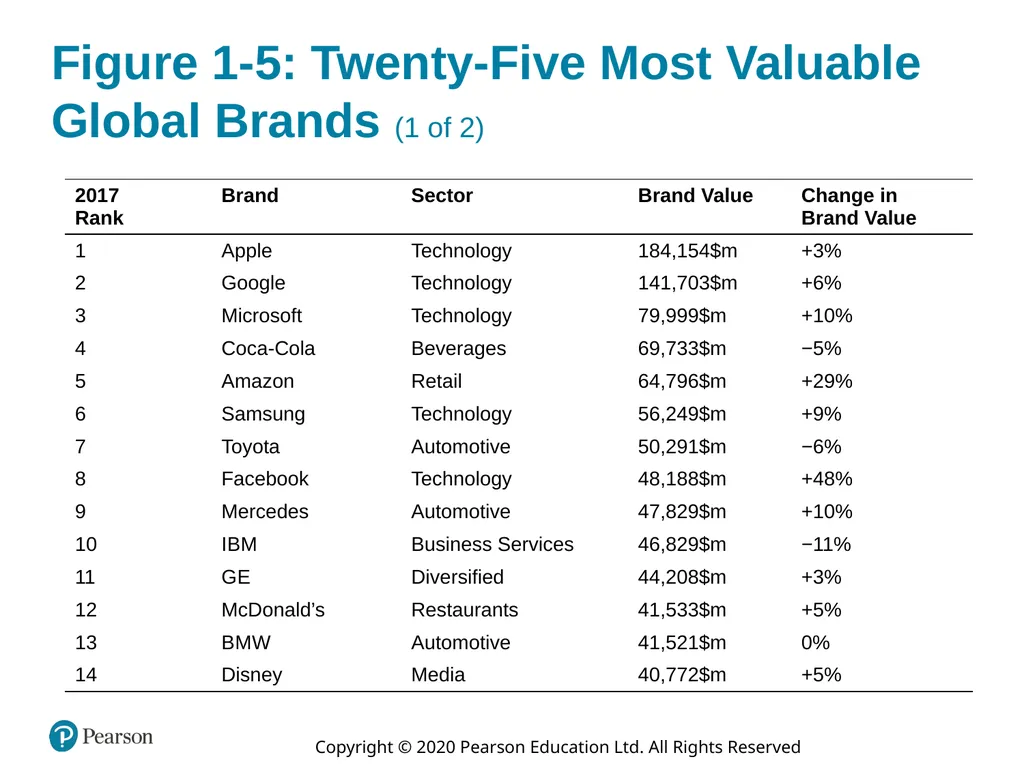
Figure 1-5: Twenty-Five Most Valuable Global Brands (1 of 2)<br>
29
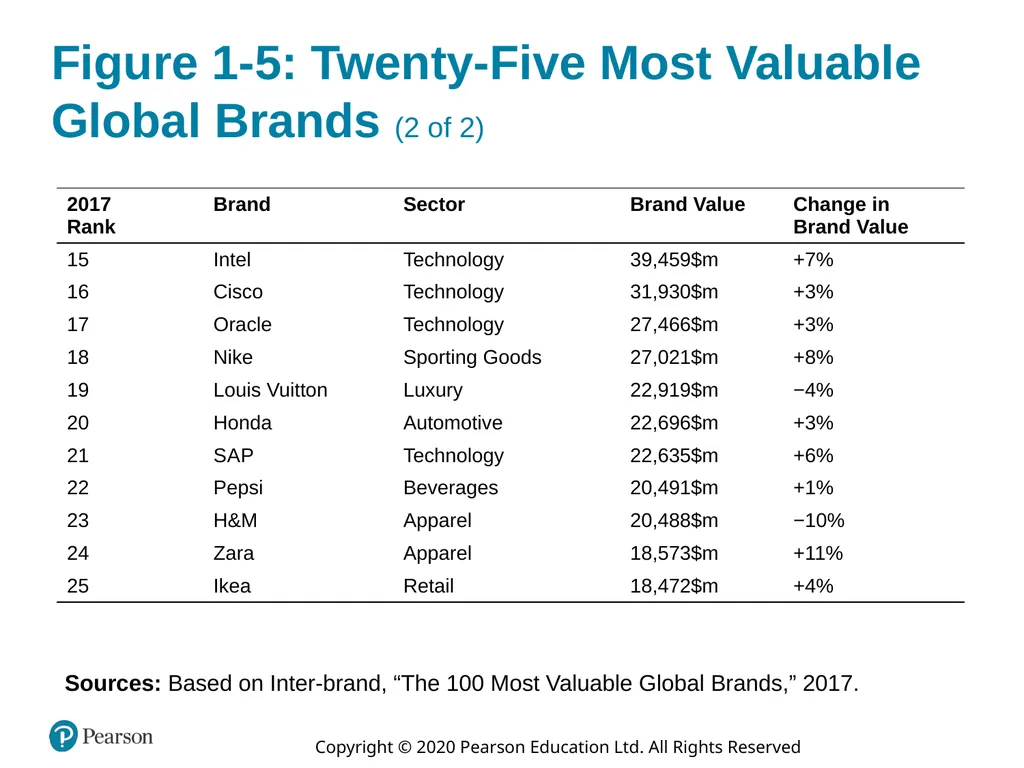
Figure 1-5: Twenty-Five Most Valuable Global Brands (2 of 2) Sources: Based on Inter-brand, “The 100 Most Valuable Global Brands,” 2017.<br>
30
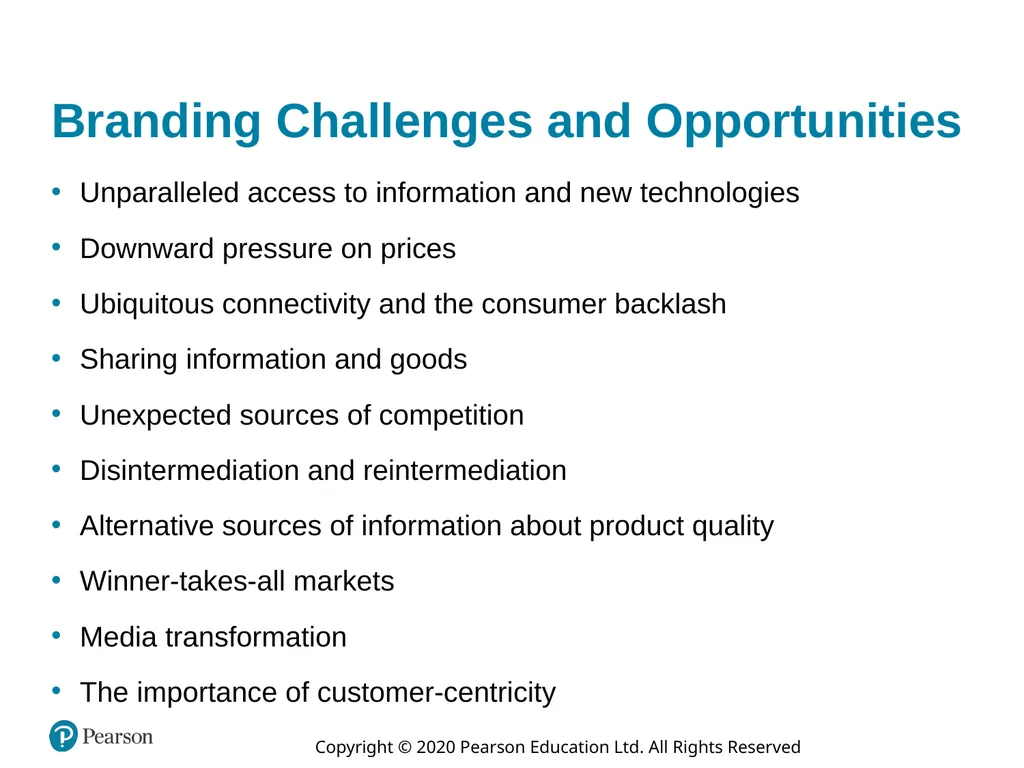
Branding Challenges and Opportunities Unparalleled access to information and new technologies
Downward pressure on prices
Ubiquitous connectivity and the consumer backlash
Sharing information and goods
Unexpected sources of competition
Disintermediation and reintermediation
Alternative sources of information about product quality
Winner-takes-all markets
Media transformation
The importance of customer-centricity<br>
31
Unparalleled Access to Information and New Technologies Technology has created vast amounts of information
Over time, as technology becomes more standard, brand marketers may find opportunities:
Utilizing innovative features in designing better brand experiences for their customers<br>
Over time, as technology becomes more standard, brand marketers may find opportunities:
Utilizing innovative features in designing better brand experiences for their customers<br>
32
Downward Pressure on Prices As search costs for information become lower, consumers can compare prices more easily:
Thus, they can switch to a different brand more easily
This may cause more commodification of products and services
This creates challenges for brand marketers<br>
Thus, they can switch to a different brand more easily
This may cause more commodification of products and services
This creates challenges for brand marketers<br>
33
Ubiquitous Connectivity and the Consumer Backlash As digital and electronic connectivity becomes ubiquitous, consumers’ attention is lessened and are more vulnerable to intrusions:
Backlash may come as consumers become increasingly resistant to marketers attempts to gain access to them
Software may come available that thwarts marketers efforts to reach consumers<br>
Backlash may come as consumers become increasingly resistant to marketers attempts to gain access to them
Software may come available that thwarts marketers efforts to reach consumers<br>
34
Sharing Information and Goods Technology has offered two phenomena related to branding:
Social media platforms:
While they offer a way for consumer to connect and communicate their preferences for goods or services, the platforms face increased scrutiny by regulatory agencies
Many of the platforms have traditionally not had to obtain permissions for use of customer data
Peer-to-peer sharing:
Napster, Airbnb, Zipcar<br>
35
Unexpected Sources of Competition The digital world allows easier entry into new markets:
Increased competition
When Amazon Movies began offering streaming services, it faced competition from Netflix and Apple i Tunes<br>
Increased competition
When Amazon Movies began offering streaming services, it faced competition from Netflix and Apple i Tunes<br>
36
Disintermediation and Reintermediation Disintermediation:
Reduction or elimination of intermediaries
The travel industry, for example, has experienced significant decline in the need for travel agencies:
Once offered advisory services and helped make bookings in return for a small fee or commission
Reintermediation:
Introduction of new intermediaries that perform some of the same functions or have additional roles in the channel of distribution
Yelp, online consumer guides (Consumer Reports.com), and influential bloggers<br>
37
Alternative Sources of Information about Product Quality The Internet offers consumers new ways to learn about new products and product quality:
This has reduced the reliance on brands as signals on quality
Brands now have to do more:
Have to be translators of trends, acting on information about changing customer tastes and desires almost instantaneously<br>
This has reduced the reliance on brands as signals on quality
Brands now have to do more:
Have to be translators of trends, acting on information about changing customer tastes and desires almost instantaneously<br>
38
Winner-Takes-All Markets A winner-take-all market is likely to permeate other industries and categories outside of sports and entertainment:
Brands which are market leaders within categories are likely to be chosen at an even greater rate<br>
Brands which are market leaders within categories are likely to be chosen at an even greater rate<br>
39
Media Transformation The erosion and fragmentation of traditional advertising media has coincided with:
The emergence of interactive and nontraditional media, promotion, and other communication alternatives
Marketers are spending more on nontraditional forms of communication:
On new and emerging forms of communication
Social media
Paid influencers
Sponsored bloggers
LaCroix is an example of this<br>
The emergence of interactive and nontraditional media, promotion, and other communication alternatives
Marketers are spending more on nontraditional forms of communication:
On new and emerging forms of communication
Social media
Paid influencers
Sponsored bloggers
LaCroix is an example of this<br>
40
The Importance of Customer-Centricity Brand equity can be vulnerable to destruction if product and service claims are not verified by actual experience:
Review forums
Reviews from peers
Online word-of-mouth<br>
Review forums
Reviews from peers
Online word-of-mouth<br>
41
The Brand Equity Concept Principles of branding and brand equity:
Differences in outcomes arise from the “added value” endowed to a product
The added value can be created for a brand in many different ways
Brand equity provides a common denominator for interpreting marketing strategies and assessing the value of a brand
There are many different ways in which the value of a brand can be exploited to benefit the firm<br>
42
Strategic Brand Management Process Identifying and Developing Brand Plans
Designing and Implementing Brand Marketing Programs
Measuring and Interpreting Brand Performance
Growing and Sustaining Brand Equity<br>
Designing and Implementing Brand Marketing Programs
Measuring and Interpreting Brand Performance
Growing and Sustaining Brand Equity<br>
43
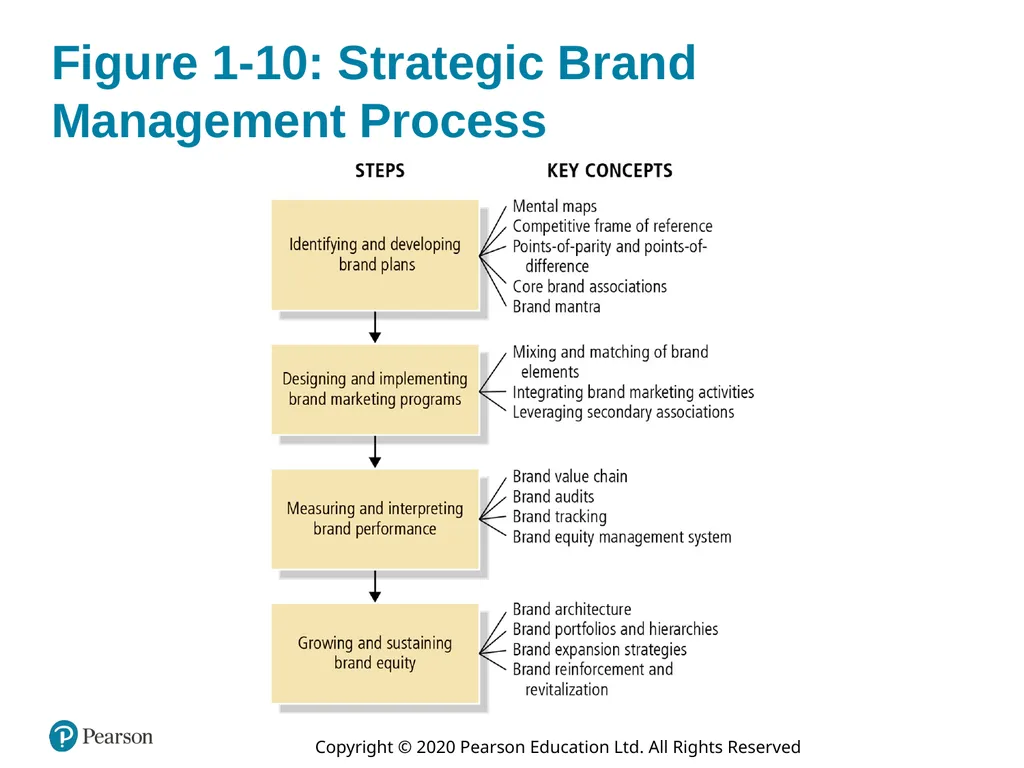
Figure 1-10: Strategic Brand Management Process<br>
44
Designing and Implementing Brand Marketing Programs Choosing Brand Elements
Integrating the Brand into Marketing Activities and the Supporting Marketing Program
Leveraging Secondary Associations<br>
Integrating the Brand into Marketing Activities and the Supporting Marketing Program
Leveraging Secondary Associations<br>
45
Measuring and Interpreting Brand Performance To manage brands profitably, managers must implement a brand equity measurement system
Brand equity measurement system involves:
Brand audits
Brand tracking studies
Brand equity management system<br>
Brand equity measurement system involves:
Brand audits
Brand tracking studies
Brand equity management system<br>
46
Growing and Sustaining Brand Equity Defining Brand Architecture
Managing Brand Equity over Time
Managing Brand Equity over Geographic Boundaries, Cultures, and Market Segments<br>
Managing Brand Equity over Time
Managing Brand Equity over Geographic Boundaries, Cultures, and Market Segments<br>