04
Introduction Biotechnology is thus linked to genetic engineering and emerged as a field in its own right at the beginning of the 20th century in the food industry, which was later joined by other sectors such as medicine and the environment.
Today, the five branches into which modern biotechnology is divided — human, environmental, industrial, animal and plant — help us fight hunger and disease, produce more safely, cleanly and efficiently, reduce our ecological footprint and save energy 4<br>
05
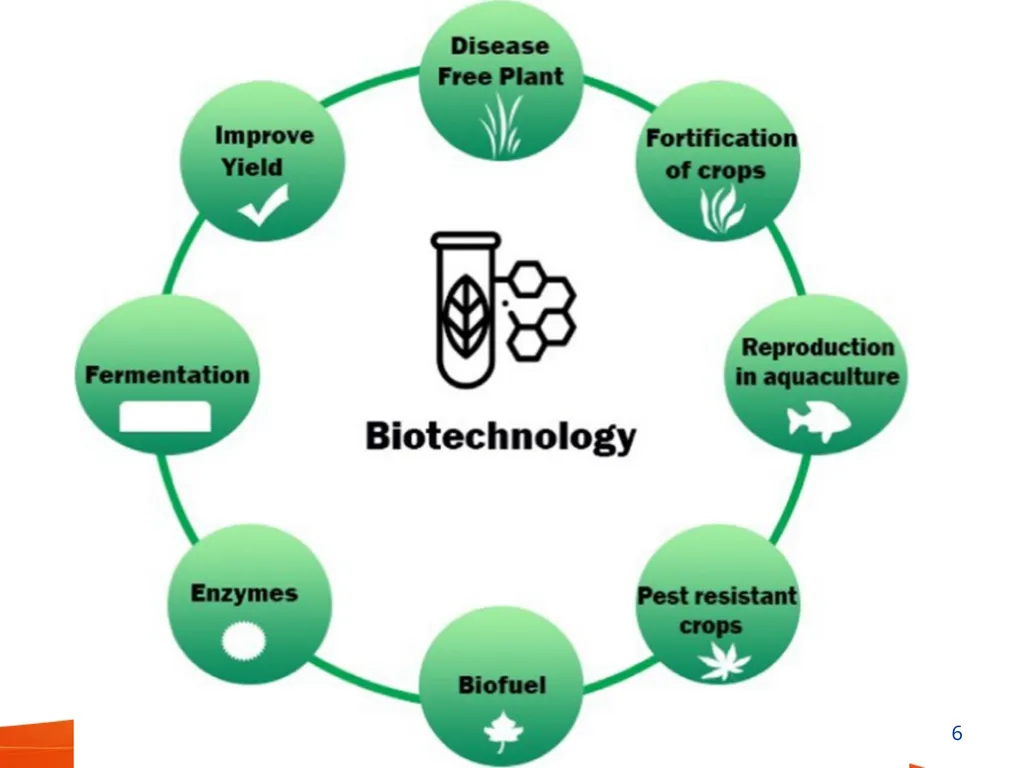
Applications of Biotechnology Biotechnological innovations are already part of our daily lives and we find them in pharmacies and supermarkets, among many other places.
In addition, in recent months biotechnology has become one of the spearheads in the fight against the COVID-19 global pandemic, since it helps to decipher the virus' genome and understand how the our body's defence mechanism works against infectious agents. ●●●
5<br>
07
Applications of Biotechnology Medicine
The development of insulin, the growth hormone, molecular identity and diagnostics, gene therapies and vaccines such as hepatitis B are some of the milestones of biotechnology and its alliance with genetic engineering ●●●
7<br>
08
Applications of Biotechnology Industry
The revolution of the new smart materials hand-in-hand with biotechnology has only just begun. Soon we could have self-healing concrete, plants that change colour when they detect an explosive, clothing and footwear made with synthetic spider web, etc. ●●●
8<br>
09
Applications of Biotechnology Food
In addition to the genetically modified foods mentioned above, thanks to biotechnology products such as WEMA have been created, a type of crop resistant to droughts and certain insects that may prove essential in fighting hunger in Africa. ●●●
9<br>
10
Applications of Biotechnology Environment
Through bioremediation processes, very useful for ecological recovery, the catabolic properties of microorganisms, fungi, plants and enzymes are used to restore contaminated ecosystems. 10<br>
11
Types of Biotechnology Red biotechnology.
This is the health branch and responsible, according to the Biotechnology Innovation Organization (BIO), for the development of more than 250 vaccines and medications such as antibiotics, regenerative therapies and the production of artificial organs. ●●●
11<br>
12
Types of Biotechnology Green biotechnology.
It is used by more than 13 million farmers worldwide to fight pests and nourish crops and strengthen them against microorganisms and extreme weather events, such as droughts and frosts. ●●●
12<br>
13
Types of Biotechnology White biotechnology.
The industrial branch works to improve manufacturing processes, the development of biofuels and other technologies to make industry more efficient and sustainable. ●●●
13<br>
14
Types of Biotechnology Yellow biotechnology.
This branch is focused on food production and, for example, it carries out research to reduce the levels of saturated fats in cooking oils. ●●●
14<br>
15
Types of Biotechnology Blue biotechnology.
This exploits marine resources to obtain aquaculture, cosmetics and health care products. In addition, it is the branch most widely used to obtain biofuels from certain microalgae. ●●●
15<br>
16
Types of Biotechnology Grey biotechnology.
Its purpose is the conservation and restoration of contaminated natural ecosystems through, as mentioned above, bioremediation processes. ●●●
16<br>
17
Types of Biotechnology Gold biotechnology.
Also known as bioinformatics it is responsible for obtaining, storing, analysing and separating biological information, especially that related to DNA and amino acid sequences. 17<br>
18
Benefits of Biotechnology The benefits of biotechnology are tangible, but at the same time some warn of its possible adverse effects on the environment, health and ethics. The advantages of BIO are as follows:
It reduces CO2 emissions by 52 %, optimises the use of water and reduces waste and chemical processes thanks to techniques such as recombinant DNA. ●●●
18<br>
19
Benefits of Biotechnology It improves medical diagnosis, reduces infection rates, minimises the side effects of medications and favours progress in developing countries.
It favours healthy and sustainable agriculture — it provides more nutritious, toxin and allergen-free food — — it limits the use of pesticides and chemicals —. \
19<br>
20
Risks of Biotechnology The proliferation of laboratory foodscould end crop diversity. It may also affect the balance of ecosystems.
The risks include unforeseen allergies, poisoning of living organisms and modified bacteria escaping from a laboratory.
Cloning, the modification of the human genome and assisted reproduction are matters of ethical debate and social controversy. 20<br>
21
Conclusion Biotechnology is technology that utilizes biological systems, living organisms or parts of this to develop or create different products.
Brewing and baking bread are examples of processes that fall within the concept of biotechnology (use of yeast (= living organism) to produce the desired product). 21<br>
22
Thanks�To �StudyMafia.org<br>