StudyMafia.Org Submitted To: Submitted By:
Description: StudyMafia.Org Submitted To: Submitted By: Studymafia.org Studymafia.org Natural Resources Table Contents Definition Introduction Types of Natural Resources About Resources Why Conserve? Ways to Conserve Conclusion 2 Definition Natural
Related Topics
Download Presentation
"StudyMafia.Org Submitted To: Submitted By:" is the property of its rightful owner. Permission is granted to download and print the materials on this website for personal, non-commercial use only, and to display it on your personal computer provided you do not modify the materials and that you retain all copyright notices contained in the materials. By downloading content from our website, you accept the terms of this agreement.
Presentation Transcript
slide1. StudyMafia.Org Submitted To: Submitted By:
Studymafia.org Studymafia.org Natural Resources<br>
slide2. Table Contents Definition
Introduction
Types of Natural Resources
About Resources
Why Conserve?
Ways to Conserve
Conclusion 2<br>
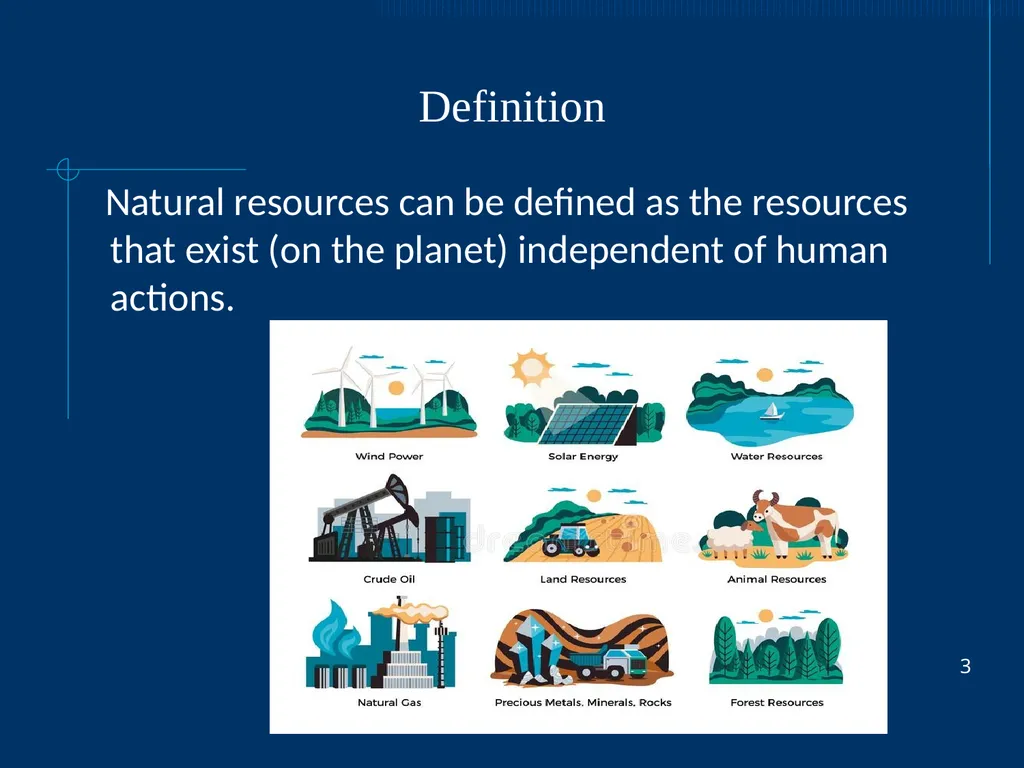
slide3. Definition Natural resources can be defined as the resources that exist (on the planet) independent of human actions. 3<br>
slide4. Introduction These are the resources that are found in the environment and are developed without the intervention of humans.
Natural resources are naturally occurring materials that are useful to man or could be useful under conceivable technological, economic or social circumstances or supplies drawn from the earth, supplies such as food, building and clothing materials, fertilizers, metals, water and geothermal power. 4<br>
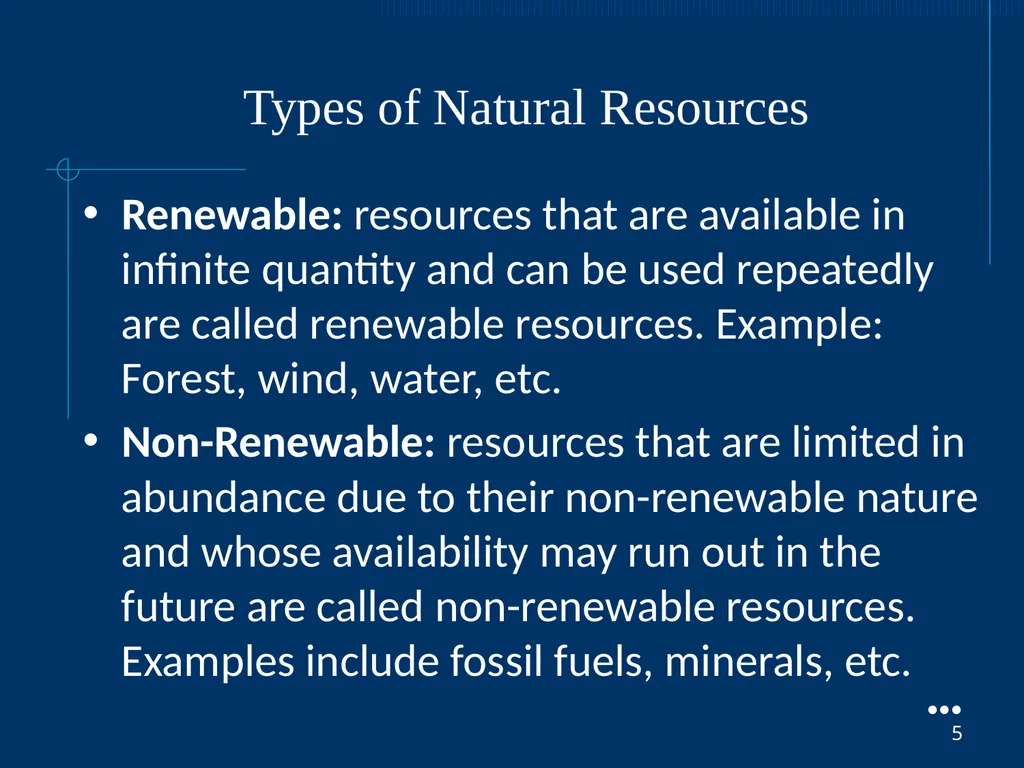
slide5. Renewable: resources that are available in infinite quantity and can be used repeatedly are called renewable resources. Example: Forest, wind, water, etc.
Non-Renewable: resources that are limited in abundance due to their non-renewable nature and whose availability may run out in the future are called non-renewable resources. Examples include fossil fuels, minerals, etc. ●●●
5 Types of Natural Resources<br>
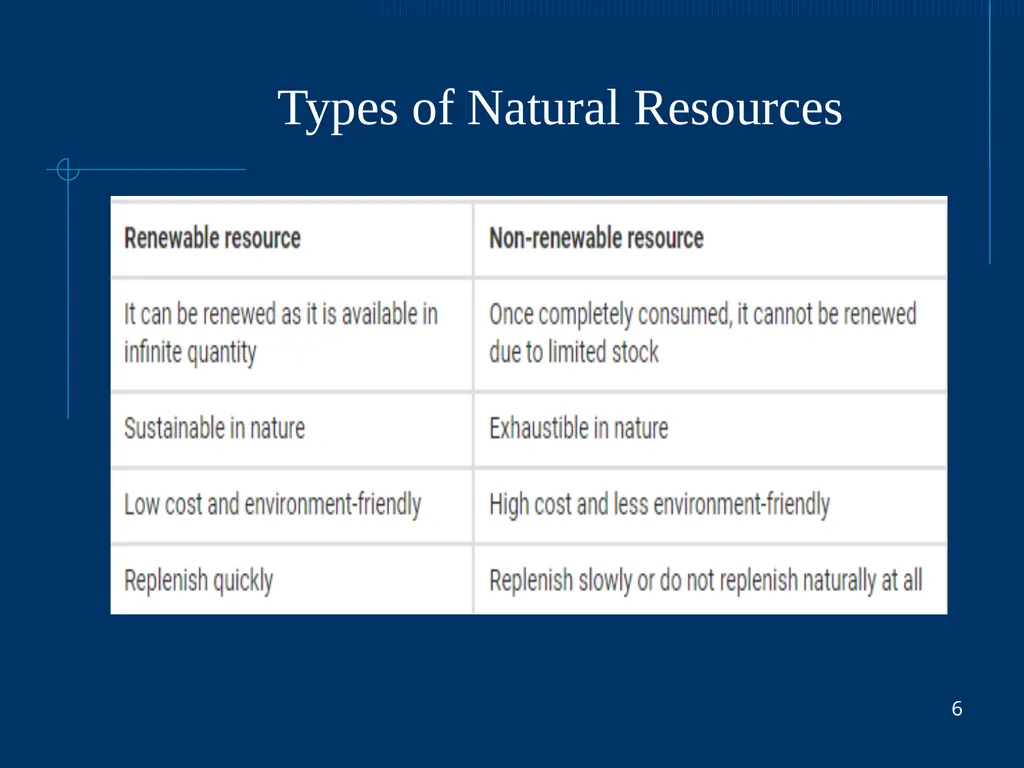
slide6. 6 Types of Natural Resources<br>
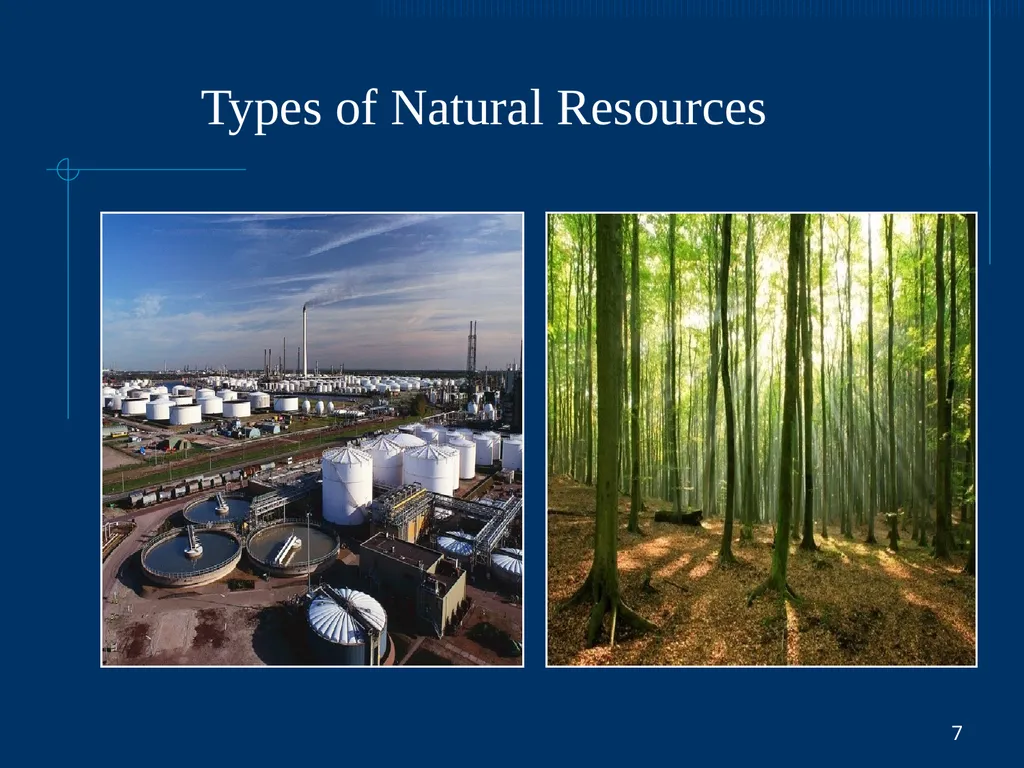
slide7. Types of Natural Resources 7<br>
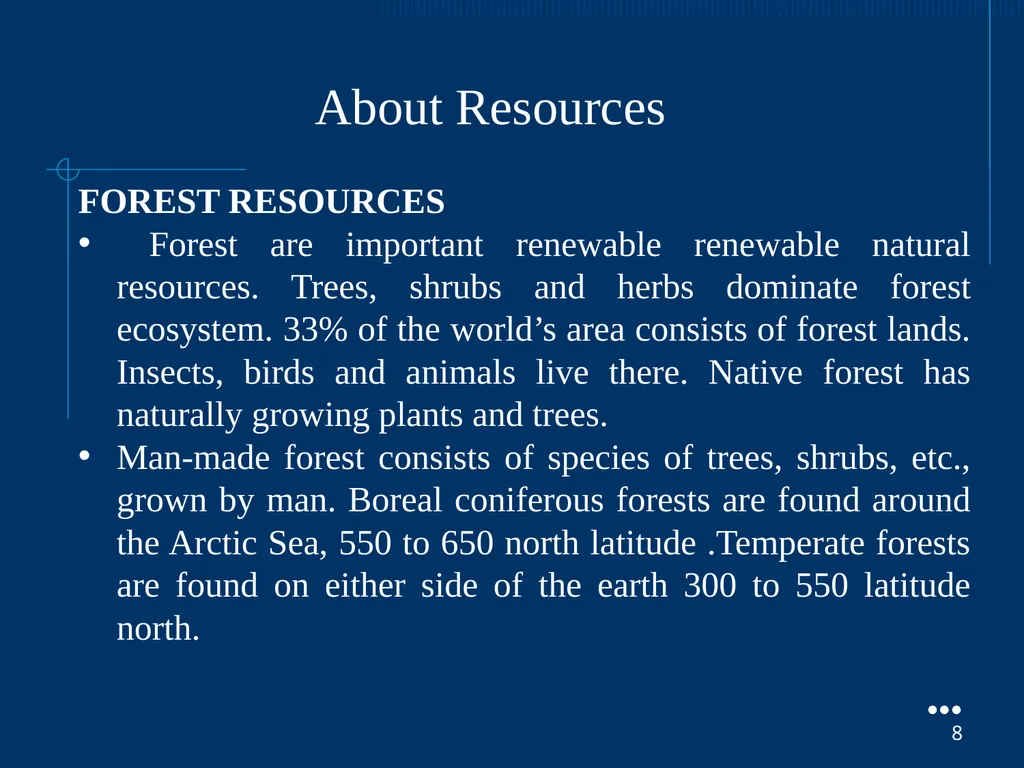
slide8. About Resources FOREST RESOURCES
Forest are important renewable renewable natural resources. Trees, shrubs and herbs dominate forest ecosystem. 33% of the world’s area consists of forest lands. Insects, birds and animals live there. Native forest has naturally growing plants and trees.
Man-made forest consists of species of trees, shrubs, etc., grown by man. Boreal coniferous forests are found around the Arctic Sea, 550 to 650 north latitude .Temperate forests are found on either side of the earth 300 to 550 latitude north. ●●●
8<br>
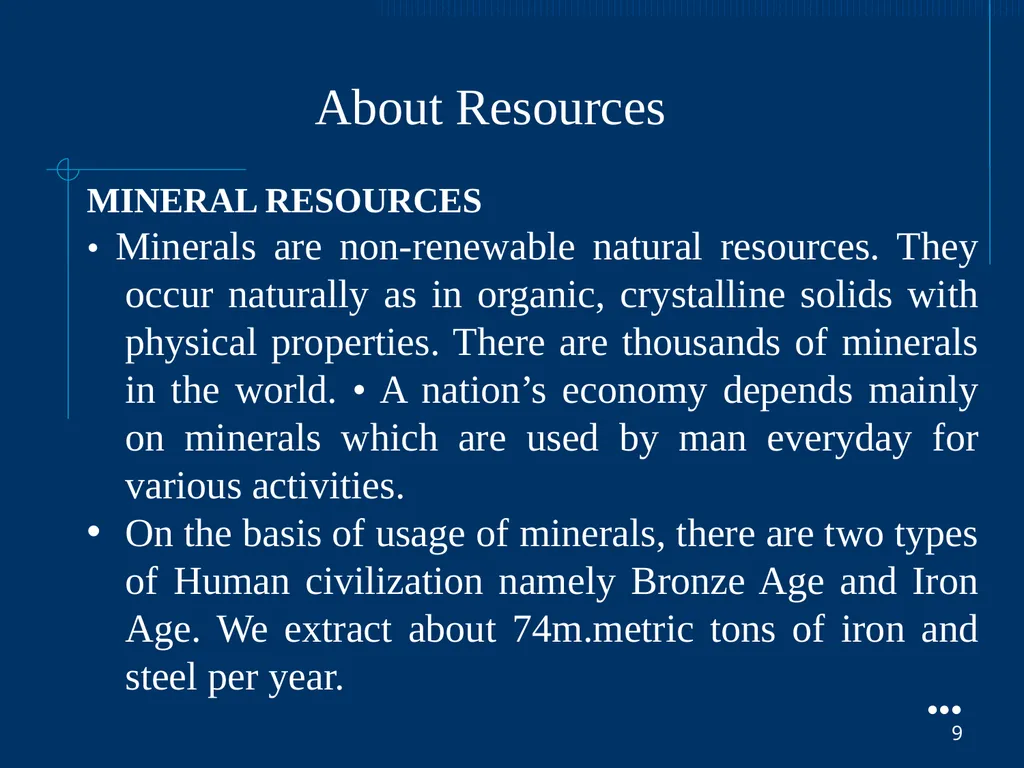
slide9. About Resources MINERAL RESOURCES
• Minerals are non-renewable natural resources. They occur naturally as in organic, crystalline solids with physical properties. There are thousands of minerals in the world. • A nation’s economy depends mainly on minerals which are used by man everyday for various activities.
On the basis of usage of minerals, there are two types of Human civilization namely Bronze Age and Iron Age. We extract about 74m.metric tons of iron and steel per year. ●●●
9<br>
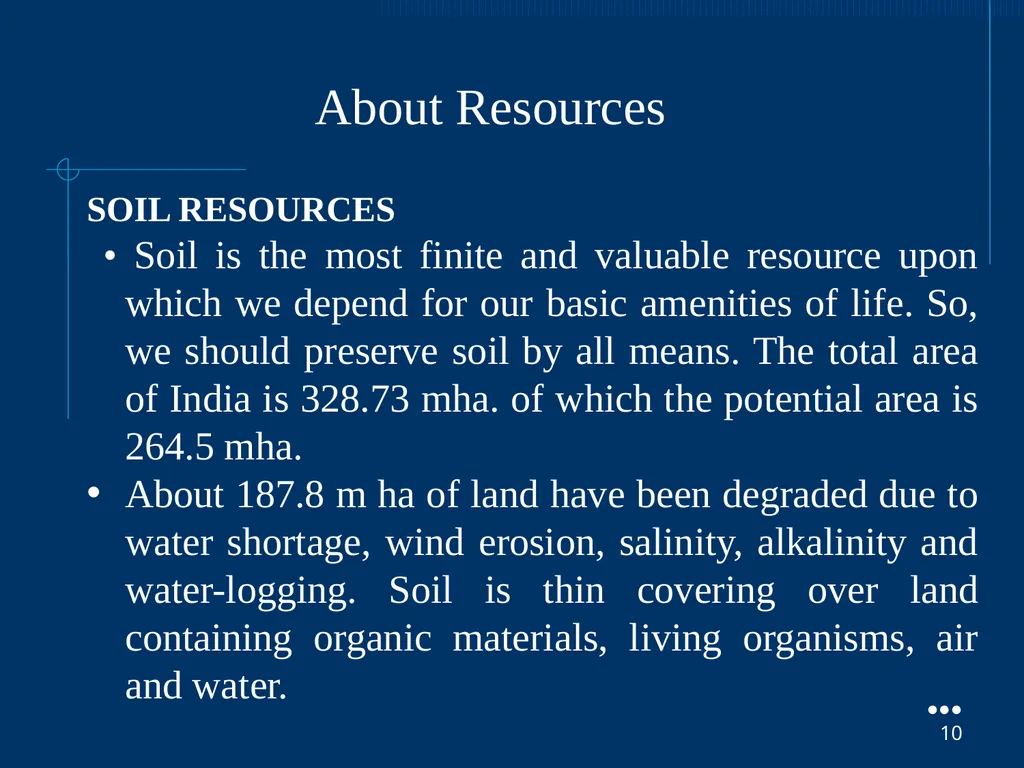
slide10. About Resources SOIL RESOURCES
• Soil is the most finite and valuable resource upon which we depend for our basic amenities of life. So, we should preserve soil by all means. The total area of India is 328.73 mha. of which the potential area is 264.5 mha.
About 187.8 m ha of land have been degraded due to water shortage, wind erosion, salinity, alkalinity and water-logging. Soil is thin covering over land containing organic materials, living organisms, air and water. ●●●
10<br>
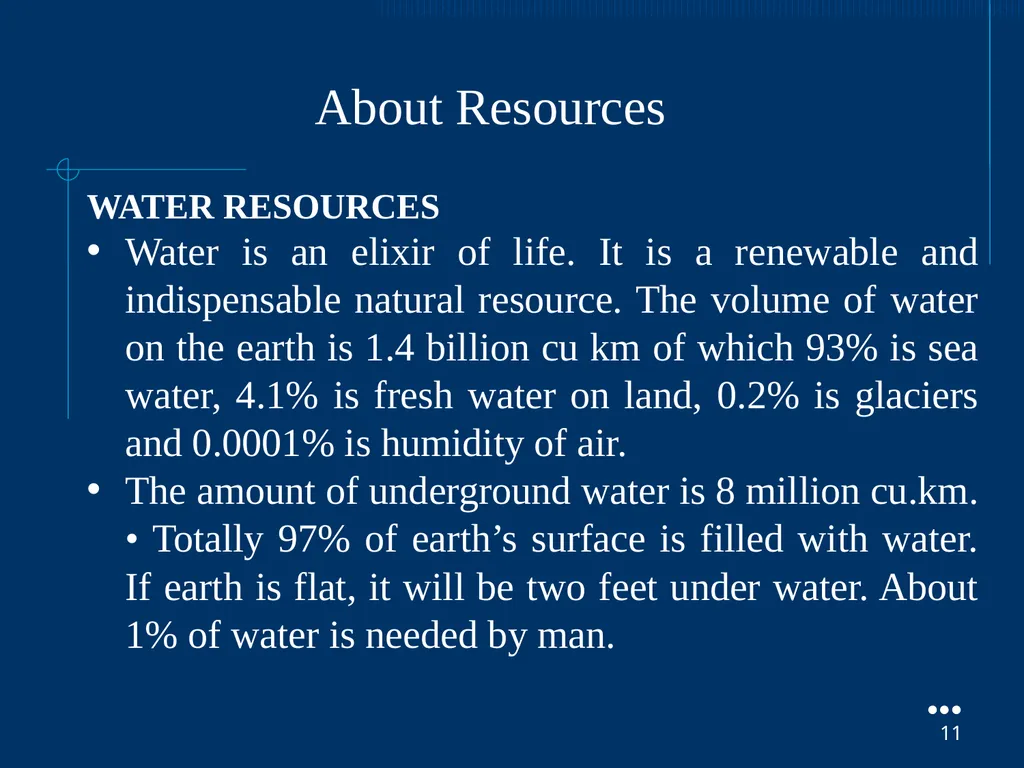
slide11. About Resources WATER RESOURCES
Water is an elixir of life. It is a renewable and indispensable natural resource. The volume of water on the earth is 1.4 billion cu km of which 93% is sea water, 4.1% is fresh water on land, 0.2% is glaciers and 0.0001% is humidity of air.
The amount of underground water is 8 million cu.km. • Totally 97% of earth’s surface is filled with water. If earth is flat, it will be two feet under water. About 1% of water is needed by man. ●●●
11<br>
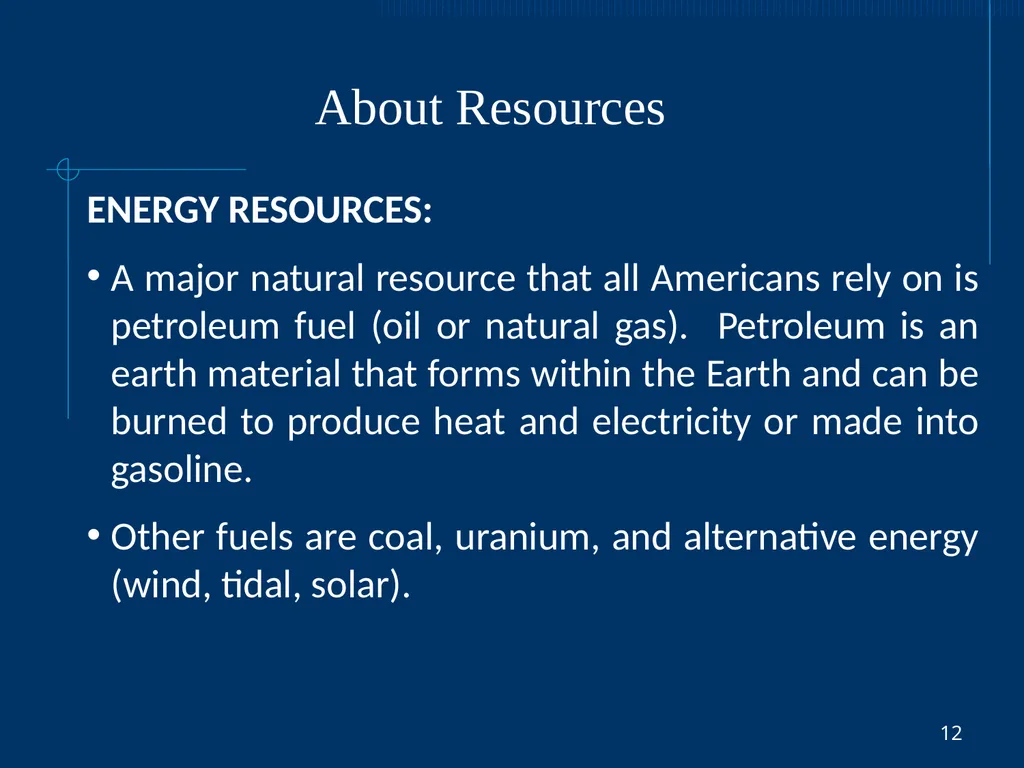
slide12. About Resources ENERGY RESOURCES:
A major natural resource that all Americans rely on is petroleum fuel (oil or natural gas). Petroleum is an earth material that forms within the Earth and can be burned to produce heat and electricity or made into gasoline.
Other fuels are coal, uranium, and alternative energy (wind, tidal, solar). 12<br>
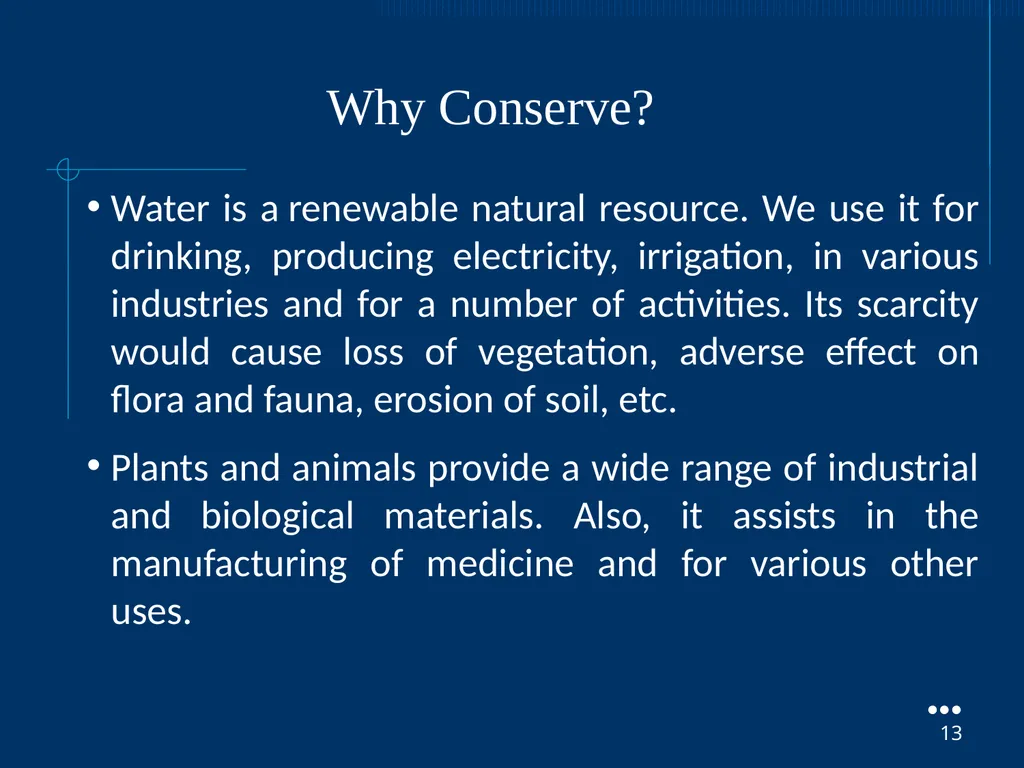
slide13. Why Conserve? Water is a renewable natural resource. We use it for drinking, producing electricity, irrigation, in various industries and for a number of activities. Its scarcity would cause loss of vegetation, adverse effect on flora and fauna, erosion of soil, etc.
Plants and animals provide a wide range of industrial and biological materials. Also, it assists in the manufacturing of medicine and for various other uses. ●●●
13<br>
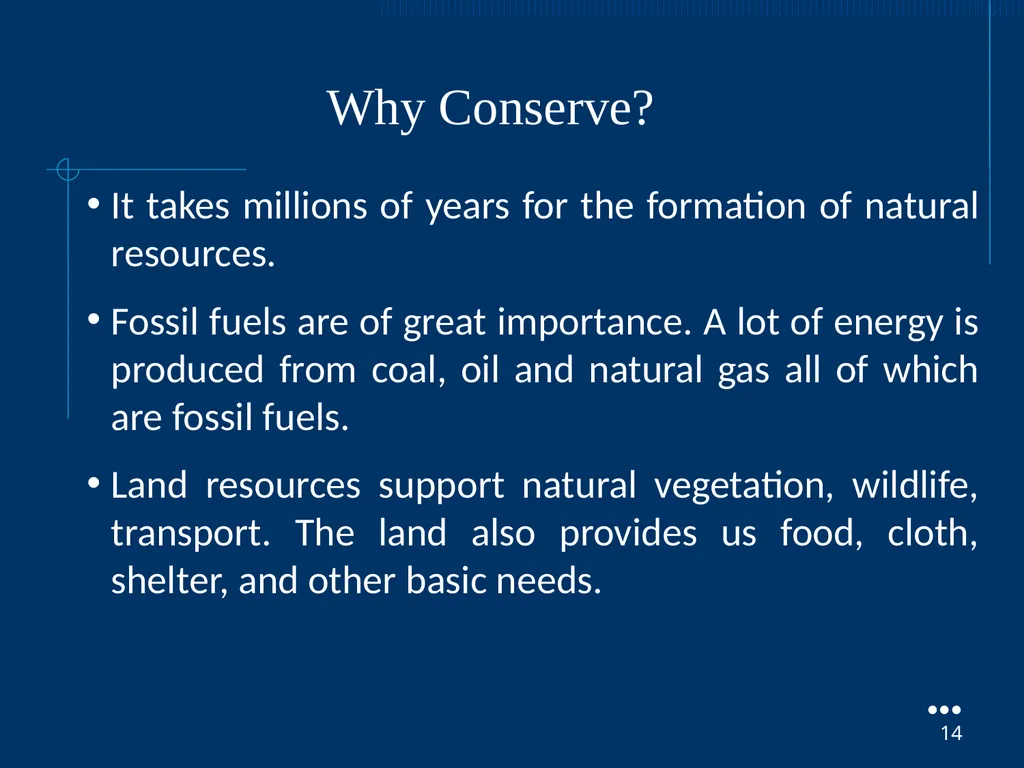
slide14. Why Conserve? It takes millions of years for the formation of natural resources.
Fossil fuels are of great importance. A lot of energy is produced from coal, oil and natural gas all of which are fossil fuels.
Land resources support natural vegetation, wildlife, transport. The land also provides us food, cloth, shelter, and other basic needs. ●●●
14<br>
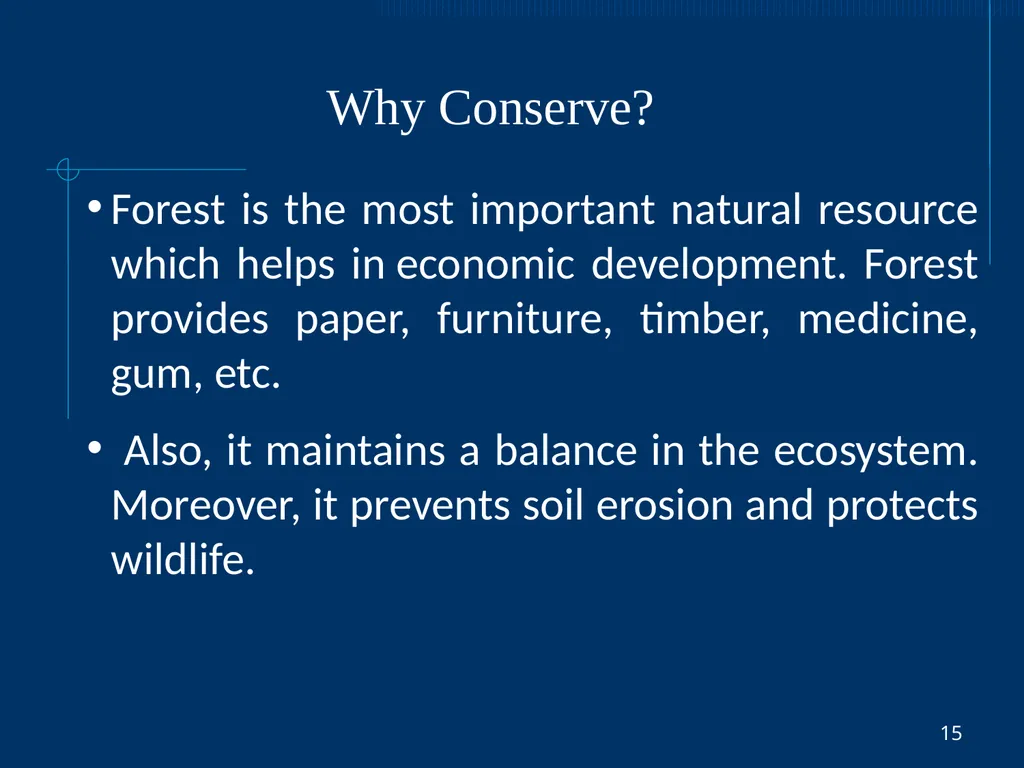
slide15. Why Conserve? Forest is the most important natural resource which helps in economic development. Forest provides paper, furniture, timber, medicine, gum, etc.
Also, it maintains a balance in the ecosystem. Moreover, it prevents soil erosion and protects wildlife. 15<br>
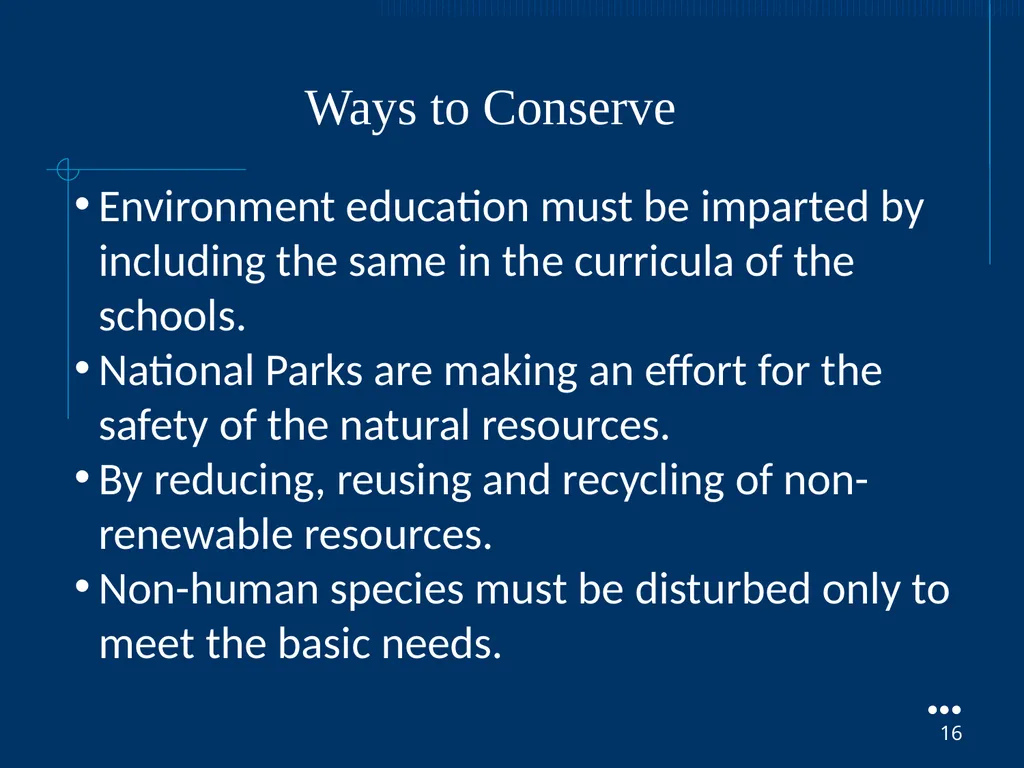
slide16. Ways to Conserve Environment education must be imparted by including the same in the curricula of the schools.
National Parks are making an effort for the safety of the natural resources.
By reducing, reusing and recycling of non-renewable resources.
Non-human species must be disturbed only to meet the basic needs. ●●●
16<br>
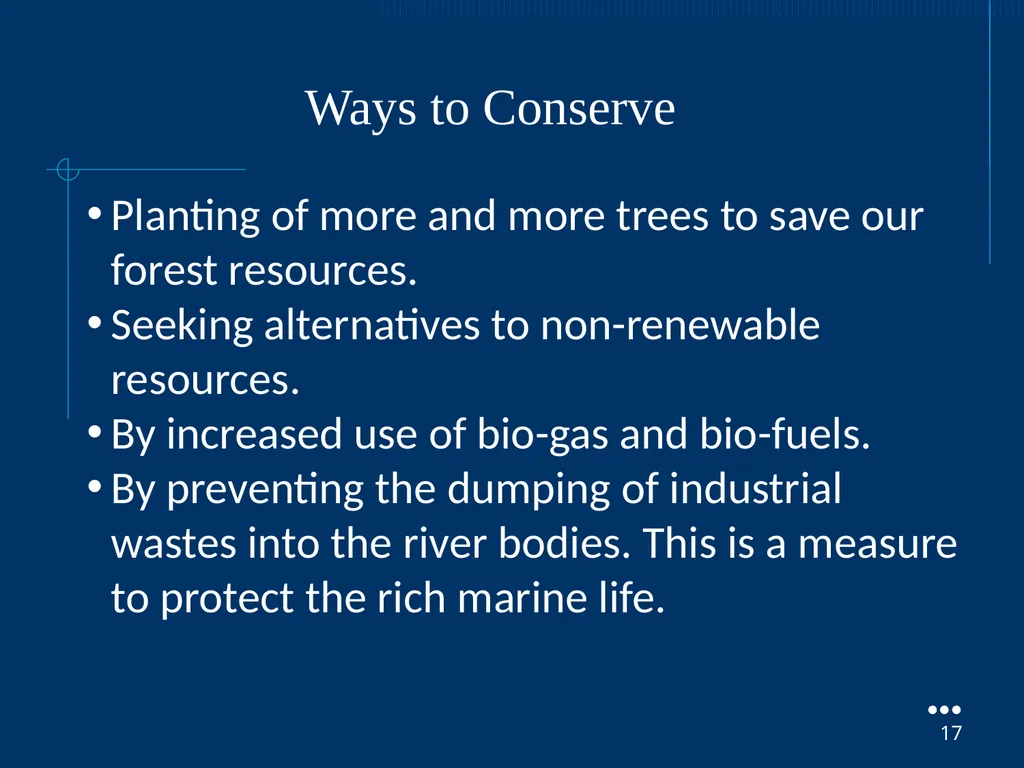
slide17. Ways to Conserve Planting of more and more trees to save our forest resources.
Seeking alternatives to non-renewable resources.
By increased use of bio-gas and bio-fuels.
By preventing the dumping of industrial wastes into the river bodies. This is a measure to protect the rich marine life. ●●●
17<br>
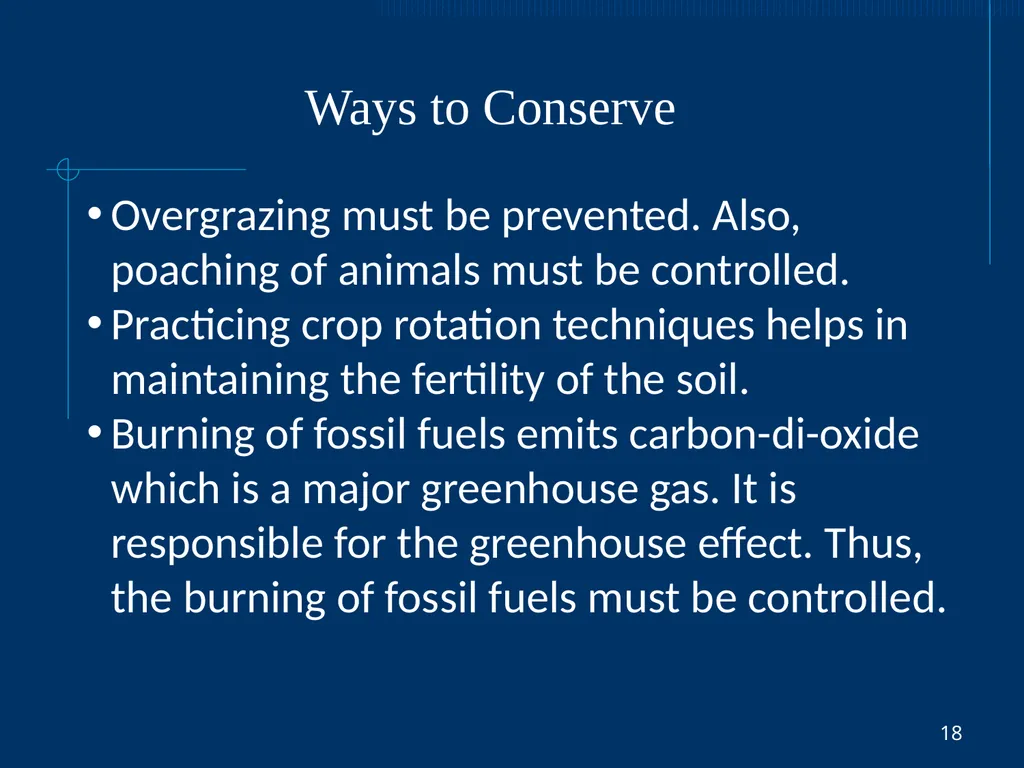
slide18. Ways to Conserve Overgrazing must be prevented. Also, poaching of animals must be controlled.
Practicing crop rotation techniques helps in maintaining the fertility of the soil.
Burning of fossil fuels emits carbon-di-oxide which is a major greenhouse gas. It is responsible for the greenhouse effect. Thus, the burning of fossil fuels must be controlled. 18<br>
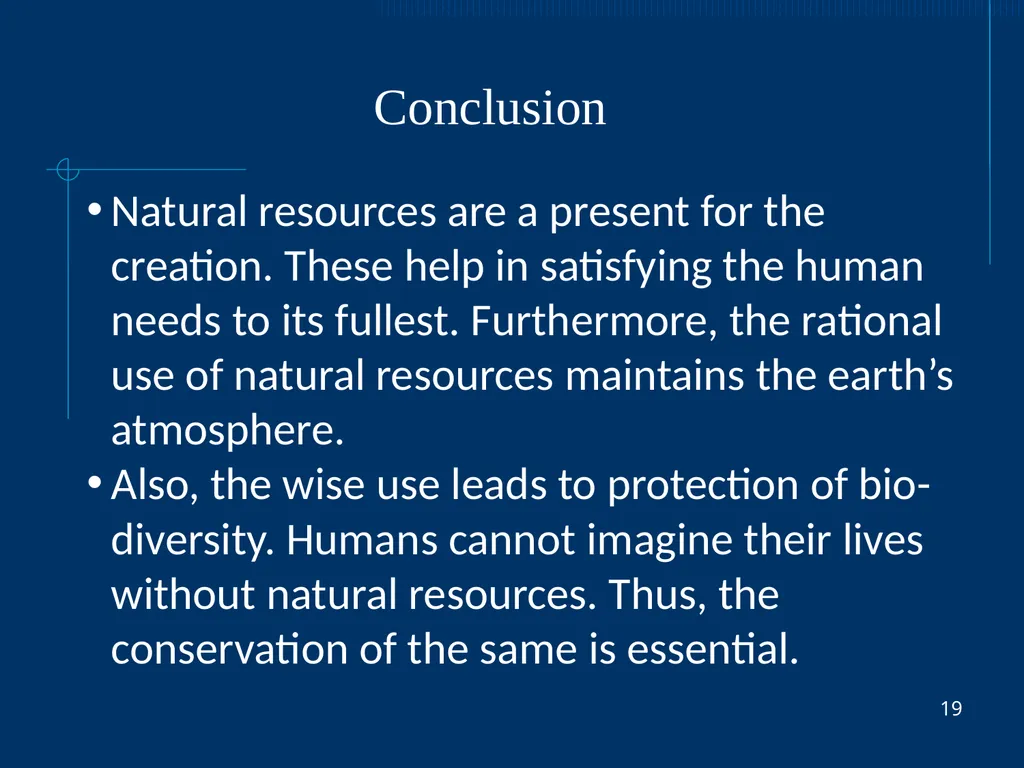
slide19. Conclusion Natural resources are a present for the creation. These help in satisfying the human needs to its fullest. Furthermore, the rational use of natural resources maintains the earth’s atmosphere.
Also, the wise use leads to protection of bio-diversity. Humans cannot imagine their lives without natural resources. Thus, the conservation of the same is essential. 19<br>
slide20. References Google.com
Wikipedia.org
Studymafia.org
Slidespanda.com<br>
slide21. ThanksTo StudyMafia.org<br>

Studymafia.org Studymafia.org Natural Resources<br>
slide2. Table Contents Definition
Introduction
Types of Natural Resources
About Resources
Why Conserve?
Ways to Conserve
Conclusion 2<br>
slide3. Definition Natural resources can be defined as the resources that exist (on the planet) independent of human actions. 3<br>
slide4. Introduction These are the resources that are found in the environment and are developed without the intervention of humans.
Natural resources are naturally occurring materials that are useful to man or could be useful under conceivable technological, economic or social circumstances or supplies drawn from the earth, supplies such as food, building and clothing materials, fertilizers, metals, water and geothermal power. 4<br>
slide5. Renewable: resources that are available in infinite quantity and can be used repeatedly are called renewable resources. Example: Forest, wind, water, etc.
Non-Renewable: resources that are limited in abundance due to their non-renewable nature and whose availability may run out in the future are called non-renewable resources. Examples include fossil fuels, minerals, etc. ●●●
5 Types of Natural Resources<br>
slide6. 6 Types of Natural Resources<br>
slide7. Types of Natural Resources 7<br>
slide8. About Resources FOREST RESOURCES
Forest are important renewable renewable natural resources. Trees, shrubs and herbs dominate forest ecosystem. 33% of the world’s area consists of forest lands. Insects, birds and animals live there. Native forest has naturally growing plants and trees.
Man-made forest consists of species of trees, shrubs, etc., grown by man. Boreal coniferous forests are found around the Arctic Sea, 550 to 650 north latitude .Temperate forests are found on either side of the earth 300 to 550 latitude north. ●●●
8<br>
slide9. About Resources MINERAL RESOURCES
• Minerals are non-renewable natural resources. They occur naturally as in organic, crystalline solids with physical properties. There are thousands of minerals in the world. • A nation’s economy depends mainly on minerals which are used by man everyday for various activities.
On the basis of usage of minerals, there are two types of Human civilization namely Bronze Age and Iron Age. We extract about 74m.metric tons of iron and steel per year. ●●●
9<br>
slide10. About Resources SOIL RESOURCES
• Soil is the most finite and valuable resource upon which we depend for our basic amenities of life. So, we should preserve soil by all means. The total area of India is 328.73 mha. of which the potential area is 264.5 mha.
About 187.8 m ha of land have been degraded due to water shortage, wind erosion, salinity, alkalinity and water-logging. Soil is thin covering over land containing organic materials, living organisms, air and water. ●●●
10<br>
slide11. About Resources WATER RESOURCES
Water is an elixir of life. It is a renewable and indispensable natural resource. The volume of water on the earth is 1.4 billion cu km of which 93% is sea water, 4.1% is fresh water on land, 0.2% is glaciers and 0.0001% is humidity of air.
The amount of underground water is 8 million cu.km. • Totally 97% of earth’s surface is filled with water. If earth is flat, it will be two feet under water. About 1% of water is needed by man. ●●●
11<br>
slide12. About Resources ENERGY RESOURCES:
A major natural resource that all Americans rely on is petroleum fuel (oil or natural gas). Petroleum is an earth material that forms within the Earth and can be burned to produce heat and electricity or made into gasoline.
Other fuels are coal, uranium, and alternative energy (wind, tidal, solar). 12<br>
slide13. Why Conserve? Water is a renewable natural resource. We use it for drinking, producing electricity, irrigation, in various industries and for a number of activities. Its scarcity would cause loss of vegetation, adverse effect on flora and fauna, erosion of soil, etc.
Plants and animals provide a wide range of industrial and biological materials. Also, it assists in the manufacturing of medicine and for various other uses. ●●●
13<br>
slide14. Why Conserve? It takes millions of years for the formation of natural resources.
Fossil fuels are of great importance. A lot of energy is produced from coal, oil and natural gas all of which are fossil fuels.
Land resources support natural vegetation, wildlife, transport. The land also provides us food, cloth, shelter, and other basic needs. ●●●
14<br>
slide15. Why Conserve? Forest is the most important natural resource which helps in economic development. Forest provides paper, furniture, timber, medicine, gum, etc.
Also, it maintains a balance in the ecosystem. Moreover, it prevents soil erosion and protects wildlife. 15<br>
slide16. Ways to Conserve Environment education must be imparted by including the same in the curricula of the schools.
National Parks are making an effort for the safety of the natural resources.
By reducing, reusing and recycling of non-renewable resources.
Non-human species must be disturbed only to meet the basic needs. ●●●
16<br>
slide17. Ways to Conserve Planting of more and more trees to save our forest resources.
Seeking alternatives to non-renewable resources.
By increased use of bio-gas and bio-fuels.
By preventing the dumping of industrial wastes into the river bodies. This is a measure to protect the rich marine life. ●●●
17<br>
slide18. Ways to Conserve Overgrazing must be prevented. Also, poaching of animals must be controlled.
Practicing crop rotation techniques helps in maintaining the fertility of the soil.
Burning of fossil fuels emits carbon-di-oxide which is a major greenhouse gas. It is responsible for the greenhouse effect. Thus, the burning of fossil fuels must be controlled. 18<br>
slide19. Conclusion Natural resources are a present for the creation. These help in satisfying the human needs to its fullest. Furthermore, the rational use of natural resources maintains the earth’s atmosphere.
Also, the wise use leads to protection of bio-diversity. Humans cannot imagine their lives without natural resources. Thus, the conservation of the same is essential. 19<br>
slide20. References Google.com
Wikipedia.org
Studymafia.org
Slidespanda.com<br>
slide21. ThanksTo StudyMafia.org<br>