Suicide Awareness and Prevention Learning Topics Suicide and suicide attempt Suicide gesture and behavior Key risk factors Protective factors First responder Ask Care Treat MAD Suicide resources Hotline Importance Loss of life to suicide is
"Suicide Awareness and Prevention Learning Topics" is the property of its rightful owner. Permission is granted to
download and print the materials on this website for personal, non-commercial use only, and to display it
on your personal computer provided you do not modify the materials and that you retain all copyright
notices contained in the materials. By downloading content from our website, you accept the terms of this
agreement.
Presentation Transcript
01
Suicide Awareness and Prevention<br>
02
Learning Topics Suicide and suicide attempt
Suicide gesture and behavior
Key risk factors
Protective factors
First responder
Ask
Care
Treat
MAD
Suicide resources
Hotline<br>
03
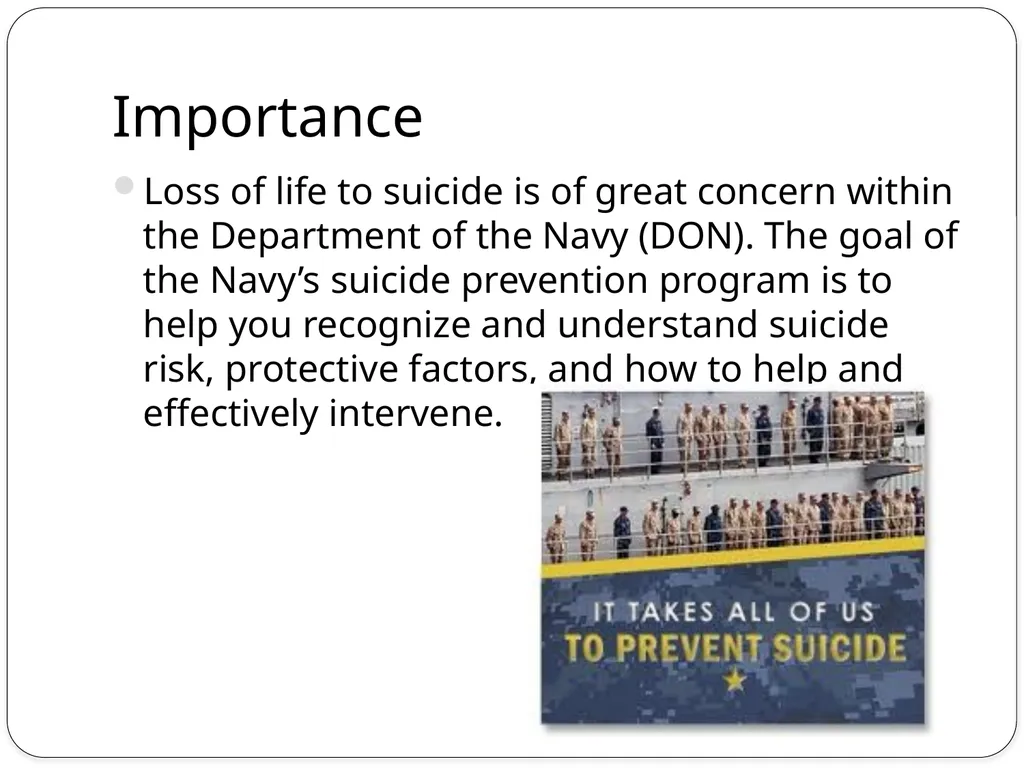
Importance Loss of life to suicide is of great concern within the Department of the Navy (DON). The goal of the Navy’s suicide prevention program is to help you recognize and understand suicide risk, protective factors, and how to help and effectively intervene.<br>
04
Suicide and Suicide Attempt Suicide: an intentional act resulting in one’s own death.
Suicide attempt: an intentional act, causing self-harm, where death would have occurred without direct intervention.<br>
05
Suicide Gesture and Behaviors Suicide Gesture: similar to a suicide attempt except there is NO attempt to kill ones self.
Suicide behaviors encompass a broad range of acts, including suicide attempts, gestures, threats, and suicidal thoughts.<br>
06
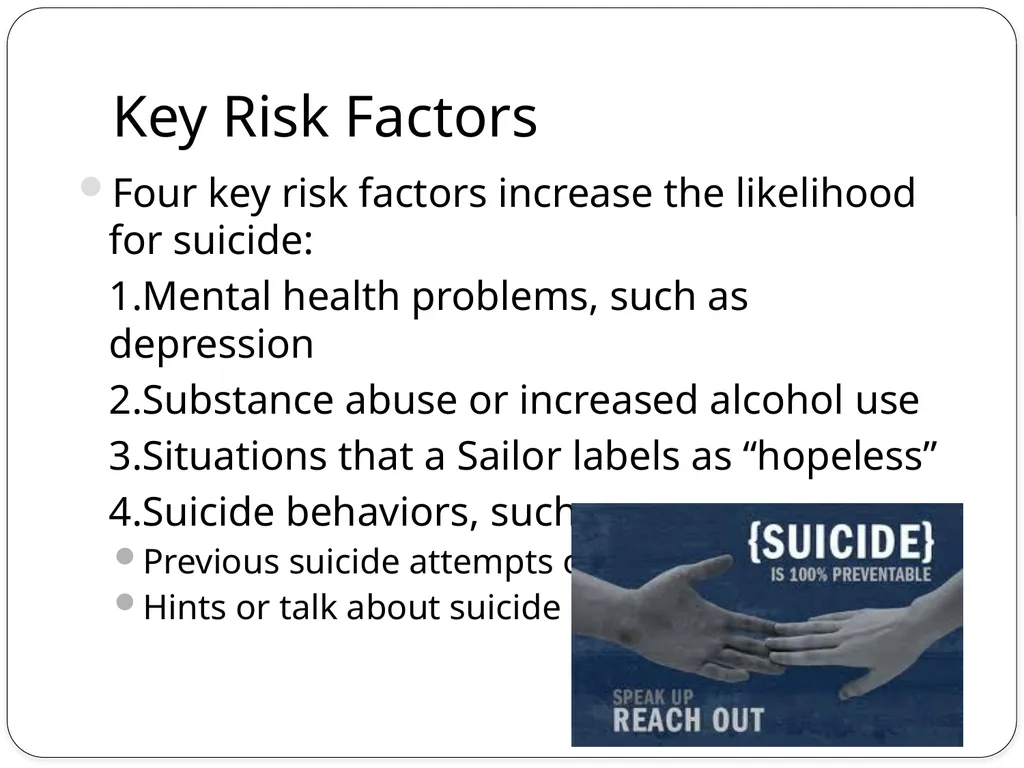
Key Risk Factors Four key risk factors increase the likelihood for suicide:
1.Mental health problems, such as depression
2.Substance abuse or increased alcohol use
3.Situations that a Sailor labels as “hopeless”
4.Suicide behaviors, such as:
Previous suicide attempts or suicide gestures
Hints or talk about suicide<br>
07
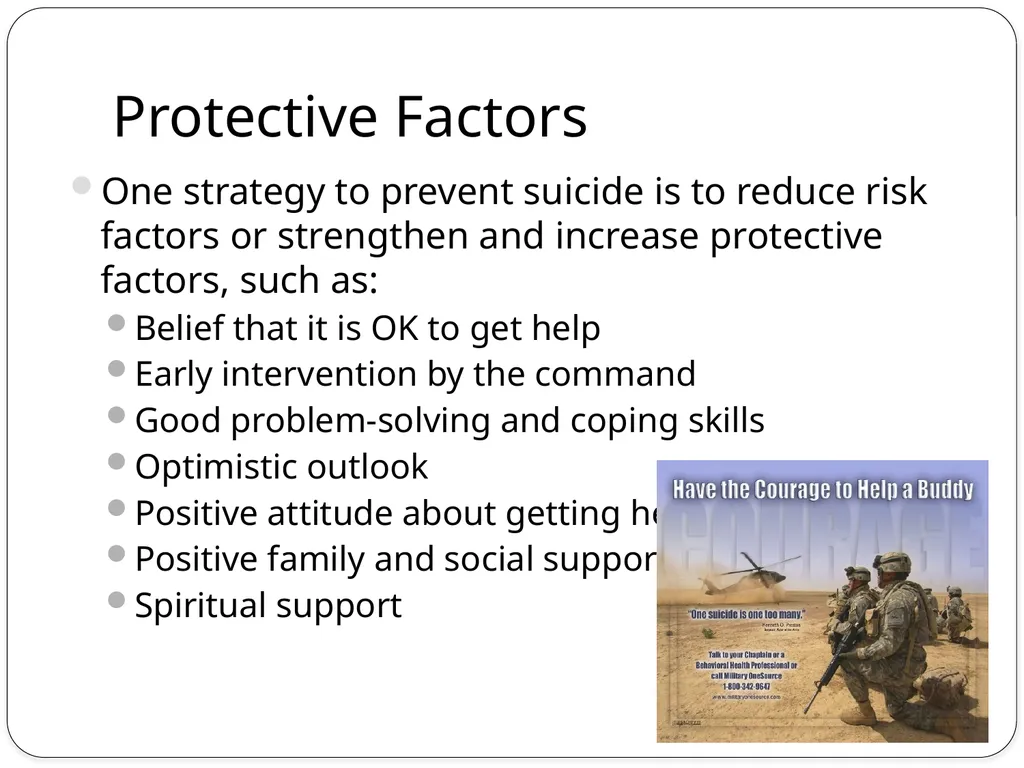
Protective Factors One strategy to prevent suicide is to reduce risk factors or strengthen and increase protective factors, such as:
Belief that it is OK to get help
Early intervention by the command
Good problem-solving and coping skills
Optimistic outlook
Positive attitude about getting help early
Positive family and social support
Spiritual support<br>
08
First Responder To be a First Responder, you must:
Know the warning signs of suicide
Let your shipmate, friend, or family member know that you are worried, concerned, and care about him/her
Take all talk about suicide very seriously
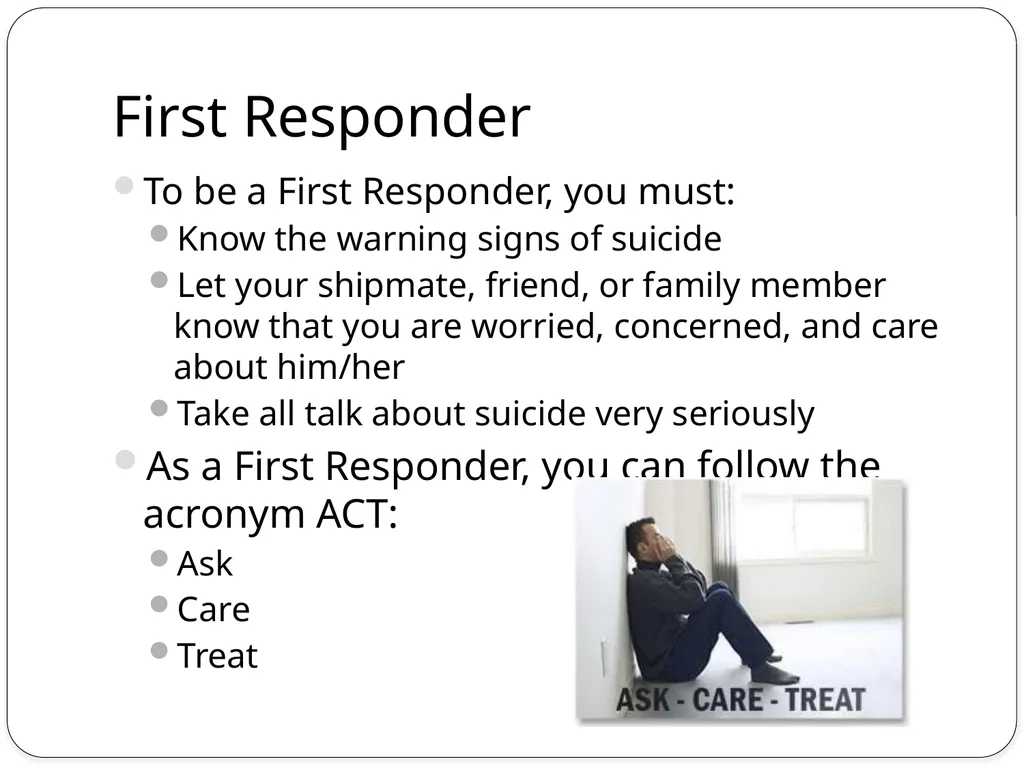
As a First Responder, you can follow the acronym ACT:
Ask
Care
Treat<br>
09
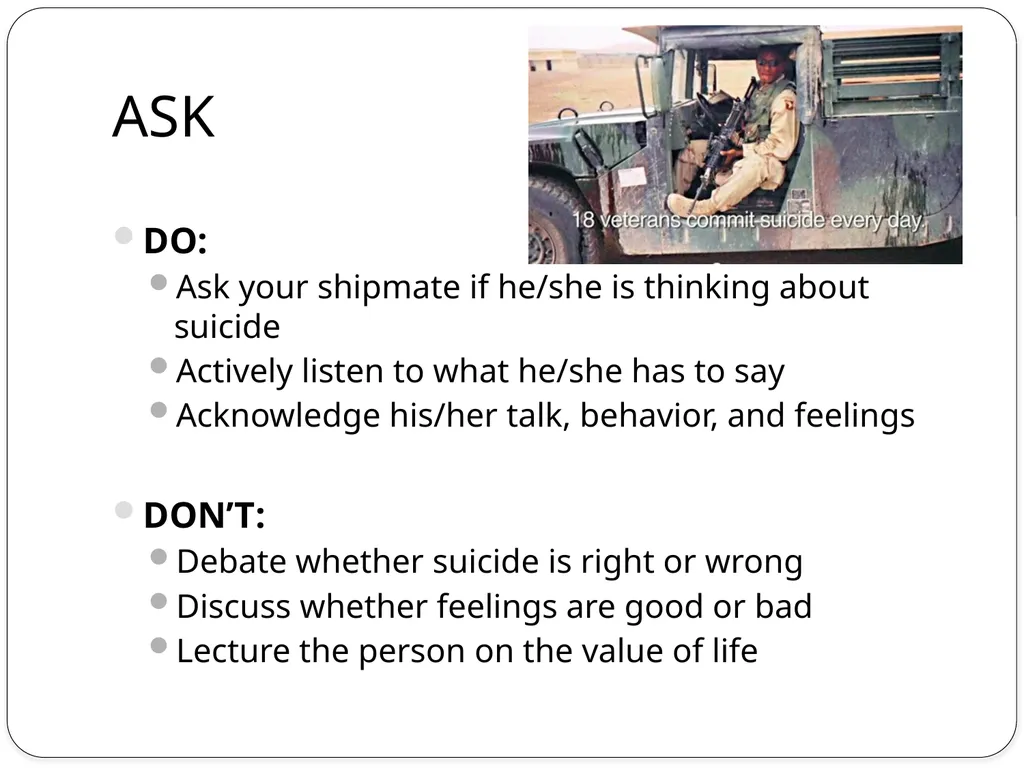
ASK DO:
Ask your shipmate if he/she is thinking about suicide
Actively listen to what he/she has to say
Acknowledge his/her talk, behavior, and feelings
DON’T:
Debate whether suicide is right or wrong
Discuss whether feelings are good or bad
Lecture the person on the value of life<br>
10
CARE DO:
Let your shipmate know you care and understand
Discuss and care about what is troubling him/her
Maintain good eye contact and give your undivided attention
Care if a shipmate has a plan for suicide
DON’T:
Encourage him or her to do it
Act shocked—this will put distance between you<br>
11
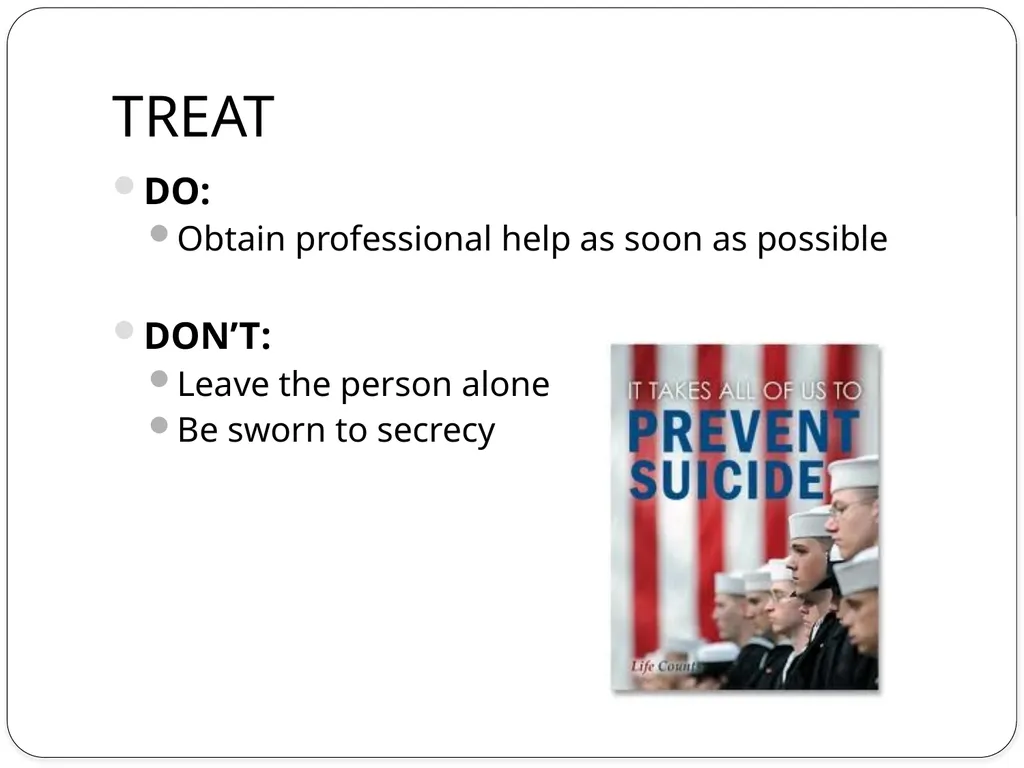
TREAT DO:
Obtain professional help as soon as possible
DON’T:
Leave the person alone
Be sworn to secrecy<br>
12
Don’t Get Mad DON'T:
Miss or mistake signals
Avoid the person
Disregard signals<br>
13
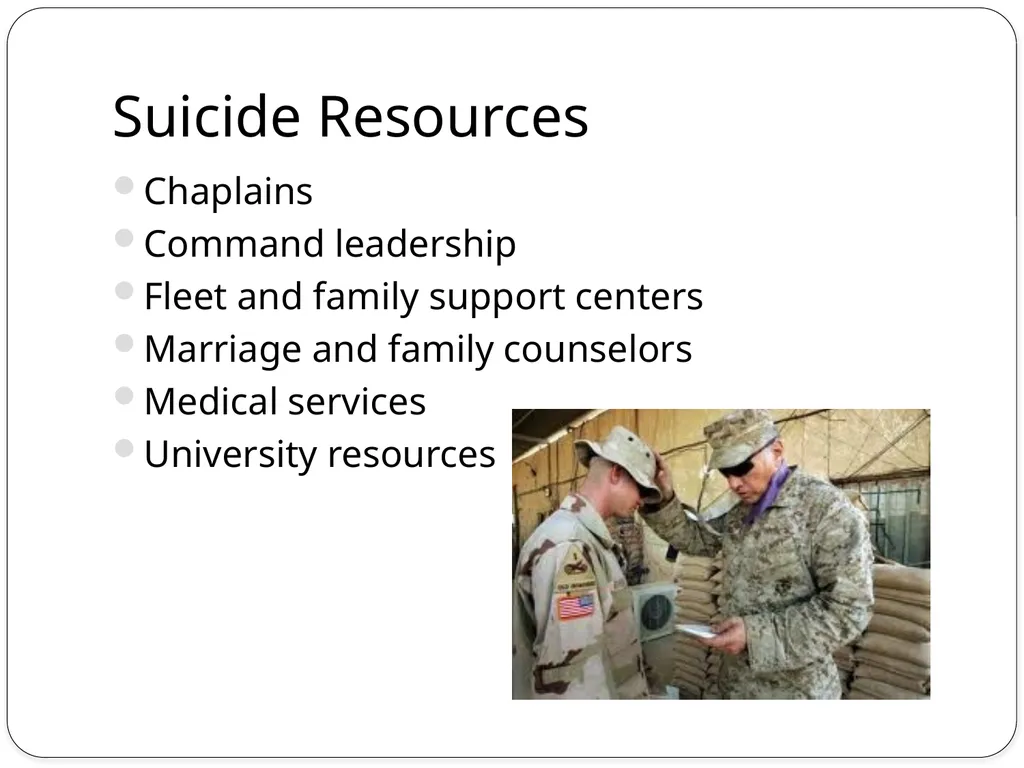
Suicide Resources Chaplains
Command leadership
Fleet and family support centers
Marriage and family counselors
Medical services
University resources<br>
14
Hotline Insert Campus Hotline Here<br>
15
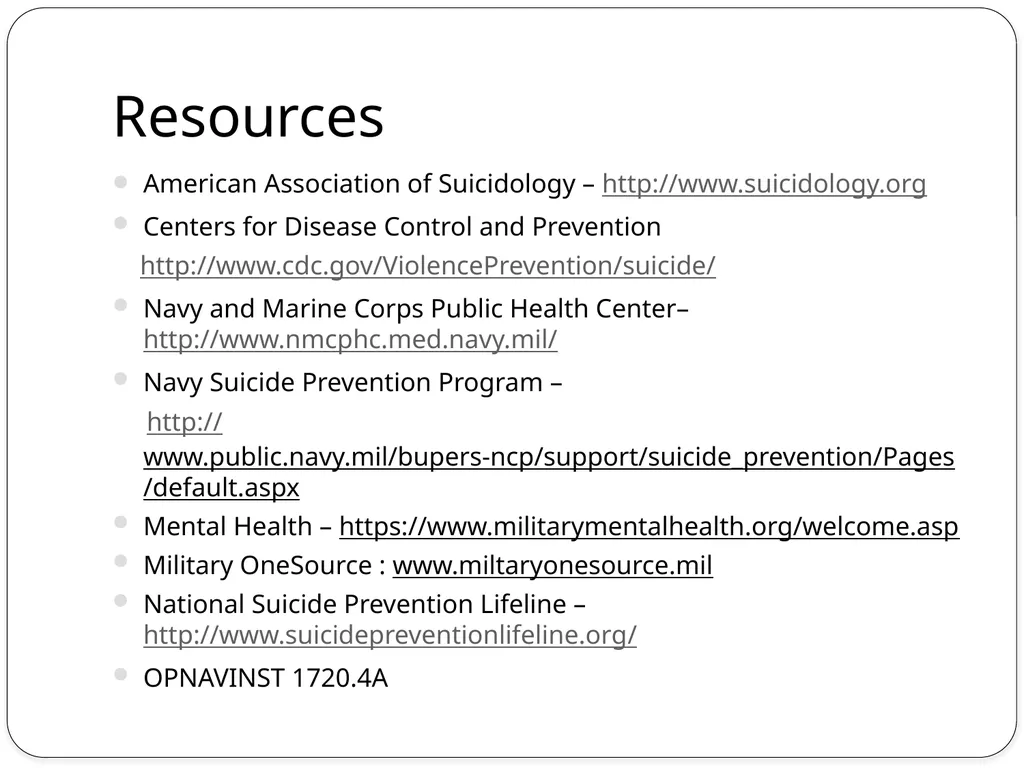
Resources American Association of Suicidology – http://www.suicidology.org
Centers for Disease Control and Prevention
http://www.cdc.gov/ViolencePrevention/suicide/
Navy and Marine Corps Public Health Center– http://www.nmcphc.med.navy.mil/
Navy Suicide Prevention Program –
http://www.public.navy.mil/bupers-ncp/support/suicide_prevention/Pages/default.aspx
Mental Health – https://www.militarymentalhealth.org/welcome.asp
Military OneSource : www.miltaryonesource.mil
National Suicide Prevention Lifeline –http://www.suicidepreventionlifeline.org/
OPNAVINST 1720.4A<br>