
Summarizing Journal Articles & Online Tools for





Description: Summarizing Journal Articles Online Tools for Researchers Laxmi Sagwan McNair Program 1 Summarizing Journal Articles 2 What is a scholarly journal article? Presents original research Is discipline-specific Is peer-reviewed 3 Anatomy of a
Related Topics
Download Presentation
"Summarizing Journal Articles & Online Tools for" is the property of its rightful owner. Permission is granted to download and print the materials on this website for personal, non-commercial use only, and to display it on your personal computer provided you do not modify the materials and that you retain all copyright notices contained in the materials. By downloading content from our website, you accept the terms of this agreement.
Presentation Transcript
slide1. Summarizing Journal Articles & Online Tools for Researchers Laxmi Sagwan
McNair Program 1<br>
slide2. Summarizing Journal Articles 2<br>
slide3. What is a scholarly journal article? Presents original research
Is discipline-specific
Is peer-reviewed 3<br>
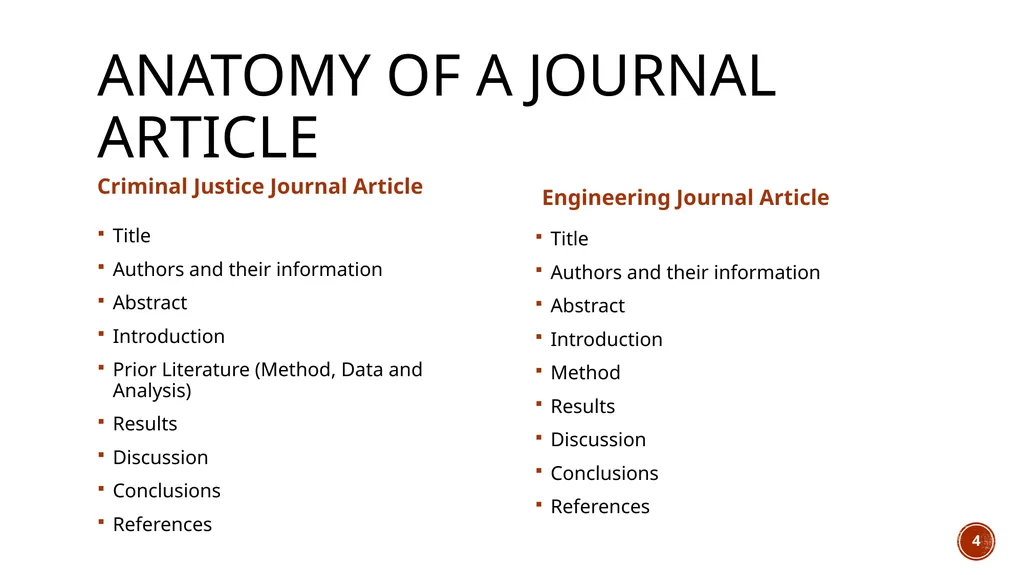
slide4. Anatomy of a Journal Article Criminal Justice Journal Article Engineering Journal Article 4 Title
Authors and their information
Abstract
Introduction
Prior Literature (Method, Data and Analysis)
Results
Discussion
Conclusions
References Title
Authors and their information
Abstract
Introduction
Method
Results
Discussion
Conclusions
References<br>
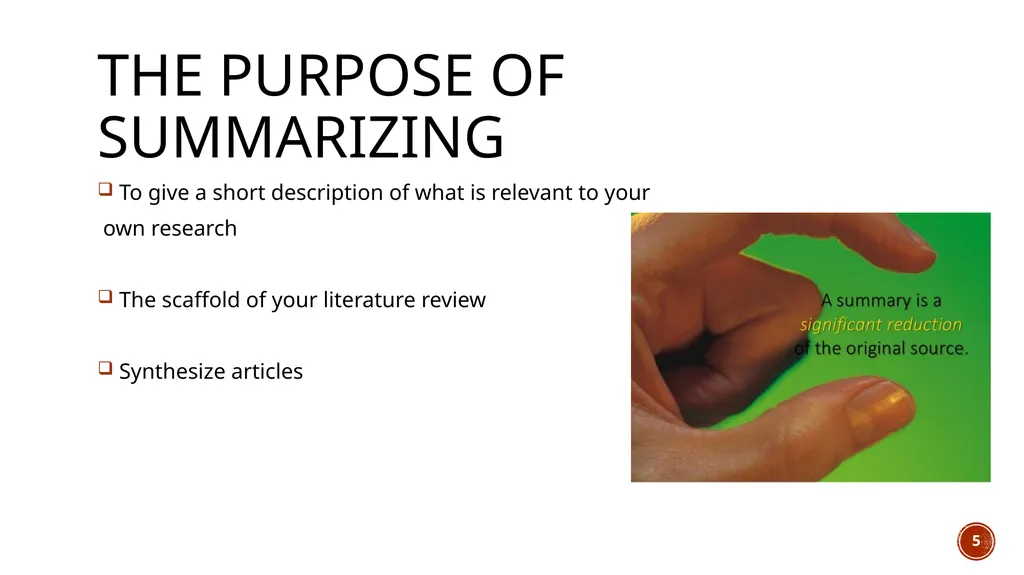
slide5. The purpose of summarizing To give a short description of what is relevant to your
own research
The scaffold of your literature review
Synthesize articles 5<br>
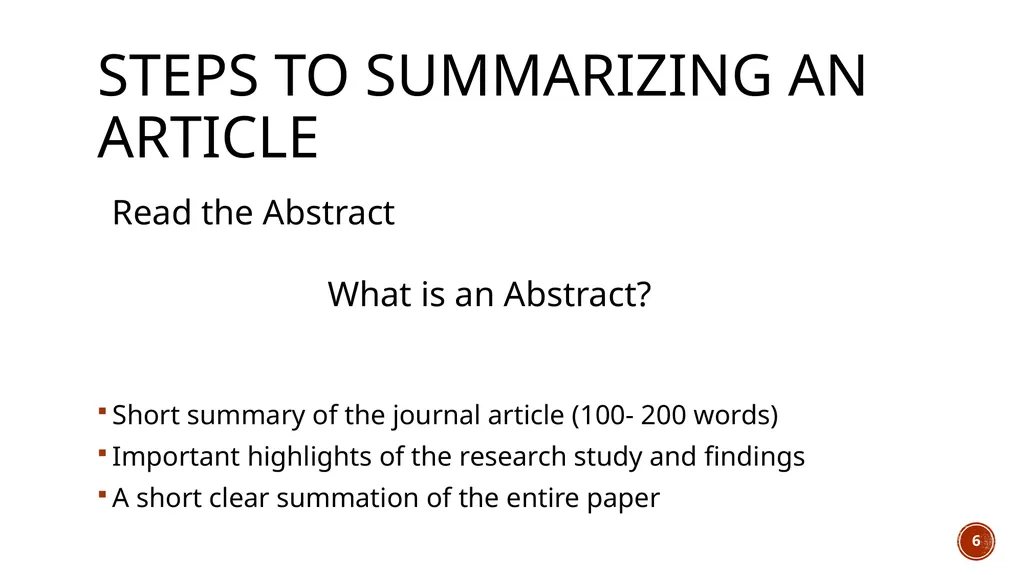
slide6. STEPS to Summarizing an article 6 Short summary of the journal article (100- 200 words)
Important highlights of the research study and findings
A short clear summation of the entire paper Read the Abstract
What is an Abstract?<br>
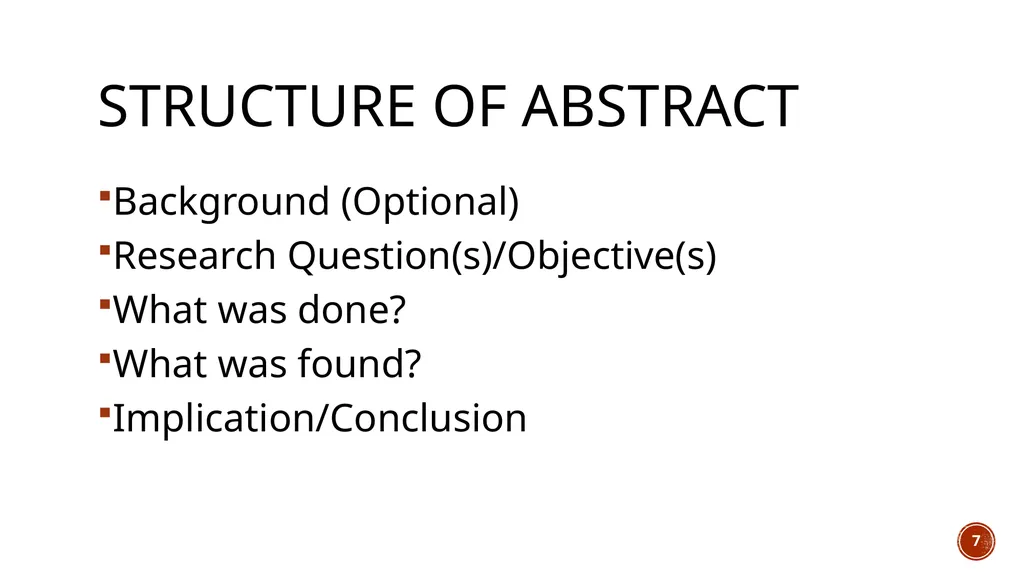
slide7. Structure of abstract Background (Optional)
Research Question(s)/Objective(s)
What was done?
What was found?
Implication/Conclusion 7<br>
slide8. Article summary worksheet 8<br>
slide9. Source Title of the paper,
Authors,
Journal Information 9<br>
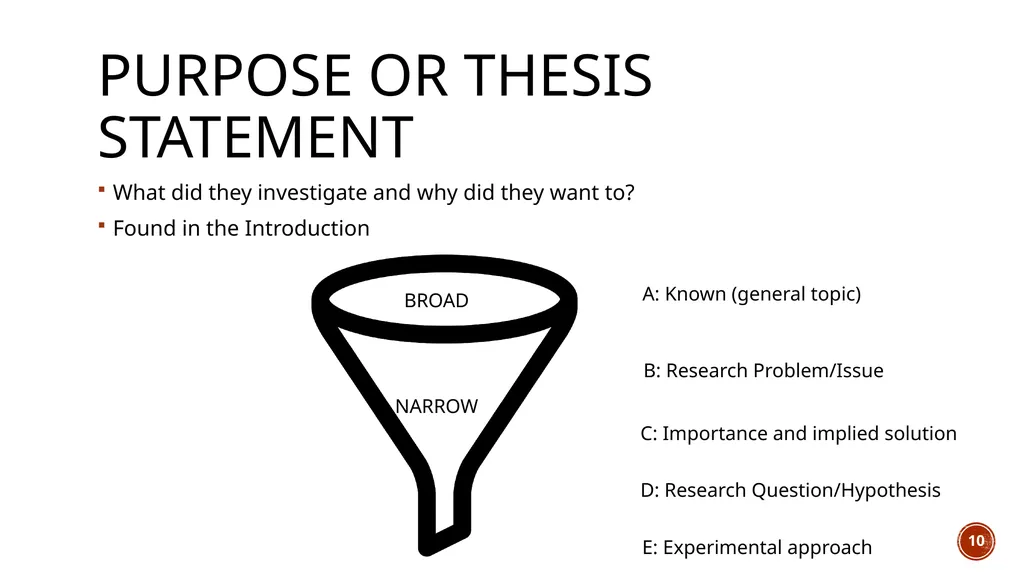
slide10. Purpose or Thesis Statement What did they investigate and why did they want to?
Found in the Introduction 10<br>
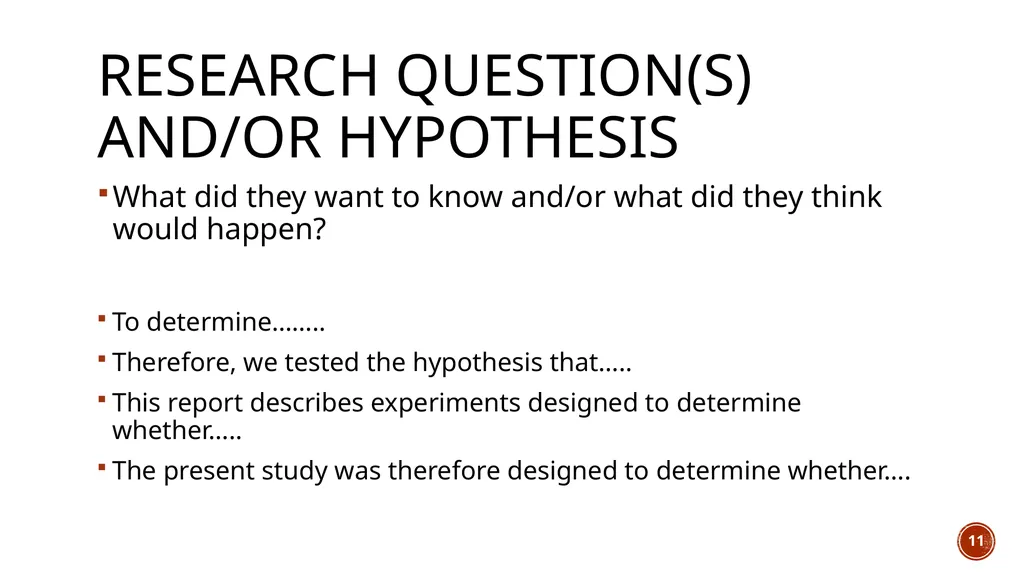
slide11. RESEARCH QUESTION(S) AND/OR HYPOTHESIS What did they want to know and/or what did they think would happen? 11 To determine……..
Therefore, we tested the hypothesis that…..
This report describes experiments designed to determine whether…..
The present study was therefore designed to determine whether….<br>
slide12. Method Who were the participants/subjects, what instruments and procedure did they use, how were they planning to analyze the data? 12<br>
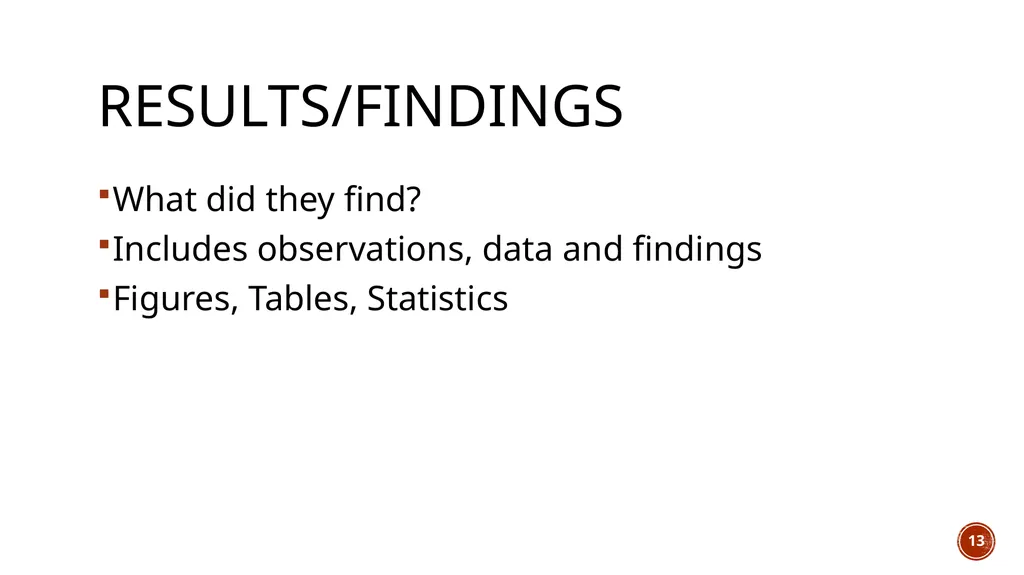
slide13. Results/findings What did they find?
Includes observations, data and findings
Figures, Tables, Statistics 13<br>
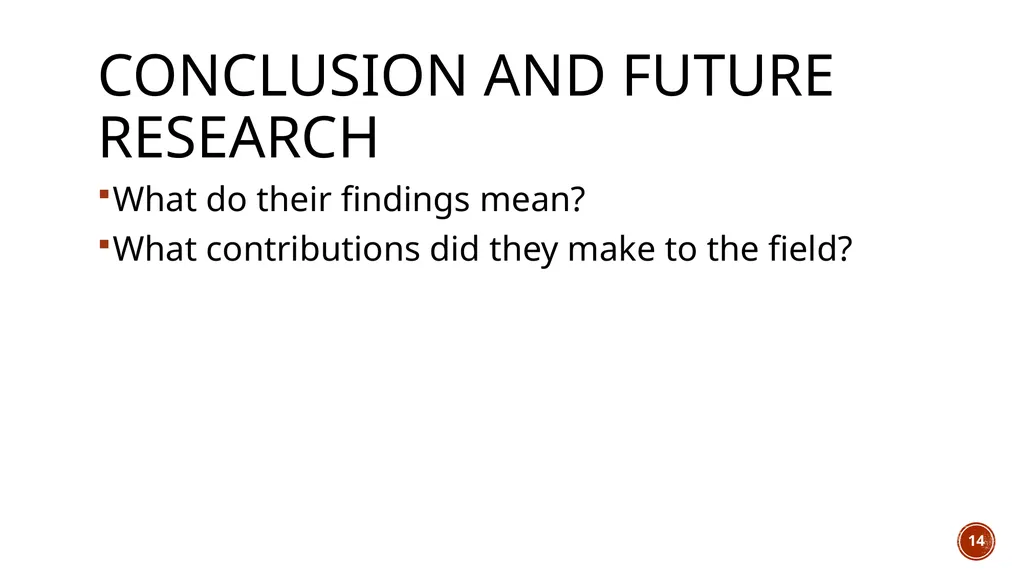
slide14. CONCLUSION AND FUTURE RESEARCH What do their findings mean?
What contributions did they make to the field? 14<br>
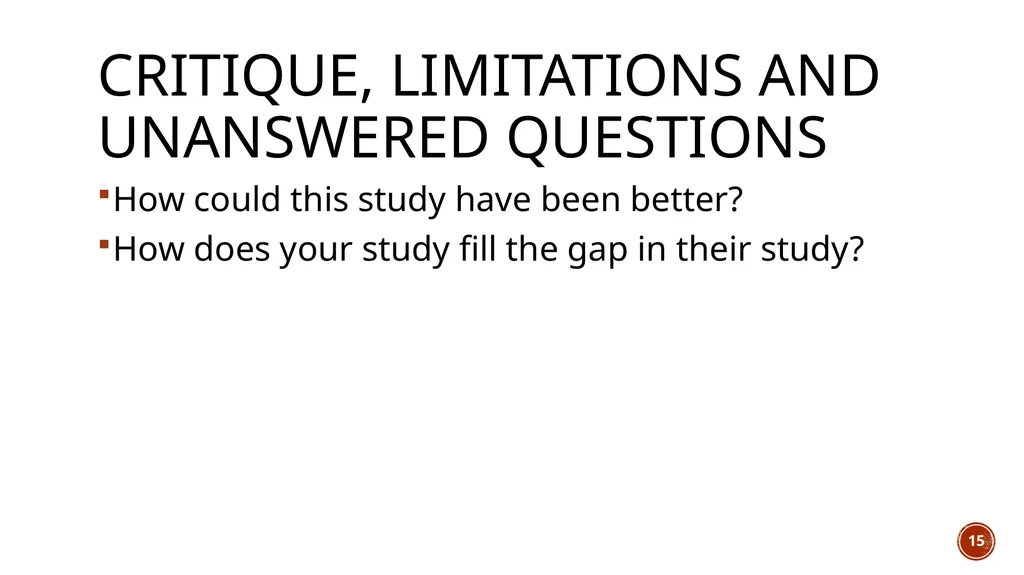
slide15. CRITIQUE, LIMITATIONS AND UNANSWERED QUESTIONS How could this study have been better?
How does your study fill the gap in their study? 15<br>
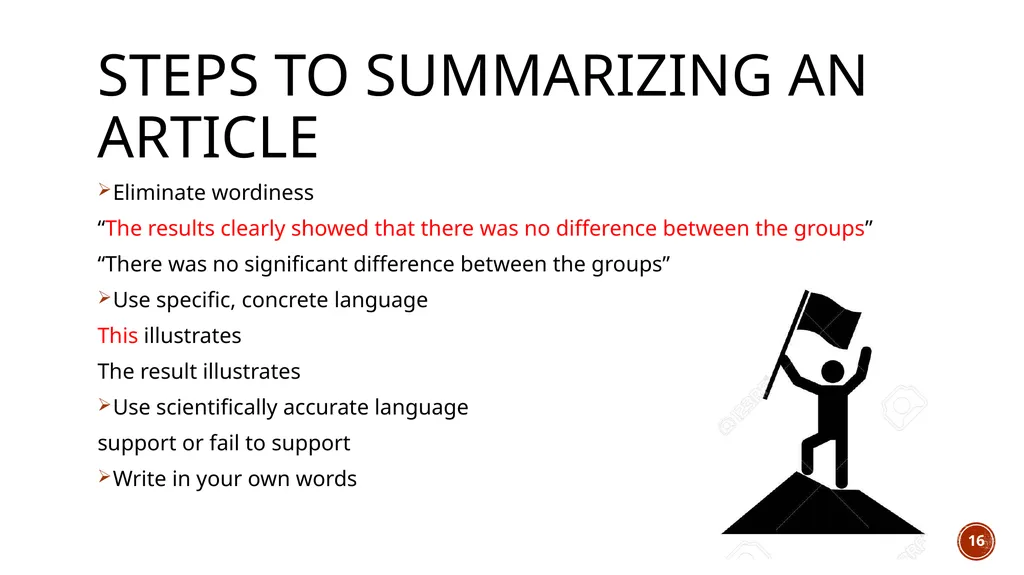
slide16. STEPS to Summarizing an article Eliminate wordiness
“The results clearly showed that there was no difference between the groups”
“There was no significant difference between the groups”
Use specific, concrete language
This illustrates
The result illustrates
Use scientifically accurate language
support or fail to support
Write in your own words 16<br>
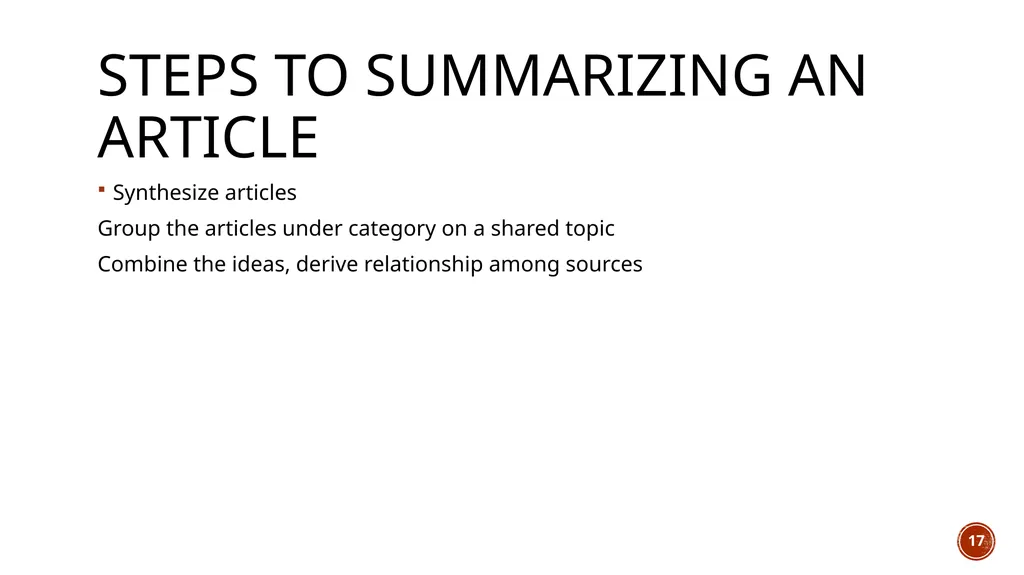
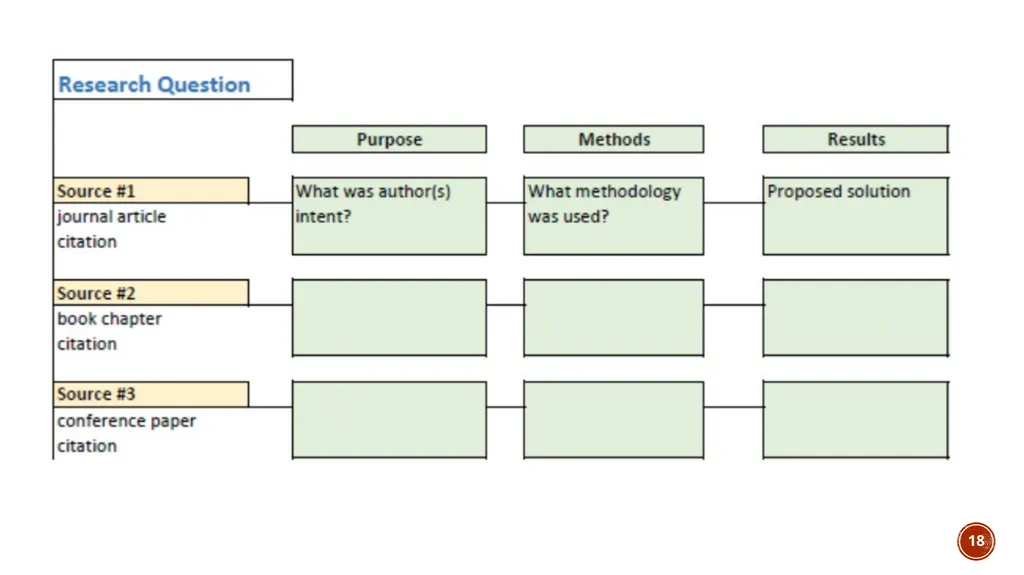
slide17. STEPS to Summarizing an article Synthesize articles
Group the articles under category on a shared topic
Combine the ideas, derive relationship among sources 17<br>
slide18. 18<br>
slide19. 19 Online tools for researchers<br>
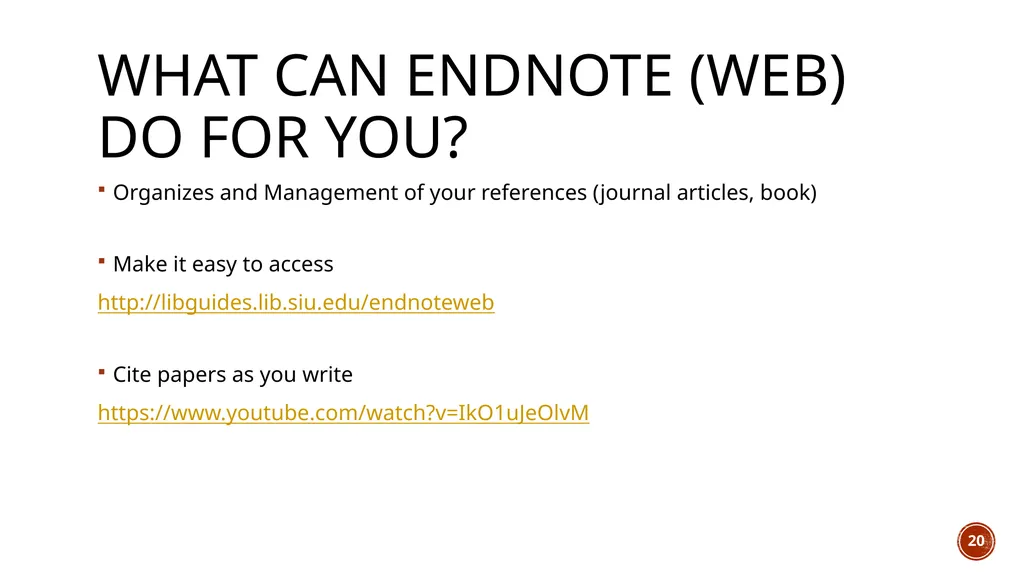
slide20. wHAT CAN endnote (WEB) do for you? Organizes and Management of your references (journal articles, book)
Make it easy to access
http://libguides.lib.siu.edu/endnoteweb
Cite papers as you write
https://www.youtube.com/watch?v=IkO1uJeOlvM 20<br>
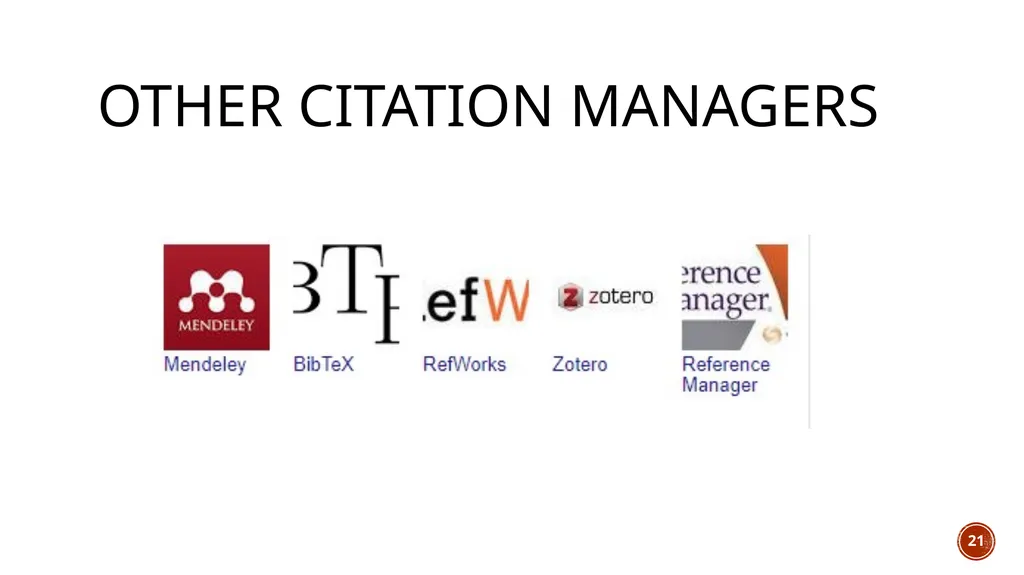
slide21. Other CITATION MANAGERS 21<br>
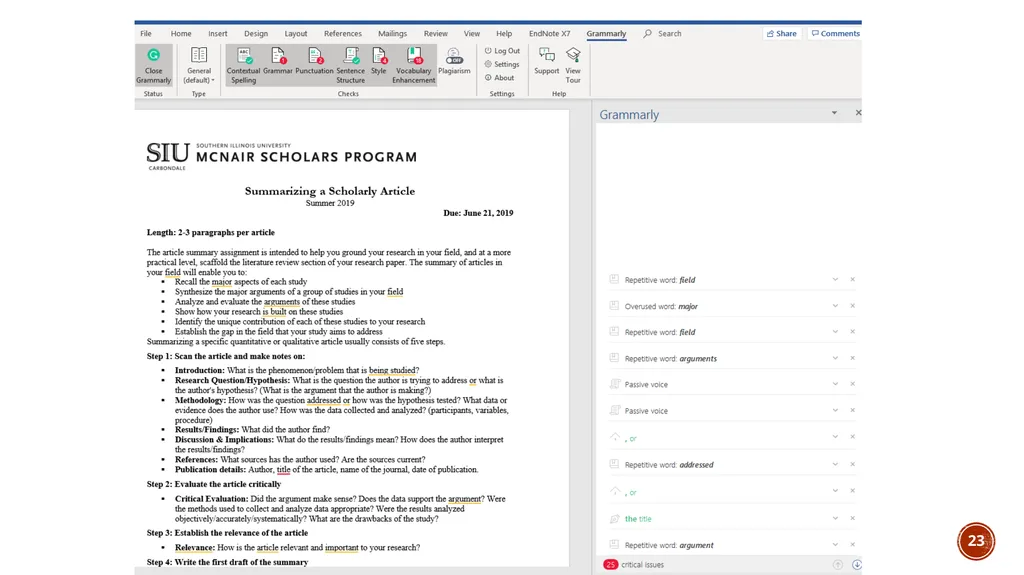
slide22. Grammarly Improves your writing, error-free
Proofreading
Plagiarism detection
https://www.grammarly.com/ 22<br>
slide23. 23<br>
slide24. rESEARCHGATE Social networking site
Facebook for scientists and researchers
Share paper, ask and answer questions, find collaborator
https://www.researchgate.net/ 24<br>
slide25. dROPBOX Dropbox can create a special folder on the user's computer
synchronized to Dropbox's servers and to other computers and devices 25<br>
slide26. SOFTWARE doWNLOADS https://oit.siu.edu/salukitech/software/ 26<br>
McNair Program 1<br>
slide2. Summarizing Journal Articles 2<br>
slide3. What is a scholarly journal article? Presents original research
Is discipline-specific
Is peer-reviewed 3<br>
slide4. Anatomy of a Journal Article Criminal Justice Journal Article Engineering Journal Article 4 Title
Authors and their information
Abstract
Introduction
Prior Literature (Method, Data and Analysis)
Results
Discussion
Conclusions
References Title
Authors and their information
Abstract
Introduction
Method
Results
Discussion
Conclusions
References<br>
slide5. The purpose of summarizing To give a short description of what is relevant to your
own research
The scaffold of your literature review
Synthesize articles 5<br>
slide6. STEPS to Summarizing an article 6 Short summary of the journal article (100- 200 words)
Important highlights of the research study and findings
A short clear summation of the entire paper Read the Abstract
What is an Abstract?<br>
slide7. Structure of abstract Background (Optional)
Research Question(s)/Objective(s)
What was done?
What was found?
Implication/Conclusion 7<br>
slide8. Article summary worksheet 8<br>
slide9. Source Title of the paper,
Authors,
Journal Information 9<br>
slide10. Purpose or Thesis Statement What did they investigate and why did they want to?
Found in the Introduction 10<br>
slide11. RESEARCH QUESTION(S) AND/OR HYPOTHESIS What did they want to know and/or what did they think would happen? 11 To determine……..
Therefore, we tested the hypothesis that…..
This report describes experiments designed to determine whether…..
The present study was therefore designed to determine whether….<br>
slide12. Method Who were the participants/subjects, what instruments and procedure did they use, how were they planning to analyze the data? 12<br>
slide13. Results/findings What did they find?
Includes observations, data and findings
Figures, Tables, Statistics 13<br>
slide14. CONCLUSION AND FUTURE RESEARCH What do their findings mean?
What contributions did they make to the field? 14<br>
slide15. CRITIQUE, LIMITATIONS AND UNANSWERED QUESTIONS How could this study have been better?
How does your study fill the gap in their study? 15<br>
slide16. STEPS to Summarizing an article Eliminate wordiness
“The results clearly showed that there was no difference between the groups”
“There was no significant difference between the groups”
Use specific, concrete language
This illustrates
The result illustrates
Use scientifically accurate language
support or fail to support
Write in your own words 16<br>
slide17. STEPS to Summarizing an article Synthesize articles
Group the articles under category on a shared topic
Combine the ideas, derive relationship among sources 17<br>
slide18. 18<br>
slide19. 19 Online tools for researchers<br>
slide20. wHAT CAN endnote (WEB) do for you? Organizes and Management of your references (journal articles, book)
Make it easy to access
http://libguides.lib.siu.edu/endnoteweb
Cite papers as you write
https://www.youtube.com/watch?v=IkO1uJeOlvM 20<br>
slide21. Other CITATION MANAGERS 21<br>
slide22. Grammarly Improves your writing, error-free
Proofreading
Plagiarism detection
https://www.grammarly.com/ 22<br>
slide23. 23<br>
slide24. rESEARCHGATE Social networking site
Facebook for scientists and researchers
Share paper, ask and answer questions, find collaborator
https://www.researchgate.net/ 24<br>
slide25. dROPBOX Dropbox can create a special folder on the user's computer
synchronized to Dropbox's servers and to other computers and devices 25<br>
slide26. SOFTWARE doWNLOADS https://oit.siu.edu/salukitech/software/ 26<br>