Terminal Agitation Martlets hospice What this talk will cover Definition of terminal agitation, how common is it Symptoms and signs Risk factors for more severe terminal agitation Causes General management Management with medications
"Terminal Agitation Martlets hospice What this talk" is the property of its rightful owner. Permission is granted to
download and print the materials on this website for personal, non-commercial use only, and to display it
on your personal computer provided you do not modify the materials and that you retain all copyright
notices contained in the materials. By downloading content from our website, you accept the terms of this
agreement.
Presentation Transcript
01
Terminal Agitation Martlets hospice<br>
02
What this talk will cover Definition of terminal agitation, how common is it
Symptoms and signs
Risk factors for more severe terminal agitation
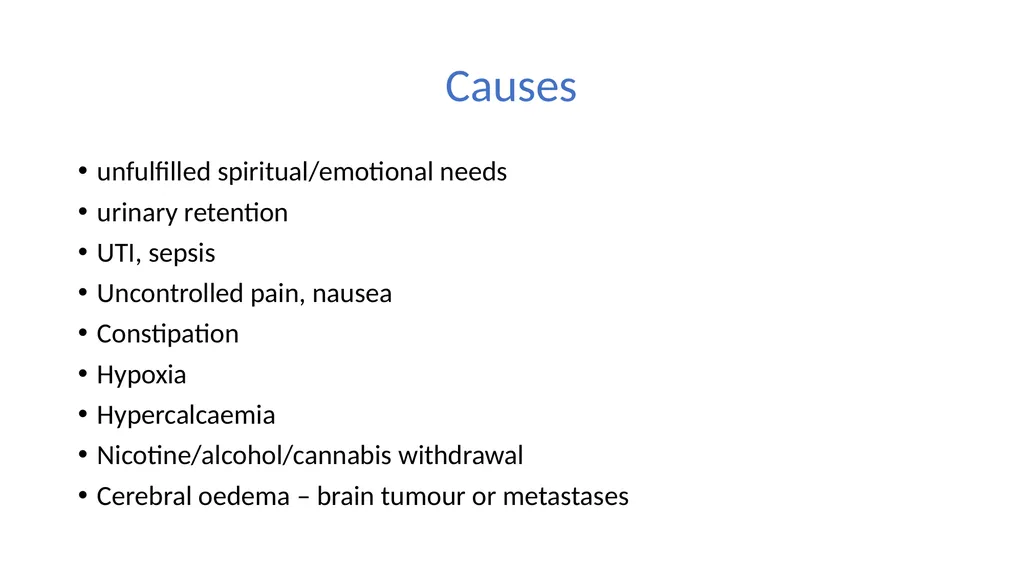
Causes
General management
Management with medications
Delirium in COVID-19 patients
Summary
Opportunity for questions<br>
03
What is terminal agitation? Also known as terminal restlessness, terminal delirium
Anxious, restless and / or distressed behaviour that can occur at the end of life
Patient shows signs of anxiety, agitation and cognitive decline in the days leading up to death
Affects nearly 50% of all people who are dying
80-90% cancer patients become agitated<br>
04
Recognition of Dying Difficulty swallowing meds
Only manage sips
Bedbound
Decreased conscious level
Patient talks about dying, ready to die, premonition e.g. date of death, calls out to loved ones already dead
Profound fatigue – physical and mental
Change in cognition/delirium (preterm/terminal agitation)<br>
05
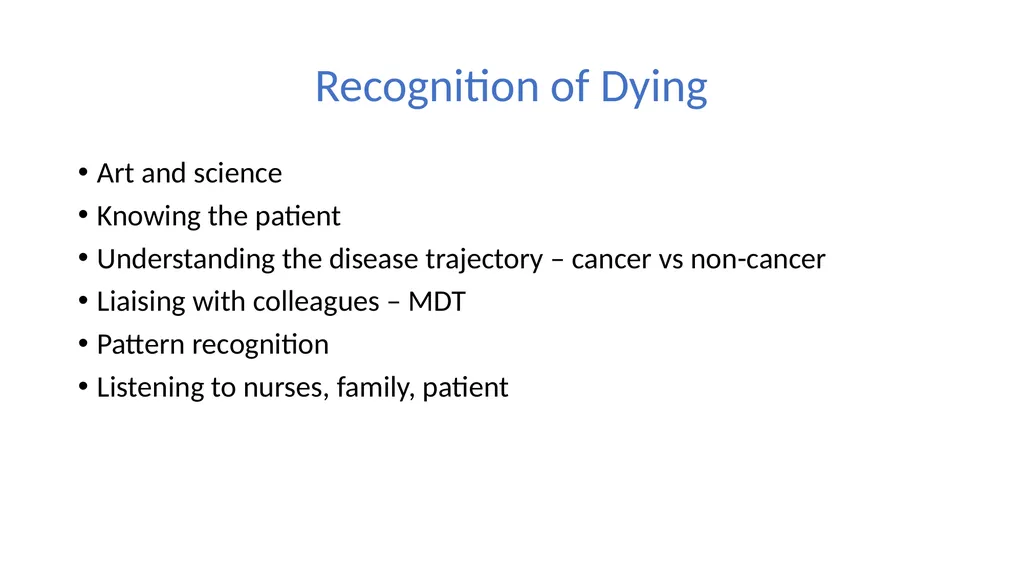
Recognition of Dying Art and science
Knowing the patient
Understanding the disease trajectory – cancer vs non-cancer
Liaising with colleagues – MDT
Pattern recognition
Listening to nurses, family, patient<br>
06
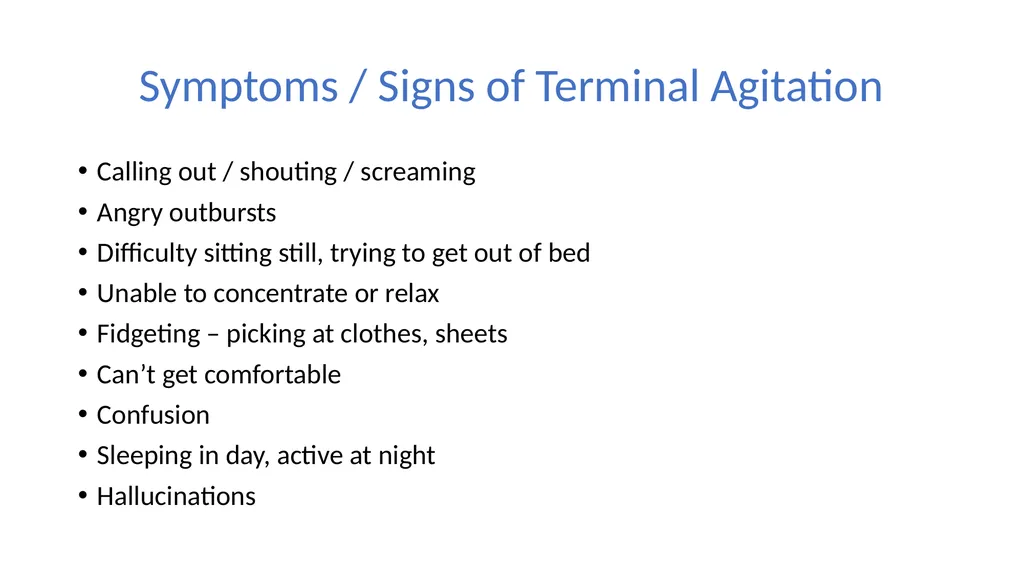
Symptoms / Signs of Terminal Agitation Calling out / shouting / screaming
Angry outbursts
Difficulty sitting still, trying to get out of bed
Unable to concentrate or relax
Fidgeting – picking at clothes, sheets
Can’t get comfortable
Confusion
Sleeping in day, active at night
Hallucinations<br>
07
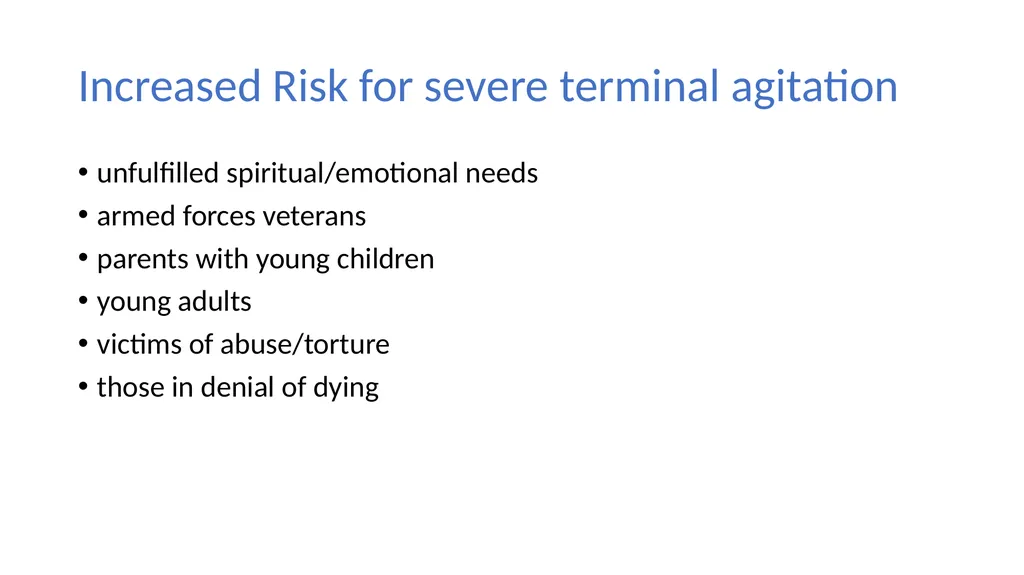
Increased Risk for severe terminal agitation unfulfilled spiritual/emotional needs
armed forces veterans
parents with young children
young adults
victims of abuse/torture
those in denial of dying<br>
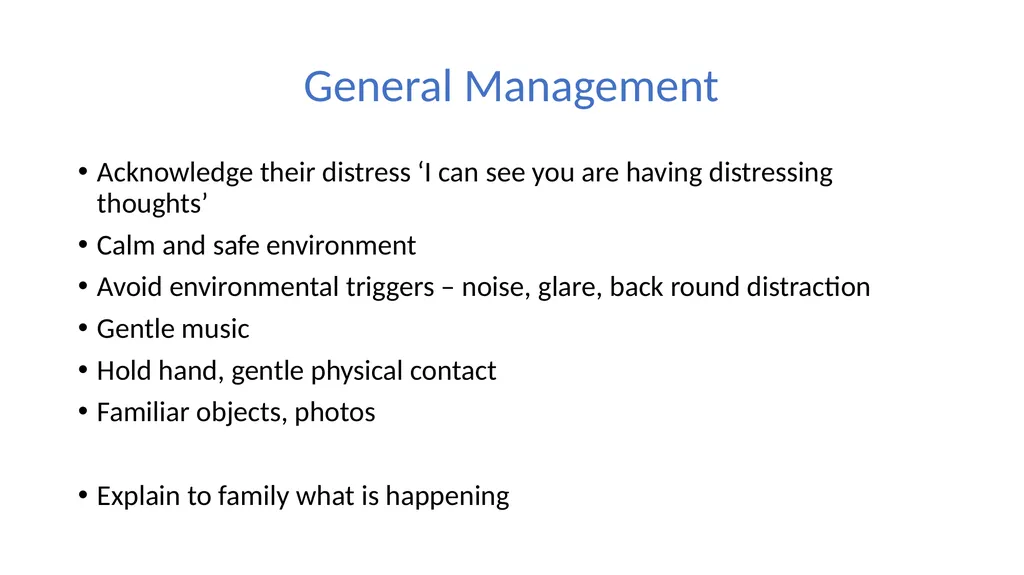
General Management Acknowledge their distress ‘I can see you are having distressing thoughts’
Calm and safe environment
Avoid environmental triggers – noise, glare, back round distraction
Gentle music
Hold hand, gentle physical contact
Familiar objects, photos
Explain to family what is happening<br>
10
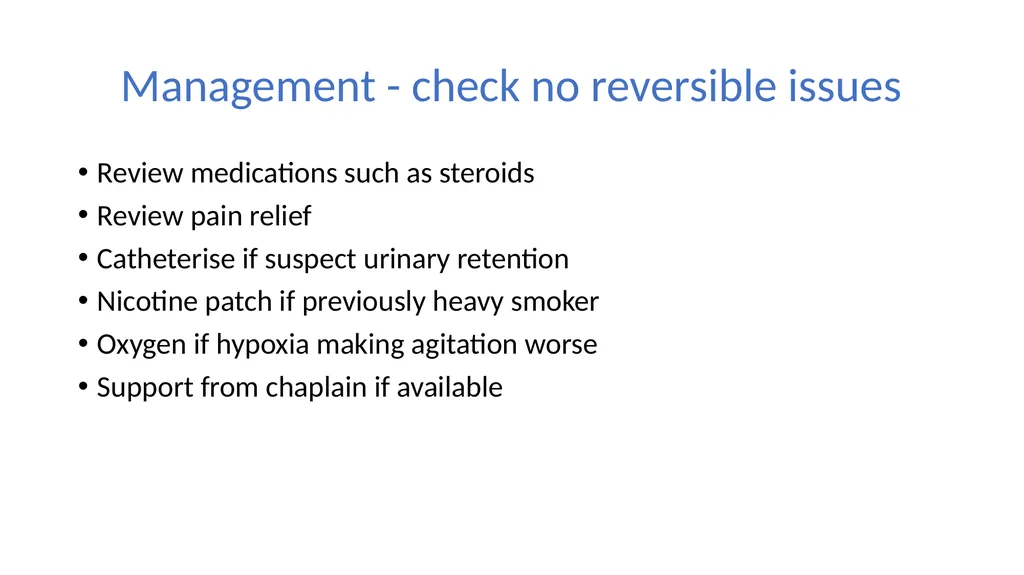
Management - check no reversible issues Review medications such as steroids
Review pain relief
Catheterise if suspect urinary retention
Nicotine patch if previously heavy smoker
Oxygen if hypoxia making agitation worse
Support from chaplain if available<br>
11
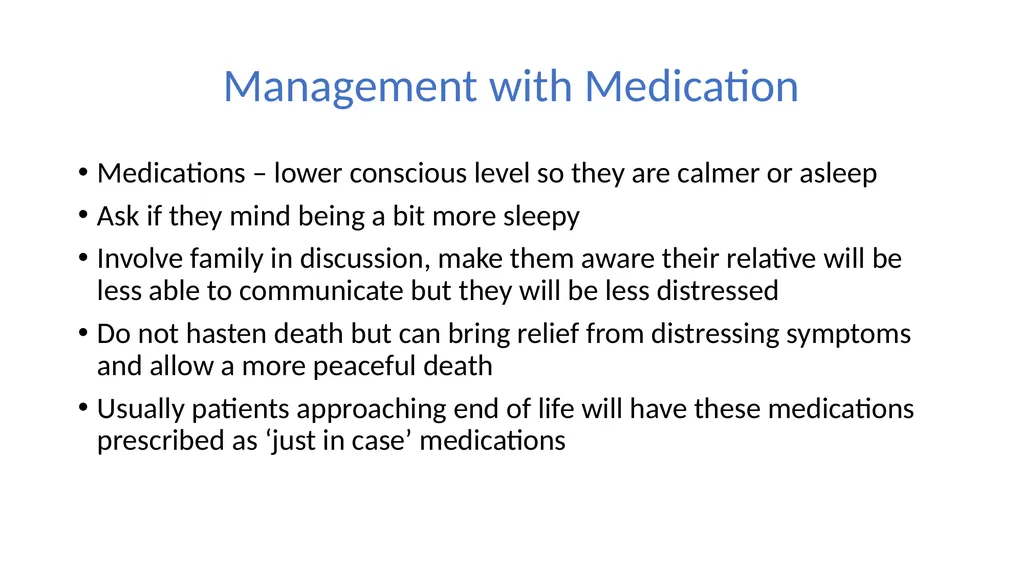
Management with Medication Medications – lower conscious level so they are calmer or asleep
Ask if they mind being a bit more sleepy
Involve family in discussion, make them aware their relative will be less able to communicate but they will be less distressed
Do not hasten death but can bring relief from distressing symptoms and allow a more peaceful death
Usually patients approaching end of life will have these medications prescribed as ‘just in case’ medications<br>
12
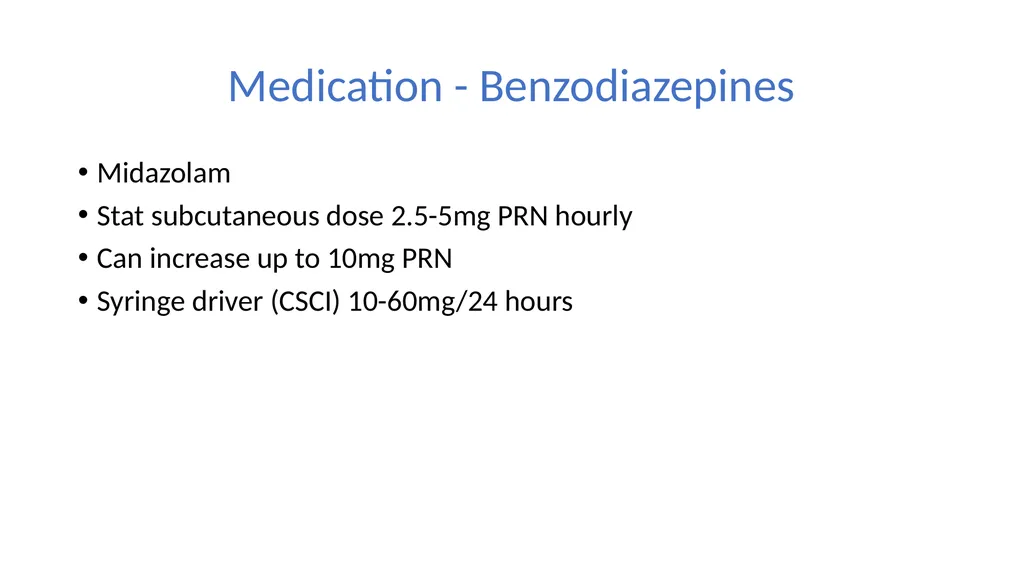
Medication - Benzodiazepines Midazolam
Stat subcutaneous dose 2.5-5mg PRN hourly
Can increase up to 10mg PRN
Syringe driver (CSCI) 10-60mg/24 hours<br>
13
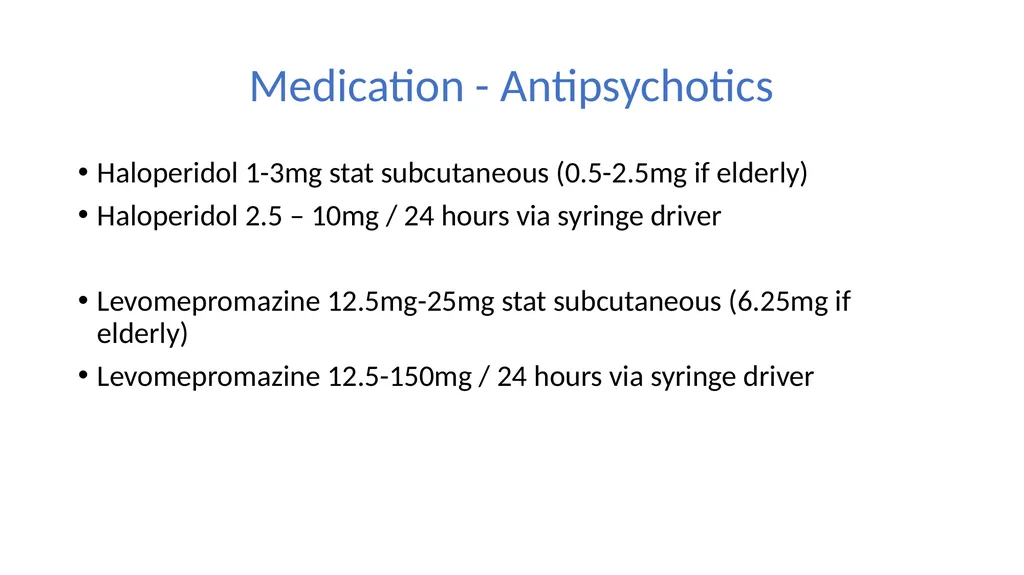
Medication - Antipsychotics Haloperidol 1-3mg stat subcutaneous (0.5-2.5mg if elderly)
Haloperidol 2.5 – 10mg / 24 hours via syringe driver
Levomepromazine 12.5mg-25mg stat subcutaneous (6.25mg if elderly)
Levomepromazine 12.5-150mg / 24 hours via syringe driver<br>
14
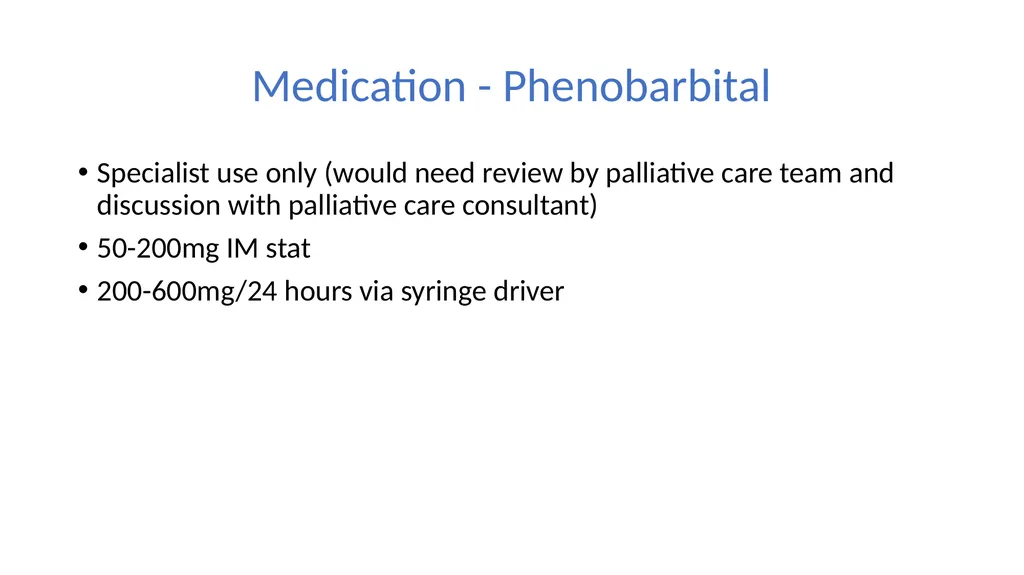
Medication - Phenobarbital Specialist use only (would need review by palliative care team and discussion with palliative care consultant)
50-200mg IM stat
200-600mg/24 hours via syringe driver<br>
15
Delirium in COVID-19 patients Isolation environment may worsen delirium
Risk of harm to others may exceed risk to individual so may need earlier pharmacological treatments
Hyperactive delirium – agitated, restless
Hypoactive delirium – drowsy, withdrawn
Orientation – explain where they are, what your role is
Check have glasses and hearing aids
Gentle friendly approach
If able to take oral medications can use sublingual lorazepam 0.5-1mg and can also use oral haloperidol 0.5-2mg<br>
16
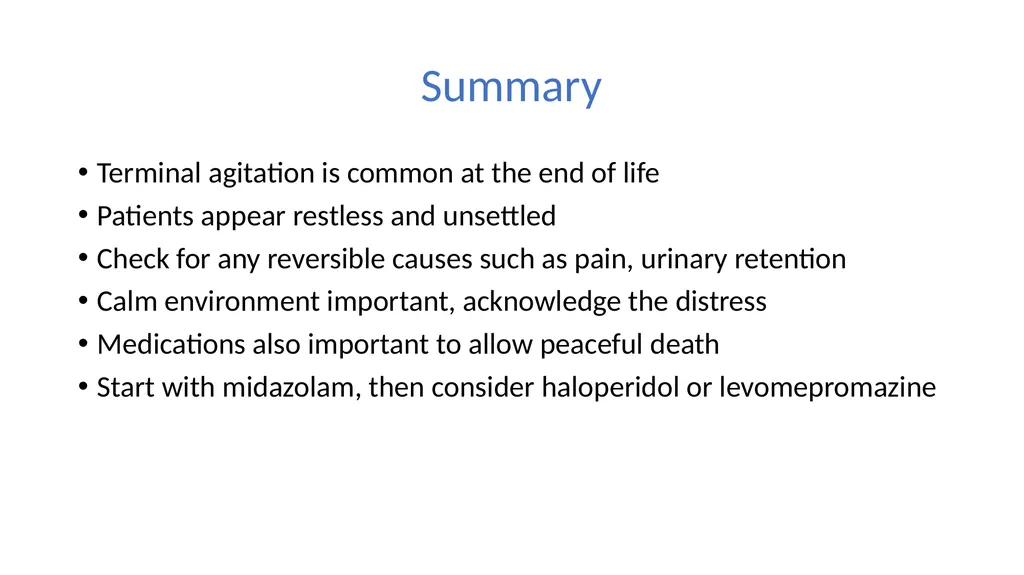
Summary Terminal agitation is common at the end of life
Patients appear restless and unsettled
Check for any reversible causes such as pain, urinary retention
Calm environment important, acknowledge the distress
Medications also important to allow peaceful death
Start with midazolam, then consider haloperidol or levomepromazine<br>