
Towards a more Holistic and Multidisciplinary

Description: Towards a more Holistic and Multidisciplinary Education NEP 2020 Dr. Pragati Dubey Assistant Proffesor Dept. of Education Durga Mahavidhyalaya, Raipur Meaning :- Multidisciplinary and holistic education aims to develop diverse capacities of
Related Topics
Download Presentation
"Towards a more Holistic and Multidisciplinary" is the property of its rightful owner. Permission is granted to download and print the materials on this website for personal, non-commercial use only, and to display it on your personal computer provided you do not modify the materials and that you retain all copyright notices contained in the materials. By downloading content from our website, you accept the terms of this agreement.
Presentation Transcript
slide1. Towards a more Holistic and Multidisciplinary Education NEP 2020 Dr. Pragati Dubey
Assistant Proffesor
Dept. of Education
Durga Mahavidhyalaya, Raipur<br>
slide2. Meaning :-
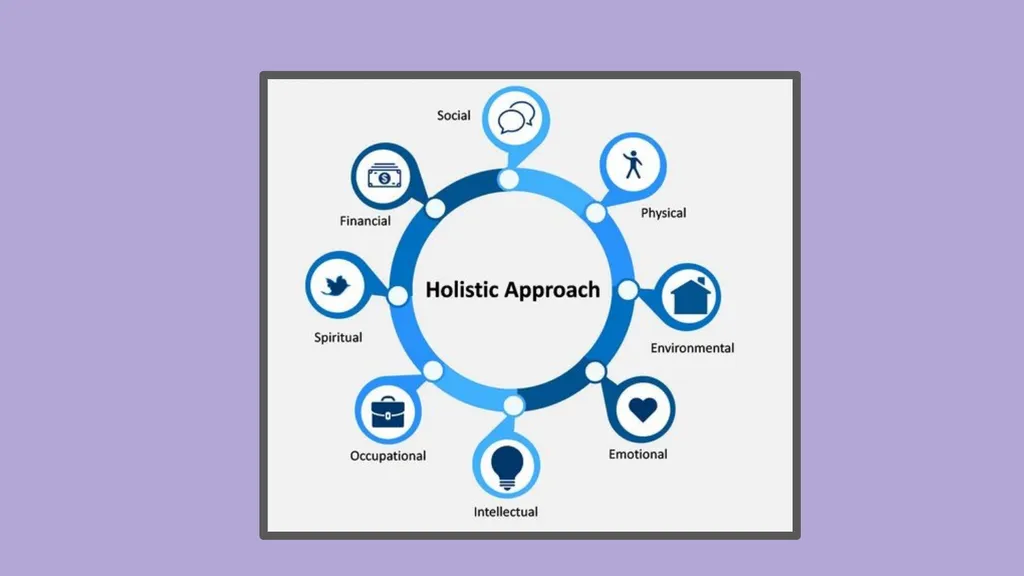
Multidisciplinary and holistic education aims to develop diverse capacities of human beings including intellectual, aesthetic, social, physical, emotional, interpersonal, humanistic and moral capacities in an integrated manner.<br>
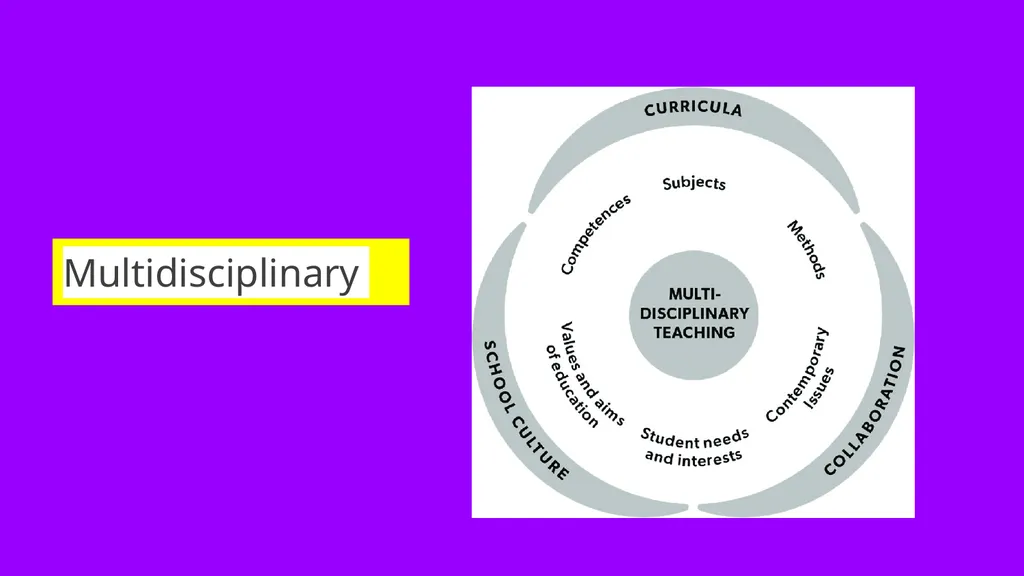
slide3. Multidisciplinary<br>
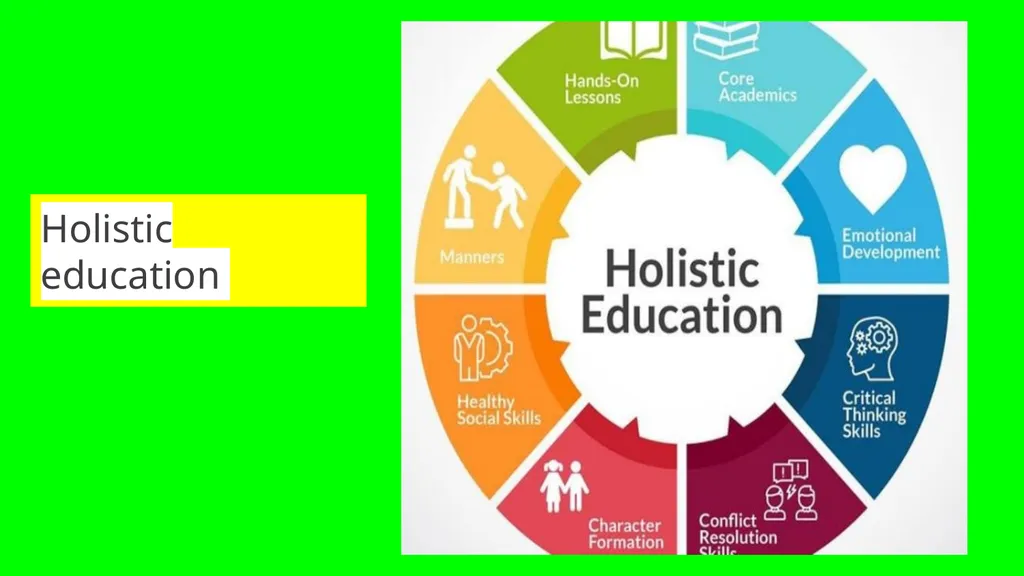
slide4. Holistic education<br>
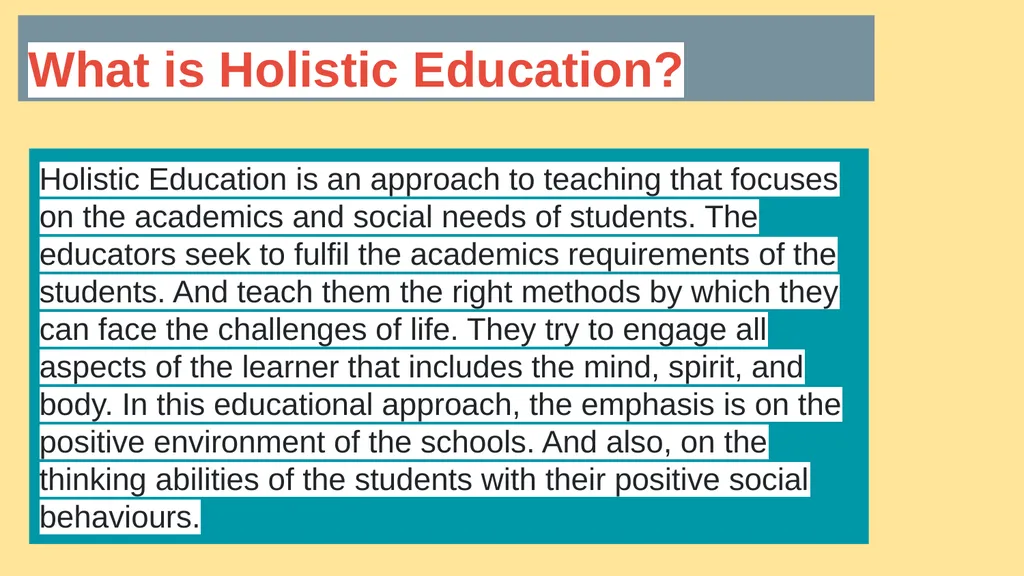
slide5. What is Holistic Education? Holistic Education is an approach to teaching that focuses on the academics and social needs of students. The educators seek to fulfil the academics requirements of the students. And teach them the right methods by which they can face the challenges of life. They try to engage all aspects of the learner that includes the mind, spirit, and body. In this educational approach, the emphasis is on the positive environment of the schools. And also, on the thinking abilities of the students with their positive social behaviours.<br>
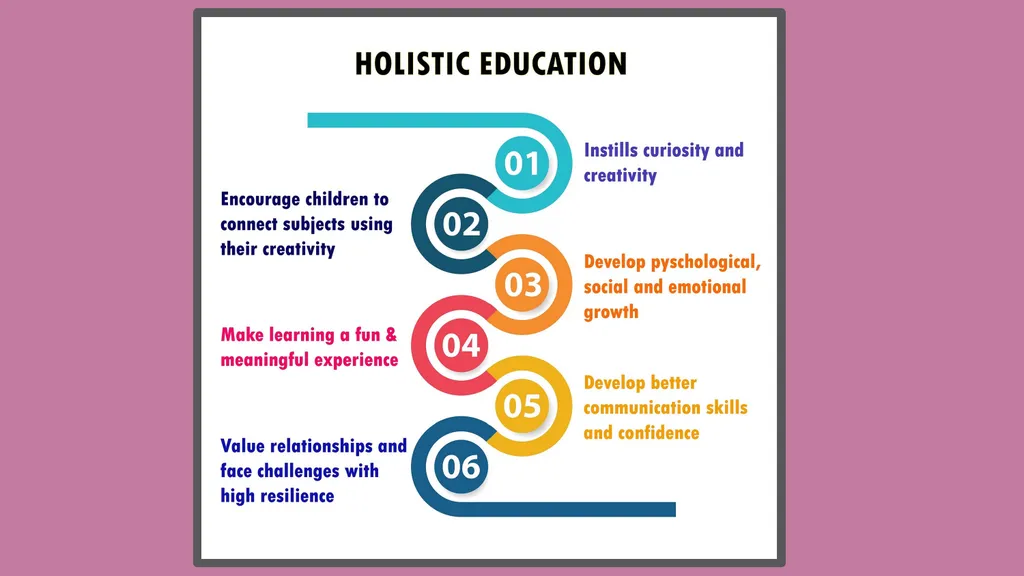
slide6. What are its benefits? Every parent wants their child to excel not only in studies but also in life. And they need to know that this could only be achievable through some good experiences and learning. Hence, schools play a vital role in building a good base for the child. So, it is necessary to know how a different education system can help their child nurture. And that’s why a new education approach of teaching is introducing nowadays which is Holistic Education.<br>
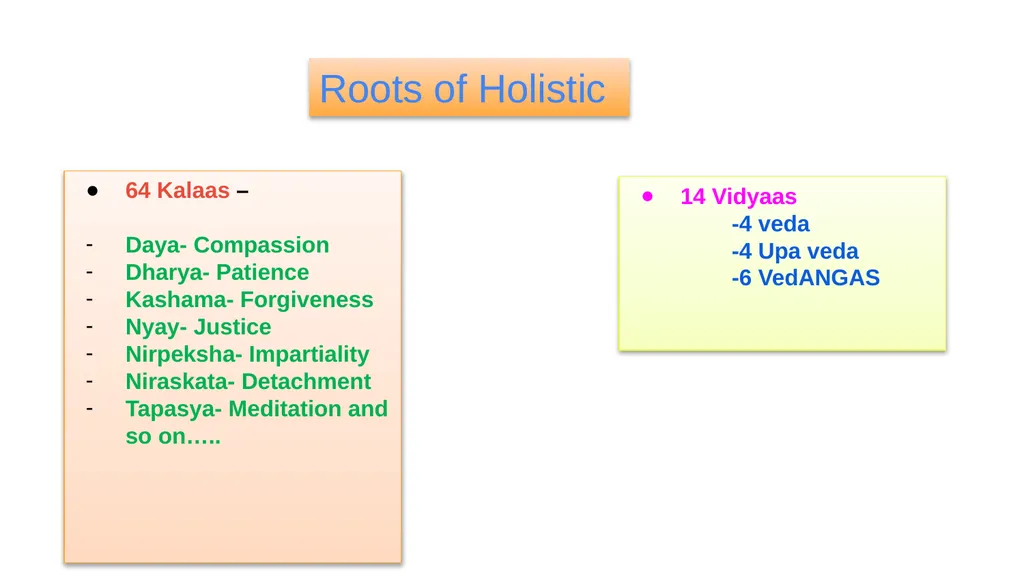
slide9. Roots of Holistic 64 Kalaas –
Daya- Compassion
Dharya- Patience
Kashama- Forgiveness
Nyay- Justice
Nirpeksha- Impartiality
Niraskata- Detachment
Tapasya- Meditation and so on….. 14 Vidyaas
-4 veda
-4 Upa veda
-6 VedANGAS<br>
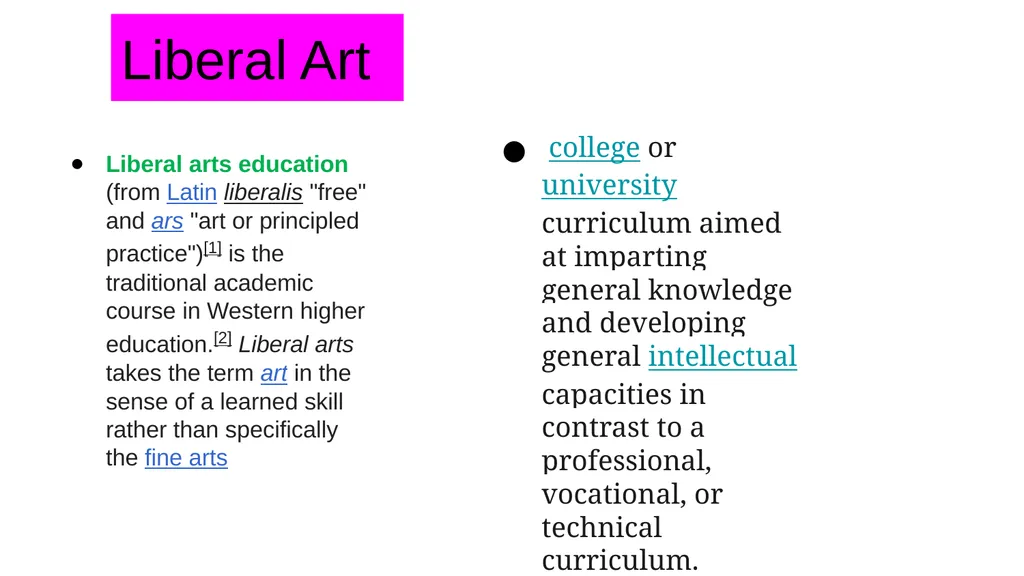
slide10. Liberal Art Liberal arts education (from Latin liberalis "free" and ars "art or principled practice")[1] is the traditional academic course in Western higher education.[2] Liberal arts takes the term art in the sense of a learned skill rather than specifically the fine arts college or university curriculum aimed at imparting general knowledge and developing general intellectual capacities in contrast to a professional, vocational, or technical curriculum.<br>
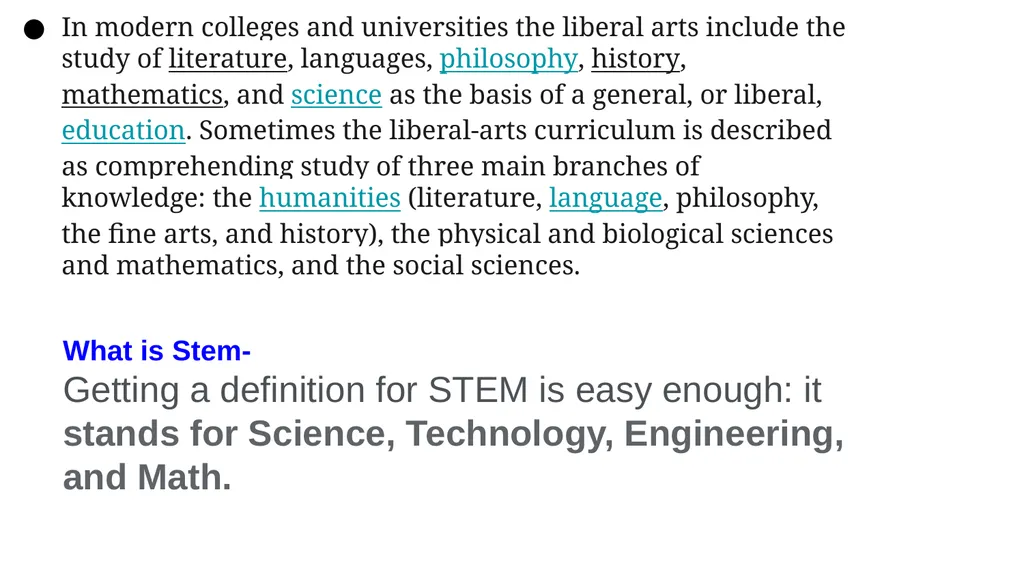
slide11. In modern colleges and universities the liberal arts include the study of literature, languages, philosophy, history, mathematics, and science as the basis of a general, or liberal, education. Sometimes the liberal-arts curriculum is described as comprehending study of three main branches of knowledge: the humanities (literature, language, philosophy, the fine arts, and history), the physical and biological sciences and mathematics, and the social sciences. What is Stem- Getting a definition for STEM is easy enough: it stands for Science, Technology, Engineering, and Math.<br>
slide12. What is Meru- NEP, 2020 also proposes to build a world class Multidisciplinary higher educational institute to be called as MERU. NEP 2020 also has the provision of allowing top ranking foreign universities to establish campuses in India as well as giving permission for IITs to set up campuses overseas What is NRF-
The NRF aims to fund researchers working across streams in India. In order to bring non-science disciplines of research in its ambit, NRF will fund research projects across four major disciplines –Sciences; Technology; Social Sciences; and Arts and Humanities.
The idea to set up a National Research Foundation (NRF) in India, as a body to catalyse, facilitate, coordinate, seed, grow, and mentor research in institutions around the country, has been in the minds of researchers in the nation for many decades.<br>
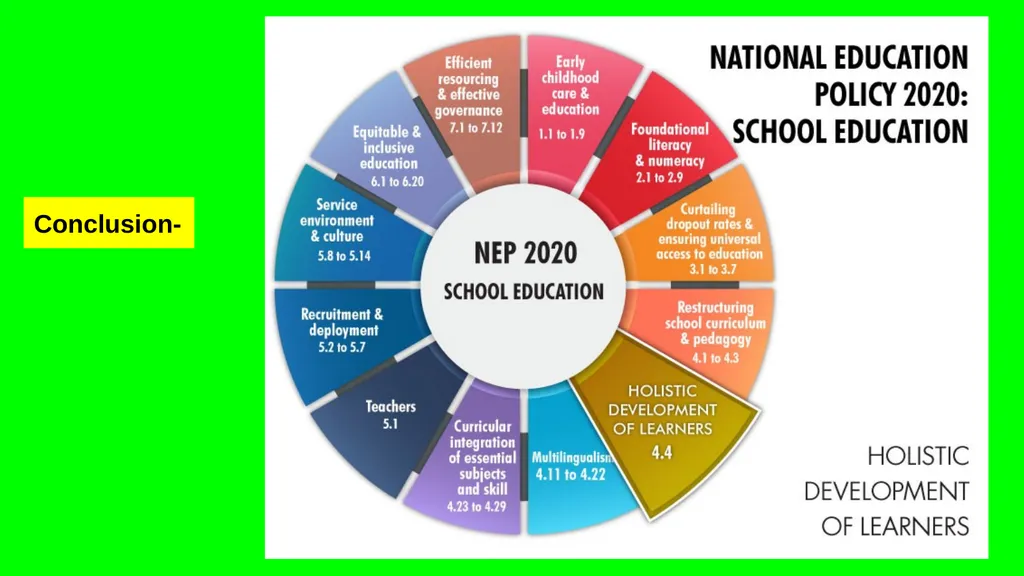
slide13. Conclusion-<br>
Assistant Proffesor
Dept. of Education
Durga Mahavidhyalaya, Raipur<br>
slide2. Meaning :-
Multidisciplinary and holistic education aims to develop diverse capacities of human beings including intellectual, aesthetic, social, physical, emotional, interpersonal, humanistic and moral capacities in an integrated manner.<br>
slide3. Multidisciplinary<br>
slide4. Holistic education<br>
slide5. What is Holistic Education? Holistic Education is an approach to teaching that focuses on the academics and social needs of students. The educators seek to fulfil the academics requirements of the students. And teach them the right methods by which they can face the challenges of life. They try to engage all aspects of the learner that includes the mind, spirit, and body. In this educational approach, the emphasis is on the positive environment of the schools. And also, on the thinking abilities of the students with their positive social behaviours.<br>
slide6. What are its benefits? Every parent wants their child to excel not only in studies but also in life. And they need to know that this could only be achievable through some good experiences and learning. Hence, schools play a vital role in building a good base for the child. So, it is necessary to know how a different education system can help their child nurture. And that’s why a new education approach of teaching is introducing nowadays which is Holistic Education.<br>
slide9. Roots of Holistic 64 Kalaas –
Daya- Compassion
Dharya- Patience
Kashama- Forgiveness
Nyay- Justice
Nirpeksha- Impartiality
Niraskata- Detachment
Tapasya- Meditation and so on….. 14 Vidyaas
-4 veda
-4 Upa veda
-6 VedANGAS<br>
slide10. Liberal Art Liberal arts education (from Latin liberalis "free" and ars "art or principled practice")[1] is the traditional academic course in Western higher education.[2] Liberal arts takes the term art in the sense of a learned skill rather than specifically the fine arts college or university curriculum aimed at imparting general knowledge and developing general intellectual capacities in contrast to a professional, vocational, or technical curriculum.<br>
slide11. In modern colleges and universities the liberal arts include the study of literature, languages, philosophy, history, mathematics, and science as the basis of a general, or liberal, education. Sometimes the liberal-arts curriculum is described as comprehending study of three main branches of knowledge: the humanities (literature, language, philosophy, the fine arts, and history), the physical and biological sciences and mathematics, and the social sciences. What is Stem- Getting a definition for STEM is easy enough: it stands for Science, Technology, Engineering, and Math.<br>
slide12. What is Meru- NEP, 2020 also proposes to build a world class Multidisciplinary higher educational institute to be called as MERU. NEP 2020 also has the provision of allowing top ranking foreign universities to establish campuses in India as well as giving permission for IITs to set up campuses overseas What is NRF-
The NRF aims to fund researchers working across streams in India. In order to bring non-science disciplines of research in its ambit, NRF will fund research projects across four major disciplines –Sciences; Technology; Social Sciences; and Arts and Humanities.
The idea to set up a National Research Foundation (NRF) in India, as a body to catalyse, facilitate, coordinate, seed, grow, and mentor research in institutions around the country, has been in the minds of researchers in the nation for many decades.<br>
slide13. Conclusion-<br>