
Ukraine Humanitarian Response & Data Insight
Description: Ukraine Humanitarian Response Data Insight Brenda Boylan 23 November 2023 Ukraine Humanitarian Response at the Outset 24 February 2022 Russian invasion of Ukraine Irish Government waives visa requirements for Ukrainian citizens 4 March
Related Topics
Download Presentation
"Ukraine Humanitarian Response & Data Insight" is the property of its rightful owner. Permission is granted to download and print the materials on this website for personal, non-commercial use only, and to display it on your personal computer provided you do not modify the materials and that you retain all copyright notices contained in the materials. By downloading content from our website, you accept the terms of this agreement.
Presentation Transcript
slide1. Ukraine Humanitarian Response & Data Insight Brenda Boylan
23 November 2023<br>
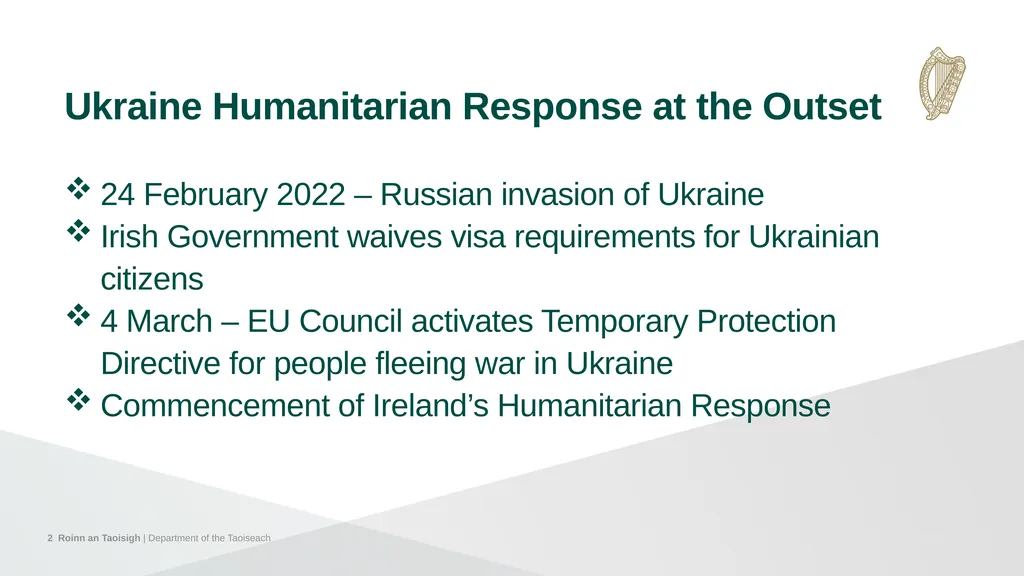
slide2. Ukraine Humanitarian Response at the Outset
24 February 2022 – Russian invasion of Ukraine
Irish Government waives visa requirements for Ukrainian citizens
4 March – EU Council activates Temporary Protection Directive for people fleeing war in Ukraine
Commencement of Ireland’s Humanitarian Response<br>
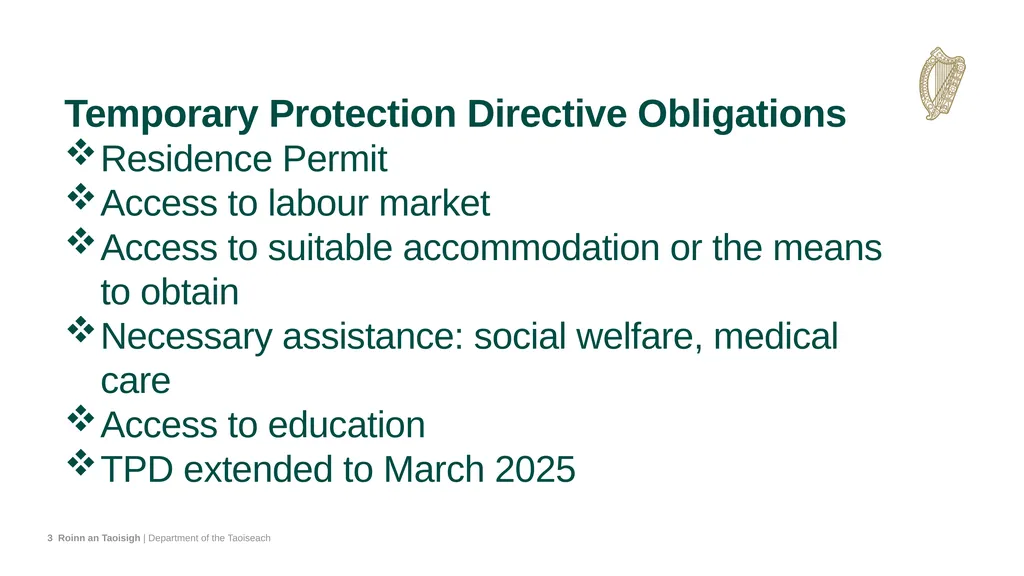
slide3. Temporary Protection Directive Obligations
Residence Permit
Access to labour market
Access to suitable accommodation or the means to obtain
Necessary assistance: social welfare, medical care
Access to education
TPD extended to March 2025<br>
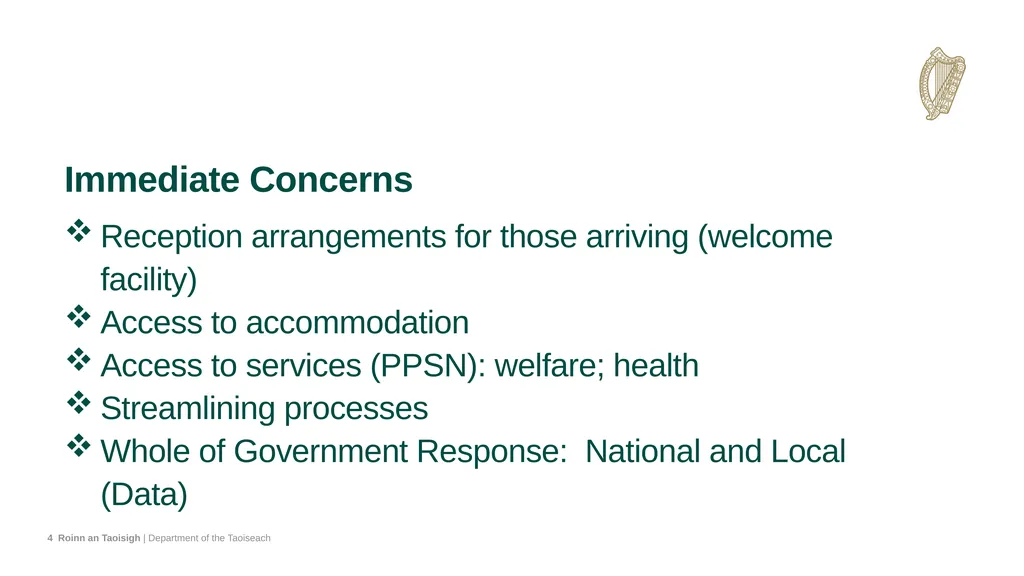
slide4. Immediate Concerns
Reception arrangements for those arriving (welcome facility)
Access to accommodation
Access to services (PPSN): welfare; health
Streamlining processes
Whole of Government Response: National and Local (Data)<br>
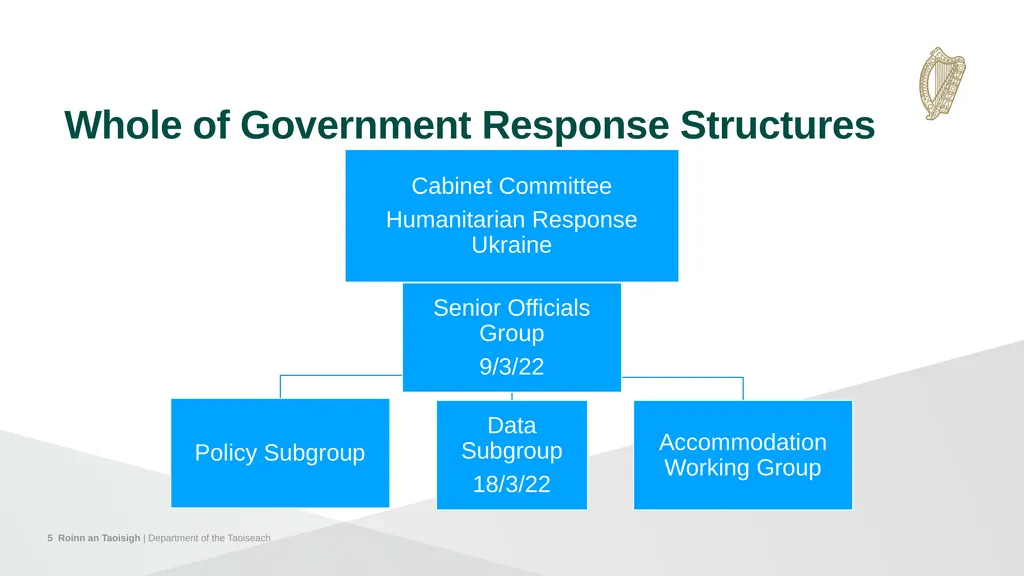
slide5. Whole of Government Response Structures<br>
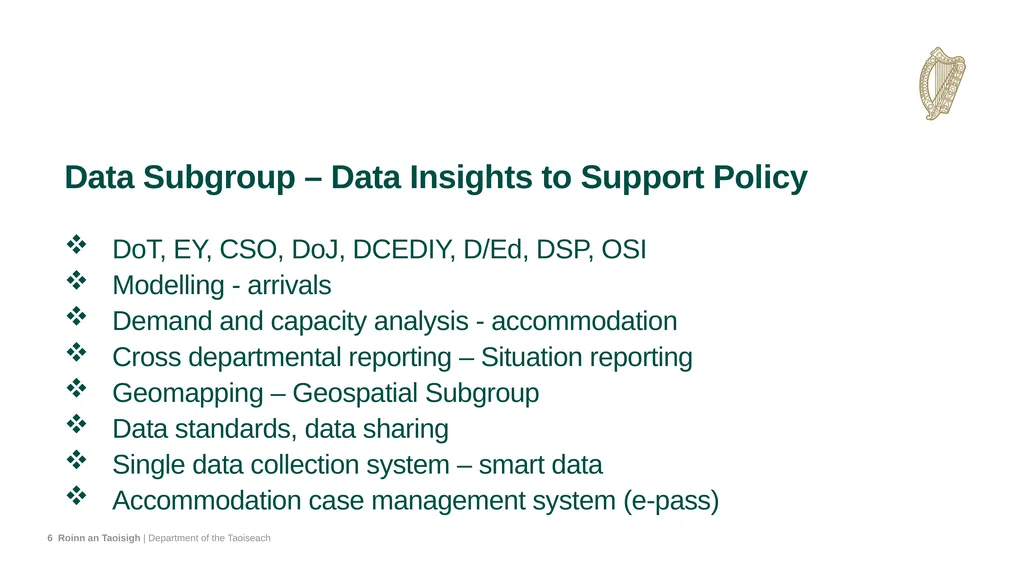
slide6. Data Subgroup – Data Insights to Support Policy
DoT, EY, CSO, DoJ, DCEDIY, D/Ed, DSP, OSI
Modelling - arrivals
Demand and capacity analysis - accommodation
Cross departmental reporting – Situation reporting
Geomapping – Geospatial Subgroup
Data standards, data sharing
Single data collection system – smart data
Accommodation case management system (e-pass)<br>
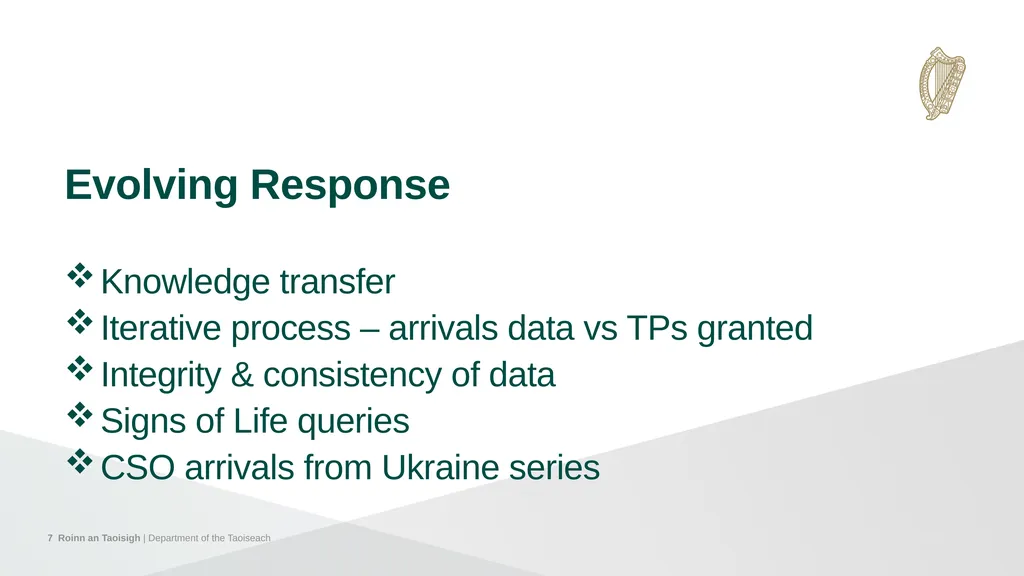
slide7. Evolving Response
Knowledge transfer
Iterative process – arrivals data vs TPs granted
Integrity & consistency of data
Signs of Life queries
CSO arrivals from Ukraine series<br>
slide8. Reflections
Data a central part of response from the start
Clearly identify data requirements, governance, data sharing agreements etc. at the outset
Identify and involve key actors
Constant refinement<br>
23 November 2023<br>
slide2. Ukraine Humanitarian Response at the Outset
24 February 2022 – Russian invasion of Ukraine
Irish Government waives visa requirements for Ukrainian citizens
4 March – EU Council activates Temporary Protection Directive for people fleeing war in Ukraine
Commencement of Ireland’s Humanitarian Response<br>
slide3. Temporary Protection Directive Obligations
Residence Permit
Access to labour market
Access to suitable accommodation or the means to obtain
Necessary assistance: social welfare, medical care
Access to education
TPD extended to March 2025<br>
slide4. Immediate Concerns
Reception arrangements for those arriving (welcome facility)
Access to accommodation
Access to services (PPSN): welfare; health
Streamlining processes
Whole of Government Response: National and Local (Data)<br>
slide5. Whole of Government Response Structures<br>
slide6. Data Subgroup – Data Insights to Support Policy
DoT, EY, CSO, DoJ, DCEDIY, D/Ed, DSP, OSI
Modelling - arrivals
Demand and capacity analysis - accommodation
Cross departmental reporting – Situation reporting
Geomapping – Geospatial Subgroup
Data standards, data sharing
Single data collection system – smart data
Accommodation case management system (e-pass)<br>
slide7. Evolving Response
Knowledge transfer
Iterative process – arrivals data vs TPs granted
Integrity & consistency of data
Signs of Life queries
CSO arrivals from Ukraine series<br>
slide8. Reflections
Data a central part of response from the start
Clearly identify data requirements, governance, data sharing agreements etc. at the outset
Identify and involve key actors
Constant refinement<br>