
Unit 1-Product Session 1 –Meaning and Importance
AM
Published · 24 slides · 0 views

1 / 1

Description
Unit 1-Product Session 1 Meaning and Importance of Product Meaning of a Product: It is defined as a good or service that most closely meets the requirements of a particular market and yields enough profit to justify its continued existence
Related Topics
Share
Embed code
Download this presentation From Below
"Unit 1-Product Session 1 –Meaning and Importance" is the property of its rightful owner. Permission is granted to download and print the materials on this website for personal, non-commercial use only, and to display it on your personal computer provided you do not modify the materials and that you retain all copyright notices contained in the materials. By downloading content from our website, you accept the terms of this agreement.
Presentation Transcript
01
Unit 1-Product
Session 1 –Meaning and Importance of Product Meaning of a Product:
It is defined as a good or service that most closely meets the requirements of a particular market and yields enough profit to justify its continued existence .
It includes physical goods, services, experiences, events, places, properties, organization, information and ideas.<br>
It is defined as a good or service that most closely meets the requirements of a particular market and yields enough profit to justify its continued existence .
It includes physical goods, services, experiences, events, places, properties, organization, information and ideas.<br>
02
Unit 1-Product
Components of a Product 1. The Core Product:
The basic element of a product
Core products should be manufactured with some standard and not substandard
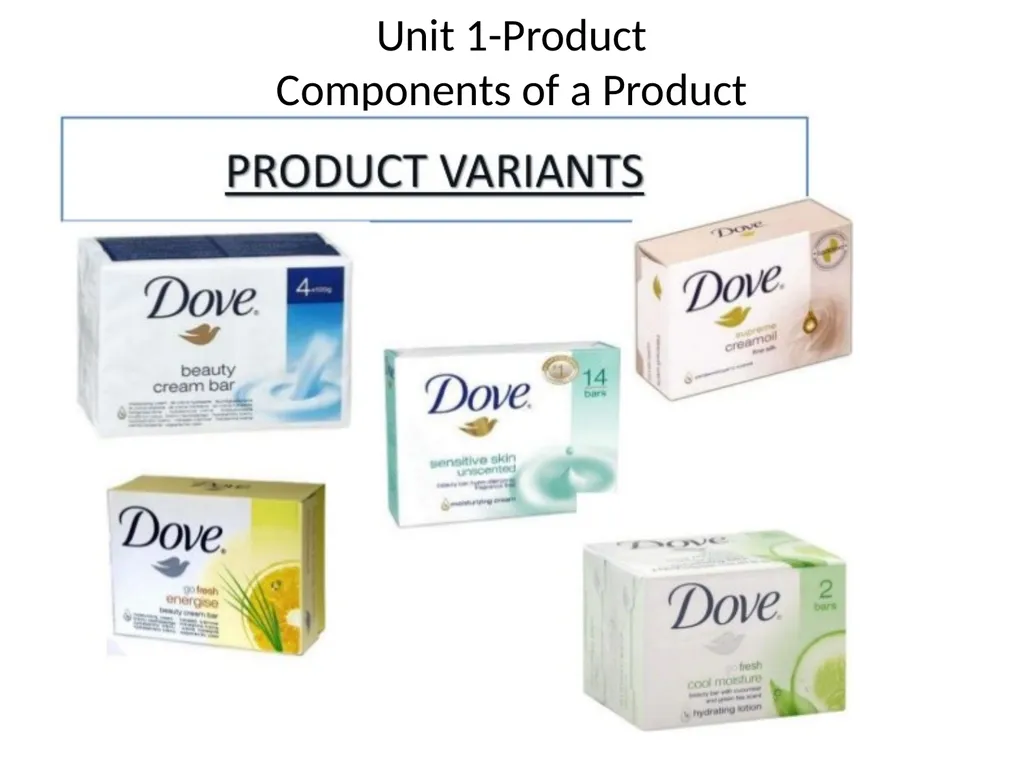
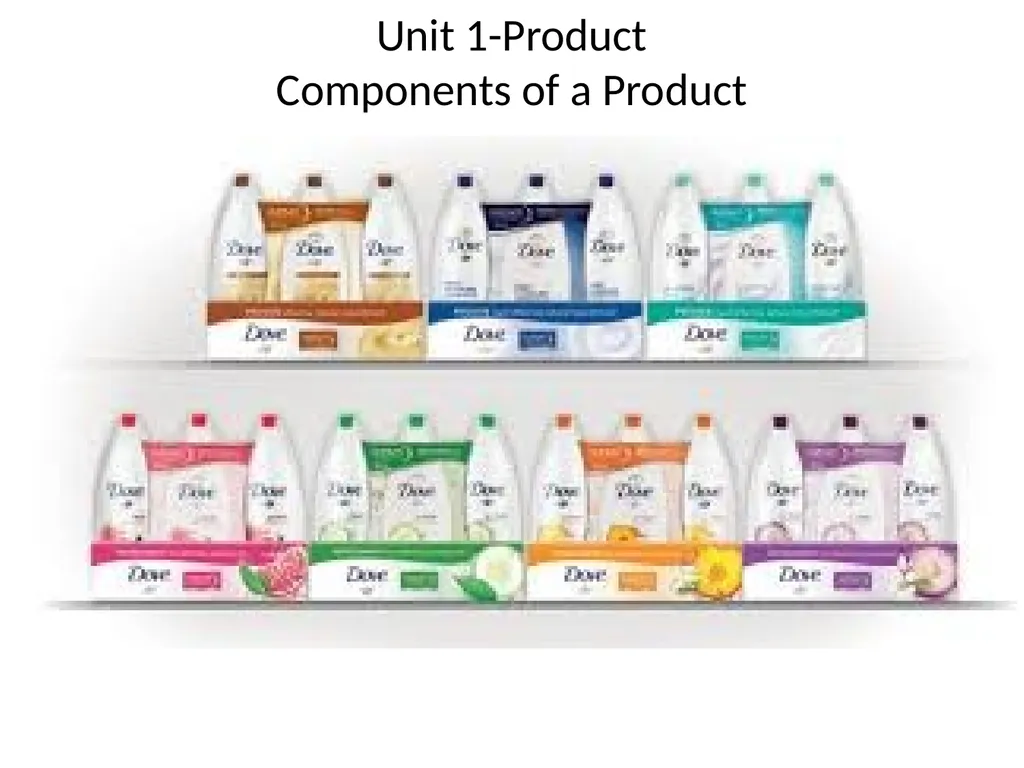
For example if we take Dove Soap, the core component is the soap, the generic constituent, as in the case of any other bathing soap<br>
The basic element of a product
Core products should be manufactured with some standard and not substandard
For example if we take Dove Soap, the core component is the soap, the generic constituent, as in the case of any other bathing soap<br>
03
Unit 1-Product
Components of a Product 2. The Associated Features:
The total product personality is mostly enhanced through the associated features.
These also aid in distinguishing the product from its competitors
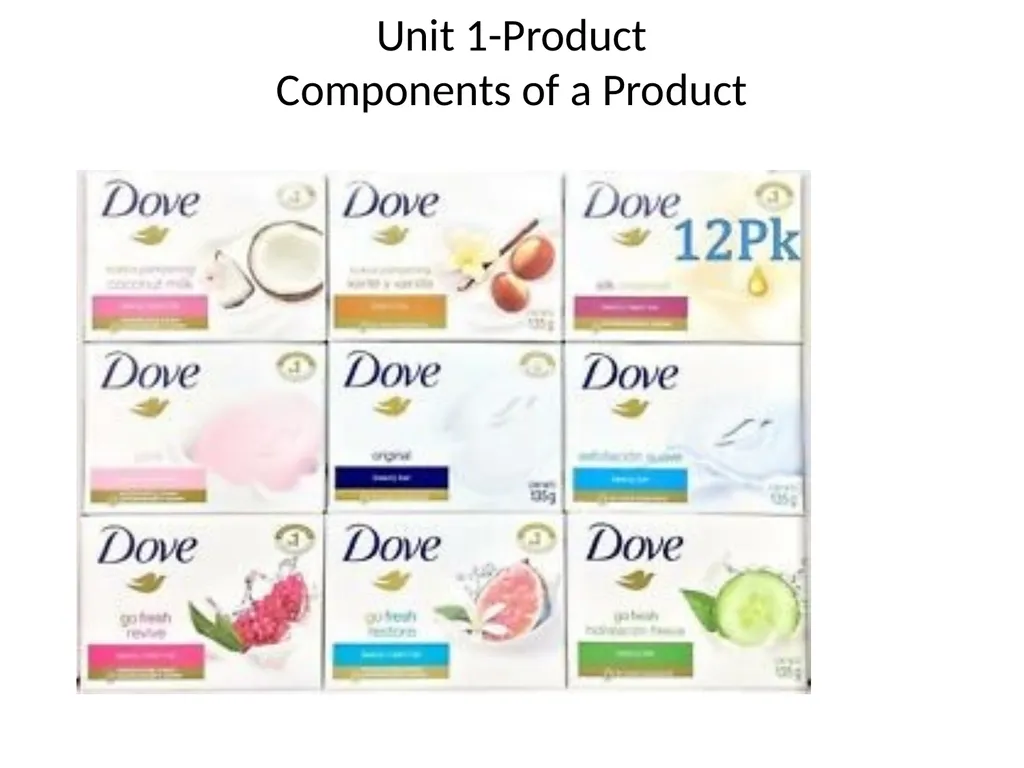
For example if we take Dove Soap, the fragrance of the soap, the moisturizing ability, the pristine white colour, the brand name, the price, the positioning as luxury soap all have gone into the marketing of product personality.<br>
The total product personality is mostly enhanced through the associated features.
These also aid in distinguishing the product from its competitors
For example if we take Dove Soap, the fragrance of the soap, the moisturizing ability, the pristine white colour, the brand name, the price, the positioning as luxury soap all have gone into the marketing of product personality.<br>
04
Unit 1-Product
Components of a Product 3. The Brand Name:
A brand is defined as a name, term, symbol, design or a combination of them which is intended to identify the goods and services of one seller and to differentiate them from those of competitors.
A trade mark is a brand with legal protection, thus ensuring its exclusive use by one seller.<br>
A brand is defined as a name, term, symbol, design or a combination of them which is intended to identify the goods and services of one seller and to differentiate them from those of competitors.
A trade mark is a brand with legal protection, thus ensuring its exclusive use by one seller.<br>
05
Unit 1-Product
Components of a Product 4. The Logo:
It is the brand mark/symbol and an essential aspect of the product, extending its support to the brand effectively.
It is being enhanced in rural markets where brands are mostly recognized by their picture in the logo.<br>
It is the brand mark/symbol and an essential aspect of the product, extending its support to the brand effectively.
It is being enhanced in rural markets where brands are mostly recognized by their picture in the logo.<br>
06
Unit 1-Product
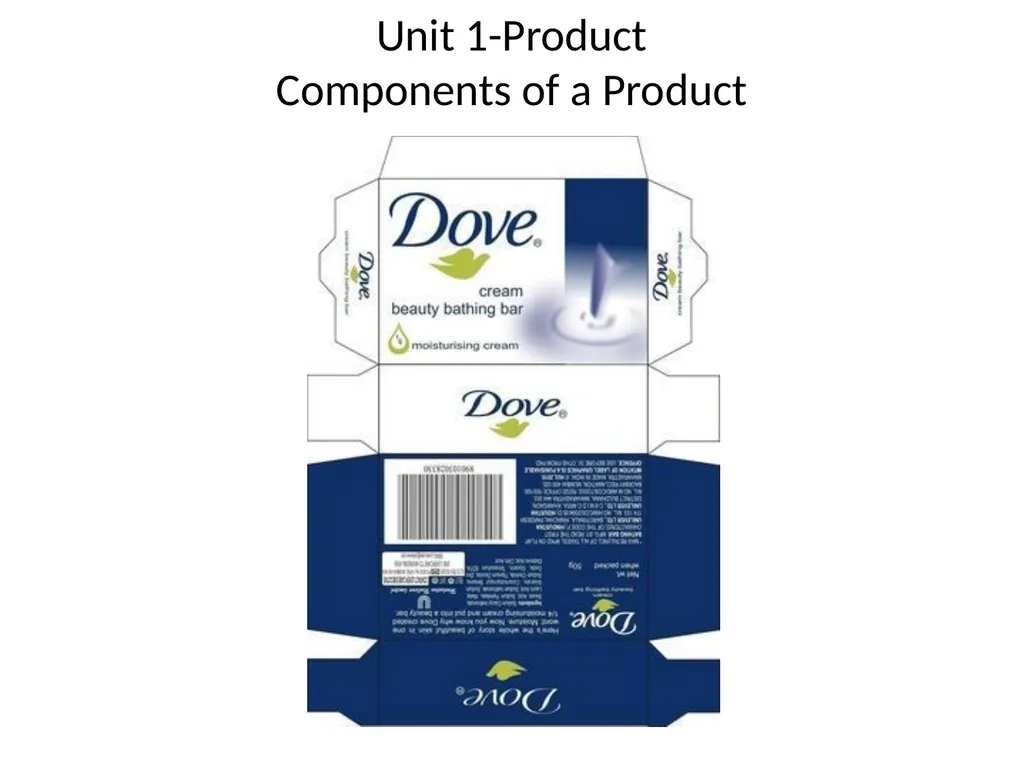
Components of a Product 5. The Package:
Ensures protection to the product
Provides information about the product
Increases aesthetics and sales appeal<br>
Ensures protection to the product
Provides information about the product
Increases aesthetics and sales appeal<br>
07
Unit 1-Product
Components of a Product 6. The Label:
It provides written information about the product helping the buyer to understand the nature of the product, its distinctive features, its composition, its performance.<br>
It provides written information about the product helping the buyer to understand the nature of the product, its distinctive features, its composition, its performance.<br>
08
Unit 1-Product
Components of a Product<br>
09
Unit 1-Product
Components of a Product<br>
10
Unit 1-Product
Components of a Product<br>
11
Unit 1-Product
Components of a Product<br>
12
Unit 1-Product
Components of a Product Q.1. Define a product. What are the various viewpoints to explain the concept of a product?<br>
13
Unit 1-Product
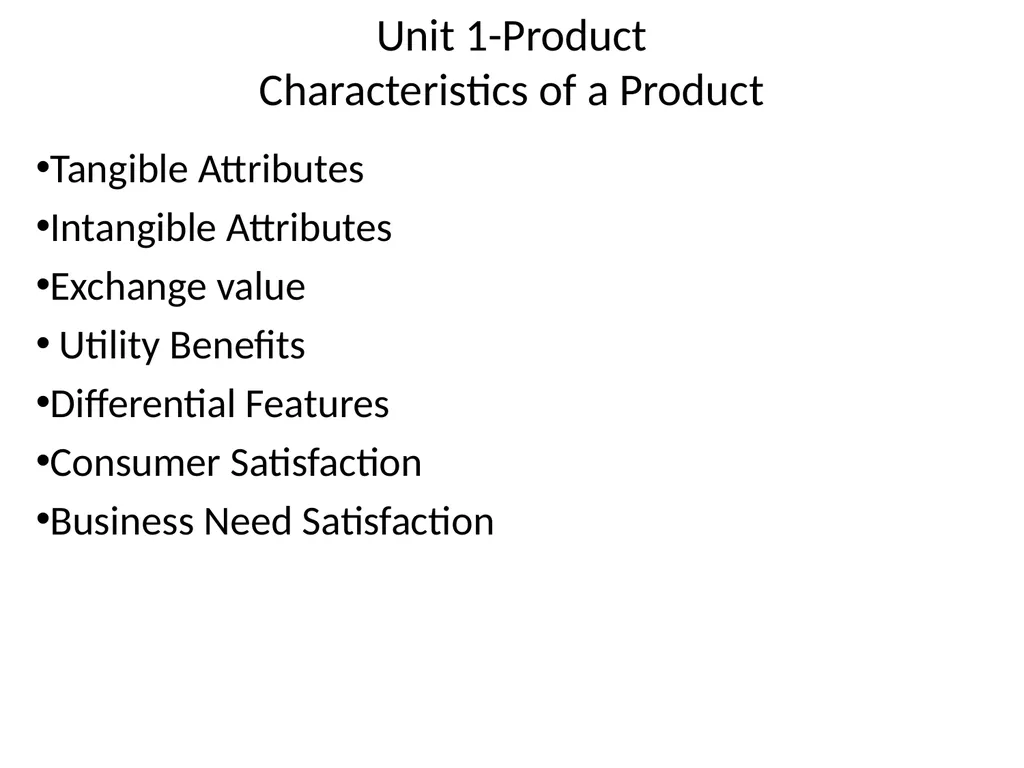
Characteristics of a Product Tangible Attributes
Intangible Attributes
Exchange value
Utility Benefits
Differential Features
Consumer Satisfaction
Business Need Satisfaction<br>
Intangible Attributes
Exchange value
Utility Benefits
Differential Features
Consumer Satisfaction
Business Need Satisfaction<br>
14
Unit 1-Product
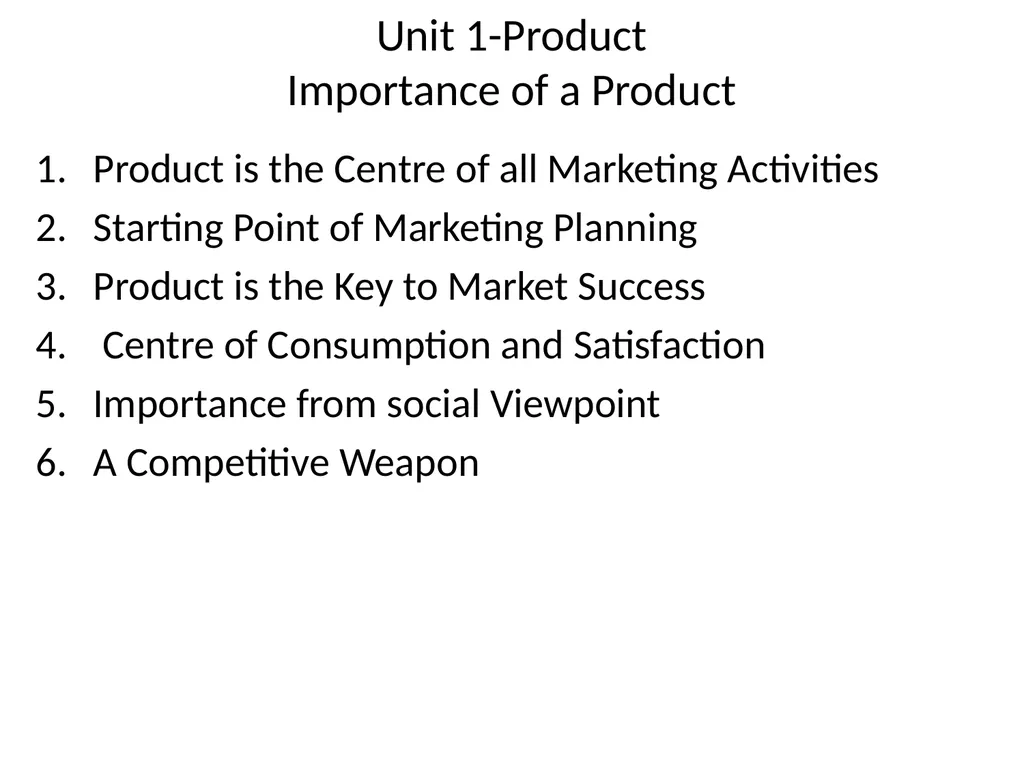
Importance of a Product Product is the Centre of all Marketing Activities
Starting Point of Marketing Planning
Product is the Key to Market Success
Centre of Consumption and Satisfaction
Importance from social Viewpoint
A Competitive Weapon<br>
Starting Point of Marketing Planning
Product is the Key to Market Success
Centre of Consumption and Satisfaction
Importance from social Viewpoint
A Competitive Weapon<br>
15
Product is the Centre of all Marketing Activities
Product is the pivot and all the marketing activities cluster around it.
Marketing activities such as advertising, sales promotion distribution, buying, selling etc. are all made possible only on account of the product.
It is the product which is purchased, sold, advertised, distributed etc.
In short, the product is the engine that pulls the marketing activities, programmes etc.
Related: 11 Nature and Scope of Marketing (With Examples).
2. Starting Point of Marketing Planning
To the marketer, products are the building blocks of a marketing plan.
Marketing planning is done on the basis of the nature, quality and the demand of the product. Product policies decide other policies.
3. Product is the Key to Market Success
Product is the key to market success. That is why the marketing manager emphasizes and insists on the need for 279 of product for getting success in his business.
It is said, “If the first commandment in marketing is knowing your customer, the second is know the product.” If the product is faulty, its market will have a very short life span and will ultimately fall.
4. Centre of Consumption and Satisfaction
From the consumers’ point of view, the product is the centre of their consumption and satisfaction.
It is the philosophy of the modern marketing concept.
Various policy decisions are taken by the marketing management so as to provide better consumption, benefits utilities and satisfaction to the consumers in case the product fails to fulfil this very object, it invites the intervention of the government and other agencies to safeguard the interests of the consumers.
Related; 10 Main Factors Affecting Marketing Environment (Explained).
5. Importance from social Viewpoint
From a social viewpoint also, the product satisfies the needs of society.
On the one hand, product satisfies the need of consumers and on the other, it provides employment and standard of living to millions of people.
6. Corporate Need Satisfaction
The basic corporate need for profits is satisfied by-products.
It is the product through which a company exploits market opportunities and generates sales volume and revenue.
Adequate sales volume and revenue ensure corporate profitability essential for business survival and growth.
7. A Competitive Weapon
Product is the competitive weapon of very great potential.
Whenever competitive pressures develop in the market, consumer preference changes or otherwise there emerges a need for change in the components of the product.
For example, competitive advantage may be gained by changing the package, colour, size, quality, innovation or even trading terms.
In short, the product is the soul and centre of all our marketing activities.<br>
Product is the pivot and all the marketing activities cluster around it.
Marketing activities such as advertising, sales promotion distribution, buying, selling etc. are all made possible only on account of the product.
It is the product which is purchased, sold, advertised, distributed etc.
In short, the product is the engine that pulls the marketing activities, programmes etc.
Related: 11 Nature and Scope of Marketing (With Examples).
2. Starting Point of Marketing Planning
To the marketer, products are the building blocks of a marketing plan.
Marketing planning is done on the basis of the nature, quality and the demand of the product. Product policies decide other policies.
3. Product is the Key to Market Success
Product is the key to market success. That is why the marketing manager emphasizes and insists on the need for 279 of product for getting success in his business.
It is said, “If the first commandment in marketing is knowing your customer, the second is know the product.” If the product is faulty, its market will have a very short life span and will ultimately fall.
4. Centre of Consumption and Satisfaction
From the consumers’ point of view, the product is the centre of their consumption and satisfaction.
It is the philosophy of the modern marketing concept.
Various policy decisions are taken by the marketing management so as to provide better consumption, benefits utilities and satisfaction to the consumers in case the product fails to fulfil this very object, it invites the intervention of the government and other agencies to safeguard the interests of the consumers.
Related; 10 Main Factors Affecting Marketing Environment (Explained).
5. Importance from social Viewpoint
From a social viewpoint also, the product satisfies the needs of society.
On the one hand, product satisfies the need of consumers and on the other, it provides employment and standard of living to millions of people.
6. Corporate Need Satisfaction
The basic corporate need for profits is satisfied by-products.
It is the product through which a company exploits market opportunities and generates sales volume and revenue.
Adequate sales volume and revenue ensure corporate profitability essential for business survival and growth.
7. A Competitive Weapon
Product is the competitive weapon of very great potential.
Whenever competitive pressures develop in the market, consumer preference changes or otherwise there emerges a need for change in the components of the product.
For example, competitive advantage may be gained by changing the package, colour, size, quality, innovation or even trading terms.
In short, the product is the soul and centre of all our marketing activities.<br>
16
Unit 1-Product
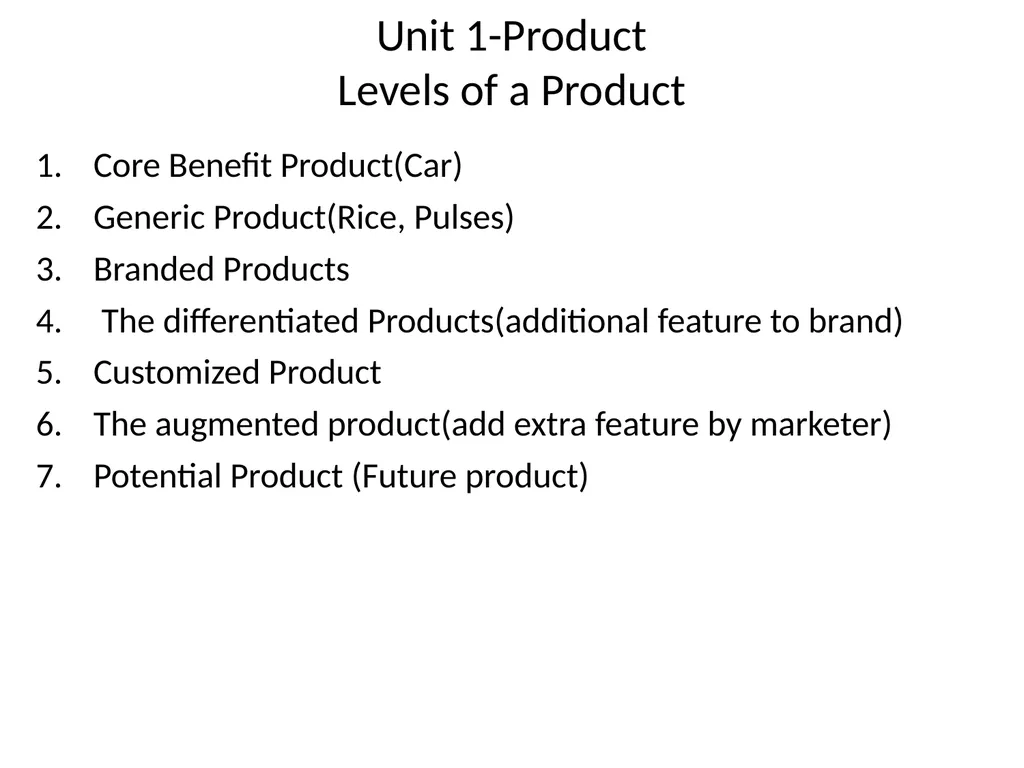
Levels of a Product Core Benefit Product(Car)
Generic Product(Rice, Pulses)
Branded Products
The differentiated Products(additional feature to brand)
Customized Product
The augmented product(add extra feature by marketer)
Potential Product (Future product)<br>
Generic Product(Rice, Pulses)
Branded Products
The differentiated Products(additional feature to brand)
Customized Product
The augmented product(add extra feature by marketer)
Potential Product (Future product)<br>
17
Unit 1-Product
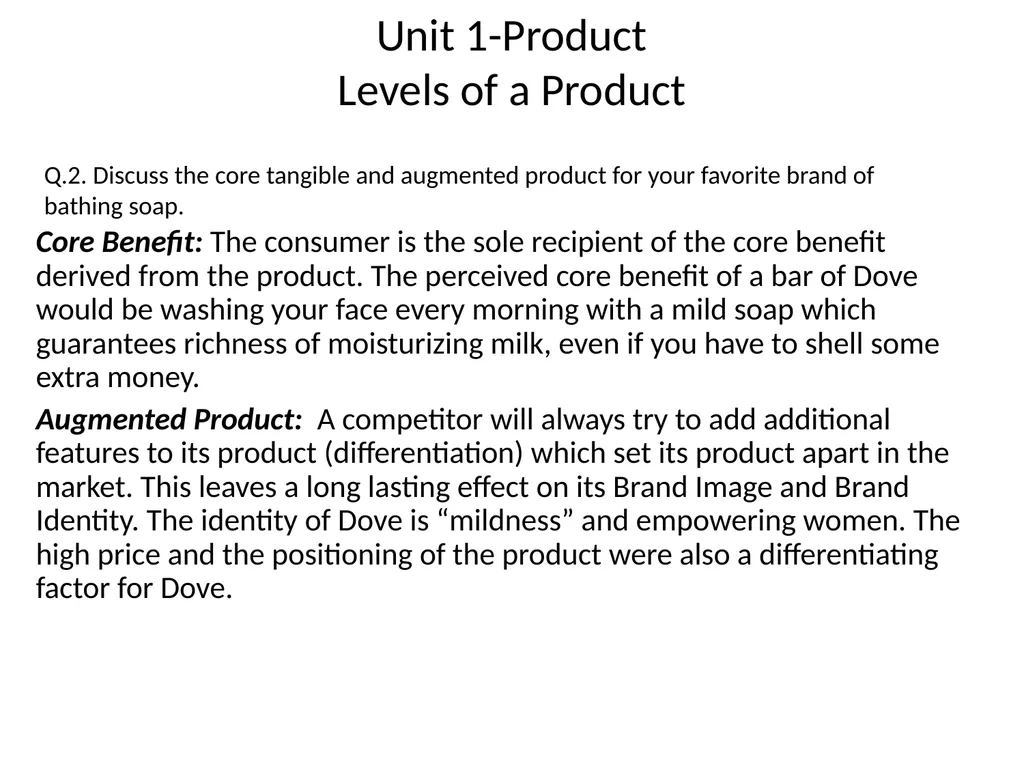
Levels of a Product Core Benefit: The consumer is the sole recipient of the core benefit derived from the product. The perceived core benefit of a bar of Dove would be washing your face every morning with a mild soap which guarantees richness of moisturizing milk, even if you have to shell some extra money.
Augmented Product: A competitor will always try to add additional features to its product (differentiation) which set its product apart in the market. This leaves a long lasting effect on its Brand Image and Brand Identity. The identity of Dove is “mildness” and empowering women. The high price and the positioning of the product were also a differentiating factor for Dove. Q.2. Discuss the core tangible and augmented product for your favorite brand of bathing soap.<br>
Augmented Product: A competitor will always try to add additional features to its product (differentiation) which set its product apart in the market. This leaves a long lasting effect on its Brand Image and Brand Identity. The identity of Dove is “mildness” and empowering women. The high price and the positioning of the product were also a differentiating factor for Dove. Q.2. Discuss the core tangible and augmented product for your favorite brand of bathing soap.<br>
18
Unit 1-Product
Factors Influencing Product Mix Market Demand-
Cost of Product-low cost and high cost product(nirma and surf)
Quantity of production(add more to product line)
Advertising and distribution factors-no cost on advertising to added product line goods
Use of residuals- sugarcane to molasses
Competitors action-elimination or addition based on competitor
Full utilisation of marketing capacity- if underutilised then marketing capacity can be utilised to make more products
Goodwill of the company- good reputed companies can add more products without difficulty<br>
Cost of Product-low cost and high cost product(nirma and surf)
Quantity of production(add more to product line)
Advertising and distribution factors-no cost on advertising to added product line goods
Use of residuals- sugarcane to molasses
Competitors action-elimination or addition based on competitor
Full utilisation of marketing capacity- if underutilised then marketing capacity can be utilised to make more products
Goodwill of the company- good reputed companies can add more products without difficulty<br>
19
Unit 1-Product
Product Terms PRODUCT MIX is the list of all products offered by a company.
Breadth: Breadth is measured by the number or variety of products manufactured by a single manufacturer. E.g.: LG produces a variety of electrical gadgets such as television sets, washing machines, refrigerators etc.
Depth refers to the assortment of sizes, colors and models offered within each product line. E.g.: LG manufactures different varieties or models of refrigerators and washing machines, etc.
Consistency refers to the close relationship of various product lines . E.g: LG produces those goods which fall under the category of electrical appliances.<br>
Breadth: Breadth is measured by the number or variety of products manufactured by a single manufacturer. E.g.: LG produces a variety of electrical gadgets such as television sets, washing machines, refrigerators etc.
Depth refers to the assortment of sizes, colors and models offered within each product line. E.g.: LG manufactures different varieties or models of refrigerators and washing machines, etc.
Consistency refers to the close relationship of various product lines . E.g: LG produces those goods which fall under the category of electrical appliances.<br>
20
Unit 1-Product
Product Terms 2. PRODUCT LINE is a group of products that are closely related, either because they function in a similar manner or are sold to the same customer groups or are marketed through the same types of outlets, or fall within given price ranges.
For eg, product lines are indicated by the type of risk coverage, such as auto insurance, commercial insurance, and life insurance
3. PRODUCT POSITIONING:– It refers to the manner in which a product is offered to a particular customer. For eg, Wagon R is positioned as a compact car for the smart urban<br>
For eg, product lines are indicated by the type of risk coverage, such as auto insurance, commercial insurance, and life insurance
3. PRODUCT POSITIONING:– It refers to the manner in which a product is offered to a particular customer. For eg, Wagon R is positioned as a compact car for the smart urban<br>
21
Unit 1-Product
Product Terms 4. PRODUCT REPOSITIONING It refers to the manner in which a marketer changes the whole product in order to satisfy a particular segment or customer. Mostly repositioning is done when a product is changed physically.
5. PRODUCT DIFFERENTIATION:– Product differentiation is the modification of a product to make it more attractive to the target market. Three things that continuously change in product differentiation are PRODUCT QUALITY, PRODUCT DESIGN, and PRODUCT SUPPORT SERVICES<br>
5. PRODUCT DIFFERENTIATION:– Product differentiation is the modification of a product to make it more attractive to the target market. Three things that continuously change in product differentiation are PRODUCT QUALITY, PRODUCT DESIGN, and PRODUCT SUPPORT SERVICES<br>
22
Unit 1-Product
Product Terms 6. PRODUCT DIVERSIFICATION Godrej Company used to manufacture cupboards, locks, safes, refrigerators etc. on a large scale but has now diversified into cosmetics, soaps etc
7. PRODUCT MODIFICATION:– Deliberate alteration in physical attribute of product. Eg. cars<br>
7. PRODUCT MODIFICATION:– Deliberate alteration in physical attribute of product. Eg. cars<br>
23
Unit 1-Product
Product Terms 8. PRODUCT STANDARDISATION Manufacturing uniform quality to reduce unnecessary varities. Eg. Shirts and trousers in standard sizes
9. PRODUCT ELIMINATION:– Withdrawal for other profit generating products. Eg. Maruti 800 to Maruti Suzuki<br>
9. PRODUCT ELIMINATION:– Withdrawal for other profit generating products. Eg. Maruti 800 to Maruti Suzuki<br>
24
Unit 1-Product Q.3. Distinguish between generic market and product market.
Generic Market
Generic markets typically contain groups of consumers that share a broad need that a wide variety of products or services can meet. For example, everyone needs food, and everything from grocery stores and restaurants to farming cooperatives can meet the need for food. In a generic market, the method of meeting the need takes second place to the simple capacity to meet the need. A cooperative that specializes in organic food holds no intrinsic advantage over a fast food joint in its capacity to serve the generic market of people that eat.
Product Market
Product markets typically contain groups of consumers that share a fairly specific need that only certain and closely related kinds of products or services can meet. In the case of smartphone users, for example, only phones with specific and more or less comparable capabilities can serve the needs of these consumers. In a product market, the capacity to serve the market is often predicated on the method. Only a company that produces smartphones can compete for this market, let alone hold an intrinsic advantage, because only that product suffices.<br>
Generic Market
Generic markets typically contain groups of consumers that share a broad need that a wide variety of products or services can meet. For example, everyone needs food, and everything from grocery stores and restaurants to farming cooperatives can meet the need for food. In a generic market, the method of meeting the need takes second place to the simple capacity to meet the need. A cooperative that specializes in organic food holds no intrinsic advantage over a fast food joint in its capacity to serve the generic market of people that eat.
Product Market
Product markets typically contain groups of consumers that share a fairly specific need that only certain and closely related kinds of products or services can meet. In the case of smartphone users, for example, only phones with specific and more or less comparable capabilities can serve the needs of these consumers. In a product market, the capacity to serve the market is often predicated on the method. Only a company that produces smartphones can compete for this market, let alone hold an intrinsic advantage, because only that product suffices.<br>