
Unit 1 Sustaining Earth’s Ecosystem 1.1: Learning

Description: Unit 1 Sustaining Earths Ecosystem 1.1: Learning Outcomes Identify distinctive plants, animals, and climatic characteristics of Canadian biomes (tundra, boreal forest, temperate deciduous forest, temperate rainforest, grasslands) Identify
Related Topics
Download Presentation
"Unit 1 Sustaining Earth’s Ecosystem 1.1: Learning" is the property of its rightful owner. Permission is granted to download and print the materials on this website for personal, non-commercial use only, and to display it on your personal computer provided you do not modify the materials and that you retain all copyright notices contained in the materials. By downloading content from our website, you accept the terms of this agreement.
Presentation Transcript
slide1. Unit 1 Sustaining Earth’s Ecosystem<br>
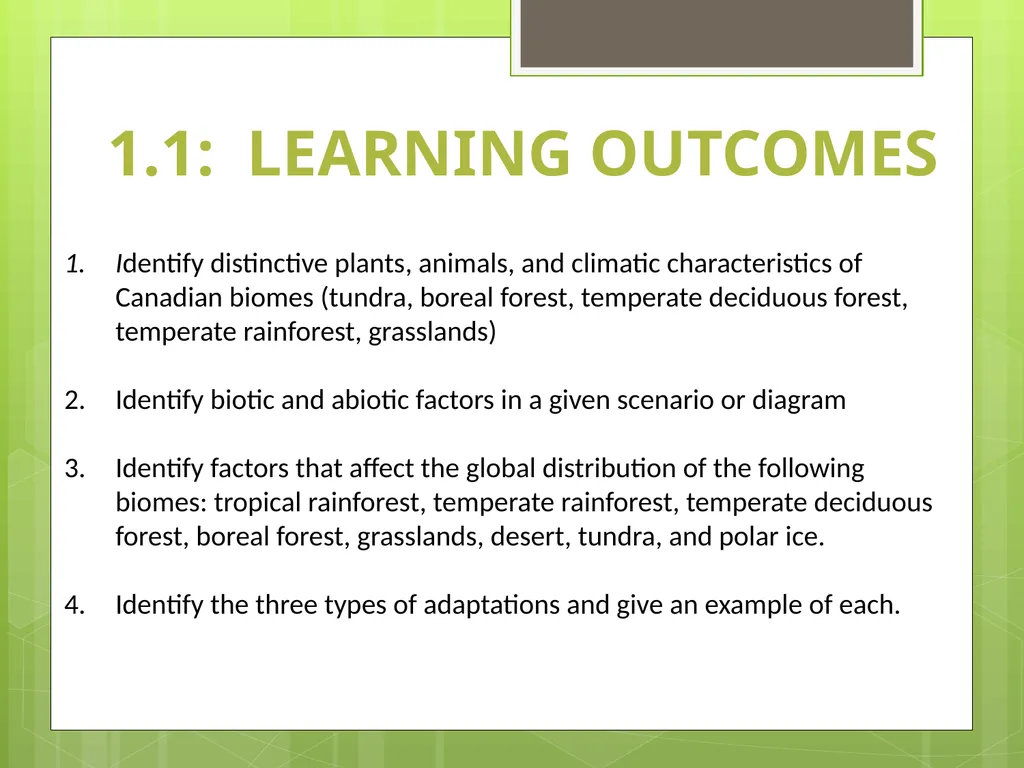
slide3. 1.1: Learning Outcomes Identify distinctive plants, animals, and climatic characteristics of Canadian biomes (tundra, boreal forest, temperate deciduous forest, temperate rainforest, grasslands)
Identify biotic and abiotic factors in a given scenario or diagram
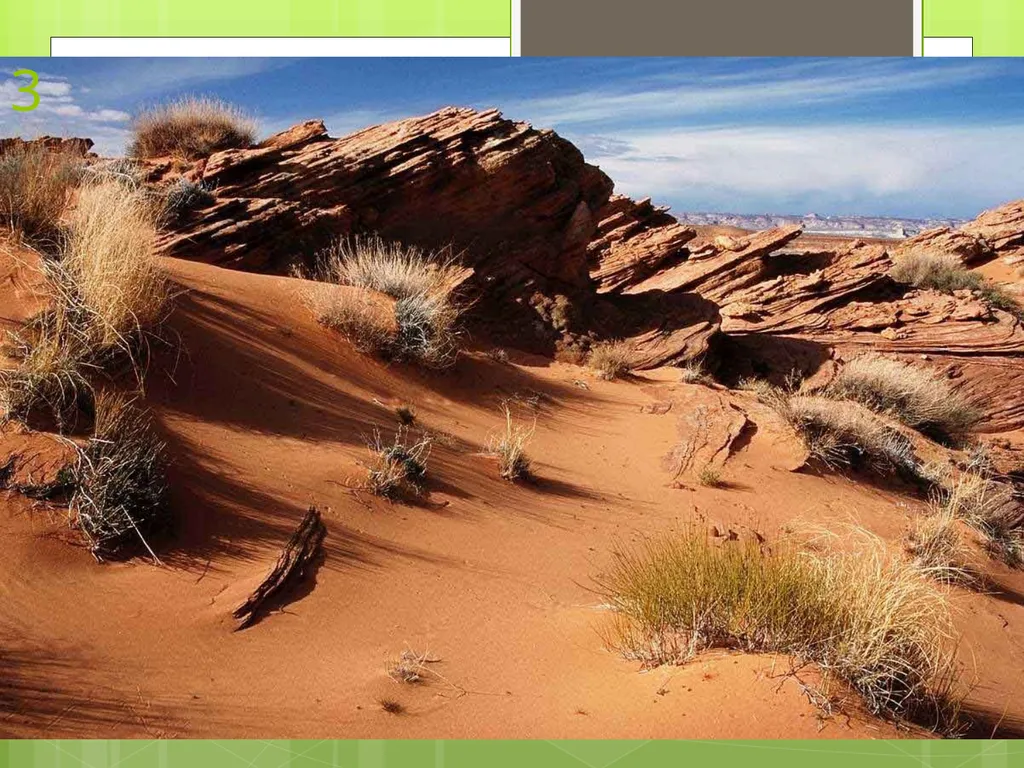
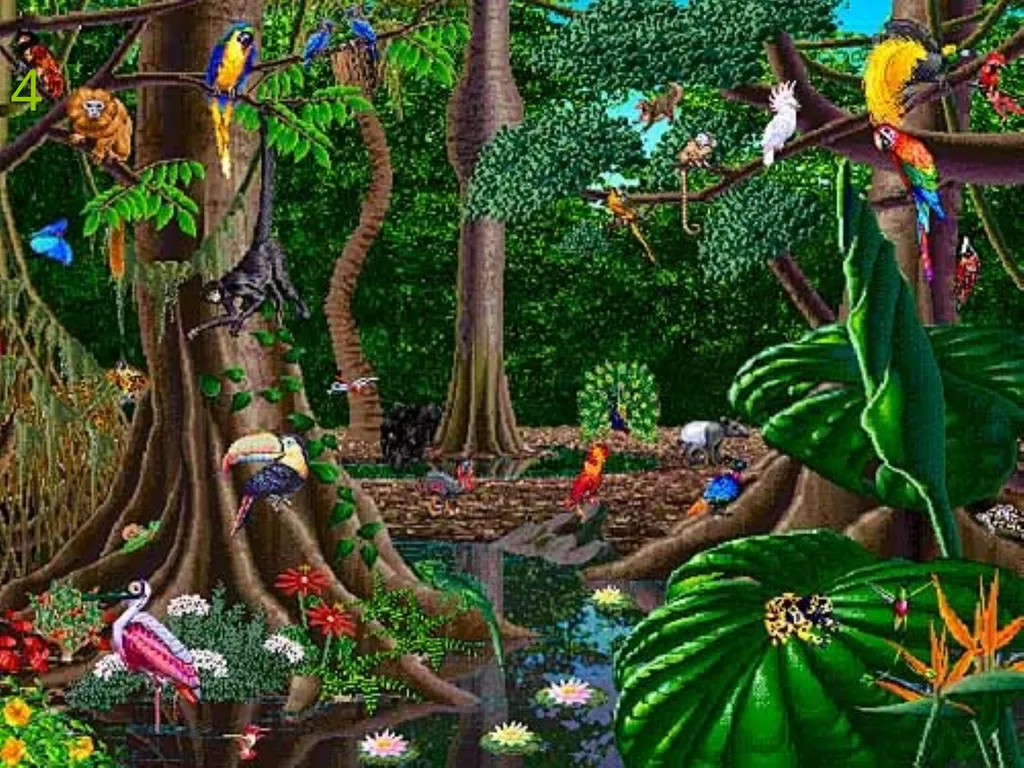
Identify factors that affect the global distribution of the following biomes: tropical rainforest, temperate rainforest, temperate deciduous forest, boreal forest, grasslands, desert, tundra, and polar ice.
Identify the three types of adaptations and give an example of each.<br>
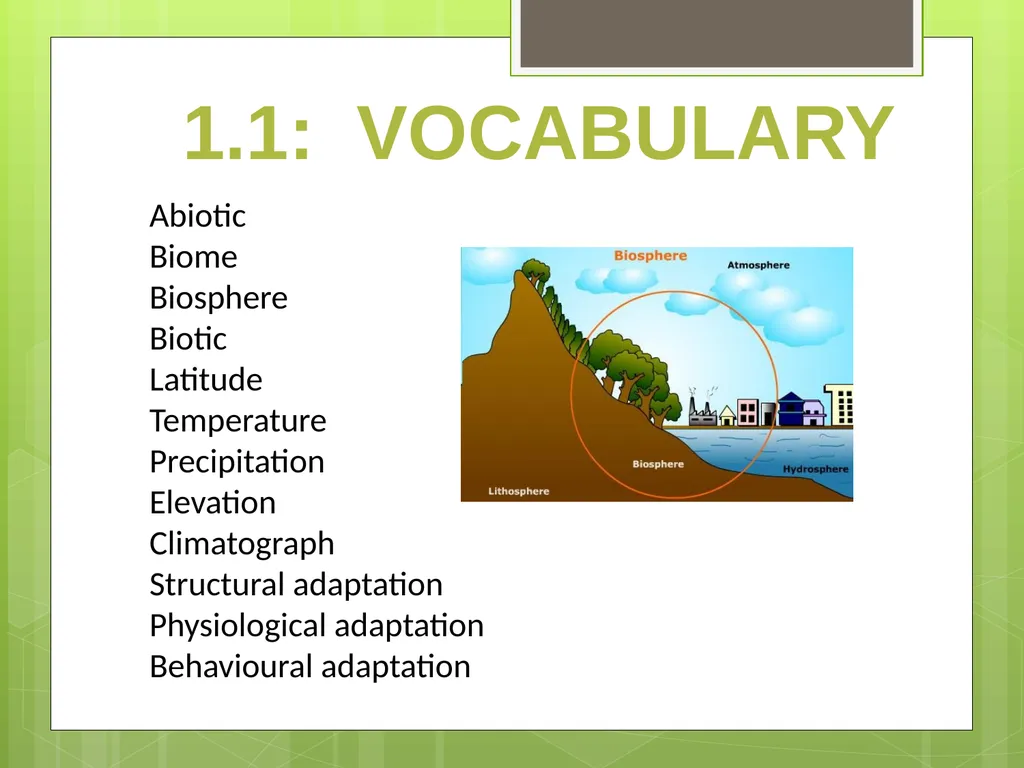
slide4. 1.1: VOCABULARY Abiotic
Biome
Biosphere
Biotic
Latitude
Temperature
Precipitation
Elevation
Climatograph
Structural adaptation
Physiological adaptation
Behavioural adaptation<br>
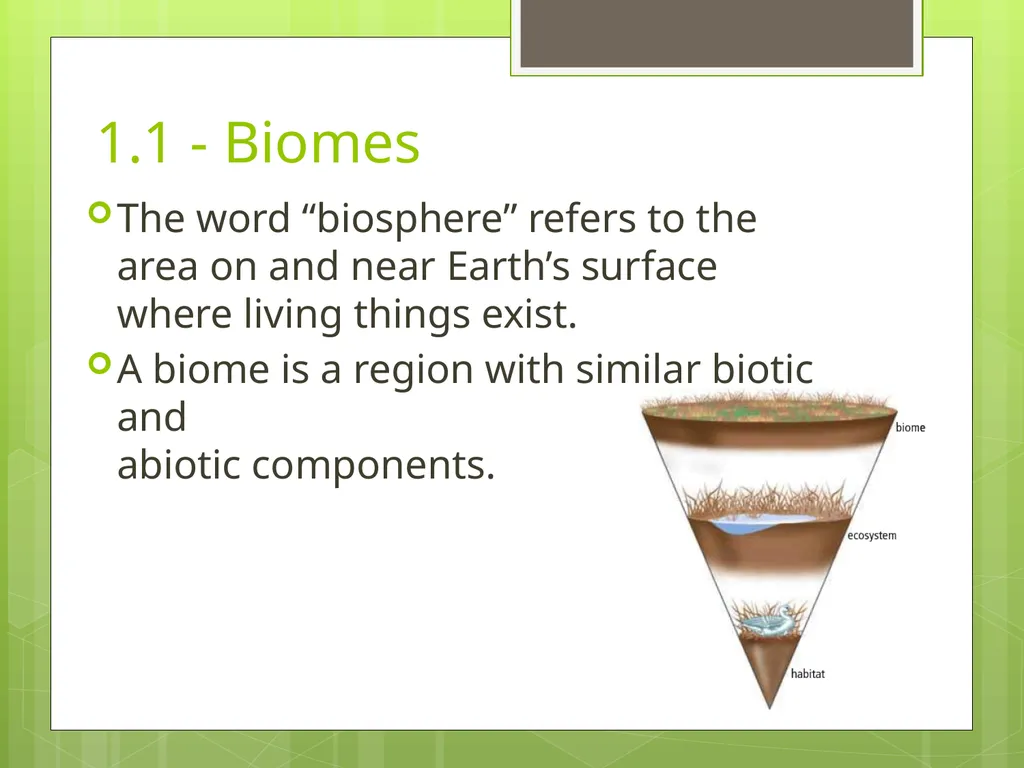
slide5. 1.1 - Biomes The word “biosphere” refers to the area on and near Earth’s surface where living things exist.
A biome is a region with similar biotic and abiotic components.<br>
slide6. Definitions Abiotic: anything that is non-living
Biotic: anything that is living<br>
slide7. 1<br>
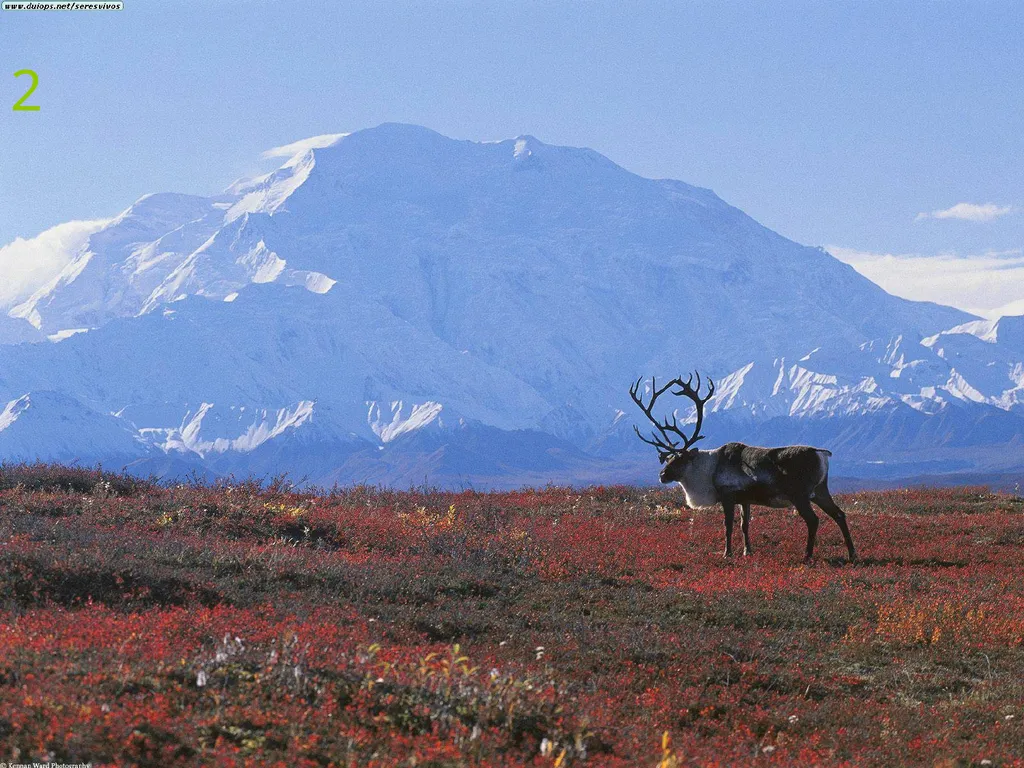
slide8. 2<br>
slide9. 3<br>
slide10. 4<br>
slide11. 5<br>
slide12. 6<br>
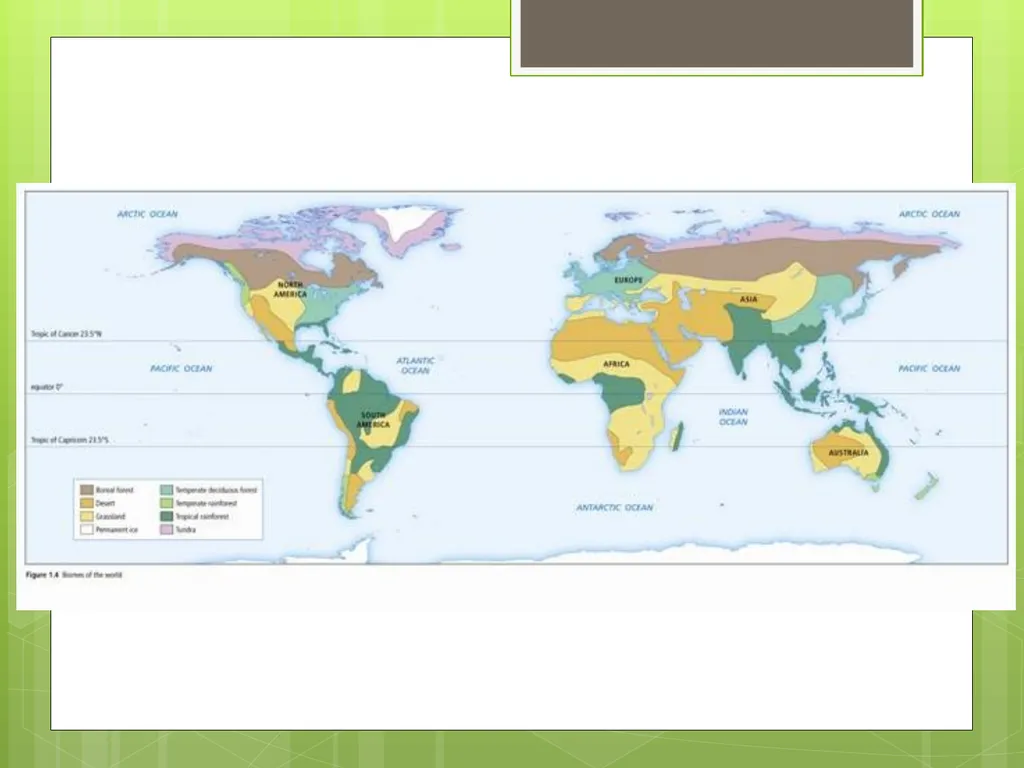
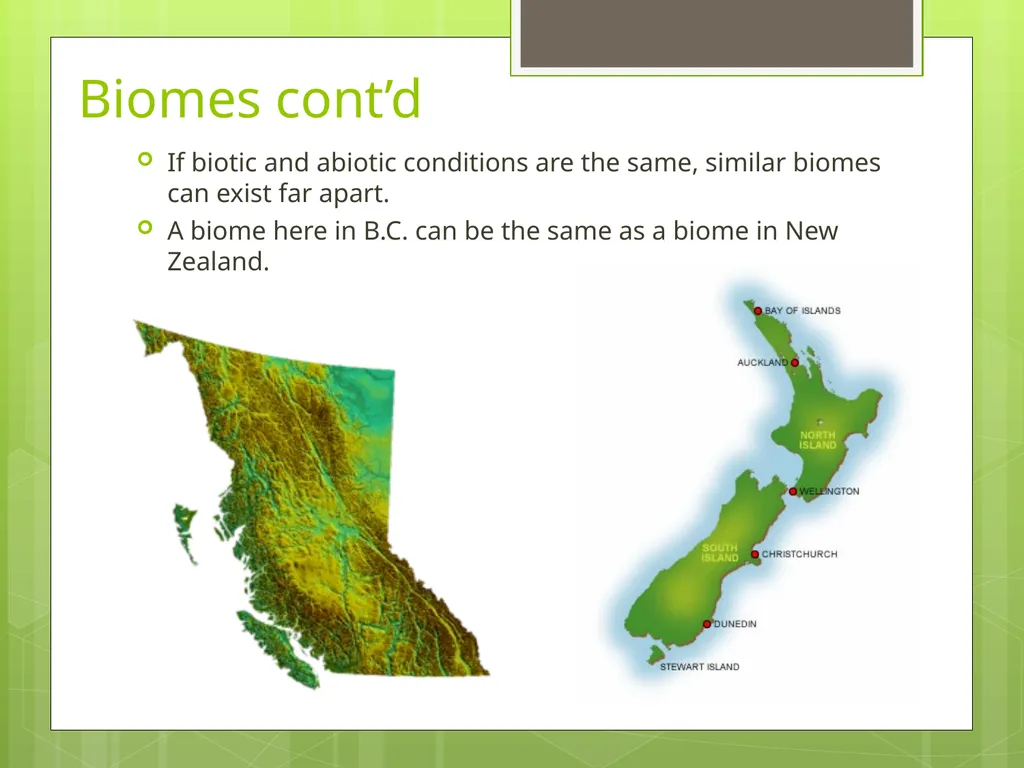
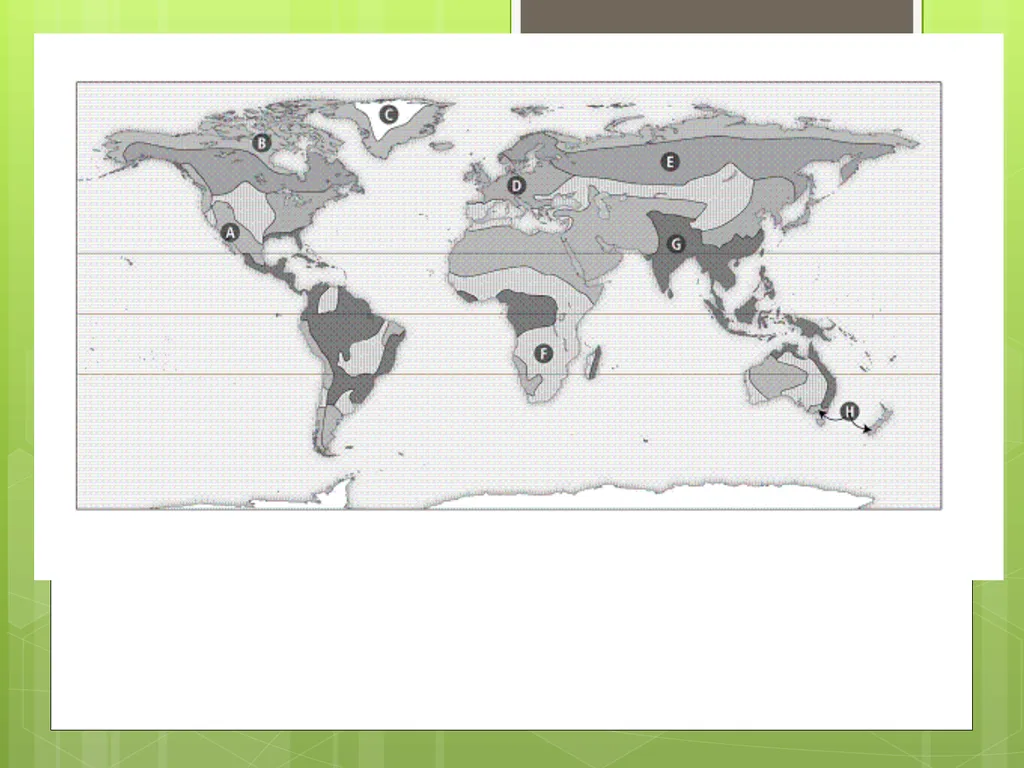
slide13. Biomes cont’d If biotic and abiotic conditions are the same, similar biomes can exist far apart.
A biome here in B.C. can be the same as a biome in New Zealand.<br>
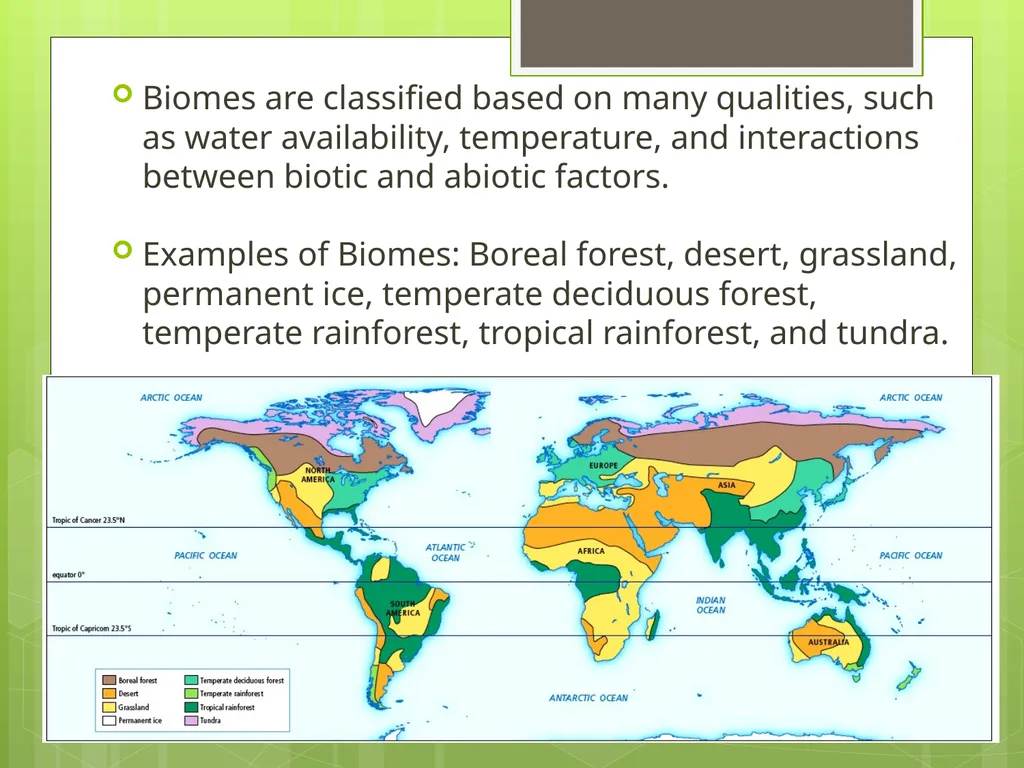
slide14. Biomes are classified based on many qualities, such as water availability, temperature, and interactions between biotic and abiotic factors.
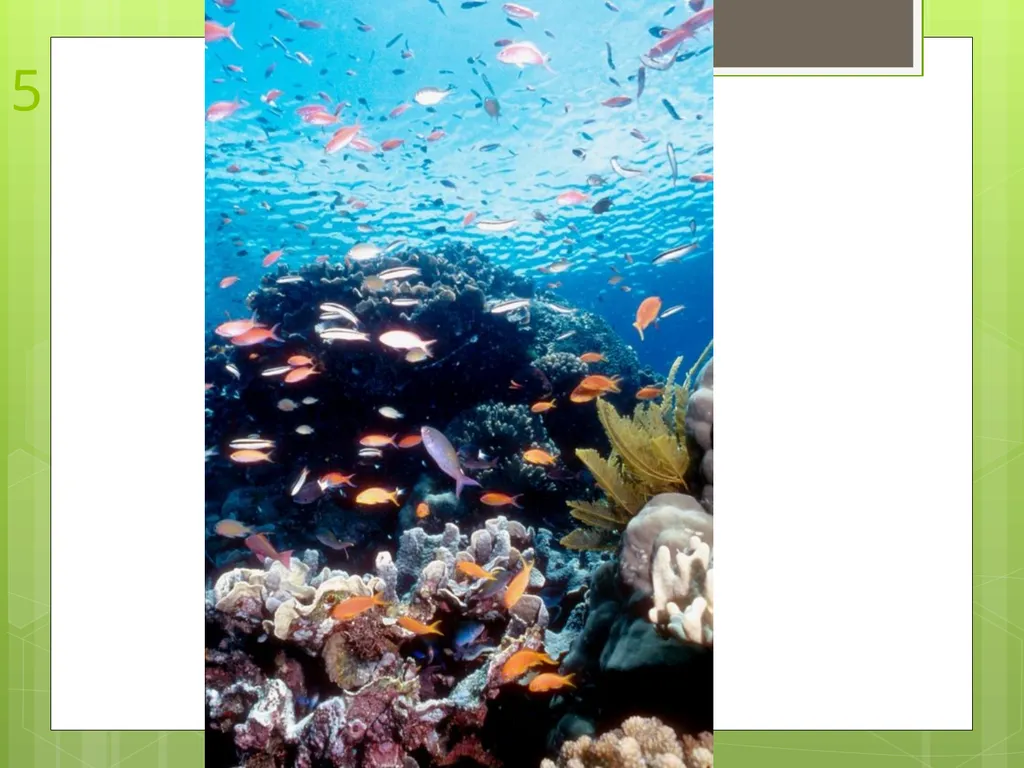
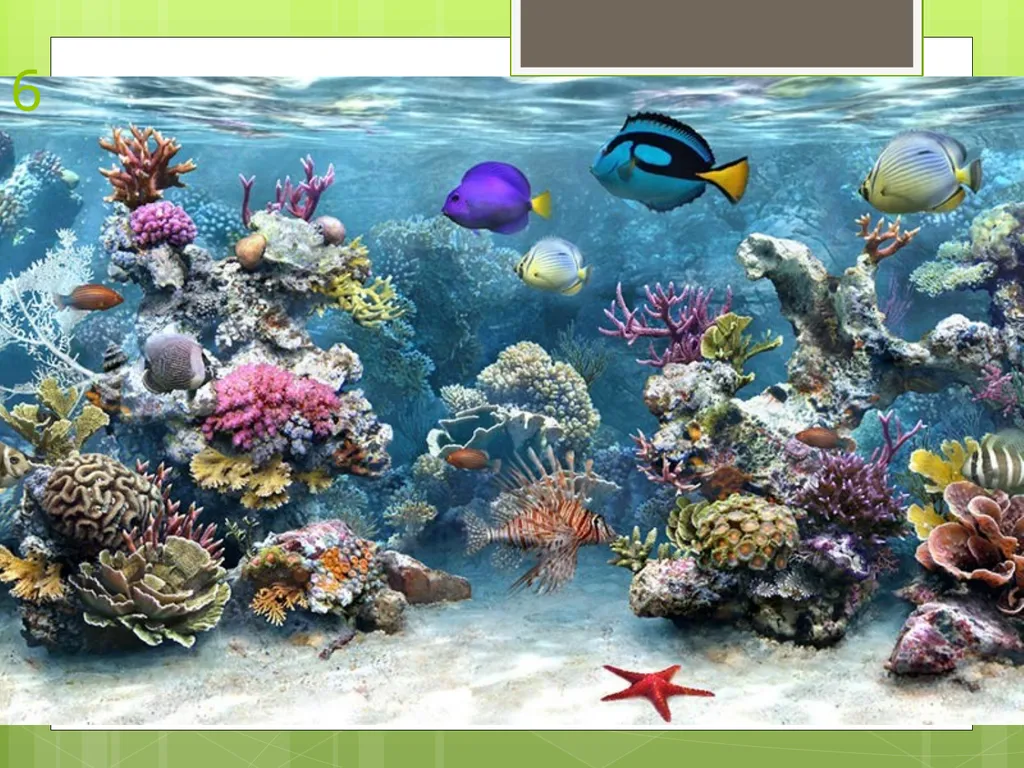
Examples of Biomes: Boreal forest, desert, grassland, permanent ice, temperate deciduous forest, temperate rainforest, tropical rainforest, and tundra.<br>
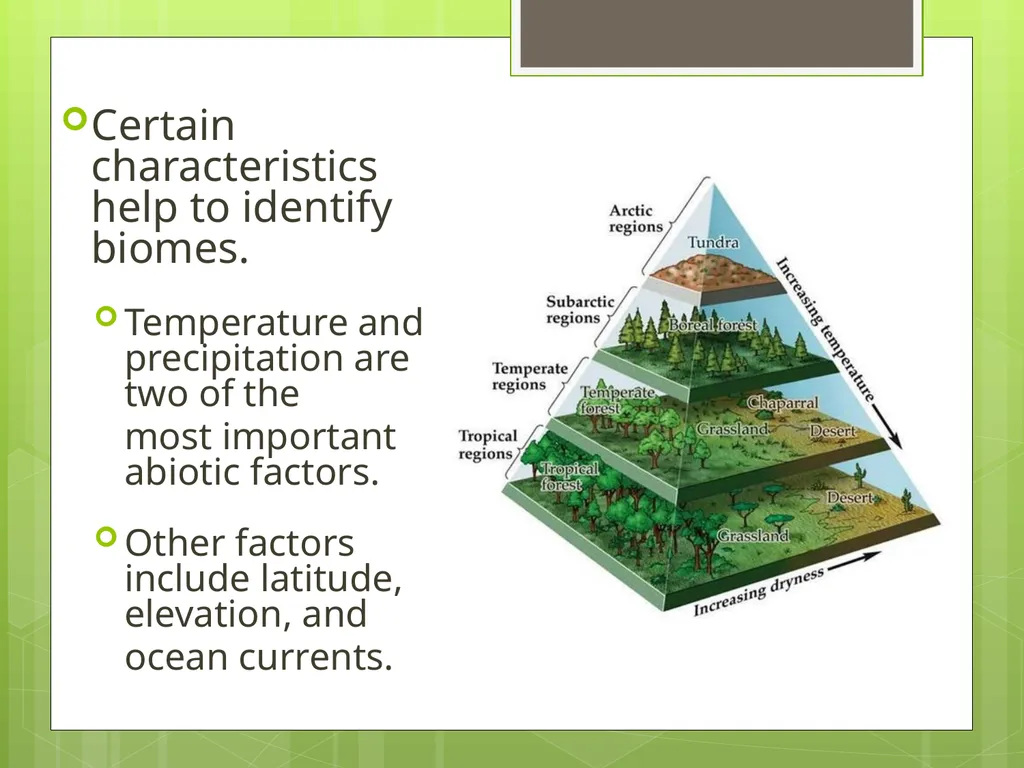
slide15. Certain characteristics help to identify biomes.
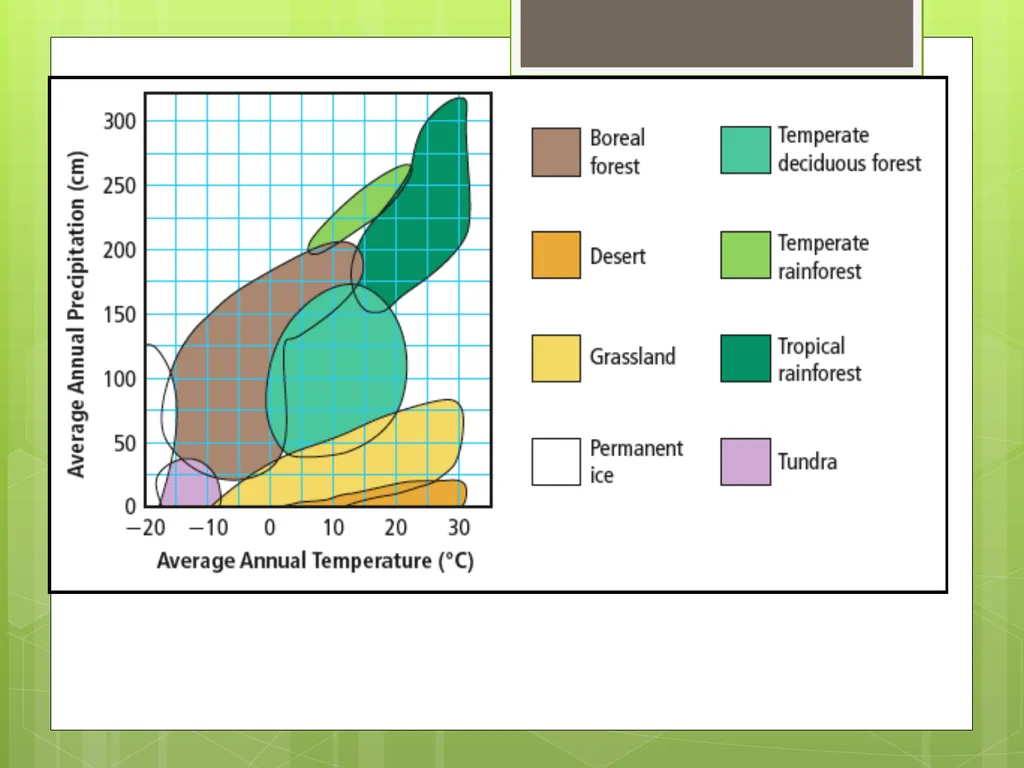
Temperature and precipitation are two of the
most important abiotic factors.
Other factors include latitude, elevation, and
ocean currents.<br>
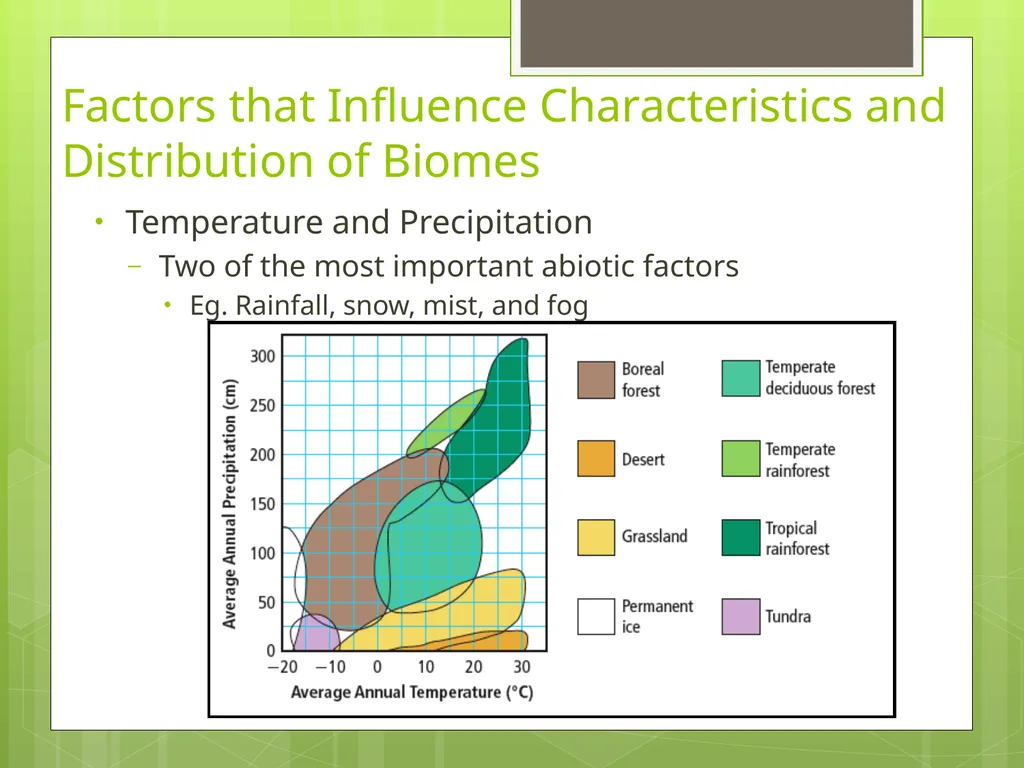
slide16. Factors that Influence Characteristics and Distribution of Biomes Temperature and Precipitation
Two of the most important abiotic factors
Eg. Rainfall, snow, mist, and fog<br>
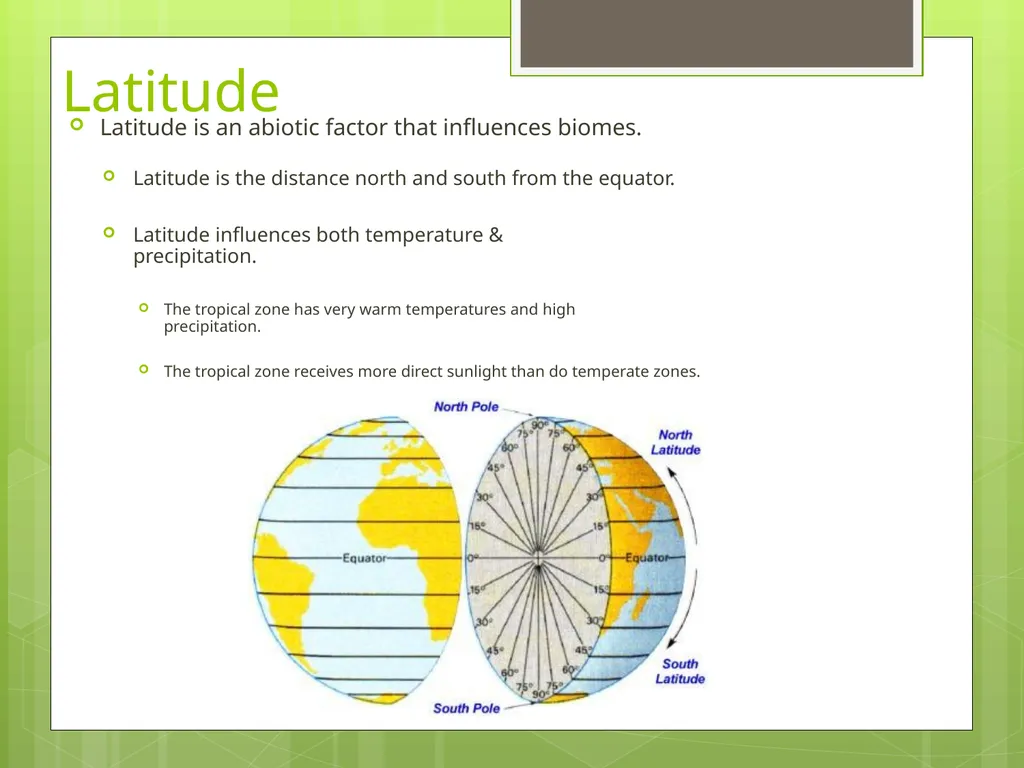
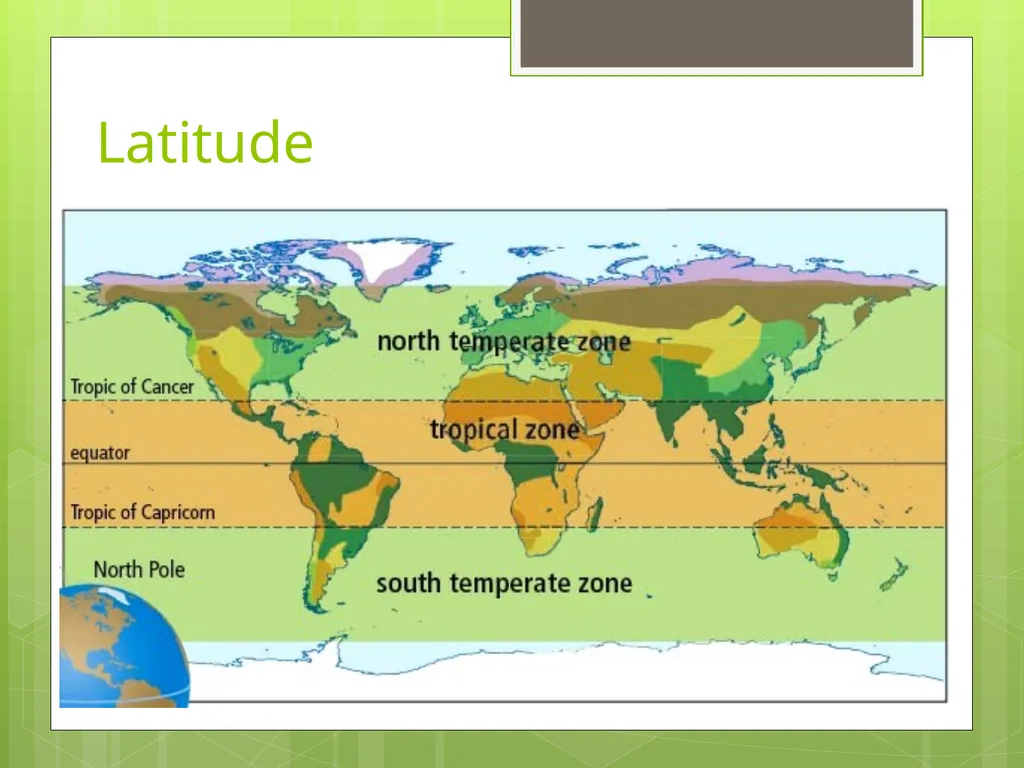
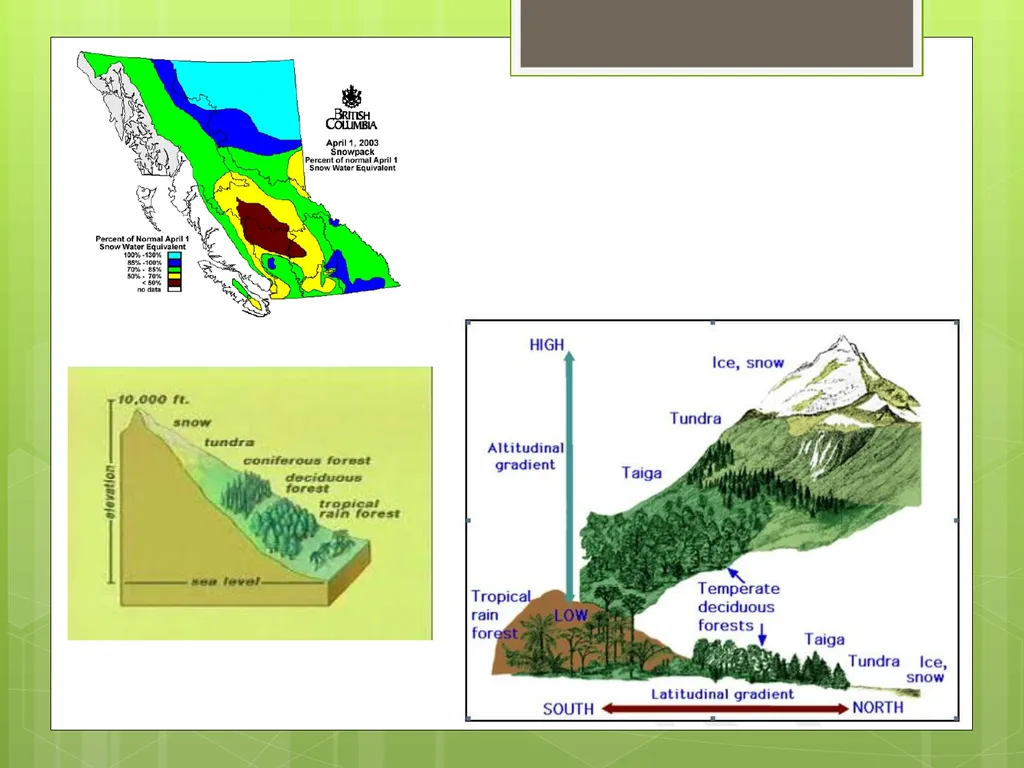
slide19. Latitude Latitude is an abiotic factor that influences biomes.
Latitude is the distance north and south from the equator.
Latitude influences both temperature & precipitation.
The tropical zone has very warm temperatures and high precipitation.
The tropical zone receives more direct sunlight than do temperate zones.<br>
slide20. Latitude<br>
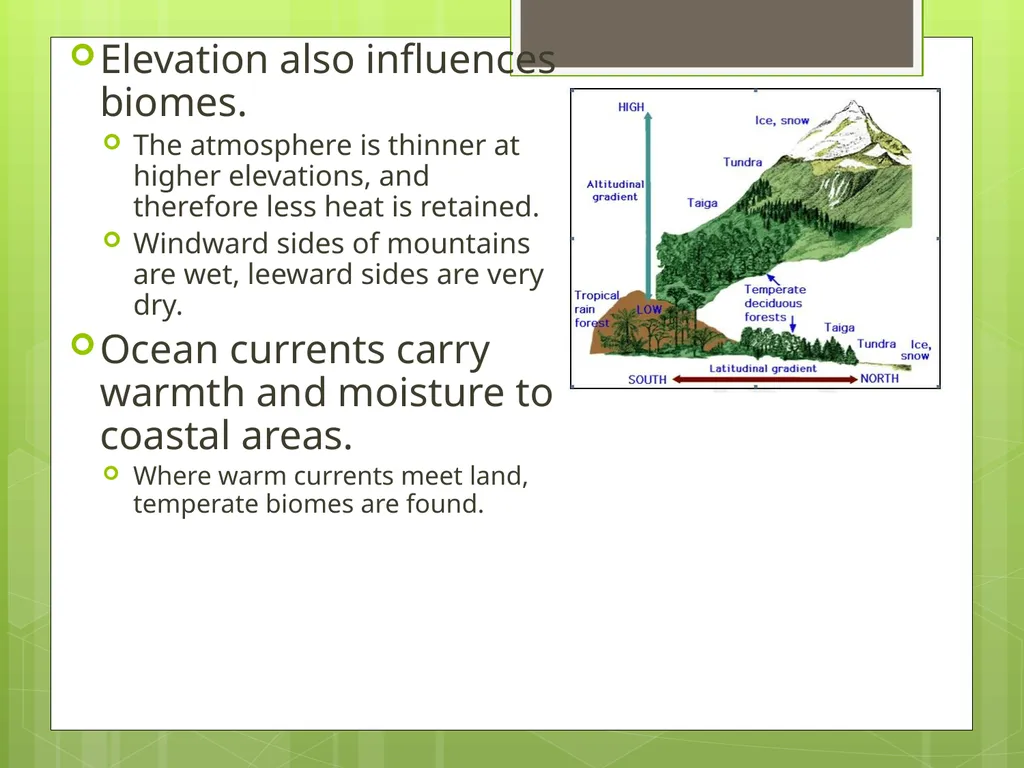
slide21. Elevation also influences biomes.
The atmosphere is thinner at higher elevations, and therefore less heat is retained.
Windward sides of mountains are wet, leeward sides are very dry.
Ocean currents carry warmth and moisture to coastal areas.
Where warm currents meet land, temperate biomes are found.<br>
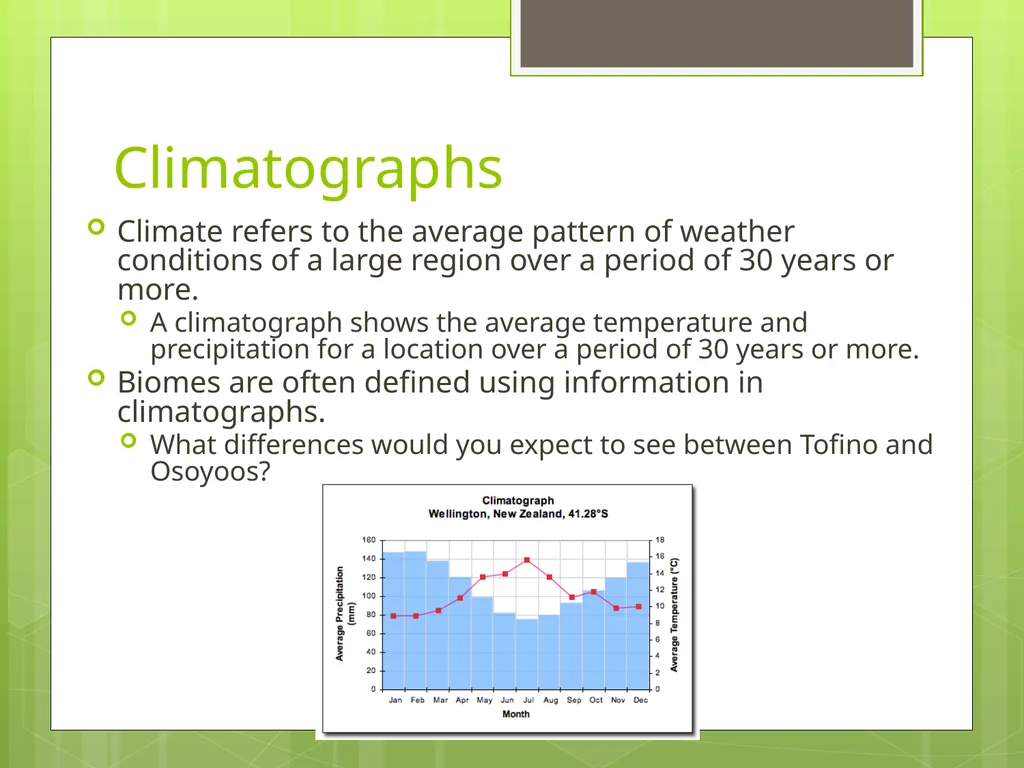
slide23. Climatographs Climate refers to the average pattern of weather conditions of a large region over a period of 30 years or more.
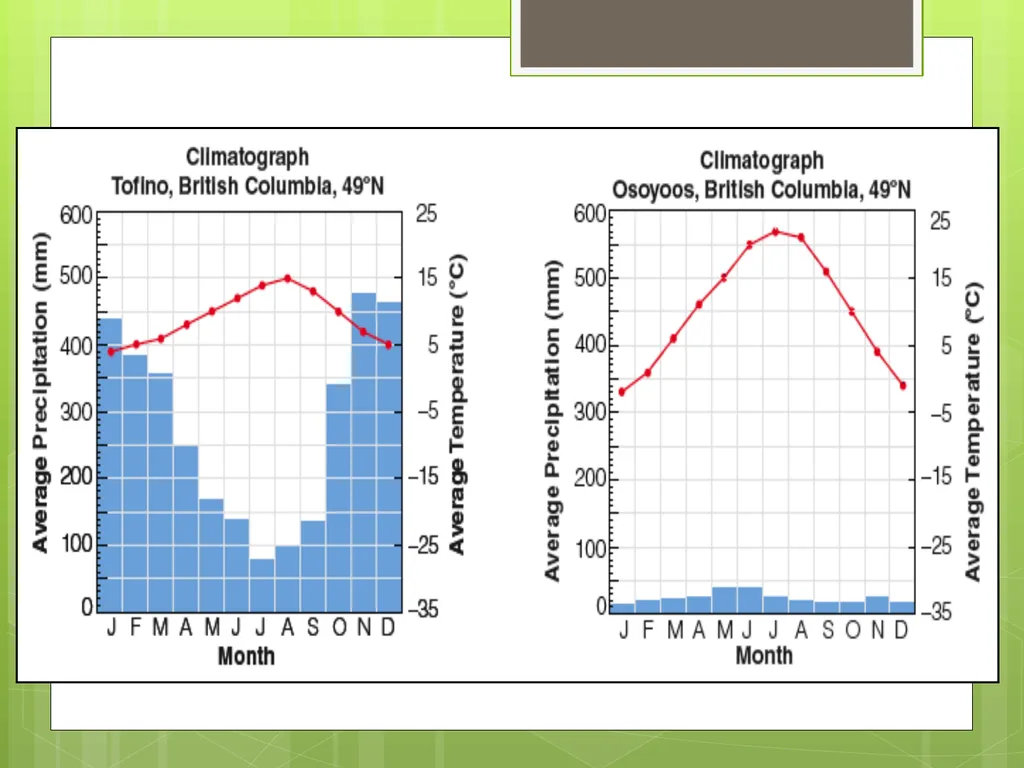
A climatograph shows the average temperature and precipitation for a location over a period of 30 years or more.
Biomes are often defined using information in climatographs.
What differences would you expect to see between Tofino and Osoyoos?<br>
slide24. Climatographs<br>
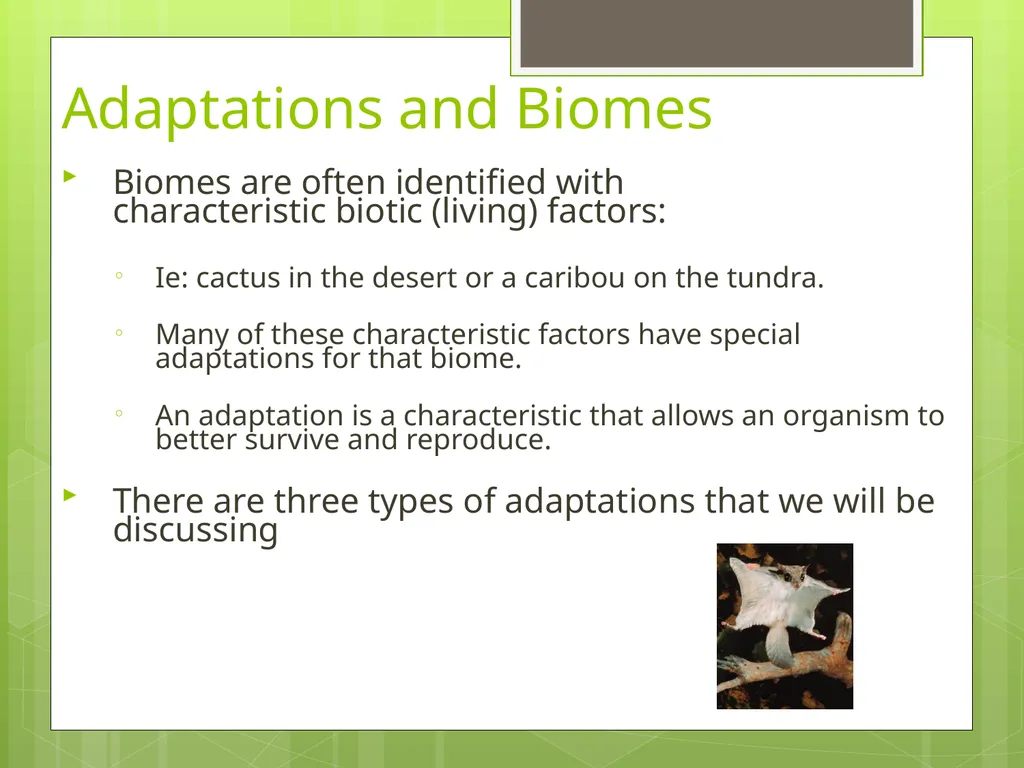
slide25. Adaptations and Biomes Biomes are often identified with characteristic biotic (living) factors:
Ie: cactus in the desert or a caribou on the tundra.
Many of these characteristic factors have special adaptations for that biome.
An adaptation is a characteristic that allows an organism to better survive and reproduce.
There are three types of adaptations that we will be discussing<br>
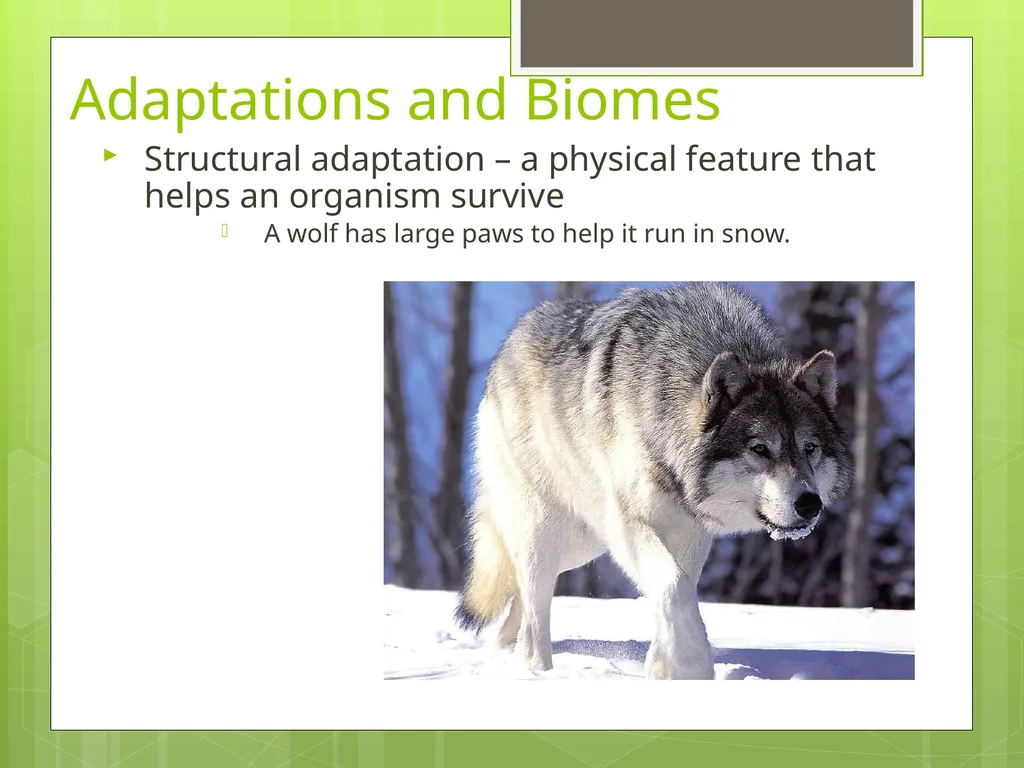
slide26. Adaptations and Biomes Structural adaptation – a physical feature that helps an organism survive
A wolf has large paws to help it run in snow.<br>
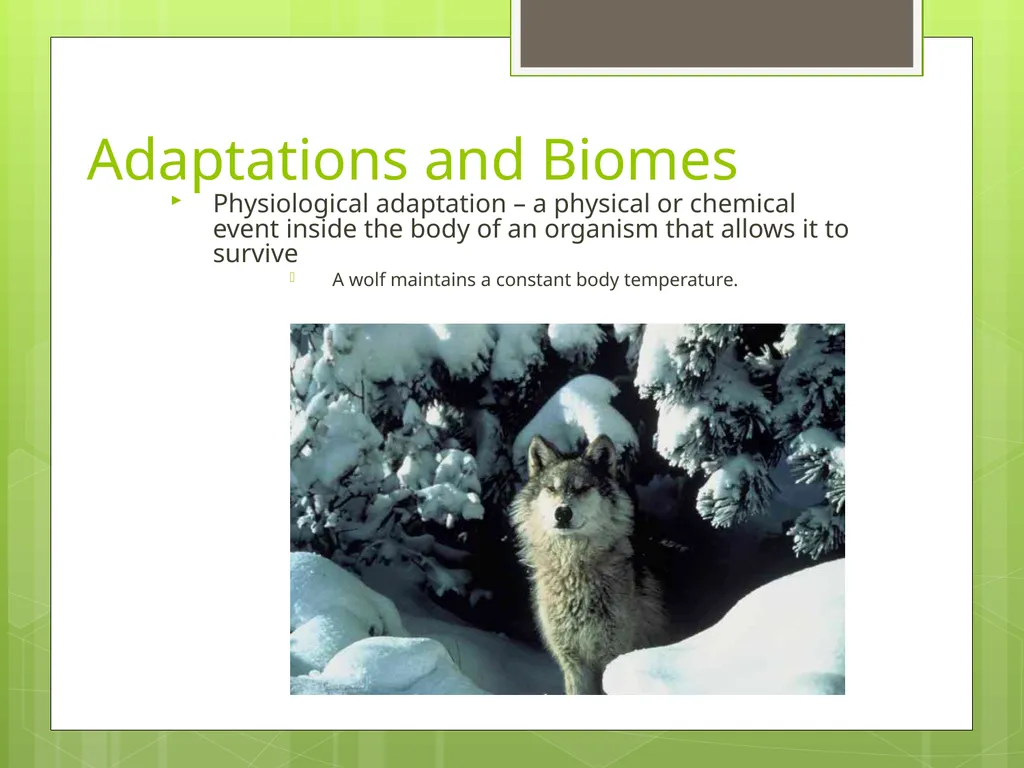
slide27. Adaptations and Biomes Physiological adaptation – a physical or chemical event inside the body of an organism that allows it to survive
A wolf maintains a constant body temperature.<br>
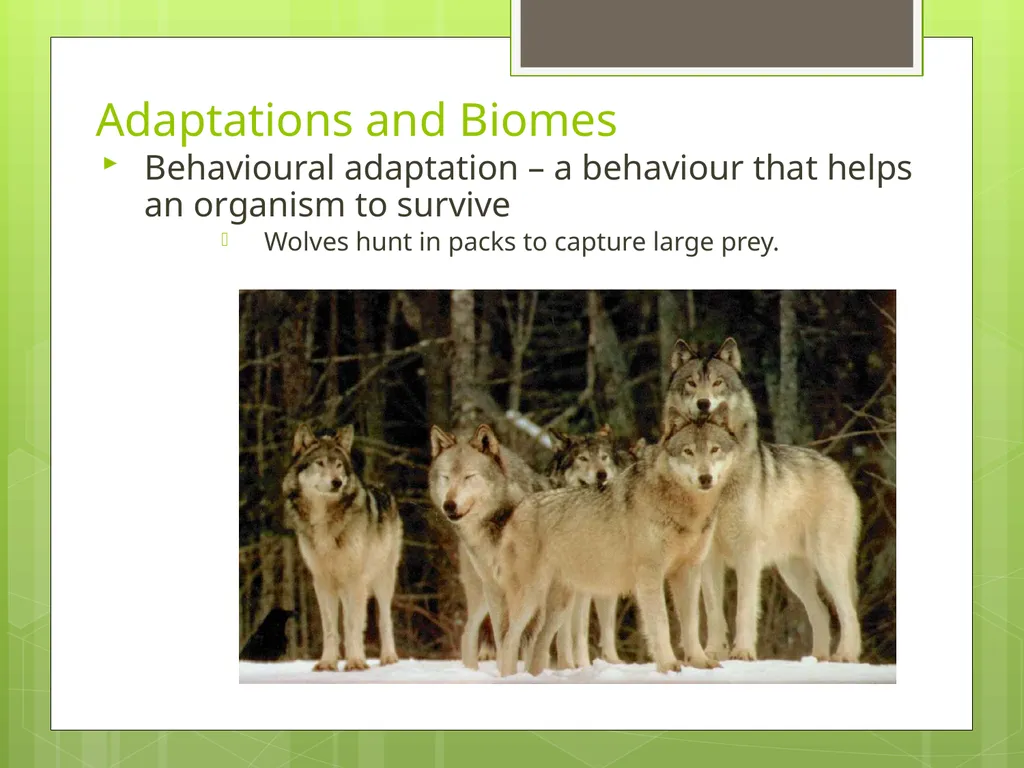
slide28. Adaptations and Biomes Behavioural adaptation – a behaviour that helps an organism to survive
Wolves hunt in packs to capture large prey.<br>
slide3. 1.1: Learning Outcomes Identify distinctive plants, animals, and climatic characteristics of Canadian biomes (tundra, boreal forest, temperate deciduous forest, temperate rainforest, grasslands)
Identify biotic and abiotic factors in a given scenario or diagram
Identify factors that affect the global distribution of the following biomes: tropical rainforest, temperate rainforest, temperate deciduous forest, boreal forest, grasslands, desert, tundra, and polar ice.
Identify the three types of adaptations and give an example of each.<br>
slide4. 1.1: VOCABULARY Abiotic
Biome
Biosphere
Biotic
Latitude
Temperature
Precipitation
Elevation
Climatograph
Structural adaptation
Physiological adaptation
Behavioural adaptation<br>
slide5. 1.1 - Biomes The word “biosphere” refers to the area on and near Earth’s surface where living things exist.
A biome is a region with similar biotic and abiotic components.<br>
slide6. Definitions Abiotic: anything that is non-living
Biotic: anything that is living<br>
slide7. 1<br>
slide8. 2<br>
slide9. 3<br>
slide10. 4<br>
slide11. 5<br>
slide12. 6<br>
slide13. Biomes cont’d If biotic and abiotic conditions are the same, similar biomes can exist far apart.
A biome here in B.C. can be the same as a biome in New Zealand.<br>
slide14. Biomes are classified based on many qualities, such as water availability, temperature, and interactions between biotic and abiotic factors.
Examples of Biomes: Boreal forest, desert, grassland, permanent ice, temperate deciduous forest, temperate rainforest, tropical rainforest, and tundra.<br>
slide15. Certain characteristics help to identify biomes.
Temperature and precipitation are two of the
most important abiotic factors.
Other factors include latitude, elevation, and
ocean currents.<br>
slide16. Factors that Influence Characteristics and Distribution of Biomes Temperature and Precipitation
Two of the most important abiotic factors
Eg. Rainfall, snow, mist, and fog<br>
slide19. Latitude Latitude is an abiotic factor that influences biomes.
Latitude is the distance north and south from the equator.
Latitude influences both temperature & precipitation.
The tropical zone has very warm temperatures and high precipitation.
The tropical zone receives more direct sunlight than do temperate zones.<br>
slide20. Latitude<br>
slide21. Elevation also influences biomes.
The atmosphere is thinner at higher elevations, and therefore less heat is retained.
Windward sides of mountains are wet, leeward sides are very dry.
Ocean currents carry warmth and moisture to coastal areas.
Where warm currents meet land, temperate biomes are found.<br>
slide23. Climatographs Climate refers to the average pattern of weather conditions of a large region over a period of 30 years or more.
A climatograph shows the average temperature and precipitation for a location over a period of 30 years or more.
Biomes are often defined using information in climatographs.
What differences would you expect to see between Tofino and Osoyoos?<br>
slide24. Climatographs<br>
slide25. Adaptations and Biomes Biomes are often identified with characteristic biotic (living) factors:
Ie: cactus in the desert or a caribou on the tundra.
Many of these characteristic factors have special adaptations for that biome.
An adaptation is a characteristic that allows an organism to better survive and reproduce.
There are three types of adaptations that we will be discussing<br>
slide26. Adaptations and Biomes Structural adaptation – a physical feature that helps an organism survive
A wolf has large paws to help it run in snow.<br>
slide27. Adaptations and Biomes Physiological adaptation – a physical or chemical event inside the body of an organism that allows it to survive
A wolf maintains a constant body temperature.<br>
slide28. Adaptations and Biomes Behavioural adaptation – a behaviour that helps an organism to survive
Wolves hunt in packs to capture large prey.<br>