
Unit 10 Personality Module 59 Exploring the Self
CP
Published · 41 slides · 0 views
1 / 1



Description
Unit 10 Personality Module 59 Exploring the Self Learning Targets 59-1 Explain why psychology has generated so much research on the self, and discuss the importance of self-esteem to our well-being. 59-2 Describe how excessive optimism,
Related Topics
Share
Embed code
Download this presentation From Below
"Unit 10 Personality Module 59 Exploring the Self" is the property of its rightful owner. Permission is granted to download and print the materials on this website for personal, non-commercial use only, and to display it on your personal computer provided you do not modify the materials and that you retain all copyright notices contained in the materials. By downloading content from our website, you accept the terms of this agreement.
Presentation Transcript
01
Unit 10
Personality<br>
02
Module 59 Exploring the Self Learning Targets 59-1 Explain why psychology has generated so much research on the self, and discuss the importance of self-esteem to our well-being. 59-2 Describe how excessive optimism, blindness to one’s own incompetence, and self-serving bias reveal the costs of self-esteem, and explain how defensive and secure self-esteem differ. 59-3 Discuss how individualist and collectivist cultures differ in their values and goals.<br>
03
Why has psychology generated so
much research on the self? Psychology’s concern with our sense of self dates back at least to William James, who devoted more than 100 pages of his 1890 Principles of Psychology to the topic.
By 1943, Gordon Allport lamented that the
self had become “lost to view.”
Although humanistic psychology’s later emphasis on the self did not instigate much scientific research, it did help renew the concept of self and keep it alive.<br>
By 1943, Gordon Allport lamented that the
self had become “lost to view.”
Although humanistic psychology’s later emphasis on the self did not instigate much scientific research, it did help renew the concept of self and keep it alive.<br>
04
Where are we today? Now, more than a century after James, the self is one of Western psychology’s most vigorously researched topics.
Every year, new studies galore appear on self-esteem, self-disclosure, self-awareness, self-schemas, self-monitoring, and more.<br>
Every year, new studies galore appear on self-esteem, self-disclosure, self-awareness, self-schemas, self-monitoring, and more.<br>
05
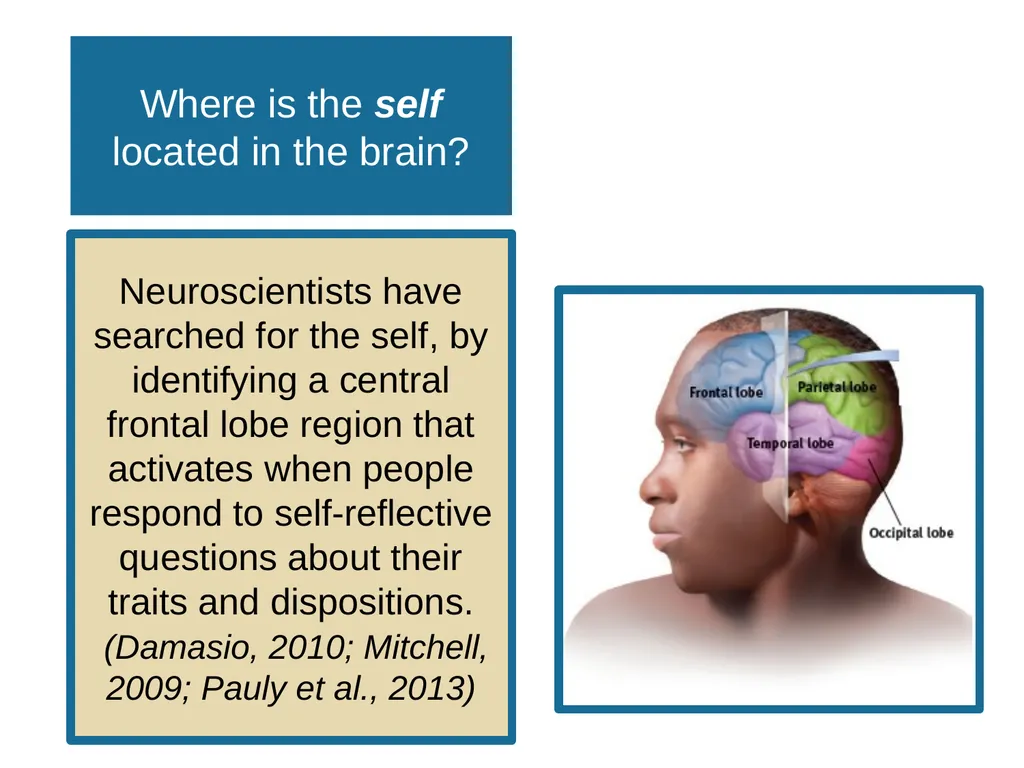
Where is the self located in the brain? Neuroscientists have searched for the self, by identifying a central frontal lobe region that activates when people respond to self-reflective questions about their traits and dispositions.
(Damasio, 2010; Mitchell, 2009; Pauly et al., 2013)<br>
(Damasio, 2010; Mitchell, 2009; Pauly et al., 2013)<br>
06
So, what is the self? in contemporary psychology, assumed to be the center of personality, the organizer of our
thoughts, feelings, and actions The self answers the question: “Who Am I?”<br>
thoughts, feelings, and actions The self answers the question: “Who Am I?”<br>
07
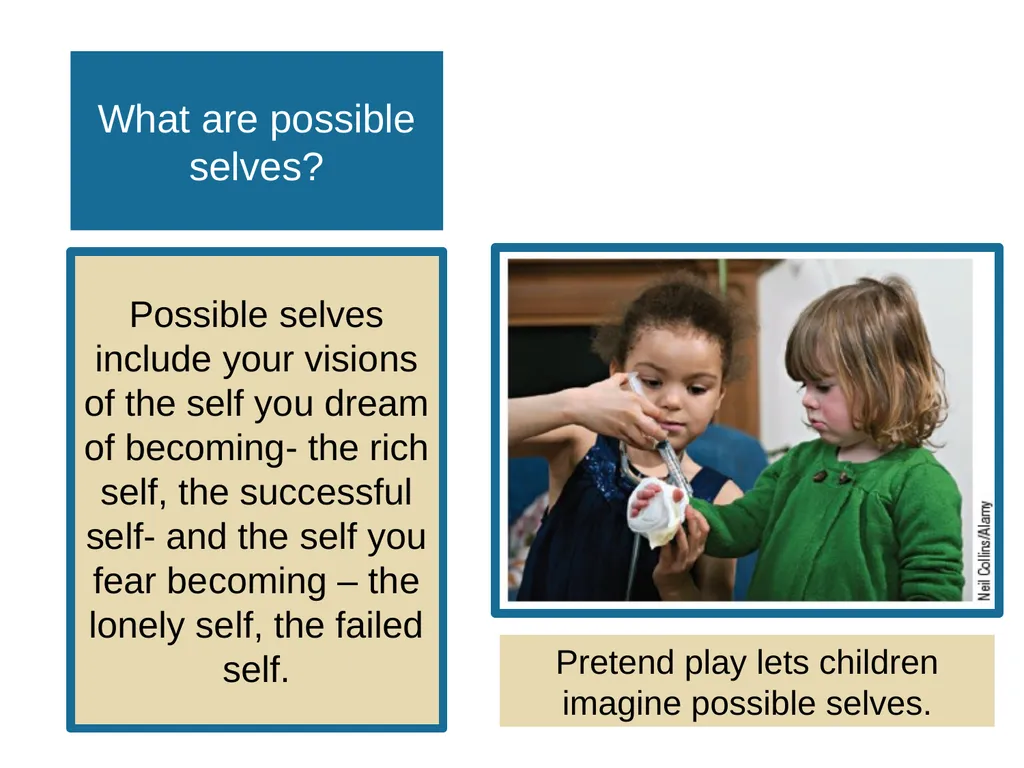
What are possible selves? Possible selves include your visions of the self you dream of becoming- the rich self, the successful self- and the self you fear becoming – the lonely self, the failed self. Pretend play lets children imagine possible selves.<br>
08
What is the spotlight effect? overestimating
others’ noticing and evaluating
our appearance, performance,
and blunders
(as if we presume a spotlight shines on us) Our self-focused perspective may motivate us, but it can also lead us to presume too readily
that others are noticing and evaluating us.<br>
others’ noticing and evaluating
our appearance, performance,
and blunders
(as if we presume a spotlight shines on us) Our self-focused perspective may motivate us, but it can also lead us to presume too readily
that others are noticing and evaluating us.<br>
09
What research has been conducted on the
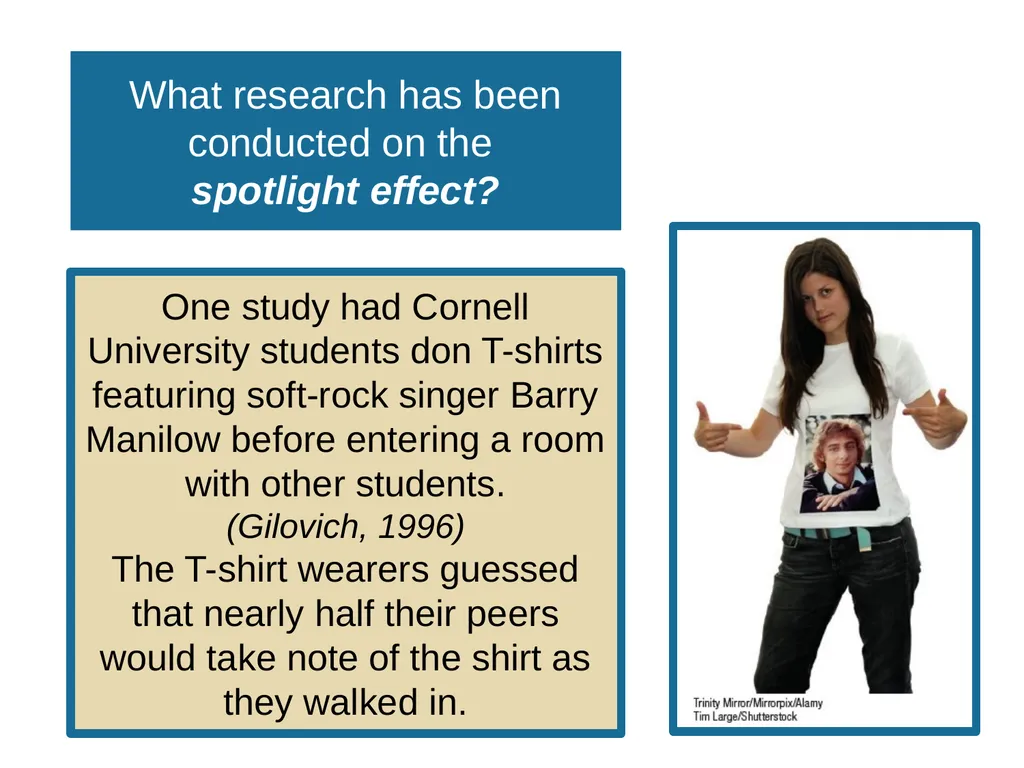
spotlight effect? One study had Cornell University students don T-shirts featuring soft-rock singer Barry Manilow before entering a room with other students.
(Gilovich, 1996)
The T-shirt wearers guessed that nearly half their peers would take note of the shirt as they walked in.<br>
(Gilovich, 1996)
The T-shirt wearers guessed that nearly half their peers would take note of the shirt as they walked in.<br>
10
What were the results of the study? In reality, only 23 percent of the students’ classmates noticed the Barry Manilow shirt.
The point to remember: We stand out less than we
imagine, even with dorky clothes and bad hair.
(Gilovich & Savitsky, 1999;
Savitsky et al., 2001)<br>
The point to remember: We stand out less than we
imagine, even with dorky clothes and bad hair.
(Gilovich & Savitsky, 1999;
Savitsky et al., 2001)<br>
11
What are self-esteem and
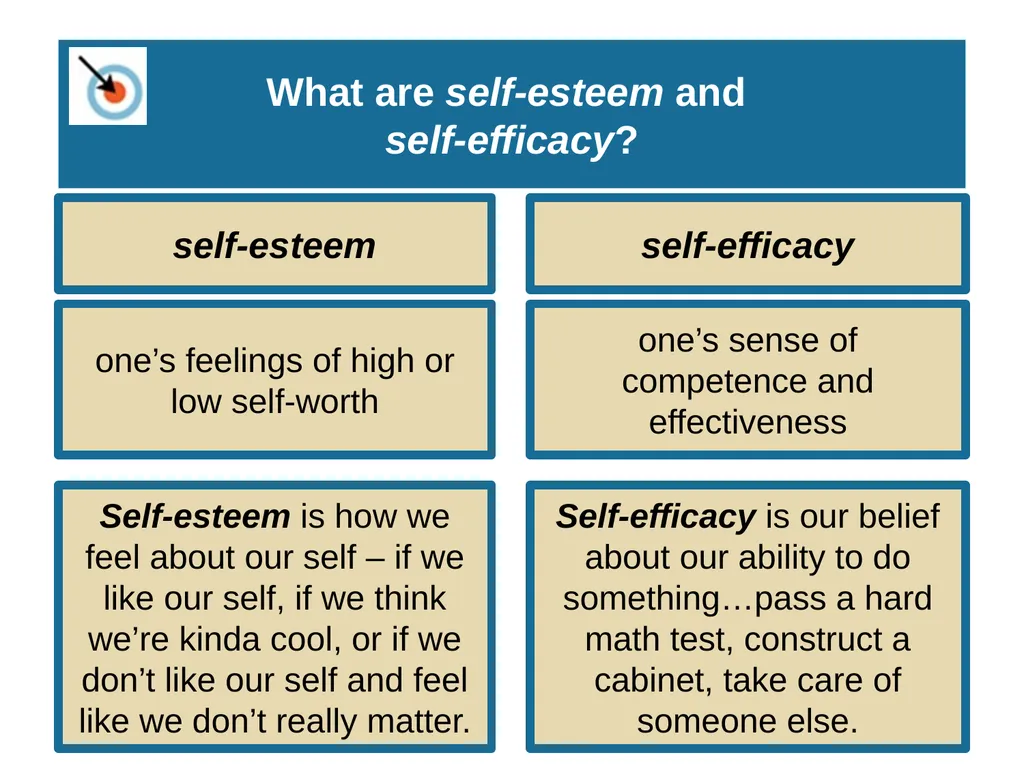
self-efficacy? self-esteem one’s feelings of high or low self-worth Self-esteem is how we feel about our self – if we like our self, if we think we’re kinda cool, or if we don’t like our self and feel like we don’t really matter. self-efficacy one’s sense of competence and effectiveness Self-efficacy is our belief about our ability to do something…pass a hard math test, construct a cabinet, take care of someone else.<br>
12
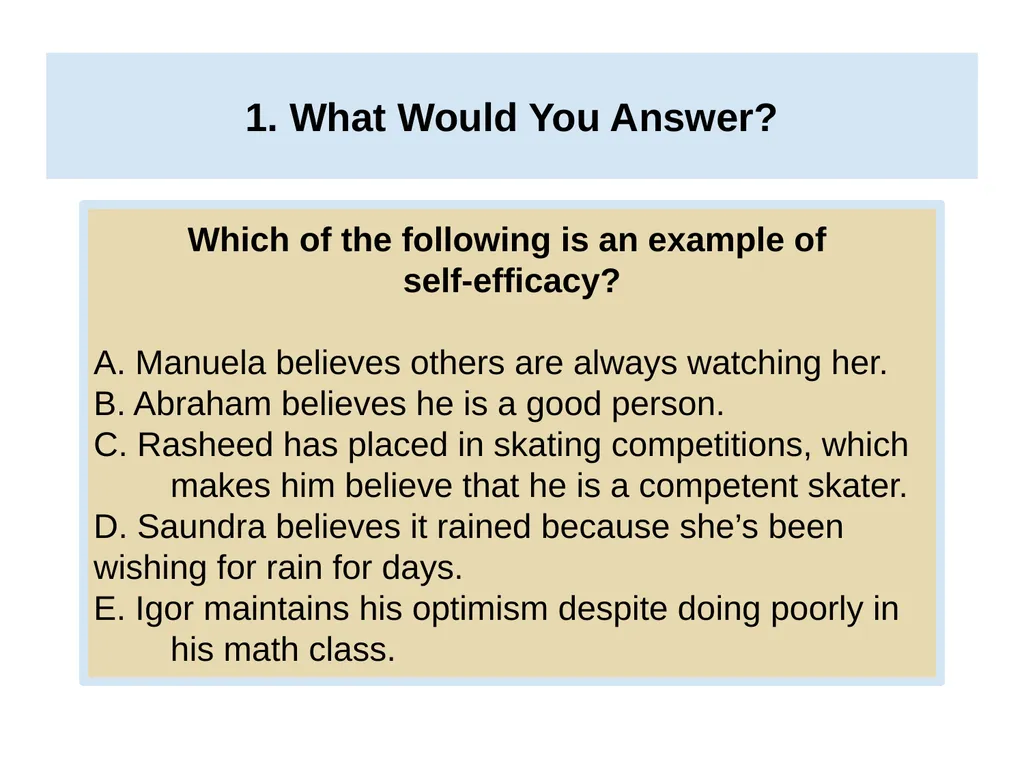
1. What Would You Answer? Which of the following is an example of
self-efficacy?
A. Manuela believes others are always watching her.
B. Abraham believes he is a good person.
C. Rasheed has placed in skating competitions, which
makes him believe that he is a competent skater.
D. Saundra believes it rained because she’s been wishing for rain for days.
E. Igor maintains his optimism despite doing poorly in
his math class.<br>
self-efficacy?
A. Manuela believes others are always watching her.
B. Abraham believes he is a good person.
C. Rasheed has placed in skating competitions, which
makes him believe that he is a competent skater.
D. Saundra believes it rained because she’s been wishing for rain for days.
E. Igor maintains his optimism despite doing poorly in
his math class.<br>
13
What are the benefits of high
self-esteem? People who feel good about themselves have fewer sleepless nights. People who have high self-esteem succumb less easily to pressures to conform. People with high self-esteem are more persistent at difficult tasks.<br>
14
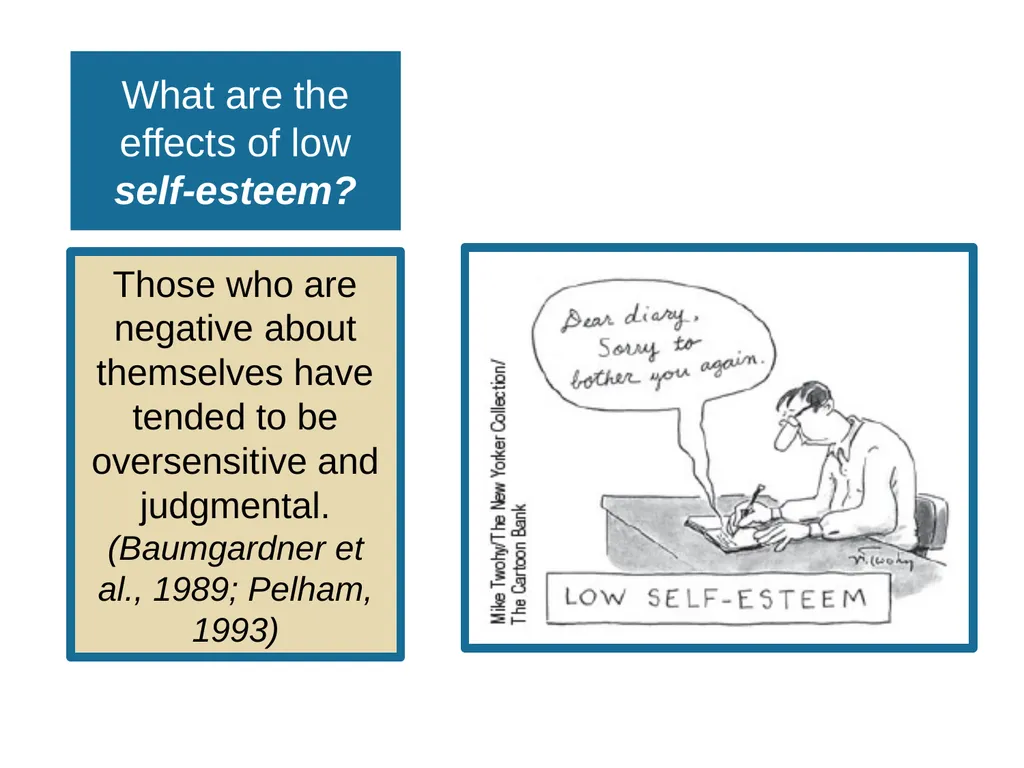
What are the effects of low self-esteem? Those who are negative about themselves have tended to be oversensitive and judgmental. (Baumgardner et
al., 1989; Pelham, 1993)<br>
al., 1989; Pelham, 1993)<br>
15
What is the drawback to
excessive optimism? Excessive optimism can blind us to real risks.
(Tenney et al., 2015)
More than 1000 studies have shown how our natural positive thinking bias can promote “an unrealistic
optimism about future life events”
(Shepperd et al., 2015; Weinstein, 1980).<br>
(Tenney et al., 2015)
More than 1000 studies have shown how our natural positive thinking bias can promote “an unrealistic
optimism about future life events”
(Shepperd et al., 2015; Weinstein, 1980).<br>
16
What does it mean to be blind to
one’s own incompetence? People often are most overconfident when most incompetent.
That, said Justin Kruger and David Dunning (1999), is because it often takes competence to recognize competence.
This “ignorance of one’s own incompetence” phenomenon—now called the Dunning-Kruger effect—can produce overconfidence.<br>
That, said Justin Kruger and David Dunning (1999), is because it often takes competence to recognize competence.
This “ignorance of one’s own incompetence” phenomenon—now called the Dunning-Kruger effect—can produce overconfidence.<br>
17
Which one sounds like you? Imagine dashing to class, hoping not to miss the first few minutes. But you arrive five minutes
late, huffing and puffing. As you sink into your seat, what sorts of thoughts go through
your mind?
Do you go through a negative door, thinking “I’m such a loser”?
Or do you go through a positive door, telling yourself “I really tried to get here on time”?<br>
late, huffing and puffing. As you sink into your seat, what sorts of thoughts go through
your mind?
Do you go through a negative door, thinking “I’m such a loser”?
Or do you go through a positive door, telling yourself “I really tried to get here on time”?<br>
18
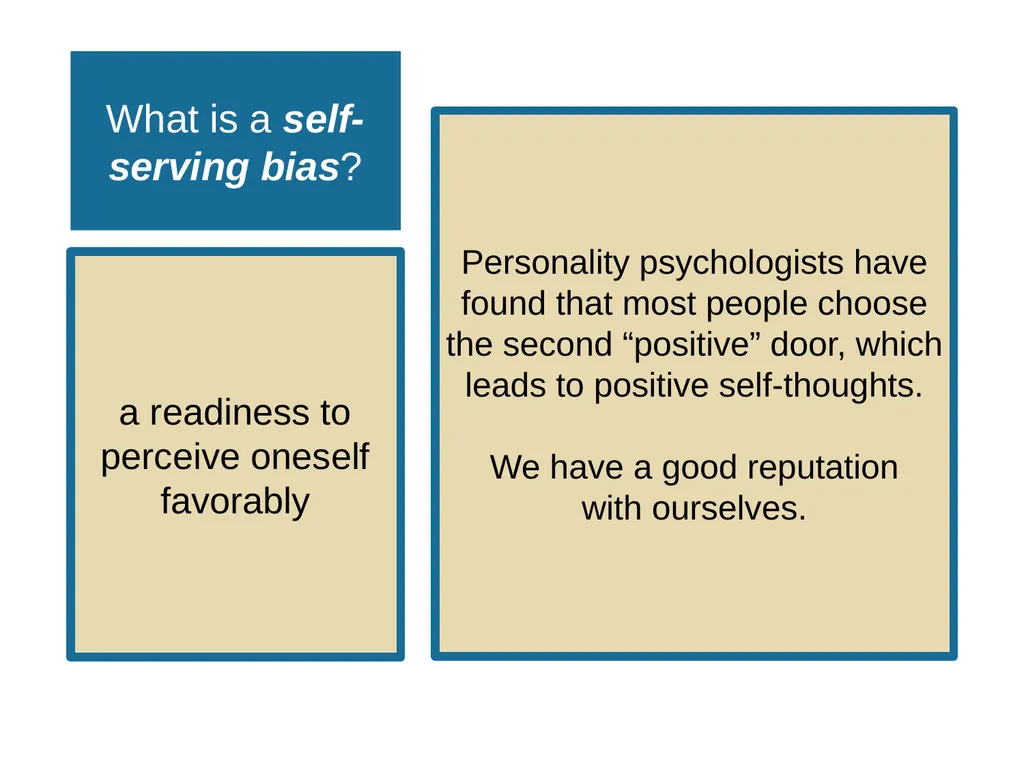
What is a self-serving bias? a readiness to
perceive oneself favorably Personality psychologists have found that most people choose the second “positive” door, which
leads to positive self-thoughts.
We have a good reputation
with ourselves.<br>
perceive oneself favorably Personality psychologists have found that most people choose the second “positive” door, which
leads to positive self-thoughts.
We have a good reputation
with ourselves.<br>
19
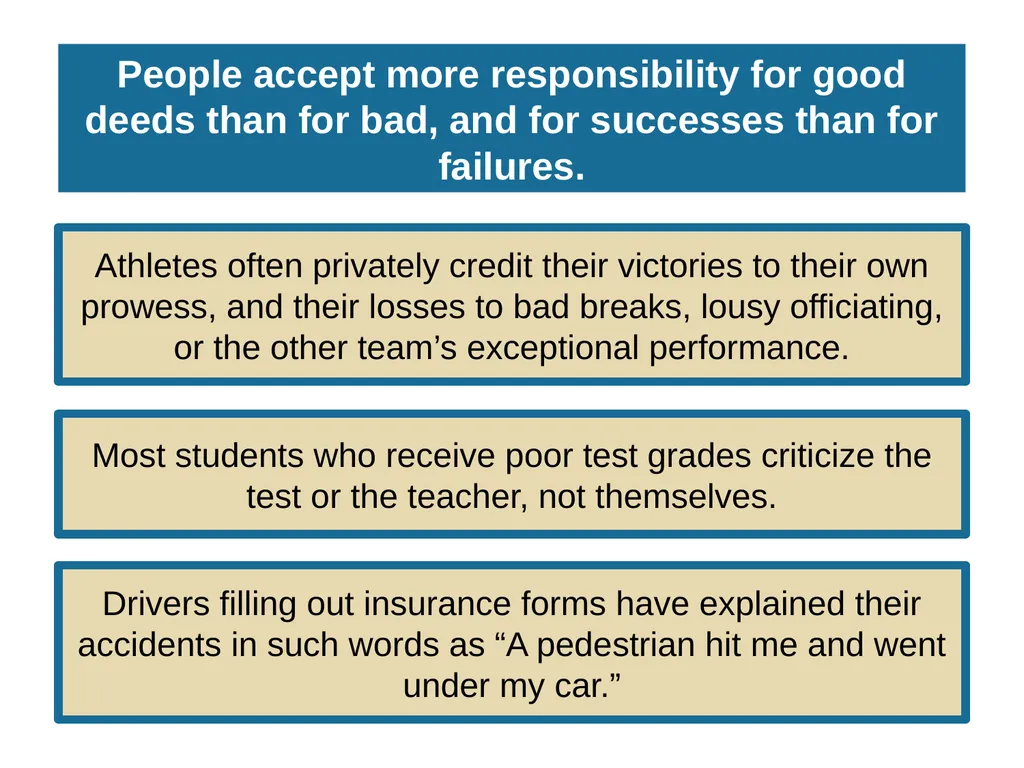
People accept more responsibility for good deeds than for bad, and for successes than for failures. Athletes often privately credit their victories to their own prowess, and their losses to bad breaks, lousy officiating, or the other team’s exceptional performance. Most students who receive poor test grades criticize the test or the teacher, not themselves. Drivers filling out insurance forms have explained their accidents in such words as “A pedestrian hit me and went under my car.”<br>
20
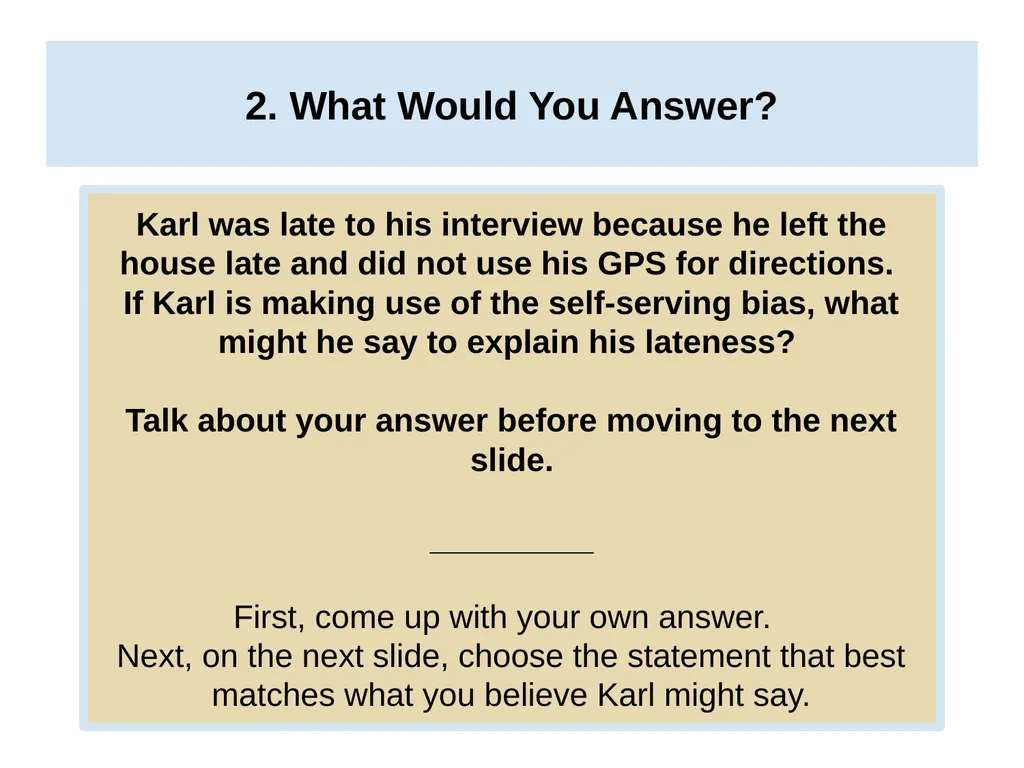
2. What Would You Answer? Karl was late to his interview because he left the house late and did not use his GPS for directions.
If Karl is making use of the self-serving bias, what might he say to explain his lateness?
Talk about your answer before moving to the next slide.
_________
First, come up with your own answer.
Next, on the next slide, choose the statement that best matches what you believe Karl might say.<br>
If Karl is making use of the self-serving bias, what might he say to explain his lateness?
Talk about your answer before moving to the next slide.
_________
First, come up with your own answer.
Next, on the next slide, choose the statement that best matches what you believe Karl might say.<br>
21
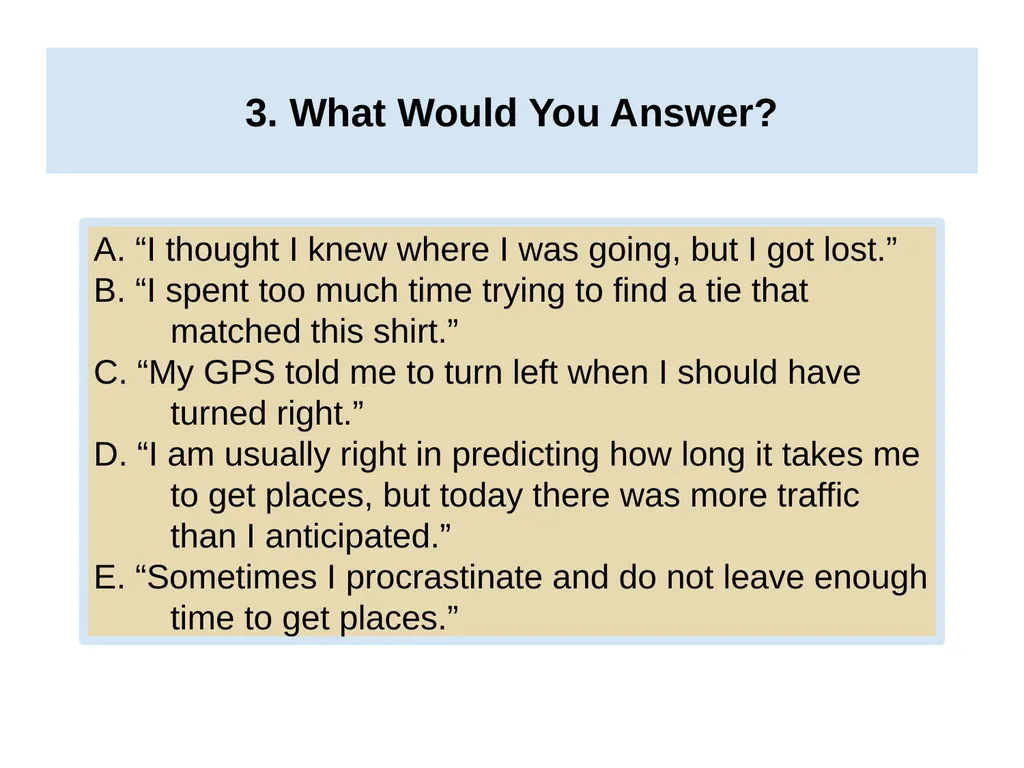
3. What Would You Answer? A. “I thought I knew where I was going, but I got lost.”
B. “I spent too much time trying to find a tie that
matched this shirt.”
C. “My GPS told me to turn left when I should have
turned right.”
D. “I am usually right in predicting how long it takes me
to get places, but today there was more traffic than I anticipated.”
E. “Sometimes I procrastinate and do not leave enough
time to get places.”<br>
B. “I spent too much time trying to find a tie that
matched this shirt.”
C. “My GPS told me to turn left when I should have
turned right.”
D. “I am usually right in predicting how long it takes me
to get places, but today there was more traffic than I anticipated.”
E. “Sometimes I procrastinate and do not leave enough
time to get places.”<br>
22
Most people see themselves as
better than average. In several studies, 90% of business managers and more than 90% of college professors also rated their performance as superior to that of their average peer. In Australia, 86% of people rate their job performance as above average, and only 1% as below average. In the U.S. National Survey of Families and Households, 49% of men said they provided half or more of the child care, though only 31% of their wives or partners
saw things that way. (Galinsky et al., 2008)<br>
saw things that way. (Galinsky et al., 2008)<br>
23
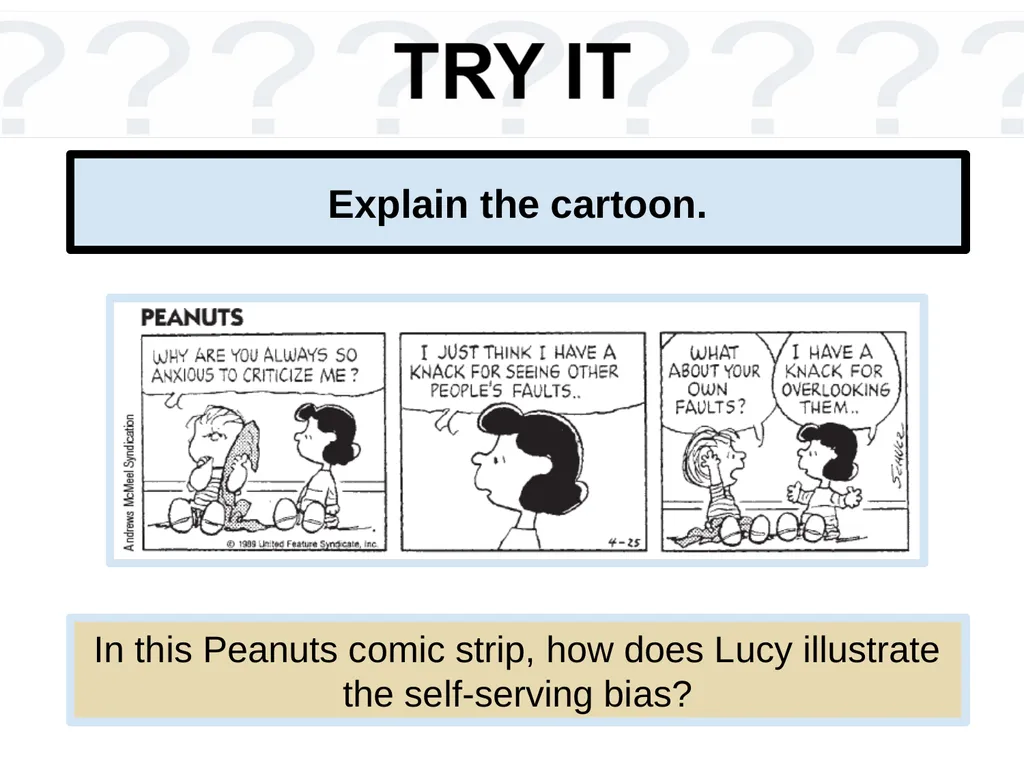
Explain the cartoon. In this Peanuts comic strip, how does Lucy illustrate the self-serving bias?<br>
24
What is narcissism? excessive self-love and self-absorption People with a narcissistic personality tend to be materialistic, desire fame, have inflated expectations, hook up more often without commitment, and gamble and cheat more—all of which have been increasing as narcissism has increased.<br>
25
What are some negative
effects of narcissism? Narcissistic people (more often men) forgive others less, take a game-playing approach to their romantic relationships, and engage in sexually forceful behavior. (Blinkhorn et al., 2015; Bushman et al., 2003; Grijalva et al., 2015) Narcissists crave adulation, are active on social media, and often become enraged when criticized.
(Geukes et al., 2016; Krizan & Johar, 2015; McCain & Campbell, 2017) Conceited, self-important individuals turn nasty toward those who puncture their bubbles of self-love.
(Baumeister, 2001)<br>
(Geukes et al., 2016; Krizan & Johar, 2015; McCain & Campbell, 2017) Conceited, self-important individuals turn nasty toward those who puncture their bubbles of self-love.
(Baumeister, 2001)<br>
26
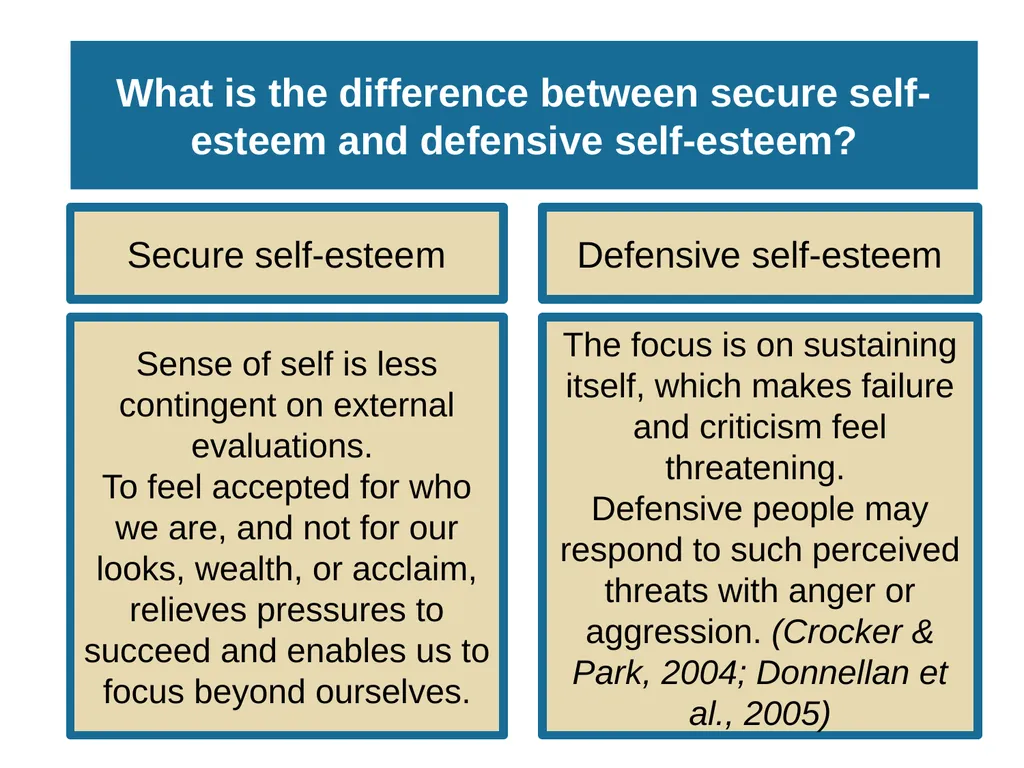
What is the difference between secure self-esteem and defensive self-esteem? Secure self-esteem Sense of self is less contingent on external evaluations.
To feel accepted for who we are, and not for our looks, wealth, or acclaim, relieves pressures to
succeed and enables us to focus beyond ourselves. Defensive self-esteem The focus is on sustaining itself, which makes failure and criticism feel threatening.
Defensive people may respond to such perceived threats with anger or aggression. (Crocker & Park, 2004; Donnellan et al., 2005)<br>
To feel accepted for who we are, and not for our looks, wealth, or acclaim, relieves pressures to
succeed and enables us to focus beyond ourselves. Defensive self-esteem The focus is on sustaining itself, which makes failure and criticism feel threatening.
Defensive people may respond to such perceived threats with anger or aggression. (Crocker & Park, 2004; Donnellan et al., 2005)<br>
27
What factors contribute to your identity? Imagine that someone ripped away your social connections, making you a solitary refugee
in a foreign land.
How much of your identity would remain intact? Discuss with your classmate.<br>
in a foreign land.
How much of your identity would remain intact? Discuss with your classmate.<br>
28
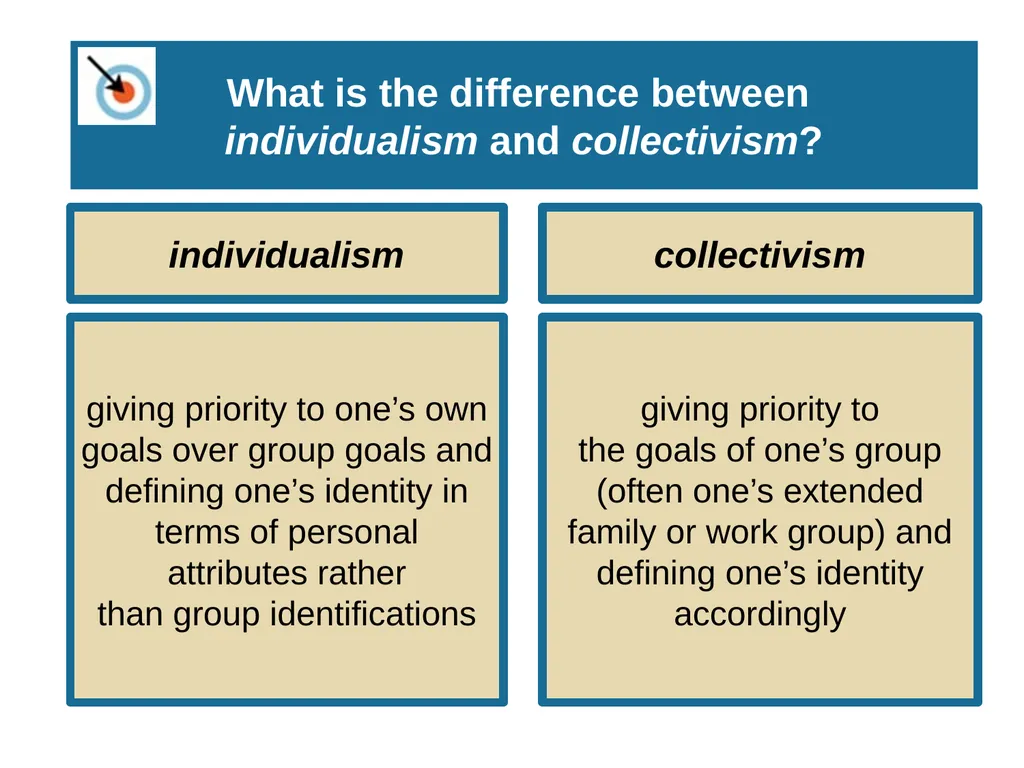
What is the difference between
individualism and collectivism? individualism giving priority to one’s own goals over group goals and defining one’s identity in terms of personal attributes rather
than group identifications collectivism giving priority to
the goals of one’s group (often one’s extended family or work group) and defining one’s identity
accordingly<br>
than group identifications collectivism giving priority to
the goals of one’s group (often one’s extended family or work group) and defining one’s identity
accordingly<br>
29
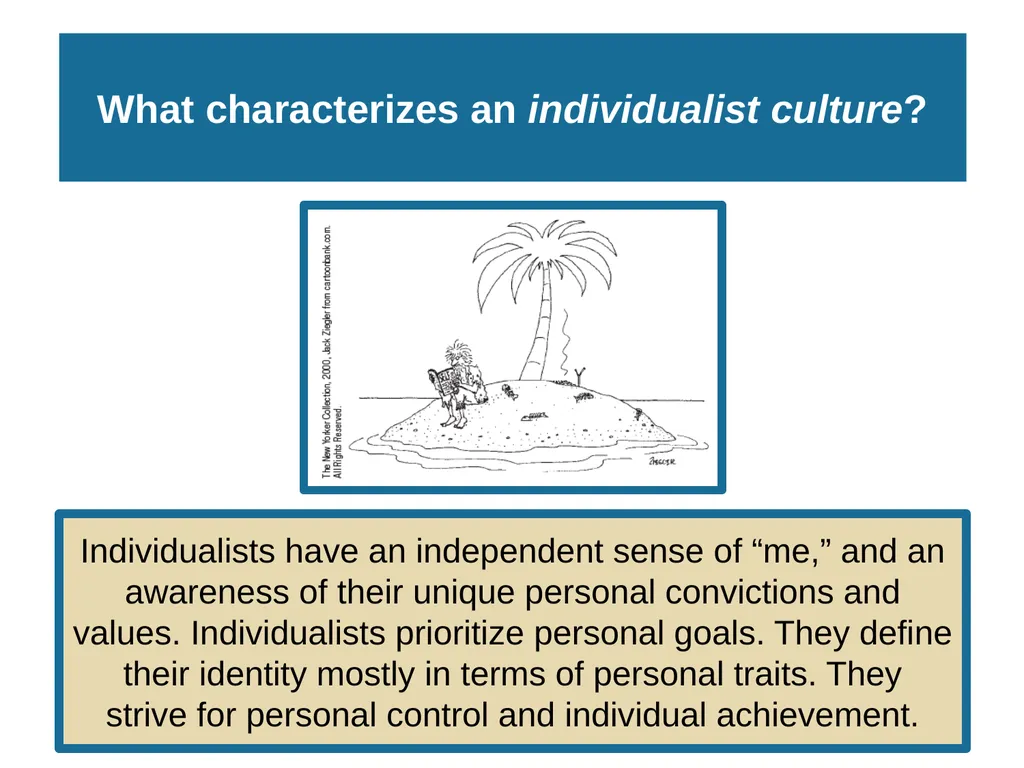
What characterizes an individualist culture? Individualists have an independent sense of “me,” and an awareness of their unique personal convictions and values. Individualists prioritize personal goals. They define their identity mostly in terms of personal traits. They
strive for personal control and individual achievement.<br>
strive for personal control and individual achievement.<br>
30
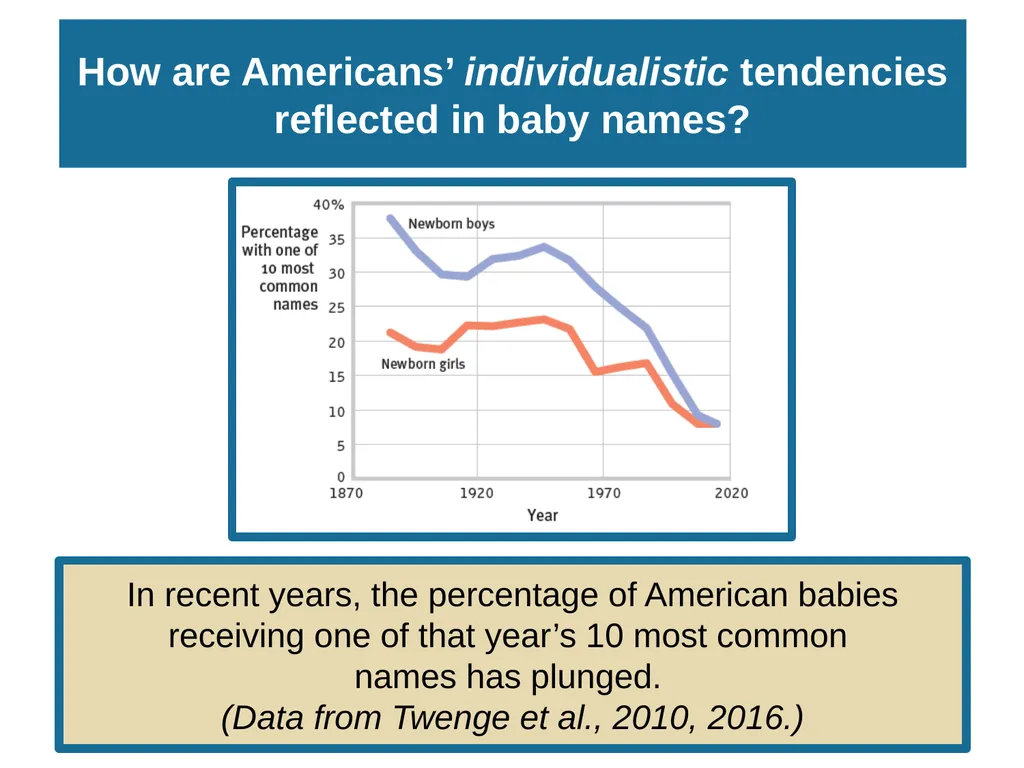
How are Americans’ individualistic tendencies reflected in baby names? In recent years, the percentage of American babies receiving one of that year’s 10 most common
names has plunged.
(Data from Twenge et al., 2010, 2016.)<br>
names has plunged.
(Data from Twenge et al., 2010, 2016.)<br>
31
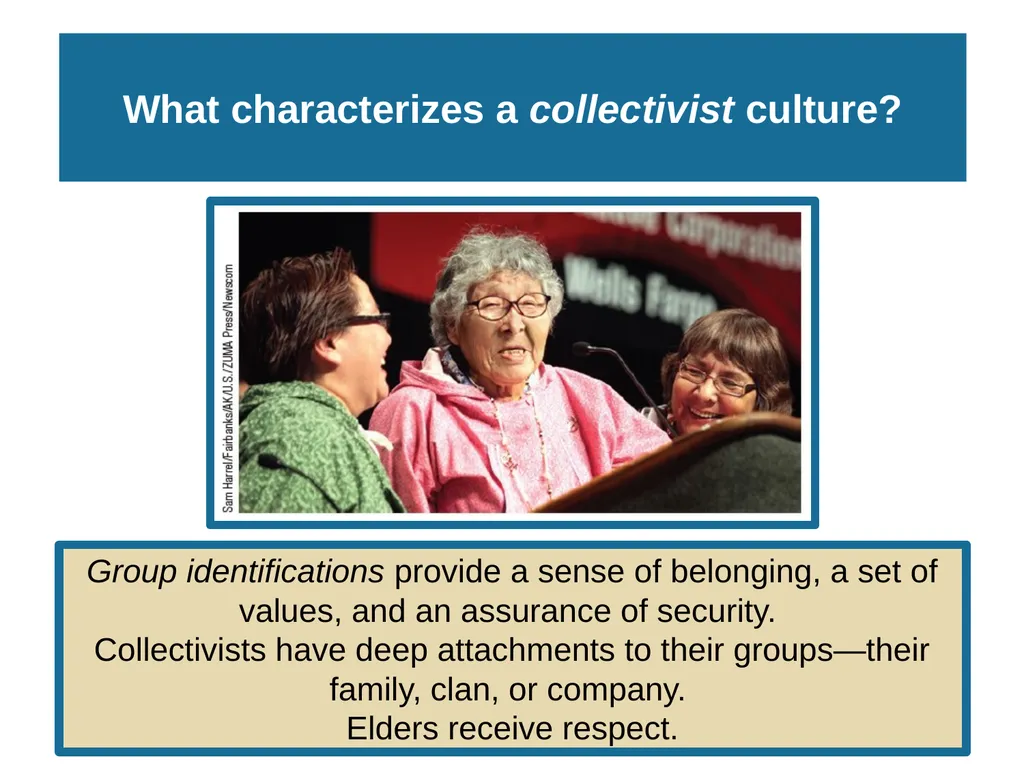
What characterizes a collectivist culture? Group identifications provide a sense of belonging, a set of values, and an assurance of security.
Collectivists have deep attachments to their groups—their family, clan, or company.
Elders receive respect.<br>
Collectivists have deep attachments to their groups—their family, clan, or company.
Elders receive respect.<br>
32
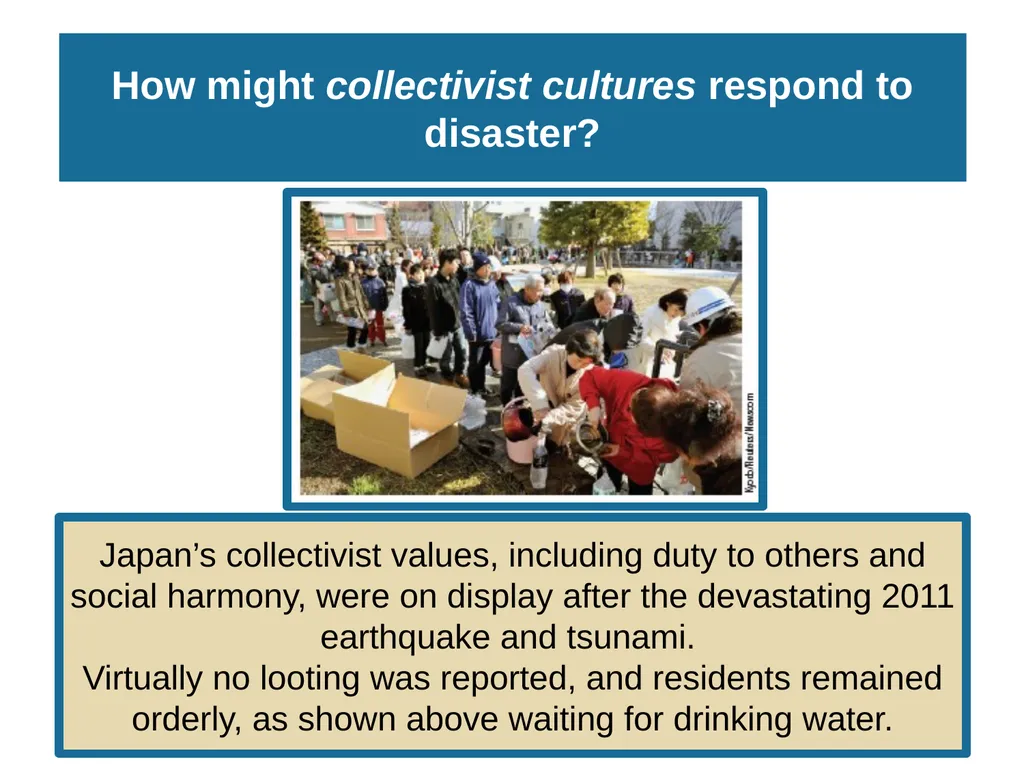
How might collectivist cultures respond to disaster? Japan’s collectivist values, including duty to others and social harmony, were on display after the devastating 2011
earthquake and tsunami.
Virtually no looting was reported, and residents remained orderly, as shown above waiting for drinking water.<br>
earthquake and tsunami.
Virtually no looting was reported, and residents remained orderly, as shown above waiting for drinking water.<br>
33
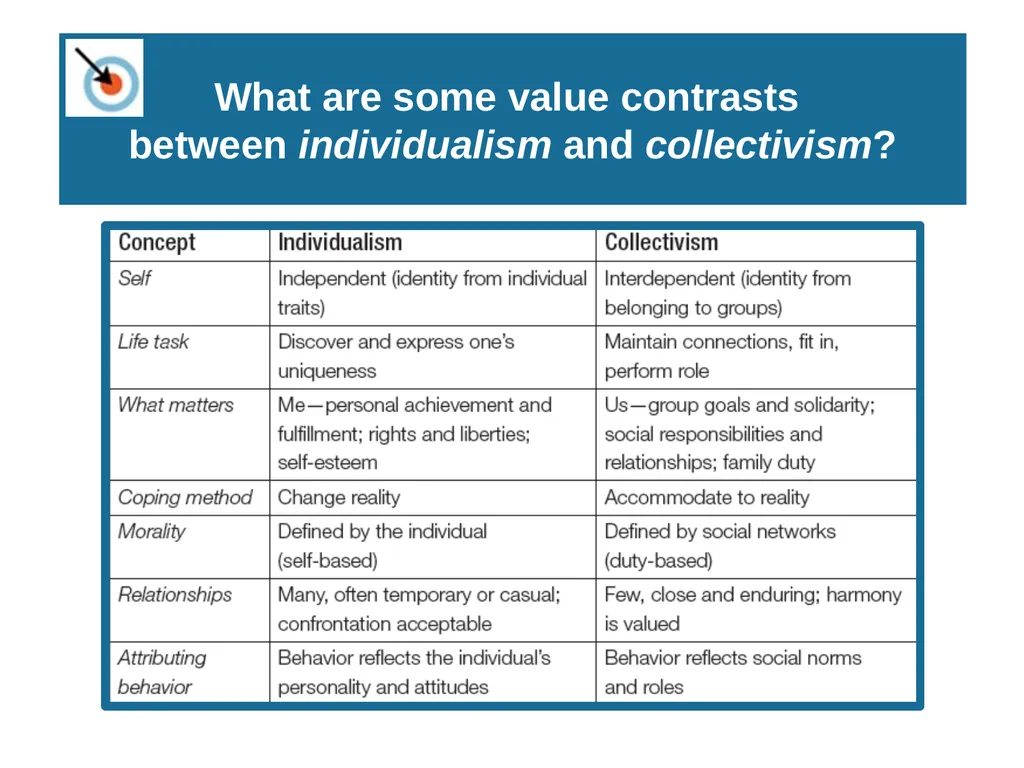
What are some value contrasts
between individualism and collectivism?<br>
34
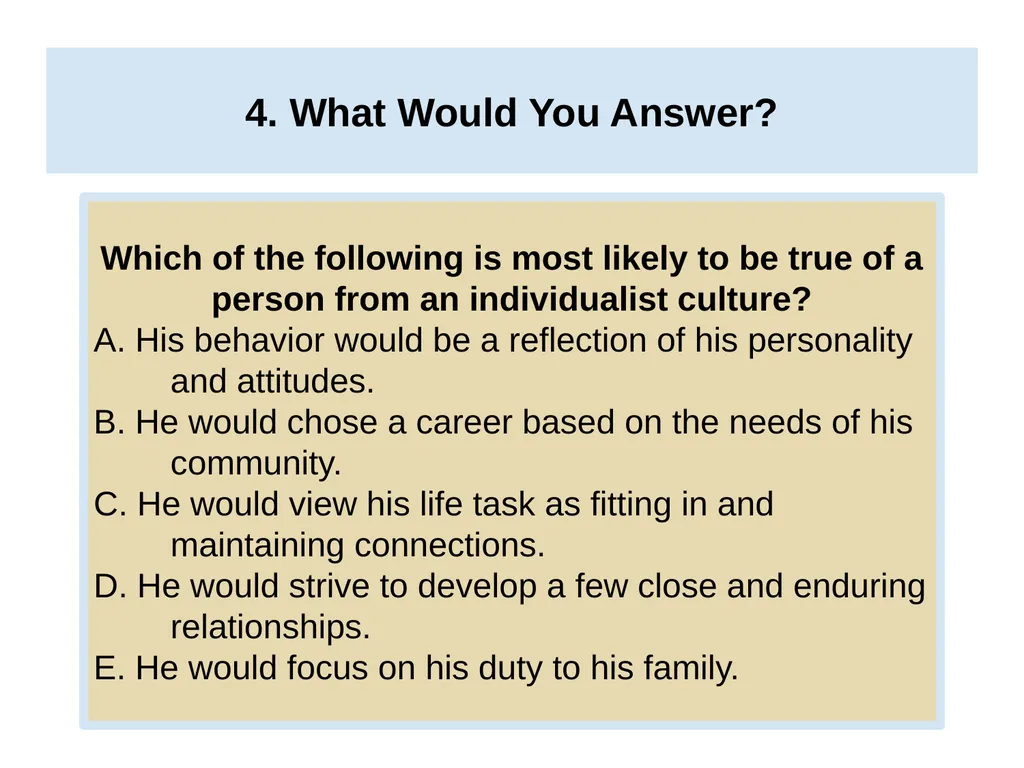
4. What Would You Answer? Which of the following is most likely to be true of a person from an individualist culture?
A. His behavior would be a reflection of his personality
and attitudes.
B. He would chose a career based on the needs of his
community.
C. He would view his life task as fitting in and
maintaining connections.
D. He would strive to develop a few close and enduring
relationships.
E. He would focus on his duty to his family.<br>
A. His behavior would be a reflection of his personality
and attitudes.
B. He would chose a career based on the needs of his
community.
C. He would view his life task as fitting in and
maintaining connections.
D. He would strive to develop a few close and enduring
relationships.
E. He would focus on his duty to his family.<br>
35
Applying the theories. In which type of culture were you raised?
Collectivist or individualist?
Do you fit completely in either category, or are you
sometimes a collectivist and sometimes an individualist? How much of your response is impacted by nature? How much by nurture?<br>
Collectivist or individualist?
Do you fit completely in either category, or are you
sometimes a collectivist and sometimes an individualist? How much of your response is impacted by nature? How much by nurture?<br>
36
Learning Target 59-1 Review Explain why psychology has generated so
much research on the self, and discuss
the importance of self-esteem to our well-being. The self is the center of personality, organizing our thoughts, feelings, and actions.
Considering possible selves helps motivate us toward positive development, but focusing too intensely on ourselves can lead to the spotlight effect.<br>
much research on the self, and discuss
the importance of self-esteem to our well-being. The self is the center of personality, organizing our thoughts, feelings, and actions.
Considering possible selves helps motivate us toward positive development, but focusing too intensely on ourselves can lead to the spotlight effect.<br>
37
Learning Target 59-1 Review cont. Explain why psychology has generated so
much research on the self, and discuss
the importance of self-esteem to our well-being. High self-esteem is beneficial, but unrealistically high self-esteem is dangerous (linked to aggressive behavior) and fragile.
Self-efficacy is our sense of competence.
Rather than unrealistically promoting children’s feelings of self-worth, it is better to reward their achievements, which leads to feelings of competence.<br>
much research on the self, and discuss
the importance of self-esteem to our well-being. High self-esteem is beneficial, but unrealistically high self-esteem is dangerous (linked to aggressive behavior) and fragile.
Self-efficacy is our sense of competence.
Rather than unrealistically promoting children’s feelings of self-worth, it is better to reward their achievements, which leads to feelings of competence.<br>
38
Learning Target 59-2 Review Describe how excessive optimism and
blindness to one’s own incompetence,
reveal the costs of self-esteem. Excessive optimism can lead to complacency and prevent us from seeing real risks, while blindness to one’s own incompetence may lead us to make the same mistakes repeatedly.<br>
blindness to one’s own incompetence,
reveal the costs of self-esteem. Excessive optimism can lead to complacency and prevent us from seeing real risks, while blindness to one’s own incompetence may lead us to make the same mistakes repeatedly.<br>
39
Learning Target 59-2 Review cont. Describe how self-serving bias
reveals the costs of self-esteem. Self-serving bias is our normal tendency to perceive ourselves favorably, as when viewing ourselves as better than average or when accepting credit for our successes but not blame for our failures.<br>
reveals the costs of self-esteem. Self-serving bias is our normal tendency to perceive ourselves favorably, as when viewing ourselves as better than average or when accepting credit for our successes but not blame for our failures.<br>
40
Learning Target 59-2 Review part III Explain how defensive
and secure self-esteem differ. Narcissism is excessive self-love and self-absorption.
Defensive self-esteem is fragile, focuses on sustaining itself, and views failure or criticism as a threat.
Secure self-esteem is sturdy, enabling us to feel accepted for who we are.<br>
and secure self-esteem differ. Narcissism is excessive self-love and self-absorption.
Defensive self-esteem is fragile, focuses on sustaining itself, and views failure or criticism as a threat.
Secure self-esteem is sturdy, enabling us to feel accepted for who we are.<br>
41
Learning Target 59-3 Review Discuss how individualist and collectivist
cultures differ in their values and goals. Although individuals vary, different cultures tend to emphasize either individualism or collectivism.
Cultures based on self-reliant individualism tend to value personal independence and individual achievement. They define identity in terms of self-esteem, personal goals and attributes, and personal rights and liberties.
Cultures based on socially connected collectivism tend to value group goals, social identity, and commitments. They define identity in terms of interdependence, tradition, and harmony.<br>
cultures differ in their values and goals. Although individuals vary, different cultures tend to emphasize either individualism or collectivism.
Cultures based on self-reliant individualism tend to value personal independence and individual achievement. They define identity in terms of self-esteem, personal goals and attributes, and personal rights and liberties.
Cultures based on socially connected collectivism tend to value group goals, social identity, and commitments. They define identity in terms of interdependence, tradition, and harmony.<br>