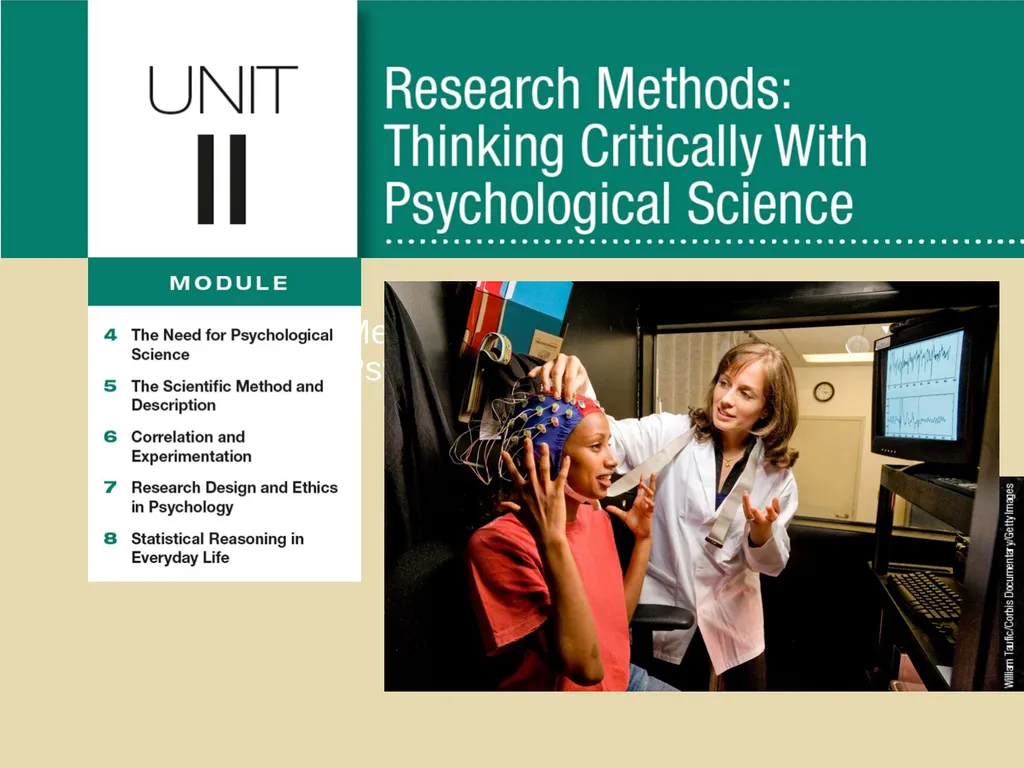
Unit 2 Research Methods: Thinking Critically With Psychological Science Module 4 The Need for Psychological Science Module 4 The Need for Psychological Science Learning Targets 4-1 How do hindsight bias, overconfidence, and the tendency to
"Unit 2 Research Methods: Thinking Critically With" is the property of its rightful owner. Permission is granted to
download and print the materials on this website for personal, non-commercial use only, and to display it
on your personal computer provided you do not modify the materials and that you retain all copyright
notices contained in the materials. By downloading content from our website, you accept the terms of this
agreement.
Presentation Transcript
01
Unit 2 Research Methods: Thinking Critically With Psychological Science<br>
02
Module 4 The Need for Psychological Science Module 4 The Need
for Psychological Science Learning Targets 4-1 How do hindsight bias, overconfidence, and the tendency to perceive order in random events illustrate why science-based answers are more valid than those based on common sense?<br>
03
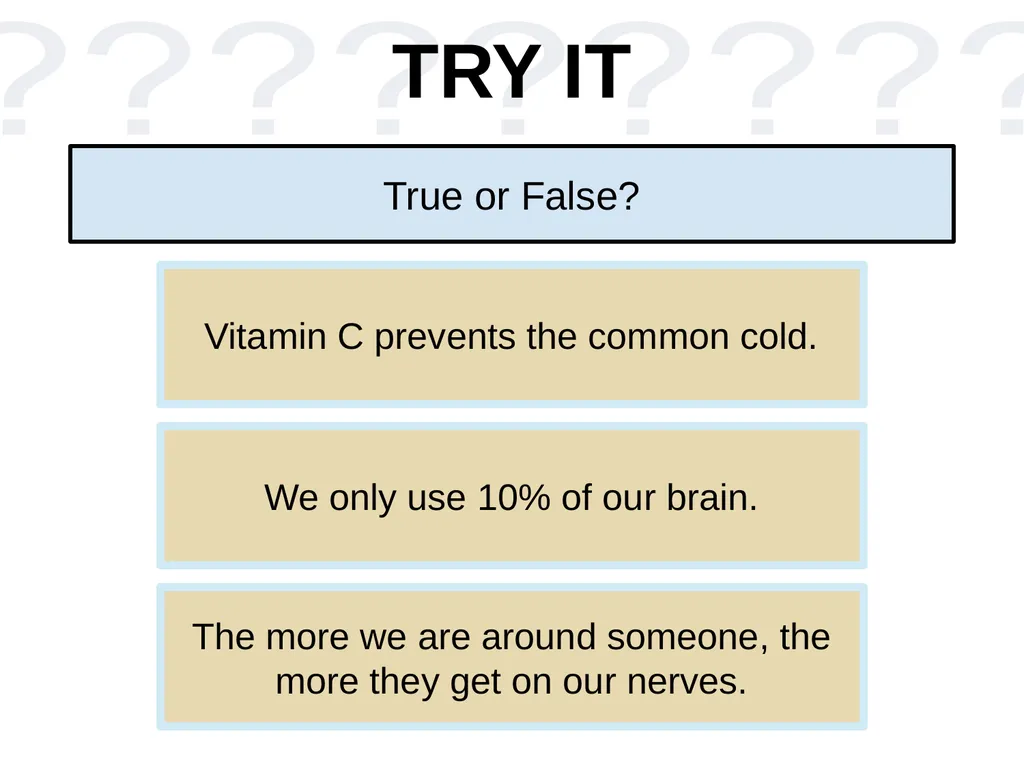
TRY IT True or False? Vitamin C prevents the common cold. We only use 10% of our brain. The more we are around someone, the more they get on our nerves.<br>
04
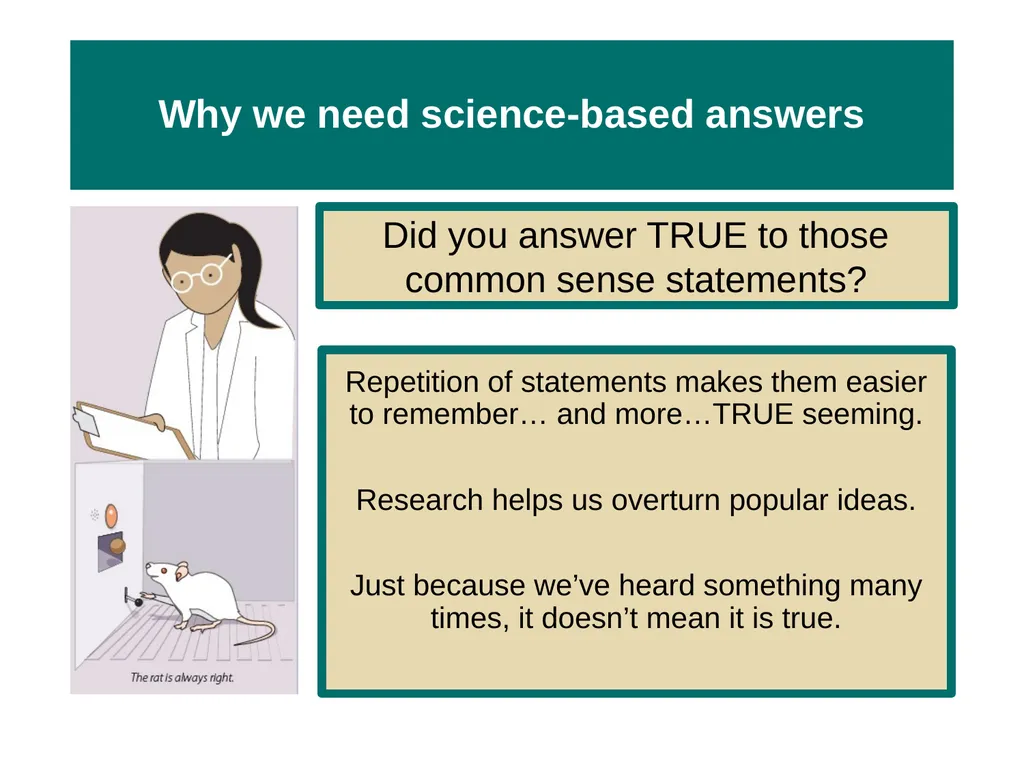
Why we need science-based answers Did you answer TRUE to those common sense statements? Repetition of statements makes them easier to remember… and more…TRUE seeming.
Research helps us overturn popular ideas.
Just because we’ve heard something many times, it doesn’t mean it is true.<br>
05
Three roadblocks to critical thinking Three roadblocks to critical thinking hindsight bias overconfidence perceiving patterns in random events<br>
06
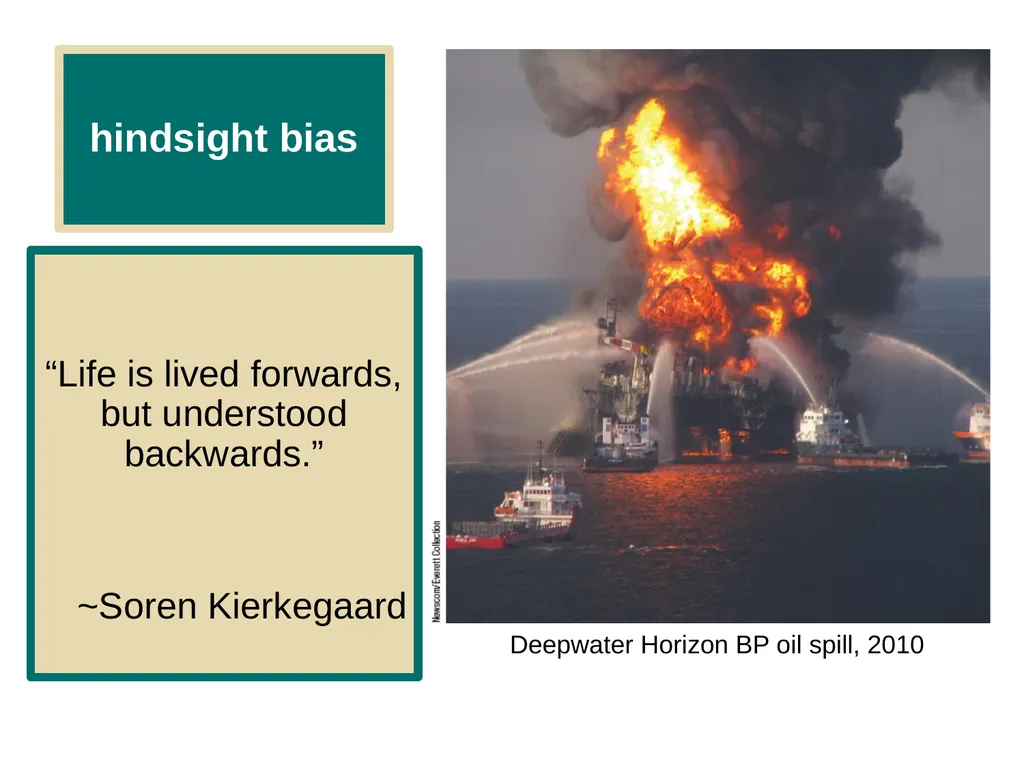
hindsight bias “Life is lived forwards, but understood backwards.”
~Soren Kierkegaard Deepwater Horizon BP oil spill, 2010<br>
07
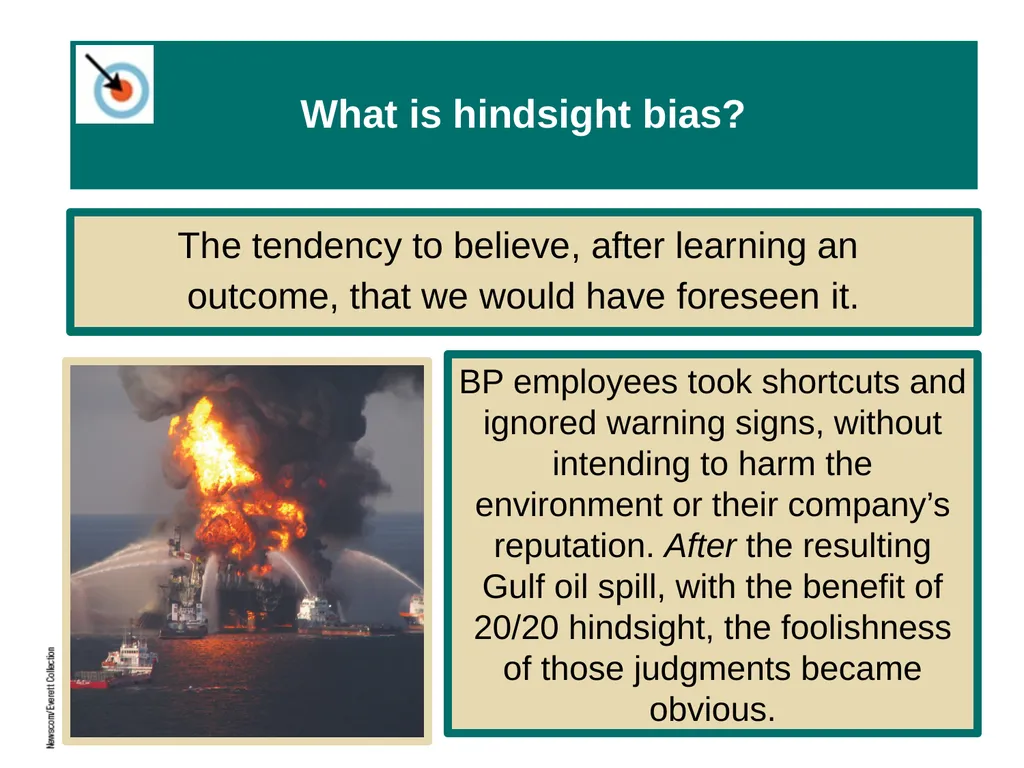
What is hindsight bias? The tendency to believe, after learning an
outcome, that we would have foreseen it. BP employees took shortcuts and
ignored warning signs, without intending to harm the environment or their company’s reputation. After the resulting Gulf oil spill, with the benefit of 20/20 hindsight, the foolishness of those judgments became obvious.<br>
08
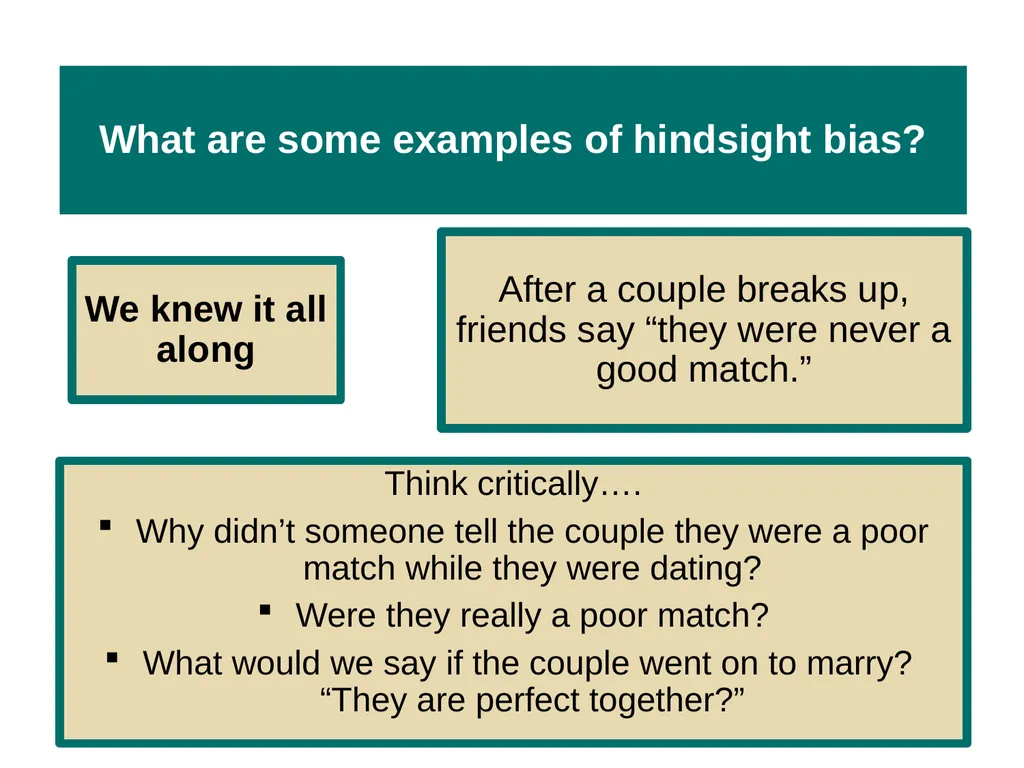
What are some examples of hindsight bias? We knew it all along After a couple breaks up, friends say “they were never a good match.” Think critically….
Why didn’t someone tell the couple they were a poor match while they were dating?
Were they really a poor match?
What would we say if the couple went on to marry? “They are perfect together?”<br>
09
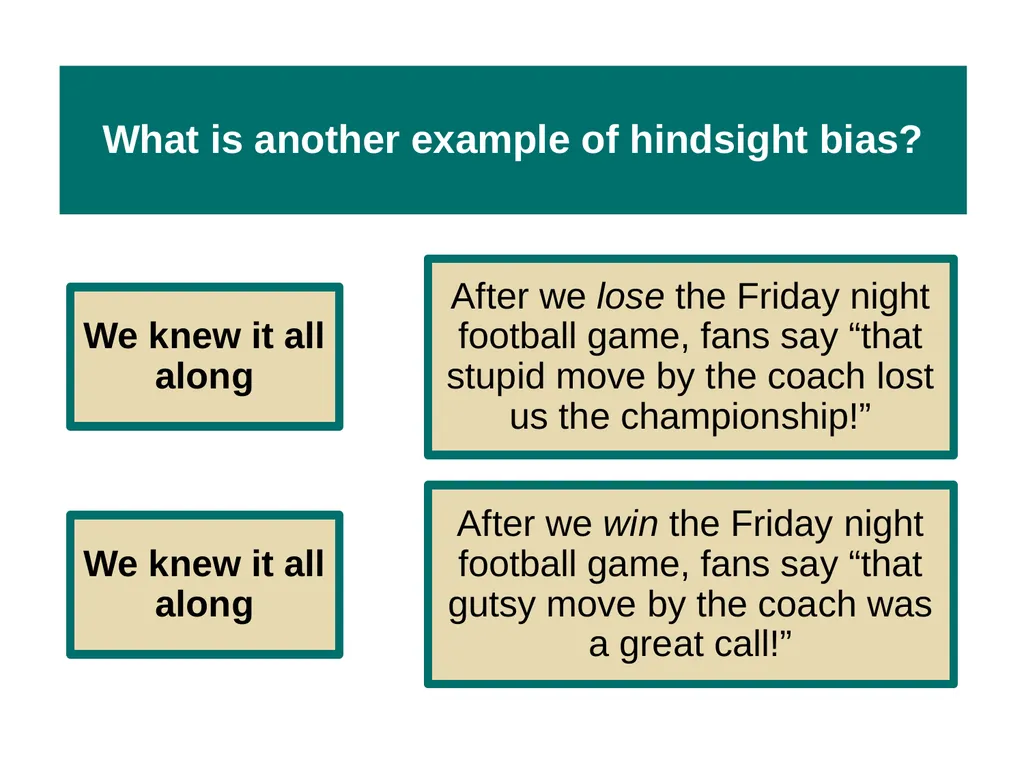
What is another example of hindsight bias? We knew it all along After we lose the Friday night football game, fans say “that stupid move by the coach lost us the championship!” We knew it all along After we win the Friday night football game, fans say “that gutsy move by the coach was a great call!”<br>
10
Let’s look at the research on hindsight bias… Separation weakens
romantic attraction. When presented with the statement above, most find this “true” statement unsurprising.
“Out of sight, out of mind” Separation strengthens romantic attraction. When presented with the statement above, most find
this “true” statement unsurprising.
“Absence makes the heart grow fonder”<br>
11
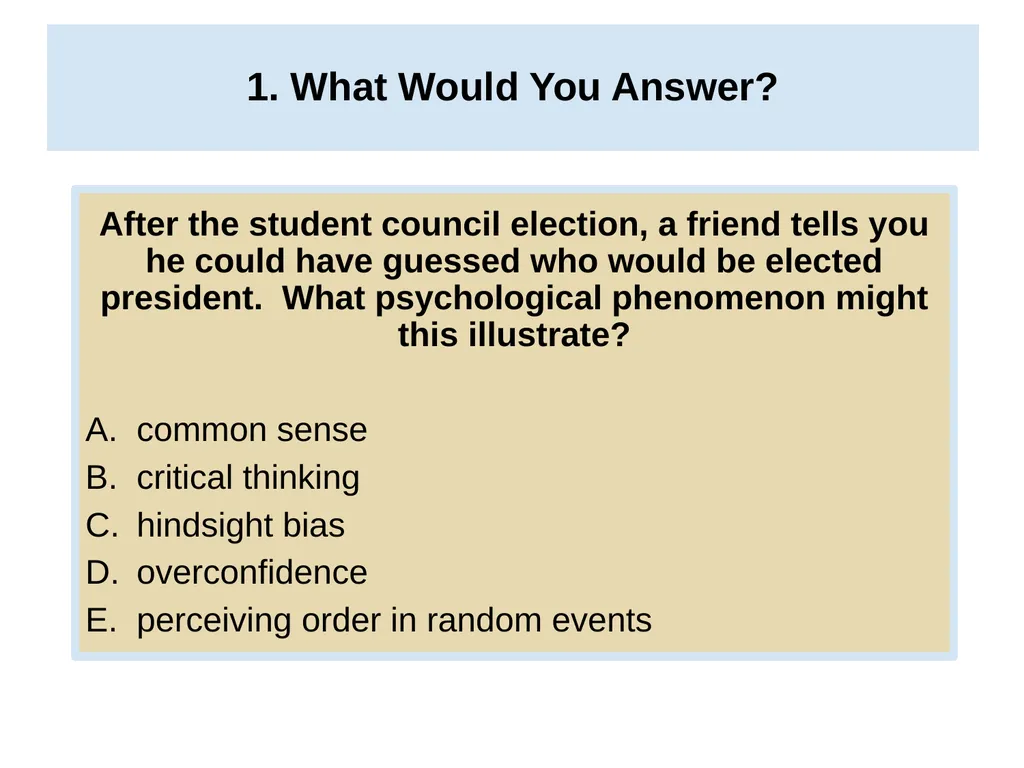
What Would You Answer? 1. What Would You Answer? After the student council election, a friend tells you he could have guessed who would be elected president. What psychological phenomenon might this illustrate?
common sense
critical thinking
hindsight bias
overconfidence
perceiving order in random events<br>
12
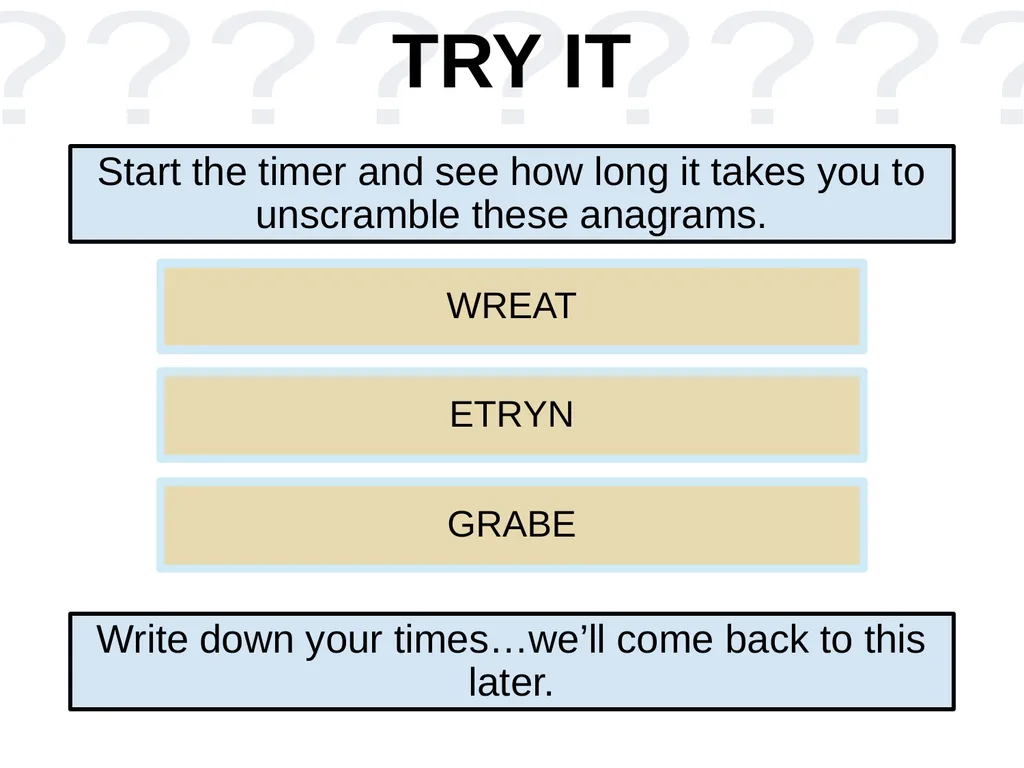
TRY IT Start the timer and see how long it takes you to unscramble these anagrams. WREAT ETRYN GRABE Write down your times…we’ll come back to this later.<br>
13
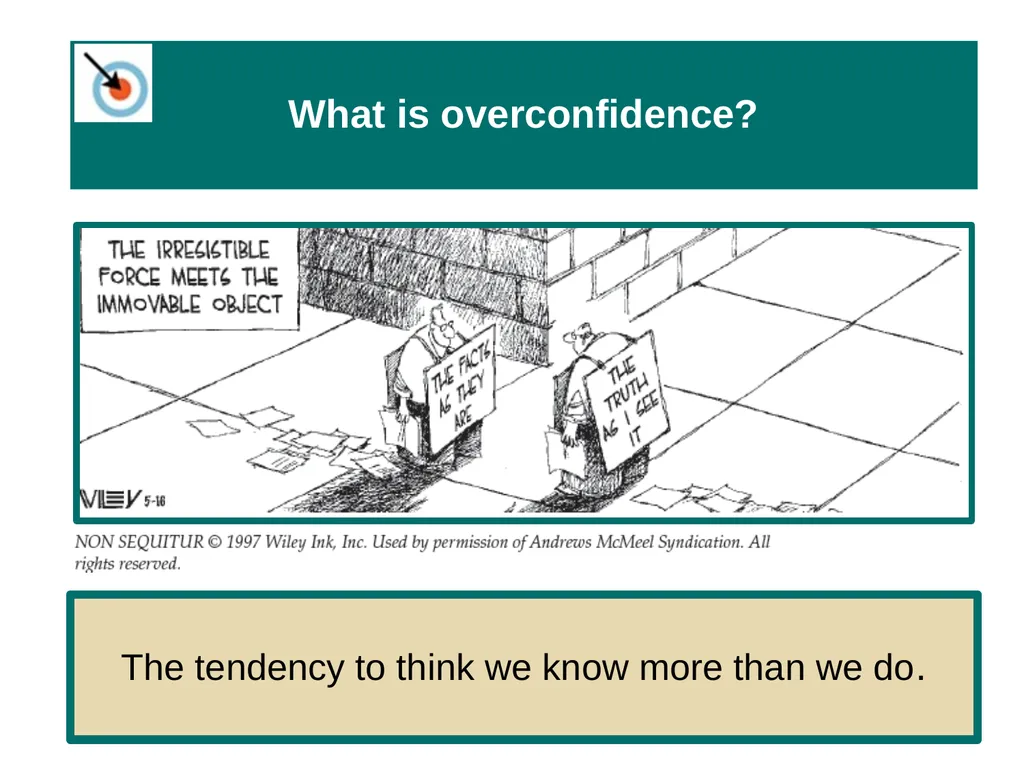
What is overconfidence? The tendency to think we know more than we do.<br>
14
Let’s look at the research on overconfidence… solution time without answers given The average problem solver spends 3 minutes. solution time estimate with answers given The estimate of how long it might have taken …
10 seconds. Think critically…
How long did it take YOU to unscramble those anagrams?
Do your times match up with what researchers found?
Why do you think subjects estimated a much shorter time when they could also see the answers?
How does this demonstrate overconfidence?<br>
15
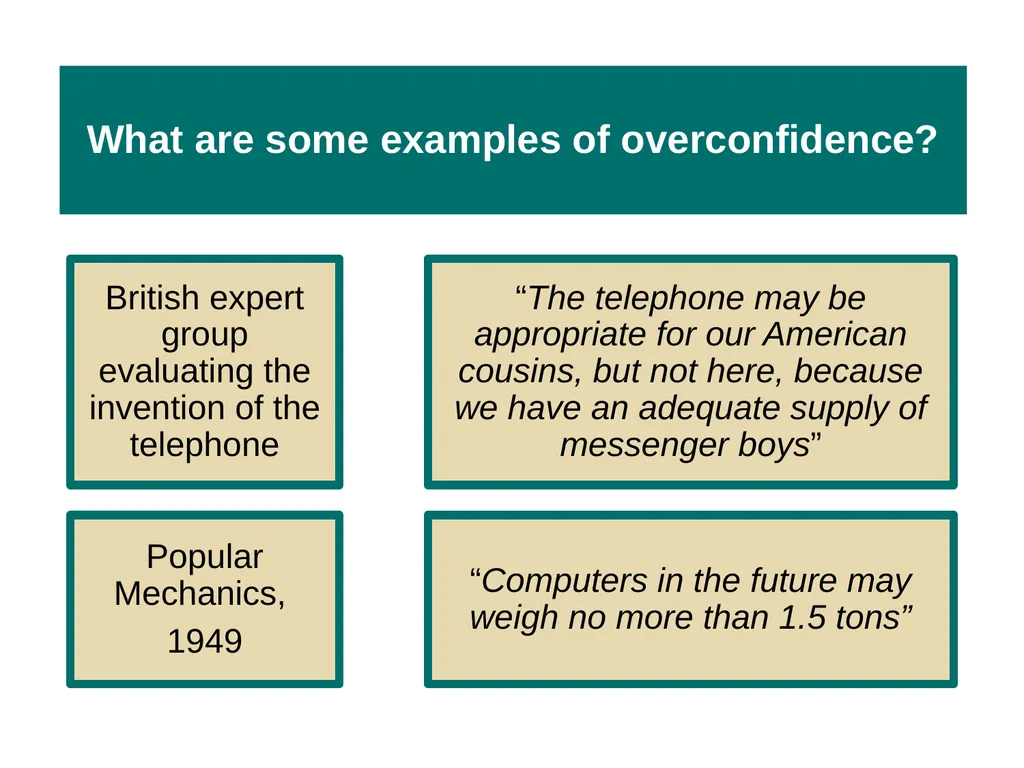
What are some examples of overconfidence? British expert group evaluating the invention of the telephone “The telephone may be appropriate for our American cousins, but not here, because we have an adequate supply of messenger boys” Popular Mechanics,
1949 “Computers in the future may weigh no more than 1.5 tons”<br>
16
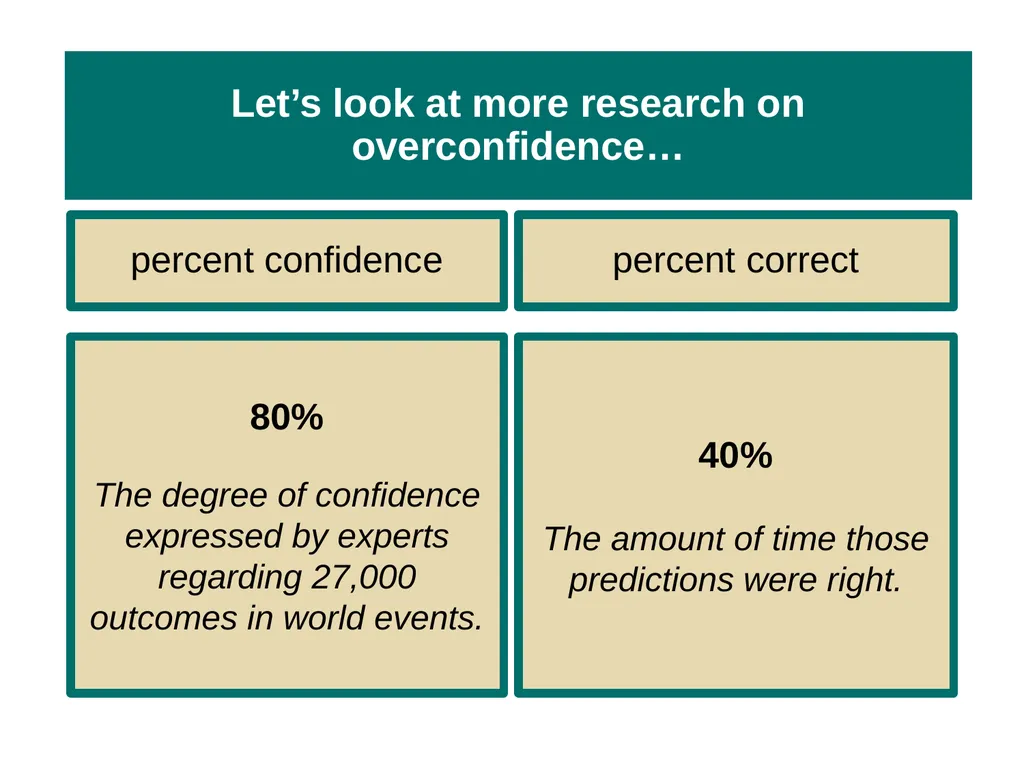
Let’s look at more research on overconfidence… percent confidence 80%
The degree of confidence expressed by experts regarding 27,000 outcomes in world events. percent correct 40%
The amount of time those predictions were right.<br>
17
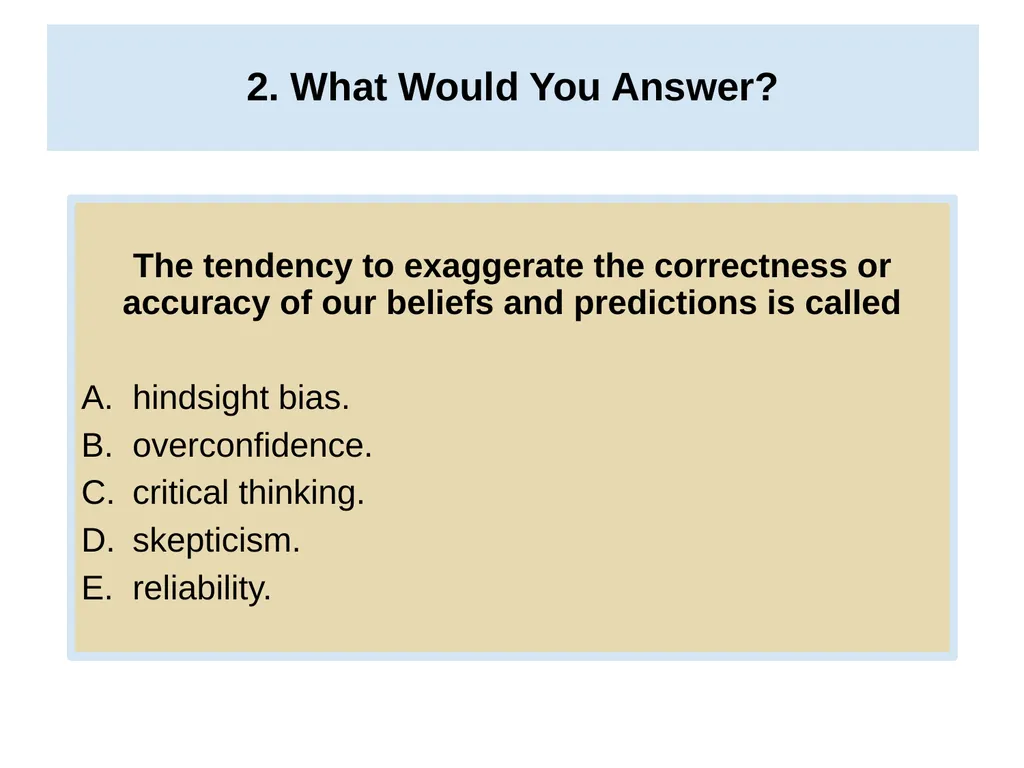
2. What Would You Answer? 2. What Would You Answer? The tendency to exaggerate the correctness or accuracy of our beliefs and predictions is called
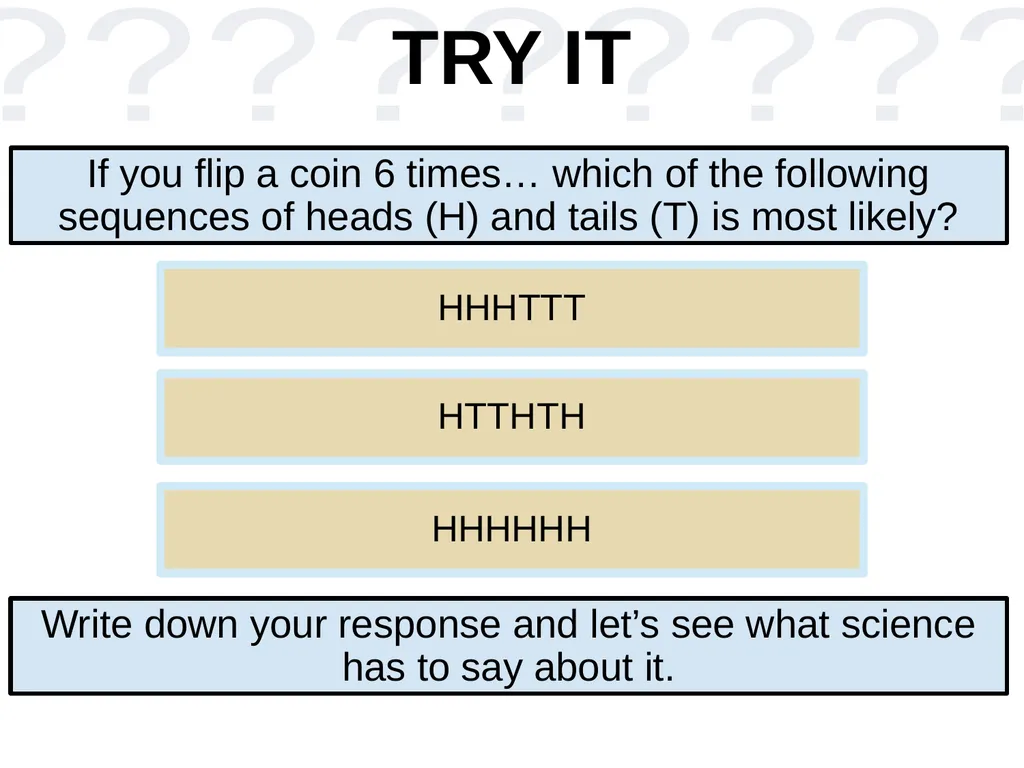
TRY IT If you flip a coin 6 times… which of the following sequences of heads (H) and tails (T) is most likely? HHHTTT HTTHTH HHHHHH Write down your response and let’s see what science has to say about it.<br>
19
Let’s look at the research on perceived order in random events… Most people believe HTTHTH is most likely. Actually…
all 3 are equally likely … or unlikely. Random sequences often don’t look random.
Fraud experts can detect embezzlers who are trying to make their withdrawals look random.
“With a large enough sample, any outrageous thing is likely to happen.”
Persi Diaconis and
Frederick Mosteller,1989
statisticians<br>
20
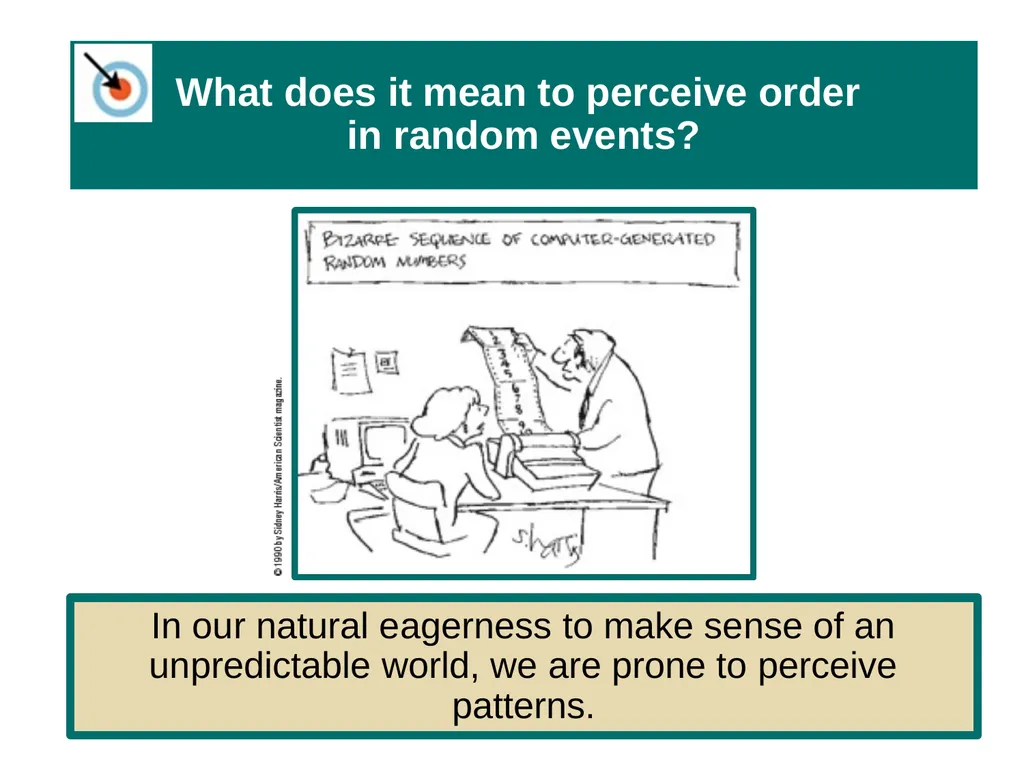
What does it mean to perceive order in random events? In our natural eagerness to make sense of an unpredictable world, we are prone to perceive patterns.<br>
21
3. What Would You Answer? 3. What Would You Answer? A local basketball team has won three championships in a row and is on a winning streak going into the final game.
Explain how their fans might use the following to explain a loss in the final game:
Hindsight bias
Overconfidence
The tendency to perceive patterns in random events<br>
22
Learning Target 4-1 Review How do hindsight bias,
overconfidence, and the tendency to
perceive order in random events illustrate why science-based answers are more valid than those based on common sense? Hindsight bias, overconfidence and our eagerness to perceive patterns in random events, lead us to overestimate the weight of commonsense thinking.
Scientific inquiry can help us overcome such biases and shortcomings.<br>