Unit 3 Biological Bases of Behavior Module 15 Evolutionary Psychology: Understanding Human Nature Learning Targets 15-2 Discuss evolutionary explanations for male-female differences in sexuality and mating preferences. 15-1 Describe
"Unit 3 Biological Bases of Behavior Module 15" is the property of its rightful owner. Permission is granted to
download and print the materials on this website for personal, non-commercial use only, and to display it
on your personal computer provided you do not modify the materials and that you retain all copyright
notices contained in the materials. By downloading content from our website, you accept the terms of this
agreement.
Presentation Transcript
01
Unit 3 Biological Bases of Behavior<br>
02
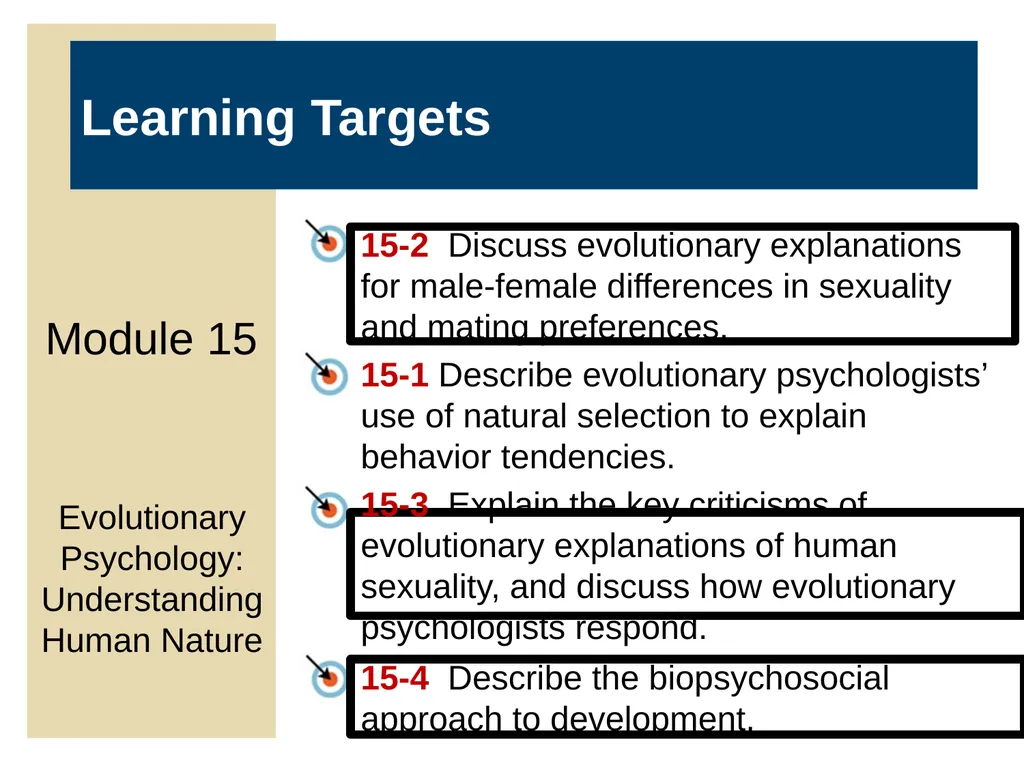
Module 15 Evolutionary Psychology: Understanding Human Nature Learning Targets 15-2 Discuss evolutionary explanations for male-female differences in sexuality and mating preferences. 15-1 Describe evolutionary psychologists’ use of natural selection to explain behavior tendencies. 15-3 Explain the key criticisms of evolutionary explanations of human sexuality, and discuss how evolutionary psychologists respond. 15-4 Describe the biopsychosocial approach to development.<br>
03
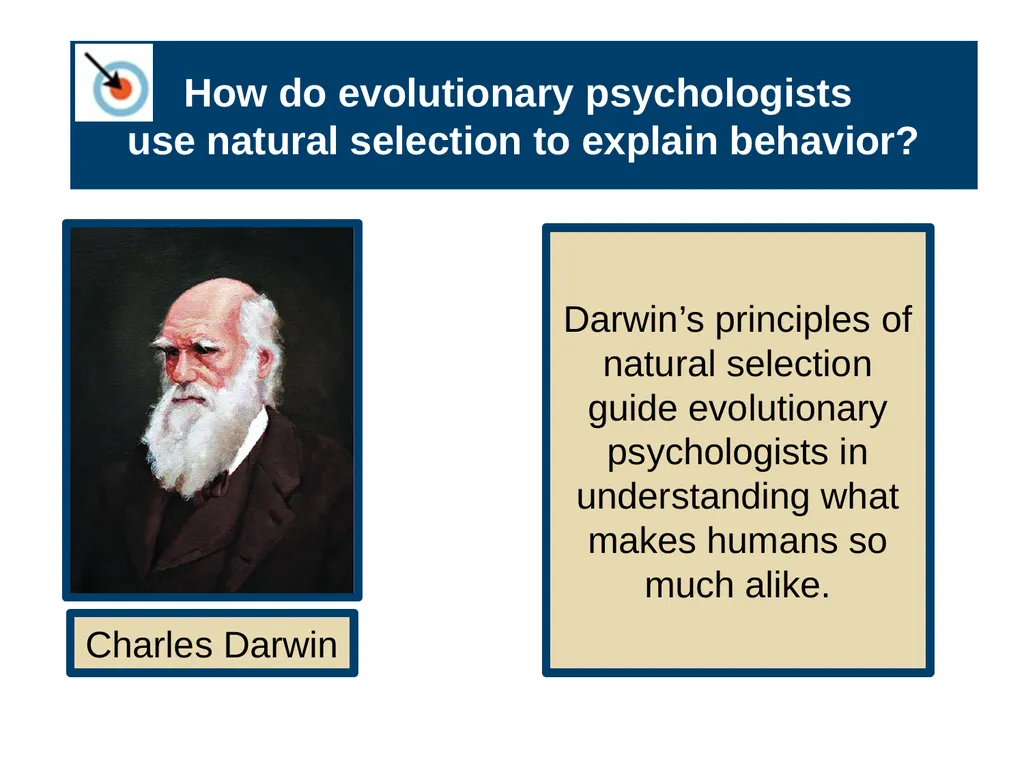
How do evolutionary psychologists use natural selection to explain behavior? Darwin’s principles of natural selection guide evolutionary psychologists in understanding what makes humans so much alike. Charles Darwin<br>
04
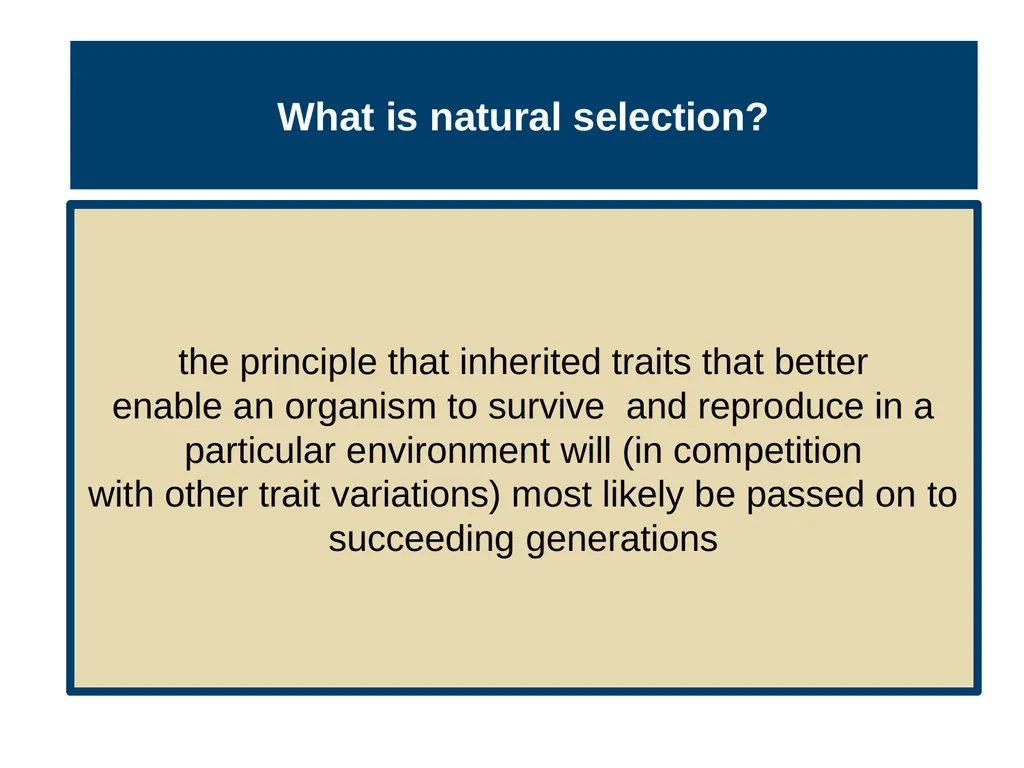
What is natural selection? the principle that inherited traits that better
enable an organism to survive and reproduce in a particular environment will (in competition
with other trait variations) most likely be passed on to succeeding generations<br>
05
What is a mutation? a random error in gene
replication that leads to a change<br>
06
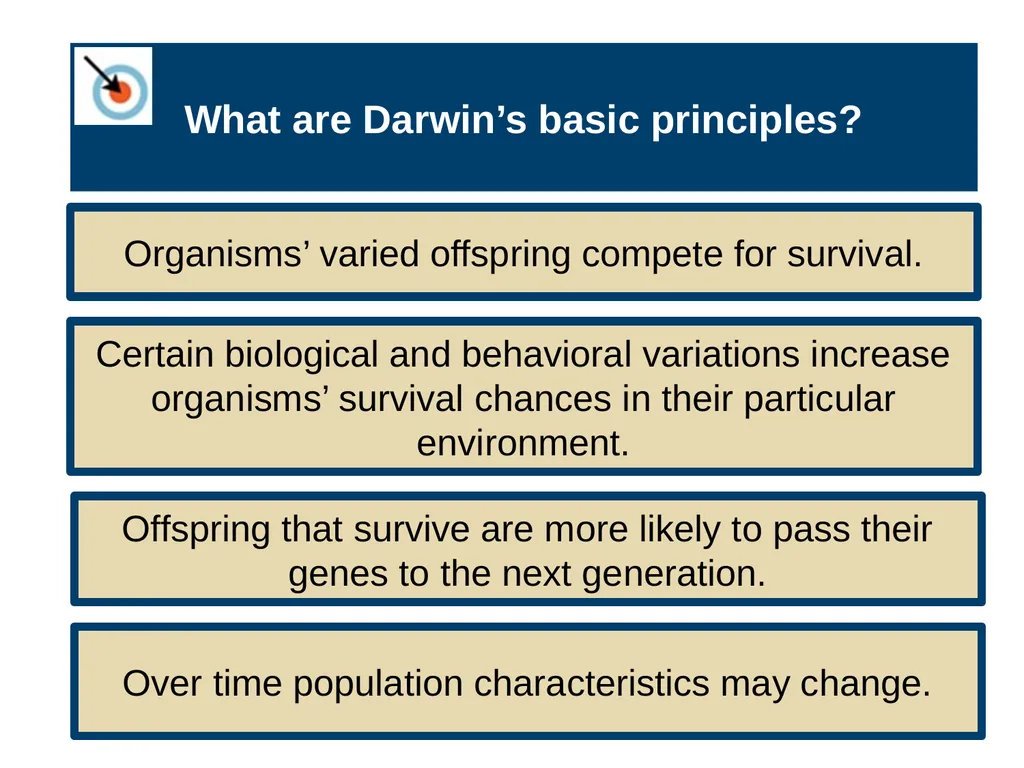
What are Darwin’s basic principles? Organisms’ varied offspring compete for survival. Certain biological and behavioral variations increase organisms’ survival chances in their particular environment. Offspring that survive are more likely to pass their genes to the next generation. Over time population characteristics may change.<br>
07
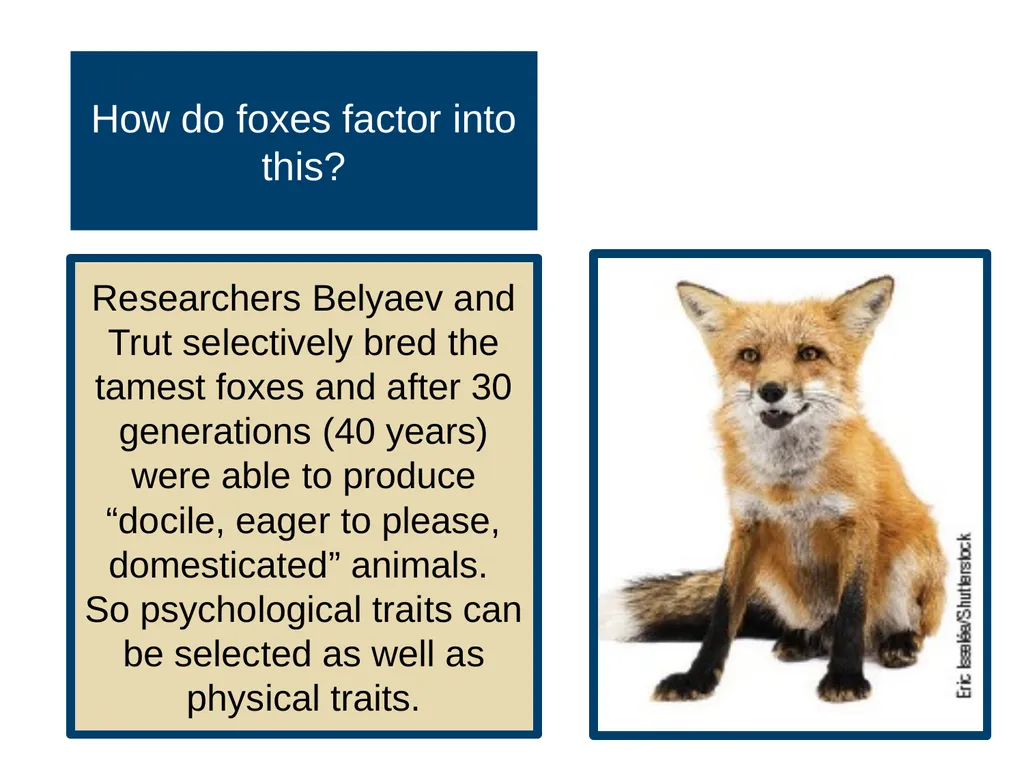
How do foxes factor into this? Researchers Belyaev and Trut selectively bred the tamest foxes and after 30 generations (40 years) were able to produce “docile, eager to please, domesticated” animals.
So psychological traits can be selected as well as physical traits.<br>
08
What about naturally occurring selection? Our historical genes give us a great
capacity to learn and to adapt to life in varied environments, from the tundra to the jungle.
Genes and experience together wire the brain.
Our adaptive flexibility in responding
to different environments contributes to our fitness—our ability to survive and reproduce.<br>
09
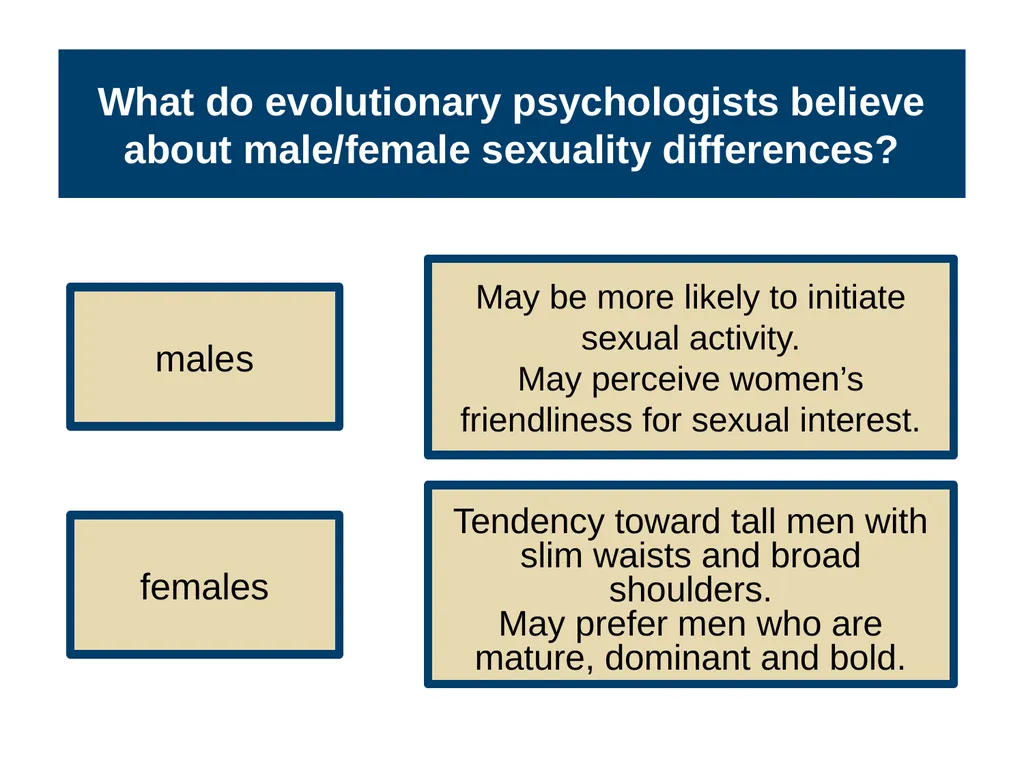
What do evolutionary psychologists believe about male/female sexuality differences? males May be more likely to initiate sexual activity.
May perceive women’s friendliness for sexual interest. females Tendency toward tall men with slim waists and broad shoulders.
May prefer men who are mature, dominant and bold.<br>
10
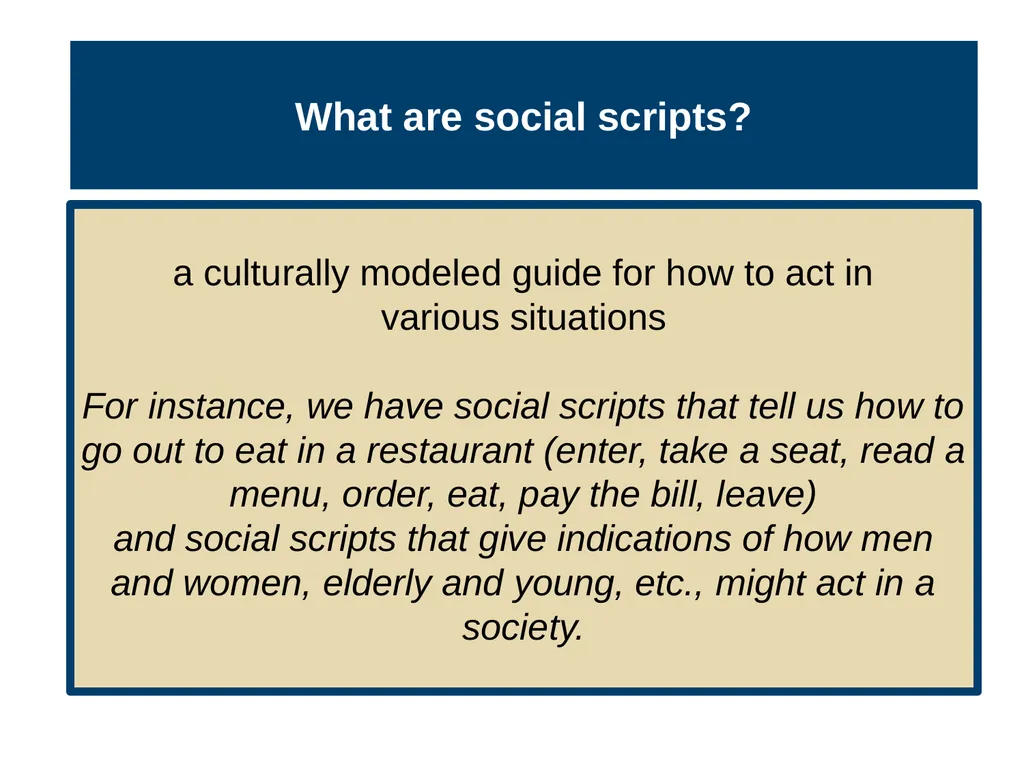
What are social scripts? a culturally modeled guide for how to act in
various situations
For instance, we have social scripts that tell us how to go out to eat in a restaurant (enter, take a seat, read a menu, order, eat, pay the bill, leave)
and social scripts that give indications of how men and women, elderly and young, etc., might act in a society.<br>
11
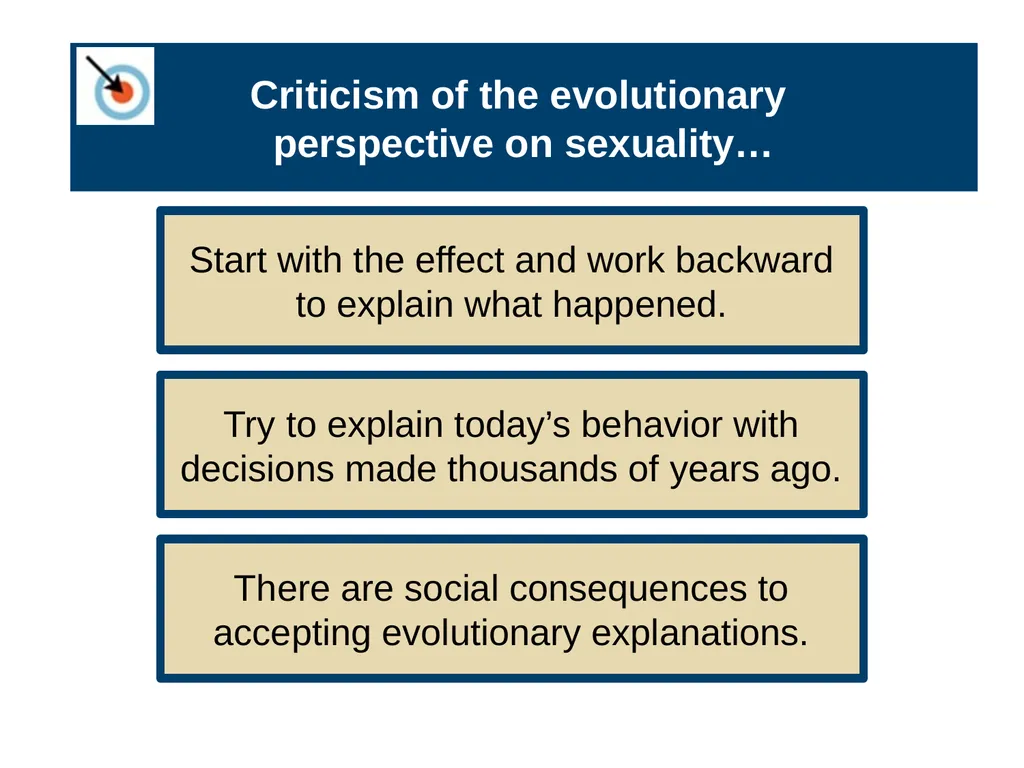
Criticism of the evolutionary perspective on sexuality… Start with the effect and work backward to explain what happened. Try to explain today’s behavior with decisions made thousands of years ago. There are social consequences to accepting evolutionary explanations.<br>
12
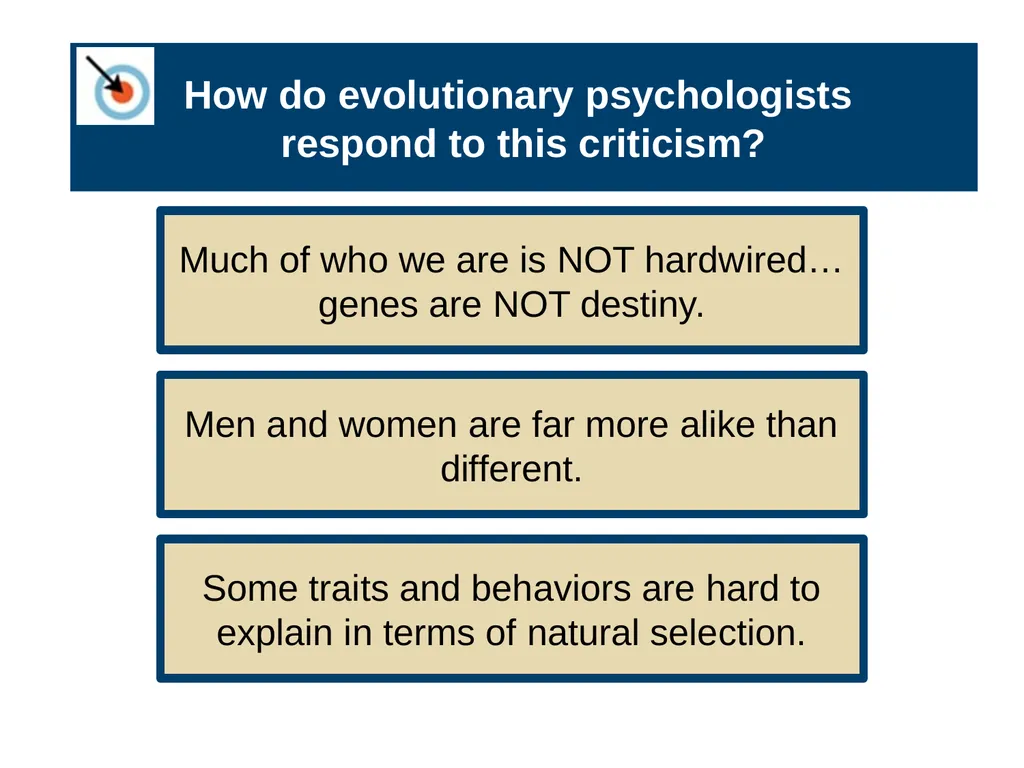
How do evolutionary psychologists respond to this criticism? Much of who we are is NOT hardwired…genes are NOT destiny. Men and women are far more alike than different. Some traits and behaviors are hard to explain in terms of natural selection.<br>
13
What is the biopsychosocial approach to development? Genes, environment and our culture all combine to influence our development.<br>
14
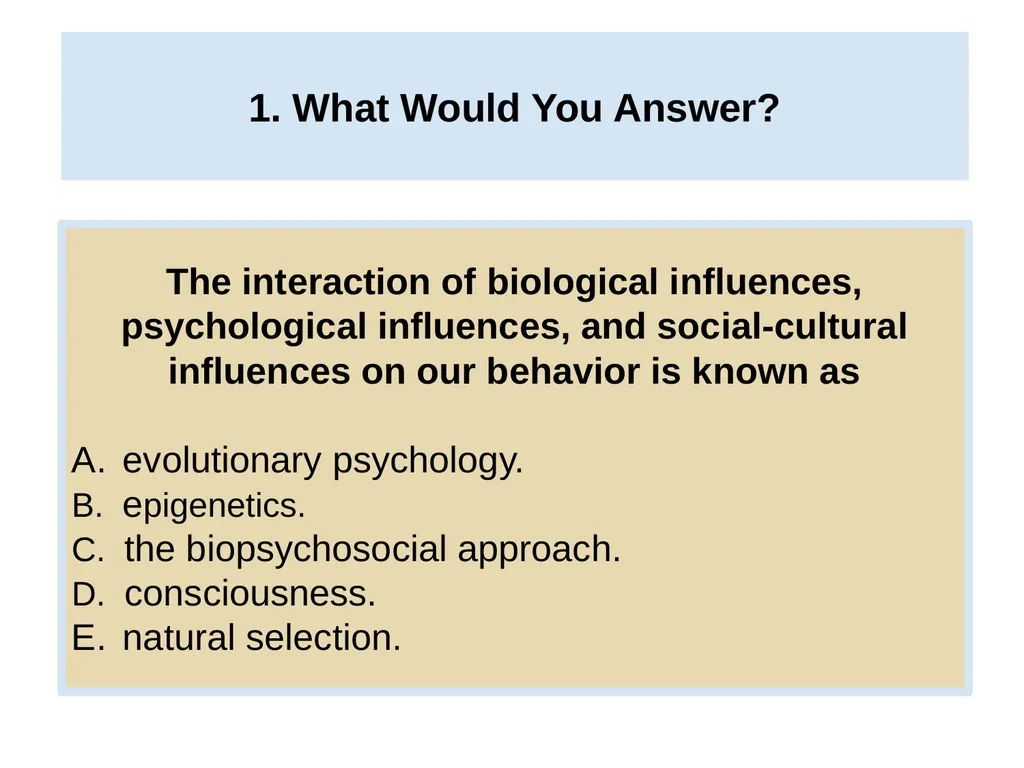
1. What Would You Answer? The interaction of biological influences, psychological influences, and social-cultural influences on our behavior is known as
evolutionary psychology.
B. epigenetics.
C. the biopsychosocial approach.
D. consciousness.
natural selection.<br>
15
Learning Target 15-1 Review Describe evolutionary psychologists’
use of natural selection to explain
behavior tendencies. Evolutionary psychologists consider how natural selection results in traits being passed on to future generations.
Some genetic variations arise from mutations others from new gene combinations at conception.
Charles Darwin’s theory of evolution anticipated today’s application of evolutionary principles in psychology.<br>
16
Learning Target 15-2 Review Discuss evolutionary explanations for
male-female differences in sexuality
and mating preferences. Women tend to be more selective than men when choosing sexual partners.
Evolutionary psychologists reason that:
men’s attraction to multiple healthy, fertile-appearing partners increases their chances of spreading their genes widely.
women search for mature mates who will share child rearing with them, increasing the odds of the offspring’s survival.<br>
17
Learning Target 15-3 Review Explain the key criticisms of evolutionary
explanations of human sexuality, and discuss how evolutionary psychologists respond. Critics argue that evolutionary psychologists
start with an effect and work backward to an explanation,
do not recognize social and cultural influences, and
absolve people from taking responsibility for their sexual behavior.
genes are not destiny<br>
18
Learning Target 15-3 Review cont. Explain the key criticisms of evolutionary
explanations of human sexuality, and discuss how evolutionary psychologists respond. Evolutionary psychologists agree that genes are not destiny, and respond that understanding our predispositions can help us overcome them.
They also cite the value of testable predictions based on evolutionary principles, which is the scientific goal of evolutionary psychology.<br>
19
Learning Target 15-4 Review Describe the biopsychosocial
approach to development. Biological: shared human genome; individual variations; prenatal environment; and sex-related genes, hormones, and physiology.
Psychological: gene-environment interactions; effect of early experiences on neural networks; responses evoked by our own characteristics; and personal beliefs, feelings, and expectations.
Social-cultural: parental and peer influences, cultural traditions and values, and cultural gender norms.<br>