Vulnerable Body Beyond tragic vulnerability: Senecas Thyestes (I) Seneca the Younger Key datesfacts, 4BCE-56CE Born btw 4 and 1 BCE (Cordoba, Spain) Son of Seneca the Elder, uncle of poet Lucan. c.19CE, began to embrace philosophy. 31:
"Vulnerable Body Beyond tragic vulnerability:" is the property of its rightful owner. Permission is granted to
download and print the materials on this website for personal, non-commercial use only, and to display it
on your personal computer provided you do not modify the materials and that you retain all copyright
notices contained in the materials. By downloading content from our website, you accept the terms of this
agreement.
Presentation Transcript
01
Vulnerable Body Beyond tragic vulnerability:
Seneca’s Thyestes (I)<br>
02
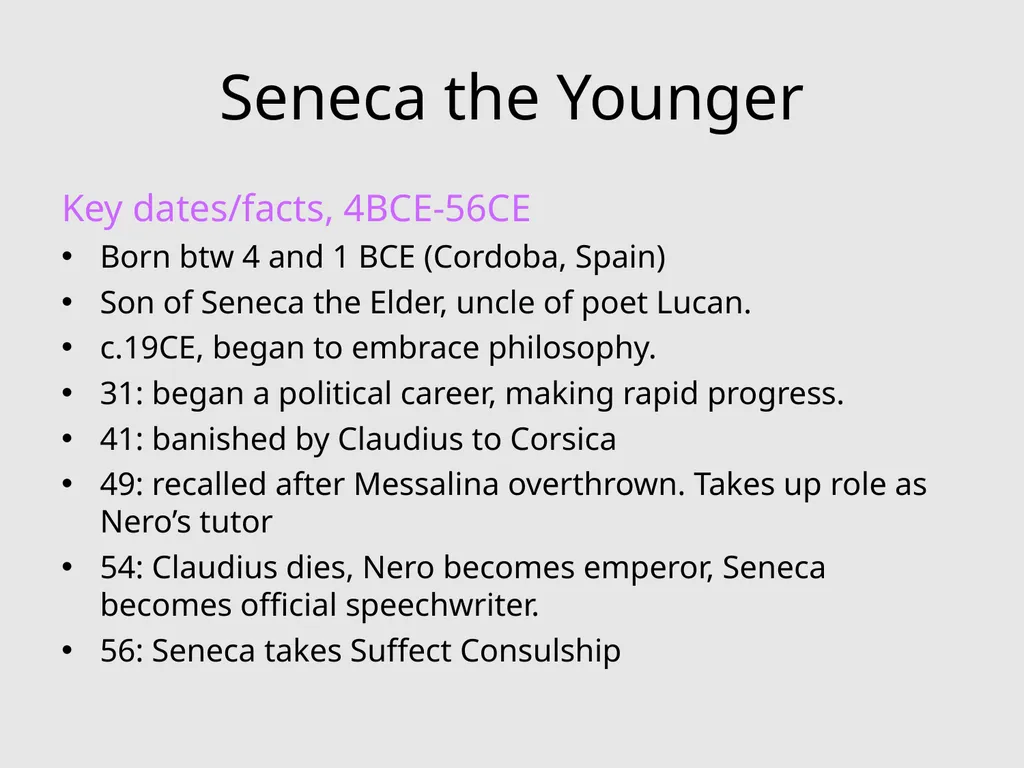
Seneca the Younger Key dates/facts, 4BCE-56CE
Born btw 4 and 1 BCE (Cordoba, Spain)
Son of Seneca the Elder, uncle of poet Lucan.
c.19CE, began to embrace philosophy.
31: began a political career, making rapid progress.
41: banished by Claudius to Corsica
49: recalled after Messalina overthrown. Takes up role as Nero’s tutor
54: Claudius dies, Nero becomes emperor, Seneca becomes official speechwriter.
56: Seneca takes Suffect Consulship<br>
03
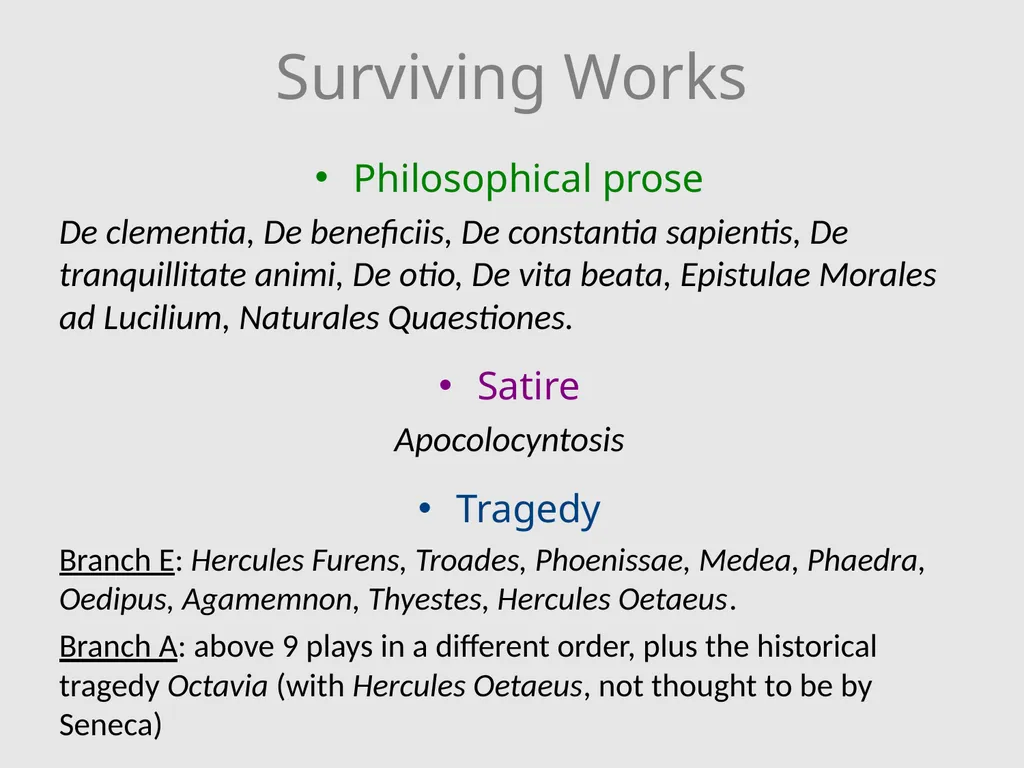
Surviving Works Philosophical prose
De clementia, De beneficiis, De constantia sapientis, De tranquillitate animi, De otio, De vita beata, Epistulae Morales ad Lucilium, Naturales Quaestiones.
Satire
Apocolocyntosis
Tragedy
Branch E: Hercules Furens, Troades, Phoenissae, Medea, Phaedra, Oedipus, Agamemnon, Thyestes, Hercules Oetaeus.
Branch A: above 9 plays in a different order, plus the historical tragedy Octavia (with Hercules Oetaeus, not thought to be by Seneca)<br>
04
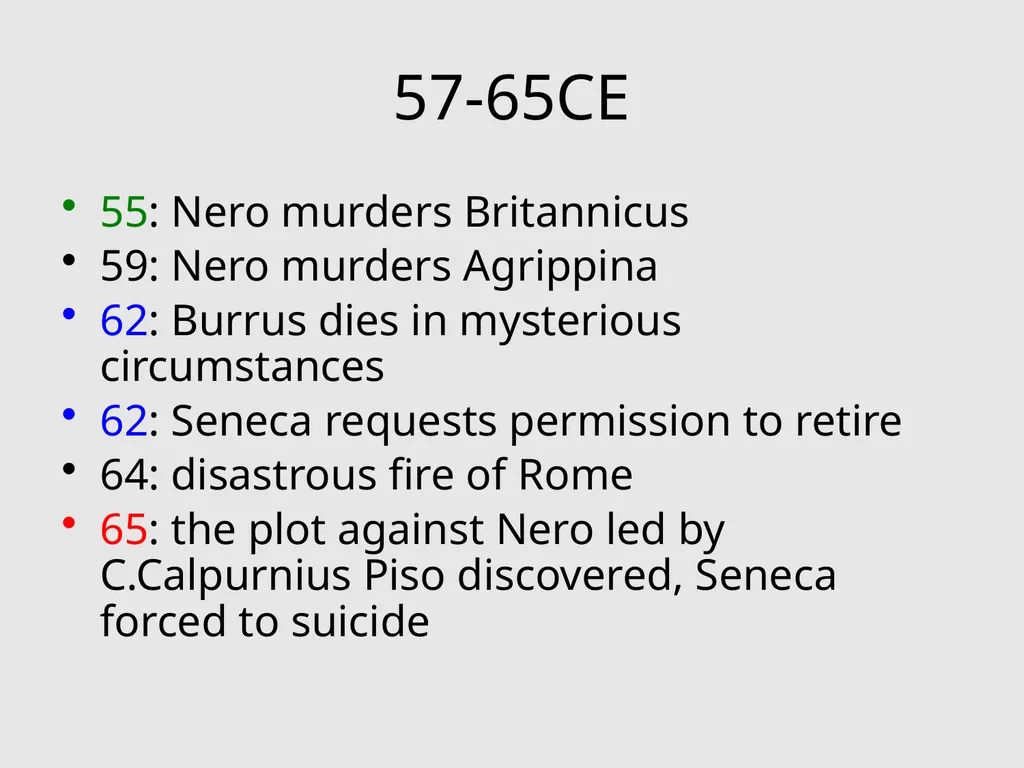
57-65CE 55: Nero murders Britannicus
59: Nero murders Agrippina
62: Burrus dies in mysterious circumstances
62: Seneca requests permission to retire
64: disastrous fire of Rome
65: the plot against Nero led by C.Calpurnius Piso discovered, Seneca forced to suicide<br>
05
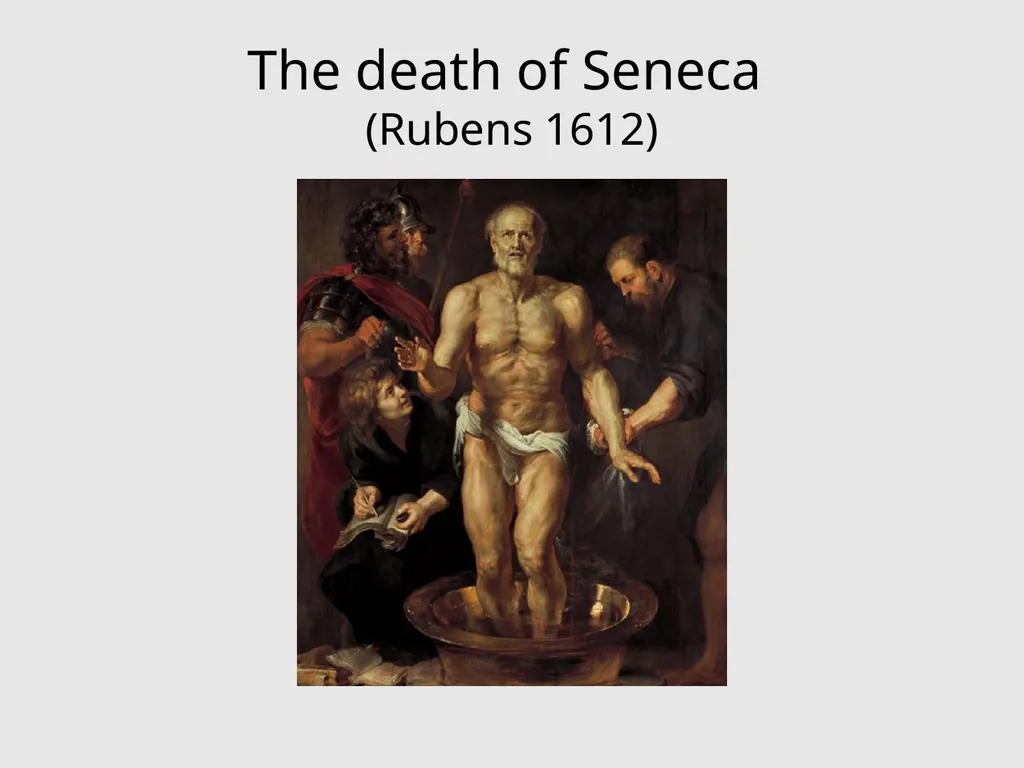
The death of Seneca (Rubens 1612)<br>
06
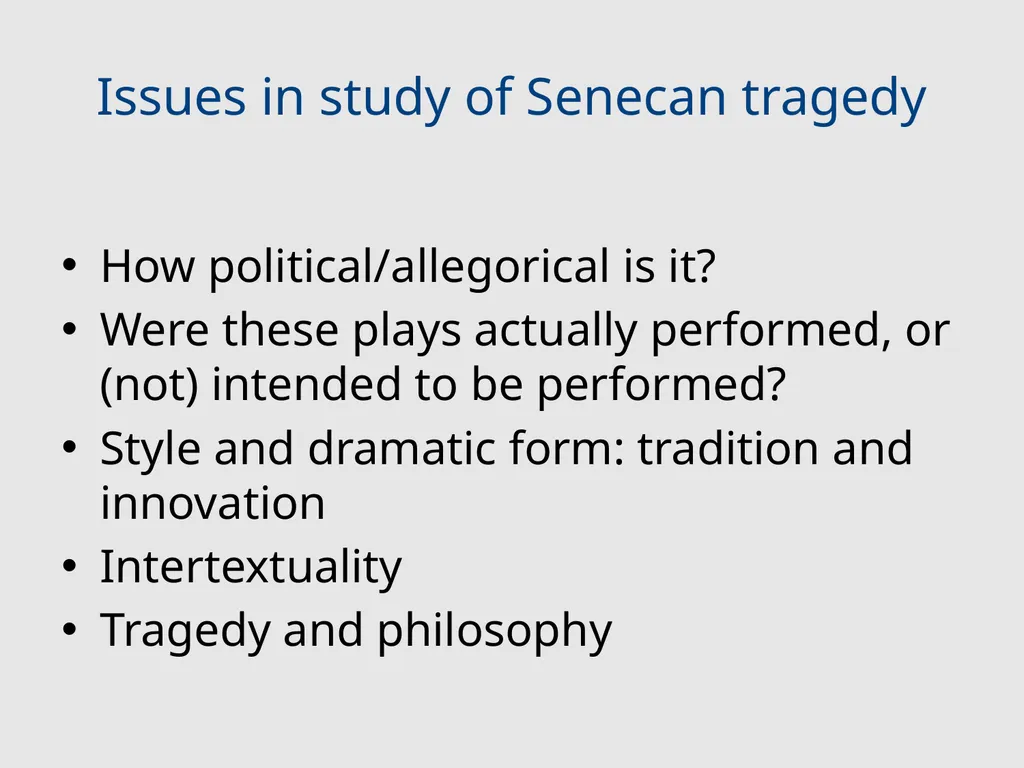
Issues in study of Senecan tragedy How political/allegorical is it?
Were these plays actually performed, or (not) intended to be performed?
Style and dramatic form: tradition and innovation
Intertextuality
Tragedy and philosophy<br>
07
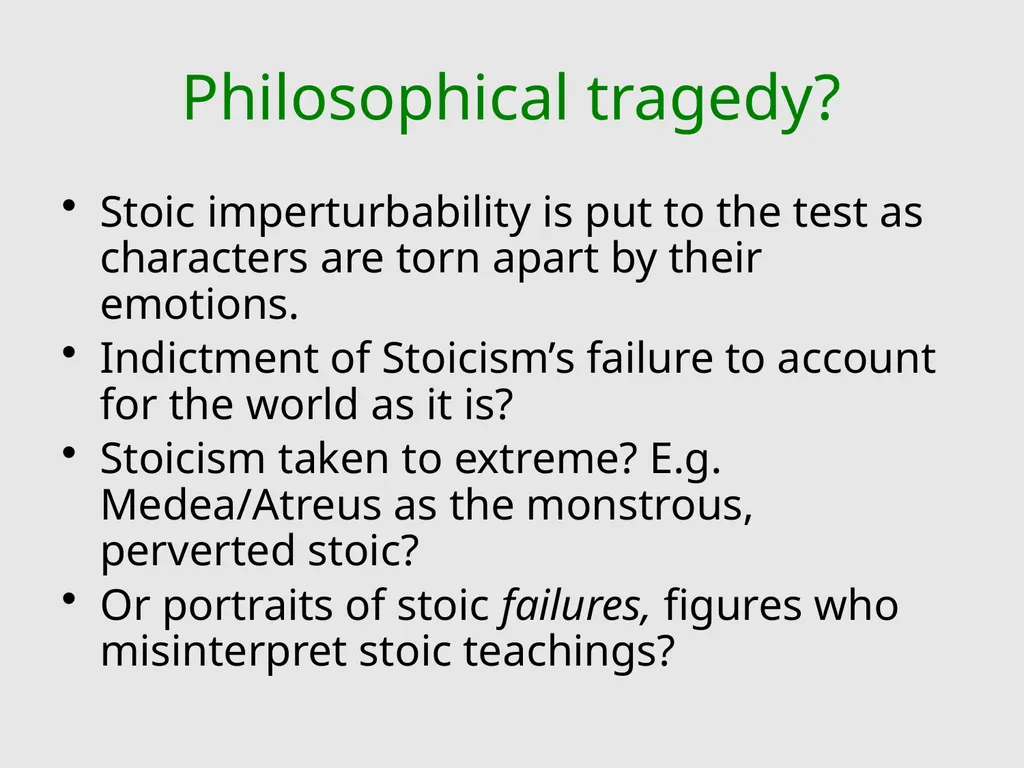
Philosophical tragedy? Stoic imperturbability is put to the test as characters are torn apart by their emotions.
Indictment of Stoicism’s failure to account for the world as it is?
Stoicism taken to extreme? E.g. Medea/Atreus as the monstrous, perverted stoic?
Or portraits of stoic failures, figures who misinterpret stoic teachings?<br>
08
Tantalus (Gioacchino Assereto 1630s/40s)<br>
09
Precedents for Seneca’s Thyestes Sophocles wrote an Atreus and a Thyestes in Sicyon.
Euripides wrote a Thyestes and a Plisthenes
Ennius wrote a Thyestes and Accius an Atreus.
Varius Rufus’ Thyestes is known from the Augustan period (apparently staged as part of Octavian’s triumph after Actium).
An Atreus by Pomponius Secundus possibly written within a few years of Seneca’s play.<br>
10
Vulnerable bodies? Atreus asserts his supreme power by reducing Thyestes to the ontological status of a woman, or a female/feminized body, at her most vulnerable.
Thyestes, that is, is transformed into a pregnant, labouring body which cannot ‘give birth’.
Atreus is reacting to threats to his own masculinity, which he perceives as inflicting an intolerable vulnerability. Significantly, his inspiration is Procne and Philomela’s revenge on Tereus, told by Ovid in Metamorphoses 6<br>
11
A play about (the threat of) desire and appetite Invulnerability = male rhetorical and political power, artistic control and mastery
Vulnerability = a crisis of language, inarticulacy, wound, collapsed leadership, male artistic failure<br>
12
Spectatorship and guilt Do we participate vicariously in the humiliation and dehumanisation of Thyestes?
Do we admire Atreus, far more than we sympathise with his victim? What is it to enjoy this play?
Does the play prompt us to find vulnerability disgusting? Repulsive? Horrific?<br>
13
What the body knows Will Atreus’ transcendence of the bodily realm really seal his invincible power?
And is Thyestes’ error that he did not listen to his body?
Th.999-103:
What is this turmoil that shakes my guts? What trembles inside me? I feel a restless burden, and my breast groans with groaning not my own. Come sons, yours unhappy father calls you, come! Once I see you this pain will vanish. They interrupt, but from where?<br>