
Water and Electrolyte Balance Mrs. L.
MT
Published · 32 slides · 0 views

1 / 1



Description
Water and Electrolyte Balance Mrs. L. Bijayalakshmi Devi Associate Professor MKSSSBTINE Daily requirement of water As 2 to 2.5 liters of water are lost by excretion and perspiration, an equal amount is requirement daily by the body to avoid
Related Topics
Share
Embed code
Download this presentation From Below
"Water and Electrolyte Balance Mrs. L." is the property of its rightful owner. Permission is granted to download and print the materials on this website for personal, non-commercial use only, and to display it on your personal computer provided you do not modify the materials and that you retain all copyright notices contained in the materials. By downloading content from our website, you accept the terms of this agreement.
Presentation Transcript
01
Water and Electrolyte Balance Mrs. L. Bijayalakshmi Devi
Associate Professor
MKSSSBTINE<br>
Associate Professor
MKSSSBTINE<br>
02
Daily requirement of water As 2 to 2.5 liters of water are lost by excretion and perspiration, an equal amount is requirement daily by the body to avoid dehydration<br>
03
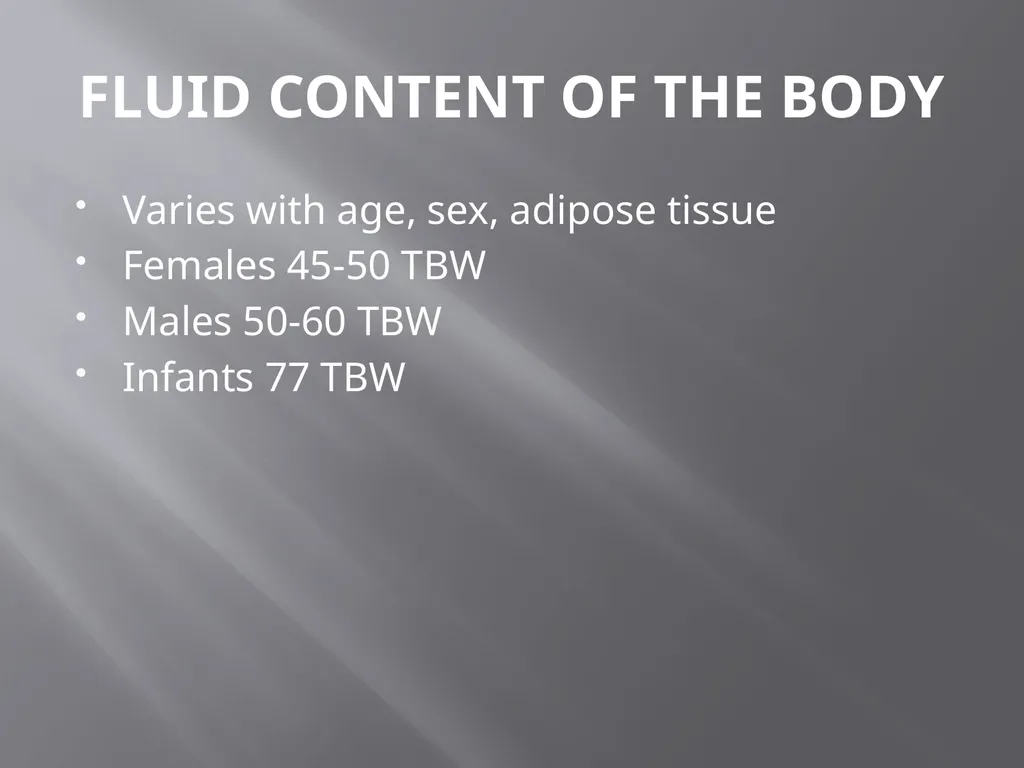
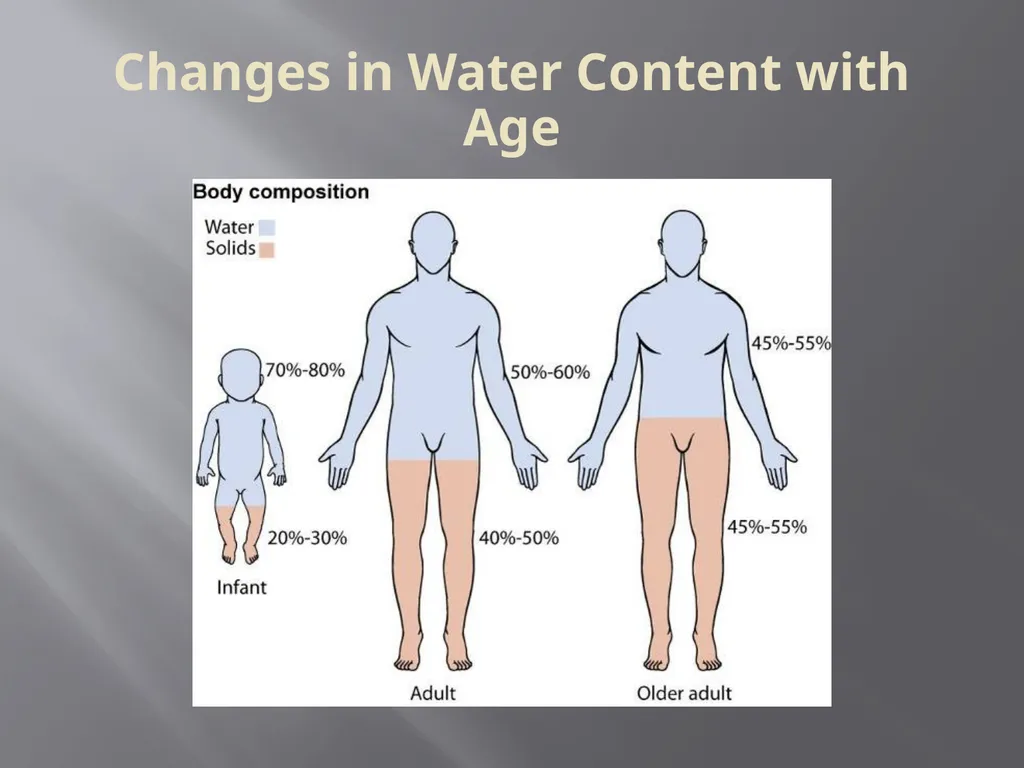
FLUID CONTENT OF THE BODY Varies with age, sex, adipose tissue
Females 45-50 TBW
Males 50-60 TBW
Infants 77 TBW<br>
Females 45-50 TBW
Males 50-60 TBW
Infants 77 TBW<br>
04
Changes in Water Content with Age<br>
05
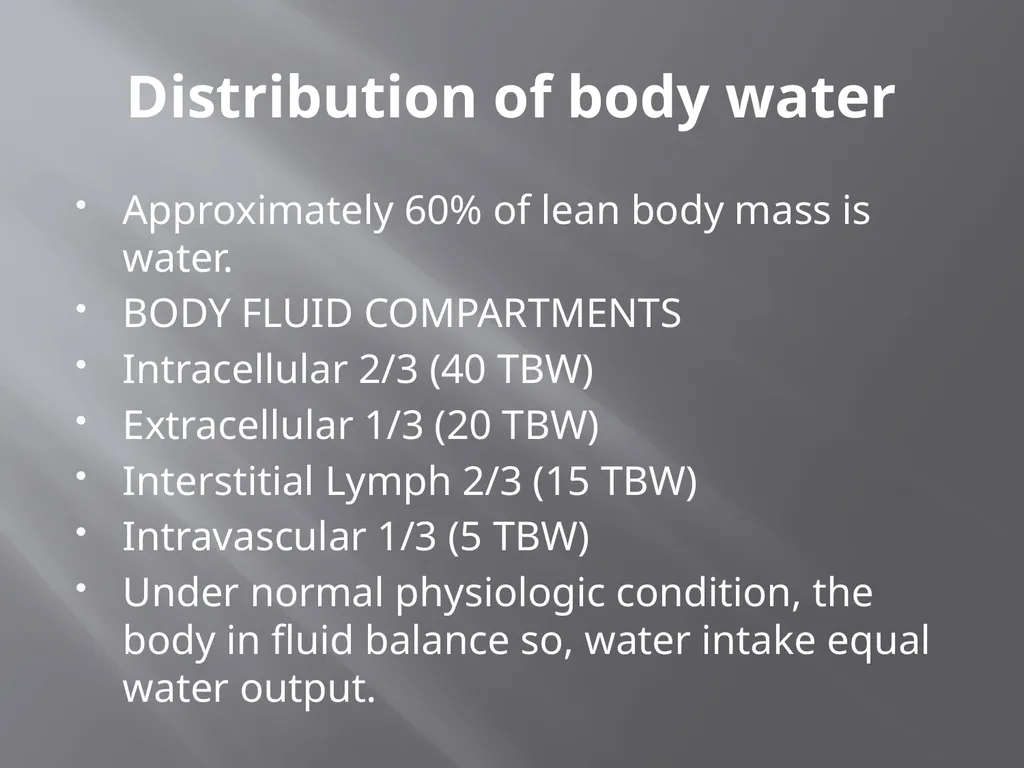
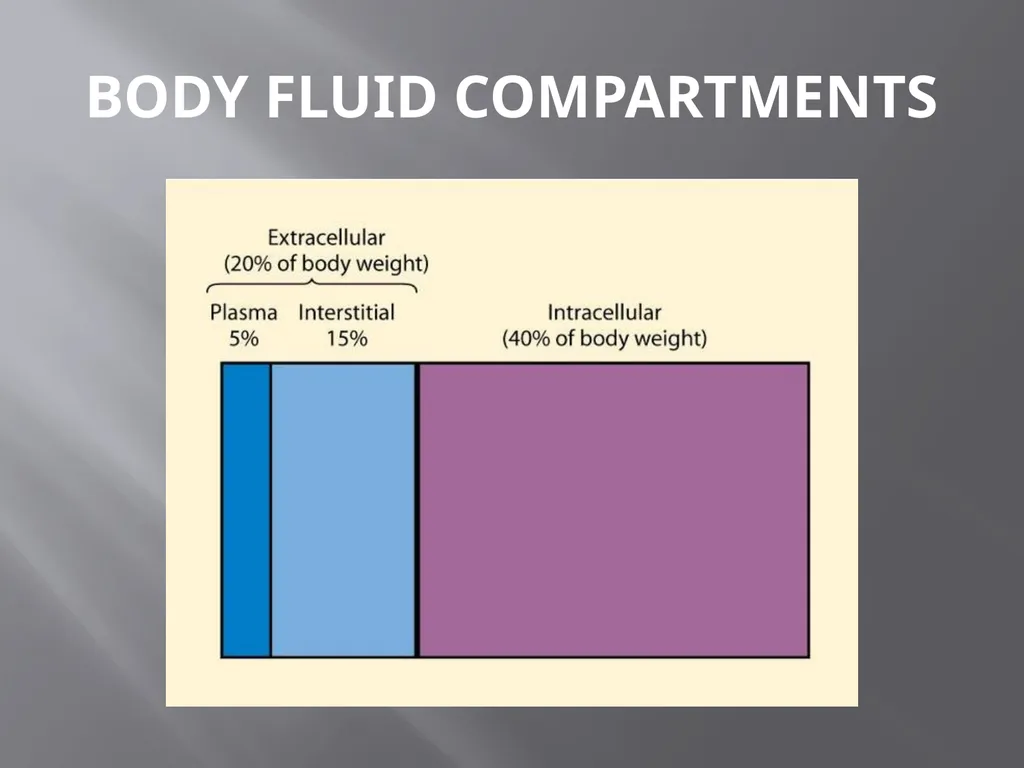
Distribution of body water Approximately 60% of lean body mass is water.
BODY FLUID COMPARTMENTS
Intracellular 2/3 (40 TBW)
Extracellular 1/3 (20 TBW)
Interstitial Lymph 2/3 (15 TBW)
Intravascular 1/3 (5 TBW)
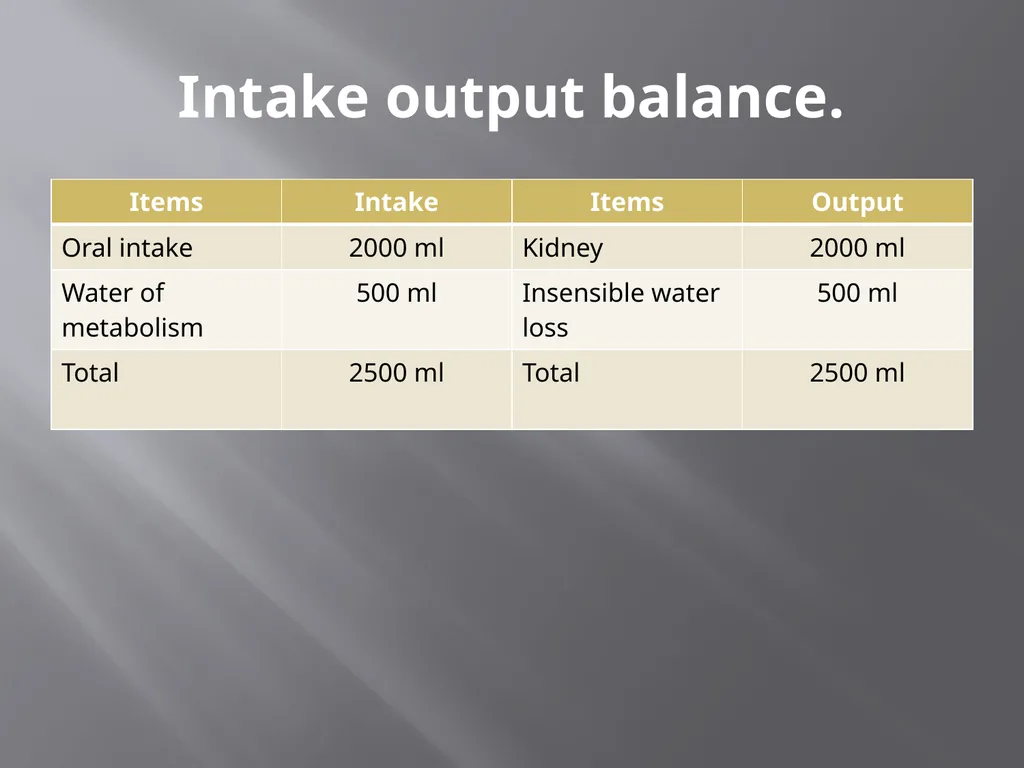
Under normal physiologic condition, the body in fluid balance so, water intake equal water output.<br>
BODY FLUID COMPARTMENTS
Intracellular 2/3 (40 TBW)
Extracellular 1/3 (20 TBW)
Interstitial Lymph 2/3 (15 TBW)
Intravascular 1/3 (5 TBW)
Under normal physiologic condition, the body in fluid balance so, water intake equal water output.<br>
06
BODY FLUID COMPARTMENTS<br>
07
Intake output balance.<br>
08
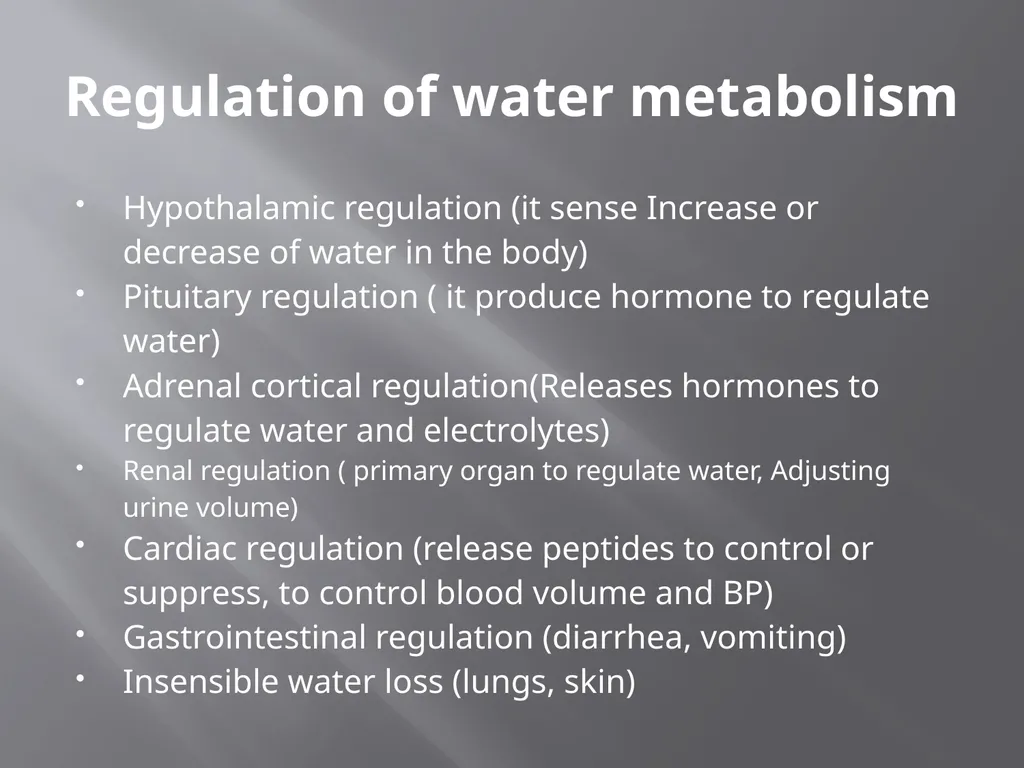
Regulation of water metabolism Hypothalamic regulation (it sense Increase or decrease of water in the body)
Pituitary regulation ( it produce hormone to regulate water)
Adrenal cortical regulation(Releases hormones to regulate water and electrolytes)
Renal regulation ( primary organ to regulate water, Adjusting urine volume)
Cardiac regulation (release peptides to control or suppress, to control blood volume and BP)
Gastrointestinal regulation (diarrhea, vomiting)
Insensible water loss (lungs, skin)<br>
Pituitary regulation ( it produce hormone to regulate water)
Adrenal cortical regulation(Releases hormones to regulate water and electrolytes)
Renal regulation ( primary organ to regulate water, Adjusting urine volume)
Cardiac regulation (release peptides to control or suppress, to control blood volume and BP)
Gastrointestinal regulation (diarrhea, vomiting)
Insensible water loss (lungs, skin)<br>
09
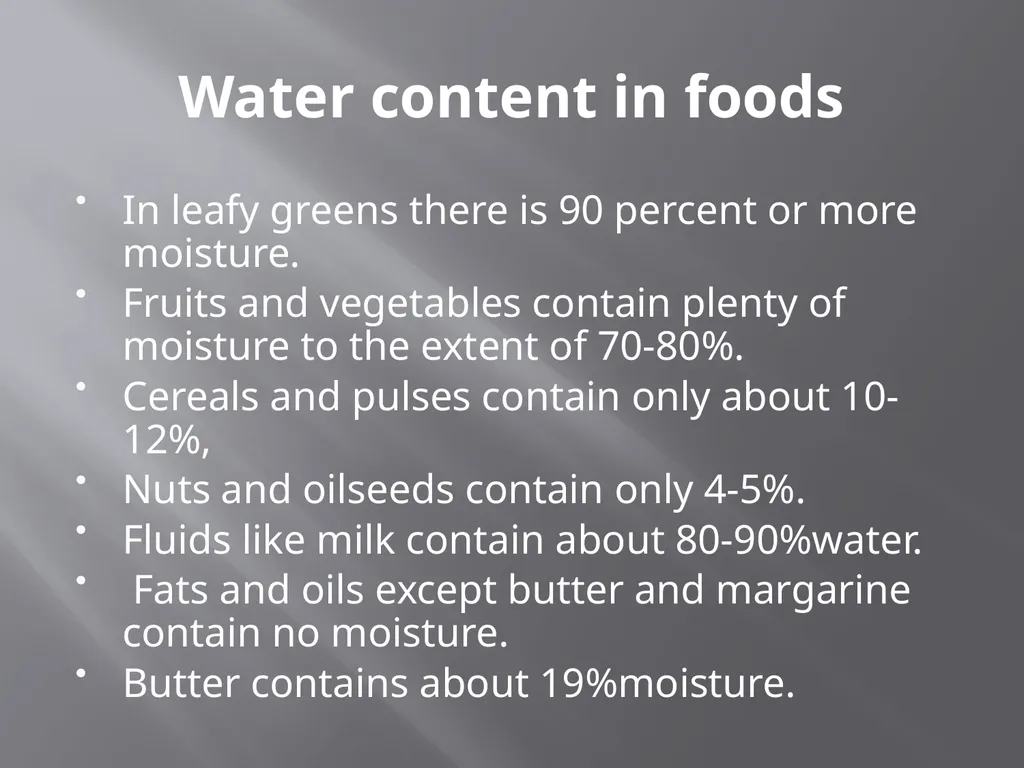
Water content in foods In leafy greens there is 90 percent or more moisture.
Fruits and vegetables contain plenty of moisture to the extent of 70-80%.
Cereals and pulses contain only about 10-12%,
Nuts and oilseeds contain only 4-5%.
Fluids like milk contain about 80-90%water.
Fats and oils except butter and margarine contain no moisture.
Butter contains about 19%moisture.<br>
Fruits and vegetables contain plenty of moisture to the extent of 70-80%.
Cereals and pulses contain only about 10-12%,
Nuts and oilseeds contain only 4-5%.
Fluids like milk contain about 80-90%water.
Fats and oils except butter and margarine contain no moisture.
Butter contains about 19%moisture.<br>
10
Role of water in food preparation As a cooking medium
As a solvent
Water as a leavening agent
Water affects the keeping quality of foods
Water affects the texture and consistency<br>
As a solvent
Water as a leavening agent
Water affects the keeping quality of foods
Water affects the texture and consistency<br>
11
Water Balance & water equilibrium Water intake and output should be fairly constant.
This is called water balance.
Inadequate water intake disturbs water equilibrium resulting in decreased urinary output.
The water equilibriums maintained by kidney, lungs, intestine and pituitary gland.
The water balance coordinates with both electrolyte and acid base balance.
A healthy body maintain water imbalance even on variable intake or output of fluids. The regulation is done by the antidiuretic hormone (ADH) and vasopressin.
A body is said to maintain water balance when the amount of water gained by the body is equal to the amount of water excreted or lost from the body.<br>
This is called water balance.
Inadequate water intake disturbs water equilibrium resulting in decreased urinary output.
The water equilibriums maintained by kidney, lungs, intestine and pituitary gland.
The water balance coordinates with both electrolyte and acid base balance.
A healthy body maintain water imbalance even on variable intake or output of fluids. The regulation is done by the antidiuretic hormone (ADH) and vasopressin.
A body is said to maintain water balance when the amount of water gained by the body is equal to the amount of water excreted or lost from the body.<br>
12
Electrolyte An electrolyte is a substance that produces an electrically conducting solution when dissolved in a polar solvent, such as water. The dissolved electrolyte separates into cations and anions, which disperse uniformly through the solvent.<br>
13
What are electrolytes? Electrolytes are minerals that affect the body's fluid levels, blood acidity, and muscle and organ function.
Potassium, chloride, sodium, magnesium and calcium are all examples of electrolytes.
When these minerals are lost they need to be replaced because they are not manufactured by body.
Chemically, electrolytes are substances that become ions in solution and acquire the capacity to conduct electricity.
A substance that dissociates into ions in solution acquires the capacity to conduct electricity.<br>
Potassium, chloride, sodium, magnesium and calcium are all examples of electrolytes.
When these minerals are lost they need to be replaced because they are not manufactured by body.
Chemically, electrolytes are substances that become ions in solution and acquire the capacity to conduct electricity.
A substance that dissociates into ions in solution acquires the capacity to conduct electricity.<br>
14
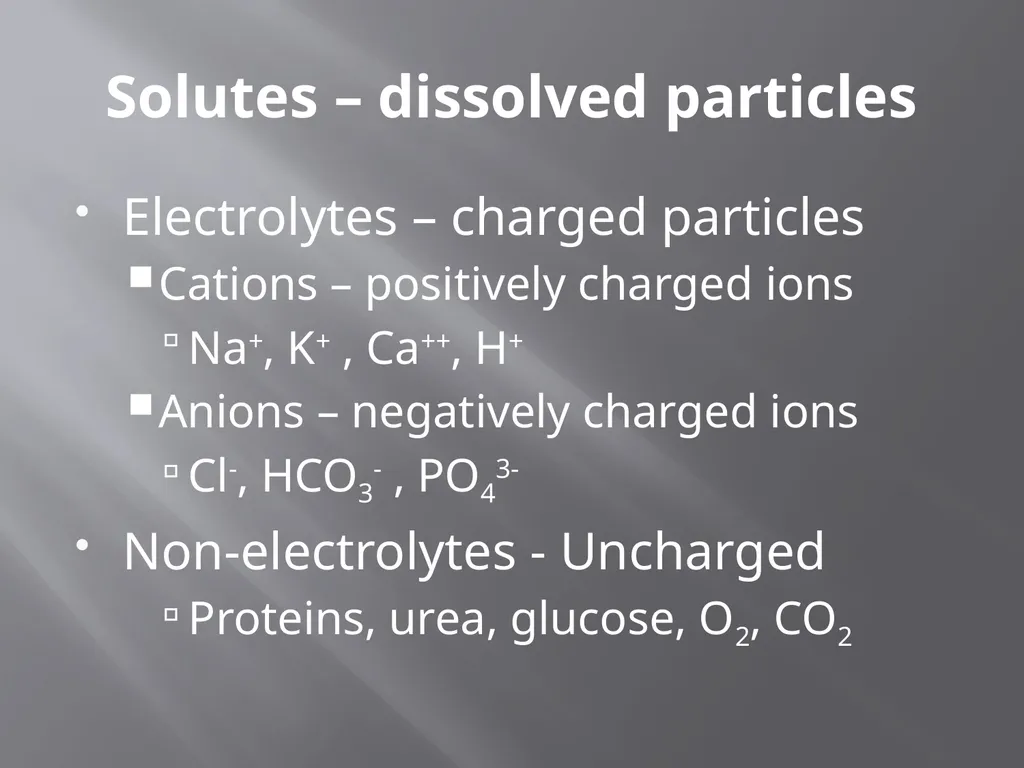
Solutes – dissolved particles Electrolytes – charged particles
Cations – positively charged ions
Na+, K+ , Ca++, H+
Anions – negatively charged ions
Cl-, HCO3- , PO43-
Non-electrolytes - Uncharged
Proteins, urea, glucose, O2, CO2<br>
Cations – positively charged ions
Na+, K+ , Ca++, H+
Anions – negatively charged ions
Cl-, HCO3- , PO43-
Non-electrolytes - Uncharged
Proteins, urea, glucose, O2, CO2<br>
15
Sources of electrolytes SODIUM : Salted foods prepared at home and processed foods with added sodium such as salted meats, peanuts, butter or margarine,. Are sources of sodium.
CHLORIDE: All of these sources are also effective for replacing chloride, another electrolyte, which is lost with sodium.
POTASSIUM: Potassium can be replaced with food sources such as fruits like bananas, vegetables, dairy products, nuts and meats. Coconut water.
Magnesium :Leafy green vegetables, such as spinach, and mustard greens, contribute plentiful amounts of magnesium, potassium and calcium.<br>
CHLORIDE: All of these sources are also effective for replacing chloride, another electrolyte, which is lost with sodium.
POTASSIUM: Potassium can be replaced with food sources such as fruits like bananas, vegetables, dairy products, nuts and meats. Coconut water.
Magnesium :Leafy green vegetables, such as spinach, and mustard greens, contribute plentiful amounts of magnesium, potassium and calcium.<br>
16
CALCIUM : Broccoli, okra, red onions, peas, chili peppers, sweet potatoes, baked potatoes contain calcium, slake lime<br>
17
Sodium Functions Sodium is the major positive ion in fluid outside of cells.
Excess sodium is excreted in urine.
It is important for generation of electrical signal in the body so too much or too little sodium can cause cells to malfunction and can be fatal.
Hyponatremia is deficiency of Sodium in the body. Below 135 mmol/L.
It is caused by salt loss in excess of the high water loss, diarrhea, vomiting etc<br>
Excess sodium is excreted in urine.
It is important for generation of electrical signal in the body so too much or too little sodium can cause cells to malfunction and can be fatal.
Hyponatremia is deficiency of Sodium in the body. Below 135 mmol/L.
It is caused by salt loss in excess of the high water loss, diarrhea, vomiting etc<br>
18
Hypernatremia is increase in Sodium in the Body.
The normal value is 135- 145mmol/L (millimoles/liter) and values above 145mmol/L will cause hypernatremia.
It may be due to excessive infusion of saline water, drugs etc.<br>
The normal value is 135- 145mmol/L (millimoles/liter) and values above 145mmol/L will cause hypernatremia.
It may be due to excessive infusion of saline water, drugs etc.<br>
19
Chloride Chloride is the major anion (negatively charges ion) found in the body fluid outside of cell and in the blood. It also help in maintaining a normal balance of fluids
Increased chloride level is called hyperchloremia. It may be seen in diarrhea, kidney diseases etc.
Decreased chloride level is called hypochloremia. Excessive loss can occur from heavy sweating, vomiting and adrenal gland and kidney disease.
Normal serum chloride level is 98-108mmol/L<br>
Increased chloride level is called hyperchloremia. It may be seen in diarrhea, kidney diseases etc.
Decreased chloride level is called hypochloremia. Excessive loss can occur from heavy sweating, vomiting and adrenal gland and kidney disease.
Normal serum chloride level is 98-108mmol/L<br>
20
Bicarbonate The bicarbonate ion acts as a buffer to maintain the normal levels of acidity (pH) in blood and other body fluids in the body.
Bicarbonate levels are measured to monitor the acidity of the blood and body fluids.
The bicarbonate test is usually performed along with tests for other blood electrolytes
Disruption in its may be due to respiratory dysfunction, kidney dieseases etc.
Normal serum range for Bicarbonate is 22-30mmol/L<br>
Bicarbonate levels are measured to monitor the acidity of the blood and body fluids.
The bicarbonate test is usually performed along with tests for other blood electrolytes
Disruption in its may be due to respiratory dysfunction, kidney dieseases etc.
Normal serum range for Bicarbonate is 22-30mmol/L<br>
21
Potassium Potassium is the major positive ion (cation) found inside of cells.
The proper level of potassium is essential for normal cell function.
It regulate heartbeat and function of the muscles.
Increase in potassium is called as hyperkalemia.
Decrease in potassium is called as hypokalemia.
Changes in potassium level can profoundly affect the CNS and cause irregular heartbeat which can be fatal.
The normal potassium level is 3.5-5.0 mmol/L.<br>
The proper level of potassium is essential for normal cell function.
It regulate heartbeat and function of the muscles.
Increase in potassium is called as hyperkalemia.
Decrease in potassium is called as hypokalemia.
Changes in potassium level can profoundly affect the CNS and cause irregular heartbeat which can be fatal.
The normal potassium level is 3.5-5.0 mmol/L.<br>
22
Calcium Calcium levels are controlled by calcitonin, which promotes bone growth and decreases calcium levels in the blood, and parathyroid hormone, which does the opposite. Calcium is bound to the proteins in the bloodstream, so the level of calcium is related to the patient's nutrition as well as the calcium intake in the diet.
Hypercalcemia is increase in calcium in the body.
Hypocalcemia is decrease in calcium in the body.
The normal serum calcium level is 8.5 to 10.2 mg/dL (mmol/L)<br>
Hypercalcemia is increase in calcium in the body.
Hypocalcemia is decrease in calcium in the body.
The normal serum calcium level is 8.5 to 10.2 mg/dL (mmol/L)<br>
23
Magnesium Magnesium is an often forgotten electrolyte that is involved with a variety of metabolic activities in the body, including relaxation of the smooth muscles that surround the bronchial tubes in the lung, skeletal muscle contraction, and excitation of neurons in the brain. Magnesium acts as a cofactor in many of the body's enzyme activities.
Hypomagnesemia is decrease of Magnesium in the body.
Hypermagnesemia is increase of Magnesium in the body. It may be due to kidney diseases etc.
Normal serum Magnesium level is 1.7 to 2.2 mg/dL (mmol/L)<br>
Hypomagnesemia is decrease of Magnesium in the body.
Hypermagnesemia is increase of Magnesium in the body. It may be due to kidney diseases etc.
Normal serum Magnesium level is 1.7 to 2.2 mg/dL (mmol/L)<br>
24
Over hydration/Fluid Volume Excess Over hydration is an abnormal increase of total body water in particular ECV
Due to the above reason, salt accumulation happen.
It is also called as water intoxication.
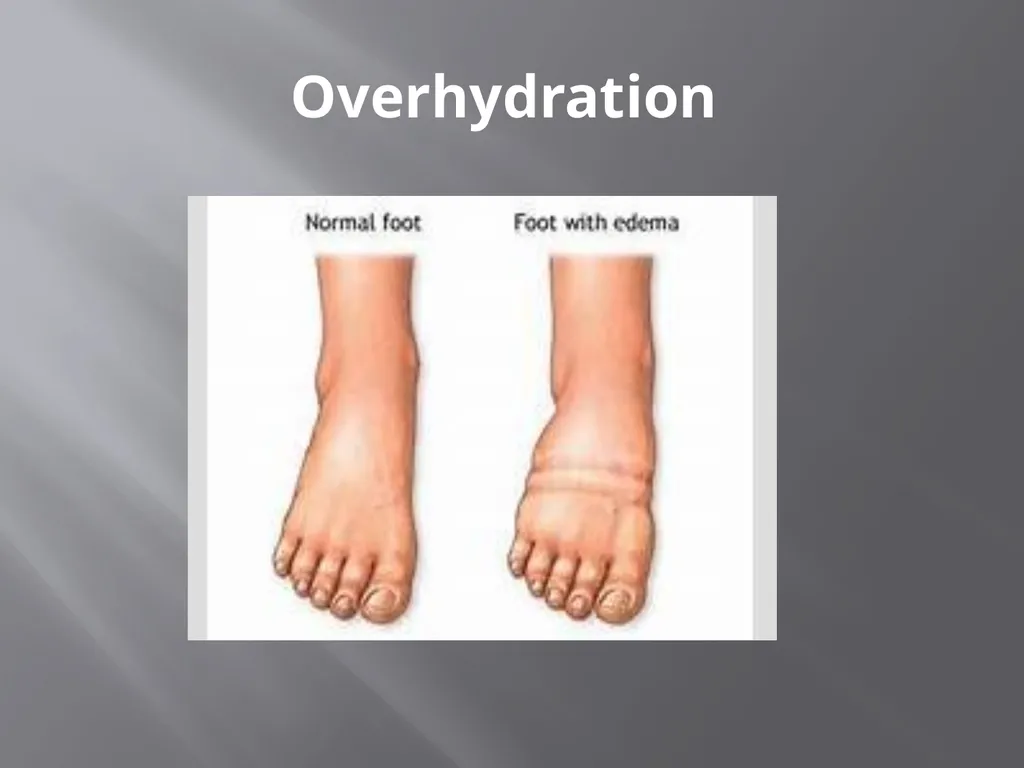
The increase in the interstitial fluid volume is called oedema.
Over hydra frequently occurs among patients in fluid therapy.<br>
Due to the above reason, salt accumulation happen.
It is also called as water intoxication.
The increase in the interstitial fluid volume is called oedema.
Over hydra frequently occurs among patients in fluid therapy.<br>
25
Overhydration<br>
26
Extracellular Fluid Volume Imbalances Fluid volume excess (hypervolemia)
causes
Excessive intake of fluids, abnormal retention of fluids (CHF), or interstitial-to-plasma fluid shift,
Inappropriate large infusions of saline etc.
Signs and symptoms:
Swelling or edema, headache, muscle cramps
Changes in vital parameters
Loss of consciousness
Respiratory arrest.
Treatment : stop infusion of excessive fluid intake, diuretic drugs. And bed rest.<br>
causes
Excessive intake of fluids, abnormal retention of fluids (CHF), or interstitial-to-plasma fluid shift,
Inappropriate large infusions of saline etc.
Signs and symptoms:
Swelling or edema, headache, muscle cramps
Changes in vital parameters
Loss of consciousness
Respiratory arrest.
Treatment : stop infusion of excessive fluid intake, diuretic drugs. And bed rest.<br>
27
Dehydration/Fluid Volume Deficits Dehydration is an abnormal reduction of the major fluid volumes
It is also called hypovolemia
Causes
Abnormal loss of normal body fluids (diarrhea, fistula drainage, hemorrhage),
inadequate intake ,
or plasma-to-interstitial fluid shift<br>
It is also called hypovolemia
Causes
Abnormal loss of normal body fluids (diarrhea, fistula drainage, hemorrhage),
inadequate intake ,
or plasma-to-interstitial fluid shift<br>
28
Dehydration<br>
29
When we lose more than 5% of total body water it has clinical effects. And it is life threatening if patient loses 20%.
Isosmolal dehydration is a proportional loss of water and solutes. The loss is mainly from extracellular volume.
Hyperosmolal dehydration occurs in persons deprived of water. It is intracellular dehydration.<br>
Isosmolal dehydration is a proportional loss of water and solutes. The loss is mainly from extracellular volume.
Hyperosmolal dehydration occurs in persons deprived of water. It is intracellular dehydration.<br>
30
Sign and symptoms of dehydration are
thirst,
dry mucous membrane and
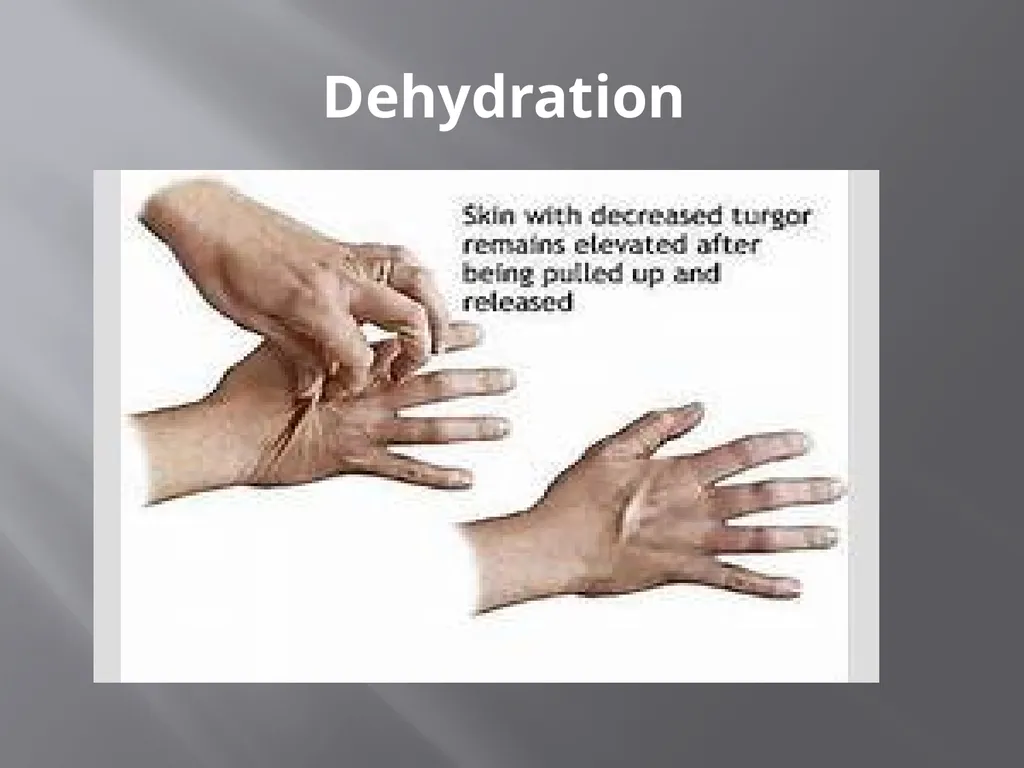
decreased skin elasticity.
Low BP, dizziness, confusion etc.
Treatment is water and electrolytes replacement and rest.<br>
thirst,
dry mucous membrane and
decreased skin elasticity.
Low BP, dizziness, confusion etc.
Treatment is water and electrolytes replacement and rest.<br>
31
Normal Laboratory Values Sodium 135-145 meq/L
Potassium 3.5-5.0 meq/L
Chloride 95-105 meq/L
Bicarbonate 22-28 meq/L
Calcium 9-11 mg/dL
Phosphate 3.2-4.3 mg/dL
Glucose 70-110 mg/dL
BUN 8-18 mg/dL
Creatinine 0.6-1.2 mg/dL
Osmolality (P) 280-295 mOsm/kg
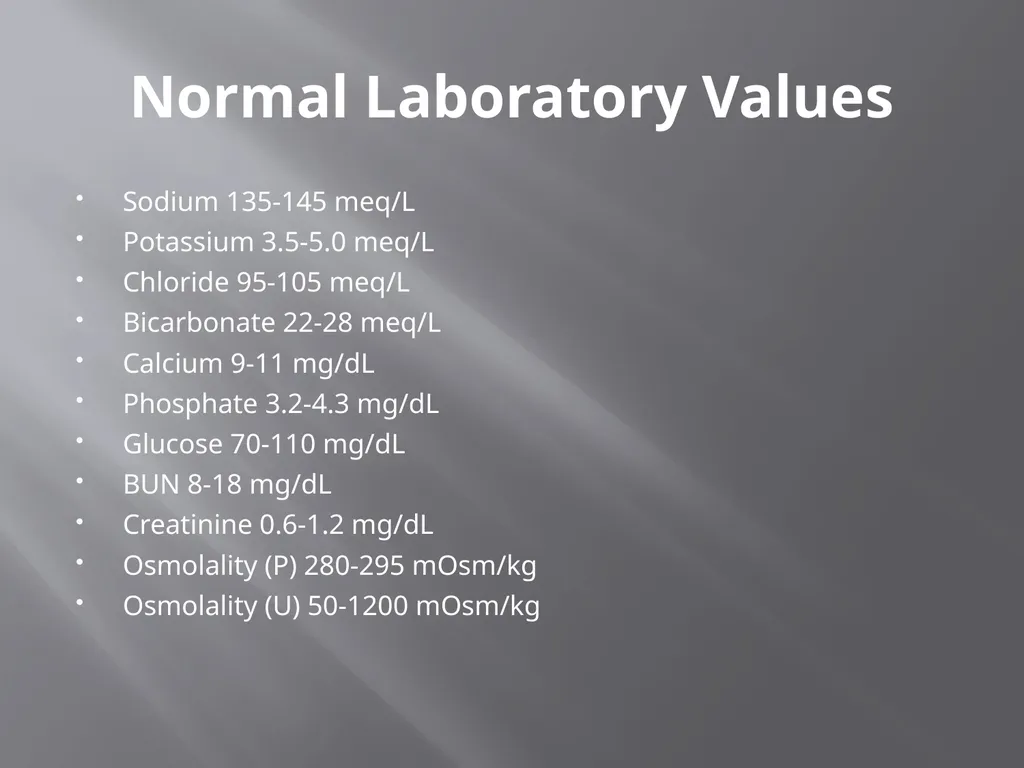
Osmolality (U) 50-1200 mOsm/kg<br>
Potassium 3.5-5.0 meq/L
Chloride 95-105 meq/L
Bicarbonate 22-28 meq/L
Calcium 9-11 mg/dL
Phosphate 3.2-4.3 mg/dL
Glucose 70-110 mg/dL
BUN 8-18 mg/dL
Creatinine 0.6-1.2 mg/dL
Osmolality (P) 280-295 mOsm/kg
Osmolality (U) 50-1200 mOsm/kg<br>
32
Thank you<br>