What is research integrity? UK Research Integrity Office James Parry, Chief Executive, UKRIO www.ukrio.org infoukrio.org UKRIO Research integrity good practice Most people say that it is the intellect which makes a great scientist.
"What is research integrity? UK Research Integrity" is the property of its rightful owner. Permission is granted to
download and print the materials on this website for personal, non-commercial use only, and to display it
on your personal computer provided you do not modify the materials and that you retain all copyright
notices contained in the materials. By downloading content from our website, you accept the terms of this
agreement.
Presentation Transcript
01
What is research integrity? UK Research Integrity Office James Parry, Chief Executive, UKRIO www.ukrio.org info@ukrio.org @UKRIO<br>
02
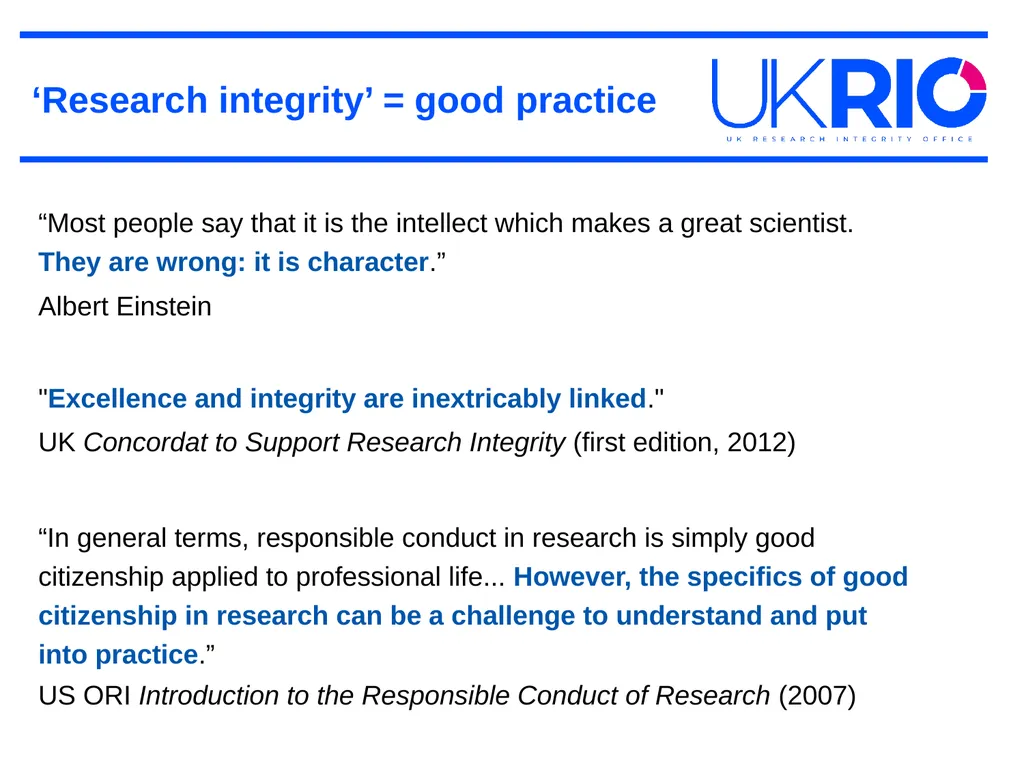
‘Research integrity’ = good practice “Most people say that it is the intellect which makes a great scientist. They are wrong: it is character.”
Albert Einstein
"Excellence and integrity are inextricably linked."
UK Concordat to Support Research Integrity (first edition, 2012)
“In general terms, responsible conduct in research is simply good citizenship applied to professional life... However, the specifics of good citizenship in research can be a challenge to understand and put into practice.”
US ORI Introduction to the Responsible Conduct of Research (2007)<br>
03
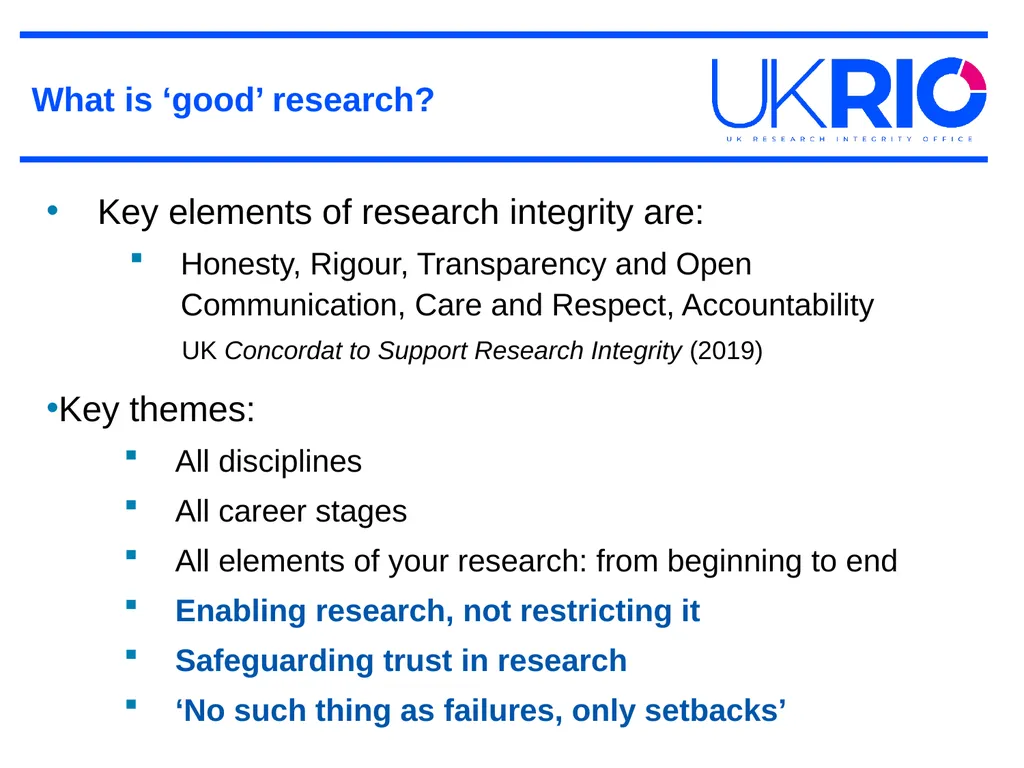
What is ‘good’ research? Key elements of research integrity are:
Honesty, Rigour, Transparency and Open Communication, Care and Respect, Accountability
UK Concordat to Support Research Integrity (2019)
Key themes:
All disciplines
All career stages
All elements of your research: from beginning to end
Enabling research, not restricting it
Safeguarding trust in research
‘No such thing as failures, only setbacks’<br>
04
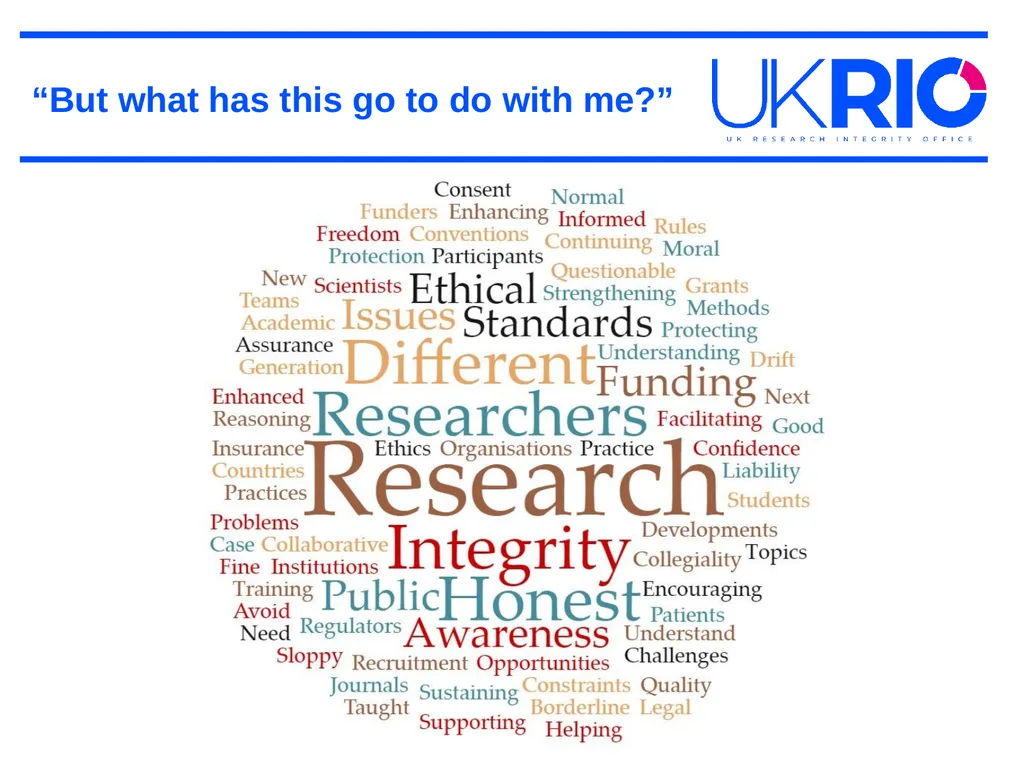
“But what has this go to do with me?”<br>
05
Lessons from UKRIO’s Advisory Service A recurring theme from UKRIO: problems occurring because of overconfidence, bad habits or a failure to get help - serious problems can be avoided with a bit of foresight.
Awareness and training: researchers need to be encouraged to be self-critical and there should be no stigma attached to asking for assistance.
Organisations need to support their researchers in this.
Prioritise culture/ leadership and improving systems/ incentives and recognise this is long-term work.<br>
06
The role of peer review “Peer review is defined as obtaining advice on manuscripts from reviewers/experts in the manuscript’s subject area. Those individuals should not be part of the journal's editorial team. However, the specific elements of peer review may differ by journal and discipline...”
Source: Committee on Publication Ethics (COPE) https://publicationethics.org/resources/guidelines-new/principles-transparency-and-best-practice-scholarly-publishing<br>