Workload Measurements A More Realistic Approach to Staffing Our Offices Lacey Rhea Research Admin Manager Duke University Ryan Chance Assist. Director, Admin Services University of Florida Learning Objectives Recognize the primary staffing
"Workload Measurements A More Realistic Approach to" is the property of its rightful owner. Permission is granted to
download and print the materials on this website for personal, non-commercial use only, and to display it
on your personal computer provided you do not modify the materials and that you retain all copyright
notices contained in the materials. By downloading content from our website, you accept the terms of this
agreement.
Presentation Transcript
01
Workload Measurements A More Realistic Approach to Staffing Our Offices Lacey Rhea
Research Admin Manager
Duke University Ryan Chance
Assist. Director, Admin Services
University of Florida<br>
02
Learning Objectives Recognize the primary staffing challenges facing research administration offices today.
Understand the flaws of traditional practices in estimating workloads and staffing needs.
Develop a more comprehensive assessment of the human resources required for a successful unit.<br>
03
introductions<br>
04
What is your office's current staffing situation? ⓘ Start presenting to display the poll results on this slide.<br>
05
Which of these have applied to you? ⓘ Start presenting to display the poll results on this slide.<br>
06
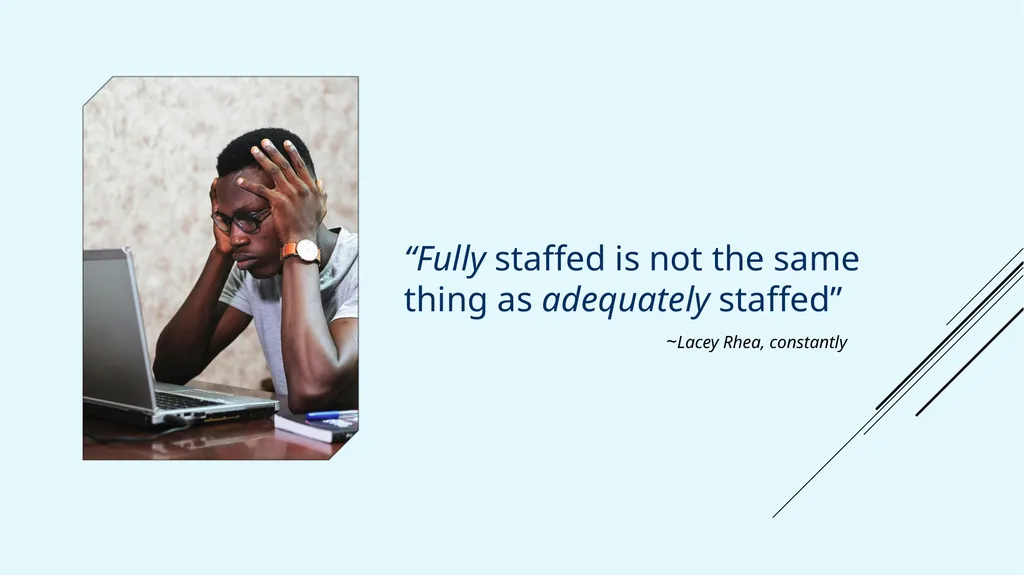
“Fully staffed is not the same thing as adequately staffed” ~Lacey Rhea, constantly<br>
07
Staffing challenges Why are so many units struggling?<br>
08
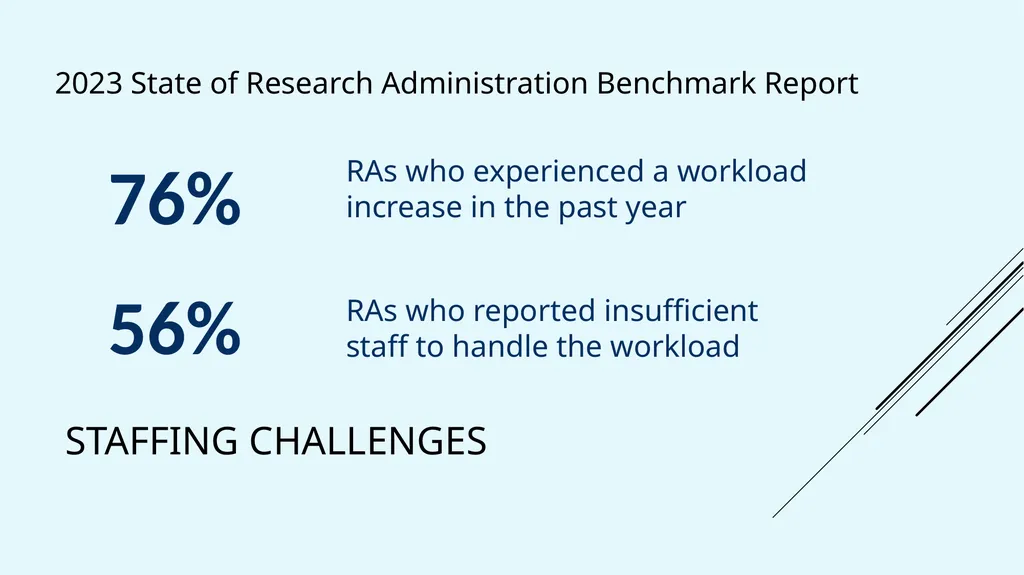
Staffing challenges 2023 State of Research Administration Benchmark Report 76% RAs who experienced a workload increase in the past year 56% RAs who reported insufficient staff to handle the workload<br>
09
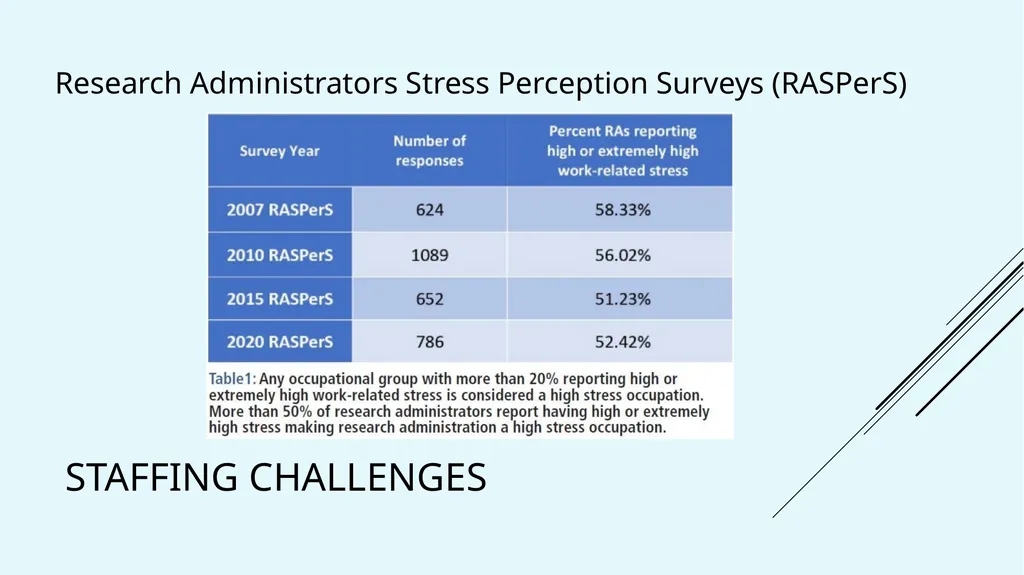
Staffing challenges Research Administrators Stress Perception Surveys (RASPerS)<br>
10
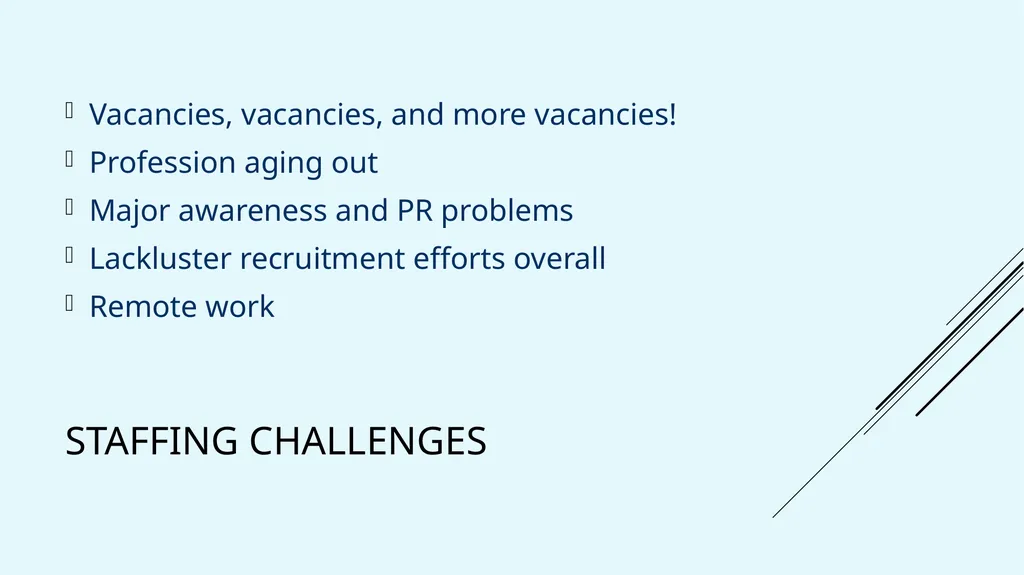
Staffing challenges Vacancies, vacancies, and more vacancies!
Profession aging out
Major awareness and PR problems
Lackluster recruitment efforts overall
Remote work<br>
11
Flaws in traditional workload measurements<br>
12
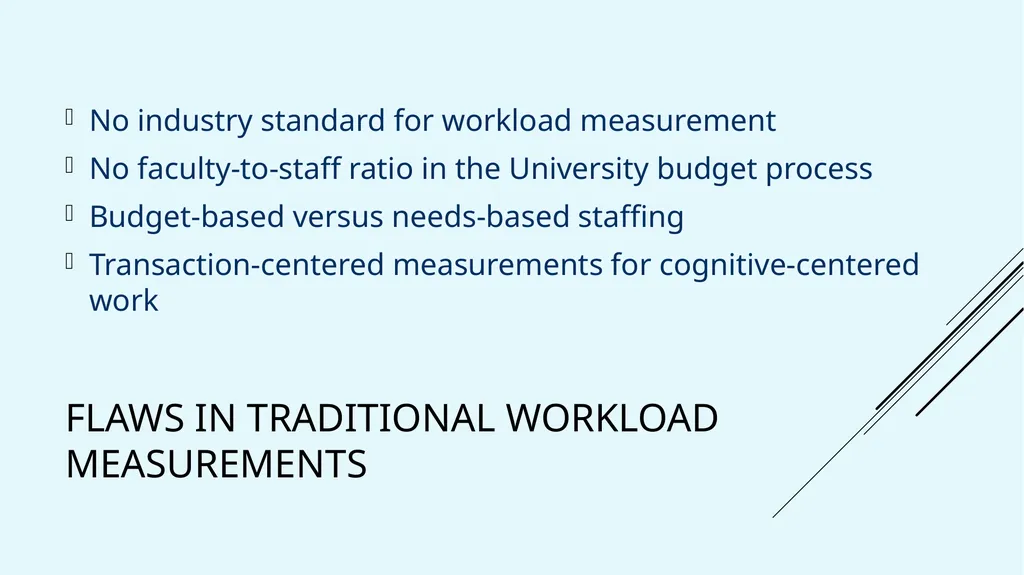
Flaws in traditional workload measurements No industry standard for workload measurement
No faculty-to-staff ratio in the University budget process
Budget-based versus needs-based staffing
Transaction-centered measurements for cognitive-centered work<br>
13
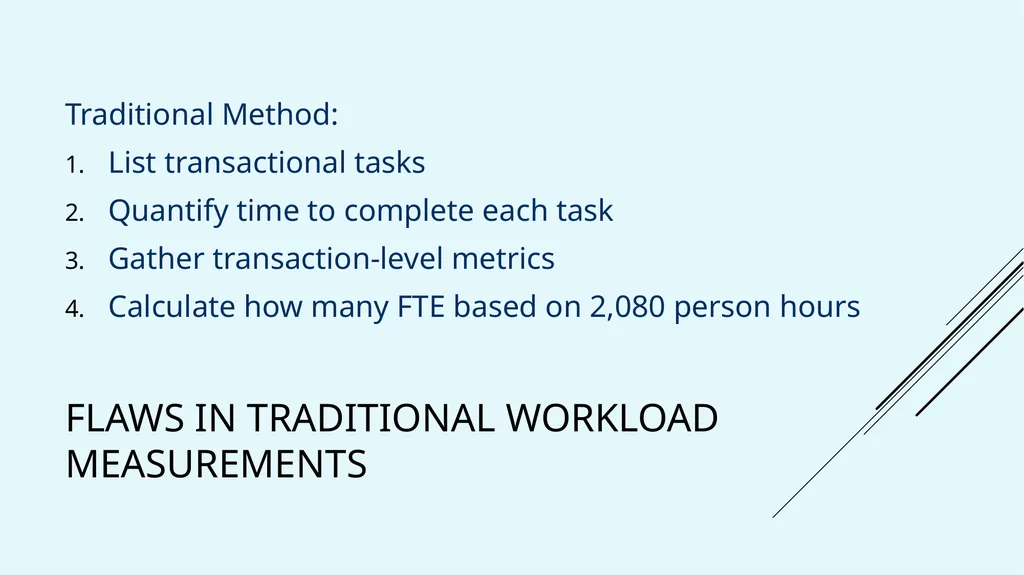
Flaws in traditional workload measurements Traditional Method:
List transactional tasks
Quantify time to complete each task
Gather transaction-level metrics
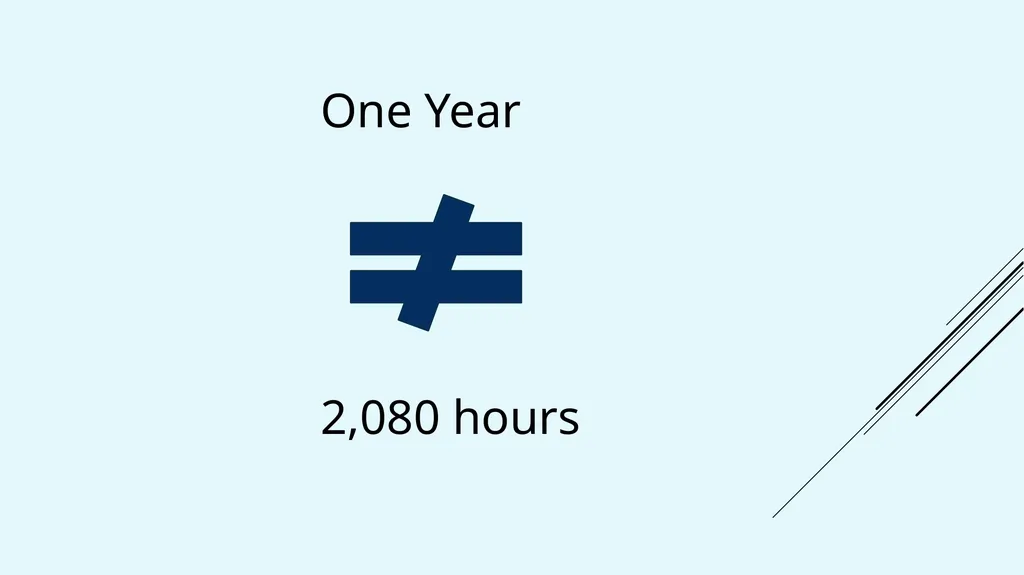
Calculate how many FTE based on 2,080 person hours<br>
14
One Year 2,080 hours<br>
15
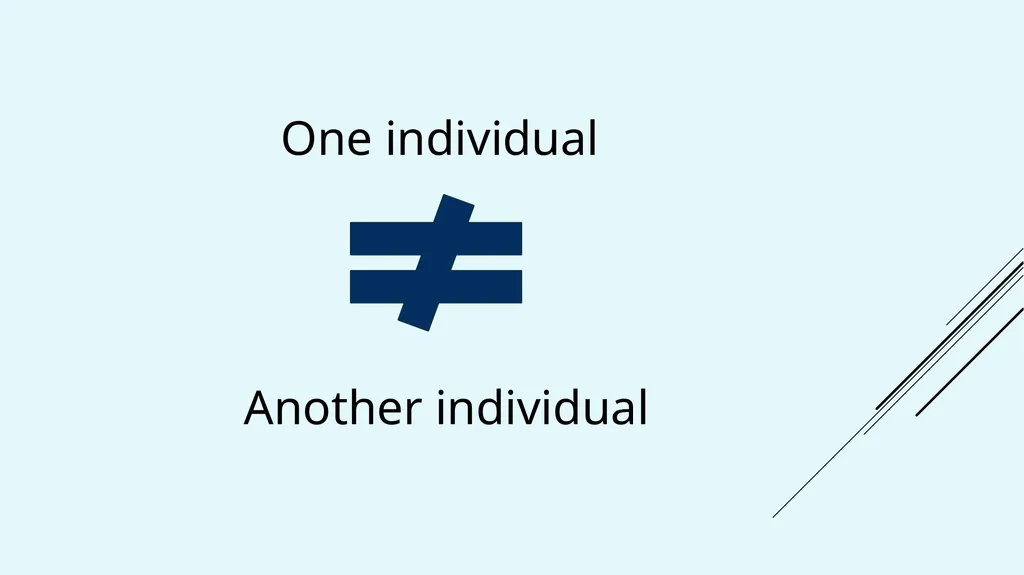
One individual Another individual<br>
16
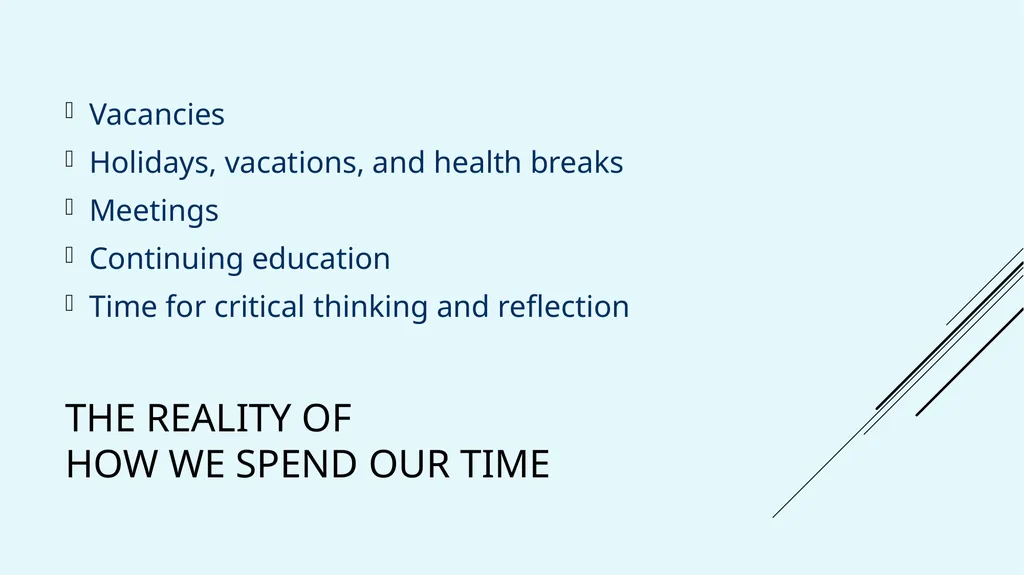
The reality of how we spend our time How 2,080 hours is a false premise<br>
17
The reality of how we spend our time Vacancies
Holidays, vacations, and health breaks
Meetings
Continuing education
Time for critical thinking and reflection<br>
18
The reality of individual capacity Why we shouldn’t count all employees as 1 FTE<br>
19
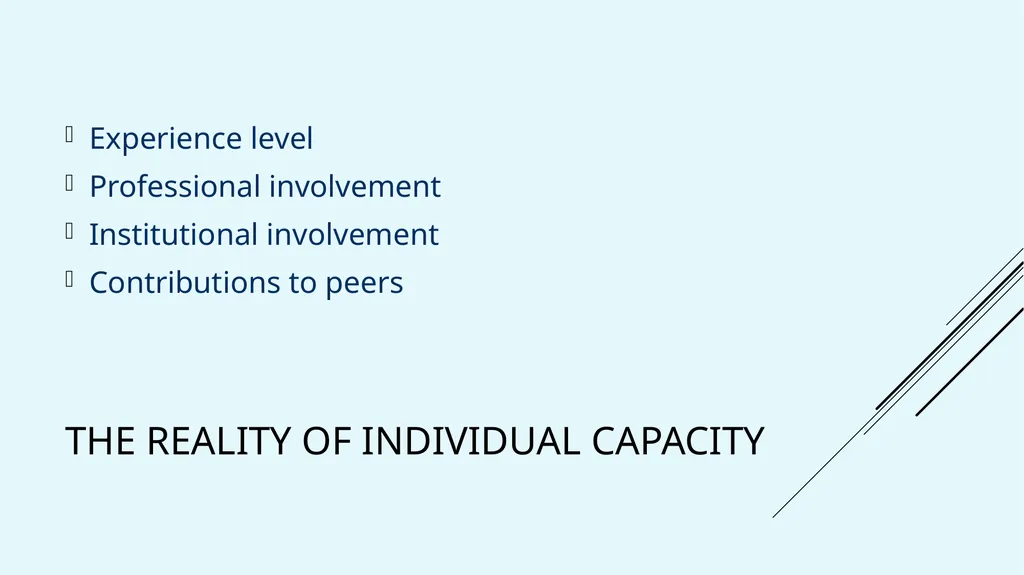
The reality of individual Capacity Experience level
Professional involvement
Institutional involvement
Contributions to peers<br>
20
A new formula The concept of Capacity FTE (cFTE)<br>
21
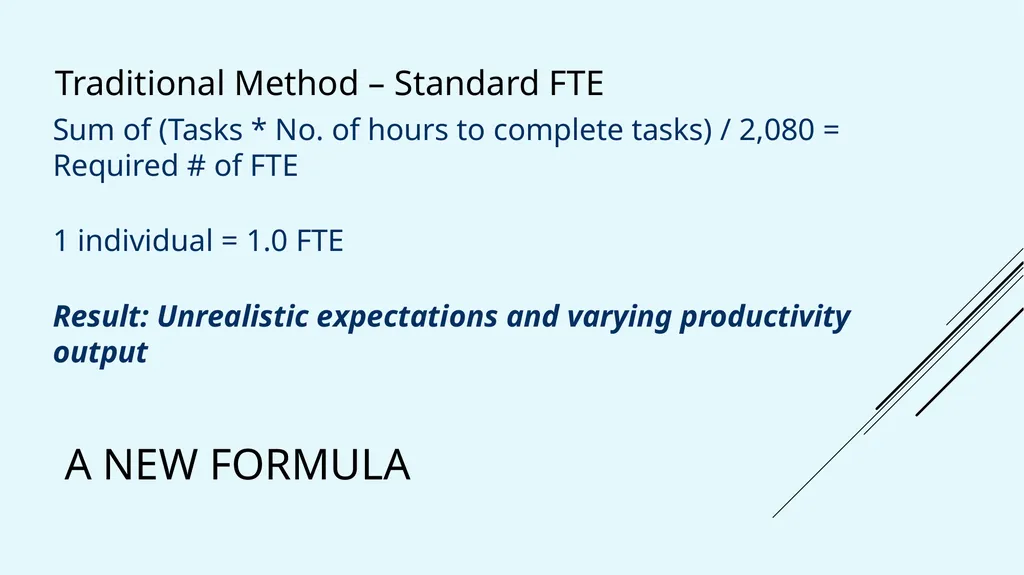
A New formula Traditional Method – Standard FTE Sum of (Tasks * No. of hours to complete tasks) / 2,080 = Required # of FTE
1 individual = 1.0 FTE
Result: Unrealistic expectations and varying productivity output<br>
22
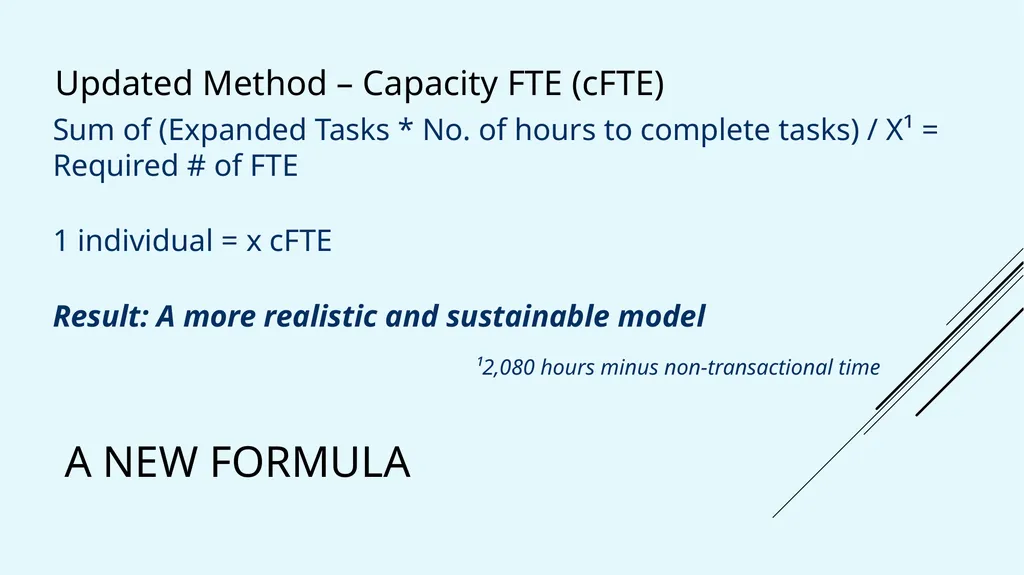
A New formula Updated Method – Capacity FTE (cFTE) Sum of (Expanded Tasks * No. of hours to complete tasks) / X¹ = Required # of FTE
1 individual = x cFTE
Result: A more realistic and sustainable model
¹2,080 hours minus non-transactional time<br>
23
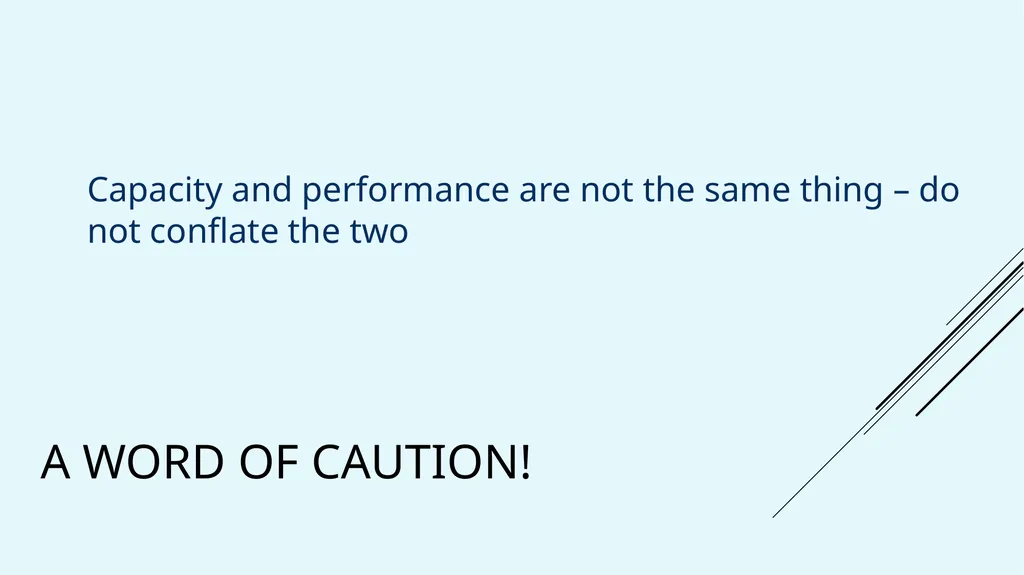
A Word of Caution! Capacity and performance are not the same thing – do not conflate the two<br>
24
Closing thoughts<br>
25
Audience Q&A Session ⓘ Start presenting to display the audience questions on this slide.<br>
26
Your Feedback is Valuable to our Success! Please complete the online survey for this session.<br>