
www.dcu.ie/studentlearning Note Taking ‘To Take Or


Description: www.dcu.iestudentlearning Note Taking To Take Or Not To Take Student Learning Understand why note taking is actually important Explore what to do before, during and after a lecture Learn different methods of note-taking Try it out!
Related Topics
Download Presentation
"www.dcu.ie/studentlearning Note Taking ‘To Take Or" is the property of its rightful owner. Permission is granted to download and print the materials on this website for personal, non-commercial use only, and to display it on your personal computer provided you do not modify the materials and that you retain all copyright notices contained in the materials. By downloading content from our website, you accept the terms of this agreement.
Presentation Transcript
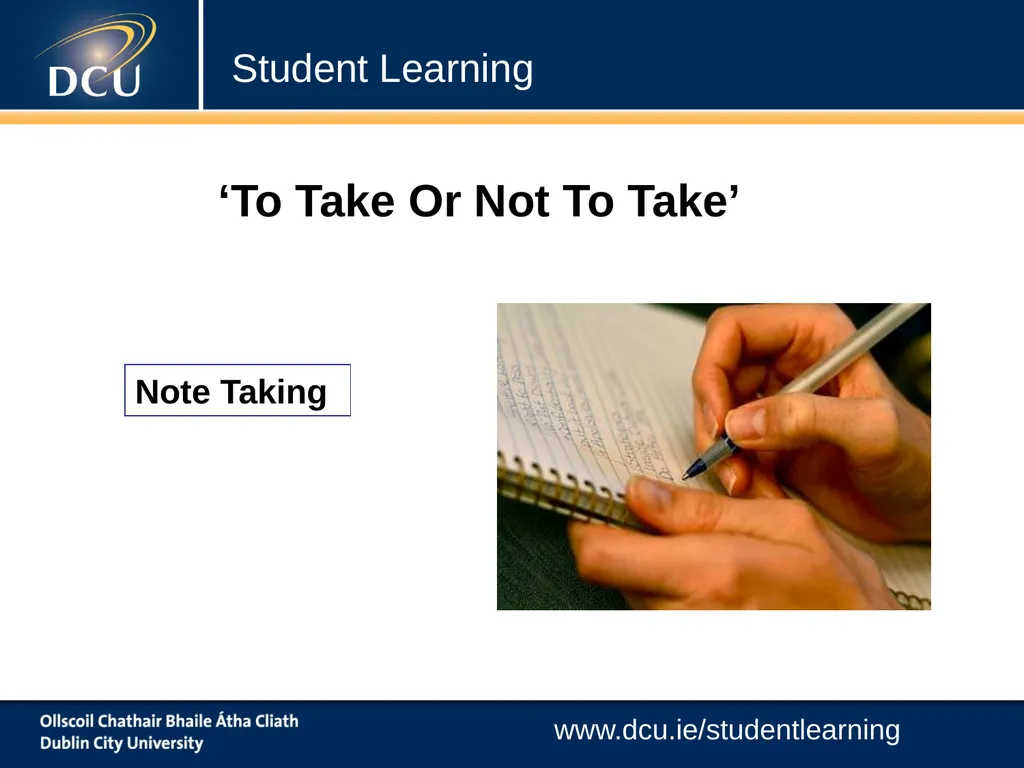
slide1. www.dcu.ie/studentlearning Note Taking ‘To Take Or Not To Take’ Student Learning<br>
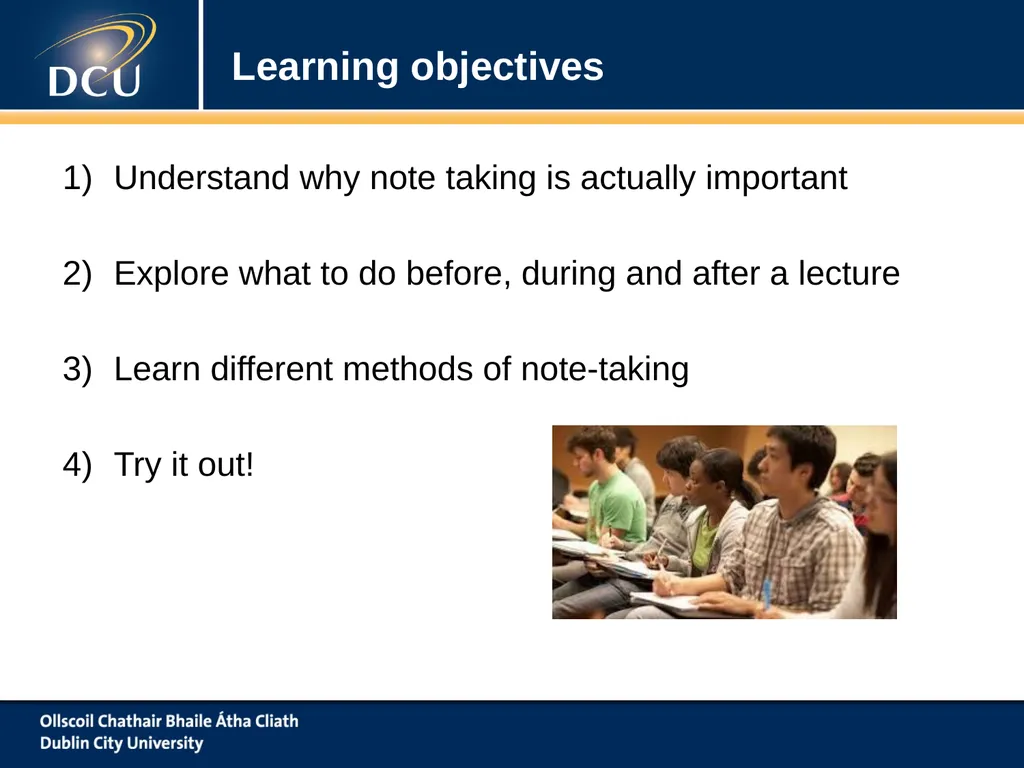
slide2. Understand why note taking is actually important
Explore what to do before, during and after a lecture
Learn different methods of note-taking
Try it out! Learning objectives<br>
slide3. Turn to person next to you - what do you find difficult about note taking? What are the issues?<br>
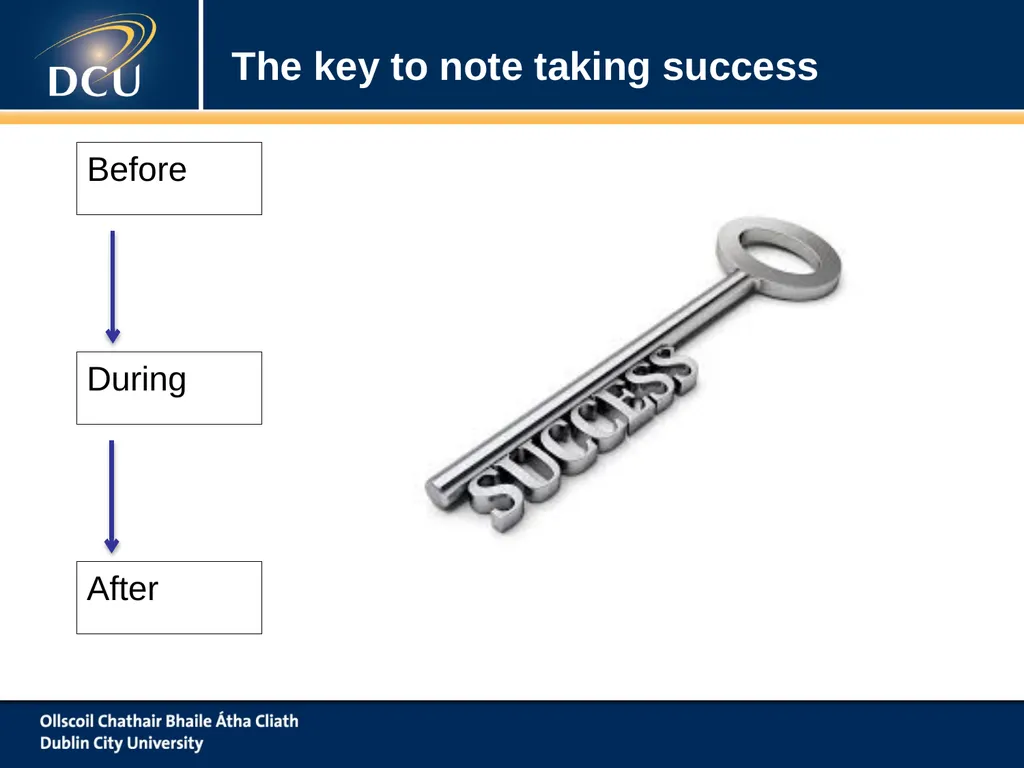
slide4. After During Before The key to note taking success<br>
slide5. Group brainstorm! What could you do before a lecture to get the most out of your note-taking? Before the lecture<br>
slide6. Read previous lecture notes
Download & read new lecture notes from Loop.
Formulate questions to answer
Prepare your note-taking material e.g. use a separate notebook for each module.
Arrive 3-5 mins before the lecture. Before the lecture – top 5 tips<br>
slide7. Several methods of note-taking frequently used;
Annotating powerpoint
Linear/prose style
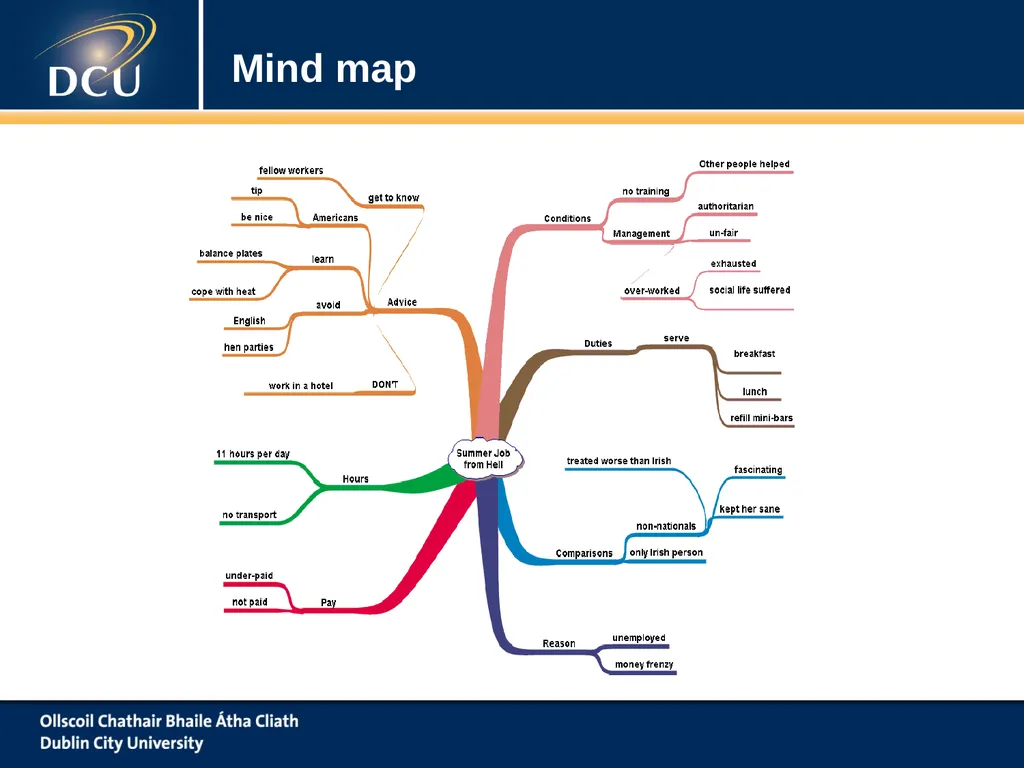
Mind map
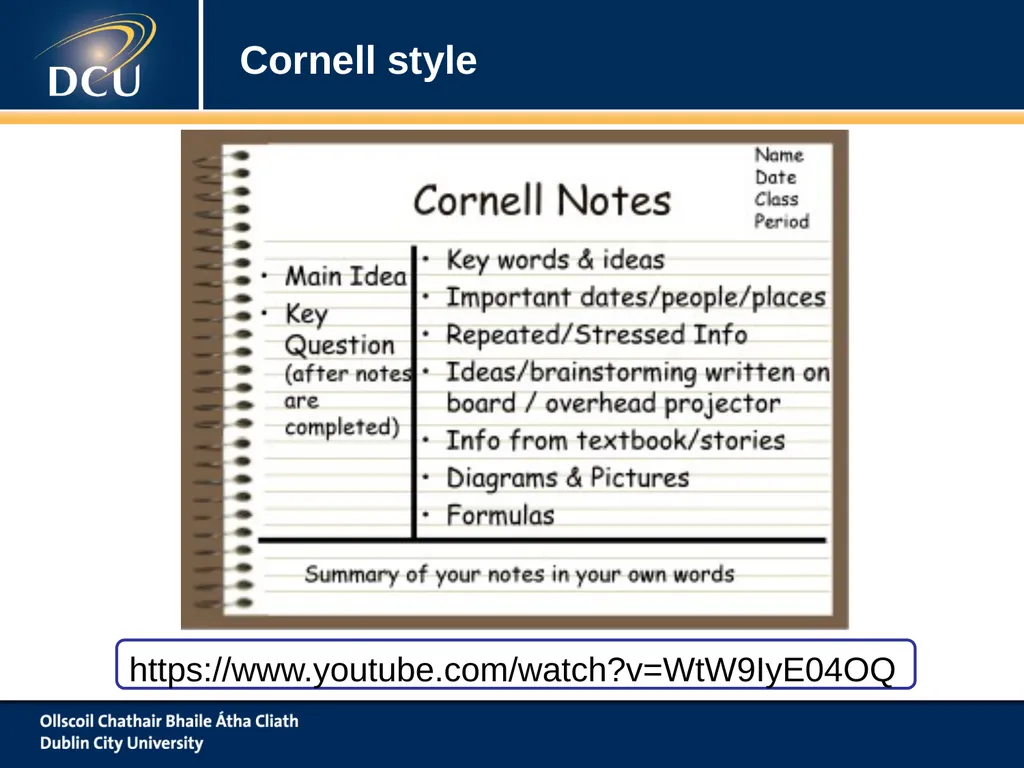
Cornell notes During the lecture<br>
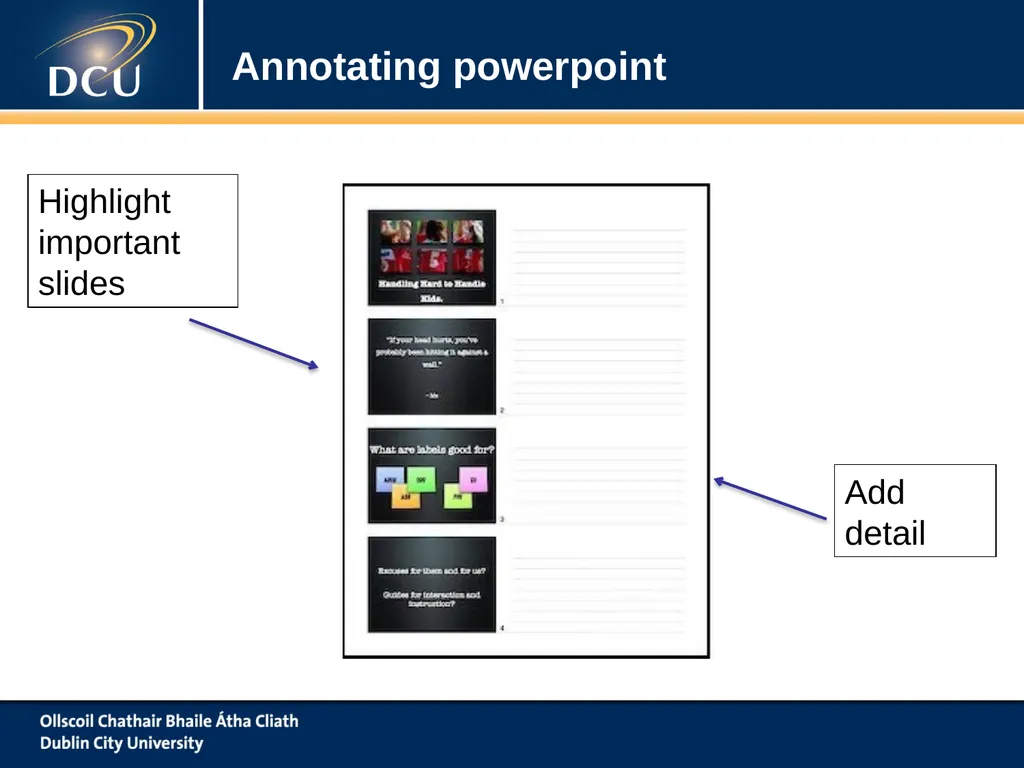
slide8. Add detail Highlight important slides Annotating powerpoint<br>
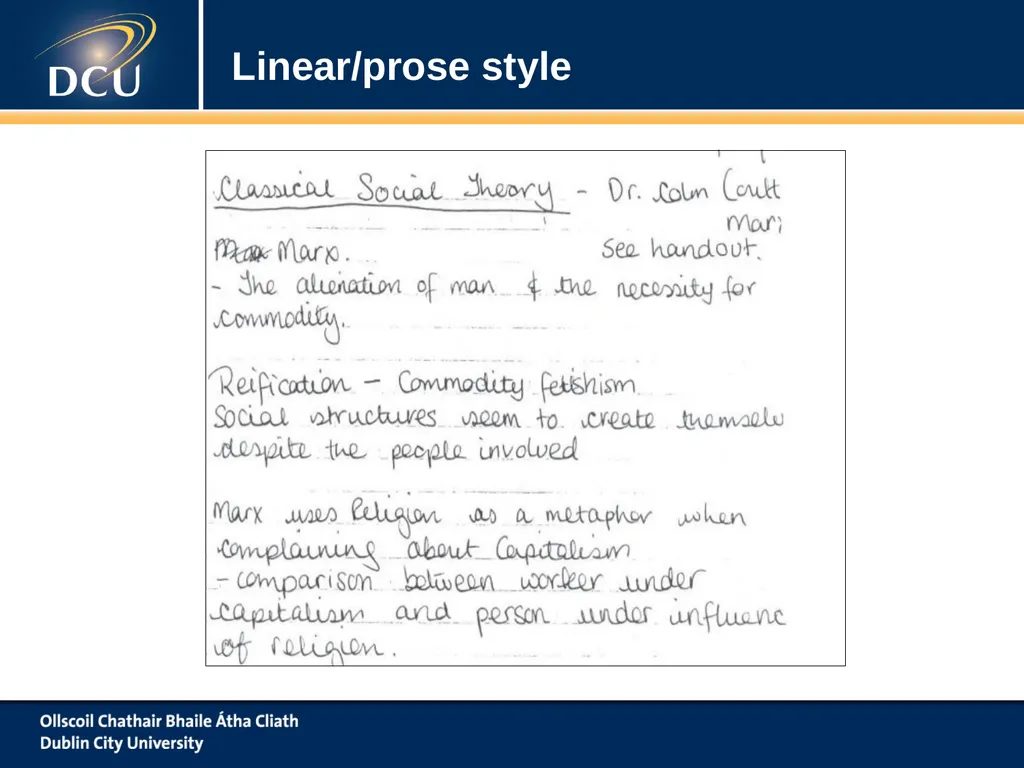
slide9. Linear/prose style<br>
slide10. Mind map<br>
slide11. https://www.youtube.com/watch?v=WtW9IyE04OQ Cornell style<br>
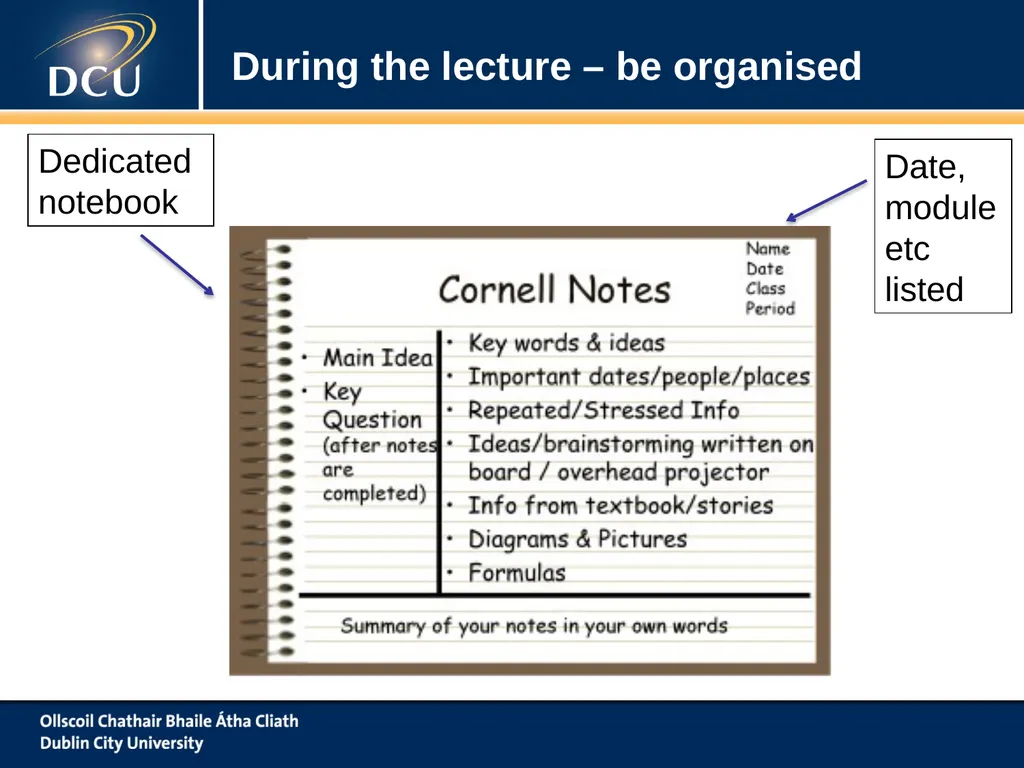
slide12. Dedicated notebook Date, module etc listed During the lecture – be organised<br>
slide13. Group brainstorm
How can we get the most out of the notes we’ve just taken? After the lecture<br>
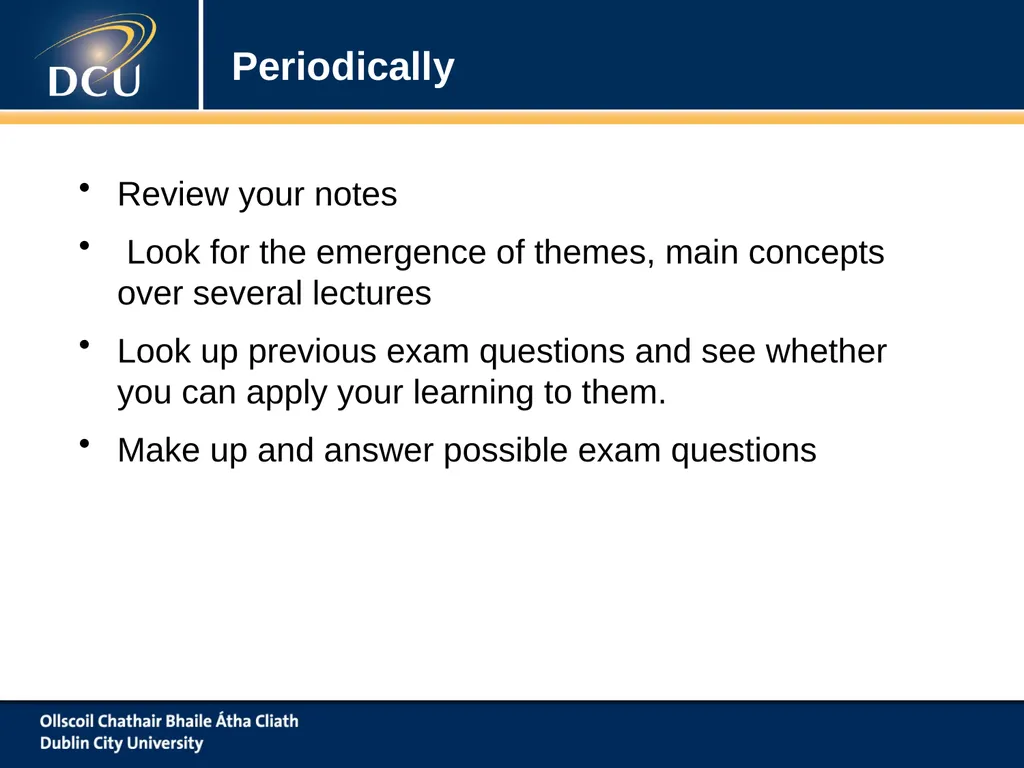
slide14. Review your notes
Look for the emergence of themes, main concepts over several lectures
Look up previous exam questions and see whether you can apply your learning to them.
Make up and answer possible exam questions Periodically<br>
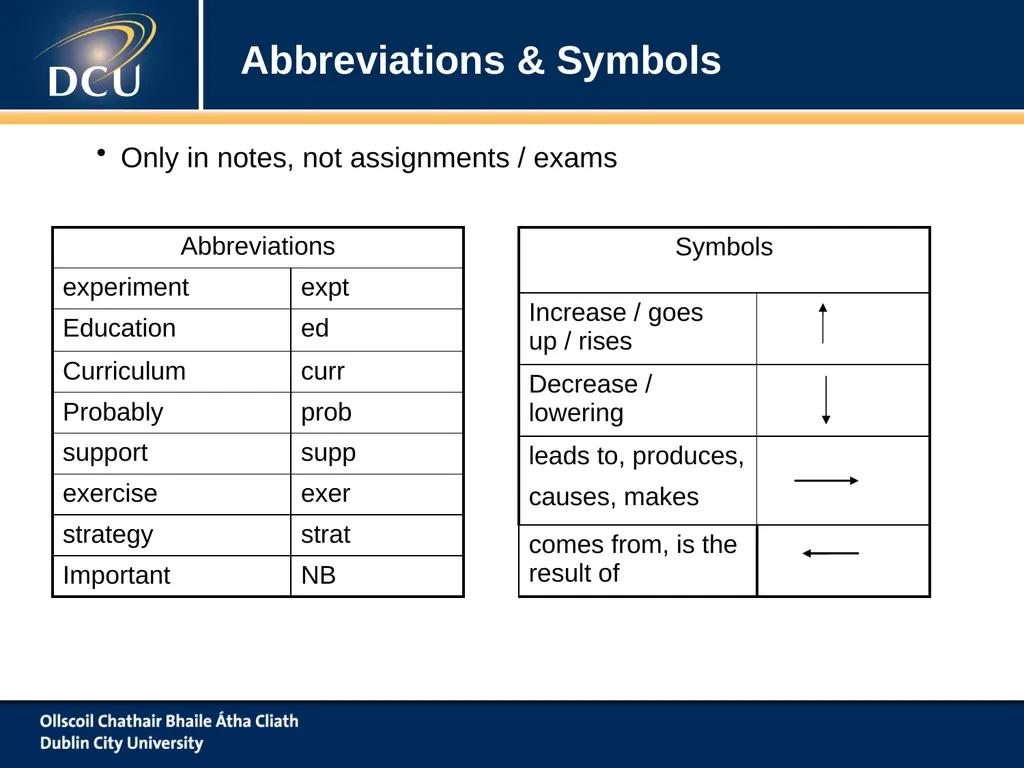
slide15. Only in notes, not assignments / exams Abbreviations & Symbols<br>
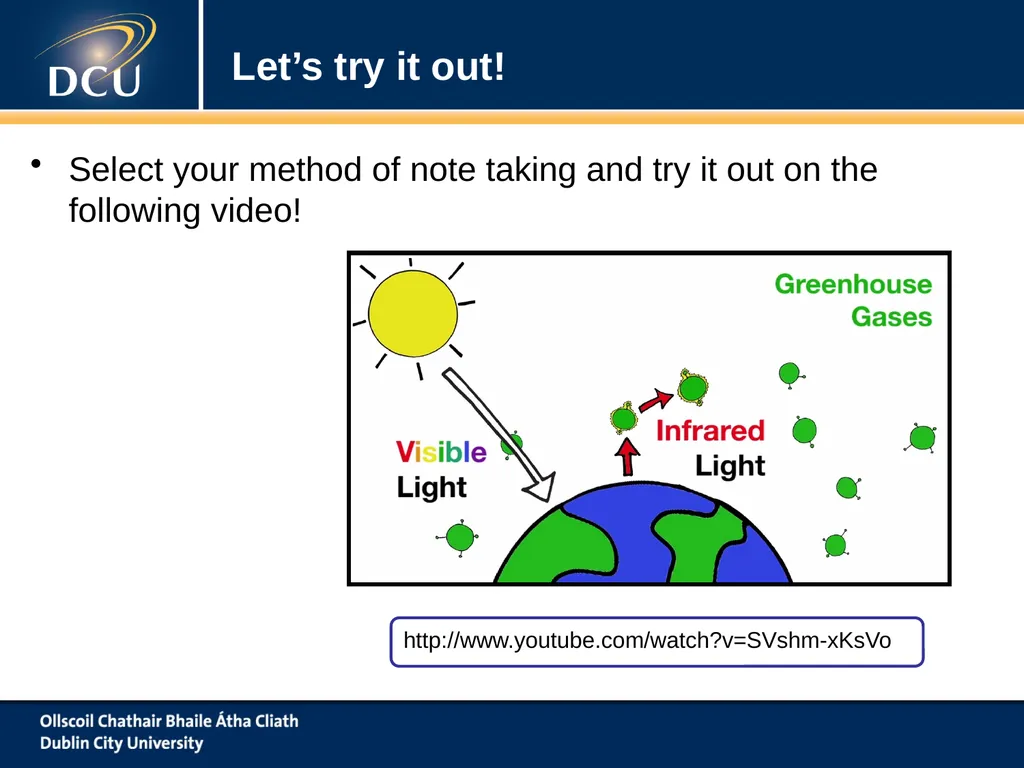
slide16. http://www.youtube.com/watch?v=SVshm-xKsVo Select your method of note taking and try it out on the following video! Let’s try it out!<br>
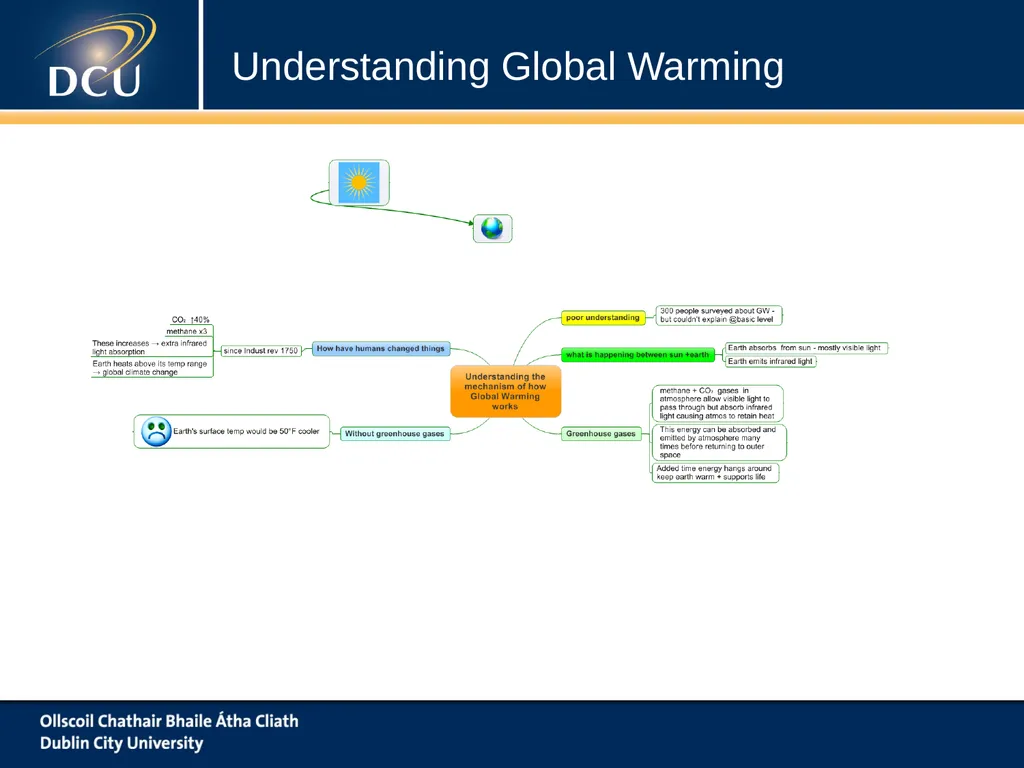
slide17. Understanding Global Warming<br>
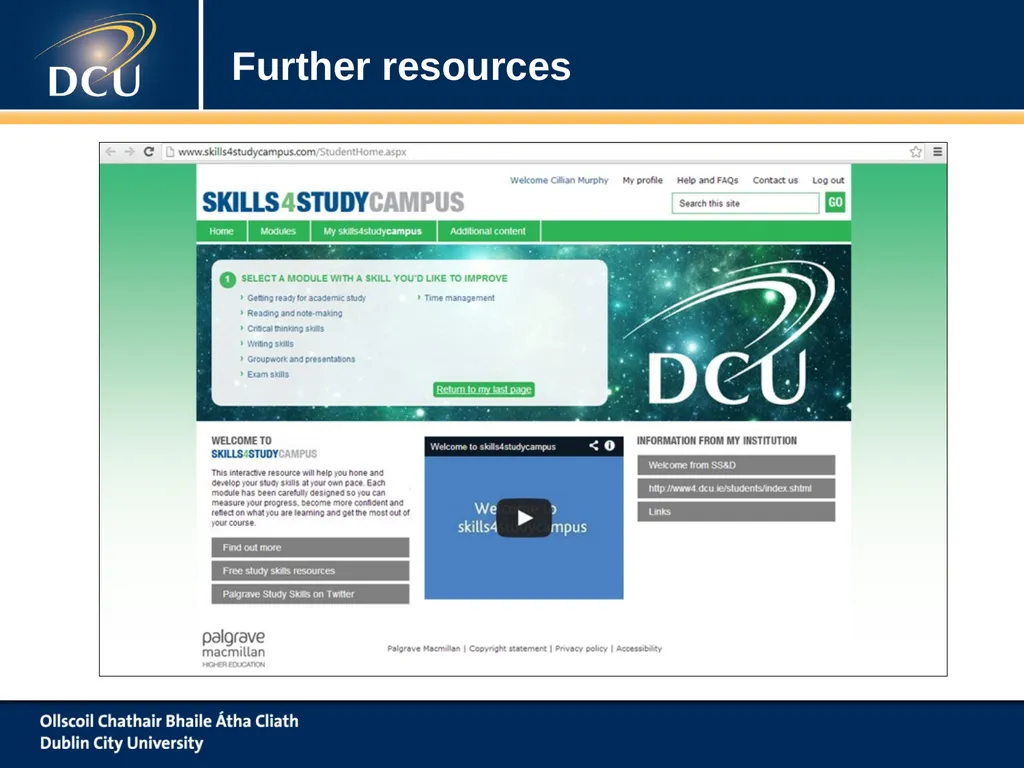
slide18. Further resources<br>
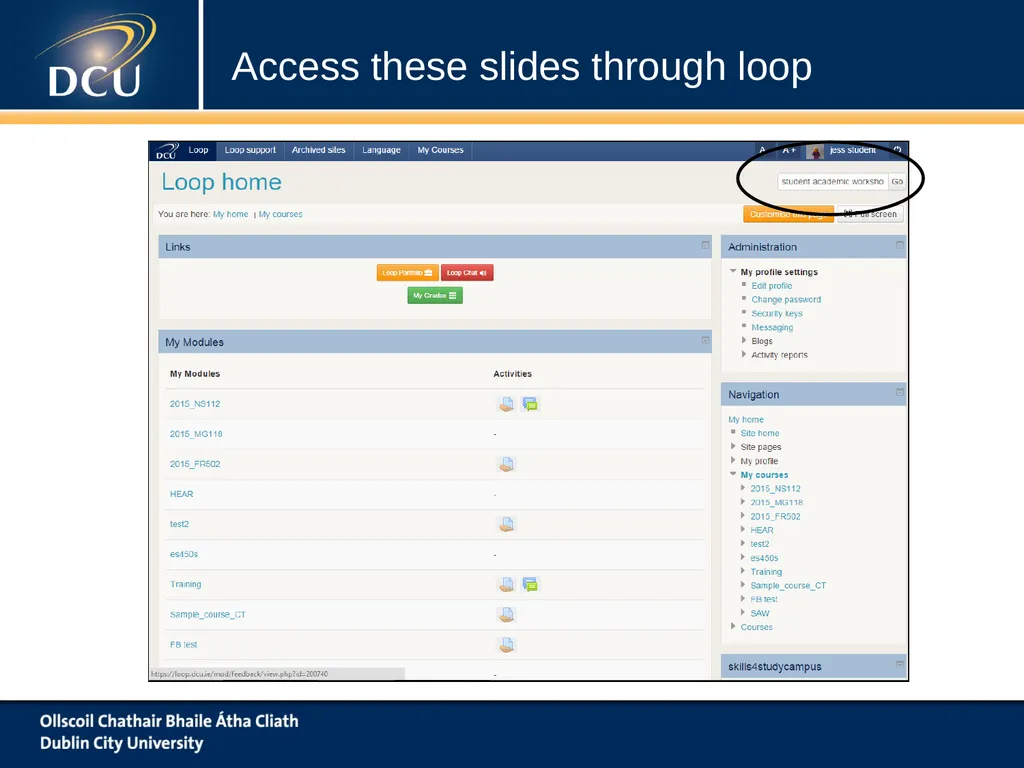
slide19. Access these slides through loop<br>
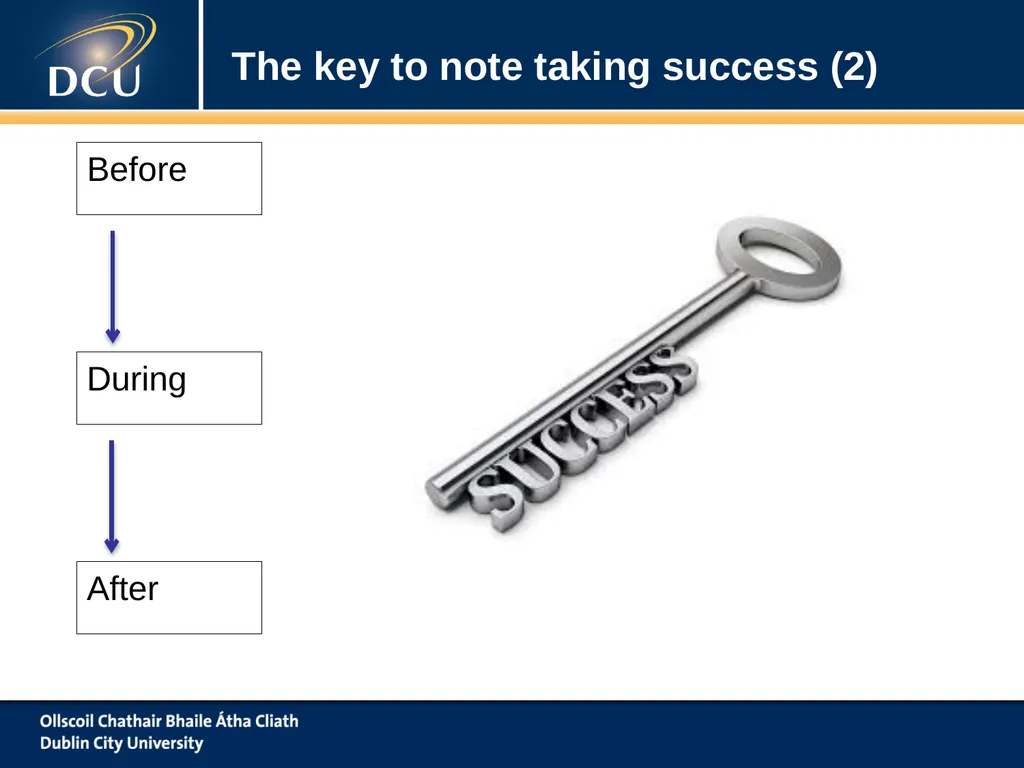
slide20. After During Before The key to note taking success (2)<br>
slide21. Desrochers, J. 2012. How to take Cornell notes [Online]. Available from: https://www.youtube.com/watch?v=WtW9IyE04OQ [Accessed 28 August 2014].
Skills4Study Campus 2014. Reading and note-making [Online]. Available from: http://www.skills4studycampus.com/StudentHome.aspx [Accessed 28 August 2014].
Ward, S. 2009. Why we need global journalism ethics [Online]. Available from: https://www.youtube.com/watch?v=Y82J2thzcEU&list=PL282BE1BDE789E82A&index=17 [Accessed 28 August 2014]. References<br>
slide2. Understand why note taking is actually important
Explore what to do before, during and after a lecture
Learn different methods of note-taking
Try it out! Learning objectives<br>
slide3. Turn to person next to you - what do you find difficult about note taking? What are the issues?<br>
slide4. After During Before The key to note taking success<br>
slide5. Group brainstorm! What could you do before a lecture to get the most out of your note-taking? Before the lecture<br>
slide6. Read previous lecture notes
Download & read new lecture notes from Loop.
Formulate questions to answer
Prepare your note-taking material e.g. use a separate notebook for each module.
Arrive 3-5 mins before the lecture. Before the lecture – top 5 tips<br>
slide7. Several methods of note-taking frequently used;
Annotating powerpoint
Linear/prose style
Mind map
Cornell notes During the lecture<br>
slide8. Add detail Highlight important slides Annotating powerpoint<br>
slide9. Linear/prose style<br>
slide10. Mind map<br>
slide11. https://www.youtube.com/watch?v=WtW9IyE04OQ Cornell style<br>
slide12. Dedicated notebook Date, module etc listed During the lecture – be organised<br>
slide13. Group brainstorm
How can we get the most out of the notes we’ve just taken? After the lecture<br>
slide14. Review your notes
Look for the emergence of themes, main concepts over several lectures
Look up previous exam questions and see whether you can apply your learning to them.
Make up and answer possible exam questions Periodically<br>
slide15. Only in notes, not assignments / exams Abbreviations & Symbols<br>
slide16. http://www.youtube.com/watch?v=SVshm-xKsVo Select your method of note taking and try it out on the following video! Let’s try it out!<br>
slide17. Understanding Global Warming<br>
slide18. Further resources<br>
slide19. Access these slides through loop<br>
slide20. After During Before The key to note taking success (2)<br>
slide21. Desrochers, J. 2012. How to take Cornell notes [Online]. Available from: https://www.youtube.com/watch?v=WtW9IyE04OQ [Accessed 28 August 2014].
Skills4Study Campus 2014. Reading and note-making [Online]. Available from: http://www.skills4studycampus.com/StudentHome.aspx [Accessed 28 August 2014].
Ward, S. 2009. Why we need global journalism ethics [Online]. Available from: https://www.youtube.com/watch?v=Y82J2thzcEU&list=PL282BE1BDE789E82A&index=17 [Accessed 28 August 2014]. References<br>