
Year 3, Unit 3 Right angles Curriculum
KL
Published · 63 slides · 0 views
1 / 1
Description
Year 3, Unit 3 Right angles Curriculum Prioritisation for Primary Maths These materials heavily reflect the prioritisation approach of the ready-to-progress criteria in the DfE Primary Mathematics Guidance 2020 and on the PPTs that
Related Topics
Share
Embed code
Download this presentation From Below
"Year 3, Unit 3 Right angles Curriculum" is the property of its rightful owner. Permission is granted to download and print the materials on this website for personal, non-commercial use only, and to display it on your personal computer provided you do not modify the materials and that you retain all copyright notices contained in the materials. By downloading content from our website, you accept the terms of this agreement.
Presentation Transcript
01
Year 3, Unit 3 Right angles<br>
02
Curriculum Prioritisation for Primary Maths These materials heavily reflect the prioritisation approach of the ready-to-progress criteria in the DfE Primary Mathematics Guidance 2020 and on the PPTs that exemplify them on the NCETM website. They also include other relevant National Curriculum content. Related sections of the NCETM Primary Mastery Professional Development Materials provide small-step teaching guidance.
Ready-to-progress criteria addressed by this unit
Teaching of this unit supports the following criteria from the ‘DfE Mathematics Guidance: key stages 1 & 2’ (the 335-page document available as a download)
3G-1 Page 134 Year 3, Unit 3<br>
Ready-to-progress criteria addressed by this unit
Teaching of this unit supports the following criteria from the ‘DfE Mathematics Guidance: key stages 1 & 2’ (the 335-page document available as a download)
3G-1 Page 134 Year 3, Unit 3<br>
03
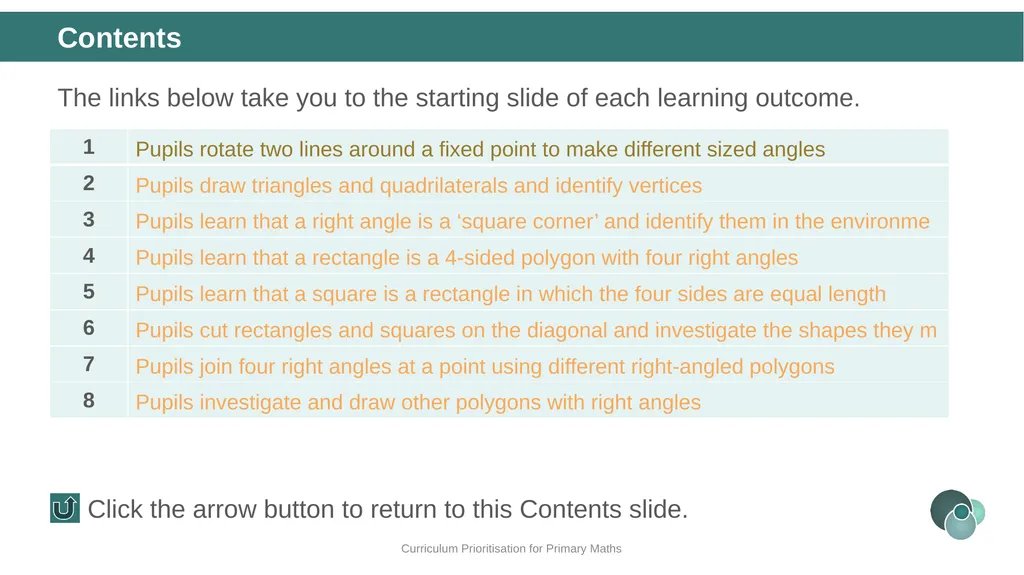
Curriculum Prioritisation for Primary Maths The links below take you to the starting slide of each learning outcome. Click the arrow button to return to this Contents slide. Contents<br>
04
Curriculum Prioritisation for Primary Maths The following slides have been collated to support the teaching of this learning outcome. Year 3, Unit 3, Learning Outcome 1<br>
05
Year 3, Unit 3, Learning Outcome 1 Curriculum Prioritisation for Primary Maths Additional teacher guidance for this outcome should be read first and can be found in the DfE Mathematics guidance. Page references relate to the 335-page document available as a download at the bottom of this web page.<br>
06
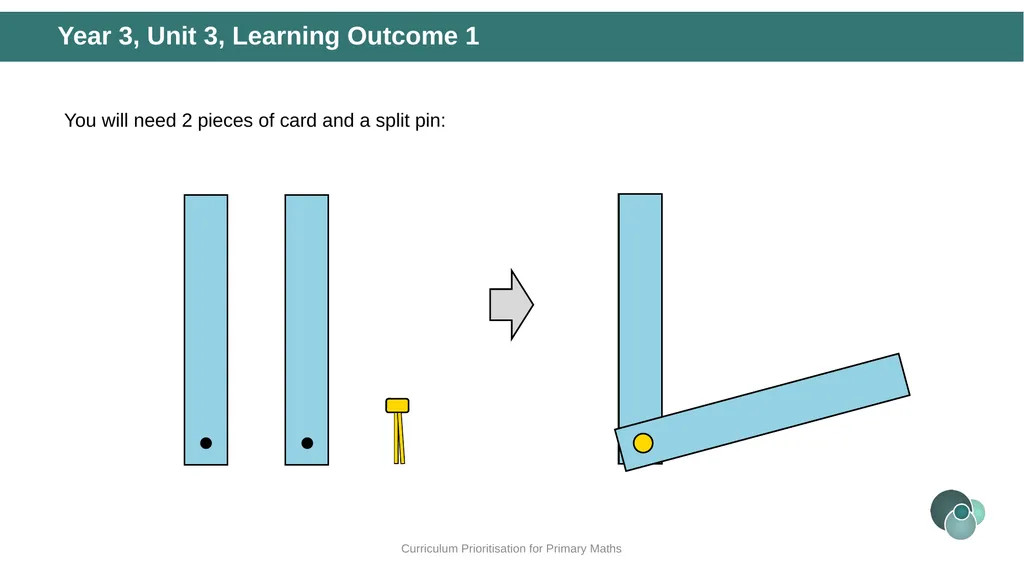
Curriculum Prioritisation for Primary Maths Year 3, Unit 3, Learning Outcome 1 You will need 2 pieces of card and a split pin:<br>
07
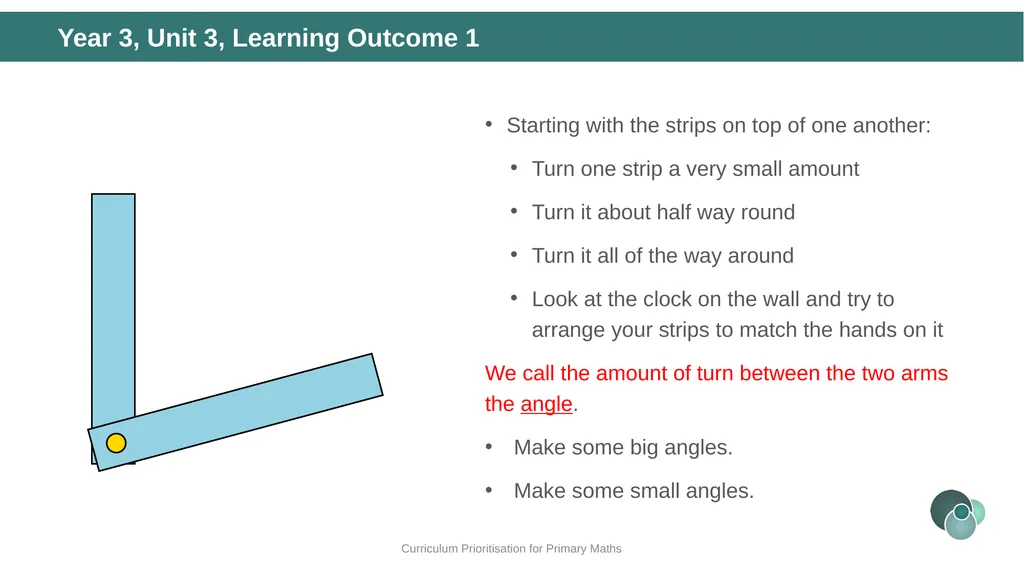
Curriculum Prioritisation for Primary Maths Year 3, Unit 3, Learning Outcome 1 Starting with the strips on top of one another:
Turn one strip a very small amount
Turn it about half way round
Turn it all of the way around
Look at the clock on the wall and try to arrange your strips to match the hands on it
We call the amount of turn between the two arms the angle.
Make some big angles.
Make some small angles.<br>
Turn one strip a very small amount
Turn it about half way round
Turn it all of the way around
Look at the clock on the wall and try to arrange your strips to match the hands on it
We call the amount of turn between the two arms the angle.
Make some big angles.
Make some small angles.<br>
08
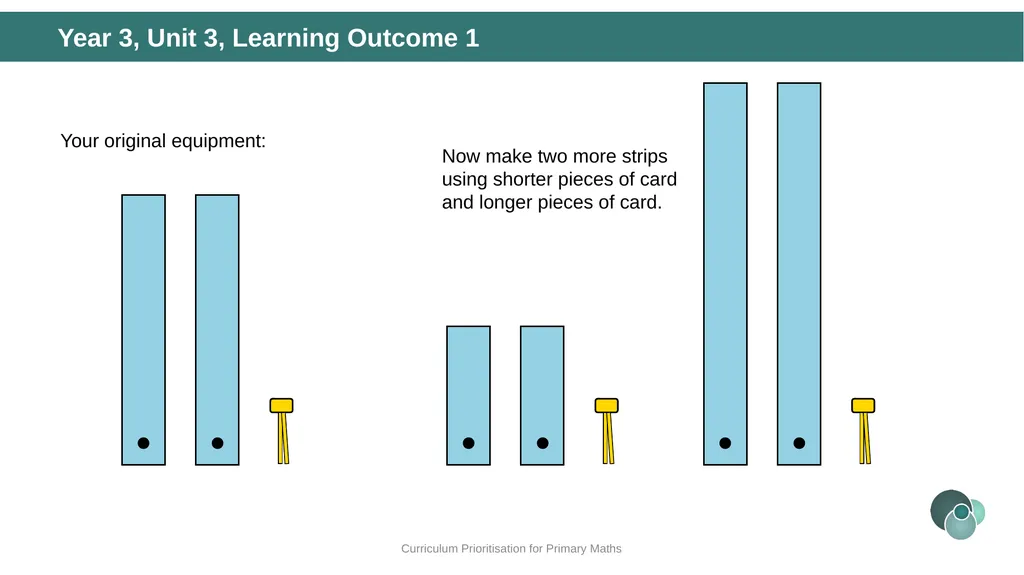
Curriculum Prioritisation for Primary Maths Year 3, Unit 3, Learning Outcome 1 Your original equipment: Now make two more strips using shorter pieces of card and longer pieces of card.<br>
09
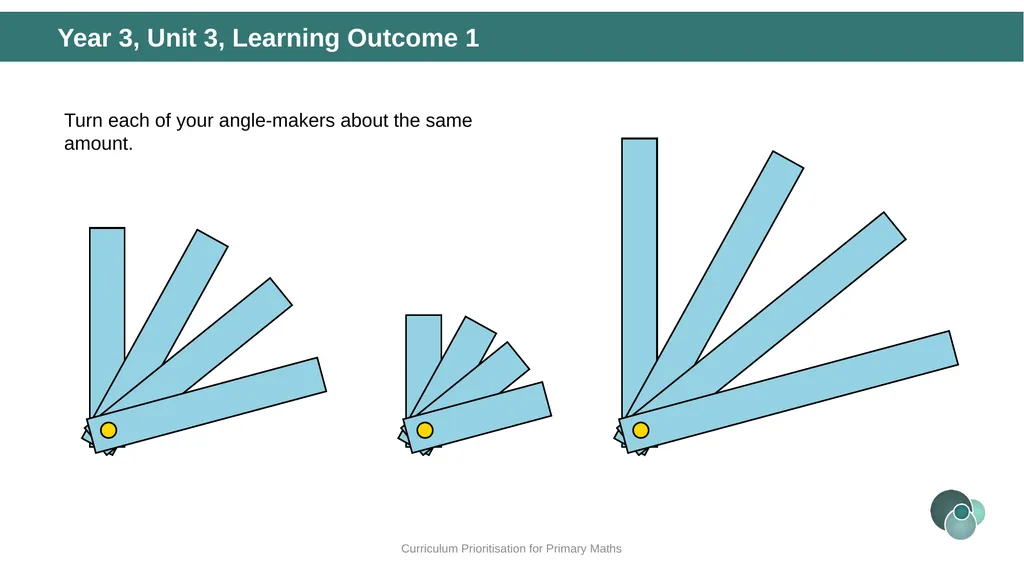
Curriculum Prioritisation for Primary Maths Year 3, Unit 3, Learning Outcome 1 Turn each of your angle-makers about the same amount.<br>
10
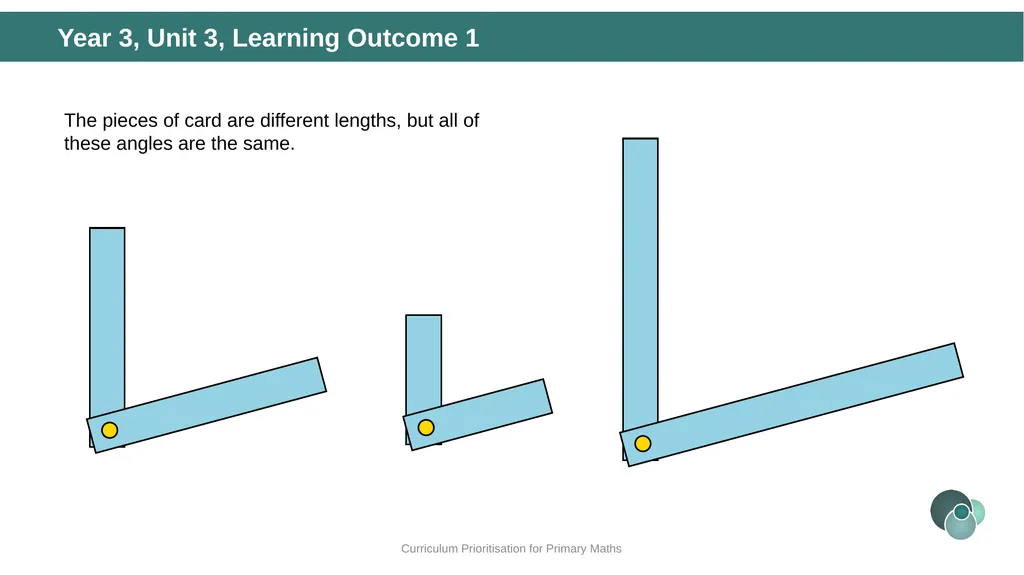
Curriculum Prioritisation for Primary Maths Year 3, Unit 3, Learning Outcome 1 The pieces of card are different lengths, but all of these angles are the same.<br>
11
Curriculum Prioritisation for Primary Maths The following slides have been collated to support the teaching of this learning outcome. Year 3, Unit 3, Learning Outcome 2<br>
12
Year 3, Unit 3, Learning Outcome 2 Curriculum Prioritisation for Primary Maths Additional teacher guidance for this outcome should be read first and can be found in the DfE Mathematics guidance. Page references relate to the 335-page document available as a download at the bottom of this web page.<br>
13
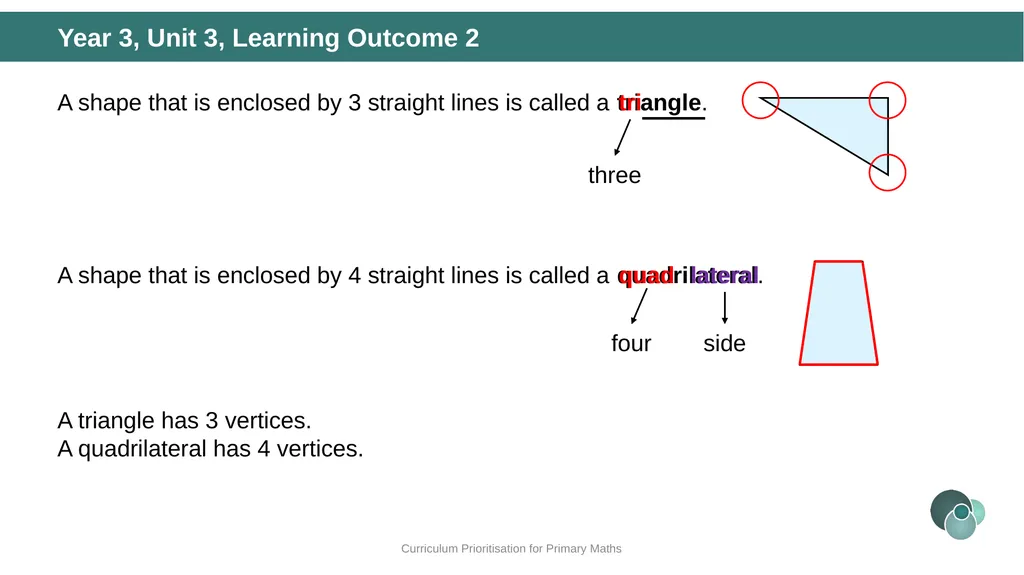
Year 3, Unit 3, Learning Outcome 2 Curriculum Prioritisation for Primary Maths A shape that is enclosed by 3 straight lines is called a triangle. A shape that is enclosed by 4 straight lines is called a quadrilateral. three tri quad four lateral side A triangle has 3 vertices.
A quadrilateral has 4 vertices.<br>
A quadrilateral has 4 vertices.<br>
14
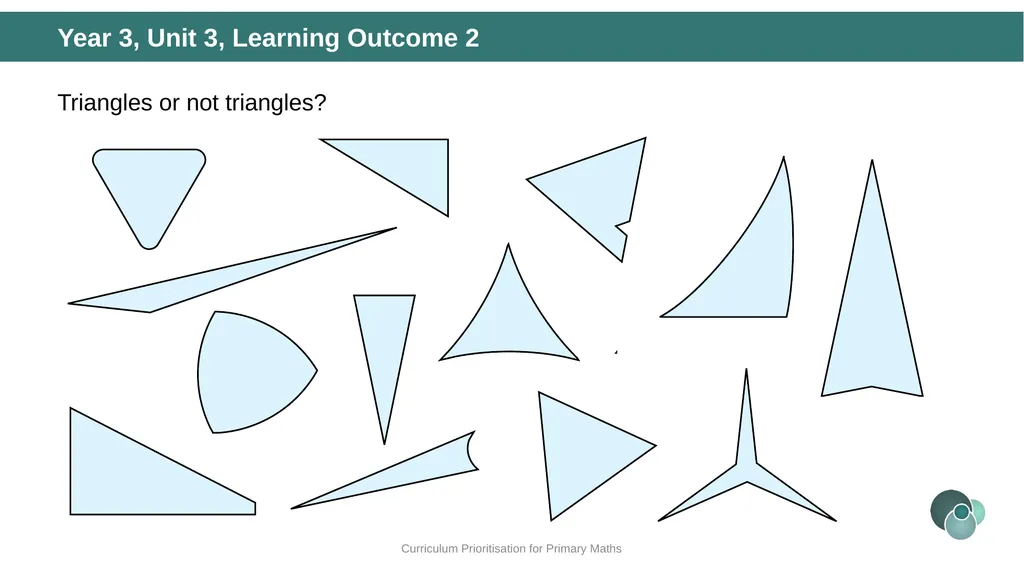
Year 3, Unit 3, Learning Outcome 2 Curriculum Prioritisation for Primary Maths Triangles or not triangles?<br>
15
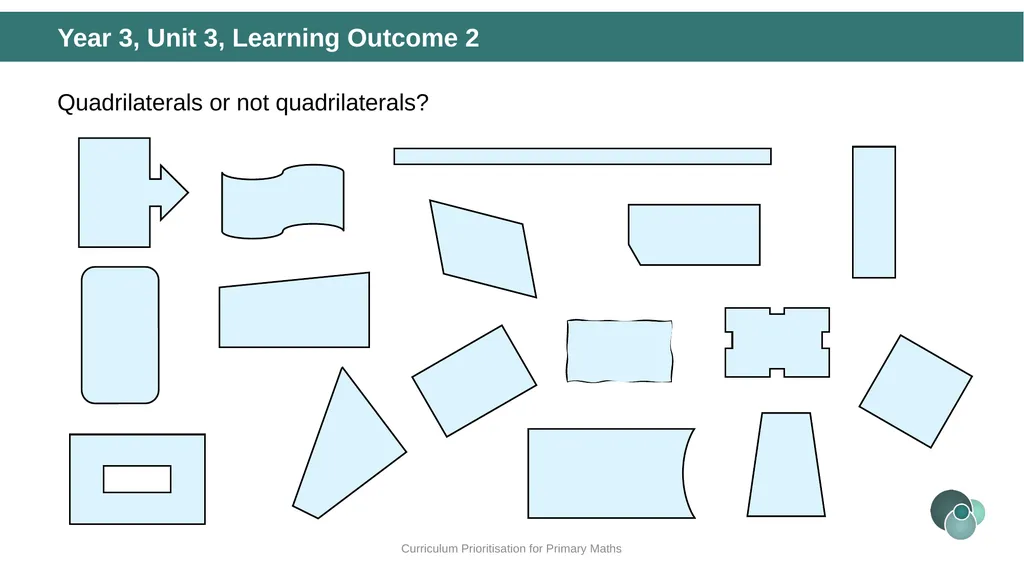
Year 3, Unit 3, Learning Outcome 2 Curriculum Prioritisation for Primary Maths Quadrilaterals or not quadrilaterals?<br>
16
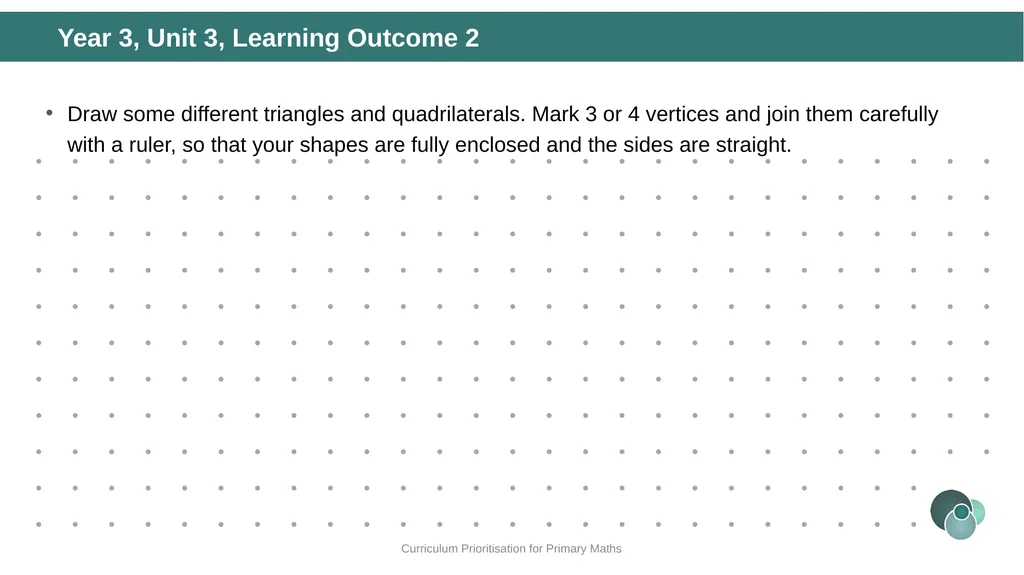
Year 3, Unit 3, Learning Outcome 2 Curriculum Prioritisation for Primary Maths Draw some different triangles and quadrilaterals. Mark 3 or 4 vertices and join them carefully with a ruler, so that your shapes are fully enclosed and the sides are straight.<br>
17
Curriculum Prioritisation for Primary Maths The following slides have been collated to support the teaching of this learning outcome. Year 3, Unit 3, Learning Outcome 3<br>
18
Year 3, Unit 3, Learning Outcome 3 Curriculum Prioritisation for Primary Maths Additional teacher guidance for this outcome should be read first and can be found in the DfE Mathematics guidance. Page references relate to the 335-page document available as a download at the bottom of this web page.<br>
19
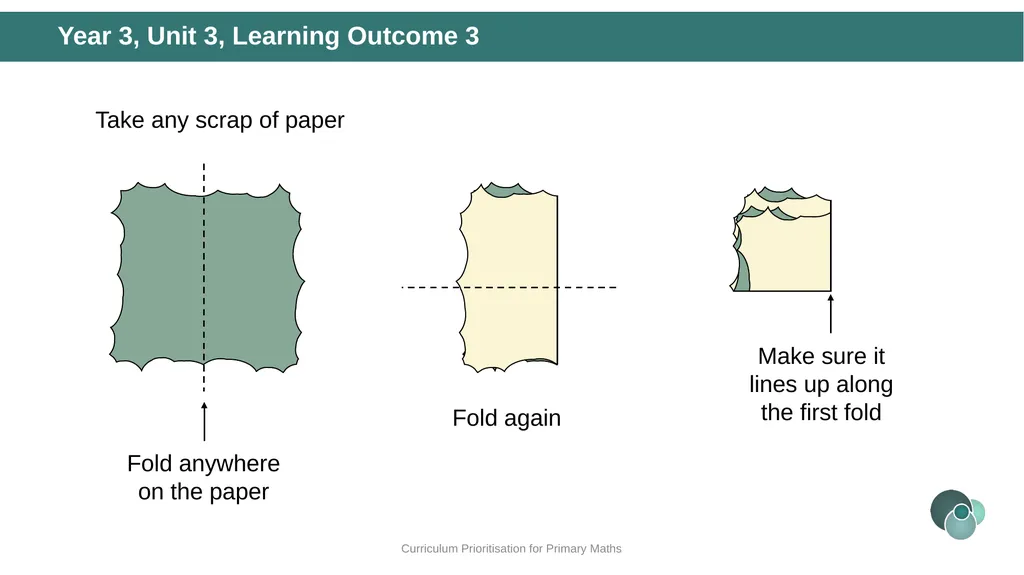
Curriculum Prioritisation for Primary Maths Year 3, Unit 3, Learning Outcome 3 Make sure it lines up along the first fold Fold anywhere on the paper Fold again Take any scrap of paper<br>
20
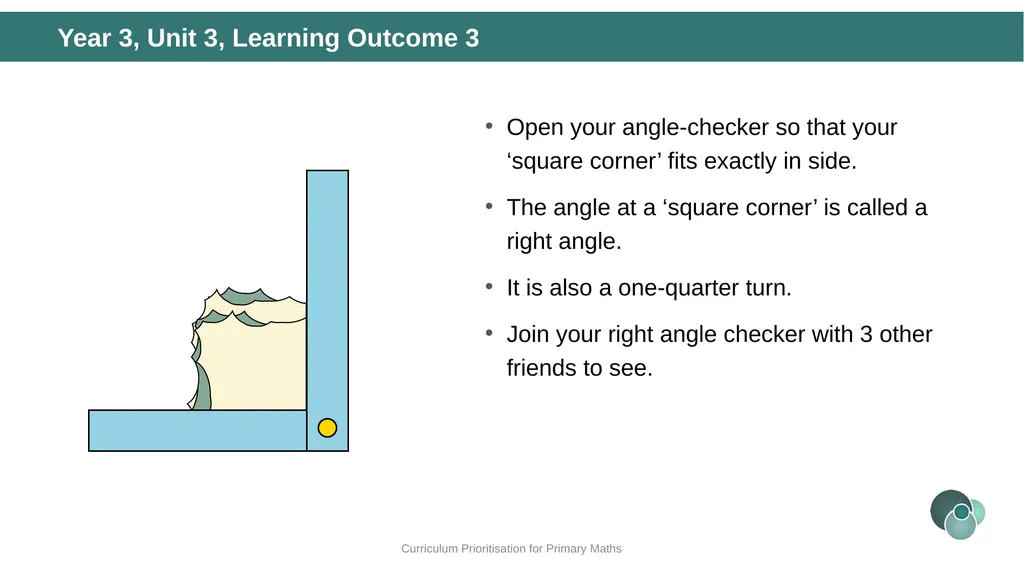
Curriculum Prioritisation for Primary Maths Year 3, Unit 3, Learning Outcome 3 Open your angle-checker so that your ‘square corner’ fits exactly in side.
The angle at a ‘square corner’ is called a right angle.
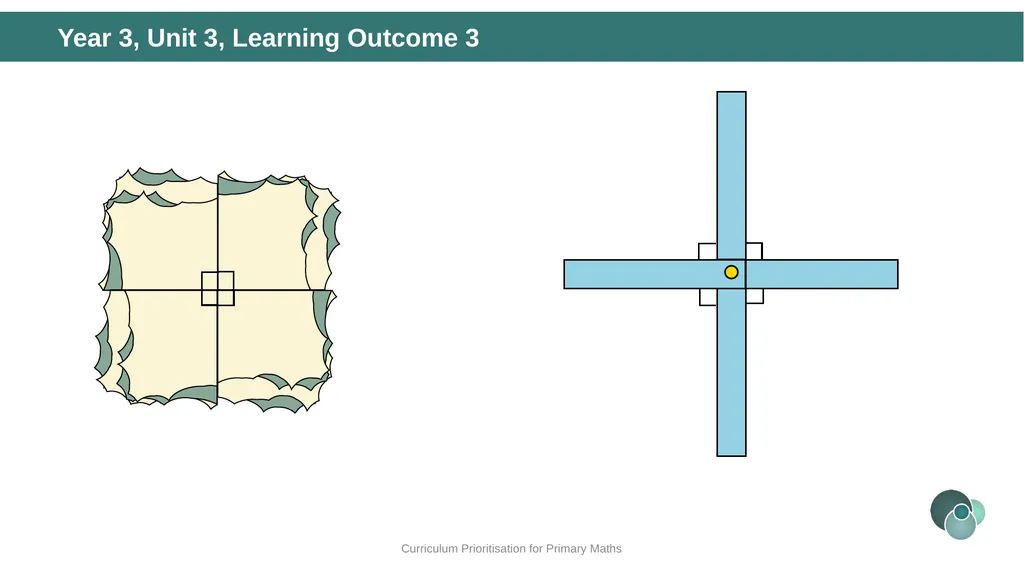
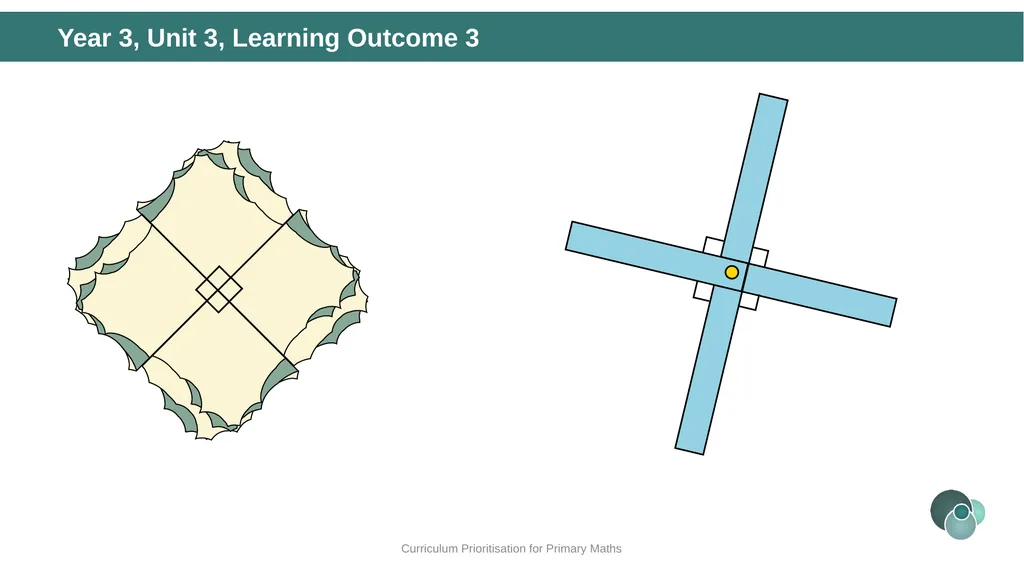
It is also a one-quarter turn.
Join your right angle checker with 3 other friends to see.<br>
The angle at a ‘square corner’ is called a right angle.
It is also a one-quarter turn.
Join your right angle checker with 3 other friends to see.<br>
21
Curriculum Prioritisation for Primary Maths Year 3, Unit 3, Learning Outcome 3<br>
22
Curriculum Prioritisation for Primary Maths Year 3, Unit 3, Learning Outcome 3<br>
23
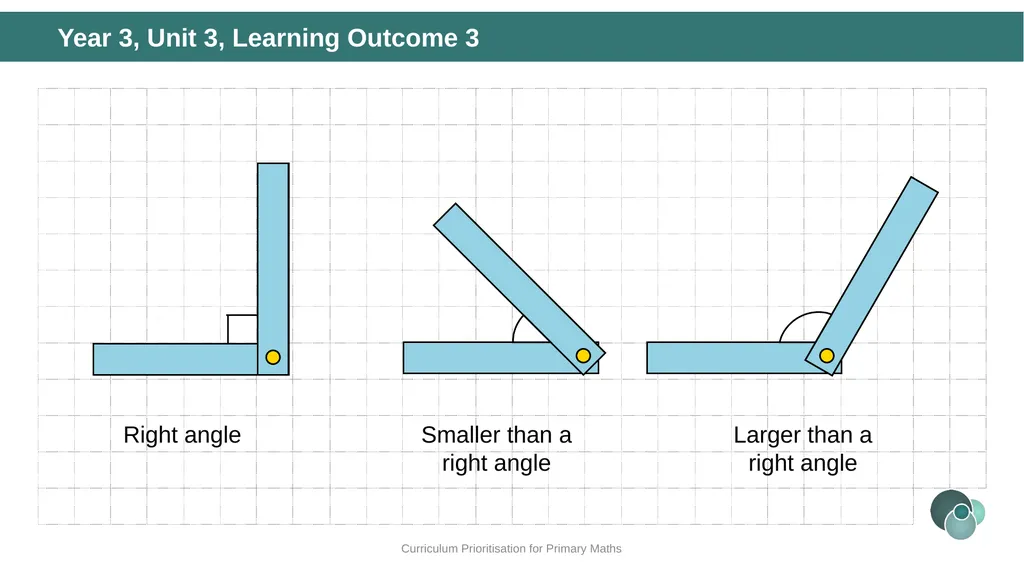
Year 3, Unit 3, Learning Outcome 3 Curriculum Prioritisation for Primary Maths Right angle Smaller than a right angle Larger than a right angle<br>
24
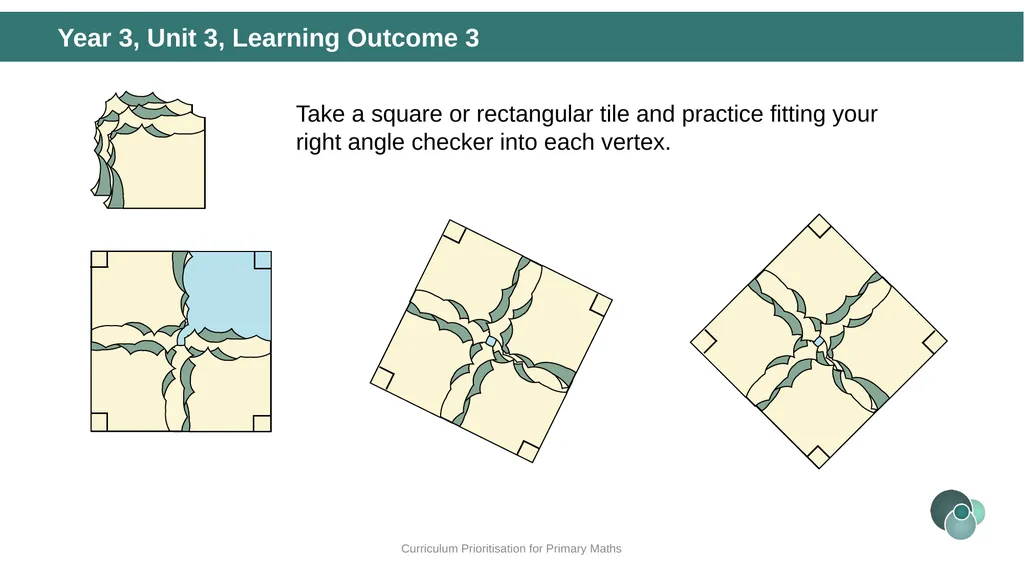
Curriculum Prioritisation for Primary Maths Year 3, Unit 3, Learning Outcome 3 Take a square or rectangular tile and practice fitting your right angle checker into each vertex.<br>
25
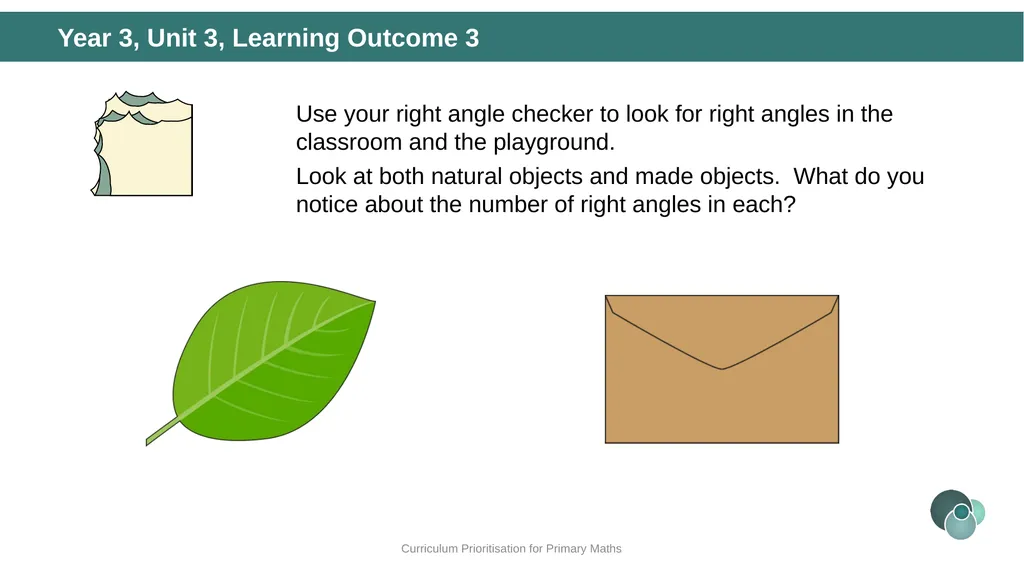
Curriculum Prioritisation for Primary Maths Year 3, Unit 3, Learning Outcome 3 Use your right angle checker to look for right angles in the classroom and the playground.
Look at both natural objects and made objects. What do you notice about the number of right angles in each?<br>
Look at both natural objects and made objects. What do you notice about the number of right angles in each?<br>
26
Curriculum Prioritisation for Primary Maths Year 3, Unit 3, Learning Outcome 3 Look back at the triangles and quadrilaterals you drew previously.
Can you find any vertices where the angle is a right angle?
Mark any that you find, with the right angle symbol.<br>
Can you find any vertices where the angle is a right angle?
Mark any that you find, with the right angle symbol.<br>
27
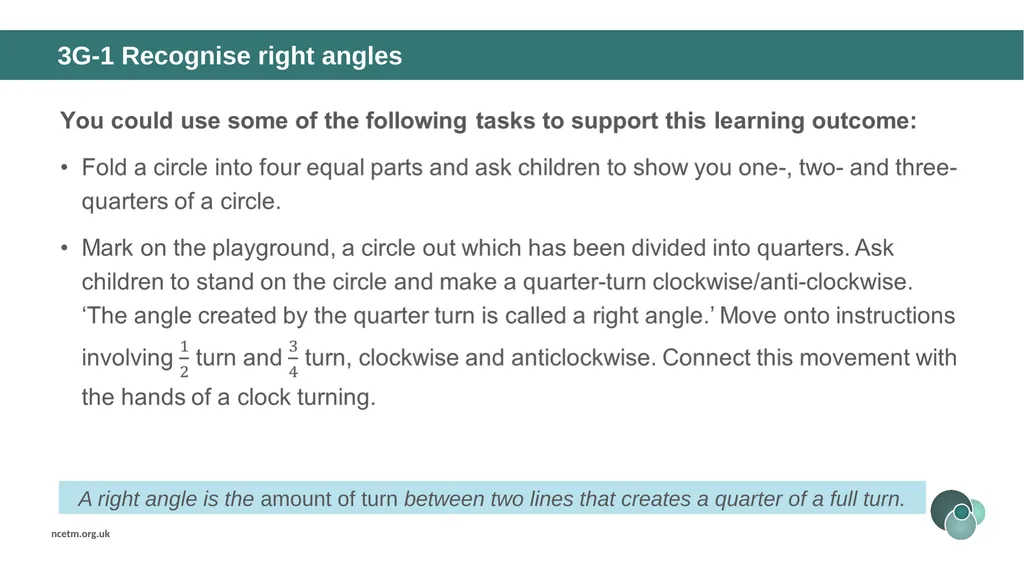
3G-1 Recognise right angles A right angle is the amount of turn between two lines that creates a quarter of a full turn.<br>
28
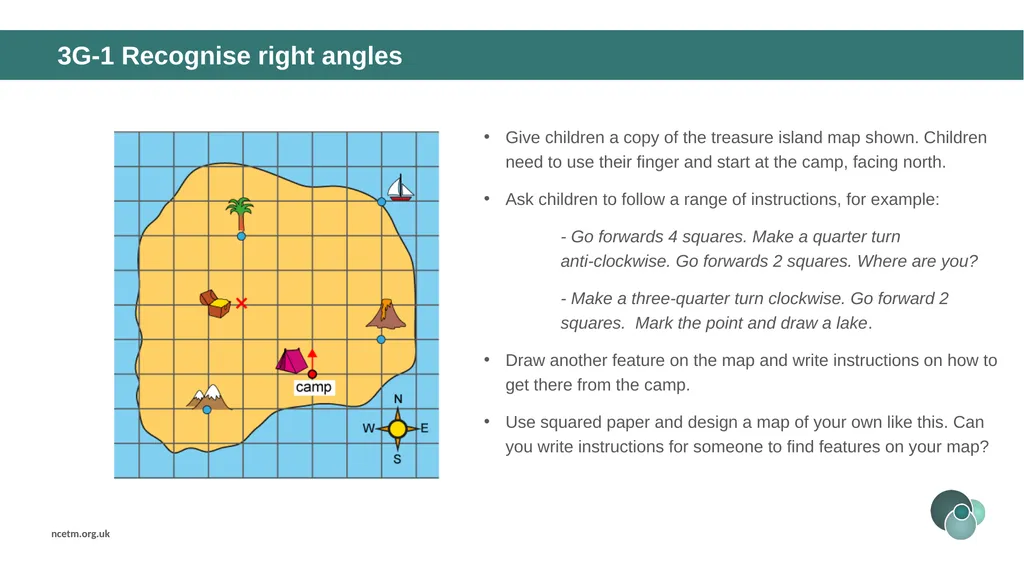
Give children a copy of the treasure island map shown. Children need to use their finger and start at the camp, facing north.
Ask children to follow a range of instructions, for example:
- Go forwards 4 squares. Make a quarter turn anti-clockwise. Go forwards 2 squares. Where are you?
- Make a three-quarter turn clockwise. Go forward 2 squares. Mark the point and draw a lake.
Draw another feature on the map and write instructions on how to get there from the camp.
Use squared paper and design a map of your own like this. Can you write instructions for someone to find features on your map? 3G-1 Recognise right angles<br>
Ask children to follow a range of instructions, for example:
- Go forwards 4 squares. Make a quarter turn anti-clockwise. Go forwards 2 squares. Where are you?
- Make a three-quarter turn clockwise. Go forward 2 squares. Mark the point and draw a lake.
Draw another feature on the map and write instructions on how to get there from the camp.
Use squared paper and design a map of your own like this. Can you write instructions for someone to find features on your map? 3G-1 Recognise right angles<br>
29
3G-1 Recognise right angles You could use some of the following tasks to support this learning outcome:
Children should recognise right angles when they look peculiar. The POG ‘Peculiar, Ordinary, General’ activity can be used to encourage children to think about drawing right angles with different length lines and in different orientations. Start by drawing an ordinary right angle and move to drawing peculiar right angles. Children should focus on what the essential features of a right angle are – the turn between two lines creating a square corner, so that one line is perpendicular to the other. Look at all the peculiar right angles and discuss what is the same or general about them all.
Walk around the school environment and practise identifying right angles, e.g. the corner of a book, hands on a clock at 3 o’clock, corners of bricks and paving slabs etc.
Work in pairs. Child A holds a piece of string out straight. Child B uses their finger to move the string to make a right angle. Does your finger always have to be in the same place on the string to make a right angle? Can you shift your finger and the string so the angle is not a right angle any more? Can you make the angle bigger than a right angle? Can you make it smaller than a right angle?<br>
Children should recognise right angles when they look peculiar. The POG ‘Peculiar, Ordinary, General’ activity can be used to encourage children to think about drawing right angles with different length lines and in different orientations. Start by drawing an ordinary right angle and move to drawing peculiar right angles. Children should focus on what the essential features of a right angle are – the turn between two lines creating a square corner, so that one line is perpendicular to the other. Look at all the peculiar right angles and discuss what is the same or general about them all.
Walk around the school environment and practise identifying right angles, e.g. the corner of a book, hands on a clock at 3 o’clock, corners of bricks and paving slabs etc.
Work in pairs. Child A holds a piece of string out straight. Child B uses their finger to move the string to make a right angle. Does your finger always have to be in the same place on the string to make a right angle? Can you shift your finger and the string so the angle is not a right angle any more? Can you make the angle bigger than a right angle? Can you make it smaller than a right angle?<br>
30
Curriculum Prioritisation for Primary Maths The following slides have been collated to support the teaching of this learning outcome. Year 3, Unit 3, Learning Outcome 4<br>
31
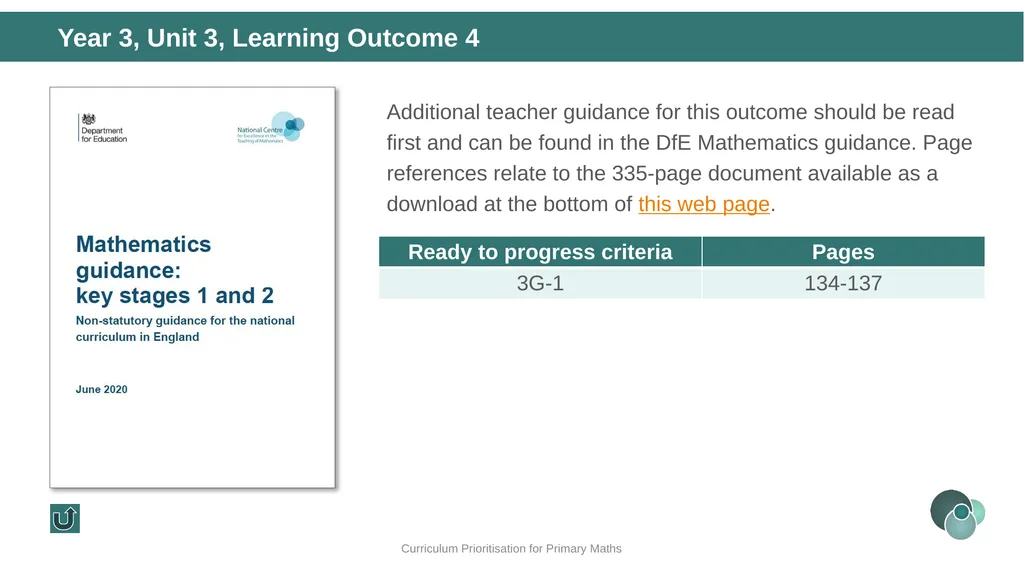
Year 3, Unit 3, Learning Outcome 4 Curriculum Prioritisation for Primary Maths Additional teacher guidance for this outcome should be read first and can be found in the DfE Mathematics guidance. Page references relate to the 335-page document available as a download at the bottom of this web page.<br>
32
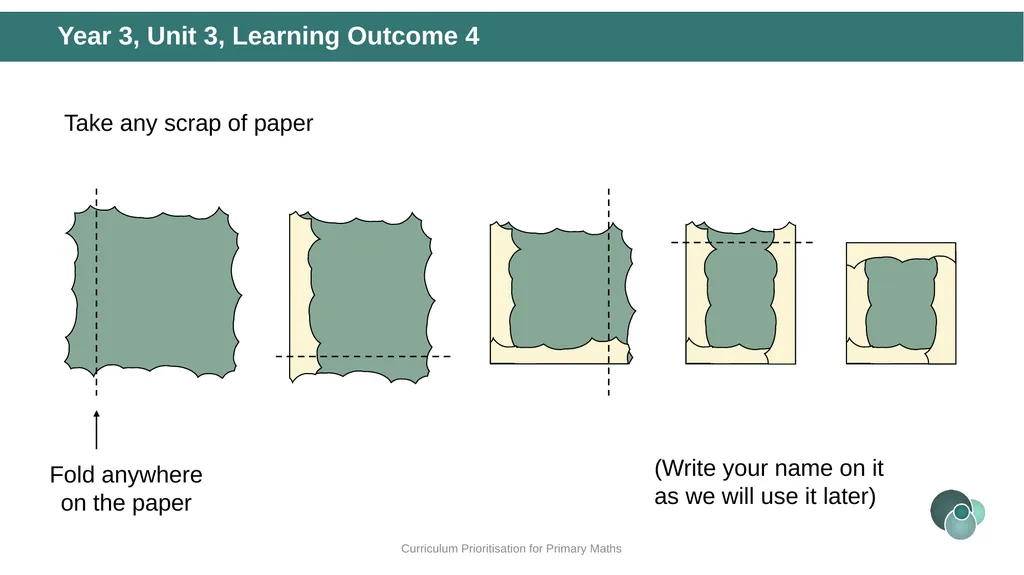
Curriculum Prioritisation for Primary Maths Year 3, Unit 3, Learning Outcome 4 Fold anywhere on the paper Take any scrap of paper (Write your name on it as we will use it later)<br>
33
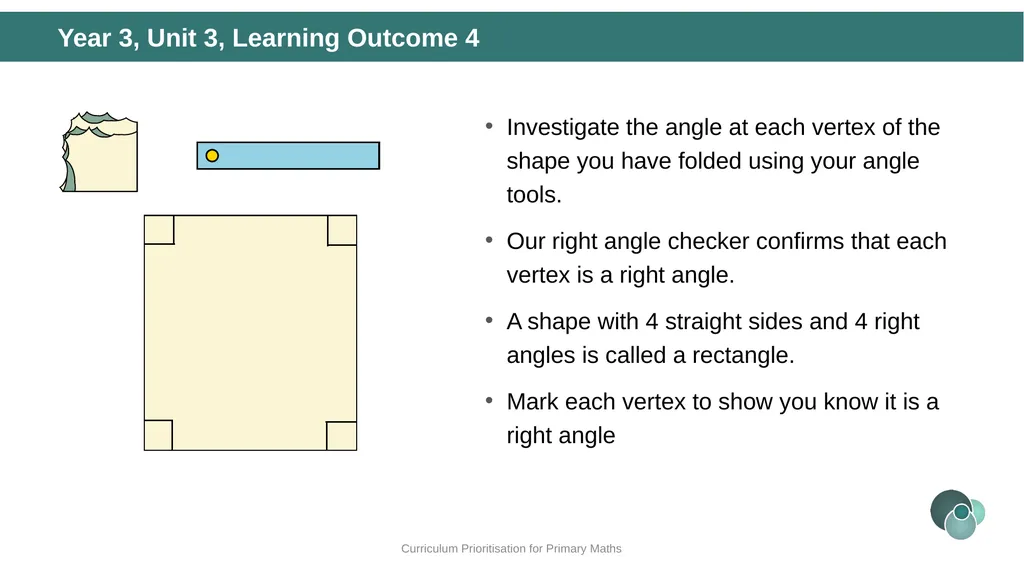
Curriculum Prioritisation for Primary Maths Year 3, Unit 3, Learning Outcome 4 Investigate the angle at each vertex of the shape you have folded using your angle tools.
Our right angle checker confirms that each vertex is a right angle.
A shape with 4 straight sides and 4 right angles is called a rectangle.
Mark each vertex to show you know it is a right angle<br>
Our right angle checker confirms that each vertex is a right angle.
A shape with 4 straight sides and 4 right angles is called a rectangle.
Mark each vertex to show you know it is a right angle<br>
34
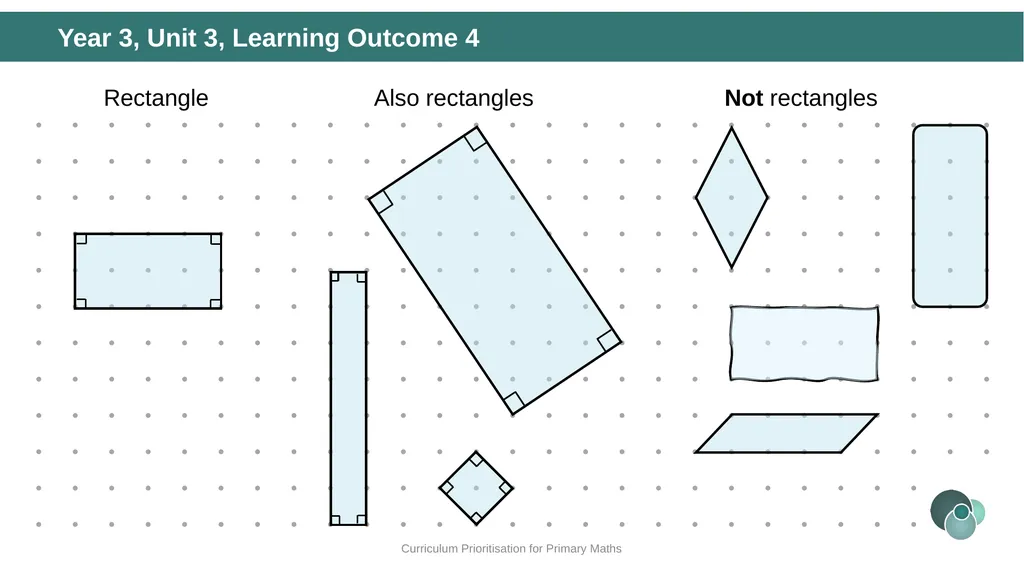
Curriculum Prioritisation for Primary Maths Year 3, Unit 3, Learning Outcome 4 Rectangle Also rectangles Not rectangles<br>
35
Curriculum Prioritisation for Primary Maths The following slides have been collated to support the teaching of this learning outcome. Year 3, Unit 3, Learning Outcome 5<br>
36
Year 3, Unit 3, Learning Outcome 5 Curriculum Prioritisation for Primary Maths Additional teacher guidance for this outcome should be read first and can be found in the DfE Mathematics guidance. Page references relate to the 335-page document available as a download at the bottom of this web page.<br>
37
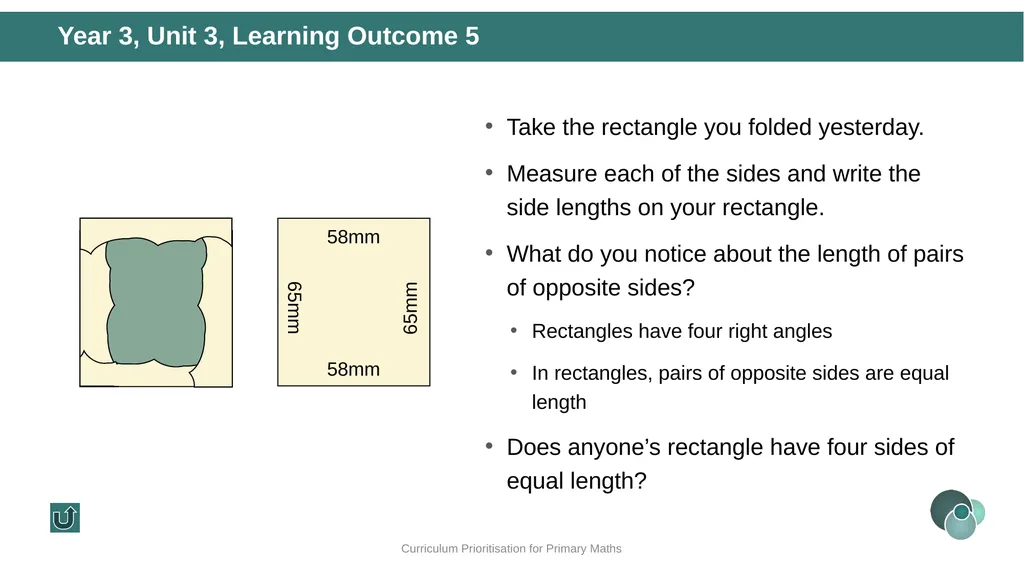
Curriculum Prioritisation for Primary Maths Year 3, Unit 3, Learning Outcome 5 Take the rectangle you folded yesterday.
Measure each of the sides and write the side lengths on your rectangle.
What do you notice about the length of pairs of opposite sides?
Rectangles have four right angles
In rectangles, pairs of opposite sides are equal length
Does anyone’s rectangle have four sides of equal length? 65mm 58mm 65mm 58mm<br>
Measure each of the sides and write the side lengths on your rectangle.
What do you notice about the length of pairs of opposite sides?
Rectangles have four right angles
In rectangles, pairs of opposite sides are equal length
Does anyone’s rectangle have four sides of equal length? 65mm 58mm 65mm 58mm<br>
38
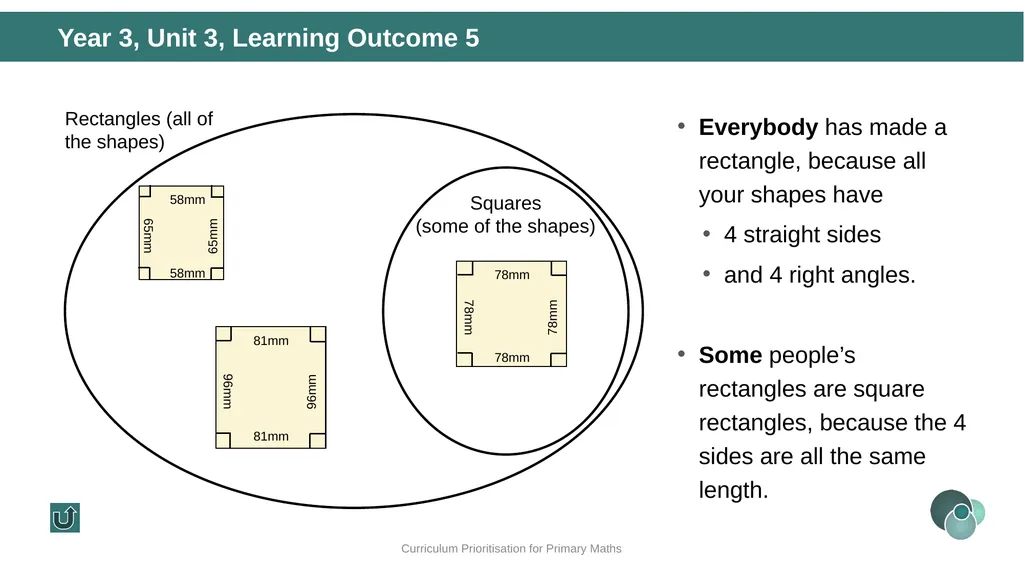
Curriculum Prioritisation for Primary Maths Year 3, Unit 3, Learning Outcome 5 Everybody has made a rectangle, because all your shapes have
4 straight sides
and 4 right angles.
Some people’s rectangles are square rectangles, because the 4 sides are all the same length. Rectangles (all of the shapes) Squares
(some of the shapes)<br>
4 straight sides
and 4 right angles.
Some people’s rectangles are square rectangles, because the 4 sides are all the same length. Rectangles (all of the shapes) Squares
(some of the shapes)<br>
39
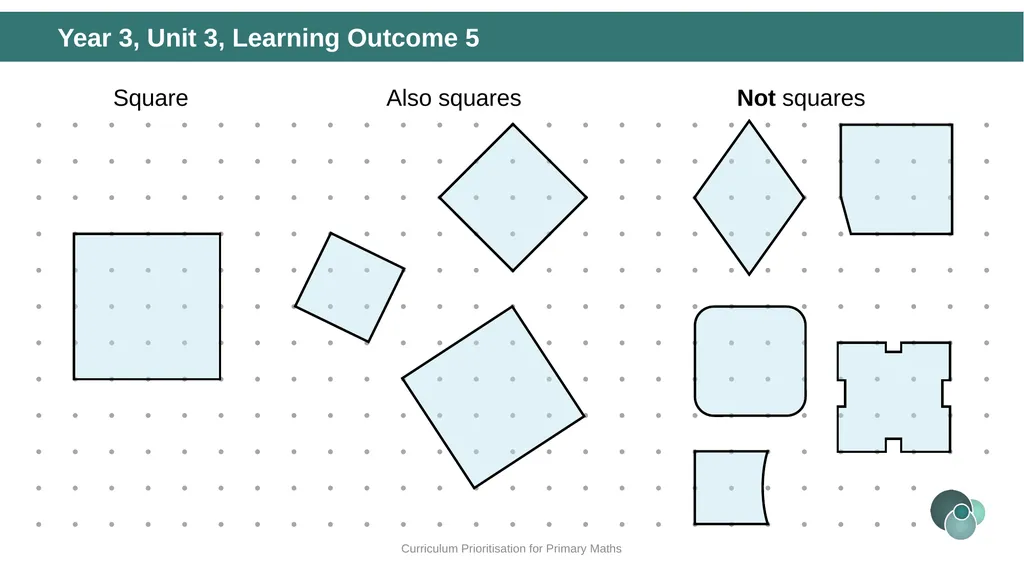
Curriculum Prioritisation for Primary Maths Year 3, Unit 3, Learning Outcome 5 Square Also squares Not squares<br>
40
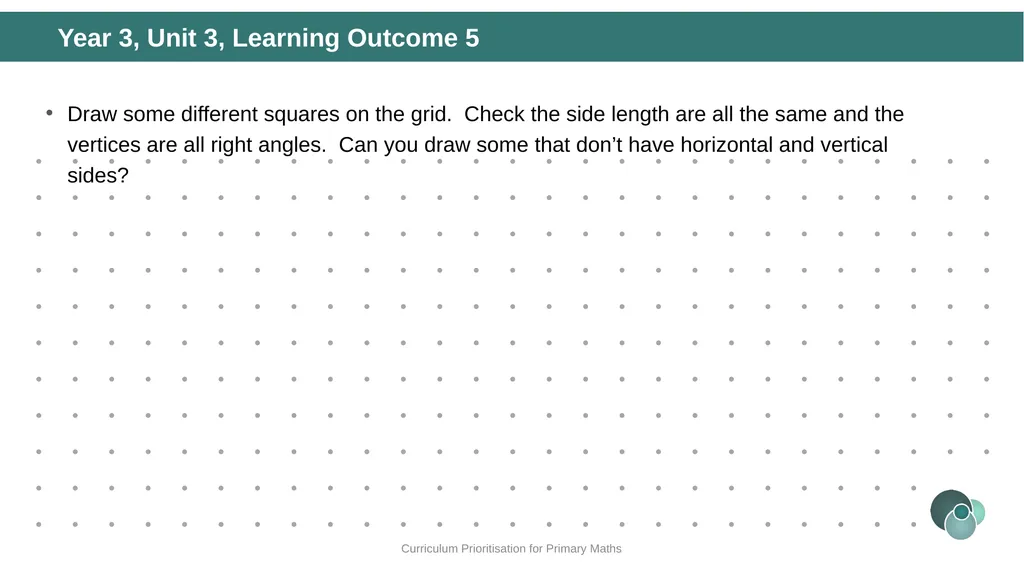
Year 3, Unit 3, Learning Outcome 5 Curriculum Prioritisation for Primary Maths Draw some different squares on the grid. Check the side length are all the same and the vertices are all right angles. Can you draw some that don’t have horizontal and vertical sides?<br>
41
Curriculum Prioritisation for Primary Maths The following slides have been collated to support the teaching of this learning outcome. Year 3, Unit 3, Learning Outcome 6<br>
42
Year 3, Unit 3, Learning Outcome 6 Curriculum Prioritisation for Primary Maths Additional teacher guidance for this outcome should be read first and can be found in the DfE Mathematics guidance. Page references relate to the 335-page document available as a download at the bottom of this web page.<br>
43
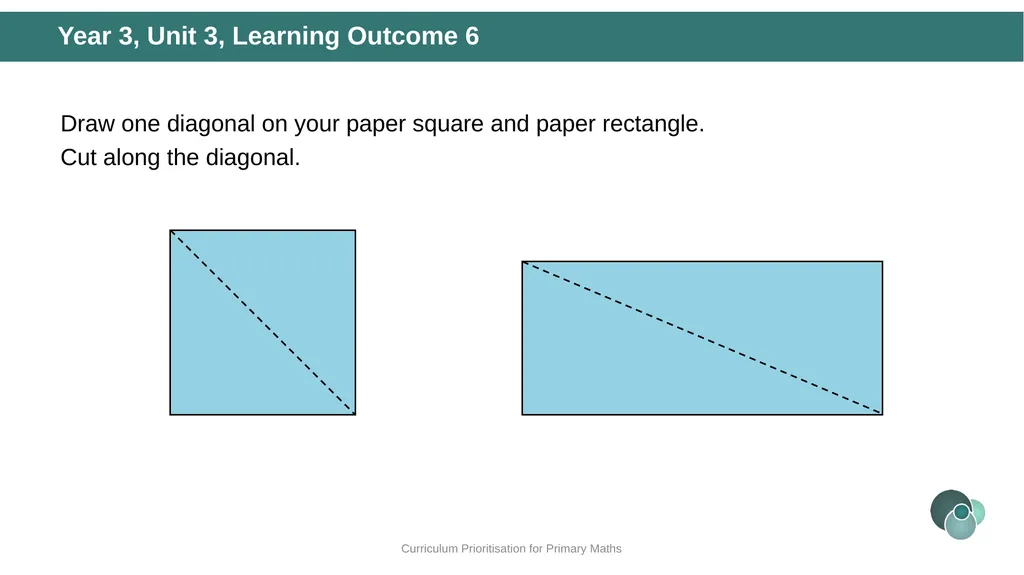
Curriculum Prioritisation for Primary Maths Year 3, Unit 3, Learning Outcome 6 Draw one diagonal on your paper square and paper rectangle.
Cut along the diagonal.<br>
Cut along the diagonal.<br>
44
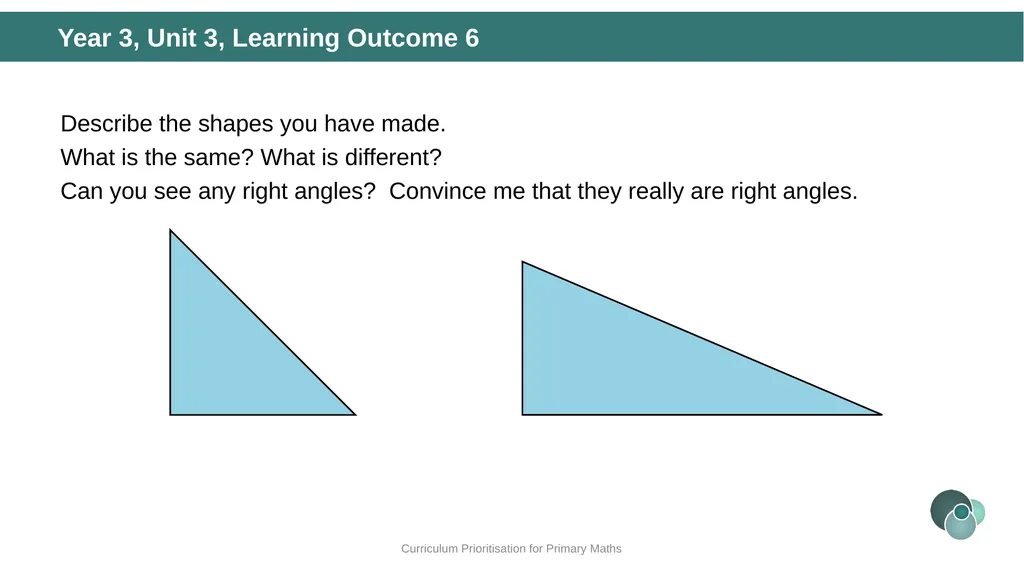
Curriculum Prioritisation for Primary Maths Year 3, Unit 3, Learning Outcome 6 Describe the shapes you have made.
What is the same? What is different?
Can you see any right angles? Convince me that they really are right angles.<br>
What is the same? What is different?
Can you see any right angles? Convince me that they really are right angles.<br>
45
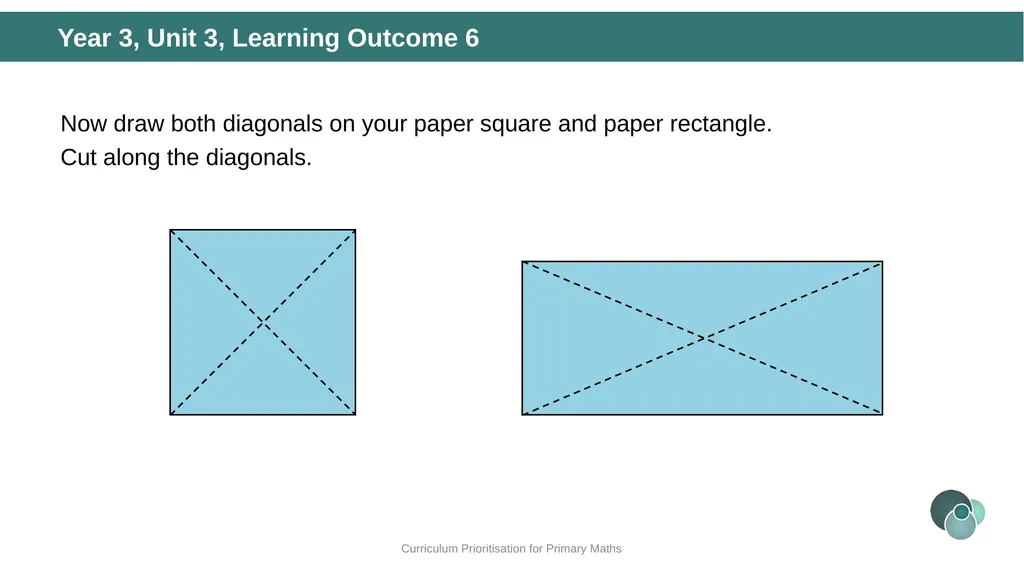
Curriculum Prioritisation for Primary Maths Year 3, Unit 3, Learning Outcome 6 Now draw both diagonals on your paper square and paper rectangle.
Cut along the diagonals.<br>
Cut along the diagonals.<br>
46
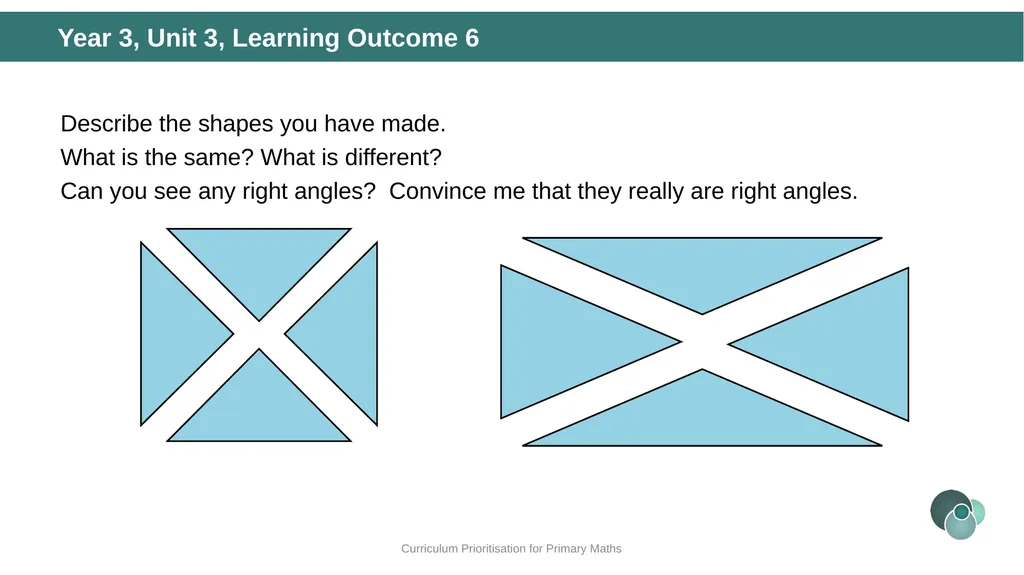
Curriculum Prioritisation for Primary Maths Year 3, Unit 3, Learning Outcome 6 Describe the shapes you have made.
What is the same? What is different?
Can you see any right angles? Convince me that they really are right angles.<br>
What is the same? What is different?
Can you see any right angles? Convince me that they really are right angles.<br>
47
Curriculum Prioritisation for Primary Maths The following slides have been collated to support the teaching of this learning outcome. Year 3, Unit 3, Learning Outcome 7<br>
48
Year 3, Unit 3, Learning Outcome 7 Curriculum Prioritisation for Primary Maths Additional teacher guidance for this outcome should be read first and can be found in the DfE Mathematics guidance. Page references relate to the 335-page document available as a download at the bottom of this web page.<br>
49
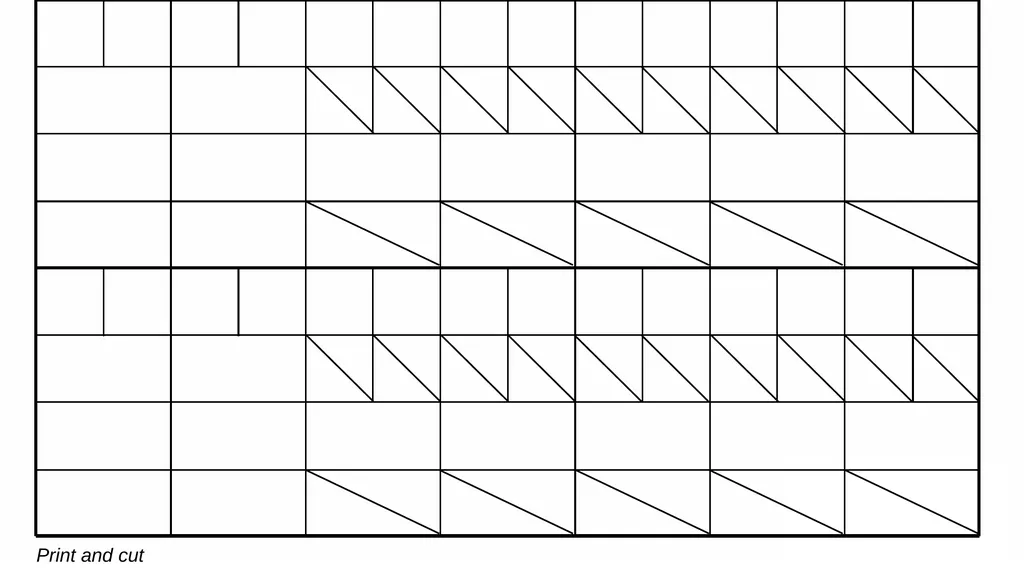
Print and cut<br>
50
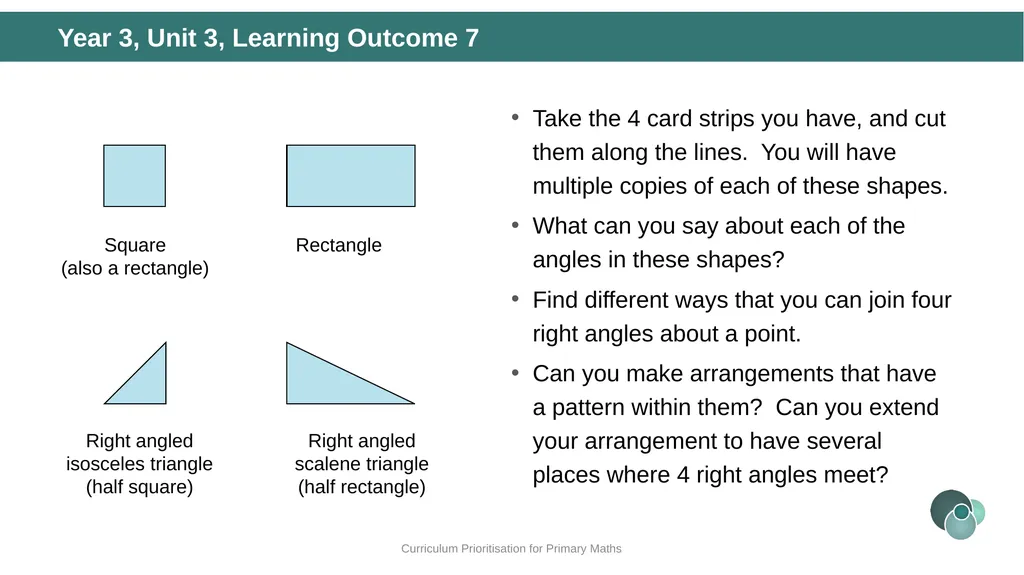
Curriculum Prioritisation for Primary Maths Year 3, Unit 3, Learning Outcome 7 Square
(also a rectangle) Right angled isosceles triangle
(half square) Right angled scalene triangle
(half rectangle) Rectangle Take the 4 card strips you have, and cut them along the lines. You will have multiple copies of each of these shapes.
What can you say about each of the angles in these shapes?
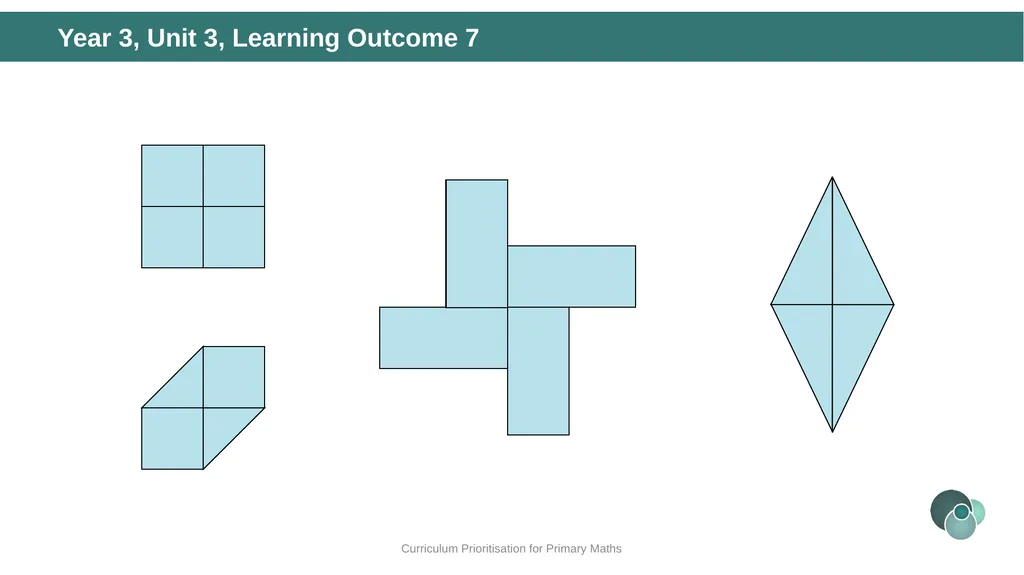
Find different ways that you can join four right angles about a point.
Can you make arrangements that have a pattern within them? Can you extend your arrangement to have several places where 4 right angles meet?<br>
(also a rectangle) Right angled isosceles triangle
(half square) Right angled scalene triangle
(half rectangle) Rectangle Take the 4 card strips you have, and cut them along the lines. You will have multiple copies of each of these shapes.
What can you say about each of the angles in these shapes?
Find different ways that you can join four right angles about a point.
Can you make arrangements that have a pattern within them? Can you extend your arrangement to have several places where 4 right angles meet?<br>
51
Curriculum Prioritisation for Primary Maths Year 3, Unit 3, Learning Outcome 7<br>
52
Curriculum Prioritisation for Primary Maths The following slides have been collated to support the teaching of this learning outcome. Year 3, Unit 3, Learning Outcome 8<br>
53
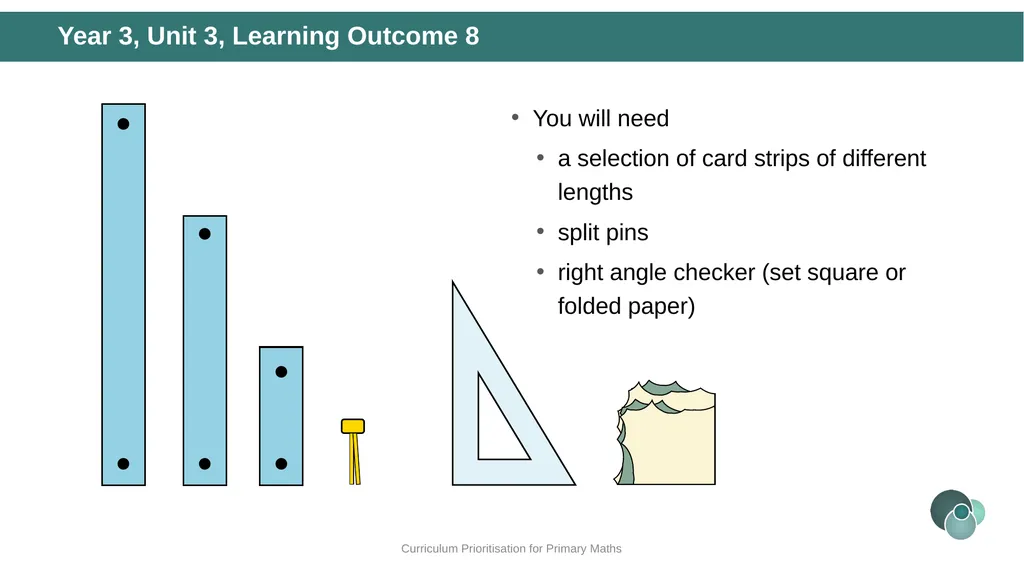
Curriculum Prioritisation for Primary Maths Year 3, Unit 3, Learning Outcome 8 You will need
a selection of card strips of different lengths
split pins
right angle checker (set square or folded paper)<br>
a selection of card strips of different lengths
split pins
right angle checker (set square or folded paper)<br>
54
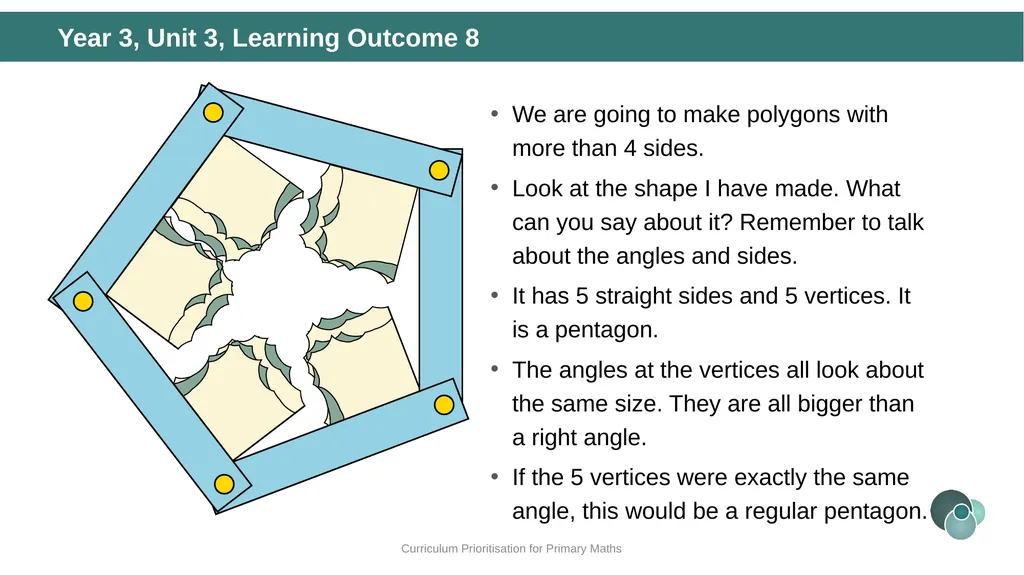
Curriculum Prioritisation for Primary Maths Year 3, Unit 3, Learning Outcome 8 We are going to make polygons with more than 4 sides.
Look at the shape I have made. What can you say about it? Remember to talk about the angles and sides.
It has 5 straight sides and 5 vertices. It is a pentagon.
The angles at the vertices all look about the same size. They are all bigger than a right angle.
If the 5 vertices were exactly the same angle, this would be a regular pentagon.<br>
Look at the shape I have made. What can you say about it? Remember to talk about the angles and sides.
It has 5 straight sides and 5 vertices. It is a pentagon.
The angles at the vertices all look about the same size. They are all bigger than a right angle.
If the 5 vertices were exactly the same angle, this would be a regular pentagon.<br>
55
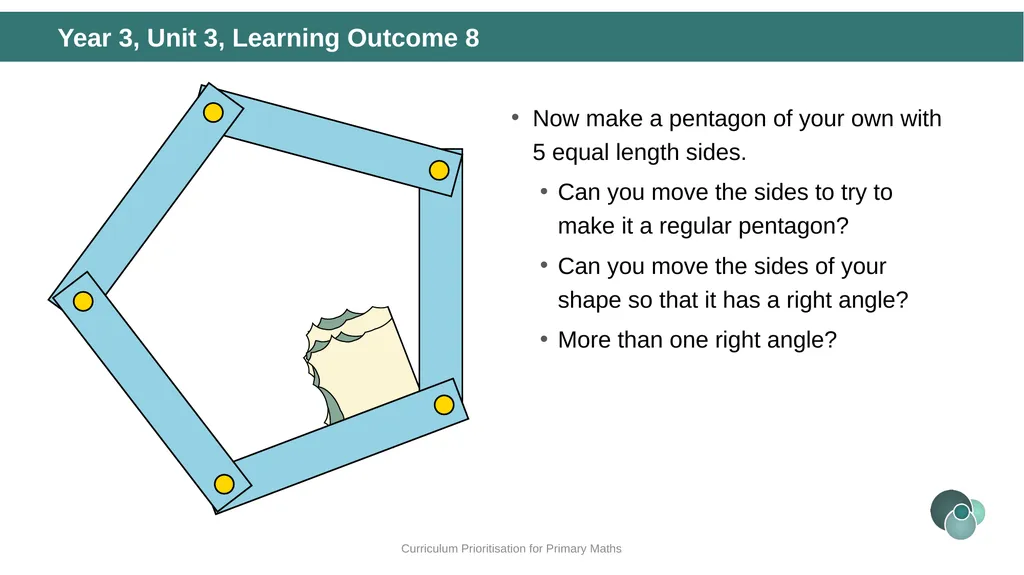
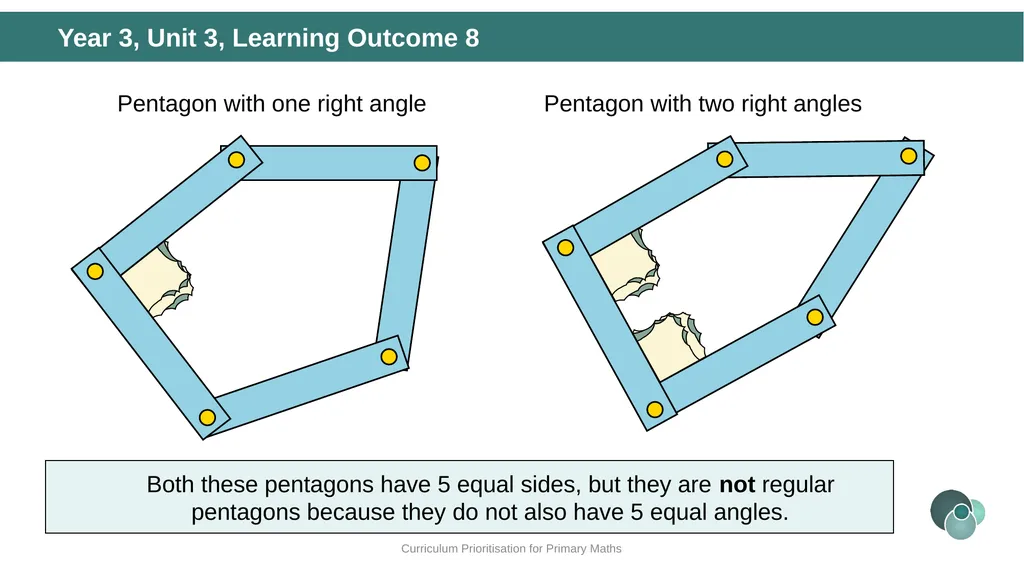
Curriculum Prioritisation for Primary Maths Year 3, Unit 3, Learning Outcome 8 Now make a pentagon of your own with 5 equal length sides.
Can you move the sides to try to make it a regular pentagon?
Can you move the sides of your shape so that it has a right angle?
More than one right angle?<br>
Can you move the sides to try to make it a regular pentagon?
Can you move the sides of your shape so that it has a right angle?
More than one right angle?<br>
56
Curriculum Prioritisation for Primary Maths Year 3, Unit 3, Learning Outcome 8 Pentagon with one right angle Pentagon with two right angles<br>
57
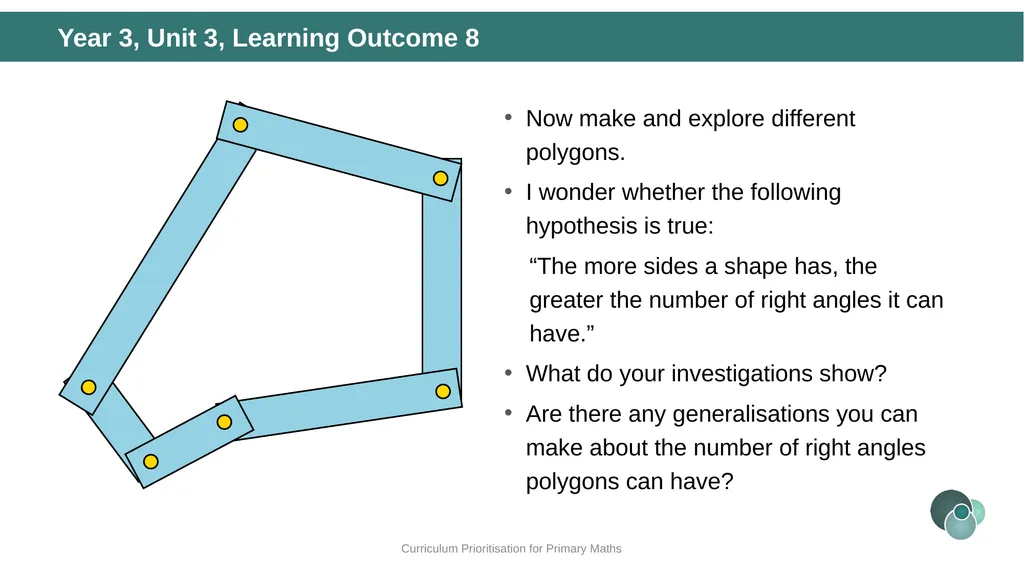
Curriculum Prioritisation for Primary Maths Year 3, Unit 3, Learning Outcome 8 Now make and explore different polygons.
I wonder whether the following hypothesis is true:
“The more sides a shape has, the greater the number of right angles it can have.”
What do your investigations show?
Are there any generalisations you can make about the number of right angles polygons can have?<br>
I wonder whether the following hypothesis is true:
“The more sides a shape has, the greater the number of right angles it can have.”
What do your investigations show?
Are there any generalisations you can make about the number of right angles polygons can have?<br>
58
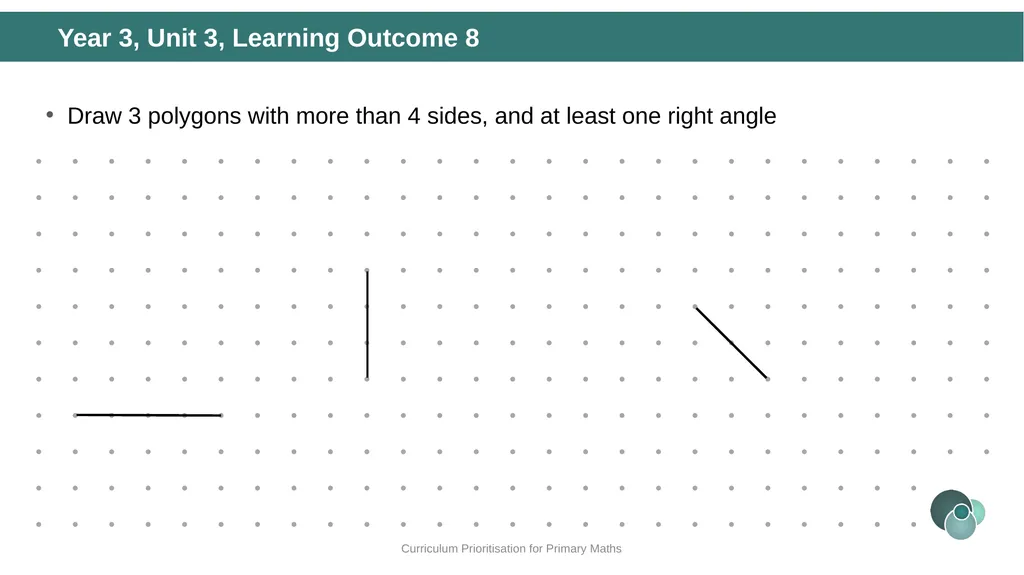
Year 3, Unit 3, Learning Outcome 8 Curriculum Prioritisation for Primary Maths Draw 3 polygons with more than 4 sides, and at least one right angle<br>
59
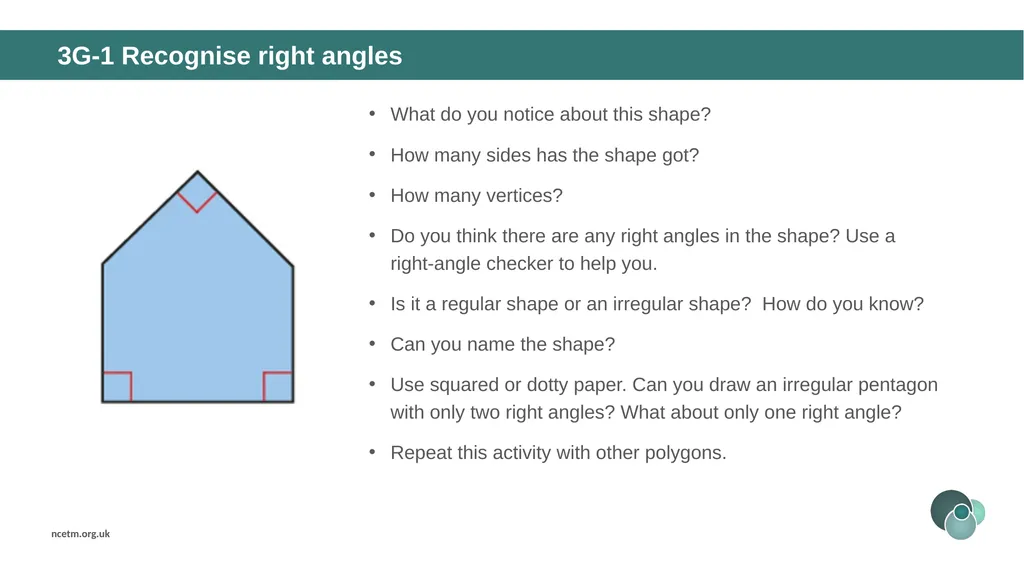
3G-1 Recognise right angles What do you notice about this shape?
How many sides has the shape got?
How many vertices?
Do you think there are any right angles in the shape? Use a right-angle checker to help you.
Is it a regular shape or an irregular shape? How do you know?
Can you name the shape?
Use squared or dotty paper. Can you draw an irregular pentagon with only two right angles? What about only one right angle?
Repeat this activity with other polygons.<br>
How many sides has the shape got?
How many vertices?
Do you think there are any right angles in the shape? Use a right-angle checker to help you.
Is it a regular shape or an irregular shape? How do you know?
Can you name the shape?
Use squared or dotty paper. Can you draw an irregular pentagon with only two right angles? What about only one right angle?
Repeat this activity with other polygons.<br>
60
3G-1 Recognise right angles Further guidance:
Children should be able to identify right angles in polygons.
It will be useful to provide pupils with an assortment of 2D shapes for them to select from, handle, compare and sort. Put shapes into a feely bag and see if children can pick out shapes which have right angles. This helps children to feel and visualise right angles.
Images of shapes should also be used and presented in a variety of orientations. Children should identify, check and mark right angles on images using the standard convention as shown on the previous slide.
Children should use 2D shapes and images and state whether angles are bigger than or smaller than right angles.<br>
Children should be able to identify right angles in polygons.
It will be useful to provide pupils with an assortment of 2D shapes for them to select from, handle, compare and sort. Put shapes into a feely bag and see if children can pick out shapes which have right angles. This helps children to feel and visualise right angles.
Images of shapes should also be used and presented in a variety of orientations. Children should identify, check and mark right angles on images using the standard convention as shown on the previous slide.
Children should use 2D shapes and images and state whether angles are bigger than or smaller than right angles.<br>
61
Year 3, Unit 3 Curriculum Prioritisation for Primary Maths<br>
62
Year 3, Unit 3 Curriculum Prioritisation for Primary Maths<br>