
- 1 LESSON 7 Basic Life Support (BLS) and



Description: - 1 LESSON 7 Basic Life Support (BLS) and Cardiopulmonary Resuscitation (CPR) MEDICAL FIRST RESPONDER CAPF MFR INDIA Presented by:- Pavan Dev Gaur, 2IC Upon completing this lesson, you will be able to: OBJECTIVES 2 Demonstrate rescue
Related Topics
Download Presentation
"- 1 LESSON 7 Basic Life Support (BLS) and" is the property of its rightful owner. Permission is granted to download and print the materials on this website for personal, non-commercial use only, and to display it on your personal computer provided you do not modify the materials and that you retain all copyright notices contained in the materials. By downloading content from our website, you accept the terms of this agreement.
Presentation Transcript
slide1. - 1 LESSON 7
Basic Life Support (BLS) and Cardiopulmonary Resuscitation (CPR) MEDICAL FIRST RESPONDER CAPF | MFR | INDIA Presented by:- Pavan Dev Gaur, 2IC<br>
slide2. Upon completing this lesson, you will be able to: OBJECTIVES 2 Demonstrate rescue breathing for adults, children and infants using a mannequin, with and without foreign body airway obstruction.
Describe and demonstrate CPR in adults, children, and infants using a mannequin.<br>
slide3. Upon completing this lesson, you will be able to: OBJECTIVES 3 Describe and demonstrate two-rescuer CPR for adults.
List two causes of partial or total upper airway obstruction.<br>
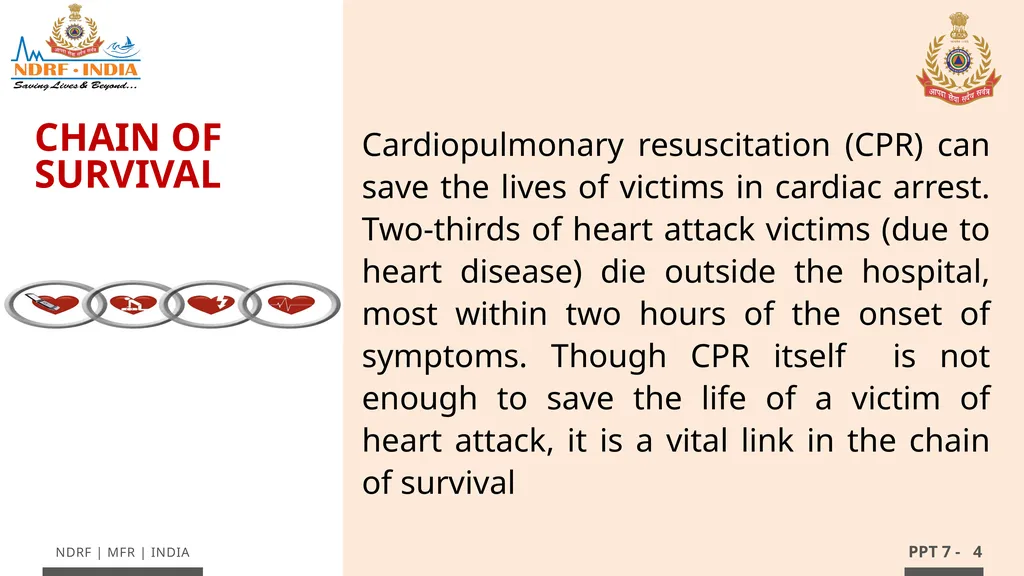
slide4. Cardiopulmonary resuscitation (CPR) can save the lives of victims in cardiac arrest. Two-thirds of heart attack victims (due to heart disease) die outside the hospital, most within two hours of the onset of symptoms. Though CPR itself is not enough to save the life of a victim of heart attack, it is a vital link in the chain of survival PPT 7 - 4 CHAIN OF SURVIVAL<br>
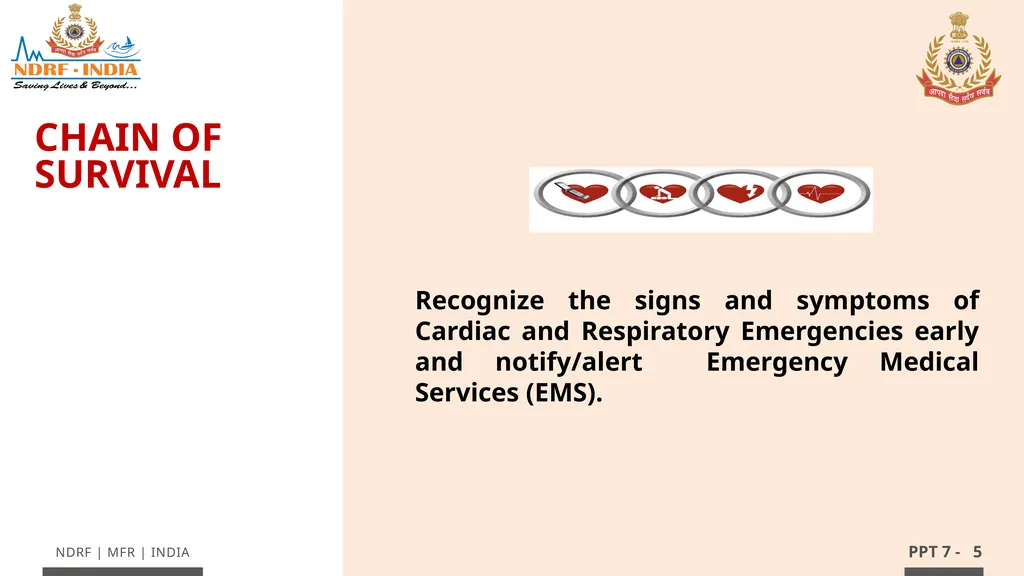
slide5. PPT 7 - 5 CHAIN OF SURVIVAL Recognize the signs and symptoms of Cardiac and Respiratory Emergencies early and notify/alert Emergency Medical Services (EMS).<br>
slide6. PPT 7 - 6 RISK FACTORS THAT CAN BE CHANGED Smoking
High blood pressure
High Cholesterol
Physical activity<br>
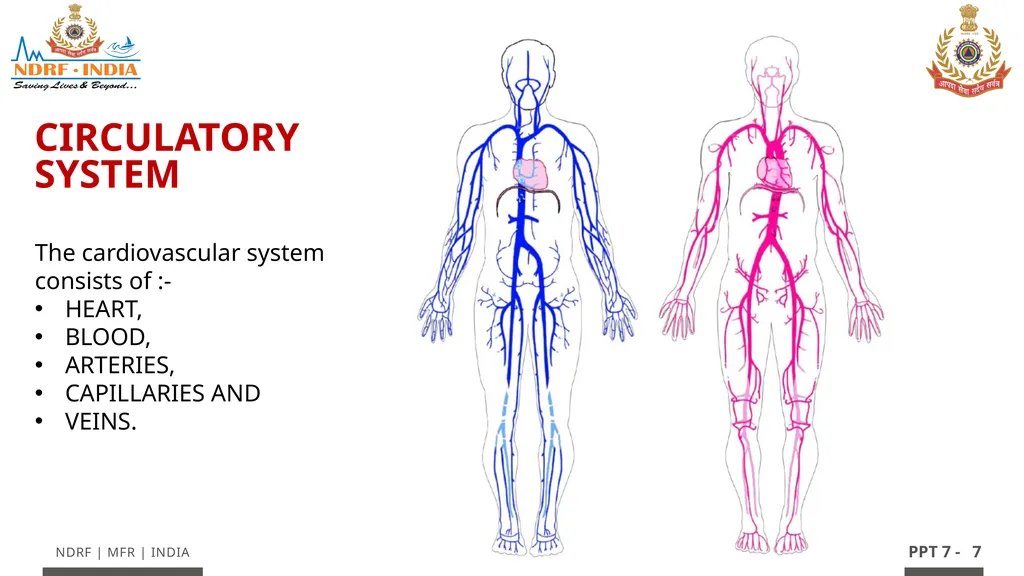
slide7. Circulatory System The cardiovascular system
consists of :-
HEART,
BLOOD,
ARTERIES,
CAPILLARIES AND
VEINS.<br>
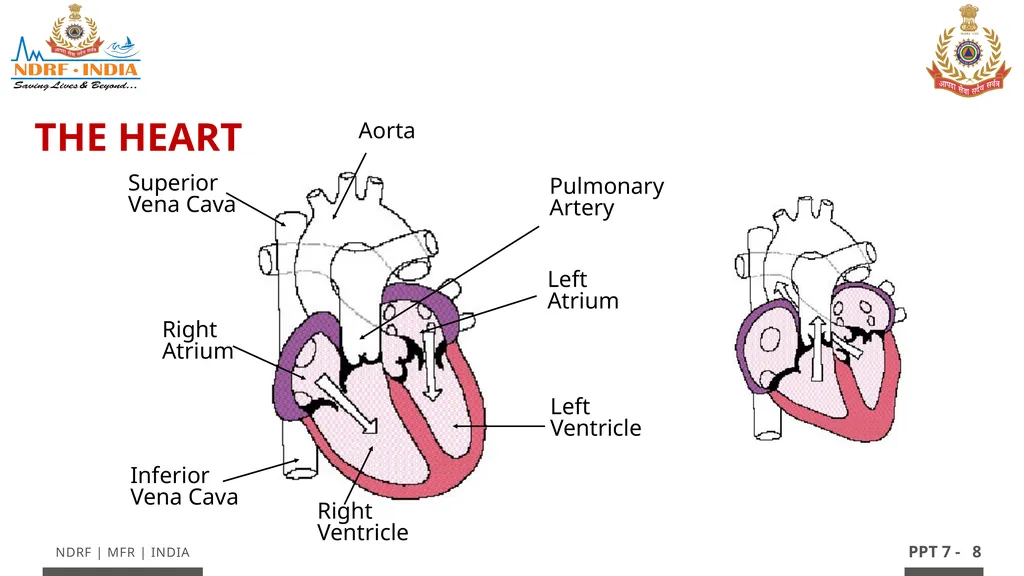
slide8. The Heart Pulmonary
Artery Left
Atrium Left
Ventricle Right
Ventricle Inferior
Vena Cava Right
Atrium Superior Vena Cava Aorta<br>
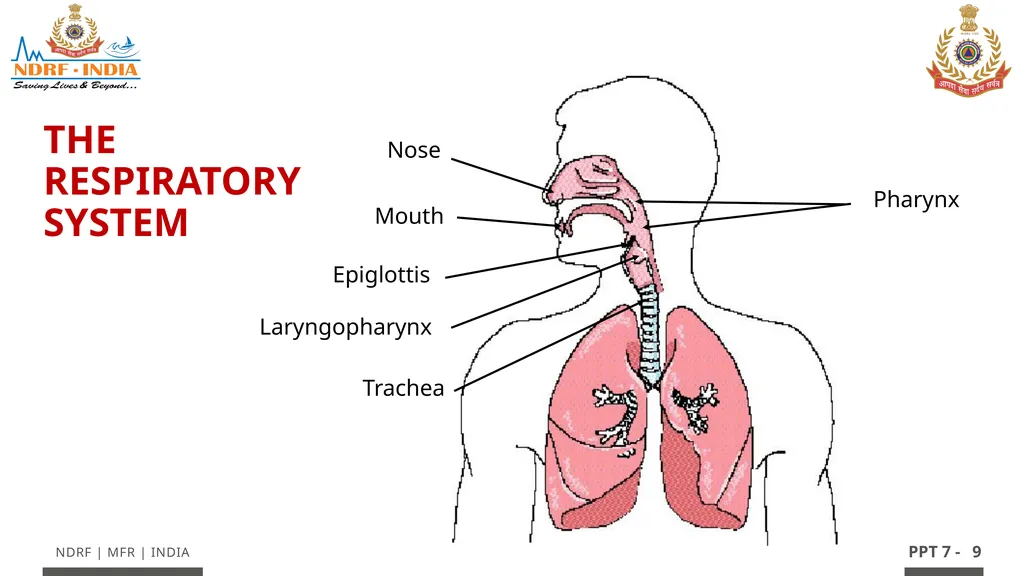
slide9. Pharynx Trachea Laryngopharynx Epiglottis Mouth Nose The Respiratory System<br>
slide10. PPT 7 - 10 CHARACTERISTICS OF ADEQUATE BREATHING Chest and abdomen rise and fall with each breath.
Air can be heard and felt exiting the mouth or nose.
Ease of breathing( effortlessness).
Adequate rate.<br>
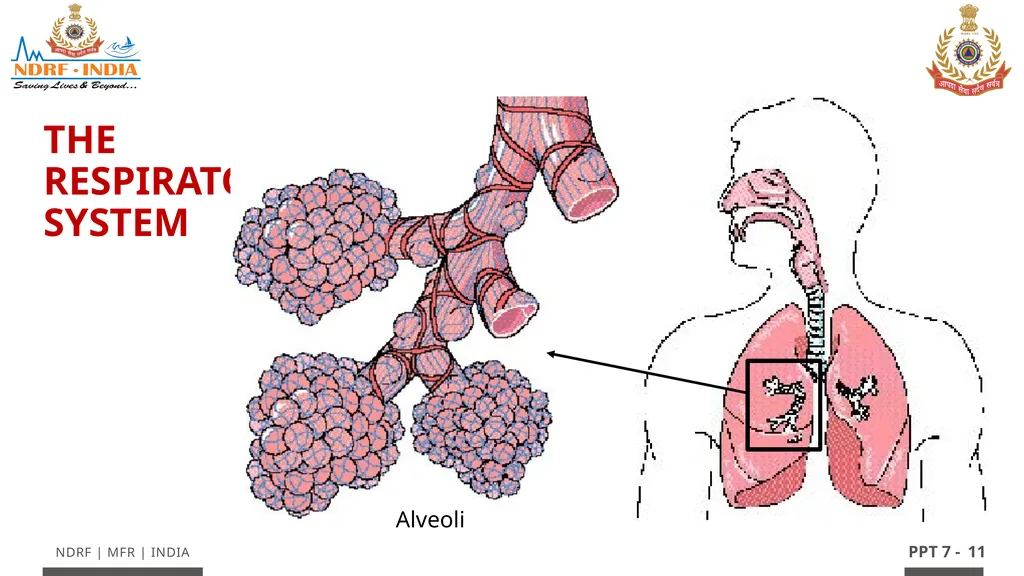
slide11. The Respiratory System Alveoli<br>
slide12. PPT 7 - 12 CHARACTERISTIC OF INADEQUATE BREATHING Inadequate rise and fall of the chest.
Noisy breathing: Bubbles, rales, Stridor, whistling etc.
Increased respiratory effort.<br>
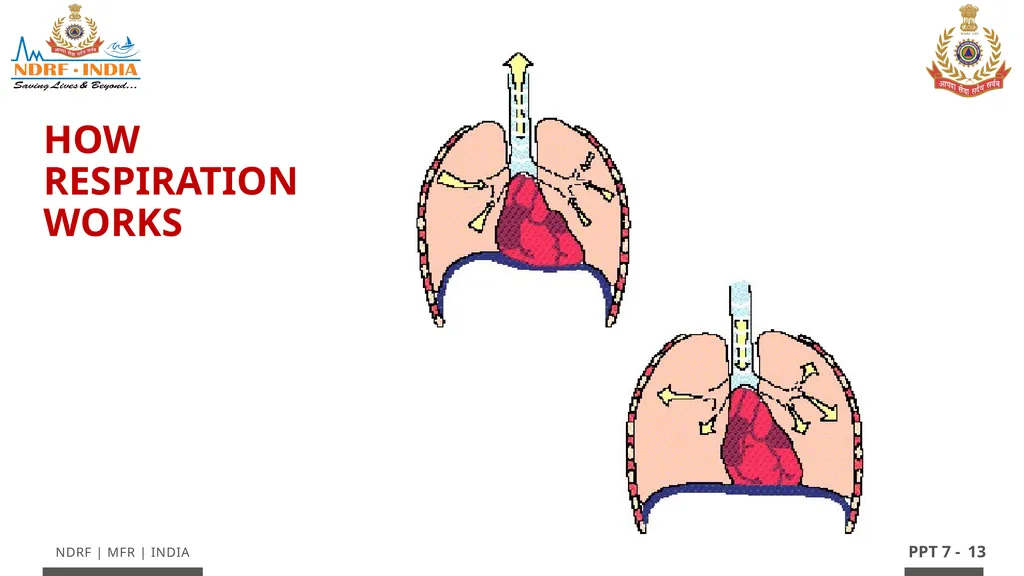
slide13. How Respiration Works<br>
slide14. PPT 7 - 14 SIGNS OF INADEQUATE RESPIRATION Cyanosis
Inadequate rate
Altered mental status<br>
slide15. Occurs when a patient is in respiratory arrest (not breathing) or in cardiac arrest (heart not beating).
The patient has a period of 4 to 6 minutes to be resuscitated without brain damage.
Clinical death can be reversed. PPT 7 - 15 Clinical Death<br>
slide16. The moment the brain cells begin to die.
Biological death cannot be reversed. PPT 7 - 16 Biological Death<br>
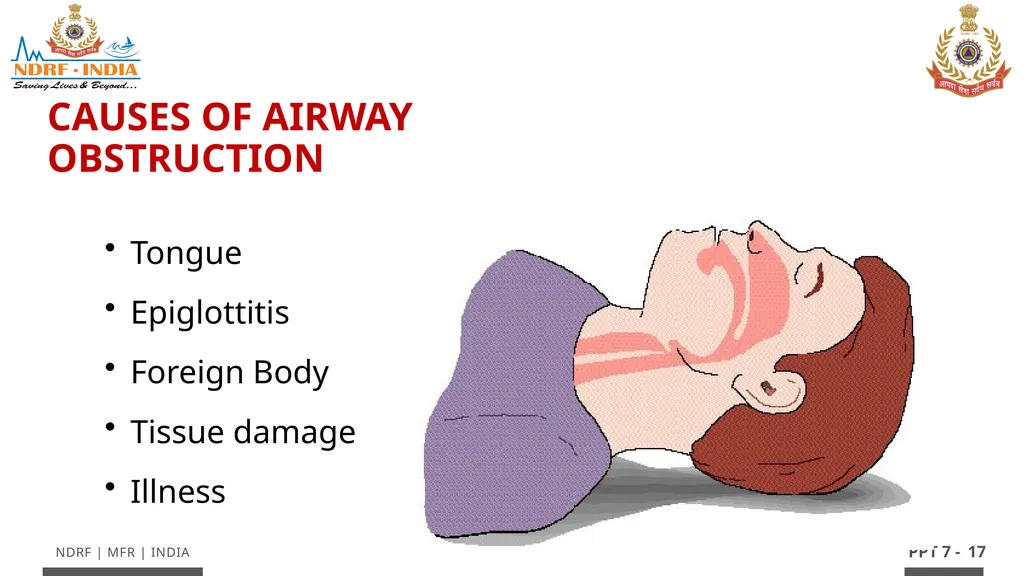
slide17. Tongue
Epiglottitis
Foreign Body
Tissue damage
Illness Causes of Airway Obstruction<br>
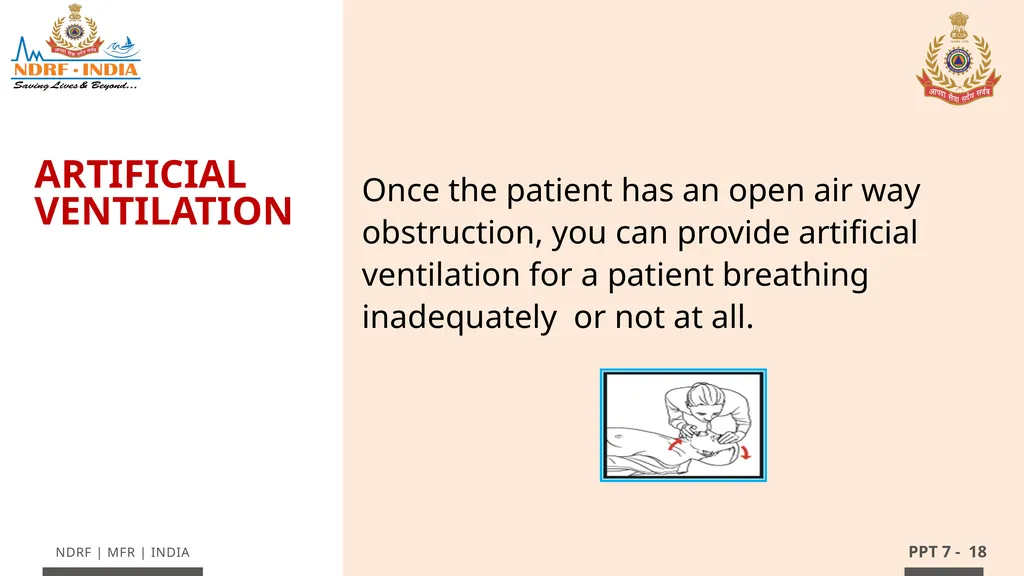
slide18. Once the patient has an open air way obstruction, you can provide artificial ventilation for a patient breathing inadequately or not at all. PPT 7 - 18 ARTIFICIAL VENTILATION<br>
slide19. Mouth to Mask
Mouth to Barrier Device
Mouth to Mouth PPT 7 - 19 TECHNIQUE OF ARTIFICIAL VENTILATION<br>
slide20. Mouth to Mask
Mouth to Barrier Device
Mouth to Mouth PPT 7 - 20 TECHNIQUE OF ARTIFICIAL VENTILATION<br>
slide21. Weak, ineffective cough
High-pitched noise when inhaling
Increased respiratory difficulty and may clutch at the throat
Cyanosis (bluish discoloration of the skin and mucous membranes) PPT 7 - 21 Partial Airway Obstruction<br>
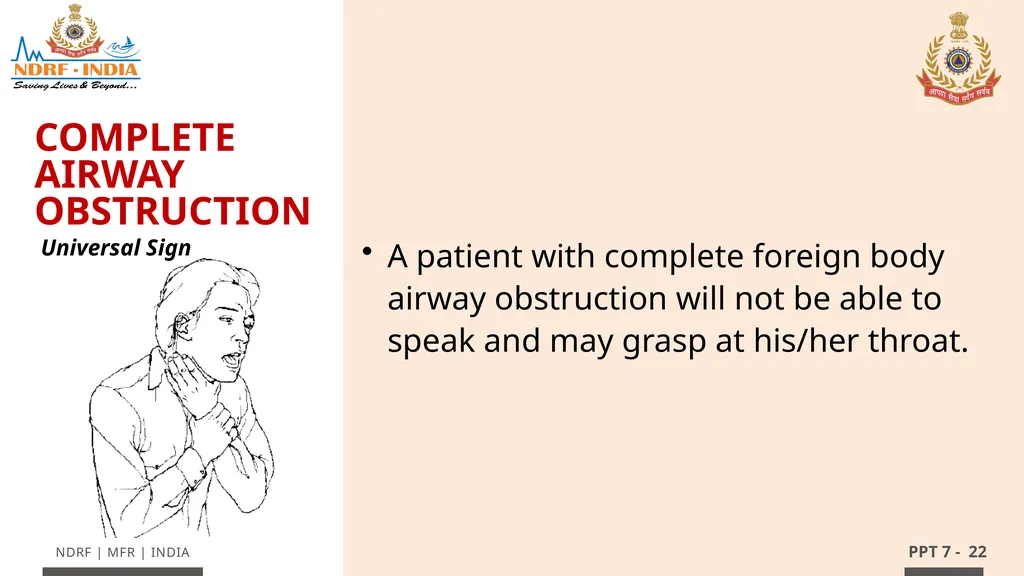
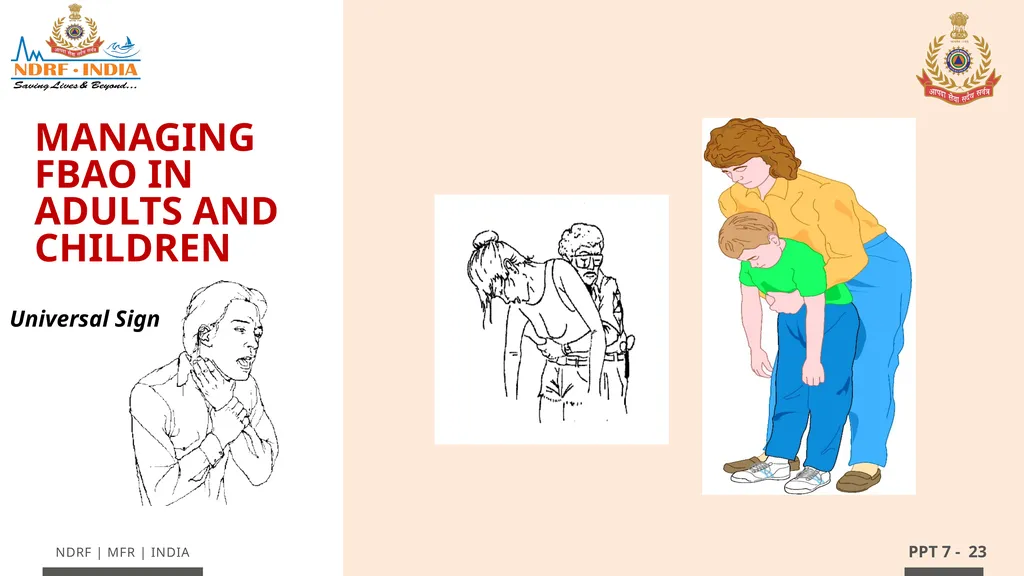
slide22. A patient with complete foreign body airway obstruction will not be able to speak and may grasp at his/her throat. PPT 7 - 22 Complete Airway Obstruction Universal Sign<br>
slide23. PPT 7 - 23 MANAGING FBAO IN ADULTS AND CHILDREN Universal Sign<br>
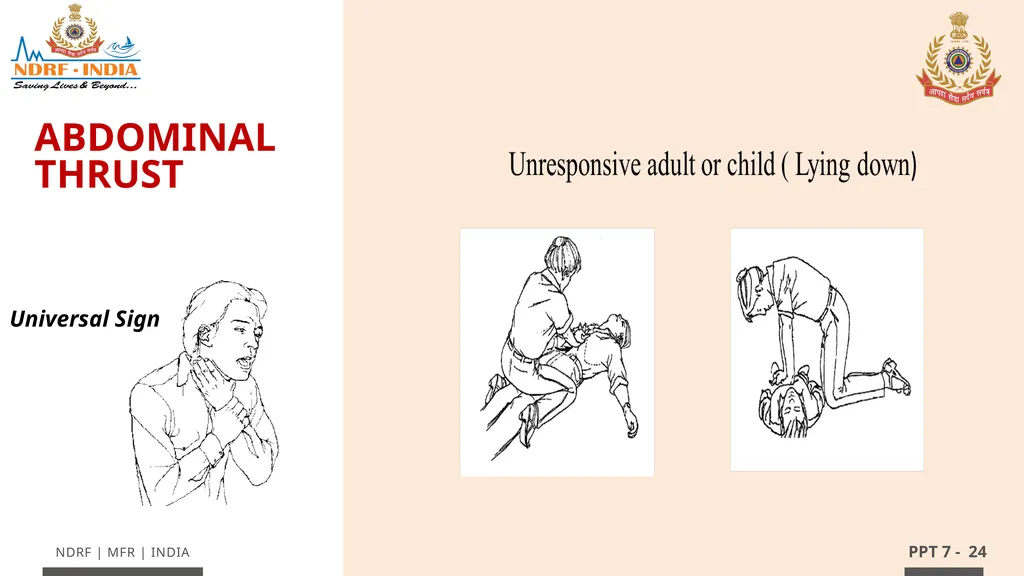
slide24. PPT 7 - 24 ABDOMINAL THRUST Universal Sign<br>
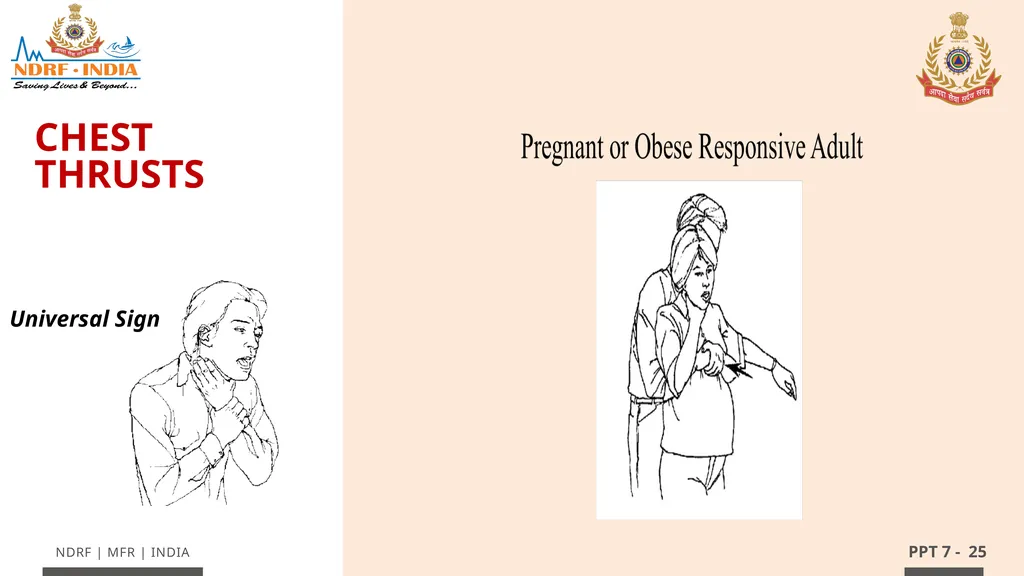
slide25. PPT 7 - 25 CHEST THRUSTS Universal Sign<br>
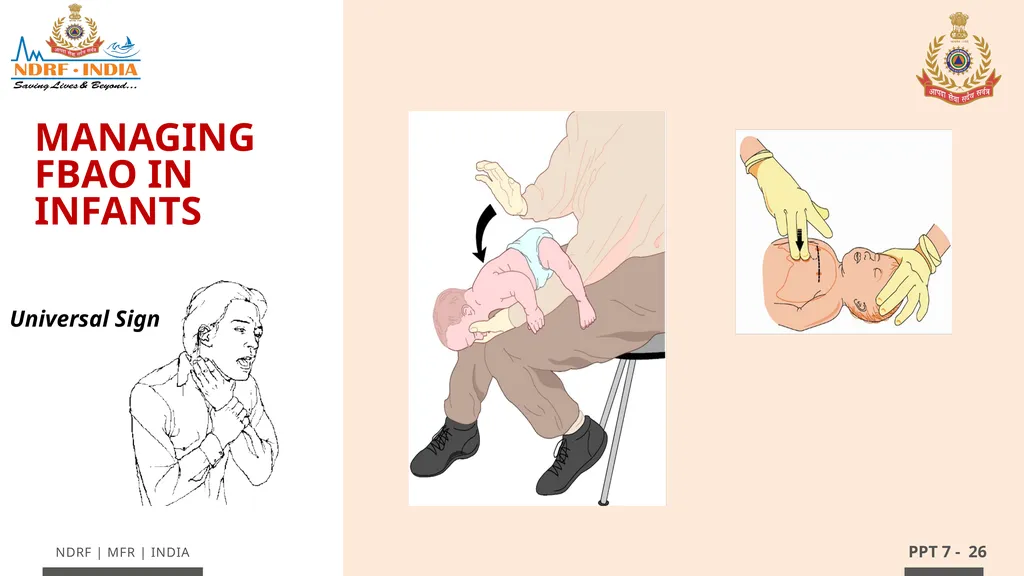
slide26. PPT 7 - 26 MANAGING FBAO IN INFANTS Universal Sign<br>
slide27. Establish unresponsiveness
Activate the EMS
Check CAB
Airway : Use appropriate method
Breathing : check LLF method
Circulation :Carotid for adult and child and brachial for infants. PPT 7 - 27 PREPARING FOR CPR<br>
slide28. Chest compressions consist of rhythmic, repeated pressure over the lower half of the sternum
Position the Patient : Must be supine on firm, flat surface with arm along sides
Expose the Patient's chest :
Get in position PPT 7 - 28 CPR CHEST COMPRESSION<br>
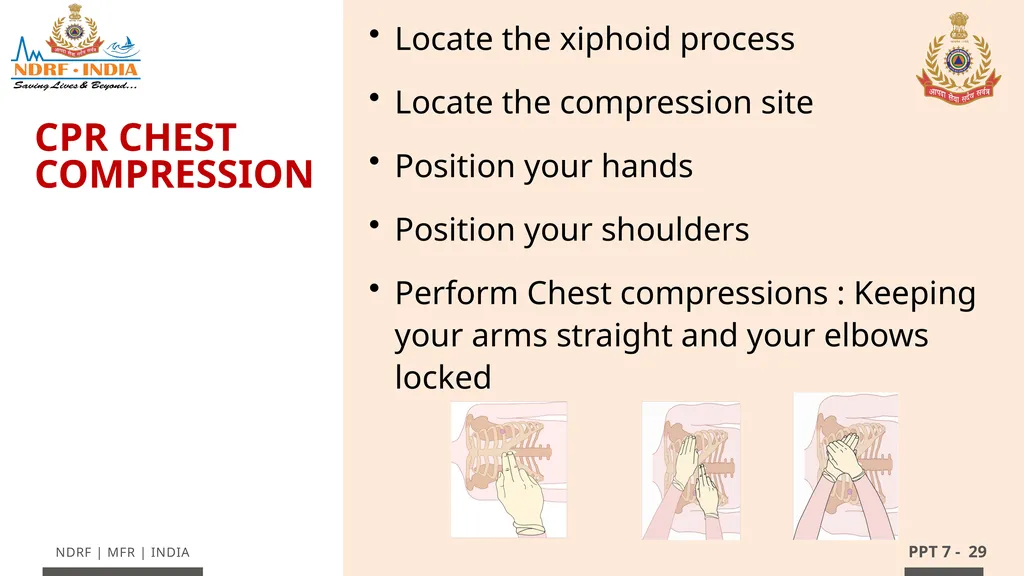
slide29. Locate the xiphoid process
Locate the compression site
Position your hands
Position your shoulders
Perform Chest compressions : Keeping your arms straight and your elbows locked PPT 7 - 29 CPR CHEST COMPRESSION<br>
slide30. Compression depth : at least 2 inch
Compression rate ; 100-120 per min
Each ventilation : 5-6 Sec
Pulse location :carotid artery
1Man Rescuer Cycle : 30 : 2
2Man Rescuer Cycle : 30 : 2 PPT 7 - 30 ADULT CPR SUMMARY – 9 YEARS AND OLDER<br>
slide31. Compression depth : 4-5 cm (or 1/3 to ½ of chest depth). About 2 inches
Compression rate :100-120 per min
Each ventilation : 3-5 Sec
Pulse location :carotid artery
1Man Rescuer Cycle : 30 : 2
2Man Rescuer Cycle : 15 : 2 PPT 7 - 31 CHILD CPR SUMMARY –(1TO9YEARS)<br>
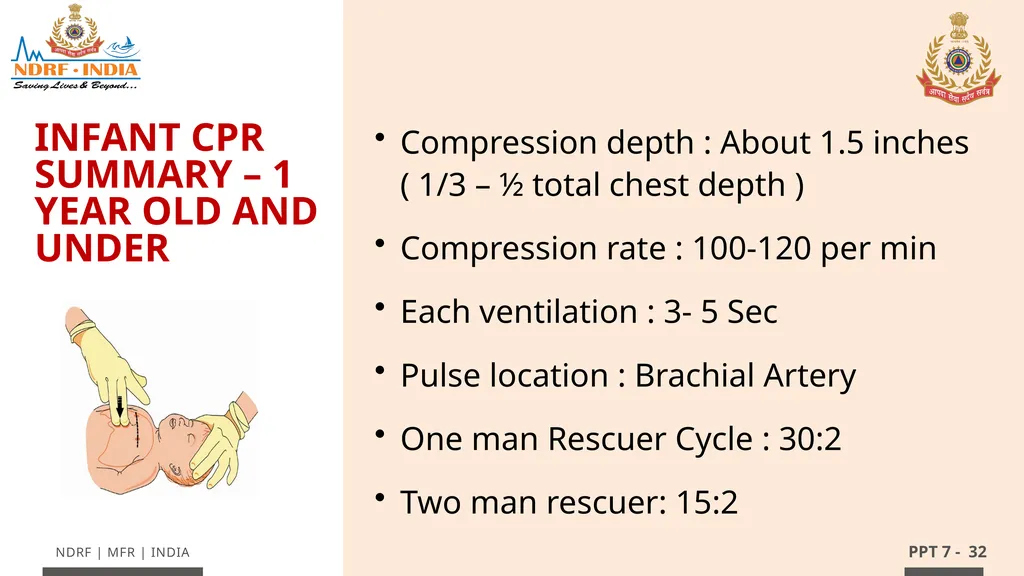
slide32. Compression depth : About 1.5 inches ( 1/3 – ½ total chest depth )
Compression rate : 100-120 per min
Each ventilation : 3- 5 Sec
Pulse location : Brachial Artery
One man Rescuer Cycle : 30:2
Two man rescuer: 15:2 PPT 7 - 32 INFANT CPR SUMMARY – 1 YEAR OLD AND UNDER<br>
slide33. Successful CPR does not mean the survival – it only means that it has been performed correctly. Very few will survive if they do not receive ACLS. The goal is to prevent the death of cells and organs for a few crucial minutes. Monitoring is essential to see if CPR is effective. PPT 7 - 33 SIGN OF SUCCESSFUL CPR<br>
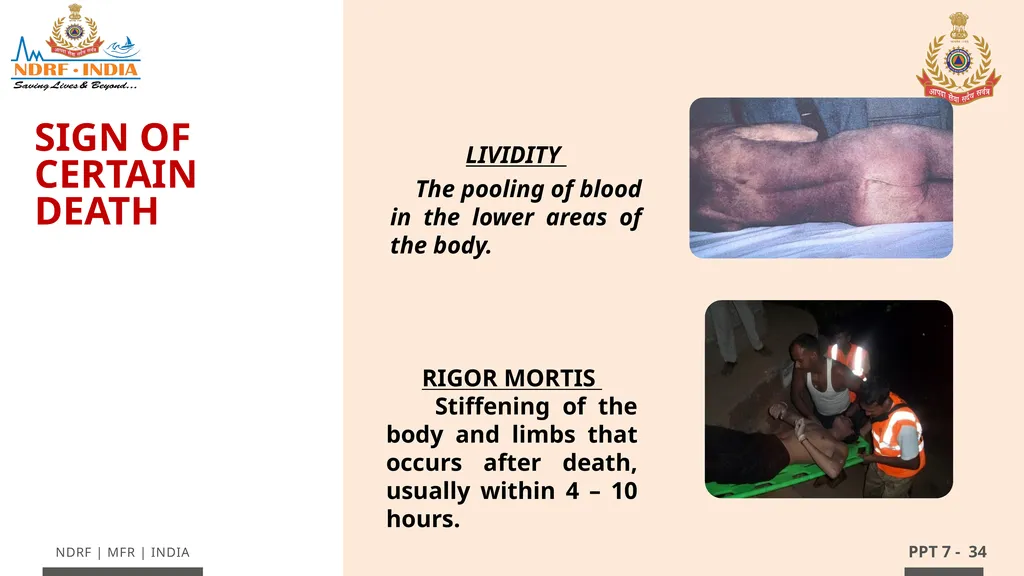
slide34. PPT 7 - 34 SIGN OF CERTAIN DEATH LIVIDITY
The pooling of blood in the lower areas of the body. RIGOR MORTIS
Stiffening of the body and limbs that occurs after death, usually within 4 – 10 hours.<br>
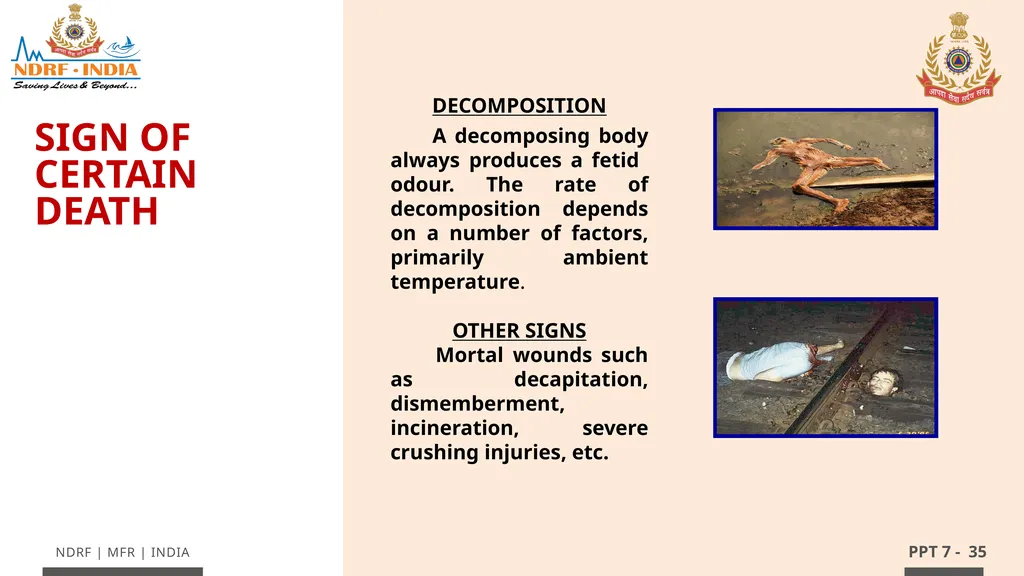
slide35. PPT 7 - 35 SIGN OF CERTAIN DEATH DECOMPOSITION
A decomposing body always produces a fetid odour. The rate of decomposition depends on a number of factors, primarily ambient temperature. OTHER SIGNS
Mortal wounds such as decapitation, dismemberment, incineration, severe crushing injuries, etc.<br>
slide36. Fracture of the sternum and ribs
Pneumothorax -
Haemothorax
Cuts and bruises to the lungs
Laceration to the liver
Most of these complications are rare. Even if CPR results in complications, the alternative is death. PPT 7 - 36 COMPLICATION CAUSED BY CPR<br>
slide37. Patient is not on hard surface
Compressions are not effective
Patient is not on horizontal position
If patient`s head is higher than the rest of the body there is insufficient blood to reach the brain
Incomplete seal around the patient`s mouth and / nose
Ventilations are not effective
Nostrils are not completely pinched and the patient`s mouth is not fully open during mouth-to-mouth ventilation – ventilations are not effective PPT 7 - 37 MISTAKES IN PERFORMING CPR<br>
slide38. While moving a patient onto a stretcher.
While moving a patient down a flight of stairs or through a hallway.
While loading or unloading a patient into an ambulance.
To allow for defibrillation or ACLS to be initiated.
Recover from physical exhaustion. PPT 7 - 38 INTERRUPTION IN CPR<br>
slide39. Now you are able to: Review 39 Demonstrate rescue breathing for adults, children and infants using a mannequin, with and without foreign body airway obstruction.
Describe and demonstrate CPR in adults, children, and infants using a mannequin.<br>
slide40. Now you are able to: Review 40 Describe and demonstrate two-rescuer CPR for adults.
List two causes of partial or total upper airway obstruction.<br>
slide41. 41 THANK YOU<br>
Basic Life Support (BLS) and Cardiopulmonary Resuscitation (CPR) MEDICAL FIRST RESPONDER CAPF | MFR | INDIA Presented by:- Pavan Dev Gaur, 2IC<br>
slide2. Upon completing this lesson, you will be able to: OBJECTIVES 2 Demonstrate rescue breathing for adults, children and infants using a mannequin, with and without foreign body airway obstruction.
Describe and demonstrate CPR in adults, children, and infants using a mannequin.<br>
slide3. Upon completing this lesson, you will be able to: OBJECTIVES 3 Describe and demonstrate two-rescuer CPR for adults.
List two causes of partial or total upper airway obstruction.<br>
slide4. Cardiopulmonary resuscitation (CPR) can save the lives of victims in cardiac arrest. Two-thirds of heart attack victims (due to heart disease) die outside the hospital, most within two hours of the onset of symptoms. Though CPR itself is not enough to save the life of a victim of heart attack, it is a vital link in the chain of survival PPT 7 - 4 CHAIN OF SURVIVAL<br>
slide5. PPT 7 - 5 CHAIN OF SURVIVAL Recognize the signs and symptoms of Cardiac and Respiratory Emergencies early and notify/alert Emergency Medical Services (EMS).<br>
slide6. PPT 7 - 6 RISK FACTORS THAT CAN BE CHANGED Smoking
High blood pressure
High Cholesterol
Physical activity<br>
slide7. Circulatory System The cardiovascular system
consists of :-
HEART,
BLOOD,
ARTERIES,
CAPILLARIES AND
VEINS.<br>
slide8. The Heart Pulmonary
Artery Left
Atrium Left
Ventricle Right
Ventricle Inferior
Vena Cava Right
Atrium Superior Vena Cava Aorta<br>
slide9. Pharynx Trachea Laryngopharynx Epiglottis Mouth Nose The Respiratory System<br>
slide10. PPT 7 - 10 CHARACTERISTICS OF ADEQUATE BREATHING Chest and abdomen rise and fall with each breath.
Air can be heard and felt exiting the mouth or nose.
Ease of breathing( effortlessness).
Adequate rate.<br>
slide11. The Respiratory System Alveoli<br>
slide12. PPT 7 - 12 CHARACTERISTIC OF INADEQUATE BREATHING Inadequate rise and fall of the chest.
Noisy breathing: Bubbles, rales, Stridor, whistling etc.
Increased respiratory effort.<br>
slide13. How Respiration Works<br>
slide14. PPT 7 - 14 SIGNS OF INADEQUATE RESPIRATION Cyanosis
Inadequate rate
Altered mental status<br>
slide15. Occurs when a patient is in respiratory arrest (not breathing) or in cardiac arrest (heart not beating).
The patient has a period of 4 to 6 minutes to be resuscitated without brain damage.
Clinical death can be reversed. PPT 7 - 15 Clinical Death<br>
slide16. The moment the brain cells begin to die.
Biological death cannot be reversed. PPT 7 - 16 Biological Death<br>
slide17. Tongue
Epiglottitis
Foreign Body
Tissue damage
Illness Causes of Airway Obstruction<br>
slide18. Once the patient has an open air way obstruction, you can provide artificial ventilation for a patient breathing inadequately or not at all. PPT 7 - 18 ARTIFICIAL VENTILATION<br>
slide19. Mouth to Mask
Mouth to Barrier Device
Mouth to Mouth PPT 7 - 19 TECHNIQUE OF ARTIFICIAL VENTILATION<br>
slide20. Mouth to Mask
Mouth to Barrier Device
Mouth to Mouth PPT 7 - 20 TECHNIQUE OF ARTIFICIAL VENTILATION<br>
slide21. Weak, ineffective cough
High-pitched noise when inhaling
Increased respiratory difficulty and may clutch at the throat
Cyanosis (bluish discoloration of the skin and mucous membranes) PPT 7 - 21 Partial Airway Obstruction<br>
slide22. A patient with complete foreign body airway obstruction will not be able to speak and may grasp at his/her throat. PPT 7 - 22 Complete Airway Obstruction Universal Sign<br>
slide23. PPT 7 - 23 MANAGING FBAO IN ADULTS AND CHILDREN Universal Sign<br>
slide24. PPT 7 - 24 ABDOMINAL THRUST Universal Sign<br>
slide25. PPT 7 - 25 CHEST THRUSTS Universal Sign<br>
slide26. PPT 7 - 26 MANAGING FBAO IN INFANTS Universal Sign<br>
slide27. Establish unresponsiveness
Activate the EMS
Check CAB
Airway : Use appropriate method
Breathing : check LLF method
Circulation :Carotid for adult and child and brachial for infants. PPT 7 - 27 PREPARING FOR CPR<br>
slide28. Chest compressions consist of rhythmic, repeated pressure over the lower half of the sternum
Position the Patient : Must be supine on firm, flat surface with arm along sides
Expose the Patient's chest :
Get in position PPT 7 - 28 CPR CHEST COMPRESSION<br>
slide29. Locate the xiphoid process
Locate the compression site
Position your hands
Position your shoulders
Perform Chest compressions : Keeping your arms straight and your elbows locked PPT 7 - 29 CPR CHEST COMPRESSION<br>
slide30. Compression depth : at least 2 inch
Compression rate ; 100-120 per min
Each ventilation : 5-6 Sec
Pulse location :carotid artery
1Man Rescuer Cycle : 30 : 2
2Man Rescuer Cycle : 30 : 2 PPT 7 - 30 ADULT CPR SUMMARY – 9 YEARS AND OLDER<br>
slide31. Compression depth : 4-5 cm (or 1/3 to ½ of chest depth). About 2 inches
Compression rate :100-120 per min
Each ventilation : 3-5 Sec
Pulse location :carotid artery
1Man Rescuer Cycle : 30 : 2
2Man Rescuer Cycle : 15 : 2 PPT 7 - 31 CHILD CPR SUMMARY –(1TO9YEARS)<br>
slide32. Compression depth : About 1.5 inches ( 1/3 – ½ total chest depth )
Compression rate : 100-120 per min
Each ventilation : 3- 5 Sec
Pulse location : Brachial Artery
One man Rescuer Cycle : 30:2
Two man rescuer: 15:2 PPT 7 - 32 INFANT CPR SUMMARY – 1 YEAR OLD AND UNDER<br>
slide33. Successful CPR does not mean the survival – it only means that it has been performed correctly. Very few will survive if they do not receive ACLS. The goal is to prevent the death of cells and organs for a few crucial minutes. Monitoring is essential to see if CPR is effective. PPT 7 - 33 SIGN OF SUCCESSFUL CPR<br>
slide34. PPT 7 - 34 SIGN OF CERTAIN DEATH LIVIDITY
The pooling of blood in the lower areas of the body. RIGOR MORTIS
Stiffening of the body and limbs that occurs after death, usually within 4 – 10 hours.<br>
slide35. PPT 7 - 35 SIGN OF CERTAIN DEATH DECOMPOSITION
A decomposing body always produces a fetid odour. The rate of decomposition depends on a number of factors, primarily ambient temperature. OTHER SIGNS
Mortal wounds such as decapitation, dismemberment, incineration, severe crushing injuries, etc.<br>
slide36. Fracture of the sternum and ribs
Pneumothorax -
Haemothorax
Cuts and bruises to the lungs
Laceration to the liver
Most of these complications are rare. Even if CPR results in complications, the alternative is death. PPT 7 - 36 COMPLICATION CAUSED BY CPR<br>
slide37. Patient is not on hard surface
Compressions are not effective
Patient is not on horizontal position
If patient`s head is higher than the rest of the body there is insufficient blood to reach the brain
Incomplete seal around the patient`s mouth and / nose
Ventilations are not effective
Nostrils are not completely pinched and the patient`s mouth is not fully open during mouth-to-mouth ventilation – ventilations are not effective PPT 7 - 37 MISTAKES IN PERFORMING CPR<br>
slide38. While moving a patient onto a stretcher.
While moving a patient down a flight of stairs or through a hallway.
While loading or unloading a patient into an ambulance.
To allow for defibrillation or ACLS to be initiated.
Recover from physical exhaustion. PPT 7 - 38 INTERRUPTION IN CPR<br>
slide39. Now you are able to: Review 39 Demonstrate rescue breathing for adults, children and infants using a mannequin, with and without foreign body airway obstruction.
Describe and demonstrate CPR in adults, children, and infants using a mannequin.<br>
slide40. Now you are able to: Review 40 Describe and demonstrate two-rescuer CPR for adults.
List two causes of partial or total upper airway obstruction.<br>
slide41. 41 THANK YOU<br>