A note to the instructor Upon completion, students will be able to Understand the value of animal by-products Understand the many uses for animal by-products and the everyday items then contain them. This PowerPoint includes a handout for
"A note to the instructor Upon completion, students" is the property of its rightful owner. Permission is granted to
download and print the materials on this website for personal, non-commercial use only, and to display it
on your personal computer provided you do not modify the materials and that you retain all copyright
notices contained in the materials. By downloading content from our website, you accept the terms of this
agreement.
Presentation Transcript
01
A note to the instructor Upon completion, students will be able to
Understand the value of animal by-products
Understand the many uses for animal by-products and the everyday items then contain them.
This PowerPoint includes a handout for students to follow along with and an educational video (1:32) for higher understanding and introduction into the subject<br>
02
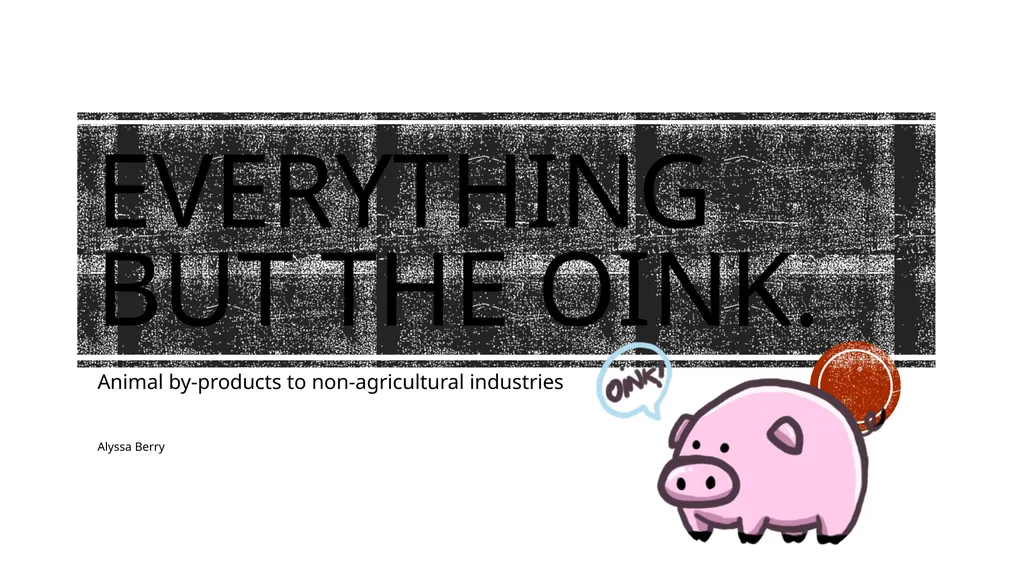
Everything but the oink. Animal by-products to non-agricultural industries
Alyssa Berry<br>
03
objectives D12.6 Understand the value of animal by-products to nonagricultural industries.
C4.3 Compile the modern-day uses of animals and animal by-products.<br>
04
Today we will… Learn the different products made from animal by-products
Learn the definition and uses of animal by-products
The risks associated with animal by-products<br>
05
Did you know? The agent which reduces the friction in the material of plastic bags are made out of animal fat.
Car and bike tires are animal product based.
Glue used in wood working and musical instrument making is made from the boiling of animal bone and tissues.
There are many everyday items created from animal by-products!<br>
What are animal by-products? Products commonly used as feed ingredients that are derived from unused parts of animals, for example meat and bone meal, feather meal and/or manure, eggs and hatchery waste.<br>
08
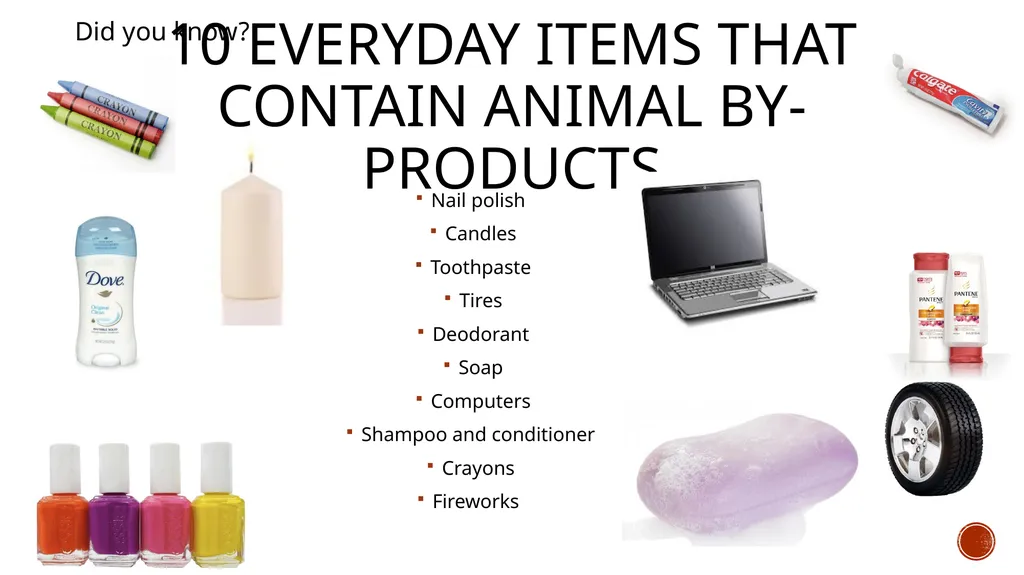
10 everyday items that contain animal by-products Nail polish
Candles
Toothpaste
Tires
Deodorant
Soap
Computers
Shampoo and conditioner
Crayons
Fireworks Did you know?<br>
09
What parts of the animal do we use? The majority of the animal is used for meat! Rendering is the process in converting wasted animal tissues into useable value-added materials<br>
10
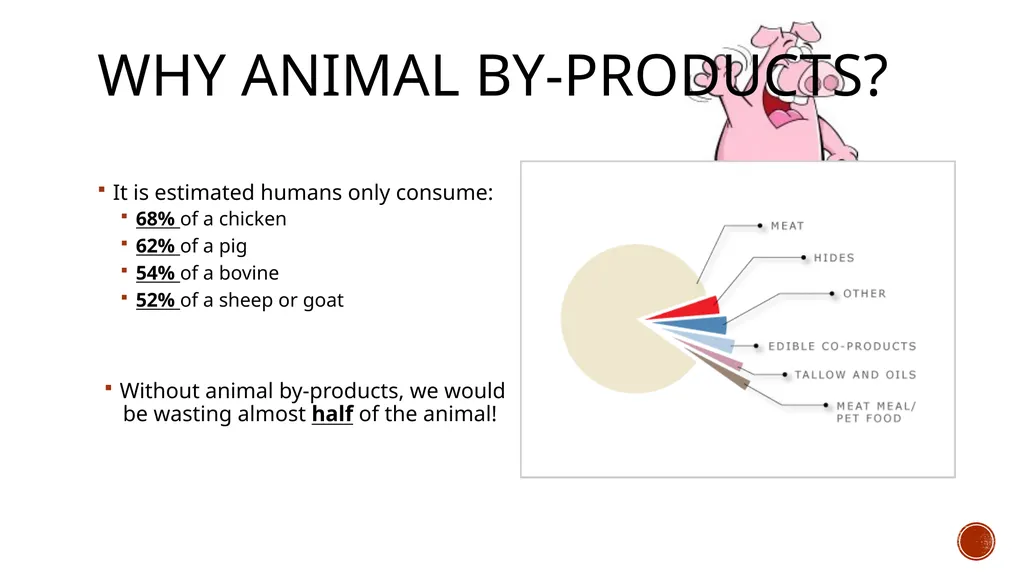
Why animal by-products? It is estimated humans only consume:
68% of a chicken
62% of a pig
54% of a bovine
52% of a sheep or goat
Without animal by-products, we would be wasting almost half of the animal!<br>
11
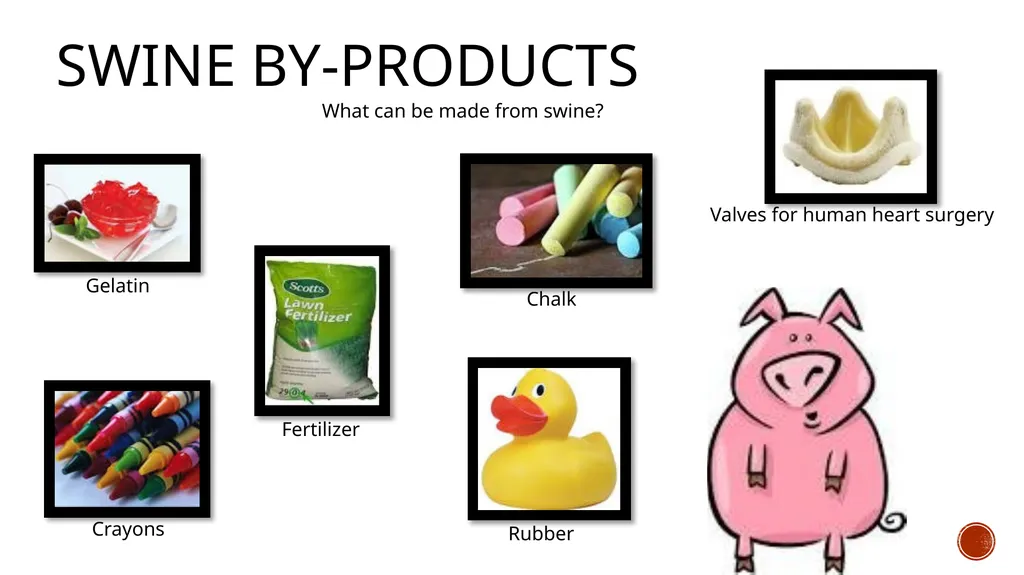
Swine by-products Gelatin Chalk Fertilizer Crayons Rubber What can be made from swine? Valves for human heart surgery<br>
12
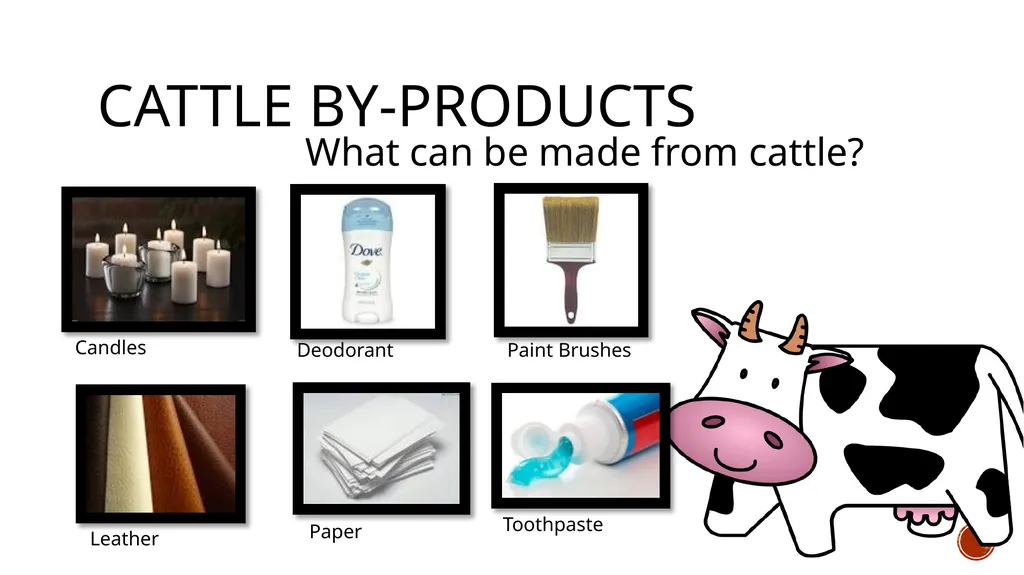
Cattle by-products What can be made from cattle? Candles Deodorant Leather Paper Paint Brushes Toothpaste<br>
13
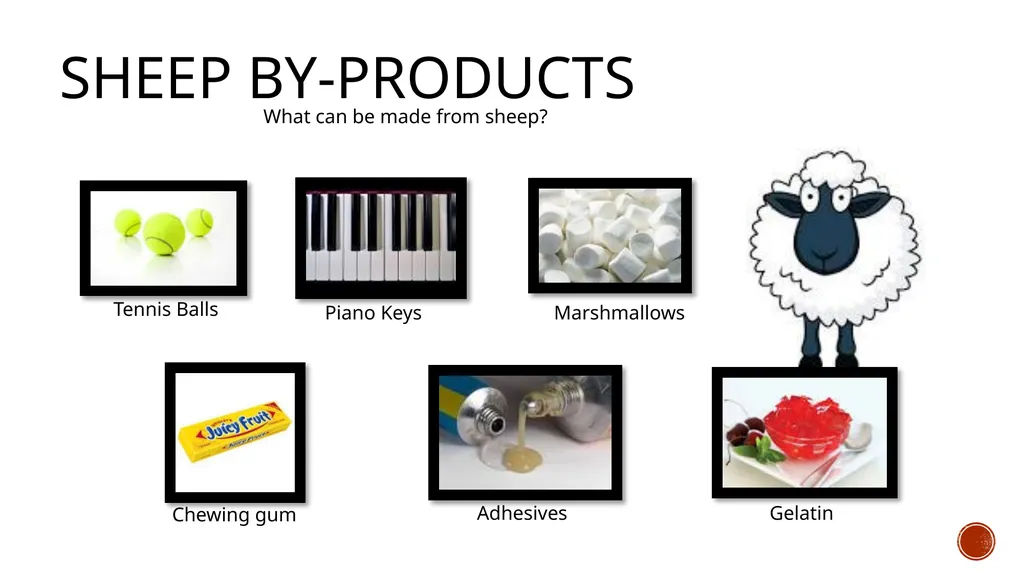
Sheep by-products What can be made from sheep? Tennis Balls Piano Keys Marshmallows Chewing gum Adhesives Gelatin<br>
14
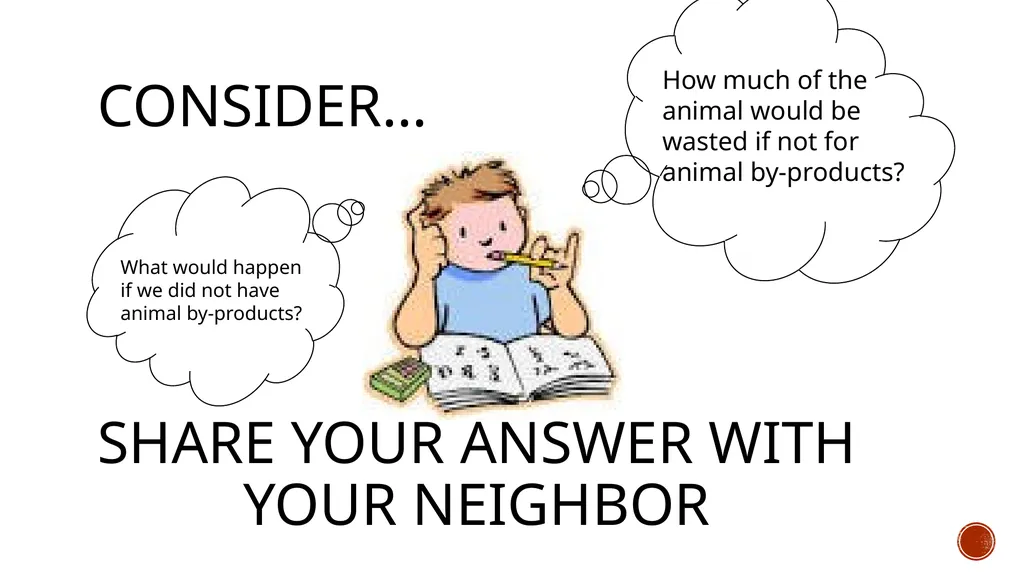
Consider… How much of the animal would be wasted if not for animal by-products? Share your answer with your neighbor What would happen if we did not have animal by-products?<br>
15
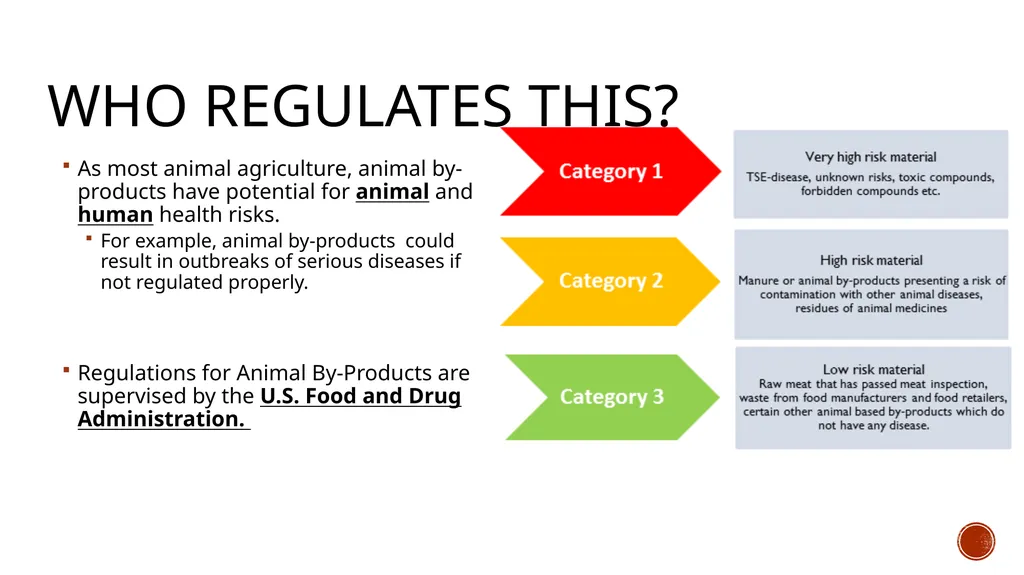
Who regulates this? As most animal agriculture, animal by-products have potential for animal and human health risks.
For example, animal by-products could result in outbreaks of serious diseases if not regulated properly.
Regulations for Animal By-Products are supervised by the U.S. Food and Drug Administration.<br>
16
Review! Complete the review section of your handout now<br>