04
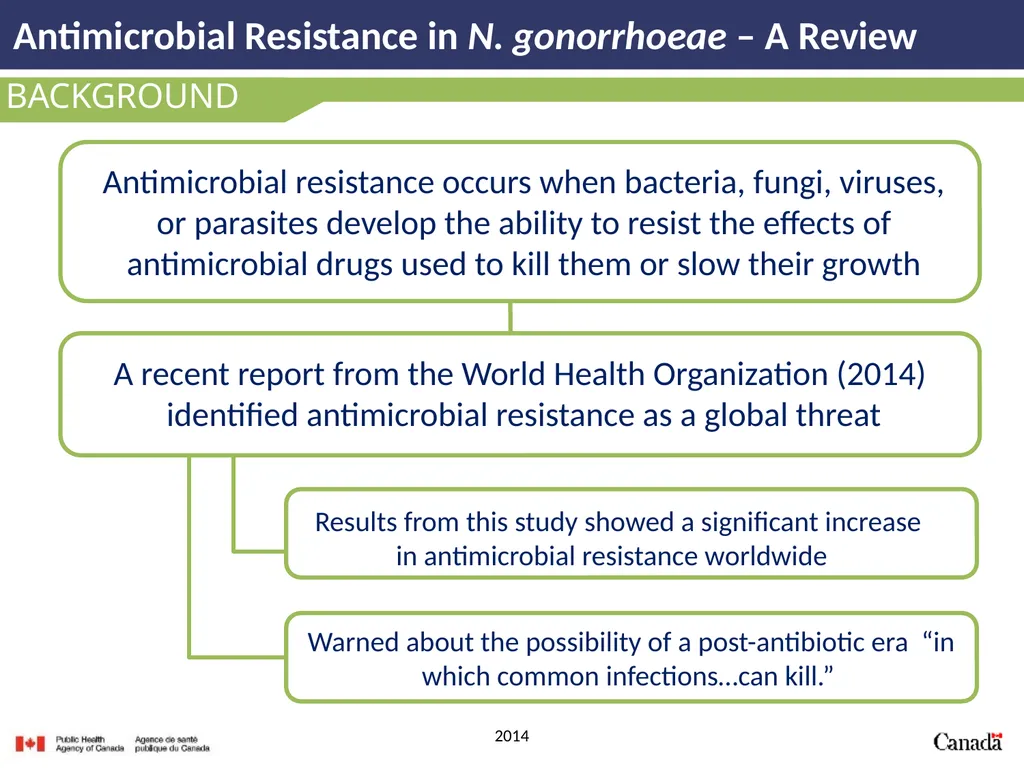
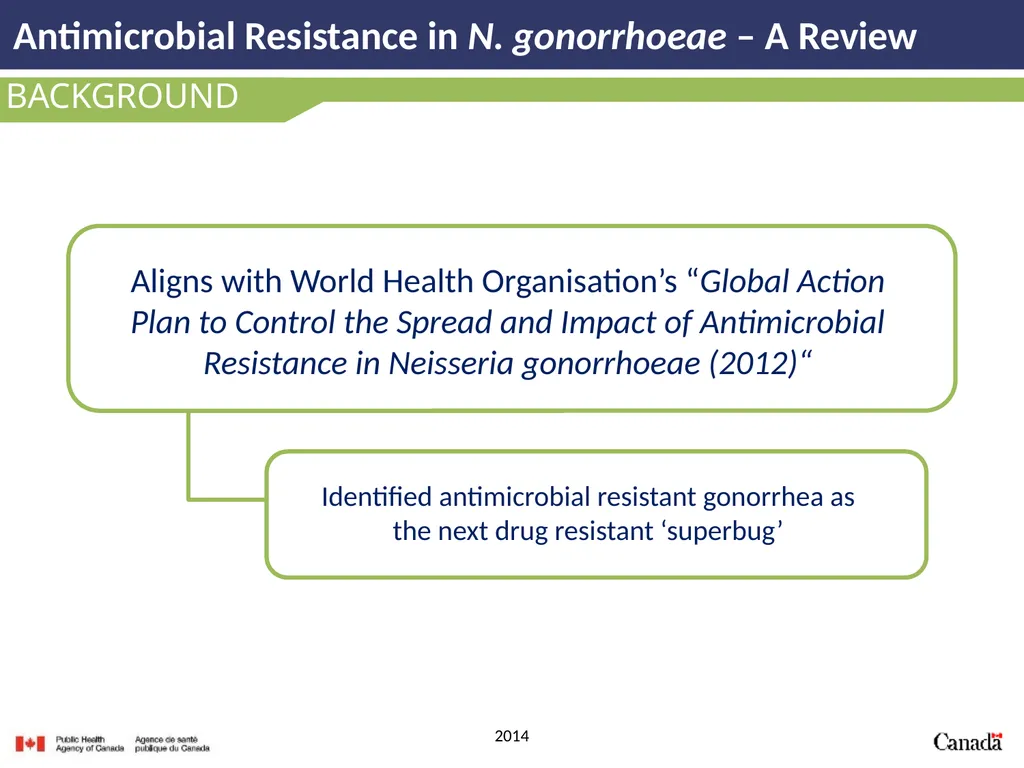
BACKGROUND Antimicrobial resistance occurs when bacteria, fungi, viruses, or parasites develop the ability to resist the effects of antimicrobial drugs used to kill them or slow their growth A recent report from the World Health Organization (2014) identified antimicrobial resistance as a global threat Warned about the possibility of a post-antibiotic era “in which common infections…can kill.” Antimicrobial Resistance in N. gonorrhoeae – A Review<br>
05
BACKGROUND Antimicrobial Resistance in N. gonorrhoeae – A Review<br>
06
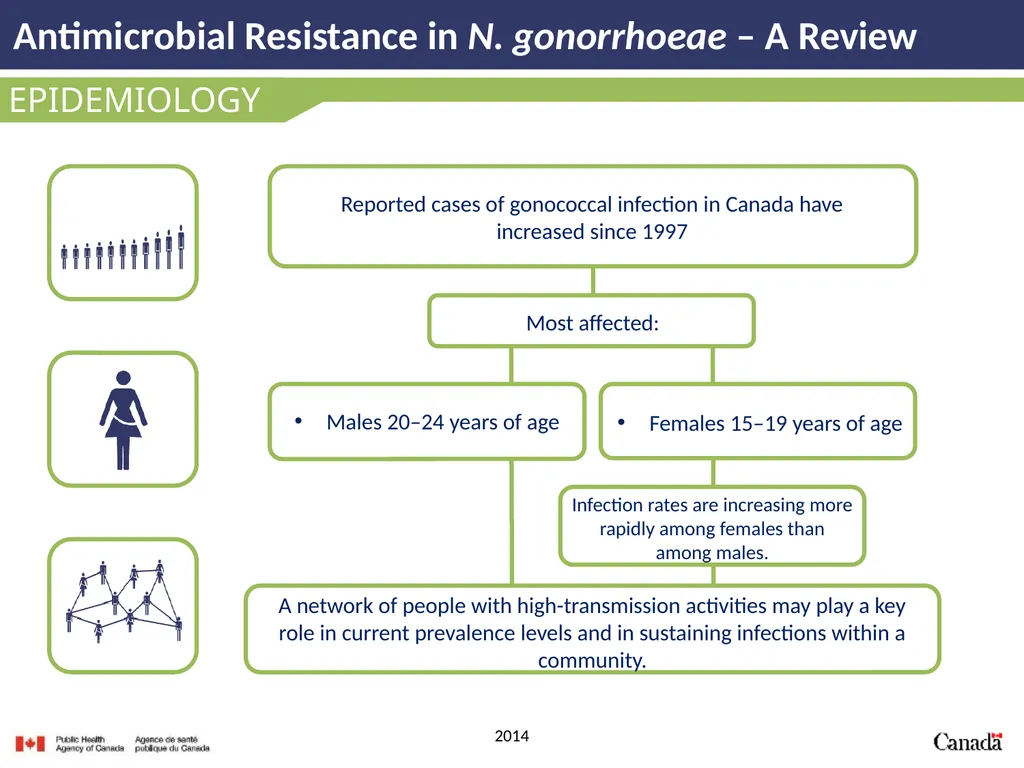
EPIDEMIOLOGY Antimicrobial Resistance in N. gonorrhoeae – A Review<br>
07
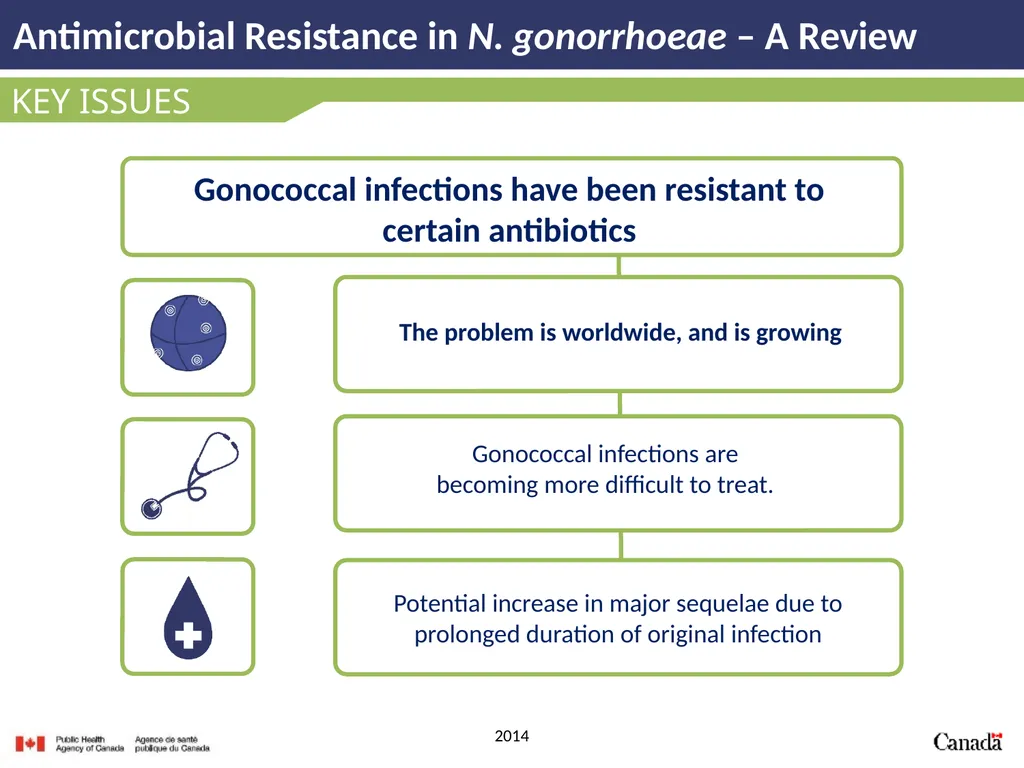
KEY ISSUES Antimicrobial Resistance in N. gonorrhoeae – A Review Gonococcal infections have been resistant to certain antibiotics Gonococcal infections are becoming more difficult to treat. Potential increase in major sequelae due to prolonged duration of original infection The problem is worldwide, and is growing<br>
08
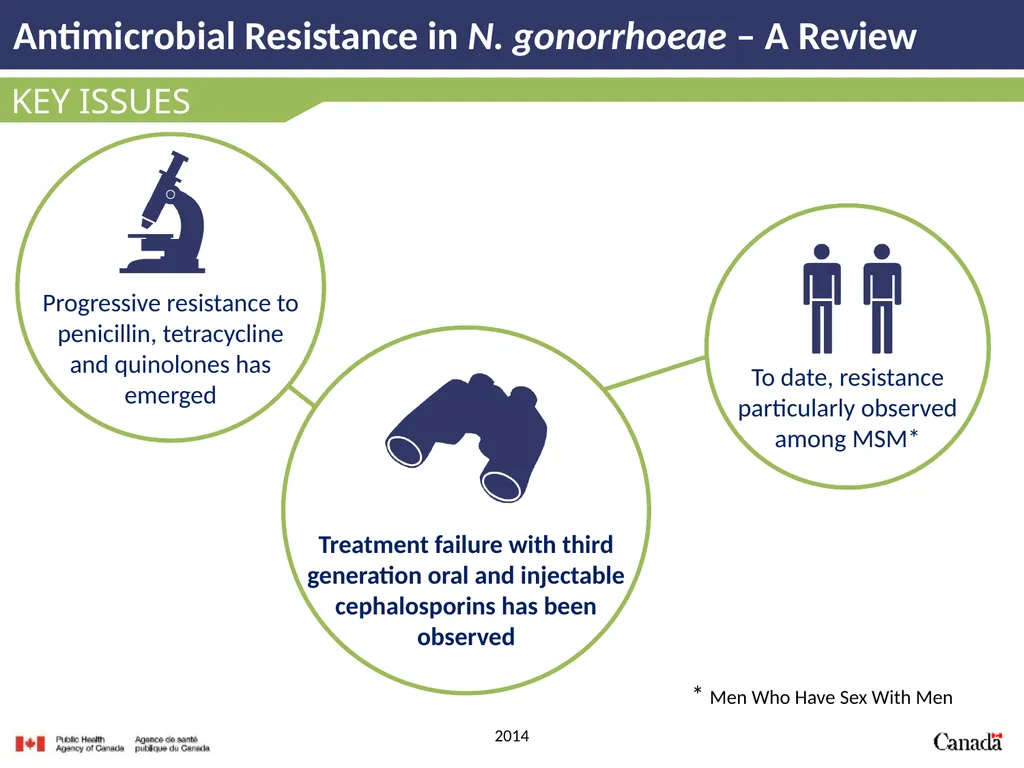
KEY ISSUES Antimicrobial Resistance in N. gonorrhoeae – A Review * Men Who Have Sex With Men<br>
09
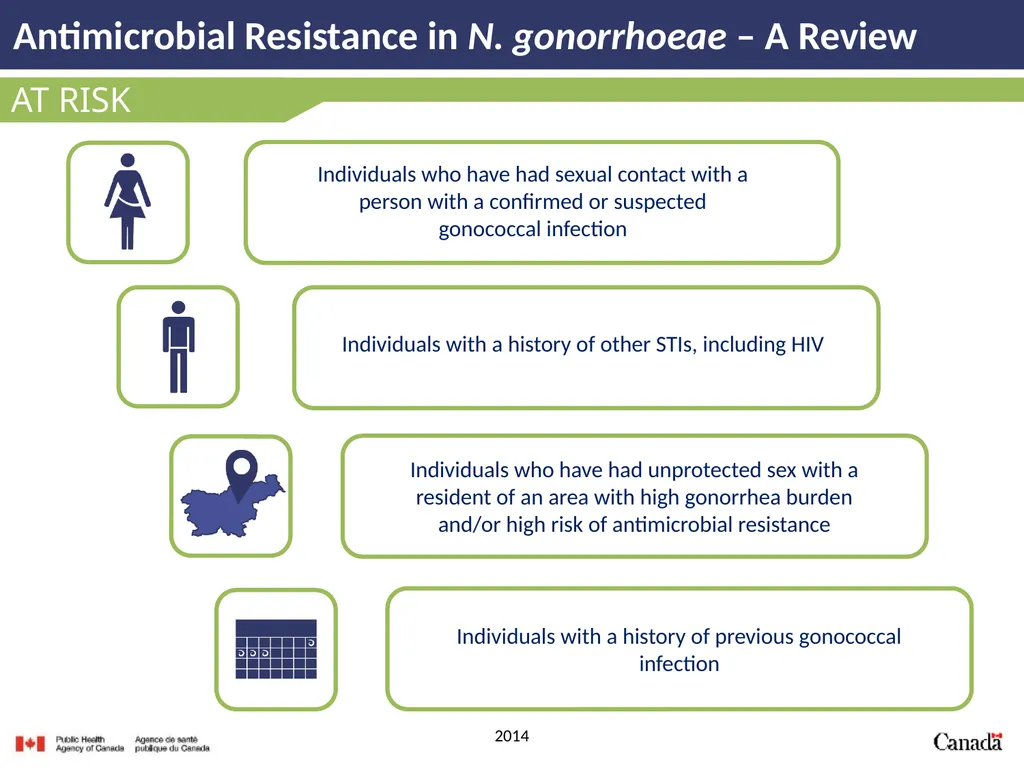
AT RISK Antimicrobial Resistance in N. gonorrhoeae – A Review<br>
10
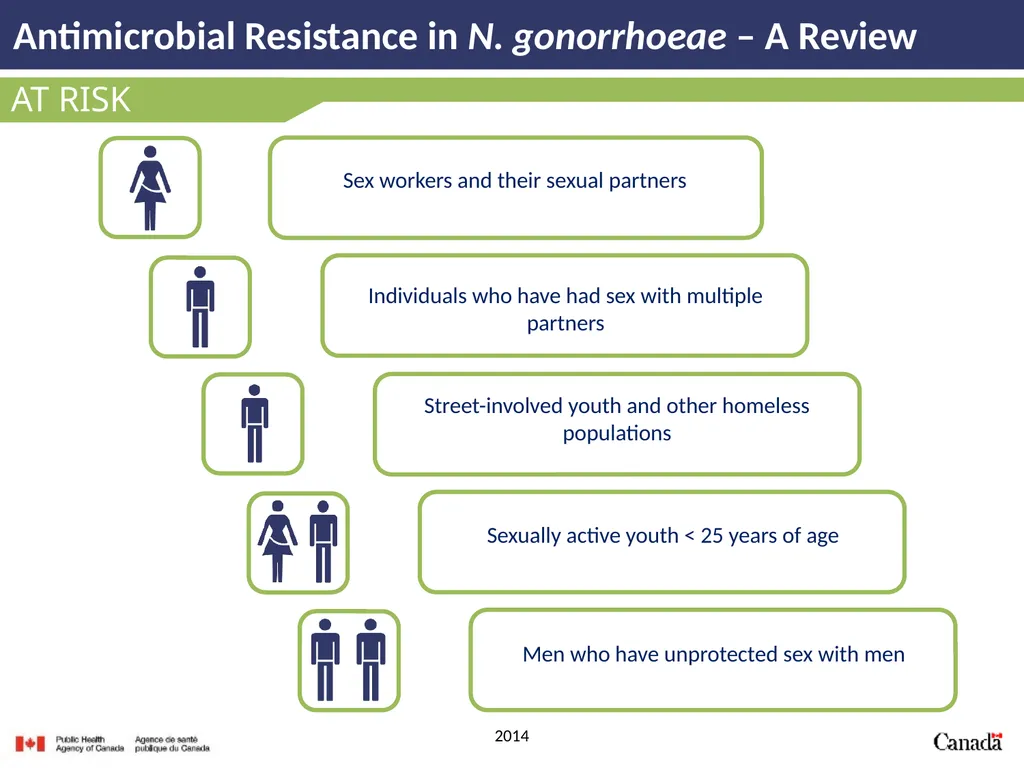
AT RISK Antimicrobial Resistance in N. gonorrhoeae – A Review<br>
11
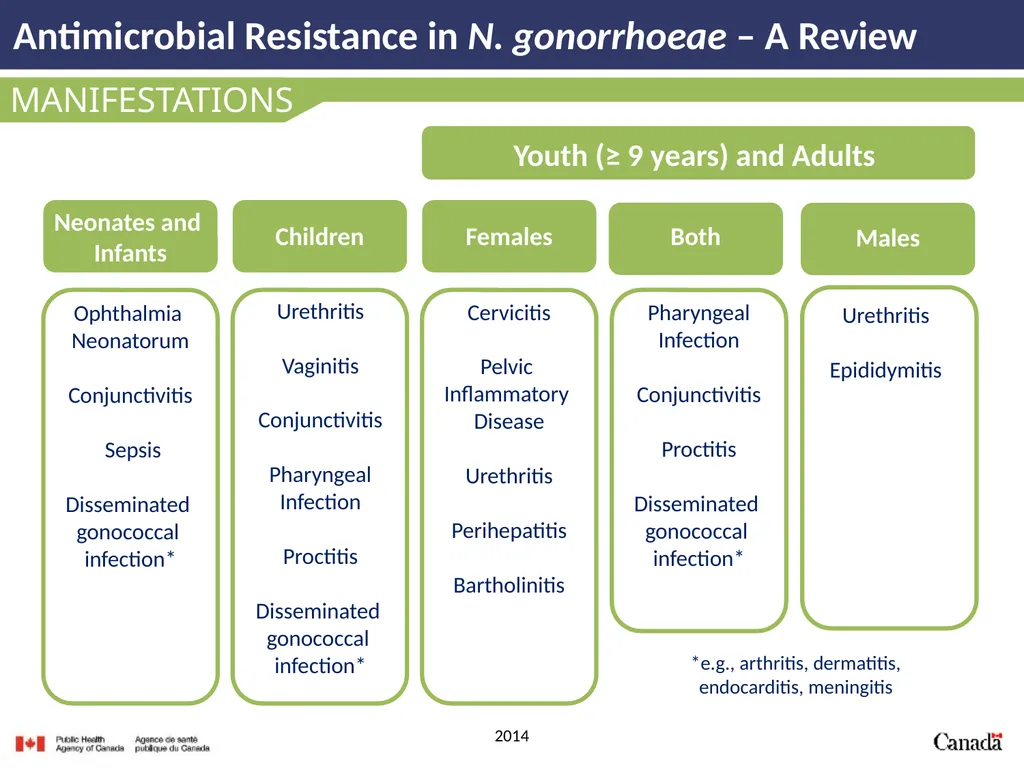
MANIFESTATIONS Antimicrobial Resistance in N. gonorrhoeae – A Review<br>
12
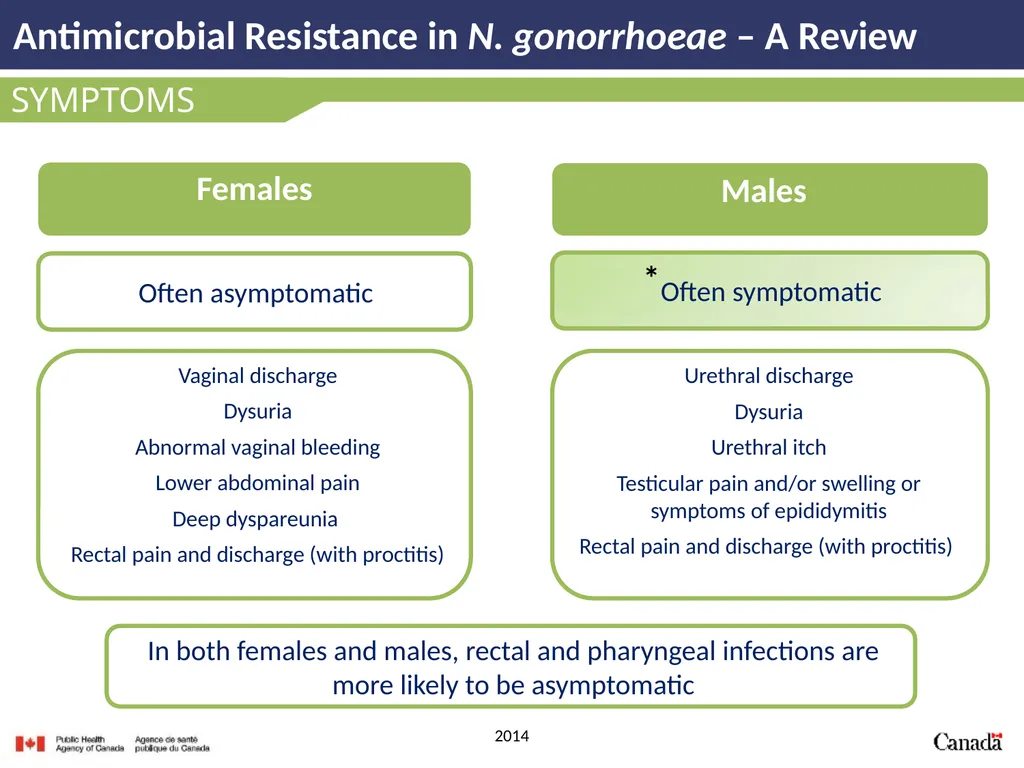
SYMPTOMS Antimicrobial Resistance in N. gonorrhoeae – A Review *<br>
13
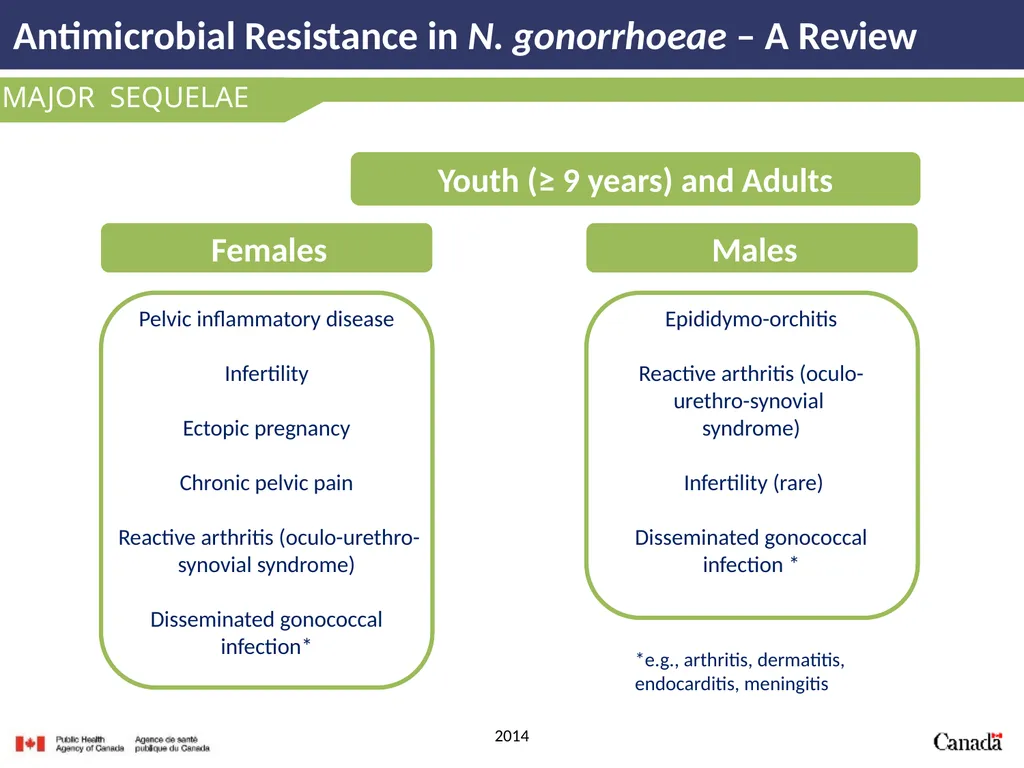
*e.g., arthritis, dermatitis, endocarditis, meningitis MAJOR SEQUELAE Females Males Pelvic inflammatory disease
Infertility
Ectopic pregnancy
Chronic pelvic pain
Reactive arthritis (oculo-urethro-synovial syndrome)
Disseminated gonococcal infection* Epididymo-orchitis
Reactive arthritis (oculo-urethro-synovial
syndrome)
Infertility (rare)
Disseminated gonococcal infection * Antimicrobial Resistance in N. gonorrhoeae – A Review<br>
14
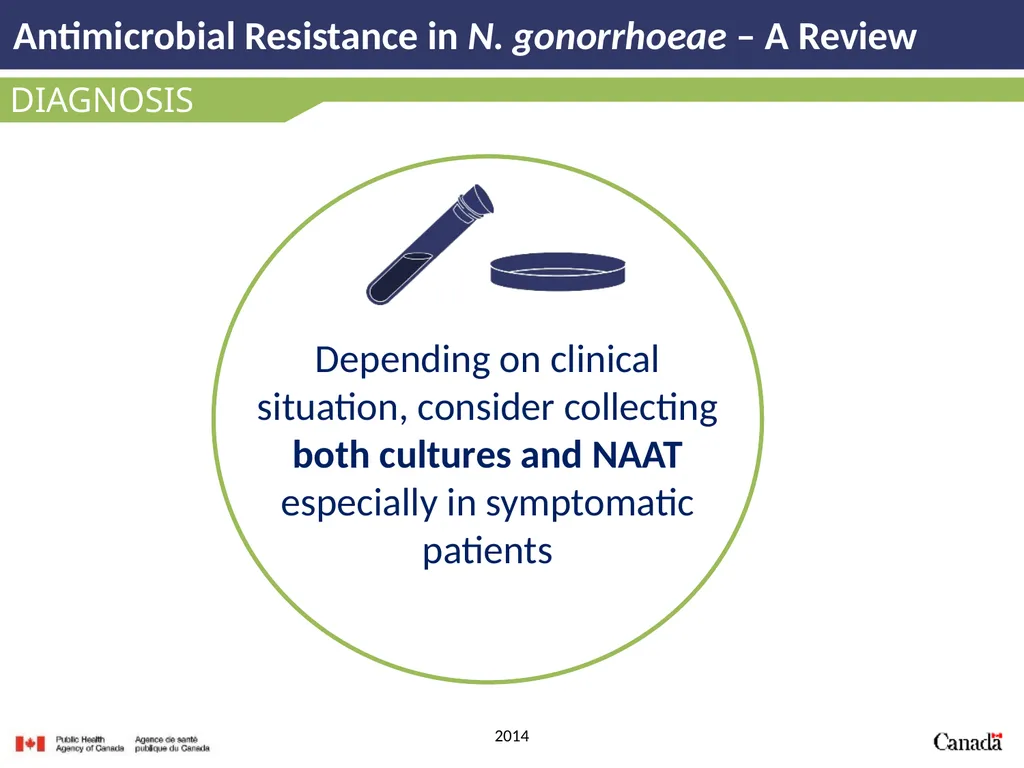
DIAGNOSIS Antimicrobial Resistance in N. gonorrhoeae – A Review<br>
15
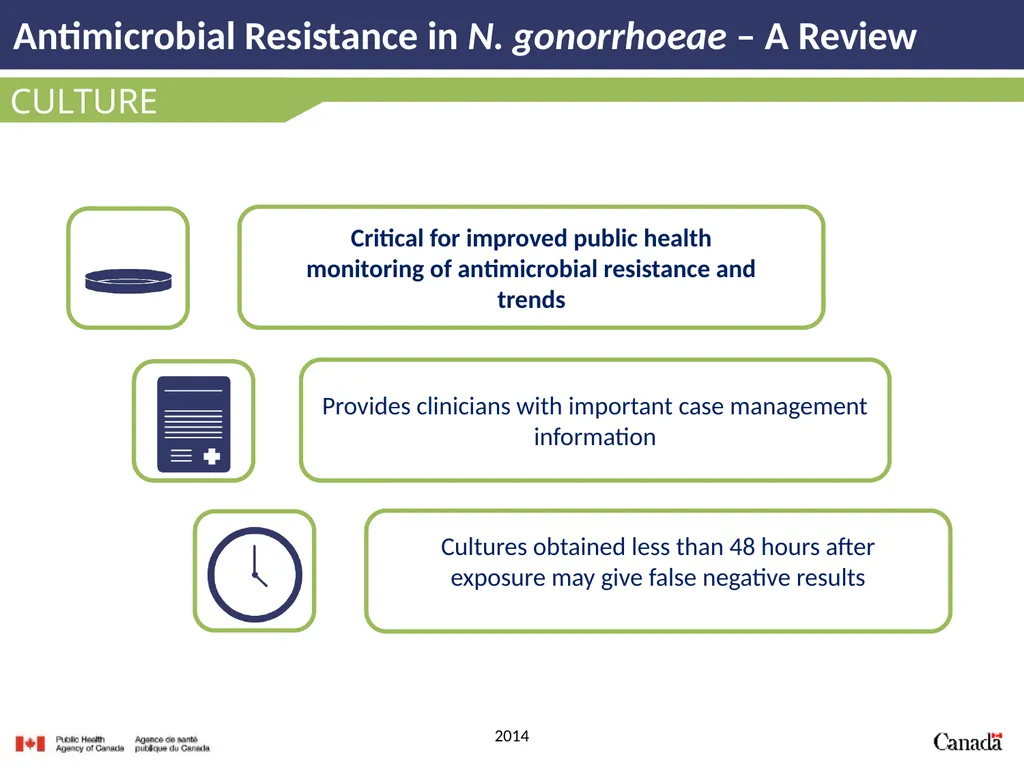
However, culture is strongly recommended because it allows for testing of antimicrobial susceptibility Where NAAT is routinely used, sentinel surveillance mechanisms using culture are important to ensure continued monitoring for antimicrobial resistance NAAT Antimicrobial Resistance in N. gonorrhoeae – A Review<br>
16
CULTURE Antimicrobial Resistance in N. gonorrhoeae – A Review<br>
17
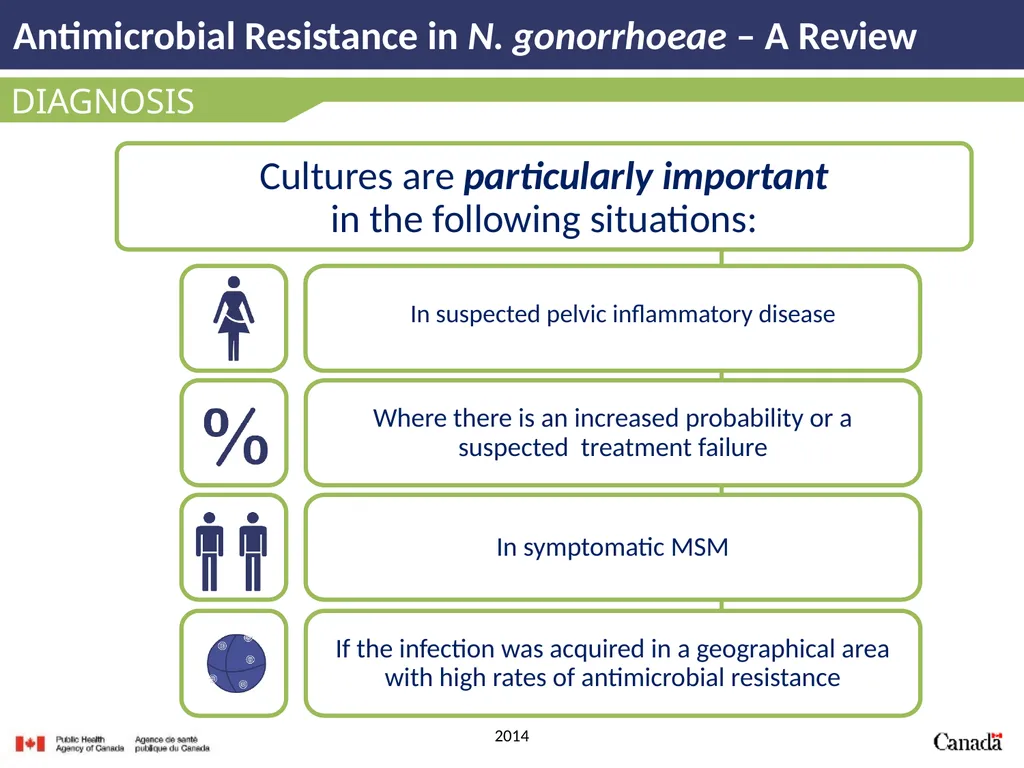
DIAGNOSIS Where there is an increased probability or a suspected treatment failure If the infection was acquired in a geographical area with high rates of antimicrobial resistance Antimicrobial Resistance in N. gonorrhoeae – A Review Cultures are particularly important in the following situations:<br>
18
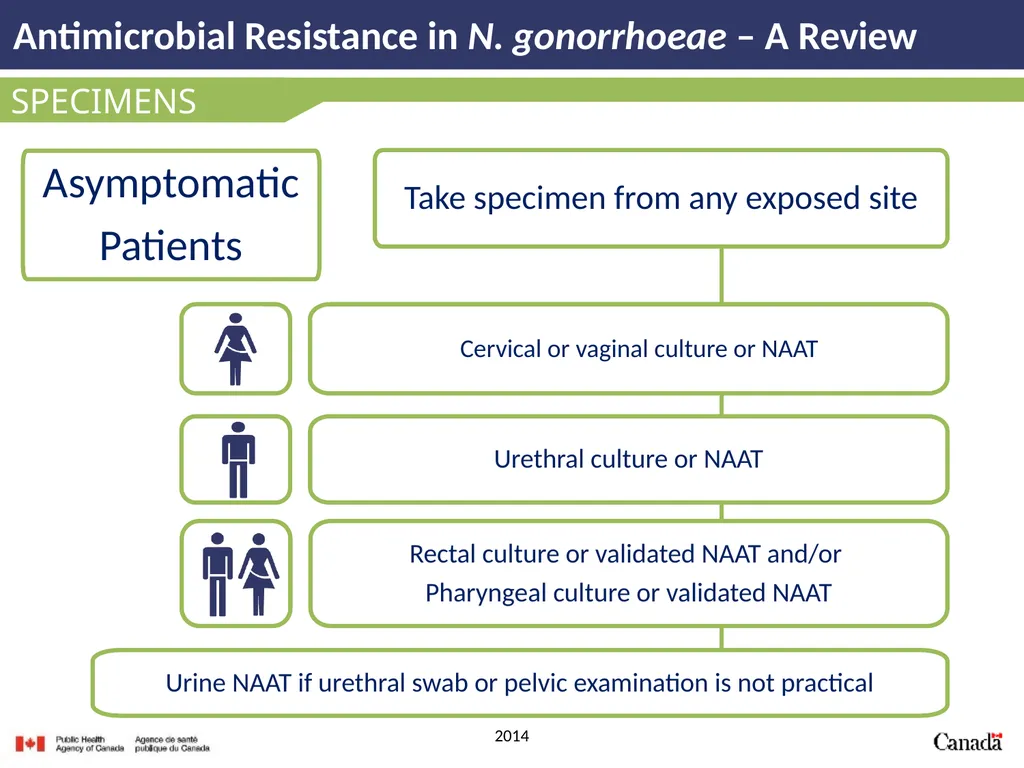
SPECIMENS Take specimen from any exposed site Urine NAAT if urethral swab or pelvic examination is not practical Asymptomatic
Patients Antimicrobial Resistance in N. gonorrhoeae – A Review<br>
19
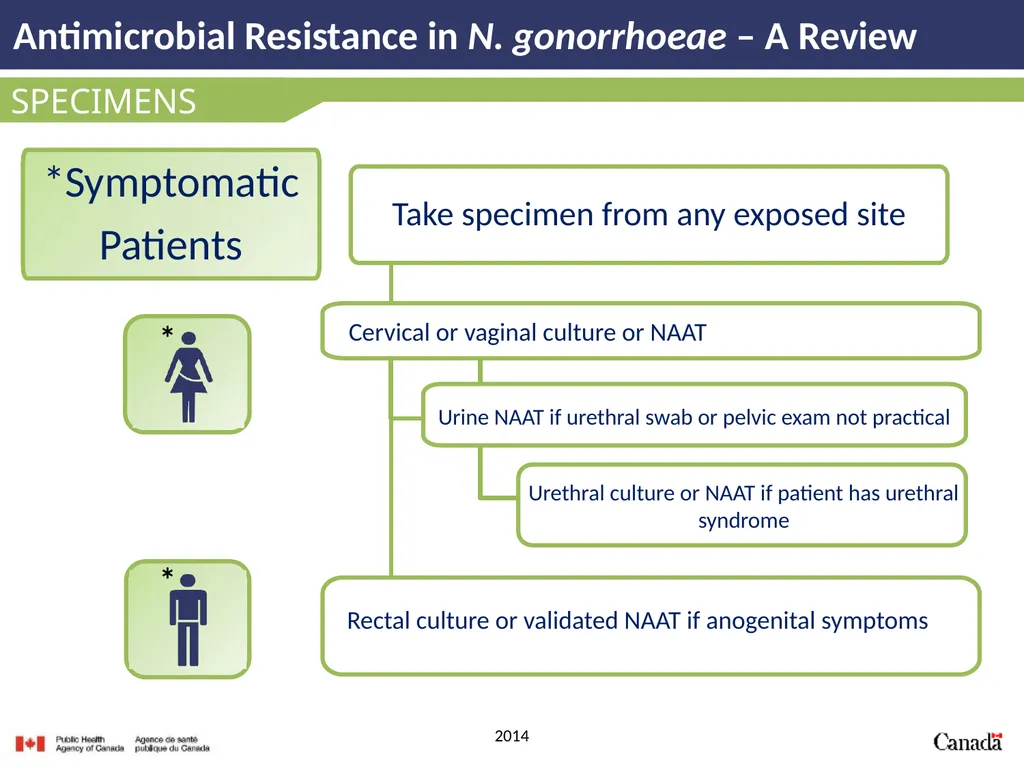
SPECIMENS Rectal culture or validated NAAT if anogenital symptoms *Symptomatic
Patients Antimicrobial Resistance in N. gonorrhoeae – A Review Take specimen from any exposed site * *<br>
20
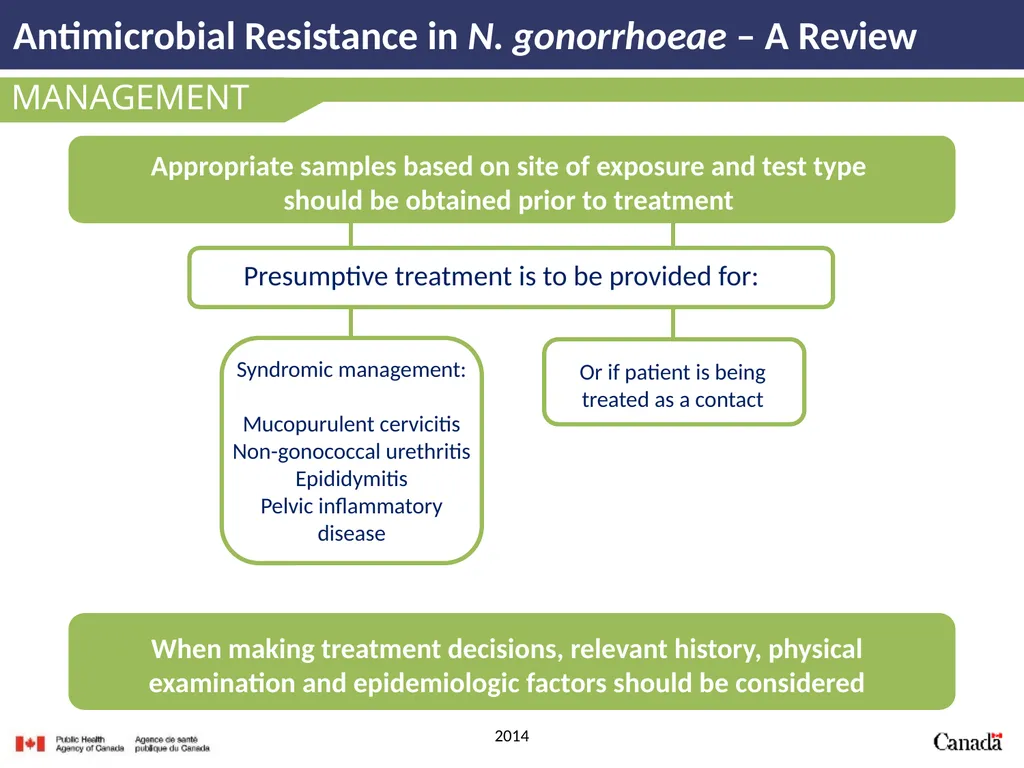
MANAGEMENT Antimicrobial Resistance in N. gonorrhoeae – A Review<br>
21
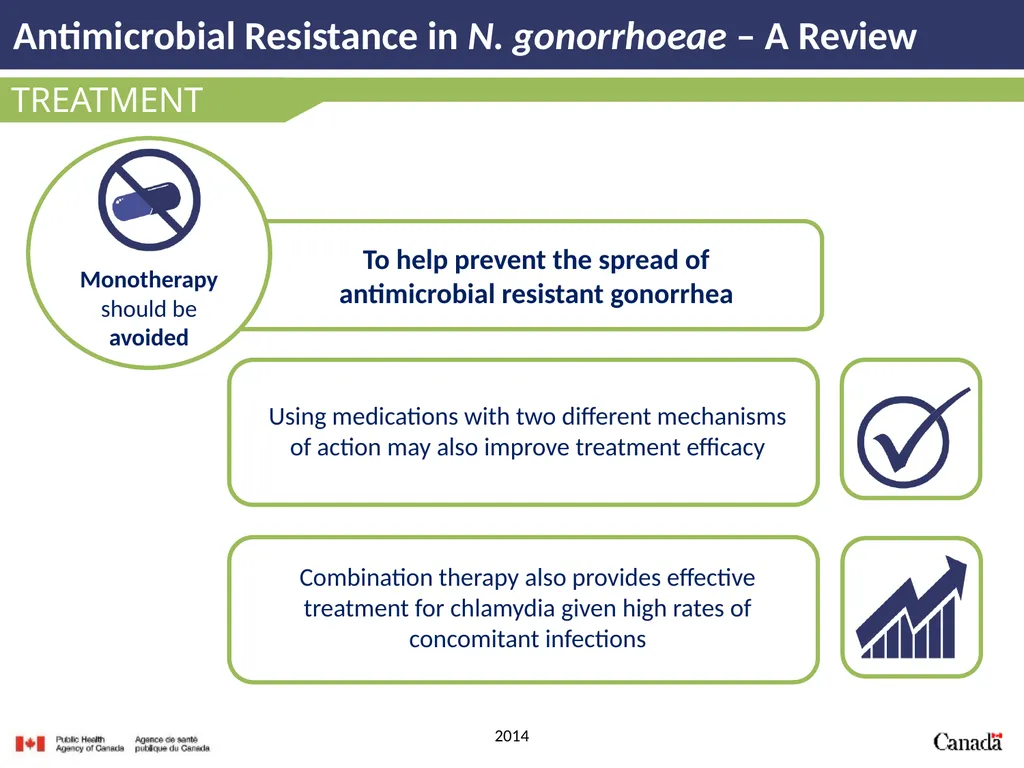
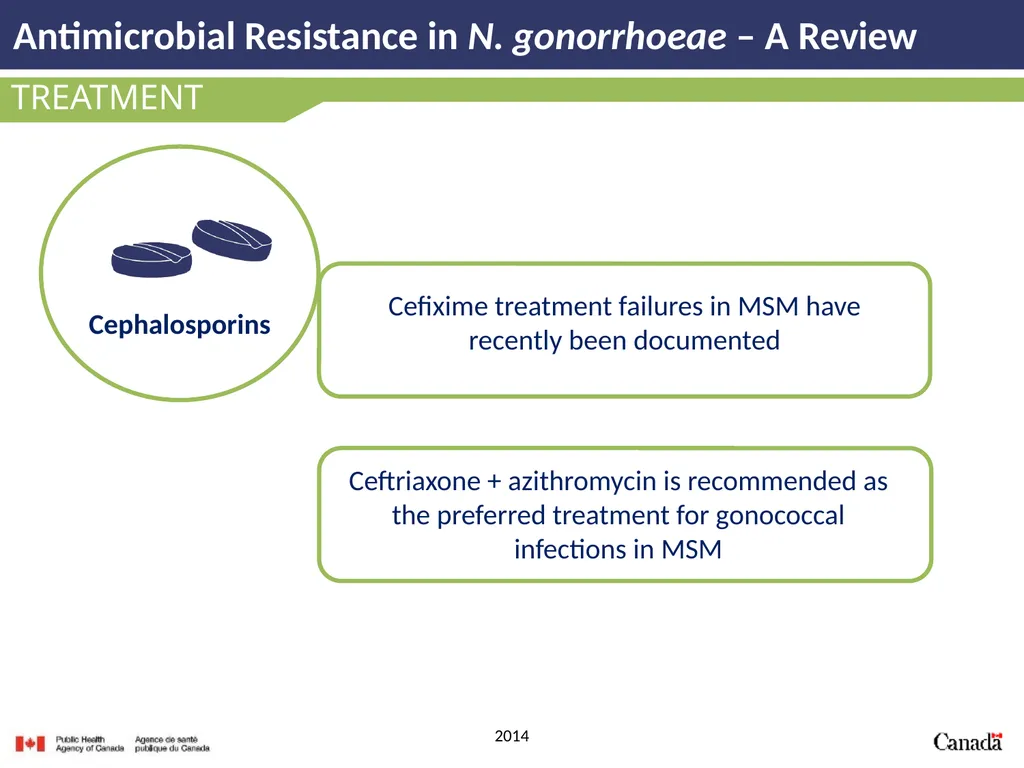
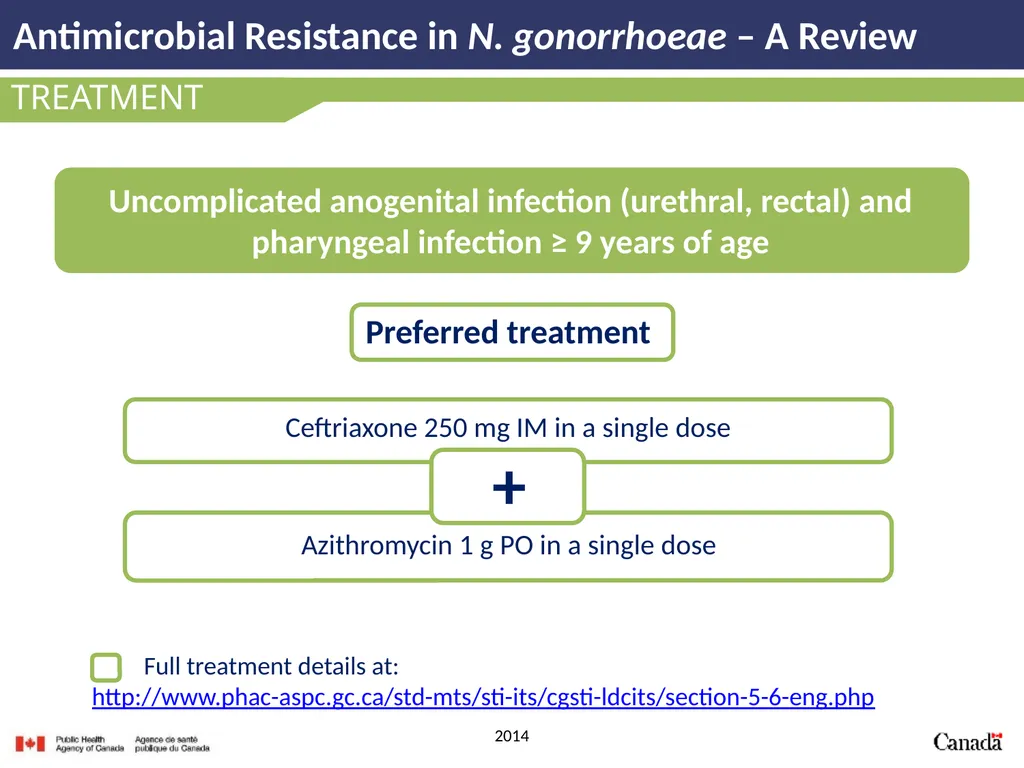
Combination therapy also provides effective treatment for chlamydia given high rates of concomitant infections Using medications with two different mechanisms of action may also improve treatment efficacy TREATMENT Antimicrobial Resistance in N. gonorrhoeae – A Review<br>
22
TREATMENT Antimicrobial Resistance in N. gonorrhoeae – A Review<br>
23
TREATMENT Antimicrobial Resistance in N. gonorrhoeae – A Review<br>
24
TREATMENT Antimicrobial Resistance in N. gonorrhoeae – A Review<br>
25
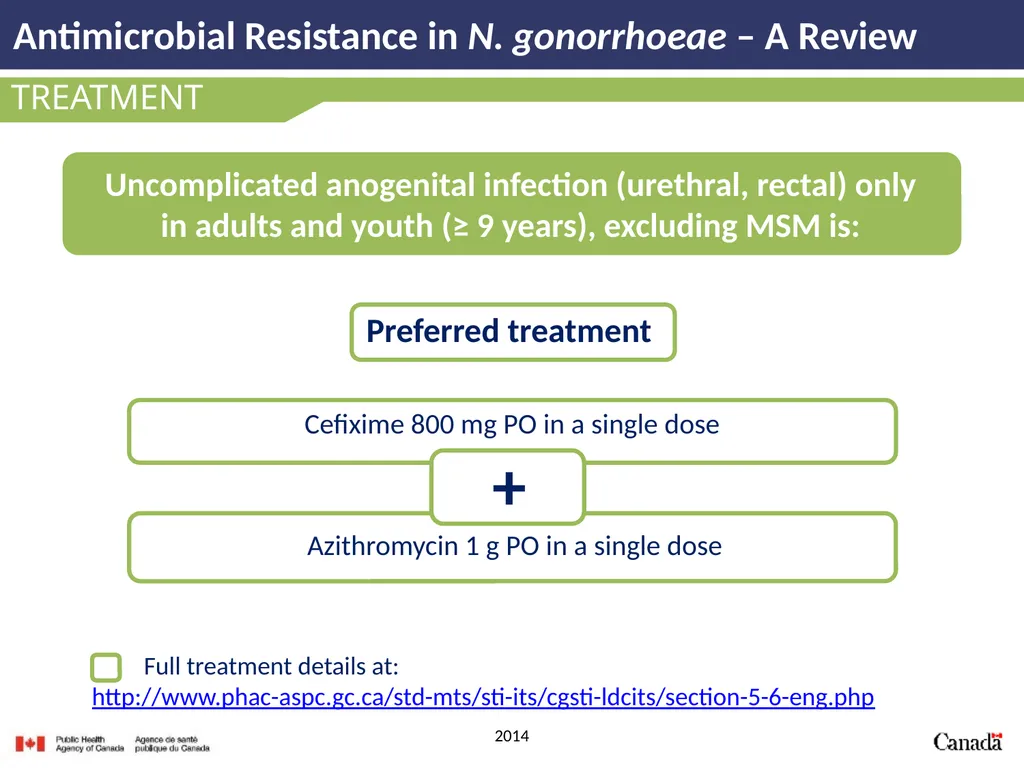
TREATMENT Antimicrobial Resistance in N. gonorrhoeae – A Review Uncomplicated anogenital infection (urethral, rectal) only in adults and youth (≥ 9 years), excluding MSM is:<br>
26
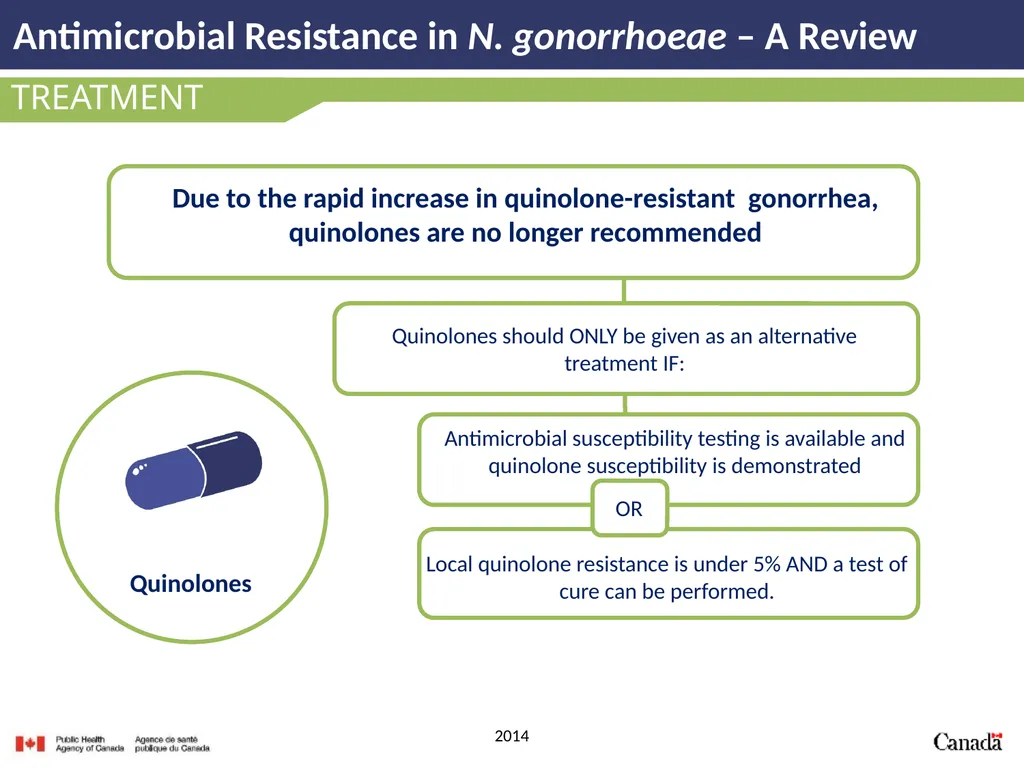
Due to the rapid increase in quinolone-resistant gonorrhea, quinolones are no longer recommended Quinolones should ONLY be given as an alternative treatment IF: Antimicrobial susceptibility testing is available and quinolone susceptibility is demonstrated Local quinolone resistance is under 5% AND a test of cure can be performed. Antimicrobial Resistance in N. gonorrhoeae – A Review TREATMENT Quinolones<br>
27
TREATMENT Antimicrobial Resistance in N. gonorrhoeae – A Review<br>
28
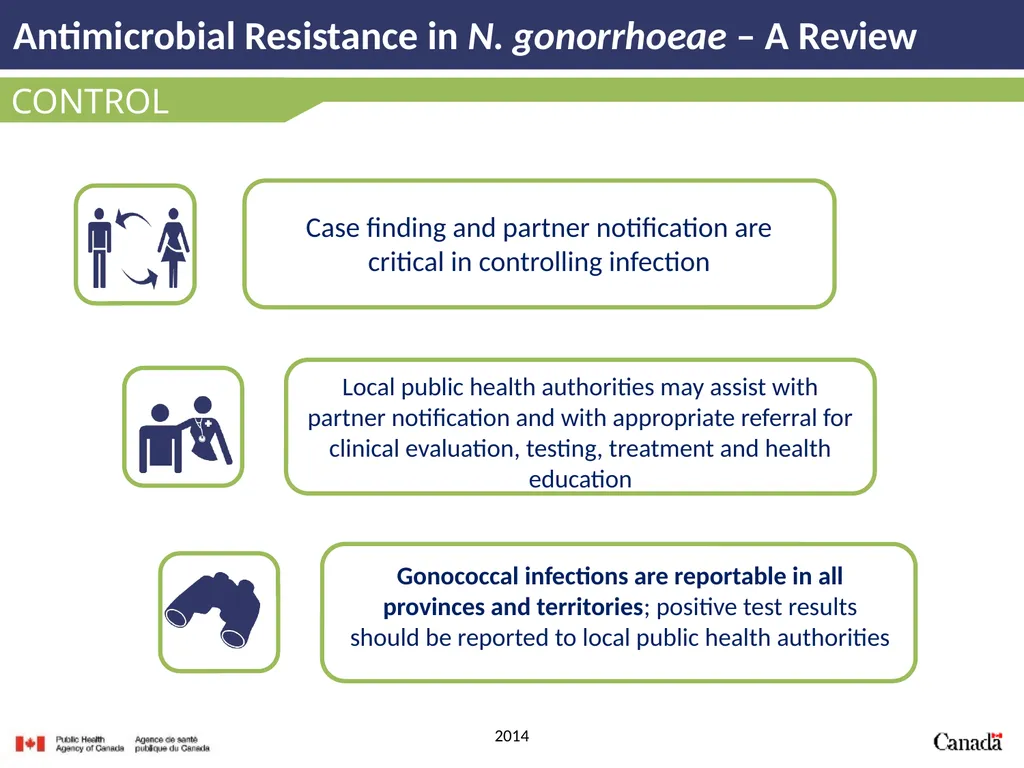
Local public health authorities may assist with partner notification and with appropriate referral for clinical evaluation, testing, treatment and health education CONTROL Antimicrobial Resistance in N. gonorrhoeae – A Review<br>
29
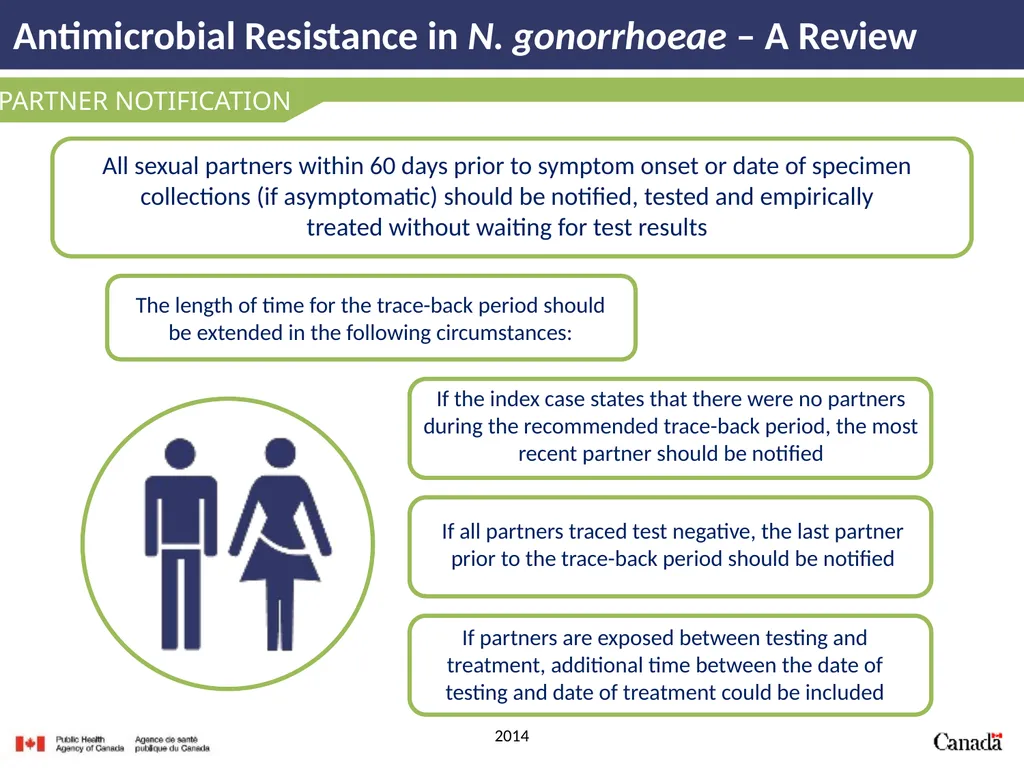
PARTNER NOTIFICATION All sexual partners within 60 days prior to symptom onset or date of specimen collections (if asymptomatic) should be notified, tested and empirically treated without waiting for test results Antimicrobial Resistance in N. gonorrhoeae – A Review<br>
30
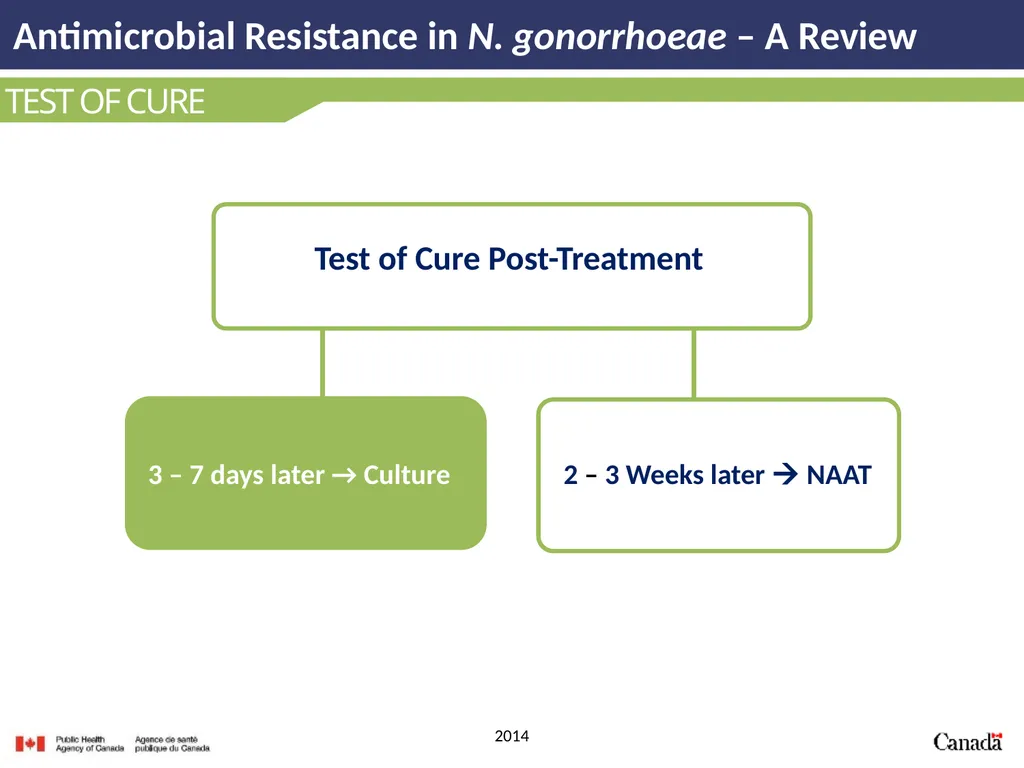
TEST OF CURE Antimicrobial Resistance in N. gonorrhoeae – A Review 2 – 3 Weeks later NAAT Test of Cure Post-Treatment 3 – 7 days later → Culture<br>
31
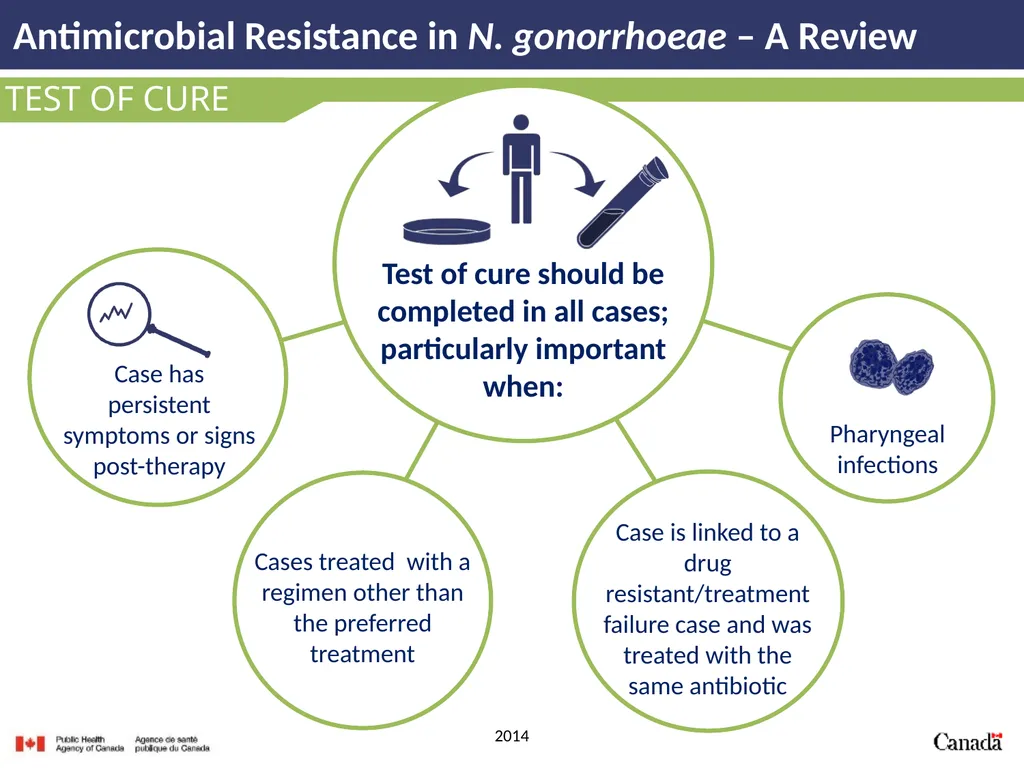
Case has persistent symptoms or signs post-therapy TEST OF CURE Antimicrobial Resistance in N. gonorrhoeae – A Review<br>
32
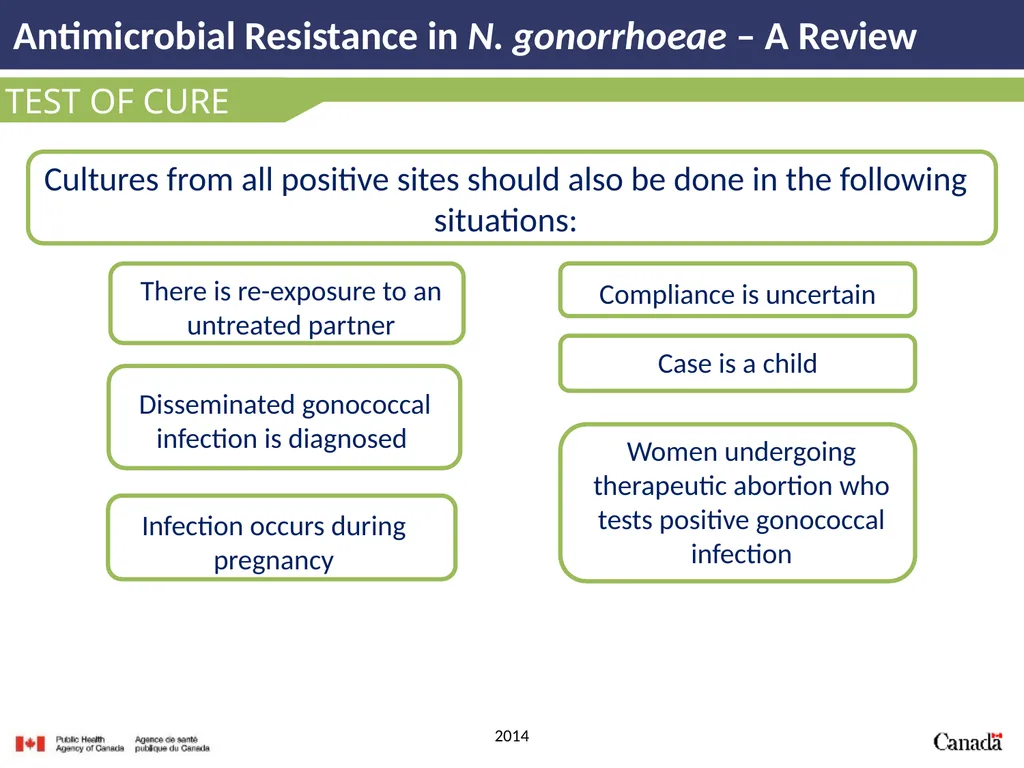
Cultures from all positive sites should also be done in the following situations: Antimicrobial Resistance in N. gonorrhoeae – A Review TEST OF CURE<br>
33
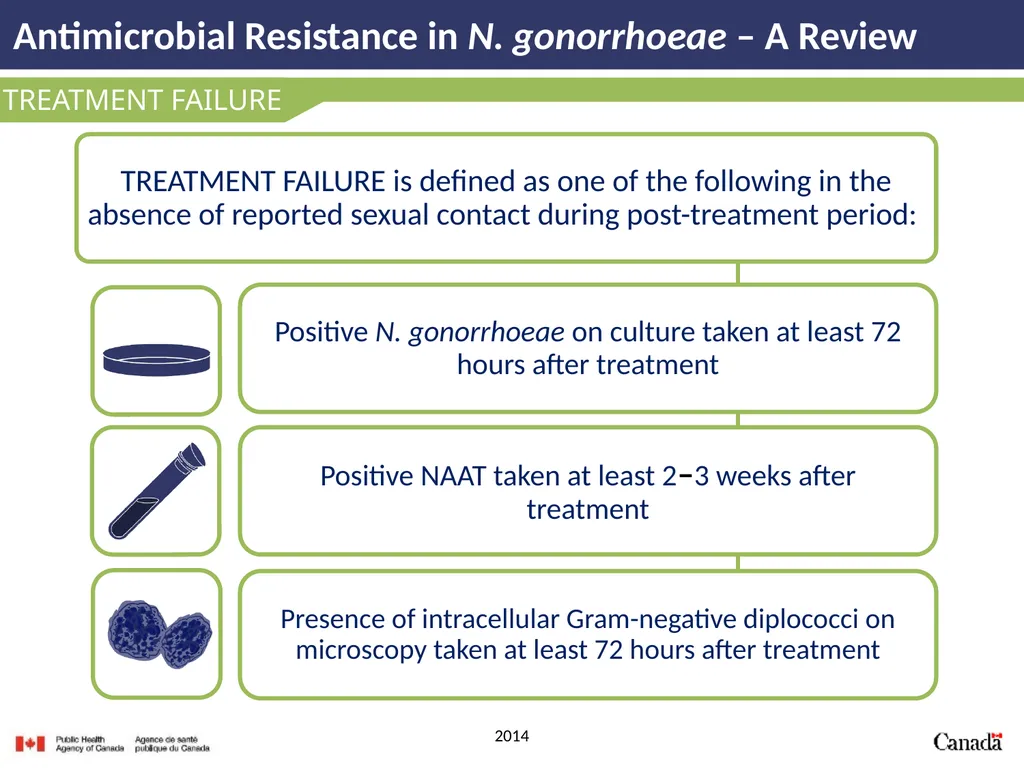
TREATMENT FAILURE TREATMENT FAILURE is defined as one of the following in the absence of reported sexual contact during post-treatment period: Positive N. gonorrhoeae on culture taken at least 72 hours after treatment Positive NAAT taken at least 2–3 weeks after treatment Presence of intracellular Gram-negative diplococci on microscopy taken at least 72 hours after treatment Antimicrobial Resistance in N. gonorrhoeae – A Review<br>
34
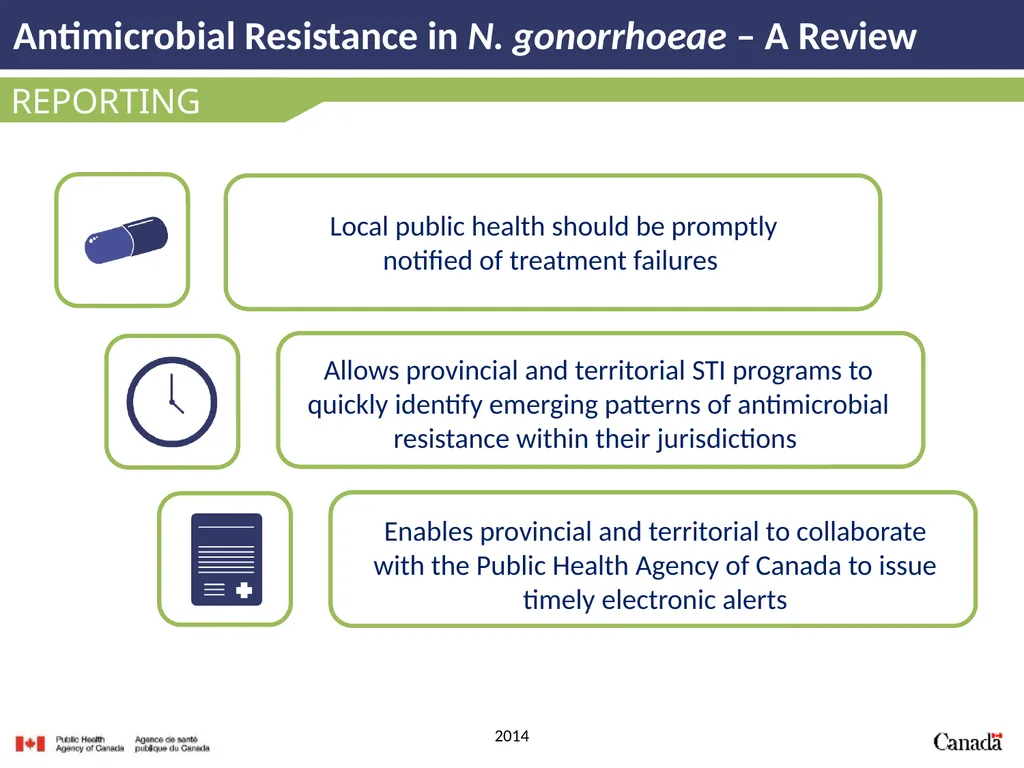
REPORTING Antimicrobial Resistance in N. gonorrhoeae – A Review<br>
35
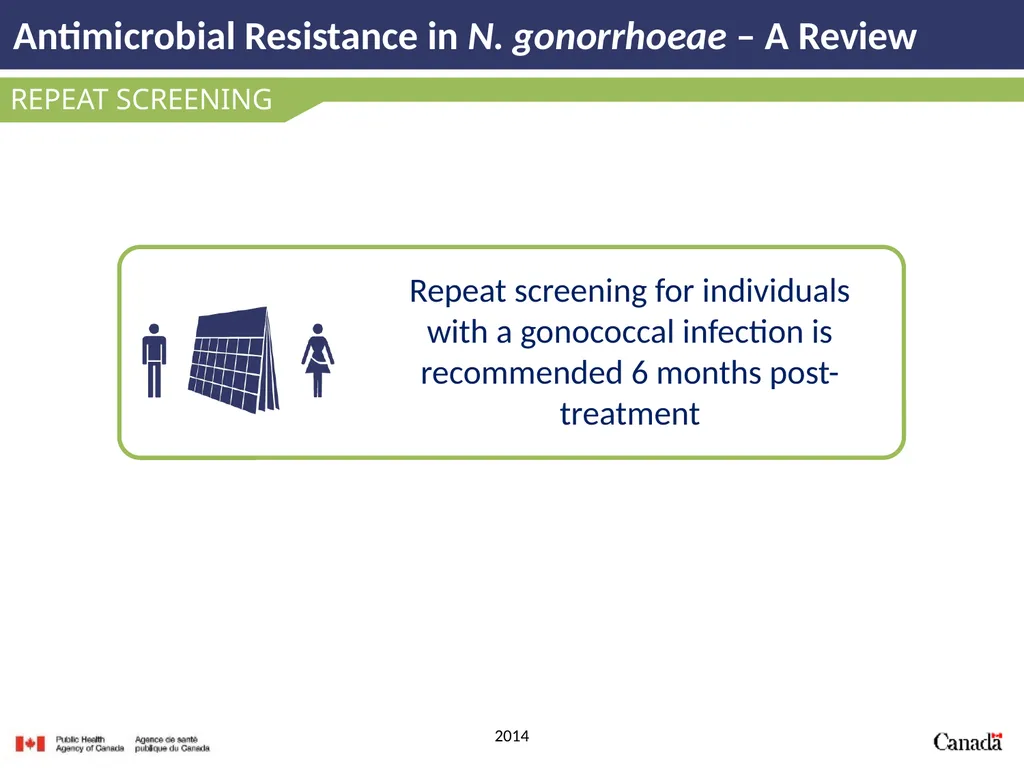
Antimicrobial Resistance in N. gonorrhoeae – A Review REPEAT SCREENING<br>
36
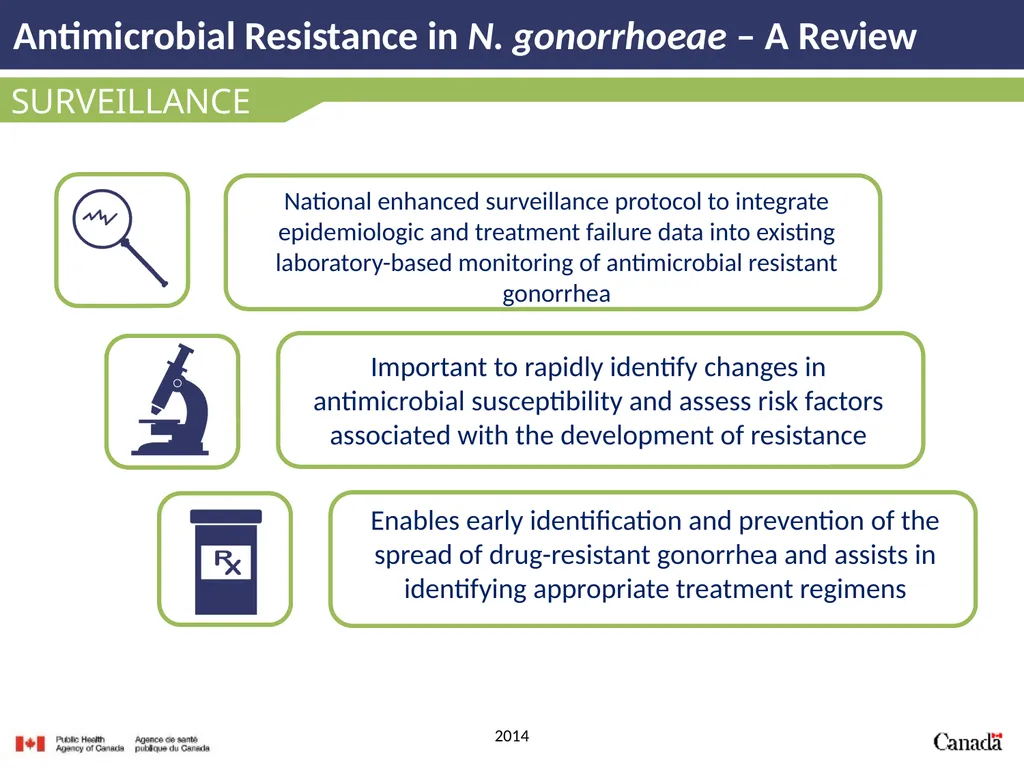
SURVEILLANCE Antimicrobial Resistance in N. gonorrhoeae – A Review<br>
37
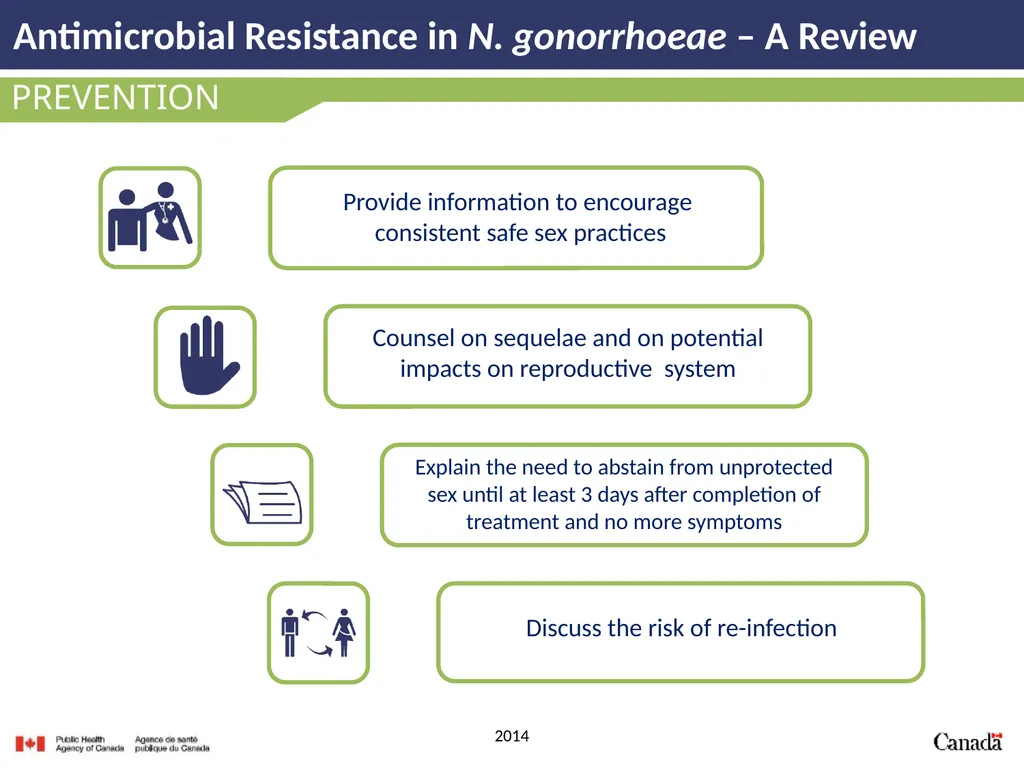
PREVENTION Antimicrobial Resistance in N. gonorrhoeae – A Review<br>
38
CONCLUSION To successfully address the public health risk of antimicrobial resistant gonorrhea, primary care and public health professionals need to work together. Antimicrobial Resistance in N. gonorrhoeae – A Review<br>
39
RESOURCES http://www.phac-aspc.gc.ca/std-mts/sti-its/cgsti-ldcits/section-5-6-eng.php
The above based on Public Health Agency of Canada’s Canadian STI Guidelines To access the chapter and additional resources: This document is intended to provide information to public health and clinical professionals and does not supersede any provincial/territorial legislative, regulatory, policy and practice requirements or professional guidelines that govern the practice of health professionals in their respective jurisdictions, whose recommendations may differ due to local epidemiology or context. Antimicrobial Resistance in N. gonorrhoeae – A Review<br>