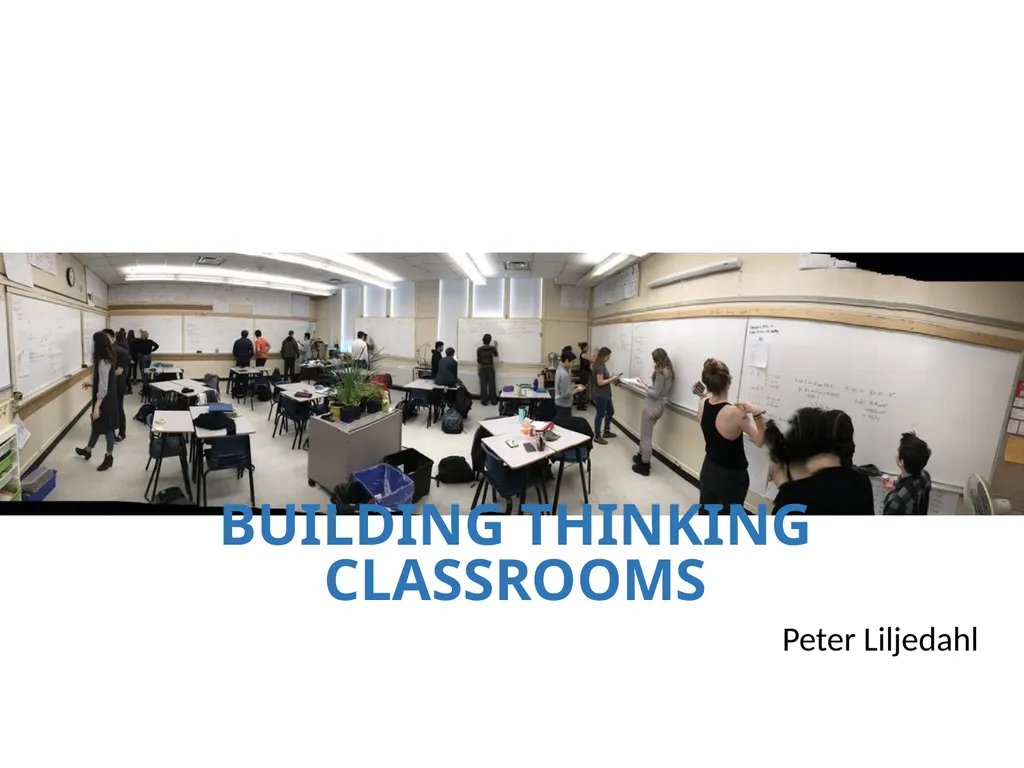
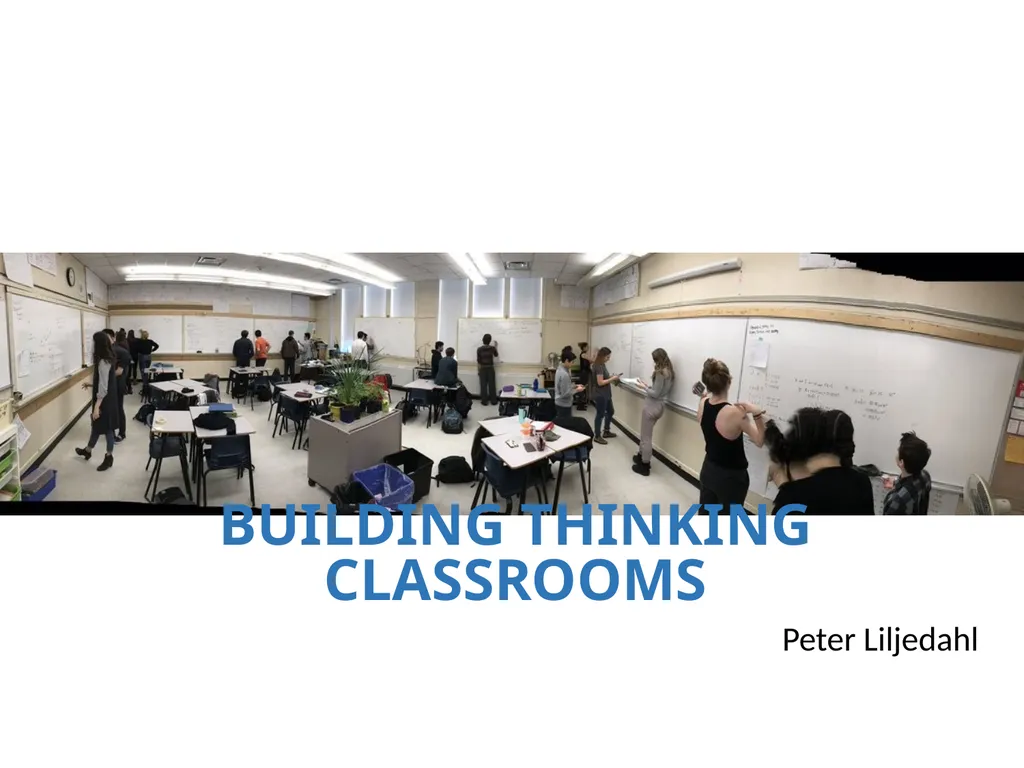
building thinking classrooms Peter Liljedahl www.peterliljedahl.compresentations liljedahlsfu.ca pgliljedahl Liljedahl, P. (2014). The affordances of using visibly random groups in a mathematics classroom. In Y. Li, E. Silver, S. Li
"building thinking classrooms Peter Liljedahl" is the property of its rightful owner. Permission is granted to
download and print the materials on this website for personal, non-commercial use only, and to display it
on your personal computer provided you do not modify the materials and that you retain all copyright
notices contained in the materials. By downloading content from our website, you accept the terms of this
agreement.
Liljedahl, P. (2014). The affordances of using visibly random groups in a mathematics classroom. In Y. Li, E. Silver, & S. Li (eds.), Transforming Mathematics Instruction: Multiple Approaches and Practices. (pp. 127-144). New York, NY: Springer.
Liljedahl, P. (2016). Building thinking classrooms: Conditions for problem solving. In P. Felmer, J. Kilpatrick, & E. Pekhonen (eds.), Posing and Solving Mathematical Problems: Advances and New Perspectives. (pp. 361-386). New York, NY: Springer.
Liljedahl, P. (2016). Flow: A Framework for Discussing Teaching. Proceedings of the 40th Conference of the International Group for the Psychology of Mathematics Education, Szeged, Hungary.
Liljedahl, P. (2017). Building Thinking Classrooms: A Story of Teacher Professional Development. The 1st International Forum on Professional Development for Teachers. Seoul, Korea.
Liljedahl, P. (in press). On the edges of flow: Student problem solving behavior. In S. Carreira, N. Amado, & K. Jones (eds.), Broadening the scope of research on mathematical problem solving: A focus on technology, creativity and affect. New York, NY: Springer.
Liljedahl, P. (in press). On the edges of flow: Student engagement in problem solving. Proceedings of the 10th Congress of the European Society for Research in Mathematics Education. Dublin, Ireland.
Liljedahl, P. (in press). Building thinking classrooms. In A. Kajander, J. Holm, & E. Chernoff (eds.) Teaching and learning secondary school mathematics: Canadian perspectives in an international context. New York, NY: Springer.<br>
04
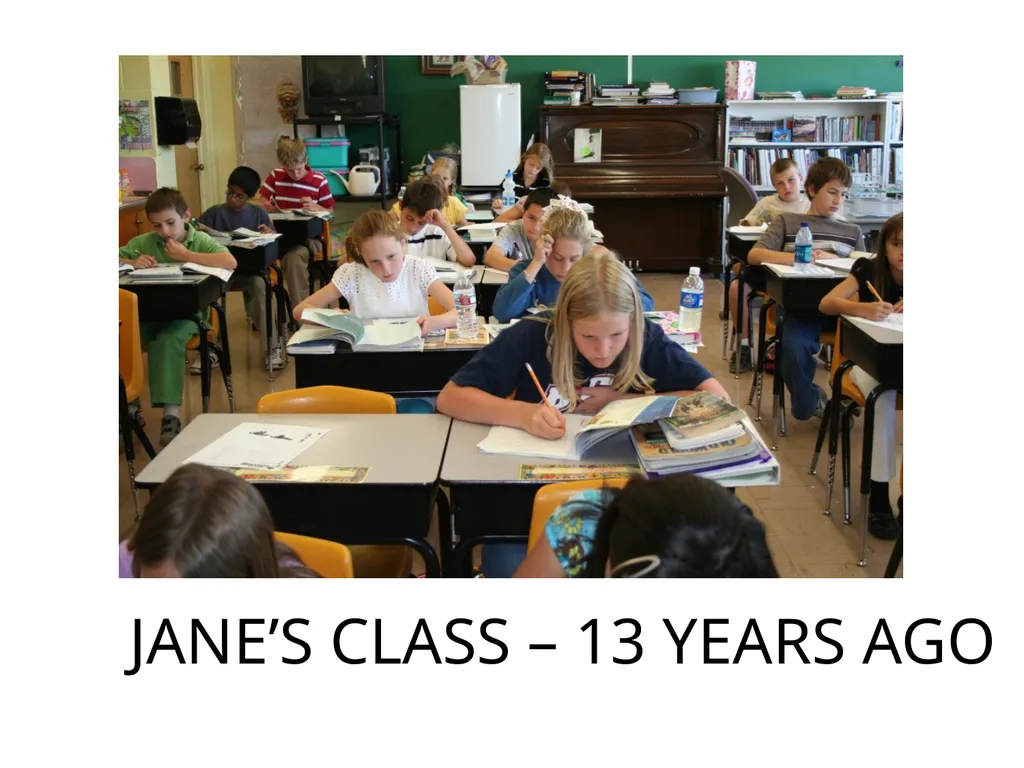
JANE’S CLASS – 13 YEARS AGO<br>
05
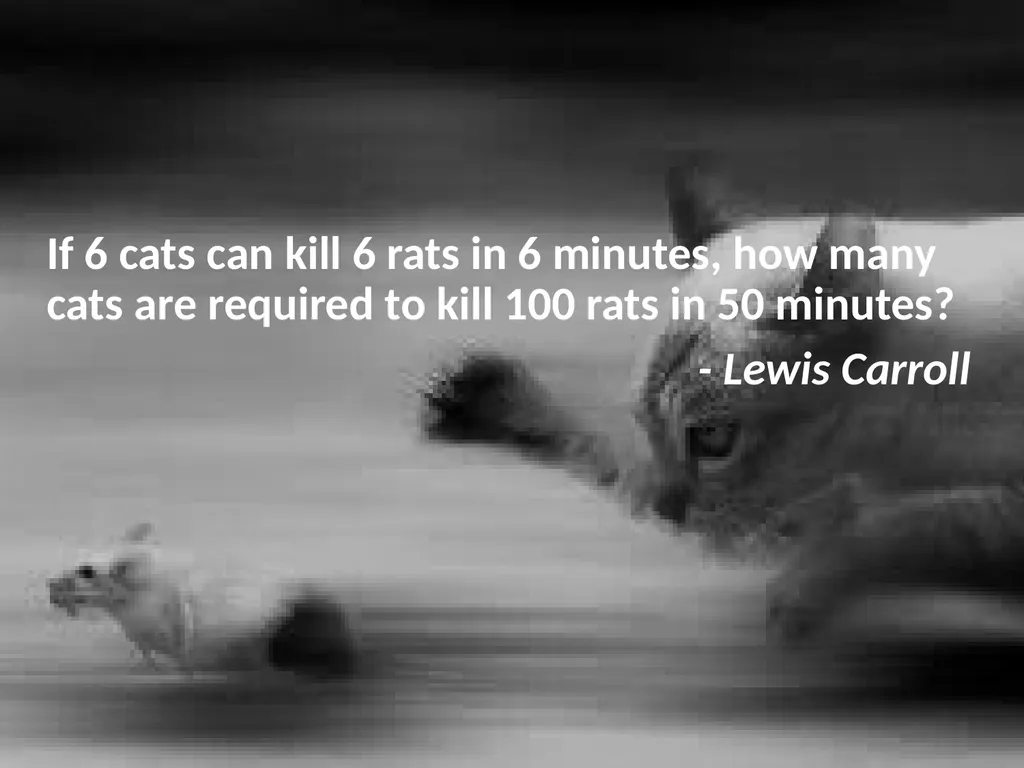
If 6 cats can kill 6 rats in 6 minutes, how many cats are required to kill 100 rats in 50 minutes?
- Lewis Carroll<br>
06
If 6 cats can kill 6 rats in 6 minutes, how many cats are required to kill 100 rats in 50 minutes?
- Lewis Carroll DISASTER!<br>
07
Jane was planning her teaching on the assumption that students either cannot or will not think. Students were not thinking!<br>
08
THREE REALIZATIONS! Students are not thinking! Teachers are planning their teaching on the assumption that students either cannot or will not think. INSTITUTIONAL NORMS<br>
09
THREE REALIZATIONS! Students are not thinking! Teachers are planning their teaching on the assumption that students either cannot or will not think. NON-NEGOTIATED NORMS<br>
10
ACTION RESEARCH ON STEROIDS (n = 400+) RENEGOTIATING THE
NON-NEGOTIATED NORMS<br>
11
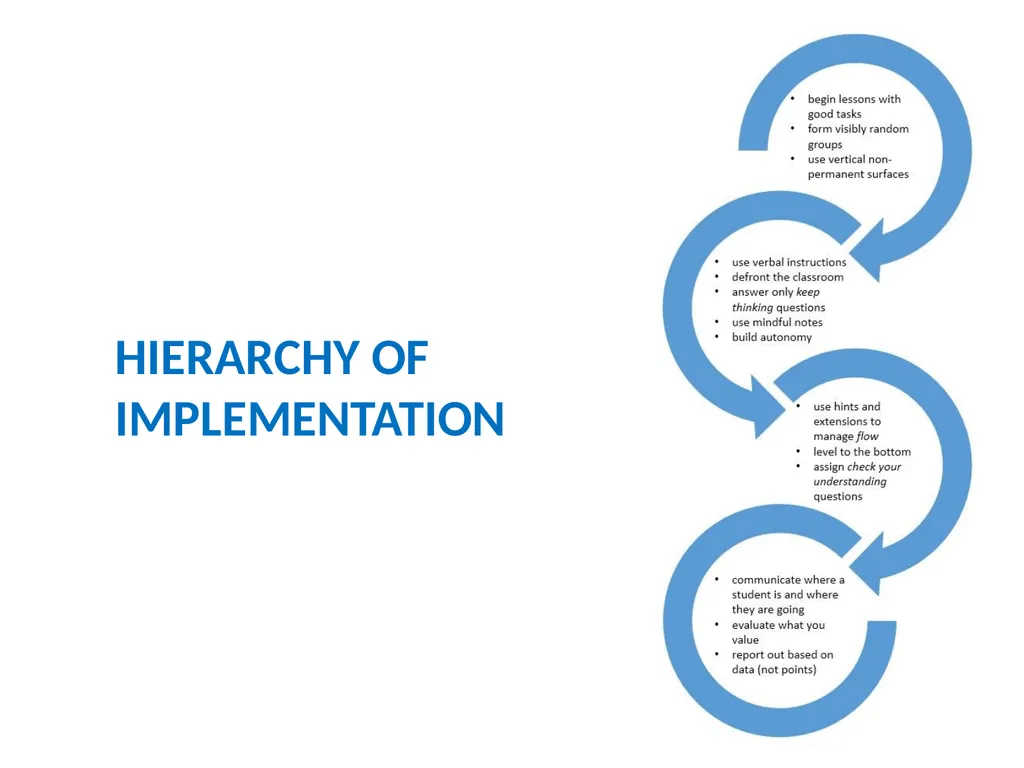
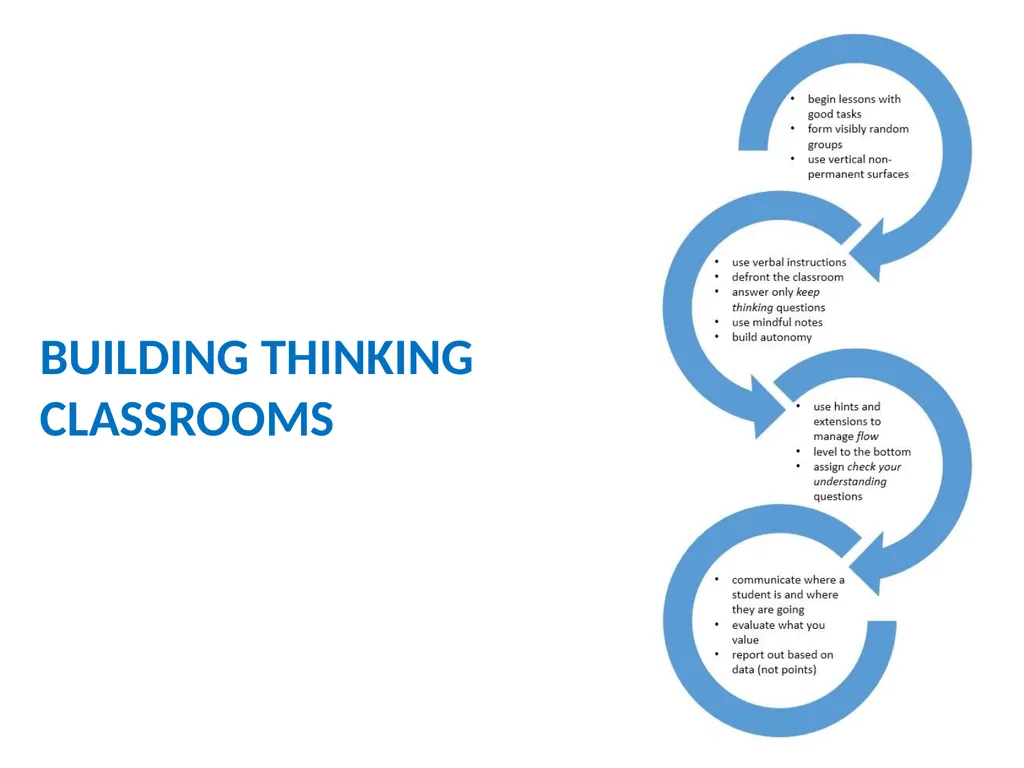
HIERARCHY OF IMPLEMENTATION<br>
12
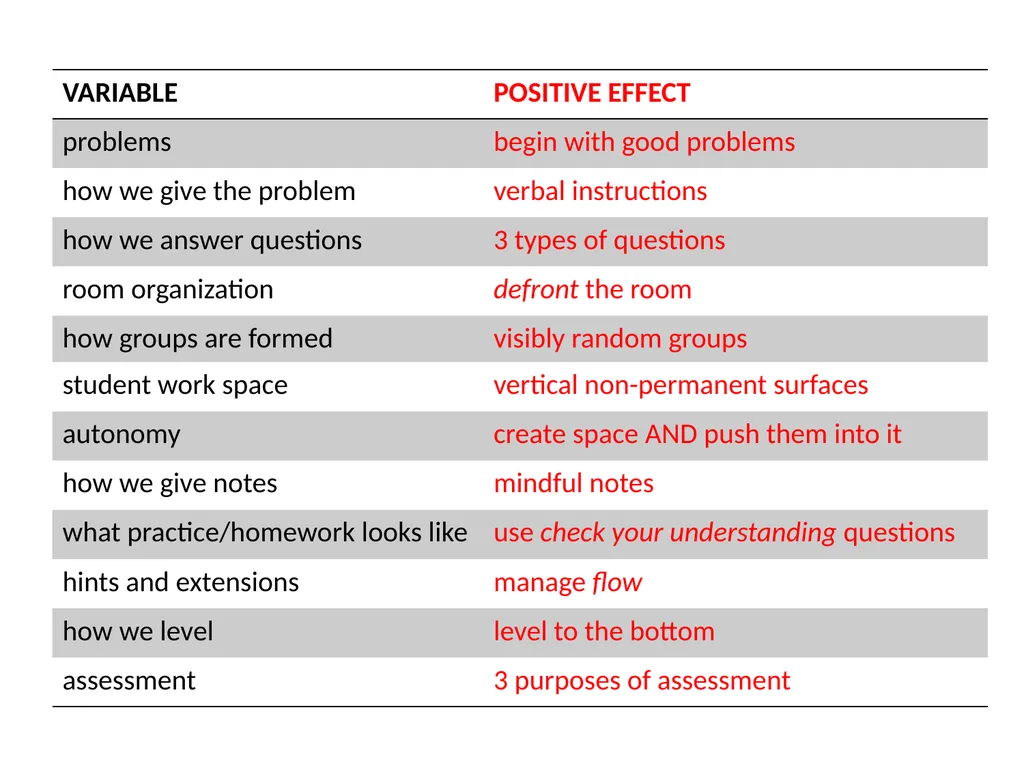
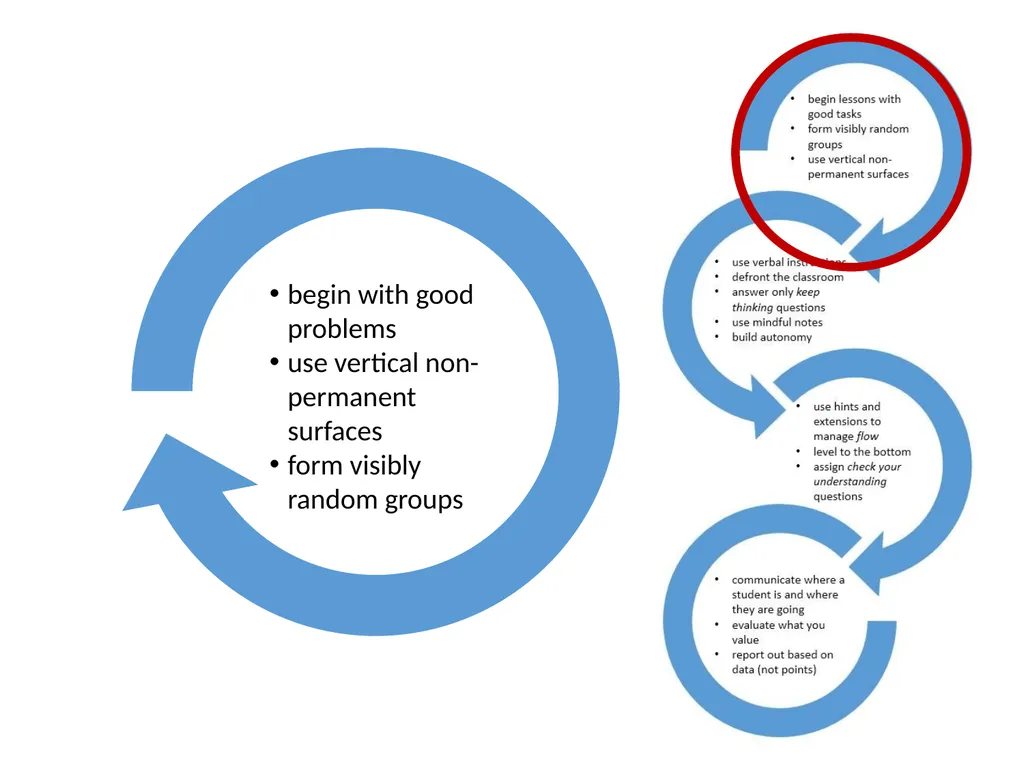
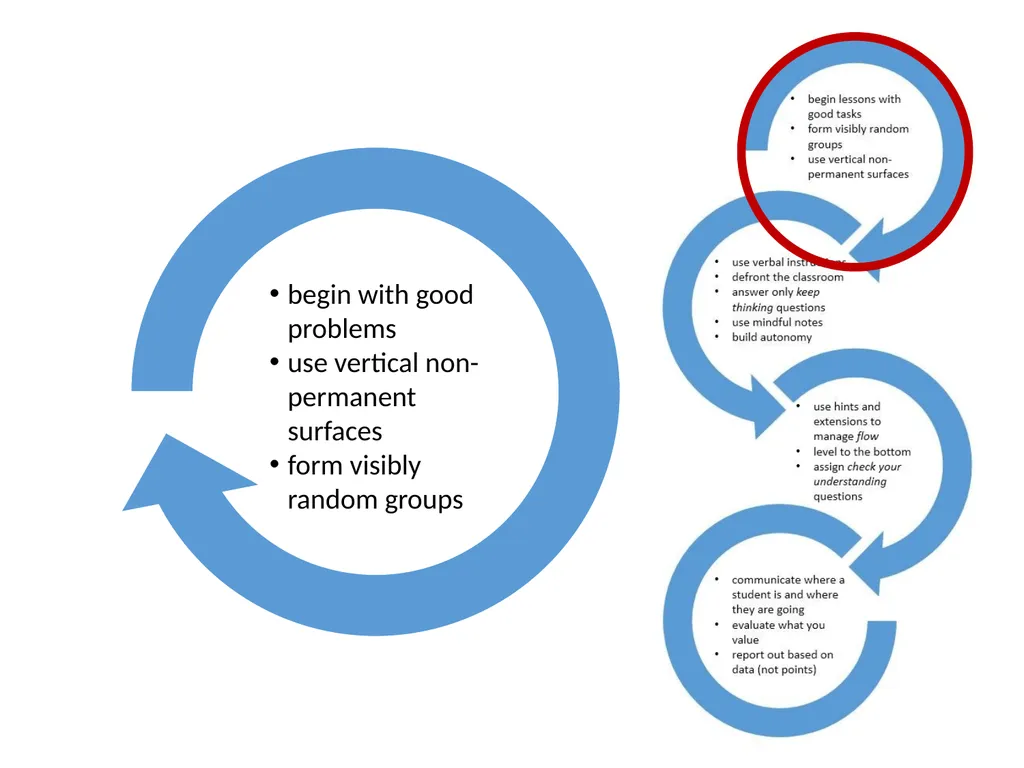
begin with good problems
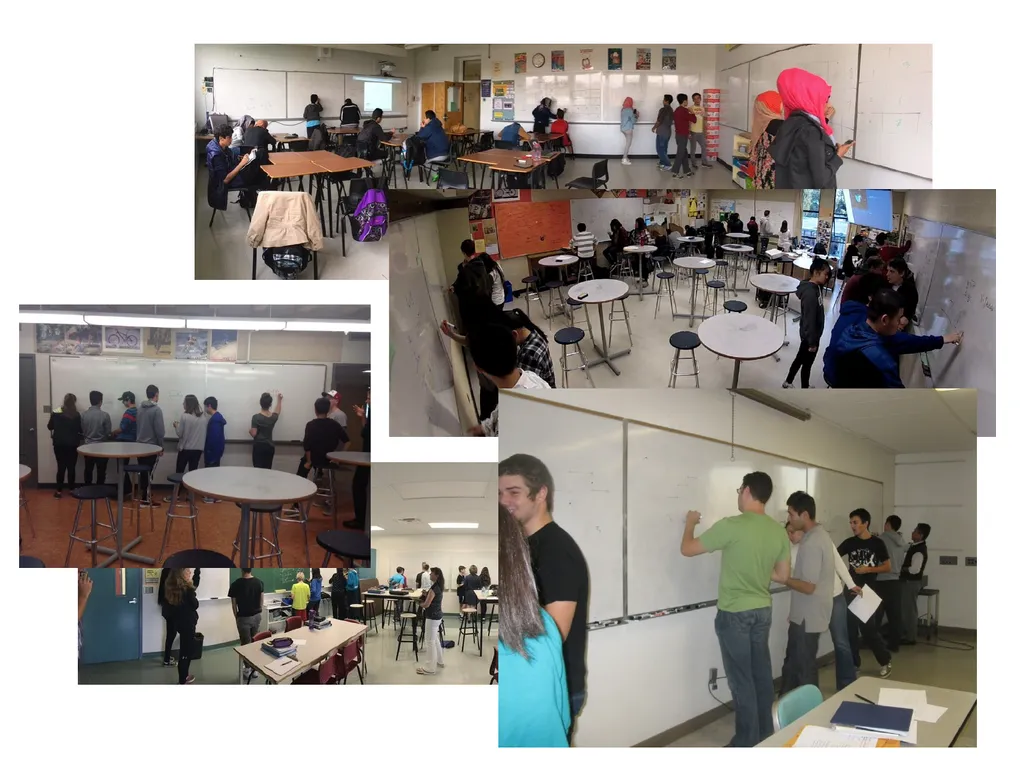
use vertical non-permanent surfaces
form visibly random groups<br>
13
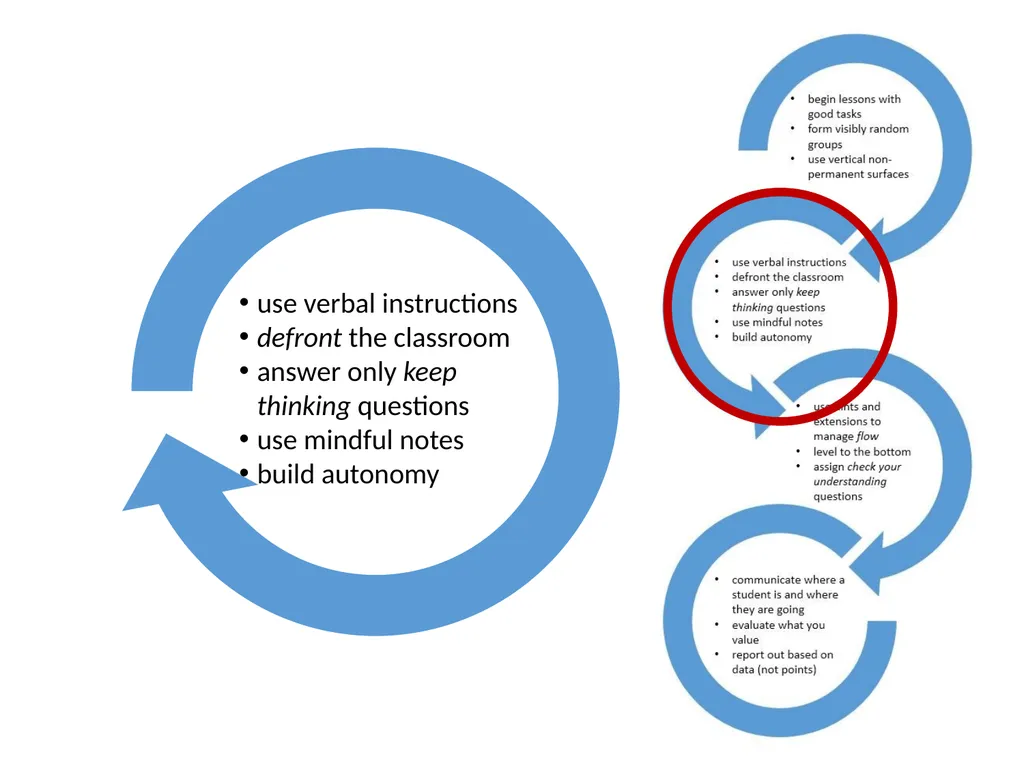
use verbal instructions
defront the classroom
answer only keep thinking questions
use mindful notes
build autonomy<br>
14
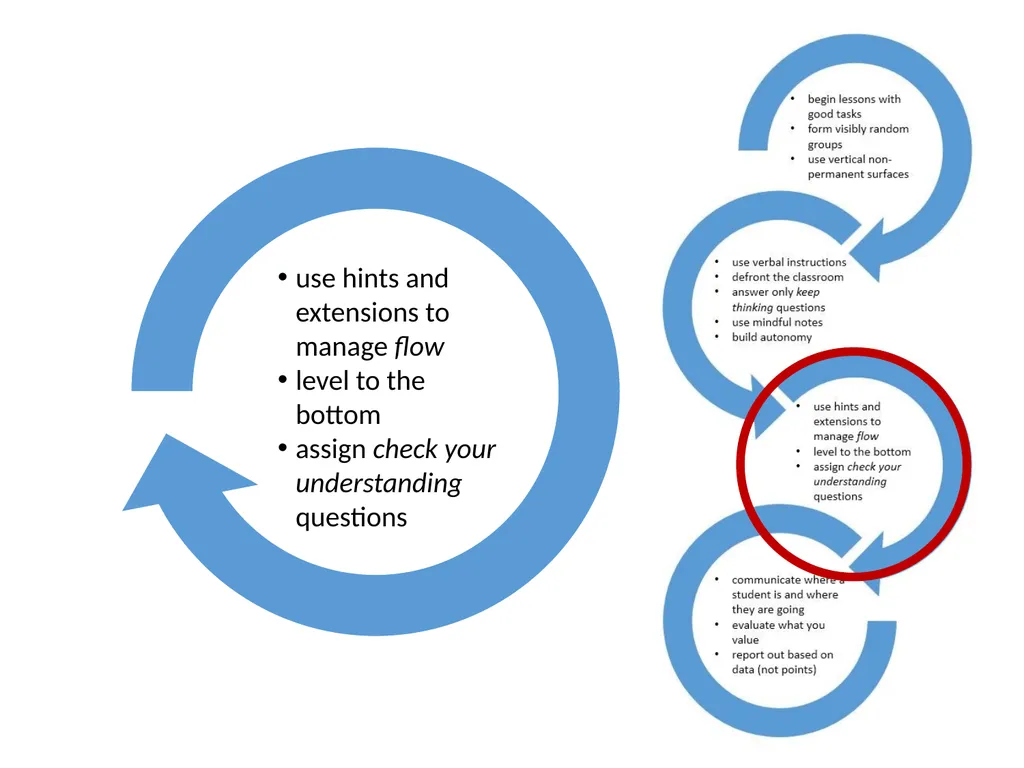
use hints and extensions to manage flow
level to the bottom
assign check your understanding questions<br>
15
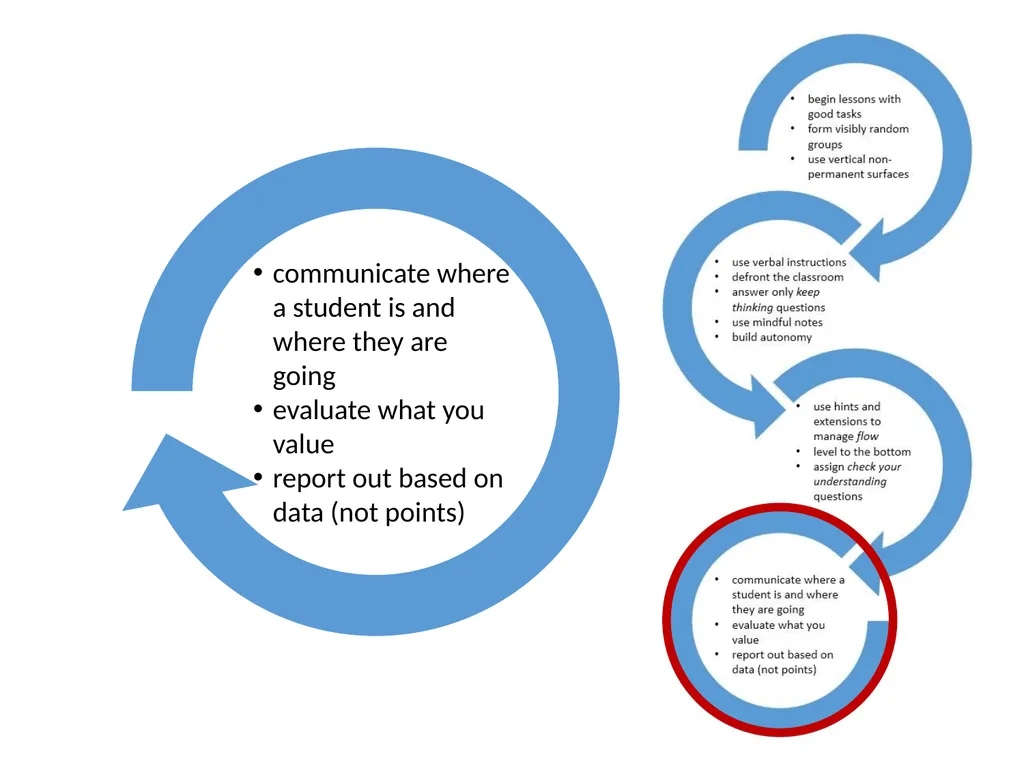
communicate where a student is and where they are going
evaluate what you value
report out based on data (not points)<br>
16
begin with good problems
use vertical non-permanent surfaces
form visibly random groups<br>
17
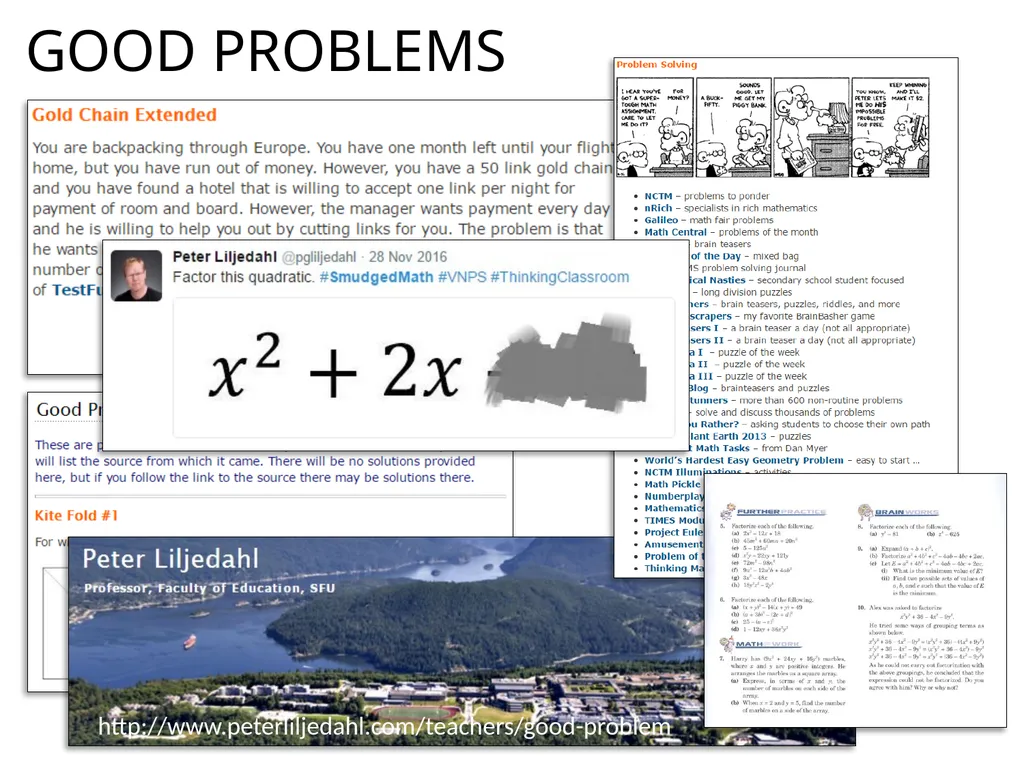
http://www.peterliljedahl.com/teachers/good-problem GOOD PROBLEMS<br>
18
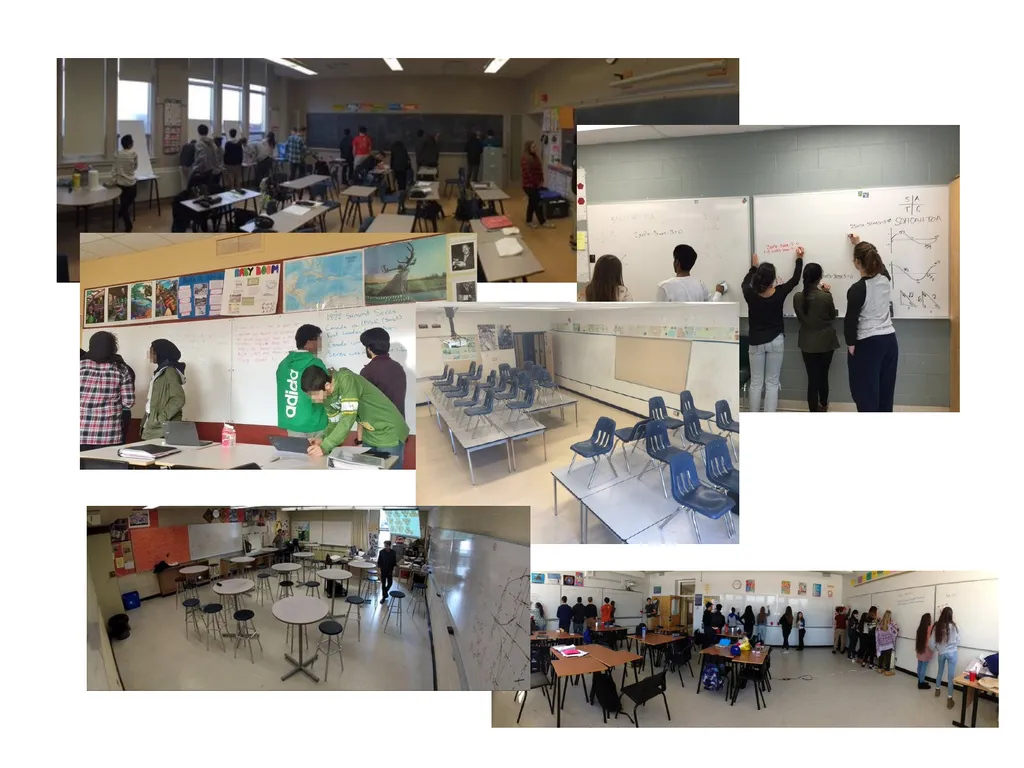
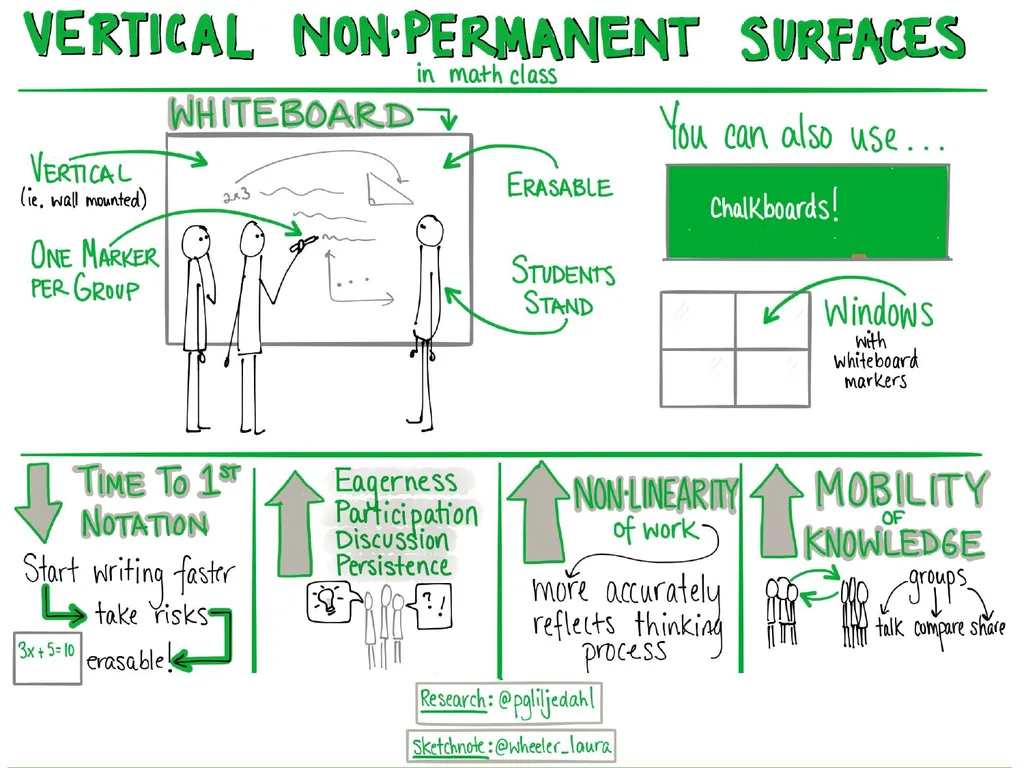
VERTICAL NON-PERMANENT SURFACES<br>
19
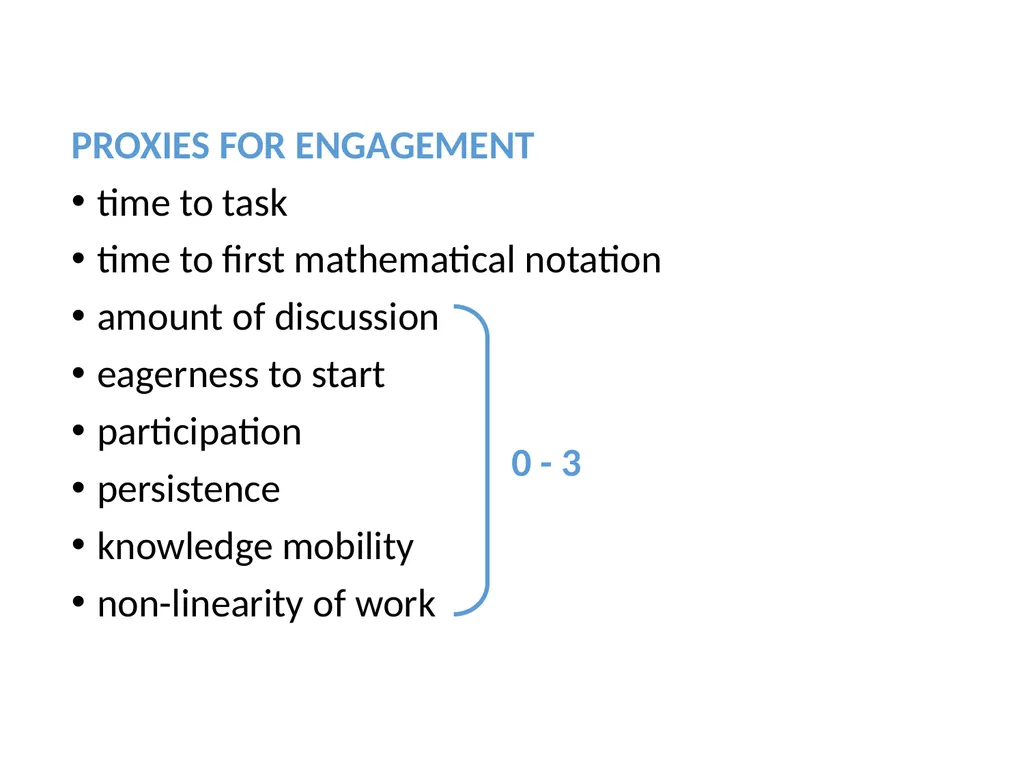
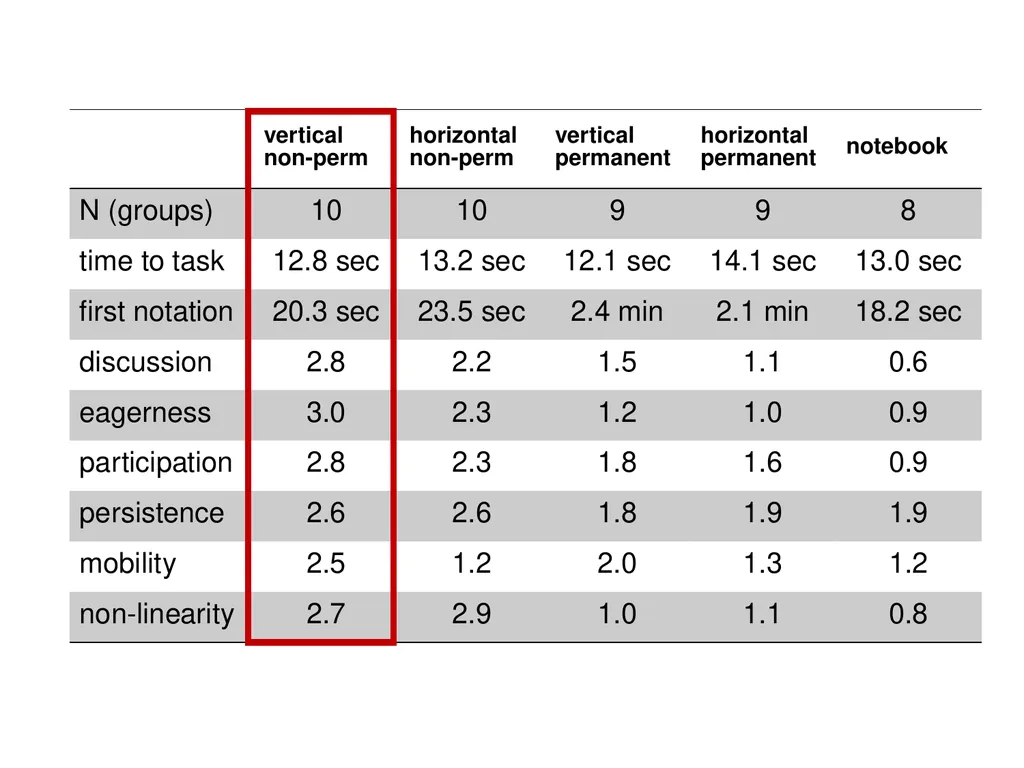
PROXIES FOR ENGAGEMENT
time to task
time to first mathematical notation
amount of discussion
eagerness to start
participation
persistence
knowledge mobility
non-linearity of work 0 - 3<br>
20
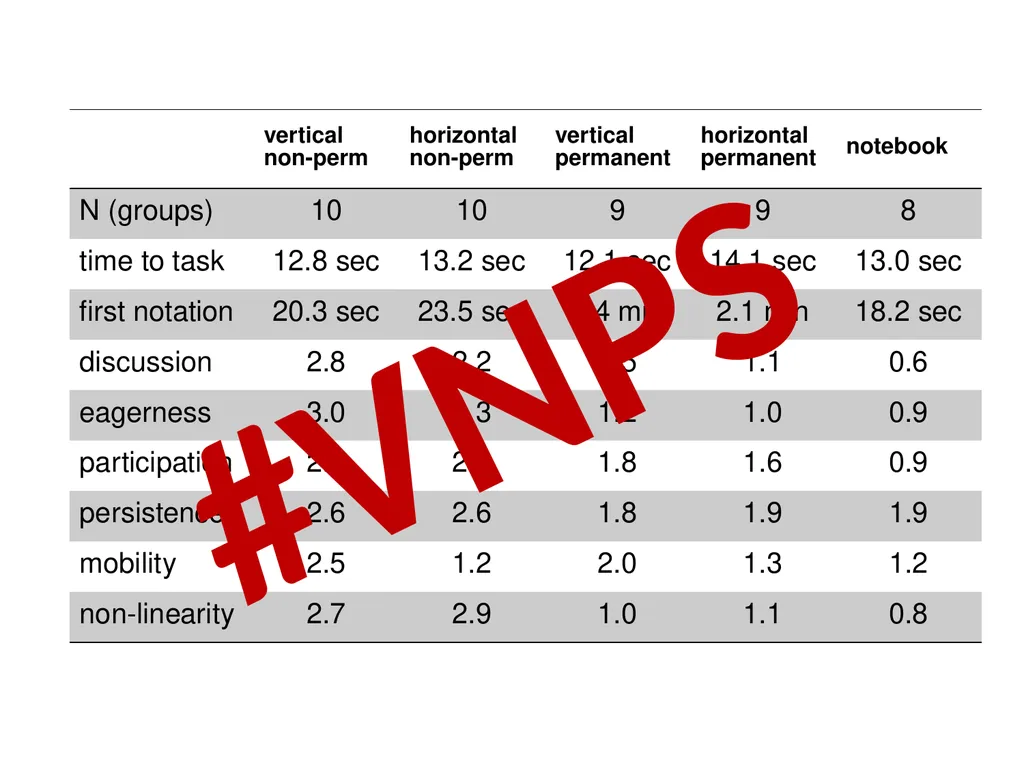
#VNPS<br>
21
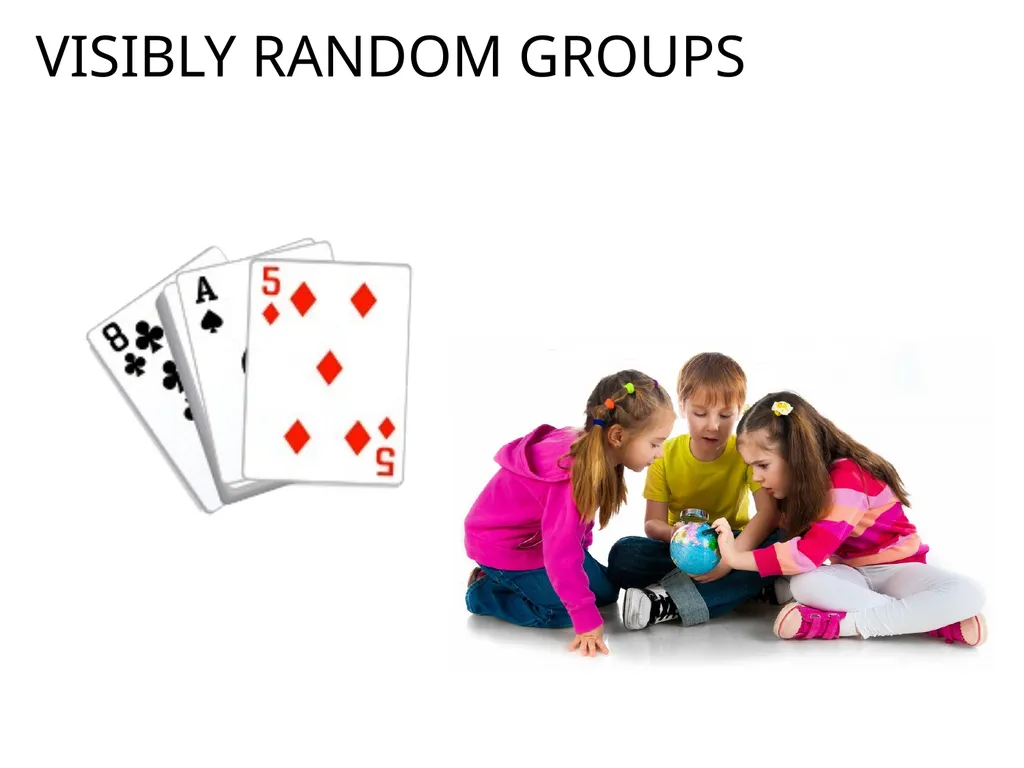
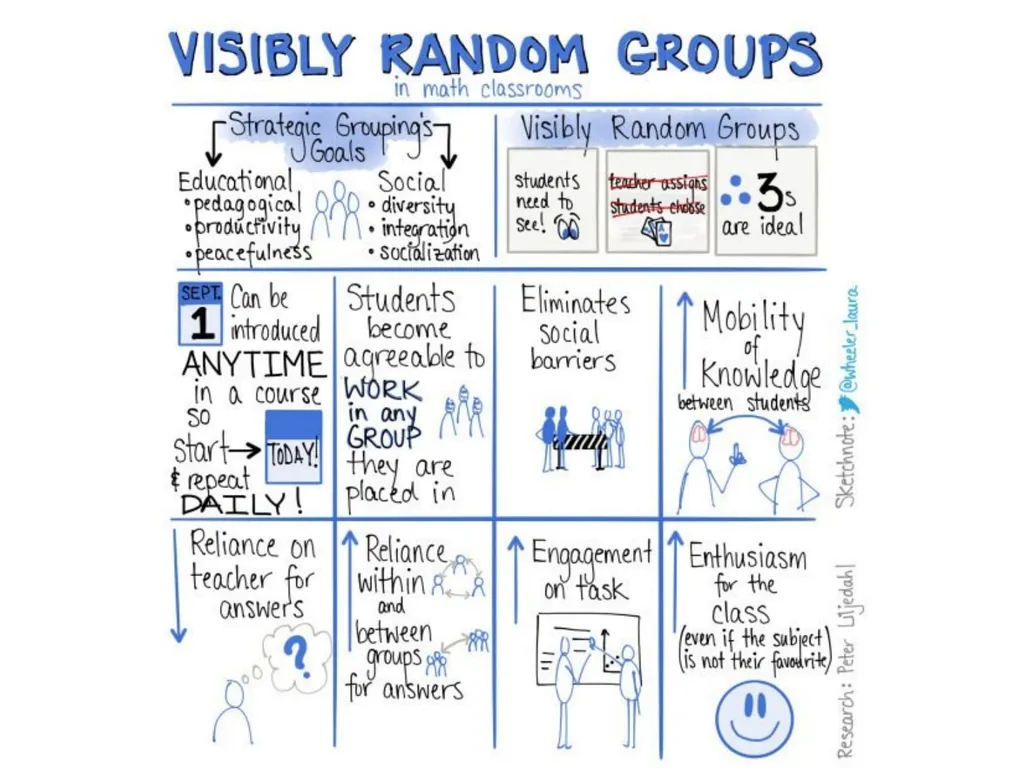
VISIBLY RANDOM GROUPS<br>
22
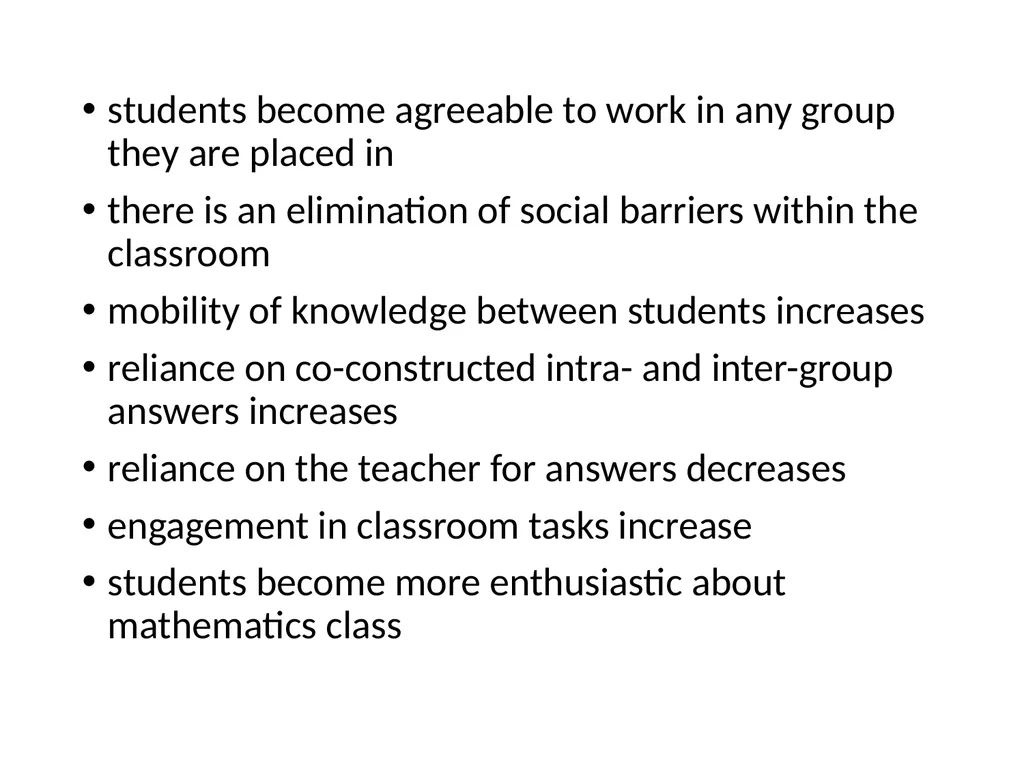
students become agreeable to work in any group they are placed in
there is an elimination of social barriers within the classroom
mobility of knowledge between students increases
reliance on co-constructed intra- and inter-group answers increases
reliance on the teacher for answers decreases
engagement in classroom tasks increase
students become more enthusiastic about mathematics class<br>
23
BUILDING THINKING CLASSROOMS<br>
24
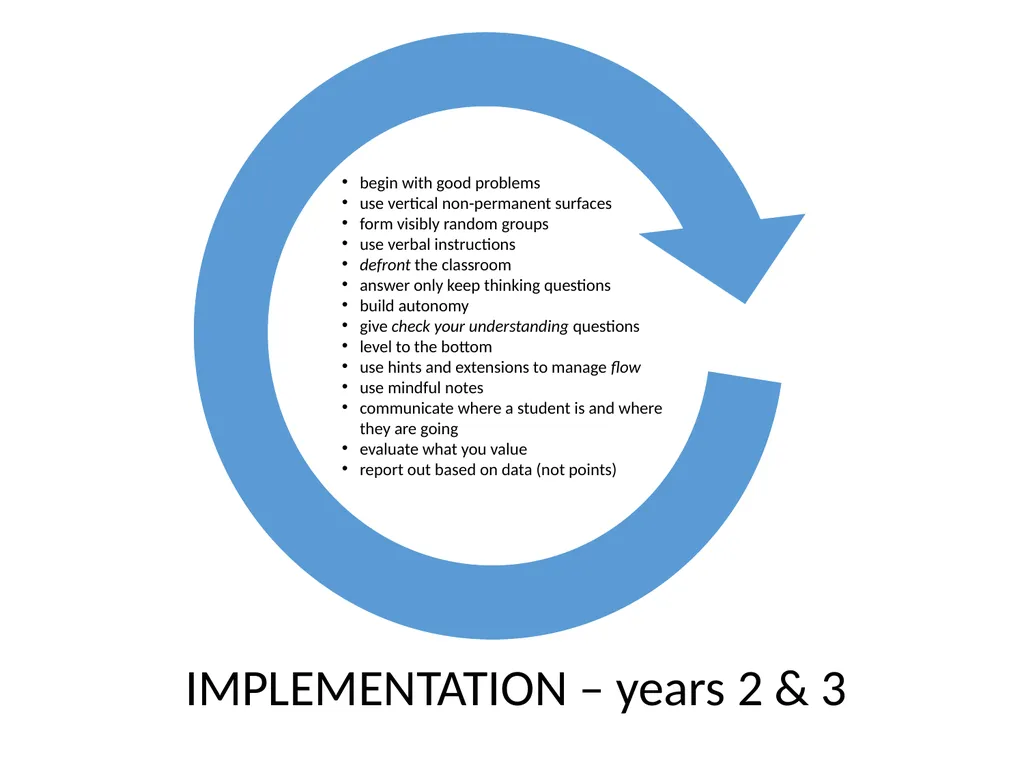
IMPLEMENTATION – years 2 & 3 begin with good problems
use vertical non-permanent surfaces
form visibly random groups
use verbal instructions
defront the classroom
answer only keep thinking questions
build autonomy
give check your understanding questions
level to the bottom
use hints and extensions to manage flow
use mindful notes
communicate where a student is and where they are going
evaluate what you value
report out based on data (not points)<br>
25
begin with good problems
use vertical non-permanent surfaces
form visibly random groups
use verbal instructions
defront the classroom
answer only keep thinking questions
build autonomy
give check your understanding questions
level to the bottom
use hints and extensions to manage flow
use mindful notes
communicate where a student is and where they are going
evaluate what you value
report out based on data (not points)<br>
26
THANK YOU! liljedahl@sfu.ca
www.peterliljedahl.com/presentations
@pgliljedahl | #vnps | #thinkingclassroom
Global Math Department<br>
27
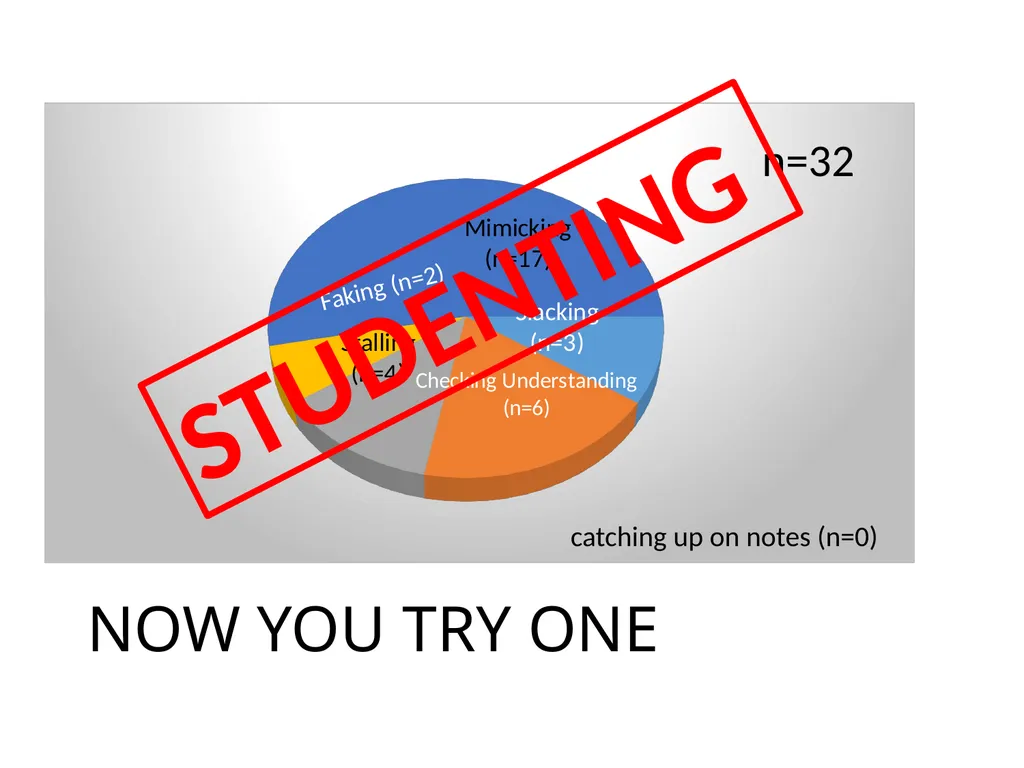
NOW YOU TRY ONE catching up on notes (n=0) n=32 STUDENTING Liljedahl, P. & Allan, D. (2013). Studenting: The case of "now you try one". Proceedings of the 37th Conference of the PME, Vol. 3, pp. 257-264. Kiel, Germany: PME.<br>
28
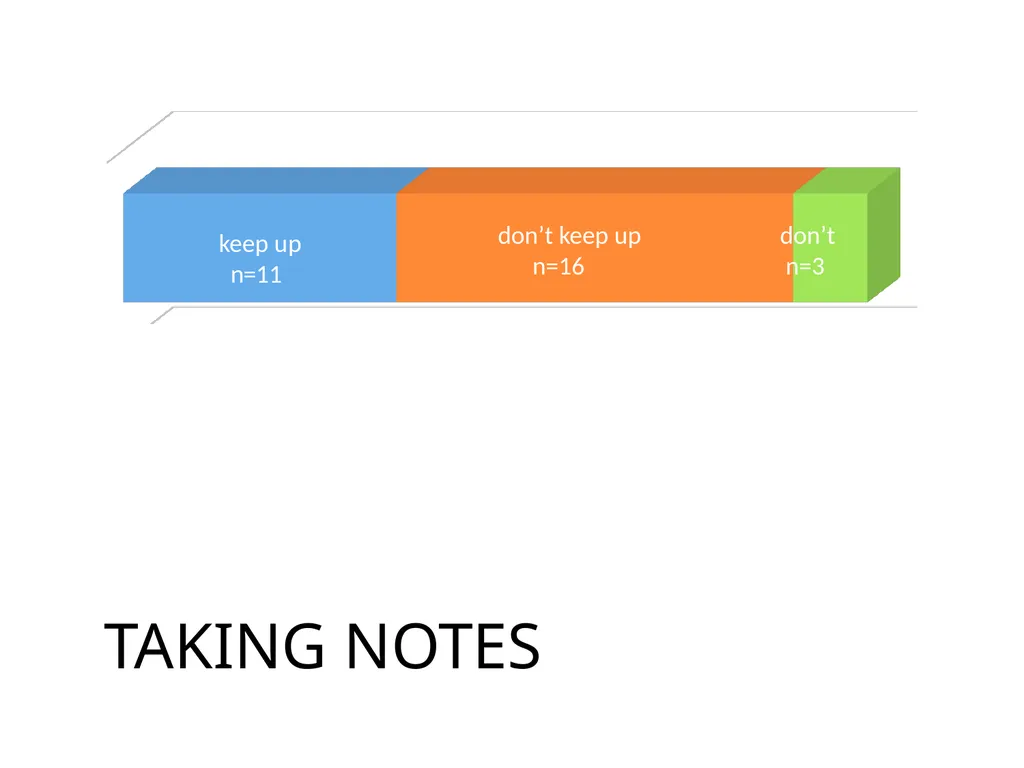
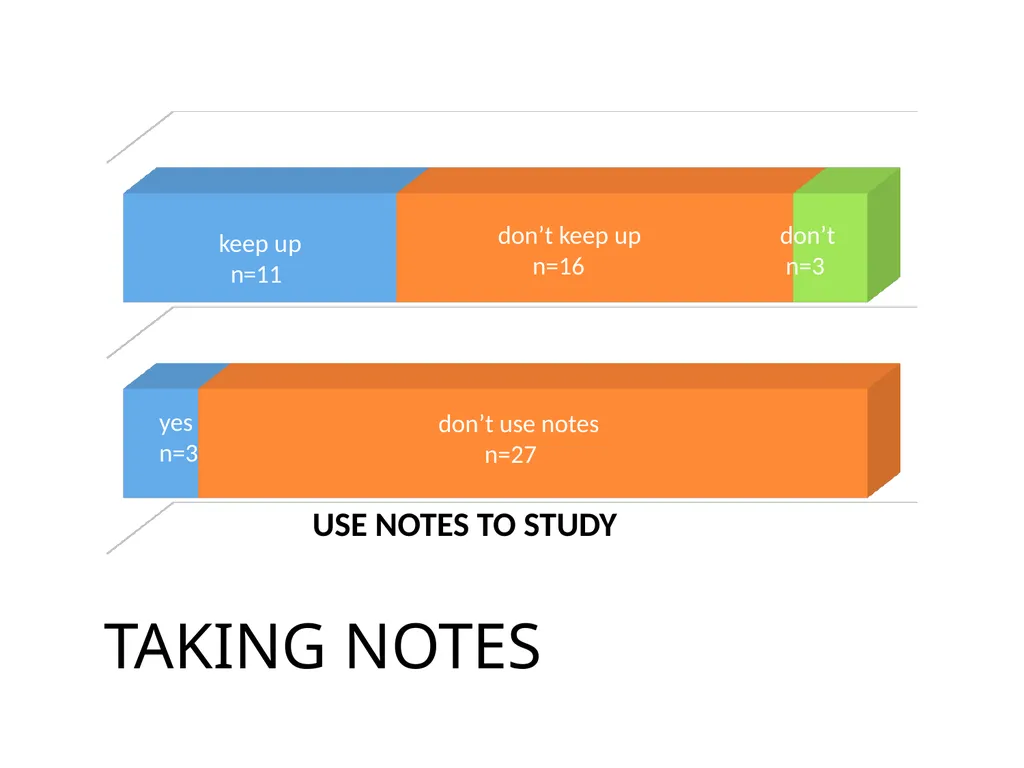
don’t
n=3 don’t use notes
n=27 yes
n=3 don’t keep up
n=16 USE NOTES TO STUDY TAKING NOTES<br>
29
don’t
n=3 don’t use notes
n=27 yes
n=3 don’t keep up
n=16 USE NOTES TO STUDY TAKING NOTES<br>
30
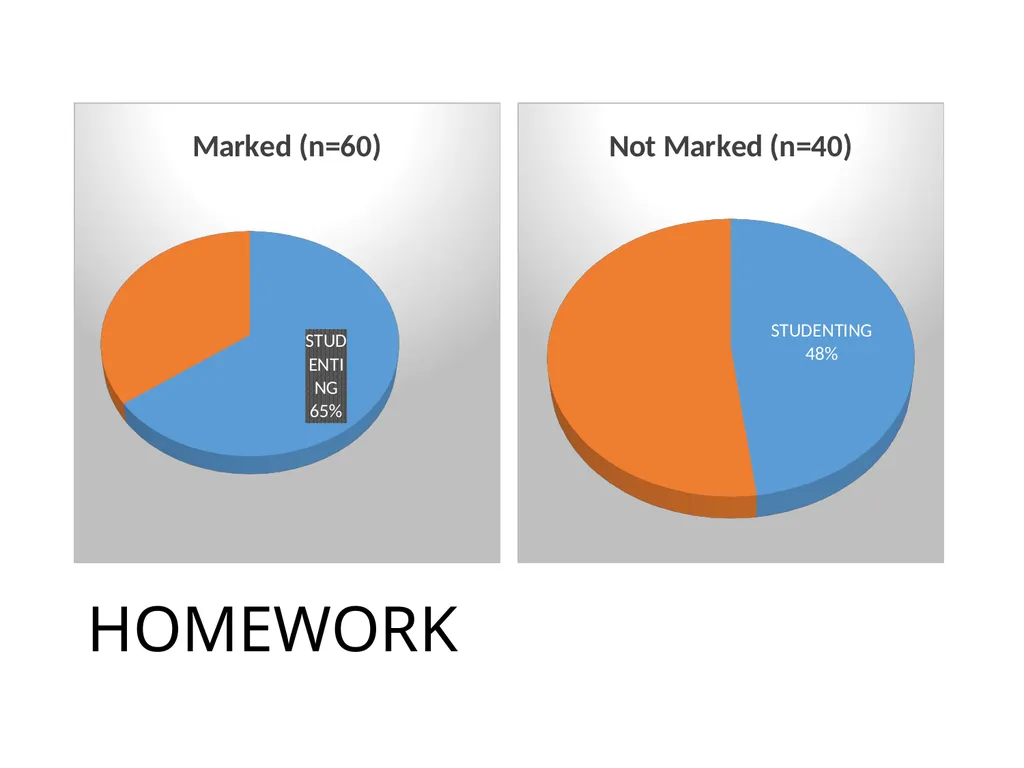
Liljedahl, P. & Allan, D. (2013). Studenting: The Case of Homework. Proceedings of the 35th Conference for PME-NA. Chicago, USA. HOMEWORK<br>