04
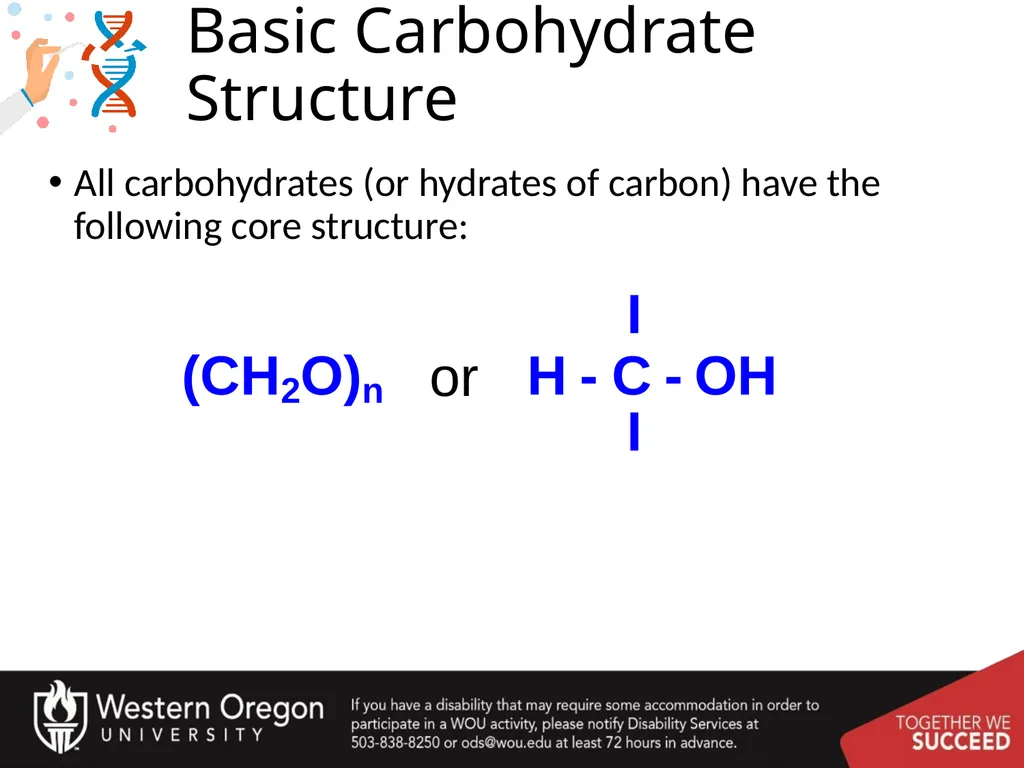
Basic Carbohydrate Structure Monosaccharides – single, simple sugars that are the building blocks of all larger carbohydrate structures.
Disaccharides – Two monosaccharides covalently linked together
Oligosaccharides – A few monosaccharides covalently linked together
Polysaccharides – large polymers consisting of chains of monosaccharide or disaccharide units<br>
05
Aldoses and Ketoses Are named based on:
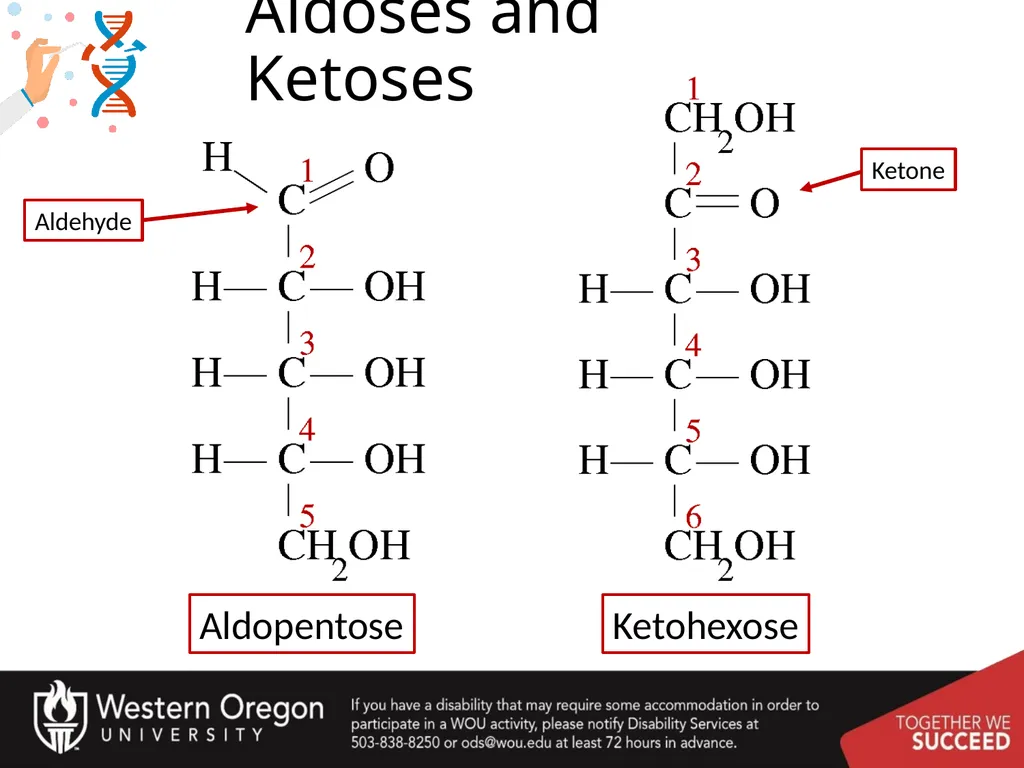
Their functional group (aldehyde or ketone)
Aldoses contain aldehydes
Ketoses contain ketones
How many carbons that they contain, with the most common being:
3 carbons = Triose
4 carbons = Tetrose
5 carbons = Pentose
6 carbons = Hexose
7 carbons = Heptose<br>
06
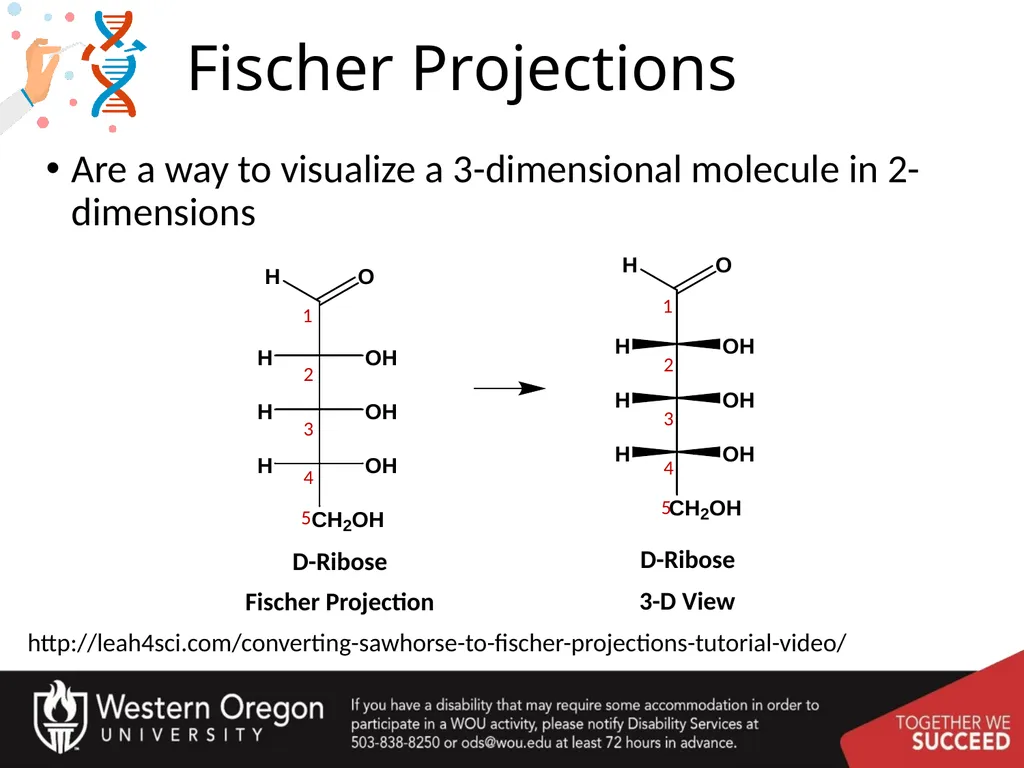
Fischer Projections Are a way to visualize a 3-dimensional molecule in 2-dimensions http://leah4sci.com/converting-sawhorse-to-fischer-projections-tutorial-video/ Fischer Projection 3-D View D-Ribose D-Ribose 1 2 3 4 5 1 2 3 4 5<br>
07
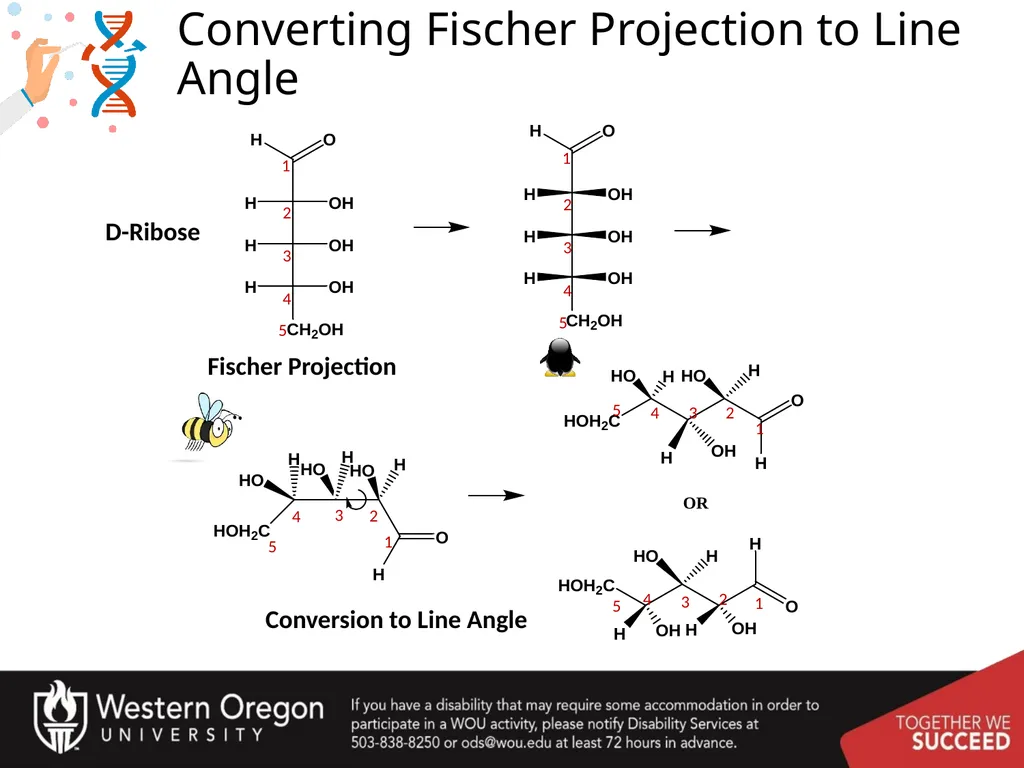
Converting Fischer Projection to Line Angle Fischer Projection D-Ribose Conversion to Line Angle 1 2 3 4 5 1 2 3 4 5 1 2 3 4 5 1 2 3 4 5 5 1 2 3 4<br>
08
Aldoses and Ketoses Aldehyde Ketone Aldopentose Ketohexose<br>
09
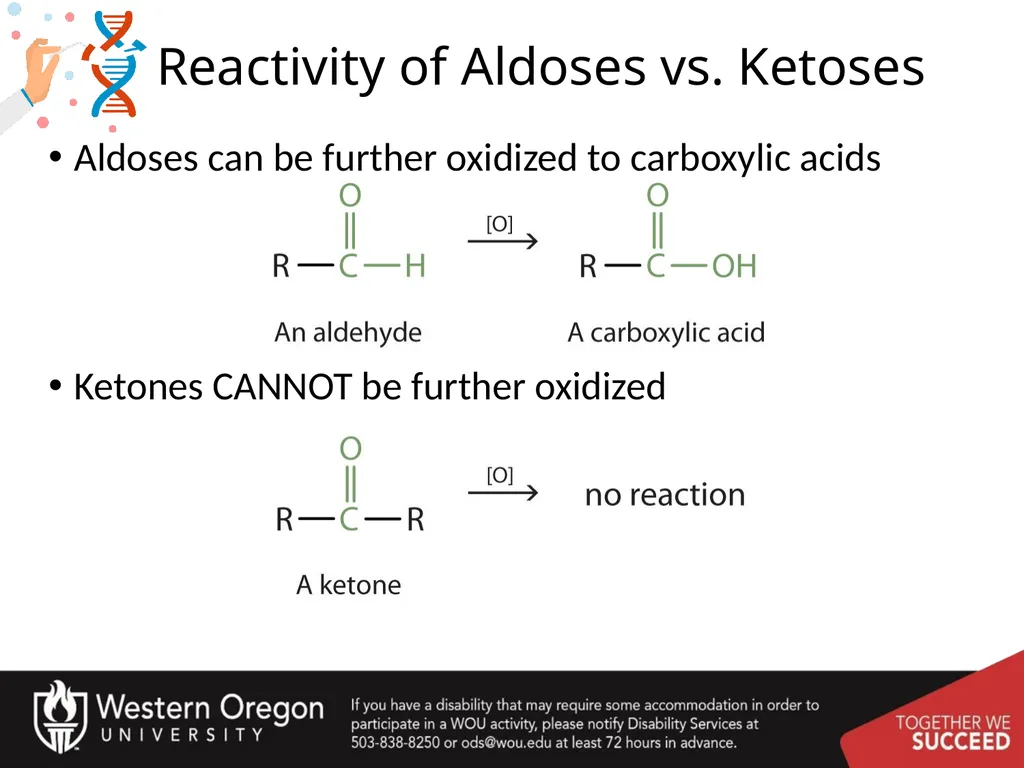
Reactivity of Aldoses vs. Ketoses Aldoses can be further oxidized to carboxylic acids
Ketones CANNOT be further oxidized<br>
10
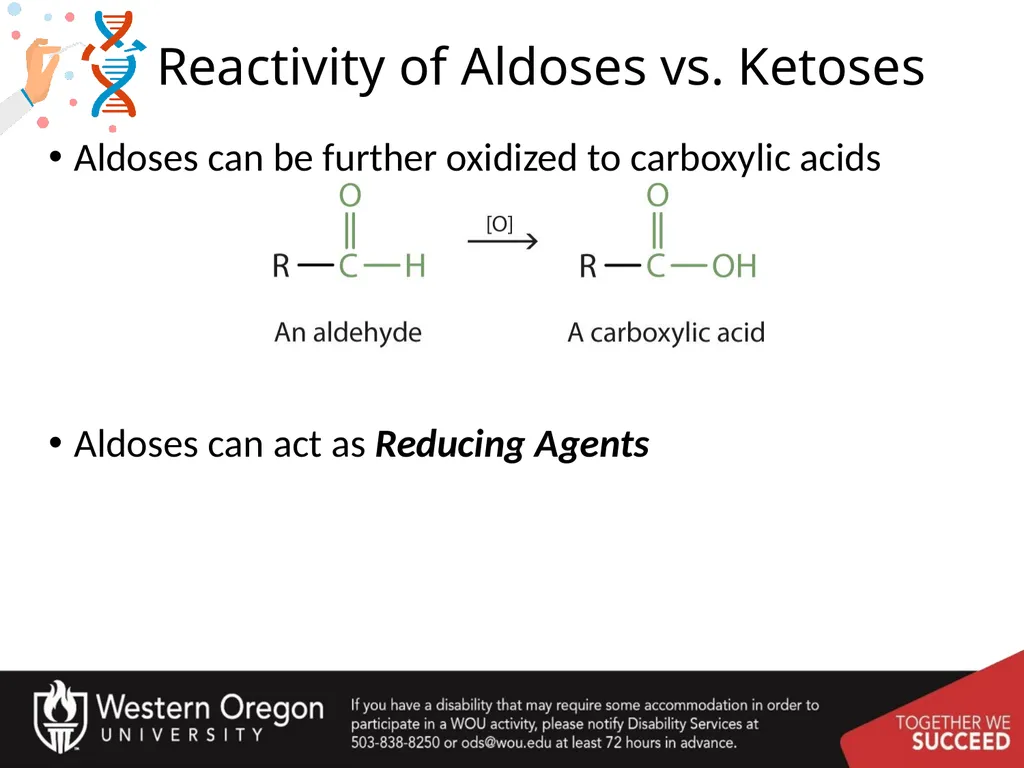
Reactivity of Aldoses vs. Ketoses Aldoses can be further oxidized to carboxylic acids
Aldoses can act as Reducing Agents<br>
11
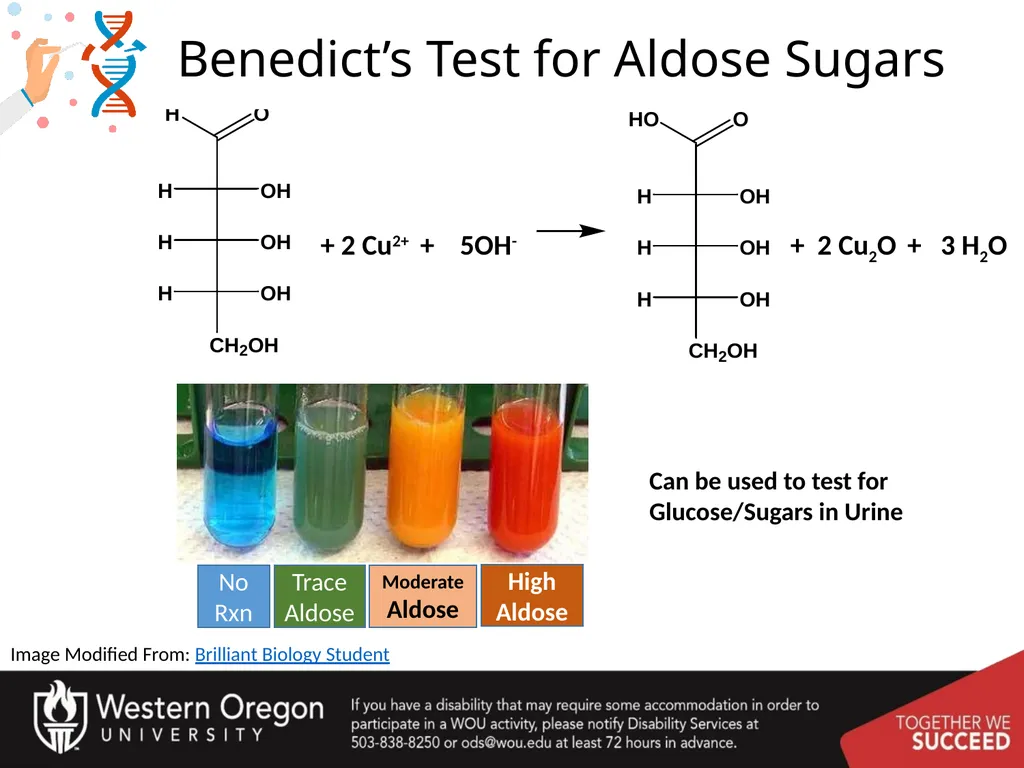
Benedict’s Test for Aldose Sugars + 2 Cu2+ + 5OH- + 2 Cu2O + 3 H2O Image Modified From: Brilliant Biology Student Can be used to test for
Glucose/Sugars in Urine<br>
12
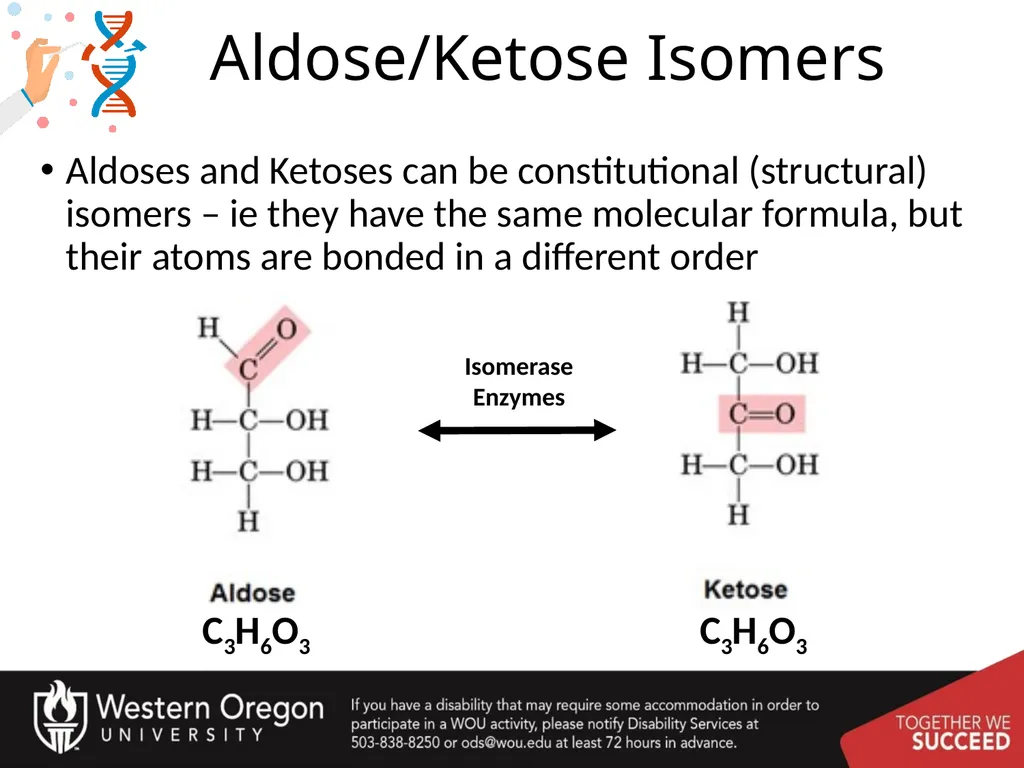
Aldose/Ketose Isomers Aldoses and Ketoses can be constitutional (structural) isomers – ie they have the same molecular formula, but their atoms are bonded in a different order Isomerase
Enzymes C3H6O3 C3H6O3<br>
13
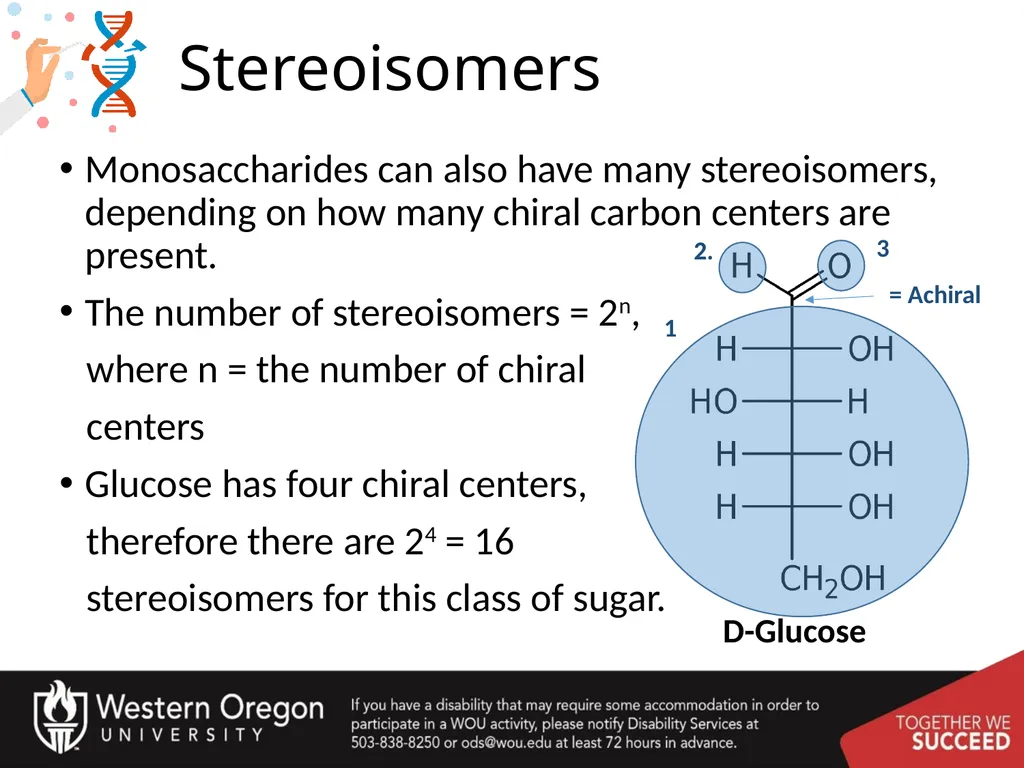
Stereoisomers Monosaccharides can also have many stereoisomers, depending on how many chiral carbon centers are present.
The number of stereoisomers = 2n,
where n = the number of chiral
centers
Glucose has four chiral centers,
therefore there are 24 = 16
stereoisomers for this class of sugar. D-Glucose = Achiral 2.<br>
14
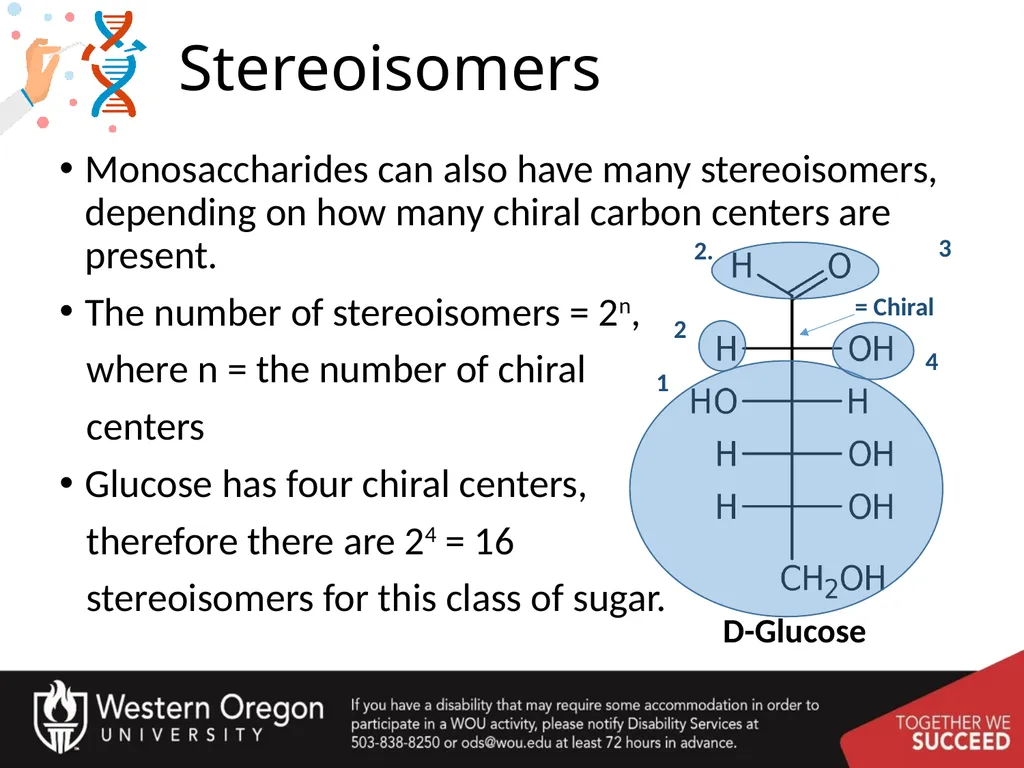
Stereoisomers Monosaccharides can also have many stereoisomers, depending on how many chiral carbon centers are present.
The number of stereoisomers = 2n,
where n = the number of chiral
centers
Glucose has four chiral centers,
therefore there are 24 = 16
stereoisomers for this class of sugar. D-Glucose = Chiral 2.<br>
15
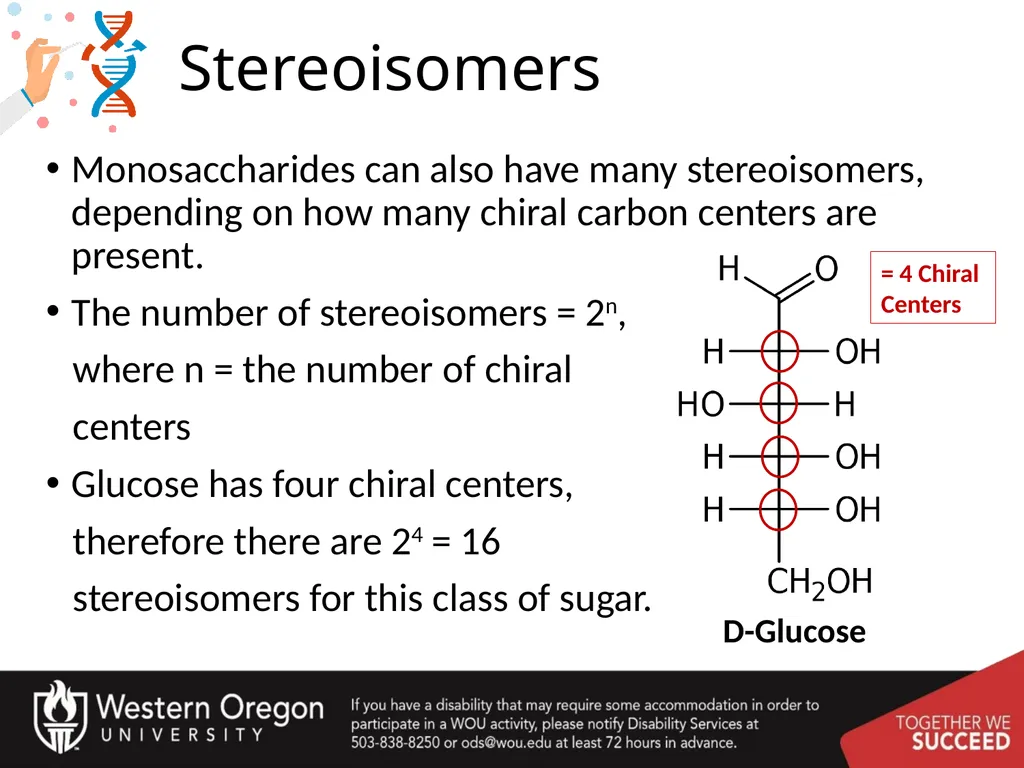
Stereoisomers Monosaccharides can also have many stereoisomers, depending on how many chiral carbon centers are present.
The number of stereoisomers = 2n,
where n = the number of chiral
centers
Glucose has four chiral centers,
therefore there are 24 = 16
stereoisomers for this class of sugar. D-Glucose = 4 Chiral
Centers<br>
16
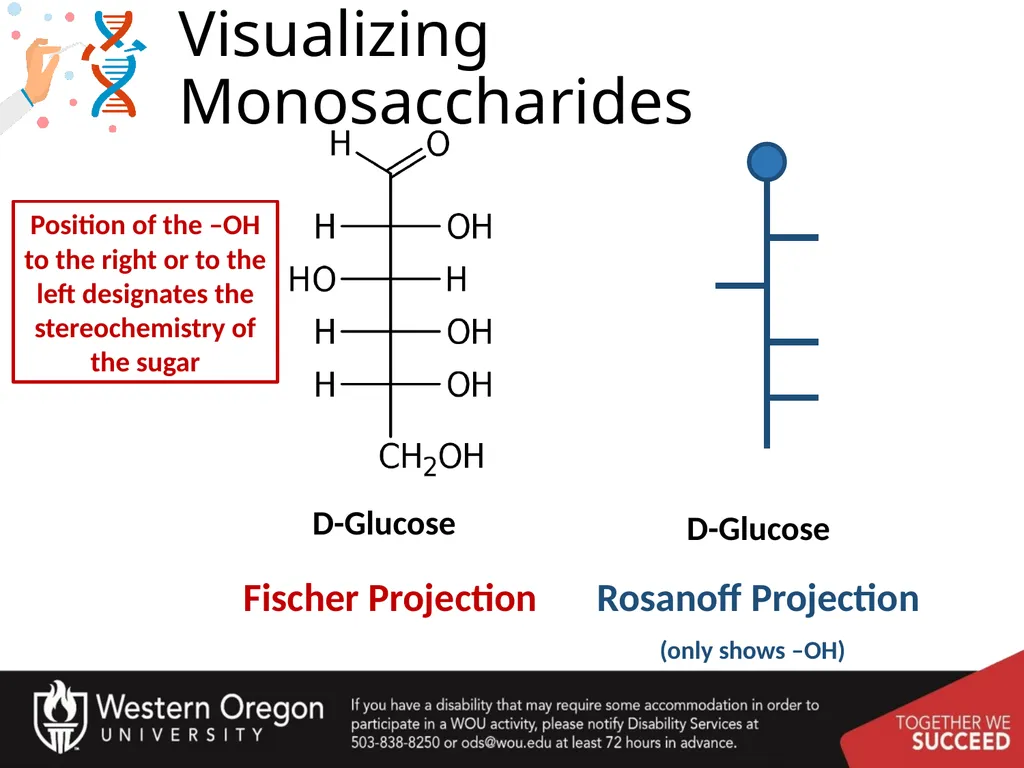
Visualizing Monosaccharides D-Glucose Position of the –OH to the right or to the left designates the stereochemistry of the sugar Fischer Projection Rosanoff Projection
(only shows –OH) D-Glucose<br>
17
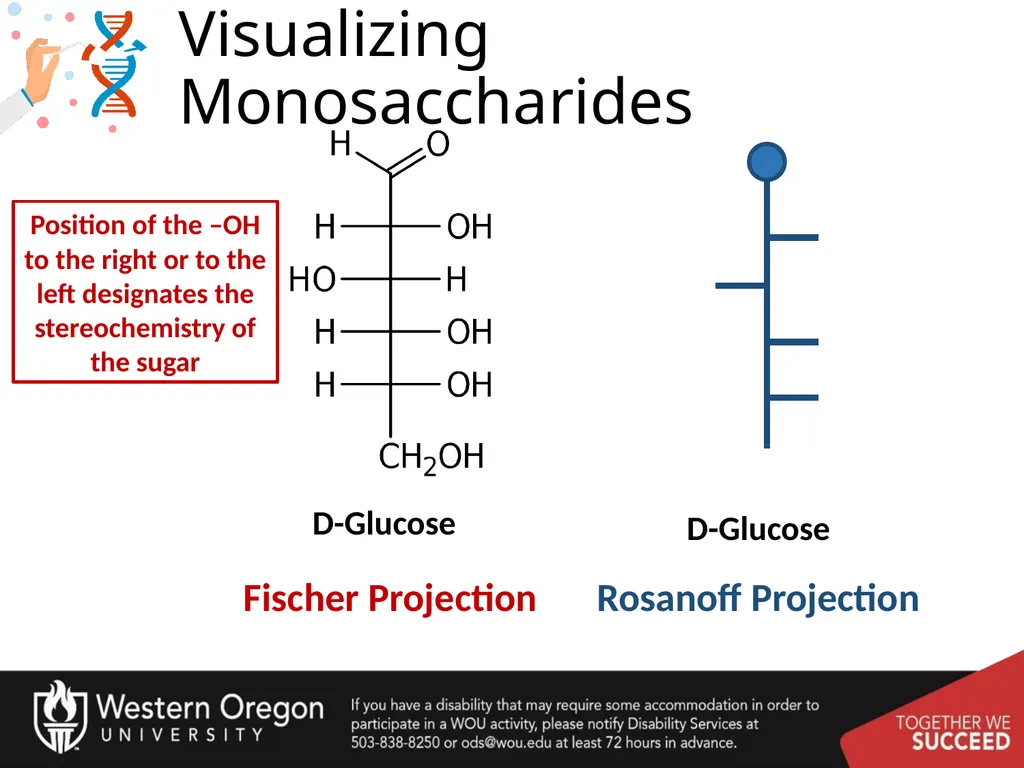
Visualizing Monosaccharides D-Glucose Position of the –OH to the right or to the left designates the stereochemistry of the sugar Fischer Projection Rosanoff Projection D-Glucose<br>
18
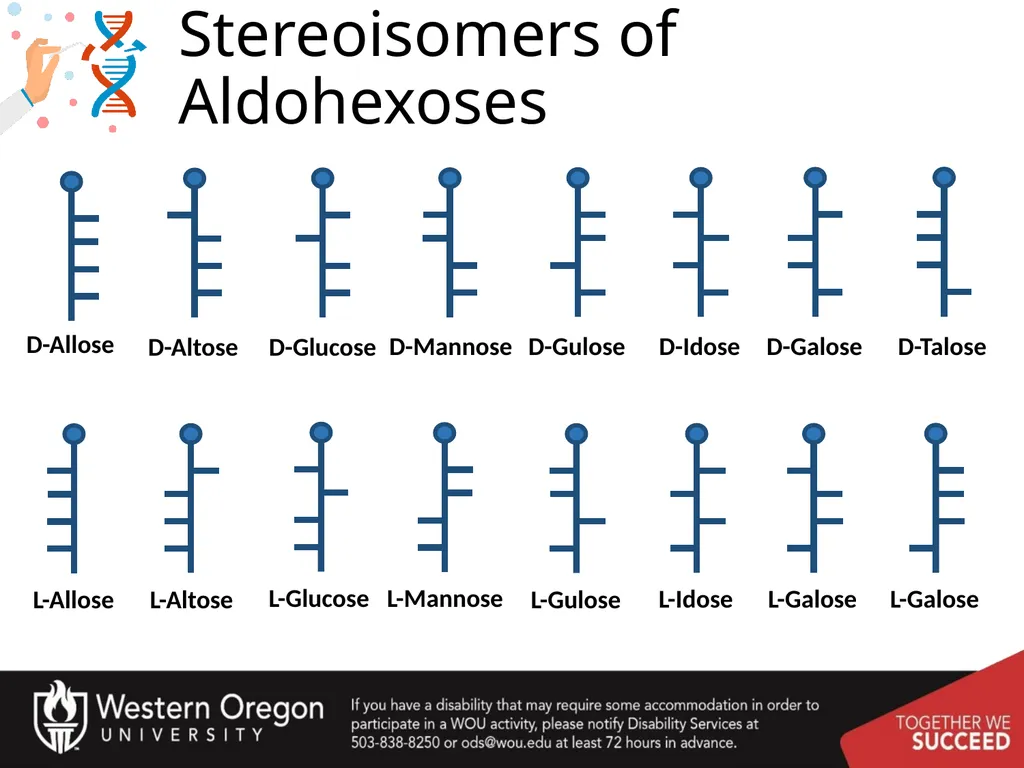
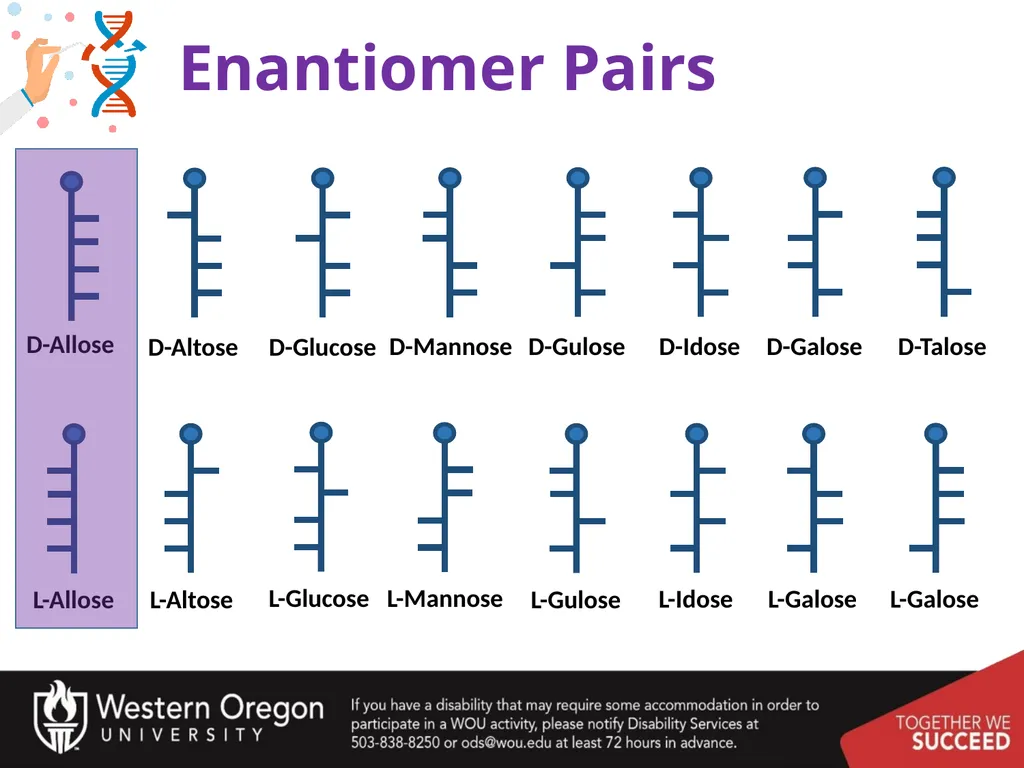
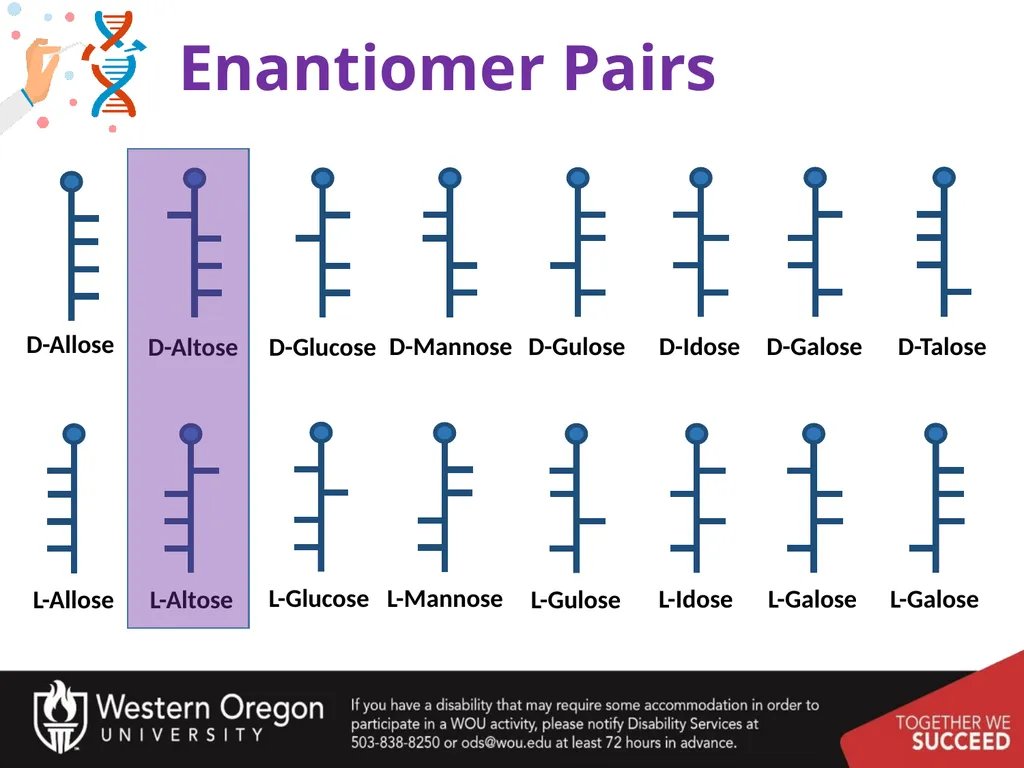
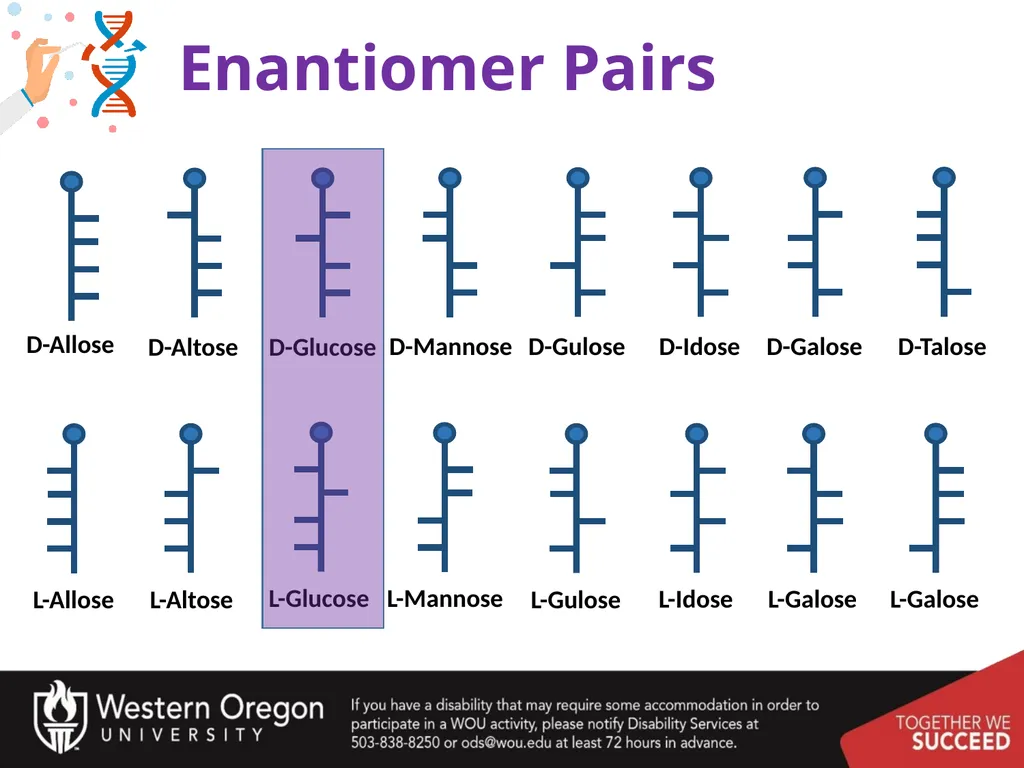
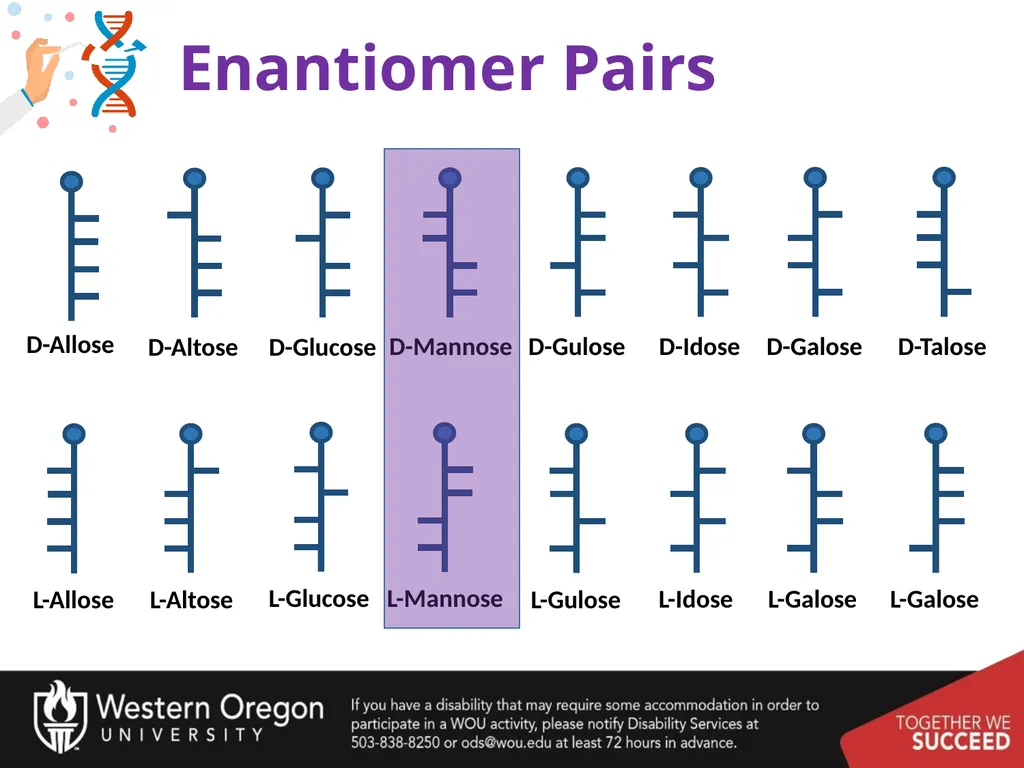
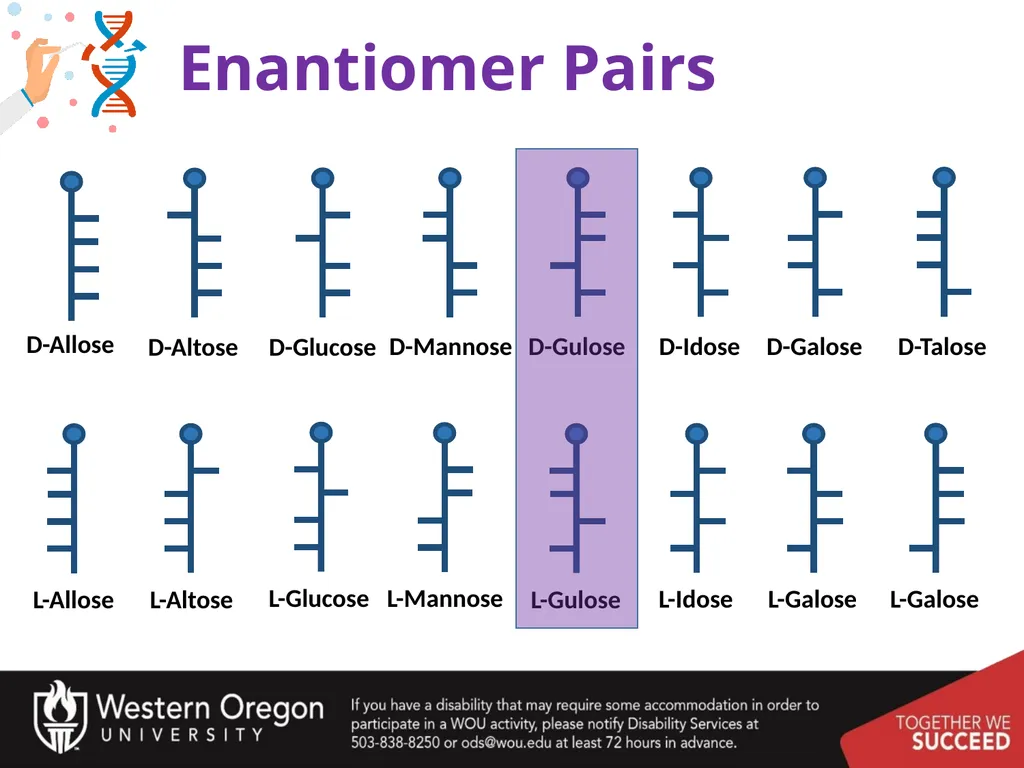
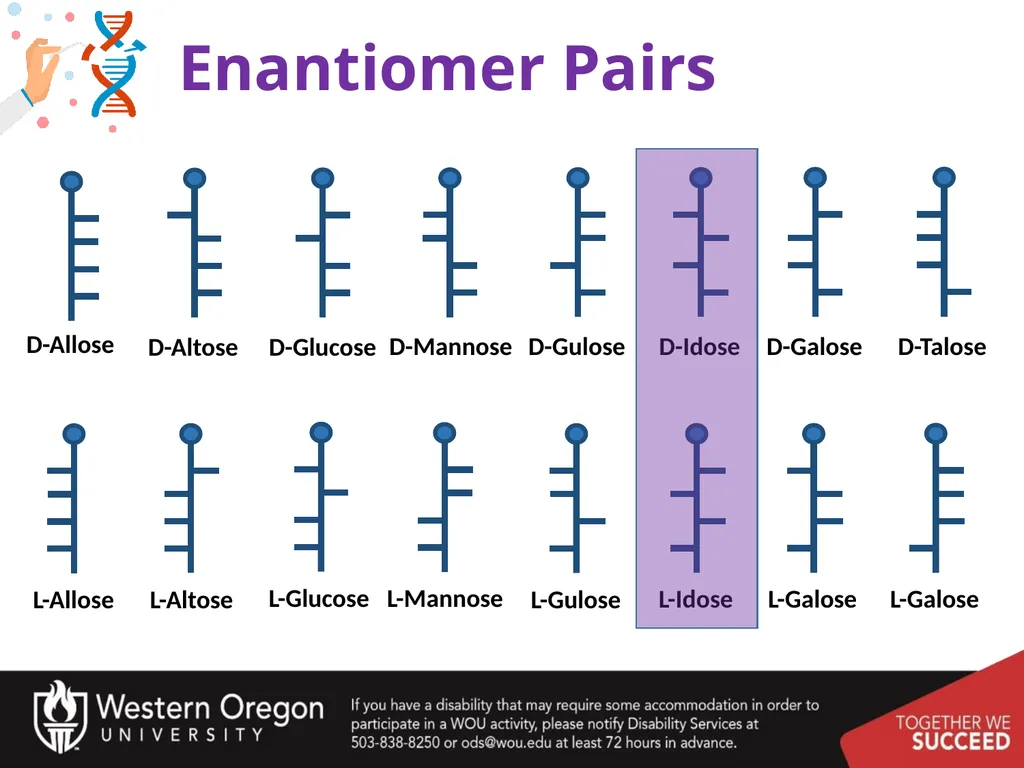
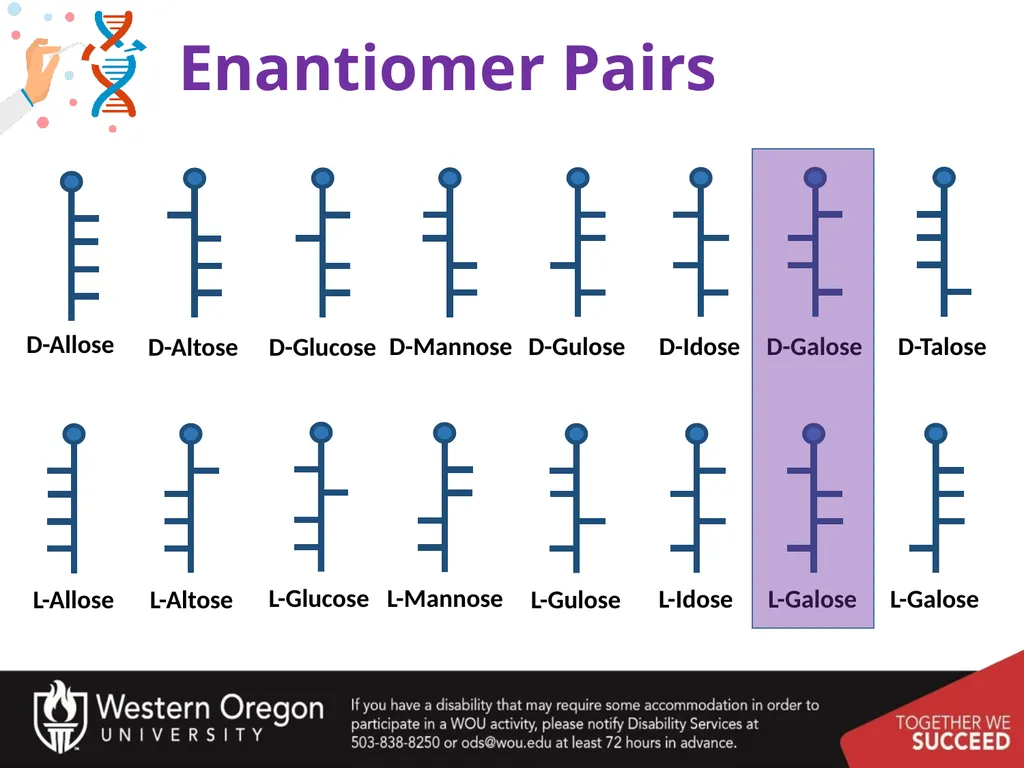
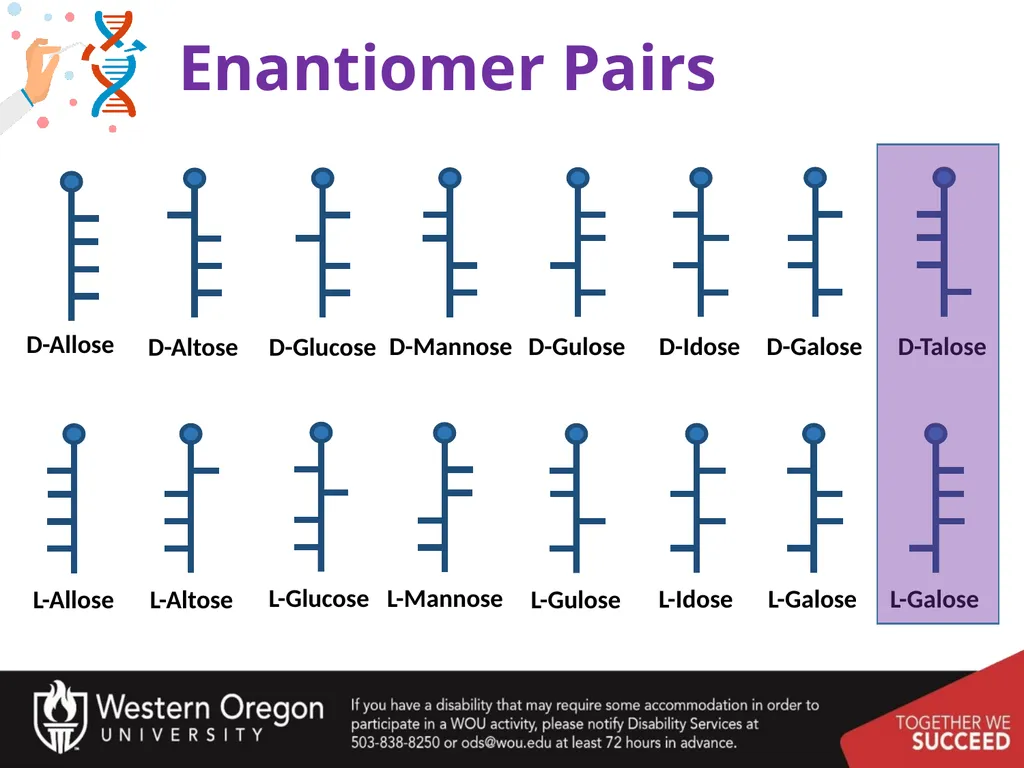
Stereoisomers of Aldohexoses D-Altose L-Glucose D-Allose D-Glucose D-Mannose D-Gulose D-Idose D-Galose D-Talose L-Allose L-Altose L-Mannose L-Gulose L-Idose L-Galose L-Galose<br>
19
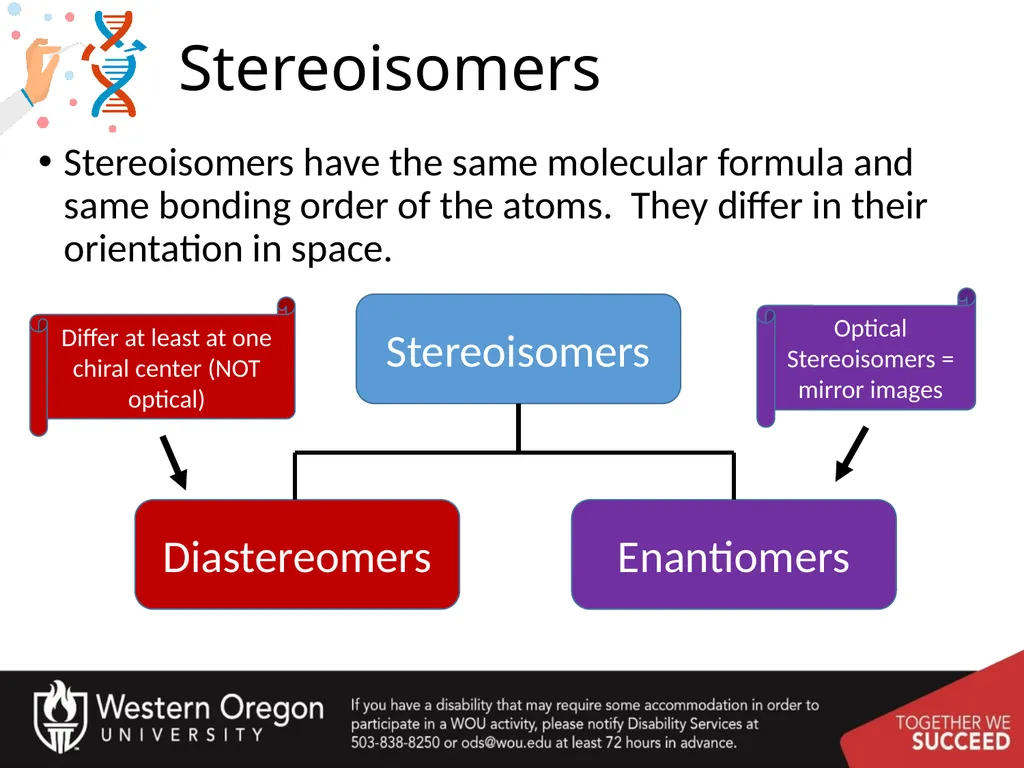
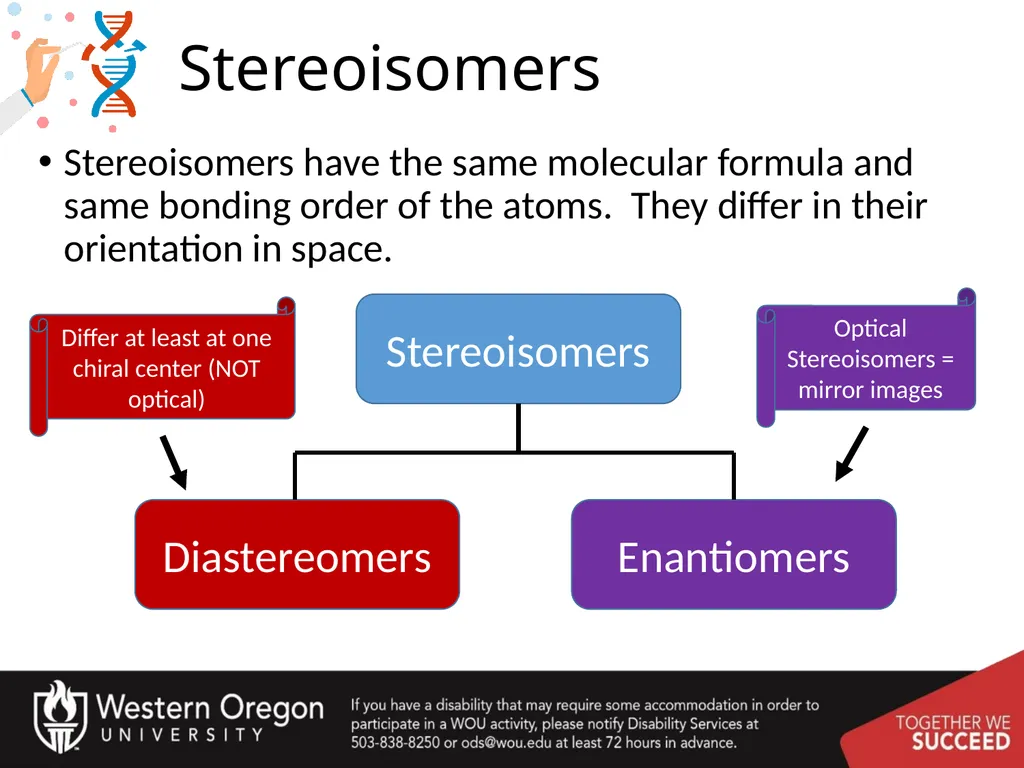
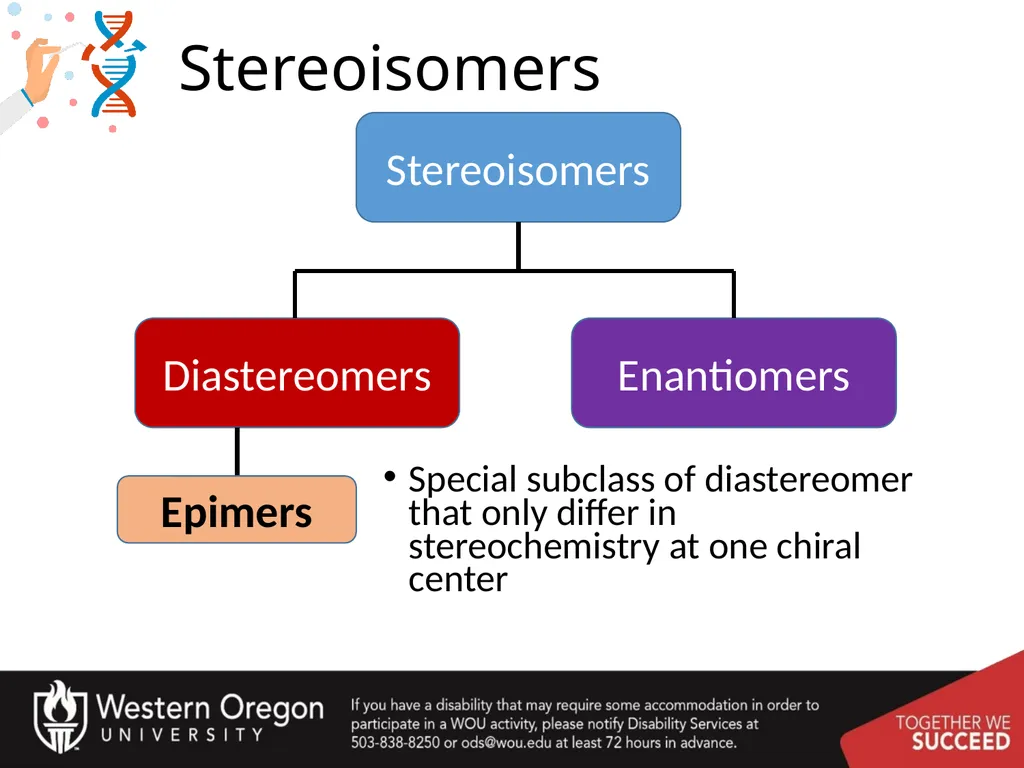
Stereoisomers Stereoisomers have the same molecular formula and same bonding order of the atoms. They differ in their orientation in space. Stereoisomers Diastereomers Enantiomers Optical Stereoisomers = mirror images Differ at least at one chiral center (NOT optical)<br>
20
Enantiomer Pairs D-Altose L-Glucose D-Allose D-Glucose D-Mannose D-Gulose D-Idose D-Galose D-Talose L-Allose L-Altose L-Mannose L-Gulose L-Idose L-Galose L-Galose<br>
21
Enantiomer Pairs D-Altose L-Glucose D-Allose D-Glucose D-Mannose D-Gulose D-Idose D-Galose D-Talose L-Allose L-Altose L-Mannose L-Gulose L-Idose L-Galose L-Galose<br>
22
Enantiomer Pairs D-Altose L-Glucose D-Allose D-Glucose D-Mannose D-Gulose D-Idose D-Galose D-Talose L-Allose L-Altose L-Mannose L-Gulose L-Idose L-Galose L-Galose<br>
23
Enantiomer Pairs D-Altose L-Glucose D-Allose D-Glucose D-Mannose D-Gulose D-Idose D-Galose D-Talose L-Allose L-Altose L-Mannose L-Gulose L-Idose L-Galose L-Galose<br>
24
Enantiomer Pairs D-Altose L-Glucose D-Allose D-Glucose D-Mannose D-Gulose D-Idose D-Galose D-Talose L-Allose L-Altose L-Mannose L-Gulose L-Idose L-Galose L-Galose<br>
25
Enantiomer Pairs D-Altose L-Glucose D-Allose D-Glucose D-Mannose D-Gulose D-Idose D-Galose D-Talose L-Allose L-Altose L-Mannose L-Gulose L-Idose L-Galose L-Galose<br>
26
Enantiomer Pairs D-Altose L-Glucose D-Allose D-Glucose D-Mannose D-Gulose D-Idose D-Galose D-Talose L-Allose L-Altose L-Mannose L-Gulose L-Idose L-Galose L-Galose<br>
27
Enantiomer Pairs D-Altose L-Glucose D-Allose D-Glucose D-Mannose D-Gulose D-Idose D-Galose D-Talose L-Allose L-Altose L-Mannose L-Gulose L-Idose L-Galose L-Galose<br>
28
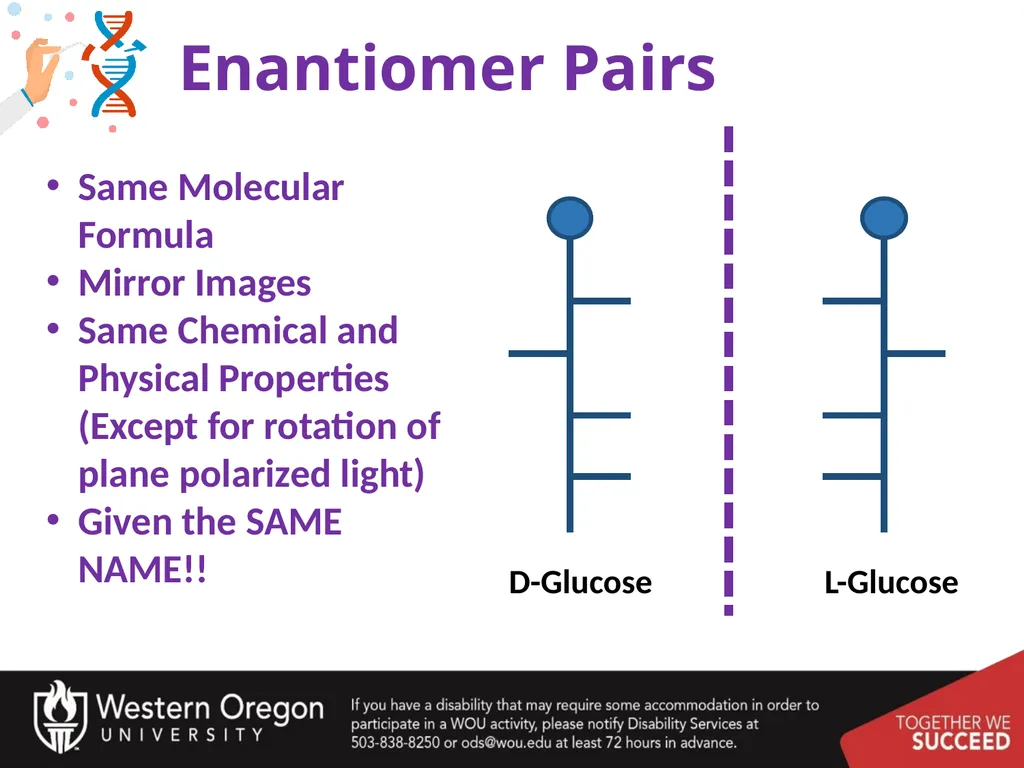
Enantiomer Pairs L-Glucose D-Glucose Same Molecular Formula
Mirror Images
Same Chemical and Physical Properties (Except for rotation of plane polarized light)
Given the SAME NAME!!<br>
29
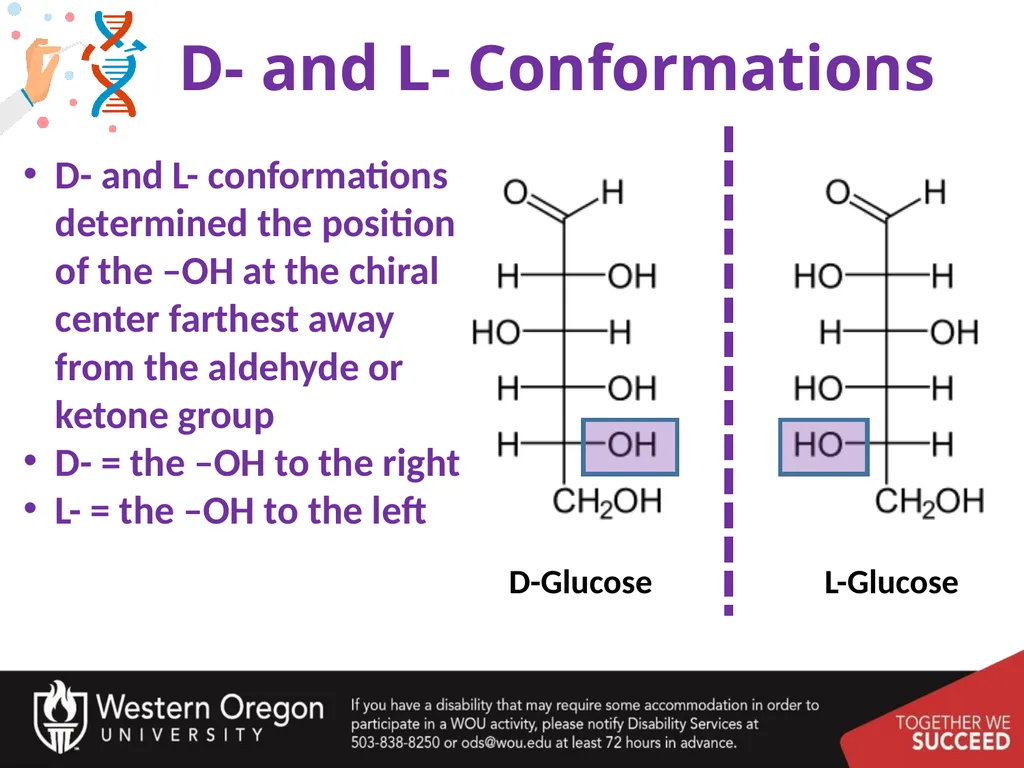
D- and L- Conformations L-Glucose D-Glucose D- and L- conformations determined the position of the –OH at the chiral center farthest away from the aldehyde or ketone group
D- = the –OH to the right
L- = the –OH to the left<br>
30
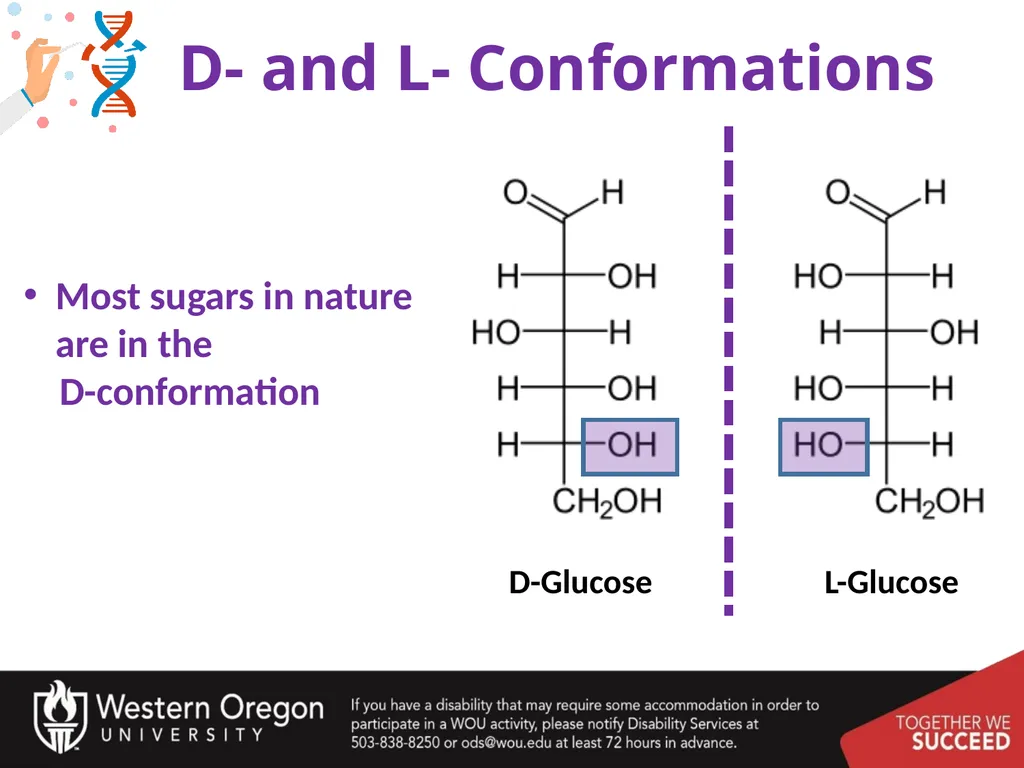
D- and L- Conformations L-Glucose D-Glucose Most sugars in nature are in the
D-conformation<br>
31
Stereoisomers Stereoisomers have the same molecular formula and same bonding order of the atoms. They differ in their orientation in space. Stereoisomers Diastereomers Enantiomers Optical Stereoisomers = mirror images Differ at least at one chiral center (NOT optical)<br>
32
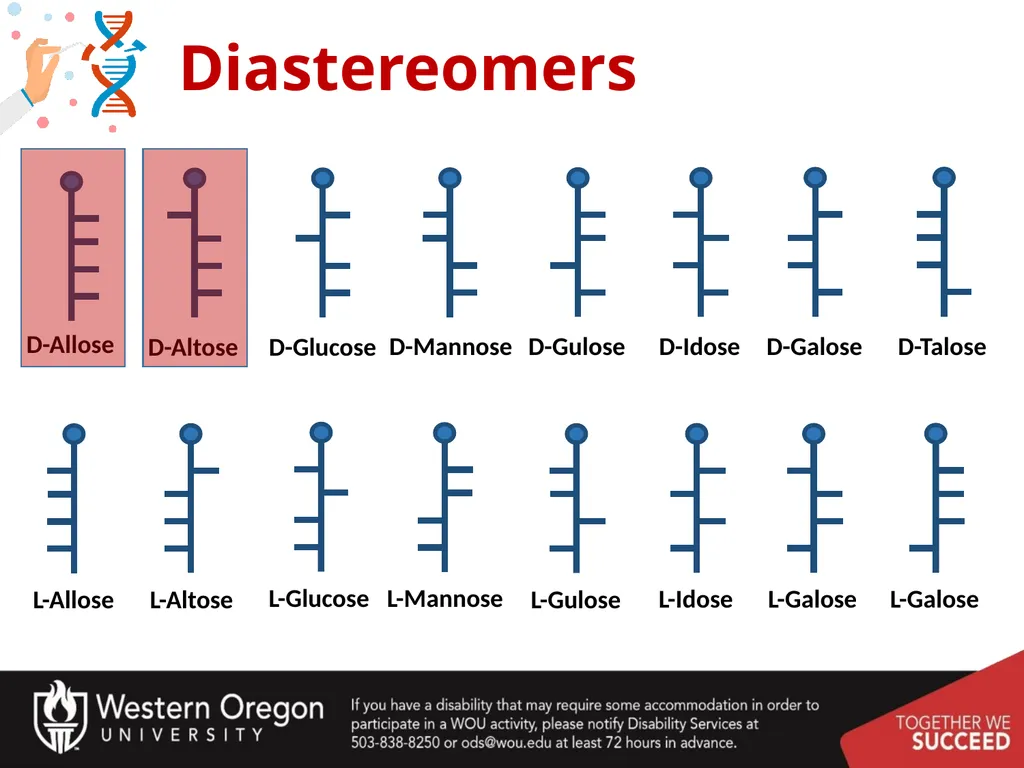
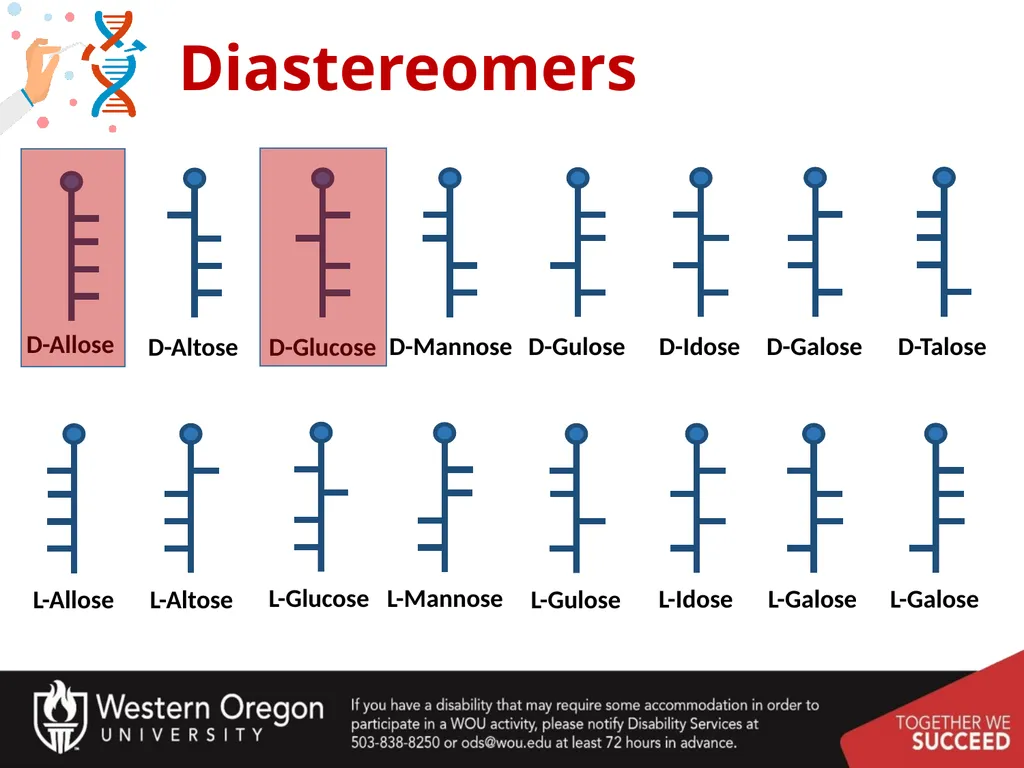
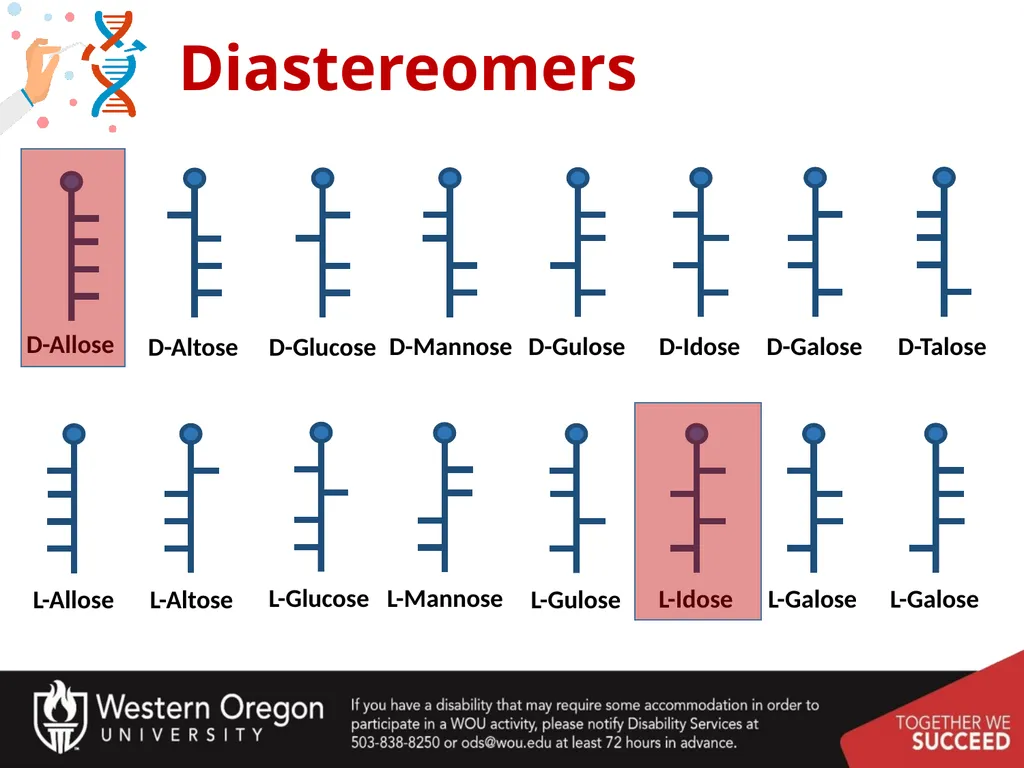
Diastereomers D-Altose L-Glucose D-Allose D-Glucose D-Mannose D-Gulose D-Idose D-Galose D-Talose L-Allose L-Altose L-Mannose L-Gulose L-Idose L-Galose L-Galose<br>
33
Diastereomers D-Altose L-Glucose D-Allose D-Glucose D-Mannose D-Gulose D-Idose D-Galose D-Talose L-Allose L-Altose L-Mannose L-Gulose L-Idose L-Galose L-Galose<br>
34
Diastereomers D-Altose L-Glucose D-Allose D-Glucose D-Mannose D-Gulose D-Idose D-Galose D-Talose L-Allose L-Altose L-Mannose L-Gulose L-Idose L-Galose L-Galose<br>
35
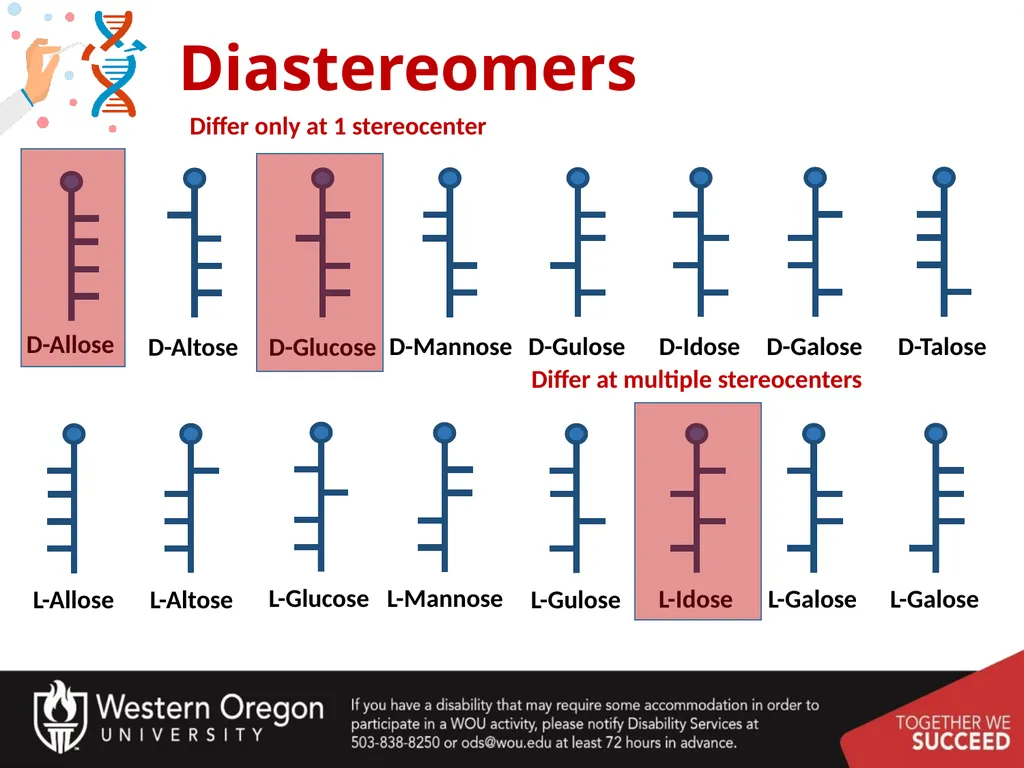
Diastereomers D-Altose L-Glucose D-Allose D-Glucose D-Mannose D-Gulose D-Idose D-Galose D-Talose L-Allose L-Altose L-Mannose L-Gulose L-Idose L-Galose L-Galose Differ only at 1 stereocenter Differ at multiple stereocenters<br>
36
Stereoisomers Special subclass of diastereomer that only differ in stereochemistry at one chiral center Stereoisomers Diastereomers Enantiomers Epimers<br>
37
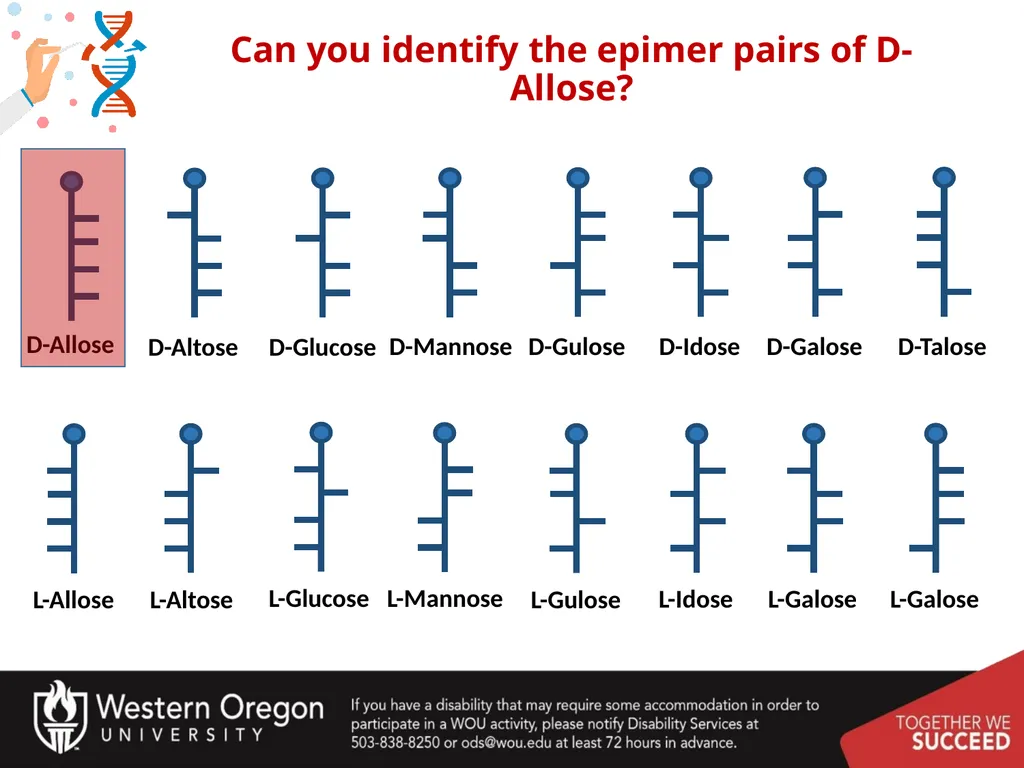
Can you identify the epimer pairs of D-Allose? D-Altose L-Glucose D-Allose D-Glucose D-Mannose D-Gulose D-Idose D-Galose D-Talose L-Allose L-Altose L-Mannose L-Gulose L-Idose L-Galose L-Galose<br>
38
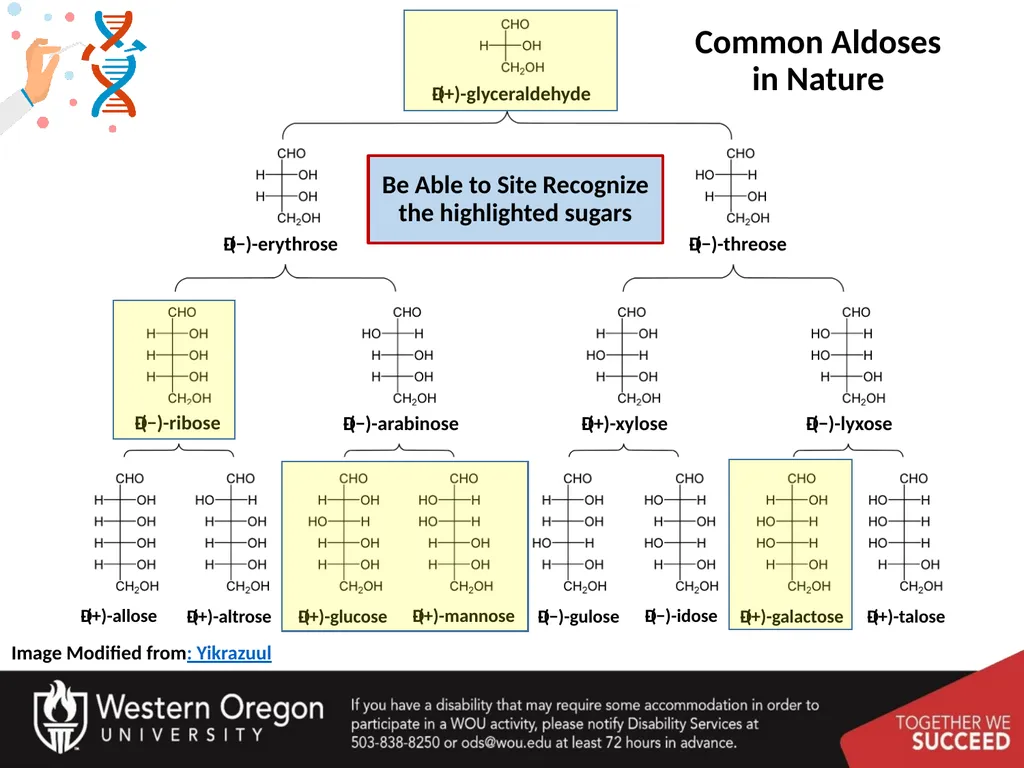
Common Aldoses in Nature D-(+)-glyceraldehyde D-(−)-erythrose D-(−)-threose D-(−)-ribose D-(−)-arabinose D-(+)-xylose D-(−)-lyxose D-(+)-allose D-(+)-altrose D-(+)-glucose D-(+)-mannose D-(−)-gulose D-(−)-idose D-(+)-galactose D-(+)-talose Be Able to Site Recognize the highlighted sugars Image Modified from: Yikrazuul<br>
39
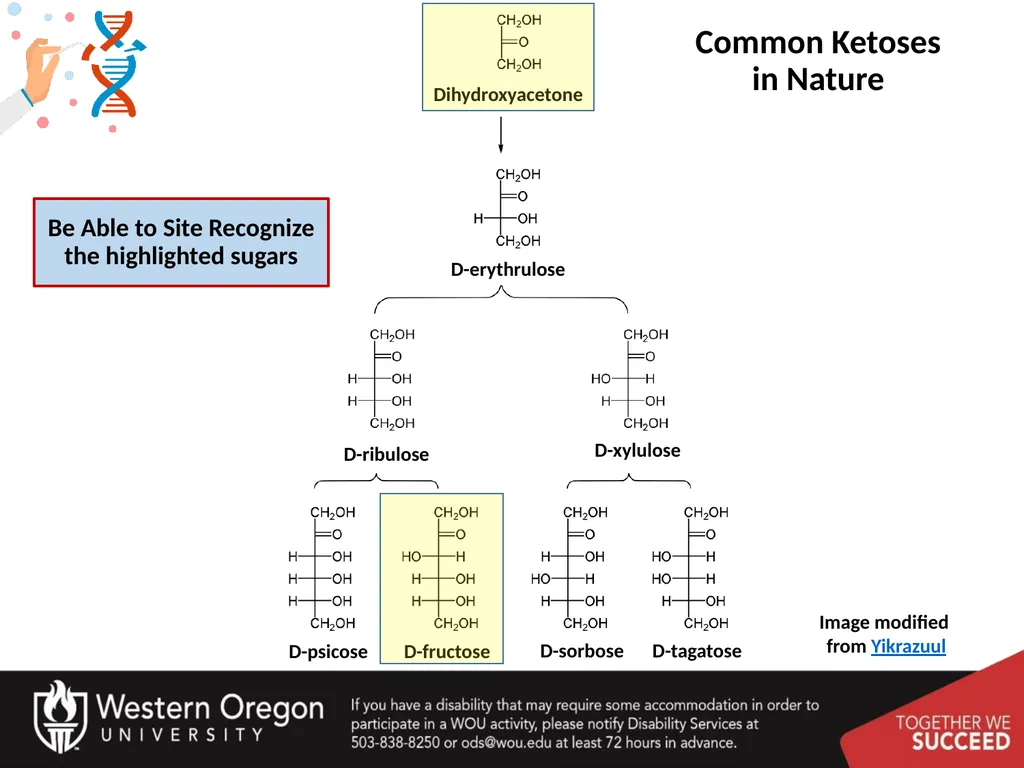
Common Ketoses in Nature D-xylulose D-psicose D-fructose D-ribulose D-sorbose D-tagatose Be Able to Site Recognize the highlighted sugars Dihydroxyacetone D-erythrulose Image modified
from Yikrazuul<br>
40
Section Review Structure of Monosaccharides
Aldose vs Ketose
Class Naming
Number of Isomers
Type of Isomers (constitutional vs stereo; within stereo - diastereomers, epimers, enantiomers)<br>