
CELL AND TISSUES-THE BASIC STRUCTURE OF THE BODY

Description: CELL AND TISSUES-THE BASIC STRUCTURE OF THE BODY LESSON -3 BY AMANDEEP KAUR ASIANM OBJECTIVES Upon completion of this lesson you will be able to: Describe Structure, Properties Functions of Cells Describe Structure, Properties
Related Topics
Download Presentation
"CELL AND TISSUES-THE BASIC STRUCTURE OF THE BODY" is the property of its rightful owner. Permission is granted to download and print the materials on this website for personal, non-commercial use only, and to display it on your personal computer provided you do not modify the materials and that you retain all copyright notices contained in the materials. By downloading content from our website, you accept the terms of this agreement.
Presentation Transcript
slide1. CELL AND TISSUES-THE BASIC STRUCTURE OF THE BODY LESSON -3 BY
AMANDEEP KAUR
ASI/ANM<br>
slide2. OBJECTIVES
Upon completion of this lesson you will be able to:
Describe Structure, Properties & Functions of Cells
Describe Structure, Properties & Functions of various Tissues
To know about organs & their types
To know about various Systems & their brief roles.<br>
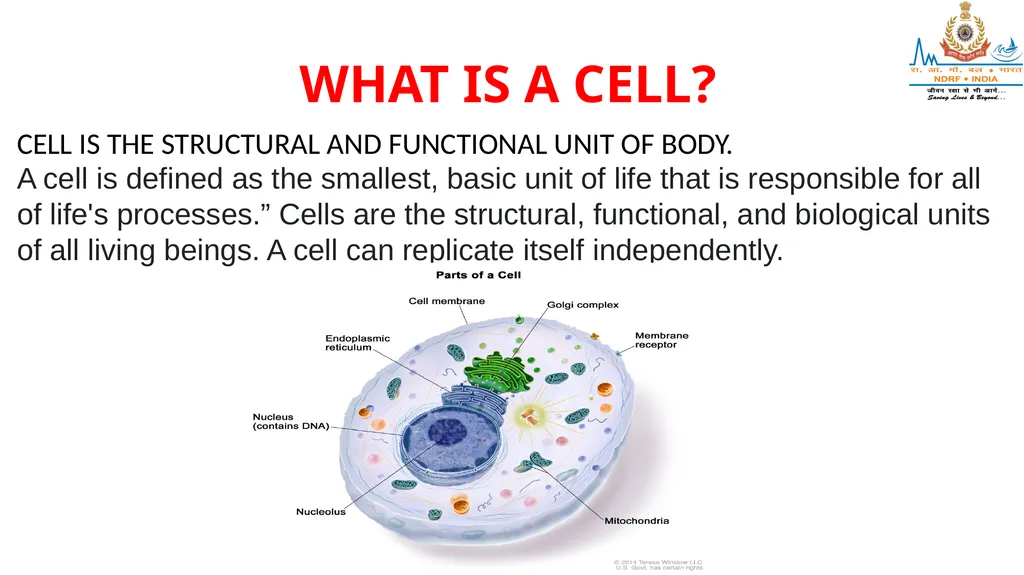
slide3. WHAT IS A CELL? CELL IS THE STRUCTURAL AND FUNCTIONAL UNIT OF BODY. A cell is defined as the smallest, basic unit of life that is responsible for all of life's processes.” Cells are the structural, functional, and biological units of all living beings. A cell can replicate itself independently.<br>
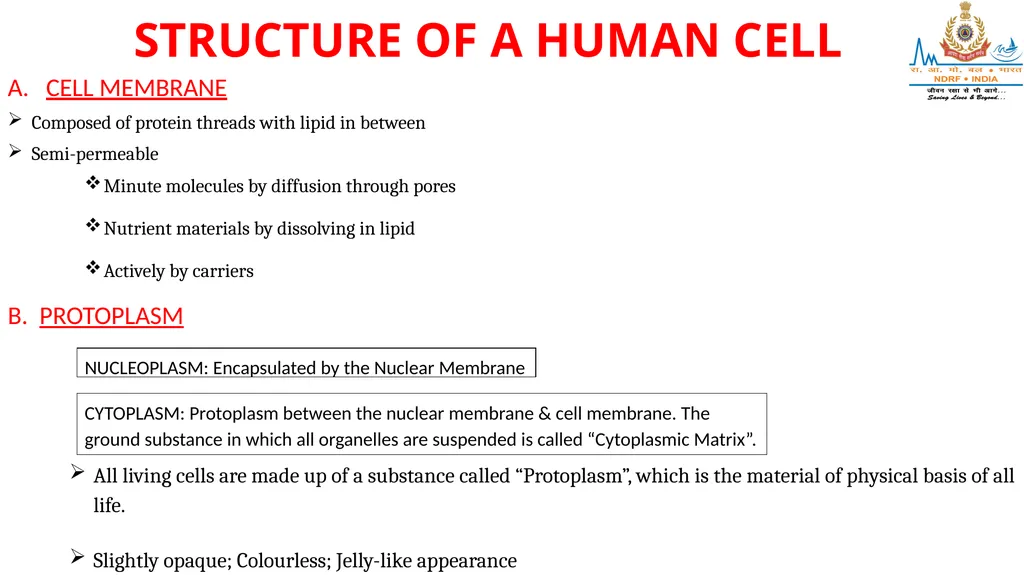
slide4. STRUCTURE OF A HUMAN CELL CELL MEMBRANE
Composed of protein threads with lipid in between
Semi-permeable
Minute molecules by diffusion through pores
Nutrient materials by dissolving in lipid
Actively by carriers
B. PROTOPLASM CYTOPLASM: Protoplasm between the nuclear membrane & cell membrane. The ground substance in which all organelles are suspended is called “Cytoplasmic Matrix”. NUCLEOPLASM: Encapsulated by the Nuclear Membrane All living cells are made up of a substance called “Protoplasm”, which is the material of physical basis of all life.
Slightly opaque; Colourless; Jelly-like appearance<br>
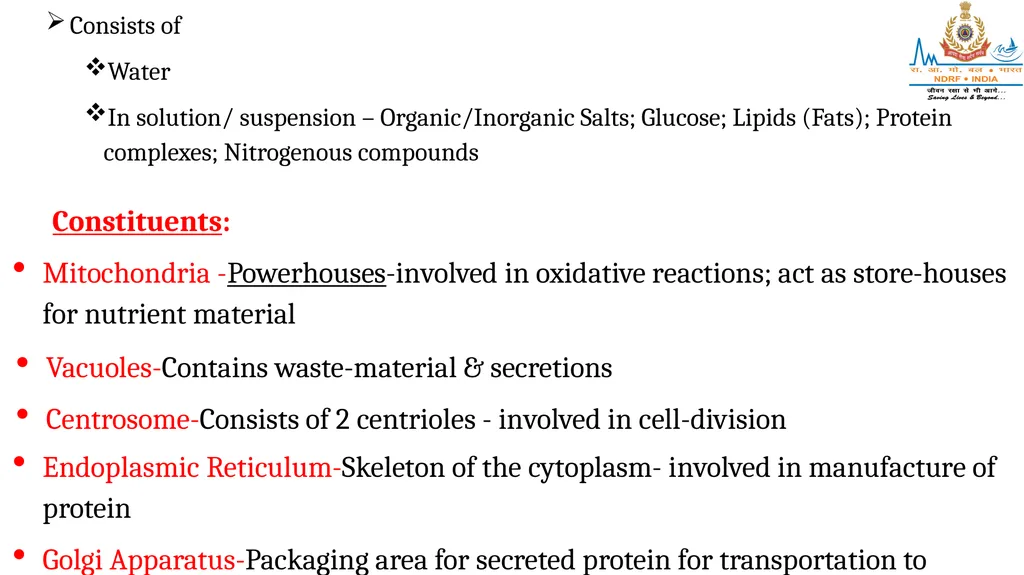
slide5. Consists of
Water
In solution/ suspension – Organic/Inorganic Salts; Glucose; Lipids (Fats); Protein complexes; Nitrogenous compounds Constituents:
Mitochondria -Powerhouses-involved in oxidative reactions; act as store-houses for nutrient material Vacuoles-Contains waste-material & secretions
Centrosome-Consists of 2 centrioles - involved in cell-division Endoplasmic Reticulum-Skeleton of the cytoplasm- involved in manufacture of protein
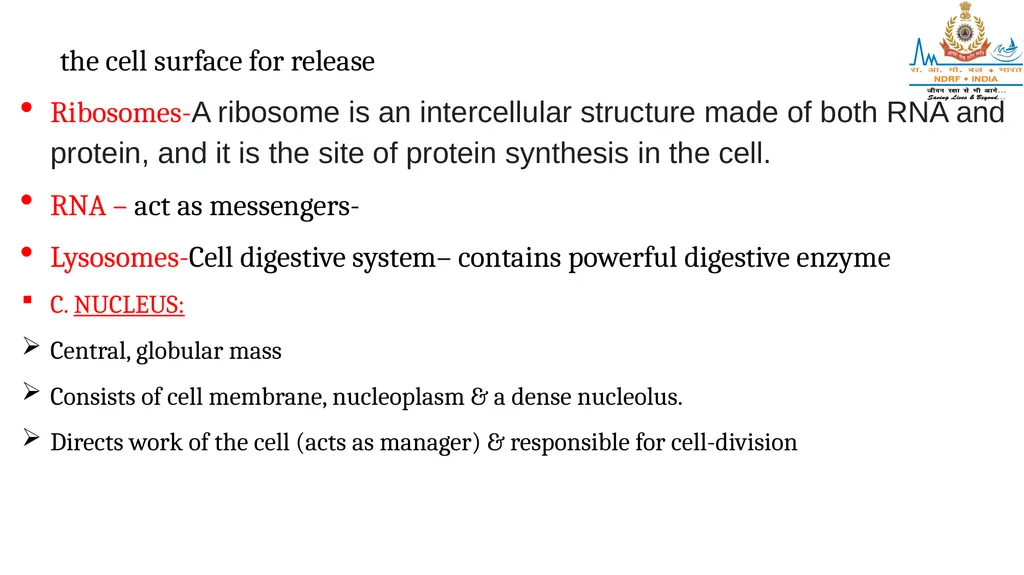
Golgi Apparatus-Packaging area for secreted protein for transportation to<br>
slide6. the cell surface for release
Ribosomes-A ribosome is an intercellular structure made of both RNA and protein, and it is the site of protein synthesis in the cell.
RNA – act as messengers-
Lysosomes-Cell digestive system– contains powerful digestive enzyme C. NUCLEUS:
Central, globular mass
Consists of cell membrane, nucleoplasm & a dense nucleolus.
Directs work of the cell (acts as manager) & responsible for cell-division<br>
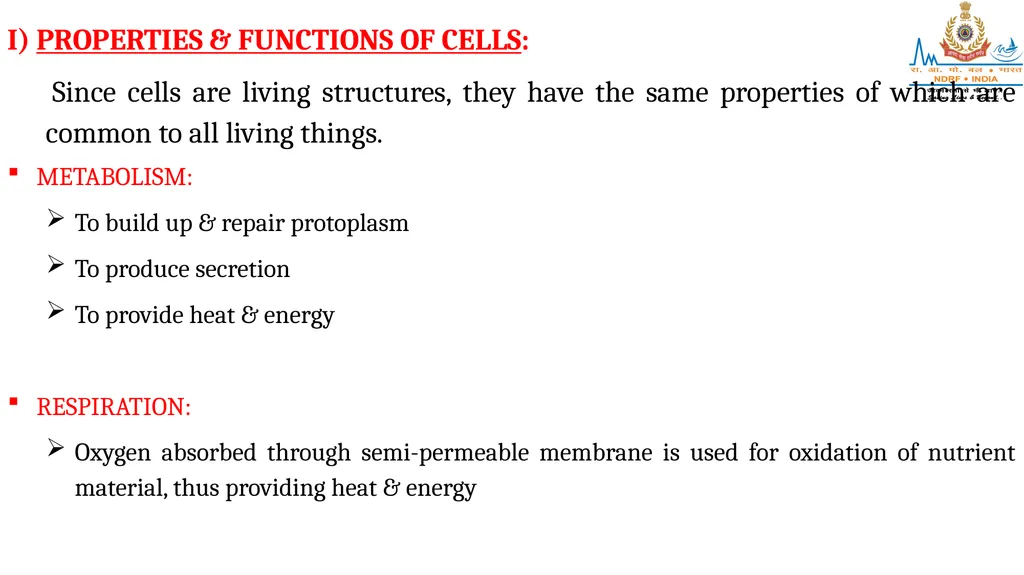
slide7. PROPERTIES & FUNCTIONS OF CELLS:
Since cells are living structures, they have the same properties of which are common to all living things. METABOLISM:
To build up & repair protoplasm
To produce secretion
To provide heat & energy
RESPIRATION:
Oxygen absorbed through semi-permeable membrane is used for oxidation of nutrient material, thus providing heat & energy<br>
slide8. GROWTH:
Ability to grow till they are mature & ready to reproduce
EXCRETION:
Waste-products produced during metabolism, which may cause damage if retained, are excreted through the semi-permeable membrane
MOVEMENT:
Ability to move in part or whole
IRRITABILITY:
Responds to physical, chemical or thermal stimulus<br>
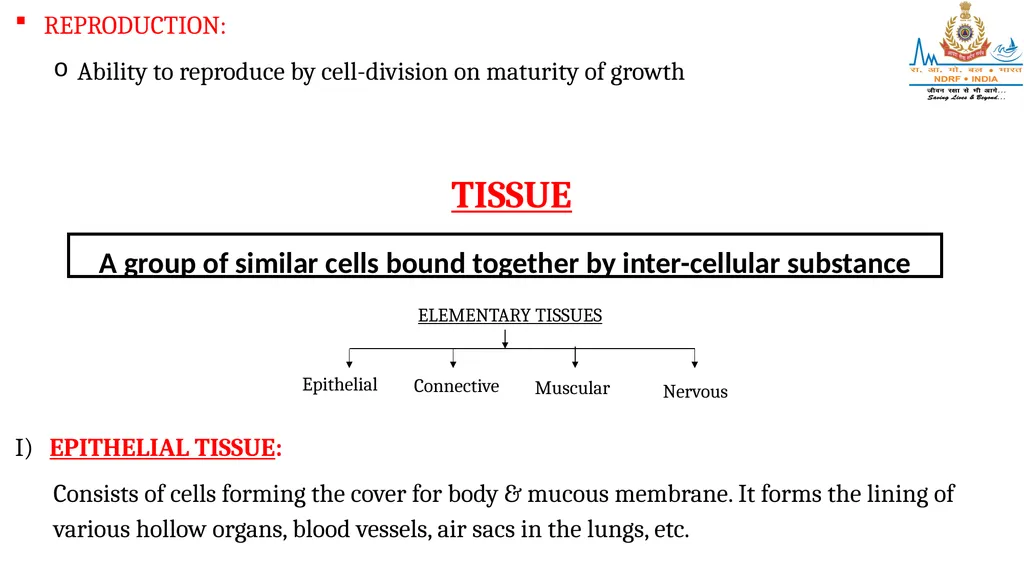
slide9. REPRODUCTION:
Ability to reproduce by cell-division on maturity of growth A group of similar cells bound together by inter-cellular substance TISSUE ELEMENTARY TISSUES Epithelial Connective Muscular Nervous EPITHELIAL TISSUE:
Consists of cells forming the cover for body & mucous membrane. It forms the lining of various hollow organs, blood vessels, air sacs in the lungs, etc.<br>
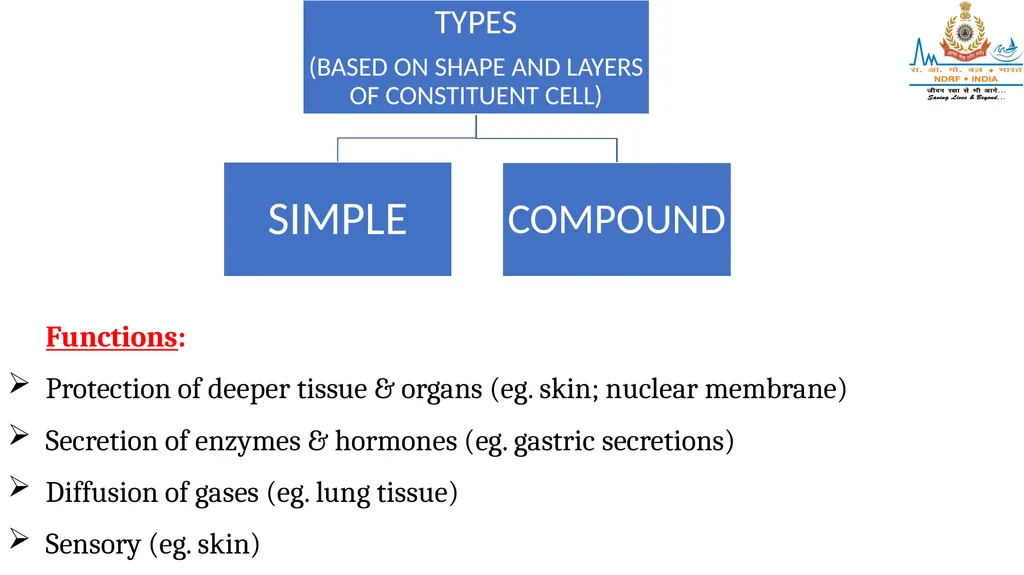
slide10. Functions:
Protection of deeper tissue & organs (eg. skin; nuclear membrane)
Secretion of enzymes & hormones (eg. gastric secretions)
Diffusion of gases (eg. lung tissue)
Sensory (eg. skin)<br>
slide11. CONNECTIVE TISSUE:
As the name suggests, it forms connections between cells, tissues & organs. Also acts as covering for some glands.
Functions:
Mechanical
Supporting
Packing material to fill up hollow spaces around organs to keep them in place
Covering for glands and vital organs
Binding of bones in joints
Barrier between different types of cells & tissues Reparative
Helps in healing by laying down of fibrous tissue<br>
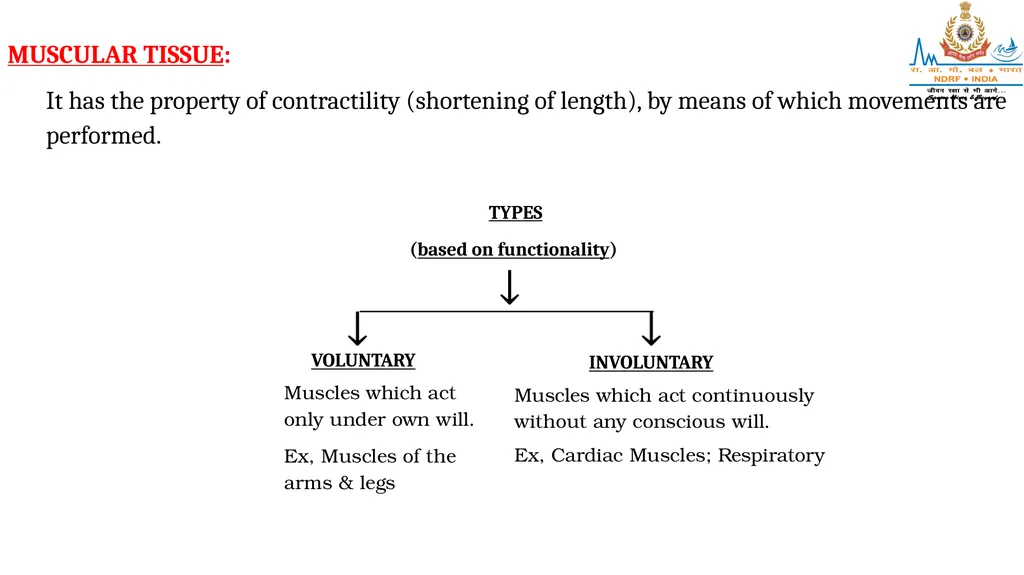
slide12. MUSCULAR TISSUE:
It has the property of contractility (shortening of length), by means of which movements are performed. TYPES
(based on functionality) INVOLUNTARY VOLUNTARY Muscles which act continuously without any conscious will.
Ex, Cardiac Muscles; Respiratory Muscles which act only under own will.
Ex, Muscles of the arms & legs<br>
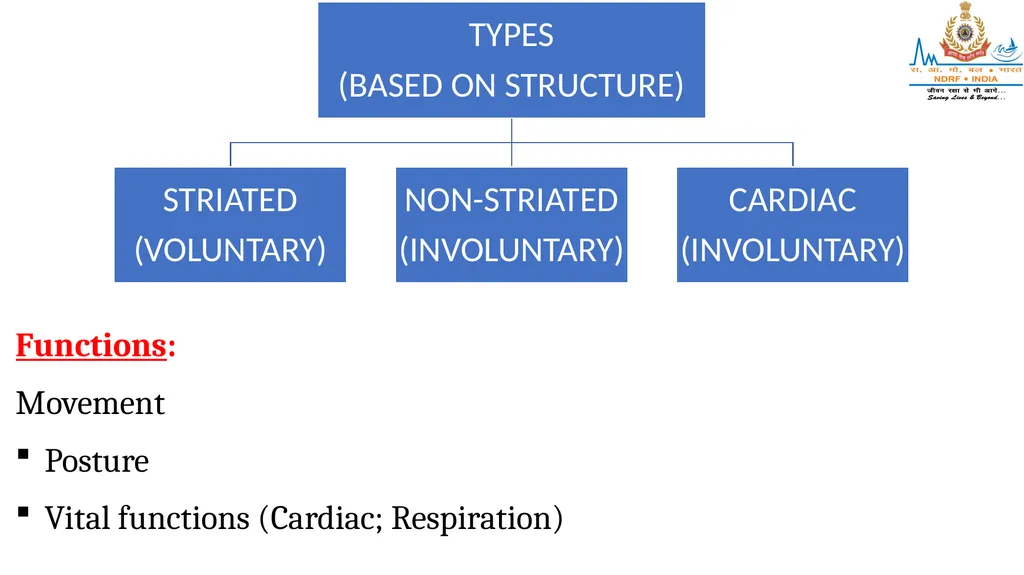
slide13. Functions:
Movement
Posture
Vital functions (Cardiac; Respiration)<br>
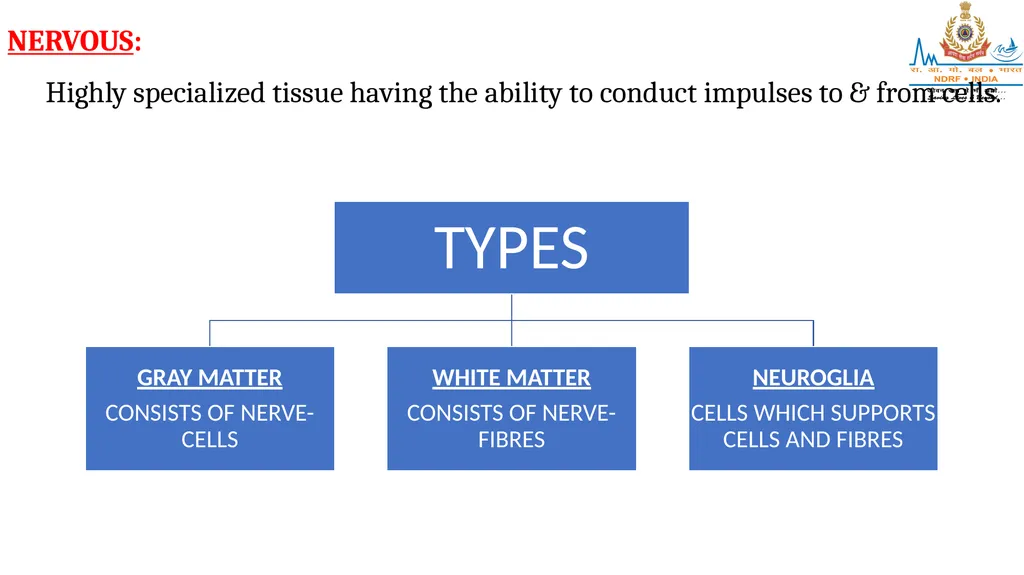
slide14. NERVOUS:
Highly specialized tissue having the ability to conduct impulses to & from cells.<br>
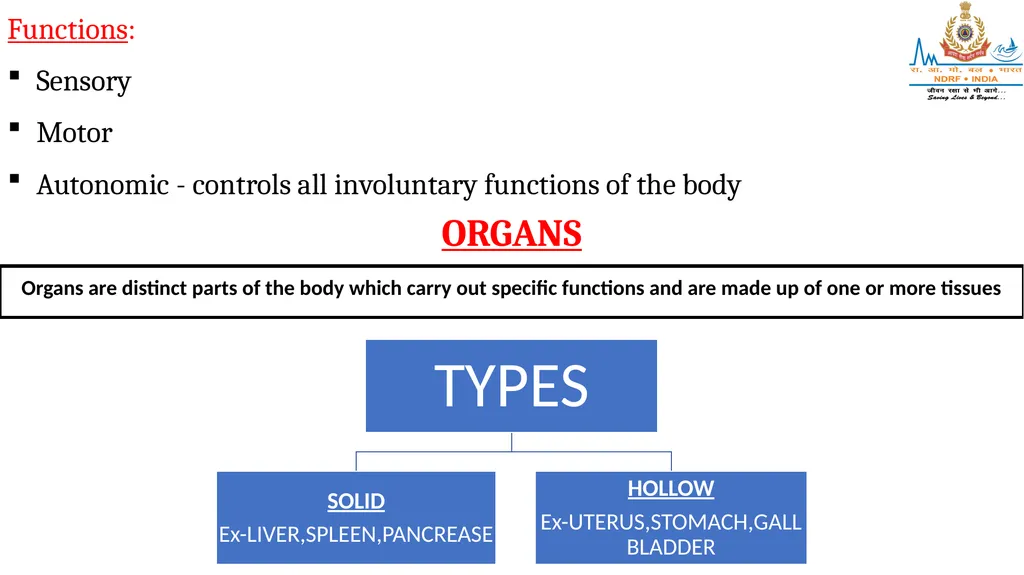
slide15. Functions:
Sensory
Motor
Autonomic - controls all involuntary functions of the body Organs are distinct parts of the body which carry out specific functions and are made up of one or more tissues ORGANS<br>
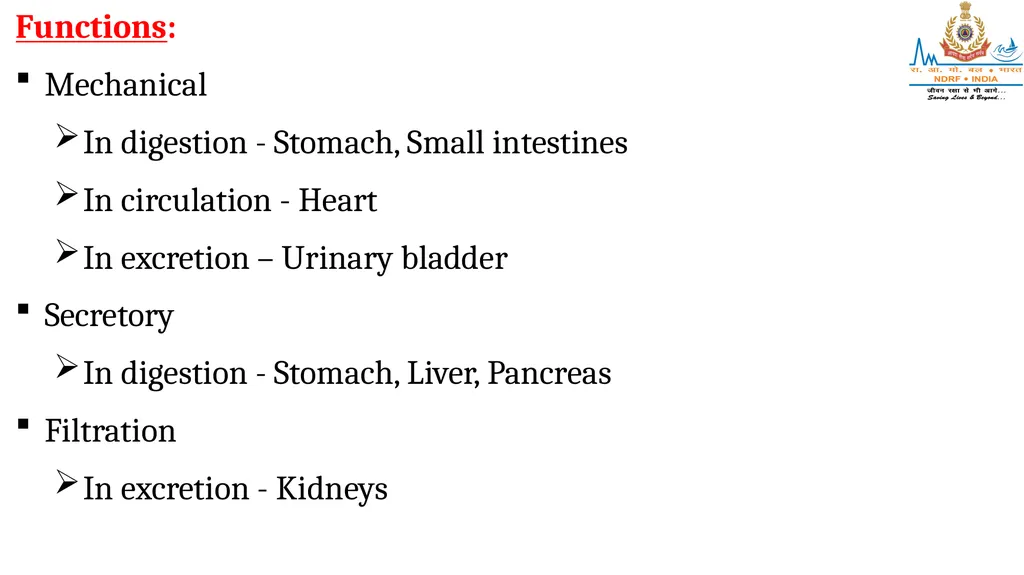
slide16. Functions:
Mechanical
In digestion - Stomach, Small intestines
In circulation - Heart
In excretion – Urinary bladder
Secretory
In digestion - Stomach, Liver, Pancreas
Filtration
In excretion - Kidneys<br>
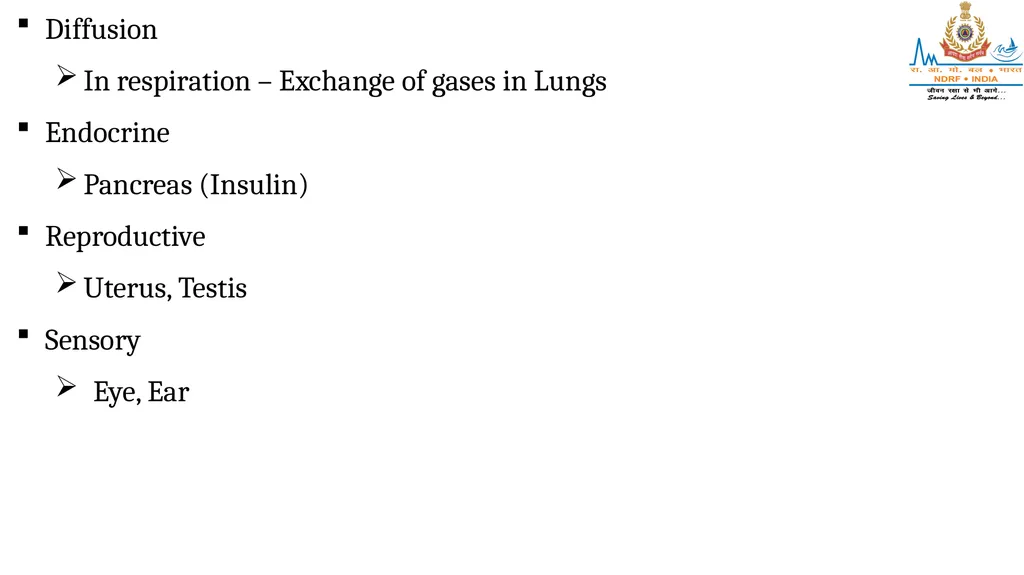
slide17. Diffusion
In respiration – Exchange of gases in Lungs
Endocrine
Pancreas (Insulin)
Reproductive
Uterus, Testis
Sensory
Eye, Ear<br>
slide18. ANY QUESTION ?<br>
slide19. THANK YOU<br>
AMANDEEP KAUR
ASI/ANM<br>
slide2. OBJECTIVES
Upon completion of this lesson you will be able to:
Describe Structure, Properties & Functions of Cells
Describe Structure, Properties & Functions of various Tissues
To know about organs & their types
To know about various Systems & their brief roles.<br>
slide3. WHAT IS A CELL? CELL IS THE STRUCTURAL AND FUNCTIONAL UNIT OF BODY. A cell is defined as the smallest, basic unit of life that is responsible for all of life's processes.” Cells are the structural, functional, and biological units of all living beings. A cell can replicate itself independently.<br>
slide4. STRUCTURE OF A HUMAN CELL CELL MEMBRANE
Composed of protein threads with lipid in between
Semi-permeable
Minute molecules by diffusion through pores
Nutrient materials by dissolving in lipid
Actively by carriers
B. PROTOPLASM CYTOPLASM: Protoplasm between the nuclear membrane & cell membrane. The ground substance in which all organelles are suspended is called “Cytoplasmic Matrix”. NUCLEOPLASM: Encapsulated by the Nuclear Membrane All living cells are made up of a substance called “Protoplasm”, which is the material of physical basis of all life.
Slightly opaque; Colourless; Jelly-like appearance<br>
slide5. Consists of
Water
In solution/ suspension – Organic/Inorganic Salts; Glucose; Lipids (Fats); Protein complexes; Nitrogenous compounds Constituents:
Mitochondria -Powerhouses-involved in oxidative reactions; act as store-houses for nutrient material Vacuoles-Contains waste-material & secretions
Centrosome-Consists of 2 centrioles - involved in cell-division Endoplasmic Reticulum-Skeleton of the cytoplasm- involved in manufacture of protein
Golgi Apparatus-Packaging area for secreted protein for transportation to<br>
slide6. the cell surface for release
Ribosomes-A ribosome is an intercellular structure made of both RNA and protein, and it is the site of protein synthesis in the cell.
RNA – act as messengers-
Lysosomes-Cell digestive system– contains powerful digestive enzyme C. NUCLEUS:
Central, globular mass
Consists of cell membrane, nucleoplasm & a dense nucleolus.
Directs work of the cell (acts as manager) & responsible for cell-division<br>
slide7. PROPERTIES & FUNCTIONS OF CELLS:
Since cells are living structures, they have the same properties of which are common to all living things. METABOLISM:
To build up & repair protoplasm
To produce secretion
To provide heat & energy
RESPIRATION:
Oxygen absorbed through semi-permeable membrane is used for oxidation of nutrient material, thus providing heat & energy<br>
slide8. GROWTH:
Ability to grow till they are mature & ready to reproduce
EXCRETION:
Waste-products produced during metabolism, which may cause damage if retained, are excreted through the semi-permeable membrane
MOVEMENT:
Ability to move in part or whole
IRRITABILITY:
Responds to physical, chemical or thermal stimulus<br>
slide9. REPRODUCTION:
Ability to reproduce by cell-division on maturity of growth A group of similar cells bound together by inter-cellular substance TISSUE ELEMENTARY TISSUES Epithelial Connective Muscular Nervous EPITHELIAL TISSUE:
Consists of cells forming the cover for body & mucous membrane. It forms the lining of various hollow organs, blood vessels, air sacs in the lungs, etc.<br>
slide10. Functions:
Protection of deeper tissue & organs (eg. skin; nuclear membrane)
Secretion of enzymes & hormones (eg. gastric secretions)
Diffusion of gases (eg. lung tissue)
Sensory (eg. skin)<br>
slide11. CONNECTIVE TISSUE:
As the name suggests, it forms connections between cells, tissues & organs. Also acts as covering for some glands.
Functions:
Mechanical
Supporting
Packing material to fill up hollow spaces around organs to keep them in place
Covering for glands and vital organs
Binding of bones in joints
Barrier between different types of cells & tissues Reparative
Helps in healing by laying down of fibrous tissue<br>
slide12. MUSCULAR TISSUE:
It has the property of contractility (shortening of length), by means of which movements are performed. TYPES
(based on functionality) INVOLUNTARY VOLUNTARY Muscles which act continuously without any conscious will.
Ex, Cardiac Muscles; Respiratory Muscles which act only under own will.
Ex, Muscles of the arms & legs<br>
slide13. Functions:
Movement
Posture
Vital functions (Cardiac; Respiration)<br>
slide14. NERVOUS:
Highly specialized tissue having the ability to conduct impulses to & from cells.<br>
slide15. Functions:
Sensory
Motor
Autonomic - controls all involuntary functions of the body Organs are distinct parts of the body which carry out specific functions and are made up of one or more tissues ORGANS<br>
slide16. Functions:
Mechanical
In digestion - Stomach, Small intestines
In circulation - Heart
In excretion – Urinary bladder
Secretory
In digestion - Stomach, Liver, Pancreas
Filtration
In excretion - Kidneys<br>
slide17. Diffusion
In respiration – Exchange of gases in Lungs
Endocrine
Pancreas (Insulin)
Reproductive
Uterus, Testis
Sensory
Eye, Ear<br>
slide18. ANY QUESTION ?<br>
slide19. THANK YOU<br>