Chapter 16: Global Sourcing and Procurement

Published  . 0 views
↓ Download
Chapter 16: Global Sourcing and Procurement
1 / 1
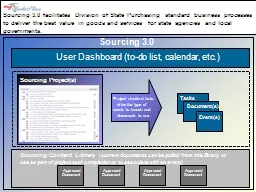
Chapter 16: Global Sourcing and Procurement - slide 1 of 23 Chapter 16: Global Sourcing and Procurement - slide 2 of 23 Chapter 16: Global Sourcing and Procurement - slide 3 of 23 Chapter 16: Global Sourcing and Procurement - slide 4 of 23 Chapter 16: Global Sourcing and Procurement - slide 5 of 23 Chapter 16: Global Sourcing and Procurement - slide 6 of 23 Chapter 16: Global Sourcing and Procurement - slide 7 of 23 Chapter 16: Global Sourcing and Procurement - slide 8 of 23 Chapter 16: Global Sourcing and Procurement - slide 9 of 23 Chapter 16: Global Sourcing and Procurement - slide 10 of 23 Chapter 16: Global Sourcing and Procurement - slide 11 of 23 Chapter 16: Global Sourcing and Procurement - slide 12 of 23 Chapter 16: Global Sourcing and Procurement - slide 13 of 23 Chapter 16: Global Sourcing and Procurement - slide 14 of 23 Chapter 16: Global Sourcing and Procurement - slide 15 of 23 Chapter 16: Global Sourcing and Procurement - slide 16 of 23 Chapter 16: Global Sourcing and Procurement - slide 17 of 23 Chapter 16: Global Sourcing and Procurement - slide 18 of 23 Chapter 16: Global Sourcing and Procurement - slide 19 of 23 Chapter 16: Global Sourcing and Procurement - slide 20 of 23 Chapter 16: Global Sourcing and Procurement - slide 21 of 23 Chapter 16: Global Sourcing and Procurement - slide 22 of 23 Chapter 16: Global Sourcing and Procurement - slide 23 of 23
Description: Chapter 16: Global Sourcing and Procurement LO161: Explain what strategic sourcing is. LO162: Explain why companies outsource processes. LO163: Analyze the total cost of ownership. LO164: Evaluate sourcing performance. McGraw-HillIrwin

Related Topics

Download Presentation

"Chapter 16: Global Sourcing and Procurement" is the property of its rightful owner. Permission is granted to download and print the materials on this website for personal, non-commercial use only, and to display it on your personal computer provided you do not modify the materials and that you retain all copyright notices contained in the materials. By downloading content from our website, you accept the terms of this agreement.

Presentation Transcript

slide1. Chapter 16: Global Sourcing and Procurement LO16–1: Explain what strategic sourcing is.
LO16–2: Explain why companies outsource processes.
LO16–3: Analyze the total cost of ownership.
LO16–4: Evaluate sourcing performance. McGraw-Hill/Irwin<br>
slide2. Strategic Sourcing Strategic sourcing: the development and management of supplier relationships to acquire goods and services in a way that aids in achieving the immediate needs of the business
In the past, sourcing was another name for purchasing
As a result of globalization, sourcing implies a more complex process suitable for products that are strategically important 16-2<br>
slide3. Strategic Sourcing Continued Specificity: refers to how common the item is and, in a relative sense, how many substitutes might be available
Commonly available products can be purchased using a relatively simple process
Request for proposal (RFP): used for purchasing items that are more complex or expensive and where there may be a number of potential vendors
Vendor-managed inventory: when a customer actually allows the supplier to manage an item or group of items for them 16-3<br>
slide4. Sourcing/Purchasing Design Matrix 16-4 Exhibit 16.1<br>
slide5. The Bullwhip Effect Forward buying: retailers responding to a temporary price cut by stocking up
Bullwhip effect: phenomenon of variability magnification as we move from the customer to the producer in the supply chain
A slight change in consumer sales ripples backward as magnified oscillations upstream, like the result of a flick of a bullwhip handle
Continuous replenishment: inventory is replaced frequently, as part of an ongoing process 16-5<br>
slide6. Increasing Variability of Orders Up the Supply Chain 16-6 Exhibit 16.2<br>
slide7. Functional Products Functional products: the staples that people buy in a wide range of retail outlets, such as grocery stores and gas stations
Product life cycle of more than two years
Contribution margin of 5 to 20 percent
Only 10 to 20 product variations
An average forecast error of only 10 percent
Lead time for make-to-order products of from six months to one year 16-7<br>
slide8. Innovative Products Innovation can enable a company to achieve higher profit margins
Newness of the innovative products makes demand
for them unpredictable
Typically have a life cycle of just a few months
Imitators quickly erode the competitive advantage that innovative products enjoy
Companies are forced to introduce a steady stream of newer innovations
The short life cycles and the great variety typical of these products further increase unpredictability 16-8<br>
slide9. Product and Process Uncertainty Characteristics 16-9 Exhibit 16.3<br>
slide10. Supply Chain Uncertainty Framework 16-10 Supply Uncertainty Exhibit 16.4<br>
slide11. Four Types of Supply Chain Strategies Efficient supply chains: utilize strategies aimed at creating the highest cost efficiency
Risk-hedging supply chains: utilize strategies aimed at pooling and sharing resources in a supply chain to share risk
Responsive supply chains: utilize strategies aimed at being responsive and flexible
Agile supply chains: utilize strategies aimed at being responsive and flexible to customer needs 16-11<br>
slide12. Outsourcing Outsourcing: moving some of a firm’s internal activities and decision responsibility to outside providers
Allows a company to create a competitive advantage while reducing cost
An entire function may be outsourced, or some elements of an activity may be outsourced, with the rest kept in-house 16-12<br>
slide13. Reasons to Outsource and the Resulting Benefits 16-13 Exhibit 16.5<br>
slide14. Logistics Outsourcing Logistics: the management functions that support the complete cycle of material flow
Purchase and internal control of materials
Planning and control of WIP
Purchasing, shipping, and distribution of finished product
Emphasis on lean inventory means there is less room for delivery errors
Logistics companies have complex computer tracking technology that reduces the risk in transportation and allows the logistics company to add more value to the firm
Third-party logistics providers track freight to tell customers exactly where its drivers are and when deliveries will be made 16-14<br>
slide15. A Framework for Structuring Supplier Relationships 16-15 Exhibit 16.6<br>
slide16. Green Sourcing Being environmentally responsible has become a business imperative
Many firms are looking to their supply chains to deliver “green” results
Financial results can often be improved through going green
A comprehensive green sourcing effort should assess how a company uses items that are purchased internally
It is also important to reduce waste 16-16<br>
slide17. Green Sourcing Process 16-17 Exhibit 16.7<br>
slide18. Total Cost of Ownership Total cost of ownership (TCO): an estimate of the cost of an item
Includes all the costs related to the procurement and use of an item, including any related costs in disposing of the item
Can be applied to internal costs or more broadly to costs throughout the supply chain 16-18 Exhibit 16.8<br>
slide19. Measuring Sourcing Performance 16-19<br>
slide20. Example 16.2: Inventory Turnover Calculation 16-20<br>
slide21. Summary Sourcing is a term that captures the strategic nature of purchasing in today's global and Internet-connected marketplace
The bullwhip effect is when changes in demand are magnified as they move from the customer to the manufacturer
Supply chains can be categorized based on demand and supply uncertainty characteristics
Four types of supply chains are identified: (1) efficient, (2) risk-hedging, (3) responsive, and (4) agile
Costs can generally be categorized into three areas
(1) acquisition costs, (2) ownership costs, and (3) post-ownership costs
Inventory turn and weeks of supply are the most common measures to evaluate supply chain efficiency 16-21<br>
slide22. Practice Exam Refers to how common an item is or how many substitutes might be available
When a customer allows the supplier to manage inventory policy for an item or group of items
A phenomenon characterized by increased variation in ordering as we move from the customer to the manufacturer in the supply chain
Products that satisfy basic needs and do not change much over time
Products with short life cycles and typically high profit margins
A supply chain that must deal with high levels of both supply and demand uncertainty 16-22<br>
slide23. Practice Exam Continued In order to cope with high levels of supply uncertainty, a firm would use this strategy to reduce risk
Used to describe functions related to the flow of material in a supply chain
When a firm works with suppliers to look for opportunities to save money and benefit the environment
Refers to an estimate of the cost of an item that includes all costs related to the procurement and use of an item, including the costs of disposing after its useful life 16-23<br>