Click anywhere to get started Material Handling Equipment Heavy Equipment Whats the Danger? How to Protect Yourself It is obvious that there are many hazards and dangers in the use and operation of heavy equipment. Well-coordinated
"Click anywhere to get started… Material Handling" is the property of its rightful owner. Permission is granted to
download and print the materials on this website for personal, non-commercial use only, and to display it
on your personal computer provided you do not modify the materials and that you retain all copyright
notices contained in the materials. By downloading content from our website, you accept the terms of this
agreement.
Presentation Transcript
01
Click anywhere to get started…<br>
02
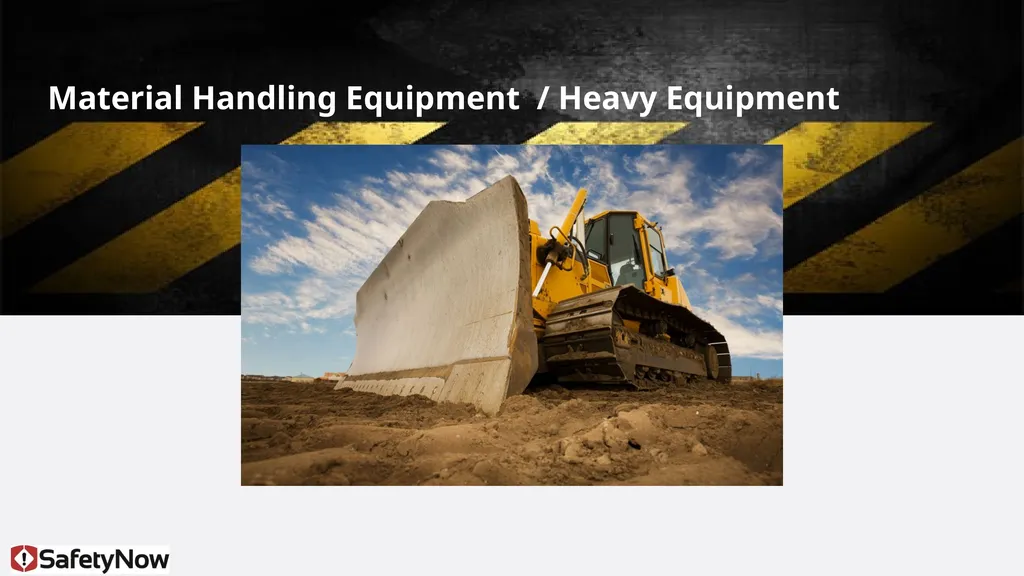
Material Handling Equipment / Heavy Equipment<br>
03
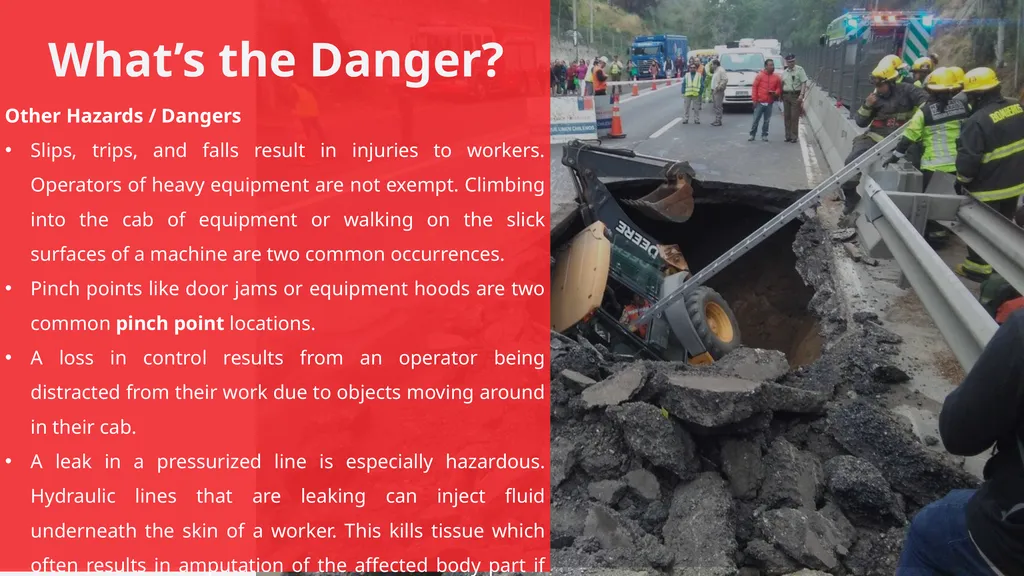
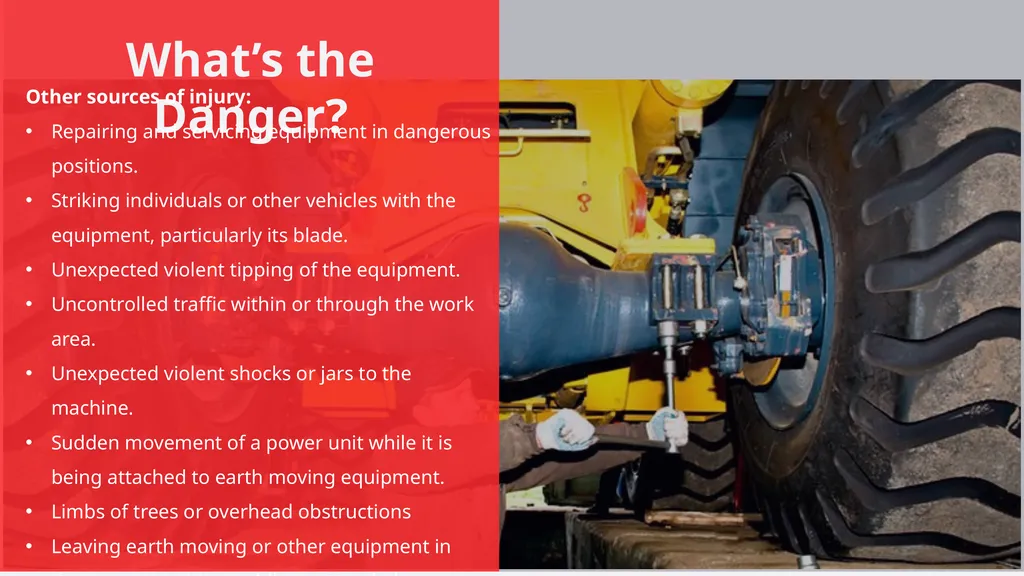
What’s the Danger?<br>
04
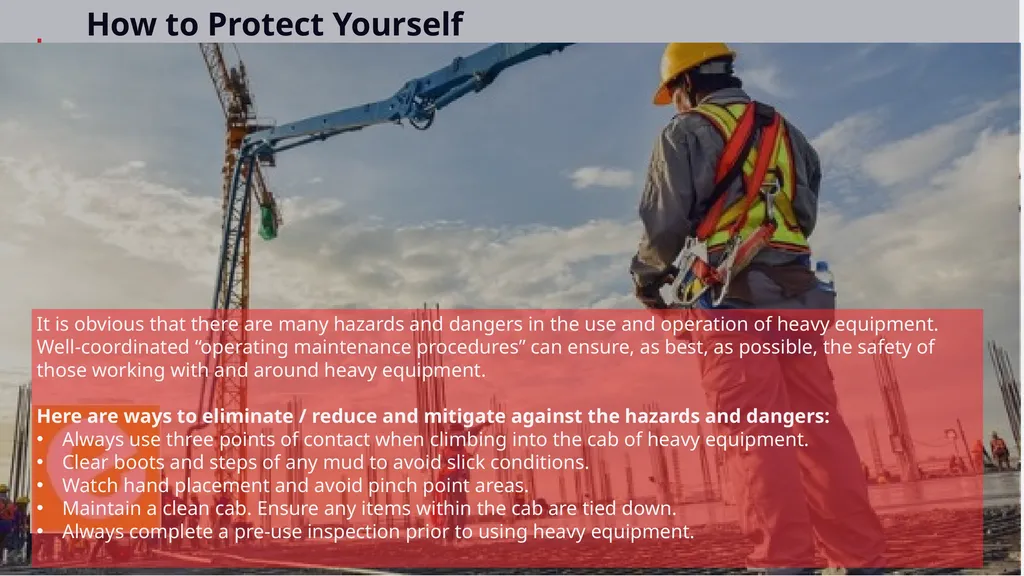
How to Protect Yourself It is obvious that there are many hazards and dangers in the use and operation of heavy equipment. Well-coordinated “operating maintenance procedures” can ensure, as best, as possible, the safety of those working with and around heavy equipment.
Here are ways to eliminate / reduce and mitigate against the hazards and dangers:
Always use three points of contact when climbing into the cab of heavy equipment.
Clear boots and steps of any mud to avoid slick conditions.
Watch hand placement and avoid pinch point areas.
Maintain a clean cab. Ensure any items within the cab are tied down.
Always complete a pre-use inspection prior to using heavy equipment.<br>
05
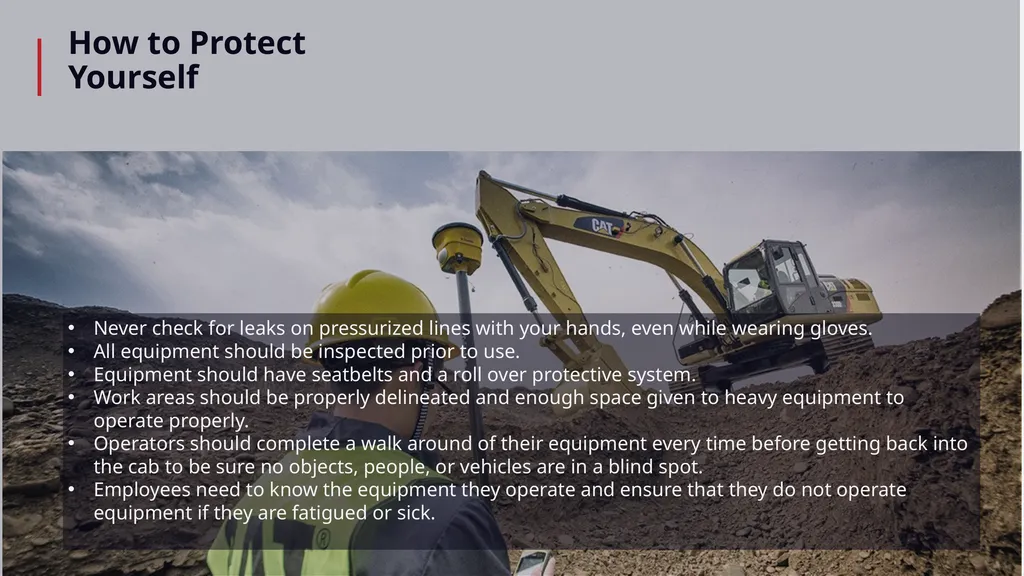
How to Protect Yourself Never check for leaks on pressurized lines with your hands, even while wearing gloves.
All equipment should be inspected prior to use.
Equipment should have seatbelts and a roll over protective system.
Work areas should be properly delineated and enough space given to heavy equipment to operate properly.
Operators should complete a walk around of their equipment every time before getting back into the cab to be sure no objects, people, or vehicles are in a blind spot.
Employees need to know the equipment they operate and ensure that they do not operate equipment if they are fatigued or sick.<br>
06
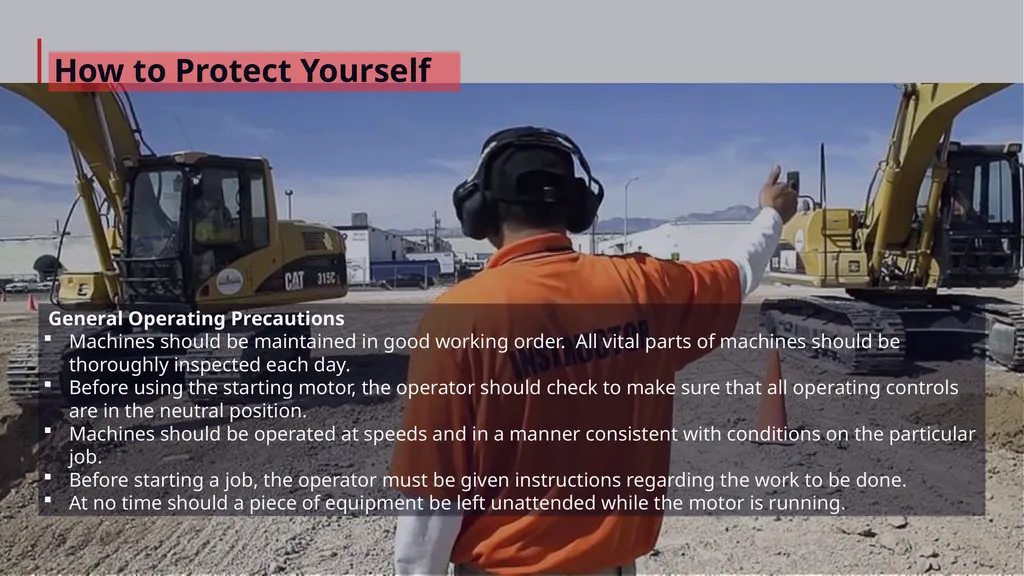
How to Protect Yourself General Operating Precautions
Machines should be maintained in good working order. All vital parts of machines should be thoroughly inspected each day.
Before using the starting motor, the operator should check to make sure that all operating controls are in the neutral position.
Machines should be operated at speeds and in a manner consistent with conditions on the particular job.
Before starting a job, the operator must be given instructions regarding the work to be done.
At no time should a piece of equipment be left unattended while the motor is running.<br>
07
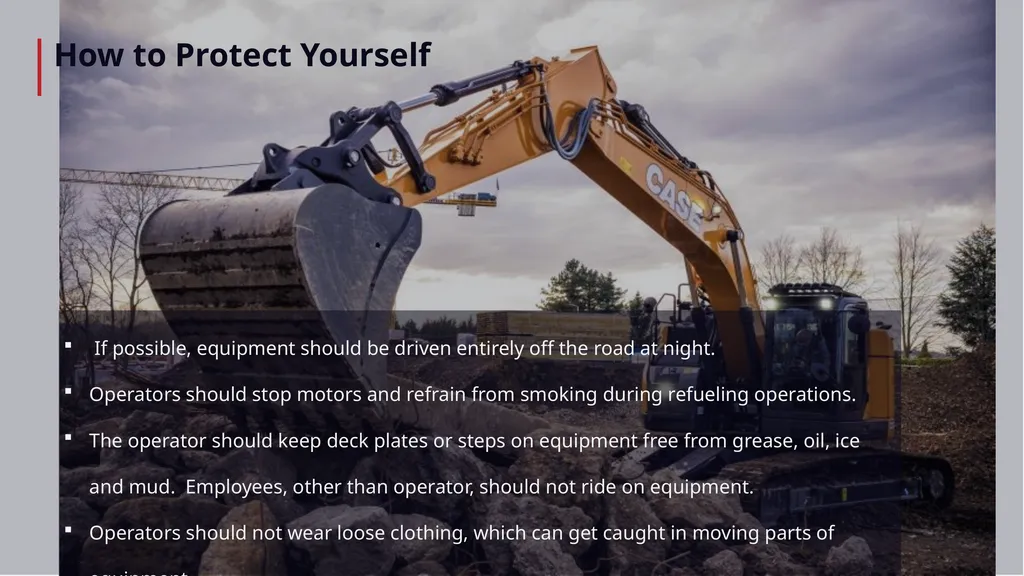
How to Protect Yourself If possible, equipment should be driven entirely off the road at night.
Operators should stop motors and refrain from smoking during refueling operations.
The operator should keep deck plates or steps on equipment free from grease, oil, ice and mud. Employees, other than operator, should not ride on equipment.
Operators should not wear loose clothing, which can get caught in moving parts of equipment.<br>