
Communication skills 1. Goal and learning outcomes
TG
Published · 23 slides · 0 views

1 / 1




Description
Communication skills 1. Goal and learning outcomes Every mother and newborn receives respectful care with effective communication. Communicate with mothers, fathers and their families in an effective, respectful and responsive way. Interact
Related Topics
Share
Embed code
Download this presentation From Below
"Communication skills 1. Goal and learning outcomes" is the property of its rightful owner. Permission is granted to download and print the materials on this website for personal, non-commercial use only, and to display it on your personal computer provided you do not modify the materials and that you retain all copyright notices contained in the materials. By downloading content from our website, you accept the terms of this agreement.
Presentation Transcript
01
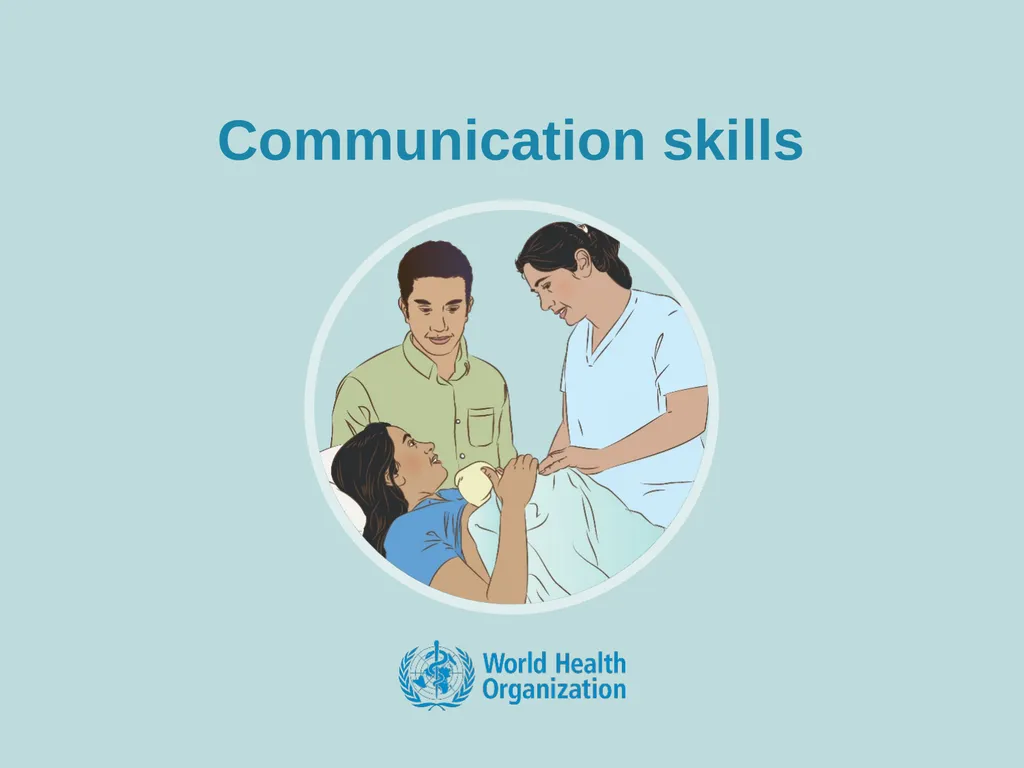
Communication skills<br>
02
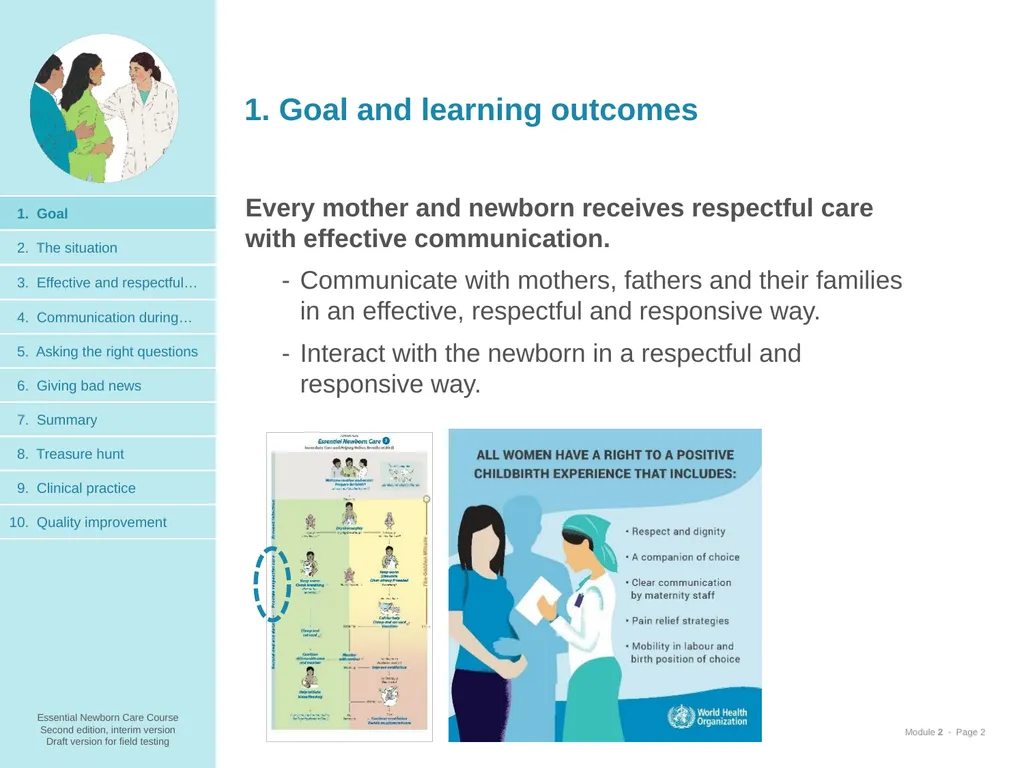
1. Goal and learning outcomes Every mother and newborn receives respectful care with effective communication.
Communicate with mothers, fathers and their families in an effective, respectful and responsive way.
Interact with the newborn in a respectful and responsive way.<br>
Communicate with mothers, fathers and their families in an effective, respectful and responsive way.
Interact with the newborn in a respectful and responsive way.<br>
03
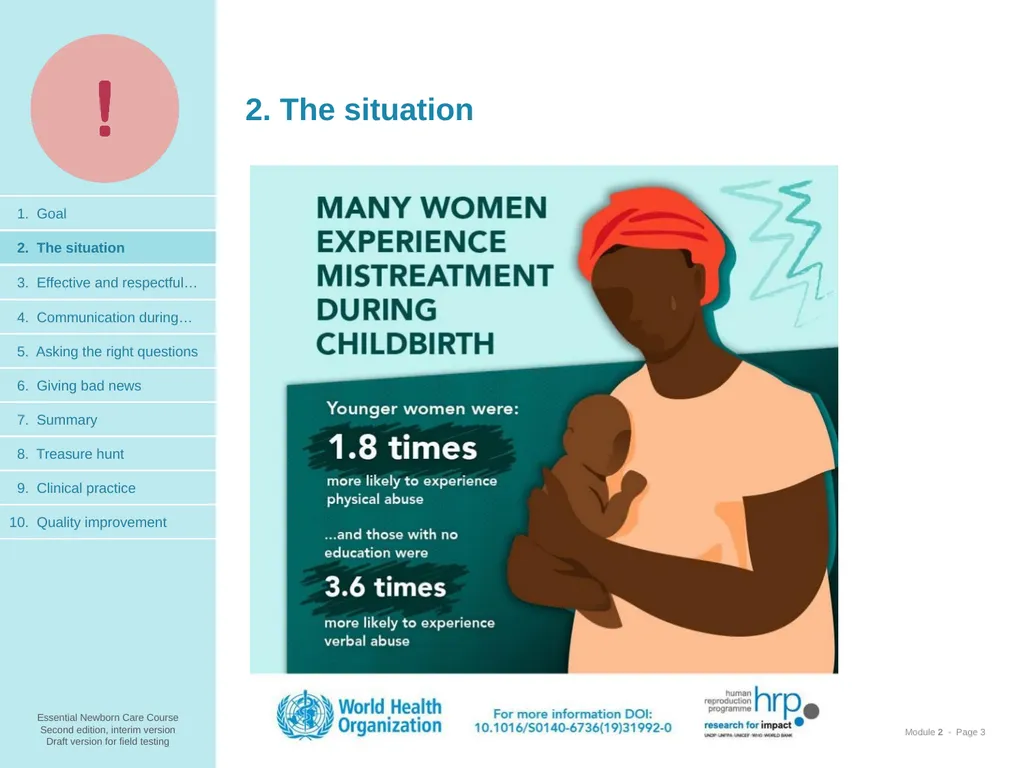
2. The situation<br>
04
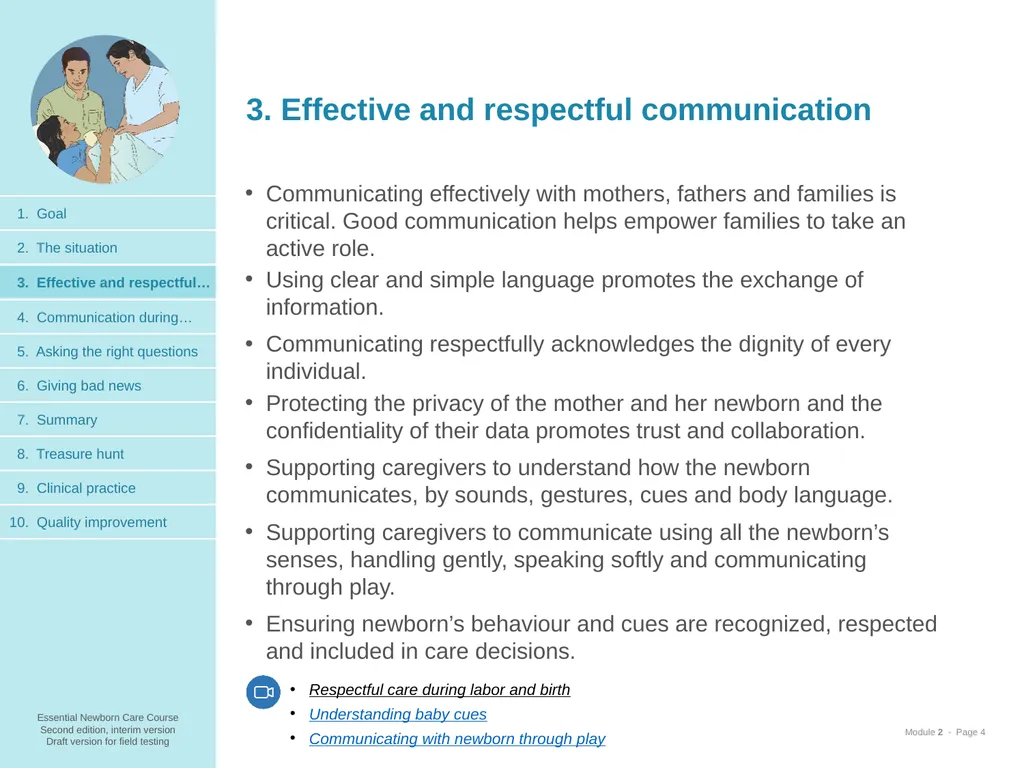
3. Effective and respectful communication Communicating effectively with mothers, fathers and families is critical. Good communication helps empower families to take an active role.
Using clear and simple language promotes the exchange of information.
Communicating respectfully acknowledges the dignity of every individual.
Protecting the privacy of the mother and her newborn and the confidentiality of their data promotes trust and collaboration.
Supporting caregivers to understand how the newborn communicates, by sounds, gestures, cues and body language.
Supporting caregivers to communicate using all the newborn’s senses, handling gently, speaking softly and communicating through play.
Ensuring newborn’s behaviour and cues are recognized, respected and included in care decisions.<br>
Using clear and simple language promotes the exchange of information.
Communicating respectfully acknowledges the dignity of every individual.
Protecting the privacy of the mother and her newborn and the confidentiality of their data promotes trust and collaboration.
Supporting caregivers to understand how the newborn communicates, by sounds, gestures, cues and body language.
Supporting caregivers to communicate using all the newborn’s senses, handling gently, speaking softly and communicating through play.
Ensuring newborn’s behaviour and cues are recognized, respected and included in care decisions.<br>
05
3.1 Rights of women and their newborns All women should receive information about care for themselves and their babies through effective and respectful interaction with staff.
All women and newborns should have privacy around the time of birth and their confidentiality should be respected.
No woman or newborn should be subjected to mistreatment, such as verbal abuse, discrimination, neglect, extortion or denial of services.
All women should have the right to make informed choices in caring for themselves and their babies and the reasons for intervention should be clearly explained.<br>
All women and newborns should have privacy around the time of birth and their confidentiality should be respected.
No woman or newborn should be subjected to mistreatment, such as verbal abuse, discrimination, neglect, extortion or denial of services.
All women should have the right to make informed choices in caring for themselves and their babies and the reasons for intervention should be clearly explained.<br>
06
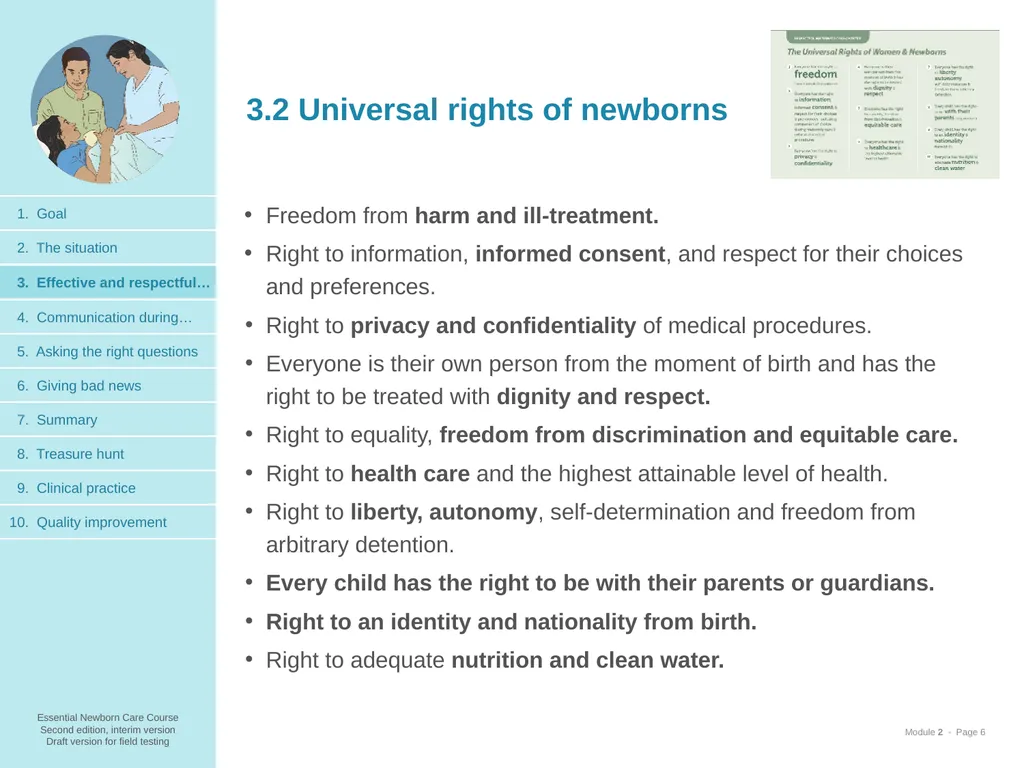
3.2 Universal rights of newborns Freedom from harm and ill-treatment.
Right to information, informed consent, and respect for their choices and preferences.
Right to privacy and confidentiality of medical procedures.
Everyone is their own person from the moment of birth and has the right to be treated with dignity and respect.
Right to equality, freedom from discrimination and equitable care.
Right to health care and the highest attainable level of health.
Right to liberty, autonomy, self-determination and freedom from arbitrary detention.
Every child has the right to be with their parents or guardians.
Right to an identity and nationality from birth.
Right to adequate nutrition and clean water.<br>
Right to information, informed consent, and respect for their choices and preferences.
Right to privacy and confidentiality of medical procedures.
Everyone is their own person from the moment of birth and has the right to be treated with dignity and respect.
Right to equality, freedom from discrimination and equitable care.
Right to health care and the highest attainable level of health.
Right to liberty, autonomy, self-determination and freedom from arbitrary detention.
Every child has the right to be with their parents or guardians.
Right to an identity and nationality from birth.
Right to adequate nutrition and clean water.<br>
07
3.3 Verbal and non-verbal communication Verbal communication (spoken language) can have positive and negative effects on us. It can excite us, frighten us and influence our moods.
Communication is also all the other ways we relate to the people around us, that is, the non-verbal language:
facial expressions
body language
how we touch people.<br>
Communication is also all the other ways we relate to the people around us, that is, the non-verbal language:
facial expressions
body language
how we touch people.<br>
08
3.4 Use listening and learning skills Use helpful non-verbal communication.
Ask open questions.
Use responses and gestures that show interest.
Reflect back what the mother/parent/caregiver says.
Empathize – show you understand how the mother/parent/caregiver feels.
Avoid using judging words.<br>
Ask open questions.
Use responses and gestures that show interest.
Reflect back what the mother/parent/caregiver says.
Empathize – show you understand how the mother/parent/caregiver feels.
Avoid using judging words.<br>
09
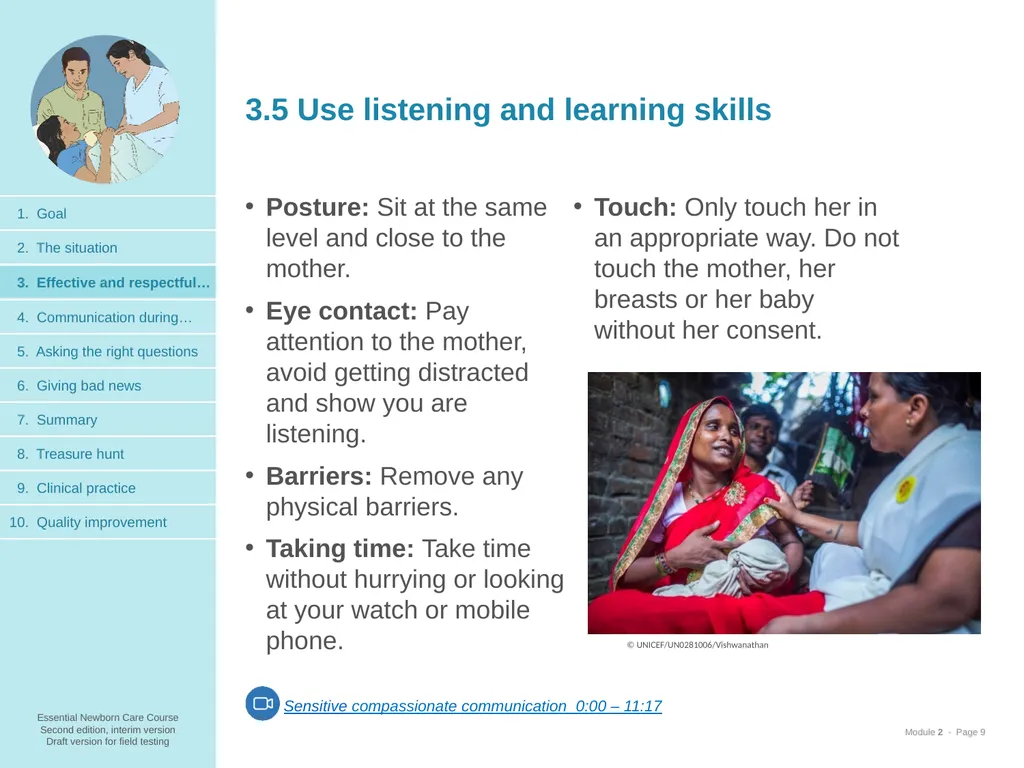
3.5 Use listening and learning skills Posture: Sit at the same level and close to the mother.
Eye contact: Pay attention to the mother, avoid getting distracted and show you are listening.
Barriers: Remove any physical barriers.
Taking time: Take time without hurrying or looking at your watch or mobile phone.
Touch: Only touch her in an appropriate way. Do not touch the mother, her breasts or her baby without her consent. Sensitive compassionate communication 0:00 – 11:17<br>
Eye contact: Pay attention to the mother, avoid getting distracted and show you are listening.
Barriers: Remove any physical barriers.
Taking time: Take time without hurrying or looking at your watch or mobile phone.
Touch: Only touch her in an appropriate way. Do not touch the mother, her breasts or her baby without her consent. Sensitive compassionate communication 0:00 – 11:17<br>
10
4. Communication during an examination Role play 1 and 2
Observe the next two role plays of a health worker carrying out an examination of a newborn just before the newborn goes home.
Pay attention to the verbal and non-verbal communication between the health worker and the mother.
Take notes. PCPNC guide, page A4.<br>
Observe the next two role plays of a health worker carrying out an examination of a newborn just before the newborn goes home.
Pay attention to the verbal and non-verbal communication between the health worker and the mother.
Take notes. PCPNC guide, page A4.<br>
11
4.1 Discuss the role plays Describe how the health worker communicated
with the mother.
Were there any differences in the role plays in the way the health worker behaved towards the mother?
Any examples of communication which the mother did not understand?
Was there a difference in their body language?<br>
Were there any differences in the role plays in the way the health worker behaved towards the mother?
Any examples of communication which the mother did not understand?
Was there a difference in their body language?<br>
12
5. Asking the right questions The purpose of asking questions is to obtain information.
Open questions often begin with words such as “how”, “why”, “where”, “what” or “when”. Use these to obtain more detailed information.
Closed questions are questions which have “yes” or “no” answers. Use these to confirm information already obtained.<br>
Open questions often begin with words such as “how”, “why”, “where”, “what” or “when”. Use these to obtain more detailed information.
Closed questions are questions which have “yes” or “no” answers. Use these to confirm information already obtained.<br>
13
6. Peer practice:
Asking questions and difficult situations Remember
When caring for mothers, newborns, fathers and families, always treat them as you would like to be treated yourself.
Care is not just an activity. Care involves kindness, compassion and humanity.
Difficult situations include when a family member is upset, angry, aggressive or confrontational.
How will you communicate respectfully with mothers or families with a disability? Such as hearing, vision or a physical disability?
Practise handling difficult situations with your peers to build your confidence.<br>
When caring for mothers, newborns, fathers and families, always treat them as you would like to be treated yourself.
Care is not just an activity. Care involves kindness, compassion and humanity.
Difficult situations include when a family member is upset, angry, aggressive or confrontational.
How will you communicate respectfully with mothers or families with a disability? Such as hearing, vision or a physical disability?
Practise handling difficult situations with your peers to build your confidence.<br>
14
6.1 Giving bad news Defining what “bad” news is depends upon what it means to the person receiving the news.
Communicating the information in a good way can help the person to accept what has happened.
Depending upon what the bad news is, if a mother is alone, arrange for a relative or friend to be with her.
Giving bad news or sensitive information should occur in a private space.
Supporting mothers and families when a newborn dies or if a newborn has a life-threatening condition or congenital abnormality needs effective communication with sensitivity and compassion. Standards for Improving Quality of Maternal and Newborn Care in Health Facilities. Standard #3,#4, #6<br>
Communicating the information in a good way can help the person to accept what has happened.
Depending upon what the bad news is, if a mother is alone, arrange for a relative or friend to be with her.
Giving bad news or sensitive information should occur in a private space.
Supporting mothers and families when a newborn dies or if a newborn has a life-threatening condition or congenital abnormality needs effective communication with sensitivity and compassion. Standards for Improving Quality of Maternal and Newborn Care in Health Facilities. Standard #3,#4, #6<br>
15
If the mother is sitting down,
sit down with her Be kind and gentle in actions Allow the mother to react in her own way Do not leave the mother alone After a normal healthy pregnancy, Delia delivers her first baby, a girl. She is not breathing, and she dies. 6.2 What verbal and non-verbal skills will you use to communicate bad news? Let the mother or father and other members of the family be with the newborn Non-verbal skills: Touch her appropriately Verbal skills: Make sure the mother understands what you are telling her by using “open” questions Give a simple, clear explanation of what happened Respect her cultural beliefs and customs If she is alone, ask if there is anyone near to the hospital/clinic who can be with her Speak softly Let her touch or hold the newborn Give her time to ask questions<br>
16
6.3 Are counselling and communication the same?<br>
17
7. Summary In this module, you have:
Learned the importance of effective communication with the mother, father and family of a newborn baby.
Learned about the rights of women and newborns.
Learned how to communicate with mothers, fathers, newborns and their families in an effective, respectful and responsive way.
You will apply what you have learned about communication skills throughout the course and whenever caring for women and newborns.
Continue to practise effective communication and managing difficult situations with your peers.<br>
Learned the importance of effective communication with the mother, father and family of a newborn baby.
Learned about the rights of women and newborns.
Learned how to communicate with mothers, fathers, newborns and their families in an effective, respectful and responsive way.
You will apply what you have learned about communication skills throughout the course and whenever caring for women and newborns.
Continue to practise effective communication and managing difficult situations with your peers.<br>
18
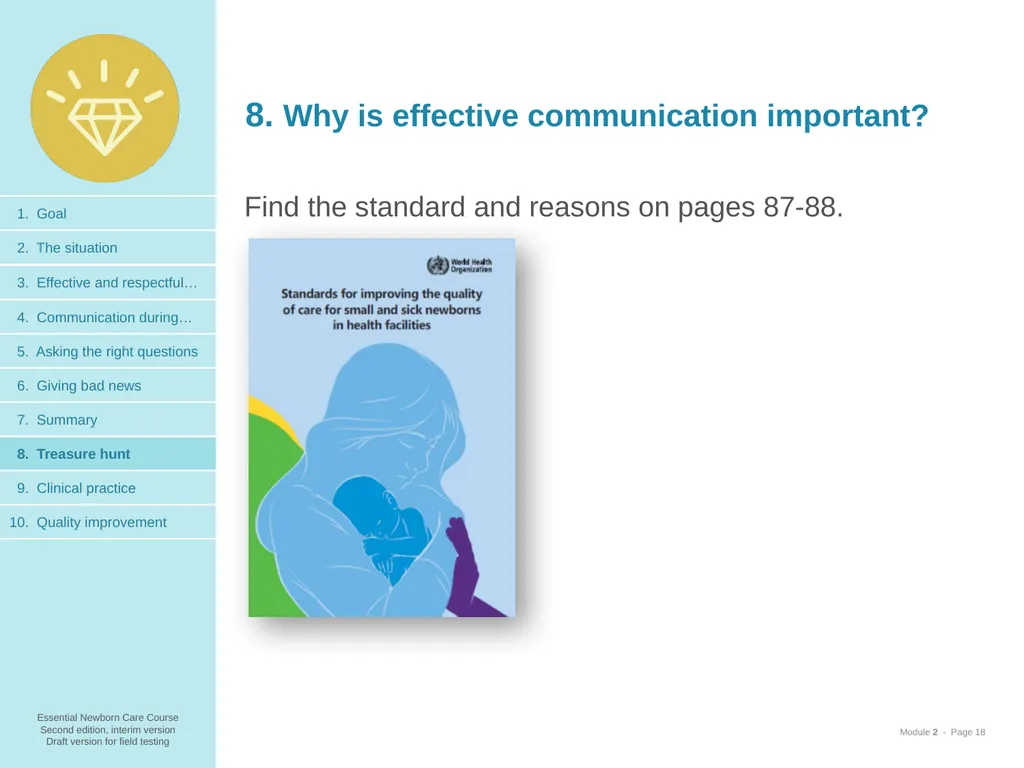
8. Why is effective communication important? Find the standard and reasons on pages 87-88.<br>
19
8.1 Standard and reasons Quality statement 4.1:
All carers of small and sick newborns are given information about the newborn’s illness and care, so that they understand the condition and the necessary treatment.
Reasons
Feelings of helplessness, anxiety, depression and fear may reduce caregivers' confidence in caring for their baby.
Families often feel excluded from involvement in the care of their babies, especially small or sick newborns, because of lack of communication with staff and staff unfriendliness.
Review evidence Standards for improving the quality of care for small and sick newborns in health facilities. WHO, 2020.<br>
Reasons
Feelings of helplessness, anxiety, depression and fear may reduce caregivers' confidence in caring for their baby.
Families often feel excluded from involvement in the care of their babies, especially small or sick newborns, because of lack of communication with staff and staff unfriendliness.
Review evidence Standards for improving the quality of care for small and sick newborns in health facilities. WHO, 2020.<br>
20
8.2 Standard and reasons Quality statement 4.4
Carers of small and sick newborns and staff understand the importance of nurturing interaction with the newborn, recognize and respect the newborn’s behaviour and cues and include them in care decisions.
Reasons
Newborns are separate individuals with an identity, feelings and emotions, who can actively communicate, participate and respond, rather than being passive recipients.
Touch, taste, smell and sight enable developing babies to learn from their surroundings and to adapt physiologically and psychologically.
Review evidence Standards for improving the quality of care for small and sick newborns in health facilities. WHO, 2020.<br>
Reasons
Newborns are separate individuals with an identity, feelings and emotions, who can actively communicate, participate and respond, rather than being passive recipients.
Touch, taste, smell and sight enable developing babies to learn from their surroundings and to adapt physiologically and psychologically.
Review evidence Standards for improving the quality of care for small and sick newborns in health facilities. WHO, 2020.<br>
21
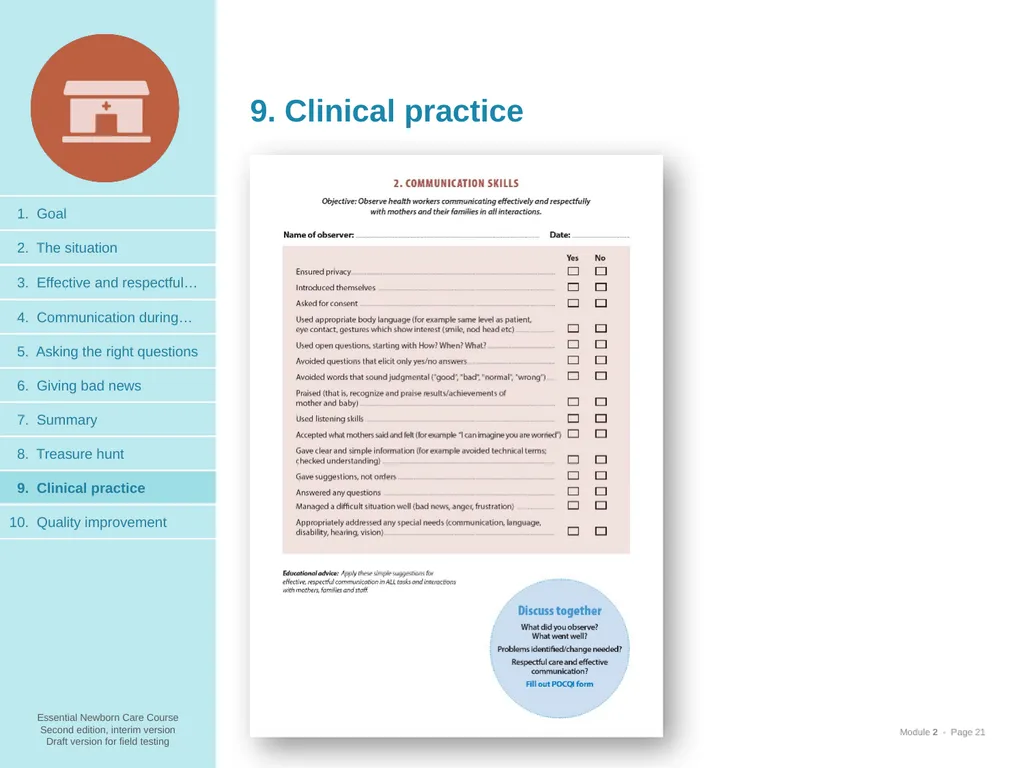
9. Clinical practice<br>
22
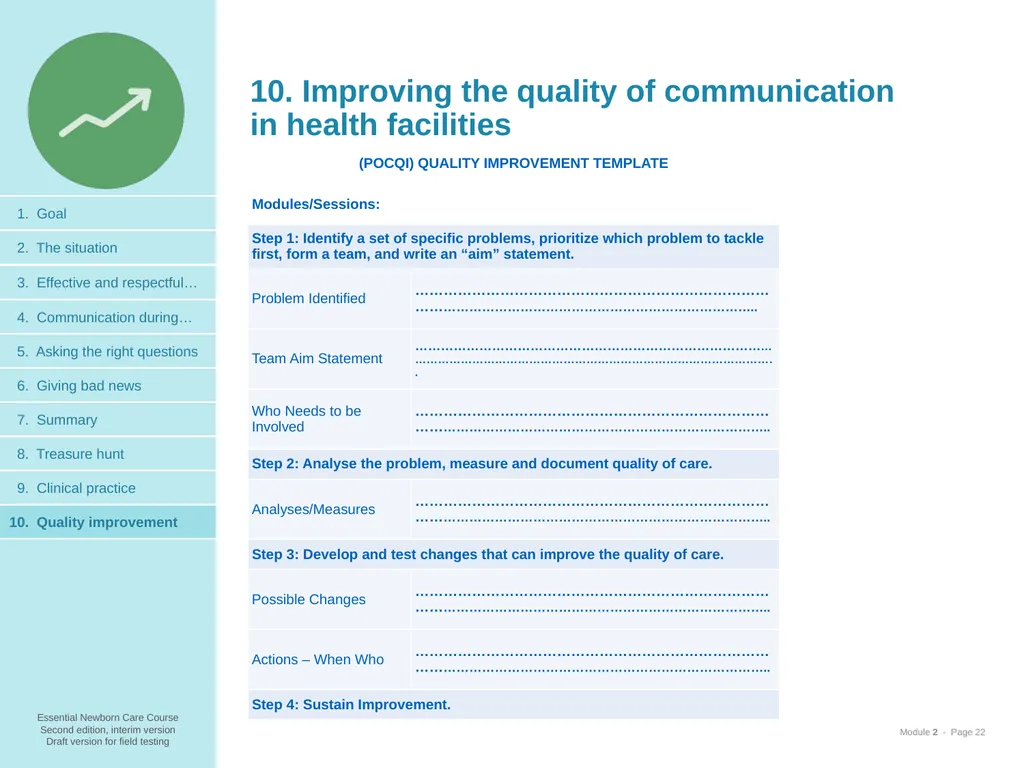
10. Improving the quality of communication in health facilities 4 simple steps:
Identify a problem
Analyze the problem
Develop and test changes
4. Sustain improvement<br>
Identify a problem
Analyze the problem
Develop and test changes
4. Sustain improvement<br>
23
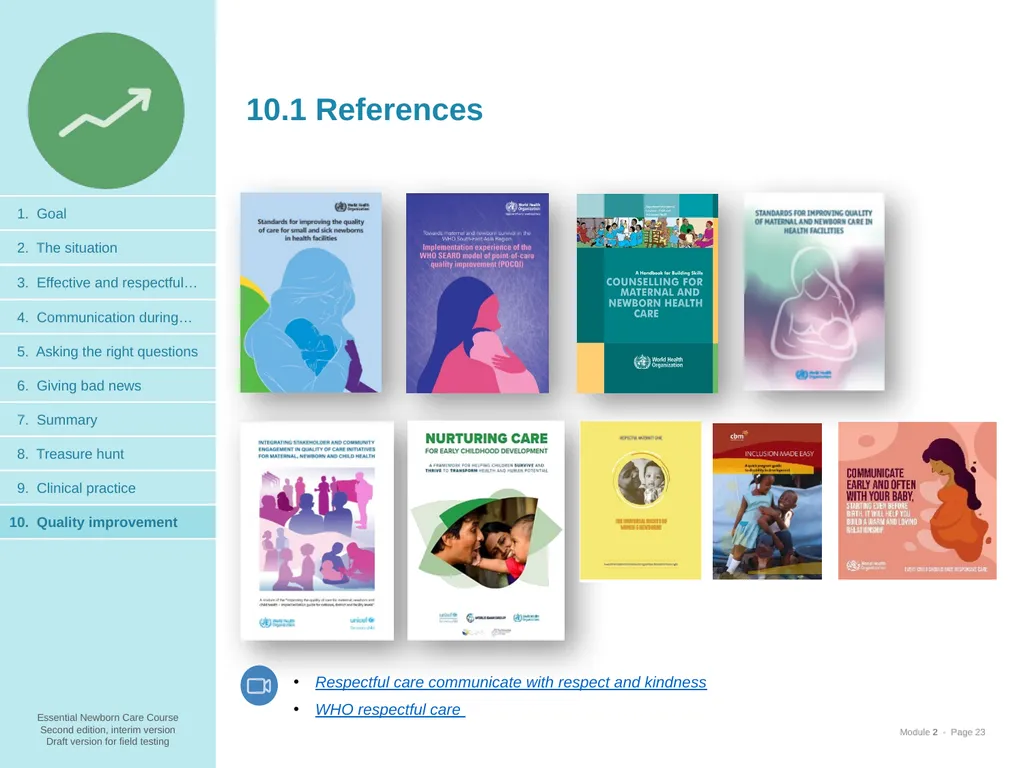
10.1 References Respectful care communicate with respect and kindness
WHO respectful care<br>
WHO respectful care<br>