Effective & efficient Bedside teaching UWSOM CLIME
Description: Effective efficient Bedside teaching UWSOM CLIME April 27, 2021 Andrea Christopher, MD, MPH Paul Cornia, MD Melissa (Moe) Hagman, MD Justin Kappel, MD, MPH Introductions Speaker intros Visual audience intros: Turn your camera on if the
Related Topics
Download Presentation
"Effective & efficient Bedside teaching UWSOM CLIME" is the property of its rightful owner. Permission is granted to download and print the materials on this website for personal, non-commercial use only, and to display it on your personal computer provided you do not modify the materials and that you retain all copyright notices contained in the materials. By downloading content from our website, you accept the terms of this agreement.
Presentation Transcript
slide1. Effective & efficient Bedside teaching UWSOM CLIME
April 27, 2021
Andrea Christopher, MD, MPH
Paul Cornia, MD
Melissa (Moe) Hagman, MD
Justin Kappel, MD, MPH<br>
slide2. Introductions Speaker intros
Visual audience intros: Turn your camera on if the prompt fits you.
Geographic location
Clinical practice setting
Learners<br>
slide3. disclosures No financial conflicts to disclose<br>
slide4. Guidelines for discussion All of you is welcome here
If you are able, please turn on video
We welcome participation through the chat & unmuting to speak
If we get zoom bombed, we will turn off cameras and chat
Assume positive intent & turn to wonder
Step up / Step back<br>
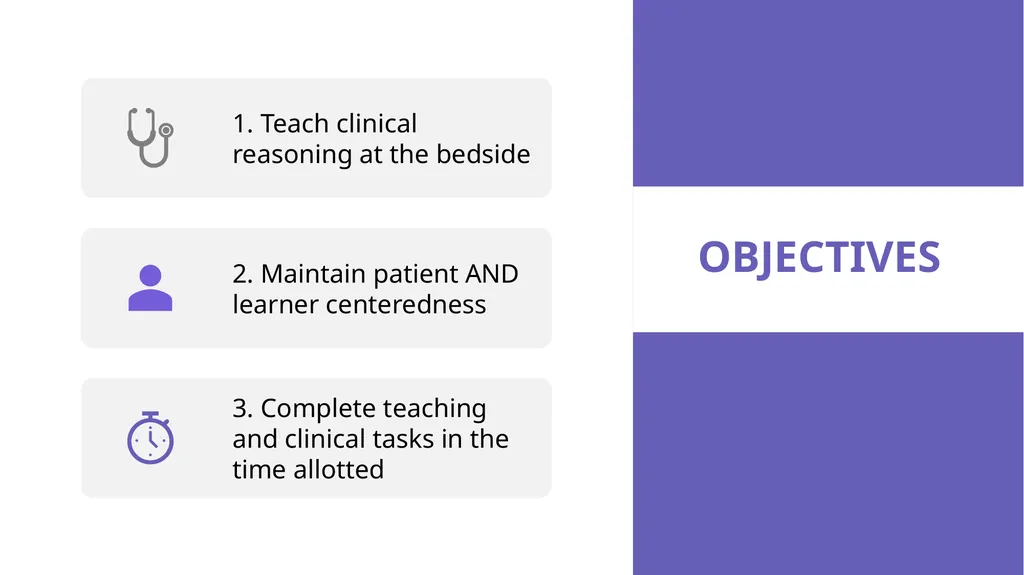
slide5. Objectives<br>
slide6. agenda Why teach at the bedside
When, where and how to teach at the bedside
Strategies for effective and efficient bedside teaching
Tools and language to improve your bedside teaching<br>
slide7. Why teach at the bedside<br>
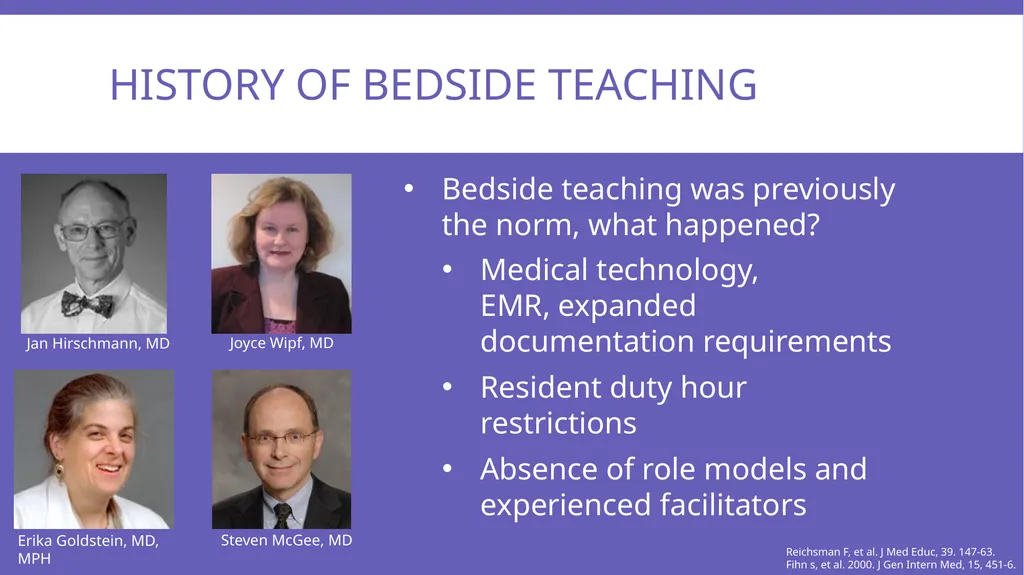
slide8. History of bedside teaching Bedside teaching was previously the norm, what happened?
Medical technology, EMR, expanded documentation requirements
Resident duty hour restrictions
Absence of role models and experienced facilitators Reichsman F, et al. J Med Educ, 39. 147-63.
Fihn s, et al. 2000. J Gen Intern Med, 15, 451-6. Jan Hirschmann, MD Joyce Wipf, MD Steven McGee, MD Erika Goldstein, MD, MPH<br>
slide9. Challenges with bedside teaching Limits to time
“Thin ice syndrome”
Space and privacy for patients
During the COVID19 pandemic: exposure risk, limited available PPE
No data showing improved patient outcomes Ramani S, et al. Acad Med, 78, 384-90.
Wang-Cheng, et al. J Gen Intern Med, 4. 284-7.<br>
slide10. Benefits of bedside teaching Opportunity to give feedback:
Communication with patient
Skills such as physical exam, patient education
Role modeling with the patient
Engage the patient in decision making
Make time spent on patient care transparent to patients and their loved ones<br>
slide11. Small group #1(15 min) Introduce yourselves
Why are you here today? What do you hope to learn?
Reflect on / share any notable stories where bedside teaching went well or poorly.
What has been challenging for you when doing bedside teaching?<br>
slide12. Introductions - debrief<br>
slide13. When/Where/How to teach at the bedside<br>
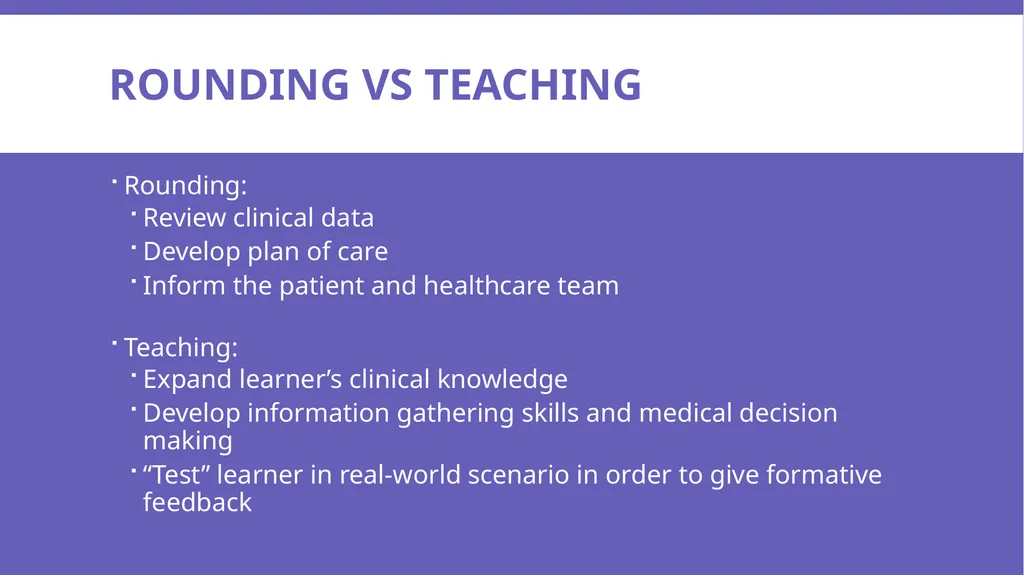
slide14. Rounding vs Teaching Rounding:
Review clinical data
Develop plan of care
Inform the patient and healthcare team
Teaching:
Expand learner’s clinical knowledge
Develop information gathering skills and medical decision making
“Test” learner in real-world scenario in order to give formative feedback<br>
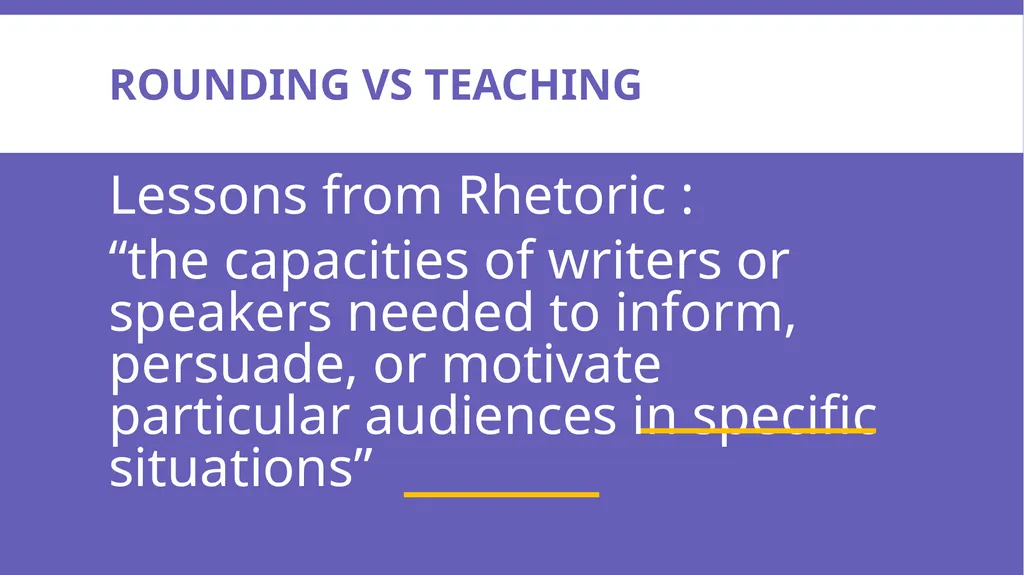
slide15. Rounding vs Teaching Lessons from Rhetoric :
“the capacities of writers or speakers needed to inform, persuade, or motivate particular audiences in specific situations”<br>
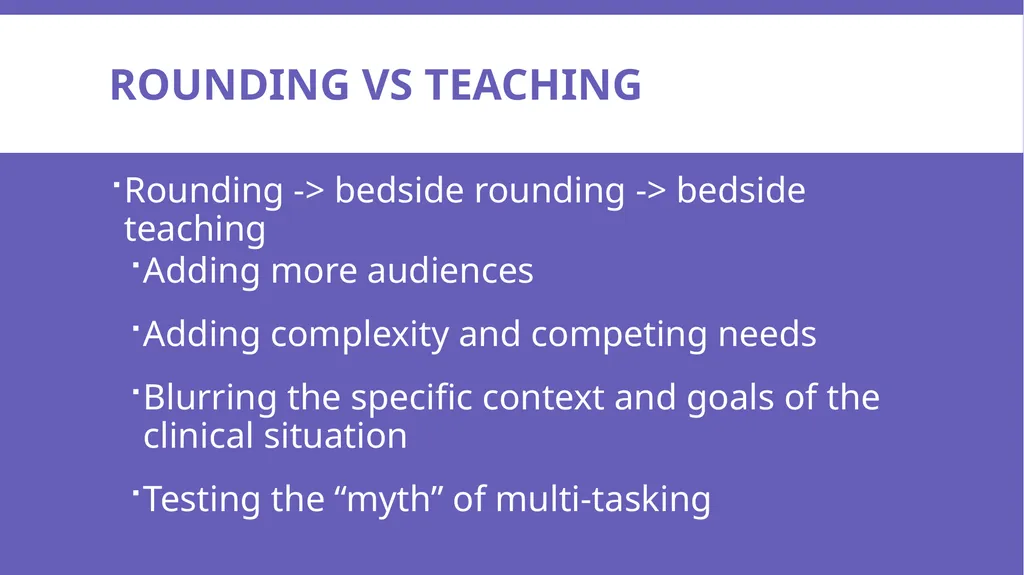
slide16. Rounding vs teaching Rounding -> bedside rounding -> bedside teaching
Adding more audiences
Adding complexity and competing needs
Blurring the specific context and goals of the clinical situation
Testing the “myth” of multi-tasking<br>
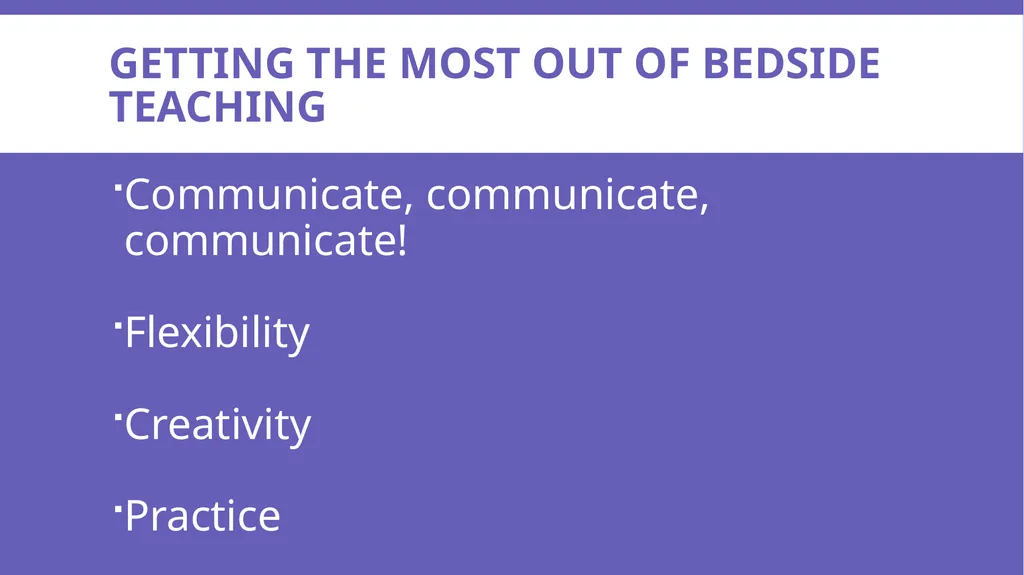
slide17. Getting the most out of bedside teaching Communicate, communicate, communicate!
Flexibility
Creativity
Practice<br>
slide18. Strategies for effective and efficient bedside teaching<br>
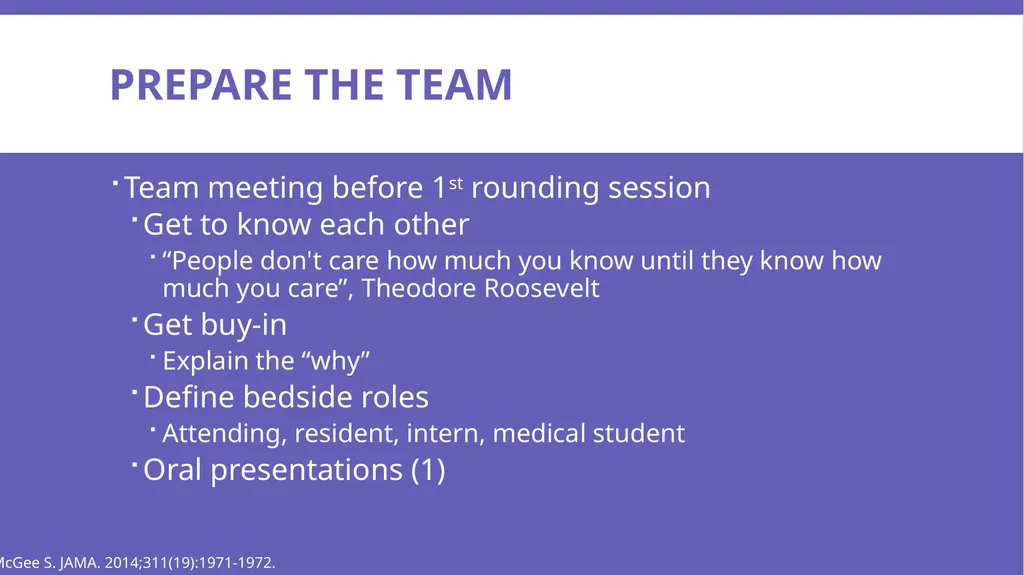
slide19. Prepare the team Team meeting before 1st rounding session
Get to know each other
“People don't care how much you know until they know how much you care”, Theodore Roosevelt
Get buy-in
Explain the “why”
Define bedside roles
Attending, resident, intern, medical student
Oral presentations (1) McGee S. JAMA. 2014;311(19):1971-1972.<br>
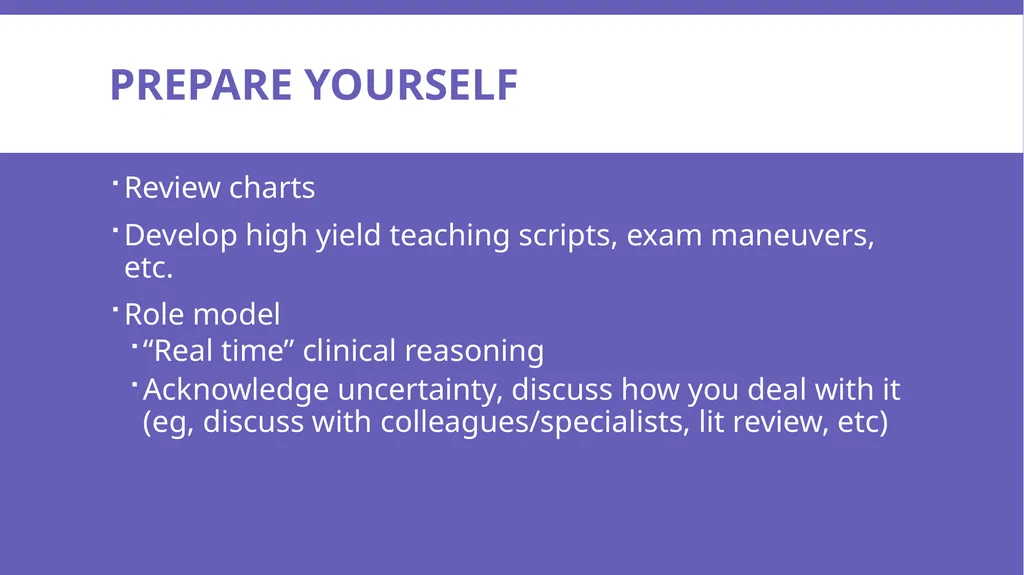
slide20. Prepare yourself Review charts
Develop high yield teaching scripts, exam maneuvers, etc.
Role model
“Real time” clinical reasoning
Acknowledge uncertainty, discuss how you deal with it (eg, discuss with colleagues/specialists, lit review, etc)<br>
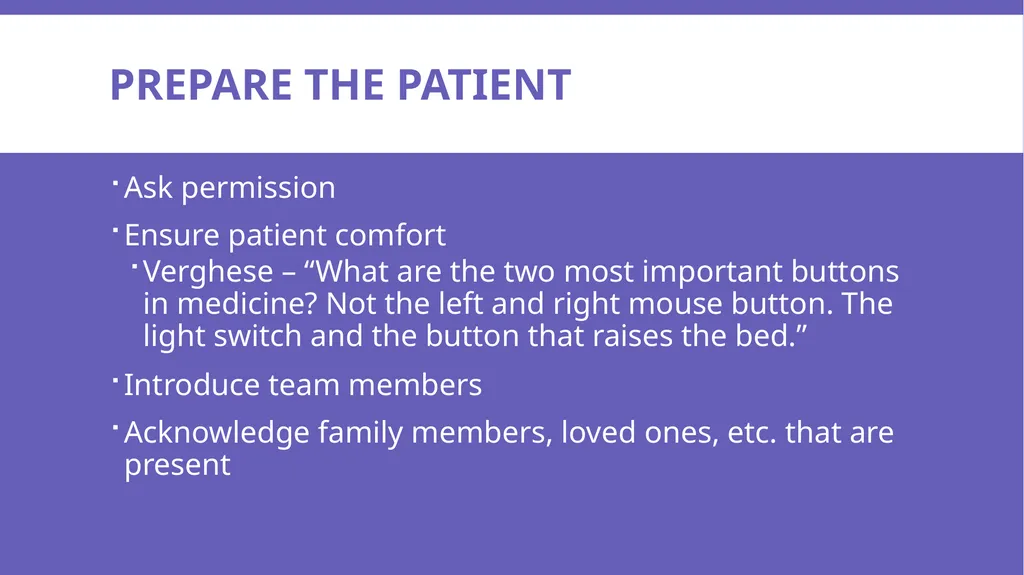
slide21. Prepare the patient Ask permission
Ensure patient comfort
Verghese – “What are the two most important buttons in medicine? Not the left and right mouse button. The light switch and the button that raises the bed.”
Introduce team members
Acknowledge family members, loved ones, etc. that are present<br>
slide22. Questions?<br>
slide24. Small group #2(15 min) Case #1 – “Just a rash…”<br>
slide25. Case 1 – debrief<br>
slide26. Tools and language to improve your bedside teaching<br>
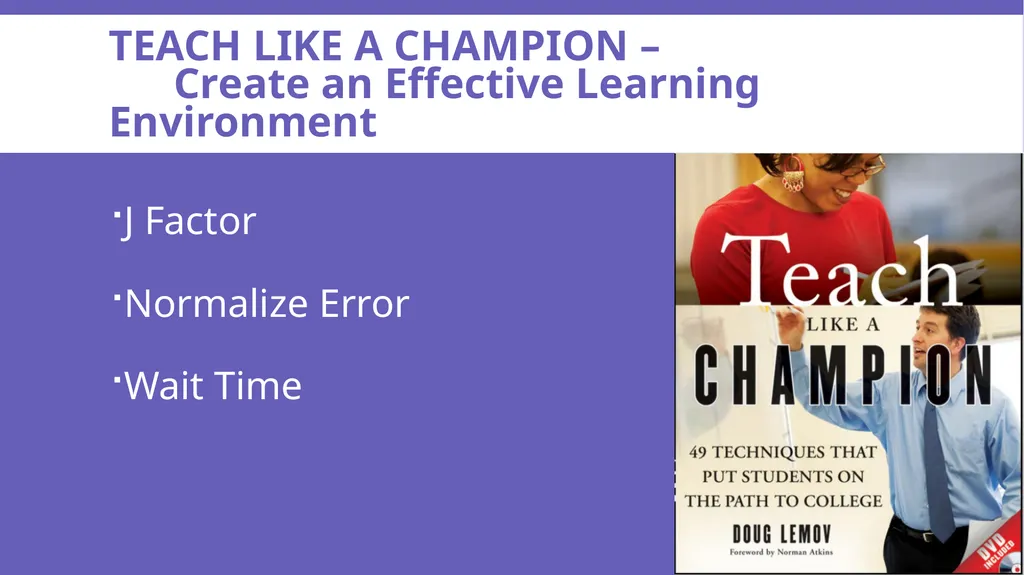
slide27. Teach Like a champion – Create an Effective Learning Environment J Factor
Normalize Error
Wait Time<br>
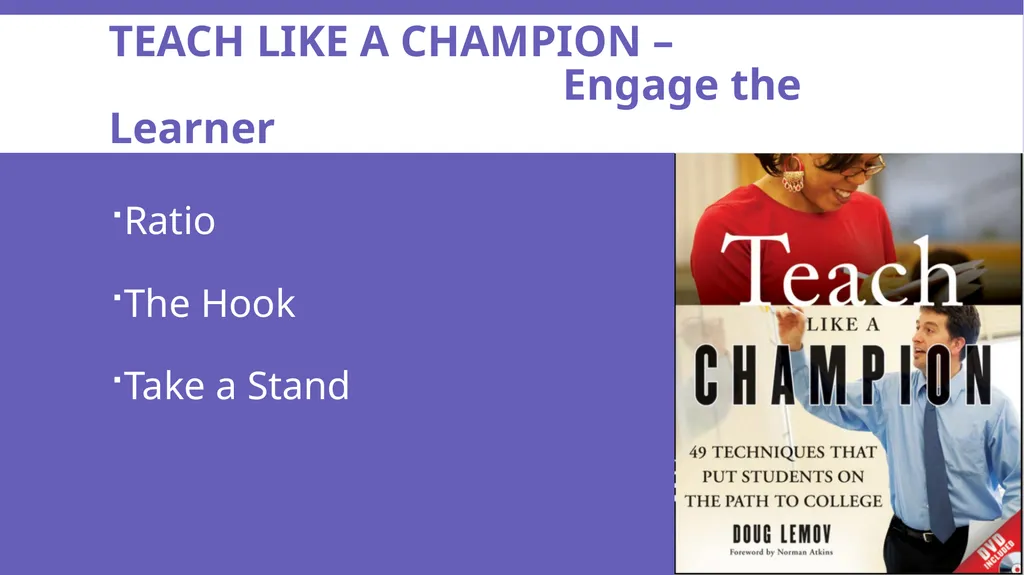
slide28. Teach Like a champion – Engage the Learner Ratio
The Hook
Take a Stand<br>
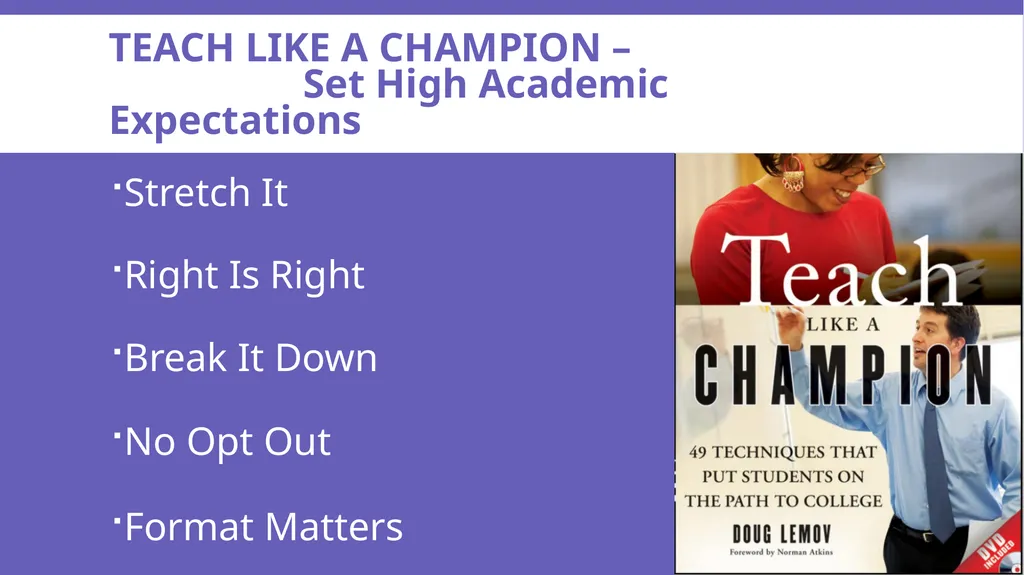
slide29. Teach Like a champion – Set High Academic Expectations Stretch It
Right Is Right
Break It Down
No Opt Out
Format Matters<br>
slide30. Small group #3(15 min) Case #2 – A Most Helpful Patient<br>
slide31. Case 2 – debrief<br>
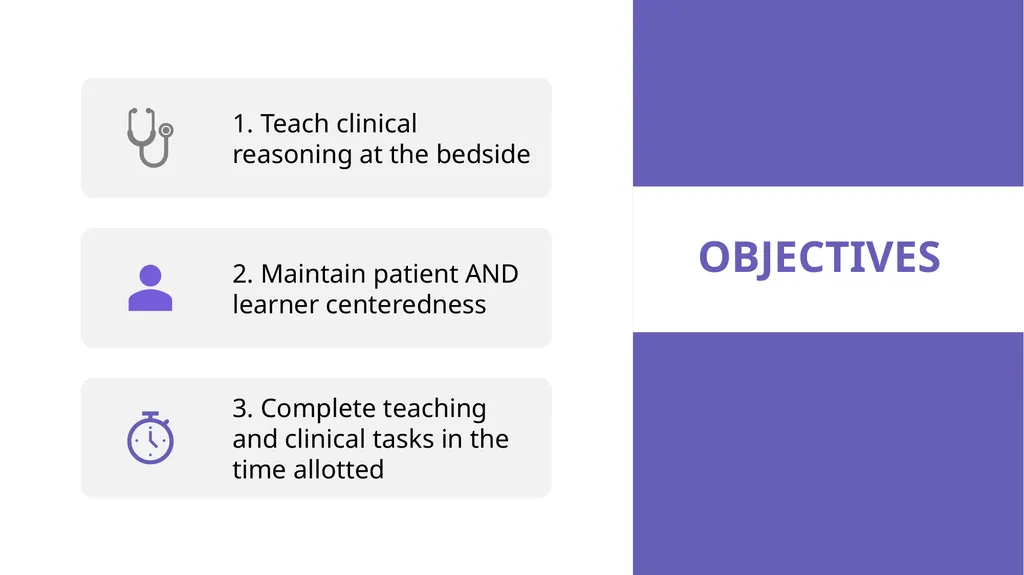
slide32. Objectives<br>
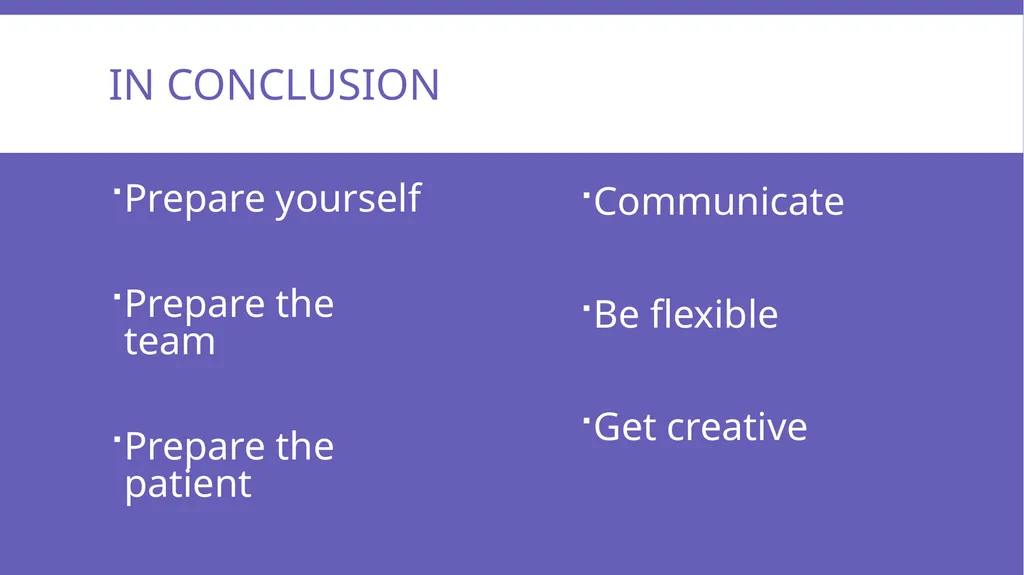
slide33. In conclusion Prepare yourself
Prepare the team
Prepare the patient Communicate
Be flexible
Get creative<br>
slide34. In conclusion Practice, practice, practice!<br>
slide35. Thank you! Special thanks to Dr. Jessica Lu and Dr. Alex Chen of the UW Family Medicine Residency as well as the VA Boise Simulation Lab:
Brian Cruthirds
Tara Nyborg
Jenn Snyder
Lydia Carbis (Idaho WWAMI)<br>
slide36. Thank you! Please reach out with questions/feedback:
Moe Hagman (mhagman@uw.edu)
Justin Kappel (kappeljd@uw.edu)
Andrea Christopher (andrea.christopher@va.gov)
Paul Cornia (paul.cornia@va.gov)<br>

April 27, 2021
Andrea Christopher, MD, MPH
Paul Cornia, MD
Melissa (Moe) Hagman, MD
Justin Kappel, MD, MPH<br>
slide2. Introductions Speaker intros
Visual audience intros: Turn your camera on if the prompt fits you.
Geographic location
Clinical practice setting
Learners<br>
slide3. disclosures No financial conflicts to disclose<br>
slide4. Guidelines for discussion All of you is welcome here
If you are able, please turn on video
We welcome participation through the chat & unmuting to speak
If we get zoom bombed, we will turn off cameras and chat
Assume positive intent & turn to wonder
Step up / Step back<br>
slide5. Objectives<br>
slide6. agenda Why teach at the bedside
When, where and how to teach at the bedside
Strategies for effective and efficient bedside teaching
Tools and language to improve your bedside teaching<br>
slide7. Why teach at the bedside<br>
slide8. History of bedside teaching Bedside teaching was previously the norm, what happened?
Medical technology, EMR, expanded documentation requirements
Resident duty hour restrictions
Absence of role models and experienced facilitators Reichsman F, et al. J Med Educ, 39. 147-63.
Fihn s, et al. 2000. J Gen Intern Med, 15, 451-6. Jan Hirschmann, MD Joyce Wipf, MD Steven McGee, MD Erika Goldstein, MD, MPH<br>
slide9. Challenges with bedside teaching Limits to time
“Thin ice syndrome”
Space and privacy for patients
During the COVID19 pandemic: exposure risk, limited available PPE
No data showing improved patient outcomes Ramani S, et al. Acad Med, 78, 384-90.
Wang-Cheng, et al. J Gen Intern Med, 4. 284-7.<br>
slide10. Benefits of bedside teaching Opportunity to give feedback:
Communication with patient
Skills such as physical exam, patient education
Role modeling with the patient
Engage the patient in decision making
Make time spent on patient care transparent to patients and their loved ones<br>
slide11. Small group #1(15 min) Introduce yourselves
Why are you here today? What do you hope to learn?
Reflect on / share any notable stories where bedside teaching went well or poorly.
What has been challenging for you when doing bedside teaching?<br>
slide12. Introductions - debrief<br>
slide13. When/Where/How to teach at the bedside<br>
slide14. Rounding vs Teaching Rounding:
Review clinical data
Develop plan of care
Inform the patient and healthcare team
Teaching:
Expand learner’s clinical knowledge
Develop information gathering skills and medical decision making
“Test” learner in real-world scenario in order to give formative feedback<br>
slide15. Rounding vs Teaching Lessons from Rhetoric :
“the capacities of writers or speakers needed to inform, persuade, or motivate particular audiences in specific situations”<br>
slide16. Rounding vs teaching Rounding -> bedside rounding -> bedside teaching
Adding more audiences
Adding complexity and competing needs
Blurring the specific context and goals of the clinical situation
Testing the “myth” of multi-tasking<br>
slide17. Getting the most out of bedside teaching Communicate, communicate, communicate!
Flexibility
Creativity
Practice<br>
slide18. Strategies for effective and efficient bedside teaching<br>
slide19. Prepare the team Team meeting before 1st rounding session
Get to know each other
“People don't care how much you know until they know how much you care”, Theodore Roosevelt
Get buy-in
Explain the “why”
Define bedside roles
Attending, resident, intern, medical student
Oral presentations (1) McGee S. JAMA. 2014;311(19):1971-1972.<br>
slide20. Prepare yourself Review charts
Develop high yield teaching scripts, exam maneuvers, etc.
Role model
“Real time” clinical reasoning
Acknowledge uncertainty, discuss how you deal with it (eg, discuss with colleagues/specialists, lit review, etc)<br>
slide21. Prepare the patient Ask permission
Ensure patient comfort
Verghese – “What are the two most important buttons in medicine? Not the left and right mouse button. The light switch and the button that raises the bed.”
Introduce team members
Acknowledge family members, loved ones, etc. that are present<br>
slide22. Questions?<br>
slide24. Small group #2(15 min) Case #1 – “Just a rash…”<br>
slide25. Case 1 – debrief<br>
slide26. Tools and language to improve your bedside teaching<br>
slide27. Teach Like a champion – Create an Effective Learning Environment J Factor
Normalize Error
Wait Time<br>
slide28. Teach Like a champion – Engage the Learner Ratio
The Hook
Take a Stand<br>
slide29. Teach Like a champion – Set High Academic Expectations Stretch It
Right Is Right
Break It Down
No Opt Out
Format Matters<br>
slide30. Small group #3(15 min) Case #2 – A Most Helpful Patient<br>
slide31. Case 2 – debrief<br>
slide32. Objectives<br>
slide33. In conclusion Prepare yourself
Prepare the team
Prepare the patient Communicate
Be flexible
Get creative<br>
slide34. In conclusion Practice, practice, practice!<br>
slide35. Thank you! Special thanks to Dr. Jessica Lu and Dr. Alex Chen of the UW Family Medicine Residency as well as the VA Boise Simulation Lab:
Brian Cruthirds
Tara Nyborg
Jenn Snyder
Lydia Carbis (Idaho WWAMI)<br>
slide36. Thank you! Please reach out with questions/feedback:
Moe Hagman (mhagman@uw.edu)
Justin Kappel (kappeljd@uw.edu)
Andrea Christopher (andrea.christopher@va.gov)
Paul Cornia (paul.cornia@va.gov)<br>