04
Some figures… Rates of self harm in the UK are increasing and are among the highest in Europe.
More than 24,000 teenagers are admitted to hospital in the UK each year after self harm.
Each year an estimated 200,000 people present to A&E following an episode of DSH<br>
05
How important is this?? In the 12 months after an episode of self harm around 20% of patients will repeat self harm and approximately 1% will die by suicide
This represents a mortality by suicide of up to 100 times that of the general population.
Approx 50% of those who DSH consult their GPs in the 4 weeks following the episode.
Self harm = Opportunity for intervention<br>
06
Who Self harms? Can occur at any age
Most common in young people- (~1 in 10 at some point in their lives)
Only 5% of all episodes are in over 65’s
More common in women than men (but difference reducing)<br>
07
Factors Associated with Self Harm Mental Illness – Depression, Anxiety, Schizophrenia and Personality Disorder
Alcohol and Substance Misuse
Socially Disadvantaged
Lack of Social Support
Childhood Adversity – e.g. deprivation and physical, emotional sexual abuse<br>
08
Other risk factors Personality characteristics such as impulsivity, poor problem-solving, interpersonal difficulties
Life Events – either as predisposing factors or as a precipitating factor (especially relationship problems)<br>
09
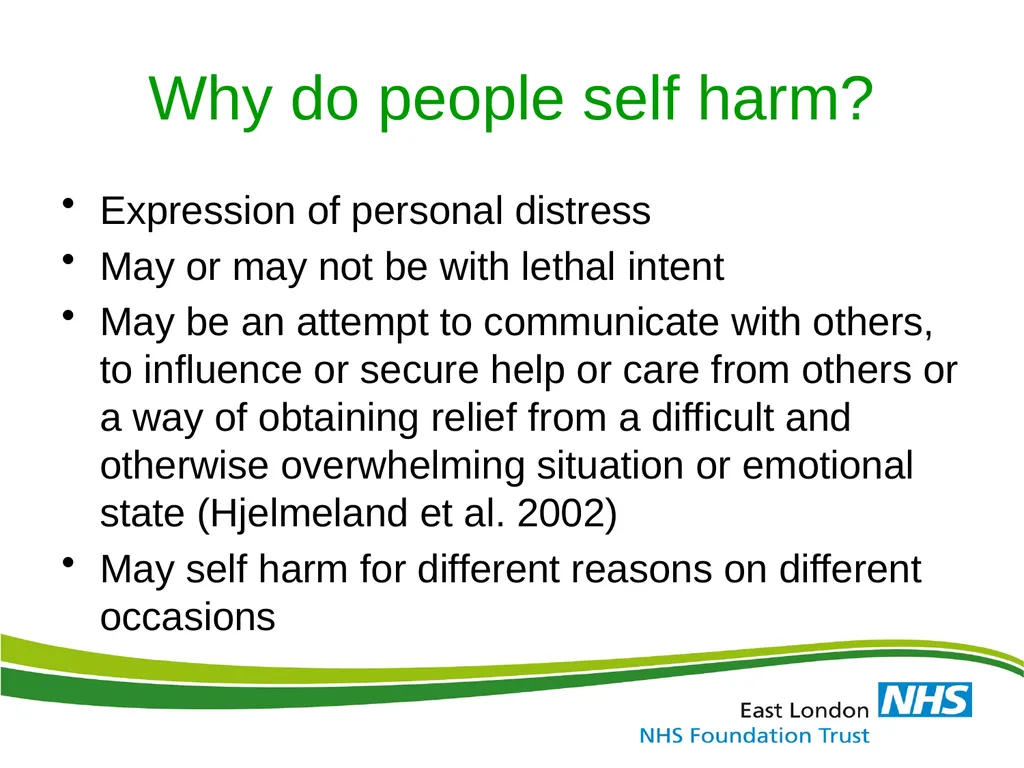
Why do people self harm? Expression of personal distress
May or may not be with lethal intent
May be an attempt to communicate with others, to influence or secure help or care from others or a way of obtaining relief from a difficult and otherwise overwhelming situation or emotional state (Hjelmeland et al. 2002)
May self harm for different reasons on different occasions<br>
10
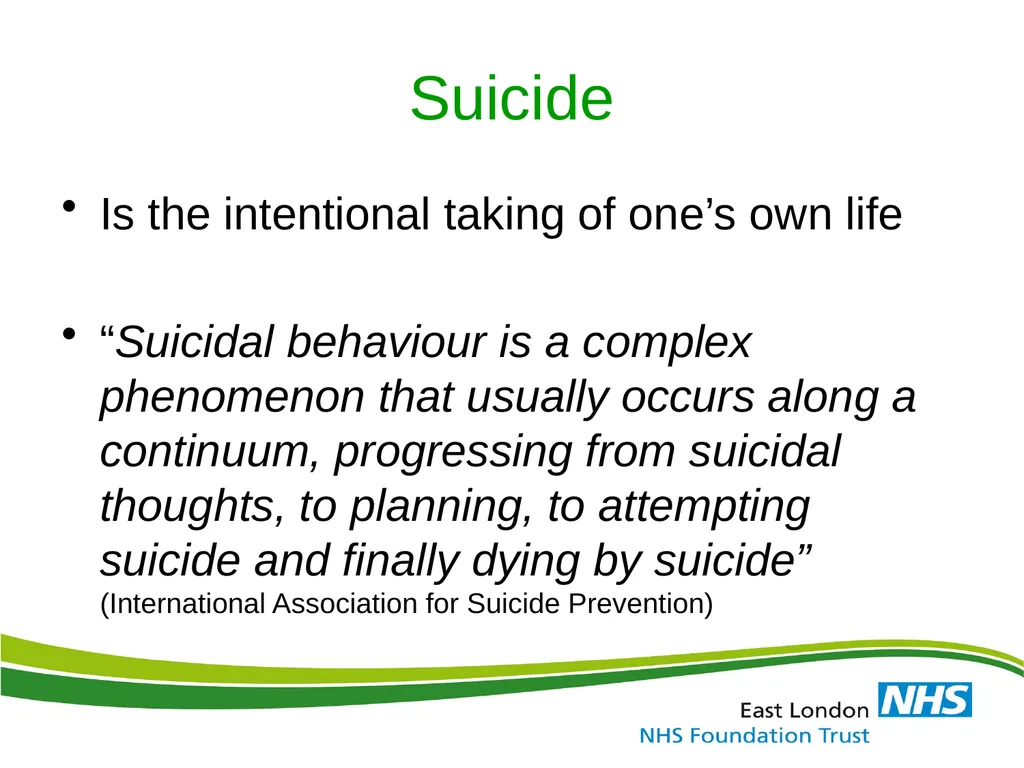
Suicide Is the intentional taking of one’s own life
“Suicidal behaviour is a complex phenomenon that usually occurs along a continuum, progressing from suicidal thoughts, to planning, to attempting suicide and finally dying by suicide” (International Association for Suicide Prevention)<br>
11
Suicide in Primary Care in England: 2002-2011 National Confidential Inquiry into Suicide and Homicide by People with Mental Illness (NCISH).(University of Manchester March 2014)<br>
12
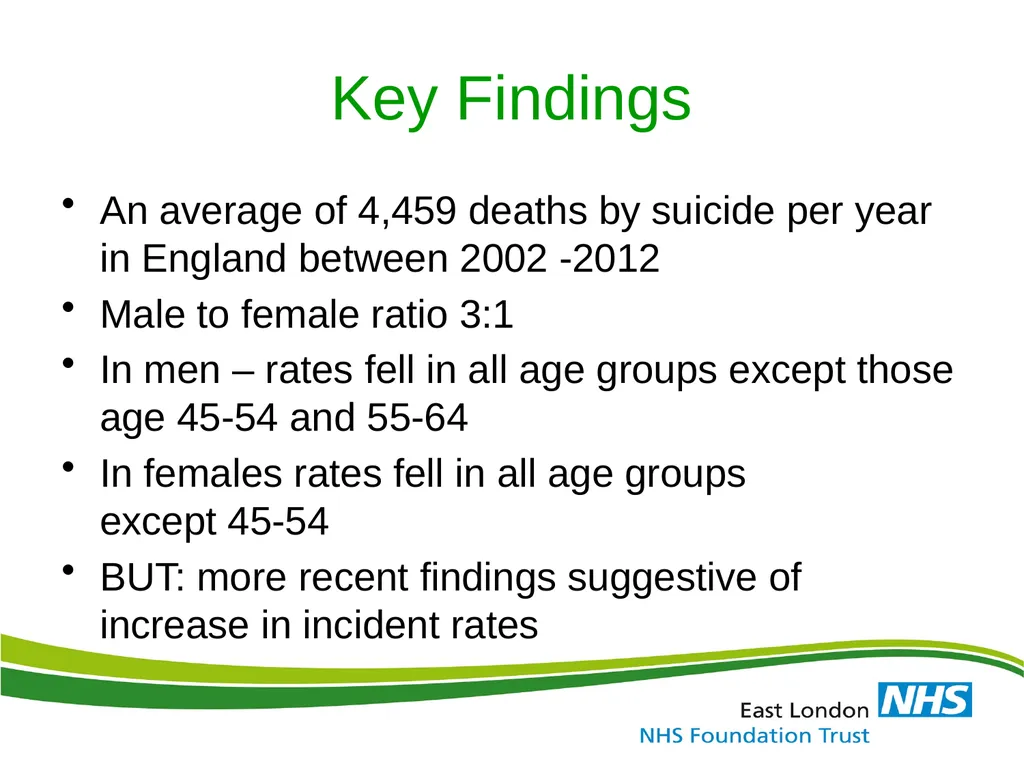
Key Findings An average of 4,459 deaths by suicide per year in England between 2002 -2012
Male to female ratio 3:1
In men – rates fell in all age groups except those age 45-54 and 55-64
In females rates fell in all age groups except 45-54
BUT: more recent findings suggestive of increase in incident rates<br>
13
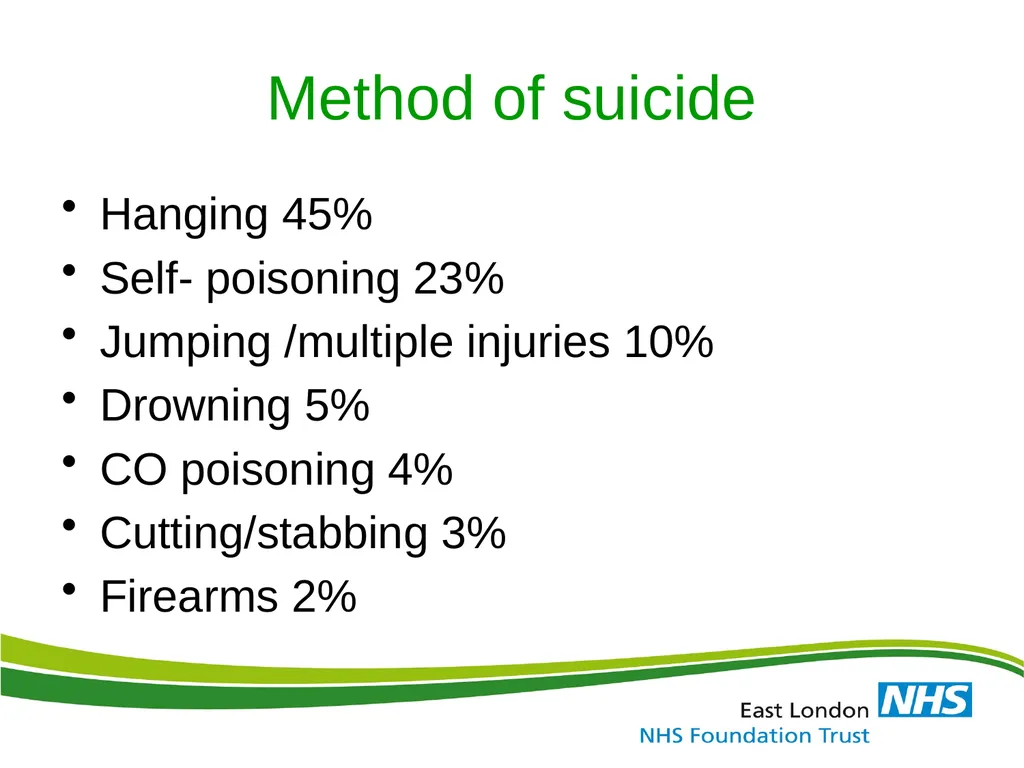
Method of suicide Hanging 45%
Self- poisoning 23%
Jumping /multiple injuries 10%
Drowning 5%
CO poisoning 4%
Cutting/stabbing 3%
Firearms 2%<br>
14
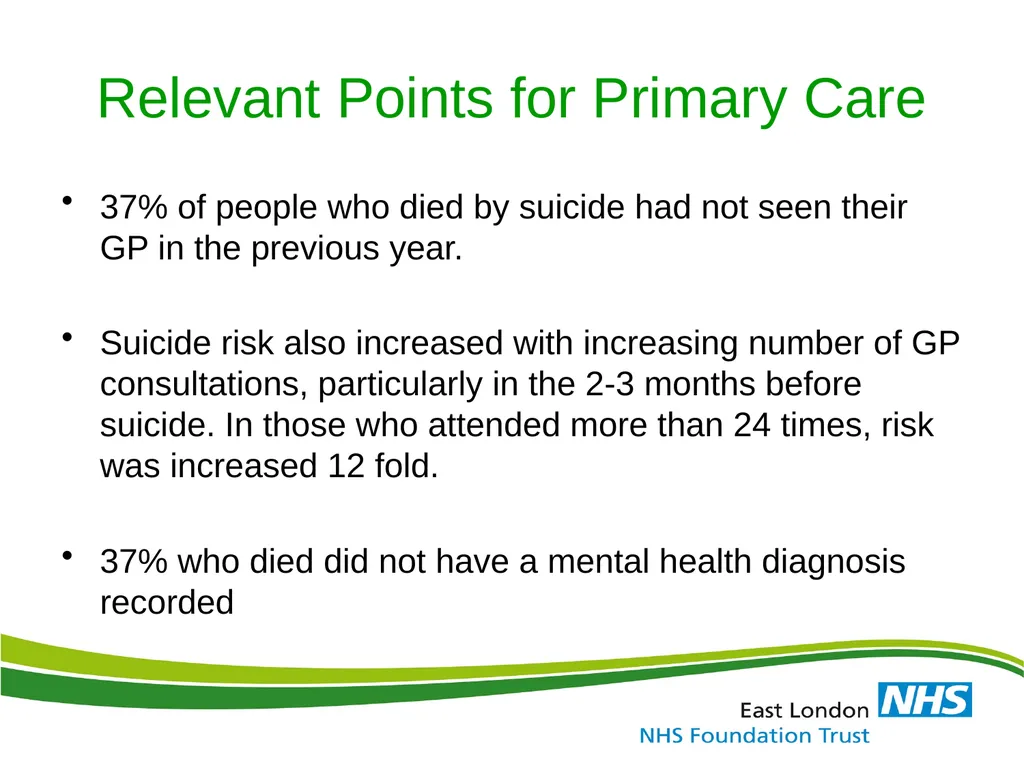
Relevant Points for Primary Care 37% of people who died by suicide had not seen their GP in the previous year.
Suicide risk also increased with increasing number of GP consultations, particularly in the 2-3 months before suicide. In those who attended more than 24 times, risk was increased 12 fold.
37% who died did not have a mental health diagnosis recorded<br>
15
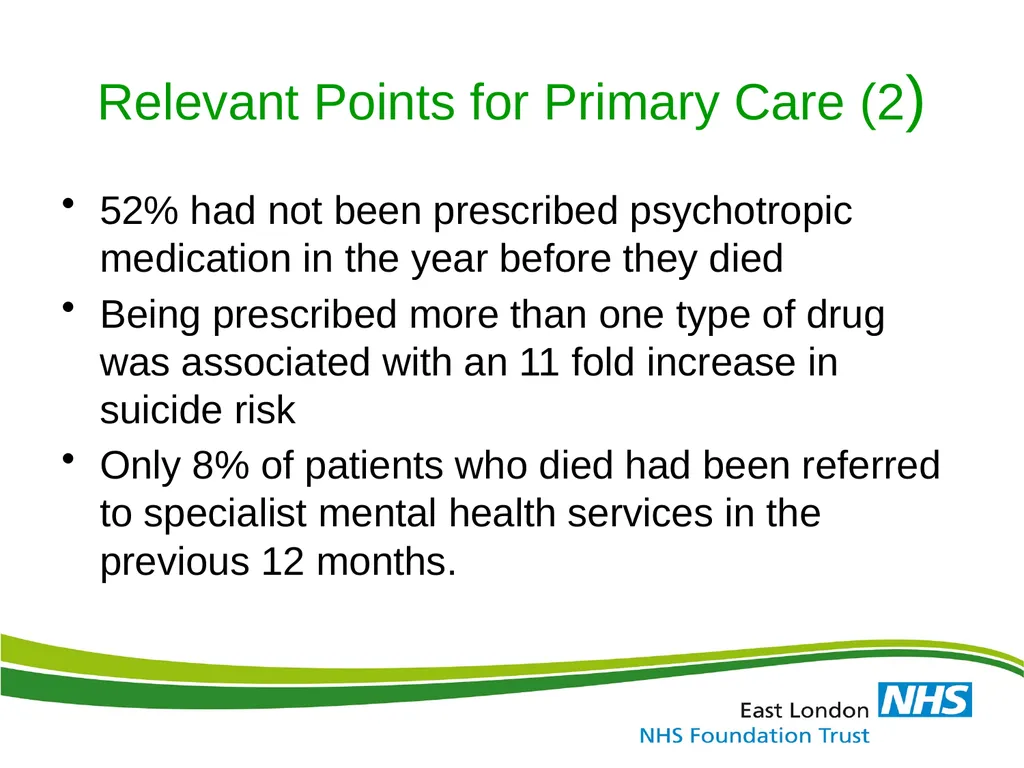
Relevant Points for Primary Care (2) 52% had not been prescribed psychotropic medication in the year before they died
Being prescribed more than one type of drug was associated with an 11 fold increase in suicide risk
Only 8% of patients who died had been referred to specialist mental health services in the previous 12 months.<br>
16
Risk Factors Socio- Demographic
Childhood and Family
Mental Health
Suicidal behaviour<br>
17
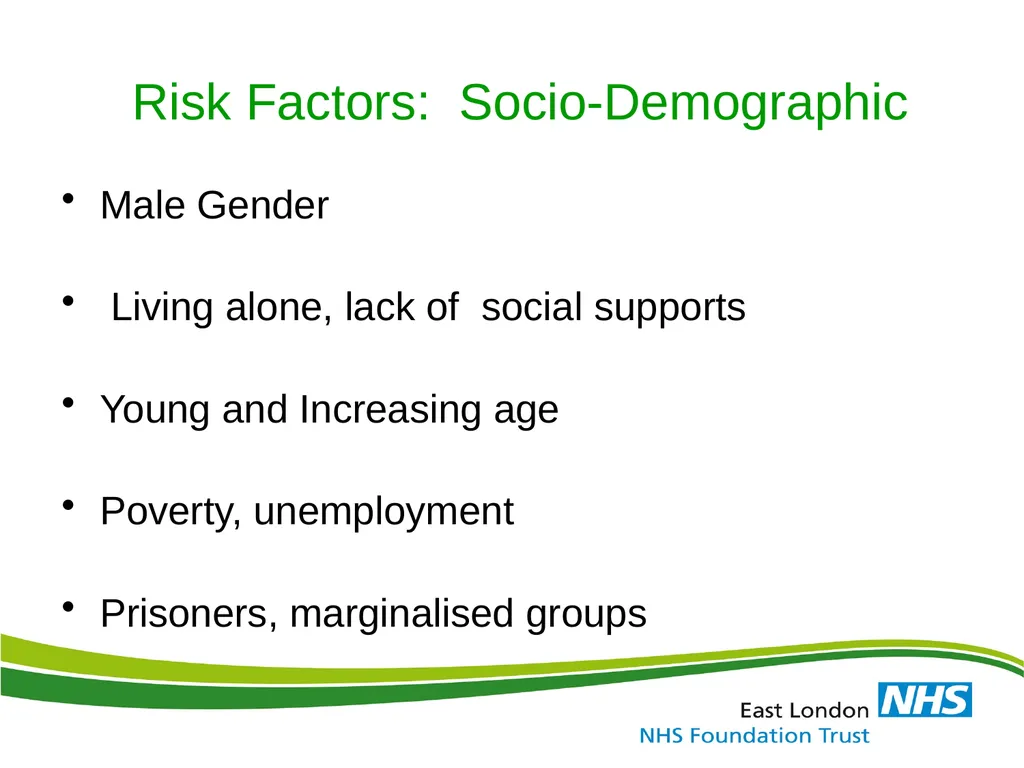
Risk Factors: Socio-Demographic Male Gender
Living alone, lack of social supports
Young and Increasing age
Poverty, unemployment
Prisoners, marginalised groups<br>
18
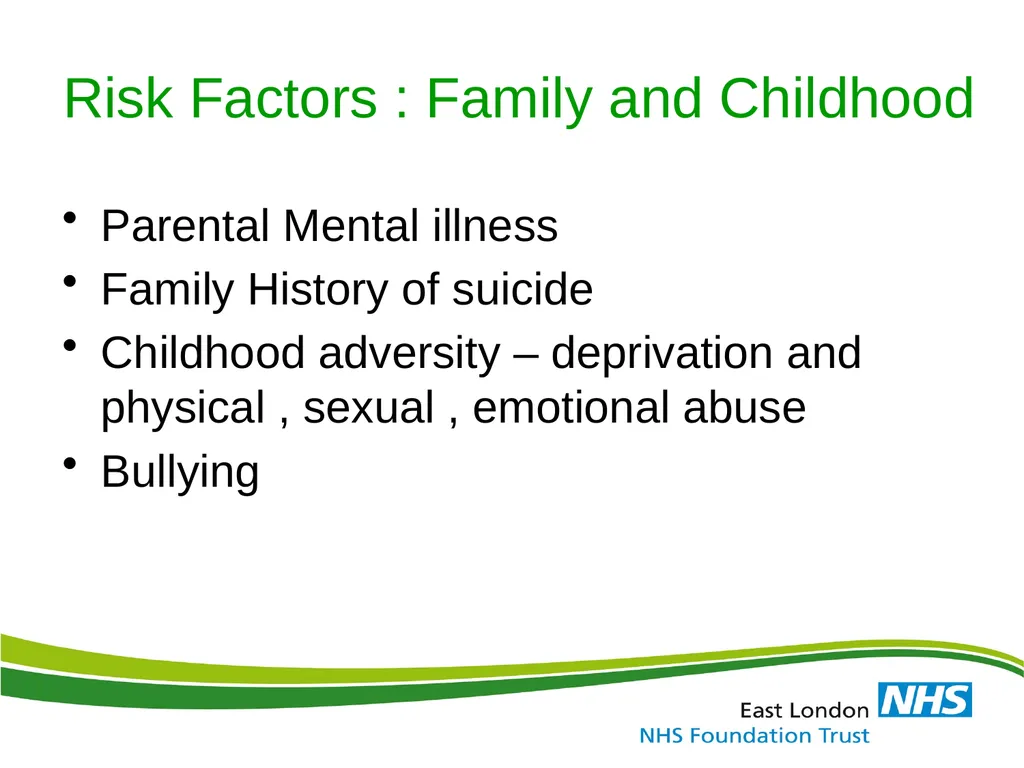
Risk Factors : Family and Childhood Parental Mental illness
Family History of suicide
Childhood adversity – deprivation and physical , sexual , emotional abuse
Bullying<br>
19
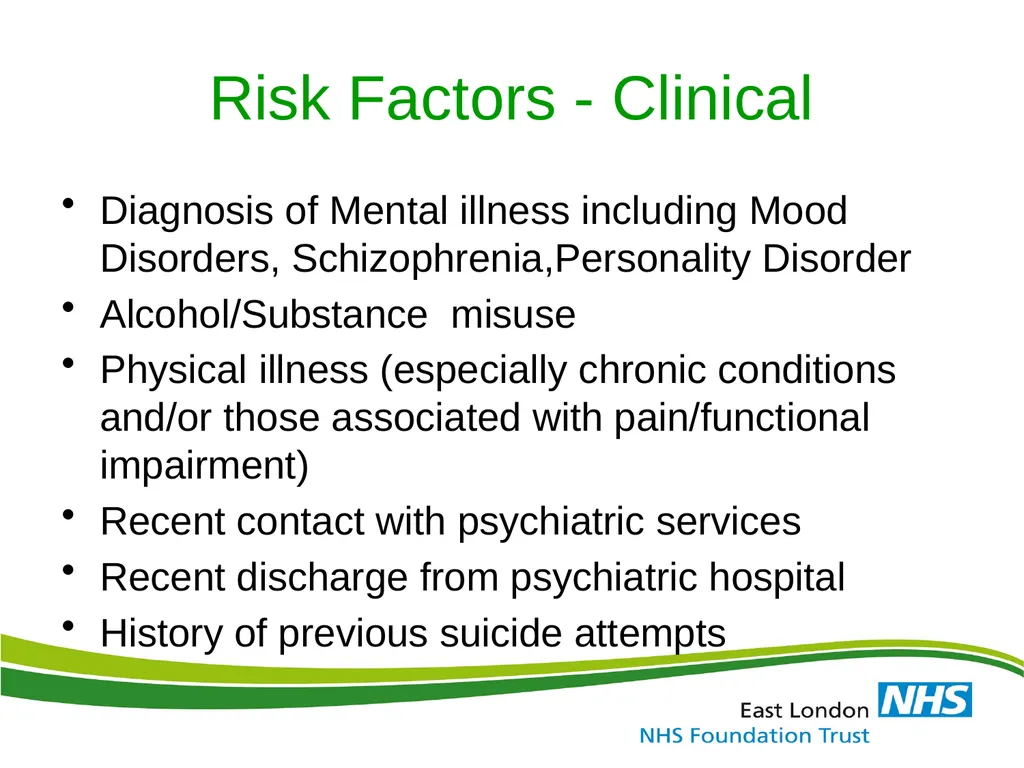
Risk Factors - Clinical Diagnosis of Mental illness including Mood Disorders, Schizophrenia,Personality Disorder
Alcohol/Substance misuse
Physical illness (especially chronic conditions and/or those associated with pain/functional impairment)
Recent contact with psychiatric services
Recent discharge from psychiatric hospital
History of previous suicide attempts<br>
20
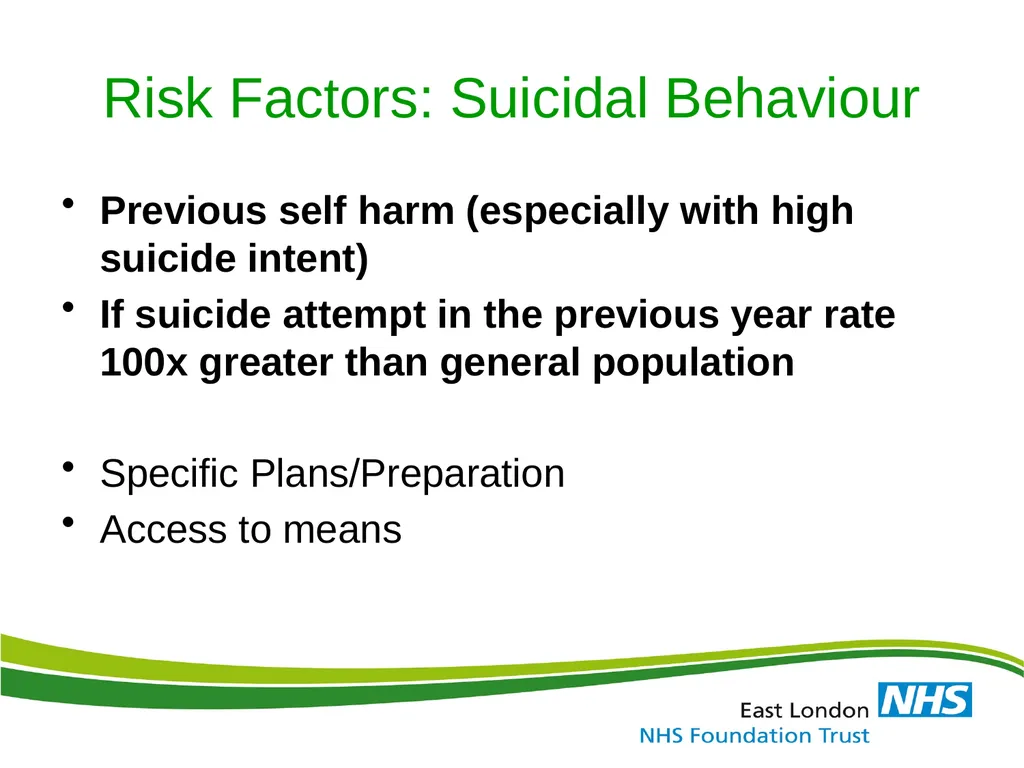
Risk Factors: Suicidal Behaviour Previous self harm (especially with high suicide intent)
If suicide attempt in the previous year rate 100x greater than general population
Specific Plans/Preparation
Access to means<br>
21
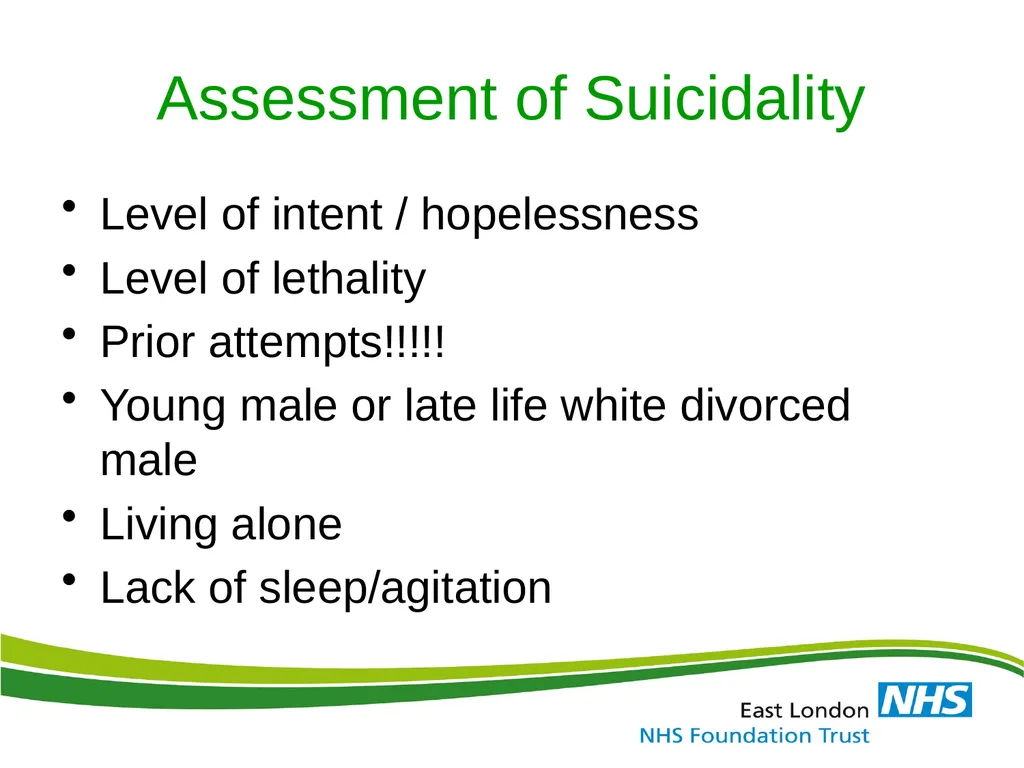
Assessment of Suicidality Level of intent / hopelessness
Level of lethality
Prior attempts!!!!!
Young male or late life white divorced male
Living alone
Lack of sleep/agitation<br>
22
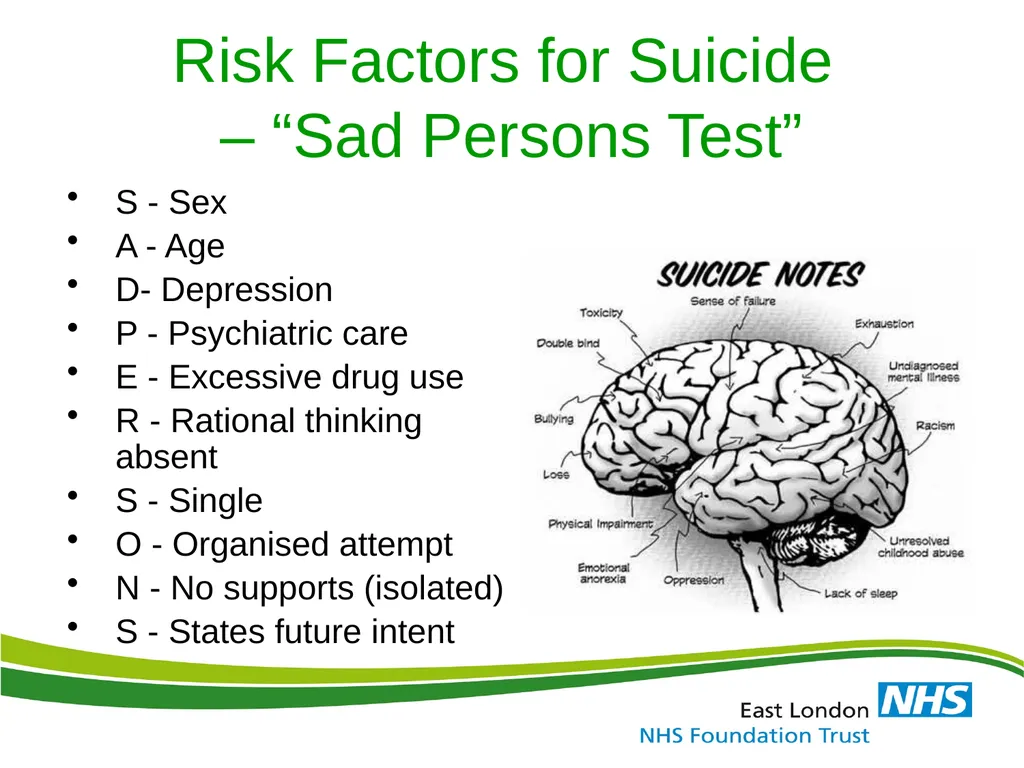
Risk Factors for Suicide �– “Sad Persons Test” S - Sex
A - Age
D- Depression
P - Psychiatric care
E - Excessive drug use
R - Rational thinking absent
S - Single
O - Organised attempt
N - No supports (isolated)
S - States future intent<br>
23
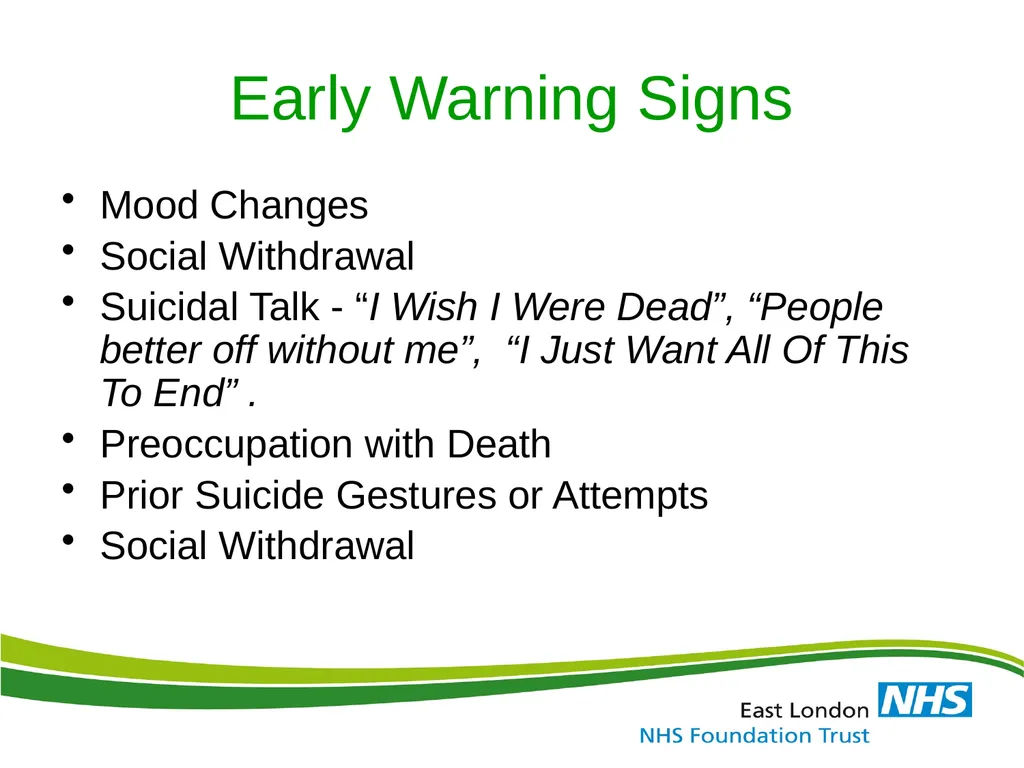
Early Warning Signs Mood Changes
Social Withdrawal
Suicidal Talk - “I Wish I Were Dead”, “People better off without me”, “I Just Want All Of This To End” .
Preoccupation with Death
Prior Suicide Gestures or Attempts
Social Withdrawal<br>
24
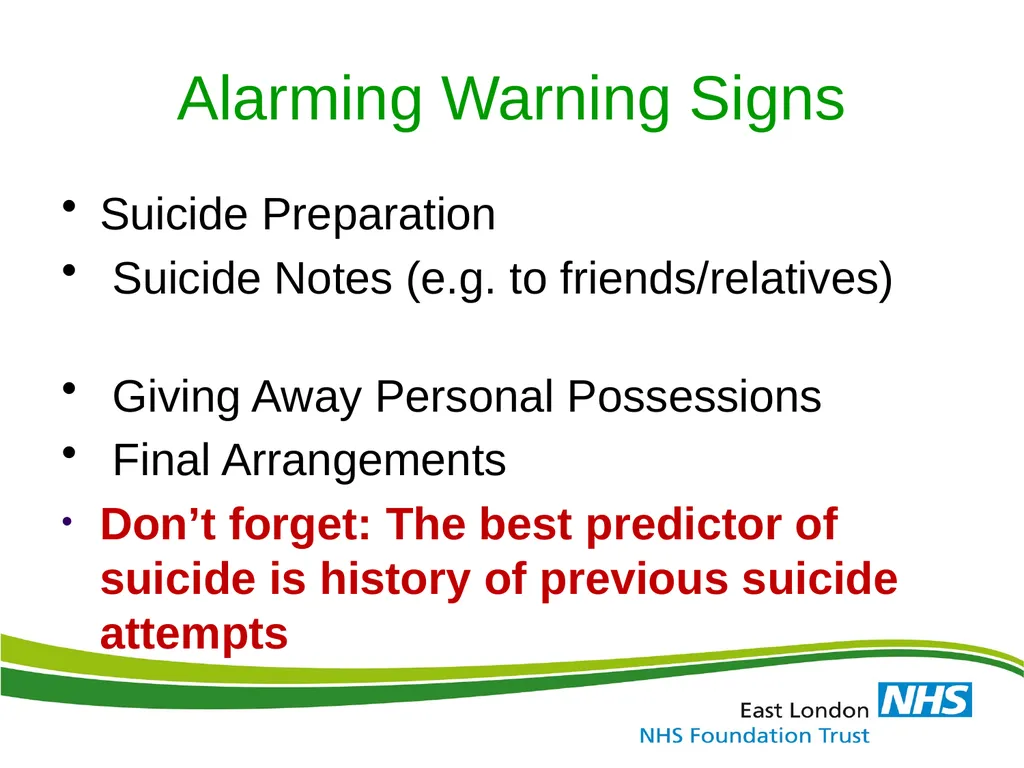
Alarming Warning Signs Suicide Preparation
Suicide Notes (e.g. to friends/relatives)
Giving Away Personal Possessions
Final Arrangements
Don’t forget: The best predictor of suicide is history of previous suicide attempts<br>
25
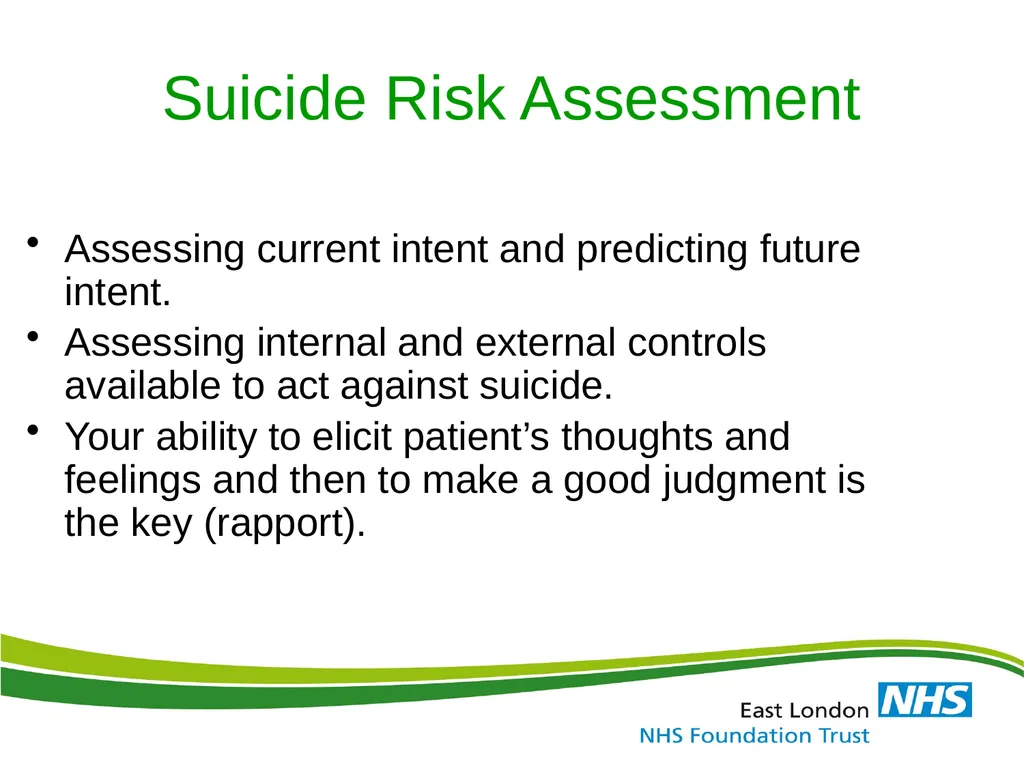
Suicide Risk Assessment Assessing current intent and predicting future intent.
Assessing internal and external controls available to act against suicide.
Your ability to elicit patient’s thoughts and feelings and then to make a good judgment is the key (rapport).<br>
26
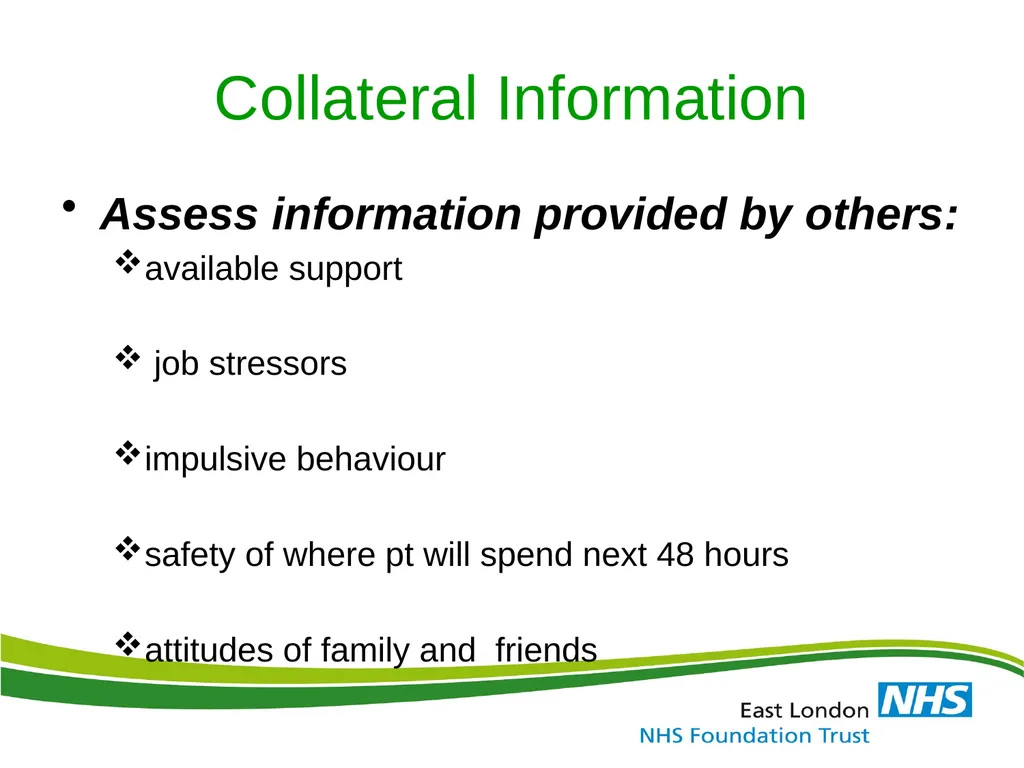
Collateral Information Assess information provided by others:
available support
job stressors
impulsive behaviour
safety of where pt will spend next 48 hours
attitudes of family and friends<br>
27
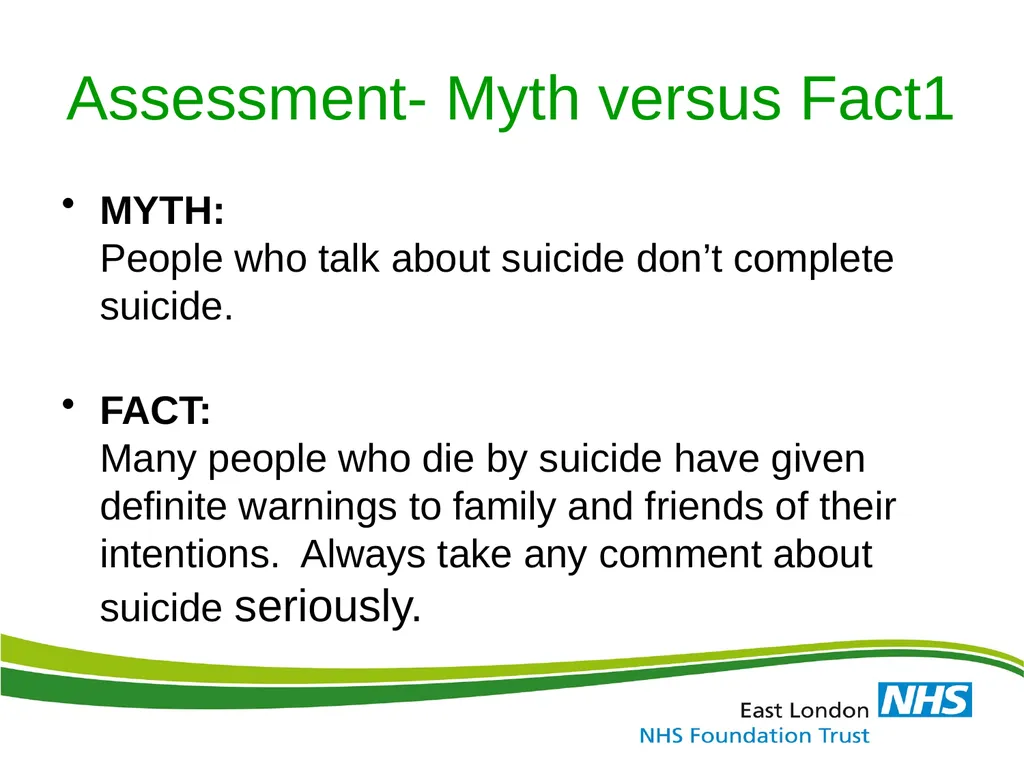
Assessment- Myth versus Fact1 MYTH: �People who talk about suicide don’t complete suicide.�
FACT: �Many people who die by suicide have given definite warnings to family and friends of their intentions. Always take any comment about suicide seriously.<br>
28
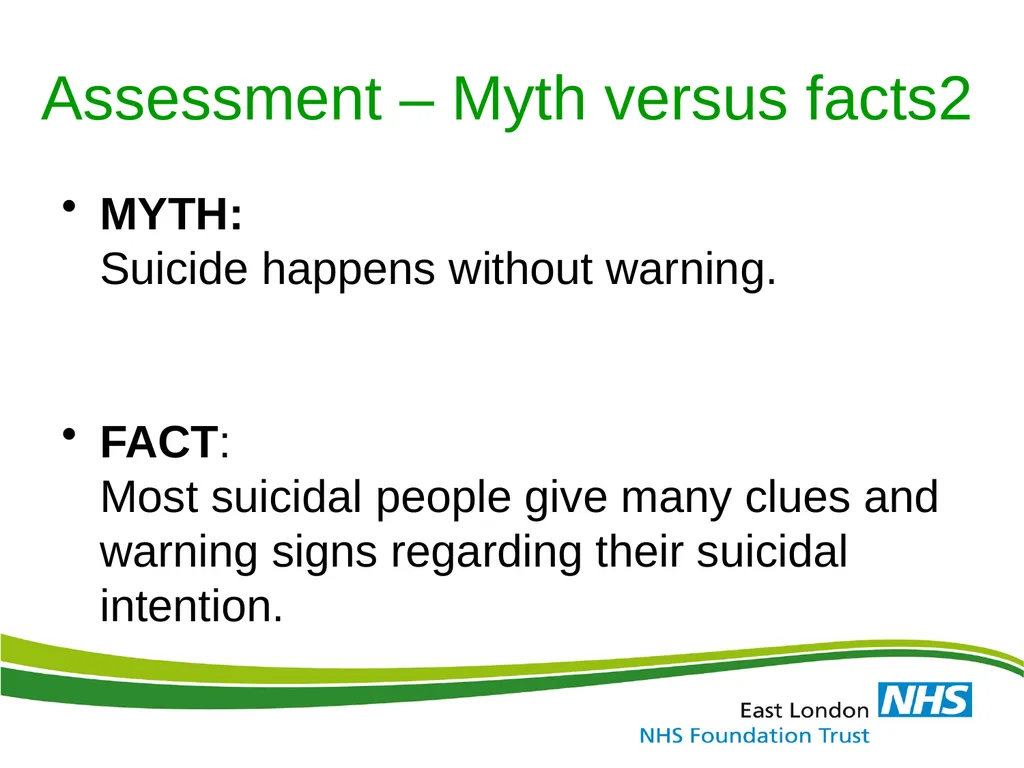
Assessment – Myth versus facts2 MYTH: �Suicide happens without warning.��
FACT: �Most suicidal people give many clues and warning signs regarding their suicidal intention.<br>
29
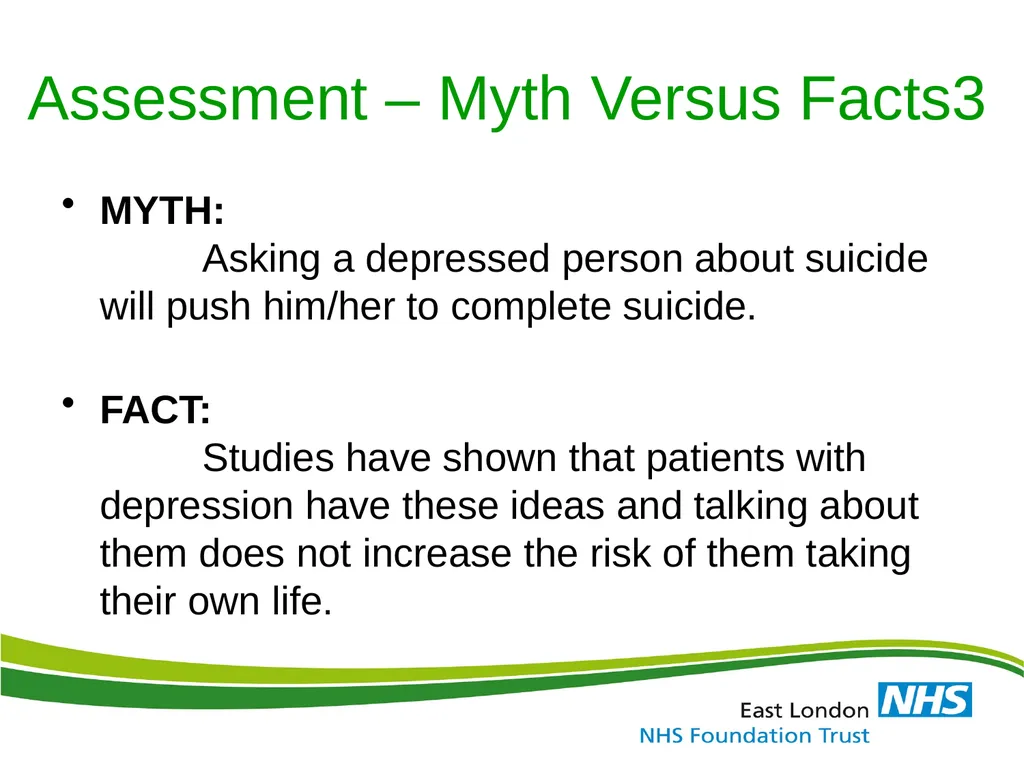
Assessment – Myth Versus Facts3 MYTH: � Asking a depressed person about suicide will push him/her to complete suicide.�
FACT: � Studies have shown that patients with depression have these ideas and talking about them does not increase the risk of them taking their own life.<br>
30
Assessment – Myth versus Facts4 MYTH:�Improvement following a suicide attempt or crisis means that the risk is over. �
FACT: �Most suicides occur within days or weeks of “improvement” when the individual has the energy and motivation to actually follow through with his/her suicidal thoughts.<br>
31
In Primary Care Build rapport with patient
Always ask about suicide risk in patient who appears depressed or in emotional distress
Start with open Questions – then more specific re intent<br>
32
To be considered: Is the Patient in a high risk group?
Assess risk factors – high levels of distress, well formed plans, hopelessness, distressing psychotic symptoms, pain or chronic illness, lack of social supports
Listen to “gut feeling”<br>
33
What to do �if warning signs are present Immediate discussion with /referral to mental health services
Treat agitation/anxiety
Safety Planning – strategies to resist thoughts/ Supports/Crisis contacts etc
Adequate support – personal/professional/voluntary organisations<br>
34
Take Home Message Don’t be scared / reluctant / hesitant to ask about suicidality – this is the first step to reducing risk.
Compassionate, proportionate and timely response
Always document your assessment, decisions made and reasons<br>
35
Discussion Questions?<br>