Evolution of Key Industry Indicators Energy
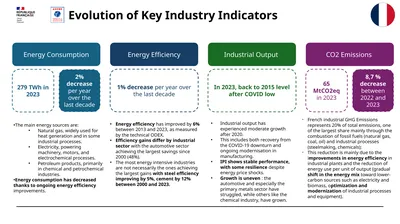
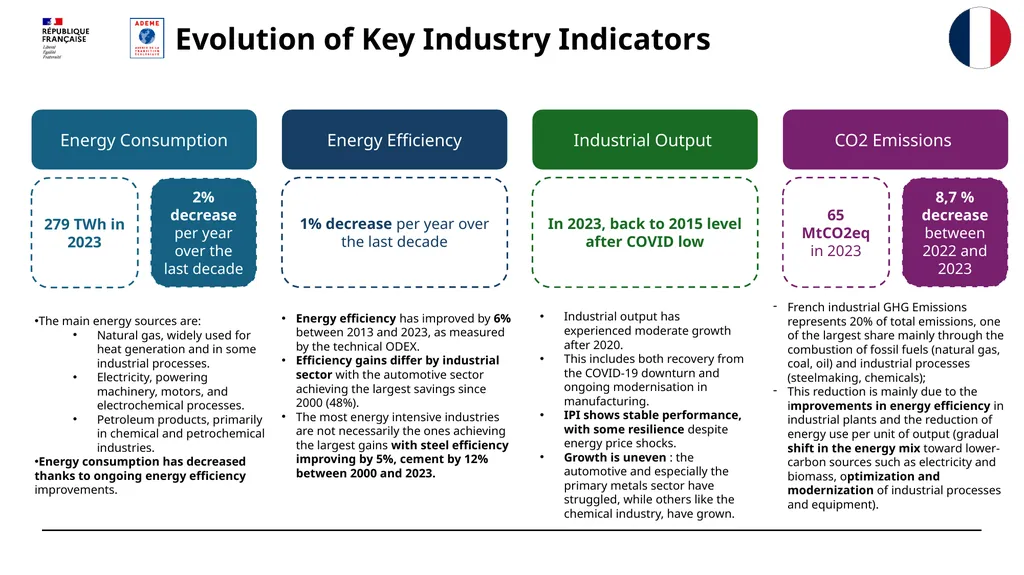
Description: Evolution of Key Industry Indicators Energy Consumption Energy Efficiency Industrial Output 279 TWh in 2023 2 decrease per year over the last decade 1 decrease per year over the last decade In 2023, back to 2015 level after COVID low The
Related Topics
Download Presentation
"Evolution of Key Industry Indicators Energy" is the property of its rightful owner. Permission is granted to download and print the materials on this website for personal, non-commercial use only, and to display it on your personal computer provided you do not modify the materials and that you retain all copyright notices contained in the materials. By downloading content from our website, you accept the terms of this agreement.
Presentation Transcript
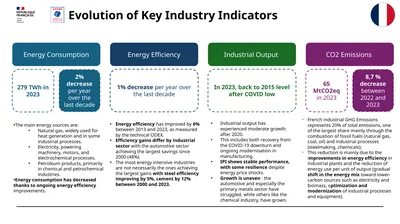
slide1. Evolution of Key Industry Indicators Energy Consumption Energy Efficiency Industrial Output 279 TWh in 2023 2% decrease per year over the last decade 1% decrease per year over the last decade In 2023, back to 2015 level after COVID low The main energy sources are:
Natural gas, widely used for heat generation and in some industrial processes.
Electricity, powering machinery, motors, and electrochemical processes.
Petroleum products, primarily in chemical and petrochemical industries.
Energy consumption has decreased thanks to ongoing energy efficiency improvements. Energy efficiency has improved by 6% between 2013 and 2023, as measured by the technical ODEX.
Efficiency gains differ by industrial sector with the automotive sector achieving the largest savings since 2000 (48%).
The most energy intensive industries are not necessarily the ones achieving the largest gains with steel efficiency improving by 5%, cement by 12% between 2000 and 2023. Industrial output has experienced moderate growth after 2020.
This includes both recovery from the COVID-19 downturn and ongoing modernisation in manufacturing.
IPI shows stable performance, with some resilience despite energy price shocks.
Growth is uneven : the automotive and especially the primary metals sector have struggled, while others like the chemical industry, have grown. CO2 Emissions 65 MtCO2eq in 2023 8,7 % decrease between 2022 and 2023 French industrial GHG Emissions represents 20% of total emissions, one of the largest share mainly through the combustion of fossil fuels (natural gas, coal, oil) and industrial processes (steelmaking, chemicals);
This reduction is mainly due to the improvements in energy efficiency in industrial plants and the reduction of energy use per unit of output (gradual shift in the energy mix toward lower-carbon sources such as electricity and biomass, optimization and modernization of industrial processes and equipment).<br>
slide2. Energy Efficiency Impact on the Industrial Sector<br>
Natural gas, widely used for heat generation and in some industrial processes.
Electricity, powering machinery, motors, and electrochemical processes.
Petroleum products, primarily in chemical and petrochemical industries.
Energy consumption has decreased thanks to ongoing energy efficiency improvements. Energy efficiency has improved by 6% between 2013 and 2023, as measured by the technical ODEX.
Efficiency gains differ by industrial sector with the automotive sector achieving the largest savings since 2000 (48%).
The most energy intensive industries are not necessarily the ones achieving the largest gains with steel efficiency improving by 5%, cement by 12% between 2000 and 2023. Industrial output has experienced moderate growth after 2020.
This includes both recovery from the COVID-19 downturn and ongoing modernisation in manufacturing.
IPI shows stable performance, with some resilience despite energy price shocks.
Growth is uneven : the automotive and especially the primary metals sector have struggled, while others like the chemical industry, have grown. CO2 Emissions 65 MtCO2eq in 2023 8,7 % decrease between 2022 and 2023 French industrial GHG Emissions represents 20% of total emissions, one of the largest share mainly through the combustion of fossil fuels (natural gas, coal, oil) and industrial processes (steelmaking, chemicals);
This reduction is mainly due to the improvements in energy efficiency in industrial plants and the reduction of energy use per unit of output (gradual shift in the energy mix toward lower-carbon sources such as electricity and biomass, optimization and modernization of industrial processes and equipment).<br>
slide2. Energy Efficiency Impact on the Industrial Sector<br>