Freezing and dehydration Freezing There are different methods of commercial freezing available, but they are all based on two principles. 1) Very low temperatures inhibit growth of micro-organisms and limit enzyme and chemical activity. 2)
"Freezing and dehydration Freezing There are" is the property of its rightful owner. Permission is granted to
download and print the materials on this website for personal, non-commercial use only, and to display it
on your personal computer provided you do not modify the materials and that you retain all copyright
notices contained in the materials. By downloading content from our website, you accept the terms of this
agreement.
Presentation Transcript
01
Freezing and dehydration<br>
02
Freezing There are different methods of commercial freezing available, but they are all based on two principles.
1) Very low temperatures inhibit growth of micro-organisms and limit enzyme and chemical activity.
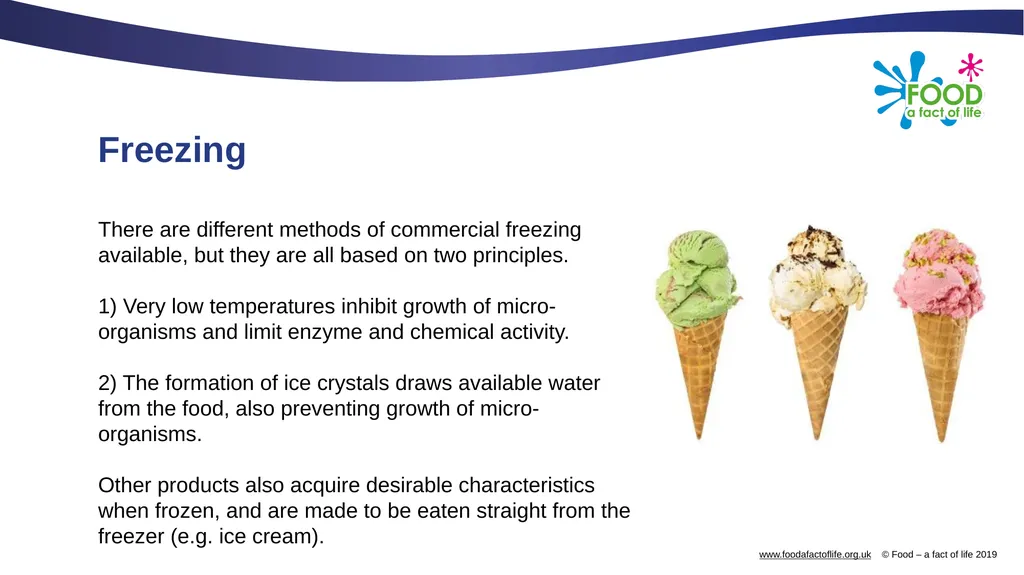
2) The formation of ice crystals draws available water from the food, also preventing growth of micro-organisms. Other products also acquire desirable characteristics when frozen, and are made to be eaten straight from the freezer (e.g. ice cream).<br>
03
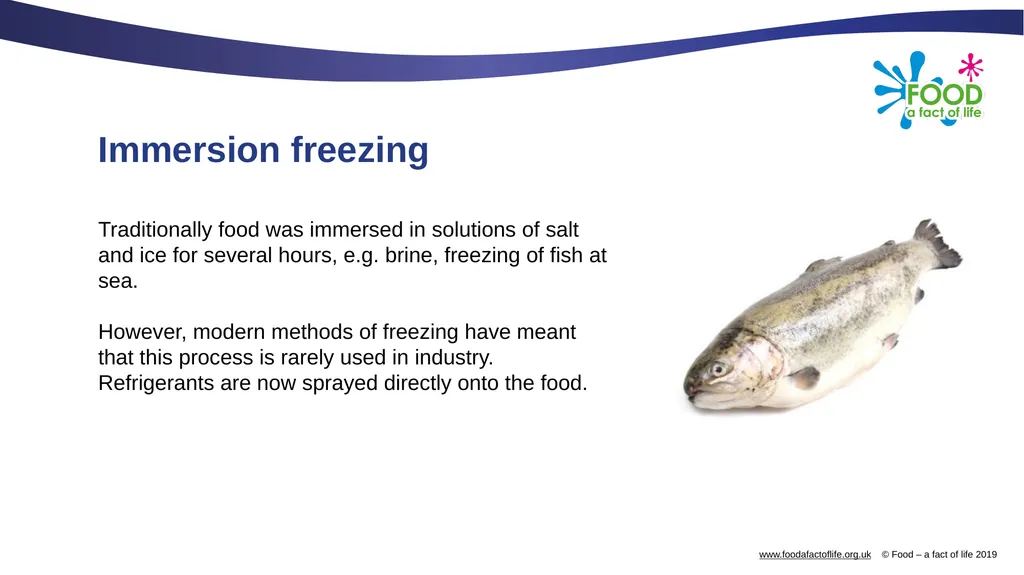
Immersion freezing Traditionally food was immersed in solutions of salt and ice for several hours, e.g. brine, freezing of fish at sea. However, modern methods of freezing have meant that this process is rarely used in industry. Refrigerants are now sprayed directly onto the food.<br>
04
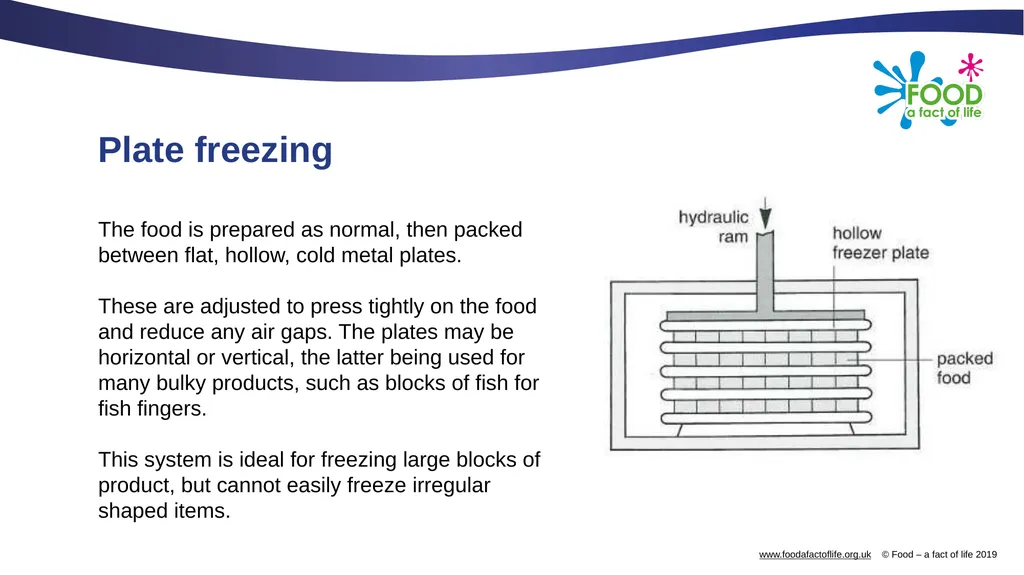
Plate freezing The food is prepared as normal, then packed between flat, hollow, cold metal plates. These are adjusted to press tightly on the food and reduce any air gaps. The plates may be horizontal or vertical, the latter being used for many bulky products, such as blocks of fish for fish fingers. This system is ideal for freezing large blocks of product, but cannot easily freeze irregular shaped items.<br>
05
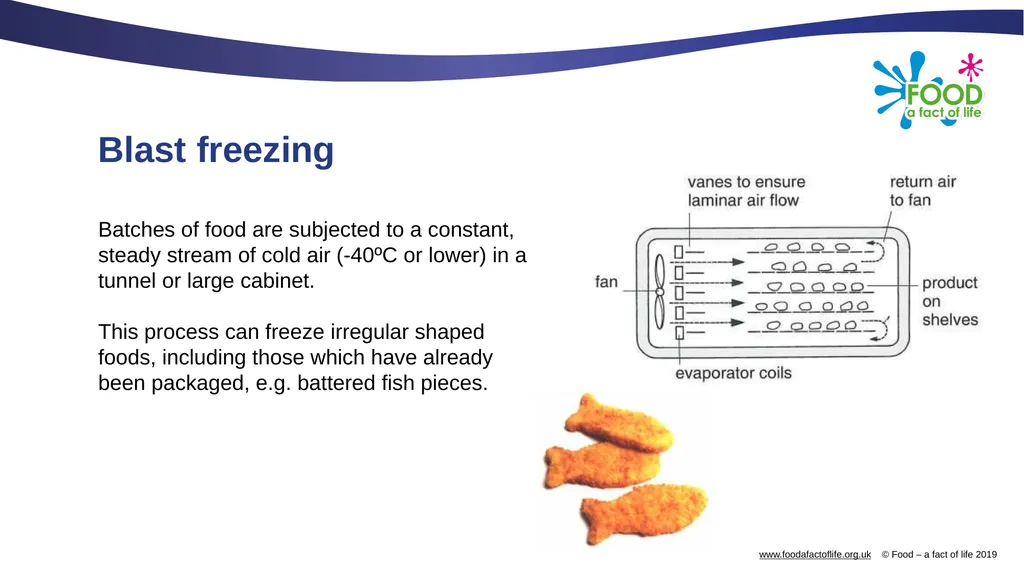
Blast freezing Batches of food are subjected to a constant, steady stream of cold air (-40ºC or lower) in a tunnel or large cabinet. This process can freeze irregular shaped foods, including those which have already been packaged, e.g. battered fish pieces.<br>
06
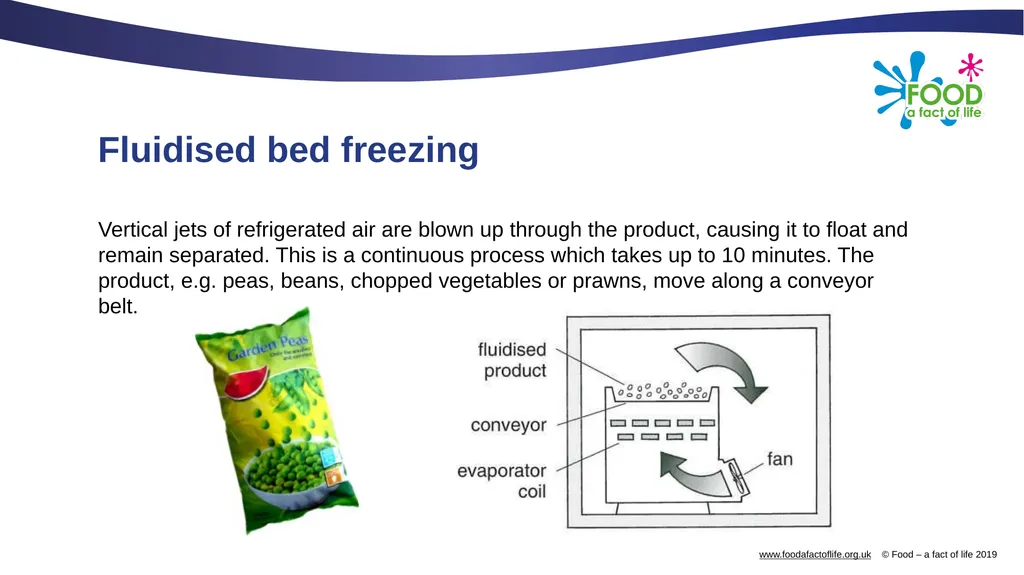
Fluidised bed freezing Vertical jets of refrigerated air are blown up through the product, causing it to float and remain separated. This is a continuous process which takes up to 10 minutes. The product, e.g. peas, beans, chopped vegetables or prawns, move along a conveyor belt.<br>
07
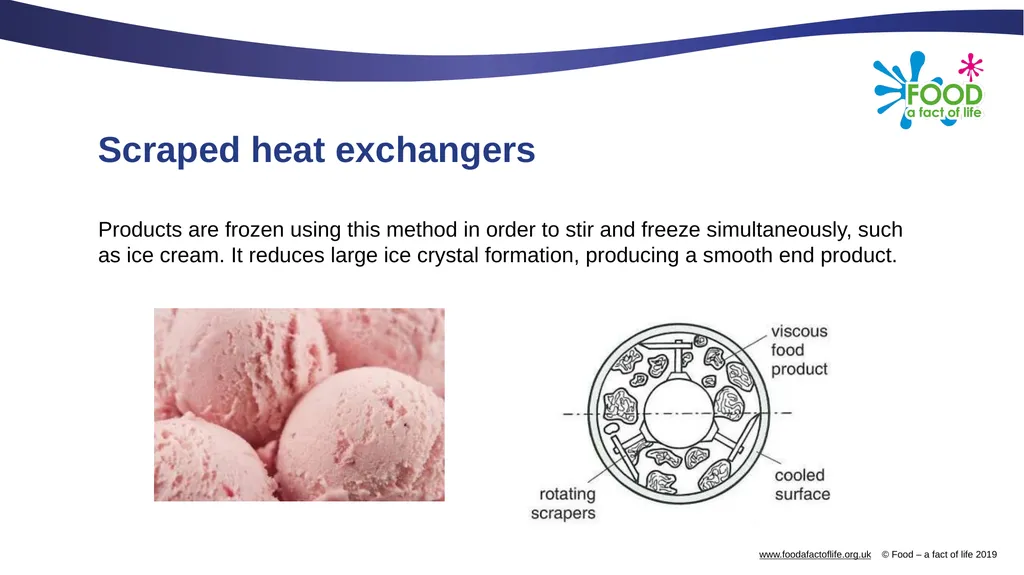
Scraped heat exchangers Products are frozen using this method in order to stir and freeze simultaneously, such as ice cream. It reduces large ice crystal formation, producing a smooth end product.<br>
08
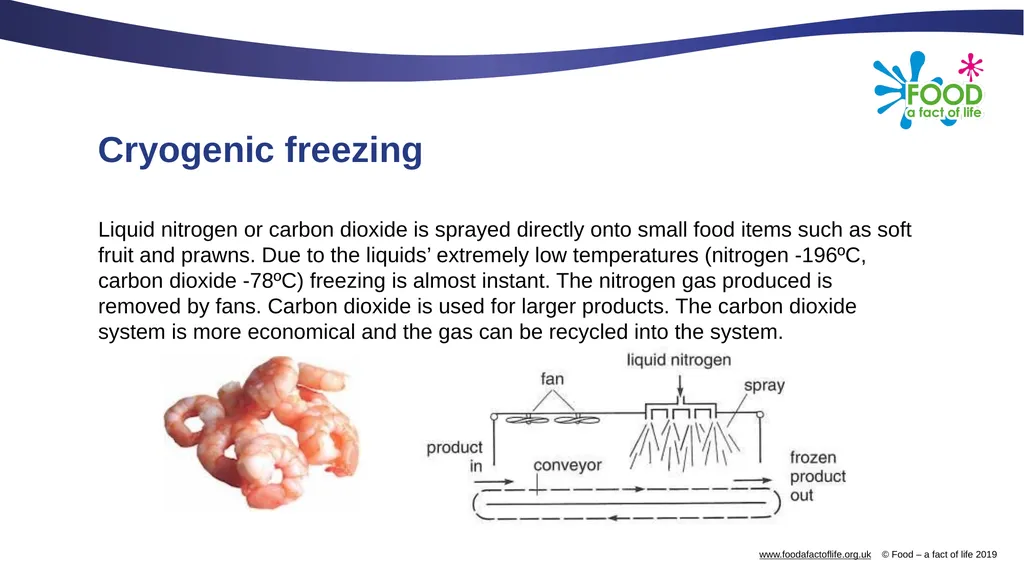
Cryogenic freezing Liquid nitrogen or carbon dioxide is sprayed directly onto small food items such as soft fruit and prawns. Due to the liquids’ extremely low temperatures (nitrogen -196ºC, carbon dioxide -78ºC) freezing is almost instant. The nitrogen gas produced is removed by fans. Carbon dioxide is used for larger products. The carbon dioxide system is more economical and the gas can be recycled into the system.<br>
09
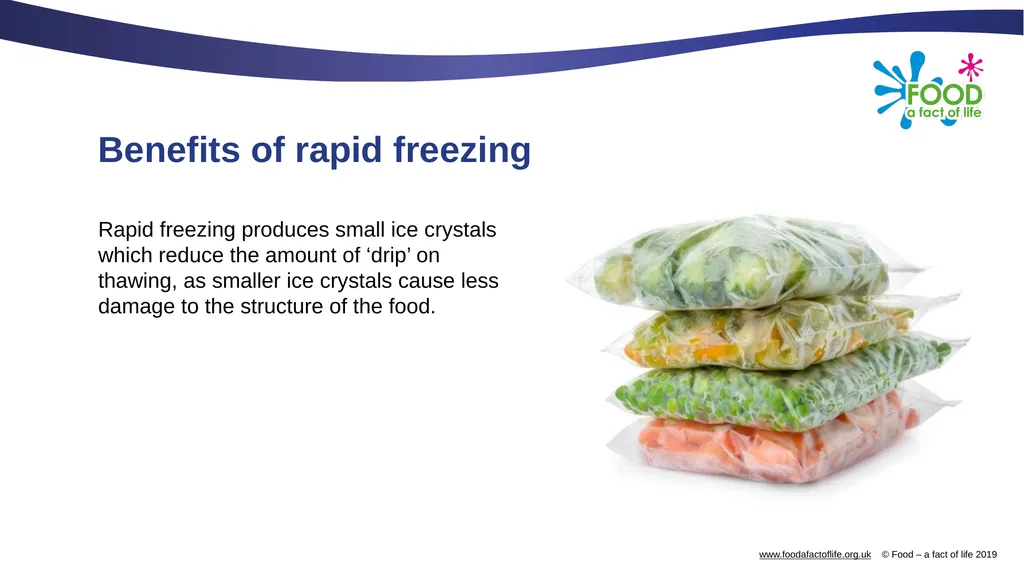
Benefits of rapid freezing Rapid freezing produces small ice crystals which reduce the amount of ‘drip’ on thawing, as smaller ice crystals cause less damage to the structure of the food.<br>
10
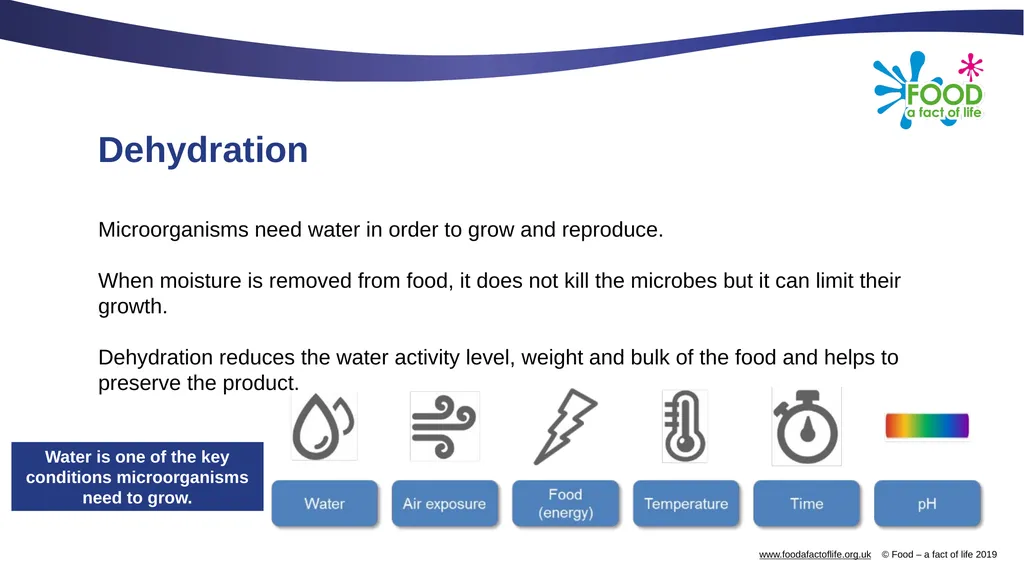
Dehydration Microorganisms need water in order to grow and reproduce. When moisture is removed from food, it does not kill the microbes but it can limit their growth. Dehydration reduces the water activity level, weight and bulk of the food and helps to preserve the product. Water is one of the key conditions microorganisms need to grow.<br>
11
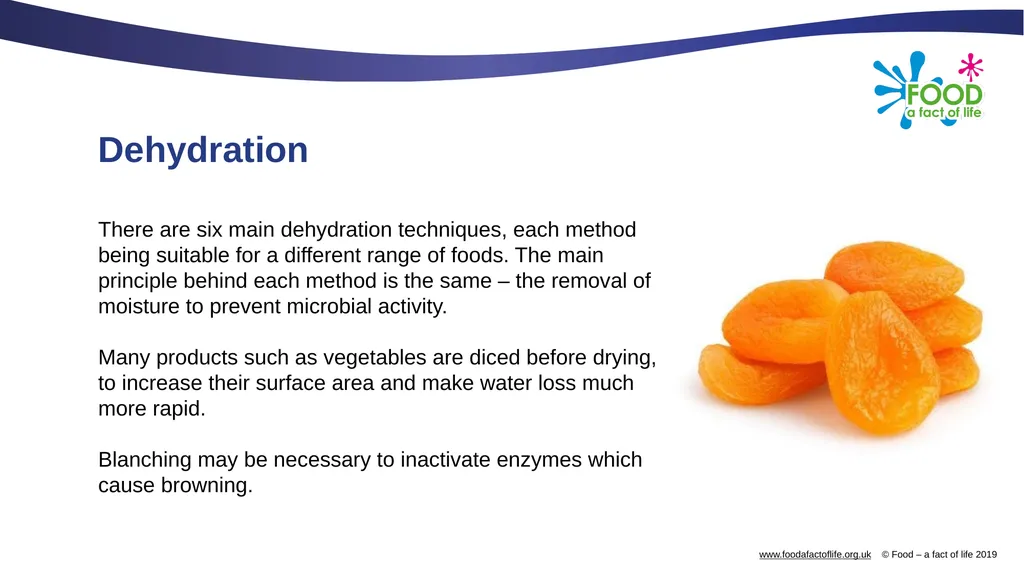
Dehydration There are six main dehydration techniques, each method being suitable for a different range of foods. The main principle behind each method is the same – the removal of moisture to prevent microbial activity.
Many products such as vegetables are diced before drying, to increase their surface area and make water loss much more rapid.
Blanching may be necessary to inactivate enzymes which cause browning.<br>
12
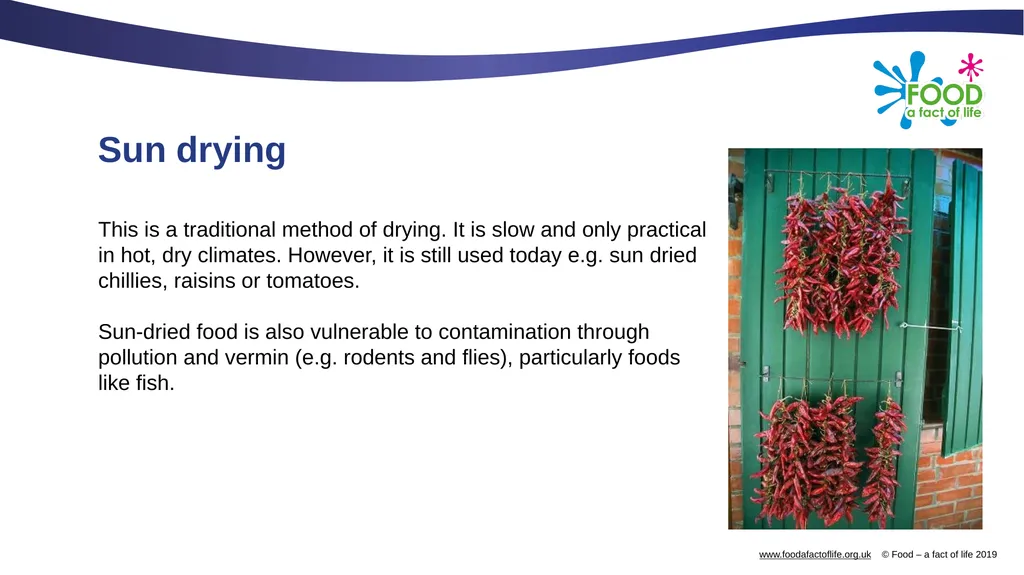
Sun drying This is a traditional method of drying. It is slow and only practical in hot, dry climates. However, it is still used today e.g. sun dried chillies, raisins or tomatoes.
Sun-dried food is also vulnerable to contamination through pollution and vermin (e.g. rodents and flies), particularly foods like fish.<br>
13
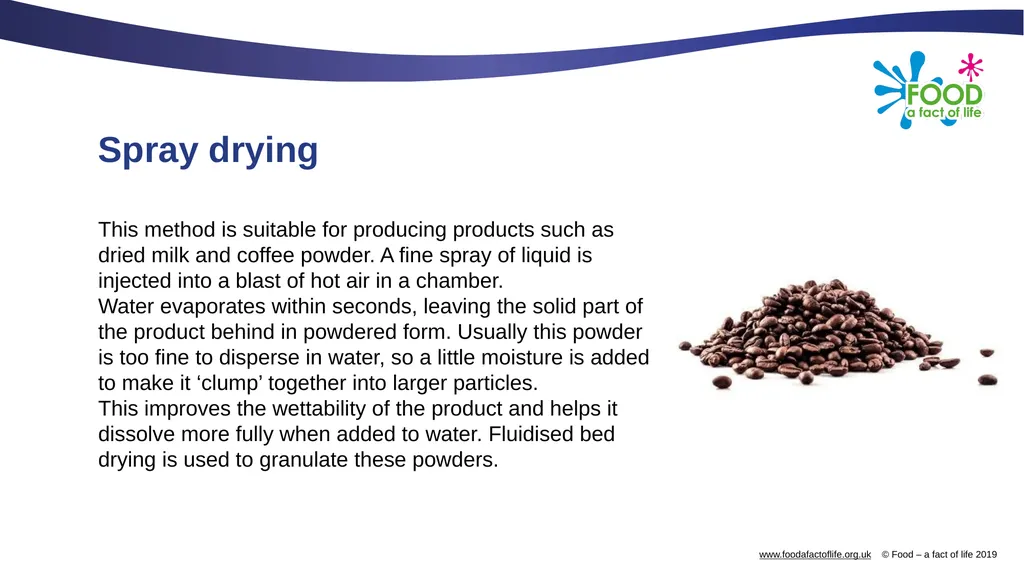
Spray drying This method is suitable for producing products such as dried milk and coffee powder. A fine spray of liquid is injected into a blast of hot air in a chamber.
Water evaporates within seconds, leaving the solid part of the product behind in powdered form. Usually this powder is too fine to disperse in water, so a little moisture is added to make it ‘clump’ together into larger particles.
This improves the wettability of the product and helps it dissolve more fully when added to water. Fluidised bed drying is used to granulate these powders.<br>
14
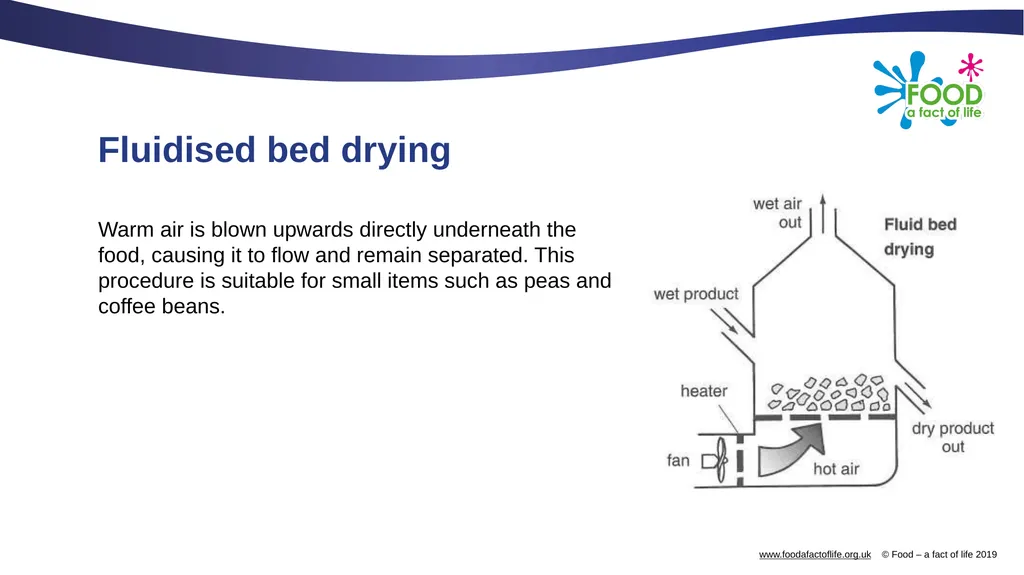
Fluidised bed drying Warm air is blown upwards directly underneath the food, causing it to flow and remain separated. This procedure is suitable for small items such as peas and coffee beans.<br>
15
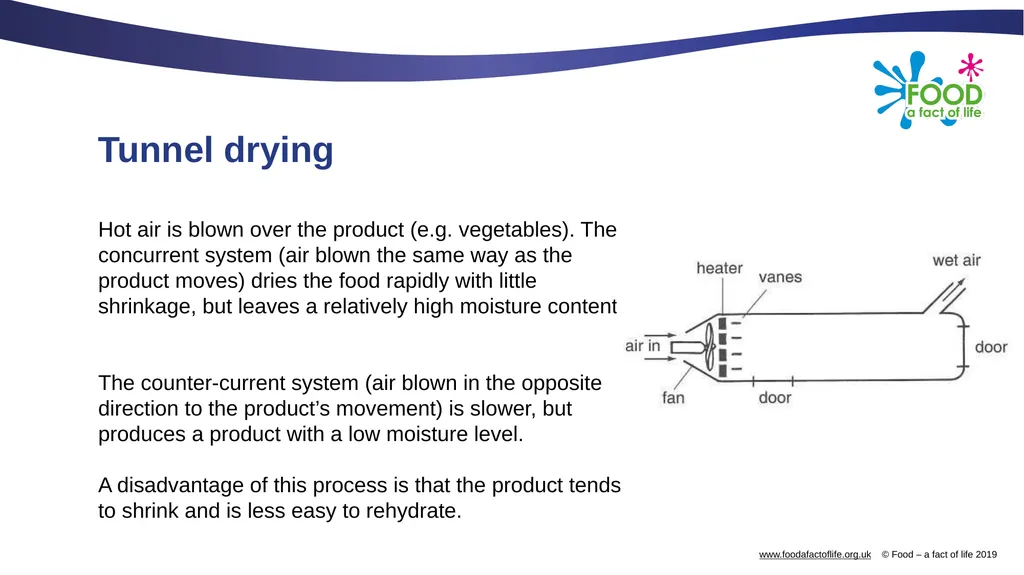
Tunnel drying Hot air is blown over the product (e.g. vegetables). The concurrent system (air blown the same way as the product moves) dries the food rapidly with little shrinkage, but leaves a relatively high moisture content. The counter-current system (air blown in the opposite direction to the product’s movement) is slower, but produces a product with a low moisture level.
A disadvantage of this process is that the product tends to shrink and is less easy to rehydrate.<br>
16
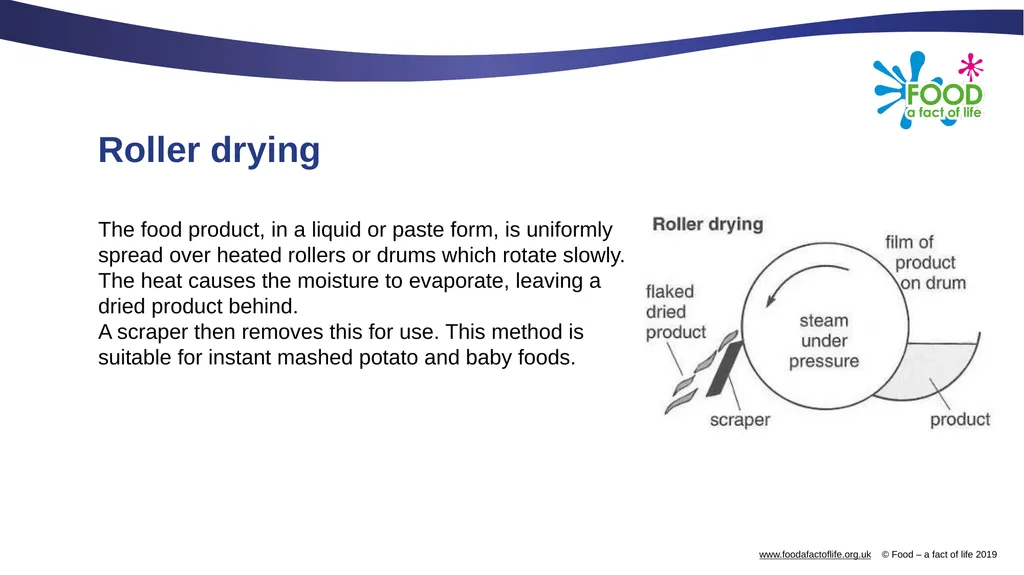
Roller drying The food product, in a liquid or paste form, is uniformly spread over heated rollers or drums which rotate slowly.
The heat causes the moisture to evaporate, leaving a dried product behind.
A scraper then removes this for use. This method is suitable for instant mashed potato and baby foods.<br>
17
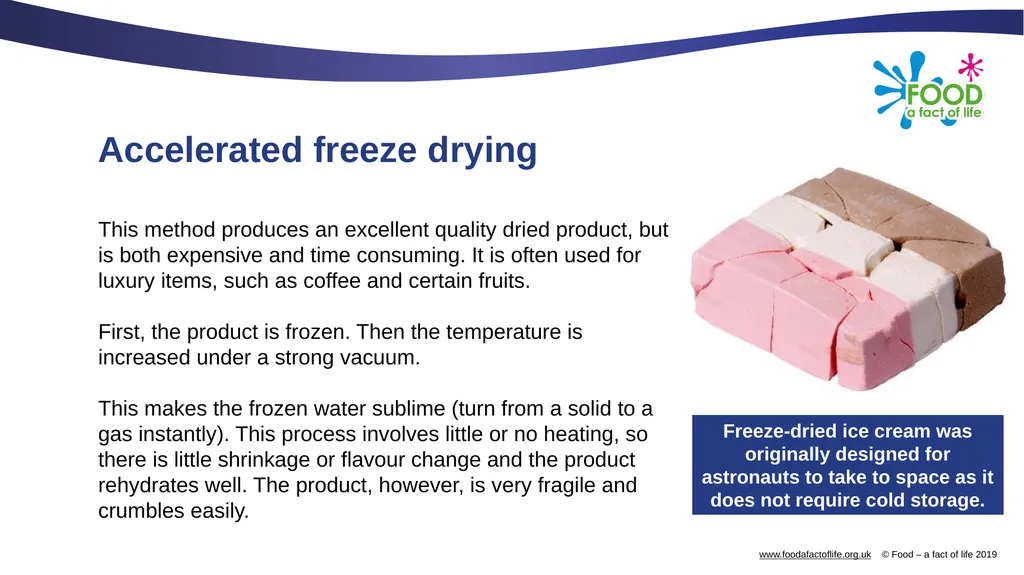
Accelerated freeze drying This method produces an excellent quality dried product, but is both expensive and time consuming. It is often used for luxury items, such as coffee and certain fruits.
First, the product is frozen. Then the temperature is increased under a strong vacuum.
This makes the frozen water sublime (turn from a solid to a gas instantly). This process involves little or no heating, so there is little shrinkage or flavour change and the product rehydrates well. The product, however, is very fragile and crumbles easily. Freeze-dried ice cream was originally designed for astronauts to take to space as it does not require cold storage.<br>
18
Freezing and dehydration For further information, go to:
www.foodafactoflife.org.uk<br>