
Literary Lenses: Interpreting Texts by Using
FD
Published · 37 slides · 0 views
1 / 1
Description
Literary Lenses: Interpreting Texts by Using Different Theoretical Approaches Langlois What is the purpose of glasses? What is a Lens ? A lens is a literary theory through which we read and understand a text. While using your lens you
Related Topics
Share
Embed code
Download this presentation From Below
"Literary Lenses: Interpreting Texts by Using" is the property of its rightful owner. Permission is granted to download and print the materials on this website for personal, non-commercial use only, and to display it on your personal computer provided you do not modify the materials and that you retain all copyright notices contained in the materials. By downloading content from our website, you accept the terms of this agreement.
Presentation Transcript
01
Literary Lenses:
Interpreting Texts by Using Different Theoretical Approaches Langlois<br>
02
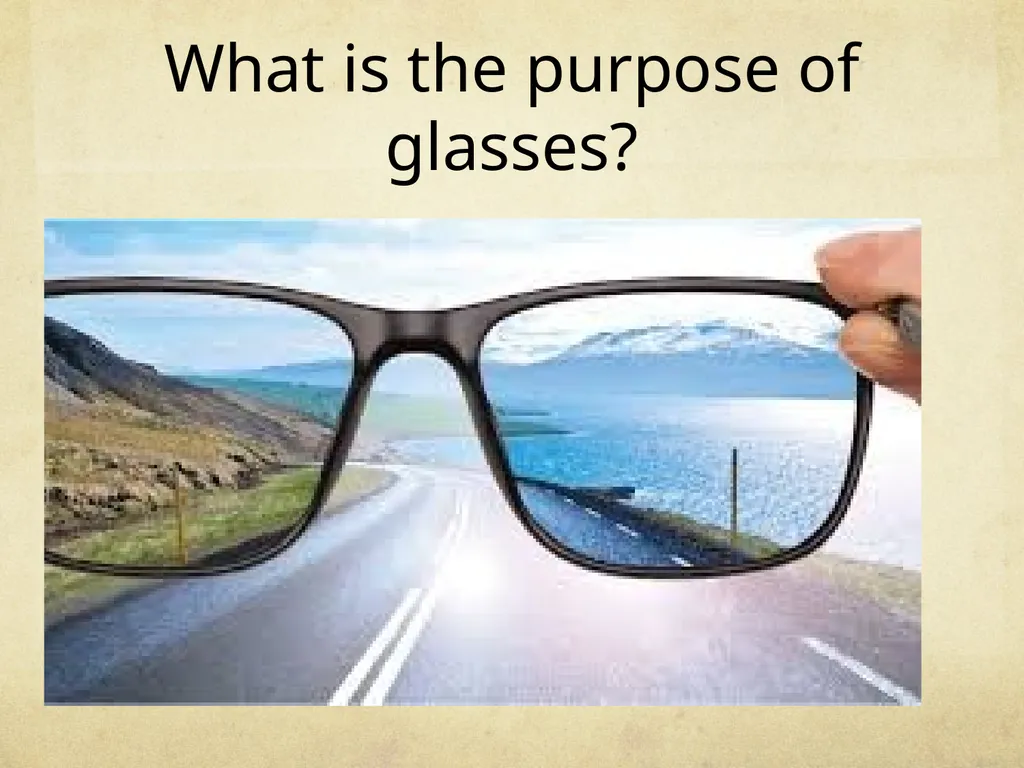
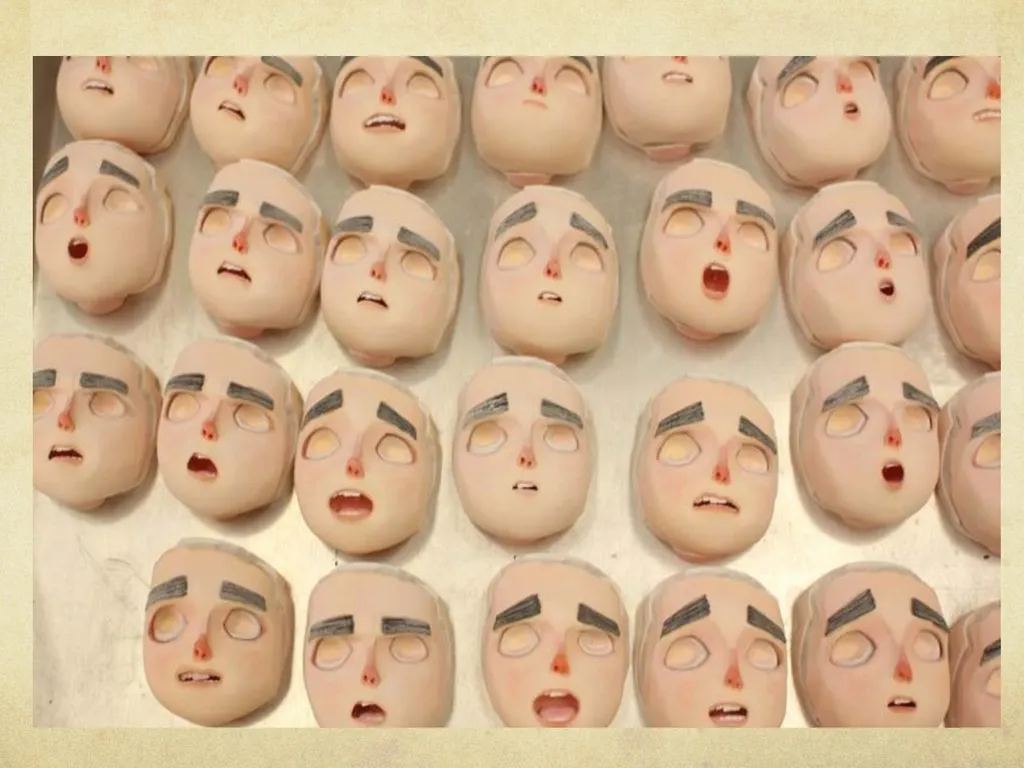
What is the purpose of glasses?<br>
03
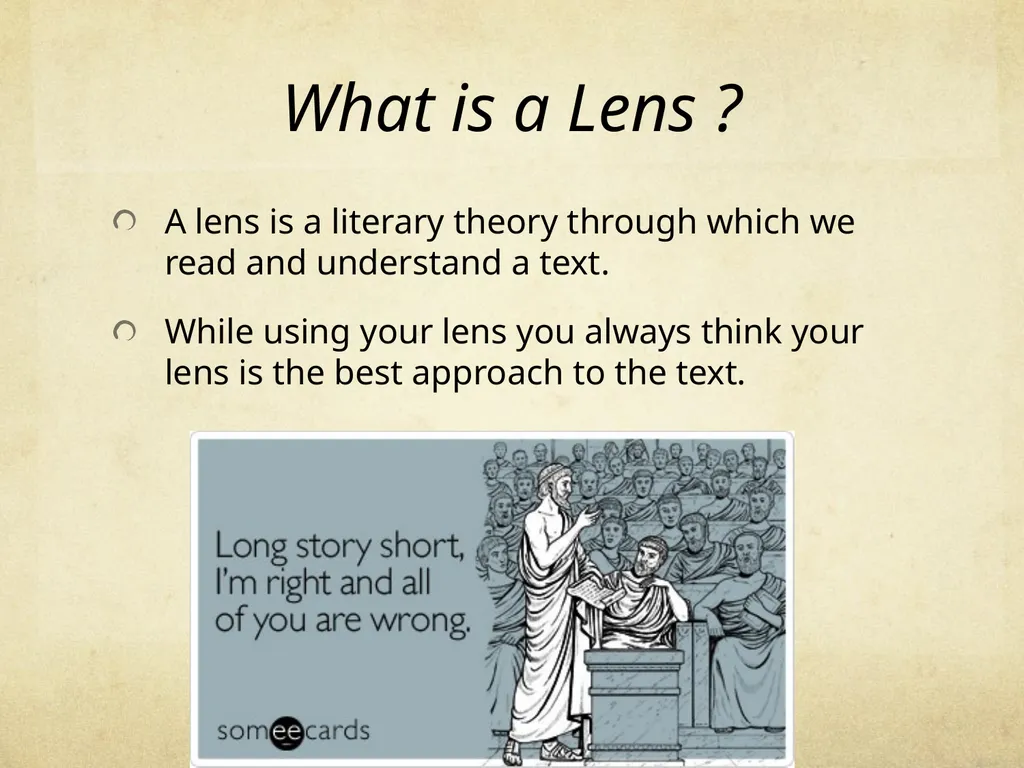
What is a Lens ? A lens is a literary theory through which we read and understand a text.
While using your lens you always think your lens is the best approach to the text.<br>
While using your lens you always think your lens is the best approach to the text.<br>
04
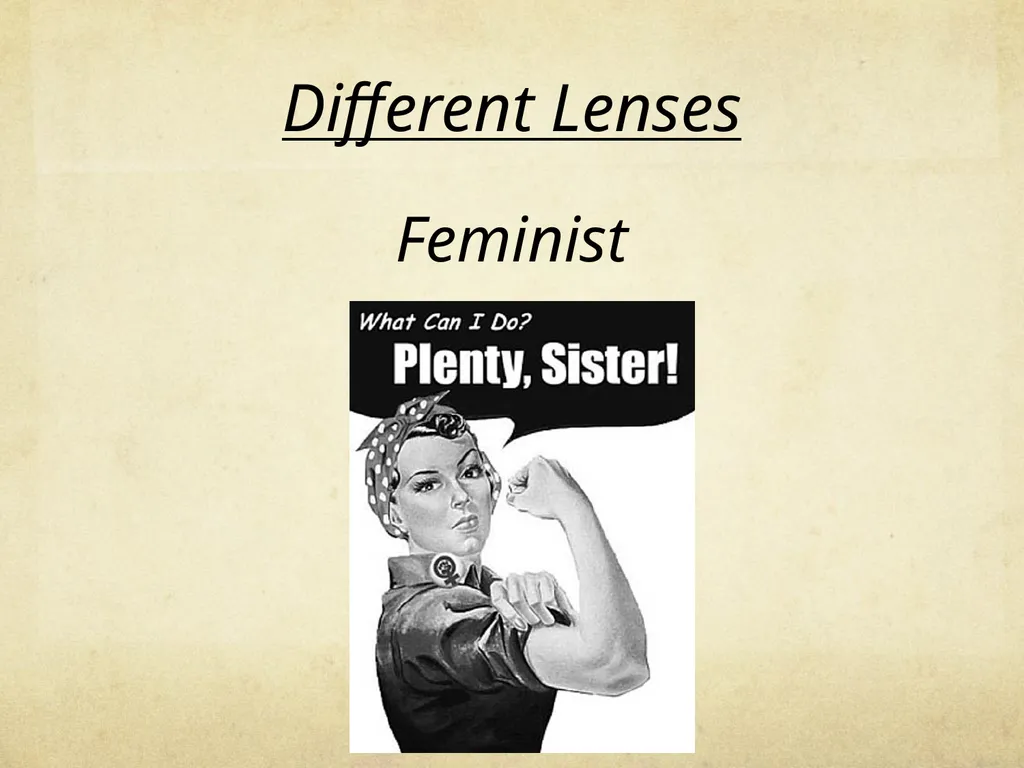
Different Lenses Feminist<br>
05
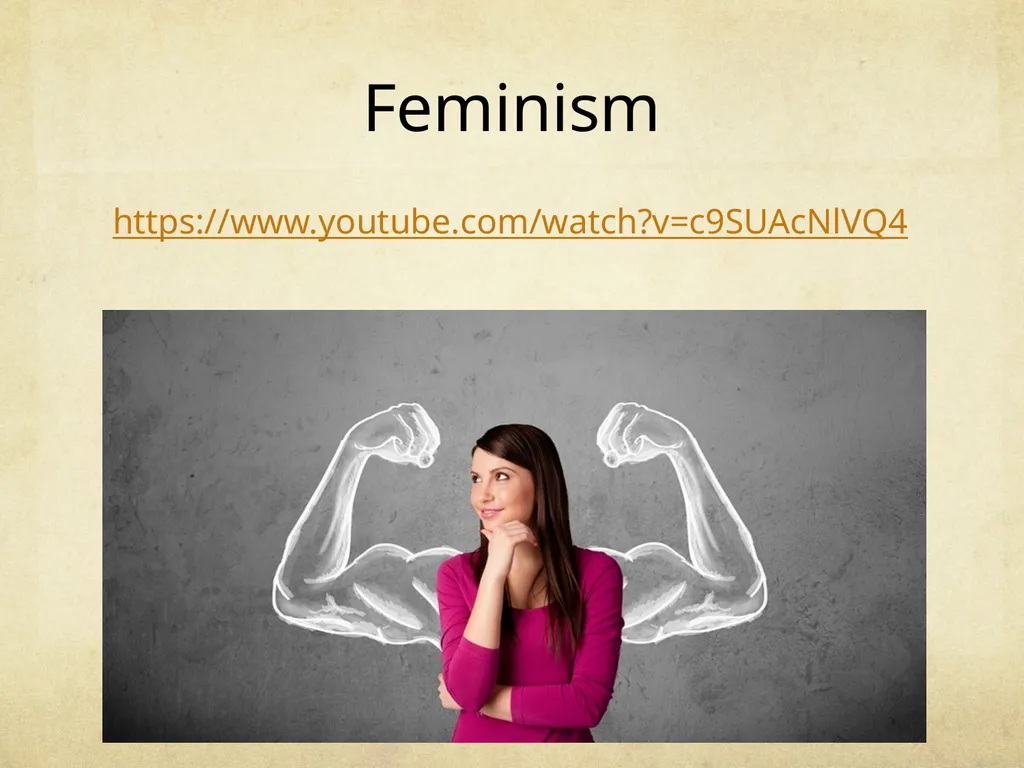
Feminism https://www.youtube.com/watch?v=c9SUAcNlVQ4<br>
06
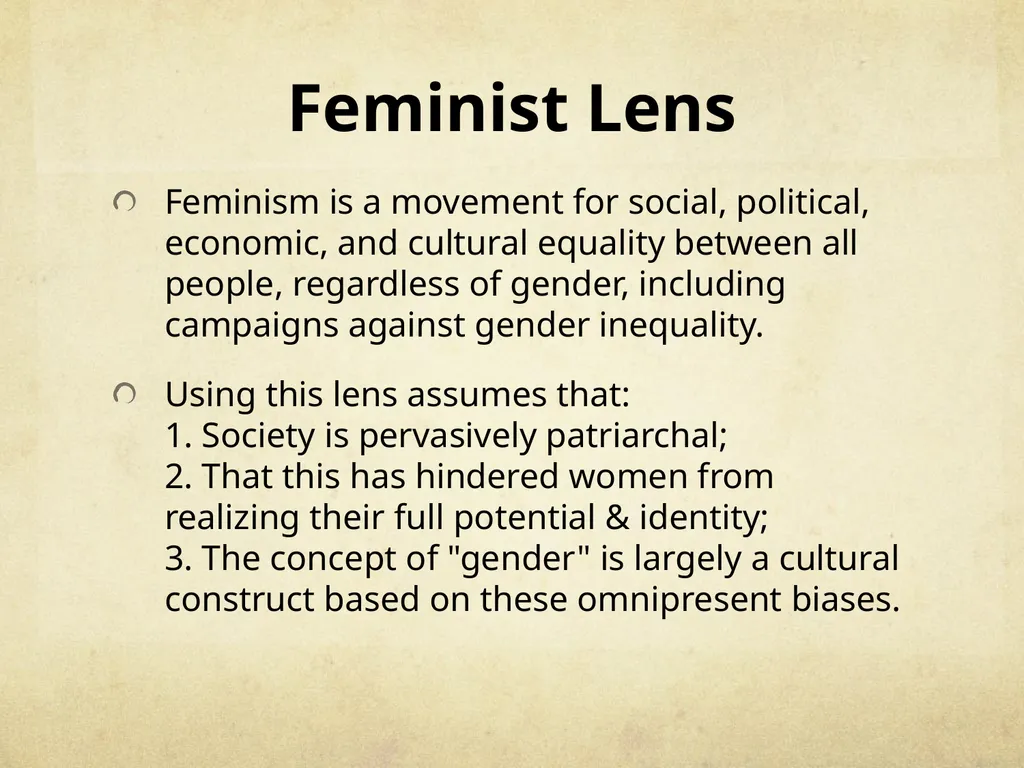
Feminist Lens Feminism is a movement for social, political, economic, and cultural equality between all people, regardless of gender, including campaigns against gender inequality.
Using this lens assumes that: 1. Society is pervasively patriarchal; 2. That this has hindered women from realizing their full potential & identity; 3. The concept of "gender" is largely a cultural construct based on these omnipresent biases.<br>
Using this lens assumes that: 1. Society is pervasively patriarchal; 2. That this has hindered women from realizing their full potential & identity; 3. The concept of "gender" is largely a cultural construct based on these omnipresent biases.<br>
07
Feminist Lens When analyzing text(s) with this lens, you’re looking at:
ROLE(s) - How are female/feminine characters represented or excluded in comparison to male/masculine ones? What does it mean to be a woman in this text? In what ways are the roles traditional or not?<br>
ROLE(s) - How are female/feminine characters represented or excluded in comparison to male/masculine ones? What does it mean to be a woman in this text? In what ways are the roles traditional or not?<br>
08
Feminist Lens POWER & INFLUENCE - How are women denied or granted power and influence in the text? In
what ways are women able to exert their power and influence? How do women either aid or
hinder the men in the text?
RELATIONSHIPS - How do men and women relate with one another in the text? What are their
relationships like? How do male/masculine characters view female/feminine ones and vice versa?<br>
what ways are women able to exert their power and influence? How do women either aid or
hinder the men in the text?
RELATIONSHIPS - How do men and women relate with one another in the text? What are their
relationships like? How do male/masculine characters view female/feminine ones and vice versa?<br>
09
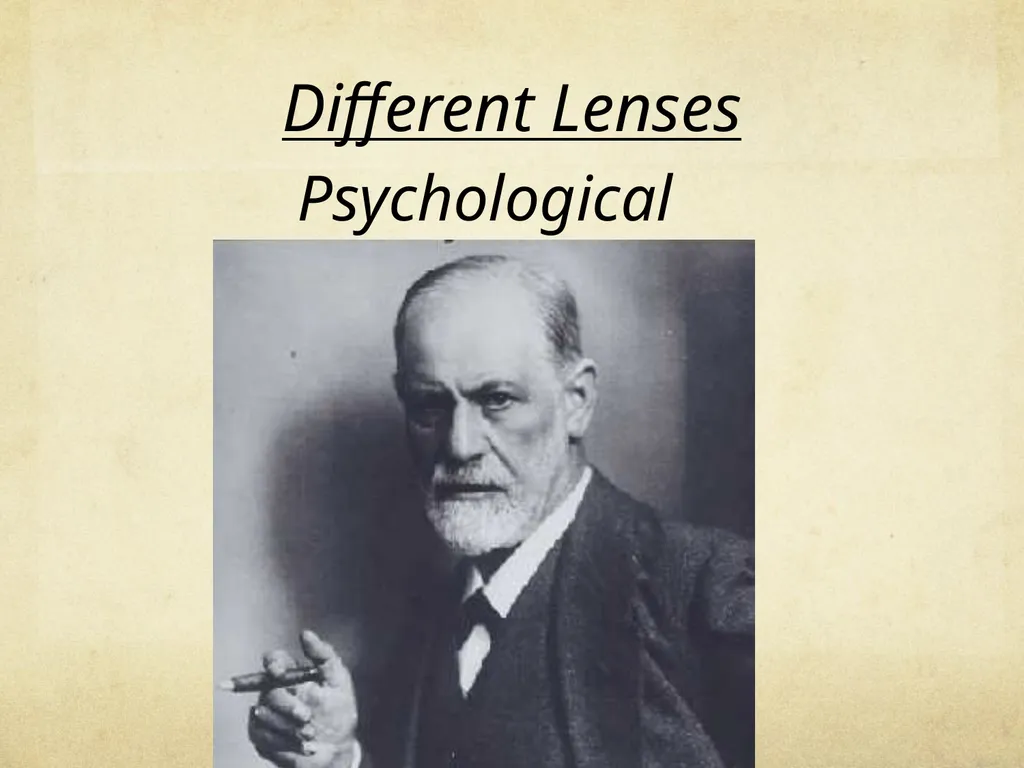
Different Lenses Psychological<br>
10
Psychological https://www.youtube.com/watch?v=mQaqXK7z9LM<br>
11
Psychological Lens The use of the principles of psychology and/or psychoanalysis to interpret EITHER or BOTH the personality, state of mind, feelings, and/or desires of its author and/or main character(s).
Using this lens assumes that: 1. Our unconscious is influenced by personal experiences, especially those from childhood; 2. This psychopathy fundamentally influences literature; 3. Our behaviours and thoughts are often sub- or un-consciously motivated.<br>
Using this lens assumes that: 1. Our unconscious is influenced by personal experiences, especially those from childhood; 2. This psychopathy fundamentally influences literature; 3. Our behaviours and thoughts are often sub- or un-consciously motivated.<br>
12
Psychological Lens When analyzing text(s) with this lens, you’re looking at:
1. MOTIVATION - How can characters' behaviour, narrative events, and/or images be explained in terms of
psychoanalytic concepts of any kind (for example, fear, jealousy, or fascination with death)? What may
unconsciously drive the character(s)? Why? 2. RELATIONSHIPS – What family dynamics are at play? What fears or insecurities do the characters have,
and how do these affect their actions and relationships with themselves and others? 3. SYMBOLISM – What symbols or metaphors or images are used that may indicate an un- or sub-conscious
desire or feeling? Is the character aware of its significance or not? In what ways?<br>
psychoanalytic concepts of any kind (for example, fear, jealousy, or fascination with death)? What may
unconsciously drive the character(s)? Why? 2. RELATIONSHIPS – What family dynamics are at play? What fears or insecurities do the characters have,
and how do these affect their actions and relationships with themselves and others? 3. SYMBOLISM – What symbols or metaphors or images are used that may indicate an un- or sub-conscious
desire or feeling? Is the character aware of its significance or not? In what ways?<br>
13
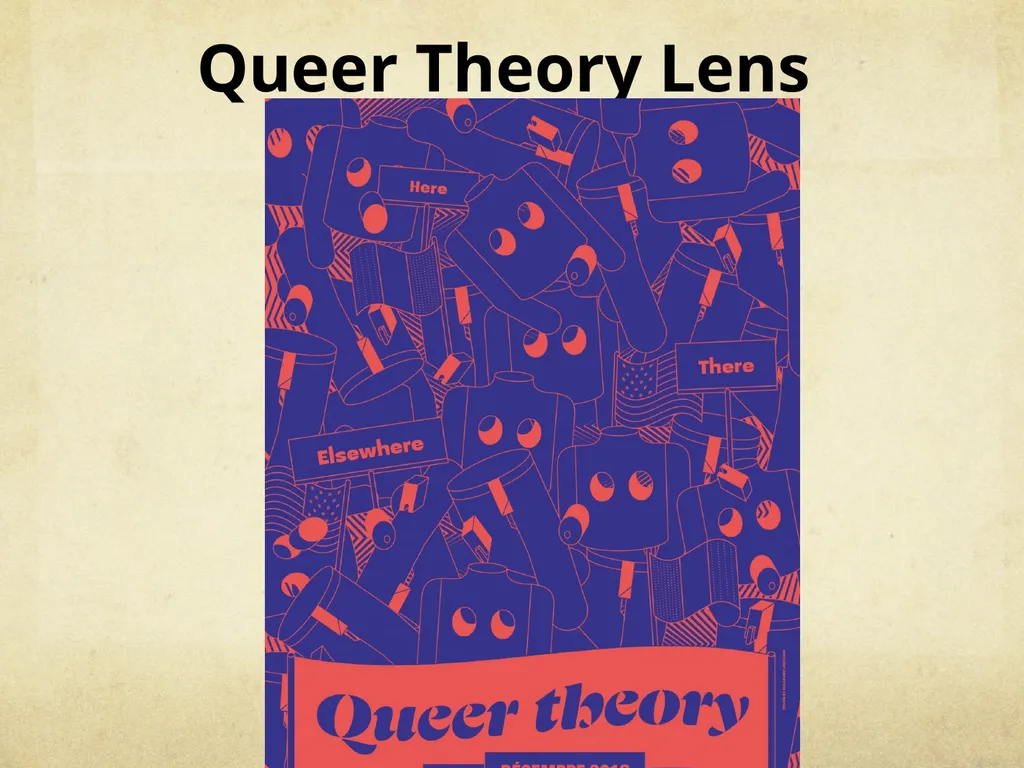
Queer Theory Lens<br>
14
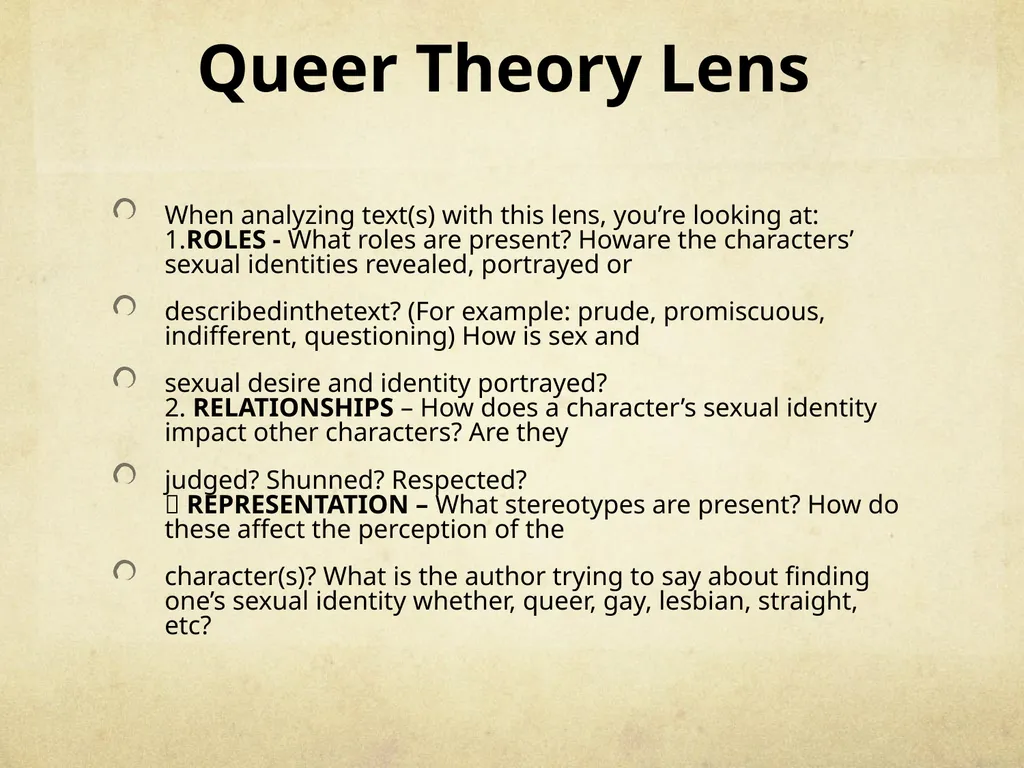
Queer Theory Lens Examines our traditional understanding of sexuality and sexual identity, and suggests that human sexuality does not fall neatly into the separate categories defined by the words homosexual and heterosexual, or that mismatches exist between sex, gender, and desire.
Using this lens assumes that: 1.The nature of sexual acts and identities is socially constructed; 2. All sexual activity or identity can fall into categories perceived as normal or deviant; 3. Individual sexuality is a fluid, fragmented, and dynamic collection of possible sexualities and it may vary at different points during one’s life.<br>
Using this lens assumes that: 1.The nature of sexual acts and identities is socially constructed; 2. All sexual activity or identity can fall into categories perceived as normal or deviant; 3. Individual sexuality is a fluid, fragmented, and dynamic collection of possible sexualities and it may vary at different points during one’s life.<br>
15
Queer Theory Lens When analyzing text(s) with this lens, you’re looking at:
1.ROLES - What roles are present? How
are the characters’ sexual identities revealed, portrayed or
described in the text? (For example: prude, promiscuous, indifferent, questioning) How is sex and
sexual desire and identity portrayed? 2. RELATIONSHIPS – How does a character’s sexual identity impact other characters? Are they
judged? Shunned? Respected? REPRESENTATION – What stereotypes are present? How do these affect the perception of the
character(s)? What is the author trying to say about finding one’s sexual identity whether, queer, gay, lesbian, straight, etc?<br>
described in the text? (For example: prude, promiscuous, indifferent, questioning) How is sex and
sexual desire and identity portrayed? 2. RELATIONSHIPS – How does a character’s sexual identity impact other characters? Are they
judged? Shunned? Respected? REPRESENTATION – What stereotypes are present? How do these affect the perception of the
character(s)? What is the author trying to say about finding one’s sexual identity whether, queer, gay, lesbian, straight, etc?<br>
16
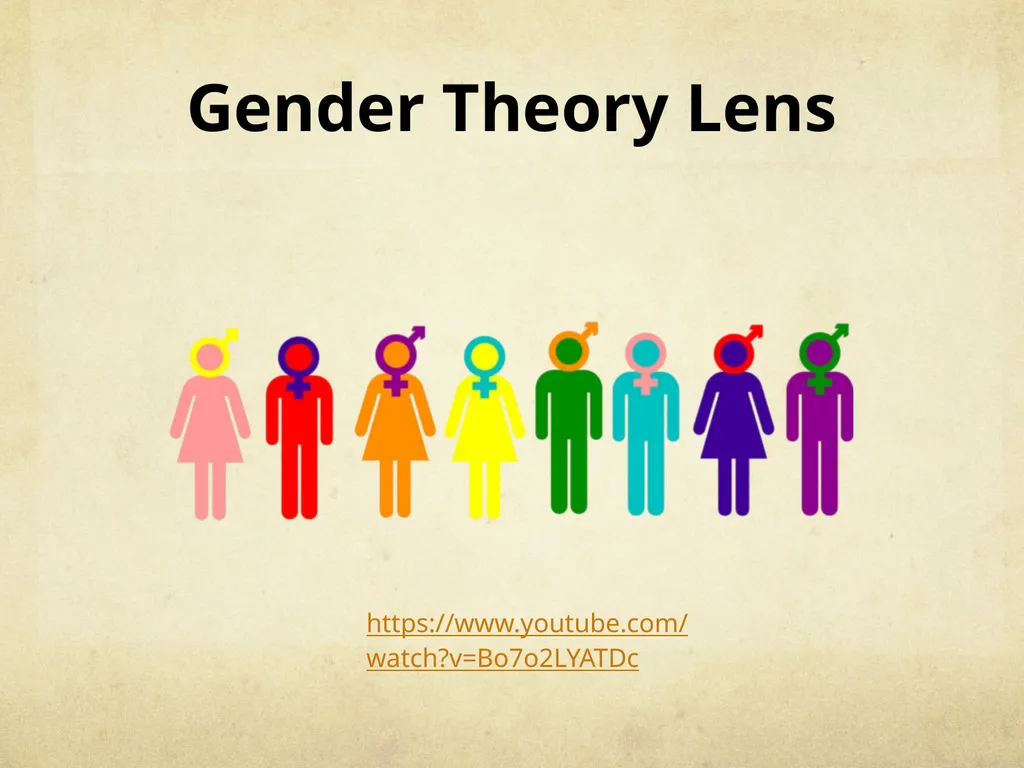
Gender Theory Lens https://www.youtube.com/watch?v=Bo7o2LYATDc<br>
17
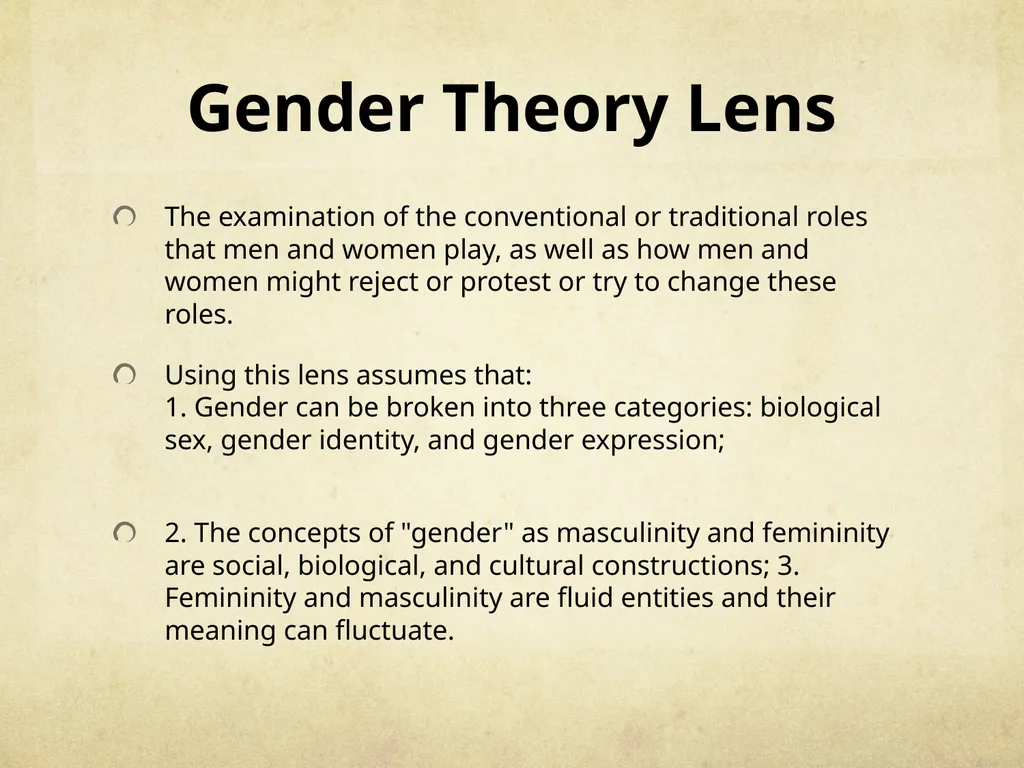
Gender Theory Lens The examination of the conventional or traditional roles that men and women play, as well as how men and women might reject or protest or try to change these roles.
Using this lens assumes that: 1. Gender can be broken into three categories: biological sex, gender identity, and gender expression;
2. The concepts of "gender" as masculinity and femininity are social, biological, and cultural constructions; 3. Femininity and masculinity are fluid entities and their meaning can fluctuate.<br>
Using this lens assumes that: 1. Gender can be broken into three categories: biological sex, gender identity, and gender expression;
2. The concepts of "gender" as masculinity and femininity are social, biological, and cultural constructions; 3. Femininity and masculinity are fluid entities and their meaning can fluctuate.<br>
18
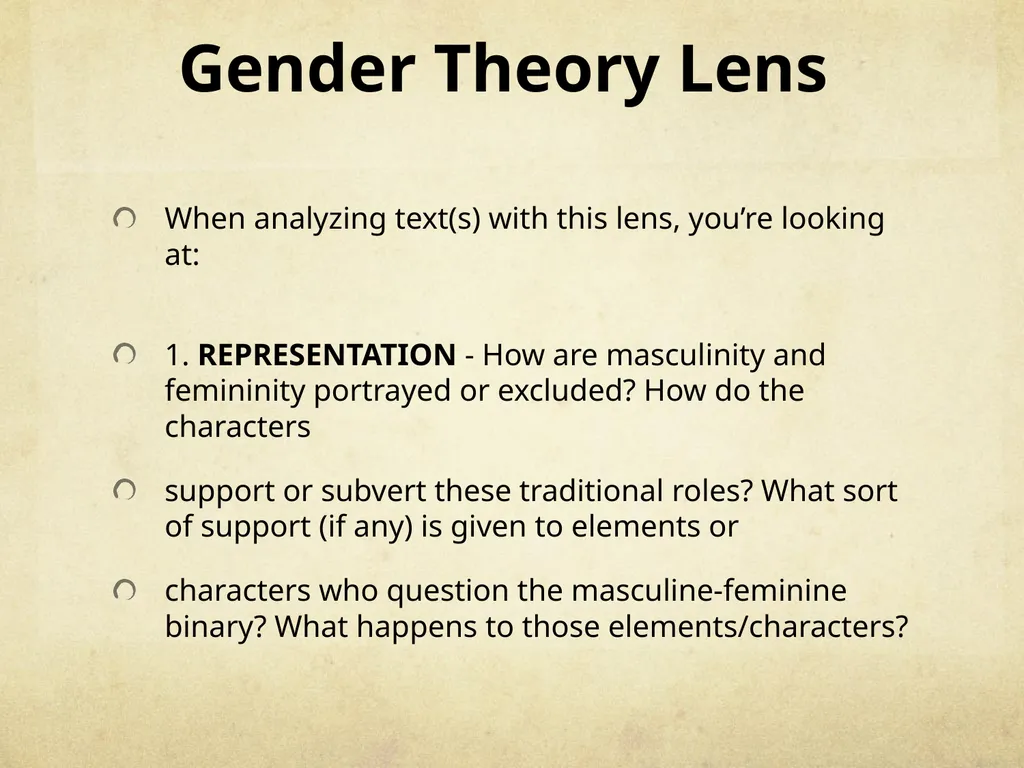
Gender Theory Lens When analyzing text(s) with this lens, you’re looking at:
1. REPRESENTATION - How are masculinity and femininity portrayed or excluded? How do the characters
support or subvert these traditional roles? What sort of support (if any) is given to elements or
characters who question the masculine-feminine binary? What happens to those elements/characters?<br>
1. REPRESENTATION - How are masculinity and femininity portrayed or excluded? How do the characters
support or subvert these traditional roles? What sort of support (if any) is given to elements or
characters who question the masculine-feminine binary? What happens to those elements/characters?<br>
19
Gender Theory Lens 2. RELATIONSHIPS – How do characters relate to each other within a given gender role? Is it traditional or subversive?
How do the characters see themselves? Do they act in accordance with this or not? Why?
3. POWER – How are the gendered roles constructed to show who in the text has power? Are these gendered roles traditional or subversive? What is the effect on of this?<br>
How do the characters see themselves? Do they act in accordance with this or not? Why?
3. POWER – How are the gendered roles constructed to show who in the text has power? Are these gendered roles traditional or subversive? What is the effect on of this?<br>
20
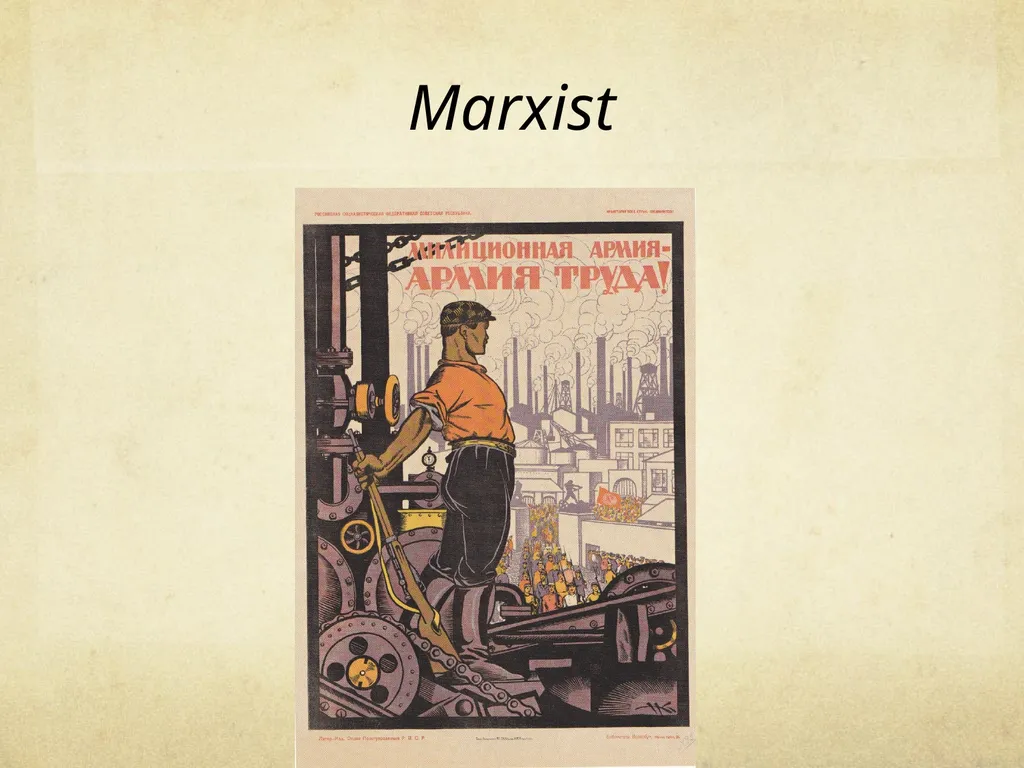
Marxist<br>
21
Marxist https://www.youtube.com/watch?v=fSQgCy_iIcc<br>
22
Marxist Lens Marxism concerns itself with class differences, economic and otherwise, as well as the implications and complications of the capitalist system.
Using this lens assumes that: 1. The history of humanity, its institutions, and its ways of thinking is determined by its basic economic
organization and who controls the modes of material production; 2. Historical changes in main modes of production effect essential changes both in the make-up of and
power relations in social classes, which carry on a conflict for economic, political, and social advantage.<br>
Using this lens assumes that: 1. The history of humanity, its institutions, and its ways of thinking is determined by its basic economic
organization and who controls the modes of material production; 2. Historical changes in main modes of production effect essential changes both in the make-up of and
power relations in social classes, which carry on a conflict for economic, political, and social advantage.<br>
23
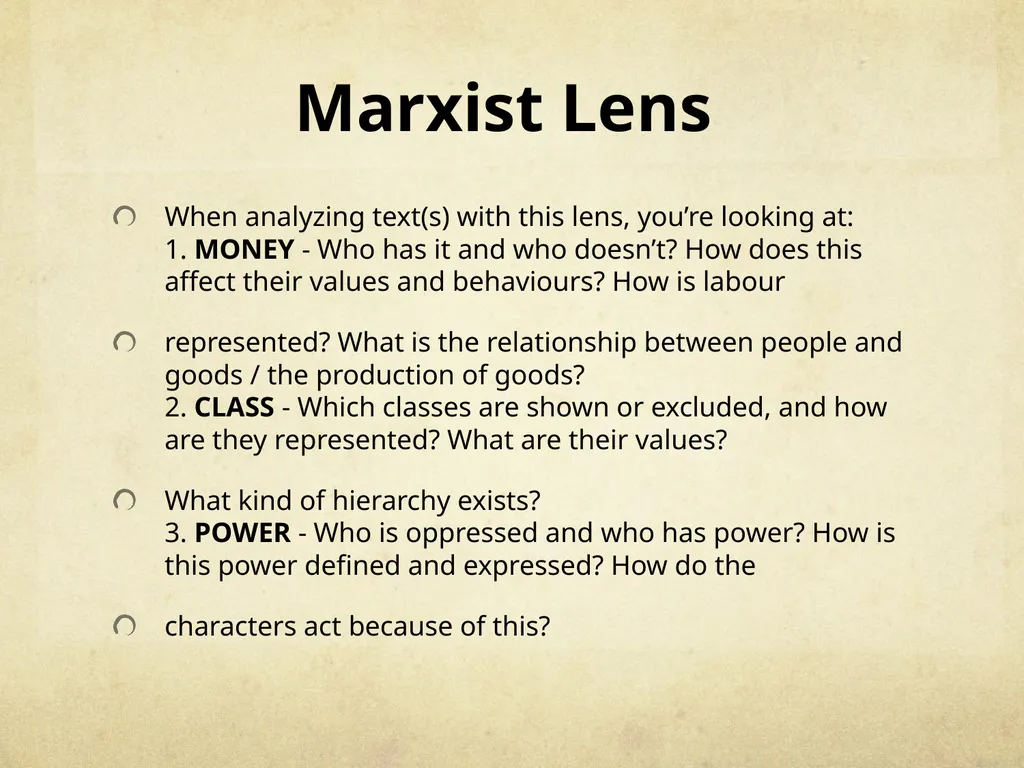
Marxist Lens When analyzing text(s) with this lens, you’re looking at:
1. MONEY - Who has it and who doesn’t? How does this affect their values and behaviours? How is labour
represented? What is the relationship between people and goods / the production of goods? 2. CLASS - Which classes are shown or excluded, and how are they represented? What are their values?
What kind of hierarchy exists? 3. POWER - Who is oppressed and who has power? How is this power defined and expressed? How do the
characters act because of this?<br>
represented? What is the relationship between people and goods / the production of goods? 2. CLASS - Which classes are shown or excluded, and how are they represented? What are their values?
What kind of hierarchy exists? 3. POWER - Who is oppressed and who has power? How is this power defined and expressed? How do the
characters act because of this?<br>
24
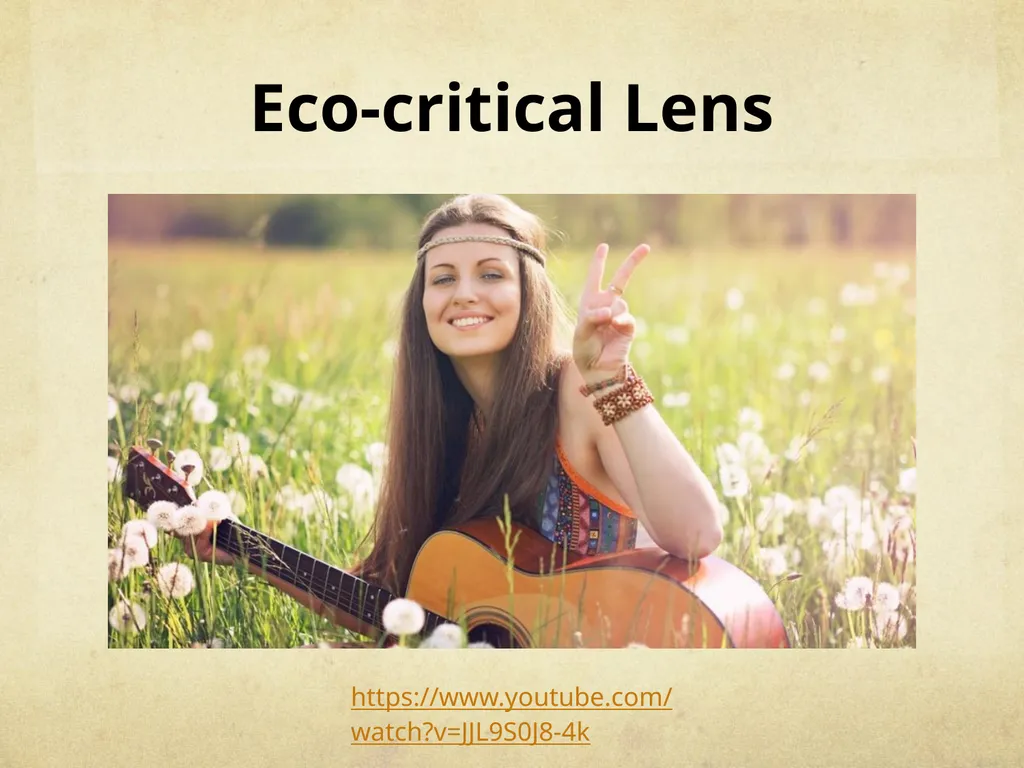
Eco-critical Lens https://www.youtube.com/watch?v=JJL9S0J8-4k<br>
25
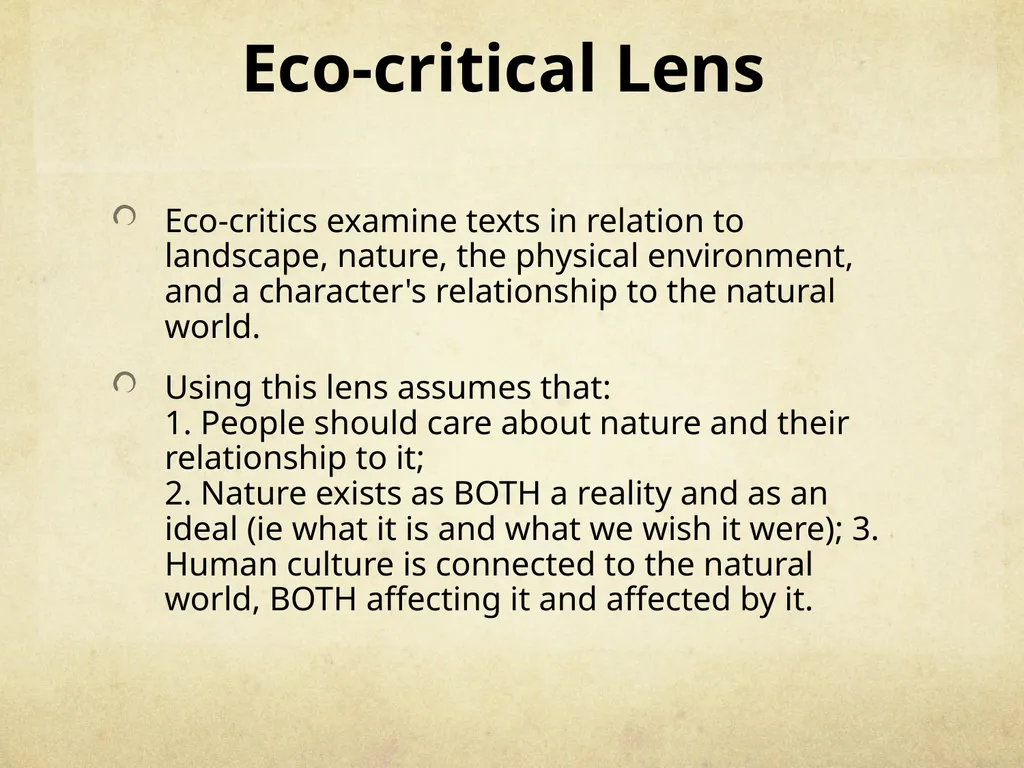
Eco-critical Lens Eco-critics examine texts in relation to landscape, nature, the physical environment, and a character's relationship to the natural world.
Using this lens assumes that: 1. People should care about nature and their relationship to it; 2. Nature exists as BOTH a reality and as an ideal (ie what it is and what we wish it were); 3. Human culture is connected to the natural world, BOTH affecting it and affected by it.<br>
Using this lens assumes that: 1. People should care about nature and their relationship to it; 2. Nature exists as BOTH a reality and as an ideal (ie what it is and what we wish it were); 3. Human culture is connected to the natural world, BOTH affecting it and affected by it.<br>
26
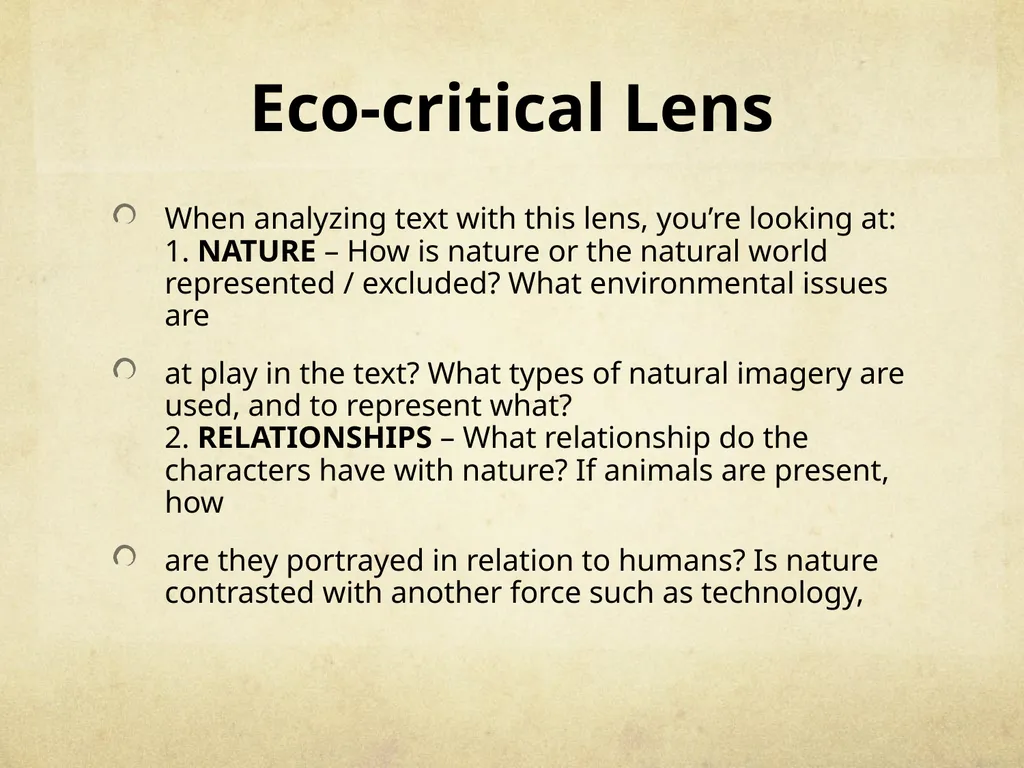
Eco-critical Lens When analyzing text with this lens, you’re looking at:
1. NATURE – How is nature or the natural world represented / excluded? What environmental issues are
at play in the text? What types of natural imagery are used, and to represent what? 2. RELATIONSHIPS – What relationship do the characters have with nature? If animals are present, how
are they portrayed in relation to humans? Is nature contrasted with another force such as technology,<br>
at play in the text? What types of natural imagery are used, and to represent what? 2. RELATIONSHIPS – What relationship do the characters have with nature? If animals are present, how
are they portrayed in relation to humans? Is nature contrasted with another force such as technology,<br>
27
Eco-critical Lens 3. POWER – How is power represented? Do people have it over nature or the other way around? Where is
nature in this hierarchy or human-nature binary? Is nature an oppressive force or not? How is the land treated?<br>
nature in this hierarchy or human-nature binary? Is nature an oppressive force or not? How is the land treated?<br>
28
Post-colonial Lens<br>
29
Post-colonial Lens This approach deals with post-colonial identity (cultural, national, ethnic), gender, race, and racism, and the formation of a post-colonial society and post-colonial national identity.
Using this lens assumes that:
A colonized people's culture was used against them, in service of the colonizer's interests;
Knowledge about the world is created under specific socio-economic relations between the powerful and powerless;
Identity politics include the perspectives of the colonial subjects, their resistance to the colonizer's culture, and how that resistance complicated the imperial-colony project.<br>
Using this lens assumes that:
A colonized people's culture was used against them, in service of the colonizer's interests;
Knowledge about the world is created under specific socio-economic relations between the powerful and powerless;
Identity politics include the perspectives of the colonial subjects, their resistance to the colonizer's culture, and how that resistance complicated the imperial-colony project.<br>
30
Post-colonial Lens When analyzing text(s) with this lens, you’re looking at:
1. ROLES – What does the text reveal about the problem of post-colonial identity, including the relationship between personal and cultural identity and such issues as double consciousness and hybridity? What person(s) or group(s) does the work identify as "other" or stranger? How are they described and treated?<br>
31
Post-colonial Lens 2. RELATIONSHIPS – How do the main characters interact with larger society? Do they try to fit in or be something they’re not? How? Why? What does the text reveal about the operations of cultural difference - the ways in which race, religion, class, gender, sexual orientation, cultural beliefs, and customs combine to form individual identity - in shaping our perceptions of ourselves, others, and the world?
3. POWER – How does the literary text, explicitly or allegorically, represent various aspects of colonial oppression? What does the text reveal about the politics and/or psychology of anti-colonialist characters/elements?<br>
3. POWER – How does the literary text, explicitly or allegorically, represent various aspects of colonial oppression? What does the text reveal about the politics and/or psychology of anti-colonialist characters/elements?<br>
32
Archetypal Lens<br>
33
Archetypal Lens The analysis of recognizable patterns that are identifiable in a wide variety of works of literature. The over-arching type of theme, plot pattern, character, motif, etc. that is repeated in text after text over time. Such as, the star crossed lovers in Romeo & Juliet being kept apart by family circumstance being repeated in stories such as The Notebook; the types (stereotypes) of characters in teen films; the hero’s journey as seen in The Odyssey through Lord of the Rings among others; the Jesus figure as saviour such as in Pay it Forward or The Matrix trilogy, or the femme fatale.
Using this lens assumes that: 1. Archetypal similarities reflect a set of universal, primitive, and elemental patterns; 2. These patterns are deeply rooted in the reader’s experience and can evoke a profound response due to their familiarity.<br>
Using this lens assumes that: 1. Archetypal similarities reflect a set of universal, primitive, and elemental patterns; 2. These patterns are deeply rooted in the reader’s experience and can evoke a profound response due to their familiarity.<br>
34
Archetypal Lens When analyzing text with this lens, you’re looking at:
1. PATTERNS – What is about the story structure is familiar, recurring, recognizable? Is it the types of
characters? The situations they find themselves in? The themes/motifs? The plot structure? How
does the text’s genre affect the use of these patterns? 2. REPRESENTATION – How is this recognisability or pattern used? Is the author being traditional or
subversive with it? Is it expected / conventional? Or new and different? And for what purpose?<br>
characters? The situations they find themselves in? The themes/motifs? The plot structure? How
does the text’s genre affect the use of these patterns? 2. REPRESENTATION – How is this recognisability or pattern used? Is the author being traditional or
subversive with it? Is it expected / conventional? Or new and different? And for what purpose?<br>
35
Activity https://www.youtube.com/watch?v=WlV_jQrXr7c
Analyze fairy tales using different critical lenses.<br>
Analyze fairy tales using different critical lenses.<br>
36
References Critical Encounters in High School English
By Deborah Appleman<br>
By Deborah Appleman<br>