Microencapsulation Dr. Garima Joshi Assistant Professor Microencapsulation Introduction Fundamental Consideration Reason for Encapsulation Techniques of Manufacturing Microcapsule Applications Definition:- MICROENCAPSULATION is a process by
"Microencapsulation Dr. Garima Joshi Assistant" is the property of its rightful owner. Permission is granted to
download and print the materials on this website for personal, non-commercial use only, and to display it
on your personal computer provided you do not modify the materials and that you retain all copyright
notices contained in the materials. By downloading content from our website, you accept the terms of this
agreement.
Presentation Transcript
01
Microencapsulation Dr. Garima Joshi
Assistant Professor<br>
02
Microencapsulation Introduction
Fundamental Consideration
Reason for Encapsulation
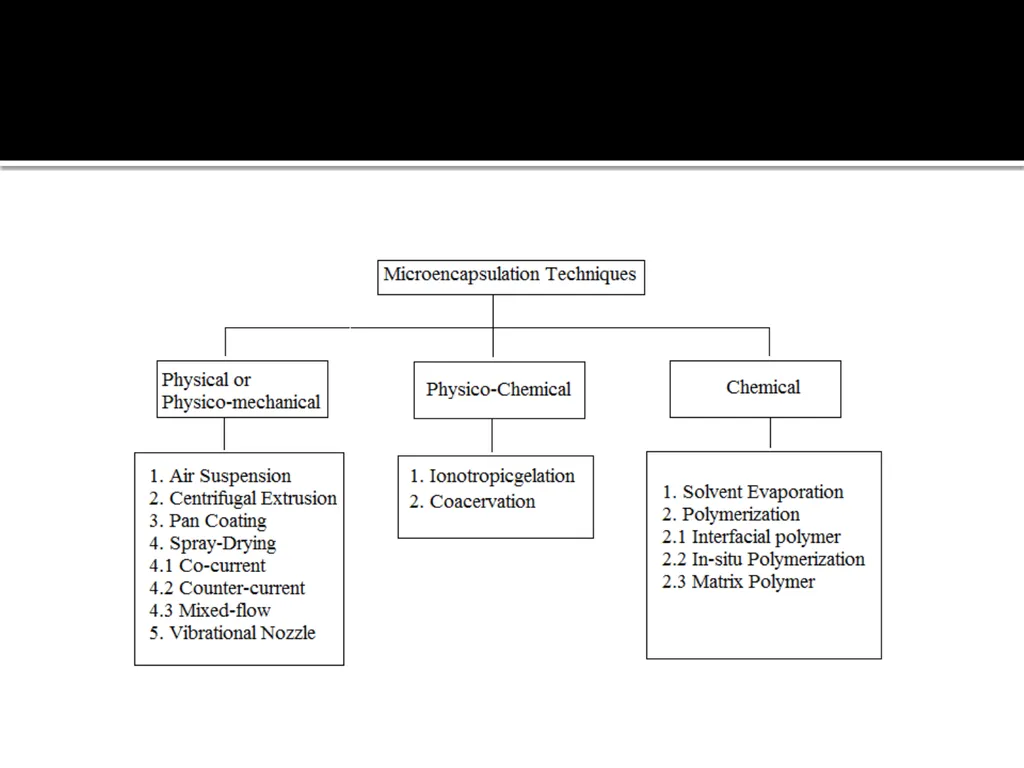
Techniques of Manufacturing Microcapsule
Applications<br>
03
Definition:- MICROENCAPSULATION is a process by which very tiny
droplets or particles of liquid or solid material are surrounded or
coated with a continuous film of polymeric material.
The product obtained by this process is called as Microcapsules<br>
04
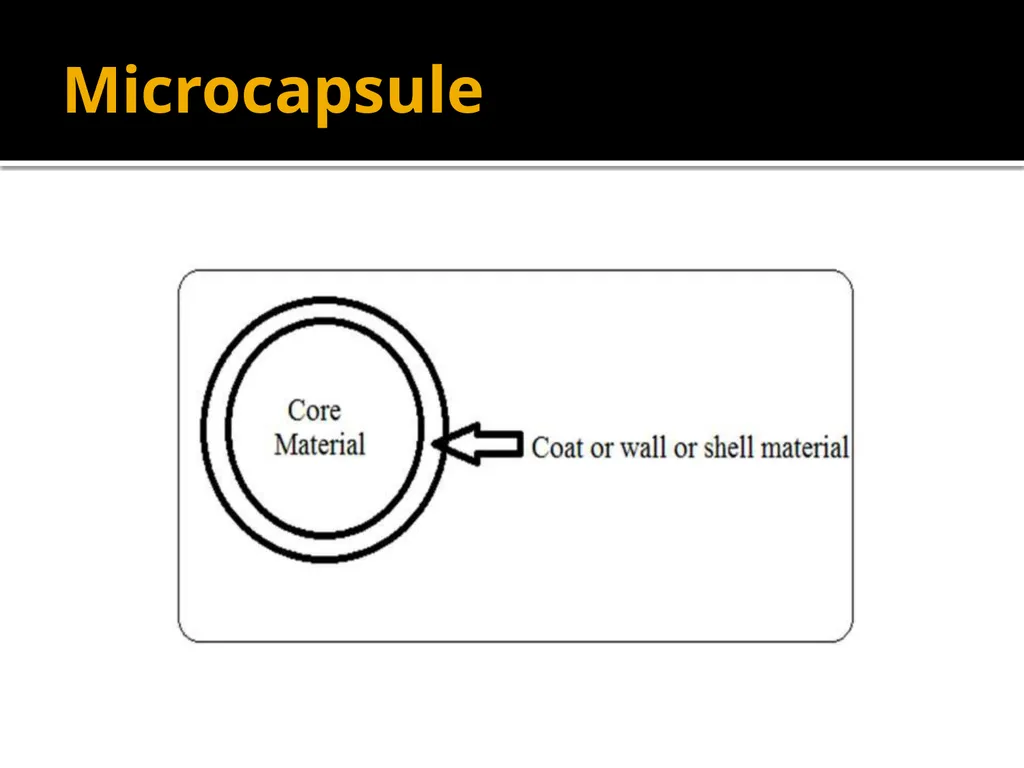
Microcapsule<br>
05
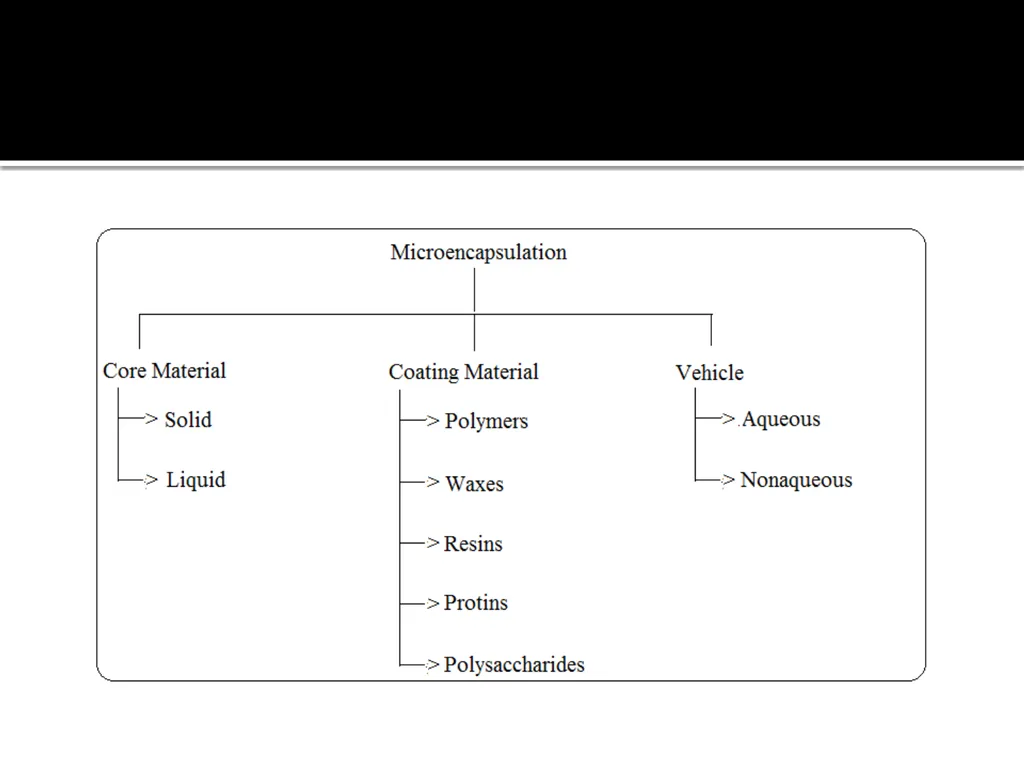
Fundamental Consideration Generally Micro particles consist of two components
a) Core material.
b) Coat or wall or shell material<br>
06
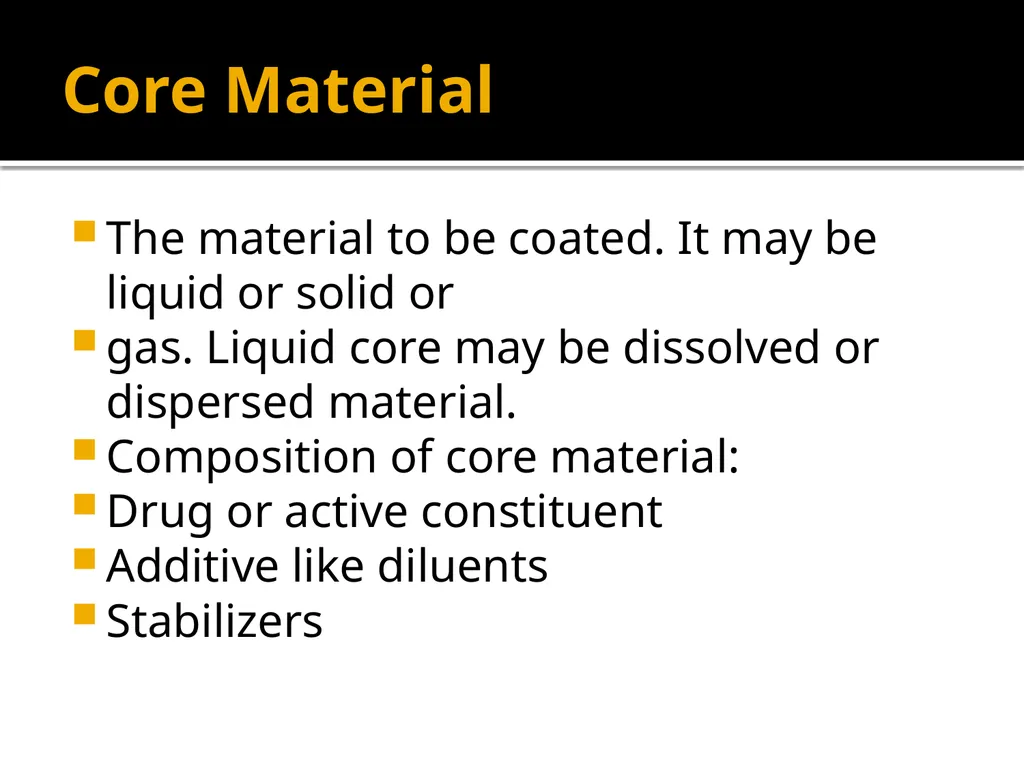
Core Material The material to be coated. It may be liquid or solid or
gas. Liquid core may be dissolved or dispersed material.
Composition of core material:
Drug or active constituent
Additive like diluents
Stabilizers<br>
07
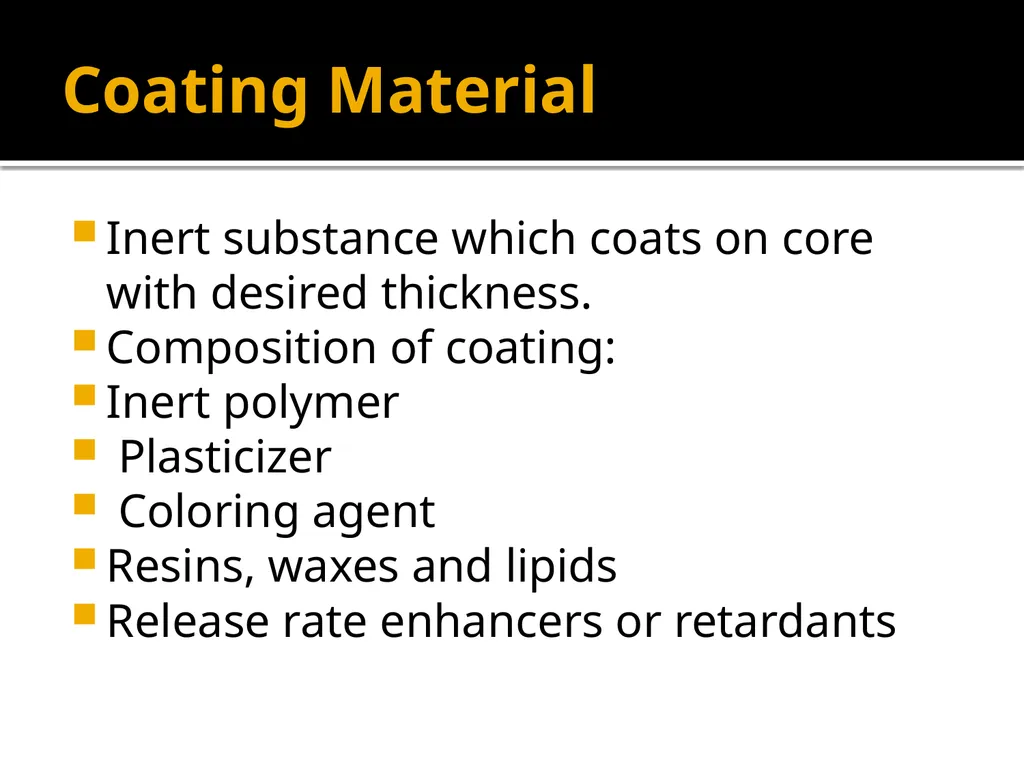
Coating Material Inert substance which coats on core with desired thickness.
Composition of coating:
Inert polymer
Plasticizer
Coloring agent
Resins, waxes and lipids
Release rate enhancers or retardants<br>
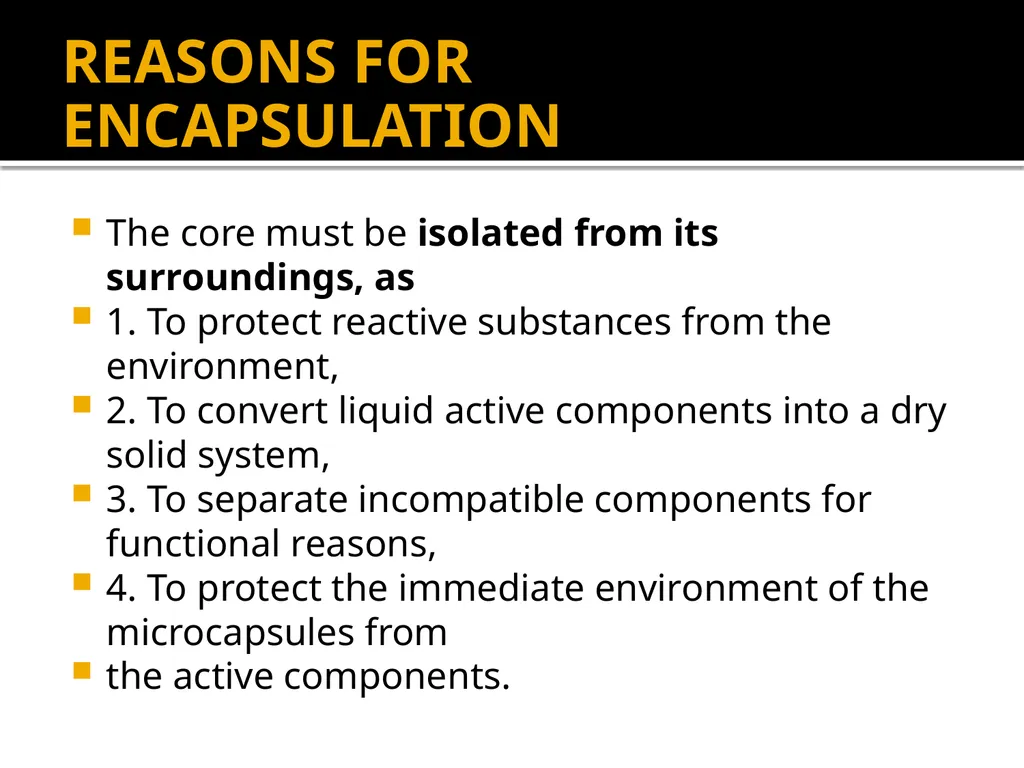
REASONS FOR ENCAPSULATION The core must be isolated from its surroundings, as
1. To protect reactive substances from the environment,
2. To convert liquid active components into a dry solid system,
3. To separate incompatible components for functional reasons,
4. To protect the immediate environment of the microcapsules from
the active components.<br>
10
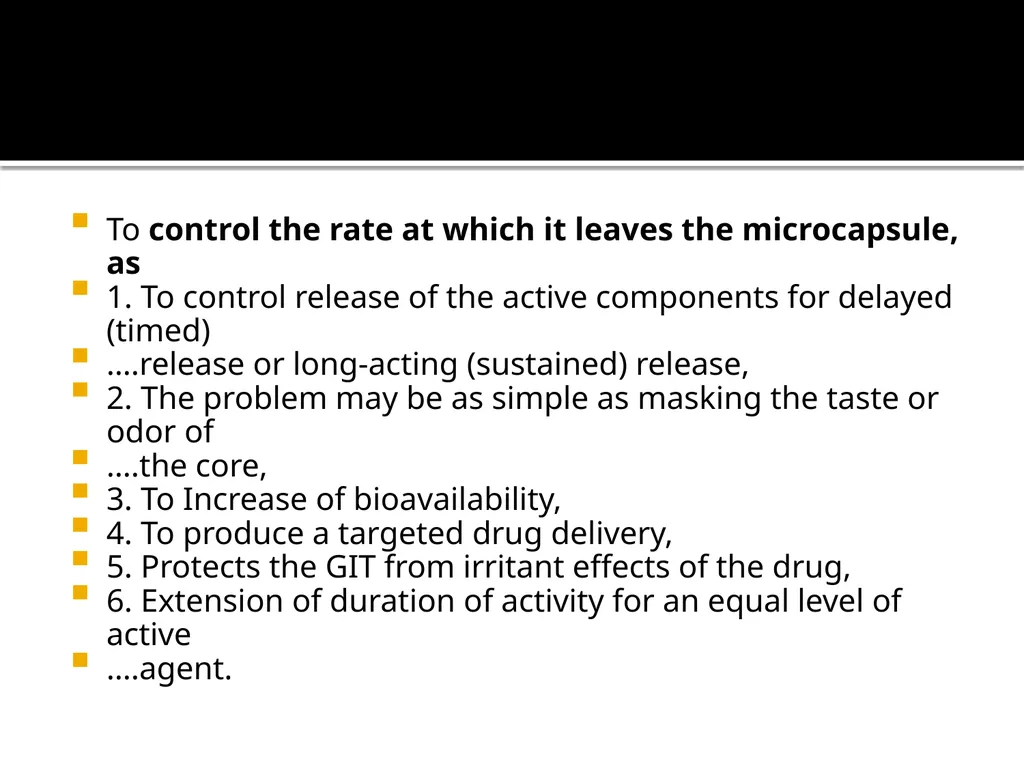
To control the rate at which it leaves the microcapsule, as
1. To control release of the active components for delayed (timed)
….release or long-acting (sustained) release,
2. The problem may be as simple as masking the taste or odor of
….the core,
3. To Increase of bioavailability,
4. To produce a targeted drug delivery,
5. Protects the GIT from irritant effects of the drug,
6. Extension of duration of activity for an equal level of active
….agent.<br>