MOHANLAL SUKHADIA UNIVERSITY UDAIPUR,(RAJ) FACULTY OF MANAGEMENT STUDIES Dr. Prerna Bhati Topic Human resource information system succession planning Human resource information system (HRIS) Hris is a systematic way of storing data and
"MOHANLAL SUKHADIA UNIVERSITY UDAIPUR,(RAJ) FACULTY" is the property of its rightful owner. Permission is granted to
download and print the materials on this website for personal, non-commercial use only, and to display it
on your personal computer provided you do not modify the materials and that you retain all copyright
notices contained in the materials. By downloading content from our website, you accept the terms of this
agreement.
Presentation Transcript
01
MOHANLAL SUKHADIA UNIVERSITY UDAIPUR,(RAJ) FACULTY OF MANAGEMENT STUDIES Dr. Prerna Bhati<br>
02
Topic Human resource information system & succession planning<br>
03
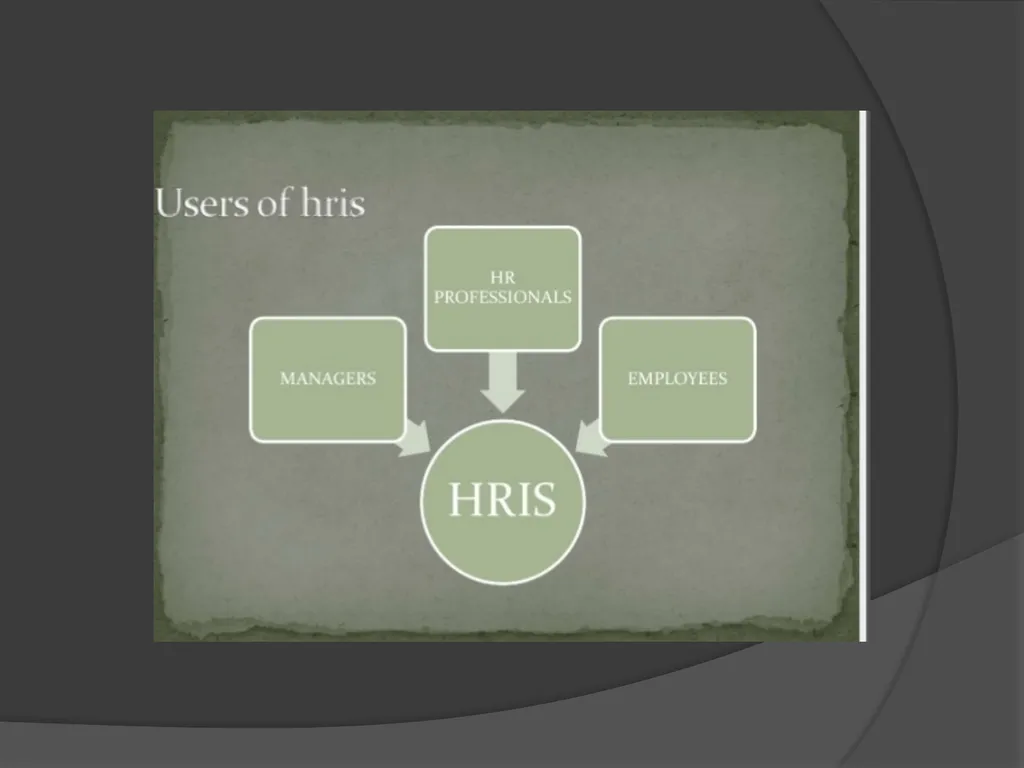
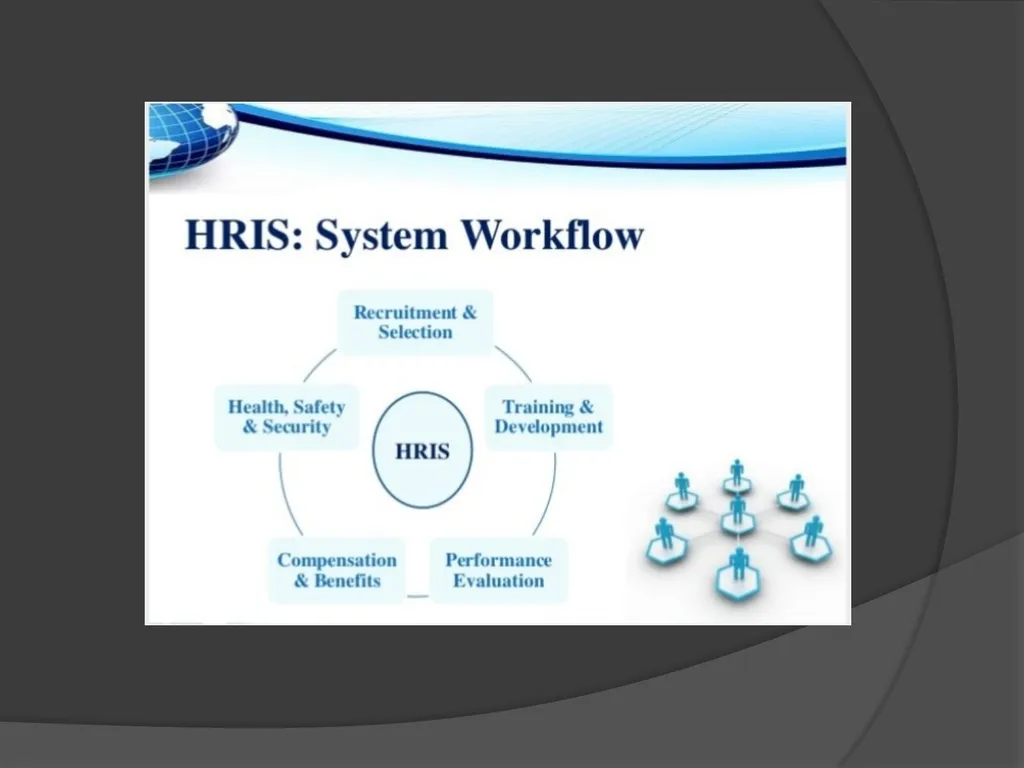
Human resource information system (HRIS) Hris is a systematic way of storing data and information for each individual employee to aid planning, decision making and submitting of returns and reports to the external agencies.
A method by which an organization collects, analyses & reports the information about people and job.<br>
04
Functions of HRIS Create and maintain employee records.
Ensure legal compliance.
Forecast and plan future HR requirements.
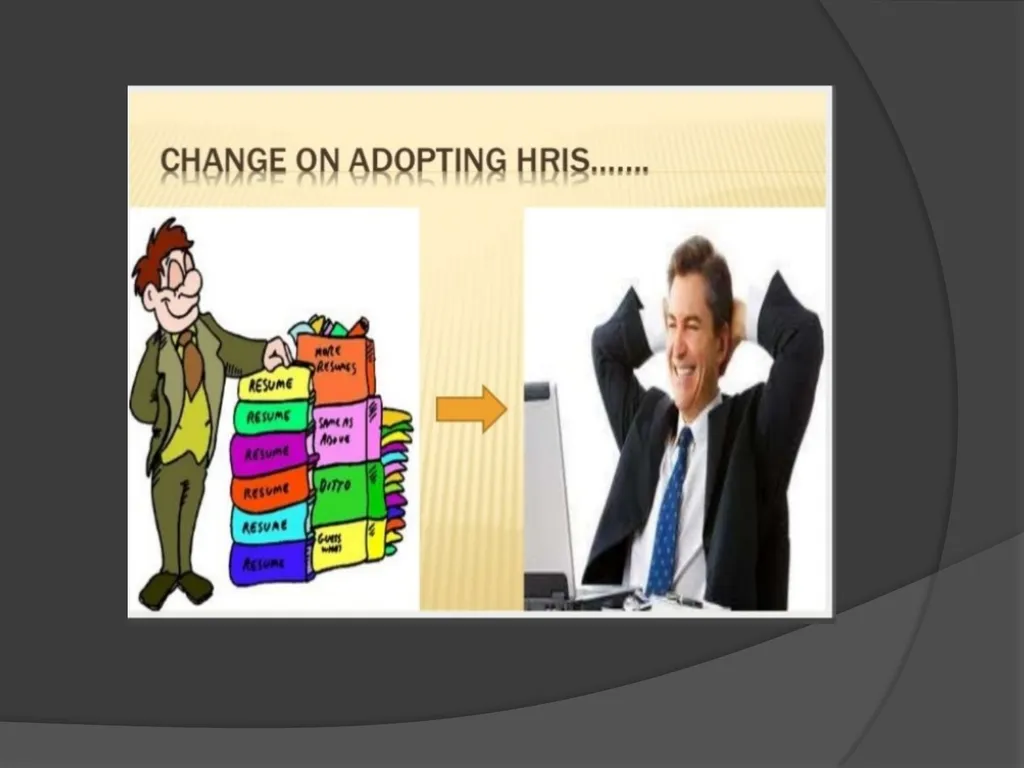
Reduces the manual work.
Assist managers by providing the relevant data.<br>
05
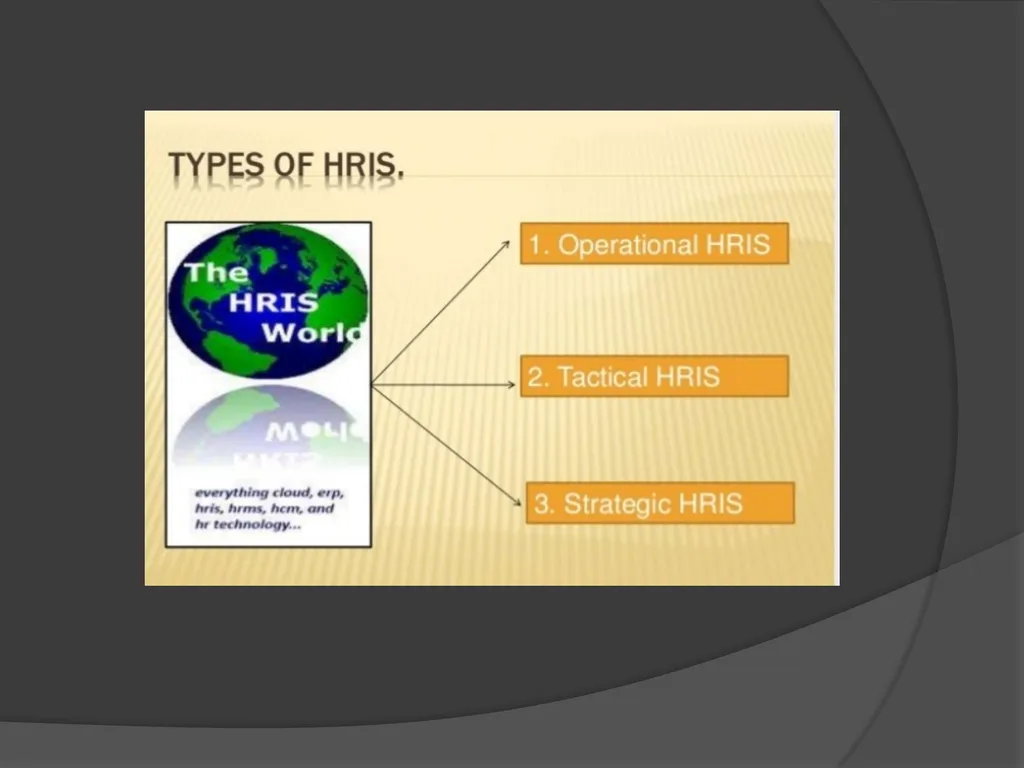
Operational HRIS Operational HRIS provides data to support routine and repetitive human resource decisions.
Information is detailed , structured , accurate and internal.<br>
06
Strategic HRIS Strategic HRIS helps top level managers to set goals and directions for organization.
Gather and manage information from within and outside organization.<br>
07
Tactical HRIS Supports management decisions emphasizing allocation of human resources.
The decisions include recruitment decisions , job analysis and design decision , training and development , and employee compensation plan decisions.<br>
08
Objectives To offer sufficient, comprehensive & on going information about people & jobs.
To supply up to date information at a reasonable cost.
To offer data security & personal privacy.
Availability of timely and accurate information about human assets.<br>
09
Advantages Accuracy : if HR has to transfer information between multiple software systems and paper files , error inevitably creep in . Using one single system eliminates that problem.
Security : paper files are easy to access , even by people who have no right to the information. HRIS can restrict access to those who need to know.
Saving time : accrued time off and the unused balance are easier and faster to track and adjust with a computer than with a spreadsheet.<br>
10
Compliance : good HRIS vendors keep the software updated to comply with relevant government regulations.
Improves productivity : it improves productivity related to financial management through payroll processing tasks and benefits administration.<br>
11
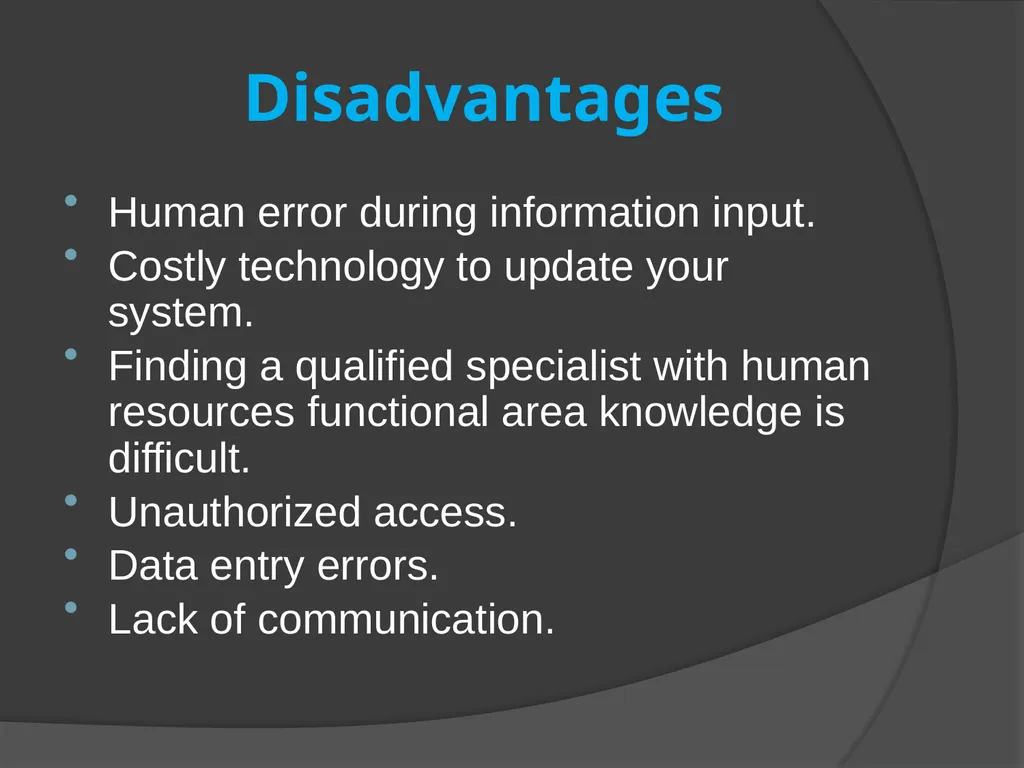
Disadvantages Human error during information input.
Costly technology to update your system.
Finding a qualified specialist with human resources functional area knowledge is difficult.
Unauthorized access.
Data entry errors.
Lack of communication.<br>
12
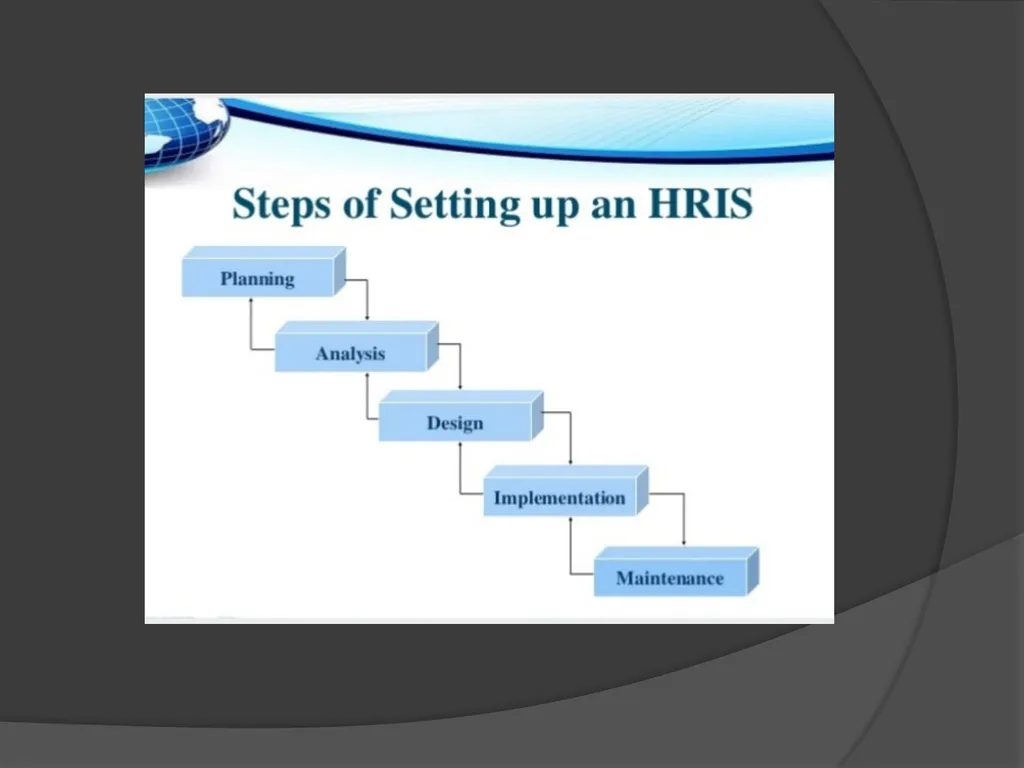
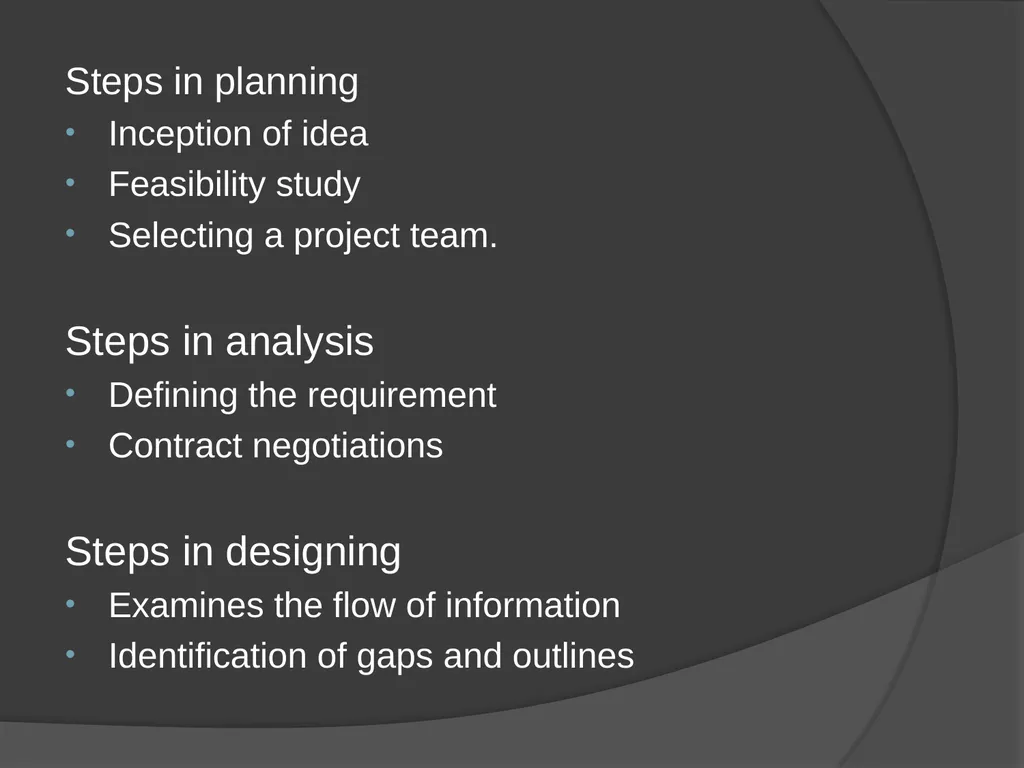
Steps in planning
Inception of idea
Feasibility study
Selecting a project team.
Steps in analysis
Defining the requirement
Contract negotiations
Steps in designing
Examines the flow of information
Identification of gaps and outlines<br>
13
Steps in implementing
Training
Implementing
Collecting the data
Testing the system
Starting up
Steps in maintenance
Maintaining of HRIS
Auditing<br>
14
Example : HRIS in hospitals Low resource countries face difficulties in meeting the health care needs of their people. For eg. countries in sub Saharan Africa suffer from 24% of the global disease burden , but have only three percent of the global health workforce to provide necessary services.
Routine and accurate HRIS data helps to deploy the right health workers in the right places to meet the health care needs.<br>
15
HRIS can be used to standardize and support ongoing management and support of health workforce.
Capacity Plus Inc, Intrahealth international are some of the HRIS software used in healthcare industry.<br>
16
Succession planning Succession planning is defined as a method for identifying and developing people within an organization that has the potential to be able to fill leadership positions in the company.
It specially focuses on ensuring the availability and sustainability of supply of capable staff that are ready to assume key or critical organizational roles as they become available.<br>
17
What is succession planning? Succession planning is the process of training and preparing employees in an organization so that there will always be someone to replace an employee who leaves.<br>
18
Reason for succession planning Identify highly talented individuals.
Promoting employee development.
Refining corporate planning.
Establishing the talent pool.
Ensuring the organization is prepared with a support plan when key people leave.<br>
19
Advantages of succession planning Business is prepared for the immediate loss of a key employee.
Employees selected are continually trained and developed.
Defined career paths , which will help the company recruit and retain better people.
Retention of knowledge of business practices.<br>
20
Disadvantages of succession planning Appointing the wrong person can lead to a variety of problems that result in poorer company performance and turnover.
A poorly conducted succession planning process will lead to poor decisions , disharmony and ultimately poor company performance as well.<br>
21
Succession planning process 1.Review plans and identify key positions:
The first step in succession planning is to identify current or future key positions or groups in the organization.
2. Listing the competencies:
All positions require a particular set of skills, abilities and knowledge. Therefore, find & list the employees who are perfectly suitable for the corresponding job role.<br>
22
3. Identifying and helping potential candidates:
This step is similar to general job recruitment practice. But it goes one step ahead by helping candidates who show great interest in developing the requisite skills for the particular position.
4. Developing plans:
Once organization found the relevant candidate suitable for the role, based on their potential for success and interest in a key position, the organization should ensure that these employees have access to development opportunities & learning tools.<br>
23
5. Implementing the process:
The final step is to implement and evaluate the process. You have to plan the activities and inputs you have to get the desired outputs.
Every step in this process has to be evaluate to measure the success and progress of the plan.<br>
24
Conclusion HRIS is the systematic way of storing data and information for planning, decision making & preparing reports.
Succession planning is the development of potential successor in an organization.<br>