Organizational Behavior Module 4: Individual Personalities and Behaviors Module Learning Outcomes Recognize the importance of valuing individuals differences 4.1: Describe how individual personality and behavior impacts the typical
"Organizational Behavior Module 4: Individual" is the property of its rightful owner. Permission is granted to
download and print the materials on this website for personal, non-commercial use only, and to display it
on your personal computer provided you do not modify the materials and that you retain all copyright
notices contained in the materials. By downloading content from our website, you accept the terms of this
agreement.
Presentation Transcript
01
Organizational Behavior Module 4: Individual Personalities and Behaviors<br>
02
Module Learning Outcomes Recognize the importance of valuing individuals' differences
4.1: Describe how individual personality and behavior impacts the typical contemporary work experience
4.2: Describe how the modern workplace can both homogenize/conform behavior, and encourage individuality and personal expression<br>
03
Personality and Behavior in the Workplace<br>
04
Learning Outcomes: Personality and Behavior in the Workplace 4.1: Describe how individual personality and behavior impacts the typical contemporary work experience
4.1.1: Examine personality traits
4.1.2: Discuss how personality traits can influence or predict behavior
4.1.3: Discuss situational influences on personality<br>
05
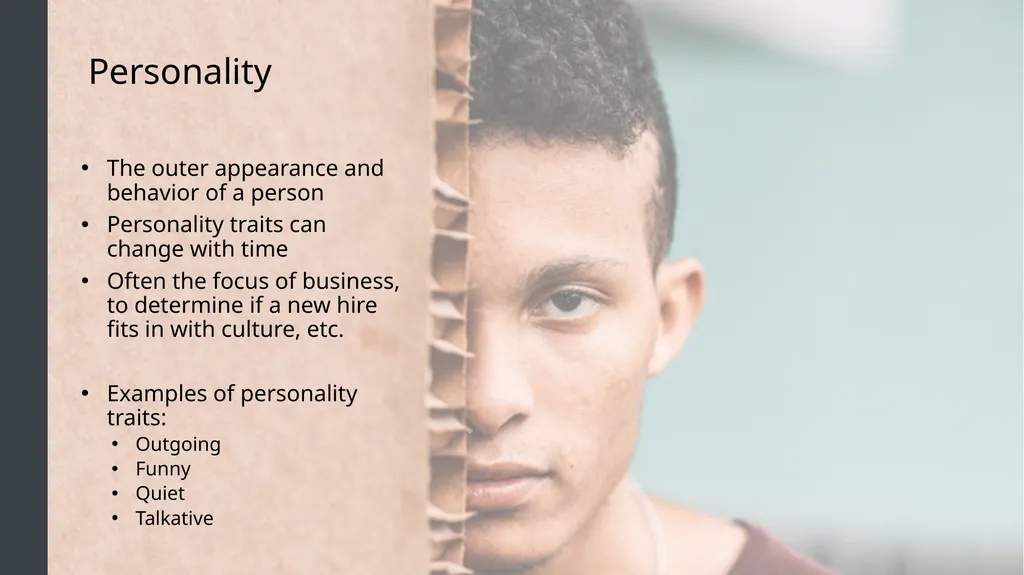
Personality The outer appearance and behavior of a person
Personality traits can change with time
Often the focus of business, to determine if a new hire fits in with culture, etc.
Examples of personality traits:
Outgoing
Funny
Quiet
Talkative<br>
06
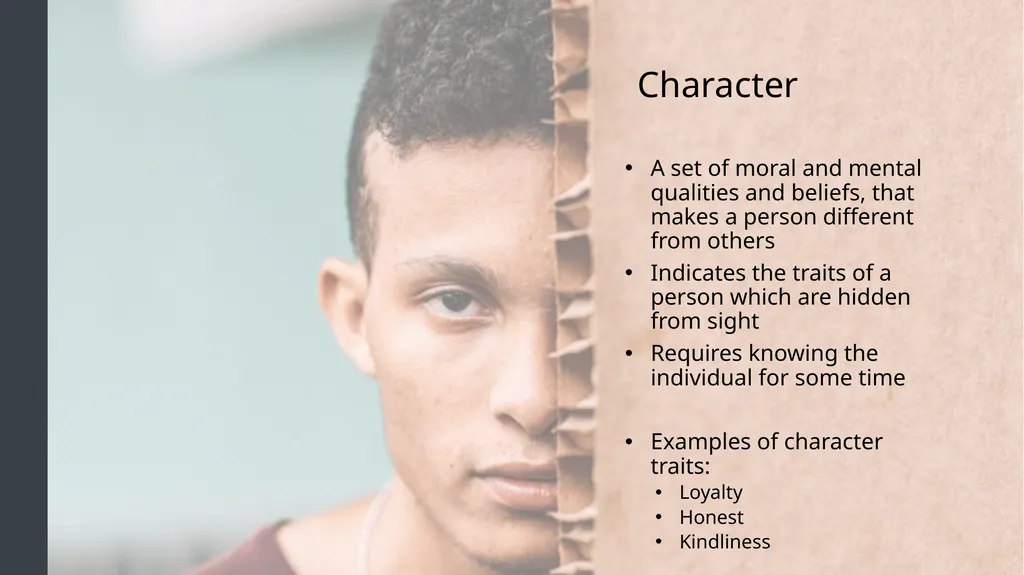
Character A set of moral and mental qualities and beliefs, that makes a person different from others
Indicates the traits of a person which are hidden from sight
Requires knowing the individual for some time
Examples of character traits:
Loyalty
Honest
Kindliness<br>
07
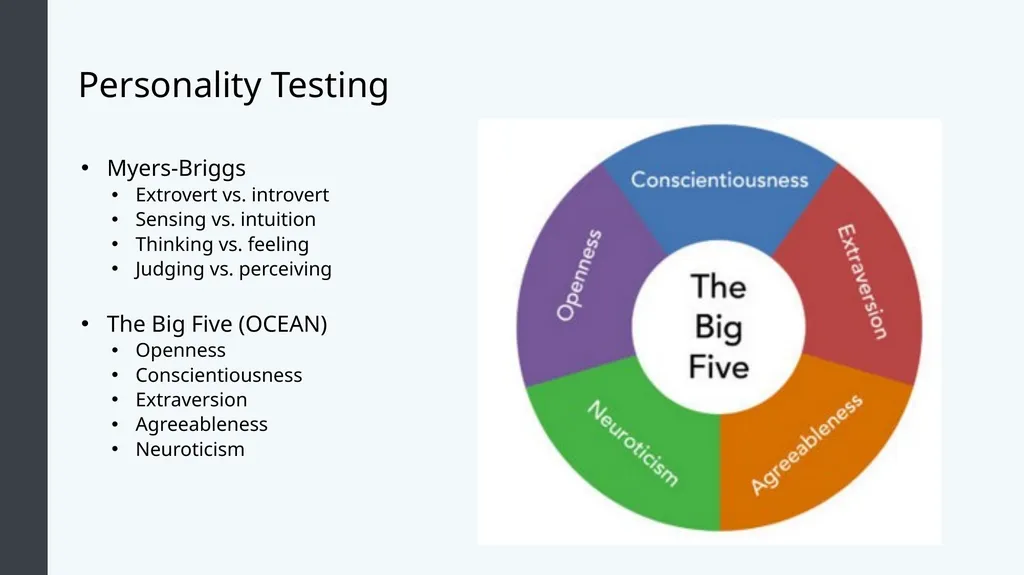
Personality Testing Myers-Briggs
Extrovert vs. introvert
Sensing vs. intuition
Thinking vs. feeling
Judging vs. perceiving
The Big Five (OCEAN)
Openness
Conscientiousness
Extraversion
Agreeableness
Neuroticism<br>
08
Class Activity: Introvert or Extrovert? As a class, determine whether an introvert or an extrovert would be most well suited for the following jobs. Discuss why, and why it might be important to do personality testing when hiring for these positions?
Sales associate
Librarian
Information Technology Professional
Financial Analyst
Nurse
Project Manager<br>
09
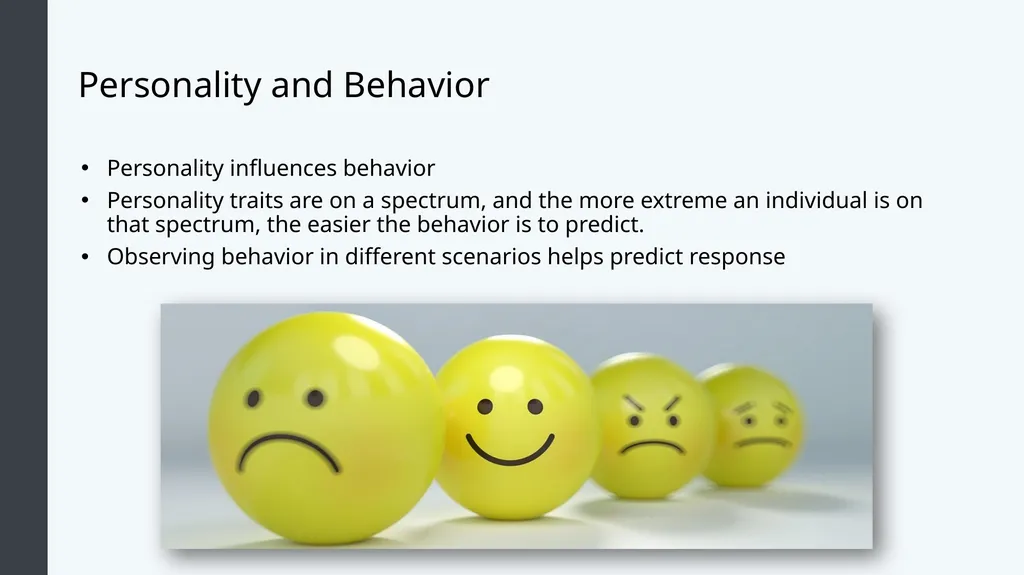
Personality and Behavior Personality influences behavior
Personality traits are on a spectrum, and the more extreme an individual is on that spectrum, the easier the behavior is to predict.
Observing behavior in different scenarios helps predict response<br>
10
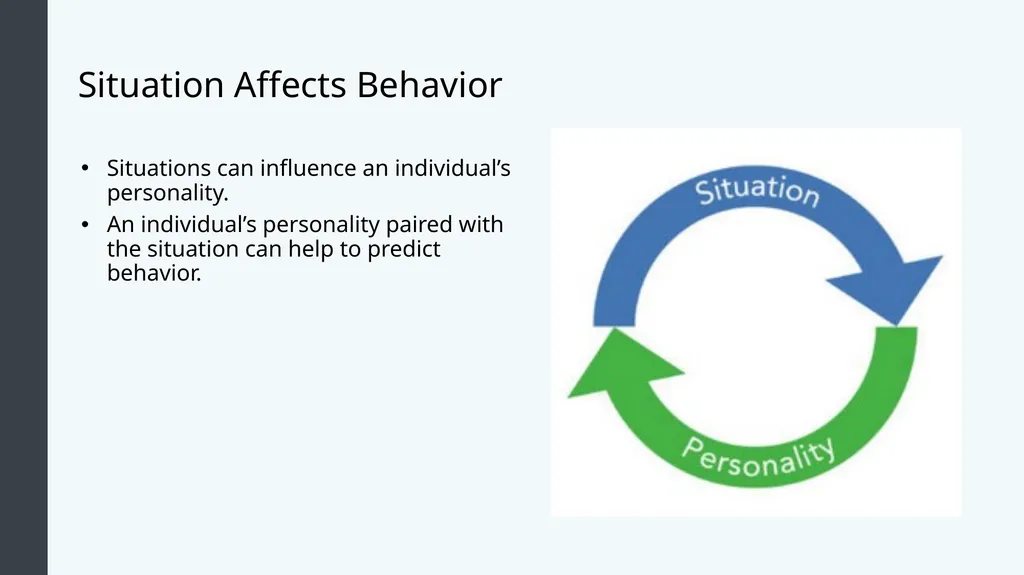
Situation Affects Behavior Situations can influence an individual’s personality.
An individual’s personality paired with the situation can help to predict behavior.<br>
11
Practice Question 1 What is the benefit of using personality tests in the workplace?
Personality traits in the workplace are irrelevant
Personality traits can be used when determining who to keep and who to let go
Personality traits can help us understand employees and create effective work groups
Personality traits can be used to create the perfect work environment<br>
12
Practice Question 2 Using personality traits to predict behavior can be challenging because _________________.
only situations have been proven to predict behavior
there are varying degrees of personalities
there are a limited number of personality traits
they are never accurate<br>
13
Practice Question 3 Which of the following statement is an accurate description of the severity in which situations influence personality?
Situations can temporarily or permanently change an individual’s personality
Situations have little to no impact on an individual’s personality
Situations influence personalities in the same way
The situation does not influence personality, instead personality influences the situation<br>
14
Individuality and the Workplace<br>
15
Learning Outcomes: Individuality and the Workplace 4.2: Describe how the modern workplace can both homogenize/ conform behavior, and encourage individuality and personal expression
4.2.1: Examine how individuality and conformity work together in the modern workplace
4.2.2: Describe how companies narrow the range of acceptable behavior
4.2.3: Describe the individualized management approach
4.2.4: Discuss the impact a technology driven workplace has on organizational behavior<br>
16
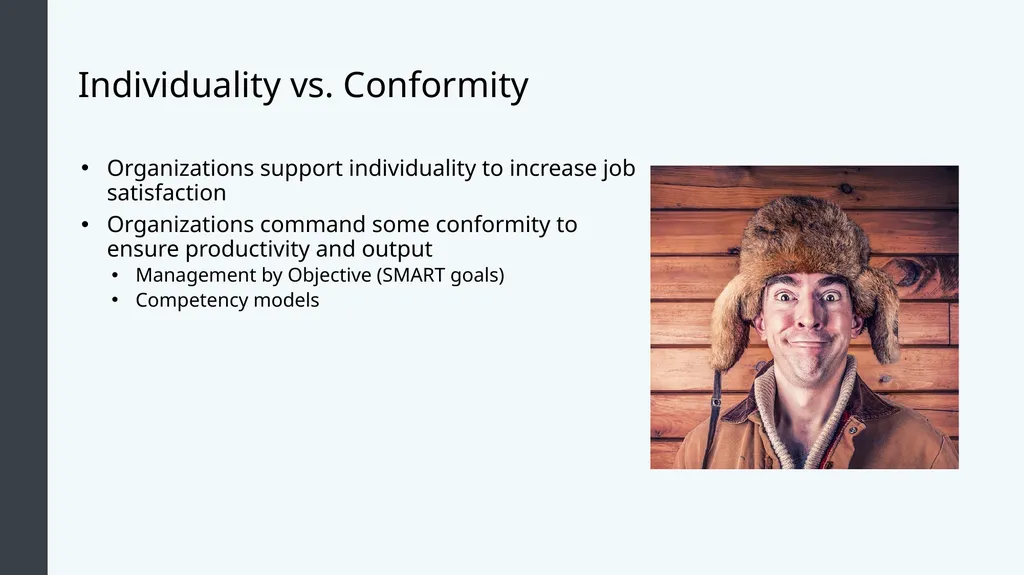
Individuality vs. Conformity Organizations support individuality to increase job satisfaction
Organizations command some conformity to ensure productivity and output
Management by Objective (SMART goals)
Competency models<br>
17
Individualized Management Individualized management includes
Employees choosing their own hours
Employees wearing what they want
Encourage employees to develop their own brand
Employs people from different cultures
Employs people with different intellectual levels
Employs people with different skills and interests<br>
18
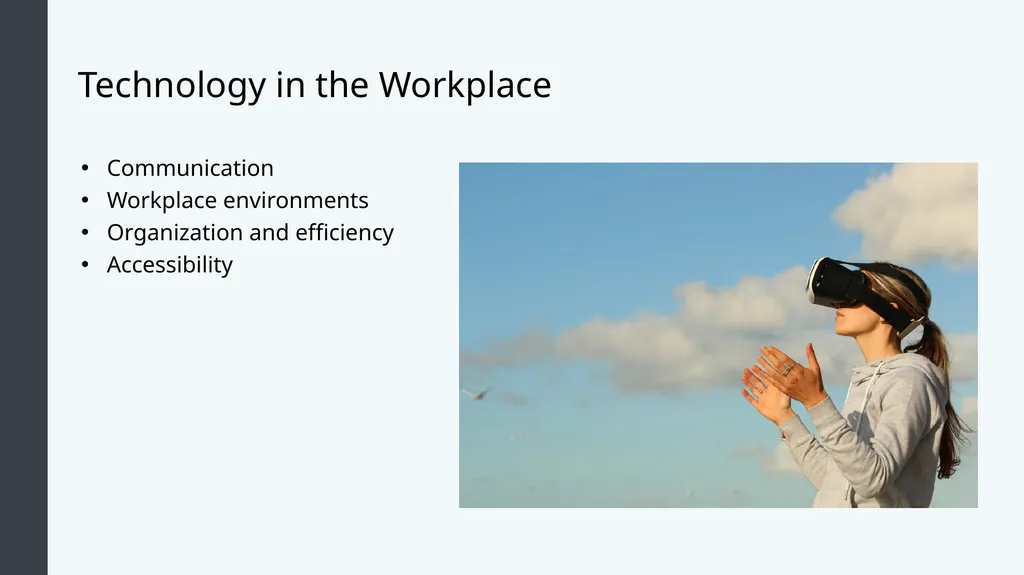
Technology in the Workplace Communication
Workplace environments
Organization and efficiency
Accessibility<br>
19
Practice Question 4 Which of the following helps companies to narrow the range of acceptable behavior through an open dialogue between employees and managers about goals?
S.M.A.R.T. Goals
The Development of Competency Models
Ethics Training
Management by Objective (MBO)<br>
20
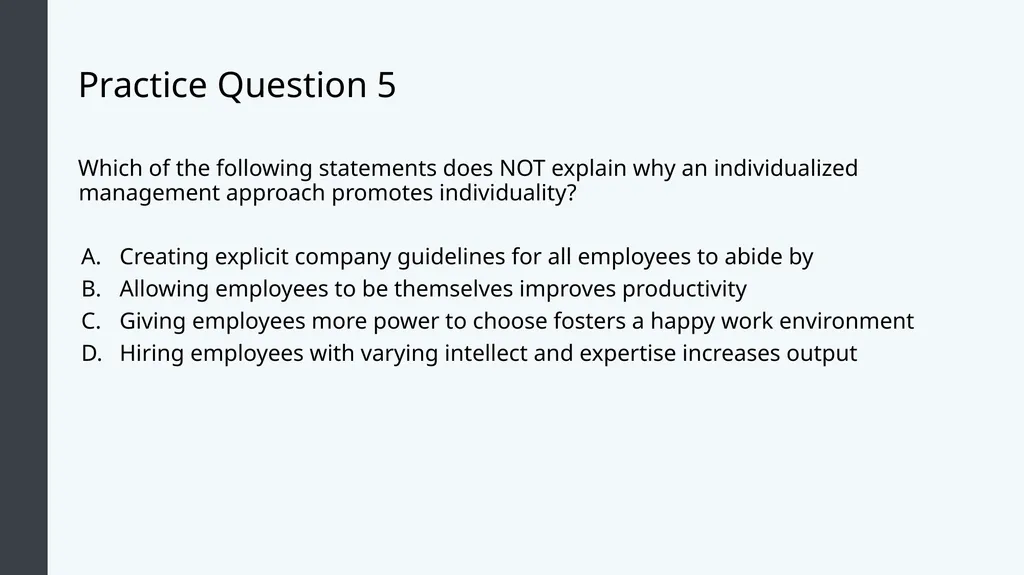
Practice Question 5 Which of the following statements does NOT explain why an individualized management approach promotes individuality?
Creating explicit company guidelines for all employees to abide by
Allowing employees to be themselves improves productivity
Giving employees more power to choose fosters a happy work environment
Hiring employees with varying intellect and expertise increases output<br>
21
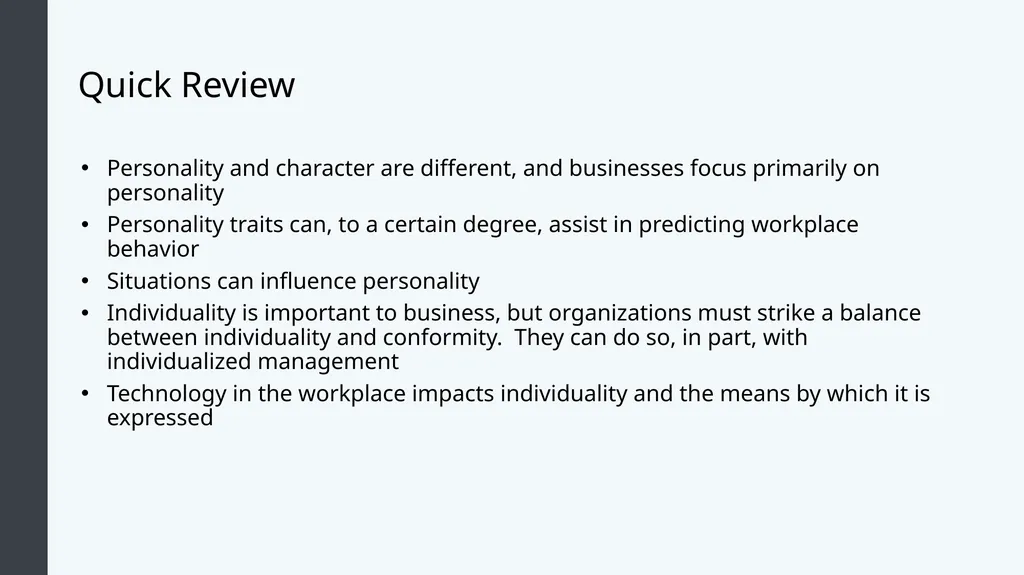
Quick Review Personality and character are different, and businesses focus primarily on personality
Personality traits can, to a certain degree, assist in predicting workplace behavior
Situations can influence personality
Individuality is important to business, but organizations must strike a balance between individuality and conformity. They can do so, in part, with individualized management
Technology in the workplace impacts individuality and the means by which it is expressed<br>