
Performance Based Contracting Adopting A

Description: Performance Based Contracting Adopting A Performance Mindset The Basic Principle: Managing Results Through Measurement Basic Requirements Requires: Competitive Solicitation and a Written Contract Options: ITB, ITN, Other Entity Contract
Related Topics
Download Presentation
"Performance Based Contracting Adopting A" is the property of its rightful owner. Permission is granted to download and print the materials on this website for personal, non-commercial use only, and to display it on your personal computer provided you do not modify the materials and that you retain all copyright notices contained in the materials. By downloading content from our website, you accept the terms of this agreement.
Presentation Transcript
slide1. Performance Based
Contracting<br>
slide2. Adopting A Performance Mindset The Basic Principle:
Managing Results Through
Measurement<br>
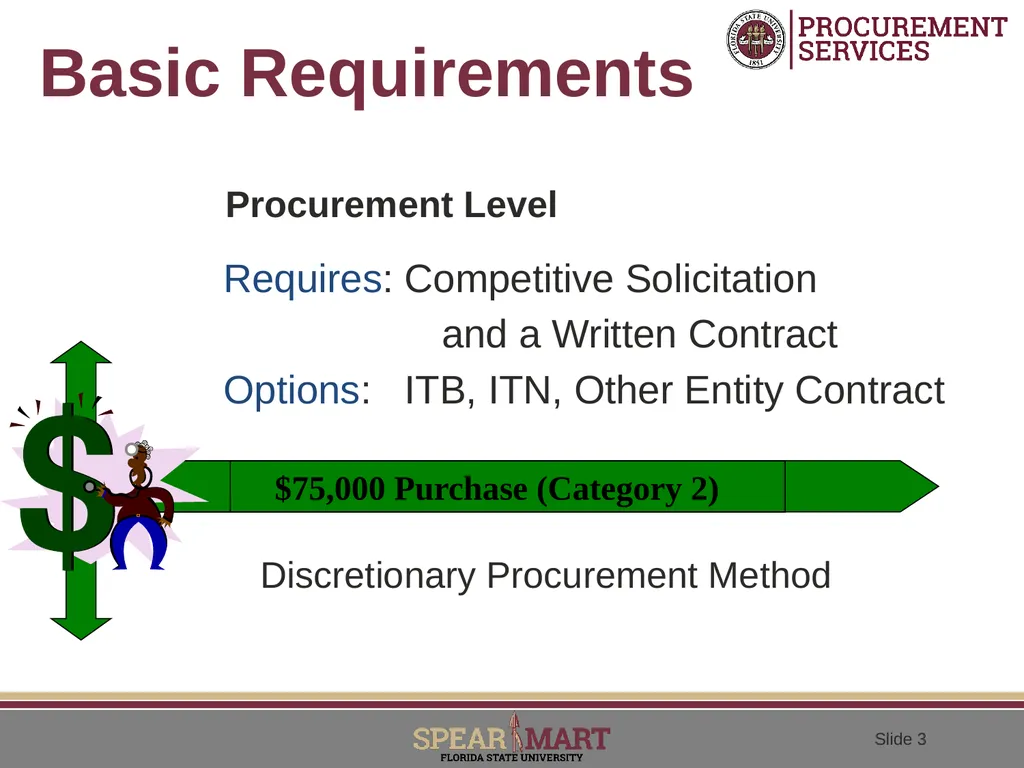
slide3. Basic Requirements Requires: Competitive Solicitation
and a Written Contract
Options: ITB, ITN, Other Entity Contract $75,000 Purchase (Category 2) Discretionary Procurement Method Procurement Level<br>
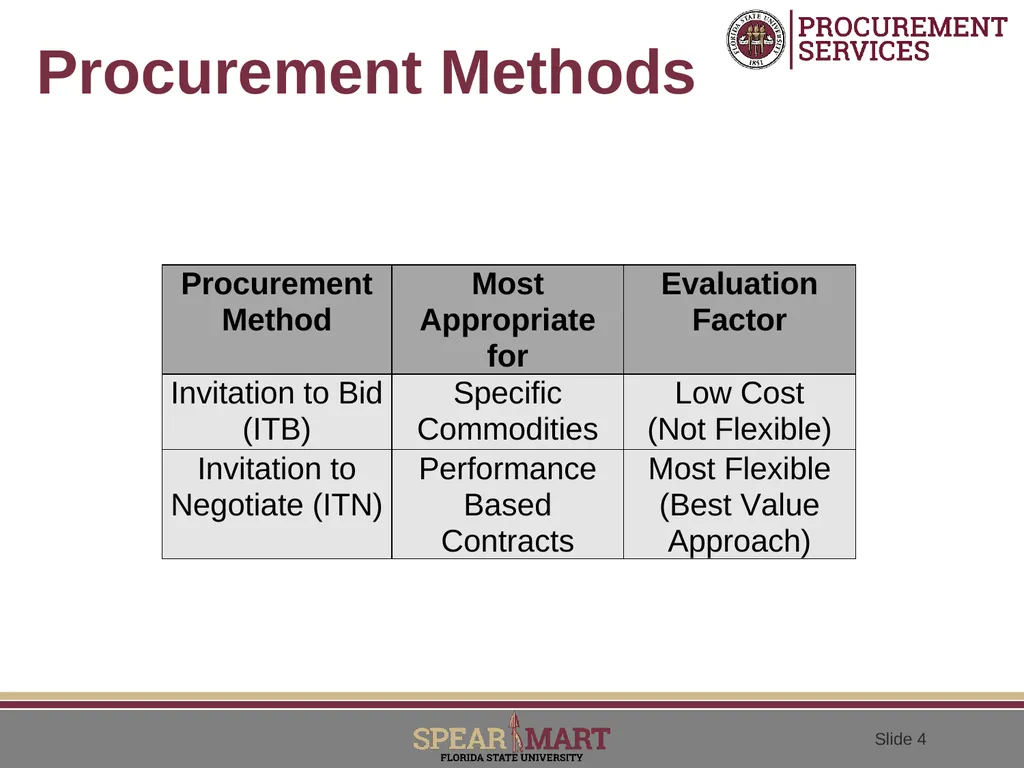
slide4. Procurement Methods<br>
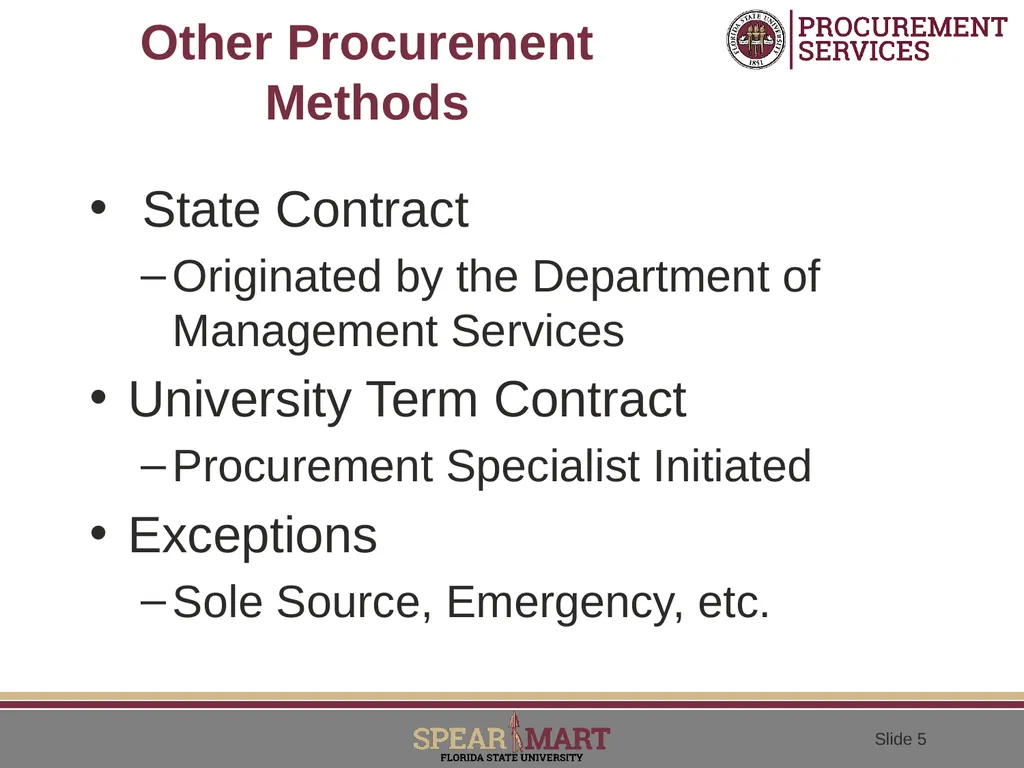
slide5. State Contract
Originated by the Department of Management Services
University Term Contract
Procurement Specialist Initiated
Exceptions
Sole Source, Emergency, etc. Other Procurement Methods<br>
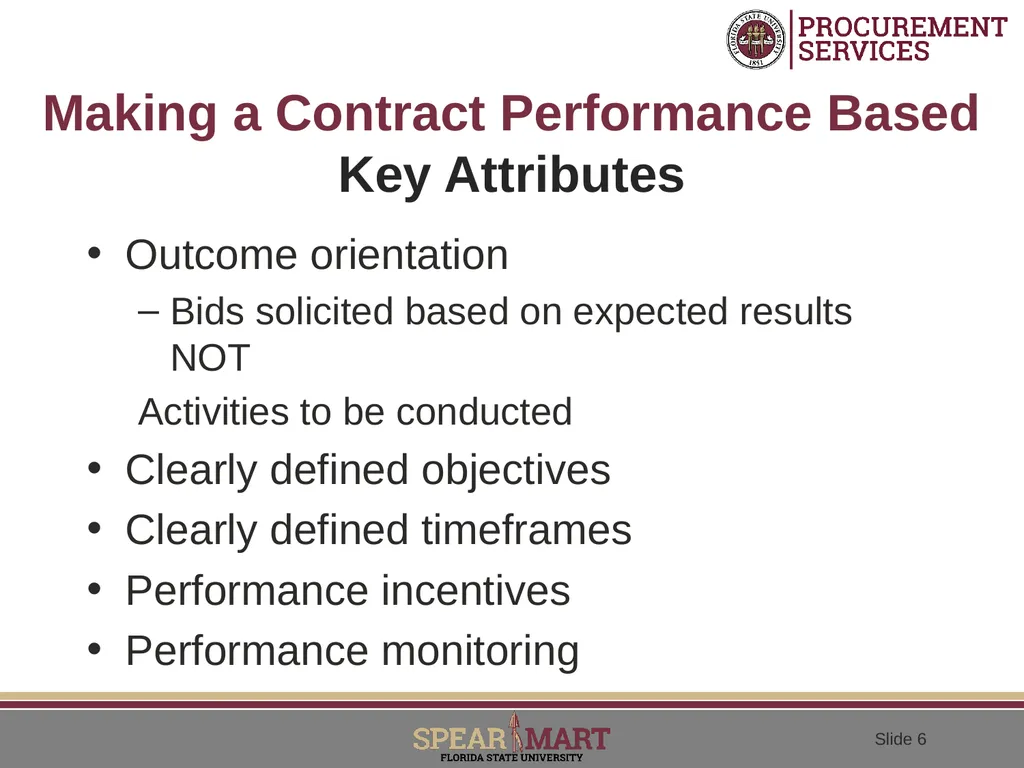
slide6. Making a Contract Performance Based Key Attributes Outcome orientation
Bids solicited based on expected results NOT
Activities to be conducted
Clearly defined objectives
Clearly defined timeframes
Performance incentives
Performance monitoring<br>
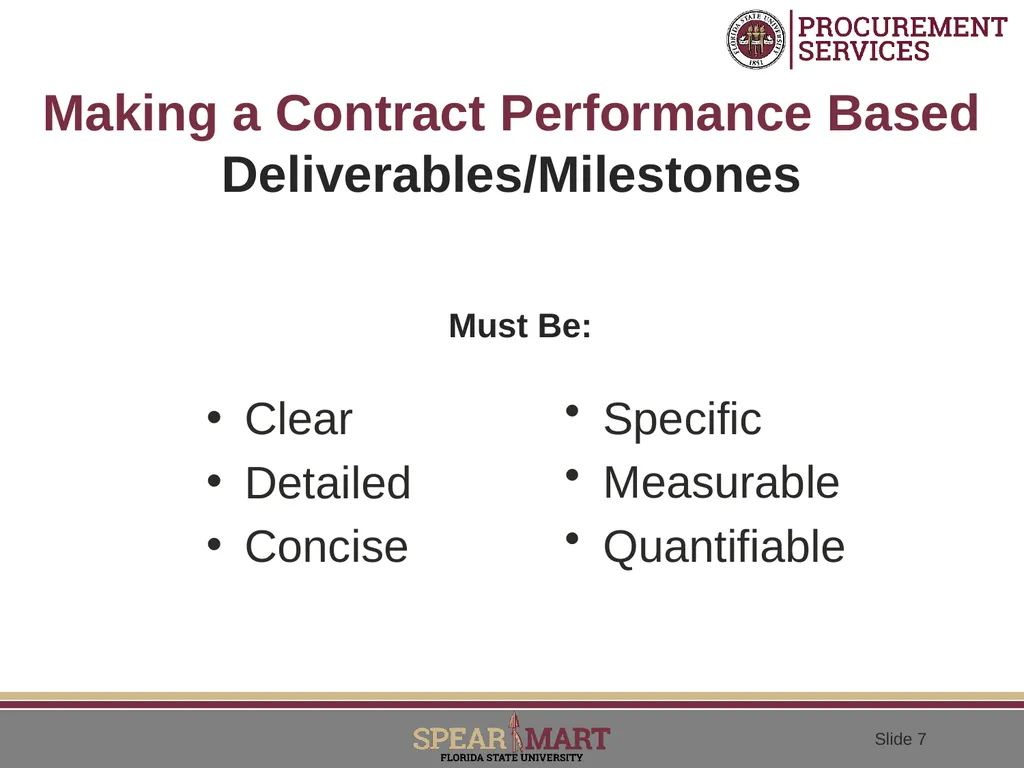
slide7. Clear
Detailed
Concise Specific
Measurable
Quantifiable Must Be: Making a Contract Performance Based Deliverables/Milestones<br>
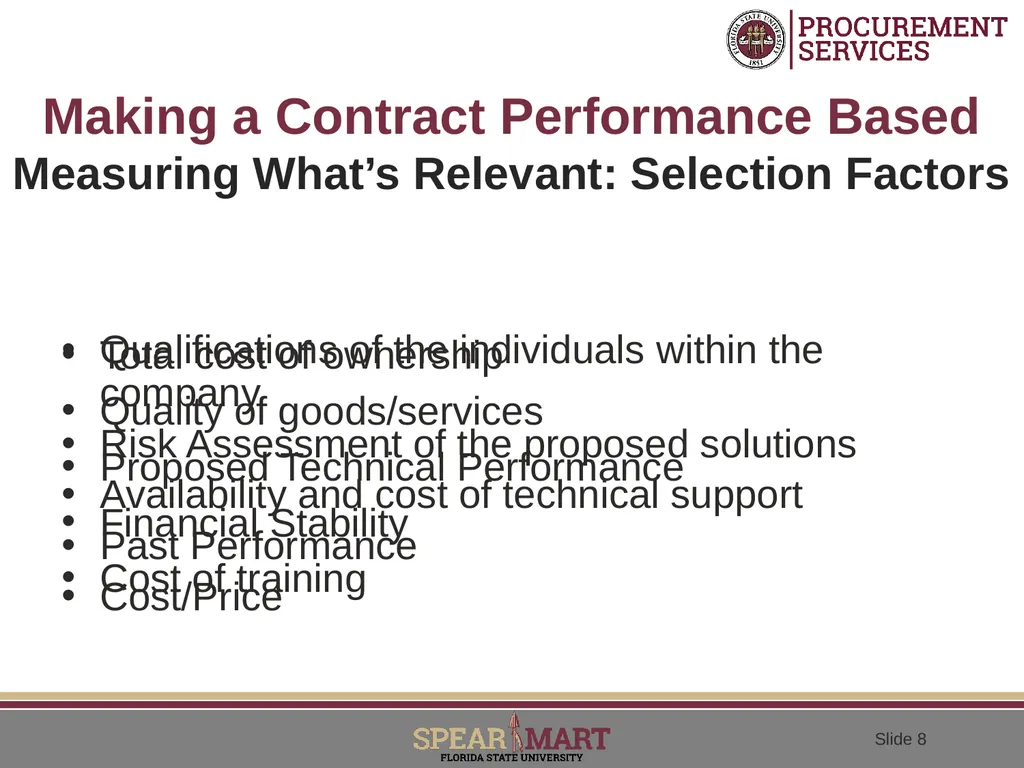
slide8. Making a Contract Performance Based Total cost of ownership
Quality of goods/services
Proposed Technical Performance
Financial Stability
Cost of training Qualifications of the individuals within the company
Risk Assessment of the proposed solutions
Availability and cost of technical support
Past Performance
Cost/Price Making a Contract Performance Based Measuring What’s Relevant: Selection Factors<br>
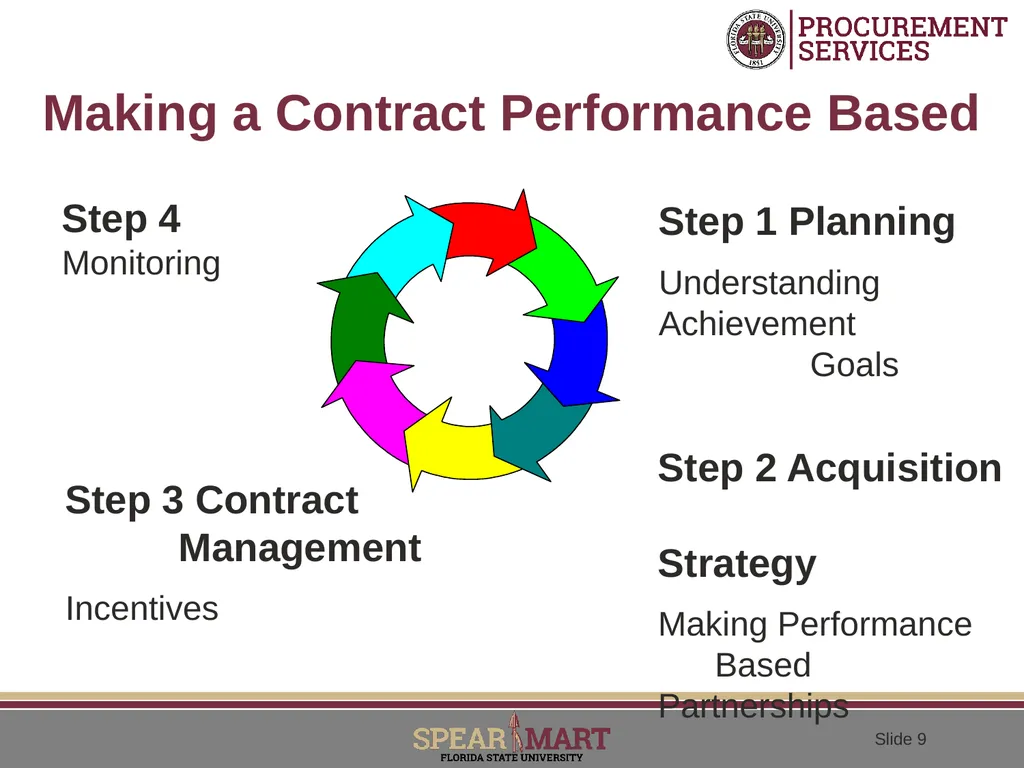
slide9. Step 1 Planning
Understanding Achievement Goals Step 2 Acquisition Strategy
Making Performance Based Partnerships Step 3 Contract Management
Incentives Step 4 Monitoring Making a Contract Performance Based<br>
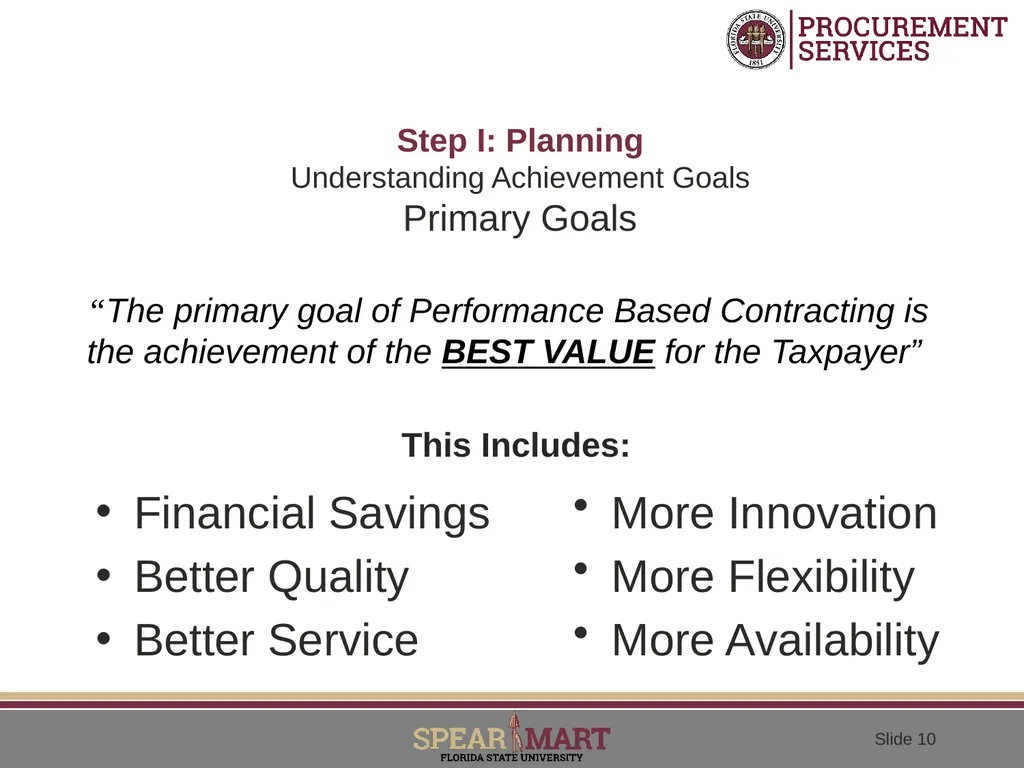
slide10. Step I: Planning Understanding Achievement Goals Primary Goals Financial Savings
Better Quality
Better Service “The primary goal of Performance Based Contracting is the achievement of the BEST VALUE for the Taxpayer” More Innovation
More Flexibility
More Availability This Includes:<br>
slide11. “Best Value” Definition
The outcome of any acquisition that ensures customer needs are met in the most effective, timely, and economical manner. Step I: Planning Understanding Achievement Goals<br>
slide12. 1) Ask These Key Questions:
What are your departments Performance Goals?
How will the contract/vendor support those goals?
2) Derive Partnership Goals
3) Prioritize Partnership Goals
4) Assure/Assess the Compatibility of these Goals Step I: Planning Understanding Achievement Goals<br>
slide13. Visit the with the vendor/provider
Document all communications
Keep your attitude friendly
Be assertive…but not antagonistic
Be honest when you don’t know the answer and obtain an answer as soon as possible “A good vendor relationship will add greatly to the chances of success and satisfaction of a contract” Step I: Planning Understanding Achievement Goals Relationship with Vendors<br>
slide14. Dollar Value of the Contract
Nature of the Services
Number of Clients Served
Prior Provider Performance and Corrective Actions
New Provider or Change in Key Executives
State or Non-State Contract Step I: Planning Understanding Achievement Goals Criteria Assessment<br>
slide15. 1) Inhibiting Experimentation
2) Cutting Cost But Not Service
3) Stifling Overachievement
4) No Start-up Funds
5) Inhibiting Symbiotic Relationships
6) Risk Identification
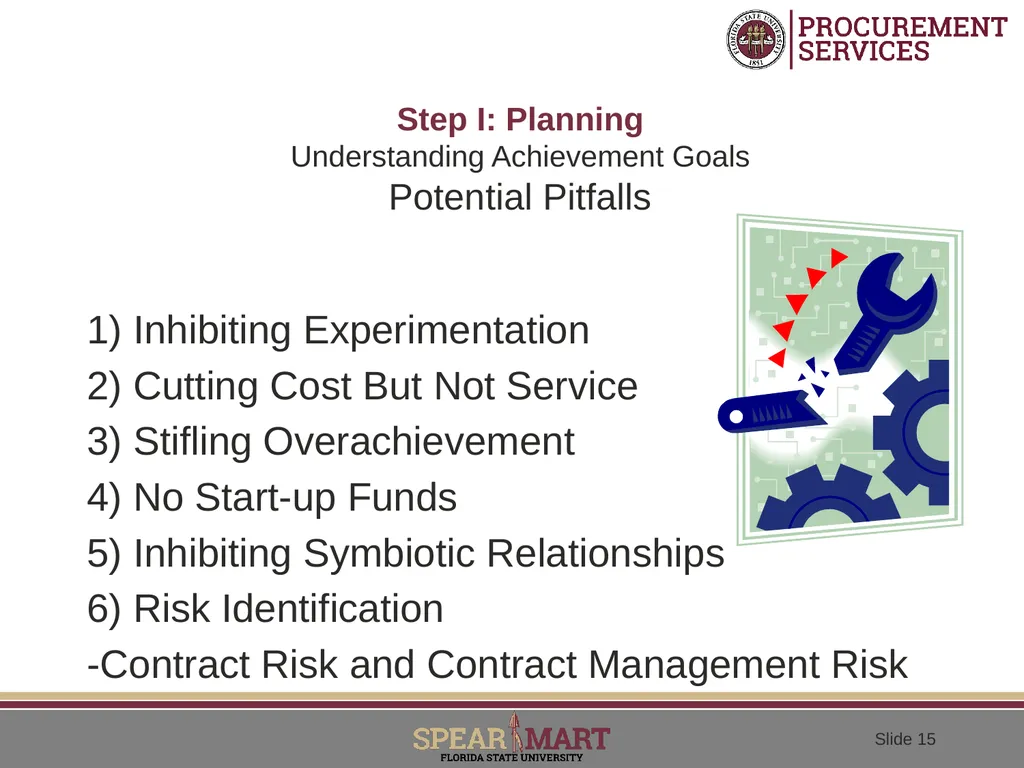
-Contract Risk and Contract Management Risk Step I: Planning Understanding Achievement Goals Potential Pitfalls<br>
slide16. What is Risk Management?
The culture, processes, and structures that are directed toward the effective management of potential opportunities and adverse effects.
Why does it Matter? Step I: Planning Risk Management<br>
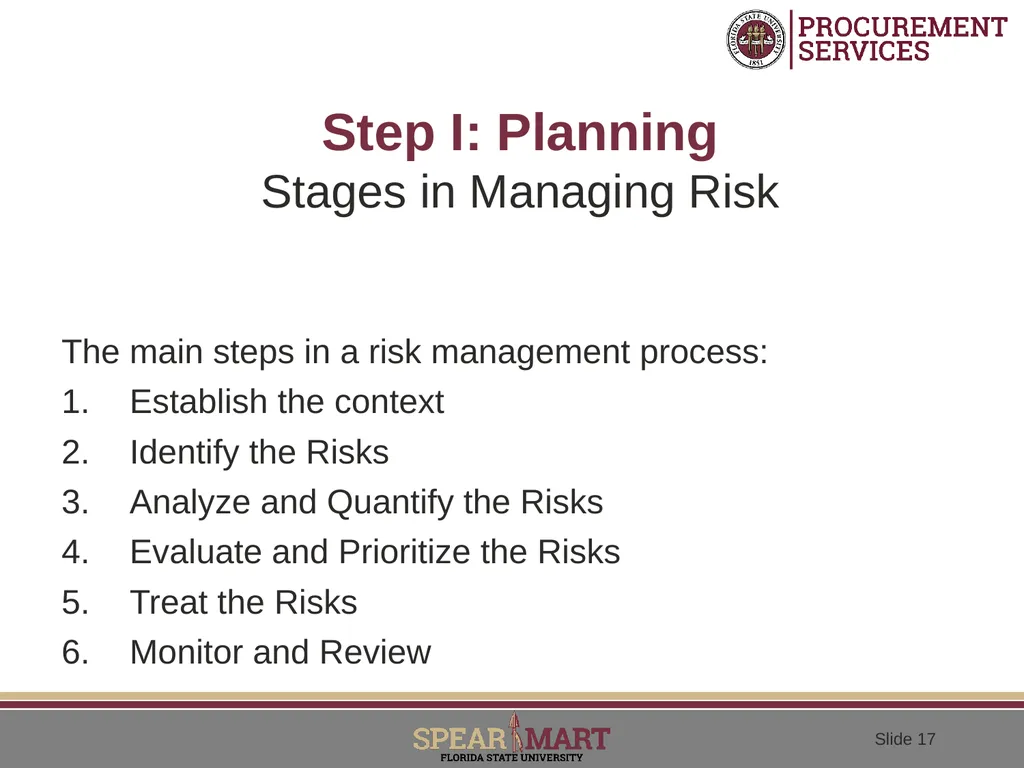
slide17. The main steps in a risk management process:
Establish the context
Identify the Risks
Analyze and Quantify the Risks
Evaluate and Prioritize the Risks
Treat the Risks
Monitor and Review Step I: Planning Stages in Managing Risk<br>
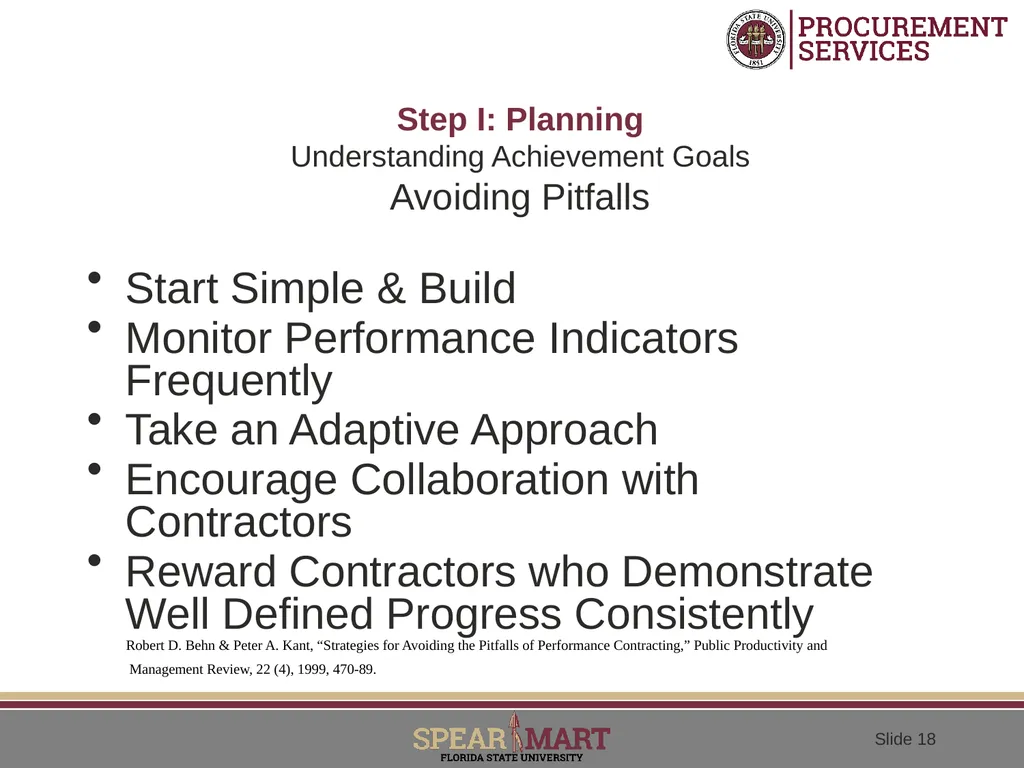
slide18. Start Simple & Build
Monitor Performance Indicators Frequently
Take an Adaptive Approach
Encourage Collaboration with Contractors
Reward Contractors who Demonstrate Well Defined Progress Consistently Robert D. Behn & Peter A. Kant, “Strategies for Avoiding the Pitfalls of Performance Contracting,” Public Productivity and
Management Review, 22 (4), 1999, 470-89. Step I: Planning Understanding Achievement Goals Avoiding Pitfalls<br>
slide19. The Contract Manager is the person charged with the daily administrative management of the contract. Primary duties are to plan activities, manage risk, monitor contractor performance and exercise delegated authority. Step I: Planning Establishing a Contract Manager<br>
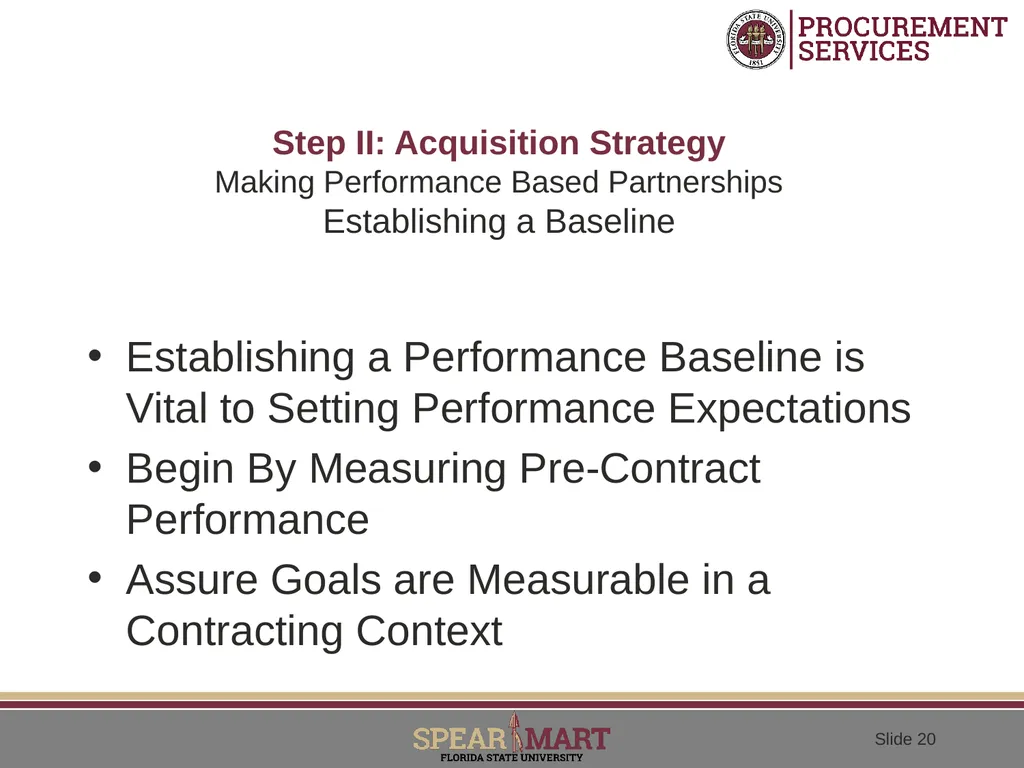
slide20. Step II: Acquisition Strategy Making Performance Based Partnerships Establishing a Baseline Establishing a Performance Baseline is Vital to Setting Performance Expectations
Begin By Measuring Pre-Contract Performance
Assure Goals are Measurable in a Contracting Context<br>
slide21. Borrowing
Benchmarking “When developing Performance Goals, consider the future possibilities…don’t use past performance as a limiting factor” Mutuality
Best Practices Considerations: Step II: Acquisition Strategy Making Performance Based Partnerships Developing Performance Goals<br>
slide22. “The Detailed Scope of Work describes what the contractor is to accomplish. It should address what, who, when, where & how. It is the foundation for the entire procurement” What is to be done and what are the deliverables
Who is going to do it
When it is going to be done
Where will it be done
How it will be done and how can you tell when it’s done Step II: Acquisition Strategy Making Performance Based Partnerships Detailed Scope of Work<br>
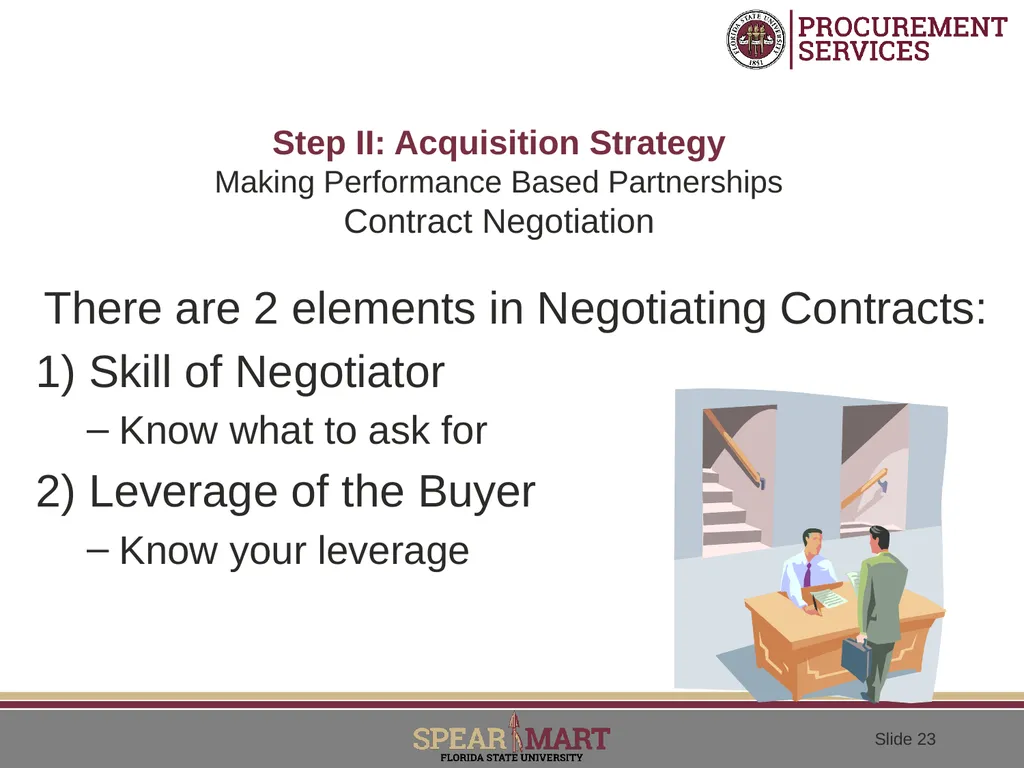
slide23. There are 2 elements in Negotiating Contracts:
1) Skill of Negotiator
Know what to ask for
2) Leverage of the Buyer
Know your leverage Step II: Acquisition Strategy Making Performance Based Partnerships Contract Negotiation<br>
slide24. Solicit Service Providers for:
1) Development of Performance Measures
2) Creation of Incentives
3) Referrals Step II: Acquisition Strategy Making Performance Based Partnerships Developing Performance Goals<br>
slide25. Contract Manager interacts directly or indirectly with:
Personnel in the Department
Procurement Services
General Counsel’s Office
Comptroller’s Office
Budget Office Step III: Contract Management Contract Manager Role/Responsibilities<br>
slide26. Defining precisely what is required to meet a need
Carrying out the preparations for soliciting, analyzing, and awarding contracts
Negotiating the contract and amendment(s)
Overseeing and enforcing the providers performance of contract terms and conditions Step III: Contract Management Contract Manager Role/Responsibilities<br>
slide27. Payment Structures Should be Tied to Performance Elements
Levels of Performance Should be Differentiated for Incentives
Incentive Successes Should be Tracked Step III: Contract Management Creating Incentives<br>
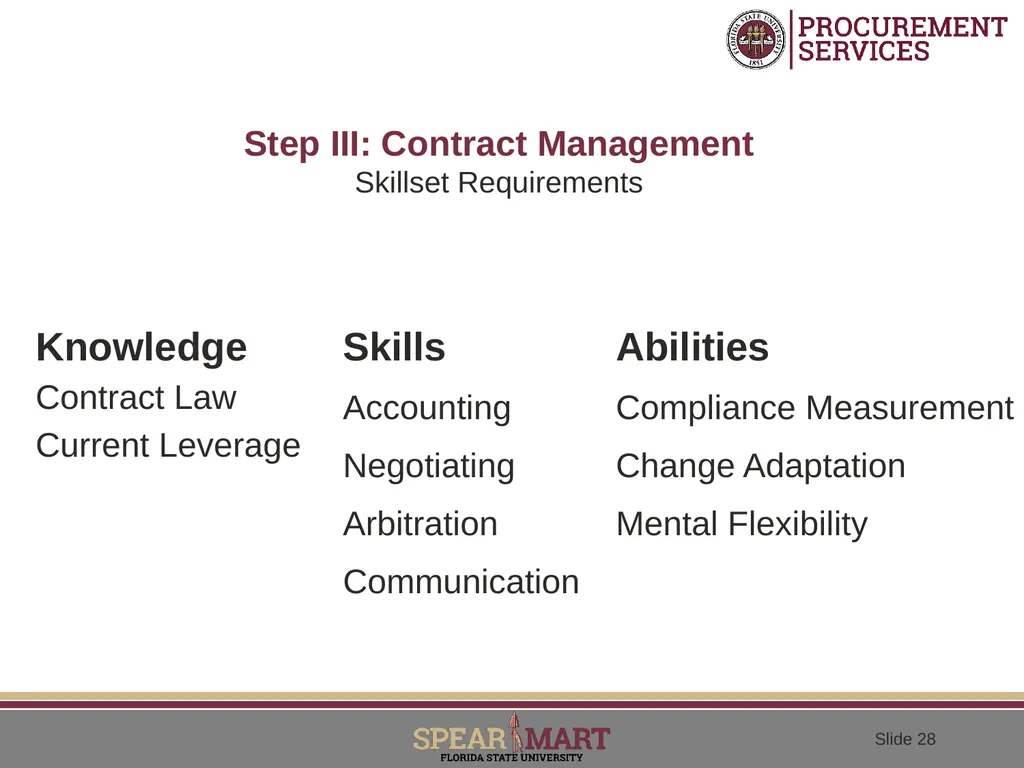
slide28. Knowledge
Contract Law
Current Leverage Skills
Accounting
Negotiating
Arbitration
Communication Abilities
Compliance Measurement
Change Adaptation
Mental Flexibility Step III: Contract Management Skillset Requirements<br>
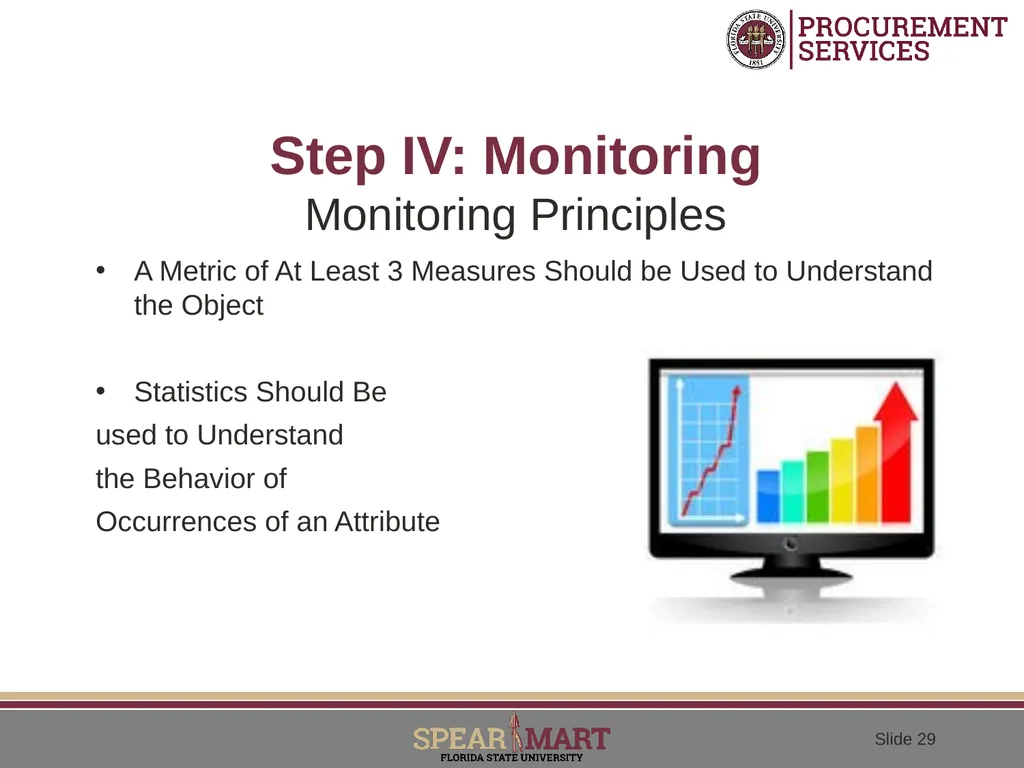
slide29. A Metric of At Least 3 Measures Should be Used to Understand the Object
Statistics Should Be
used to Understand
the Behavior of
Occurrences of an Attribute Step IV: Monitoring Monitoring Principles<br>
slide30. 1) Create a Monitoring Plan prior to issuing an Bid/ITN or Completing a Contract
2) Incorporate Measurement Principles in the Monitoring Plan
3) Monitoring Plans should be tailored to the intricacies of each contract
4) Riskier contracts are more complex and should have more detailed Monitoring Plans Step IV: Monitoring Monitoring Principles<br>
slide31. QUESTIONS?<br>
slide2. Adopting A Performance Mindset The Basic Principle:
Managing Results Through
Measurement<br>
slide3. Basic Requirements Requires: Competitive Solicitation
and a Written Contract
Options: ITB, ITN, Other Entity Contract $75,000 Purchase (Category 2) Discretionary Procurement Method Procurement Level<br>
slide4. Procurement Methods<br>
slide5. State Contract
Originated by the Department of Management Services
University Term Contract
Procurement Specialist Initiated
Exceptions
Sole Source, Emergency, etc. Other Procurement Methods<br>
slide6. Making a Contract Performance Based Key Attributes Outcome orientation
Bids solicited based on expected results NOT
Activities to be conducted
Clearly defined objectives
Clearly defined timeframes
Performance incentives
Performance monitoring<br>
slide7. Clear
Detailed
Concise Specific
Measurable
Quantifiable Must Be: Making a Contract Performance Based Deliverables/Milestones<br>
slide8. Making a Contract Performance Based Total cost of ownership
Quality of goods/services
Proposed Technical Performance
Financial Stability
Cost of training Qualifications of the individuals within the company
Risk Assessment of the proposed solutions
Availability and cost of technical support
Past Performance
Cost/Price Making a Contract Performance Based Measuring What’s Relevant: Selection Factors<br>
slide9. Step 1 Planning
Understanding Achievement Goals Step 2 Acquisition Strategy
Making Performance Based Partnerships Step 3 Contract Management
Incentives Step 4 Monitoring Making a Contract Performance Based<br>
slide10. Step I: Planning Understanding Achievement Goals Primary Goals Financial Savings
Better Quality
Better Service “The primary goal of Performance Based Contracting is the achievement of the BEST VALUE for the Taxpayer” More Innovation
More Flexibility
More Availability This Includes:<br>
slide11. “Best Value” Definition
The outcome of any acquisition that ensures customer needs are met in the most effective, timely, and economical manner. Step I: Planning Understanding Achievement Goals<br>
slide12. 1) Ask These Key Questions:
What are your departments Performance Goals?
How will the contract/vendor support those goals?
2) Derive Partnership Goals
3) Prioritize Partnership Goals
4) Assure/Assess the Compatibility of these Goals Step I: Planning Understanding Achievement Goals<br>
slide13. Visit the with the vendor/provider
Document all communications
Keep your attitude friendly
Be assertive…but not antagonistic
Be honest when you don’t know the answer and obtain an answer as soon as possible “A good vendor relationship will add greatly to the chances of success and satisfaction of a contract” Step I: Planning Understanding Achievement Goals Relationship with Vendors<br>
slide14. Dollar Value of the Contract
Nature of the Services
Number of Clients Served
Prior Provider Performance and Corrective Actions
New Provider or Change in Key Executives
State or Non-State Contract Step I: Planning Understanding Achievement Goals Criteria Assessment<br>
slide15. 1) Inhibiting Experimentation
2) Cutting Cost But Not Service
3) Stifling Overachievement
4) No Start-up Funds
5) Inhibiting Symbiotic Relationships
6) Risk Identification
-Contract Risk and Contract Management Risk Step I: Planning Understanding Achievement Goals Potential Pitfalls<br>
slide16. What is Risk Management?
The culture, processes, and structures that are directed toward the effective management of potential opportunities and adverse effects.
Why does it Matter? Step I: Planning Risk Management<br>
slide17. The main steps in a risk management process:
Establish the context
Identify the Risks
Analyze and Quantify the Risks
Evaluate and Prioritize the Risks
Treat the Risks
Monitor and Review Step I: Planning Stages in Managing Risk<br>
slide18. Start Simple & Build
Monitor Performance Indicators Frequently
Take an Adaptive Approach
Encourage Collaboration with Contractors
Reward Contractors who Demonstrate Well Defined Progress Consistently Robert D. Behn & Peter A. Kant, “Strategies for Avoiding the Pitfalls of Performance Contracting,” Public Productivity and
Management Review, 22 (4), 1999, 470-89. Step I: Planning Understanding Achievement Goals Avoiding Pitfalls<br>
slide19. The Contract Manager is the person charged with the daily administrative management of the contract. Primary duties are to plan activities, manage risk, monitor contractor performance and exercise delegated authority. Step I: Planning Establishing a Contract Manager<br>
slide20. Step II: Acquisition Strategy Making Performance Based Partnerships Establishing a Baseline Establishing a Performance Baseline is Vital to Setting Performance Expectations
Begin By Measuring Pre-Contract Performance
Assure Goals are Measurable in a Contracting Context<br>
slide21. Borrowing
Benchmarking “When developing Performance Goals, consider the future possibilities…don’t use past performance as a limiting factor” Mutuality
Best Practices Considerations: Step II: Acquisition Strategy Making Performance Based Partnerships Developing Performance Goals<br>
slide22. “The Detailed Scope of Work describes what the contractor is to accomplish. It should address what, who, when, where & how. It is the foundation for the entire procurement” What is to be done and what are the deliverables
Who is going to do it
When it is going to be done
Where will it be done
How it will be done and how can you tell when it’s done Step II: Acquisition Strategy Making Performance Based Partnerships Detailed Scope of Work<br>
slide23. There are 2 elements in Negotiating Contracts:
1) Skill of Negotiator
Know what to ask for
2) Leverage of the Buyer
Know your leverage Step II: Acquisition Strategy Making Performance Based Partnerships Contract Negotiation<br>
slide24. Solicit Service Providers for:
1) Development of Performance Measures
2) Creation of Incentives
3) Referrals Step II: Acquisition Strategy Making Performance Based Partnerships Developing Performance Goals<br>
slide25. Contract Manager interacts directly or indirectly with:
Personnel in the Department
Procurement Services
General Counsel’s Office
Comptroller’s Office
Budget Office Step III: Contract Management Contract Manager Role/Responsibilities<br>
slide26. Defining precisely what is required to meet a need
Carrying out the preparations for soliciting, analyzing, and awarding contracts
Negotiating the contract and amendment(s)
Overseeing and enforcing the providers performance of contract terms and conditions Step III: Contract Management Contract Manager Role/Responsibilities<br>
slide27. Payment Structures Should be Tied to Performance Elements
Levels of Performance Should be Differentiated for Incentives
Incentive Successes Should be Tracked Step III: Contract Management Creating Incentives<br>
slide28. Knowledge
Contract Law
Current Leverage Skills
Accounting
Negotiating
Arbitration
Communication Abilities
Compliance Measurement
Change Adaptation
Mental Flexibility Step III: Contract Management Skillset Requirements<br>
slide29. A Metric of At Least 3 Measures Should be Used to Understand the Object
Statistics Should Be
used to Understand
the Behavior of
Occurrences of an Attribute Step IV: Monitoring Monitoring Principles<br>
slide30. 1) Create a Monitoring Plan prior to issuing an Bid/ITN or Completing a Contract
2) Incorporate Measurement Principles in the Monitoring Plan
3) Monitoring Plans should be tailored to the intricacies of each contract
4) Riskier contracts are more complex and should have more detailed Monitoring Plans Step IV: Monitoring Monitoring Principles<br>
slide31. QUESTIONS?<br>