Pharmacokinetics and pharmacodynamics An overview
Description: Pharmacokinetics and pharmacodynamics An overview Alain Bousquet-Mélou August 2021, Padua, Italy Pharmacology Pharmacology (pharmacology) Comes from the Greek word Pharmakon which means remedy but also poison. The discipline that studies
Related Topics
Download Presentation
"Pharmacokinetics and pharmacodynamics An overview" is the property of its rightful owner. Permission is granted to download and print the materials on this website for personal, non-commercial use only, and to display it on your personal computer provided you do not modify the materials and that you retain all copyright notices contained in the materials. By downloading content from our website, you accept the terms of this agreement.
Presentation Transcript
slide1. Pharmacokinetics and pharmacodynamics
An overview
Alain Bousquet-Mélou August 2021, Padua, Italy<br>
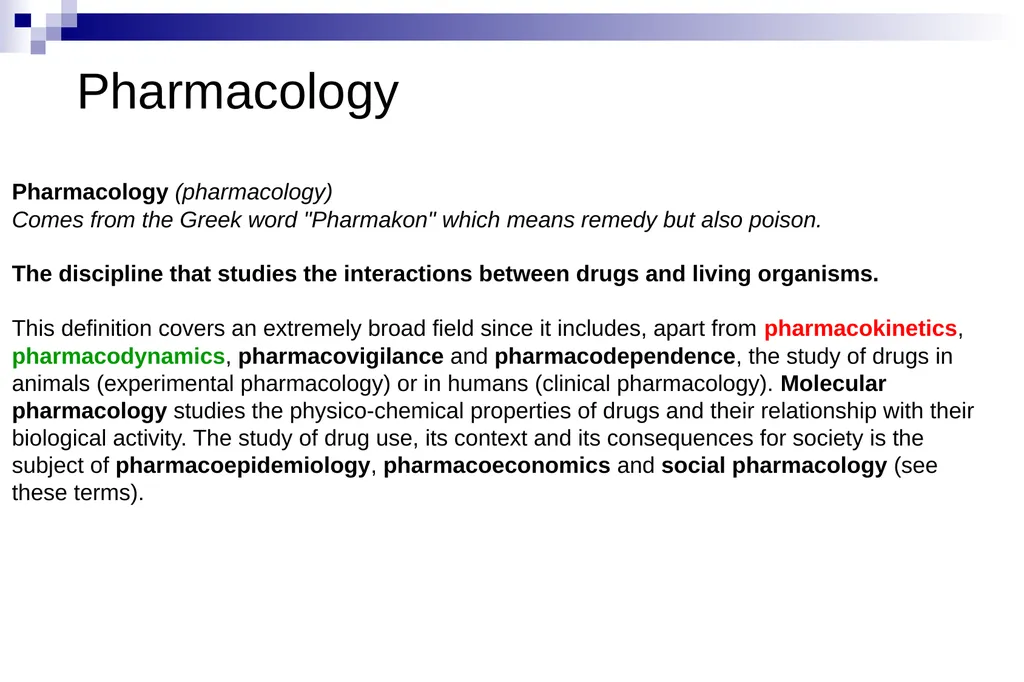
slide2. Pharmacology Pharmacology (pharmacology)
Comes from the Greek word "Pharmakon" which means remedy but also poison.
The discipline that studies the interactions between drugs and living organisms.
This definition covers an extremely broad field since it includes, apart from pharmacokinetics, pharmacodynamics, pharmacovigilance and pharmacodependence, the study of drugs in animals (experimental pharmacology) or in humans (clinical pharmacology). Molecular pharmacology studies the physico-chemical properties of drugs and their relationship with their biological activity. The study of drug use, its context and its consequences for society is the subject of pharmacoepidemiology, pharmacoeconomics and social pharmacology (see
these terms).<br>
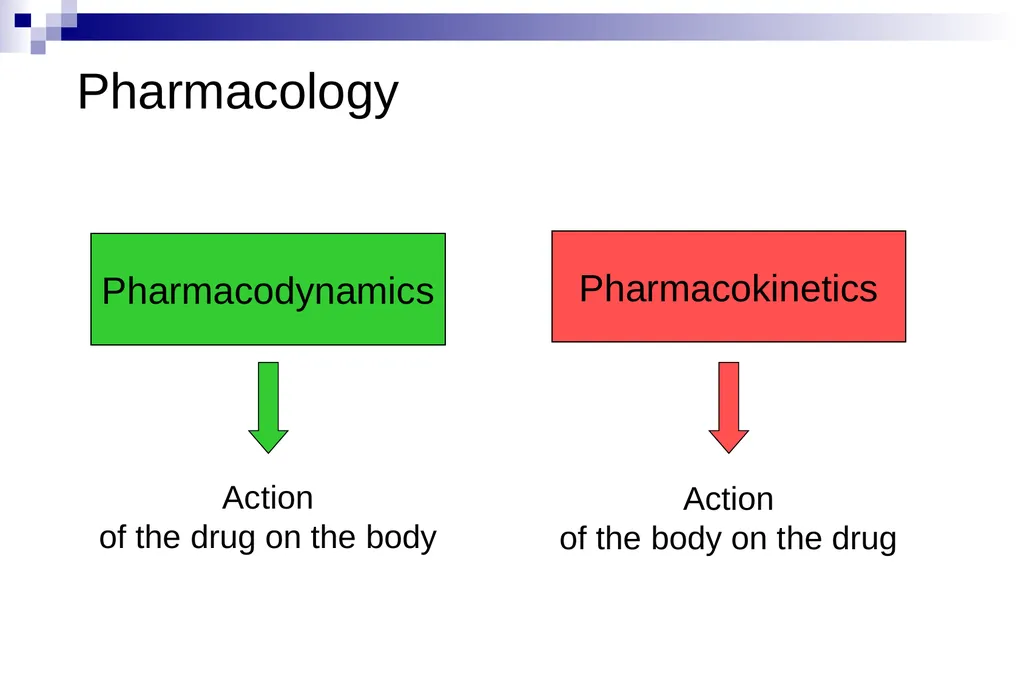
slide3. Pharmacology Pharmacodynamics Actionof the drug on the body Pharmacokinetics Actionof the body on the drug<br>
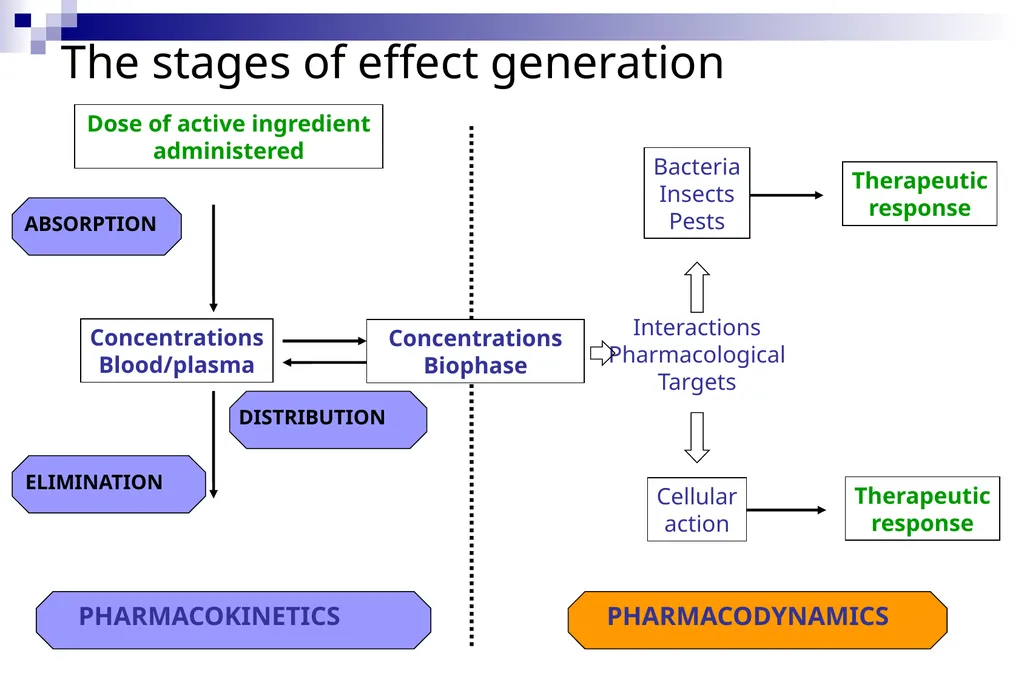
slide4. Interactions
Pharmacological
Targets The stages of effect generation Concentrations
Biophase Concentrations
Blood/plasma Cellular
action Dose of active ingredient
administered Therapeutic
response Therapeutic
response Bacteria
Insects
Pests<br>
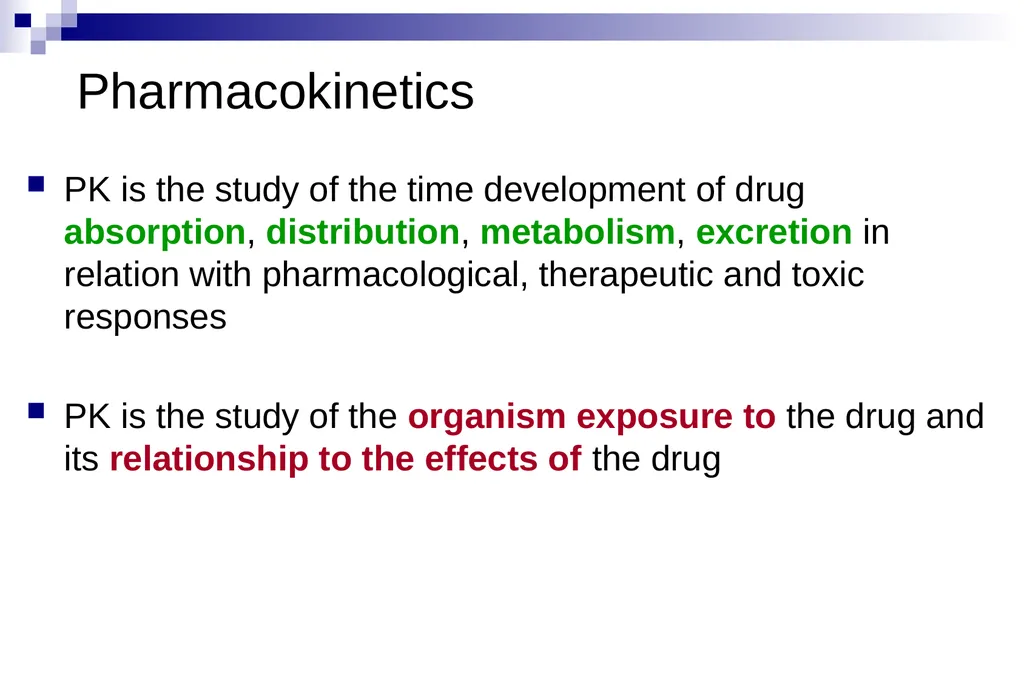
slide5. PK is the study of the time development of drug absorption, distribution, metabolism, excretion in relation with pharmacological, therapeutic and toxic responses
PK is the study of the organism exposure to the drug and its relationship to the effects of the drug Pharmacokinetics<br>
slide6. Pharmacokinetics / Pharmacodynamics Mechanistic aspects Mechanisms of action of drugs
Related disciplines: Biochemistry, Physiology …
Pharmacological targets: receptors, enzymes, etc.
The actions at the levels of cells, organs, physiological functions ...
Specificity, selectivity: desired effects, secondary effects, adverse effects, etc.<br>
slide7. Pharmacokinetics / Pharmacodynamics Mechanistic aspects Mechanisms of action of drugs
Related disciplines: Biochemistry, Physiology …
Pharmacological targets: receptors, enzymes, etc.
The actions at the levels of cells, organs, physiological functions ...
Specificity, selectivity: desired effects, secondary effects, adverse effects, etc. Mechanisms of drug disposition in the body
Related disciplines: Physiology, pharmacy (galenics)
ADME: mechanisms of digestive absorption, membrane transport, blood flow, enzymatic metabolism, renal excretion mechanisms, etc.
Influence of inter-individual factors and species specificities<br>
slide8. At the pharmacodynamic level
To link the intensity/magnitude of the effect with the concentration of the active compound : establishment of a concentration-effect relationship
Objective: to determine the concentration range (exposure) associated with a given effect Quantitative aspects Pharmacokinetics / Pharmacodynamics<br>
slide9. At the pharmacodynamic level
To link the intensity/magnitude of the effect with the concentration of the active compound : establishment of a concentration-effect relationship
Objective: to determine the concentration range (exposure) associated with a given effect At the pharmacokinetic level
To link the amount of active compound administered/ingested with blood and tissue concentrations : establishment of a dose-concentration relationship
Objective: to determine the external dose associated with a given exposure Quantitative aspects Pharmacokinetics / Pharmacodynamics<br>
slide10. At the pharmacodynamic level
To link the intensity/magnitude of the effect with the concentration of the active compound : establishment of a concentration-effect relationship
Objective: to determine the concentration range (exposure) associated with a given effect At the pharmacokinetic level
To link the amount of active compound administered/ingested with blood and tissue concentrations : establishment of a dose-concentration relationship
Objective: to determine the external dose associated with a given exposure Quantitative aspects Establishment of the Dose-response relationship Pharmacokinetics / Pharmacodynamics<br>
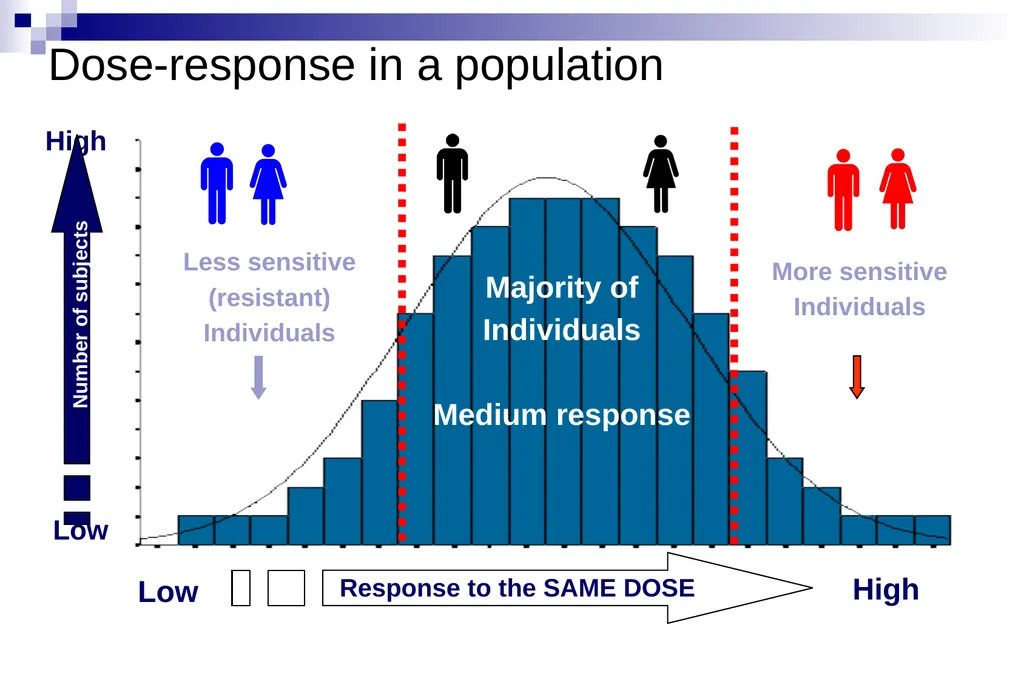
slide11. Dose-response in a population<br>
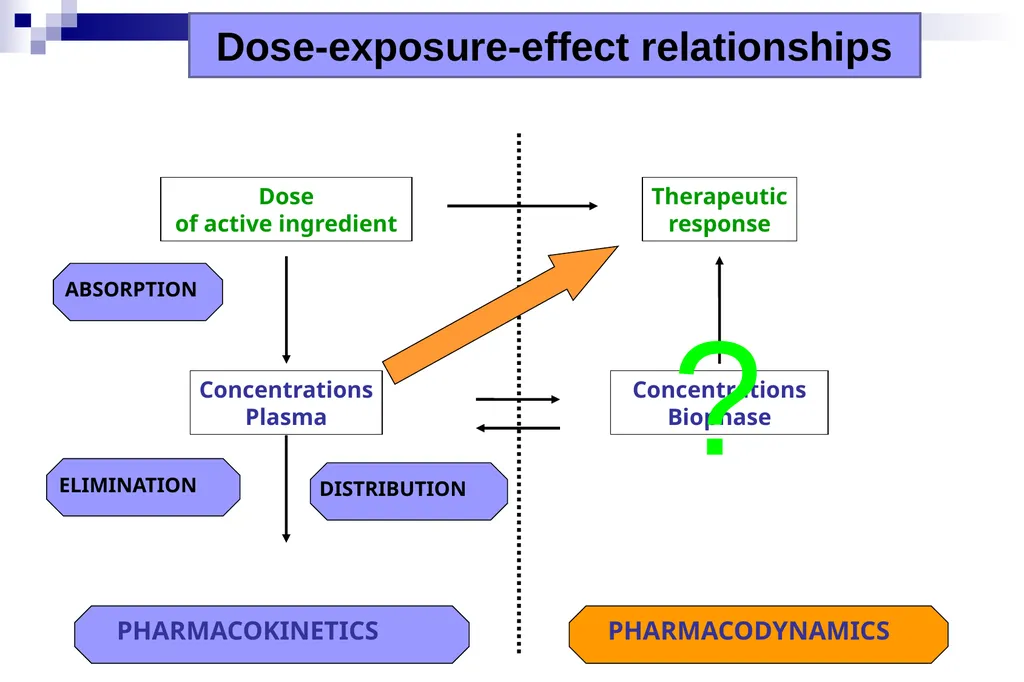
slide12. Therapeutic
response Concentrations
Plasma ? Dose
of active ingredient Dose-exposure-effect relationships<br>
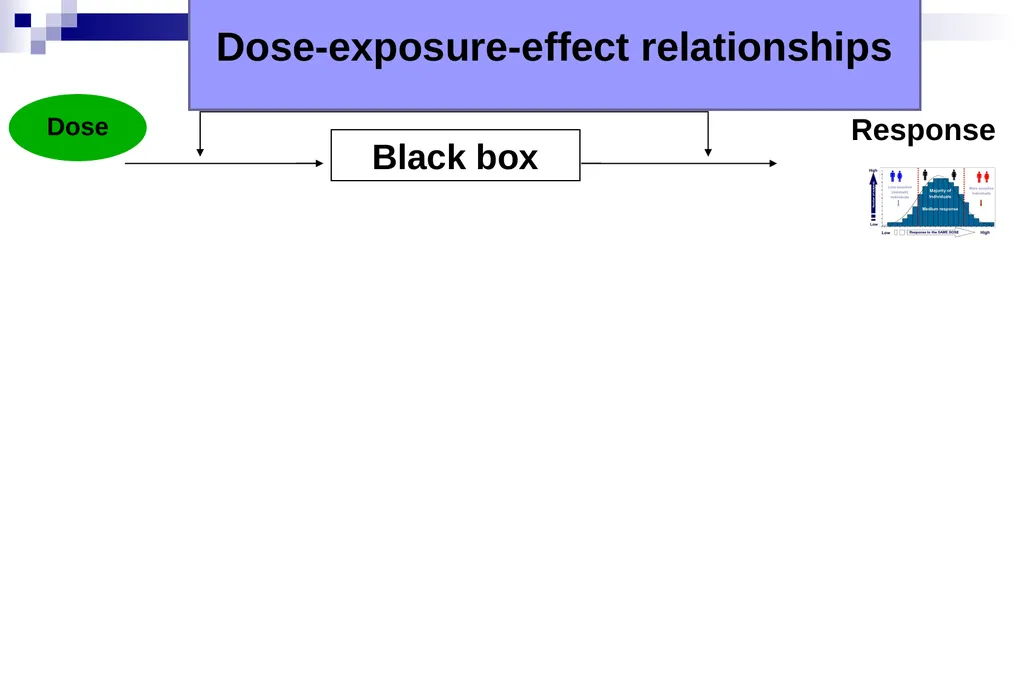
slide13. Dose-exposure-effect relationships<br>
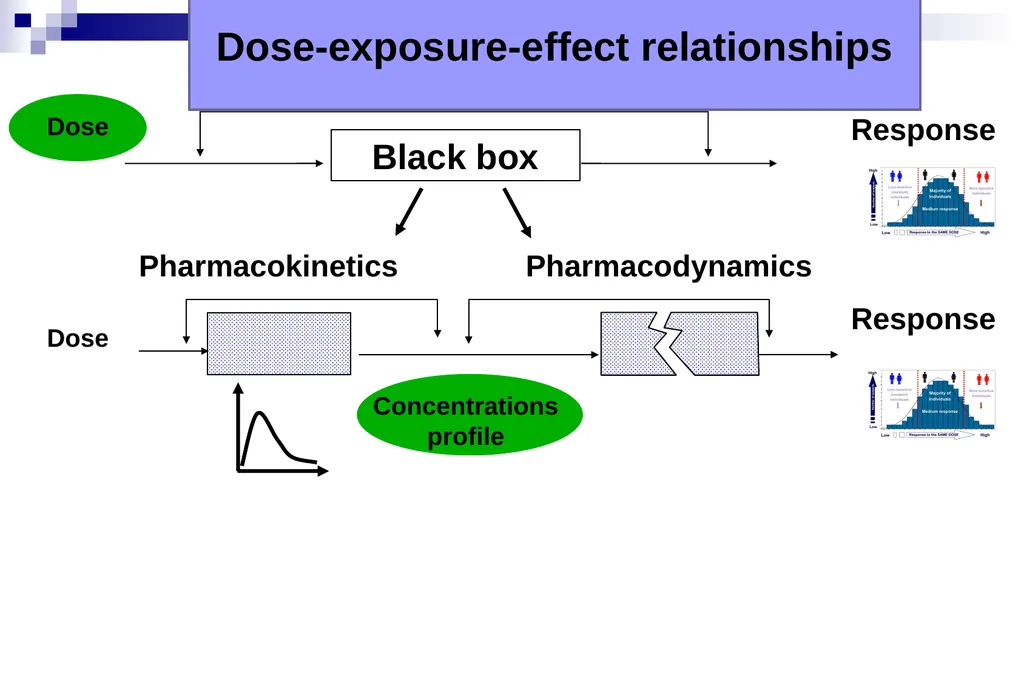
slide14. Dose-exposure-effect relationships<br>
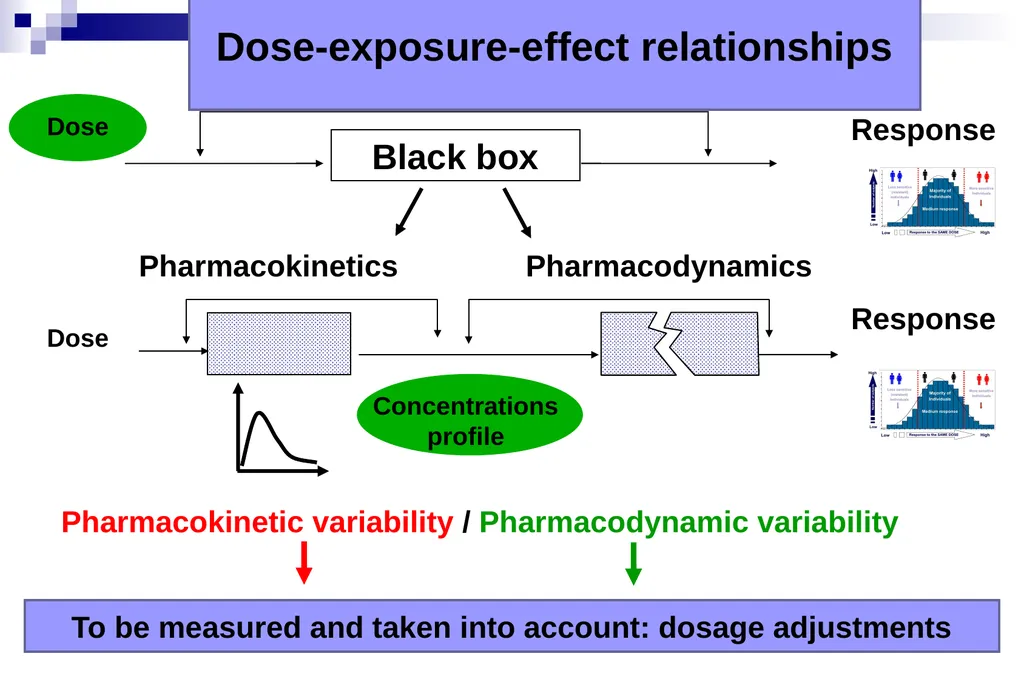
slide15. Dose-exposure-effect relationships Pharmacokinetic variability / Pharmacodynamic variability<br>
slide16. The therapeutic window<br>
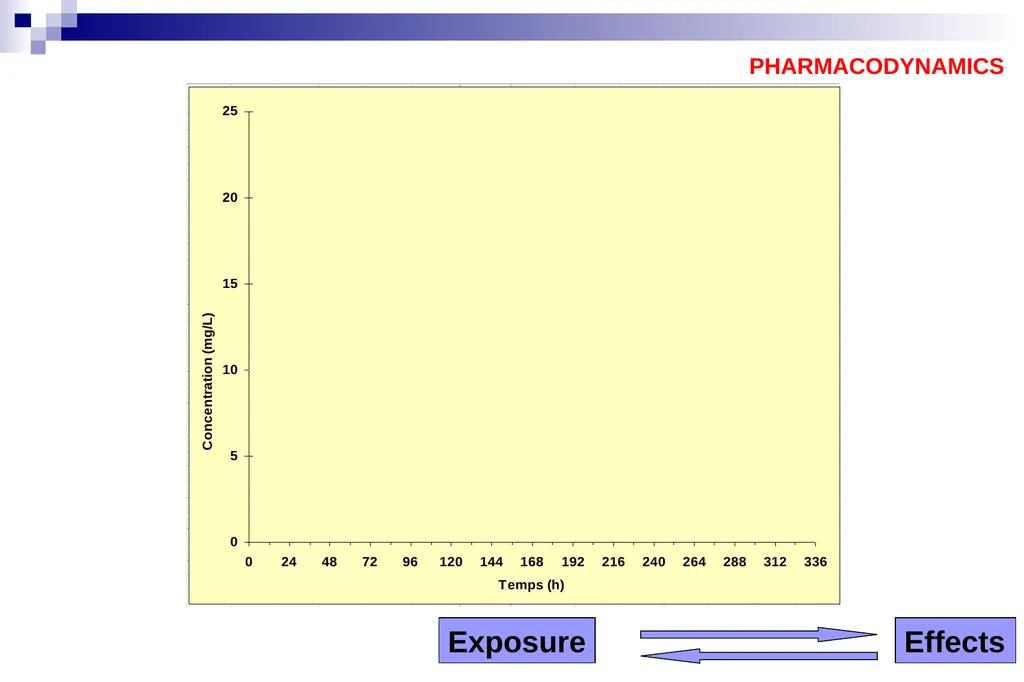
slide17. PHARMACODYNAMICS Exposure Effects<br>
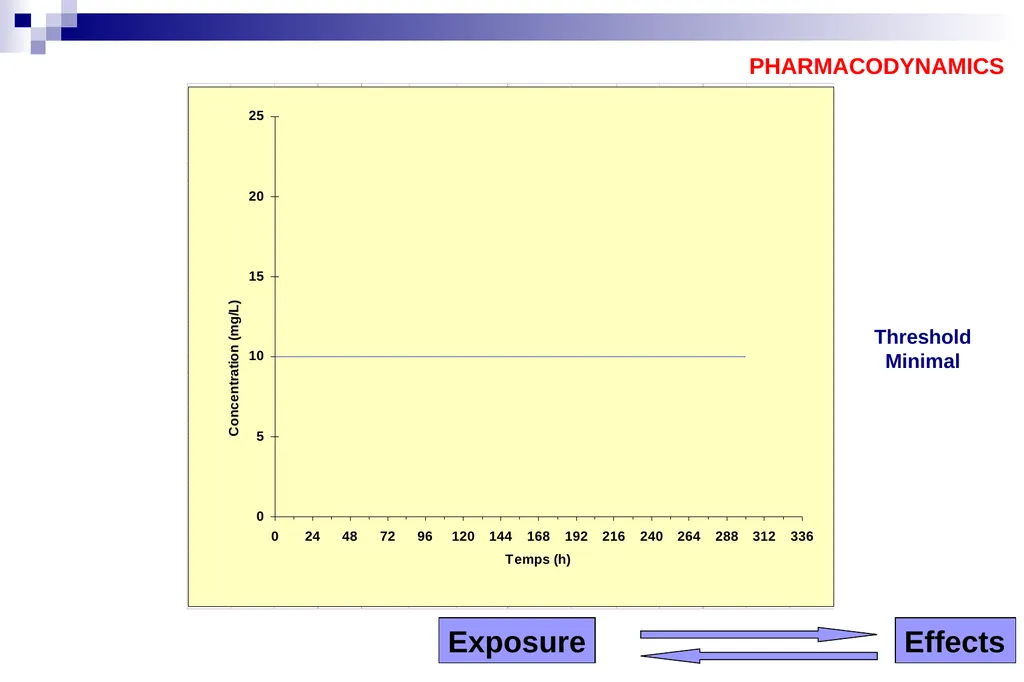
slide18. Threshold
Minimal Exposure Effects PHARMACODYNAMICS<br>
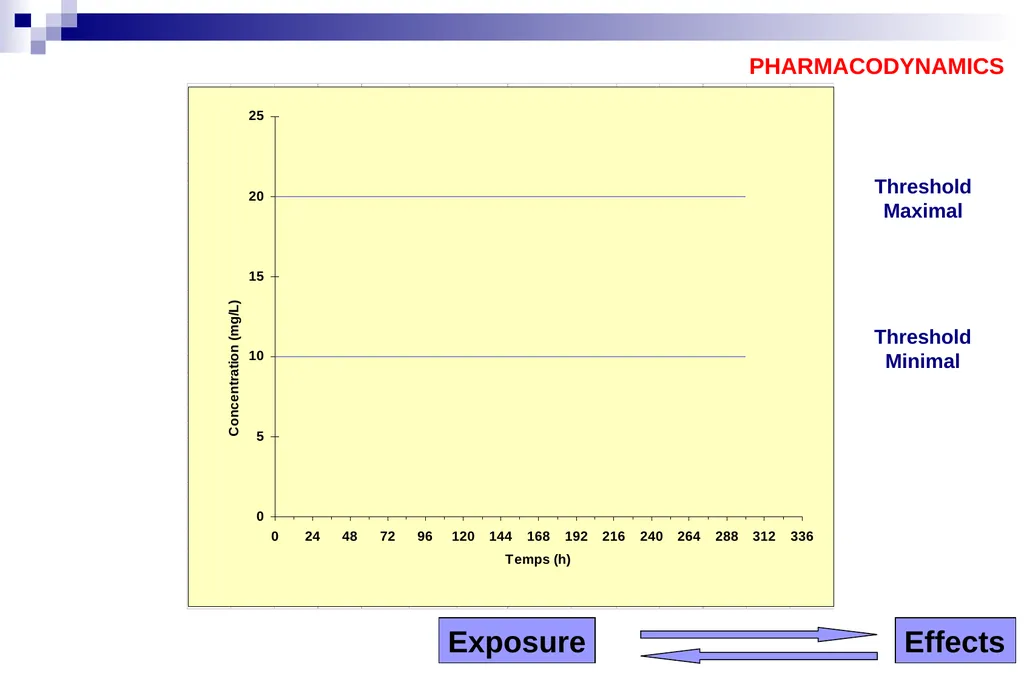
slide19. Threshold
Minimal Threshold
Maximal Exposure Effects PHARMACODYNAMICS<br>
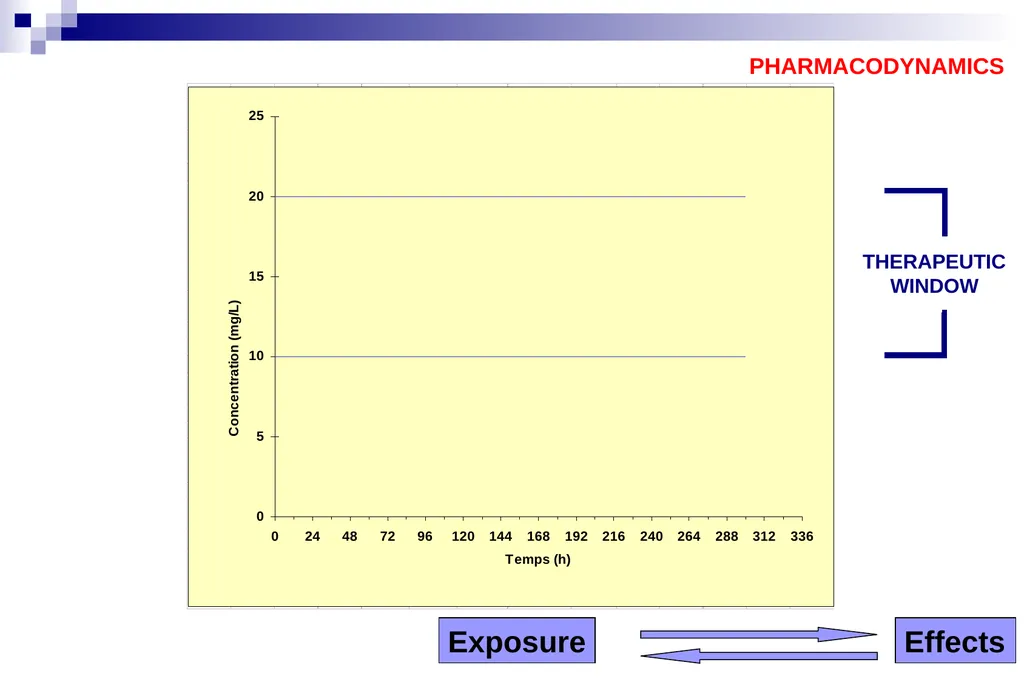
slide20. THERAPEUTIC
WINDOW Exposure Effects PHARMACODYNAMICS<br>
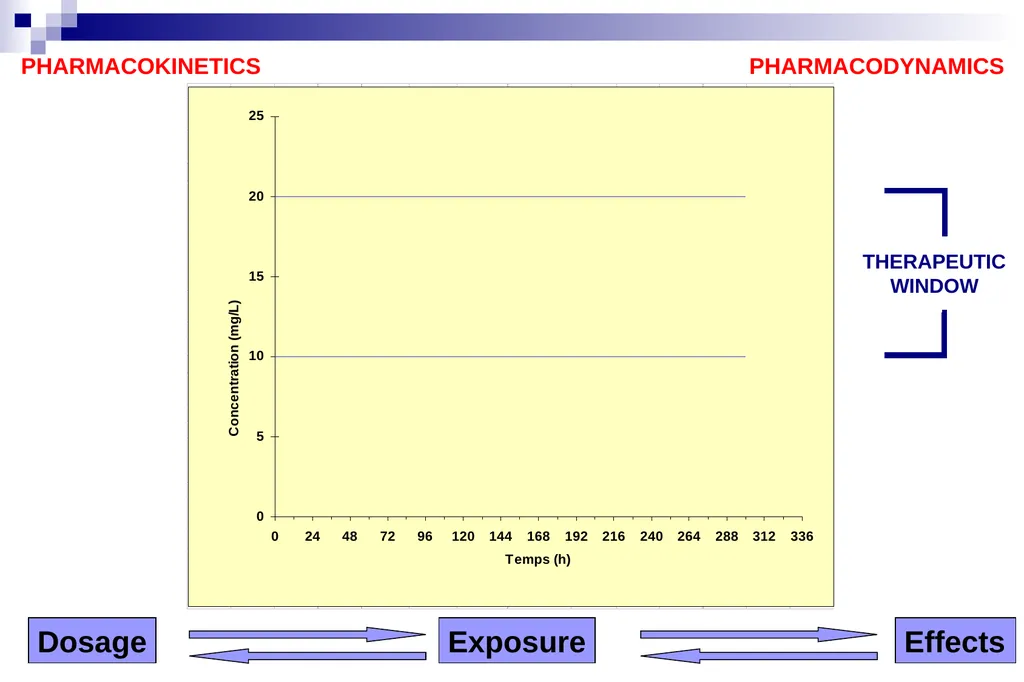
slide21. Exposure Dosage PHARMACOKINETICS Effects PHARMACODYNAMICS THERAPEUTIC
WINDOW<br>
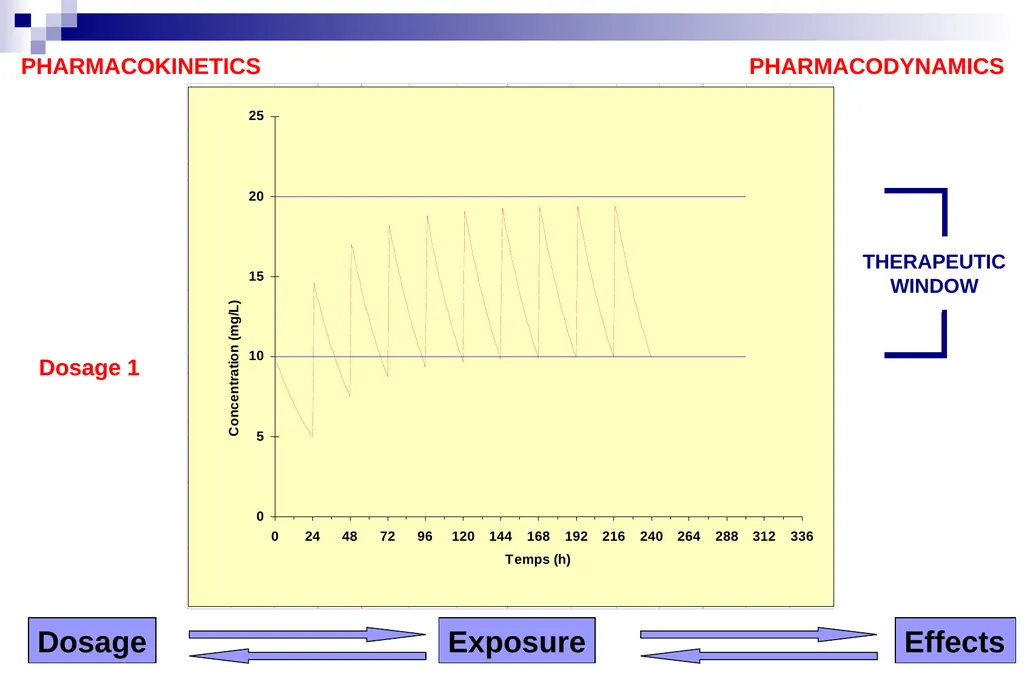
slide22. PHARMACOKINETICS Dosage 1 Dosage Exposure Effects PHARMACODYNAMICS THERAPEUTIC
WINDOW<br>
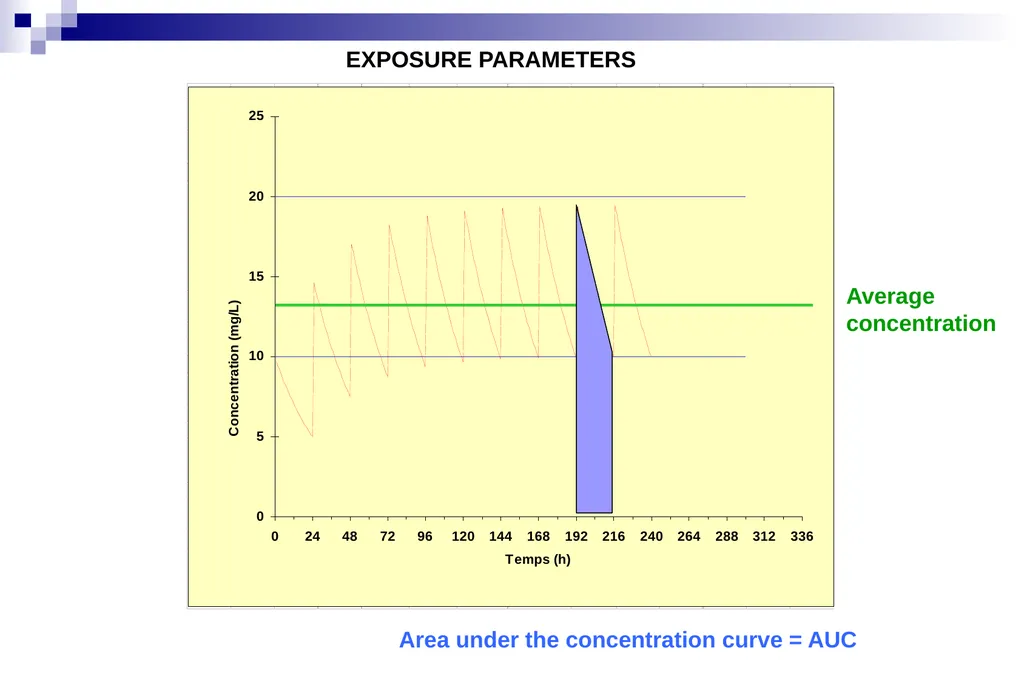
slide23. EXPOSURE PARAMETERS<br>
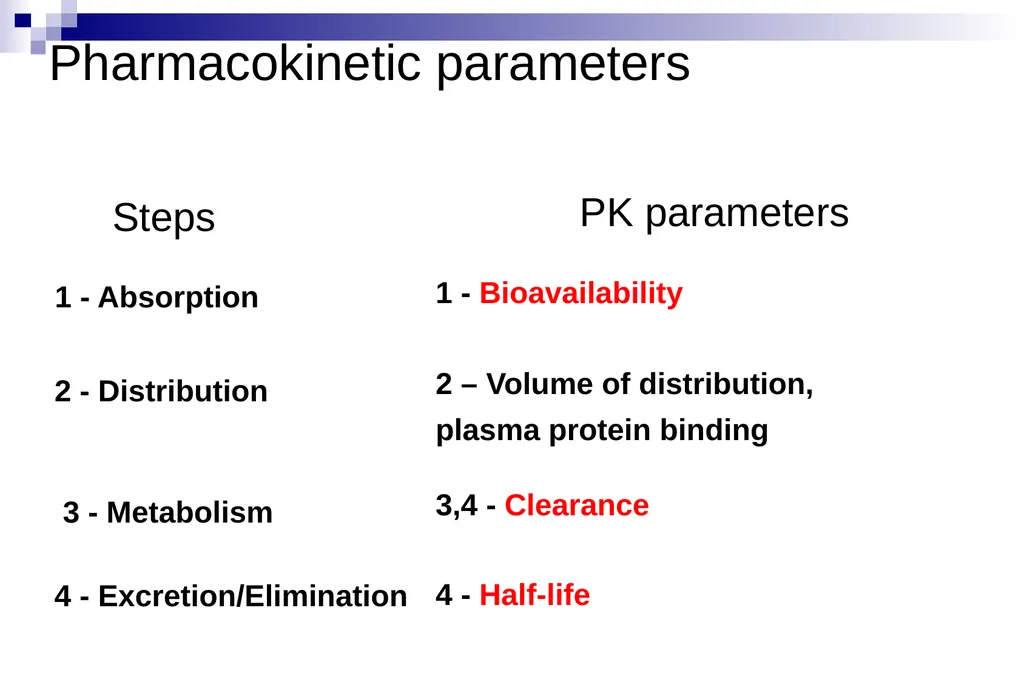
slide24. Steps 1 - Absorption 1 - Bioavailability PK parameters Pharmacokinetic parameters 2 - Distribution 3 - Metabolism 4 - Excretion/Elimination 2 – Volume of distribution,
plasma protein binding 3,4 - Clearance 4 - Half-life<br>
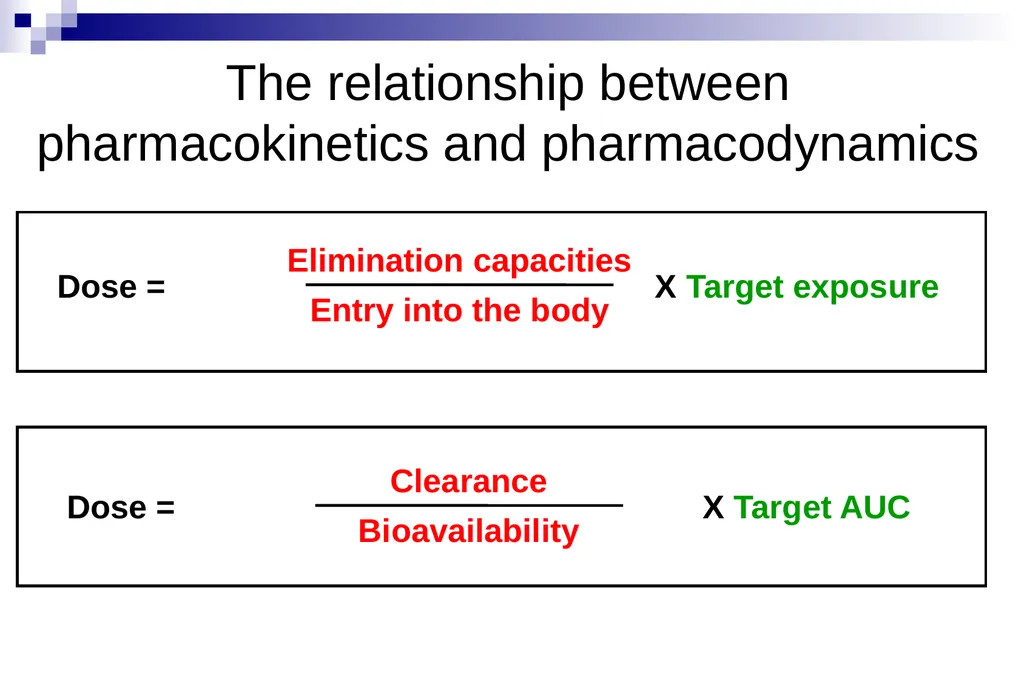
slide25. The relationship betweenpharmacokinetics and pharmacodynamics<br>
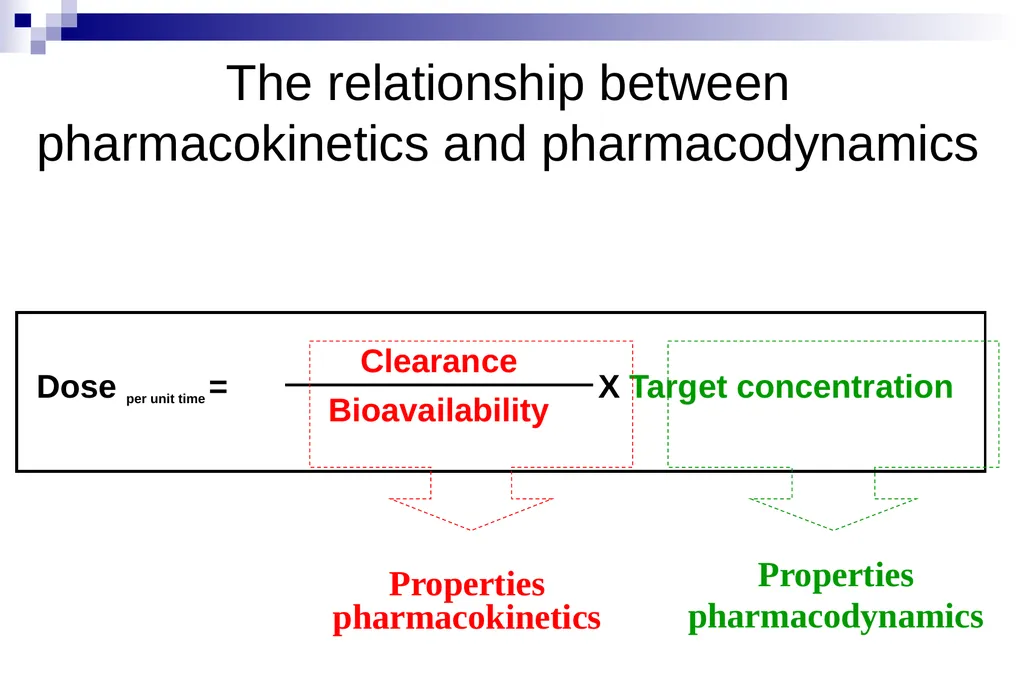
slide26. The relationship betweenpharmacokinetics and pharmacodynamics Properties
pharmacodynamics Properties
pharmacokinetics<br>
slide27. Plasma concentration profiles<br>
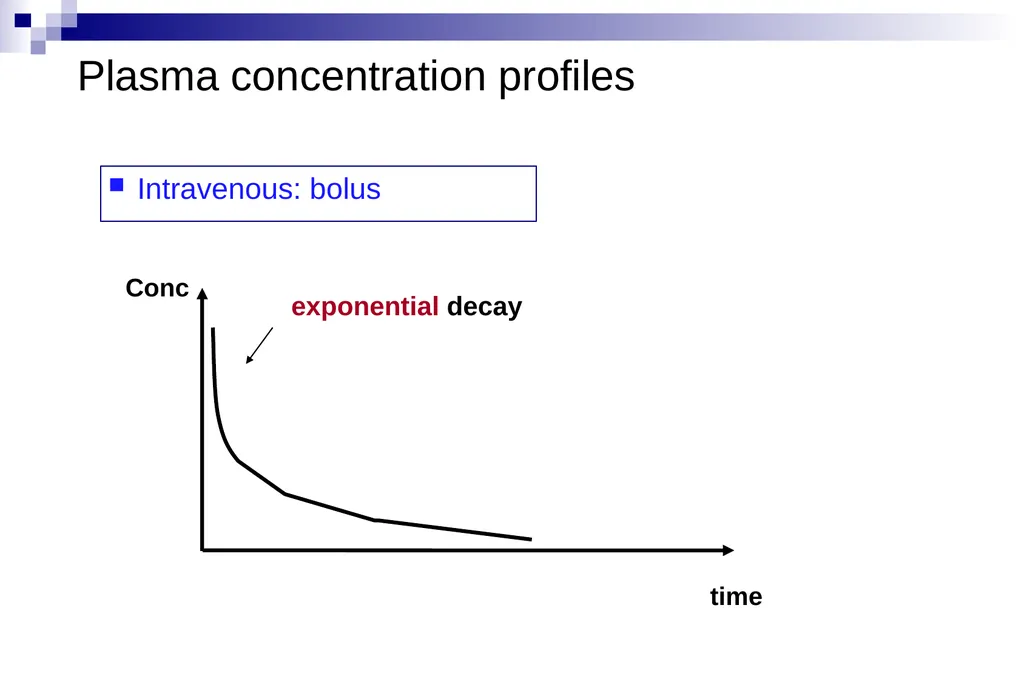
slide28. time Conc Plasma concentration profiles Intravenous: bolus<br>
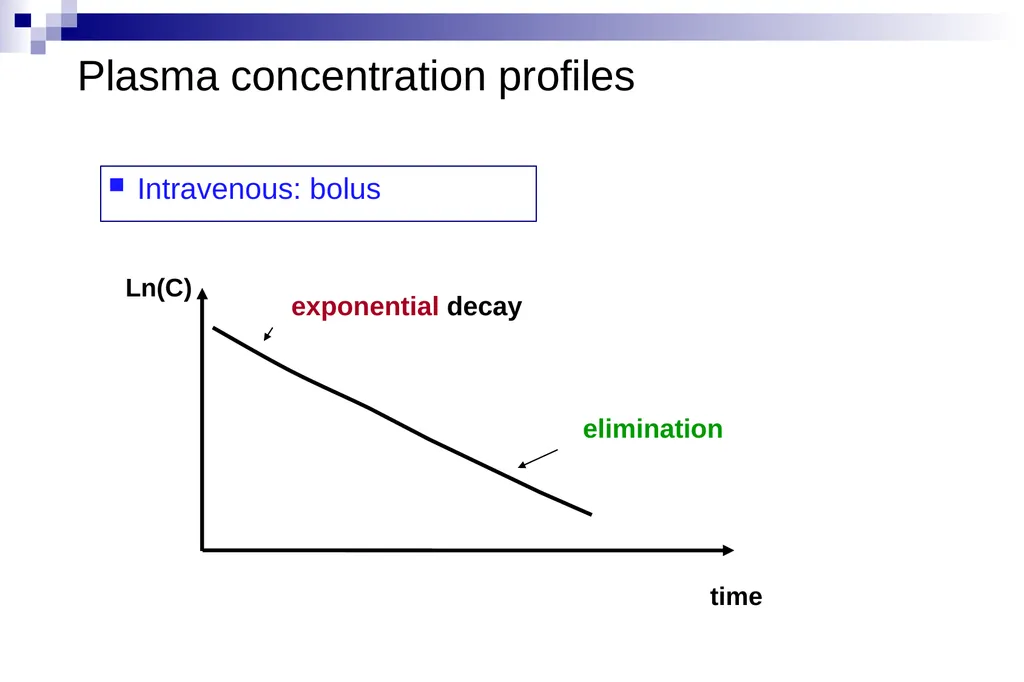
slide29. time Ln(C) exponential decay Intravenous: bolus elimination Plasma concentration profiles<br>
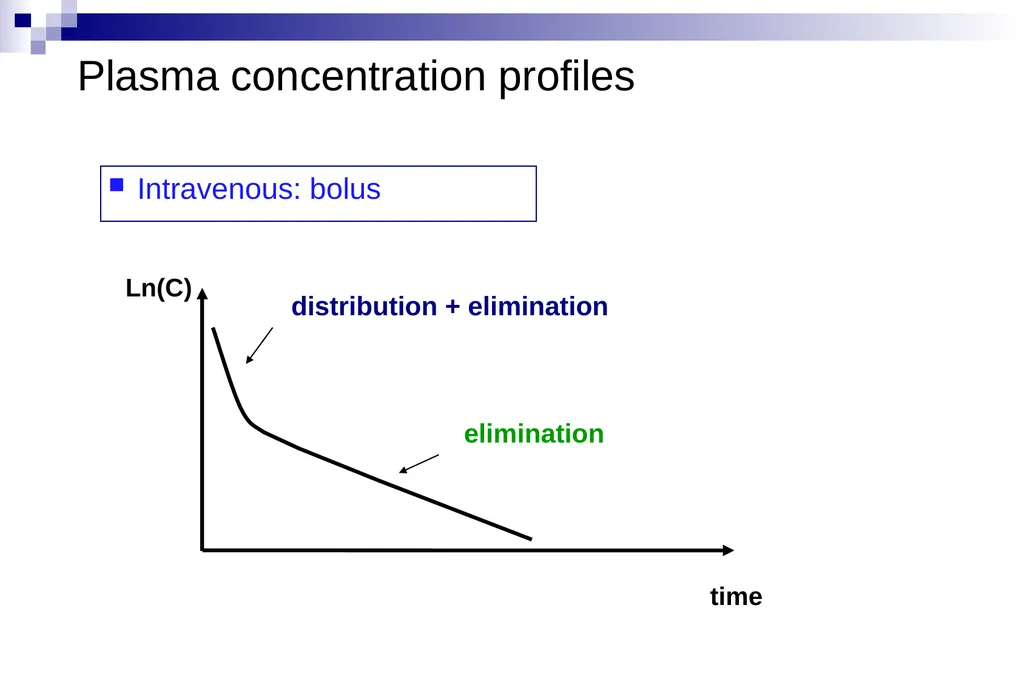
slide30. time Ln(C) Intravenous: bolus Plasma concentration profiles<br>
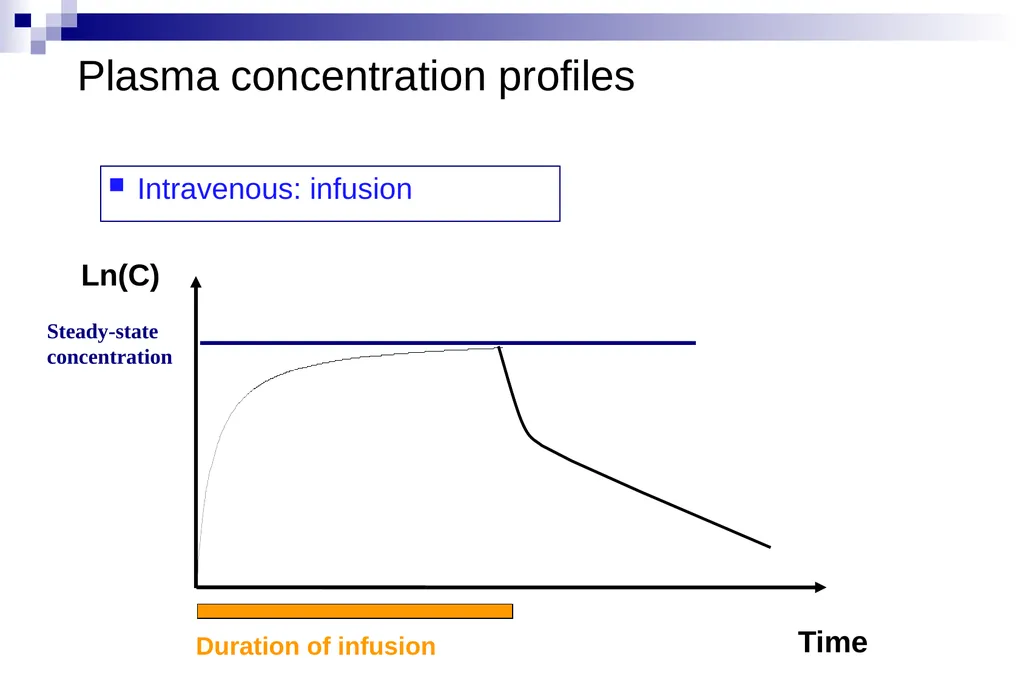
slide31. Intravenous: infusion Plasma concentration profiles Time Ln(C)<br>
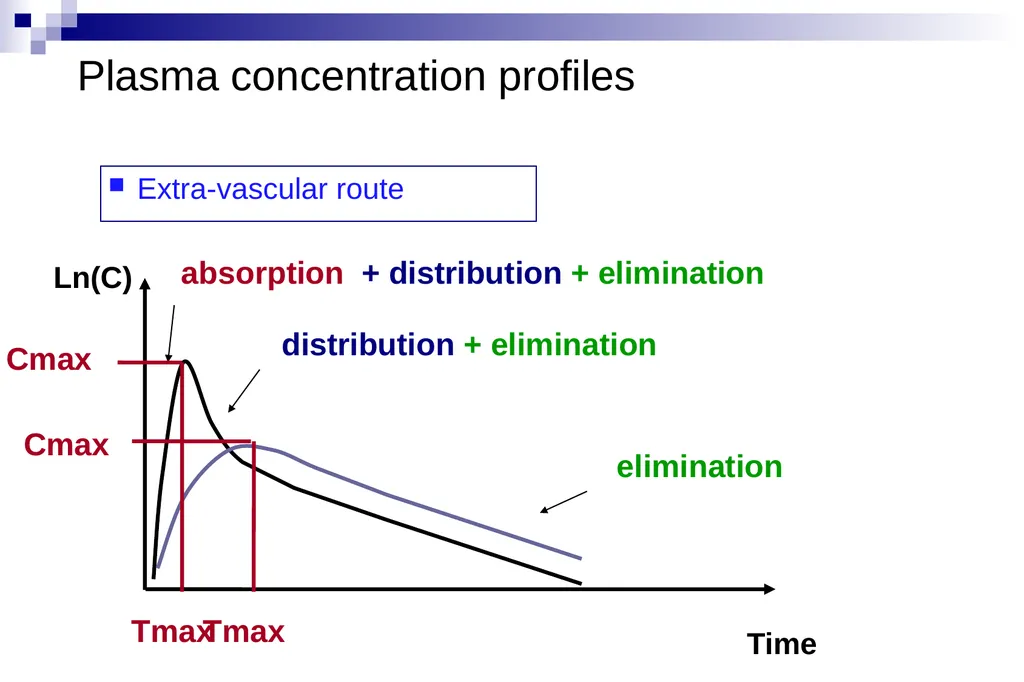
slide32. Extra-vascular route Plasma concentration profiles Time Ln(C) + distribution + elimination<br>
slide33. The decrease in plasma concentrations
Terminal half-life<br>
slide34. Definition (1): The time required to halve plasma concentrations ... The terminal half-life<br>
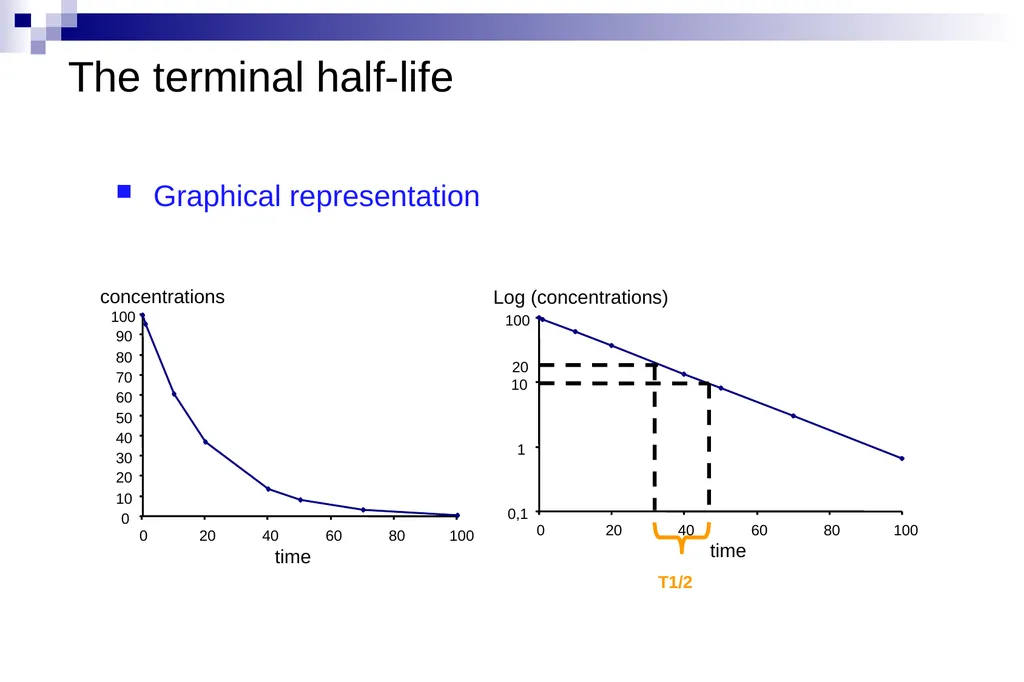
slide35. Graphical representation concentrations time 20 T1/2 The terminal half-life<br>
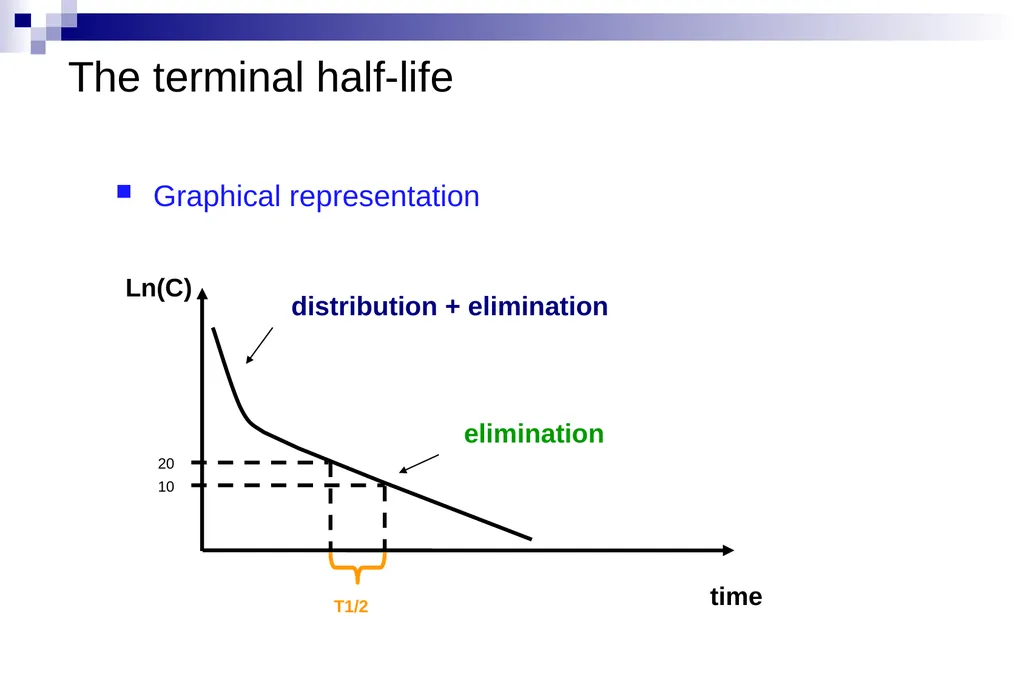
slide36. time Ln(C) 20 T1/2 10 Graphical representation The terminal half-life<br>
slide37. Time to halve plasma concentrations when distribution equilibrium is reached The terminal half-life Definition (2):<br>
slide38. The half-life gives information about the rate at which the drug leaves the body
Half-life is a "hybrid" parameter that is influenced by distribution and elimination
It is descriptive, but not explicative The terminal half-life Interpretation :<br>
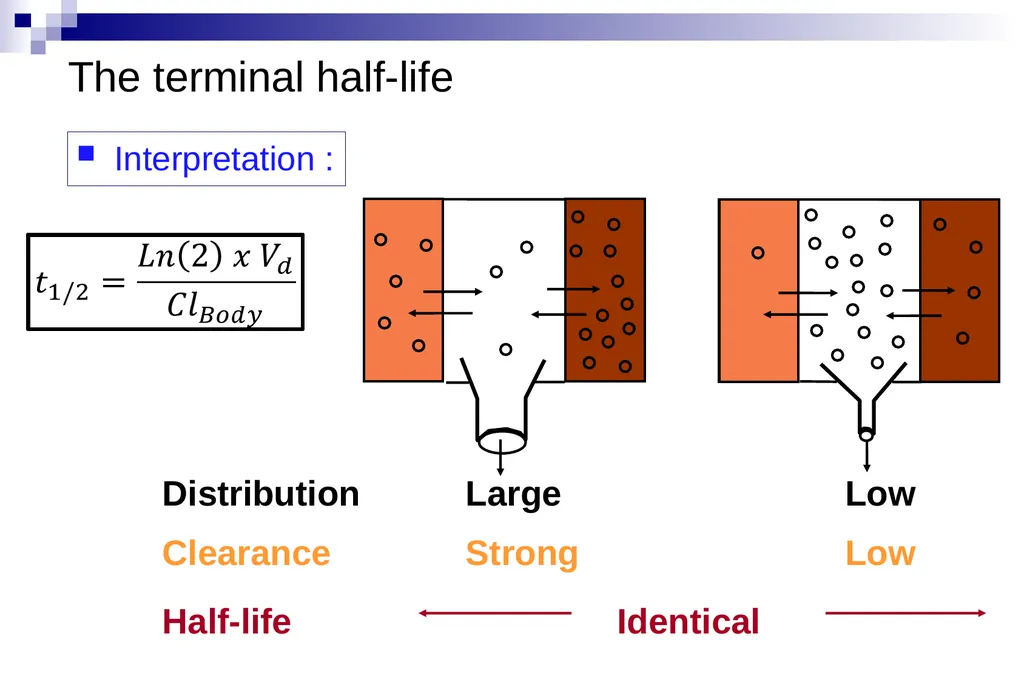
slide39. The terminal half-life Interpretation :<br>
slide40. In the case of multiple administration, the value of the terminal half-life provides informations on :
- the extent of accumulation of the drug
- the importance of fluctuations in concentrations
the speed at which the steady state is reached
Its value influences the choice of the dosing interval (one of the criterions of this choice) The terminal half-life Use :<br>

An overview
Alain Bousquet-Mélou August 2021, Padua, Italy<br>
slide2. Pharmacology Pharmacology (pharmacology)
Comes from the Greek word "Pharmakon" which means remedy but also poison.
The discipline that studies the interactions between drugs and living organisms.
This definition covers an extremely broad field since it includes, apart from pharmacokinetics, pharmacodynamics, pharmacovigilance and pharmacodependence, the study of drugs in animals (experimental pharmacology) or in humans (clinical pharmacology). Molecular pharmacology studies the physico-chemical properties of drugs and their relationship with their biological activity. The study of drug use, its context and its consequences for society is the subject of pharmacoepidemiology, pharmacoeconomics and social pharmacology (see
these terms).<br>
slide3. Pharmacology Pharmacodynamics Actionof the drug on the body Pharmacokinetics Actionof the body on the drug<br>
slide4. Interactions
Pharmacological
Targets The stages of effect generation Concentrations
Biophase Concentrations
Blood/plasma Cellular
action Dose of active ingredient
administered Therapeutic
response Therapeutic
response Bacteria
Insects
Pests<br>
slide5. PK is the study of the time development of drug absorption, distribution, metabolism, excretion in relation with pharmacological, therapeutic and toxic responses
PK is the study of the organism exposure to the drug and its relationship to the effects of the drug Pharmacokinetics<br>
slide6. Pharmacokinetics / Pharmacodynamics Mechanistic aspects Mechanisms of action of drugs
Related disciplines: Biochemistry, Physiology …
Pharmacological targets: receptors, enzymes, etc.
The actions at the levels of cells, organs, physiological functions ...
Specificity, selectivity: desired effects, secondary effects, adverse effects, etc.<br>
slide7. Pharmacokinetics / Pharmacodynamics Mechanistic aspects Mechanisms of action of drugs
Related disciplines: Biochemistry, Physiology …
Pharmacological targets: receptors, enzymes, etc.
The actions at the levels of cells, organs, physiological functions ...
Specificity, selectivity: desired effects, secondary effects, adverse effects, etc. Mechanisms of drug disposition in the body
Related disciplines: Physiology, pharmacy (galenics)
ADME: mechanisms of digestive absorption, membrane transport, blood flow, enzymatic metabolism, renal excretion mechanisms, etc.
Influence of inter-individual factors and species specificities<br>
slide8. At the pharmacodynamic level
To link the intensity/magnitude of the effect with the concentration of the active compound : establishment of a concentration-effect relationship
Objective: to determine the concentration range (exposure) associated with a given effect Quantitative aspects Pharmacokinetics / Pharmacodynamics<br>
slide9. At the pharmacodynamic level
To link the intensity/magnitude of the effect with the concentration of the active compound : establishment of a concentration-effect relationship
Objective: to determine the concentration range (exposure) associated with a given effect At the pharmacokinetic level
To link the amount of active compound administered/ingested with blood and tissue concentrations : establishment of a dose-concentration relationship
Objective: to determine the external dose associated with a given exposure Quantitative aspects Pharmacokinetics / Pharmacodynamics<br>
slide10. At the pharmacodynamic level
To link the intensity/magnitude of the effect with the concentration of the active compound : establishment of a concentration-effect relationship
Objective: to determine the concentration range (exposure) associated with a given effect At the pharmacokinetic level
To link the amount of active compound administered/ingested with blood and tissue concentrations : establishment of a dose-concentration relationship
Objective: to determine the external dose associated with a given exposure Quantitative aspects Establishment of the Dose-response relationship Pharmacokinetics / Pharmacodynamics<br>
slide11. Dose-response in a population<br>
slide12. Therapeutic
response Concentrations
Plasma ? Dose
of active ingredient Dose-exposure-effect relationships<br>
slide13. Dose-exposure-effect relationships<br>
slide14. Dose-exposure-effect relationships<br>
slide15. Dose-exposure-effect relationships Pharmacokinetic variability / Pharmacodynamic variability<br>
slide16. The therapeutic window<br>
slide17. PHARMACODYNAMICS Exposure Effects<br>
slide18. Threshold
Minimal Exposure Effects PHARMACODYNAMICS<br>
slide19. Threshold
Minimal Threshold
Maximal Exposure Effects PHARMACODYNAMICS<br>
slide20. THERAPEUTIC
WINDOW Exposure Effects PHARMACODYNAMICS<br>
slide21. Exposure Dosage PHARMACOKINETICS Effects PHARMACODYNAMICS THERAPEUTIC
WINDOW<br>
slide22. PHARMACOKINETICS Dosage 1 Dosage Exposure Effects PHARMACODYNAMICS THERAPEUTIC
WINDOW<br>
slide23. EXPOSURE PARAMETERS<br>
slide24. Steps 1 - Absorption 1 - Bioavailability PK parameters Pharmacokinetic parameters 2 - Distribution 3 - Metabolism 4 - Excretion/Elimination 2 – Volume of distribution,
plasma protein binding 3,4 - Clearance 4 - Half-life<br>
slide25. The relationship betweenpharmacokinetics and pharmacodynamics<br>
slide26. The relationship betweenpharmacokinetics and pharmacodynamics Properties
pharmacodynamics Properties
pharmacokinetics<br>
slide27. Plasma concentration profiles<br>
slide28. time Conc Plasma concentration profiles Intravenous: bolus<br>
slide29. time Ln(C) exponential decay Intravenous: bolus elimination Plasma concentration profiles<br>
slide30. time Ln(C) Intravenous: bolus Plasma concentration profiles<br>
slide31. Intravenous: infusion Plasma concentration profiles Time Ln(C)<br>
slide32. Extra-vascular route Plasma concentration profiles Time Ln(C) + distribution + elimination<br>
slide33. The decrease in plasma concentrations
Terminal half-life<br>
slide34. Definition (1): The time required to halve plasma concentrations ... The terminal half-life<br>
slide35. Graphical representation concentrations time 20 T1/2 The terminal half-life<br>
slide36. time Ln(C) 20 T1/2 10 Graphical representation The terminal half-life<br>
slide37. Time to halve plasma concentrations when distribution equilibrium is reached The terminal half-life Definition (2):<br>
slide38. The half-life gives information about the rate at which the drug leaves the body
Half-life is a "hybrid" parameter that is influenced by distribution and elimination
It is descriptive, but not explicative The terminal half-life Interpretation :<br>
slide39. The terminal half-life Interpretation :<br>
slide40. In the case of multiple administration, the value of the terminal half-life provides informations on :
- the extent of accumulation of the drug
- the importance of fluctuations in concentrations
the speed at which the steady state is reached
Its value influences the choice of the dosing interval (one of the criterions of this choice) The terminal half-life Use :<br>