04
Introduction: Lysine Analogs Epsilon Aminocaproic Acid (EACA)
No evidence of increased clot maintenance
Conflicting evidence on effect on alpha2-antiplasmin
No prevention of exercise induced pulmonary hemorrhage (EIPH)
Tranexamic Acid (TEA)
5-10x more potent than EACA in humans
No pharmacodynamic studies in horses exist
Empirical doses in horses:
5 – 25 mg/kg (Australian Manufacturer)
20 mg/kg (Minamijima et al. 2023)
TEA effective at 1/20th human concentration in ex vivo equine study (Fletcher et al. 2013)
Human dose: 10 mg/kg<br>
05
Introduction: Purpose Pharmacokinetics
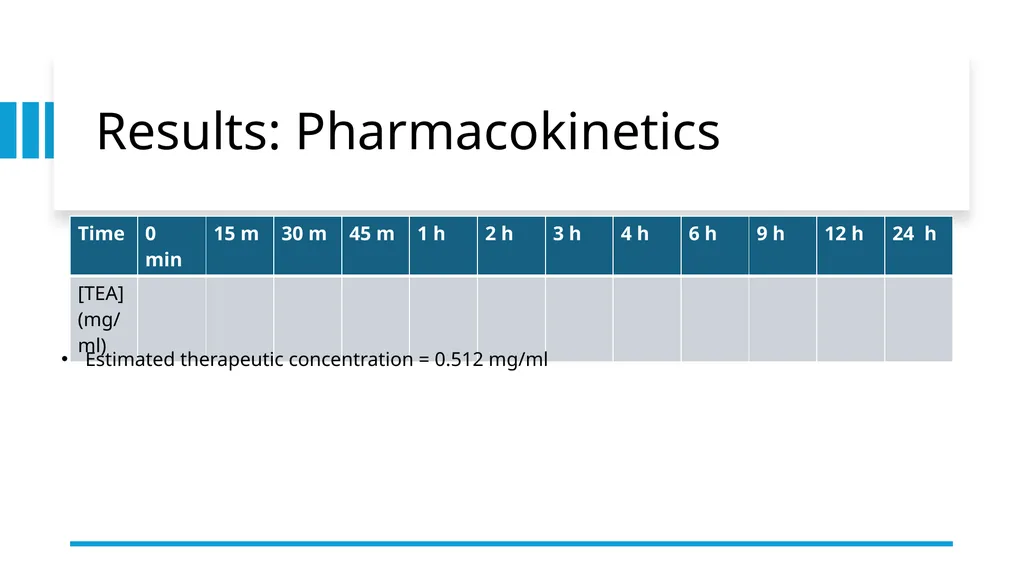
Serum concentrations of TEA over 24h �after IV administration of �single dose 5 mg/kg TEA
Pharmacodynamics
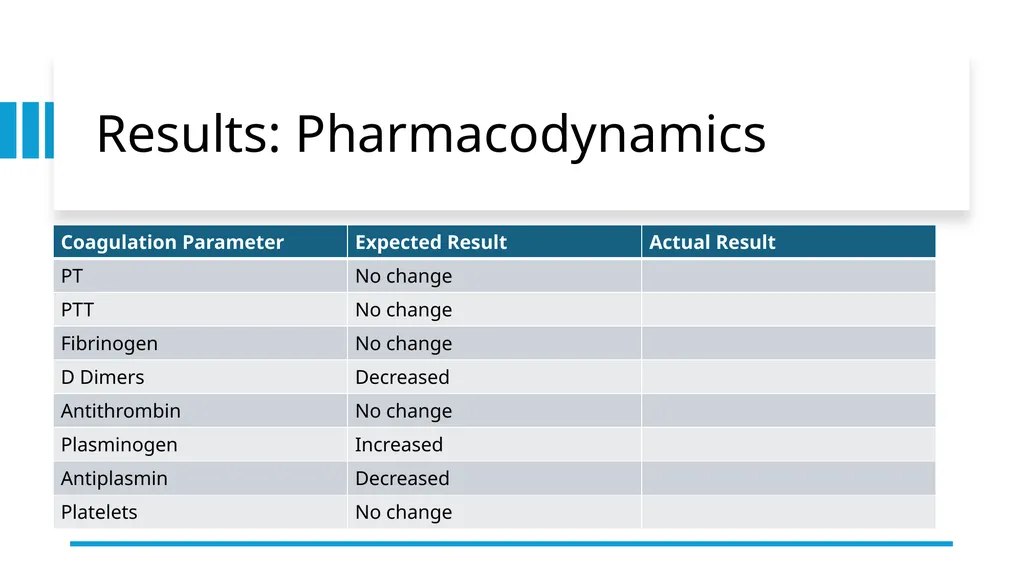
Coagulation parameters
PT and PTT
Fibrinogen
D Dimers
Antithrombin
Plasminogen
Antiplasmin
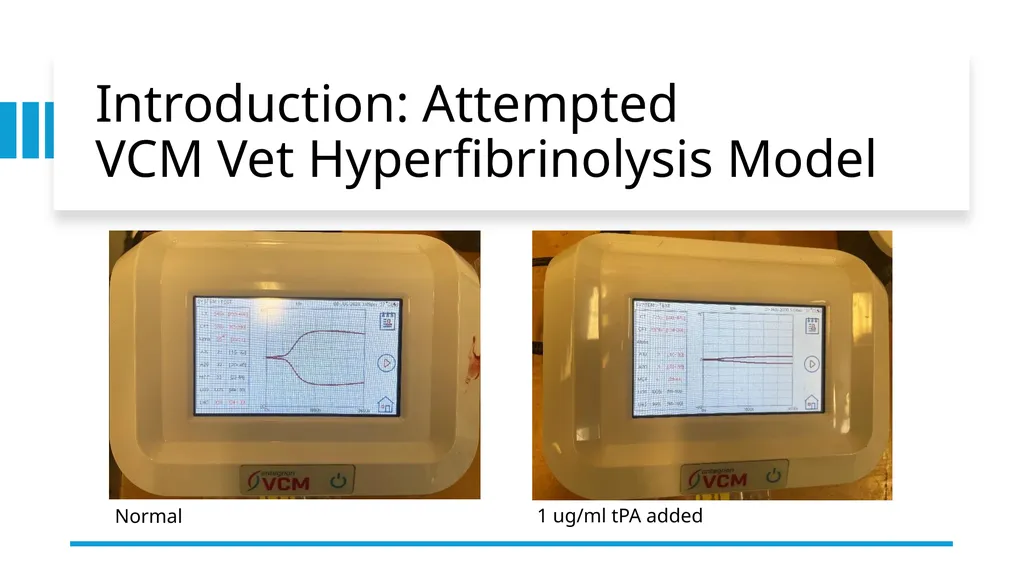
Platelet count *Attempted to create Hyperfibrinolysis Model to analyze effect of TEA on fibrinolysis using point-of care viscoelastic analyzer [VCM Vet]
Model was not successful<br>
07
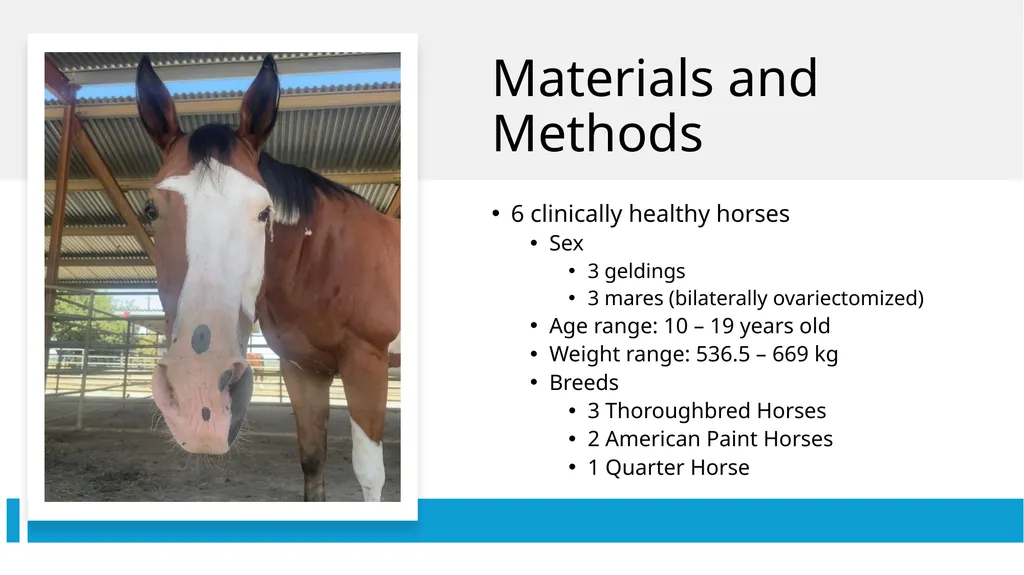
Materials and Methods 6 clinically healthy horses
Sex
3 geldings
3 mares (bilaterally ovariectomized)
Age range: 10 – 19 years old
Weight range: 536.5 – 669 kg
Breeds
3 Thoroughbred Horses
2 American Paint Horses
1 Quarter Horse<br>
08
Materials and Methods Single dose study
5 mg/kg TEA administered over 5 min via IV R jugular catheter
Samples 0-9h collected via L jugular catheter, 12h & 24h via venipuncture
Pharmacokinetic sample collection
Baseline (0 min)
15 min, 30 min, 45 min
1h, 2h, 3h, 4h, 6h, 9h, 12h, 24h
Pharmacodynamic sample collection (coagulation parameters)
Baseline (0 min)
1h, 4h, 9h<br>
09
Materials and Methods Pharmacokinetic Analysis
K. L. Maddy Equine Analytical Chemistry Lab at UC Davis
TEA Serum Concentration Analysis
Pharmacodynamic Analysis
Comparative Coagulation Laboratory at Cornell University
PT, PTT, Fibrinogen, D Dimers, Antithrombin, Plasminogen, Antiplasmin
Clinical Hematology Laboratory at the Veterinary Medical Teaching Hospital at UC Davis
Platelet Count<br>
10
Materials and Methods Statistical Analysis
Repeated measures ANOVA
Compare coagulation parameters at time 0h to 1h to 4h
Coagulation parameters: �PT, PTT, Fibrinogen, D Dimers, Antithrombin, Plasminogen, Antiplasmin
Level of Significance: < 0.05<br>
11
Expected Results: Pharmacokinetics<br>
12
Expected Results: Pharmacodynamics<br>
13
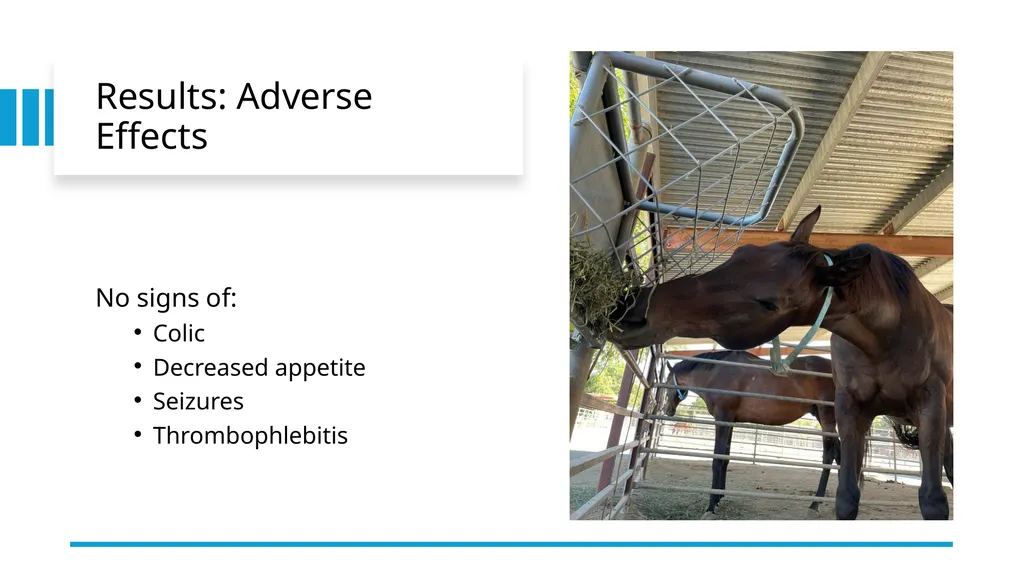
Results: Adverse Effects No signs of:
Colic
Decreased appetite
Seizures
Thrombophlebitis<br>
14
Discussion: Pharmacodynamics Future Studies
TEG Study with collected citrated plasma
Additional pharmacodynamic study if VCM Vet hyperfibrinolysis model can be created
Clinical trial with horses where lysine analog is indicated
Tranexamic acid (TEA) vs epsilon aminocaproic acid (EACA)
TEA vs placebo (ethical considerations)<br>
15
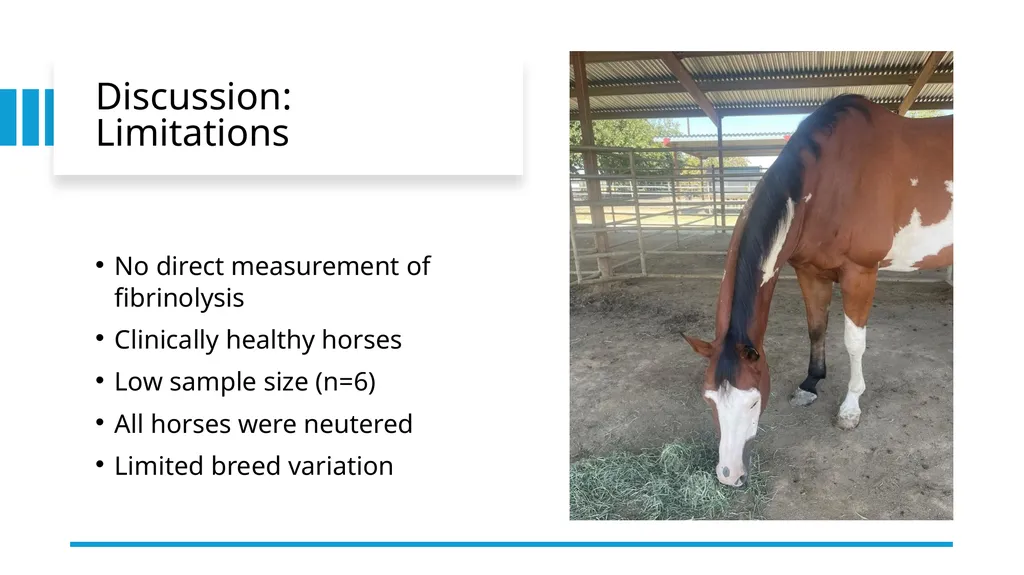
Discussion: Limitations No direct measurement of fibrinolysis
Clinically healthy horses
Low sample size (n=6)
All horses were neutered
Limited breed variation<br>
16
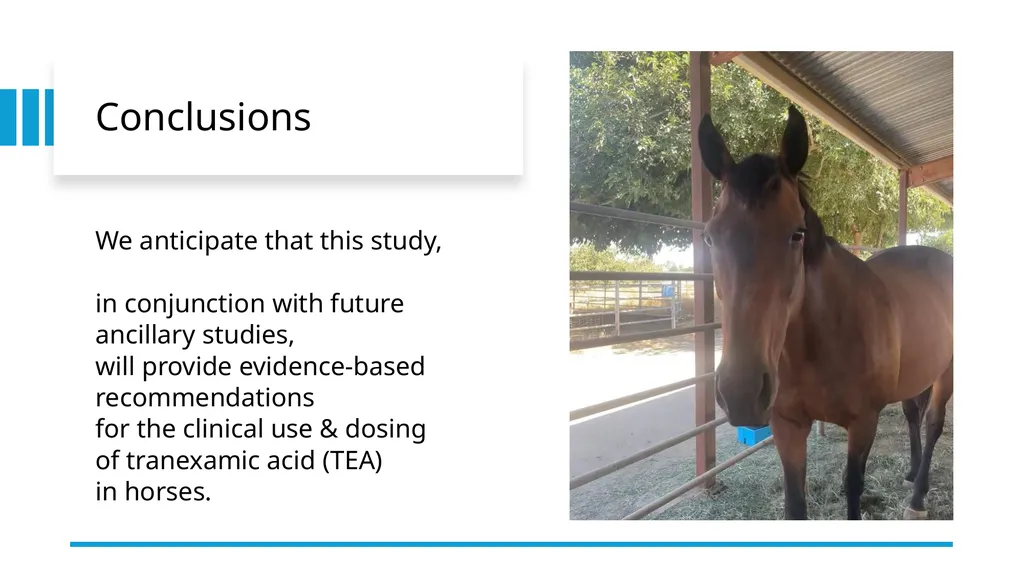
Conclusions We anticipate that this study, �in conjunction with future ancillary studies, �will provide evidence-based recommendations �for the clinical use & dosing �of tranexamic acid (TEA) �in horses.<br>
17
Acknowledgements Julie Dechant, DVM, DACVS, DACVECC
Heather Knych, DVM, PhD, DACVCP and �the K. L. Maddy Equine Analytical Chemistry Lab
Staff at UC Davis Center of Equine Health
UC Davis Students Training in Advanced Research (STAR)
UC Davis School of Veterinary Medicine/ �Center for Equine Health Endowment Funds
Horses: Fluorescent, Casino (Laid Back and Lazy), Candy, �Conner (The Art Connection), Monsieur W, Pete<br>
19
Supplemental Slides Anne Werum
Julie Dechant, DVM, DACVS, DACVECC<br>
20
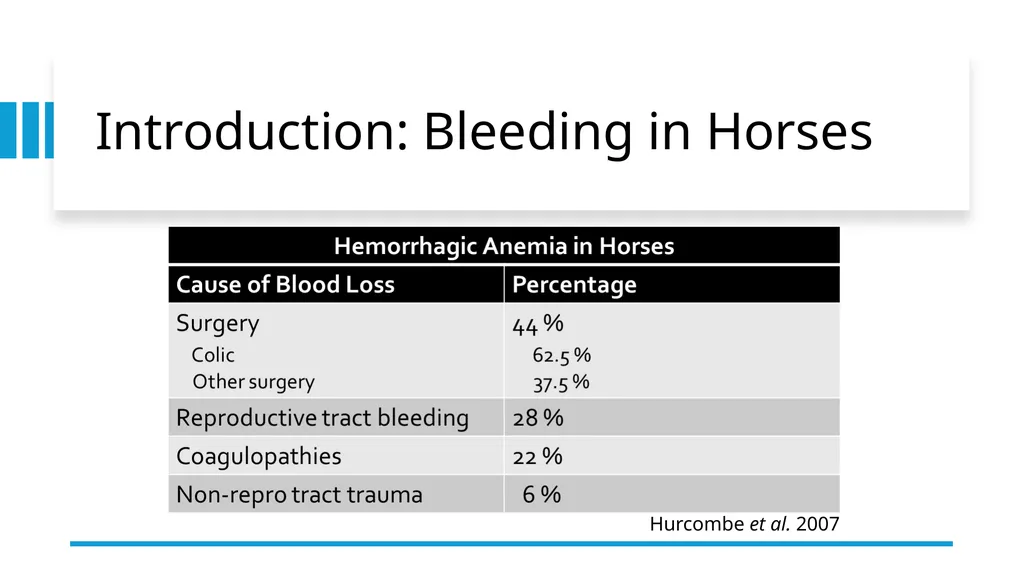
Introduction: Bleeding in Horses Hurcombe et al. 2007<br>
21
Introduction: �Measuring Coagulation PT and PTT
Fibrinogen
D Dimers
Antithrombin
Plasminogen
Antiplasmin
Platelets<br>
22
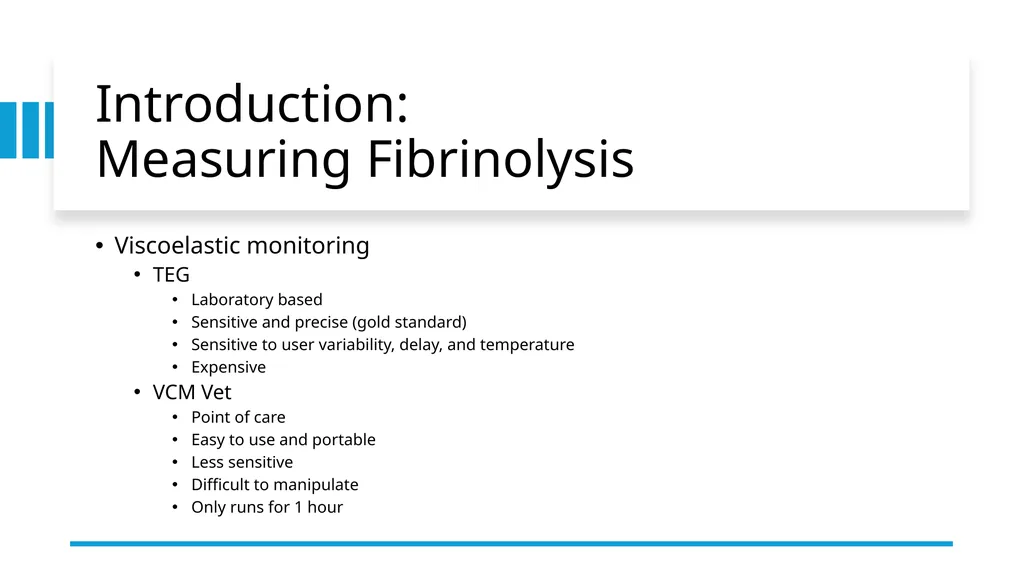
Introduction: �Measuring Fibrinolysis Viscoelastic monitoring
TEG
Laboratory based
Sensitive and precise (gold standard)
Sensitive to user variability, delay, and temperature
Expensive
VCM Vet
Point of care
Easy to use and portable
Less sensitive
Difficult to manipulate
Only runs for 1 hour<br>
23
Introduction: Attempted�VCM Vet Hyperfibrinolysis Model Normal 1 ug/ml tPA added<br>
24
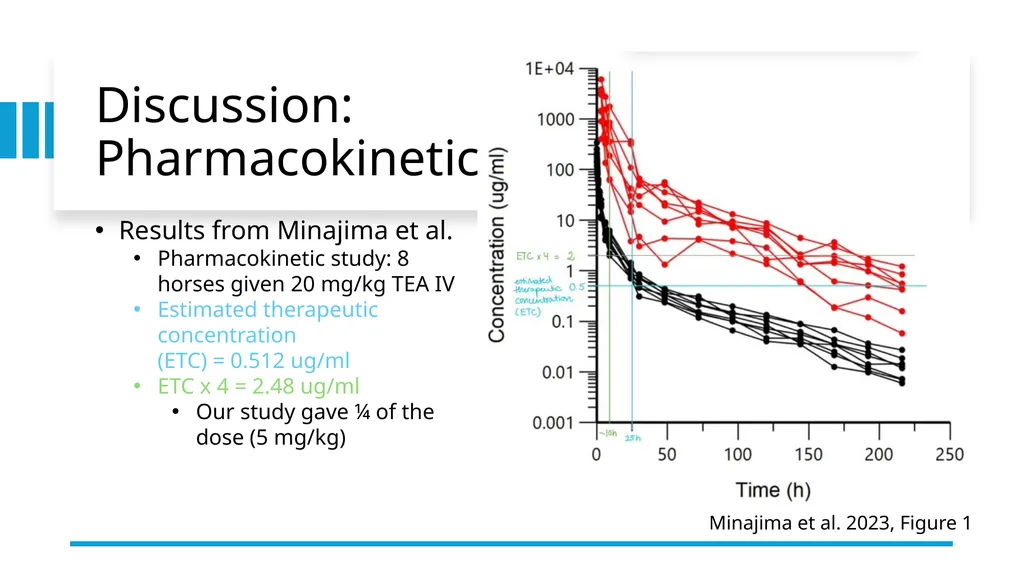
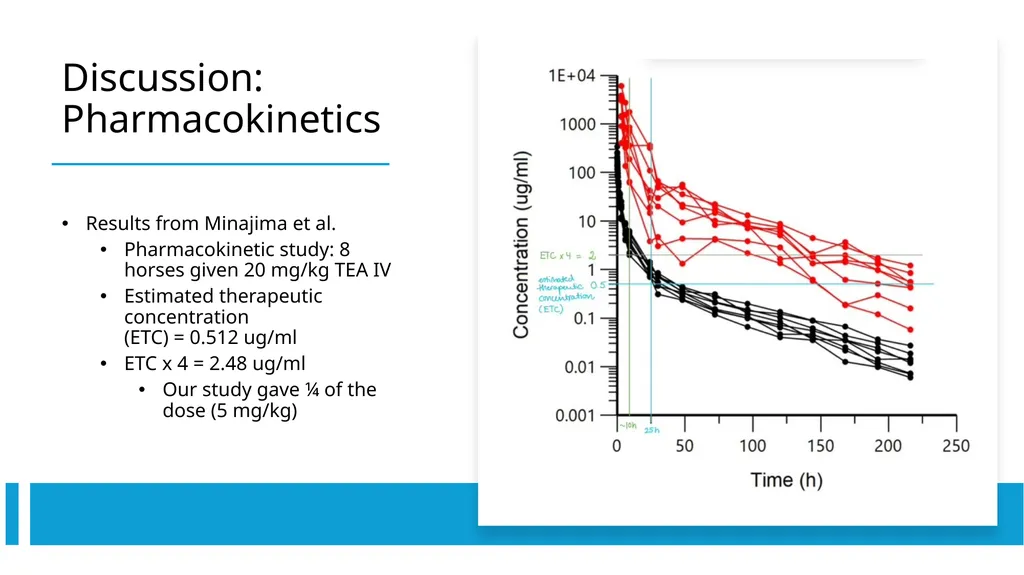
Discussion: Pharmacokinetics Results from Minajima et al.
Pharmacokinetic study: 8 horses given 20 mg/kg TEA IV
Estimated therapeutic concentration �(ETC) = 0.512 ug/ml
ETC x 4 = 2.48 ug/ml
Our study gave ¼ of the dose (5 mg/kg) Minajima et al. 2023, Figure 1<br>
25
Discussion: Pharmacokinetics Results from Minajima et al.
Pharmacokinetic study: 8 horses given 20 mg/kg TEA IV
Estimated therapeutic concentration �(ETC) = 0.512 ug/ml
ETC x 4 = 2.48 ug/ml
Our study gave ¼ of the dose (5 mg/kg)<br>
26
Results: Pharmacokinetics Estimated therapeutic concentration = 0.512 mg/ml<br>
27
Results: Pharmacodynamics<br>