Positioning the reader through language choices: Dickens description of Coketown LEAD Principles What strikes you most about these industrial towns of the 1850s? Would these kind of scenes exist today? It was a town of red brick, or of
"Positioning the reader through language choices:" is the property of its rightful owner. Permission is granted to
download and print the materials on this website for personal, non-commercial use only, and to display it
on your personal computer provided you do not modify the materials and that you retain all copyright
notices contained in the materials. By downloading content from our website, you accept the terms of this
agreement.
Presentation Transcript
01
Positioning the reader through language choices: Dickens’ description of Coketown<br>
02
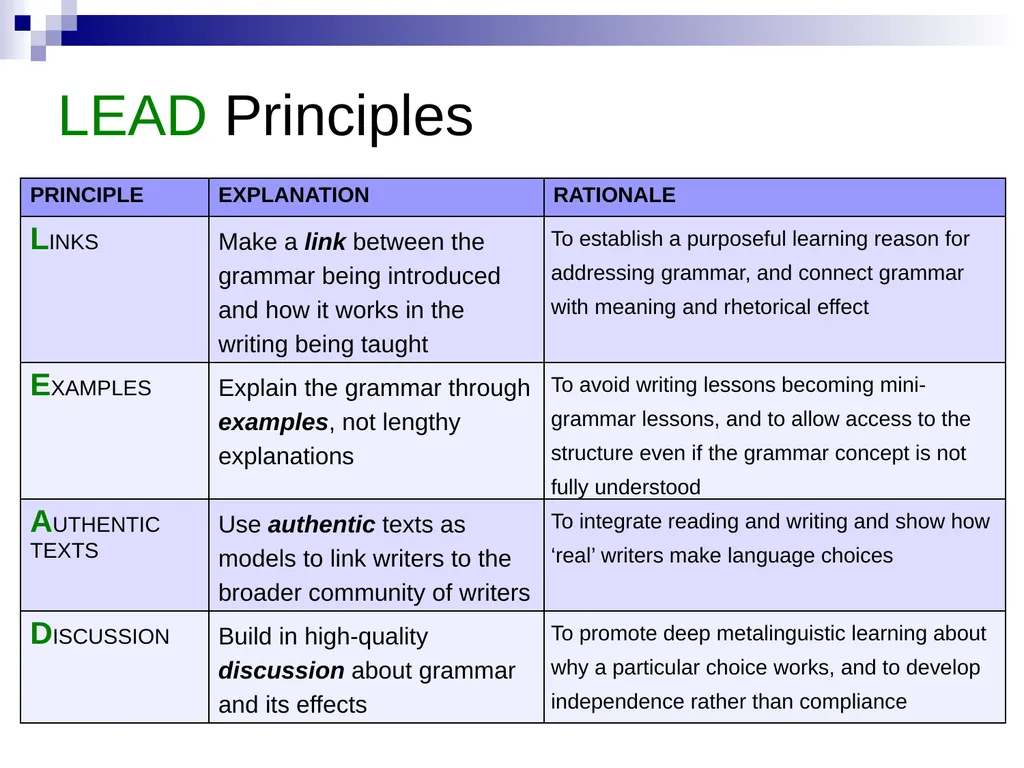
LEAD Principles<br>
03
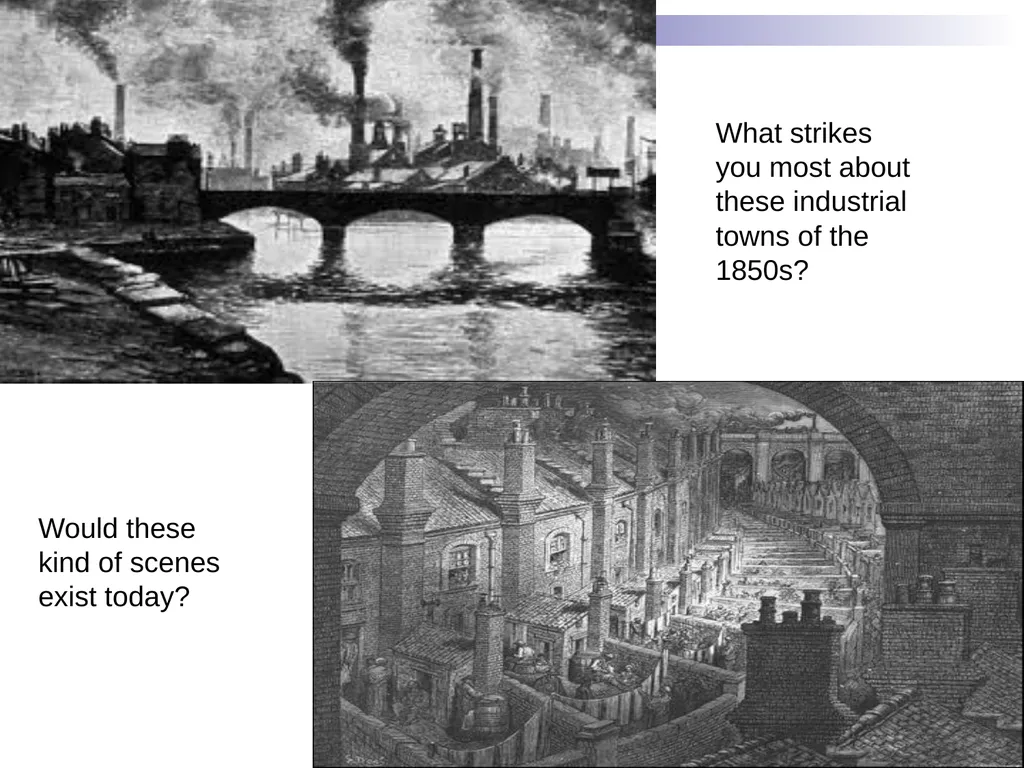
What strikes you most about these industrial towns of the 1850s? Would these kind of scenes exist today?<br>
04
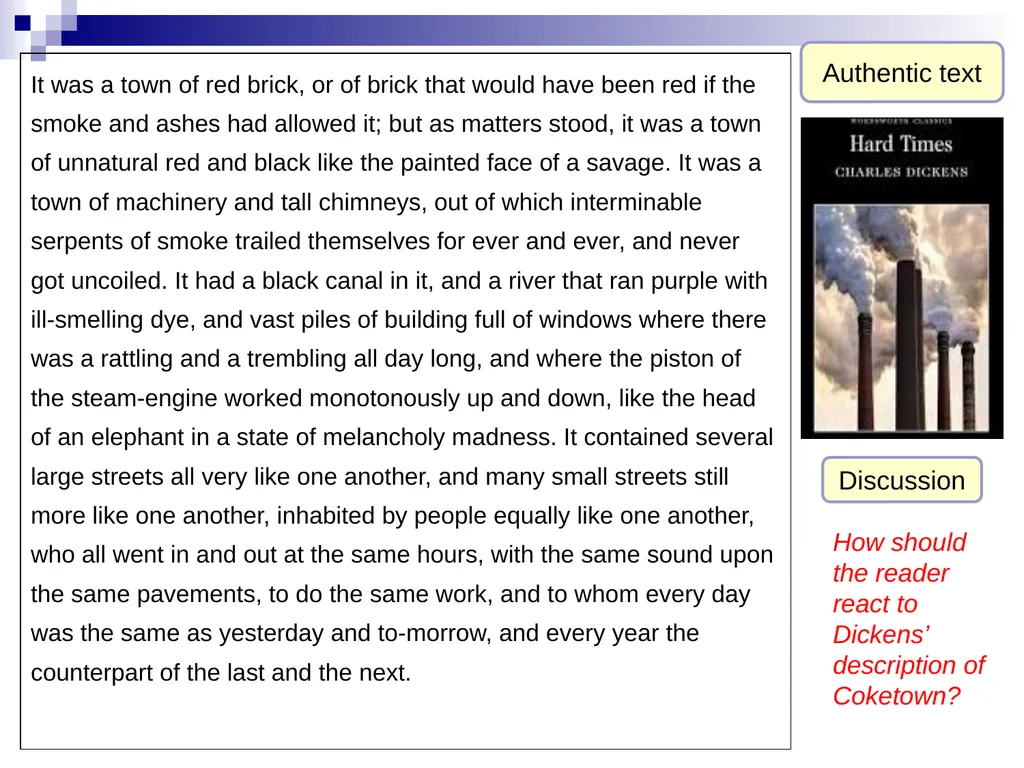
It was a town of red brick, or of brick that would have been red if the smoke and ashes had allowed it; but as matters stood, it was a town of unnatural red and black like the painted face of a savage. It was a town of machinery and tall chimneys, out of which interminable serpents of smoke trailed themselves for ever and ever, and never got uncoiled. It had a black canal in it, and a river that ran purple with ill-smelling dye, and vast piles of building full of windows where there was a rattling and a trembling all day long, and where the piston of the steam-engine worked monotonously up and down, like the head of an elephant in a state of melancholy madness. It contained several large streets all very like one another, and many small streets still more like one another, inhabited by people equally like one another, who all went in and out at the same hours, with the same sound upon the same pavements, to do the same work, and to whom every day was the same as yesterday and to-morrow, and every year the counterpart of the last and the next. Authentic text Discussion How should the reader react to Dickens’
description of Coketown?<br>
05
It was a town of red brick, or of brick that would have been red if the smoke and ashes had allowed it; but as matters stood, it was a town of unnatural red and black like the painted face of a savage. Noticing Details in a Text It had a black canal in it, and a river that ran purple with ill-smelling dye, and vast piles of building full of windows where there was a rattling and a trembling all day long, and where the piston of the steam-engine worked monotonously up and down, like the head of an elephant in a state of melancholy madness. … How does Dickens’ description appeal to the reader’s senses of sight, sound and smell?
What do these vivid sensory details tell us about life in Coketown?
How should the reader react? Examples It was a town of machinery and tall chimneys, out of which interminable serpents of smoke trailed themselves for ever and ever, and never got uncoiled. Discussion Links<br>
06
It contained several large streets all very like one another, and many small streets still more like one another, inhabited by people equally like one another, who all went in and out at the same hours, with the same sound upon the same pavements, to do the same work, and to whom every day was the same as yesterday and to-morrow, and every year the counterpart of the last and the next. Noticing Details in a Text How has Dickens made this sentence so long and so repetitive?
What does the repetitive nature of this sentence reinforce about life in Coketown?
How should the reader react? Examples Discussion Links<br>
07
It was a town of red brick, or of brick that would have been red if the smoke and ashes had allowed it; but as matters stood, it was a town of unnatural red and black like the painted face of a savage. It was a town of machinery and tall chimneys, out of which interminable serpents of smoke trailed themselves for ever and ever, and never got uncoiled. It had a black canal in it, and a river that ran purple with ill-smelling dye, and vast piles of building full of windows where there was a rattling and a trembling all day long, and where the piston of the steam-engine worked monotonously up and down, like the head of an elephant in a state of melancholy madness. It contained several large streets all very like one another, and many small streets still more like one another, inhabited by people equally like one another, who all went in and out at the same hours, with the same sound upon the same pavements, to do the same work, and to whom every day was the same as yesterday and to-morrow, and every year the counterpart of the last and the next. Through his description of Coketown in ‘Hard Times’, what does Dickens want the reader to think and feel about industrialisation?<br>
08
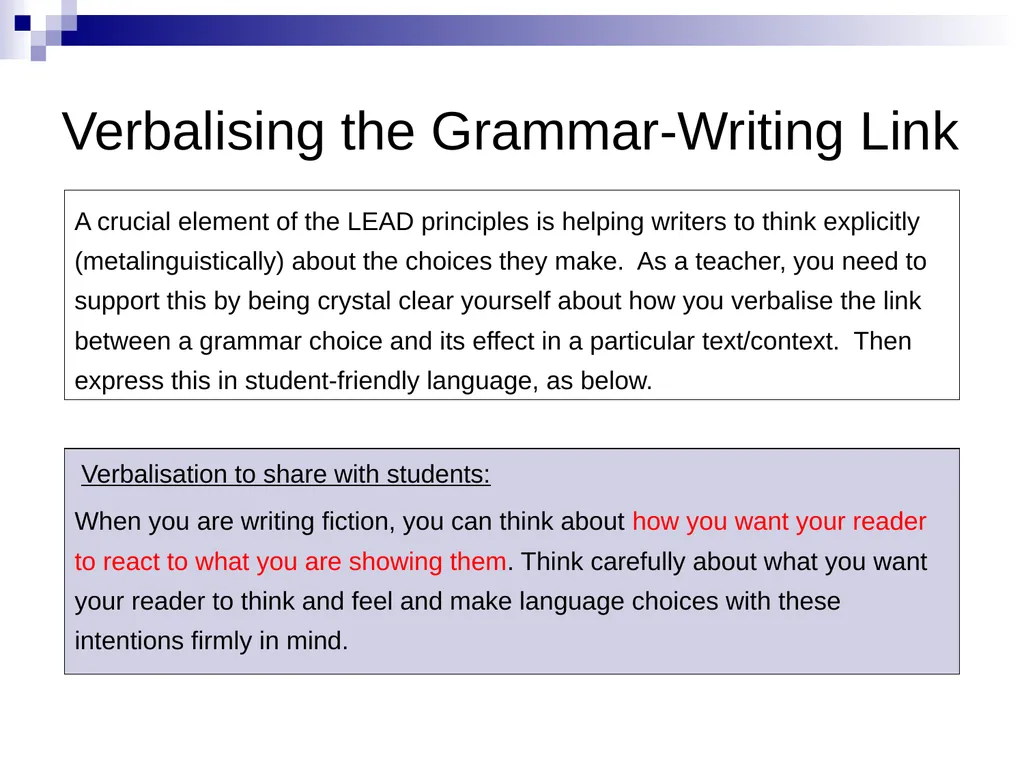
Verbalising the Grammar-Writing Link Verbalisation to share with students:
When you are writing fiction, you can think about how you want your reader to react to what you are showing them. Think carefully about what you want your reader to think and feel and make language choices with these intentions firmly in mind. A crucial element of the LEAD principles is helping writers to think explicitly (metalinguistically) about the choices they make. As a teacher, you need to support this by being crystal clear yourself about how you verbalise the link between a grammar choice and its effect in a particular text/context. Then express this in student-friendly language, as below.<br>
09
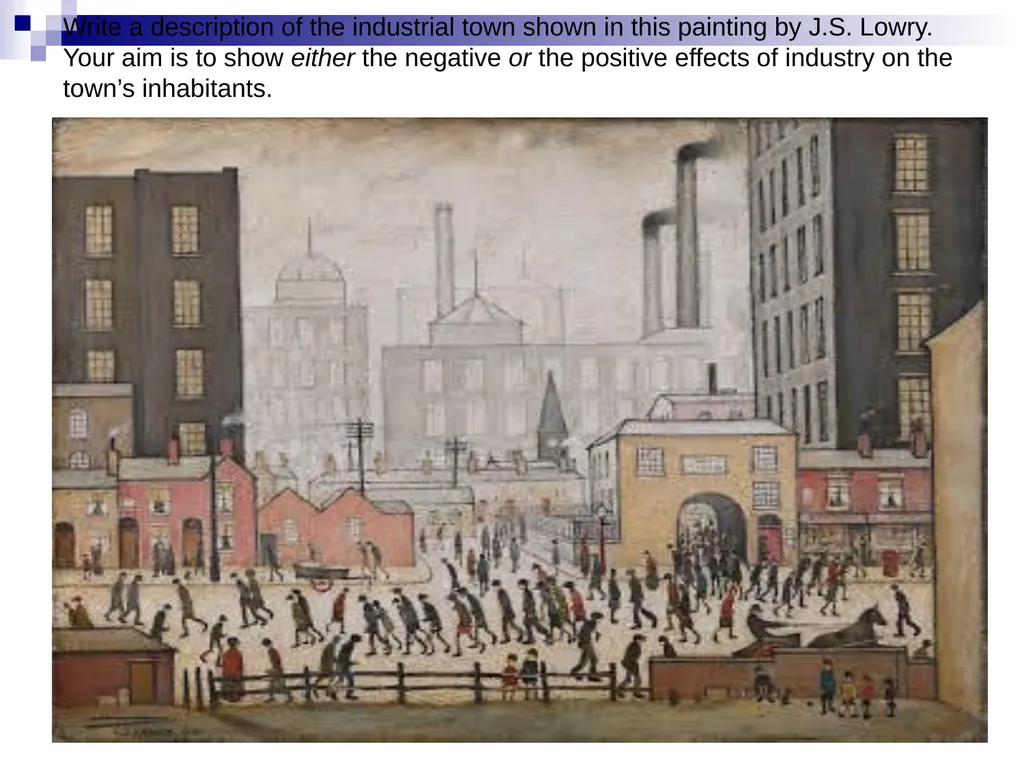
Write a description of the industrial town shown in this painting by J.S. Lowry. Your aim is to show either the negative or the positive effects of industry on the town’s inhabitants.<br>