
Project Management What is Project Management?
Description: Project Management What is Project Management? Project : A group of milestones or phases, activities or tasks that support an effort to accomplish something Management : is the process of Planning, Organizing, Controlling and Measuring
Related Topics
Download Presentation
"Project Management What is Project Management?" is the property of its rightful owner. Permission is granted to download and print the materials on this website for personal, non-commercial use only, and to display it on your personal computer provided you do not modify the materials and that you retain all copyright notices contained in the materials. By downloading content from our website, you accept the terms of this agreement.
Presentation Transcript
slide1. Project Management<br>
slide2. What is Project Management? Project : A group of milestones or phases, activities or tasks that support an effort to accomplish something
Management : is the process of Planning, Organizing, Controlling and Measuring<br>
slide3. Project… A collection of linked activities, carried out in an organised manner,with a clearly defined START POINT and END POINT to achieve some specific results desired to satisfy the needs of the organisation at the current time<br>
slide4. Project Management A dynamic process that utilises the appropriate resources of the organisation in a controlled and structured manner, to achieve some clearly defined objectives identified as needs.
It is always conducted within a defined set of constraints<br>
slide5. What does Project Management Entail? Planning: is the most critical and gets the least amount of our time
Beginning with the End in mind-Stephen Covey
Organizing: Orderly fashion(Contingent/Prerequisites)
Controlling: is critical if we are to use our limited resources wisely
Measuring: To determine if we accomplished the goal or met the target?<br>
slide6. Measuring……. Are we efficient?
Are we productive?
Are we doing a good job?
What is the outcome?
Is it what we wanted to be?
If you can’t plan it, You can’t do it
If you can’t measure it, you can’t manage it<br>
slide7. Who uses Project Management? Nearly Everyone to some degree
People plan their Days, their Weeks, their Vacations and their Budgets and keep a simple project management form known as ‘’To Do’’ list
Any Process or Means used to track tasks or efforts towards accomplishing a goal could be considered Project Management<br>
slide8. Why is Project Management used? It is necessary to Track or Measure the progress we have achieved towards a Goal we wish to accomplish
We use Project Management to Aid us in Maximizing and Optimizing our resources to accomplish our goals<br>
slide9. How much time does Project Management take? Not much. Probably more time is wasted as a consequence of lack of Project Management tool than is spent to Plan adequately, Organize, Control effectively and Measure appropriately
How long: As long as there are things to do<br>
slide10. Why is Project Management Important? Enables us to map out a course of action or work plan
Helps us to think systematically and thoroughly
Unique Task
Specific Objective
Variety of Resources
Time bound<br>
slide11. Advantages In built Monitoring/ Sequencing
Easy and Early identification of Bottlenecks
Activity based costing
Identification and Addition of missing and new activities
Preempting unnecessary activity/expenditure
Timely Completion
Assigning tasks
Reporting<br>
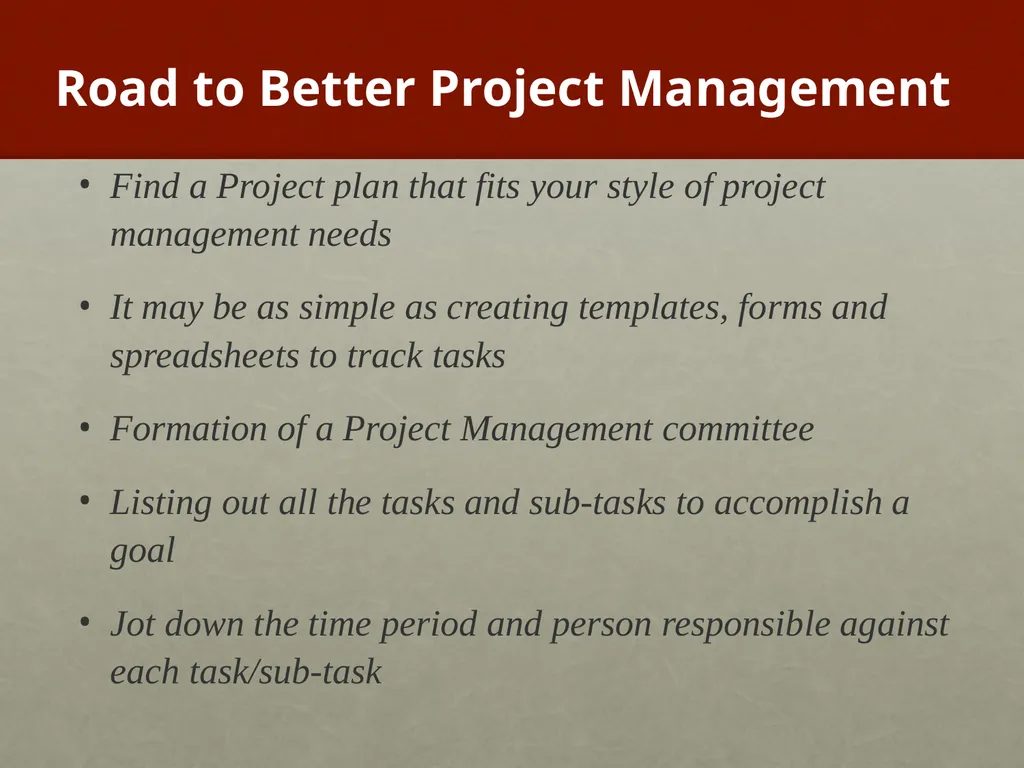
slide12. Road to Better Project Management Find a Project plan that fits your style of project management needs
It may be as simple as creating templates, forms and spreadsheets to track tasks
Formation of a Project Management committee
Listing out all the tasks and sub-tasks to accomplish a goal
Jot down the time period and person responsible against each task/sub-task<br>
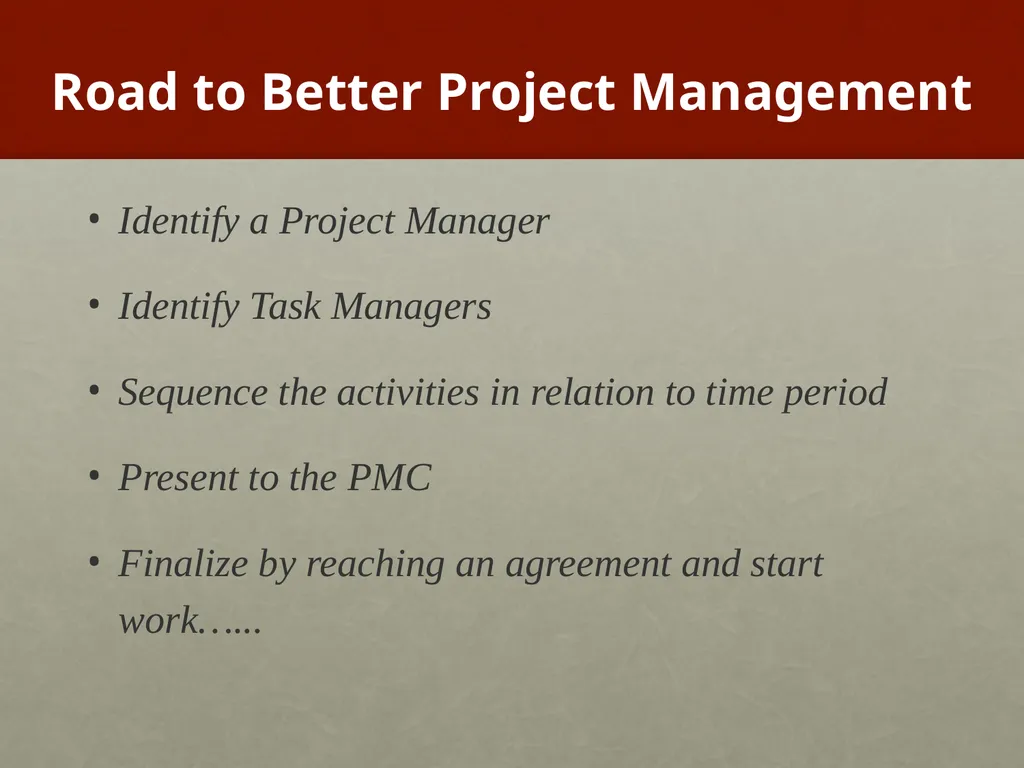
slide13. Road to Better Project Management Identify a Project Manager
Identify Task Managers
Sequence the activities in relation to time period
Present to the PMC
Finalize by reaching an agreement and start work…...<br>
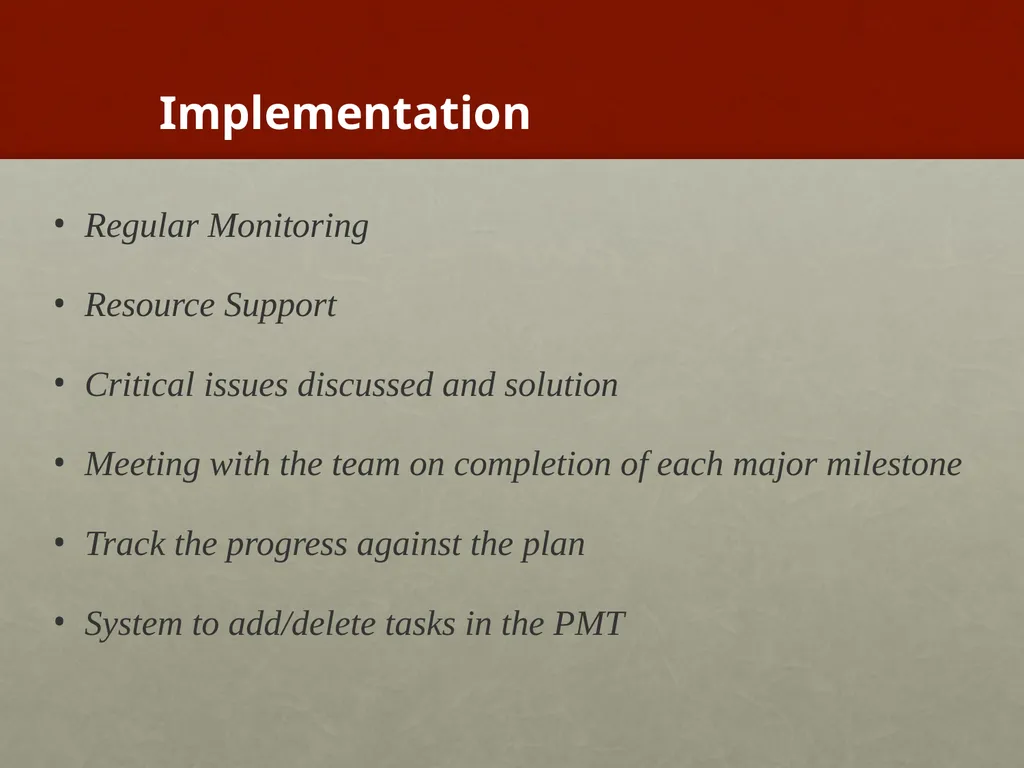
slide14. Implementation Regular Monitoring
Resource Support
Critical issues discussed and solution
Meeting with the team on completion of each major milestone
Track the progress against the plan
System to add/delete tasks in the PMT<br>
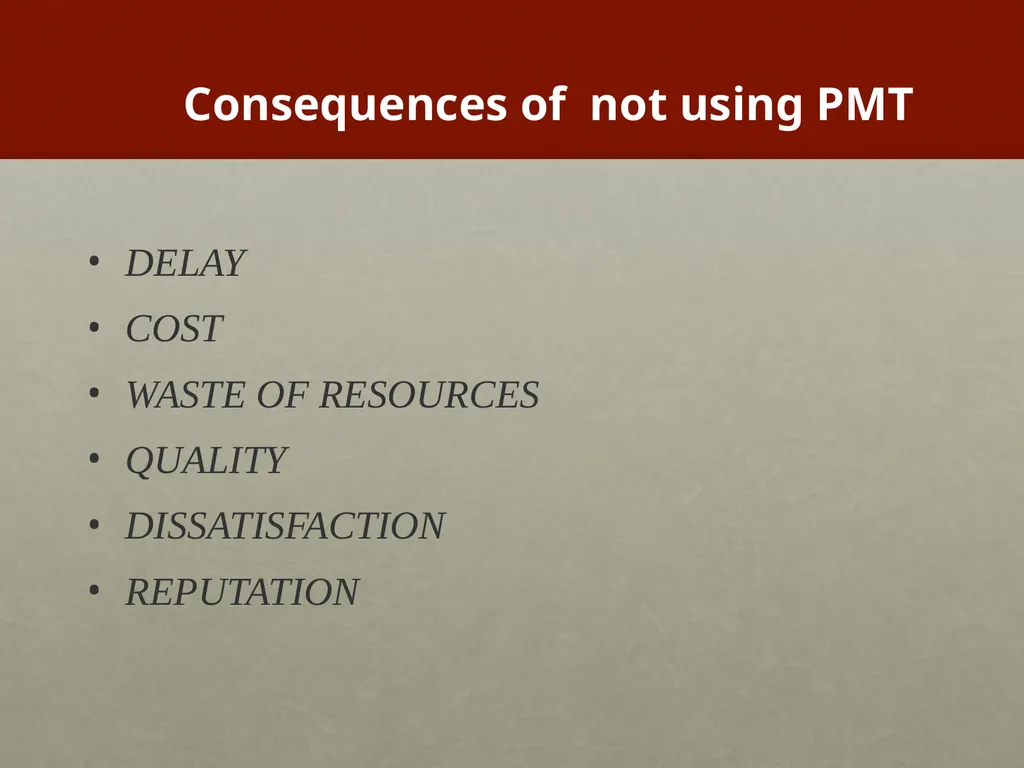
slide15. Consequences of not using PMT DELAY
COST
WASTE OF RESOURCES
QUALITY
DISSATISFACTION
REPUTATION<br>
slide16. Business Process Management<br>
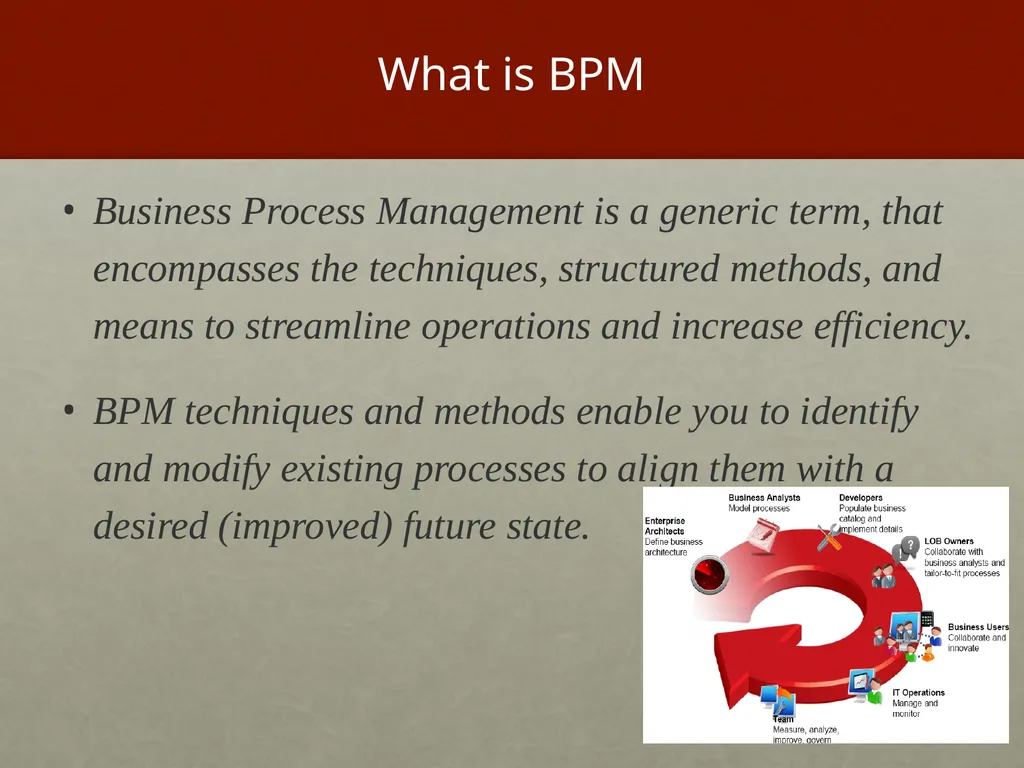
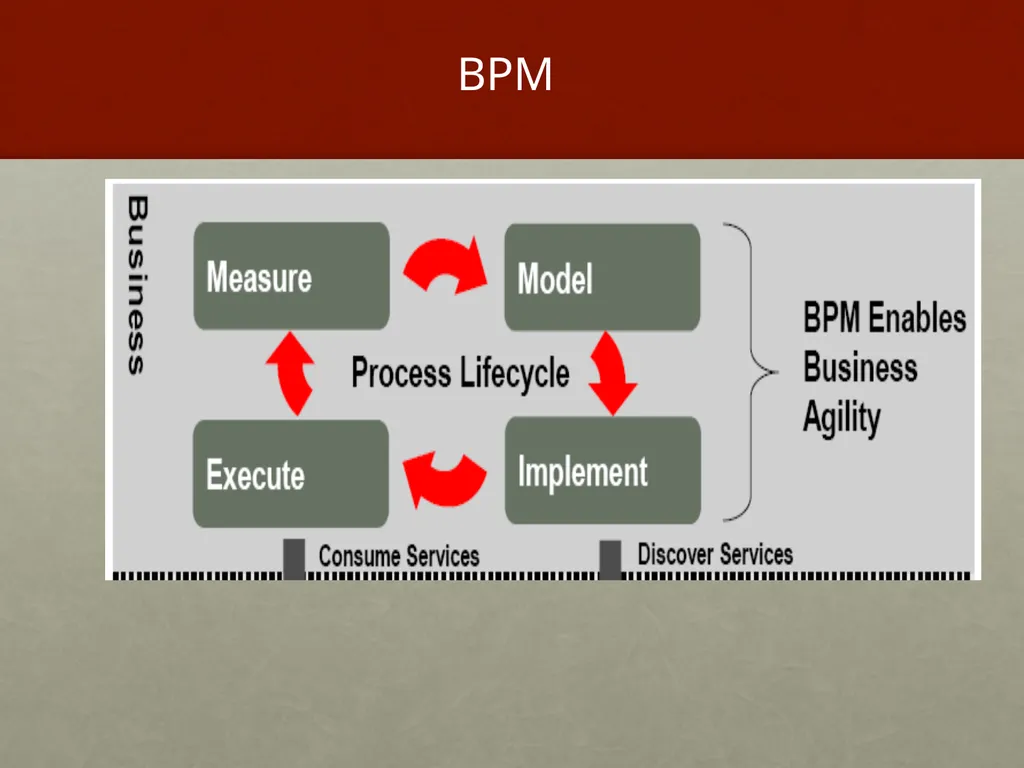
slide17. What is BPM Business Process Management is a generic term, that encompasses the techniques, structured methods, and means to streamline operations and increase efficiency.
BPM techniques and methods enable you to identify and modify existing processes to align them with a desired (improved) future state.<br>
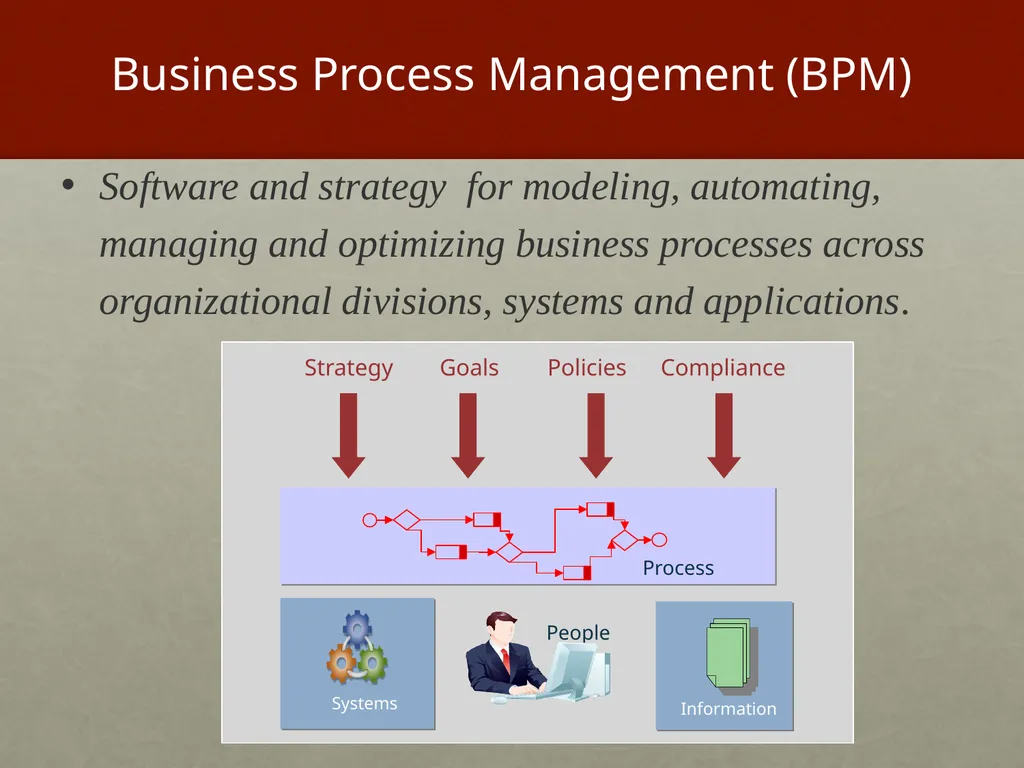
slide18. Business Process Management (BPM) Software and strategy for modeling, automating, managing and optimizing business processes across organizational divisions, systems and applications. Process People<br>
slide19. Principles of BPM Organize around outcomes not tasks
Correct and improve processes before (potentially) automating them
Establish processes and assign ownership
Standardize processes across the enterprise
Enable continuous change
Improve existing processes, rather than build radically new or ‘perfect’ processes<br>
slide20. Typical Business Drives Reduce staff and office overhead numbers
Process business critical activities faster
Reduce the number of errors and exceptions
Reduce overall IT costs
Reduce duplications
Increase visibility into operational efficiencies and bottlenecks
Reduce business risks
Improve customer service and retention<br>
slide21. Business Analysis No business process improvement or change activity can be undertaken without the use of business analysts and/or business analysis techniques
You must never attempt to change a business process without first analyzing the business impact of the change in detail
Most people think they understand the techniques of analysis (e.g., requirements gathering), but few actually do
Most projects failures do not stem from technology
Rather, a lack of insight, stakeholder support or planning -- all things that are the focus of business analysts!<br>
slide22. Business Process Analysis Most common starting point is when something is not right in the organization…
A meta problem: there are duplicative processes and information across departments
A business problem: exception rate is too high
A micro problem: some user interface screens are confusing
Business Analyst needs to
evaluate the situation from various angles and identify core issues
review any documentation, interview workers
flowchart/document current process
recommend improvements
When to use: When you have already clearly identified a specific process or process for improvements<br>
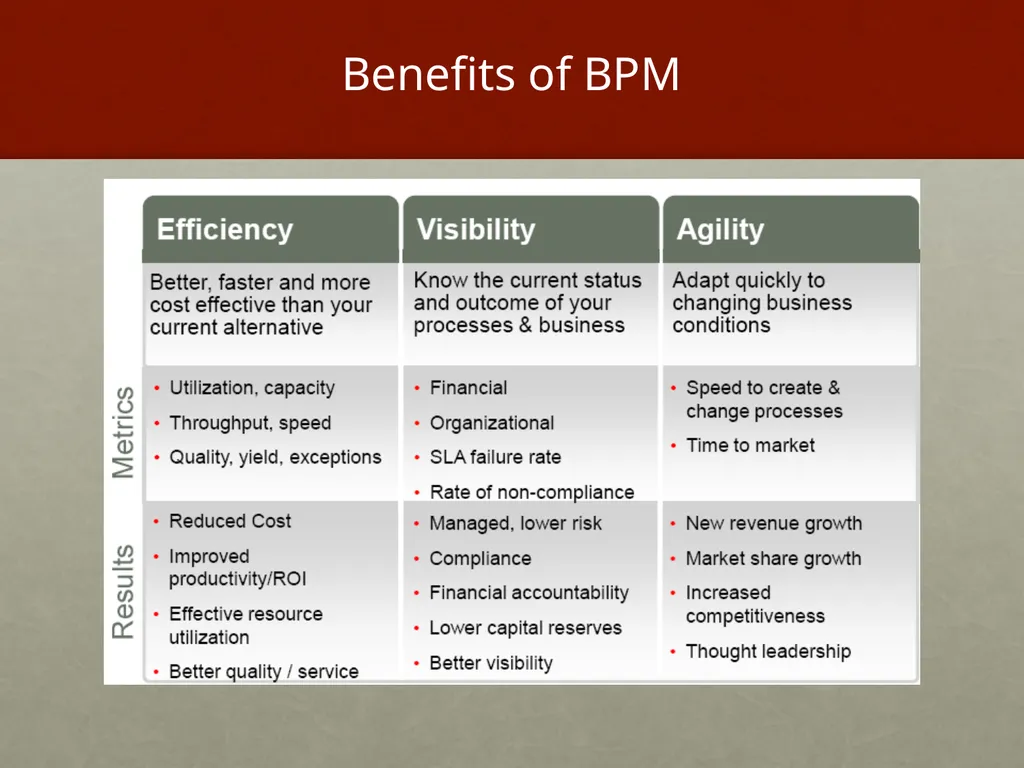
slide23. Benefits of BPM<br>
slide24. BPM<br>
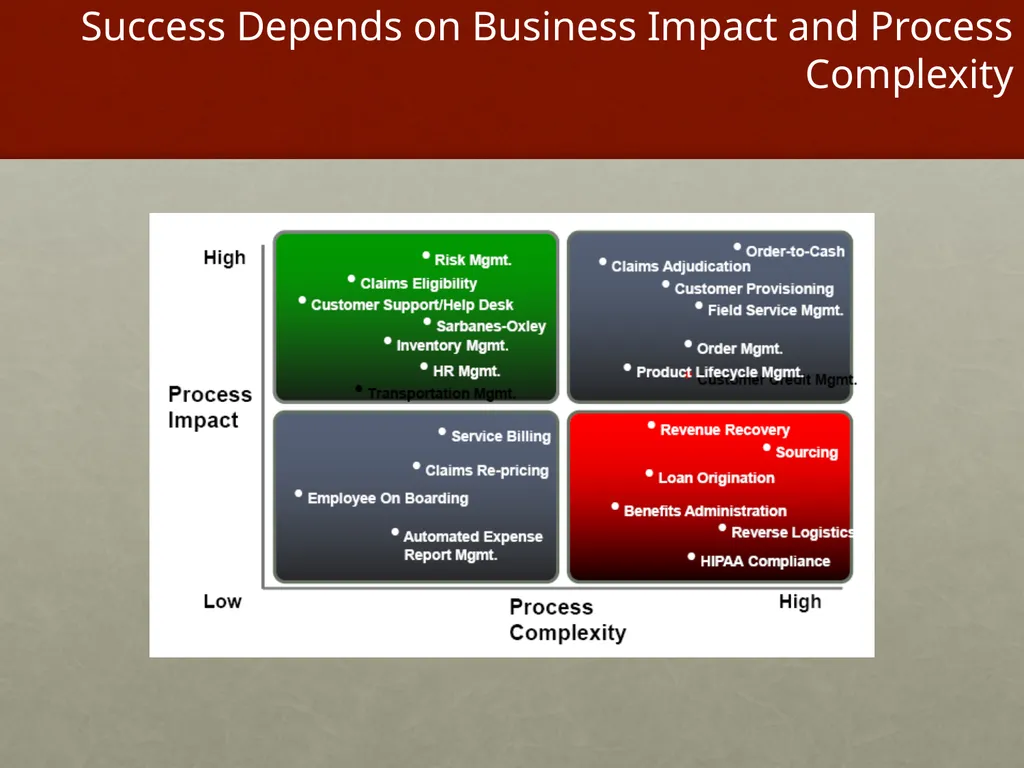
slide25. Success Depends on Business Impact and Process Complexity<br>
slide26. Conclusion<br>
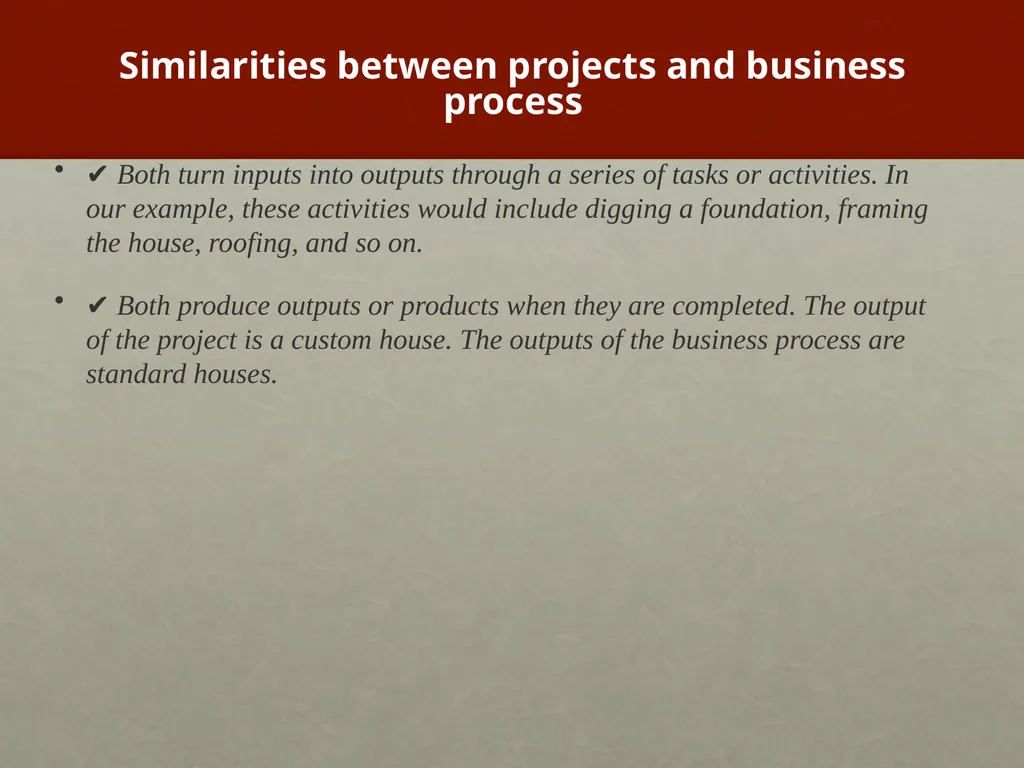
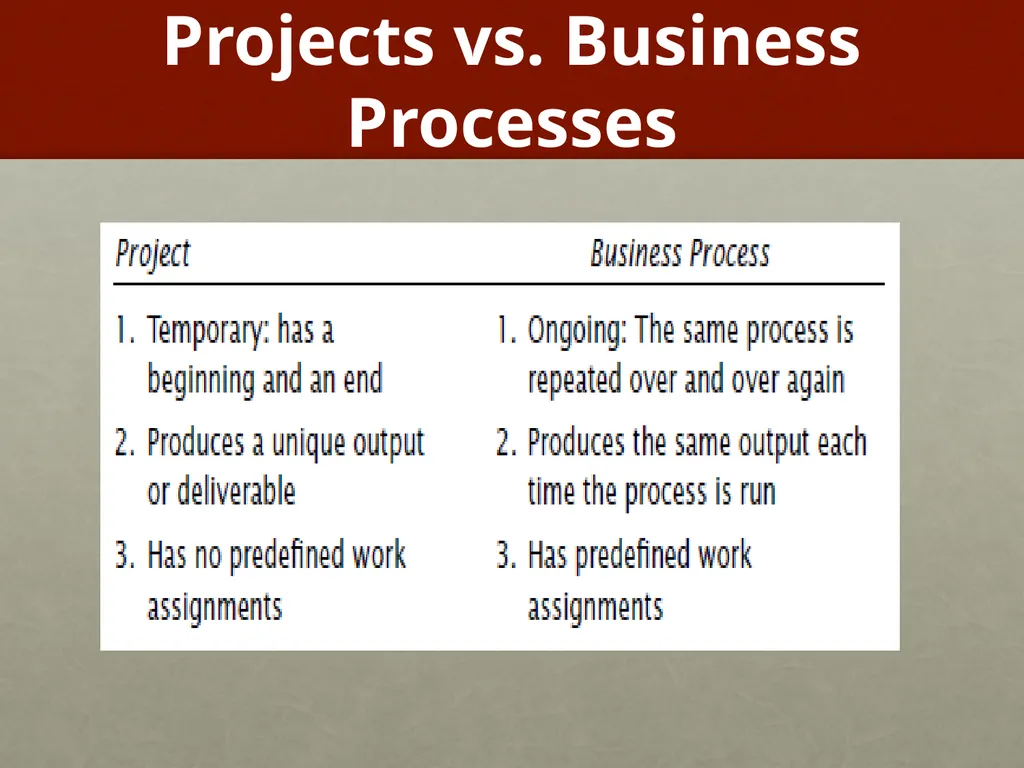
slide27. Similarities between projects and business process ✔ Both turn inputs into outputs through a series of tasks or activities. In our example, these activities would include digging a foundation, framing the house, roofing, and so on.
✔ Both produce outputs or products when they are completed. The output of the project is a custom house. The outputs of the business process are standard houses.<br>
slide28. Projects vs. Business Processes<br>
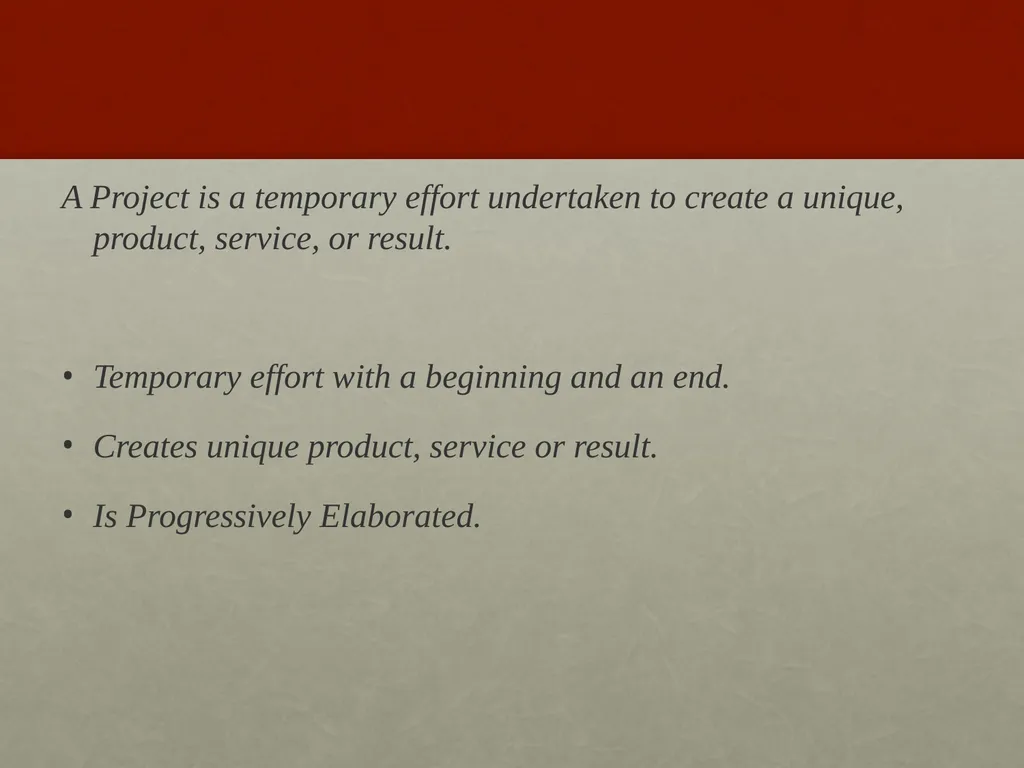
slide29. A Project is a temporary effort undertaken to create a unique, product, service, or result.
Temporary effort with a beginning and an end.
Creates unique product, service or result.
Is Progressively Elaborated.<br>
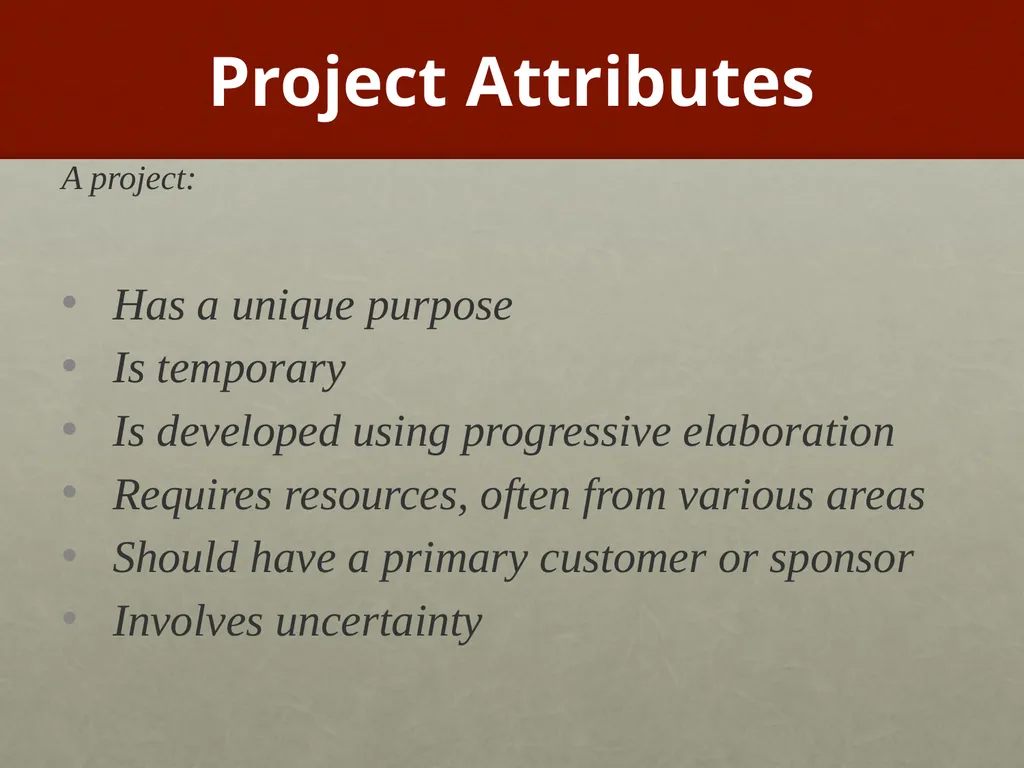
slide30. Project Attributes A project:
Has a unique purpose
Is temporary
Is developed using progressive elaboration
Requires resources, often from various areas
Should have a primary customer or sponsor
Involves uncertainty<br>
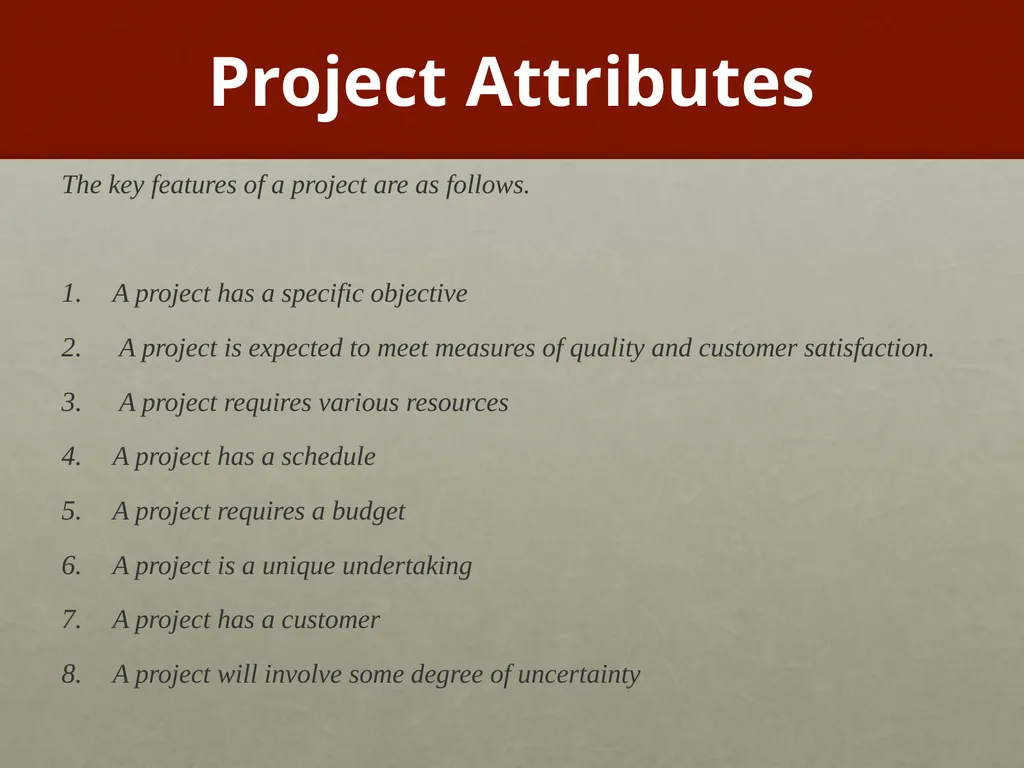
slide31. Project Attributes The key features of a project are as follows.
A project has a specific objective
A project is expected to meet measures of quality and customer satisfaction.
A project requires various resources
A project has a schedule
A project requires a budget
A project is a unique undertaking
A project has a customer
A project will involve some degree of uncertainty<br>
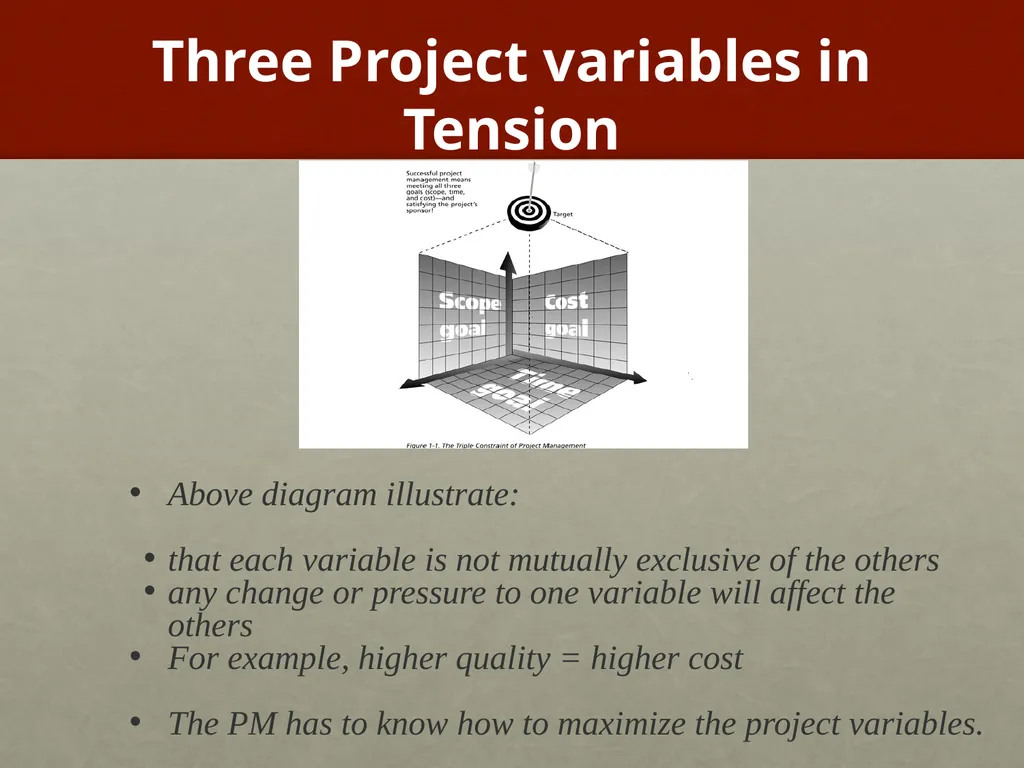
slide32. Three Project variables in Tension Above diagram illustrate:
that each variable is not mutually exclusive of the others
any change or pressure to one variable will affect the others
For example, higher quality = higher cost
The PM has to know how to maximize the project variables.<br>
slide33. What is Project Management? The application of knowledge, skills, tools and technique to project activities to meet project requirements.
OR Project management is a set of tools, techniques, and knowledge that, when applied, helps you produce better results for your project.<br>
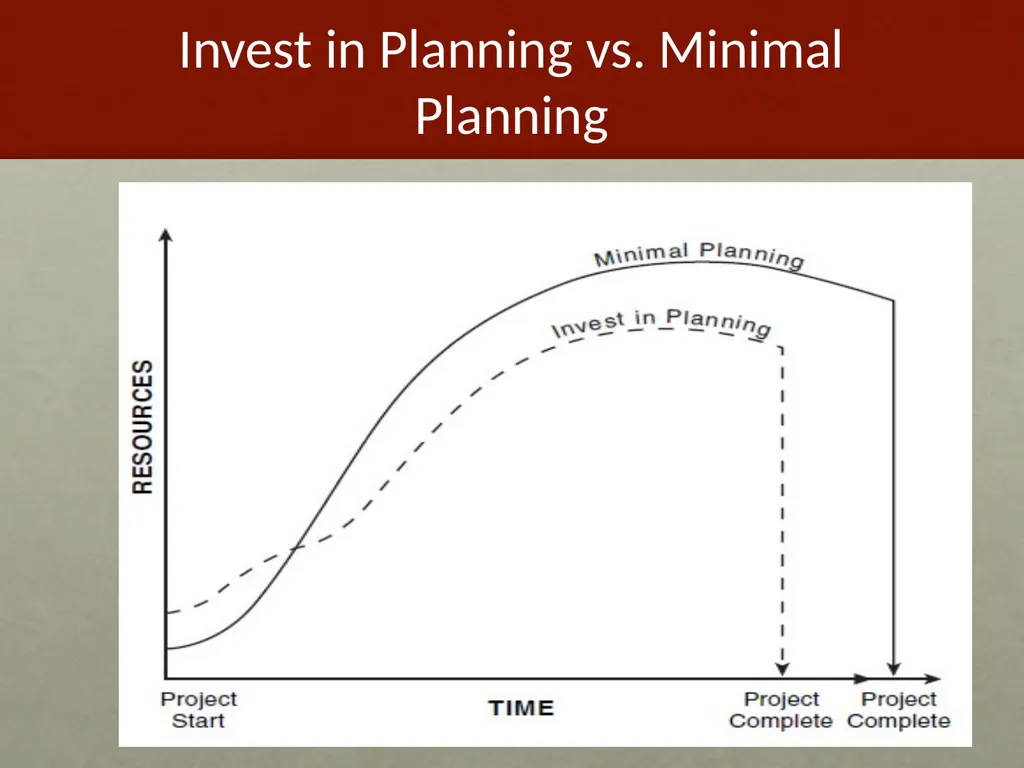
slide34. Invest in Planning vs. Minimal Planning<br>
slide35. Project Management Contt… Project management provides you with a process that you can follow, a series of moves that will help you address some basic questions before you dive into getting the work done, questions such as:
What are you going to produce?
What is it the customer wants and needs?
Who is going to do the work?
How long will it take? How much will it cost?
What might go wrong? How can you avoid potential problems?
These questions are addressed up front so that the work can proceed smoothly and efficiently.<br>
slide36. Managing Project The Project Manager is the person responsible for accomplishing the project objectives.
Managing a project includes:
Identifying requirements.
Establishing clear and achievable objectives.
Balancing the competing demand of quality, scope, time and cost.
Adapting the specifications, plans, and approach to the different concerns and expectations of the various stakeholders.
Project managers strive to meet the triple constraint by balancing project scope, time, and cost goals<br>
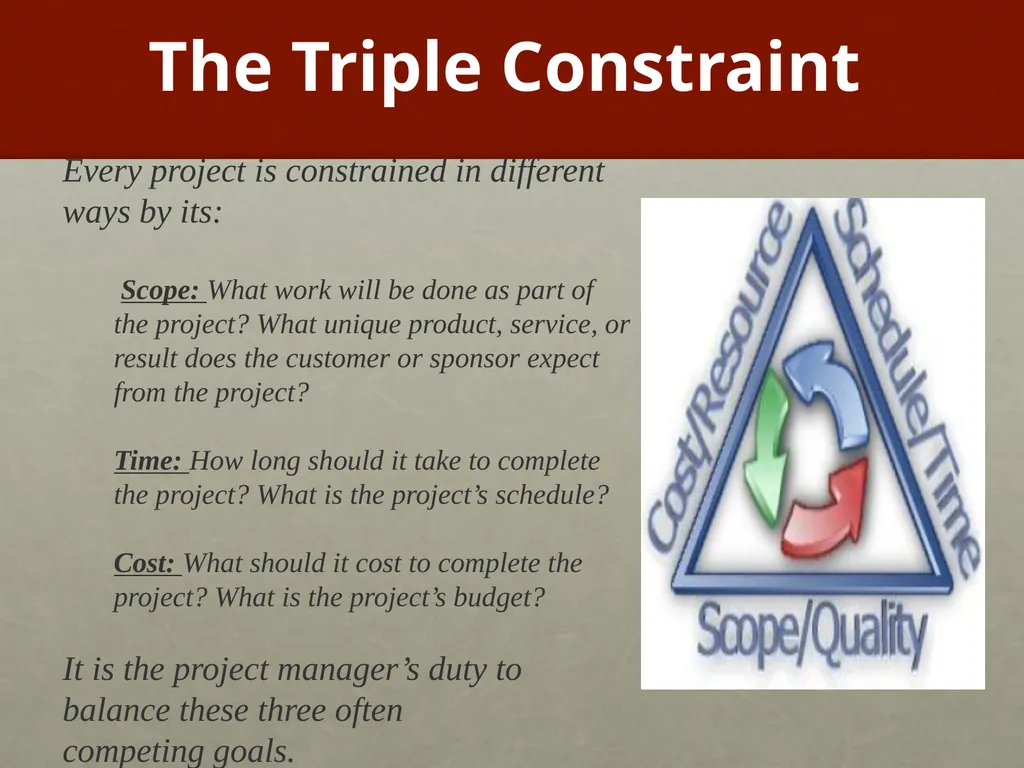
slide37. The Triple Constraint Every project is constrained in different ways by its:
Scope: What work will be done as part of the project? What unique product, service, or result does the customer or sponsor expect from the project?
Time: How long should it take to complete the project? What is the project’s schedule?
Cost: What should it cost to complete the project? What is the project’s budget?
It is the project manager’s duty to balance these three often
competing goals.<br>
slide2. What is Project Management? Project : A group of milestones or phases, activities or tasks that support an effort to accomplish something
Management : is the process of Planning, Organizing, Controlling and Measuring<br>
slide3. Project… A collection of linked activities, carried out in an organised manner,with a clearly defined START POINT and END POINT to achieve some specific results desired to satisfy the needs of the organisation at the current time<br>
slide4. Project Management A dynamic process that utilises the appropriate resources of the organisation in a controlled and structured manner, to achieve some clearly defined objectives identified as needs.
It is always conducted within a defined set of constraints<br>
slide5. What does Project Management Entail? Planning: is the most critical and gets the least amount of our time
Beginning with the End in mind-Stephen Covey
Organizing: Orderly fashion(Contingent/Prerequisites)
Controlling: is critical if we are to use our limited resources wisely
Measuring: To determine if we accomplished the goal or met the target?<br>
slide6. Measuring……. Are we efficient?
Are we productive?
Are we doing a good job?
What is the outcome?
Is it what we wanted to be?
If you can’t plan it, You can’t do it
If you can’t measure it, you can’t manage it<br>
slide7. Who uses Project Management? Nearly Everyone to some degree
People plan their Days, their Weeks, their Vacations and their Budgets and keep a simple project management form known as ‘’To Do’’ list
Any Process or Means used to track tasks or efforts towards accomplishing a goal could be considered Project Management<br>
slide8. Why is Project Management used? It is necessary to Track or Measure the progress we have achieved towards a Goal we wish to accomplish
We use Project Management to Aid us in Maximizing and Optimizing our resources to accomplish our goals<br>
slide9. How much time does Project Management take? Not much. Probably more time is wasted as a consequence of lack of Project Management tool than is spent to Plan adequately, Organize, Control effectively and Measure appropriately
How long: As long as there are things to do<br>
slide10. Why is Project Management Important? Enables us to map out a course of action or work plan
Helps us to think systematically and thoroughly
Unique Task
Specific Objective
Variety of Resources
Time bound<br>
slide11. Advantages In built Monitoring/ Sequencing
Easy and Early identification of Bottlenecks
Activity based costing
Identification and Addition of missing and new activities
Preempting unnecessary activity/expenditure
Timely Completion
Assigning tasks
Reporting<br>
slide12. Road to Better Project Management Find a Project plan that fits your style of project management needs
It may be as simple as creating templates, forms and spreadsheets to track tasks
Formation of a Project Management committee
Listing out all the tasks and sub-tasks to accomplish a goal
Jot down the time period and person responsible against each task/sub-task<br>
slide13. Road to Better Project Management Identify a Project Manager
Identify Task Managers
Sequence the activities in relation to time period
Present to the PMC
Finalize by reaching an agreement and start work…...<br>
slide14. Implementation Regular Monitoring
Resource Support
Critical issues discussed and solution
Meeting with the team on completion of each major milestone
Track the progress against the plan
System to add/delete tasks in the PMT<br>
slide15. Consequences of not using PMT DELAY
COST
WASTE OF RESOURCES
QUALITY
DISSATISFACTION
REPUTATION<br>
slide16. Business Process Management<br>
slide17. What is BPM Business Process Management is a generic term, that encompasses the techniques, structured methods, and means to streamline operations and increase efficiency.
BPM techniques and methods enable you to identify and modify existing processes to align them with a desired (improved) future state.<br>
slide18. Business Process Management (BPM) Software and strategy for modeling, automating, managing and optimizing business processes across organizational divisions, systems and applications. Process People<br>
slide19. Principles of BPM Organize around outcomes not tasks
Correct and improve processes before (potentially) automating them
Establish processes and assign ownership
Standardize processes across the enterprise
Enable continuous change
Improve existing processes, rather than build radically new or ‘perfect’ processes<br>
slide20. Typical Business Drives Reduce staff and office overhead numbers
Process business critical activities faster
Reduce the number of errors and exceptions
Reduce overall IT costs
Reduce duplications
Increase visibility into operational efficiencies and bottlenecks
Reduce business risks
Improve customer service and retention<br>
slide21. Business Analysis No business process improvement or change activity can be undertaken without the use of business analysts and/or business analysis techniques
You must never attempt to change a business process without first analyzing the business impact of the change in detail
Most people think they understand the techniques of analysis (e.g., requirements gathering), but few actually do
Most projects failures do not stem from technology
Rather, a lack of insight, stakeholder support or planning -- all things that are the focus of business analysts!<br>
slide22. Business Process Analysis Most common starting point is when something is not right in the organization…
A meta problem: there are duplicative processes and information across departments
A business problem: exception rate is too high
A micro problem: some user interface screens are confusing
Business Analyst needs to
evaluate the situation from various angles and identify core issues
review any documentation, interview workers
flowchart/document current process
recommend improvements
When to use: When you have already clearly identified a specific process or process for improvements<br>
slide23. Benefits of BPM<br>
slide24. BPM<br>
slide25. Success Depends on Business Impact and Process Complexity<br>
slide26. Conclusion<br>
slide27. Similarities between projects and business process ✔ Both turn inputs into outputs through a series of tasks or activities. In our example, these activities would include digging a foundation, framing the house, roofing, and so on.
✔ Both produce outputs or products when they are completed. The output of the project is a custom house. The outputs of the business process are standard houses.<br>
slide28. Projects vs. Business Processes<br>
slide29. A Project is a temporary effort undertaken to create a unique, product, service, or result.
Temporary effort with a beginning and an end.
Creates unique product, service or result.
Is Progressively Elaborated.<br>
slide30. Project Attributes A project:
Has a unique purpose
Is temporary
Is developed using progressive elaboration
Requires resources, often from various areas
Should have a primary customer or sponsor
Involves uncertainty<br>
slide31. Project Attributes The key features of a project are as follows.
A project has a specific objective
A project is expected to meet measures of quality and customer satisfaction.
A project requires various resources
A project has a schedule
A project requires a budget
A project is a unique undertaking
A project has a customer
A project will involve some degree of uncertainty<br>
slide32. Three Project variables in Tension Above diagram illustrate:
that each variable is not mutually exclusive of the others
any change or pressure to one variable will affect the others
For example, higher quality = higher cost
The PM has to know how to maximize the project variables.<br>
slide33. What is Project Management? The application of knowledge, skills, tools and technique to project activities to meet project requirements.
OR Project management is a set of tools, techniques, and knowledge that, when applied, helps you produce better results for your project.<br>
slide34. Invest in Planning vs. Minimal Planning<br>
slide35. Project Management Contt… Project management provides you with a process that you can follow, a series of moves that will help you address some basic questions before you dive into getting the work done, questions such as:
What are you going to produce?
What is it the customer wants and needs?
Who is going to do the work?
How long will it take? How much will it cost?
What might go wrong? How can you avoid potential problems?
These questions are addressed up front so that the work can proceed smoothly and efficiently.<br>
slide36. Managing Project The Project Manager is the person responsible for accomplishing the project objectives.
Managing a project includes:
Identifying requirements.
Establishing clear and achievable objectives.
Balancing the competing demand of quality, scope, time and cost.
Adapting the specifications, plans, and approach to the different concerns and expectations of the various stakeholders.
Project managers strive to meet the triple constraint by balancing project scope, time, and cost goals<br>
slide37. The Triple Constraint Every project is constrained in different ways by its:
Scope: What work will be done as part of the project? What unique product, service, or result does the customer or sponsor expect from the project?
Time: How long should it take to complete the project? What is the project’s schedule?
Cost: What should it cost to complete the project? What is the project’s budget?
It is the project manager’s duty to balance these three often
competing goals.<br>