S2U1L2 Ming Dynasty Aim: Did Isolation help or hurt Chinas development? DO NOW 10 Minutes. Using Document D and your Graphic Organizer to complete information for the Indian Ocean AIM: Did isolationism help or hurt Chinas Development?
"S2U1L2 Ming Dynasty Aim: Did Isolation help or" is the property of its rightful owner. Permission is granted to
download and print the materials on this website for personal, non-commercial use only, and to display it
on your personal computer provided you do not modify the materials and that you retain all copyright
notices contained in the materials. By downloading content from our website, you accept the terms of this
agreement.
Presentation Transcript
01
S2U1L2 Ming Dynasty Aim: Did Isolation help or hurt China’s development?<br>
02
DO NOW – 10 Minutes. Using Document D and your Graphic Organizer to complete information for the Indian Ocean<br>
03
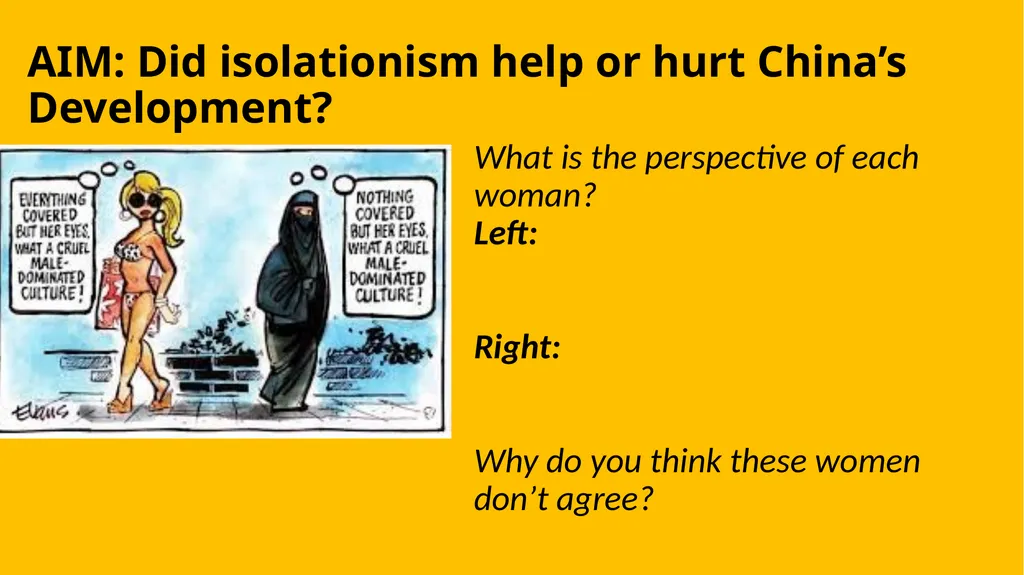
AIM: Did isolationism help or hurt China’s Development? What is the perspective of each woman? Left:
Right: Why do you think these women don’t agree?<br>
04
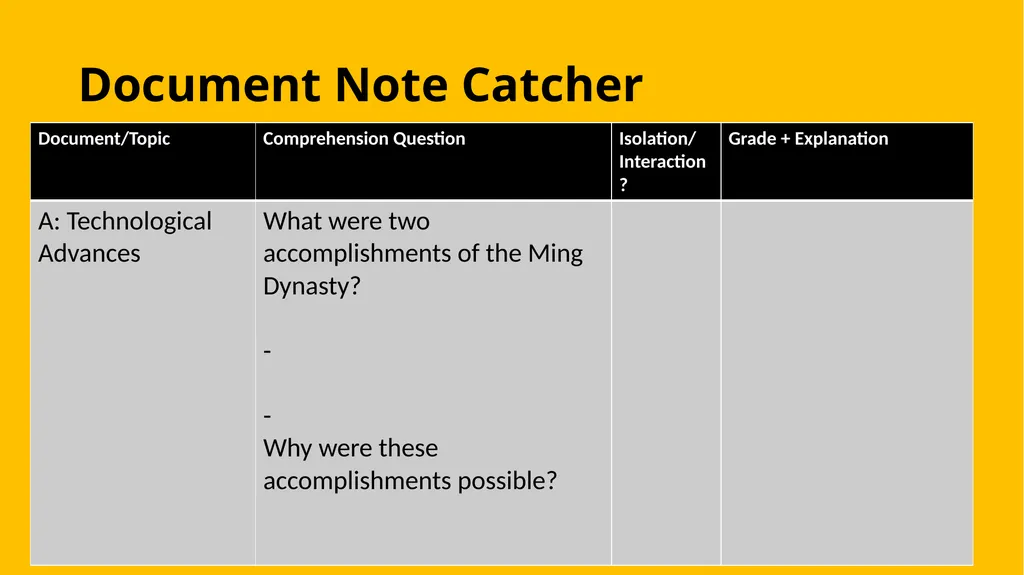
Document Note Catcher<br>
05
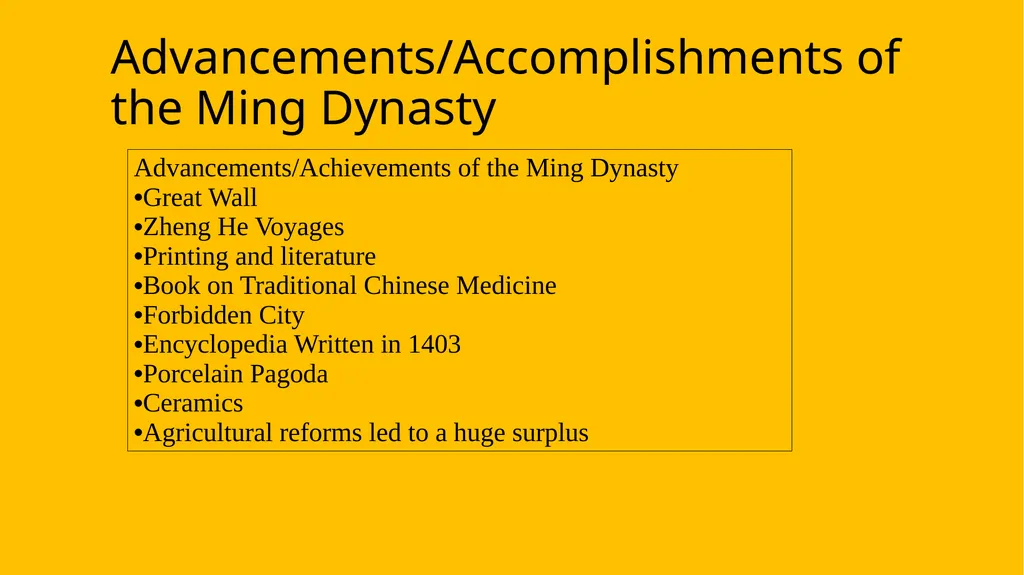
Advancements/Accomplishments of the Ming Dynasty<br>
06
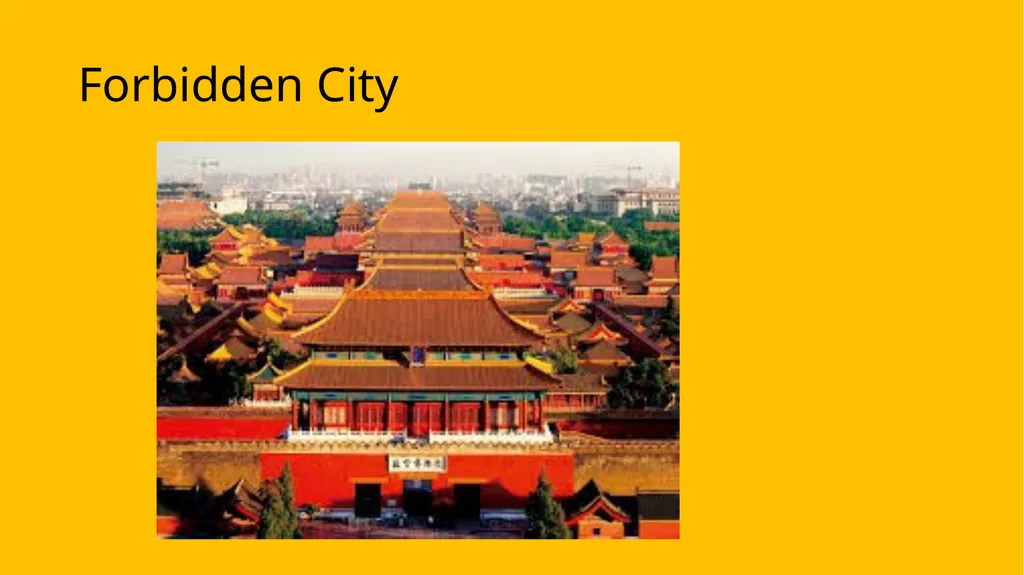
Forbidden City<br>
07
Document A: Technological Advances<br>
08
Document Note Catcher<br>
09
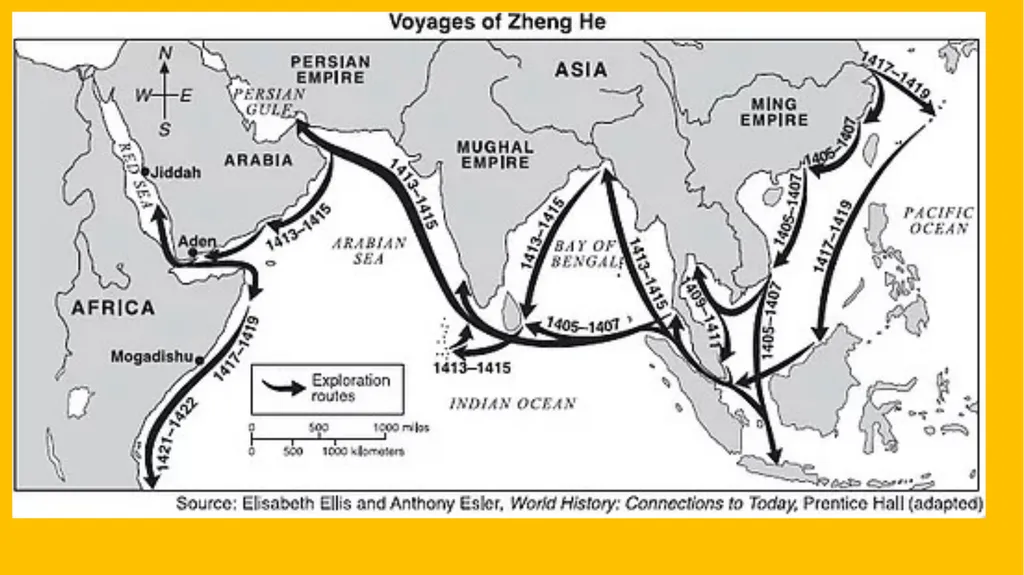
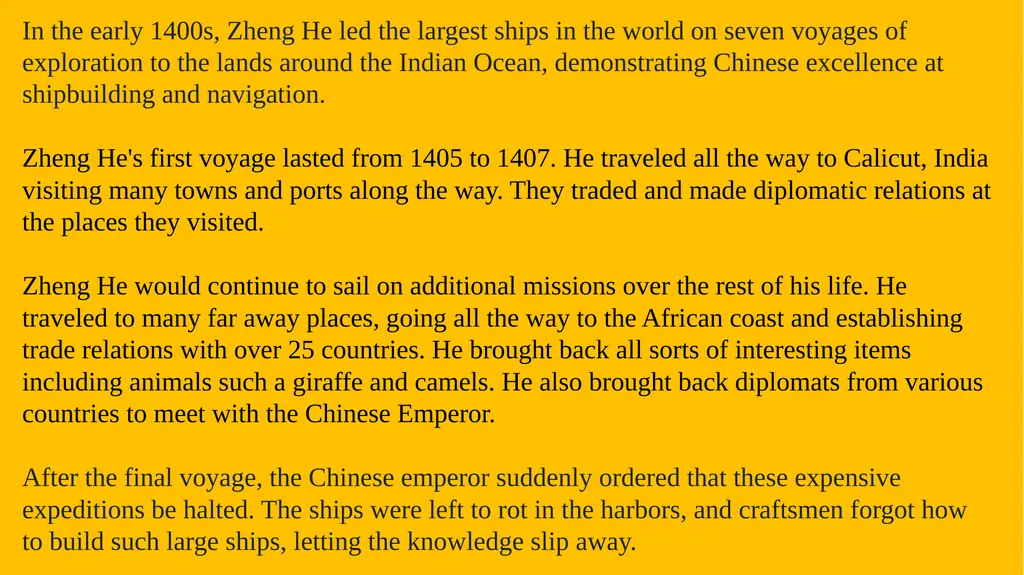
In the early 1400s, Zheng He led the largest ships in the world on seven voyages of exploration to the lands around the Indian Ocean, demonstrating Chinese excellence at shipbuilding and navigation.
Zheng He's first voyage lasted from 1405 to 1407. He traveled all the way to Calicut, India visiting many towns and ports along the way. They traded and made diplomatic relations at the places they visited. Zheng He would continue to sail on additional missions over the rest of his life. He traveled to many far away places, going all the way to the African coast and establishing trade relations with over 25 countries. He brought back all sorts of interesting items including animals such a giraffe and camels. He also brought back diplomats from various countries to meet with the Chinese Emperor.
After the final voyage, the Chinese emperor suddenly ordered that these expensive expeditions be halted. The ships were left to rot in the harbors, and craftsmen forgot how to build such large ships, letting the knowledge slip away.<br>
10
Document Note Catcher<br>
11
Document C: Great Wall of China<br>
12
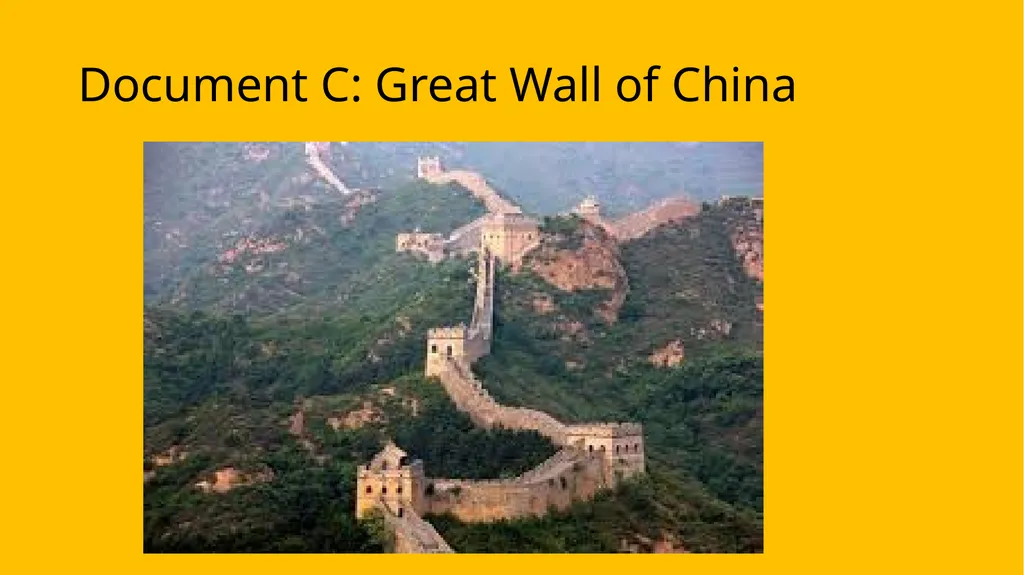
The Great Wall of China actually consists of numerous walls and fortifications, many running parallel to each other. It was constructed as a means of preventing incursions from barbarian nomads into the Chinese Empire, the wall is one of the most extensive construction projects ever completed.
Despite its long history, the Great Wall of China as it is exists today was constructed mainly during the mighty Ming dynasty (1368-1644). Under the strong hand of the Ming rulers, Chinese culture flourished, and the period saw an immense amount of construction in addition to the Great Wall, including bridges, temples and pagodas.
After an initial phase of territorial expansion, Ming rulers took a largely defensive stance, and their reformation and extension of the Great Wall was key to this strategy.
Though the Great Wall never effectively prevented invaders from entering China, it came to function more as a psychological barrier between Chinese civilization and the world, and remains a powerful symbol of the country’s enduring strength.<br>
13
Document Note Catcher<br>
14
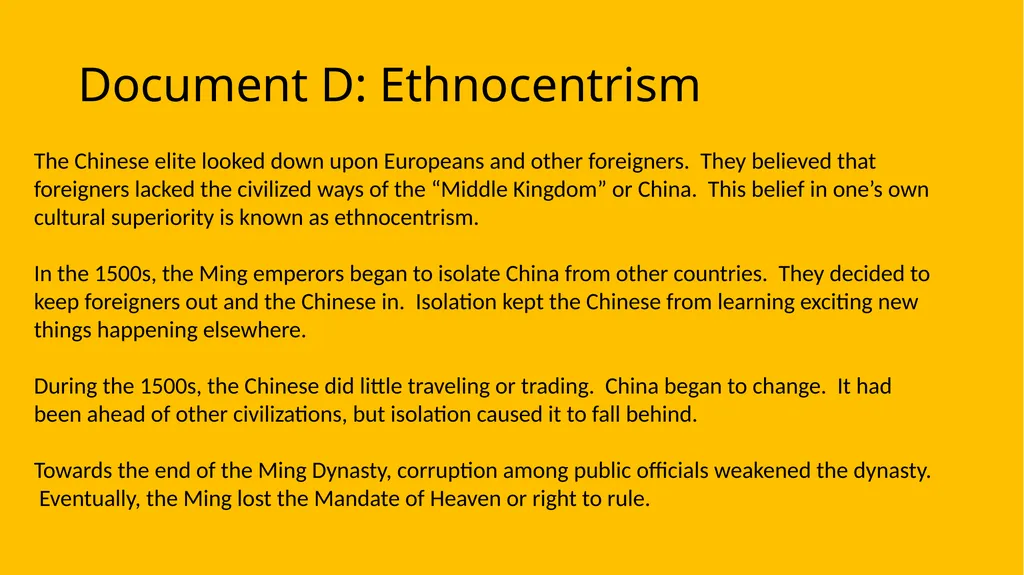
Document D: Ethnocentrism The Chinese elite looked down upon Europeans and other foreigners. They believed that foreigners lacked the civilized ways of the “Middle Kingdom” or China. This belief in one’s own cultural superiority is known as ethnocentrism.
In the 1500s, the Ming emperors began to isolate China from other countries. They decided to keep foreigners out and the Chinese in. Isolation kept the Chinese from learning exciting new things happening elsewhere.
During the 1500s, the Chinese did little traveling or trading. China began to change. It had been ahead of other civilizations, but isolation caused it to fall behind.
Towards the end of the Ming Dynasty, corruption among public officials weakened the dynasty. Eventually, the Ming lost the Mandate of Heaven or right to rule.<br>
15
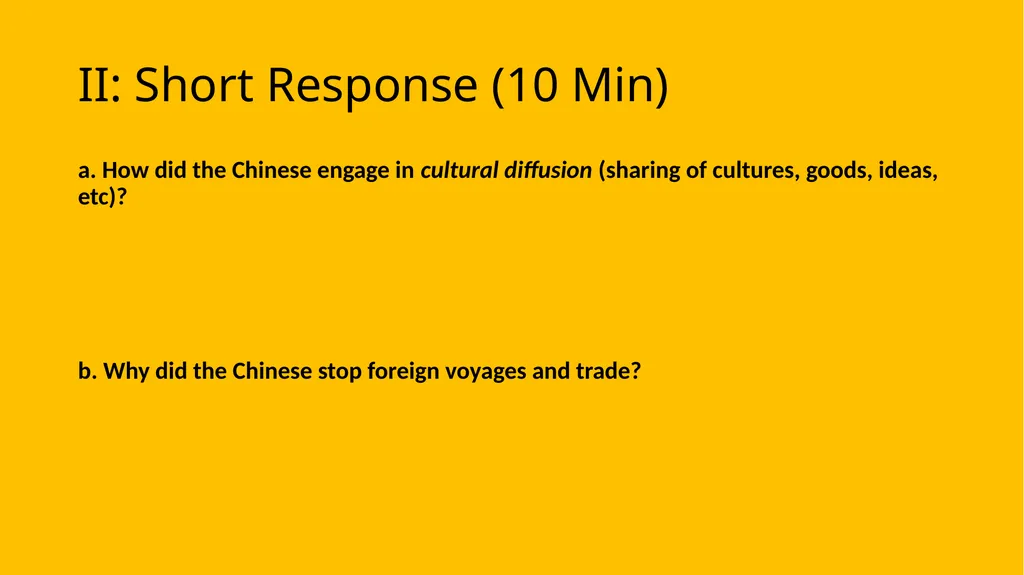
II: Short Response (10 Min) a. How did the Chinese engage in cultural diffusion (sharing of cultures, goods, ideas, etc)?
b. Why did the Chinese stop foreign voyages and trade?<br>
16
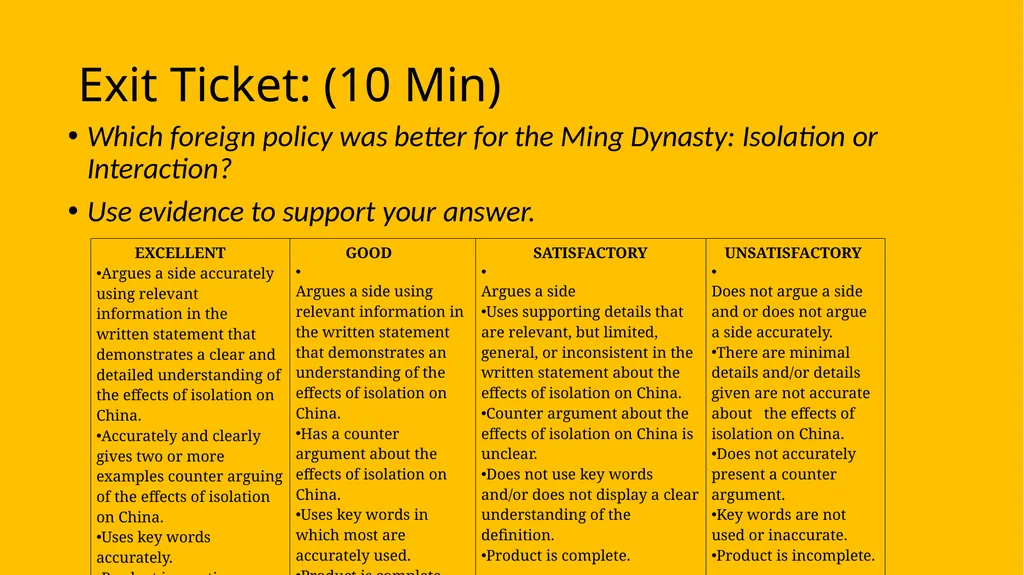
Exit Ticket: (10 Min) Which foreign policy was better for the Ming Dynasty: Isolation or Interaction?
Use evidence to support your answer.<br>