Setting Goals and Objectives Training WELCOME! Setting Goals and Objectives Training 2 Introduction Setting goals and objectives is the first and most critical step in a companys planning process. Goals are forward-facing and provide the
"Setting Goals and Objectives Training WELCOME!" is the property of its rightful owner. Permission is granted to
download and print the materials on this website for personal, non-commercial use only, and to display it
on your personal computer provided you do not modify the materials and that you retain all copyright
notices contained in the materials. By downloading content from our website, you accept the terms of this
agreement.
Presentation Transcript
01
Setting Goals and Objectives Training<br>
02
WELCOME! Setting Goals and Objectives Training 2<br>
03
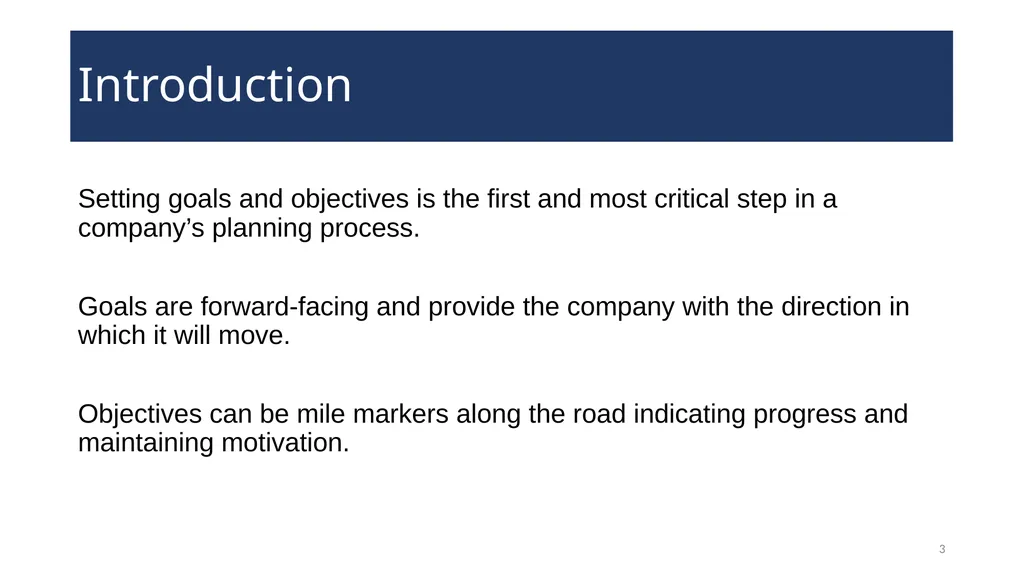
Introduction Setting goals and objectives is the first and most critical step in a company’s planning process.
Goals are forward-facing and provide the company with the direction in which it will move.
Objectives can be mile markers along the road indicating progress and maintaining motivation. 3<br>
04
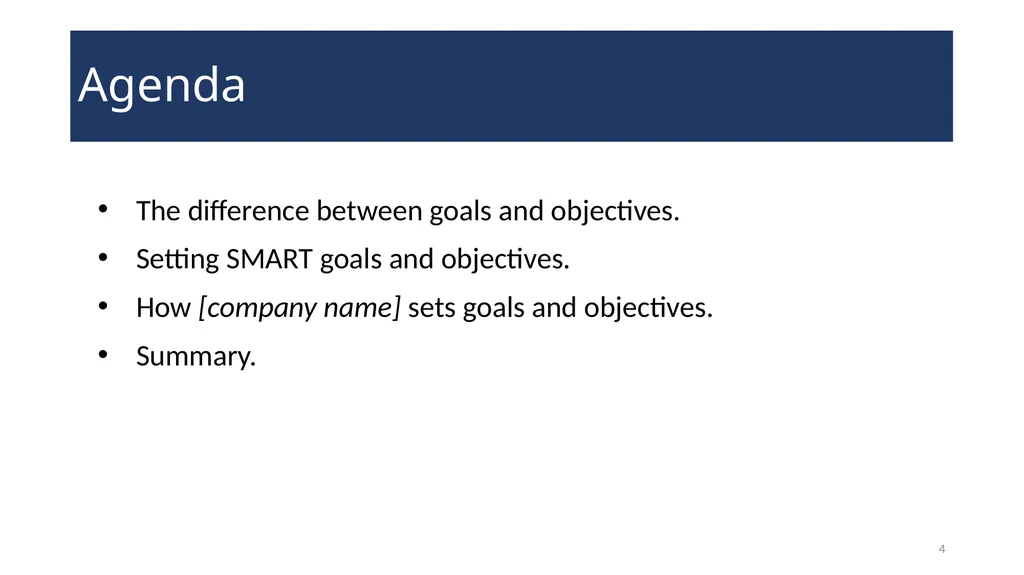
Agenda The difference between goals and objectives.
Setting SMART goals and objectives.
How [company name] sets goals and objectives.
Summary. 4<br>
05
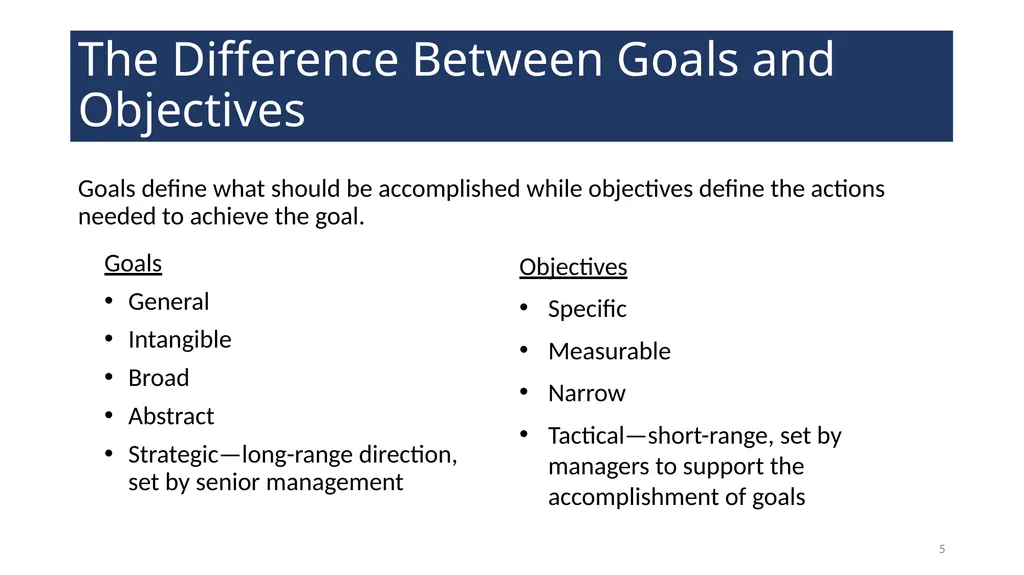
5 Objectives
Specific
Measurable
Narrow
Tactical—short-range, set by managers to support the accomplishment of goals Goals
General
Intangible
Broad
Abstract
Strategic—long-range direction, set by senior management Goals define what should be accomplished while objectives define the actions needed to achieve the goal. The Difference Between Goals and Objectives<br>
06
Questions? Comments? 6<br>
07
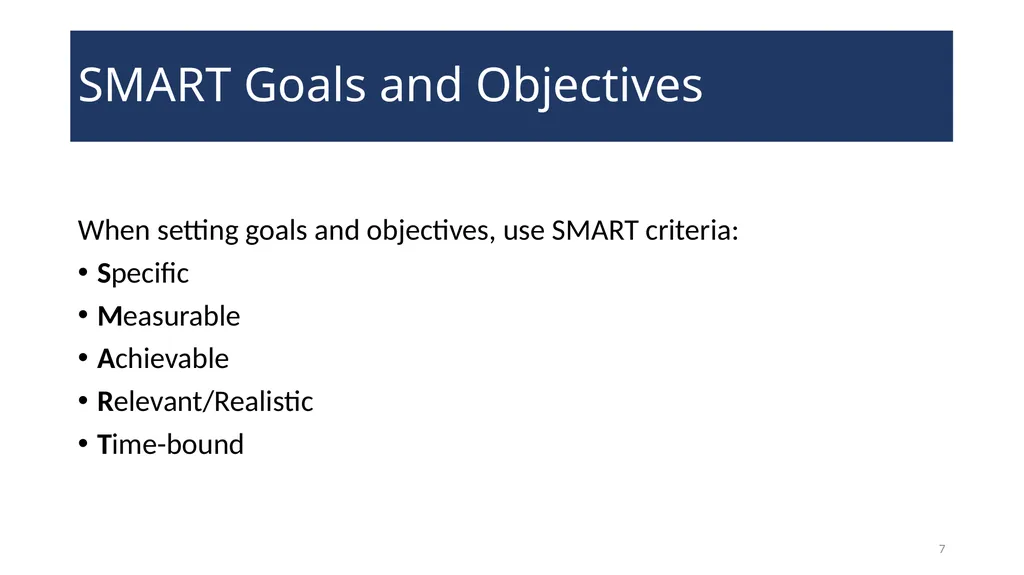
SMART Goals and Objectives When setting goals and objectives, use SMART criteria:
Specific
Measurable
Achievable
Relevant/Realistic
Time-bound 7<br>
08
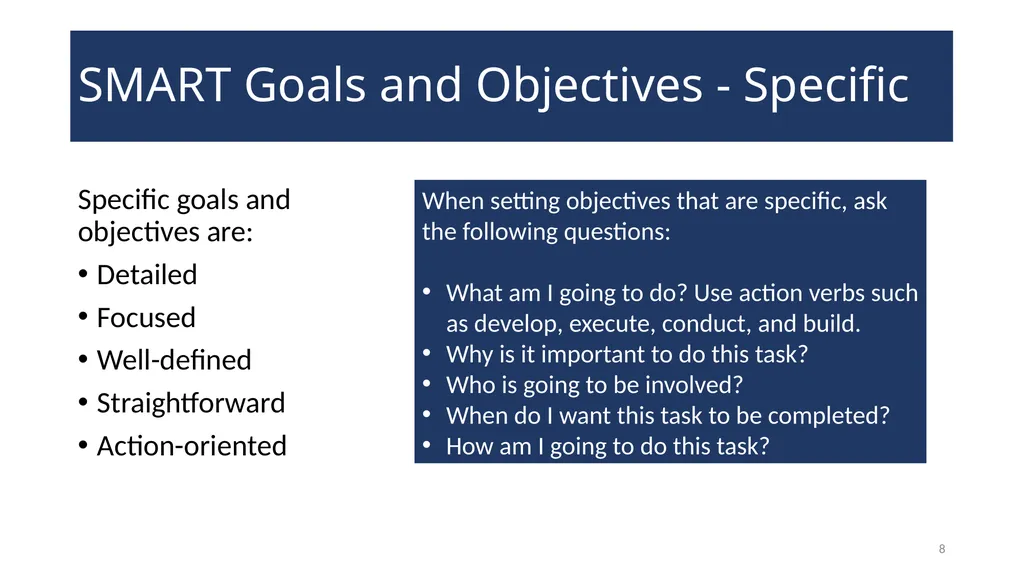
SMART Goals and Objectives - Specific Specific goals and objectives are:
Detailed
Focused
Well-defined
Straightforward
Action-oriented 8 When setting objectives that are specific, ask the following questions:
What am I going to do? Use action verbs such as develop, execute, conduct, and build.
Why is it important to do this task?
Who is going to be involved?
When do I want this task to be completed?
How am I going to do this task?<br>
09
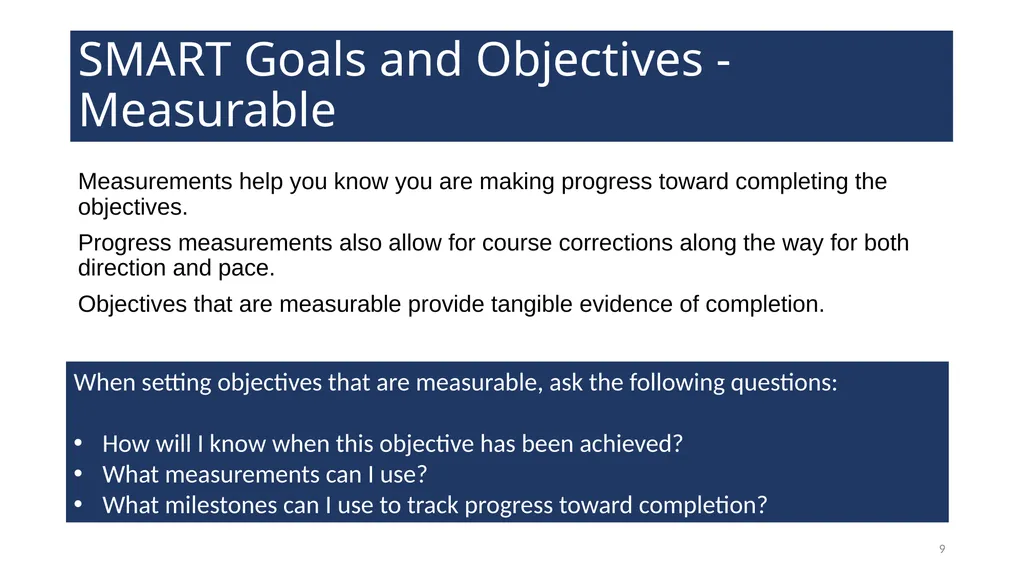
9 When setting objectives that are measurable, ask the following questions:
How will I know when this objective has been achieved?
What measurements can I use?
What milestones can I use to track progress toward completion? Measurements help you know you are making progress toward completing the objectives.
Progress measurements also allow for course corrections along the way for both direction and pace.
Objectives that are measurable provide tangible evidence of completion. SMART Goals and Objectives - Measurable<br>
10
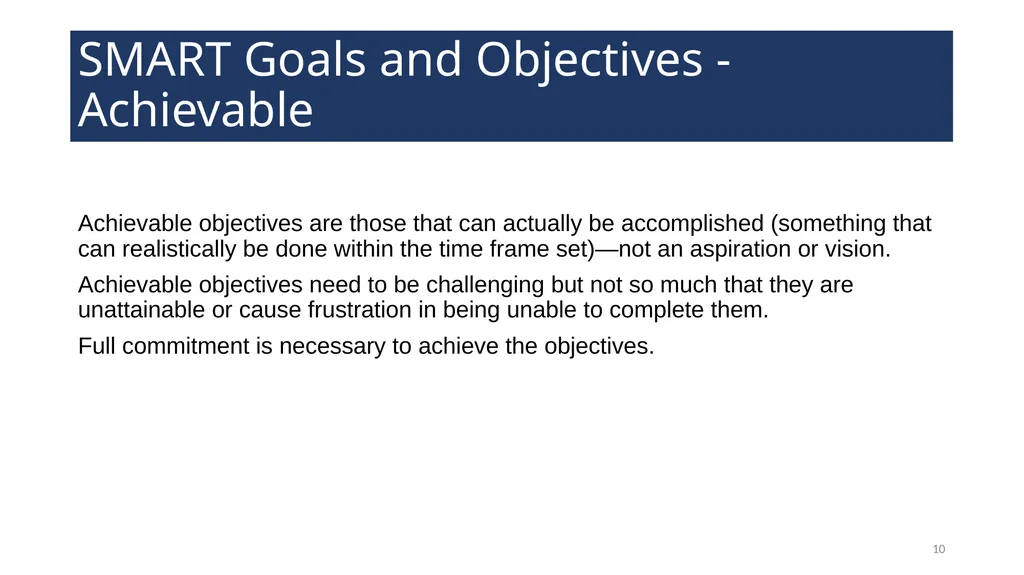
SMART Goals and Objectives - Achievable Achievable objectives are those that can actually be accomplished (something that can realistically be done within the time frame set)—not an aspiration or vision.
Achievable objectives need to be challenging but not so much that they are unattainable or cause frustration in being unable to complete them.
Full commitment is necessary to achieve the objectives. 10<br>
11
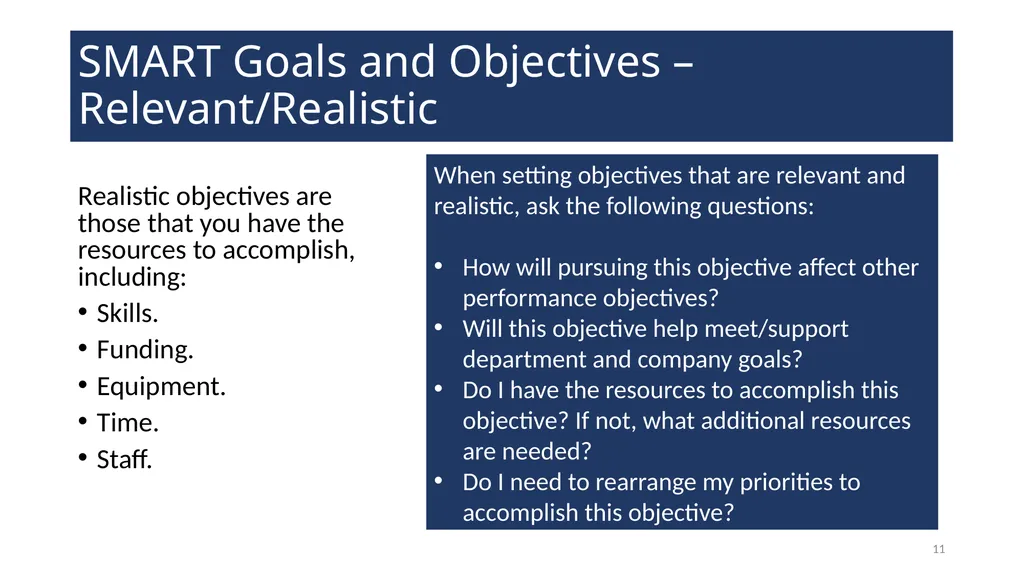
SMART Goals and Objectives – Relevant/Realistic Realistic objectives are those that you have the resources to accomplish, including:
Skills.
Funding.
Equipment.
Time.
Staff. 11 When setting objectives that are relevant and realistic, ask the following questions:
How will pursuing this objective affect other performance objectives?
Will this objective help meet/support department and company goals?
Do I have the resources to accomplish this objective? If not, what additional resources are needed?
Do I need to rearrange my priorities to accomplish this objective?<br>
12
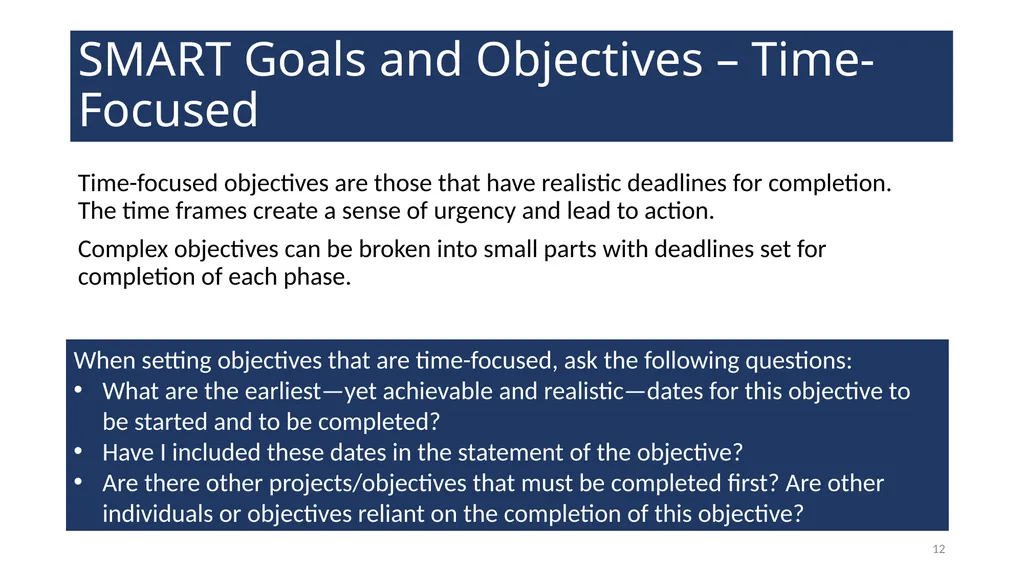
12 When setting objectives that are time-focused, ask the following questions:
What are the earliest—yet achievable and realistic—dates for this objective to be started and to be completed?
Have I included these dates in the statement of the objective?
Are there other projects/objectives that must be completed first? Are other individuals or objectives reliant on the completion of this objective? Time-focused objectives are those that have realistic deadlines for completion. The time frames create a sense of urgency and lead to action.
Complex objectives can be broken into small parts with deadlines set for completion of each phase. SMART Goals and Objectives – Time-Focused<br>
13
Questions? Comments? 13<br>
14
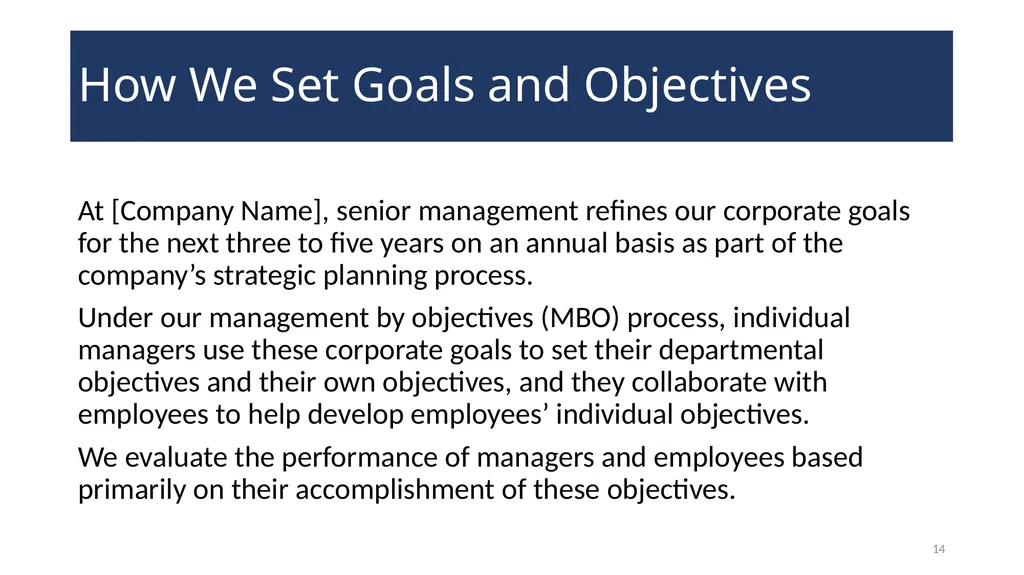
How We Set Goals and Objectives At [Company Name], senior management refines our corporate goals for the next three to five years on an annual basis as part of the company’s strategic planning process.
Under our management by objectives (MBO) process, individual managers use these corporate goals to set their departmental objectives and their own objectives, and they collaborate with employees to help develop employees’ individual objectives.
We evaluate the performance of managers and employees based primarily on their accomplishment of these objectives. 14<br>
15
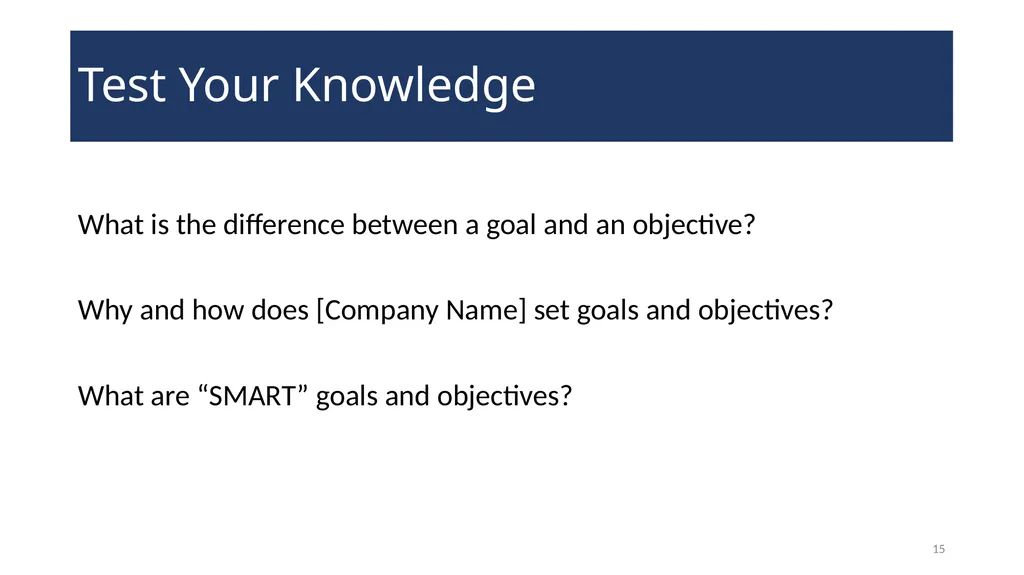
Test Your Knowledge What is the difference between a goal and an objective?
Why and how does [Company Name] set goals and objectives?
What are “SMART” goals and objectives? 15<br>
16
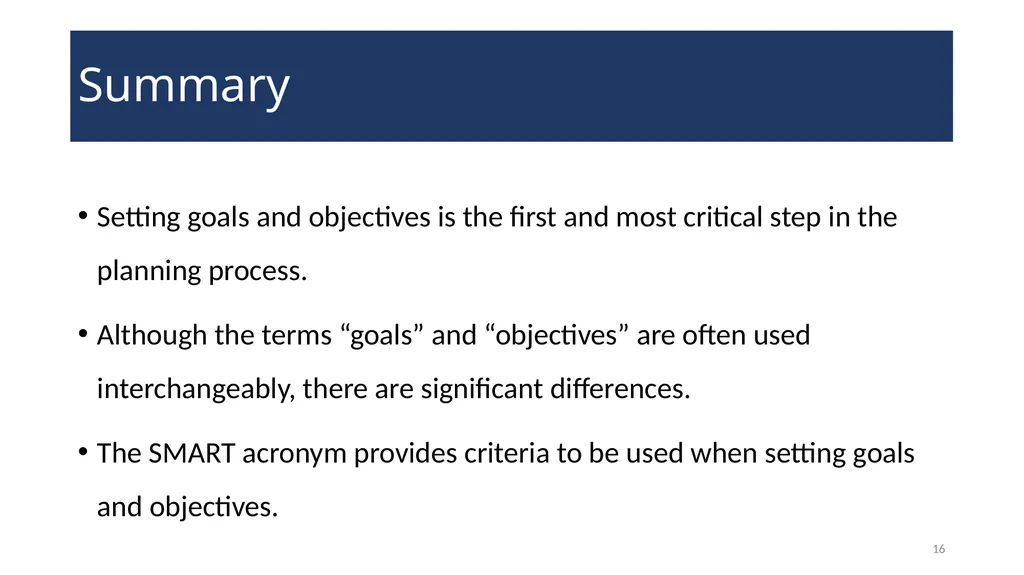
Summary 16 Setting goals and objectives is the first and most critical step in the planning process.
Although the terms “goals” and “objectives” are often used interchangeably, there are significant differences.
The SMART acronym provides criteria to be used when setting goals and objectives.<br>
17
Questions? Comments? 17<br>
18
Training Evaluation Please complete the training evaluation sheet included in the handouts.