Sexual Harassment Analysis September 27, 2023 Terminology and Analysis Sexual Harassment (Sexual Misconduct): Acts of sexual harassment may be committed by any person upon any other person, regardless of the sex, sexual orientation, andor
"Sexual Harassment Analysis September 27, 2023" is the property of its rightful owner. Permission is granted to
download and print the materials on this website for personal, non-commercial use only, and to display it
on your personal computer provided you do not modify the materials and that you retain all copyright
notices contained in the materials. By downloading content from our website, you accept the terms of this
agreement.
Presentation Transcript
01
Sexual Harassment Analysis September 27, 2023<br>
02
Terminology and Analysis Sexual Harassment (Sexual Misconduct):
Acts of sexual harassment may be committed by any person upon any other person, regardless of the sex, sexual orientation, and/or gender identity of those involved.
Sexual harassment, as an umbrella category, includes the offenses of sexual harassment, sexual assault, domestic violence, dating violence, and stalking.
Sexual Harassment, at ATU, is defined as follows:
Conduct on the basis of sex/gender or that is sexual satisfies one or more of the following:
Quid pro quo:
an employee of ATU,
conditions the provision of an employment or educational benefit, aid, or service of ATU,
on an individual’s participation in unwelcome sexual conduct.<br>
03
Terminology and Analysis Sexual Harassment (Hostile Environment):
Unwelcome conduct,
determined by a reasonable person,
to be so severe, and
pervasive, and
objectively offensive,
that it effectively denies a Complainant equal access to ATU’s education program or activity.
Unwelcomeness is subjective and determined by the Complainant (unless the Complainant is younger than the age of consent).
Severity, pervasiveness, and objective offensiveness are evaluated based on the totality of the circumstances from the perspective of a Reasonable Person in the same or similar circumstances (“in the shoes of the Complainant”), including the context in which the alleged incident occurred and any similar, previous patterns that may be evidenced.<br>
04
Terminology and Analysis Severe
Physical conduct is more likely to be severe
Accompanied by threats or violence
Consider the circumstances (e.g., ability of the Complainant to remove themselves from the harassment)
Pervasive
Widespread
Openly practiced
Well-known among students or employees – reputation of a department, person, etc.
Occurring in public spaces (more likely to be pervasive)
Frequency of the conduct is often a variable in assessing pervasiveness (look to intensity and duration)
Unreasonable interference with school or job<br>
05
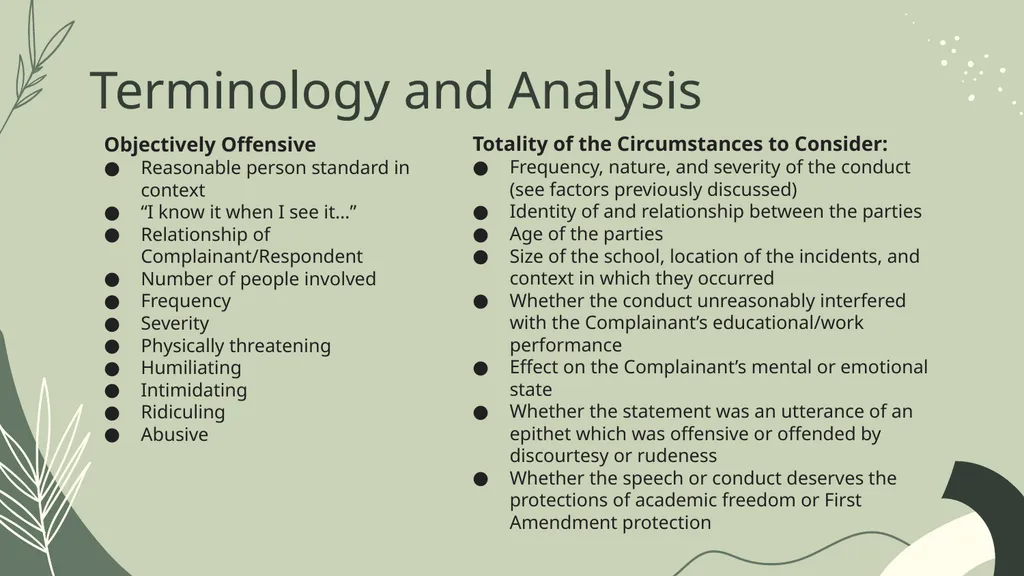
Terminology and Analysis Objectively Offensive
Reasonable person standard in context
“I know it when I see it…”
Relationship of Complainant/Respondent
Number of people involved
Frequency
Severity
Physically threatening
Humiliating
Intimidating
Ridiculing
Abusive Totality of the Circumstances to Consider:
Frequency, nature, and severity of the conduct (see factors previously discussed)
Identity of and relationship between the parties
Age of the parties
Size of the school, location of the incidents, and context in which they occurred
Whether the conduct unreasonably interfered with the Complainant’s educational/work performance
Effect on the Complainant’s mental or emotional state
Whether the statement was an utterance of an epithet which was offensive or offended by discourtesy or rudeness
Whether the speech or conduct deserves the protections of academic freedom or First Amendment protection<br>
06
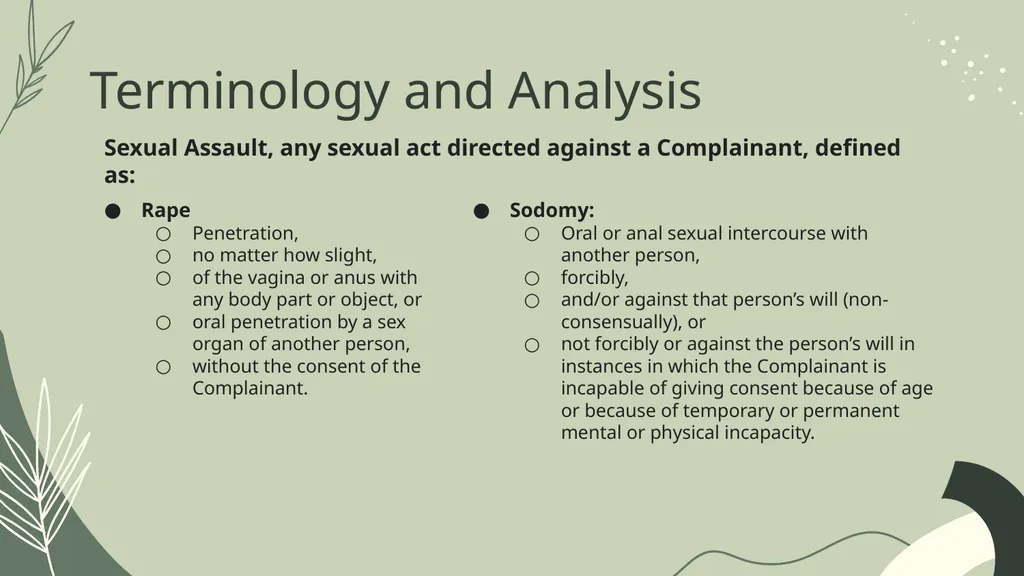
Terminology and Analysis Rape
Penetration,
no matter how slight,
of the vagina or anus with any body part or object, or
oral penetration by a sex organ of another person,
without the consent of the Complainant. Sodomy:
Oral or anal sexual intercourse with another person,
forcibly,
and/or against that person’s will (non-consensually), or
not forcibly or against the person’s will in instances in which the Complainant is incapable of giving consent because of age or because of temporary or permanent mental or physical incapacity. Sexual Assault, any sexual act directed against a Complainant, defined as:<br>