04
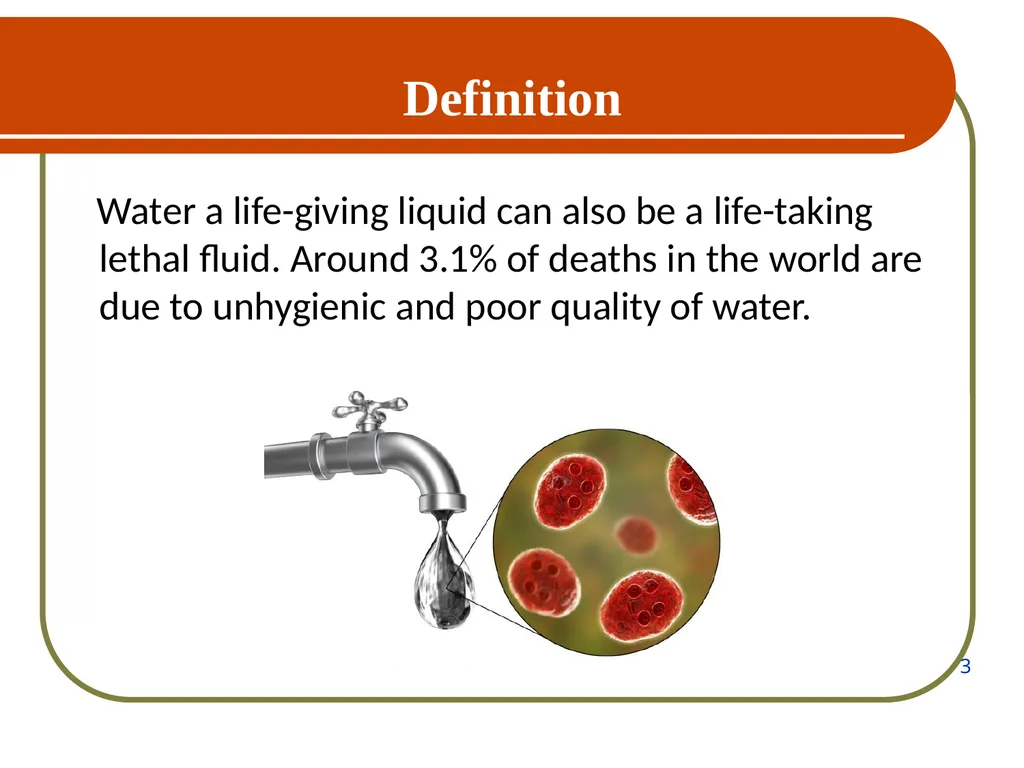
Introduction Poor water quality becomes inevitable when water gets polluted with industrial waste, human waste, animal waste, garbage, untreated sewage, chemical effluents, etc.
Drinking or cooking with such polluted water leads to waterborne diseases and infections such as amoebiasis, giardiasis, and toxoplasmosis. 4<br>
06
Causes of Water Borne Diseases Contaminated water could carry viruses such as Hepatitis A and E, bacteria like E.coli (E.coli can be passed from hand to hand, such as via vendors of street food or food handled by someone carrying E.coli bacteria.
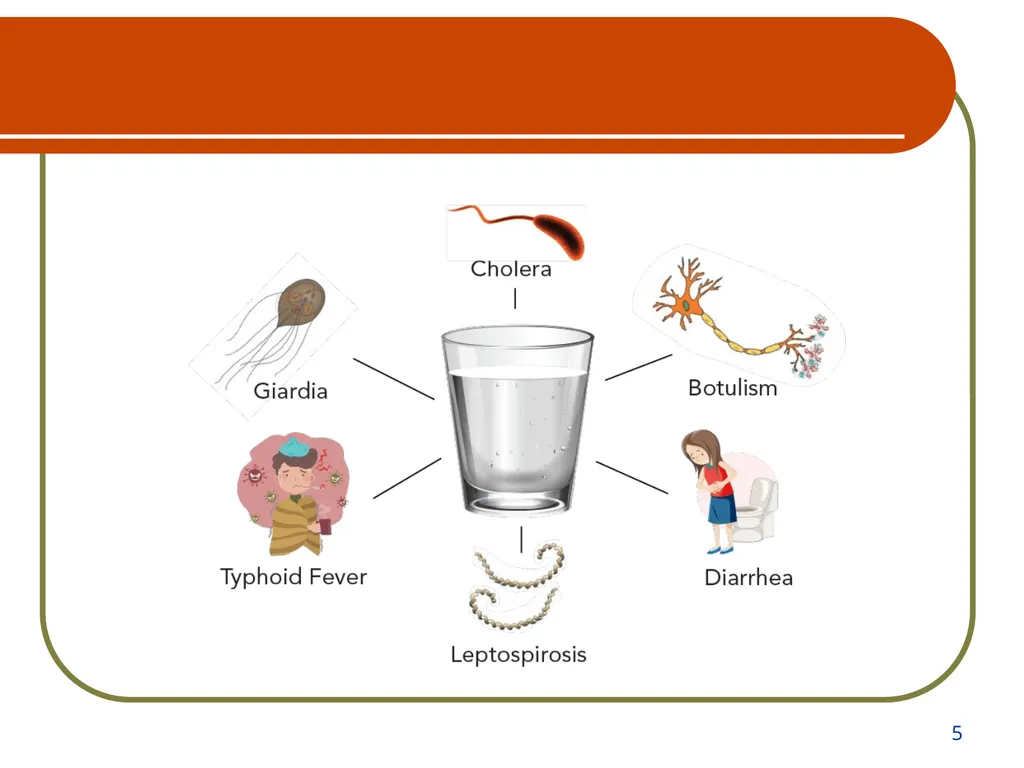
It can lead to food poisoning). The result: dangerous diseases like cholera and typhoid fever. Other waterborne diseases include diarrhoea, dysentery, polio and meningitis. ●●●
6<br>
07
Causes of Water Borne Diseases Unclean water for washing can cause skin and infectious eye disease such as Trachoma. Trachoma can lead to visual impairment or blindness.
Rural populations are more at risk from waterborne illnesses, but everyone faces risks of polluted or contaminated water. Waterborne illness can affect anyone, anywhere 7<br>
08
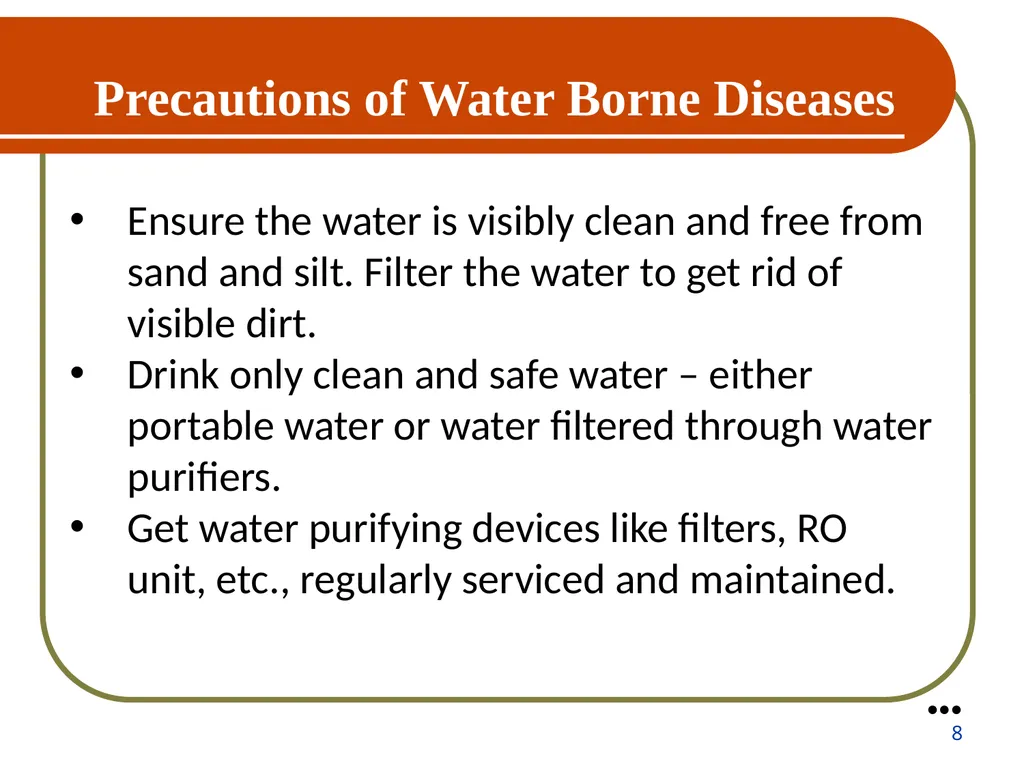
Precautions of Water Borne Diseases Ensure the water is visibly clean and free from sand and silt. Filter the water to get rid of visible dirt.
Drink only clean and safe water – either portable water or water filtered through water purifiers.
Get water purifying devices like filters, RO unit, etc., regularly serviced and maintained. ●●●
8<br>
09
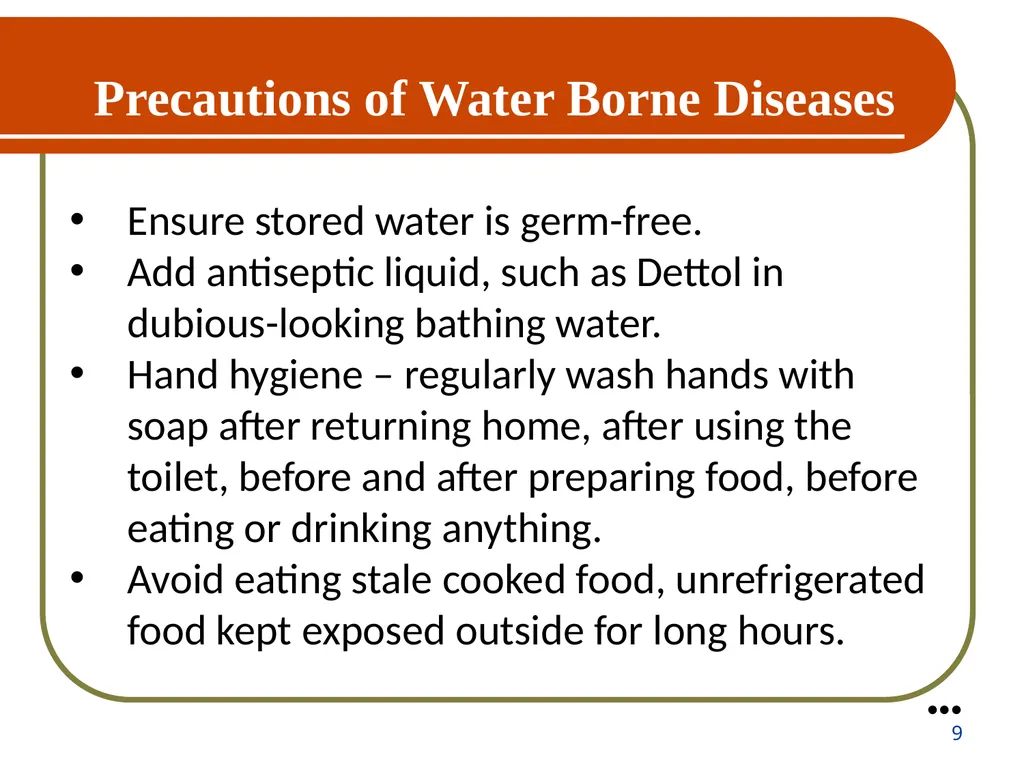
Precautions of Water Borne Diseases Ensure stored water is germ-free.
Add antiseptic liquid, such as Dettol in dubious-looking bathing water.
Hand hygiene – regularly wash hands with soap after returning home, after using the toilet, before and after preparing food, before eating or drinking anything.
Avoid eating stale cooked food, unrefrigerated food kept exposed outside for long hours. ●●●
9<br>
10
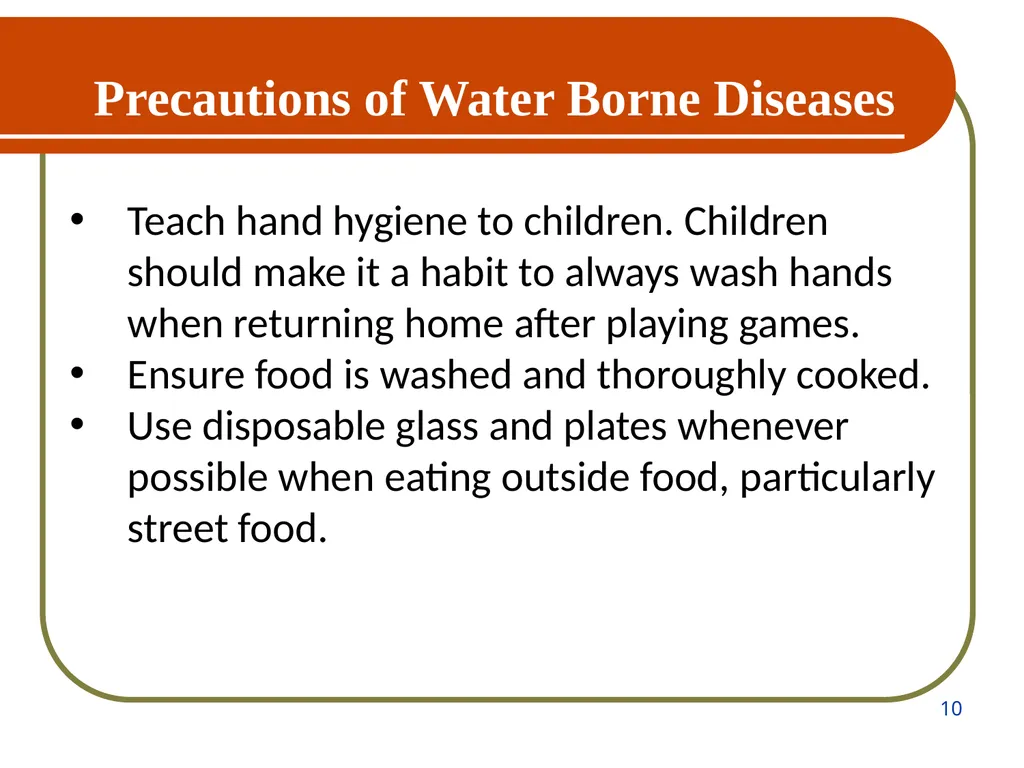
Precautions of Water Borne Diseases Teach hand hygiene to children. Children should make it a habit to always wash hands when returning home after playing games.
Ensure food is washed and thoroughly cooked.
Use disposable glass and plates whenever possible when eating outside food, particularly street food. 10<br>
11
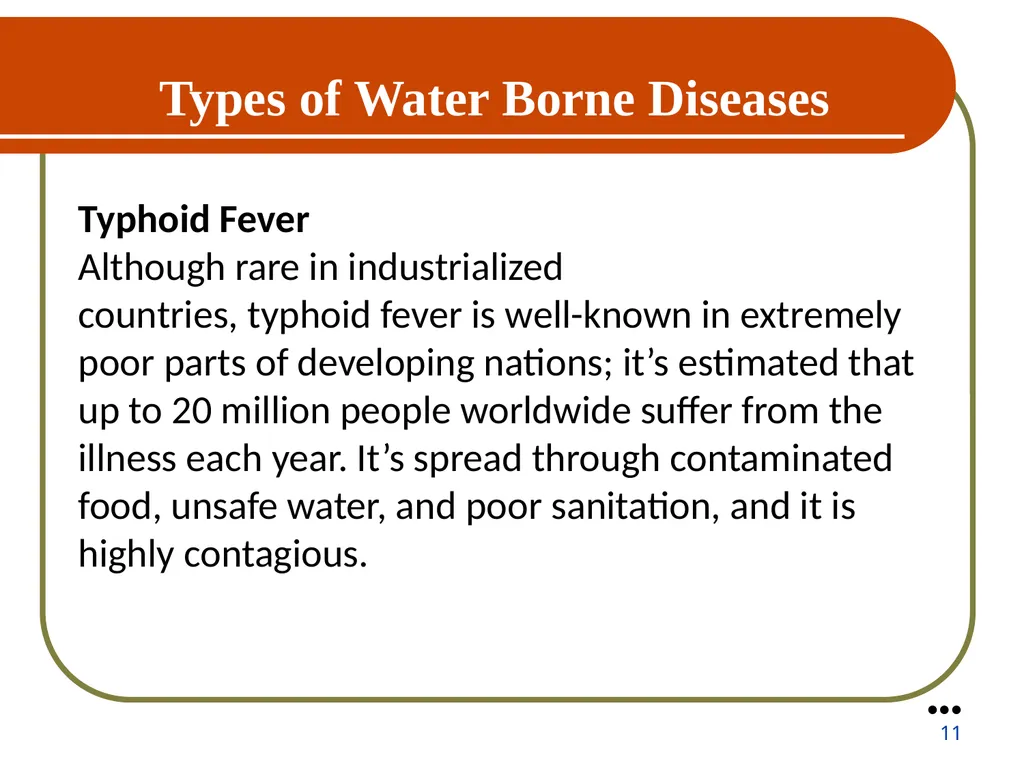
Types of Water Borne Diseases Typhoid Fever
Although rare in industrialized countries, typhoid fever is well-known in extremely poor parts of developing nations; it’s estimated that up to 20 million people worldwide suffer from the illness each year. It’s spread through contaminated food, unsafe water, and poor sanitation, and it is highly contagious. ●●●
11<br>
12
Types of Water Borne Diseases Cholera
Cholera is commonly found in humanitarian emergencies or marginalized villages where poverty and poor sanitation are rampant. The disease is spread through contaminated water and causes severe dehydration and diarrhea. Cholera can be fatal within days or even hours of exposure to the bacteria, but only 1 in 10 people will develop life-threatening symptoms. ●●●
12<br>
13
Types of Water Borne Diseases Giardia
This waterborne disease is shared through contaminated water, most often in ponds and streams, but it can also be found in a town’s water supply, swimming pools, and more. The infection is caused by a parasite and typically clears up after a few weeks. However, it’s possible for those who have been exposed will experience intestinal problems for years to come. ●●●
13<br>
14
Types of Water Borne Diseases Dysentery
An intestinal infection, dysentery is a waterborne disease characterized by severe diarrhea as well as blood or mucus in the stool. Dysentery is good reason to always wash your hands, as the disease is spread mainly through poor hygiene. It can be caused by bacteria, viruses, or parasites in unsafe food and water and by people coming in contact with fecal matter. ●●●
14<br>
15
Types of Water Borne Diseases Hepatitis A
Hepatitis A is a liver infection caused by consuming contaminated food and water or by coming in close contact with someone who has the infection. People who travel in developing countries often or work in rural communities with poor sanitation and hygiene management are most exposed to the disease. ●●●
15<br>
16
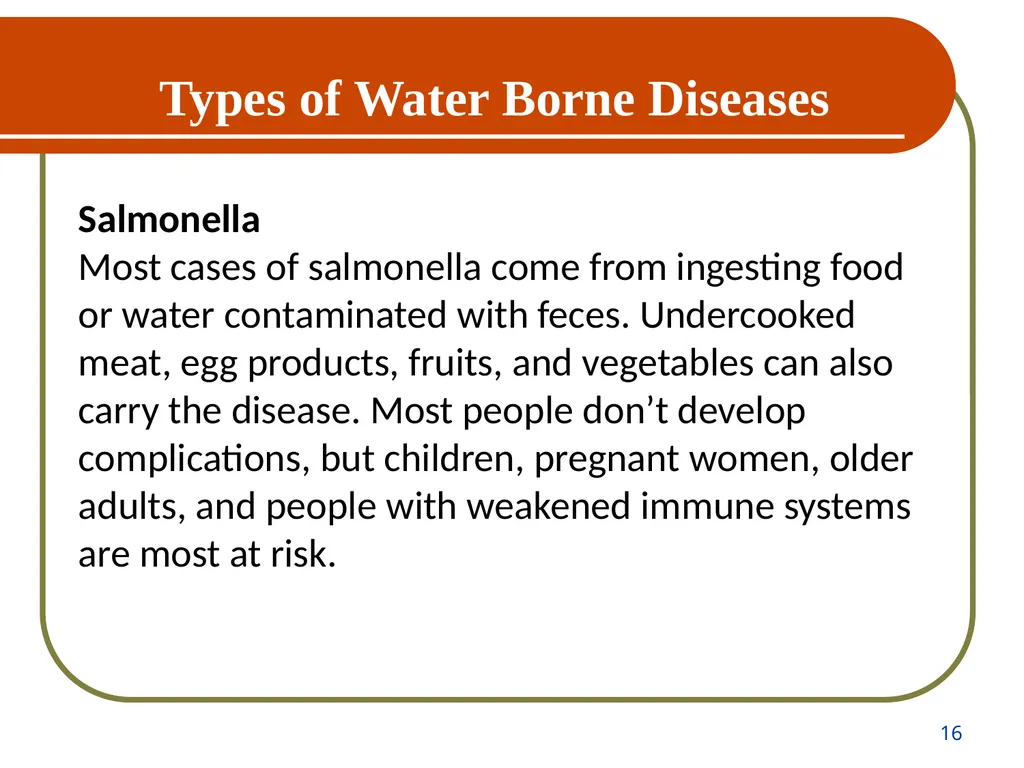
Types of Water Borne Diseases Salmonella
Most cases of salmonella come from ingesting food or water contaminated with feces. Undercooked meat, egg products, fruits, and vegetables can also carry the disease. Most people don’t develop complications, but children, pregnant women, older adults, and people with weakened immune systems are most at risk. 16<br>
17
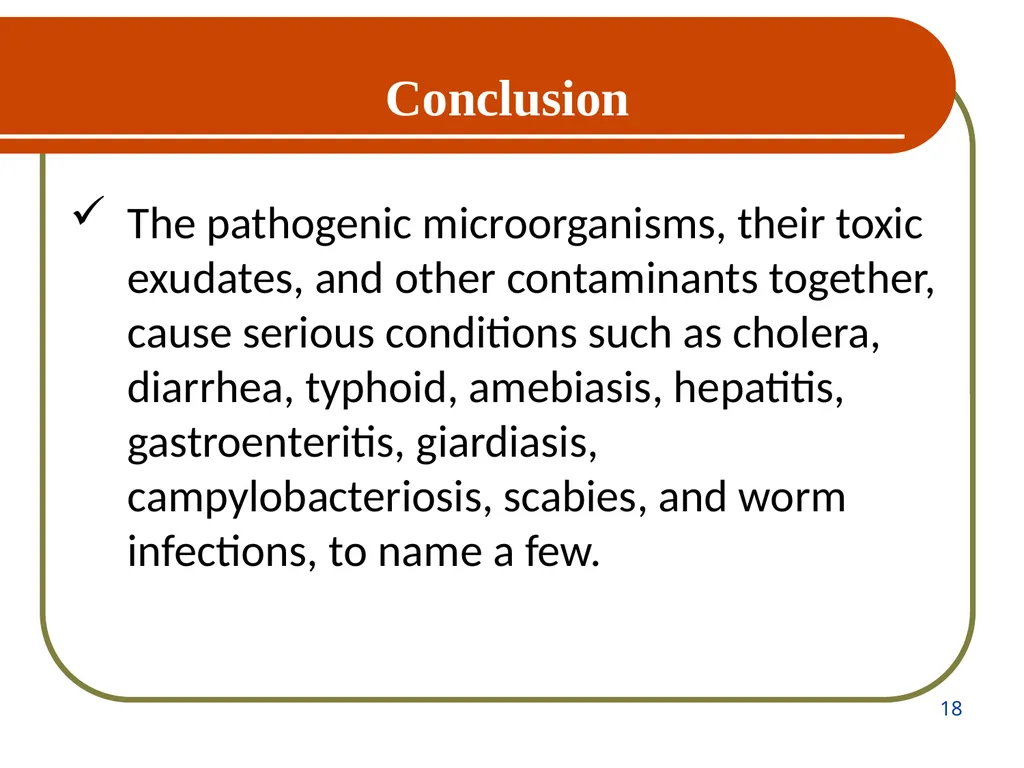
Conclusion The pathogenic microorganisms, their toxic exudates, and other contaminants together, cause serious conditions such as cholera, diarrhea, typhoid, amebiasis, hepatitis, gastroenteritis, giardiasis, campylobacteriosis, scabies, and worm infections, to name a few. 18<br>
18
References Google.com
Wikipedia.org
Studymafia.org
Slidespanda.com<br>
19
Thanks�To �StudyMafia.org<br>